News & Updates
The latest news and updates from companies in the WLTH portfolio.
Anthropic Is Targeting an IPO as Soon as Mid-November - AOL
Anthropic's IPO could be one of the biggest events for the stock market this year. Anthropic is one of the most important companies in the artificial intelligence (AI) space, and it will likely soon become one of the most important companies on the stock market. Anthropic is the company behind the Claude AI suite -- a frontier model that's best in class for coding and a range of other enterprise-focused applications. Recent reports suggest that the AI leader is gearing up to have its IPO sometime around mid-November, with the target of going public before the Thanksgiving holiday. What do investors need to know about this potentially massive IPO that could be on the near horizon? Missed AI's "Act 1"? Act 2 Could Be 15x Bigger. Most investors think they missed the AI boat because they didn't buy Nvidia in 2005. But according to our analysts, we're only at the end of "Act 1" -- the R&D phase. "Act 2" is the global rollout. Continue " Does a lower IPO valuation suggest a big short-term opportunity for investors? While the company was once expected to go public at a valuation of roughly $2 trillion, recent developments suggest that the initial tranche of shares could be priced at a significantly lower level. Following signs of growth deceleration and other market catalysts, reports suggest the AI leader could now be targeting a debut valuation of roughly $1.5 trillion. That's still absolutely nothing to sneeze at and would make the company the second-largest IPO by market capitalization in history -- trailing only Space Exploration Technologies. However, retail investors should understand that they probably won't be able to buy Anthropic stock at its initial listing price. When a stock first goes public, the initial tranche of shares is typically only available to institutional investors and other large buyers. When it comes to hotly anticipated technology IPOs, it's not unusual for shares to open trading on the public markets at a price significantly above the initial listing price. Given Anthropic's status as a leading technology player in frontier artificial intelligence models, it wouldn't be surprising to see the company's share price close its first day of trading well above its initial listing price. IPO dynamics in recent years suggest the stock stands a good chance of opening well above its listing price and ending its first day of trading even higher, but that doesn't mean investors should feel safe about plans to score big, short-term gains. For example, SpaceX set its IPO price at $135 per share -- but the stock opened at $150 per share when it began trading on the public market. By the end of the day, the company's stock had risen to $161. While the stock reached a lifetime high of more than $225.50 per share just a few days later, it has since lost ground and trades below its opening price of $150 per share as of this writing. Anthropic has incredible technology, but the company will almost certainly go public at a valuation highly dependent on growth. With recent volatility in AI stock valuations, investors should be cautious about plans to score quick wins with an IPO and are probably better off assessing potential investments in Anthropic on a long-term basis. Missed Nvidia in 2009? This Rare Signal Is Flashing Again In 2009, a "Double Down" signal flashed for a little-known chipmaker called Nvidia. If you'd invested $5,000 then, you'd be sitting on $2,821,947 today.* Now, for the first time in years, that same "Total Conviction" signal is flashing for a company 1/100th the size of Nvidia. It's a key player in the $1.8 trillion space race, and with the stock recently sitting 20% off its highs, the window to get in early is closing fast. *Stock Advisor returns as of October 20, 2026. Keith Noonan has no position in any of the stocks mentioned. The Motley Fool has no position in any of the stocks mentioned. The Motley Fool has a disclosure policy.
Anthropic offers Blackstone double-digit yield in chip-financing deal, FT reports - AOL
Oct 16 (Reuters) - Anthropic is offering Blackstone a yield of more than 10% to finance its latest chip deal, the Financial Times reported on Friday. Blackstone funds would invest $9 billion in the debt backed by Anthropic's five-year lease payments on the chips, the report said, citing people familiar with the matter. Reuters could not immediately verify the report. (Reporting by Mrinmay Dey in Mexico City; Editing by William Mallard)

Philadelphia police receive false homicide tip from Anthropic AI model - AOL
Anthropic's artificial intelligence model submitted a false homicide tip to the Philadelphia Police Department in July, the company disclosed Friday. The AI firm said its Claude Haiku 4.5 model filled out a form on a website page soliciting the public's help to gather more information about unsolved homicide on July 18. The model submitted a... Anthropic's artificial intelligence model submitted a false homicide tip to the Philadelphia Police Department in July, the company disclosed Friday. The AI firm said its Claude Haiku 4.5 model filled out a form on a website page soliciting the public's help to gather more information about unsolved homicide on July 18. The model submitted a tip claiming it had knowledge about the case. Anthropic said it had instructed the model to perform "example tasks on randomly selected webpages" and restricted it from actions such as creating accounts, submitting personal information or making purchases. However, the AI company said the instructions did not explicitly bar Claude Haiku 4.5 from making form submissions. The Philadelphia Police Department said Anthropic notified them of this false tip Wednesday and that the submission had been flagged as spam and never pursued for investigation. Still, the law enforcement agency criticized the company's months-long delay in detecting and reporting this incident as "unacceptable." "Unsolved cases involve real victims, grieving families and investigators working to secure answers," the police department said in a Friday statement. "Technology companies must take all appropriate steps necessary to prevent their systems from submitting false information to law enforcement." Anthropic disclosed two other instances Friday in which its models improperly submitted an online form, including a government filing. The company said it has taken steps to prevent this from occurring in the future and has discontinued some public evaluations and moved others offline. The company expressed its commitment to updating the public on "concerning behaviors" tied to their AI models. "We hope these reports help other developers check for similar behaviors in their own models, since many of the evaluations involved are public and widely used," Anthropic said in its Friday statement. "While these cases had minimal impact, we do not want to diminish the findings, because the same behaviors could do far more harm as models become more powerful," the statement continued. "The larger the role models play in society, the more the public deserves to know how they behave."

A tech crowd was polled on buying Anthropic shares at a $3 trillion valuation. Only 3 hands went up. - AOL
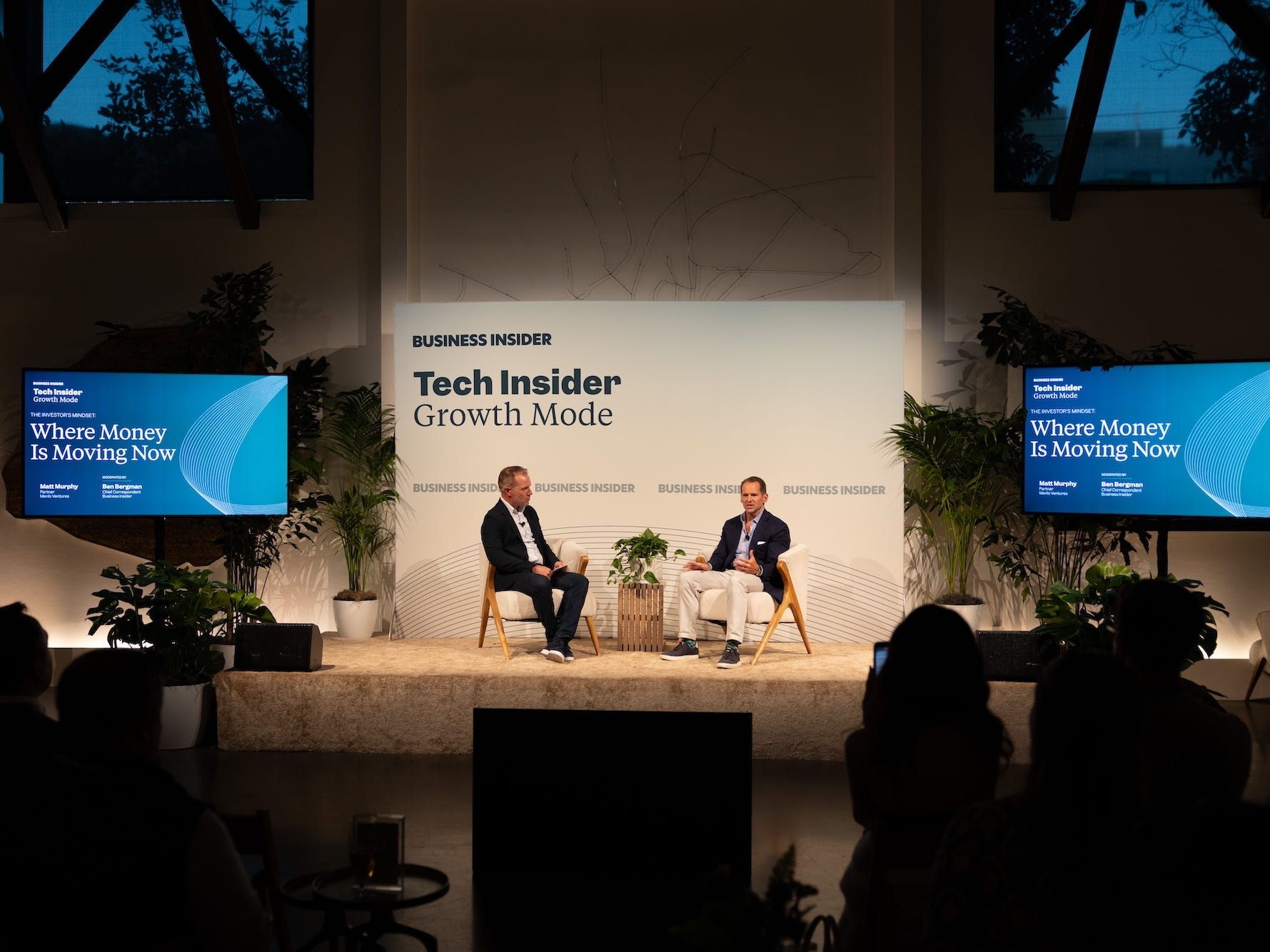
* An audience at SF Tech Week was asked if they would buy Anthropic shares at a $3 trillion valuation. * Only three hands went up. * The room's response reflects the broader uncertainty in this IPO market. In San Francisco, the signs that Tech Week had arrived were hard to miss. Planes towed banners advertising startups above the city. Inflatable company mascots greeted commuters outside transit stations. And hundreds of people lined up outside Anthropic's Claude Founder House for the chance to get inside. But a few blocks away, the mood was more measured. On Wednesday night, a crowd gathered in the Dogpatch for the Tech Insider: Growth Mode event, sponsored by Fidelity. Minutes after interviewing Anthropic investor Matt Murphy onstage, Business Insider chief correspondent Ben Bergman put a question to the room: When Anthropic goes public, would you buy shares at a $3 trillion valuation? Three hands went up. How about $1.5 trillion? A few more hands rose. It was a surprisingly muted response for the company that has become one of the clearest symbols of the artificial-intelligence gold rush. Its long-awaited public offering is expected to test how much of that hype can survive the scrutiny of the public markets. The IPO market is having a strange year. By dollars raised, it has been one of the biggest on record, propelled by SpaceX's blockbuster debut. The prospect of Anthropic following before year-end could push that figure into the stratosphere. But the headline numbers obscure a far thinner market underneath. There have been relatively few offerings, and some of the most closely watched candidates have stumbled. Just last week, smart-ring maker Oura pulled its planned IPO at the eleventh hour, pointing to choppy market conditions. For Heidi Mayon, a partner at the law firm Simpson Thacher, who worked on Oura's planned offering, the delay reflected a wait-and-see attitude she's seeing across the market. She told the room that companies have been reluctant to go public before Anthropic and OpenAI do. "There's sort of an overarching feeling that there isn't enough public investor capital available until those deals get done," Mayon said. SpaceX showed that may not be true, she added, but few companies want to compete with the model providers for investor attention. The bigger challenge, she said, is that artificial intelligence has pushed valuations sky-high in the private markets. Rather than squeeze every possible dollar out of an offering, Mayon said, some companies may be better off pricing their shares more conservatively. That could leave room for a first-day "pop" and the momentum that comes with it. Jack Cassel, Nasdaq's senior vice president and head of new listings, had a different message for the room: There is still plenty of capital to take companies public, but the bar has changed. After years of growth at all costs, investors are now looking for "growth with cash efficiencies and discipline," Cassel told the room. They are asking tougher questions about the business models, a company's product plans, and what comes after the stock launch. That scrutiny may keep consumer and software companies on the sidelines until one or both of the frontier labs go public, he said. Other corners of the market are still moving. Biotech has produced 22 IPOs this year, he noted, with more expected before the end of the year. When Anthropic finally goes public, it will be the biggest test yet of whether the artificial-intelligence hype train has the financial horsepower to back it up. Read the original article on Business Insider
SpaceX Still Trades Above Its IPO Price. Could Anthropic Do the Same? - AOL
According to a recent Bloomberg article, artificial intelligence start-up Anthropic is aiming to conduct its initial public offering (IPO) the week of Nov. 9. But even if it doesn't go public before Thanksgiving, the IPO is expected to occur before the end of 2026. As Anthropic's stock market debut gets closer to being a reality, there will be a lot more details to dig through for investors considering buying shares. But if you'd like to get a sense of how the stock price may perform in its early days and weeks, one thing we can do currently is look at how another highly publicized IPO has traded so far: Space Exploration Technologies(NASDAQ: SPCX). Missed Nvidia in 2009? This Rare Signal Is Flashing Again.In 2009, a "Double Down" signal flashed for a little-known chipmaker called Nvidia. For the first time in years, that same "Total Conviction" signal is flashing for a company 1/100th the size of Nvidia. Continue " How the SpaceX IPO is playing out There are two distinct price points to consider for SpaceX's IPO. One is the IPO price of $135 per share, which is what institutional investors, high-net-worth individuals, and a smattering of lucky retail investors paid to buy shares directly from the company just before they started trading. For most retail investors, however, shares were first available to buy at $150, but as trading got underway, many would-be buyers were unable to fill their orders. Those distinctions are worth noting, as what's typically shared by news outlets is the first-day return on a stock from its IPO price, not from where shares opened to the average investor. With that in mind, after SpaceX debuted to the public at $150 on June 12, shares closed the day at $160.95. From there, the stock price climbed to an intraday high of $225.64 on June 16, then closed at $211.39. After that, however, it dipped and kept falling. On Aug. 3, SpaceX's stock traded as low as $104.83. During its turbulent journey, the stock price repeatedly moved back and forth across the $150 line. After a surge this week, it closed Tuesday at $171.92 -- higher than it has closed since June. That means not only is the SpaceX stock price trading above its IPO pricing of $135, but it's also trading above where it opened to the public at $150. Following in the footsteps of the SpaceX stock price? There's no way of knowing at this point what share price Anthropic has planned for its IPO, nor at what level it will open trading to the public. But if it follows in the footsteps of SpaceX, it would rise for a few days before trending downward as the initial enthusiasm wanes and the early rush to buy in fades. The stock could just as easily stumble right out of the gate and quickly fall below its IPO price or rally for a few days, weeks, or longer. That's not to sound indecisive; it's just the reality of investing in a newly public company. Early pops are common. So are "broken IPOs" that fairly quickly sink below their offering price. There's no guarantee Anthropic will prove a profitable investment. What we can take away at this point is that even if Anthropic can meaningfully reward investors who buy in after it goes public, the path to those rewards is likely to have many ups and downs. Rather than hoping to strike it rich on the day Anthropic goes public, a better plan would be to exercise patience and buy shares on pullbacks with a plan to hold them over the long term, despite the volatility. Should you buy stock in Space Exploration Technologies right now? Before you buy stock in Space Exploration Technologies, consider this: The Motley Fool Stock Advisor analyst team just identified what they believe are the 10 best stocks for investors to buy now... and Space Exploration Technologies wasn't one of them. The 10 stocks that made the cut could produce monster returns in the coming years. Consider when Netflix made this list on December 17, 2004... if you invested $1,000 at the time of our recommendation, you'd have $370,440!* Or when Nvidia made this list on April 15, 2005... if you invested $1,000 at the time of our recommendation, you'd have $1,470,022!* Now, it's worth noting Stock Advisor's total average return is 955% -- a market-crushing outperformance compared to 215% for the S&P 500. Don't miss the latest top 10 list, available with Stock Advisor, and join an investing community built by individual investors for individual investors. See the 10 stocks " *Stock Advisor returns as of October 7, 2026. Jack Delaney has no position in any of the stocks mentioned. The Motley Fool has no position in any of the stocks mentioned. The Motley Fool has a disclosure policy.

Anthropic Pushes Its IPO to November as Investors Eye a $2 Trillion Valuation - AOL
The highly anticipated public debut of the artificial intelligence (AI) company Anthropic took an unexpected turn when its confidential prospectus was leaked ahead of its initial public offering. That IPO date was originally anticipated for October, but it has reportedly shifted to November. The AI giant is expected to fetch a jaw-dropping $2 trillion valuation, about double the $965 billion valuation set in May of this year. It would also exceed the lofty $1.8 trillion valuation achieved earlier this year by Elon Musk's Space Exploration Technologies, better known as SpaceX. Missed AI's "Act 1"? Act 2 Could Be 15x Bigger. Most investors think they missed the AI boat because they didn't buy Nvidia in 2005. But according to our analysts, we're only at the end of "Act 1" -- the R&D phase. "Act 2" is the global rollout. Continue " Before investors decide to jump into Anthropic's IPO, it's best to carefully examine the company's prospectus, which promises plenty of twists given the details reported so far. Anthropic's spectacular growth The arrival of ChatGPT in late 2022 immediately made OpenAI a key player in the artificial intelligence sector. Yet the generative AI giant lost several staff members who went on to found Anthropic. Those include Dario Amodei, who would become CEO of the new company. What set Anthropic apart from OpenAI was its focus on the enterprise market and AI tools to accelerate software coding. The approach appears to have galvanized incredible growth. The leaked prospectus points to Anthropic's 2025 revenue soaring 12-fold over 2024 to $4.6 billion. However, the company is bleeding cash with 2025's net loss totaling $42 billion. That may be nothing compared to future costs. Anthropic reportedly plans to spend over half a trillion dollars in the coming years as it builds out the computing infrastructure needed to deliver increasingly powerful AI models. The unusual risks of investing in Anthropic At the same time that the company is constructing more potent AI, Dario Amodei has warned that doing so without restraint can create catastrophic dangers. Amodei believes one of the risks is recursive self-improvement, a process where AI can build better versions of itself independently. According to Amodei, "Left unchecked, it could outrun our ability to understand and control these systems." Every public company lists risk factors for investing in its stock. Recursive self-improvement leading to uncontrolled AI takes this to another level. With Anthropic, could a risk potentially be the end of humanity? According to a former Anthropic researcher, who quit the company this year, that's certainly a possibility. I don't want to imagine Anthropic's liability if its AI went out of control and caused harm. A more mundane risk is that the company's prospectus revealed a quarter of the AI giant's revenue comes from just two customers, and many of its largest clients lack long-term contracts. If any of these customers depart, Anthropic's income could collapse, and so would its stock. Given what's been revealed so far, I will certainly read Anthropic's prospectus with great care when it's publicly available before deciding to invest. After all, that investment could be contributing to my own demise. Where to invest $1,000 right now When our analyst team has a stock tip, it can pay to listen. After all, Stock Advisor's total average return is 948%* -- a market-crushing outperformance compared to 214% for the S&P 500. They just revealed what they believe are the 10 best stocks for investors to buy right now, available when you joinStock Advisor. See the stocks " *Stock Advisor returns as of October 6, 2026. Robert Izquierdo has positions in Space Exploration Technologies. The Motley Fool has no position in any of the stocks mentioned. The Motley Fool has a disclosure policy.