Anthropic's Mythos Gatecrashes IMF Meetings
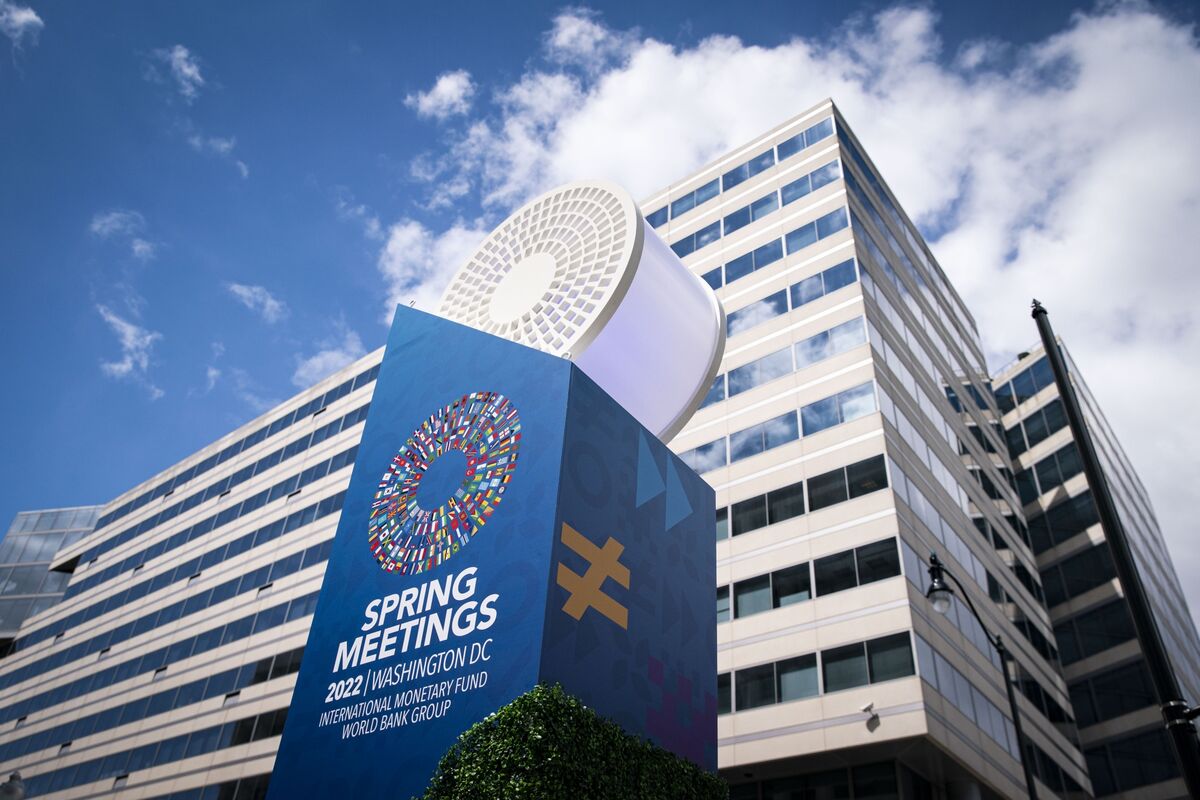
I'm Cécile Daurat, a senior economics editor visiting Washington this week for the IMF-World Bank spring meetings. Today we're looking at how the new AI tool Mythos has become the talk of the town. Send us feedback and tips to [email protected]. And if you aren't yet signed up to receive this newsletter, you can do so here.
Top Stories
-
US President Donald Trump claimed Iran made key concessions in talks, while a ceasefire in Lebanon raised the prospect of broader peace.
-
Meanwhile Trump sought to assuage voters' fears about the cost of living despite higher energy prices stemming from his Middle East war.
-
Historically when the job market is bad, people turn to grad school -- but for many in the class of 2026, that may not be a feasible alternative.
Mythos Risks
It seems like every time finance chiefs gather in DC for their bi-annual IMF-World Bank meetings, a new threat to the global financial stability emerges and becomes the talk of the town.
Back in October, Jamie Dimon's now oft-quoted "cockroach" sparked concerns about private credit. This week, Anthropic's new AI model Mythos gatecrashed meetings.
Little is known about the tool -- except that it's highly adept at finding vulnerabilities in computer systems and could power cyberattacks. The US Treasury Department has been seeking access to Mythos to uncover its own software vulnerabilities, and other government officials are eager to learn more about the model.
No one had heard about Mythos until last week, when Anthropic revealed its existence and said it was too much of a risk to release generally.
Yet within the past four days, top central bankers including the European Central Bank's Christine Lagarde, Bank of England's Andrew Bailey and New York Fed's John Williams have all brought it up in interviews or at events.
"It would be reasonable to think that the events in the Gulf are the most recent challenge to us in this world," Bailey said at an event at Columbia University in New York early this week before heading to DC. That is, until "you wake up to find that Anthropic may have found a way to crack the whole cyber risk world open and you think, what did I do wrong in a past life."
The potential threat presented by Mythos, which orchestrated the digital equivalent of a bank robbery in stress-tests, is particularly alarming at a time when the world is dealing with major oil and supply shocks as a result of the conflict in Iran. It's a threat that would require collaboration among countries -- the kind of international coordination that is lacking at the moment.
The Best of Bloomberg Economics
-
Governor Kazuo Ueda stressed challenges for the Bank of Japan, while Japanese wage growth held momentum.
-
The ECB must be "vigilant" to inflation risks, policymaker Madis Muller said. But economists reckon it will wait until June to hike.
-
Australian Treasurer Jim Chalmers warned the global economy faces a "really dangerous moment" due to the Middle East conflict.
-
IMF formal contact with Venezuela will resume, maybe opening the door to financing. Meanwhile Kenya is in emergency talks with the World Bank.
-
China's central bank is using its daily reference rate to temper the yuan's rally as its war-fueled outperformance drives further bullish sentiment.
-
South African central bank chief Lesetja Kganyago said the war's impact on oil prices has validated wariness over inflation.
Need-to-Know Research
The Japan Center for Economic Research this week took a look at how that nation weathered the two oil crises of the 1970s to surface potential lessons for policymakers today. Senior research fellow Jun Saito highlights that Japan's experience was quite different comparing the 1973 shock to the 1979 one.
In the first one, the BOJ mounted limited interest-rate hikes, leaving their setting deeply negative in real terms, price controls were introduced and workers were given big raises -- over and above the pace of inflation. In the second, the BOJ lifted borrowing costs to maintain at least 0% real rate, price controls were limited and wage increases were restrained.
The result of the latter experience was that the burden of the oil shock was shared more broadly across the economy, Saito wrote. In the first go round, companies were especially hit by the wage increases plus price controls, causing them to rein in investment plans. GDP saw its biggest contraction since postwar records began in 1955. But in 1979-80 not a single quarter saw a decline in GDP.
More from Bloomberg
Enjoy Economics Daily?
- Read more economic stories
Plus, here are some newsletters we think you might like
-
Supply Lines for daily insights into supply chains and global trade
-
Business of Food for a weekly look at how the world feeds itself in a changing economy and climate, from farming to supply chains to consumer trends
-
Balance of Power for the latest in politics from around the globe