Elon Musk's SpaceX eyes $60Billion Deal for AI Startup Co-Founded by Pakistani Entrepreneur Sualeh - Pakistan Observer
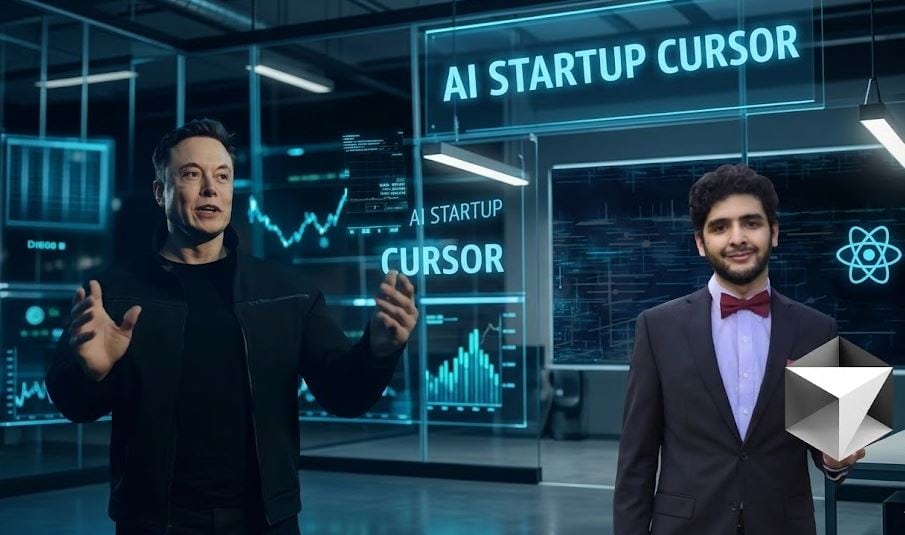
SACRAMENTO - Cursor, the fast-growing AI-first coding editor built on Visual Studio Code that uses AI as its core feature rather than a simple add-on, was co-founded by Pakistani entrepreneur Sualeh, is making waves online and now worls's wealthiest person in the world Elon Musk's company SpaceX is interested to buy this Startup.
The AI startup helps developers write, edit, debug, and refactor code using natural language, while also understanding entire codebases and handling complex multi-step programming tasks through agent-like workflows.
The face behind this startup is Pakistani entrepreneur Sualeh, who is now in discussions with SpaceX for staggering $60 billion acquisition. If completed, the deal would instantly become one of the largest tech acquisitions in history.
SpaceX is not just expanding, it is transforming. As the company prepares for what could be a historic IPO potentially valuing it above $1 trillion, it is aggressively moving beyond space exploration into artificial intelligence, signaling a dramatic strategic shift.
Sualeh's startup has already surpassed $1 billion in annual recurring revenue and is used daily by more than one million developers worldwide. Even more striking, it has reportedly been integrated into workflows across 67% of Fortune 500 companies, making it one of the most deeply embedded AI tools in enterprise software.
If finalized, the deal would be a turning point for SpaceX, evolving it from spaceflight giant into a full-scale artificial intelligence powerhouse competing at the highest level of the global AI race.
Analysts are pointing to deeper issue highlighted by this moment, the widening gap between talent-rich countries like Pakistan and the infrastructure available in Western tech ecosystems. Many argue this gap is now one of the most expensive lost opportunities in the global economy.
Sualeh's rise become symbolic. For many young Pakistanis, it represents both pride and possibility, the belief that world-changing companies can emerge from anywhere. But it also underscores a hard truth: talent alone is not enough.
With stronger policy support, investment, and institutional backing, experts say Pakistan could unlock a wave of innovation capable of producing its own multi-billion, or even trillion-dollar, success stories.
The next era of global tech dominance may not just be about space or software, but about the explosive fusion of both, led by AI.