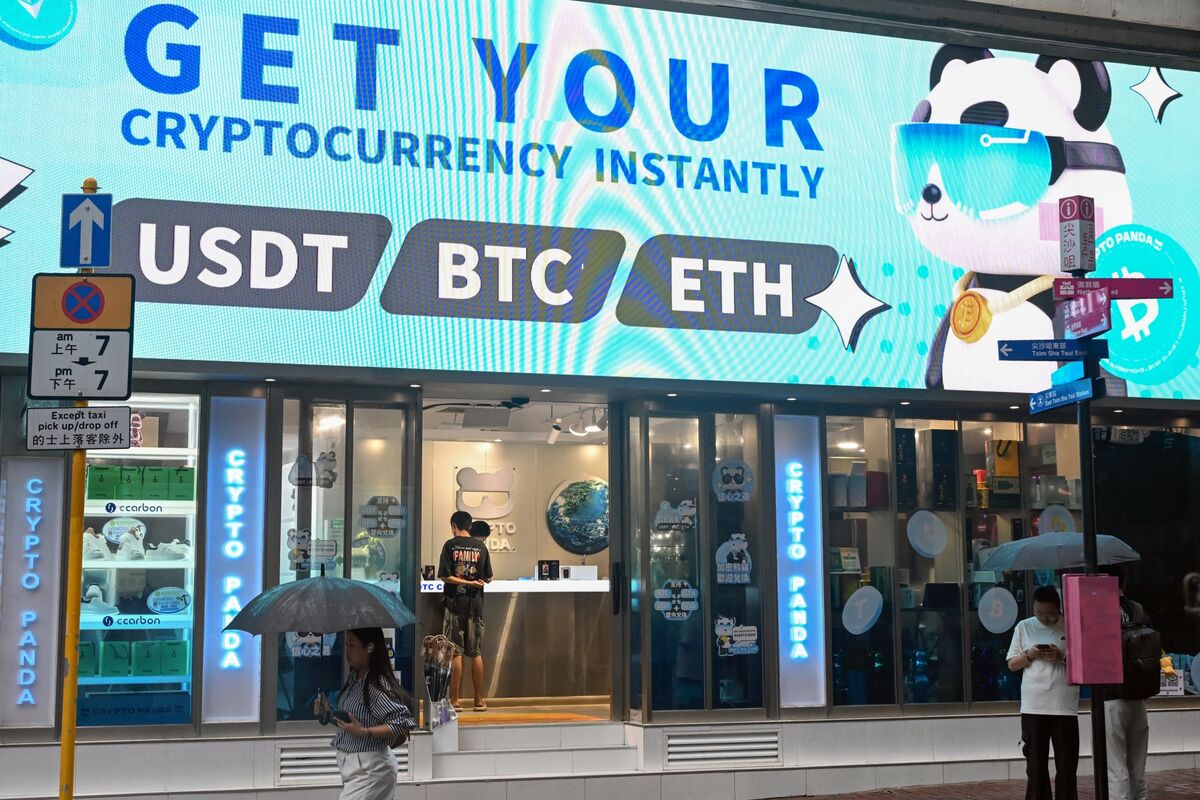
Hong Kong Channels Crypto Chaos Into Daily Use
The techno-anarchist dream fueled by the 2008 Bitcoin revolution was for everyone to be their own bank. Hong Kong's contribution to that vision in 2026 is a pragmatic shrug: "Why bother, when your bank is already everywhere?"
Last week, the Hong Kong Monetary Authority granted its inaugural stablecoin licenses to HSBC Holdings Plc, and Anchorpoint, a consortium of Standard Chartered Plc, Hong Kong Telecommunications Ltd., and Animoca Brands, which makes games and other consumer products for the blockchain. The digital tokens that will clone the Hong Kong dollar 1:1 on decentralized, public ledgers were selected out of 36 applicants.
To the crypto purist, this is the ultimate irony. The blockchain was conceived in the embers of the Global Financial Crisis as a way to bypass too-big-to-fail banks. But now the same large custodial institutions that were the rebellion's targets have been handed the keys to the kingdom.
For Hong Kong, though, it's just a practical addition to a long history of innovation.
In the 1860s, the Asian port city was the monetary Wild East. While President Abraham Lincoln was busy replacing pre-Civil-War notes of dubious value and restricting the power to issue legal tender to chartered US national banks, Hong Kong was a cacophony of Spanish and Mexican silver dollars and Chinese copper cash. Standard Chartered -- then the Chartered Bank of India, Australia and China -- and HSBC were born into this confusion. They had to convince a public that was deeply suspicious of paper money that their IOUs were as good as metal.
Since 1983, the exchange rate has been pegged to the dollar, though even now the actual instruments that change hands are private: HSBC and StanChart are two of the city's three banknote issuers.1 By awarding them the first stablecoin licenses, the HKMA is leaning on 160 years of muscle memory to tame the digital frontier. If the gamble succeeds, stablecoins will move from being mere payment tools for crypto traders to becoming digital currency for everyday use -- by humans and machines -- in the 21st century.
For me, their greatest test will be to win over the city's notoriously cash-loving cabdrivers.
Since April 1, every taxi in the city has been legally required to accept e-payments, but the transition has been bumpy. In that context, it's interesting that the two first-round license winners already offer popular smartphone wallets: HSBC's PayMe is in the pockets of 3.3 million residents. Tycoon Richard Li's HKT also commands a large subscriber base for its Tap & Go payments. If a passenger can settle her fare with a bank-backed stablecoin that drops instantly into the driver's wallet, it will mimic the immediate liquidity of cash while avoiding the two-to-three-day wait and processing fees that have turned the city's cabbies into e-payment Luddites.
Meanwhile, the folks behind Animoca Brands are thinking of using stablecoins for situations where payments are initiated and executed by AI agents. By the time the first Baidu Inc.-powered Uber robotaxis begin navigating the busy streets of Central Hong Kong, they may be able to pay for their own electricity and tunnel tolls using these tokens.
From Beijing's perspective, the broader geopolitical significance of Hong Kong stablecoins will lie in their potential to de-dollarize regional Asian trade. About 40% of global demand for US dollars exists because it helps mediate commerce between two countries whose currencies normally don't trade against each other in large volumes. Finally, technology has shown a way to break free of this dependence.
Consider a small electronics retailer in Mong Kok, a district where the population density is five times that of Manhattan and the pedestrian thoroughfare rivals Times Square, with shoppers moving to the frantic rhythm of hyper-localized commerce. If the store wants to source merchandise from a distributor in Bangkok, the existing regime requires their Hong Kong dollars to be sold for US currency, and then converted into Thai baht. The banks involved slap a spread to exchange rates, charge hefty fees, and don't always do same-day transfers.
Sign up for the Bloomberg Opinion bundle
Sign up for the Bloomberg Opinion bundle
Sign up for the Bloomberg Opinion bundle
Get Matt Levine's Money Stuff, John Authers' Points of Return and Jessica Karl's Opinion Today.
Get Matt Levine's Money Stuff, John Authers' Points of Return and Jessica Karl's Opinion Today.
Get Matt Levine's Money Stuff, John Authers' Points of Return and Jessica Karl's Opinion Today.
Plus Signed UpPlus Sign UpPlus Sign Up
By continuing, I agree to the Privacy Policy and Terms of Service.
In the new architecture, a lot of the friction and costs are deleted. In theory, it's possible that the Mong Kok merchant pays in Hong Kong Dollars at Par, or HKDAP, Anchorpoint's upcoming coin. Behind the scenes, Chinese fintech behemoth Ant Group Co.'s international unit provides its blockchain-based Whale platform as a translation engine, locking the HKDAP in Hong Kong and triggering an immediate payout in baht from local reserves in Bangkok. The trade is settled directly, with no SWIFT messages between banks and no reliance on the greenback.
Beijing will watch with interest how HSBC and StanChart proceed before allowing experimentation involving Chinese issuers. If the coins manage to take off in everyday life and regional trade, they may emerge as a viable model even for yuan-based private money.
The important thing right now is to ascertain whether large, regulated, custodial organizations can whip up enough demand for stablecoins outside of crypto trading. There's nothing techno-anarchist about this vision of blockchain payments.
More From Bloomberg Opinion:
-
Nobody Expected the Cypherpunks to Save the Dollar: Aaron Brown
-
King Dollar May Lose Crown to an Asian Mutiny: Andy Mukherjee
-
Banks Will Survive the Stablecoin Future: Ferguson & Rincon-Cruz
Want more Bloomberg Opinion? OPIN