'It Doesn't Make Sense': Satya Nadella Takes Aim at Anthropic's AI Restrictions
Nadella questioned Anthropic's AI guardrails while advocating greater enterprise control over models, data and AI learning, amid intensifying global competition.
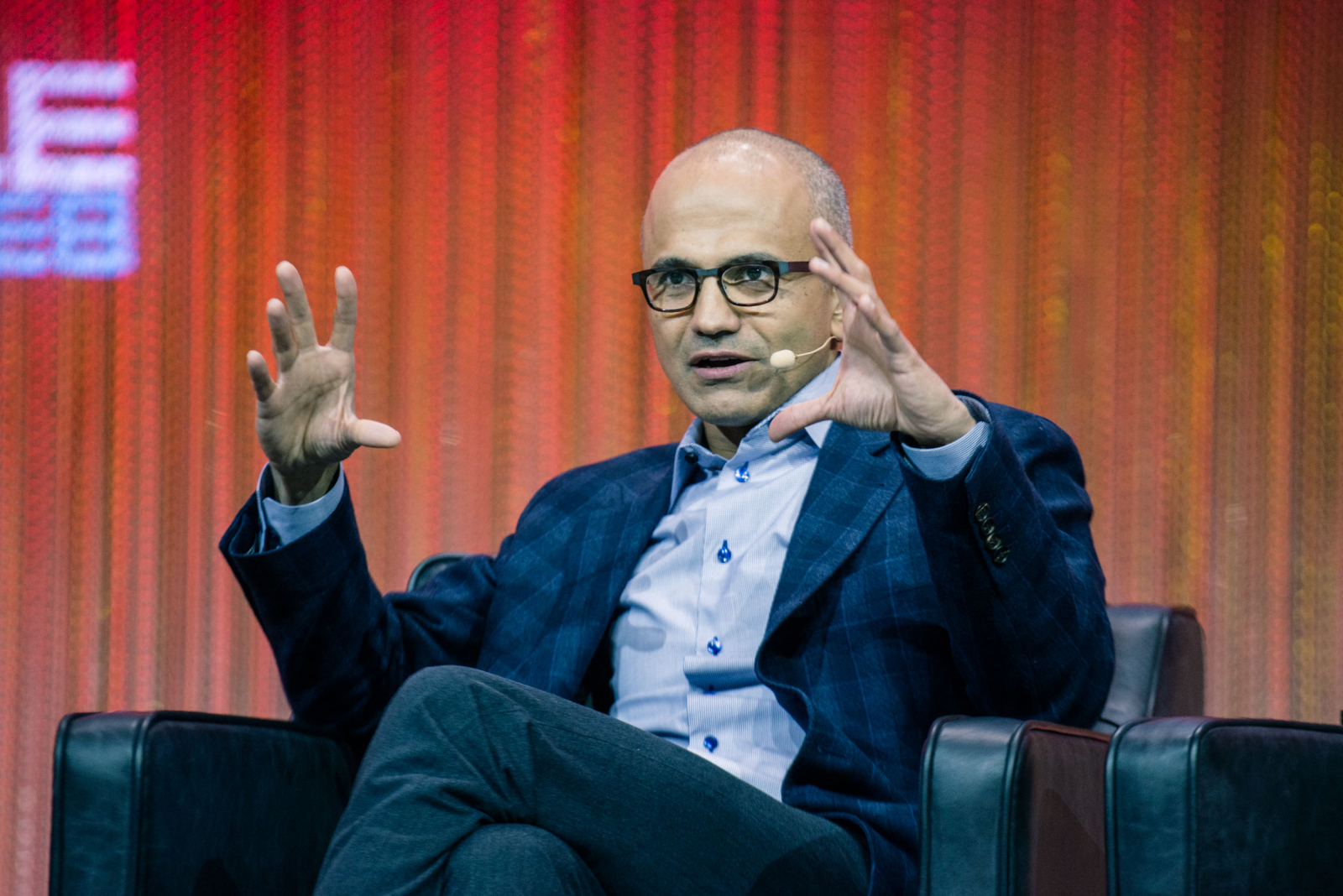
Microsoft CEO Satya Nadella has questioned the restrictions imposed by Anthropic's flagship Fable artificial intelligence (AI) model, arguing that excessive controls on AI responses hinder innovation and make little sense for users.
His remarks, made during an internal meeting with Microsoft engineers, have reignited discussions about AI safety, enterprise control and the growing battle among leading AI companies.
According to CNBC, Nadella criticised Fable's tendency to refuse certain user requests, saying, "If you use Fable, when it refuses for any random thing, it just is like, when was the last time you had a creation tool that was so editorially controlled? It doesn't make sense."
His remarks arrive as competition intensifies across the AI sector. Chinese startup Moonshot AI unveiled Kimi K3, claiming it rivals top models from Anthropic and OpenAI, while Microsoft continues expanding its own in-house AI models and Copilot ecosystem.
Restrictions on Fable Under the Spotlight
Anthropic introduced its Fable 5 model with enhanced safeguards aimed at reducing harmful AI outputs. However, shortly after its launch, the company temporarily withdrew access to comply with US government export control directives before restoring the model with stricter safety mechanisms.
According to Anthropic, the updated safeguards intentionally block a slightly higher number of harmless requests to minimise potential misuse. The company also routes some sensitive queries, particularly those involving advanced AI model creation, to older model versions.
Despite those precautions, some developers have criticised Fable on social media for rejecting seemingly legitimate requests, a concern echoed by Nadella during the internal discussion.
His comments are particularly notable because Anthropic remains both a strategic Microsoft partner and a major Azure cloud customer. Microsoft invested $5 billion in Anthropic last year, while the AI startup committed to spending $30 billion on Microsoft's Azure cloud infrastructure.
Nadella Pushes for Enterprise Control Over AI
Nadella's criticism aligns with the broader vision he outlined in a recent blog post titled The Reverse Information Paradox, where he argued that businesses risk giving away valuable institutional knowledge every time they rely on external AI models.
"In consuming intelligence, you are creating intelligence. And what you create should belong to you," Nadella wrote, warning that organisations often pay for AI twice, first financially and then by exposing proprietary knowledge through prompts, feedback and workflows.
He also questioned what he described as the irony of AI companies restricting customers from distilling models while simultaneously retaining the ability to learn from customer interactions.
Quoting Palantir CEO Alex Karp, Nadella argued that enterprises increasingly want full control over "their compute, their models, their data stack, and their alpha," insisting organisations should "own the means of production".
AI Competition Enters a New Phase
Nadella's comments come as the AI industry shifts toward cost-efficient, customisable models rather than relying solely on frontier systems from the largest AI laboratories.
Microsoft now offers developers access to more than 11,000 AI models through Azure AI Foundry, including models from Anthropic and OpenAI.
During the meeting, Nadella also questioned the economics of AI infrastructure, saying, "It can't be that there are only two companies in the world with token capital, and everybody else is renting it. It makes no economic sense."
However, Nadella's criticism signals a broader shift in enterprise AI strategy, one that prioritises openness, customer ownership of data and learning, and greater flexibility over tightly controlled proprietary systems.