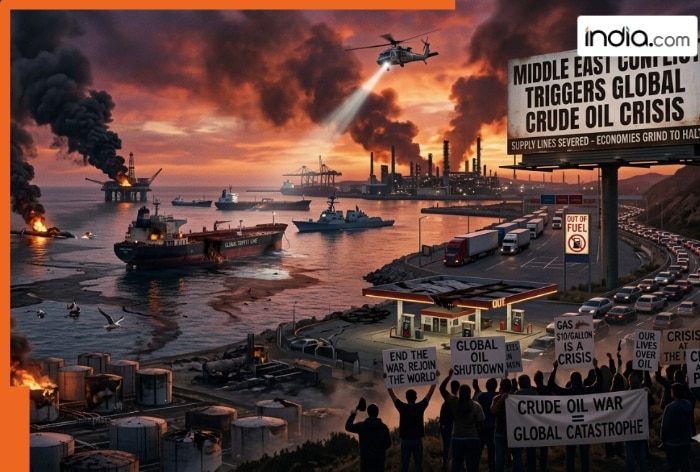
Middle East crisis triggers big chaos in crude oil market, traders and refineries globally rush to store as much as possible
The shortfall in oil supplies originating from the Middle East is now being acutely felt.
New Delhi: While the situation in West Asia may appear calm on the surface, a distinct sense of unease prevails within the inner corridors of the oil market. In the crude oil sector, a fierce battle has erupted over immediate supply. Traders and refineries across the globe have scrambled to stockpile crude oil available for immediate delivery -- at any cost.
Crude Falls Over Ceasefire Talks
According to a report by The Economic Times, a significant and startling divergence is currently evident between the futures market and the actual physical market for crude oil. Driven by hopes of a ceasefire, the price of crude oil for June delivery in the futures market plummeted by 13 percent, settling at approximately $95 per barrel. However, the reality on the ground presents a starkly different picture.
Dated Brent Too Fluctuates
In the North Sea -- the most critical market for crude oil -- traders placed 40 bids for supply last week, yet only four were successful in securing oil. The situation is such that deals for oil deliveries scheduled for the coming weeks have surged past the unprecedented level of $140 per barrel. "Dated Brent" (the benchmark for the physical market) -- which was already at record highs prior to the conflict -- had touched $144 just before the ceasefire announcement. Although it has since retreated to $126, this figure still stands nearly $30 higher than futures prices. Traders are currently willing to pay a hefty premium of $22 to $25 above the benchmark price to secure immediate delivery.
Shortfall in Oil Supply Is Now Being Felt
The shortfall in oil supplies originating from the Middle East is now being acutely felt. The number of ships passing through the Strait of Hormuz remains significantly below pre-war levels. According to Sultan Al Jaber, CEO of the Abu Dhabi National Oil Company, vessels that departed prior to the conflict are now finally reaching their destinations. The world is now truly beginning to feel the impact of that 40-day hiatus during which energy supplies were disrupted.
India, China, and Japan Make Separate Arrangements
To mitigate this shortage, Asian nations -- which are most heavily reliant on the Middle East for their energy needs -- are now sourcing oil from other corners of the globe. India has ramped up its oil purchases from Venezuela. In just the first week of April, 6 million barrels of oil were loaded for India -- double the volume recorded during the corresponding period in March. Japan is importing oil from the United States and is utilizing smaller vessels transiting through the Panama Canal to ensure expedited delivery. Meanwhile, China has increased its oil purchases from Canada to record-high levels. For refineries, the primary concern has now shifted from pricing to "energy security."