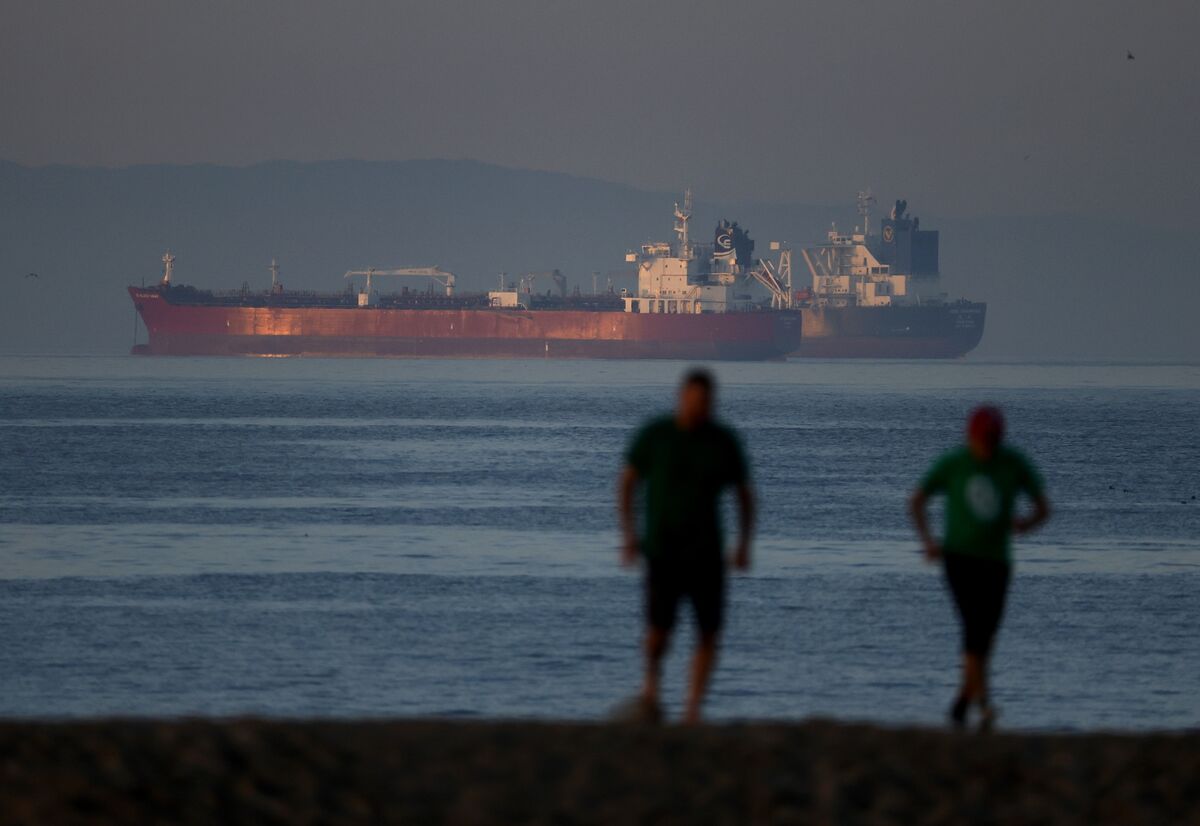
Oil Chaos Is Clearest in the Hunt for ASAP Barrels
You're reading the Energy Daily newsletter.
You're reading the Energy Daily newsletter.
You're reading the Energy Daily newsletter.
A daily guide to the energy and commodities markets that power the global economy, from journalists stationed around the world.
A daily guide to the energy and commodities markets that power the global economy, from journalists stationed around the world.
A daily guide to the energy and commodities markets that power the global economy, from journalists stationed around the world.
Plus Signed UpPlus Sign UpPlus Sign Up
By continuing, I agree to the Privacy Policy and Terms of Service.
Welcome to our guide to the commodities driving the global economy. Today, reporter Alex Longley looks at the persistent tightness in physical oil markets following the US-Iran ceasefire earlier this week.
A day into the fragile ceasefire between Washington and Tehran, the Strait of Hormuz remains largely blocked, meaning a clamor for oil remains unresolved.
Prior to the agreement, the US Energy Information Administration predicted a supply loss of about 9 million barrels a day from the war this month, following a slightly smaller drop in March.
That means 314 million barrels have been removed from the market already -- almost 80% of the record release of emergency reserves announced by the International Energy Agency in March.
As a result, refiners are scouting the world for whatever supplies they can get their hands on. Buyers have increasingly turned to the US to fill the gap, with American exports expected to surge to unprecedented levels in the coming weeks.
On Tuesday, the Dated Brent benchmark -- the most important price for physical crude transactions -- hit a record above $140 a barrel.
It fell along with futures prices on Wednesday, but is still north of $120. Its premium to Brent futures actually grew on the day. That's in part because traders continue to line up bids for shipments in a vital North Sea pricing window.
There, four grades were sought at more than $20 a barrel above their benchmark price, in a sign of the lingering scarcity. In normal times, the premium or discount would be in the low single digits.
"Physical crude markets continue to whizz higher and paper products are beginning to rebound towards the pre-ceasefire setup," said Neil Crosby, head of research at Sparta Commodities.
In another sign of the continued pressure, Japanese media reported that the nation is considering releasing additional barrels -- equivalent to 20 days of consumption -- from its emergency stockpile.
All the while, just three ships crossed Hormuz yesterday following the ceasefire. Shipowners, industry groups and governmental organizations have all struck a cautious tone about resuming transits since the agreement was announced.
Until that uncertainty eases and volumes pick up more meaningfully, there's little sign that the disruption in the oil market has come to an end.
-- Alex Longley, Bloomberg News
Chart of the day
As war injects extreme volatility into oil and gas markets, the global race for energy security is making China stronger, according to Deutsche Bank AG's Jacky Tang. China wins from an "energy-mix standpoint," he said in an interview. The country's status as the world's largest producer of clean tech means it can help governments now desperate to wean themselves off Middle East imports, according to Tang, emerging-markets chief investment officer at the lender's private banking arm.
Top stories
The US wants specific commitments from European allies on their pledge to help secure the Strait of Hormuz, requesting that they present concrete plans within days, according to a senior NATO official.
Two Chinese oil tankers are waiting near Hormuz with a third on the way, part of a growing armada amassing at the entrance to the waterway, ship-tracking data show.
Russia is seeking to leverage a global gas-supply crunch to lure energy-starved South Asia into purchasing shipments from its US-sanctioned facilities, according to people familiar with the matter.
Iron ore slid to its lowest in a month after a report that BHP Group's incoming chief met with Chinese executives in Beijing this week, a possible sign that frosty relations are thawing.
An Iran-flagged supertanker that Indonesia seized in 2023 and is moored off Singapore is holding a cargo that's vastly more valuable than it was a few short weeks ago.
BNEF today
Major automakers such as Ford Motor Co. and General Motors Co. are expanding into energy storage as electric vehicle demand softens. They're seeking to capture growth and higher margins, and mitigate underuse of battery factories, BloombergNEF said. Still, the shift requires them to address technological differences between EV and storage batteries and navigate intense competition.
Coming up
Bloomberg Tech returns to San Francisco on June 3-4, convening leading CEOs, investors and innovators to explore the capital, connectivity and ideas driving the industry forward. Register here.
More from Bloomberg
-
Economics Daily for what the changing landscape means for policymakers, investors and you
-
Business of Food for a weekly look at how the world feeds itself in a changing economy and climate, from farming to supply chains to consumer trends
-
Green Daily for the latest in climate news, zero-emission tech and green finance
-
Hyperdrive for expert insight into the future of cars
-
Supply Lines for daily insights into supply chains and global trade
You have exclusive access to other subscriber-only newsletters. Explore all newsletters here to get most out of your Bloomberg subscription.