Phemex Launched Prediction Markets in Partnership with Polymarket | ForkLog
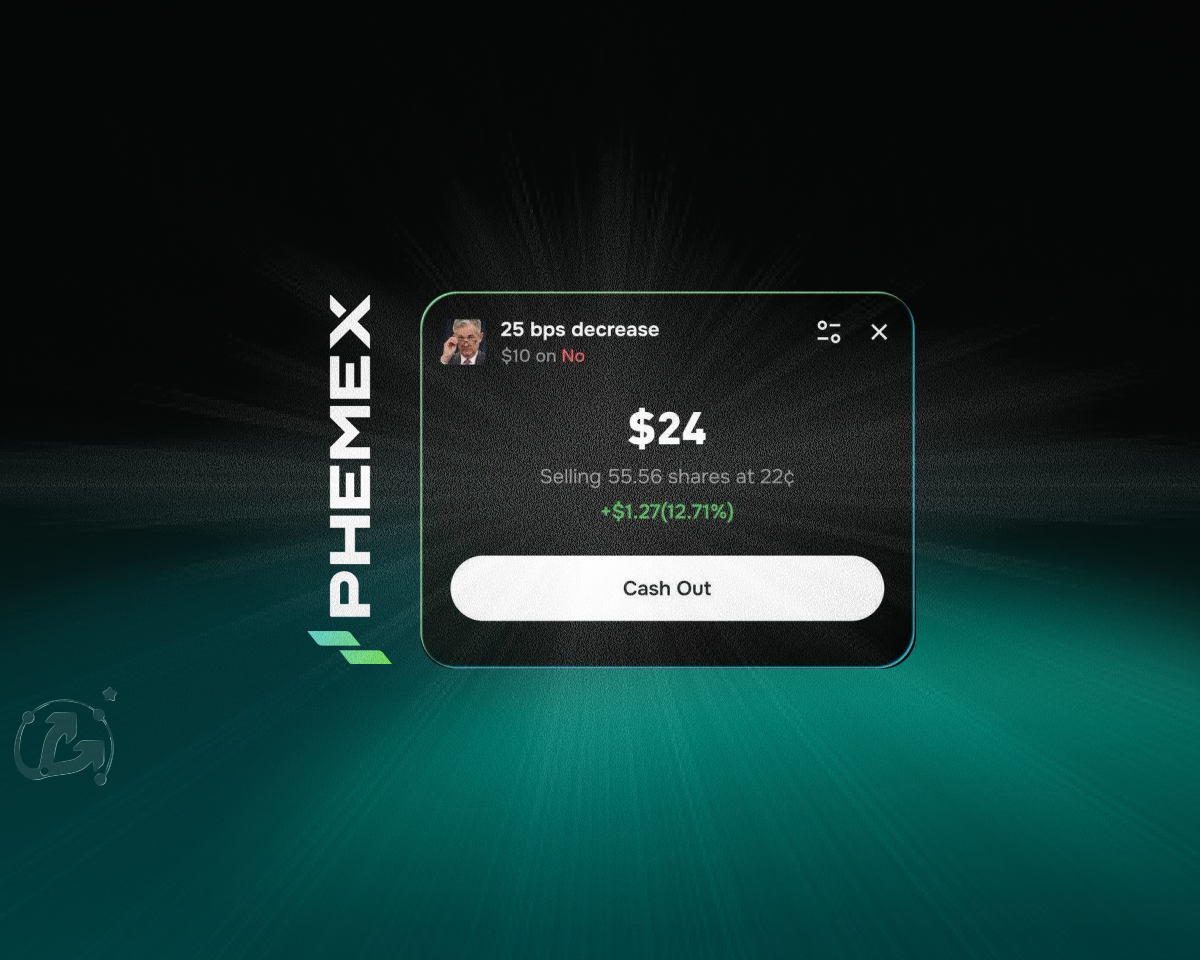
On April 23, crypto exchange Phemex launched prediction markets built on Polymarket infrastructure -- one of the largest platforms in the segment. Users can trade outcomes of real-world events spanning macroeconomics, geopolitics, technology, sports, and culture directly from their exchange account, according to a press release.
The integration sits inside the standard exchange environment: no separate wallet is required, and trades execute through a regular account in USDT and USDC. The format feels native to existing exchange users.
"We lean on Polymarket's established liquidity: this gives traders deeper markets, tighter spreads, and a steady flow of new events without fragmented pools," Phemex stated.
Alongside the launch, Phemex is running a four-week campaign with a prize pool, bonuses and first-trade rebate. Traders will compete in weekly leaderboards ranked by PnL and ROI, with rankings resetting each week.
The first 500 users will receive opening trade protection: if the initial position closes at a loss, the exchange will compensate up to $10 USDT.
Prediction markets let traders take positions on real-world event outcomes at market-determined prices, which update continuously as new information emerges.
The segment is growing rapidly. Since the beginning of 2026, trading volumes across sector leaders Kalshi and Polymarket have already surpassed $60 billion. Bernstein analysts expect the figure to reach $240 billion by December, and $1 trillion by 2030.
Sports remains the dominant category, accounting for 61% of all bets. Bernstein sees the sector's long-term potential in contracts tied to crypto assets, macroeconomic indicators, and politics.
As of April 21, Kalshi holds 45.1% of the market, while Polymarket accounts for 38.7%.
On February 2, US-based exchange Coinbase launched a prediction platform in partnership with Kalshi. In March, Kalshi raised $1 billion at a $22 billion valuation -- double its December round.