SpaceX Starship Grounded After Flight 12 Booster Failure: FAA Investigation Threatens IPO Timeline
Raptor 3 engine failures on Booster 19 triggered the FAA probe, putting Flight 13 scope in doubt as SpaceX's Nasdaq IPO approaches.
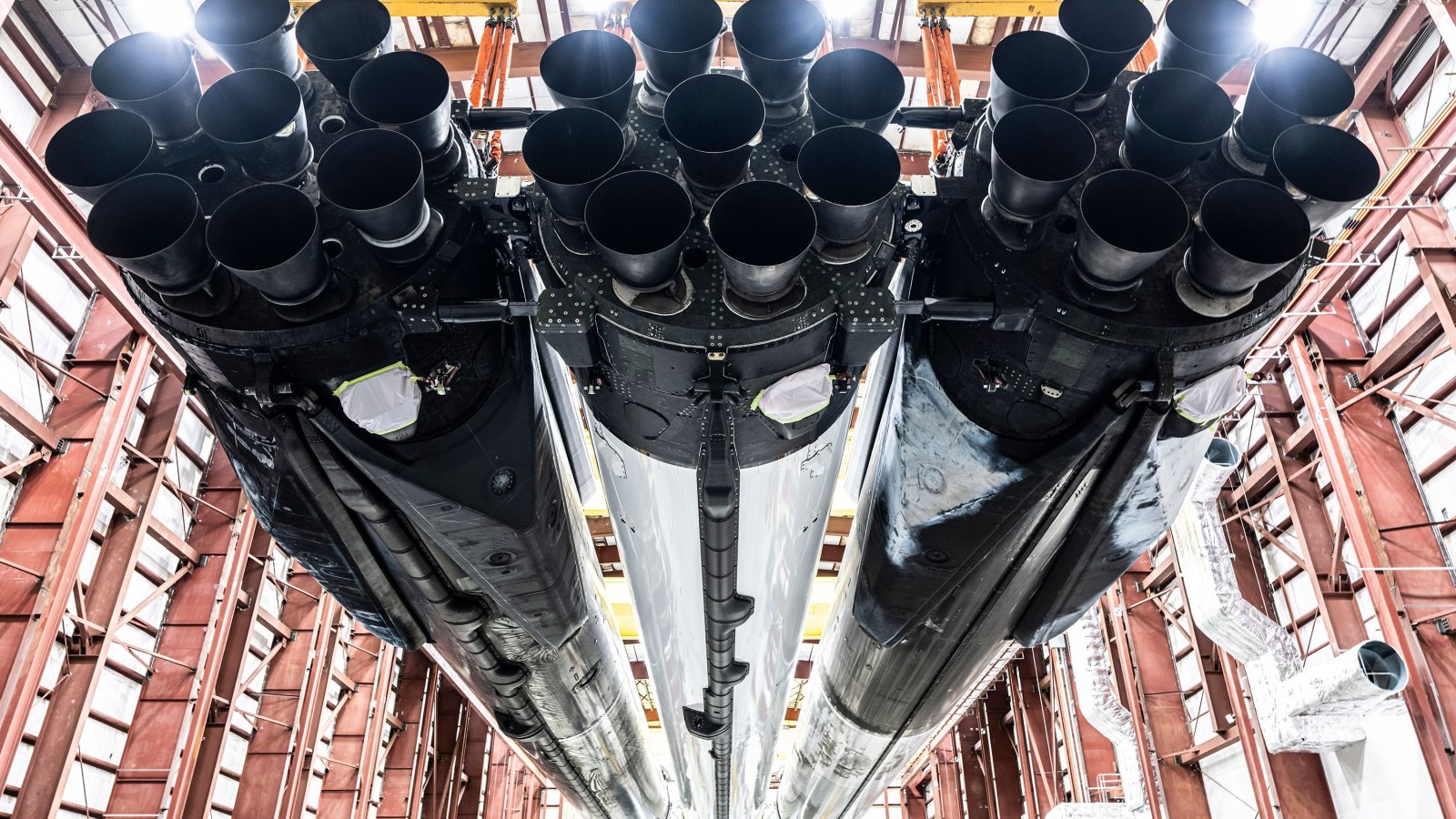
SpaceX's newest and most powerful rocket is grounded -- five days after its debut -- after the Federal Aviation Administration formally declared the May 22 Starship Flight 12 launch a mishap and ordered a full investigation before Flight 13 can proceed. The booster's Raptor 3 engines failed to reignite properly after stage separation, sending Super Heavy Booster 19 to a hard splashdown in the Gulf of America instead of a controlled descent, and any investor or observer with a stake in SpaceX's anticipated Nasdaq IPO -- expected to price around June 11 -- now has a material regulatory variable to weigh.
What Went Wrong on Starship Flight 12
Starship Flight 12, which lifted off from Starbase in South Texas on May 22 at approximately 7:35 p.m. ET, was the debut mission of the upgraded Version 3 configuration. Roughly one minute and 42 seconds into the ascent, one of the 33 Raptor V3 engines on Super Heavy Booster 19 shut down unexpectedly. The situation worsened around the two-minute mark.
As SpaceX executed its planned staggered engine shutdown sequence ahead of stage separation -- bringing the booster from 32 engines down to five -- the vehicle failed to reignite the full complement of engines needed for its boostback burn. According to SpaceX's own post-mission report, Booster 19 "was unable to light all planned engines and performed a partial boostback burn that ended early," before a failed landing burn sent it to a hard splashdown. The anomaly also prompted the FAA to activate a debris response area, placing five aircraft in holding patterns and delaying six departures.
Dan Huot, a member of SpaceX's communications team narrating the company's broadcast, acknowledged the problem in real time: "We are not seeing as many booster engines ignited as we expected for boostback, but we are seeing six good engines on ship."
The Starship upper stage, Ship 39, performed better. Despite losing one of its three Raptor Vacuum engines, the vehicle successfully maneuvered to its intended splashdown zone in the Indian Ocean and deployed 22 payloads, including Starlink simulators and two modified satellites that photographed the craft in space. The FAA confirmed that the upper-stage engine issue was not a driving factor in the investigation.
FAA Mishap Investigation: What It Requires
On May 27, the FAA announced it had completed a thorough assessment of the Flight 12 operation and determined that Booster 19's off-nominal performance "resulted in a mishap" under federal commercial spaceflight regulations.
"The FAA is requiring SpaceX to conduct a mishap investigation," the agency said. "The FAA will oversee the SpaceX-led investigation, be involved in every step of the process, and approve SpaceX's final report, including any corrective actions."
The FAA confirmed there were no reports of public injury or damage to public property. Nonetheless, federal regulations under 14 CFR Part 450 mandate investigations when specific thresholds are crossed -- including hazardous debris landing outside defined areas, failure to complete a launch as planned, or malfunction of a safety-critical system. Return to flight requires the FAA to determine that no system, process, or procedure related to the mishap affects public safety.
Raptor 3 Engine Problem Puts Flight 13 Scope in Doubt
SpaceX has now faced mishap investigations following each of its first four Starship flights in the Version 1 era and three investigations after Version 2 Flights 7 through 9. Flight 12's investigation is the first for the Version 3 configuration.
The investigation will focus specifically on the Raptor 3 engines, which made their program debut on Flight 12. With both the booster's boostback burn and the upper stage's vacuum-engine count affected on the same flight, SpaceX is unlikely to attempt an orbital trajectory on Flight 13. NASASpaceFlight reported a likely July-August 2026 window for the next flight, pending testing and mitigation of issues identified during Flight 12. SpaceX may also choose to forego a booster catch on Flight 13 and instead repeat the Gulf splashdown profile.
Hardware for Flight 13 -- comprising Ship 40 and Booster 20 -- is already in preparation at Starbase. SpaceX did not respond to requests for comment.
SpaceX IPO and Starship: What Investors Should Know
The grounding arrives at an acutely sensitive moment. SpaceX filed its public S-1 prospectus with the SEC on May 20 -- two days before Flight 12 -- targeting a Nasdaq listing under the ticker SPCX, with an IPO roadshow expected around June 4 and shares potentially beginning to trade as early as June 12, 2026. In its S-1, SpaceX stated that its growth strategy "depends on our ability to increase our launch cadence and payload capacity, which is dependent on the successful development of Starship at scale."
TechCrunch reported that the grounding "diminishes the chance that another [Starship flight] will occur before the company's anticipated IPO in mid-June." The Register noted that this marks the sixth time the FAA has grounded Starship in three years.
How Does a Starlink V3 Satellite Delay Affect Starship's Roadmap?
One of the most immediate downstream consequences involves Starlink Version 3 satellites, which SpaceX said in its S-1 it aims to begin deploying in the second half of 2026. Those satellites are designed to fly exclusively on Starship, meaning any prolonged grounding directly pressures that deployment schedule -- and with it, the Starlink revenue growth story that underpins much of SpaceX's IPO valuation narrative.
Beyond Starlink, SpaceX holds NASA's Human Landing System contract for the Starship-derived lander planned for the Artemis IV lunar landing mission, currently targeted for 2028. Before that can happen, SpaceX must demonstrate orbital propellant transfer at scale -- a process requiring multiple Starship tanker launches -- and an uncrewed lunar landing. Each grounding sets back that demonstration sequence.
SpaceX and the FAA have resolved previous investigations in a matter of weeks, though the complexity of diagnosing a newly introduced engine variant could extend that timeline. The FAA has not indicated a target date for completing its review.
Frequently Asked Questions
Why is SpaceX Starship grounded after Flight 12?
The FAA declared the May 22 Starship Flight 12 launch a mishap after Super Heavy Booster 19's Raptor 3 engines failed to reignite properly during the boostback burn, sending it to a hard uncontrolled splashdown in the Gulf of America. Under federal commercial spaceflight regulations (14 CFR Part 450), SpaceX must complete an FAA-supervised investigation and obtain regulatory approval before Flight 13 can proceed.
How long will the Starship FAA mishap investigation take?
The FAA has not stated a timeline. Based on historical precedent, prior Starship investigations resolved in roughly two months, though the involvement of newly debuted Raptor 3 engines -- which have no prior flight history -- may require additional analysis. NASASpaceFlight estimates a July-August 2026 window for Flight 13, pending findings.
What happened to the Starlink V3 satellite launch schedule?
SpaceX stated in its May 2026 IPO prospectus that it aims to begin deploying Starlink Version 3 satellites in the second half of 2026. Those satellites are designed to fly exclusively on Starship, meaning the Flight 12 grounding directly threatens the H2 2026 deployment target until a successful return to flight is achieved.
Will SpaceX fly Starship before its IPO?
The IPO roadshow is expected around June 4, with shares potentially trading as early as June 12, 2026. Given that FAA mishap investigations typically take weeks to months, a Starship flight before the IPO date appears unlikely based on current timelines -- though SpaceX has not formally commented on the investigation's expected duration.