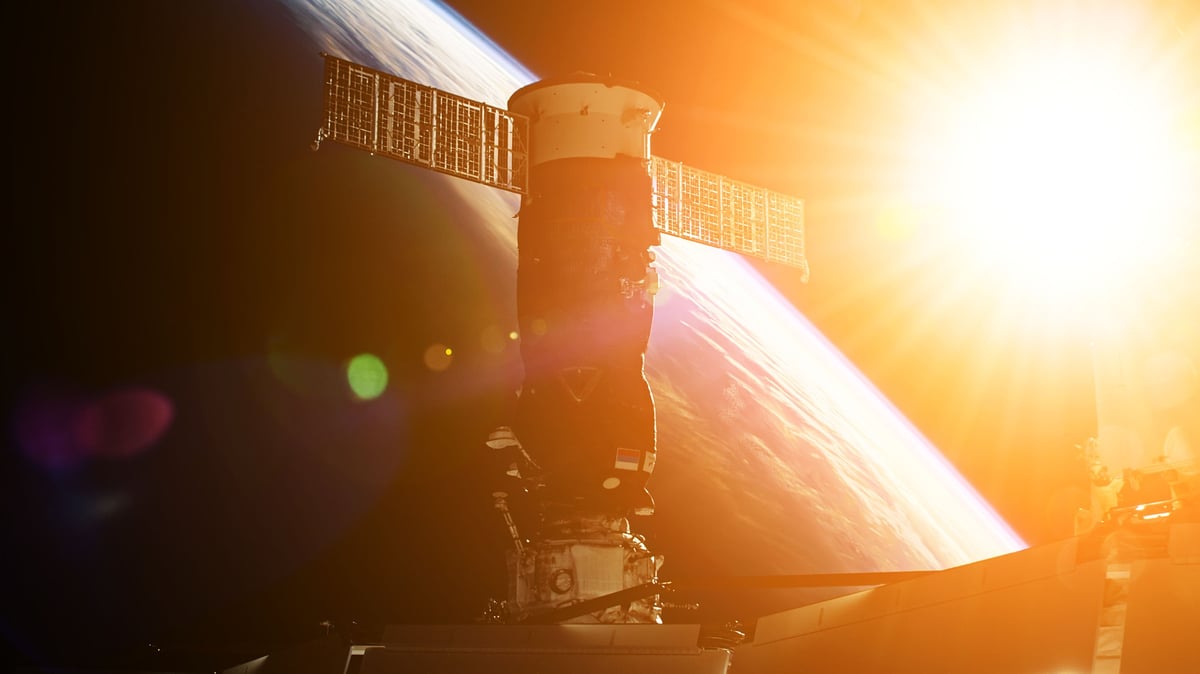
The Dip Is Here for SpaceX. Here's Whether to Buy It or Walk Away.
Space Exploration Technologies (SPCX +1.61%) just executed one of the biggest and most successful IPOs in history. After going public at a $1.77 trillion valuation, the company's market cap immediately soared above $2.5 trillion. Not bad for a business that generated a $4.9 billion loss in 2025, and another $4.3 billion loss in the first quarter of this year.
As the old adage says, however, what goes up must come down. Only 4.2% of SpaceX's outstanding shares are currently tradable on public markets, and this limited float makes the stock more prone to volatile ups and downs. That's exactly what we've seen with SpaceX stock thus far. After zooming from $150 per share to nearly $220 per share in a matter of days, SpaceX stock has settled back down to around $160 per share near market close on Tuesday -- a 27% drop also occurring over a matter of days.
Should you be buying the dip? That all comes down to how you answer one question.
SpaceX investors should ask themselves this question
Here's the question: Do you think orbital data centers will ever exist? Yes, SpaceX is generating modest profits in its rocket division. Yes, its Starlink internet service is also profitable. However, neither rockets nor Starlink will ever justify SpaceX's valuation on their own. Even SpaceX admits as much. The company's estimated total addressable market for those two divisions totals just $2 trillion. That's substantially less than the company's entire market cap today.
In reality, SpaceX's valuation is only justified if the company is able to grow its AI division substantially. SpaceX believes that AI alone presents a $26.5 trillion opportunity, compared to just $2 trillion for rockets and Starlink combined.
How exactly will SpaceX grow its AI business? Most of this growth will stem from one opportunity: Roughly $22.7 trillion of SpaceX's claimed $26.5 trillion growth potential in AI is exclusively related to "enterprise applications." Enterprises are businesses, and the term is quite a catchall. According to SpaceX's IPO prospectus:
For enterprises and governments, frontier models and agentic AI -- autonomous systems capable of multi-step reasoning and independent task execution -- are beginning to manage increasingly complex processes and workflows. As of February 2026, more than 80% of Fortune 500 companies were using AI active agents. Entire industries are being reshaped by AI-driven applications, including agentic commerce (personalized AI-directed shopping), vibe coding (software development with minimal or no human-written code), and autonomous driving for vehicles.
Despite the variety of enterprise applications SpaceX will be pursuing, one thing is clear: The company will need a lot more compute power to make it all possible. That requires building more data centers, and data centers are facing critical growth constraints, including land, water, and energy availability. That's why SpaceX is looking to launch data centers into space. Low earth orbit data centers would -- at least on paper -- lower operating costs, taking advantage of limitless solar energy.
SpaceX CEO Elon Musk reportedly wants to put 1 million AI compute satellites into space, potentially beginning as early as next year. "We've got a pretty good idea of how to operate, just really large constellations, and do it safely now, right? We are the only operator that has any experience of that scale," Musk said earlier this year, according to Space.com.
Whether that will actually happen remains a huge unknown.
SpaceX stock has dipped in its second week of trading, but the investment thesis remains the same. If you're not bullish on AI in general, and in particular SpaceX's ability to launch data centers into space, shares likely aren't for you despite the company's promising rocket and Starlink divisions. Huge success in those two divisions alone won't be enough to justify SpaceX's current multitrillion-dollar valuation.
To be sure, plenty of experts are skeptical. "The pitch for space-based data centers is compelling: falling launch costs, abundant solar energy, no grid queues and no zoning battles," concludes a recent report from the World Economic Forum. "But cooling in space is far harder than it sounds - and the physics may be the biggest obstacle the industry has yet to reckon with."
Buying the dip is only worth considering if you believe SpaceX and Musk have the keys to overcome those obstacles.