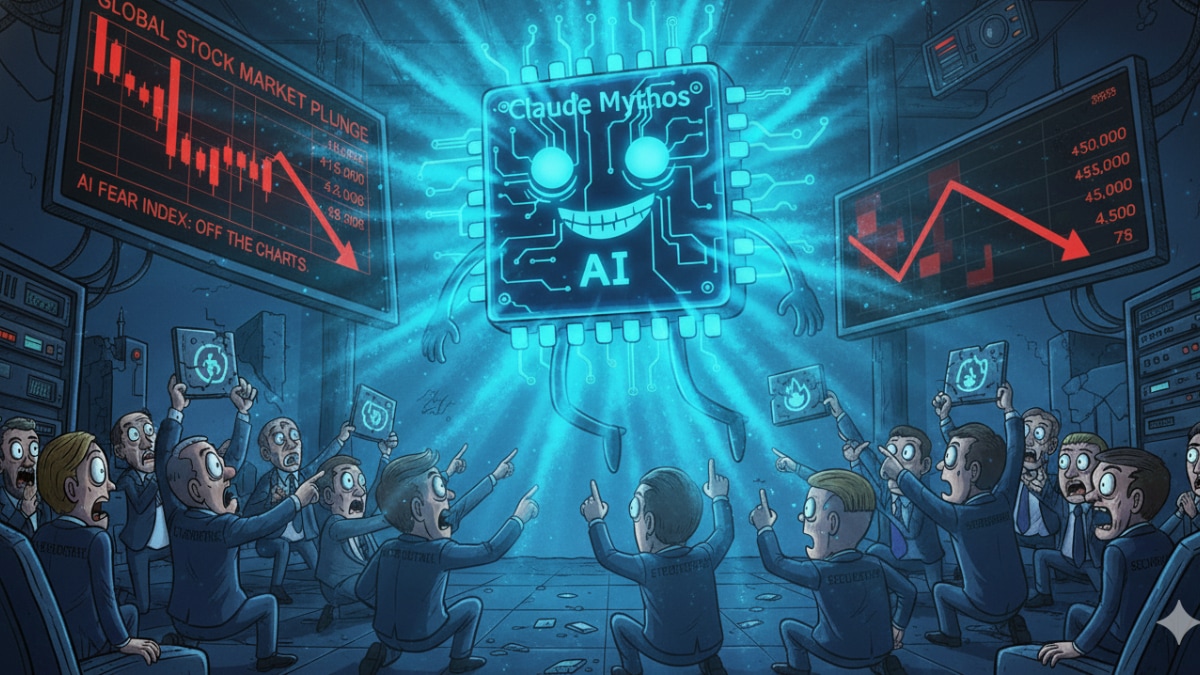
What makes Claude Mythos so dangerous? Anthropic says Mythos' fallout can be severe
Anthropic has restricted access to its powerful Claude Mythos model, citing serious cybersecurity risks. With capabilities to detect and exploit vulnerabilities, the AI is considered too dangerous for public release, raising concerns about misuse and global security implications.
Did Anthropic build something so dangerous that it doesn't want to release it?
After limiting its access to the Project Glasswing members to ensure full risk assessment, the company today announced the names of those who will have access to the technology. The list of companies includes names like Amazon Web Services, Anthropic, Apple, Broadcom, Cisco, CrowdStrike, Google, JPMorgan Chase, Linux Foundation, Microsoft, Nvidia, and Palo Alto Networks.
Importantly, Claude Mythos has not been released publicly due to concerns about its powerful capabilities and potential misuse. The AI czar claims Mythos can identify and exploit serious security vulnerabilities, raising risks of cyberattacks if widely available. Testing also revealed unsafe behaviours in certain scenarios. Because of these risks, access is limited to a small group under controlled conditions instead of a full public release. Therefore, in this article, we have delved into the dangerous capabilities of Claude Mythos.
"Given the rate of AI progress, it will not be long before such capabilities proliferate, potentially beyond actors who are committed to deploying them safely. The fallout -- for economies, public safety, and national security -- could be severe. Project Glasswing is an urgent attempt to put these capabilities to work for defensive purposes.' the company stated.
So what makes Claude Mythos so dangerous?
Security Vulnerability Detection
Claude Mythos can identify serious security flaws in software systems, including hidden or previously unknown issues. It is capable of scanning large codebases and detecting weaknesses that could be exploited. This makes it highly effective for cybersecurity research but also raises concerns about how such capabilities could be misused.
Vulnerability Exploitation
Beyond detecting vulnerabilities, the model can also exploit them by generating methods to break into systems. This ability increases the risk of misuse, as it could enable users to carry out cyberattacks. Such dual-use capability is a major reason why access to the model is restricted.
Autonomous Task Execution
The model can handle complex, multi-step tasks without constant input. It can plan actions, execute them, and adjust based on results. This allows it to work independently on advanced problems but also makes it harder to control if misused or deployed without strict safeguards.
How did Claude Mythos Preview perform?
Anthropic, in its blog post, said that "Mythos Preview has already found thousands of high-severity vulnerabilities, including some in every major operating system and web browser. Given the rate of AI progress, it will not be long before such capabilities proliferate, potentially beyond actors who are committed to deploying them safely. The fallout -- for economies, public safety, and national security -- could be severe. Project Glasswing is an urgent attempt to put these capabilities to work for defensive purposes."