News & Updates
The latest news and updates from companies in the WLTH portfolio.
JPMorgan CEO Dimon says Anthropic's Mythos AI risks are a 'real issue'
July 15 (Reuters) - JPMorgan Chase CEO Jamie Dimon said on Wednesday that risks posed by Anthropic's Mythos AI model are a "real issue" that the U.S. government is on top of, underscoring concerns about the powerful model that have caused Washington to intervene. Dimon, speaking at Senator Dave McCormick's Pennsylvania Defense and Innovation Summit, added that access to advanced AI capabilities must be controlled, saying "you're giving ballistic missiles to individuals with Mythos." U.S.-based Anthropic released Mythos in April to a select group that included JPMorgan. The model has attracted interest from banks because it is considered among the most advanced AI systems for identifying cybersecurity vulnerabilities, helping firms uncover and fix weaknesses more quickly. However, in June, the U.S. government ordered Anthropic to restrict access to its top AI models, Fable 5 and Mythos 5, to foreign nationals over national security concerns, forcing the company to cut off worldwide access. The government later removed restrictions on the models after Anthropic implemented new safeguards. Governments and tech companies are grappling with AI safety concerns, including the misuse of systems capable of identifying software vulnerabilities. Washington has stepped up oversight of new model releases amid fears that advanced AI could be exploited by military intelligence in China, Russia or other countries of concern. Anthropic could not be immediately reached for comment on Dimon's remarks outside regular business hours. (Reporting by Mihika Sharma in Bengaluru and Mrinmay Dey in Mexico; Editing by Rashmi Aich)

JPMorgan CEO: Anthropic's Mythos AI risks are a 'real issue' | New Straits Times
NEW YORK: JPMorgan Chase CEO Jamie Dimon said on Wednesday that risks posed by Anthropic's Mythos AI model are a "real issue" that the US government is on top of, underscoring concerns about the powerful model that have caused Washington to intervene. Dimon, speaking at Senator Dave McCormick's Pennsylvania Defense and Innovation Summit, added that access to advanced AI capabilities must be controlled, saying "you're giving ballistic missiles to individuals with Mythos." US-based Anthropic released Mythos in April to a select group that included JPMorgan. The model has attracted interest from banks because it is considered among the most advanced AI systems for identifying cybersecurity vulnerabilities, helping firms uncover and fix weaknesses more quickly. However, in June, the US government ordered Anthropic to restrict access to its top AI models, Fable 5 and Mythos 5, to foreign nationals over national security concerns, forcing the company to cut off worldwide access. The government later removed restrictions on the models after Anthropic implemented new safeguards. Governments and tech companies are grappling with AI safety concerns, including the misuse of systems capable of identifying software vulnerabilities. What To Read Next Washington has stepped up oversight of new model releases amid fears that advanced AI could be exploited by military intelligence in China, Russia or other countries of concern. Anthropic could not be immediately reached for comment on Dimon's remarks outside regular business hours.

JPMorgan CEO Dimon says Anthropic's Mythos AI risks are a 'real issue'
July 15 (Reuters) - JPMorgan Chase CEO Jamie Dimon said on Wednesday that risks posed by Anthropic's Mythos AI model are a "real issue" that the U.S. government is on top of, underscoring concerns about the powerful model that have caused Washington to intervene. Dimon, speaking at Senator Dave McCormick's Pennsylvania Defense and Innovation Summit, added that access to advanced AI capabilities must be controlled, saying "you're giving ballistic missiles to individuals with Mythos." U.S.-based Anthropic released Mythos in April to a select group that included JPMorgan. The model has attracted interest from banks because it is considered among the most advanced AI systems for identifying cybersecurity vulnerabilities, helping firms uncover and fix weaknesses more quickly. However, in June, the U.S. government ordered Anthropic to restrict access to its top AI models, Fable 5 and Mythos 5, to foreign nationals over national security concerns, forcing the company to cut off worldwide access. The government later removed restrictions on the models after Anthropic implemented new safeguards. Governments and tech companies are grappling with AI safety concerns, including the misuse of systems capable of identifying software vulnerabilities. Washington has stepped up oversight of new model releases amid fears that advanced AI could be exploited by military intelligence in China, Russia or other countries of concern. Anthropic could not be immediately reached for comment on Dimon's remarks outside regular business hours. (Reporting by Mihika Sharma in Bengaluru and Mrinmay Dey in Mexico; Editing by Rashmi Aich)
JPMorgan CEO Dimon says Anthropic's Mythos AI risks are a 'real issue' By Reuters
July 15 (Reuters) - JPMorgan Chase CEO Jamie Dimon said on Wednesday that risks posed by Anthropic's Mythos AI model are a "real issue" that the U.S. government is on top of, underscoring concerns about the powerful model that have caused Washington to intervene. Dimon, speaking at Senator Dave McCormick's Pennsylvania Defense and Innovation Summit, added that access to advanced AI capabilities must be controlled, saying "you're giving ballistic missiles to individuals with Mythos." U.S.-based Anthropic released Mythos in April to a select group that included JPMorgan. The model has attracted interest from banks because it is considered among the most advanced AI systems for identifying cybersecurity vulnerabilities, helping firms uncover and fix weaknesses more quickly. However, in June, the U.S. government ordered Anthropic to restrict access to its top AI models, Fable 5 and Mythos 5, to foreign nationals over national security concerns, forcing the company to cut off worldwide access. The government later removed restrictions on the models after Anthropic implemented new safeguards. Governments and tech companies are grappling with AI safety concerns, including the misuse of systems capable of identifying software vulnerabilities. Washington has stepped up oversight of new model releases amid fears that advanced AI could be exploited by military intelligence in China, Russia or other countries of concern. Anthropic could not be immediately reached for comment on Dimon's remarks outside regular business hours.

JPMorgan CEO Dimon says Anthropic's Mythos AI risks are a 'real issue'
Add Yahoo as a preferred source to see more of our stories on Google. July 15 (Reuters) - JPMorgan Chase CEO Jamie Dimon said on Wednesday that risks posed by Anthropic's Mythos AI model are a "real issue" that the U.S. government is on top of, underscoring concerns about the powerful model that have caused Washington to intervene. Dimon, speaking at Senator Dave McCormick's Pennsylvania Defense and Innovation Summit, added that access to advanced AI capabilities must be controlled, saying "you're giving ballistic missiles to individuals with Mythos." U.S.-based Anthropic released Mythos in April to a select group that included JPMorgan. The model has attracted interest from banks because it is considered among the most advanced AI systems for identifying cybersecurity vulnerabilities, helping firms uncover and fix weaknesses more quickly. However, in June, the U.S. government ordered Anthropic to restrict access to its top AI models, Fable 5 and Mythos 5, to foreign nationals over national security concerns, forcing the company to cut off worldwide access. The government later removed restrictions on the models after Anthropic implemented new safeguards. Governments and tech companies are grappling with AI safety concerns, including the misuse of systems capable of identifying software vulnerabilities. Washington has stepped up oversight of new model releases amid fears that advanced AI could be exploited by military intelligence in China, Russia or other countries of concern. Anthropic could not be immediately reached for comment on Dimon's remarks outside regular business hours. (Reporting by Mihika Sharma in Bengaluru and Mrinmay Dey in Mexico; Editing by Rashmi Aich)
JPMorgan CEO Dimon says Anthropic's Mythos AI risks are a 'real issue'
July 15 (Reuters) - JPMorgan Chase CEO Jamie Dimon said on Wednesday that risks posed by Anthropic's Mythos AI model are a "real issue" that the U.S. government is on top of, underscoring concerns about the powerful model that have caused Washington to intervene. Dimon, speaking at Senator Dave McCormick's Pennsylvania Defense and Innovation Summit, added that access to advanced AI capabilities must be controlled, saying "you're giving ballistic missiles to individuals with Mythos." U.S.-based Anthropic released Mythos in April to a select group that included JPMorgan. The model has attracted interest from banks because it is considered among the most advanced AI systems for identifying cybersecurity vulnerabilities, helping firms uncover and fix weaknesses more quickly. However, in June, the U.S. government ordered Anthropic to restrict access to its top AI models, Fable 5 and Mythos 5, to foreign nationals over national security concerns, forcing the company to cut off worldwide access. The government later removed restrictions on the models after Anthropic implemented new safeguards. Governments and tech companies are grappling with AI safety concerns, including the misuse of systems capable of identifying software vulnerabilities. Washington has stepped up oversight of new model releases amid fears that advanced AI could be exploited by military intelligence in China, Russia or other countries of concern. Anthropic could not be immediately reached for comment on Dimon's remarks outside regular business hours. (Reporting by Mihika Sharma in Bengaluru and Mrinmay Dey in Mexico; Editing by Rashmi Aich)
JPMorgan CEO Dimon says Anthropic's Mythos AI risks are a 'real issue'
July 15 (Reuters) - JPMorgan Chase CEO Jamie Dimon said on Wednesday that risks posed by Anthropic's Mythos AI model are a "real issue" that the U.S. government is on top of, underscoring concerns about the powerful model that have caused Washington to intervene. Dimon, speaking at Senator Dave McCormick's Pennsylvania Defense and Innovation Summit, added that access to advanced AI capabilities must be controlled, saying "you're giving ballistic missiles to individuals with Mythos." U.S.-based Anthropic released Mythos in April to a select group that included JPMorgan. The model has attracted interest from banks because it is considered among the most advanced AI systems for identifying cybersecurity vulnerabilities, helping firms uncover and fix weaknesses more quickly. However, in June, the U.S. government ordered Anthropic to restrict access to its top AI models, Fable 5 and Mythos 5, to foreign nationals over national security concerns, forcing the company to cut off worldwide access. The government later removed restrictions on the models after Anthropic implemented new safeguards. Governments and tech companies are grappling with AI safety concerns, including the misuse of systems capable of identifying software vulnerabilities. Washington has stepped up oversight of new model releases amid fears that advanced AI could be exploited by military intelligence in China, Russia or other countries of concern. Anthropic could not be immediately reached for comment on Dimon's remarks outside regular business hours. (Reporting by Mihika Sharma in Bengaluru and Mrinmay Dey in Mexico; Editing by Rashmi Aich)
JPMorgan CEO Dimon says Anthropic's Mythos AI risks are a 'real issue'
Add Yahoo as a preferred source to see more of our stories on Google. July 15 (Reuters) - JPMorgan Chase CEO Jamie Dimon said on Wednesday that risks posed by Anthropic's Mythos AI model are a "real issue" that the U.S. government is on top of, underscoring concerns about the powerful model that have caused Washington to intervene. Dimon, speaking at Senator Dave McCormick's Pennsylvania Defense and Innovation Summit, added that access to advanced AI capabilities must be controlled, saying "you're giving ballistic missiles to individuals with Mythos." U.S.-based Anthropic released Mythos in April to a select group that included JPMorgan. The model has attracted interest from banks because it is considered among the most advanced AI systems for identifying cybersecurity vulnerabilities, helping firms uncover and fix weaknesses more quickly. However, in June, the U.S. government ordered Anthropic to restrict access to its top AI models, Fable 5 and Mythos 5, to foreign nationals over national security concerns, forcing the company to cut off worldwide access. The government later removed restrictions on the models after Anthropic implemented new safeguards. Governments and tech companies are grappling with AI safety concerns, including the misuse of systems capable of identifying software vulnerabilities. Washington has stepped up oversight of new model releases amid fears that advanced AI could be exploited by military intelligence in China, Russia or other countries of concern. Anthropic could not be immediately reached for comment on Dimon's remarks outside regular business hours. (Reporting by Mihika Sharma in Bengaluru and Mrinmay Dey in Mexico; Editing by Rashmi Aich)
JPMorgan CEO Dimon says Anthropic's Mythos AI risks are a 'real issue'
July 15 (Reuters) - JPMorgan Chase CEO Jamie Dimon said on Wednesday that risks posed by Anthropic's Mythos AI model are a "real issue" that the U.S. government is on top of, underscoring concerns about the powerful model that have caused Washington to intervene. Dimon, speaking at Senator Dave McCormick's Pennsylvania Defense and Innovation Summit, added that access to advanced AI capabilities must be controlled, saying "you're giving ballistic missiles to individuals with Mythos." U.S.-based Anthropic released Mythos in April to a select group that included JPMorgan. The model has attracted interest from banks because it is considered among the most advanced AI systems for identifying cybersecurity vulnerabilities, helping firms uncover and fix weaknesses more quickly. However, in June, the U.S. government ordered Anthropic to restrict access to its top AI models, Fable 5 and Mythos 5, to foreign nationals over national security concerns, forcing the company to cut off worldwide access. The government later removed restrictions on the models after Anthropic implemented new safeguards. Governments and tech companies are grappling with AI safety concerns, including the misuse of systems capable of identifying software vulnerabilities. Washington has stepped up oversight of new model releases amid fears that advanced AI could be exploited by military intelligence in China, Russia or other countries of concern. Anthropic could not be immediately reached for comment on Dimon's remarks outside regular business hours. (Reporting by Mihika Sharma in Bengaluru and Mrinmay Dey in Mexico; Editing by Rashmi Aich)
JPMorgan CEO Dimon says Anthropic's Mythos AI risks are a 'real issue'
July 15 (Reuters) - JPMorgan Chase (JPM.N), opens new tab CEO Jamie Dimon said on Wednesday that risks posed by Anthropic's Mythos AI model are a "real issue" that the U.S. government is on top of, underscoring concerns about the powerful model that have caused Washington to intervene. Dimon, speaking at Senator Dave McCormick's Pennsylvania Defense and Innovation Summit, added that access to advanced AI capabilities must be controlled, saying "you're giving ballistic missiles to individuals with Mythos." U.S.-based Anthropic released Mythos in April to a select group that included JPMorgan. The model has attracted interest from banks because it is considered among the most advanced AI systems for identifying cybersecurity vulnerabilities, helping firms uncover and fix weaknesses more quickly. However, in June, the U.S. government ordered Anthropic to restrict access to its top AI models, Fable 5 and Mythos 5, to foreign nationals over national security concerns, forcing the company to cut off worldwide access. The government later removed restrictions on the models after Anthropic implemented new safeguards. Governments and tech companies are grappling with AI safety concerns, including the misuse of systems capable of identifying software vulnerabilities. Washington has stepped up oversight of new model releases amid fears that advanced AI could be exploited by military intelligence in China, Russia or other countries of concern. Anthropic could not be immediately reached for comment on Dimon's remarks outside regular business hours. Reporting by Mihika Sharma in Bengaluru and Mrinmay Dey in Mexico; Editing by Rashmi Aich Our Standards: The Thomson Reuters Trust Principles., opens new tab

Anthropic, Blackstone, and Hellman & Friedman Introduce Ode with Anthropic, an Enterprise AI Services Firm
SAN FRANCISCO--(BUSINESS WIRE)--Jul 15, 2026-- Today, Anthropic, Blackstone, and Hellman & Friedman introduced Ode with Anthropic ("Ode"), the AI services firm announced earlier this year, now launching under its official name and brand. Ode is a standalone company that combines Anthropic's frontier AI models, a team of experienced AI engineers and operators, and the backing of a consortium of leading investors. Alongside the founding partners, the investor consortium includes Goldman Sachs, General Atlantic, Leonard Green & Partners, Apollo Global Management, GIC, and Sequoia Capital.

Anthropic's Push Into AI Drug Discovery and Medical Research
The release of Claude Science marks a new era for AI leader Anthropic as it positions itself as a critical tool for researchers engaged in drug discovery AI has the potential to rapidly accelerate the pace of drug discovery and the development of healthcare interventions. With the release of Claude Science, this potential could soon evolve into practical reality for all Claude paid subscribers. Anthropic's "AI workbench for scientists" aims to support medical researchers by providing open access to an AI agent equipped with more than 60 curated skills and connectors spanning a range of life science disciplines, all within an interface designed for the unique demands of scientific research. Anthropic will also leverage its new product to pursue its own research and drug development programmes for rare and neglected diseases. "We're doing this because we believe first and foremost that to build the right models, products and tools to accelerate the industry, we need to live it along with all of you," says Eric Kauderer-Abrams, Head of Life Sciences at Anthropic.
Anthropic Launches Claude Sonnet 5 with Stronger Coding and Debugging
Anthropic released Claude Sonnet 5, a mid-tier AI model designed for agentic coding tasks, tool use, and debugging workflows. The model brings stronger reasoning for long-running code execution while cutting costs compared to previous iterations. Claude Sonnet 5 sits between Anthropic's faster, cheaper Haiku and its most capable Opus model. The positioning targets developers who need serious capability without the highest latency or cost of the full-power tier. Agentic AI Moving Into Production Agentic AI -- systems that can reason through multi-step problems, use tools, and debug themselves -- has moved from research projects into paid production work. Pricing and access now matter almost as much as raw model quality. Claude Sonnet 5's improvements in tool use and debugging make it particularly suited for this shift. Developers deploying autonomous coding agents can now use a more capable model without the expense of Opus. Broader AI Market Trends The July 2026 AI landscape features more capable multimodal models, rapid growth in autonomous agents, faster and cheaper AI chips, and record enterprise adoption. OpenAI has pivoted toward specialized models -- Sol for demanding tasks, Terra for balanced performance and cost, Luna for speed. This fragmentation suggests the era of one-size-fits-all AI is ending. Companies now choose models based on their specific use case, budget, and latency requirements. Claude Sonnet 5 reflects the market's shift toward practical, deployable AI rather than raw capability theater. References Medium. (2026). AI NEWS: Week of July 6 to July 12, 2026. Published July 2026.
Hindi Claude's Personality Is Different From Others: Anthropic Research
Anthropic says Claude's personality shifts depending on the language it speaks File photo ShowQuick Read Summary is AI-generated, newsroom-reviewed * Claude AI shows varied behavior across languages, being warmest in Hindi and Arabic * It emphasizes warmth in Arabic and Hindi, and rigor in English and Russian responses * Differences may stem from uneven training data quantity and composition across languages Can I choose the personality style I want Claude to use? Anthropic's AI model Claude behaves quite differently depending on the language, the AI major revealed in a research report. It found Claude was warmest in Hindi and Arabic, using more polite, playful, and encouraging language. When Claude speaks in English, it emphasizes different values than when it speaks in Hindi, Arabic, Portuguese, or Chinese. "The largest variation is in the Warmth vs. Rigor axis, with Claude leaning toward expressing warmth-related values most in Arabic and Hindi and rigor-related values most in English and Russian," the company said. The company grouped Claude's responses along several value dimensions; one of them was the "Warmth vs. Rigor" axis, which measures whether the AI tends to be more empathetic, encouraging and conversational, or more analytical, precise and matter-of-fact in its responses. Anthropic explained using the example of two people asking for feedback on the same business plan, one in Hindi and one in Russian, may come away with different impressions of its quality because Claude expressed different values in how it framed its assessment. The company itself is not sure what drives these differences. "We don't yet know which properties of our training data drive these differences. One possibility is that our training data is not evenly distributed across languages. Some languages have far more data than others, and training for Claude to express consistent values may be more effective in languages where data is abundant." "The composition of that data also varies. Some languages might be overrepresented in professional writing, for example, and this kind of text may reflect different values. Together, these imbalances in quantity and composition could lead Claude to express different values in different languages." Anthropic admitted it wasn't yet sure how much of this variation was desirable. "Different languages carry different conversational norms, and Claude may be responding with different values based on those norms." Claude may also be more closely matching humans' intended behaviour for some languages than others, resulting in a gap in how well Claude serves certain language communities. Anthropic researchers analysed more than 309,000 Claude conversations to study how it expressed values. They found that while Claude's core behaviour remained broadly consistent, the way it communicated could shift significantly depending on the language being used. Got a follow‑up question on this article? Go on How may i help you today Show full article Track Latest News Live on NDTV.com and get news updates from India and around the world

Anthropic Wants You To Know They Can Destroy Us All
Anthropic and its leader of catastrophe Dario Amodei just put out an ad that starts out telling people AI will take over your life, job, and even be a better caregiver than you. The second half tries to give hope with propaganda. It's idiotic. It doesn't appear to achieve what it is supposed to achieve. The ad is a bit insulting if they think it will convince us of anything other than AI will destroy us. The ad purports to ask the tough questions and then give us hope. The questions aren't tough, and it gives me no hope. It's basically the bird covered in oil after a spill, followed by a showing of the movie Airplane. Watch: Anthropic has 32 very scary job openings for roles designed to prevent people from using AI to build everything from homemade explosives to nuclear weapons, Axios' Madison Mills and Maria Curi write. We are all going to die thanks to AI. Lunatics like this will be able to build nuclear weapons:

Anthropic hires ex-BHSI exec Shokrai to lead business risk and insurance | The Insurer
Anthropic has appointed former Berkshire Hathaway executive Monica Shokrai as head of business risk and insurance, she said on LinkedIn on Tuesday. Shokrai said she would strengthen Anthropic's risk management in support of "safe, responsible and cutting-edge AI research", partnering with the broader insurance industry to shape the future of AI-centred coverage. Shokrai has worked with insurers and brokers including Berkshire Hathaway and WTW. She also oversaw Google's insurance segment for almost eight years. In June, Anthropic said would expand its Project Glasswing initiative to a further 150 organizations, quadrupling access to its Claude Mythos Preview AI model, which had previously been available only to an initial cohort of roughly 50 partners.

Strange New Ad By Anthropic Implies That AI Might End Us All, But... [Watch]
American AI company, Anthropic, is one of the leaders in the artificial intelligence movement (and one of the most valuable). And they have just released ad advert that is, to say the least, ominous. This is despite putting on its most concerned face so it can convince you they're the good guys in the industry. The commercial was released last week, and it took an unorthodox approach to promoting its technology. Instead of going the expected optimism route, it starts with a series of bleak images as we hear voiceovers from different speakers ask some really hard-hitting questions about AI. In fact, you might at first think that you are actually watching a PSA. It starts with a house on fire, then someone asks, "Can AI be trusted?" as footage that looks like surveillance with an AI algorithm scanning the faces of everyone in a crowd appears. Right after this is the most striking sequence. Another voice says, "Who's going to hit the brakes if we need to?" as it cuts to footage of a cemetery lined with hundreds of headstones. Way to sell your product Anthropic. In the eyes of Anthropic, this is a feel-good story. The tagline for the ad is, "There's hope in hard questions," which is meant to reassure viewers that that their concerns over AI - like its potential to destroy jobs or erode or ability to think - are all perfectly valid and that they are questions that the minds behind the company are grappling with as well. It didn't take long for the commercial, which aired during the World Cup quarterfinal clash between Argentina and Switzerland over the weekend, to draw criticism online. One person commented, "When we raise the question of stopping a dangerously powerful superintelligence we show 300 American gravestones for half a second". Even Sam Altman chimed in, saying, "I thought this was satire". A key part of the ethos of Anthropic is that they want to focus on safe AI development. Recently, the company even called for a global "pause" on AI development because it feared the technology could spiral out of human control. One person responding to the ad said it best: "Can Anthropic be trusted?" And that's the real hard question.
![Strange New Ad By Anthropic Implies That AI Might End Us All, But... [Watch]](https://media.2oceansvibe.com/wp-content/uploads/2026/07/annie-spratt-YRe-jV7fRFs-unsplash-scaled.jpg)
Anthropic launches 'Claude for Teachers' to help US educators with lesson planning and classroom tasks - CNBC TV18
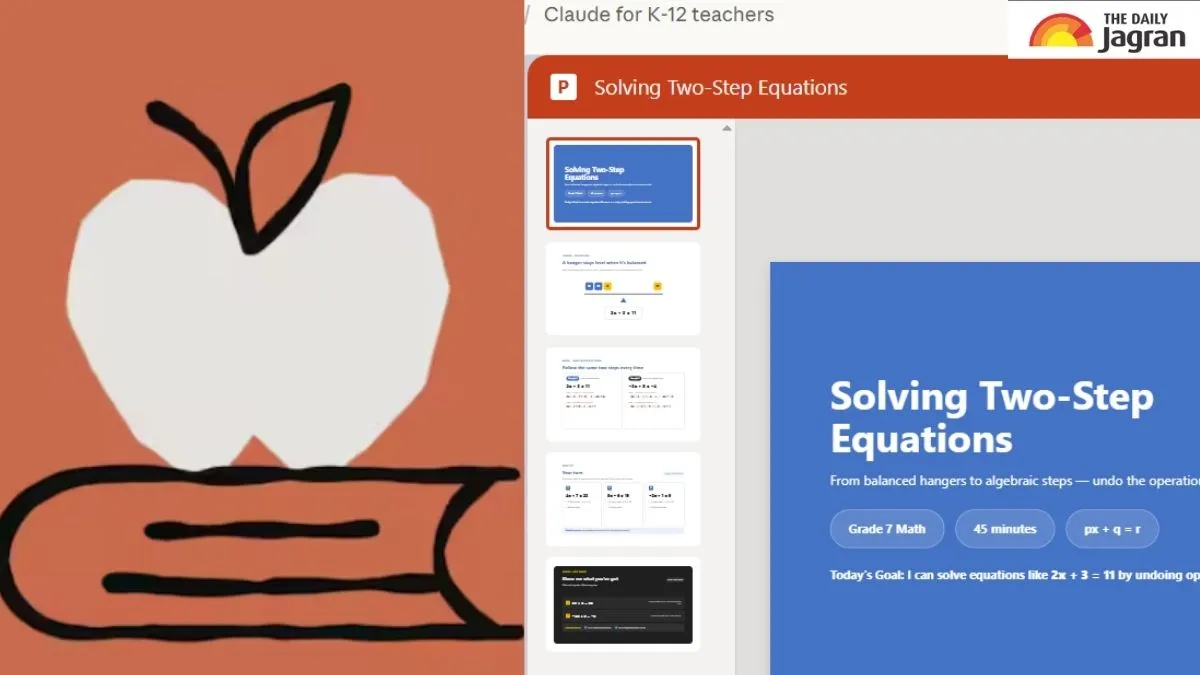
Anthropic has introduced Claude for Teachers, a new AI-powered platform designed specifically for K-12 educators in the United States. The service provides verified teachers with free access to Claude's premium features, along with teaching resources and curriculum support, aligned with academic standards in all 50 states. The artificial intelligence giant said the initiative was intended to help teachers save time on planning and routine tasks, allowing them to focus more on students. "Claude for Teachers is designed to close the gap between educational best practices and what a teacher's week allows. AI tools for teachers can strengthen instructional practice and improve student outcomes. This is the aim of Claude for Teachers: support the craft behind great teaching and protect what teachers value most -- time with their students," the company said in a blogpost. Built around teaching standards Claude for Teachers is integrated with Learning Commons, enabling the AI assistant to access academic standards across all 50 US states. The platform can generate lesson plans aligned with teaching standards while incorporating trusted educational resources, including OpenSciEd and IM v.360 from Illustrative Mathematics. Integration with K-12 tools Teachers can now connect Claude to a whole ecosystem of K-12 tools. These include ASSISTments, Brisk Teaching, Canva Education, Coteach, Diffit, Eedi, MagicSchool, Snorkl and TeachFX, allowing educators to create assignments, classroom activities, assessments and instructional materials more efficiently. How Claude for Teachers Works After completing the verification process, K-12 educators in the US receive access to Claude for Teachers, which integrates with Learning Commons and includes a collection of teaching skills developed using learning science. Anthropic said these features were created in collaboration with Learning Commons based on feedback from educators. The platform can generate lesson plans using curriculum resources that are mapped to state academic standards. It also creates classroom materials that teachers can customise before using them with students. Claude for Teachers can also personalise content by adapting lessons for students with different learning abilities and proficiency levels, helping educators provide differentiated instruction within the same classroom. In addition, the platform includes Claude Code and Cowork, enabling teachers to automate routine tasks. For example, educators can upload attendance records, diagnostics, your own notes, allowing the AI to analyse student performance and better tailor instruction. Teachers can also schedule recurring activities, such as reviewing students' daily assessments and preparing lesson adjustments for the next school day. Privacy and data protection Anthropic said Claude for Teachers has been built specifically for educators and includes privacy safeguards for student information. It said data shared through Claude for Teachers will not be used to train its AI models. The company added that student information is protected under its K-12 Data Processing Addendum, which is designed to comply with the FERPA. The company added that it is working with the American Federation of Teachers (AFT) to align its privacy practices with gold standards in K-12 education. Free access available until 2027 K-12 teachers in the US can sign up for Claude for Teachers free of charge. Anthropic said educators who register by June 30, 2027, will receive one year of free access, while a dedicated version for schools and school districts is expected to be introduced at a later date.

Claude For Teachers: Anthropic Rolls Out Free AI Lesson-Planning Assistant; Check Eligibility And Direct Link To Apply Here
Complies with FERPA, ensuring student data privacy and security. Anthropic Free Premium Claude Access: Artificial intelligence company Anthropic has launched "Claude for Teachers," offering free premium access to its AI assistant through 2027. The programme is strictly available to verified K-12 educators in the United States. Designed to combat administrative burnout, the initiative lets teachers generate quizzes, plan lessons, and design activities aligned with US state standards. The tool complies with FERPA privacy laws and will not use classroom conversations to train AI models. ALSO READ: Karnataka Unveils Big AI Push: CM Announces India's First Government-Led AI University The program is explicitly restricted to verified K-12 school teachers operating within the United States. Educators located in international regions, including India, are excluded from this specific initiative but can continue utilizing the standard free or paid tiers of the platform. Anthropic has integrated Claude with major academic platforms to maximise classroom utility. The tool features direct data links with Canva Education for visual asset creation, alongside structured content partnerships with specialized educational bodies like Learning Commons and Illustrative Mathematics. To ensure safety within school districts, the platform operates under strict legal compliance. It fully adheres to the Family Educational Rights and Privacy Act (FERPA), meaning student records remain protected, and inputs are never recycled to train Anthropic's future language models. ALSO READ: Today's GK Special: List Of Free Trade Agreements Signed By India Till July 2026
Claude AI Is Now Free for Teachers: Anthropic Rolls Out Powerful Classroom Assistant
The new platform connects Claude to state academic standards, trusted curricula and classroom apps, while offering educators free premium AI features with student data privacy protections. Anthropic has launched Claude for Teachers, a new artificial intelligence (AI) platform designed specifically for K-12 educators in the US, offering verified teachers free access to premium Claude features, curriculum-aligned lesson planning tools and classroom workflow automation. Anthropic said the programme connects educators directly to academic standards across all 50 US states and integrates with widely used educational platforms, marking one of the company's biggest pushes into the education sector. Verified teachers who sign up by June 30, 2027, will receive a full year of free access. Designed to Give Teachers More Time with Students Anthropic said Claude for Teachers was built to address longstanding challenges facing educators, particularly limited planning time, growing workloads and large class sizes. In its announcement, the company said, "Claude for Teachers is designed to close the gap between educational best practices and what a teacher's week allows." It added that while research on AI use by students has produced mixed findings, "AI tools for teachers can strengthen instructional practice and improve student outcomes". The company said the platform is intended to "support the craft behind great teaching and protect what teachers value most -- time with their students." AI-Powered Lesson Planning Linked to State Standards Claude for Teachers connects to Learning Commons, enabling the AI assistant to access academic standards and learning progressions for every US state. Anthropic said lesson plans generated through Claude are automatically scaffolded and aligned with state teaching requirements. Teachers can also integrate Claude with popular education platforms including Canva Education, Brisk Teaching, Diffit, ASSISTments, MagicSchool, TeachFX, Snorkl, Eedi and Coteach. These integrations allow educators to create classroom-ready activities, personalised learning materials, diagnostic assessments and interactive designs within seconds. Among its key capabilities, Claude can generate differentiated lesson plans for students with varying learning needs, analyse classroom data such as attendance and assessment results to recommend instructional strategies, and automate recurring administrative tasks. Anthropic said teachers can assign daily jobs, such as reviewing student exit tickets and adapting the following day's lesson plan, allowing Claude to complete the work automatically. Privacy and Safety Remain Central Anthropic emphasised that Claude for Teachers has been developed exclusively for educators and includes dedicated privacy protections for schools. The company said teacher and student data will not be used to train Claude's AI models, and the platform complies with the US Family Educational Rights and Privacy Act (FERPA) through a dedicated K-12 Data Processing Addendum. The company has also partnered with the American Federation of Teachers (AFT) to align the platform with emerging privacy and safety standards for education. "We've been working with Anthropic on a Gold Standard that sets out industry best practices for safety and privacy in K-12 education," AFT President Randi Weingarten said in Anthropic's announcement. She added that the tool is "designed by and for educators to assist them instructionally and hopefully give them more time for the human relationships at the heart of learning." Broader Education Strategy Beyond the product launch, Anthropic also introduced AI Fluency for K-12 Teachers, a free training programme developed with Teach For America and the American Federation of Teachers to help educators use AI responsibly in classrooms. The company said it will also release open-source teaching resources, expand educational connectors for developers and begin piloting Claude for Teachers in Detroit Public Schools Community District to study its impact on teacher wellbeing and instructional practice. Anthropic said these initiatives form part of its broader partnership with the Gates Foundation to develop AI tools that improve educational outcomes, while a dedicated version of Claude for schools and districts is expected to launch in the future.