News & Updates
The latest news and updates from companies in the WLTH portfolio.
Anthropic extends Claude Fable 5 access to paid subscribers until July 19: Here's what changes later
Claude power users have received an extra week to keep using Anthropic's most powerful AI model, Claude Fable 5. The AI startup on Sunday, July 12, announced that it will be extending access to Claude Fable 5 for paid subscribers until July 19. Subscribers of Claude Pro, Max, Team, and premium seats on seat-based Enterprise plans, where enabled by the organisation, are eligible for the extended promotion. However, free tier users, standard seats on seat-based Enterprise plans, usage-based Enterprise plans, or API usage of Fable 5 are not eligible. Earlier Anthropic had said Fable 5 would be accessible via its Pro, Max, Team, and premium Enterprise subscriptions only through July 7. After the deadline, users who want to continue using Fable 5 would need to pay for additional usage credits. The initial July 7 deadline was then extended to July 12. Now, it has been extended for a third time and is set to expire on July 19. To be sure, carving out Fable 5 access from its subscriptions is not a permanent move as Anthropic has plans to restore access when it has enough compute power to handle the demand. "We've extended this promotion through July 19, 2026 at 11:59:59 PM PT," Anthropic noted in a support document. The 50% increase to Claude Code weekly usage limits has also been extended through the same date," Anthropic said in a post on X. What does it mean for subscribers? Fable 5 draws from the same weekly usage pool as other Claude models. As part of the extended promotion, paid subscribers can use Fable 5 for up to 50 per cent of their weekly subscription limits at no extra cost without having to claim or activate anything. However, according to Anthropic, Fable 5 consumes weekly tokens faster than any other Claude AI models. Story continues below this ad Also Read | Anthropic set to restore Fable 5 and Mythos 5 after US lifts export restrictions There are several ways to access Fable 5 for paid subscribers. The high-performance, cutting-edge model can be accessed across Claude on the web, Claude Mobile, Claude Desktop, Claude Cowork, Claude Code, Claude Design, Claude for Microsoft 365, Claude for Teams, and Claude Tag. The web, desktop, and mobile versions of Claude allow users to select Fable 5 from the model picker. Once subscribers reach their 50 per cent weekly Fable 5 allowance, they can either continue accessing Fable 5 with usage credits which are billed separately from their subscriptions or switch to another Claude model in order to continue working within their remaining subscription limits at no additional cost.

Anthropic rolls out India specific pricing for Claude AI: Plans, prices, and other details
You can now pay for Claude in Indian rupees, here are all the details. (Representational image made with AI) For a long time, if you wanted to purchase a Claude subscription, you would need to pay in US dollars. This made it more cumbersome for users who needed to shell out forex charges, and pay GST in addition to the plan prices. But now, Anthropic has quietly rolled out India-specific pricing, allowing you to pay in Indian rupees. You can now check out Indian prices for Claude via the official website. The Claude Pro plan starts at Rs 2,000 per month. Previously, it would've cost you $20 (roughly Rs 1,630) per month - excluding additional fees and GST. The 20x tier of the Claude Max can go up to Rs 23,999 per month. The same plan in US dollars would have cost $200 (roughly Rs 19,170) per month. Also, one thing to note is that all paid Claude plans in India are inclusive of GST. This move comes as India continues to grow as a major AI market. As per reports, India is the second-largest market for Claude, after the US. This change will make it easier for users to now purchase Claude plans without having to pay extra fees. But what do you get from different Claude plans? Here are all the details. Claude Pro plan in India In India, the Claude Pro is priced at Rs 2,000 a month on an annual subscription (Rs 24,000 per year) and Rs 2,399 a month on monthly billing. Under the older USD pricing, Pro cost $20 (roughly Rs 1,920) a month on monthly billing and $17 (roughly Rs 1,630) a month on the annual plan billed as $200 (roughly Rs 19,170) upfront. Claude Pro runs Anthropic's Sonnet 5 by default and includes access to more Claude models, including Opus and the more advanced Fable 5 model. Apart from a 5x higher usage limit than the free tier, you also get Research mode, unlimited Projects, Memory, file uploads, web search, and voice mode. Claude Pro users can also use the coding platform Claude Code, as well as Claude Design, Claude in Excel and PowerPoint, and Microsoft 365 integration. Keep in mind that the Claude Free plan remains available in India, which gives access to Claude Sonnet 5 and 4.6, and Haiku 4.5. Free users also get web search, file uploads of up to 20 files per chat, limited Projects. Claude Max plan in India If you want more out of your Claude subscription, you can purchase Claude Max. Claude Max in India is available at Rs 11,999 a month for the 5x version and Rs 23,999 a month for the 20x version. In the older US dollar structure, Max 5x cost $100 (Rs 9,584) a month and Max 20x cost $200 (roughly Rs 19,170) a month. The Max tier carries the same core feature-set as Pro, but with a larger usage bucket rather than a different model tier. Users get the same models and features available in Pro, including Cowork, Claude Code, Projects, Memory and web search, but with either 5x or 20x Pro's usage limits depending on the tier. Claude Max also includes priority access during high-traffic periods, higher Claude Code session limits for longer coding runs, and first access to new features and models before they reach Pro. Claude Team plan in India For businesses, Anthropic has also brought India specific pricing for Claude Team subscriptions. The Team Standard seat is priced at Rs 2,399 a month for an annual subscription, with monthly billing at Rs 2,999 a month. A Premium seat costs Rs 11,999 a month, with monthly billing at Rs 14,999 a month. As was the case with Claude Pro and Claude Max, these prices are inclusive of GST. Previously, Team Standard was listed at $25 (roughly Rs 2,400) per seat a month, or $20 (roughly Rs 1,920) per seat a month when billed annually, while Team Premium was listed at around $150 (roughly Rs 14,380) a month for premium seats. The Team plan includes a 200K context window, usage credits available at API rates, Claude Code, and Claude Cowork. Businesses also get central billing and administration, single sign-on and domain capture, and admin controls. As default, Anthropic does not use content from Claude Team users for model training.

S.F. protesters march on OpenAI, Anthropic and Google DeepMind to demand: 'Stop the AI race'
A crowd of protesters fiercely condemning artificial intelligence and the San Francisco companies that power the technology marched through the city -- the epicenter of AI development -- on Saturday to demand that the companies "stop the AI race." About 200 people carrying signs with messages like "stop slop," "it's not too late to regulate" and "in a race off a cliff no one wins," marched from offices of OpenAI to Anthropic and Google DeepMind to ask to their CEOs to collectively pause all new training of AI models. Protesters decried what they described as AI's role in rising rents, job losses and environmental damage, as well as existential threats to future generations. The rally was organized by Stop the AI Race, led by activist and former AI researcher Michaël Trazzi, who last year started a hunger strike outside Google DeepMind in London to draw attention to the demand to freeze AI development. (A parallel hunger strike took place outside Anthropic's office on Howard Street.) Protesters, who included students, people who work in AI and longtime San Franciscans, said they hoped their collective action would help increase public awareness and, in turn, ratchet up the pressure on AI companies to act. As they marched through downtown San Francisco, people in restaurants, on apartment balconies above the street or walking on the sidewalks stopped to take photos or videos. San Francisco Chronicle Logo See more S.F. Chronicle on Google Make us a Preferred Source to get more of our news when you search. Add Preferred Source "Protests can only do so much," said Aleesa Carbo, a Johns Hopkins University student and AI researcher. "But if we can make the public more aware, that can mobilize them to speak to their senators, speak to the government, to make their wishes known to the AI companies." Carbo is currently enrolled in MATS (Machine Learning Alignment & Theory Scholars), a prominent AI research fellowship whose graduates go on to found AI safety companies or work at companies such as Anthropic. She said she has pivoted her focus to AI safety. "I'm not against AI in principle, but I do think the way that companies are racing towards it is not in a very responsible manner," she said. "At the end of the day, these are dark boxes. Even us, the people who train these models, play with them, we don't fully understand them." Trazzi, who at one point led the crowd in chanting expletives against OpenAI CEO Sam Altman and Anthropic CEO Dario Amodei, said the stakes are high. "We are in an emergency," he told the crowd. "The problem is they can't stop the race, unless other people stop." His organization is advocating for a global agreement to pause AI development, including from China. This would, in practice, mean current models remain available, but with "no new training runs of larger or more general frontier models," the Stop the AI Race website reads. "The teams currently working on improving the capabilities of these models would move to narrow AI applications or alignment research instead." The companies have not responded directly to Stop the AI Race's demand -- though the group often points to a January interview in which a Bloomberg journalist asked DeepMind CEO Demis Hassabis if he would advocate for a collective pause on development, and he said, "I think so." He said he had long envisioned an AI version of CERN, the European Organization for Nuclear Research, "where all the best minds in the world would collaborate together and do the final steps in a very rigorous, scientific way." "Unfortunately," he said, "you need international collaboration, though, because even if one company ... or even the West decided to do that, it has no use unless the whole world agrees." Duncan Haldane, the CEO of a San Francisco startup that uses AI to design circuit boards, said he came to the protest -- with his two children, ages 1 and 5, in a stroller -- to pressure the heads of prominent AI labs to acknowledge the technology's risk and commit to the pause. Haldane's company has benefited from AI, but he said he sees the technology as an "existential threat to humanity." "What they can do now is actually phenomenally dangerous and is going to affect society tremendously," he said. Dean Preston, a former San Francisco supervisor, criticized the "devastating" effects AI companies have had on the city, including soaring rents and housing prices, job loss, environmental "havoc" and political influence. "These tech CEOs view San Francisco as a trophy," he said, "as something to be exploited." He pointed to examples of people pushing back against AI throughout California, from Pittsburg residents protesting in June the construction of a 300,000-square-foot data center from AI developer Avaio Digital (which moved forward despite the public backlash) while voters in Monterey Park in Southern California agreed to permanently ban data centers, becoming the first U.S. city to do so. Some protesters said that, short of a global development pause, they hoped to see more local and state regulation of the artificial intelligence industry. "I would like to see the mayor and our Board of Supervisors start to regulate AI in the city," said Kathe Burick, a resident of San Francisco for 50 years. "Shut them down if they need to, or demand a pause or they can't operate in town." She said the race toward AI without sufficient regulatory guardrails reminds her of the famous scene in the film "2001: A Space Odyssey," when astronaut Dave Bowman asks the HAL 9000 computer to open the pod bay doors after HAL discovers the crew's plan to disconnect him, and HAL responds, "I'm afraid I can't do that." In March, Burick went to a Stop the AI Race demonstration at OpenAI that she said drew only about 30 people. She was heartened by the larger turnout Saturday, especially seeing throngs of young people. "To see this gives me hope," she said.

Anthropic rumored to unveil AI model surpassing GPT-5.6 SOL next week
A speculative post on social media suggests that Anthropic could release a new, more affordable AI model next week that surpasses OpenAI's GPT-5.6 Sol in intelligence and cost. The claim, made by user @cryptopunk7213, remains unverified as there has been no official confirmation from Anthropic. Currently, Anthropic's leading model is Claude Fable 5, available globally since July 1, following the easing of export controls. This speculation comes amid intense competition in the AI sector, with OpenAI's GPT-5.6 Sol leading recent benchmarks and priced more competitively than its rivals. Key Takeaways * The social media claim suggests Anthropic might introduce a model that outperforms GPT-5.6 Sol, affecting AI market dynamics. * Market pricing indicates a potential increase in confidence in Anthropic's ability to secure a top position in the AI landscape. * The claim lacks official corroboration, emphasizing the speculative nature of the information. What to Watch Monitor Anthropic for any official announcements or developments regarding a new AI model release. Any confirmation from Anthropic could significantly impact the current market odds, which appear supportive of Anthropic securing a top-three position by the end of July 2026. Additionally, observe reactions from competitors like OpenAI, which may respond with strategic adjustments or announcements to maintain their competitive edge. Get live prediction-market analysis, powered by Vera. Sign up for Vera.
Polymarket odds lift Troy Jackson to 57.5% in Maine Dem Senate nominee race
Polymarket Reprices Maine Democratic Senate Nominee Odds After Candidate Turmoil Catalyst Polymarket traders have pushed the Maine Democratic Senate nominee market toward Troy Jackson, lifting his implied odds to 57.5% on $416,678 of volume. The move follows a news catalyst about turmoil around a Maine Senate candidate, and the market data shows a 7.5-point jump with strengthening consensus into the July 27 resolution. Key Takeaways * Polymarket's leading pick is Troy Jackson at 57.5% implied odds (42.5% No). * A news item describing fast-moving turmoil around a Maine Senate candidate coincided with Jackson's odds rising 7.5 points from 50.0% to 57.5%. * The market resolves on July 27, 2026 (23:59 UTC), and the last 24h and 7d changes both show +7.5 points. A recent podcast episode described a fast-moving crisis around Maine Senate candidate Graham Platner, including calls for him to step down after a long string of controversies and allegations of sexual abuse. The episode also discussed unrelated tech topics, but the Maine political segment framed the situation as rapidly developing and destabilizing. Market Data Breakdown: Jackson Jumps to 57.5% on $416,678 Volume as Bellows Holds 33.5% and Longshots Stay Below 6% This Polymarket is a multi-outcome nominee question, so each candidate line is its own Yes/No contract: Troy Jackson is priced at 57.5% Yes / 42.5% No, while Shenna Bellows sits at 33.5% Yes / 66.5% No; longshots like Nirav Shah are 5.8% Yes / 94.2% No and Janet Mills is 1.15% Yes / 98.85% No. The key signal is the repricing speed and direction: Jackson is up 7.5 percentage points versus the prior 50.0%, with historical_summary calling the tape bullish with strong momentum and a strengthening consensus (moderate volatility, no reversal detected). Volume at $416,678 suggests the move is being expressed in size rather than a thin, one-print spike, and the average of the last five observations (52.9%) shows the latest 57.5% is above the short-term mean. Practically, the market is saying the field is no longer a coin flip -- Jackson has a clear lead -- but it is not a lock, leaving meaningful probability mass on alternatives ahead of the July 27 settlement date. Watch whether Jackson holds above the low-to-mid 50s while volume continues to build; if the odds slip back toward ~50% it would indicate renewed disagreement rather than a clean consensus trend. Also monitor whether Bellows' 33.5% line compresses upward or downward as the market approaches the July 27 (23:59 UTC) resolution window. What Traders Watch Next on Polymarket: Election-Nominee Momentum Signals vs Macro and Crypto Contracts Heading Into July Beyond this nominee tape, Polymarket traders are also rotating into high-volume event and tech contracts that can reprice quickly as new information hits. On the fight side, 79.5% leads the "UFC 329: Max Holloway vs. Conor McGregor (Welterweight, Main Card)" O/U 0.5 Rounds market on $5,093,624 of volume, while 78.25% leads "UFC 329: Paddy Pimblett vs. Benoît Saint Denis (Lightweight, Main Card)" O/U 0.5 Rounds on $329,626. And in AI, "Which company has best AI model end of July?" is priced at 91.5% for Anthropic on $5,648,877 -- an example of the platform's broader mix where traders watch odds shifts for momentum signals across very different catalysts. Odds Trend By the Numbers * Platform: Polymarket * Market: Maine Democratic Senate nominee on July 27? * Contract type: Price strike ladder: each rung has separate Yes/No; Yes means the spot price is above that USD strike at settlement. * Resolution window: Jul 27, 2026 (UTC) * Status: Active (open for trading) * Volume: ~$416,678 Top strike rungs +14 more strikes not shown

Anthropic appoints former US Fed Chair Ben Bernanke to Long-Term Benefit Trust
New Delhi [India], July 10 (ANI): Anthropic's Long-Term Benefit Trust (LTBT) has appointed former US Federal Reserve Chair Ben Bernanke as its newest member as per a statement by the company. As per the release, Ben Bernanke is a Distinguished Fellow at the Brookings Institution and led the the Federal Reserve from 2006 to 2014. 'He joins an independent body that works to hold Anthropic to its mission: the responsible development of advanced AI for the long-term benefit of humanity,' the company said. During his tenure at the US Federal Reserve Chair, Bernanke led the central bank through the 2008 global financial crisis and subsequent recovery. Before joining the government, Bernanke spent more than 20 years in academia, primarily at Princeton University, where he chaired the economics department. His influential research on the Great Depression and the role of banks in financial crises earned him the 2022 Nobel Prize in Economic Sciences. 'The potential of artificial intelligence is enormous, and so is the range of outcomes. How that potential plays out will depend, in part, on the institutions we build around it,' said Bernanke, as per the release. Bernanke further added Anthropic's unique governance structure is designed to ensure that the long-term benefits of artificial intelligence for humanity significantly outweigh its risks. 'I am honored to have this opportunity, and I will try to contribute in any way I can to this critical mission,' he said. Anthropic is a Public Benefit Corporation, structured to balance commercial success with broader societal benefit. Its Long-Term Benefit Trust serves as an independent oversight body, helping ensure the company develops and deploys AI responsibly while staying aligned with its long-term public interest mission. Neil Buddy Shah, Chair of the LTBT said, 'The institutions built around this technology will matter as much as the technology itself.' Commenting on Ben's appointment he said 'Ben spent eight years leading the Federal Reserve and guided the country through the worst financial crisis in nearly a century with expertise, independence, and sound judgment. That's the standard we look for in Trustees as AI's impact grows, and we're fortunate Ben has chosen to join us in this work.' (ANI)

Anthropic appoints former US Fed Chair Ben Bernanke to Long-Term Benefit Trust
New Delhi [India], July 10 (ANI): Anthropic's Long-Term Benefit Trust (LTBT) has appointed former US Federal Reserve Chair Ben Bernanke as its newest member as per a statement by the company. As per the release, Ben Bernanke is a Distinguished Fellow at the Brookings Institution and led the the Federal Reserve from 2006 to 2014. 'He joins an independent body that works to hold Anthropic to its mission: the responsible development of advanced AI for the long-term benefit of humanity,' the company said. During his tenure at the US Federal Reserve Chair, Bernanke led the central bank through the 2008 global financial crisis and subsequent recovery. Before joining the government, Bernanke spent more than 20 years in academia, primarily at Princeton University, where he chaired the economics department. His influential research on the Great Depression and the role of banks in financial crises earned him the 2022 Nobel Prize in Economic Sciences. 'The potential of artificial intelligence is enormous, and so is the range of outcomes. How that potential plays out will depend, in part, on the institutions we build around it,' said Bernanke, as per the release. Bernanke further added Anthropic's unique governance structure is designed to ensure that the long-term benefits of artificial intelligence for humanity significantly outweigh its risks. 'I am honored to have this opportunity, and I will try to contribute in any way I can to this critical mission,' he said. Anthropic is a Public Benefit Corporation, structured to balance commercial success with broader societal benefit. Its Long-Term Benefit Trust serves as an independent oversight body, helping ensure the company develops and deploys AI responsibly while staying aligned with its long-term public interest mission. Neil Buddy Shah, Chair of the LTBT said, 'The institutions built around this technology will matter as much as the technology itself.' Commenting on Ben's appointment he said 'Ben spent eight years leading the Federal Reserve and guided the country through the worst financial crisis in nearly a century with expertise, independence, and sound judgment. That's the standard we look for in Trustees as AI's impact grows, and we're fortunate Ben has chosen to join us in this work.' (ANI)
Anthropic appoints former US Fed Chair Ben Bernanke to Long-Term Benefit Trust
New Delhi [India], July 10 (ANI): Anthropic's Long-Term Benefit Trust (LTBT) has appointed former US Federal Reserve Chair Ben Bernanke as its newest member as per a statement by the company. As per the release, Ben Bernanke is a Distinguished Fellow at the Brookings Institution and led the the Federal Reserve from 2006 to 2014. 'He joins an independent body that works to hold Anthropic to its mission: the responsible development of advanced AI for the long-term benefit of humanity,' the company said. During his tenure at the US Federal Reserve Chair, Bernanke led the central bank through the 2008 global financial crisis and subsequent recovery. Before joining the government, Bernanke spent more than 20 years in academia, primarily at Princeton University, where he chaired the economics department. His influential research on the Great Depression and the role of banks in financial crises earned him the 2022 Nobel Prize in Economic Sciences. 'The potential of artificial intelligence is enormous, and so is the range of outcomes. How that potential plays out will depend, in part, on the institutions we build around it,' said Bernanke, as per the release. Bernanke further added Anthropic's unique governance structure is designed to ensure that the long-term benefits of artificial intelligence for humanity significantly outweigh its risks. 'I am honored to have this opportunity, and I will try to contribute in any way I can to this critical mission,' he said. Anthropic is a Public Benefit Corporation, structured to balance commercial success with broader societal benefit. Its Long-Term Benefit Trust serves as an independent oversight body, helping ensure the company develops and deploys AI responsibly while staying aligned with its long-term public interest mission. Neil Buddy Shah, Chair of the LTBT said, 'The institutions built around this technology will matter as much as the technology itself.' Commenting on Ben's appointment he said 'Ben spent eight years leading the Federal Reserve and guided the country through the worst financial crisis in nearly a century with expertise, independence, and sound judgment. That's the standard we look for in Trustees as AI's impact grows, and we're fortunate Ben has chosen to join us in this work.' (ANI)
Anthropic appoints former US Fed Chair Ben Bernanke to Long-Term Benefit Trust
New Delhi [India], July 10 (ANI): Anthropic's Long-Term Benefit Trust (LTBT) has appointed former US Federal Reserve Chair Ben Bernanke as its newest member as per a statement by the company. As per the release, Ben Bernanke is a Distinguished Fellow at the Brookings Institution and led the the Federal Reserve from 2006 to 2014. 'He joins an independent body that works to hold Anthropic to its mission: the responsible development of advanced AI for the long-term benefit of humanity,' the company said. During his tenure at the US Federal Reserve Chair, Bernanke led the central bank through the 2008 global financial crisis and subsequent recovery. Before joining the government, Bernanke spent more than 20 years in academia, primarily at Princeton University, where he chaired the economics department. His influential research on the Great Depression and the role of banks in financial crises earned him the 2022 Nobel Prize in Economic Sciences. 'The potential of artificial intelligence is enormous, and so is the range of outcomes. How that potential plays out will depend, in part, on the institutions we build around it,' said Bernanke, as per the release. Bernanke further added Anthropic's unique governance structure is designed to ensure that the long-term benefits of artificial intelligence for humanity significantly outweigh its risks. 'I am honored to have this opportunity, and I will try to contribute in any way I can to this critical mission,' he said. Anthropic is a Public Benefit Corporation, structured to balance commercial success with broader societal benefit. Its Long-Term Benefit Trust serves as an independent oversight body, helping ensure the company develops and deploys AI responsibly while staying aligned with its long-term public interest mission. Neil Buddy Shah, Chair of the LTBT said, 'The institutions built around this technology will matter as much as the technology itself.' Commenting on Ben's appointment he said 'Ben spent eight years leading the Federal Reserve and guided the country through the worst financial crisis in nearly a century with expertise, independence, and sound judgment. That's the standard we look for in Trustees as AI's impact grows, and we're fortunate Ben has chosen to join us in this work.' (ANI)
Anthropic appoints former US Fed Chair Ben Bernanke to Long-Term Benefit Trust
New Delhi [India], July 10 (ANI): Anthropic's Long-Term Benefit Trust (LTBT) has appointed former US Federal Reserve Chair Ben Bernanke as its newest member as per a statement by the company. As per the release, Ben Bernanke is a Distinguished Fellow at the Brookings Institution and led the the Federal Reserve from 2006 to 2014. 'He joins an independent body that works to hold Anthropic to its mission: the responsible development of advanced AI for the long-term benefit of humanity,' the company said. During his tenure at the US Federal Reserve Chair, Bernanke led the central bank through the 2008 global financial crisis and subsequent recovery. Before joining the government, Bernanke spent more than 20 years in academia, primarily at Princeton University, where he chaired the economics department. His influential research on the Great Depression and the role of banks in financial crises earned him the 2022 Nobel Prize in Economic Sciences. 'The potential of artificial intelligence is enormous, and so is the range of outcomes. How that potential plays out will depend, in part, on the institutions we build around it,' said Bernanke, as per the release. Bernanke further added Anthropic's unique governance structure is designed to ensure that the long-term benefits of artificial intelligence for humanity significantly outweigh its risks. 'I am honored to have this opportunity, and I will try to contribute in any way I can to this critical mission,' he said. Anthropic is a Public Benefit Corporation, structured to balance commercial success with broader societal benefit. Its Long-Term Benefit Trust serves as an independent oversight body, helping ensure the company develops and deploys AI responsibly while staying aligned with its long-term public interest mission. Neil Buddy Shah, Chair of the LTBT said, 'The institutions built around this technology will matter as much as the technology itself.' Commenting on Ben's appointment he said 'Ben spent eight years leading the Federal Reserve and guided the country through the worst financial crisis in nearly a century with expertise, independence, and sound judgment. That's the standard we look for in Trustees as AI's impact grows, and we're fortunate Ben has chosen to join us in this work.' (ANI)
Anthropic appoints former US Fed Chair Ben Bernanke to Long-Term Benefit Trust
New Delhi [India], July 10 (ANI): Anthropic's Long-Term Benefit Trust (LTBT) has appointed former US Federal Reserve Chair Ben Bernanke as its newest member as per a statement by the company. As per the release, Ben Bernanke is a Distinguished Fellow at the Brookings Institution and led the the Federal Reserve from 2006 to 2014. 'He joins an independent body that works to hold Anthropic to its mission: the responsible development of advanced AI for the long-term benefit of humanity,' the company said. During his tenure at the US Federal Reserve Chair, Bernanke led the central bank through the 2008 global financial crisis and subsequent recovery. Before joining the government, Bernanke spent more than 20 years in academia, primarily at Princeton University, where he chaired the economics department. His influential research on the Great Depression and the role of banks in financial crises earned him the 2022 Nobel Prize in Economic Sciences. 'The potential of artificial intelligence is enormous, and so is the range of outcomes. How that potential plays out will depend, in part, on the institutions we build around it,' said Bernanke, as per the release. Bernanke further added Anthropic's unique governance structure is designed to ensure that the long-term benefits of artificial intelligence for humanity significantly outweigh its risks. 'I am honored to have this opportunity, and I will try to contribute in any way I can to this critical mission,' he said. Anthropic is a Public Benefit Corporation, structured to balance commercial success with broader societal benefit. Its Long-Term Benefit Trust serves as an independent oversight body, helping ensure the company develops and deploys AI responsibly while staying aligned with its long-term public interest mission. Neil Buddy Shah, Chair of the LTBT said, 'The institutions built around this technology will matter as much as the technology itself.' Commenting on Ben's appointment he said 'Ben spent eight years leading the Federal Reserve and guided the country through the worst financial crisis in nearly a century with expertise, independence, and sound judgment. That's the standard we look for in Trustees as AI's impact grows, and we're fortunate Ben has chosen to join us in this work.' (ANI)
Anthropic appoints former US Fed Chair Ben Bernanke to Long-Term Benefit Trust
New Delhi [India], July 10 (ANI): Anthropic's Long-Term Benefit Trust (LTBT) has appointed former US Federal Reserve Chair Ben Bernanke as its newest member as per a statement by the company. As per the release, Ben Bernanke is a Distinguished Fellow at the Brookings Institution and led the the Federal Reserve from 2006 to 2014. 'He joins an independent body that works to hold Anthropic to its mission: the responsible development of advanced AI for the long-term benefit of humanity,' the company said. During his tenure at the US Federal Reserve Chair, Bernanke led the central bank through the 2008 global financial crisis and subsequent recovery. Before joining the government, Bernanke spent more than 20 years in academia, primarily at Princeton University, where he chaired the economics department. His influential research on the Great Depression and the role of banks in financial crises earned him the 2022 Nobel Prize in Economic Sciences. 'The potential of artificial intelligence is enormous, and so is the range of outcomes. How that potential plays out will depend, in part, on the institutions we build around it,' said Bernanke, as per the release. Bernanke further added Anthropic's unique governance structure is designed to ensure that the long-term benefits of artificial intelligence for humanity significantly outweigh its risks. 'I am honored to have this opportunity, and I will try to contribute in any way I can to this critical mission,' he said. Anthropic is a Public Benefit Corporation, structured to balance commercial success with broader societal benefit. Its Long-Term Benefit Trust serves as an independent oversight body, helping ensure the company develops and deploys AI responsibly while staying aligned with its long-term public interest mission. Neil Buddy Shah, Chair of the LTBT said, 'The institutions built around this technology will matter as much as the technology itself.' Commenting on Ben's appointment he said 'Ben spent eight years leading the Federal Reserve and guided the country through the worst financial crisis in nearly a century with expertise, independence, and sound judgment. That's the standard we look for in Trustees as AI's impact grows, and we're fortunate Ben has chosen to join us in this work.' (ANI)
Anthropic appoints former US Fed Chair Ben Bernanke to Long-Term Benefit Trust
New Delhi [India], July 10 (ANI): Anthropic's Long-Term Benefit Trust (LTBT) has appointed former US Federal Reserve Chair Ben Bernanke as its newest member as per a statement by the company. As per the release, Ben Bernanke is a Distinguished Fellow at the Brookings Institution and led the the Federal Reserve from 2006 to 2014. 'He joins an independent body that works to hold Anthropic to its mission: the responsible development of advanced AI for the long-term benefit of humanity,' the company said. During his tenure at the US Federal Reserve Chair, Bernanke led the central bank through the 2008 global financial crisis and subsequent recovery. Before joining the government, Bernanke spent more than 20 years in academia, primarily at Princeton University, where he chaired the economics department. His influential research on the Great Depression and the role of banks in financial crises earned him the 2022 Nobel Prize in Economic Sciences. 'The potential of artificial intelligence is enormous, and so is the range of outcomes. How that potential plays out will depend, in part, on the institutions we build around it,' said Bernanke, as per the release. Bernanke further added Anthropic's unique governance structure is designed to ensure that the long-term benefits of artificial intelligence for humanity significantly outweigh its risks. 'I am honored to have this opportunity, and I will try to contribute in any way I can to this critical mission,' he said. Anthropic is a Public Benefit Corporation, structured to balance commercial success with broader societal benefit. Its Long-Term Benefit Trust serves as an independent oversight body, helping ensure the company develops and deploys AI responsibly while staying aligned with its long-term public interest mission. Neil Buddy Shah, Chair of the LTBT said, 'The institutions built around this technology will matter as much as the technology itself.' Commenting on Ben's appointment he said 'Ben spent eight years leading the Federal Reserve and guided the country through the worst financial crisis in nearly a century with expertise, independence, and sound judgment. That's the standard we look for in Trustees as AI's impact grows, and we're fortunate Ben has chosen to join us in this work.' (ANI)
Anthropic appoints former US Fed Chair Ben Bernanke to Long-Term Benefit Trust
New Delhi [India], July 10 (ANI): Anthropic's Long-Term Benefit Trust (LTBT) has appointed former US Federal Reserve Chair Ben Bernanke as its newest member as per a statement by the company. As per the release, Ben Bernanke is a Distinguished Fellow at the Brookings Institution and led the the Federal Reserve from 2006 to 2014. 'He joins an independent body that works to hold Anthropic to its mission: the responsible development of advanced AI for the long-term benefit of humanity,' the company said. During his tenure at the US Federal Reserve Chair, Bernanke led the central bank through the 2008 global financial crisis and subsequent recovery. Before joining the government, Bernanke spent more than 20 years in academia, primarily at Princeton University, where he chaired the economics department. His influential research on the Great Depression and the role of banks in financial crises earned him the 2022 Nobel Prize in Economic Sciences. 'The potential of artificial intelligence is enormous, and so is the range of outcomes. How that potential plays out will depend, in part, on the institutions we build around it,' said Bernanke, as per the release. Bernanke further added Anthropic's unique governance structure is designed to ensure that the long-term benefits of artificial intelligence for humanity significantly outweigh its risks. 'I am honored to have this opportunity, and I will try to contribute in any way I can to this critical mission,' he said. Anthropic is a Public Benefit Corporation, structured to balance commercial success with broader societal benefit. Its Long-Term Benefit Trust serves as an independent oversight body, helping ensure the company develops and deploys AI responsibly while staying aligned with its long-term public interest mission. Neil Buddy Shah, Chair of the LTBT said, 'The institutions built around this technology will matter as much as the technology itself.' Commenting on Ben's appointment he said 'Ben spent eight years leading the Federal Reserve and guided the country through the worst financial crisis in nearly a century with expertise, independence, and sound judgment. That's the standard we look for in Trustees as AI's impact grows, and we're fortunate Ben has chosen to join us in this work.' (ANI)
Anthropic appoints former US Fed Chair Ben Bernanke to Long-Term Benefit Trust
New Delhi [India], July 10 (ANI): Anthropic's Long-Term Benefit Trust (LTBT) has appointed former US Federal Reserve Chair Ben Bernanke as its newest member as per a statement by the company. As per the release, Ben Bernanke is a Distinguished Fellow at the Brookings Institution and led the the Federal Reserve from 2006 to 2014. 'He joins an independent body that works to hold Anthropic to its mission: the responsible development of advanced AI for the long-term benefit of humanity,' the company said. During his tenure at the US Federal Reserve Chair, Bernanke led the central bank through the 2008 global financial crisis and subsequent recovery. Before joining the government, Bernanke spent more than 20 years in academia, primarily at Princeton University, where he chaired the economics department. His influential research on the Great Depression and the role of banks in financial crises earned him the 2022 Nobel Prize in Economic Sciences. 'The potential of artificial intelligence is enormous, and so is the range of outcomes. How that potential plays out will depend, in part, on the institutions we build around it,' said Bernanke, as per the release. Bernanke further added Anthropic's unique governance structure is designed to ensure that the long-term benefits of artificial intelligence for humanity significantly outweigh its risks. 'I am honored to have this opportunity, and I will try to contribute in any way I can to this critical mission,' he said. Anthropic is a Public Benefit Corporation, structured to balance commercial success with broader societal benefit. Its Long-Term Benefit Trust serves as an independent oversight body, helping ensure the company develops and deploys AI responsibly while staying aligned with its long-term public interest mission. Neil Buddy Shah, Chair of the LTBT said, 'The institutions built around this technology will matter as much as the technology itself.' Commenting on Ben's appointment he said 'Ben spent eight years leading the Federal Reserve and guided the country through the worst financial crisis in nearly a century with expertise, independence, and sound judgment. That's the standard we look for in Trustees as AI's impact grows, and we're fortunate Ben has chosen to join us in this work.' (ANI)
Anthropic appoints former US Fed Chair Ben Bernanke to Long-Term Benefit Trust
New Delhi [India], July 10 (ANI): Anthropic's Long-Term Benefit Trust (LTBT) has appointed former US Federal Reserve Chair Ben Bernanke as its newest member as per a statement by the company. As per the release, Ben Bernanke is a Distinguished Fellow at the Brookings Institution and led the the Federal Reserve from 2006 to 2014. 'He joins an independent body that works to hold Anthropic to its mission: the responsible development of advanced AI for the long-term benefit of humanity,' the company said. During his tenure at the US Federal Reserve Chair, Bernanke led the central bank through the 2008 global financial crisis and subsequent recovery. Before joining the government, Bernanke spent more than 20 years in academia, primarily at Princeton University, where he chaired the economics department. His influential research on the Great Depression and the role of banks in financial crises earned him the 2022 Nobel Prize in Economic Sciences. 'The potential of artificial intelligence is enormous, and so is the range of outcomes. How that potential plays out will depend, in part, on the institutions we build around it,' said Bernanke, as per the release. Bernanke further added Anthropic's unique governance structure is designed to ensure that the long-term benefits of artificial intelligence for humanity significantly outweigh its risks. 'I am honored to have this opportunity, and I will try to contribute in any way I can to this critical mission,' he said. Anthropic is a Public Benefit Corporation, structured to balance commercial success with broader societal benefit. Its Long-Term Benefit Trust serves as an independent oversight body, helping ensure the company develops and deploys AI responsibly while staying aligned with its long-term public interest mission. Neil Buddy Shah, Chair of the LTBT said, 'The institutions built around this technology will matter as much as the technology itself.' Commenting on Ben's appointment he said 'Ben spent eight years leading the Federal Reserve and guided the country through the worst financial crisis in nearly a century with expertise, independence, and sound judgment. That's the standard we look for in Trustees as AI's impact grows, and we're fortunate Ben has chosen to join us in this work.' (ANI)
Anthropic appoints former US Fed Chair Ben Bernanke to Long-Term Benefit Trust
New Delhi [India], July 10 (ANI): Anthropic's Long-Term Benefit Trust (LTBT) has appointed former US Federal Reserve Chair Ben Bernanke as its newest member as per a statement by the company. As per the release, Ben Bernanke is a Distinguished Fellow at the Brookings Institution and led the the Federal Reserve from 2006 to 2014. 'He joins an independent body that works to hold Anthropic to its mission: the responsible development of advanced AI for the long-term benefit of humanity,' the company said. During his tenure at the US Federal Reserve Chair, Bernanke led the central bank through the 2008 global financial crisis and subsequent recovery. Before joining the government, Bernanke spent more than 20 years in academia, primarily at Princeton University, where he chaired the economics department. His influential research on the Great Depression and the role of banks in financial crises earned him the 2022 Nobel Prize in Economic Sciences. 'The potential of artificial intelligence is enormous, and so is the range of outcomes. How that potential plays out will depend, in part, on the institutions we build around it,' said Bernanke, as per the release. Bernanke further added Anthropic's unique governance structure is designed to ensure that the long-term benefits of artificial intelligence for humanity significantly outweigh its risks. 'I am honored to have this opportunity, and I will try to contribute in any way I can to this critical mission,' he said. Anthropic is a Public Benefit Corporation, structured to balance commercial success with broader societal benefit. Its Long-Term Benefit Trust serves as an independent oversight body, helping ensure the company develops and deploys AI responsibly while staying aligned with its long-term public interest mission. Neil Buddy Shah, Chair of the LTBT said, 'The institutions built around this technology will matter as much as the technology itself.' Commenting on Ben's appointment he said 'Ben spent eight years leading the Federal Reserve and guided the country through the worst financial crisis in nearly a century with expertise, independence, and sound judgment. That's the standard we look for in Trustees as AI's impact grows, and we're fortunate Ben has chosen to join us in this work.' (ANI)
Anthropic appoints former US Fed Chair Ben Bernanke to Long-Term Benefit Trust
New Delhi [India], July 10 (ANI): Anthropic's Long-Term Benefit Trust (LTBT) has appointed former US Federal Reserve Chair Ben Bernanke as its newest member as per a statement by the company. As per the release, Ben Bernanke is a Distinguished Fellow at the Brookings Institution and led the the Federal Reserve from 2006 to 2014. 'He joins an independent body that works to hold Anthropic to its mission: the responsible development of advanced AI for the long-term benefit of humanity,' the company said. During his tenure at the US Federal Reserve Chair, Bernanke led the central bank through the 2008 global financial crisis and subsequent recovery. Before joining the government, Bernanke spent more than 20 years in academia, primarily at Princeton University, where he chaired the economics department. His influential research on the Great Depression and the role of banks in financial crises earned him the 2022 Nobel Prize in Economic Sciences. 'The potential of artificial intelligence is enormous, and so is the range of outcomes. How that potential plays out will depend, in part, on the institutions we build around it,' said Bernanke, as per the release. Bernanke further added Anthropic's unique governance structure is designed to ensure that the long-term benefits of artificial intelligence for humanity significantly outweigh its risks. 'I am honored to have this opportunity, and I will try to contribute in any way I can to this critical mission,' he said. Anthropic is a Public Benefit Corporation, structured to balance commercial success with broader societal benefit. Its Long-Term Benefit Trust serves as an independent oversight body, helping ensure the company develops and deploys AI responsibly while staying aligned with its long-term public interest mission. Neil Buddy Shah, Chair of the LTBT said, 'The institutions built around this technology will matter as much as the technology itself.' Commenting on Ben's appointment he said 'Ben spent eight years leading the Federal Reserve and guided the country through the worst financial crisis in nearly a century with expertise, independence, and sound judgment. That's the standard we look for in Trustees as AI's impact grows, and we're fortunate Ben has chosen to join us in this work.' (ANI)
OpenAI Triggers AI Price War With GPT-5.6 Launch Against Anthropic Claude Dominance
OpenAI made its most aggressive competitive move yet against Anthropic, launching GPT-5.6 models and a new enterprise product called ChatGPT Work. The dual announcement signals OpenAI shift from pure capability competition to enterprise value delivery, betting that superior price-to-performance will win over corporate customers currently favoring Anthropic. The market has flipped. Ramp AI Index for May 2026 showed Anthropic at 34.4 percent of business adoption against OpenAI 32.3 percent, the first time Anthropic led on that survey. Enterprise spend tilts toward Anthropic at 32-40 percent depending on measurement, down from OpenAI dominance at 50 percent in 2023. OpenAI product leadership is accelerating to stop the bleed. The Pricing Angle OpenAI response acknowledges what enterprise buyers actually need once pilots graduate into production systems. Anthropic leaned into reliability and instruction-faithful work. OpenAI counters with price cuts and productivity features. GPT-5.6 Luna beats Claude Opus 4.8 on some benchmarks while costing less, threatening Claude core value proposition. Anthropic launched Claude Fable 5 at half the price of Mythos Preview just days before OpenAI price cuts, suggesting both companies anticipated competitive pricing pressure. The AI market is entering true competition after years of supply scarcity. Enterprise Implications Multi-model orchestration becomes real. Enterprises now compare not just capability but ROI on different model families. ChatGPT Work positions OpenAI as an alternative to Anthropic, while Anthropic continues building enterprise trust through reliability focus. The war is won not by benchmark dominance but by production performance and cost efficiency.
OpenAI unveils long-awaited "super app" as rivalry with Anthropic intensifies | New Straits Times
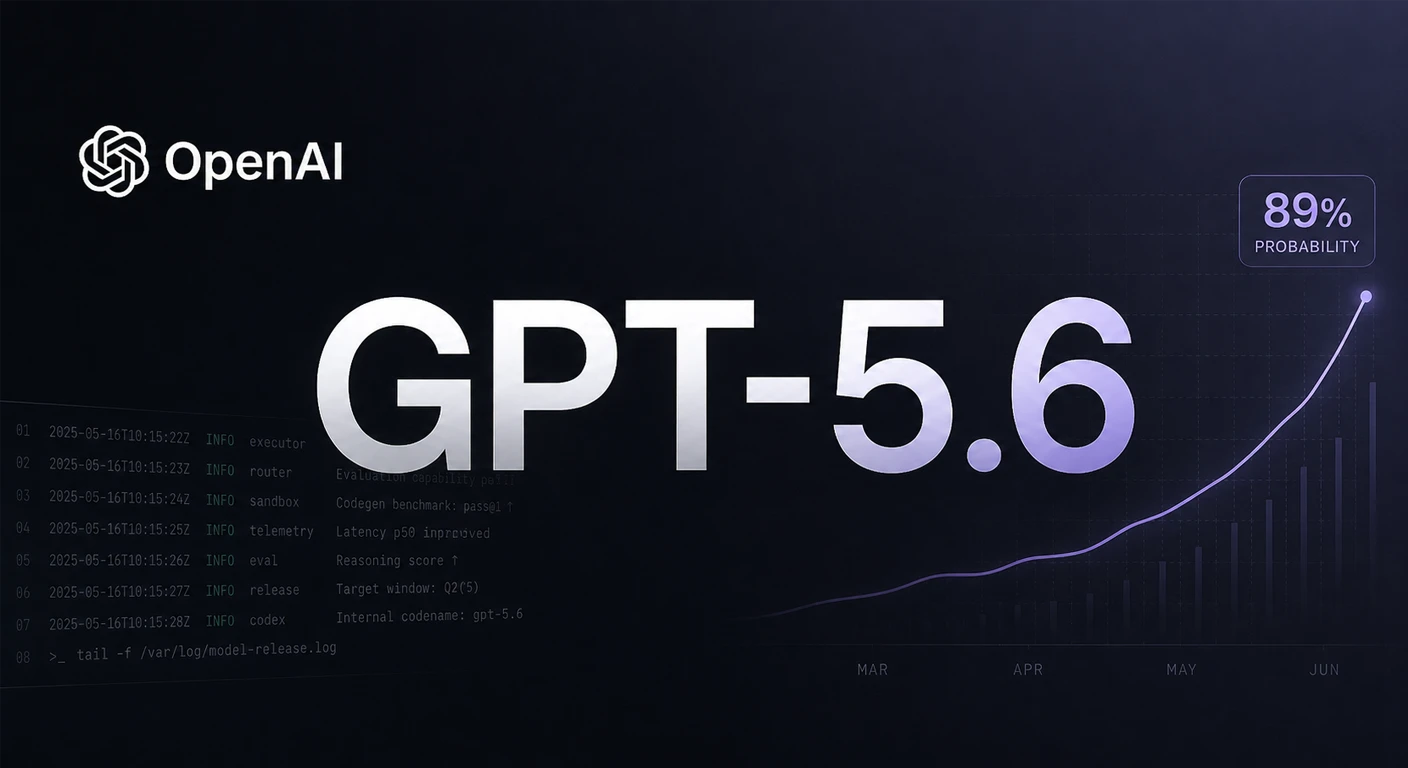
MEXICO CITY: OpenAI on Thursday unveiled ChatGPT Work, a new artificial intelligence (AI) agent designed to help office workers use advanced coding capabilities to create documents, presentations and websites without requiring programming expertise. The service combines OpenAI's ChatGPT chatbot with its AI coding tool, Codex, and is powered by the company's latest AI model, GPT-5.6, which also debuted on Thursday. The launch of GPT-5.6 had been delayed last month at the request of the US government over national security concerns. ChatGPT Work is OpenAI's direct response to Anthropic's Claude Cowork, introduced in January, which is capable of planning and executing multi step tasks autonomously. The launch highlights intensifying competition among AI companies to develop tools for professional users, as demand grows for AI agents capable of completing complex tasks with minimal human input. What To Read Next OpenAI and Anthropic, both reportedly preparing for potential public listings, are competing aggressively for enterprise customers, a more lucrative market than consumer products. Both ChatGPT Work and Claude Cowork are aimed at non coders seeking to use AI coding tools, which generally offer greater capabilities than standard chatbots but typically require specialised technical knowledge. OpenAI said its latest offering would be more affordable and widely available than competing products. The company also introduced three versions of its GPT-5.6 model. "You can apply the model's ability to code to solve problems across every industry," said Ty Geri, product manager for ChatGPT Work. Geri said GPT-5.6 is competitive with significantly more expensive models while operating at roughly twice the speed and at a much lower cost. The announcement also reflects growing concerns among businesses over the expense of deploying advanced AI tools. Max Weinbach, an analyst at consulting firm Creative Strategies, said the smallest version of OpenAI's new model can perform tasks almost as effectively as the largest version at about one fifth of the cost. "This is the first time where I've seen the small models complete these kinds of tasks," he said. Before launching ChatGPT Work, OpenAI's AI agent offerings included Operator and Deep Research, which were later consolidated into ChatGPT Agent for individual users, as well as Workspace Agents for enterprise workflow automation. ChatGPT Work will begin rolling out on Thursday for web and mobile users, starting with Pro, Enterprise and Edu subscribers before expanding to Plus and Business users over the next few days. OpenAI also introduced a new ChatGPT desktop application and a hosted websites feature, allowing users to build and share websites directly through ChatGPT Work.
