News & Updates
The latest news and updates from companies in the WLTH portfolio.
LTM-Anthropic Partnership: LTM bets on Anthropic's Claude to drive enterprise AI transformation
The L&T Group company will embed Claude into its AI platform, train thousands of certified engineers and establish a dedicated Centre of Excellence as enterprises ramp up generative AI adoption LTM, formerly LTIMindtree, has partnered with Anthropic to bring its Claude family of artificial intelligence (AI) models to enterprise clients, joining a growing list of IT services firms forging alliances with leading AI developers as customers move from pilot projects to large-scale deployments. Under the partnership, LTM will integrate Claude, Claude Code, and Claude Cowork into its BlueVerse AI platform to support software engineering, application modernisation and other enterprise workflows, the company said in a BSE filing. Announcing the collaboration on Monday, LTM said it will also expand its AI1000 initiative to train thousands of Claude-certified architects and engineers, while setting up a dedicated Claude Centre of Excellence (CoE) to develop reusable AI agents, reference architectures and governance frameworks for enterprise deployments. Commenting on the partnership, Chris Ciauri, managing director of International at Anthropic, said, "LTM brings delivery expertise, trained people, and long-standing client relationships across industries, and their customers want to embed Claude into the systems they rely on." "LTM is embedding Claude and Claude Code in BlueVerse, bringing trusted frontier AI technology to the center of how they do what they do best - help their clients build, modernise, and run their software," said. Also Read EPFO adds new PF transfer option after job switch: What has changed Cloudy skies in Delhi as AQI turns 'poor'; rainfall likely in most states Weekly policy watch: Inflation data, India-UK FTA, forex reserves in focus Q1 results: HCL Tech, ICICI Prudential AMC and 13 more on July 13 Weekly economy wrap: India advances Indo-Pacific ties; IMF cuts growth view The collaboration will initially target clients across banking and financial services (BFSI), high technology, consumer and manufacturing sectors, with the companies aiming to help enterprises move AI projects from pilot stages to production deployments. "Combining Claude with LTM's BlueVerse ecosystem, deep domain expertise, technology capabilities, and AI1000 talent initiative creates a powerful foundation for enterprises to embed AI across their business and modernize at scale," according to Venu Lambu, CEO and managing director, LTM. The announcement comes as global IT services companies increasingly forge alliances with leading AI model developers to strengthen their enterprise AI offerings and capture growing demand for large-scale AI transformation projects. More From This Section TCS expands ABB partnership with multi-year AI network operations deal Tata Capital enters gold loan business with Yogloans acquisition AI disruption, Iran war risks weigh on Indian IT firms' earnings outlook TCS rejigs leadership, business units to sharpen focus on AI-led dealspremium Berry Alloys to invest ₹1,200 cr in Andhra Pradesh steel materials complex

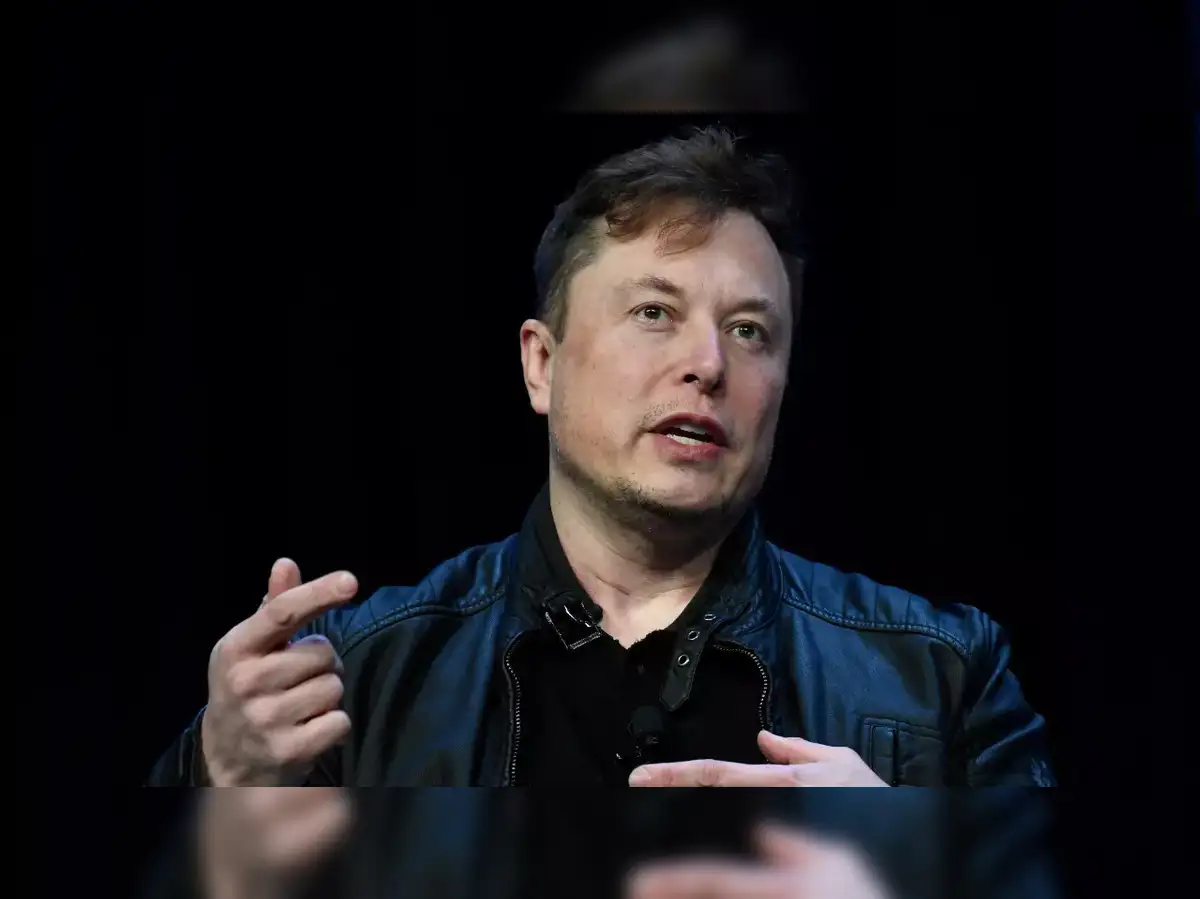
Elon Musk Admits He Was 'Clearly Wrong' About Anthropic -- and Promises Not to Weaponize SpaceXAI's Compute Access Against the Claude Maker: 'Not My Style'
Benzinga and Yahoo Finance LLC may earn commission or revenue on some items through the links below. Elon Musk publicly reversed his earlier view of Anthropic on Thursday, saying he was "clearly wrong" to doubt the AI company and pledging not to use SpaceXAI's compute leverage to harm a competitor. Musk Calls Anthropic Current AI Leader "I was clearly wrong about Anthropic," Musk wrote on X. "They are obviously currently the leader in AI. No company has released a model as good as Mythos/Fable and they will undoubtedly have Mythos 2 ready soon." TechCrunch reported that Musk was referring to his September 2025 post that said, "winning was never in the set of possible outcomes for Anthropic." I was clearly wrong about Anthropic. They are obviously currently the leader in AI. No company has released a model as good as Mythos/Fable and they will undoubtedly have Mythos 2 ready soon. And I would never cut them off in a way that hurt them badly, even as a competitor.... -- Elon Musk (@elonmusk) July 9, 2026 Musk added that he would not cut off Anthropic's access in a damaging way, even though Anthropic competes with his own AI business. "I would never cut them off in a way that hurt them badly, even as a competitor. That's not my style," he wrote. He cited Tesla's patent pledge, its decision to open the Supercharger network to rivals, SpaceX's pricing for competing satellite launches and X's tolerance for criticism as examples of what he called fair competition. "Even my worst enemies can attack me on this platform," Musk wrote. Anthropic Depends On SpaceXAI Compute Deal The exchange followed a claim on X that SpaceXAI now runs a frontier model competitive with Anthropic's Opus 4.8 while Anthropic depends on short-term compute leased from SpaceXAI. Anthropic signed a May deal for 300 megawatts of compute from xAI's Colossus 1 data center near Memphis, Tennessee, paying $1.25 billion a month through May 2029. SpaceXAI said in May that the partnership gives Anthropic access to Colossus 1, which includes more than 220,000 Nvidia GPUs and is designed for AI training, fine-tuning, inference and high-performance computing. SpaceXAI also said Anthropic plans to use the compute to improve capacity for Claude Pro and Claude Max subscribers.
In SpaceX, OpenAI, Anthropic IPOs, how a funding tap could open for Indian start-ups
SpaceX's $75-billion Initial Public Offering (IPO) last month made it the world's largest listing, well ahead of the $25.6 billion raised by Saudi Aramco in late 2019. What SpaceX's IPO also did was to set the stage for what may be equally gargantuan listings in the artificial intelligence (AI) space: OpenAI and Anthropic. And the returns from these three IPOs could open the tap for thirsty Indian start-ups. According to data compiled by private market intelligence platform Tracxn for The Indian Express, the 54 Private Equity (PE) and Venture Capital (VC) firms that have backed SpaceX, Anthropic, and OpenAI have deployed $57.8 billion across 1,376 rounds in Indian technology companies between 2016 and June 2026. Investments in Indian space-tech firms have been just $160 million, with 12 of the 54 participating in four rounds. Apart from validating Elon Musk's confidence in his space-plus-AI company, SpaceX's IPO also made profits for those PE firms and VCs who invested early enough. Consider, for instance, Peter Thiel's Founders Fund, whose $600 million investment in SpaceX was worth more than $50 billion at the company's IPO price of $135, according to a Bloomberg report, which added that Andreessen Horowitz's return from its investment in SpaceX would be the biggest in its history. SpaceX's IPO valued it at $1.8 trillion. In June, both Anthropic and OpenAI had confidentially filed for a listing. While the latter wants to be valued at $1 trillion in its IPO, Anthropic in May said it had raised $65 billion at a valuation of $965 billion. Explained | AI giants, SpaceX gear up for IPOs: Are these companies overvalued, and can Indians invest in them "Historically, successful exits have strengthened the ability of VC and PE firms to raise larger successor funds," said Neha Singh, Tracxn's Co-founder. "Given that India already features in the active portfolios of these 54 firms, a recovery in investment activity is plausible as fresh capital is raised and redeployed." At the same time, Singh cautioned that it is difficult to estimate how much capital may come to India as IPO proceeds are primarily distributed to Limited Partners rather than directly increasing General Partner deployment capacity. The scope However, there are "early signs of capital recycling". Story continues below this ad Take, for instance, Chicago-based VC firm Valor Equity Partners, whose 4% stake in SpaceX was worth around $70 billion at the IPO price. According to reports, Valor is looking to raise $2.5 billion by the end of 2026. But whether any of that money will reach Indian shores is up in the air given Valor's focus on deep tech, defence, and late-stage AI infrastructure in the US, Singh of Tracxn said. Also in Explained | Orbital data centres, extraterrestrial energy: Detailing Musk's ambitions with $1.75 bn SpaceX IPO "As a result, any meaningful increase in India allocations is more likely to emerge over the medium term as successor funds are raised and deployed, rather than as an immediate post-IPO outcome," she added. According to private capital data provider PitchBook, liquidity conditions in Asia-Pacific are improving. This suggests "the region's capital recycling cycle is beginning to repair after several years of constrained realisations," it said in a report late last month. Earlier this year in February, Peak XV had said it had raised $1.3 billion for its new India Seed, India Venture, and APAC funds. Story continues below this ad To be sure, there are differences in how the SpaceX-Anthropic-OpenAI investors have poured money into US and Indian firms. In India, while 71% of the investments of these 54 firms have been at the seed or early stage, 93% of the money in companies such as SpaceX, Anthropic, and OpenAI was at the late-stage. This, Singh of Tracxn said, reflects a "deliberate strategy of concentrating capital behind a small number of category-defining companies rather than following their typical investment pattern" which sees them invest just 12% at the late stage across the US portfolio. Whatever the money and stage, overseas funds will be welcomed not just by the start-ups but even Indian policymakers, with the Indian economy seemingly having sleepwalked into an exodus of foreign capital over the last couple of years as repatriation of past investments piled up rapidly, totalling $150 billion over 2023-24, 2024-25, and 2025-26. This is equal to 61% of gross Foreign Direct Investment (FDI) into the country, resulting in net FDI over the aforementioned three years being a mere $18 billion. Story continues below this ad In 2025-26, Indian start-ups raised $11.7 billion, down 18% from the previous year, according to Tracxn. As it is, private credit is becoming increasingly popular, with Moody's Ratings estimating the size of the Indian market doubled in the last five years to $25 billion at the end of 2025.
Palantir CEO has a blunt verdict on OpenAI and Anthropic
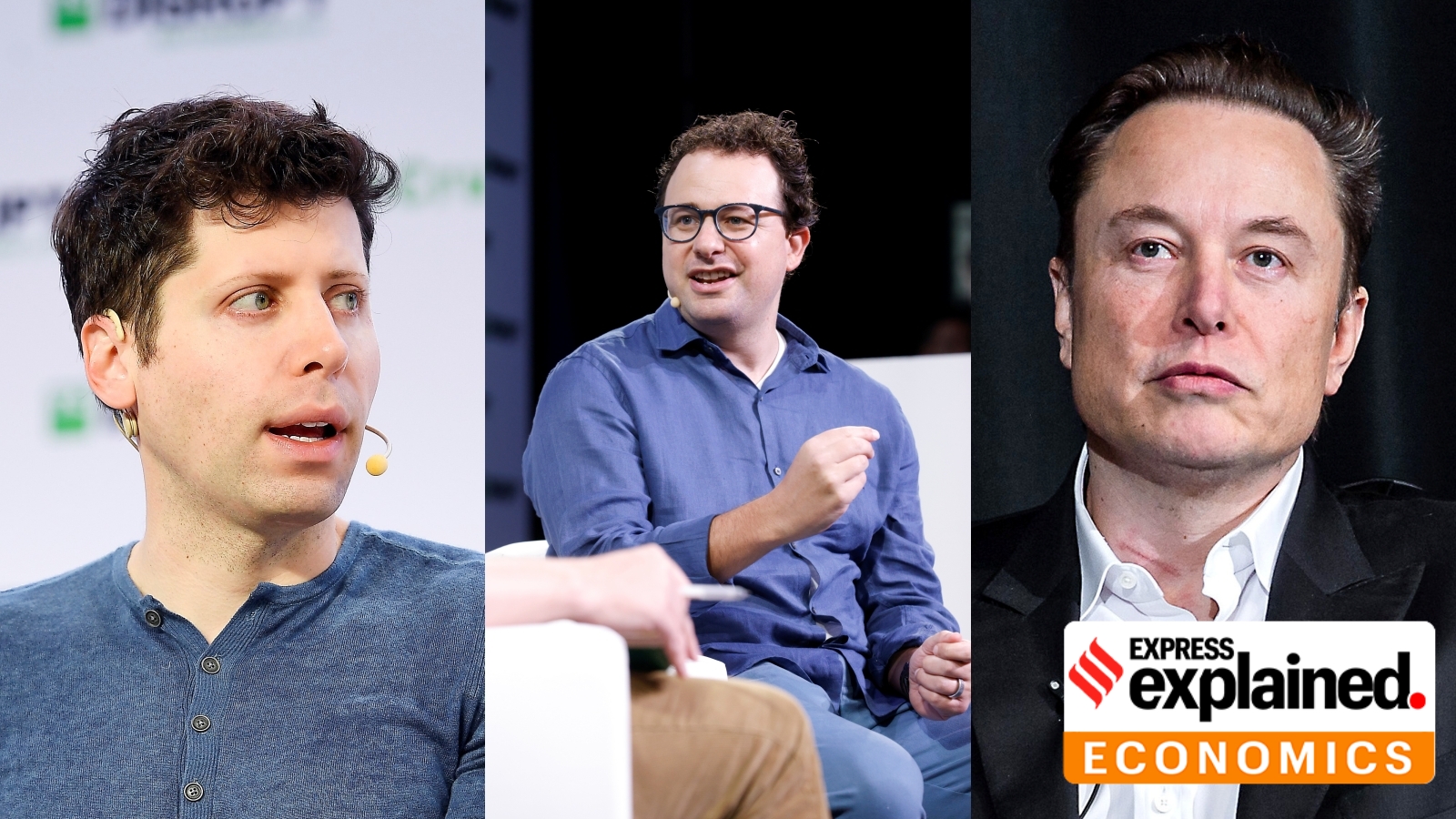
Palantir posted the highest revenue growth rate in its history in the first quarter of fiscal year 2026. U.S. commercial revenue jumped 133%. The company raised its full-year guidance by 10 points. By any operational measure, things are going well. And yet Alex Karp walked onto CNBC's Squawk Box and started criticizing the entire foundation of the AI business model. He wasn't talking about Palantir's competitors in the traditional sense. He was talking about the companies whose technology his own platform runs on top of. "I'm not throwing shade at them," he told viewers, "but something has gone completely wrong." What Karp said about OpenAI and Anthropic on live television The problem, in Karp's telling, is tokens. The way OpenAI and Anthropic sell AI access, metered by token consumption, has created a dynamic he says enterprises are increasingly fed up with. "The basic view among enterprises in this country is I'm going to chillax and waste my time with tokens, I'm gonna get no value, and they're gonna get my IP," Karp told CNBC. When co-anchor Andrew Ross Sorkin said "that sounds like shade," Karp pushed back: "No, no. This is reporting." He said customers are shifting away from what he called "tokenmaxxing" toward open-weight models that deliver similar output at a fraction of the cost. The ROI conversation is changing. Enterprises are asking harder questions about what they are actually getting for what they are spending, and a lot of them are not liking the answer. Palantir's stock rose 8% that day. Before the interview, the company had published a 9-point "AI sovereignty" manifesto on X, setting the philosophical stage for what Karp was about to say publicly. Why Karp says data ownership is the real AI fight The deeper argument Karp made was about control. Enterprises and governments, he said, want to own their compute, their models, their data stack, and their alpha. The word he kept coming back to was ownership. "They want to know they own the means of production. It's not being transferred to someone else." That framing extended into territory that goes well beyond enterprise software. Karp said it would be "insane" to hand battlefield or government applications entirely over to AI labs, effectively outsourcing sensitive decisions to a small group of Silicon Valley companies operating by consensus.
Anthropic Acknowledges $16.6 Million Billing Error, User Reveals Repeated Charge Attempts Blocked Bank Card, Four-Day Support Ordeal
South Korean user says repeated charge attempts continued after Anthropic admitted a $16.6m billing error. A South Korean Claude user says Anthropic's erroneous £12.2 million ($16.6 million, about ₩22.8 billion) billing demand led to repeated charge attempts that blocked his primary credit card, even after the company admitted the mistake. He says he then spent four days trying to get a clear response from support as he sought confirmation that the invalid invoices had been cancelled and his account cleared. The incident first came to light after the user, who said he was on Anthropic's free tier with no billable API usage, revealed invoices that escalated from about £1.23 million ($1.67 million) to £12.2 million ($16.6 million) within 24 hours. Anthropic has since confirmed the billing error and said no money was taken, while the user's latest posts describe the disruption that followed and his efforts to resolve it. 'It Wasn't Handled Properly' The user said the billing error became a customer support issue long after the invoices were issued. In updates shared on Threads, he said he contacted Anthropic repeatedly over four days, sending about 18 emails as he sought confirmation that the charges had been cancelled and his account had been cleared. He said repeated payment attempts reached his bank and resulted in his primary credit card being blocked, despite no money ultimately leaving the account. 'I still think it wasn't handled properly,' he wrote. The user said he expected a more urgent response given the size of the erroneous invoices. 'It seems like the urgent fire has been put out, but personally, I don't understand how they could release an automatic email after causing a billions-won invoice error,' he wrote. Even after the case was escalated, the notification advising that a human would review the matter came from Anthropic's Fin AI Agent, informing him that the issue had been forwarded to the company's Privacy Team. Anthropic Admits Billing Mistake And Explains What Went Wrong Anthropic later told the customer that an incorrect auto-reload setting had generated invalid payment requests. In an email shared by the user, the company said it disabled the setting as a precaution, restored the account's billing configuration and confirmed that no funds had been collected. 'No money left your account,' Anthropic said. 'Our payment processor attempted a charge at the invalid amount and it was declined... Nothing was collected, and you owe nothing.' The company also said the incident 'was not the result of unauthorized access' and advised the user to re-enable the auto-reload feature if he wished to continue using automatic API credit top-ups. Invoice Jumped More Than £11 Million In Just 24 Hours The dispute began on 7 July when the user received a failed payment notice seeking about £1.23 million ($1.67 million). Less than a day later, a second invoice arrived requesting £12.2 million ($16.6 million, about ₩22.8 billion). Because both payment notices came through Anthropic's official billing system and Stripe, the company's payment processor, the user said he initially investigated whether one of his own AI automation projects could somehow have generated the charges. After inspecting his AI agents, automation scripts, scheduled tasks and account credentials, he said he found no billable Anthropic API keys or other evidence that could explain the invoices. As a precaution, he cancelled his Claude Max subscription and suspended the payment card linked to the account. 'I'll Follow Up' The user said he plans to continue documenting the incident while waiting for additional responses from Anthropic. In a Threads update posted after receiving the company's explanation, he said he had sent a total of 18 emails and asked Anthropic to respond by Monday afternoon Korean time. 'I have scheduled a meeting with the reporter, and I think I can tell you more details around Tuesday afternoon or Wednesday,' he wrote. He also encouraged others to reference his experience, adding: 'If you don't mind, you can share the conversation or use the article as a reference... Just be careful not to distort the information.'
SpaceX's AI empire is built on data centers, not satellites - Cryptopolitan
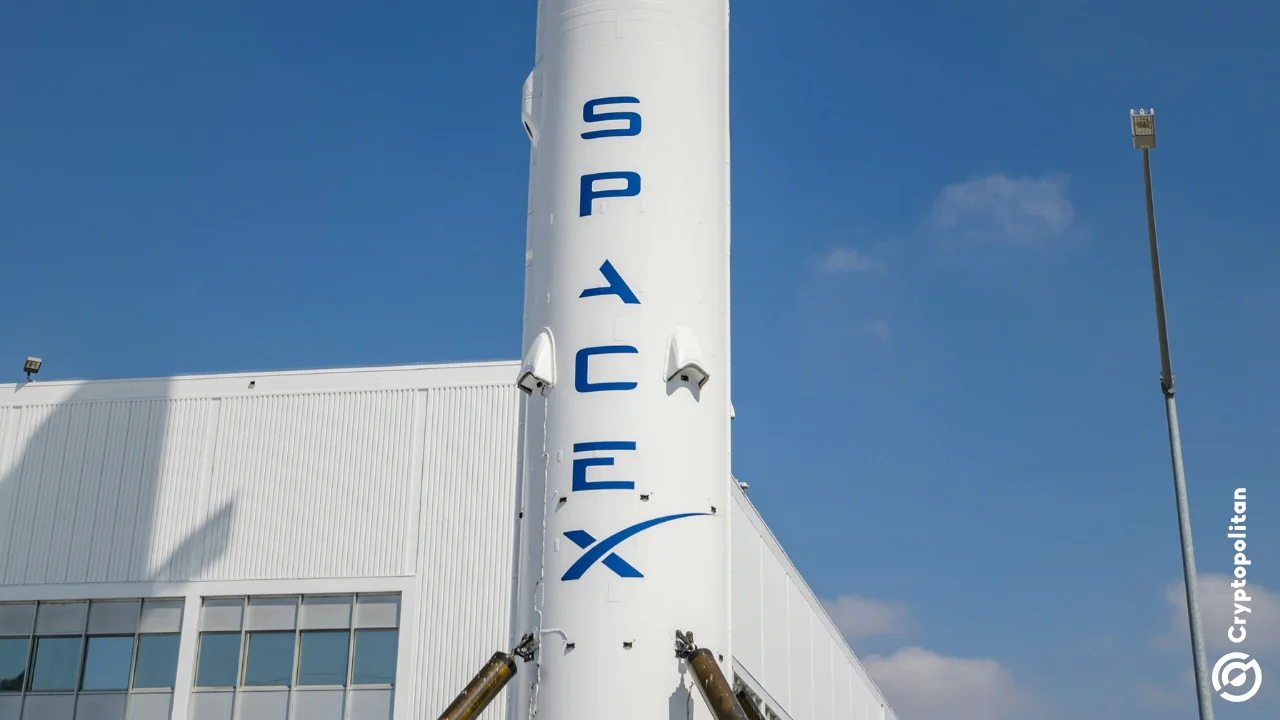
Analysts caution that the contracts carry termination clauses and that space computing is still 10 years or more away. SpaceX's AI returns over the next few years will not come from space. According to Wall Street analysts, the money is coming from Earth data centers rather than the orbital compute that Elon Musk has promised. This reframes SpaceX (NASDAQ: SPCX) as primarily an infrastructure company. Space computing is a bet for the future, not now, for anyone considering SpaceX as an AI play. SpaceX already charges for computing. Reuters reported that the company signed enterprise deals for its Colossus supercomputer clusters with Anthropic, Alphabet's Google, and Reflection AI. Those contracts alone are expected to generate more than $28 billion annually. SpaceX's AI revenue in 2025 is ~$3.2 billion, which is significantly higher than the new deals. The compute contracts also outperformed SpaceX's earnings from rocket launches and Starlink, when counted separately. The contracts, however, include termination clauses, so analysts caution against reading them as recurring revenue. What SpaceX spent to get here SpaceX invested ~$18 billion in AI infrastructure and research in 2025. According to company filings, ~$12.7 billion was spent on capital expenditures and $5.1 billion on research and development. That expenditure outpaced spending on space and connectivity lines. Colossus and a second cluster, Colossus II, together provide ~1 gigawatt of AI compute. That makes SpaceX one of the world's largest compute operators. J.P. Morgan predicts that terrestrial capacity will reach ~9 gigawatts by 2029, which is equivalent to four times the output of the Hoover Dam. Brokerages cited by Reuters pointed to its $60 billion purchase of AI coding startup Cursor as a sign the company wants to sell AI applications, not just the machines that run them. The deal ties into Musk's model plans on the software side. A separate Cryptopolitan report said Musk's lab, now renamed SpaceXAI, built its Grok 4.5 model jointly with Cursor, and Musk has said SpaceX is buying the startup for that same $60 billion figure. Why orbit is still a distant bet Musk has proposed a future in which computers run in space. Analysts Reuters spoke with view this as a later chapter. "The narrative that (orbital) will fundamentally disrupt terrestrial data centers is a little bit overblown," said Anthony Milovantsev, a partner at consultancy Altman Solon, who estimated that any real displacement of ground-based data centers would take "ten years plus." The case is based on hardware that does not currently exist at scale. Orbital computing relies on SpaceX's Starship flying frequently and cheaply, lower launch costs, and better satellites, according to analysts. Ground clusters continue to run regardless of direction. BofA analysts were more blunt, calling the long term viability of orbital data centers "unproven and heavily reliant on key technological milestones that have yet to be realized." If the engineering is delivered, the appeal will be valid. Starships could eventually launch solar computing satellites into orbit, avoiding ground based costs such as energy, cooling, and land use. Analysts aren't asking if SpaceX can build and sell AI infrastructure. J.P. Morgan's estimate of ~9 gigawatts in 2029 remains the benchmark for establishing a business beyond Earth.
Prediction: SpaceX Shares Can Reach $220 by End of 2026
Space Exploration Technologies (NASDAQ: SPCX) has become one of the market's most closely watched stocks after its rapid entry into the Nasdaq-100 index on July 7. Shares are trading close to $149 (as of July 10), still above its $135 IPO price, but nearly 34% below its post-IPO high of $225.60. This share price pullback has not ended investor interest in SpaceX, but it has changed the debate. Investors are now weighing the company's artificial intelligence (AI) compute opportunity, Starlink satellite internet network's room to expand in satellite communications, and progress on the next-generation reusable rocket system, Starship, as they assess where the stock could trade by the end of 2026. Missed Nvidia in 2009? This Rare Signal Is Flashing Again. In 2009, a "Double Down" signal flashed for a little-known chipmaker called Nvidia. For the first time in years, that same "Total Conviction" signal is flashing for a company 1/100th the size of Nvidia. Continue " Image source: Getty Images. SpaceX has growth drivers for its revenue SpaceX is already demonstrating impressive financial momentum. Revenue rose 33% year over year to $18.7 billion in 2025. But the company still reported a net loss of $4.9 billion after merging with money-losing xAI. Starlink remains the key growth engine, supported by roughly 10.3 million users and 9,600 satellites. But AI infrastructure is also becoming the next major catalyst. Alphabet has agreed to pay SpaceX $920 million per month from October 2026 through June 2029 for access to about 110,000 Nvidia GPUs and related computing resources. Anthropic has also signed a major compute-access deal with SpaceX, securing use of SpaceX's Colossus 1 data center. Reuters reported that SpaceX's two deals are worth about $26 billion annually if fully realized. Although not all the AI revenue from these deals is expected to materialize in 2026, it still gives investors a reason to value SpaceX based on future revenue potential rather than solely on 2025 sales. SpaceX's valuation will fall, but remain expensive At the end of 2026, investors will likely be looking toward SpaceX's expected 2027 revenue, since the stock's valuation depends on how quickly Starlink, AI compute, and Starship can expand the company's sales base. SpaceX's market capitalization is close to $2 trillion. Analysts' 2026 revenue estimates range from $34.3 billion on the low end to $43.2 billion on the high end, with a base case estimate of about $38.9 billion. Hence, SpaceX is already trading at roughly 51.4 times base case 2026 sales. By the end of 2026, that multiple will most likely compress, as post-IPO excitement usually cools and investors demand evidence of execution. But it also does not need to collapse if SpaceX continues to show progress in Starlink, AI infrastructure, and Starship. A reasonable base-case assumption is that SpaceX's sales multiple compresses by about 20% to 25% from today's 51.4x 2026 sales multiple. That gives a forward price-to-sales (P/S) multiple range of roughly 38.5 to 41 times expected 2027 sales. Analysts expect SpaceX's 2027 revenue to range from $54.8 billion to $85 billion, with an average estimate of $72.4 billion. Applying a forward sales multiple of 38.5 to 41 times to the 2027 base case revenue estimate yields an implied market capitalization of about $2.79 trillion to $2.97 trillion. Using roughly 13.1 billion shares outstanding, that points to a share price in the range of $213 to $227 at the end of 2026. Hence, $220 is a reasonable base case estimate. It assumes that while SpaceX's valuation multiple compresses, revenue growth offsets the pressure enough to lift the share price. Should you buy stock in Space Exploration Technologies right now? Before you buy stock in Space Exploration Technologies, consider this: The Motley Fool Stock Advisor analyst team just identified what they believe are the 10 best stocks for investors to buy now... and Space Exploration Technologies wasn't one of them. The 10 stocks that made the cut could produce monster returns in the coming years. Consider when Netflix made this list on December 17, 2004... if you invested $1,000 at the time of our recommendation, you'd have $395,679!* Or when Nvidia made this list on April 15, 2005... if you invested $1,000 at the time of our recommendation, you'd have $1,294,805!* Now, it's worth noting Stock Advisor's total average return is 929% -- a market-crushing outperformance compared to 211% for the S&P 500. Don't miss the latest top 10 list, available with Stock Advisor, and join an investing community built by individual investors for individual investors. See the 10 stocks " *Stock Advisor returns as of July 12, 2026. Manali Pradhan, CFA has no position in any of the stocks mentioned. The Motley Fool has positions in and recommends Alphabet and Nvidia. The Motley Fool has a disclosure policy. The views and opinions expressed herein are the views and opinions of the author and do not necessarily reflect those of Nasdaq, Inc.

Prediction: SpaceX Shares Can Reach $220 by End of 2026
Space Exploration Technologies (SPCX 4.51%) has become one of the market's most closely watched stocks after its rapid entry into the Nasdaq-100 index on July 7. Shares are trading close to $149 (as of July 10), still above its $135 IPO price, but nearly 34% below its post-IPO high of $225.60. This share price pullback has not ended investor interest in SpaceX, but it has changed the debate. Investors are now weighing the company's artificial intelligence (AI) compute opportunity, Starlink satellite internet network's room to expand in satellite communications, and progress on the next-generation reusable rocket system, Starship, as they assess where the stock could trade by the end of 2026. SpaceX has growth drivers for its revenue SpaceX is already demonstrating impressive financial momentum. Revenue rose 33% year over year to $18.7 billion in 2025. But the company still reported a net loss of $4.9 billion after merging with money-losing xAI. Starlink remains the key growth engine, supported by roughly 10.3 million users and 9,600 satellites. But AI infrastructure is also becoming the next major catalyst. Alphabet has agreed to pay SpaceX $920 million per month from October 2026 through June 2029 for access to about 110,000 Nvidia GPUs and related computing resources. Anthropic has also signed a major compute-access deal with SpaceX, securing use of SpaceX's Colossus 1 data center. Reuters reported that SpaceX's two deals are worth about $26 billion annually if fully realized. Although not all the AI revenue from these deals is expected to materialize in 2026, it still gives investors a reason to value SpaceX based on future revenue potential rather than solely on 2025 sales. SpaceX's valuation will fall, but remain expensive At the end of 2026, investors will likely be looking toward SpaceX's expected 2027 revenue, since the stock's valuation depends on how quickly Starlink, AI compute, and Starship can expand the company's sales base. SpaceX's market capitalization is close to $2 trillion. Analysts' 2026 revenue estimates range from $34.3 billion on the low end to $43.2 billion on the high end, with a base case estimate of about $38.9 billion. Hence, SpaceX is already trading at roughly 51.4 times base case 2026 sales. By the end of 2026, that multiple will most likely compress, as post-IPO excitement usually cools and investors demand evidence of execution. But it also does not need to collapse if SpaceX continues to show progress in Starlink, AI infrastructure, and Starship. A reasonable base-case assumption is that SpaceX's sales multiple compresses by about 20% to 25% from today's 51.4x 2026 sales multiple. That gives a forward price-to-sales (P/S) multiple range of roughly 38.5 to 41 times expected 2027 sales. Analysts expect SpaceX's 2027 revenue to range from $54.8 billion to $85 billion, with an average estimate of $72.4 billion. Applying a forward sales multiple of 38.5 to 41 times to the 2027 base case revenue estimate yields an implied market capitalization of about $2.79 trillion to $2.97 trillion. Using roughly 13.1 billion shares outstanding, that points to a share price in the range of $213 to $227 at the end of 2026. Hence, $220 is a reasonable base case estimate. It assumes that while SpaceX's valuation multiple compresses, revenue growth offsets the pressure enough to lift the share price.

Palantir CEO has a blunt verdict on OpenAI and Anthropic
Palantir posted the highest revenue growth rate in its history in the first quarter of fiscal year 2026. U.S. commercial revenue jumped 133%. The company raised its full-year guidance by 10 points. By any operational measure, things are going well. And yet Alex Karp walked onto CNBC's Squawk Box and started criticizing the entire foundation of the AI business model. He wasn't talking about Palantir's competitors in the traditional sense. He was talking about the companies whose technology his own platform runs on top of. "I'm not throwing shade at them," he told viewers, "but something has gone completely wrong." What Karp said about OpenAI and Anthropic on live television The problem, in Karp's telling, is tokens. The way OpenAI and Anthropic sell AI access, metered by token consumption, has created a dynamic he says enterprises are increasingly fed up with. "The basic view among enterprises in this country is I'm going to chillax and waste my time with tokens, I'm gonna get no value, and they're gonna get my IP," Karp told CNBC. When co-anchor Andrew Ross Sorkin said "that sounds like shade," Karp pushed back: "No, no. This is reporting." He said customers are shifting away from what he called "tokenmaxxing" toward open-weight models that deliver similar output at a fraction of the cost. The ROI conversation is changing. Enterprises are asking harder questions about what they are actually getting for what they are spending, and a lot of them are not liking the answer. Palantir's stock rose 8% that day. Before the interview, the company had published a 9-point "AI sovereignty" manifesto on X, setting the philosophical stage for what Karp was about to say publicly. Why Karp says data ownership is the real AI fight The deeper argument Karp made was about control. Enterprises and governments, he said, want to own their compute, their models, their data stack, and their alpha. The word he kept coming back to was ownership. "They want to know they own the means of production. It's not being transferred to someone else." That framing extended into territory that goes well beyond enterprise software. Karp said it would be "insane" to hand battlefield or government applications entirely over to AI labs, effectively outsourcing sensitive decisions to a small group of Silicon Valley companies operating by consensus. To illustrate where he thinks the market is going, Karp pointed to Palantir's expanded partnership with Nvidia, announced the same week, to build custom AI models for U.S. government agencies. "What aligns me with Nvidia... is what the technical customers want, which is control over their compute, their models, their data stack and their alpha," he said on CNBC. Palantir's Q1 2026 numbers and what they say about Karp's thesis Karp is making this argument from a position of real business momentum. Palantir's Q1 FY2026 revenue came in at $1.63 billion, up 85% year over year, the highest growth rate in company history. U.S. commercial revenue hit $595 million, up 133%. Adjusted operating margin expanded to 60% from 44% a year earlier. On the earnings call, Karp said Palantir's Rule of 40 score had hit 145%, which he called a feat matched only by Nvidia, Micron, and SK Hynix. Management raised annual revenue guidance to 71% growth, ten points above the prior quarter's forecast. U.S. commercial remaining deal value, meaning the potential value of contracted business yet to be recognized as revenue, reached $4.92 billion, up 112% year over year. Token-cost fatigue is showing up at real companies. Uber capped employee spending on agentic coding tools, including Claude Code and Cursor, at $1,500 per month after burning through its AI budget in four months, according to 24/7 Wall St. That is exactly the dynamic Karp is describing. The token model works until it doesn't, and for a growing number of enterprises, it has already stopped working. The Palantir valuation problem Karp's swagger can't quite solve The business is accelerating. The stock is down 28.67% year to date. Those two facts sitting next to each other tell you what the market's actual concern is, and it isn't whether enterprises want control of their data. Palantir closed at $126.79 on July 10 and trades at a forward P/E near 91. That multiple requires an enormous amount of future growth to be baked in and delivered. Even with 84.7% revenue growth, investors have spent most of 2026 asking whether that rate is sustainable or whether the stock got too far ahead of the business during last year's AI enthusiasm. Michael Burry disagrees. Scion Asset Management disclosed a put position tied to 5 million Palantir shares in its Q3 2025 13F, filed November 3, 2025. At the time, that represented an underlying notional of roughly $912 million, as TheStreet reported. 13Fs don't show strike prices, expiration dates, or whether the position is still open. But betting against $912 million worth of Palantir shares is not a casual trade. What Karp's OpenAI and Anthropic critique means for AI investors Karp's argument, if it holds up, has implications beyond Palantir's own stock. The token model underpins how OpenAI and Anthropic generate most of their enterprise revenue. If large customers are genuinely moving toward open-weight models and demanding more control over their infrastructure, that changes the growth assumptions for the closed-model AI companies more than the market has so far priced in. The counterargument is that Karp has an obvious commercial incentive to talk down token-based AI, since Palantir positions itself as the alternative. His numbers are real, but so is his motive. The enterprises he claims are frustrated may still be signing large contracts with OpenAI and Anthropic behind closed doors while also exploring Palantir's approach on the side. What July 1 made clear is that the business model debate inside the AI industry is getting louder, and the people doing the criticizing are no longer just academics or short sellers. They are CEOs running companies posting 84.7% revenue growth, with enough market credibility to move their own stock 8% with a single television appearance. The Arena Media Brands, LLC THESTREET is a registered trademark of TheStreet, Inc. This story was originally published July 12, 2026 at 4:37 PM.
Palantir CEO has a blunt verdict on OpenAI and Anthropic
Palantir posted the highest revenue growth rate in its history in the first quarter of fiscal year 2026. U.S. commercial revenue jumped 133%. The company raised its full-year guidance by 10 points. By any operational measure, things are going well. And yet Alex Karp walked onto CNBC's Squawk Box and started criticizing the entire foundation of the AI business model. He wasn't talking about Palantir's competitors in the traditional sense. He was talking about the companies whose technology his own platform runs on top of. "I'm not throwing shade at them," he told viewers, "but something has gone completely wrong." What Karp said about OpenAI and Anthropic on live television The problem, in Karp's telling, is tokens. The way OpenAI and Anthropic sell AI access, metered by token consumption, has created a dynamic he says enterprises are increasingly fed up with. "The basic view among enterprises in this country is I'm going to chillax and waste my time with tokens, I'm gonna get no value, and they're gonna get my IP," Karp told CNBC. When co-anchor Andrew Ross Sorkin said "that sounds like shade," Karp pushed back: "No, no. This is reporting." He said customers are shifting away from what he called "tokenmaxxing" toward open-weight models that deliver similar output at a fraction of the cost. The ROI conversation is changing. Enterprises are asking harder questions about what they are actually getting for what they are spending, and a lot of them are not liking the answer. Palantir's stock rose 8% that day. Before the interview, the company had published a 9-point "AI sovereignty" manifesto on X, setting the philosophical stage for what Karp was about to say publicly. Why Karp says data ownership is the real AI fight The deeper argument Karp made was about control. Enterprises and governments, he said, want to own their compute, their models, their data stack, and their alpha. The word he kept coming back to was ownership. "They want to know they own the means of production. It's not being transferred to someone else." That framing extended into territory that goes well beyond enterprise software. Karp said it would be "insane" to hand battlefield or government applications entirely over to AI labs, effectively outsourcing sensitive decisions to a small group of Silicon Valley companies operating by consensus. To illustrate where he thinks the market is going, Karp pointed to Palantir's expanded partnership with Nvidia, announced the same week, to build custom AI models for U.S. government agencies. "What aligns me with Nvidia... is what the technical customers want, which is control over their compute, their models, their data stack and their alpha," he said on CNBC. Palantir's Q1 2026 numbers and what they say about Karp's thesis Karp is making this argument from a position of real business momentum. Palantir's Q1 FY2026 revenue came in at $1.63 billion, up 85% year over year, the highest growth rate in company history. U.S. commercial revenue hit $595 million, up 133%. Adjusted operating margin expanded to 60% from 44% a year earlier. On the earnings call, Karp said Palantir's Rule of 40 score had hit 145%, which he called a feat matched only by Nvidia, Micron, and SK Hynix. Management raised annual revenue guidance to 71% growth, ten points above the prior quarter's forecast. U.S. commercial remaining deal value, meaning the potential value of contracted business yet to be recognized as revenue, reached $4.92 billion, up 112% year over year. Token-cost fatigue is showing up at real companies. Uber capped employee spending on agentic coding tools, including Claude Code and Cursor, at $1,500 per month after burning through its AI budget in four months, according to 24/7 Wall St. That is exactly the dynamic Karp is describing. The token model works until it doesn't, and for a growing number of enterprises, it has already stopped working. The Palantir valuation problem Karp's swagger can't quite solve The business is accelerating. The stock is down 28.67% year to date. Those two facts sitting next to each other tell you what the market's actual concern is, and it isn't whether enterprises want control of their data. Palantir closed at $126.79 on July 10 and trades at a forward P/E near 91. That multiple requires an enormous amount of future growth to be baked in and delivered. Even with 84.7% revenue growth, investors have spent most of 2026 asking whether that rate is sustainable or whether the stock got too far ahead of the business during last year's AI enthusiasm. Michael Burry disagrees. Scion Asset Management disclosed a put position tied to 5 million Palantir shares in its Q3 2025 13F, filed November 3, 2025. At the time, that represented an underlying notional of roughly $912 million, as TheStreet reported. 13Fs don't show strike prices, expiration dates, or whether the position is still open. But betting against $912 million worth of Palantir shares is not a casual trade. What Karp's OpenAI and Anthropic critique means for AI investors Karp's argument, if it holds up, has implications beyond Palantir's own stock. The token model underpins how OpenAI and Anthropic generate most of their enterprise revenue. If large customers are genuinely moving toward open-weight models and demanding more control over their infrastructure, that changes the growth assumptions for the closed-model AI companies more than the market has so far priced in. The counterargument is that Karp has an obvious commercial incentive to talk down token-based AI, since Palantir positions itself as the alternative. His numbers are real, but so is his motive. The enterprises he claims are frustrated may still be signing large contracts with OpenAI and Anthropic behind closed doors while also exploring Palantir's approach on the side. What July 1 made clear is that the business model debate inside the AI industry is getting louder, and the people doing the criticizing are no longer just academics or short sellers. They are CEOs running companies posting 84.7% revenue growth, with enough market credibility to move their own stock 8% with a single television appearance. The Arena Media Brands, LLC THESTREET is a registered trademark of TheStreet, Inc. This story was originally published July 12, 2026 at 4:37 PM.
Palantir CEO has a blunt verdict on OpenAI and Anthropic
Palantir posted the highest revenue growth rate in its history in the first quarter of fiscal year 2026. U.S. commercial revenue jumped 133%. The company raised its full-year guidance by 10 points. By any operational measure, things are going well. And yet Alex Karp walked onto CNBC's Squawk Box and started criticizing the entire foundation of the AI business model. He wasn't talking about Palantir's competitors in the traditional sense. He was talking about the companies whose technology his own platform runs on top of. "I'm not throwing shade at them," he told viewers, "but something has gone completely wrong." What Karp said about OpenAI and Anthropic on live television The problem, in Karp's telling, is tokens. The way OpenAI and Anthropic sell AI access, metered by token consumption, has created a dynamic he says enterprises are increasingly fed up with. "The basic view among enterprises in this country is I'm going to chillax and waste my time with tokens, I'm gonna get no value, and they're gonna get my IP," Karp told CNBC. When co-anchor Andrew Ross Sorkin said "that sounds like shade," Karp pushed back: "No, no. This is reporting." He said customers are shifting away from what he called "tokenmaxxing" toward open-weight models that deliver similar output at a fraction of the cost. The ROI conversation is changing. Enterprises are asking harder questions about what they are actually getting for what they are spending, and a lot of them are not liking the answer. Palantir's stock rose 8% that day. Before the interview, the company had published a 9-point "AI sovereignty" manifesto on X, setting the philosophical stage for what Karp was about to say publicly. Why Karp says data ownership is the real AI fight The deeper argument Karp made was about control. Enterprises and governments, he said, want to own their compute, their models, their data stack, and their alpha. The word he kept coming back to was ownership. "They want to know they own the means of production. It's not being transferred to someone else." That framing extended into territory that goes well beyond enterprise software. Karp said it would be "insane" to hand battlefield or government applications entirely over to AI labs, effectively outsourcing sensitive decisions to a small group of Silicon Valley companies operating by consensus. To illustrate where he thinks the market is going, Karp pointed to Palantir's expanded partnership with Nvidia, announced the same week, to build custom AI models for U.S. government agencies. "What aligns me with Nvidia... is what the technical customers want, which is control over their compute, their models, their data stack and their alpha," he said on CNBC. Palantir's Q1 2026 numbers and what they say about Karp's thesis Karp is making this argument from a position of real business momentum. Palantir's Q1 FY2026 revenue came in at $1.63 billion, up 85% year over year, the highest growth rate in company history. U.S. commercial revenue hit $595 million, up 133%. Adjusted operating margin expanded to 60% from 44% a year earlier. On the earnings call, Karp said Palantir's Rule of 40 score had hit 145%, which he called a feat matched only by Nvidia, Micron, and SK Hynix. Management raised annual revenue guidance to 71% growth, ten points above the prior quarter's forecast. U.S. commercial remaining deal value, meaning the potential value of contracted business yet to be recognized as revenue, reached $4.92 billion, up 112% year over year. Token-cost fatigue is showing up at real companies. Uber capped employee spending on agentic coding tools, including Claude Code and Cursor, at $1,500 per month after burning through its AI budget in four months, according to 24/7 Wall St. That is exactly the dynamic Karp is describing. The token model works until it doesn't, and for a growing number of enterprises, it has already stopped working. The Palantir valuation problem Karp's swagger can't quite solve The business is accelerating. The stock is down 28.67% year to date. Those two facts sitting next to each other tell you what the market's actual concern is, and it isn't whether enterprises want control of their data. Palantir closed at $126.79 on July 10 and trades at a forward P/E near 91. That multiple requires an enormous amount of future growth to be baked in and delivered. Even with 84.7% revenue growth, investors have spent most of 2026 asking whether that rate is sustainable or whether the stock got too far ahead of the business during last year's AI enthusiasm. Michael Burry disagrees. Scion Asset Management disclosed a put position tied to 5 million Palantir shares in its Q3 2025 13F, filed November 3, 2025. At the time, that represented an underlying notional of roughly $912 million, as TheStreet reported. 13Fs don't show strike prices, expiration dates, or whether the position is still open. But betting against $912 million worth of Palantir shares is not a casual trade. What Karp's OpenAI and Anthropic critique means for AI investors Karp's argument, if it holds up, has implications beyond Palantir's own stock. The token model underpins how OpenAI and Anthropic generate most of their enterprise revenue. If large customers are genuinely moving toward open-weight models and demanding more control over their infrastructure, that changes the growth assumptions for the closed-model AI companies more than the market has so far priced in. The counterargument is that Karp has an obvious commercial incentive to talk down token-based AI, since Palantir positions itself as the alternative. His numbers are real, but so is his motive. The enterprises he claims are frustrated may still be signing large contracts with OpenAI and Anthropic behind closed doors while also exploring Palantir's approach on the side. What July 1 made clear is that the business model debate inside the AI industry is getting louder, and the people doing the criticizing are no longer just academics or short sellers. They are CEOs running companies posting 84.7% revenue growth, with enough market credibility to move their own stock 8% with a single television appearance. The Arena Media Brands, LLC THESTREET is a registered trademark of TheStreet, Inc. This story was originally published July 12, 2026 at 4:37 PM.
Palantir CEO: "Something Has Gone Completely Wrong" With OpenAI and Anthropic
* Karp slammed OpenAI and Anthropic's token model as broken while PLTR posted 85% revenue growth and raised full-year guidance to 71%. * Palantir expanded its NVDA partnership for custom government AI models as enterprises like UBER push back on runaway token costs. * Despite explosive growth, PLTR trades at 91x forward earnings and is down 29% YTD, with Michael Burry holding puts on 5 million shares. * This lithium producer surpassed a $1B private valuation, joining some of America's most powerful startups. Now you can invest in EnergyX alongside global giants like General Motors, but only through July 16. (sponsor) Palantir CEO Alex Karp used a July 1 appearance on CNBC's Squawk Box to criticize the closed-model AI economy. He told viewers that when it comes to OpenAI and Anthropic, all is not well inside the AI boom. "I'm not throwing shade at them, but something has gone completely wrong." Shares of Palantir (NASDAQ:PLTR) rose 8% that day as Karp reframed the AI debate around token economics and data ownership. The Quote That Moved the Stock Karp's argument was that businesses are exhausted by paying for tokens. As he put it: "The basic view among enterprises in this country is I'm going to chillax and waste my time with tokens." According to CNBC's Samantha Subin, Karp took aim at the token model used by OpenAI and Anthropic as AI costs skyrocket. He further argued customers are shifting away from "tokenmaxxing" toward ROI and open-weight models that deliver similar work at a fraction of the cost. July 16 is the Final Day to Tap Into the Lithium Boom (sponsor) General Motors, POSCO, and 50,000+ everyday investors have already backed lithium producer EnergyX. Here's why you should do the same before their July 16 investment deadline: lithium prices are up 75% this year, with demand projected to grow a staggering 5X by 2040. With tech that can recover up to 3X more lithium than traditional methods, EnergyX is preparing to unlock up to 15M+ tons. Become a private-stage EnergyX investor before the July 16 deadline. Ahead of the interview, Palantir posted a 9-point "AI sovereignty" manifesto on X. Earlier that week, the company expanded its partnership with Nvidia (Nasdaq: NVDA) to build custom models for U.S. government agencies. Karp's framing of that alliance was revealing: "What aligns me with Nvidia, and I think is what the technical customers want, which is control over their compute, their models, their data stack and their alpha. They want to know they own the means of production. It's not being transferred to someone else."
Palantir CEO: "Something Has Gone Completely Wrong" With OpenAI and Anthropic
Act now: the analyst who called NVIDIA in 2010 just named his top 10 AI stocks -- and Palantir didn't make the cut. Grab the names FREE today. Palantir CEO Alex Karp used a July 1 appearance on CNBC's Squawk Box to criticize the closed-model AI economy. He told viewers that when it comes to OpenAI and Anthropic, all is not well inside the AI boom. "I'm not throwing shade at them, but something has gone completely wrong." Shares of Palantir (NASDAQ:PLTR | PLTR Price Prediction) rose 8% that day as Karp reframed the AI debate around token economics and data ownership. The Quote That Moved the Stock Karp's argument was that businesses are exhausted by paying for tokens. As he put it: "The basic view among enterprises in this country is I'm going to chillax and waste my time with tokens." According to CNBC's Samantha Subin, Karp took aim at the token model used by OpenAI and Anthropic as AI costs skyrocket. He further argued customers are shifting away from "tokenmaxxing" toward ROI and open-weight models that deliver similar work at a fraction of the cost. Ahead of the interview, Palantir posted a 9-point "AI sovereignty" manifesto on X. Earlier that week, the company expanded its partnership with Nvidia (Nasdaq: NVDA) to build custom models for U.S. government agencies. Karp's framing of that alliance was revealing: "What aligns me with Nvidia, and I think is what the technical customers want, which is control over their compute, their models, their data stack and their alpha. They want to know they own the means of production. It's not being transferred to someone else." The Numbers Backing the Swagger Karp speaks from strength. Palantir's Q1 FY2026 report showed record revenue of $1.63 billion, up 84.7% year over year, the highest growth rate in company history. U.S. commercial revenue jumped 133% to $595 million, and adjusted operating margin expanded to 60% from 44%. Karp put it this way on the call: "Palantir's Rule of 40 score has soared to 145%. We have shattered the metric, a feat matched only by other fellow AI infrastructure companies: NVIDIA, Micron and SK hynix." Management raised annual revenue guidance to 71% growth, 10 points ahead of the prior quarter's forecast. Shares of NVIDIA (NASDAQ:NVDA), Karp's partner in the sovereignty pitch, are up 13.1% year to date. Token-cost fatigue is showing across businesses: Uber (NYSE:UBER) has reportedly capped employee spending at $1,500 per month for each agentic coding tool, including Claude Code and Cursor, after blowing through its AI budget in four months. For readers tracking the picks-and-shovels layer of this shift, our team's AI infrastructure research maps the suppliers benefiting most. The Disconnect and the Bear Case Palantir shares closed at $126.79 on July 10. The stock is down 28.67% year to date, even as operations accelerate. The stock trades at a forward P/E near 91, and Michael Burry's Scion Asset Management disclosed a new put position tied to 5,000,000 Palantir shares in its Q3 2025 13F filed November 3, 2025, an underlying notional of about $912 million. 13Fs don't disclose strikes, expirations, or whether the position is still open. What to watch: whether the "own the means of production" pitch keeps pulling U.S. commercial customers. Palantir's U.S. commercial remaining deal value (RDV), a measure of contracted business still left to recognize, reached $4.92 billion in the latest quarter, up 112% from a year earlier. Contact [email protected] for any questions or corrections.

Jim Cramer: "Anthropic Is the Winner Now" as Enterprises Move to Slash Tech Budgets in Half
* Cramer called Anthropic the enterprise AI profit winner as CRM sinks 37% and MU surges 233% on exploding memory demand. * Starbucks evaluating a 50% cut to its $400 million tech budget signals every SaaS incumbent faces imminent re-underwriting. * Chinese open-source AI models pose the biggest threat to Anthropic's pricing power if CFOs find cheaper tokens that clear their ROI bar. * Act now: the analyst who called NVIDIA in 2010 just named his top 10 AI stocks -- and Salesforce didn't make the cut. Grab the names FREE today. On CNBC's Squawk on the Street on July 9, 2026, Jim Cramer argued that the real profit engine of the enterprise AI wave sits at the model layer, which is collecting the checks hyperscalers are writing. "Anthropic is the one that's actually making a lot of money doing some work on Salesforce," Cramer said, going on to call the company "the winner now" even as he added, "I don't like them. They're bullies. Anthropic. They're doing very well." Cramer paired the Anthropic call with a warning that enterprise software budgets are about to get squeezed. He cited Starbucks, which under CEO Brian Niccol is spending roughly $400 million on tech and evaluating cuts of up to 50%. If large customers like Starbucks are willing to review major tech spending and consider deep cuts, SaaS incumbents may face the tougher question of whether AI agents will generate enough new revenue before they start replacing old software seats. The Three AI Spending Buckets: Cybersecurity, Memory, and Tokens Cramer leaned on a framework he attributed to Key analyst Jack Snader: enterprises are funneling AI dollars into three categories, in order: cybersecurity, memory hardware, and tokens. "They're calling in George Kurtz," (CrowdStrike's CEO) Cramer said of the first wave. "Cyber... cybersecurity. And then next is actually hardware. And that's why we see Micron go up." He also flagged that Anthropic salespeople have been told to throttle back due to token constraints, a demand signal that speaks louder than any guide-up. Act now: the analyst who called NVIDIA in 2010 just named his top 10 AI stocks -- and Salesforce didn't make the cut. Grab the names FREE today. Salesforce Is Caught in the Budget-Cut Crosshairs Salesforce (NYSE:CRM) sits directly in the crosshairs of the Starbucks-style budget review. Marc Benioff's defense is Agentforce, which he described as "the biggest growth opportunity for our customers, and for Salesforce." The numbers back the pivot: Agentforce ARR hit $1.2 billion in Q1 FY27, up 205% YoY, with combined Agentforce and Data 360 ARR of roughly $3.4 billion. The stock tells the other side of the story CRM shares are down 36.79% year-to-date and 38.60% over one year, trading around $162. Investors are asking whether agents will replace seats faster than Salesforce can monetize them.
Billionaires warned New York would scare off business. Anthropic and Airbnb just made their biggest bets on the city yet
Some billionaires have spent the past year warning that New York City's political climate could scare away companies, capital, and high earners. But two fast-growing brands are moving in despite the noise. Anthropic is leasing an entire 16-story office building at 330 Hudson Street in Manhattan, dramatically expanding Anthropic's New York footprint from a much smaller office (just around the corner, at 155 Sixth Avenue), and announcing the company is planning to double its workforce in the city. The Claude-maker, which had less than 500 employees in the city at the beginning of this year, expects to occupy all 16 floors of the building -- enough space for 1,700 desks -- and expects to have more than 1,000 employees by the end of the year. The company is currently hiring for roles in New York across research, engineering, policy, sales, and operations. "New York is one of the main hubs for how AI is being put to work, and Anthropic is in the middle of it as a technology partner to the financial institutions, media companies, and cultural organizations that help define the city," Anthropic chief commercial officer Paul Smith told the New York Post in a statement. "Doubling our team here and deepening our long-term commitment to the city will allow us to sit closer to that work, and to the people driving it forward." Simultaneously, Airbnb is making a major real estate bet on New York of its own. The company purchased 281 Park Avenue South, a six-story building in Gramercy, for $81.5 million, according to The Wall Street Journal. The building is expected to serve as a hub for Airbnb's New York-area workforce, which numbers more than 600 employees. "New York City has been part of our story since the earliest days of Airbnb," CEO Brian Chesky said in a statement to AM New York. "This building reflects our long-term commitment to the city and will be home to one of our largest employee hubs outside of San Francisco. We're excited to keep investing in the city and the people who make it extraordinary." Anthropic and Airbnb's moves defy Mamdani naysayers' predictions The moves fly completely in the face of narratives put forward proclaiming New York City is becoming inhospitable to business. Billionaire investor Bill Ackman warned last year that if Zohran Mamdani became mayor, "You're going to see the flight of businesses from New York." Citadel founder Ken Griffin has also urged New York business leaders to "fight for their city," warning that political choices could push talent elsewhere. Griffin himself has had a public feud with the mayor following a Tax Day video in which the young, self-described Democratic Socialist called out Griffin's penthouse apartment as the prime example of why the city would benefit from a pied-a-terre tax. Griffin's CCO at Citadel responded in a letter to investors that the company may decide to halt construction of a $6 billion building in midtown Manhattan -- something that has never actualized.
Elon Musk Thinks SpaceX Could Become More Valuable Than Earth Itself
Businessman and Tesla CEO Elon Musk has once again captured the world's attention with one of his most audacious statements yet. In an address to skepticism surrounding a major compute partnership between Anthropic and SpaceX/xAI, Musk declared that his rocket company will eventually be worth more than the rest of Earth if it accomplishes its long-term objectives. In a post on X, he wrote, "You don't seem to understand that SpaceX will be worth more than the rest of Earth if we accomplish our goals." Musk's comment came in response to analyst Thomas D. who questioned whether Anthropic's reported $7.5-40 billion deal with SpaceX-related entities represented an "unforced error." The deal reportedly grants Anthropic access to significant AI compute capacity at SpaceX's facilities, including the Colossus 1 data center. The remark, made in response to a skeptic, emphasizes SpaceX's long-term potential in space infrastructure, Mars colonization, and related technologies, framing it as vastly more significant than short-term AI deals or competition. This highlights Musk's broader vision where space ambitions could dwarf terrestrial economies, amid discussions on xAI's rapid progress with models like Grok 4.5. Musk's latest prediction builds on these achievements while pointing toward far greater ambitions, establishing a self-sustaining colony on Mars and making life multiplanetary. The vision is not merely about sending astronauts on occasional trips. Musk has repeatedly emphasized that SpaceX aims to enable ordinary people to travel to the Moon, Mars, and beyond, creating an entirely new branch of the economy rooted in space resources, orbital manufacturing, and interplanetary trade. Critics have been quick to question the feasibility and the sheer scale of such a valuation claim. SpaceX's Soaring Valuation and Recent IPO SpaceX, which recently completed its high-profile initial public offering and carries a market valuation around $1.75 trillion, is already among the most valuable companies on the planet. Its rapid rise has been fueled by reusable rocket technology, the Starlink satellite internet constellation that now serves millions of users worldwide, and the development of the massive Starship vehicle designed for deep-space missions. Musk's statement arrives amid extraordinary momentum for SpaceX. The company went public in June 2026 in what became the largest IPO in history, raising approximately $75-85.7 billion. Shares surged post-listing, pushing the market capitalization above $2 trillion and briefly surpassing major tech giants like Amazon. Musk has long framed SpaceX's mission as making humanity multi-planetary, with Starship as the key vehicle for Mars colonization, lunar bases, and large-scale space infrastructure. Achieving routine, low-cost access to orbit and beyond could unlock new industries, orbital manufacturing, asteroid mining, space-based solar power, and a vastly expanded satellite economy. Analysts and enthusiasts speculate that dominating launch capacity, global broadband via Starlink, and space-based AI/compute could transform SpaceX into the backbone of an off-world economy. Some optimistic forecasts suggest potential valuations in the trillions more if these goals materialize, effectively dwarfing Earth's current economic output in relative terms as new frontiers open. Yet Musk's track record with Tesla and SpaceX has shown that seemingly impossible timelines can accelerate dramatically when innovation compounds. Whether Musk's forecast proves overly optimistic, it highlights a fundamental shift in how we view our future. For him, space is not just a frontier for exploration, it represents the next chapter of human prosperity and survival. As SpaceX pushes the boundaries of what's technically and economically possible, the conversation about humanity's place in the cosmos grows louder.
Anthropic Opens Hard Questions Portal: AI Companies Rank Below Governments in Trust
A 52,000-person Anthropic survey put AI companies below every government body in public trust Anthropic launched a formal public submission portal on Wednesday inviting anyone to submit the hardest questions they have about AI -- and committing to publish not just its answers but the reasoning that produces them, including cases where the company acknowledges it is wrong or uncertain. The initiative, called "Hard Questions" and accessible at Anthropic's Hard Questions portal, is one of the more structurally unusual transparency moves by a frontier AI lab: it hands agenda-setting to the public rather than to the company's communications team. The timing is not incidental. Anthropic's own nationally representative survey of nearly 52,000 Americans, published last month, found that only 15% of respondents said they trust AI companies to make decisions about how the technology is developed and used. That figure was the lowest of any institution the survey tested -- below the federal government, state and local governments, international bodies, and far below independent experts at 43%. AI Company Trust Ranks Last Among Every Surveyed Institution The Anthropic Public Record survey, conducted by YouGov between November and December 2025 with a national margin of error of ±0.6 percentage points, documented a trust landscape that the company itself describes as the backdrop for the Hard Questions initiative. Job loss was the most common fear Americans cited, held by 64% of respondents and ranking as the top concern in every state -- among Democrats at 67%, Republicans at 62%, and across every household type. Cognitive dependency, the worry that AI integration leaves people unable to think for themselves, ranked second at 56%. Misinformation ranked third at 52%. On the hopeful side, nearly half of Americans -- 48% -- named curing diseases like cancer or Alzheimer's as one of their top three hopes for AI, placing it 12 percentage points above the next option. What the survey found missing was trust in the companies building the technology to navigate this terrain responsibly. What Anthropic Is Actually Committing To: Mechanism, Limits, and What's Missing The Hard Questions mechanism is structurally different from the transparency tools most AI labs already use -- safety papers, whitepapers, voluntary commitments, and blog posts. Those are curated output: the company decides what it is ready to say, frames the questions it chooses to address, and controls every published finding. The Hard Questions portal inverts that: the public submits the agenda, and Anthropic has committed to publish not just positions but the reasoning that leads to them, including the company's acknowledgment of its own uncertainty and shortfalls. That structural difference matters. Most of what passes for AI transparency is what researchers have called "self-referential opacity" -- labs define what safety means, evaluate whether they meet their own definitions, and publish the results. An arXiv paper published in 2025 rated voluntary frontier AI commitments as failing on both democratic legitimacy (no external authorization of the standards) and accountability (self-reporting with no external verification). Brandie Nonnecke, director of the CITRIS Policy Lab at UC Berkeley, put it plainly in MIT Technology Review's 2024 assessment of voluntary commitments: "These are still companies that are essentially writing the exam by which they are evaluated." The Hard Questions initiative does not fully resolve this. Anthropic still decides what constitutes an adequate answer to a submitted question, controls the publication timeline, and bears no legal consequence if its public reasoning trail diverges from its internal deliberations. There is no independent body with authority to audit the responses, no mechanism for the public to reject an answer as insufficient, and no enforcement architecture if the company falls short of its stated commitments. What exists is a reputational stake -- stronger than a safety white paper because it invites external challenge, but weaker than any legally binding accountability mechanism. Dario Amodei, Anthropic's CEO, has drawn that line himself. In a policy essay published June 10, Amodei wrote directly that "the rapid pace of acceleration means that transparency alone is no longer sufficient" and called on governments to take on binding authority over frontier AI deployments, including mandatory third-party safety testing and civil penalties tied to global revenue for companies whose models fail safety thresholds. The Hard Questions initiative is positioned as the voluntary public engagement layer of that larger picture -- not the whole accountability structure. What Americans Want That a Submission Portal Cannot Deliver The Anthropic Public Record survey found that 71% of Americans -- a bipartisan supermajority spanning 68% of Republicans and 79% of Democrats -- believe the government should play a role in regulating AI. When asked what single action would best ensure AI is developed in humanity's interest, 47% of respondents named holding AI companies legally liable for harm. Another 44% named prioritizing safety over growth. Neither of those outcomes is deliverable through a public submission process, however rigorously run. Legal liability requires legislation. Government oversight requires regulation. The survey's most politically unified finding -- that the public wants something harder than voluntary transparency -- is precisely the gap the Hard Questions initiative leaves open. That gap is the honest context for the initiative: it is a genuine step, not a substitute. Anthropic has been building toward it for over a year, conducting in-depth interviews with 81,000 Claude users across 159 countries and 70 languages through a purpose-built tool called Anthropic Interviewer, running in-person focus groups, and publishing ongoing data from the Anthropic Economic Index. The Long-Term Benefit Trust, established early in the company's history, provides some independent oversight of how effectively Anthropic advances its public benefit mission -- though it lacks the authority of an independent regulator. The Anthropic Institute, a research arm focused on AI's societal challenges, provides institutional grounding. Anthropic is also structured as a Public Benefit Corporation, a legal form available in Delaware and approximately 40 other states that requires directors to weigh public benefit alongside profit and insulates them from shareholder suits for doing so. That structure gives the initiative legal cover -- Anthropic can justify commercial costs to its mission without facing liability to investors. What it does not create is an enforcement mechanism for anyone outside the company. How Does Anthropic's Hard Questions Initiative Actually Work? The initiative operates through a dedicated portal at claude.com/hard-questions. Visitors can submit questions on topics including AI's effects on jobs and society, AI's potential in science and medicine, safety and governance, and the broader trajectory of AI development. Anthropic has committed to publicly tracking the specific actions it takes in response to submitted questions -- and, notably, to disclosing where it falls short of its stated goals. The company produced a two-minute film, directed by Myles McAuliffe and created by Mother agency as part of Anthropic's "Keep Thinking" brand platform, drawing on conversations with more than 12,000 people about their hopes and fears around AI. The film surfaced questions including "Who decides the rules for AI?", "Does AI make the world more dangerous?", and "Could AI help people stop feeling misunderstood?" -- the range intentionally spanning existential and everyday. What Anthropic has not specified is a timeline for publishing its first substantive responses, a format for what those responses will look like, or a mechanism for users who disagree with an answer to escalate their challenge. Those details will determine whether the initiative functions as genuine public accountability or as a more sophisticated version of the curated FAQ. Why This Moment Is Harder Than It Looks for Anthropic The Hard Questions launch arrives against a backdrop that makes the credibility test unusually concrete. Anthropic is currently in active federal litigation over a Trump administration directive issued in February 2026 that designated the company a "supply chain risk" and directed federal agencies to cease using its technology -- the first time that designation, historically reserved for foreign adversaries like Huawei and ZTE, had been applied to an American company. A subsequent Commerce Department export control directive in June forced Anthropic to globally disable Fable 5 and Mythos 5 for all users, because the company's access architecture had no mechanism to selectively filter users by nationality at commercial scale. The company disputed both actions and has filed lawsuits challenging them. But the episode demonstrated that Anthropic's most powerful deployed models operate in a legal environment that is neither stable nor transparent to users -- a fact that sits in some tension with an initiative premised on accountability and showing its work. Separately, the June 2026 launch of Claude Fable 5 -- Anthropic's most capable public model -- included safety classifiers that silently downgraded legitimate security and chemistry researchers' responses without notifying them. Anthropic apologized within days and made the downgrade visible, but critics noted the fix added transparency to the downgrade without removing it. A prominent AI safety researcher who departed Anthropic in February 2026, Mrinank Sharma, had spent his time there on exactly these problems: AI sycophancy and bioweapons defenses. His public departure letter described a world "in peril." These are not disqualifying facts for the Hard Questions initiative. They are the honest context for what the initiative needs to demonstrate over time: that its public reasoning trail constrains actual company decisions, not just the ones Anthropic was already comfortable making. What the Bipartisan Case for AI Accountability Actually Looks Like The Anthropic Public Record survey found something unusual in an era of deep partisan division: AI governance is not a partisan issue. Job loss fears differed by just five percentage points between Democrats and Republicans. Support for government involvement in AI reached 79% among Democrats and 68% among Republicans. Integrated AI users -- roughly 6% of Americans who use AI daily for both work and personal purposes -- supported government involvement at essentially the same rate as the general public (74% vs. 71%). Even the Americans most embedded in AI could not be described as opposed to oversight. That consensus has not translated into federal legislation, which remains stalled. In its absence, state-level transparency laws -- including New York's RAISE Act, which Anthropic publicly supported and which takes effect January 1, 2027, and California's SB 53 -- have created the first mandatory disclosure floor for frontier AI developers above $500 million in annual revenue. Those laws require annual risk frameworks and 72-hour incident reporting, with fines of up to $3 million for repeat violations. They are the nearest thing to enforceable accountability currently on the books. The Hard Questions initiative sits in the space between those mandatory disclosure floors and the broader public accountability mechanism the survey data suggests the public actually wants. It is worth watching. Whether the public reasoning trail it promises turns out to be binding in practice -- whether it constrains decisions the company would otherwise make differently -- is the question that will determine its significance. Submissions are open at Anthropic's Hard Questions portal. Frequently Asked Questions How does the Anthropic Hard Questions initiative actually work? Anyone can submit a question at Anthropic's Hard Questions portal. Anthropic has committed to publicly tracking the specific actions it takes in response and to disclosing where it falls short of its stated goals. The structural distinction from prior AI lab transparency efforts is that the public sets the agenda -- the company does not choose which questions to acknowledge. What Anthropic has not specified is a timeline for publishing responses, a format for those responses, or a process for users who find an answer inadequate. Is Anthropic's transparency commitment legally binding? No. The Hard Questions initiative is a voluntary commitment backed by reputational risk rather than legal consequence. Anthropic defines what constitutes an adequate answer, controls the publication process, and bears no legal penalty if its public reasoning trail diverges from its actual decisions. Dario Amodei, Anthropic's CEO, has publicly stated that "transparency alone is no longer sufficient" and called for binding government regulation -- mandatory third-party safety testing, government authority to block deployments, and civil penalties. That regulatory framework, if enacted, would create enforceable accountability. The Hard Questions portal does not. Why do Americans distrust AI companies more than their own government? Anthropic's own Anthropic Public Record survey -- 51,993 Americans, conducted by YouGov in November and December 2025, with a national margin of error of ±0.6 percentage points -- found that only 15% of respondents trust AI companies to make decisions about how the technology is developed and used. That was lower than trust in the federal government (20%), state and local governments (19%), and international bodies (20%), and far below independent experts (43%). The survey found no significant partisan divide on the trust question. Researchers who study voluntary industry self-governance have documented a structural reason for the gap: AI companies currently define the standards they evaluate themselves against, report their own compliance, and face no external verification. How does the Hard Questions initiative differ from other AI labs' transparency efforts? Most major AI labs publish safety papers, whitepapers, and voluntary policy commitments -- all forms of curated output where the company decides what it is ready to say. The Hard Questions initiative is different in that it hands agenda-setting to the public: submitted questions, not company-selected ones, drive what Anthropic commits to address publicly. The additional commitment to publish reasoning rather than just conclusions -- including cases where Anthropic acknowledges uncertainty or shortfalls -- is also structurally unusual. The test of whether this difference is meaningful is whether the public reasoning trail constrains decisions the company would otherwise make differently, which will only be visible over time.

Who is Ben Bernanke, ex-Fed chair appointed to Anthropic's Long-Term Benefit Trust - CNBC TV18
Ben Bernanke becomes the fourth member of Anthropic's Long-Term Benefit Trust, joining Neil Buddy Shah, Richard Fontaine and Mariano-Florentino Cuéllar. Anthropic has appointed Ben Bernanke, the former chair of the Federal Reserve, to its Long-Term Benefit Trust (LTBT). The independent governance body oversees the company's mission of developing artificial intelligence responsibly for the long-term benefit of humanity. Bernanke became the fourth member of Anthropic's Long-Term Benefit Trust, joining Neil Buddy Shah, Richard Fontaine and Mariano-Florentino Cuéllar. The LTBT is responsible for appointing Anthropic's board members and guiding the company on major decisions involving AI and its societal implications. Who Is Ben Bernanke? Ben Bernanke is an American economist best known for serving as the Chair of the US Federal Reserve from 2006 to 2014. He led the central bank through the 2008 global financial crisis and the recovery that followed. Before joining the Federal Reserve, Bernanke spent more than two decades as an academic economist, primarily at Princeton University. While at Princeton, Bernanke headed the economics department and researched the Great Depression and the role banks play in financial crises. His work was recognised with the Nobel Prize in Economic Sciences in 2022. Following his tenure at the Federal Reserve, he joined the Brookings Institution as a Distinguished Fellow and has also held advisory roles at investment firms, including Citadel and PIMCO. Role at Anthropic As a member of Anthropic's Long-Term Benefit Trust, Bernanke will contribute to research on how AI is changing the economy. He will provide his expertise for Anthropic's economic research while also contributing to other areas of the company's work. Speaking on his appointment, Bernanke said AI holds enormous potential, but its impact will depend on the institutions built around it. "Anthropic has created a unique governance structure to try to ensure that the long-run benefits of AI for humanity far outweigh the risks. I am honored to have this opportunity, and I will try to contribute in any way I can to this critical mission," he added. About Anthropic's Long-Term Benefit Trust Anthropic, founded in 2021 by former OpenAI researchers and executives, a Public Benefit Corporation. The Long-Term Benefit Trust comprises independent trustees with expertise across a wide range of areas that spans economics, law, policy, national security and global health. "The Trustees are chosen for their expertise across a wide range of areas, and are independent of the company's management and investors: they hold no equity in Anthropic, don't share in its profits, and are compensated only for their time and service. New Trustees are selected by the existing ones, in consultation with the company," according to Anthropic.
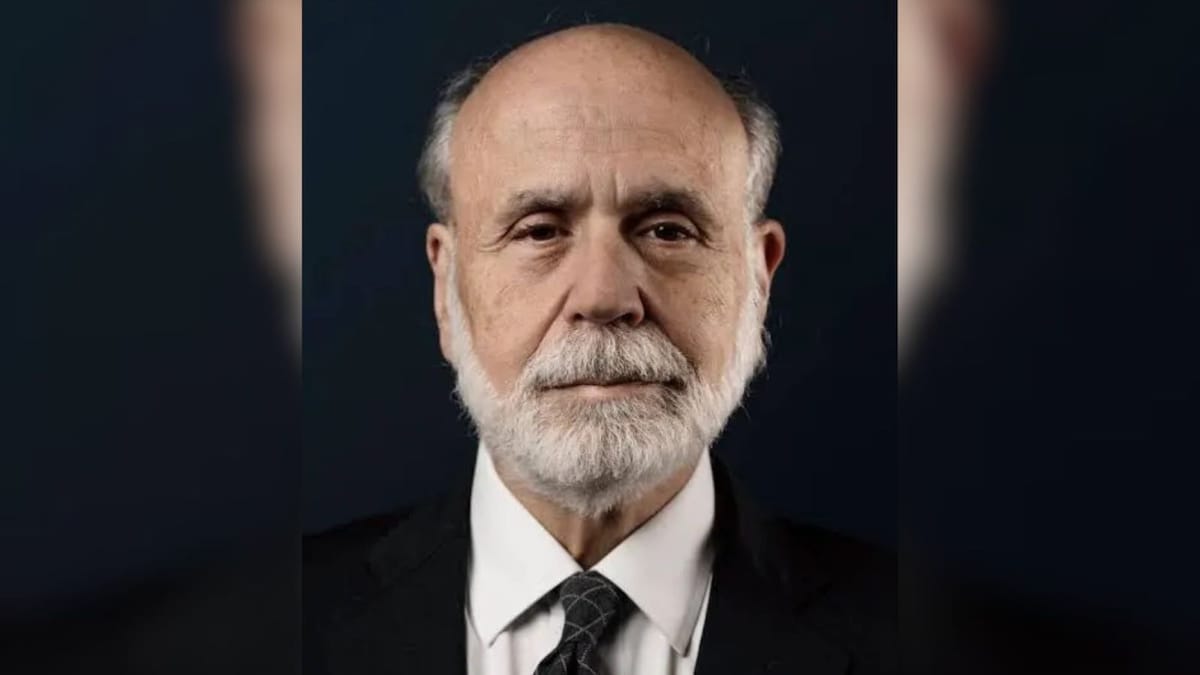
Elon Musk changes tune on Anthropic, calls it 'leader in AI'
In a dramatic turn of events, Elon Musk has praised its long-time rival Anthropic for its significant contributions in artificial intelligence, calling the tech company "leader in AI." In the competitive tech landscape, such a surprising u-turn has raised eyebrows as SpaceX CEO repeatedly took an aim at AI startups, questioning its capabilities to stand out as a winner in the race for frontier AI. To one's amazement, Musk clearly admitted in his post on X that he was wrong about Anthropic. In response to a discussion on X regarding Anthropic's utilization of SpaceX AI infrastructure, Elon Musk asserted that his company has surpassed its competitors in the field of artificial intelligence. "I was clearly wrong about Anthropic. They are obviously currently the leader in AI. No company has released a model as good as Mythos/Fable and they will undoubtedly have Mythos 2 ready soon," Musk replied. Speaking about the dependence of Anthropic on SpaceXAI's infrastructure, Musk clarified that he would never manipulate this relationship just to gain any edge. "And I would never cut them off in a way that hurt them badly, even as a competitor. That's not my style," he added. Moreover, Musk also asserted that Tesla's decision to open-source many of its patents also underpinned this mindset, adding, "we made the Supercharger network available to all competitors, even though we could have made it a walled garden." Such promising remarks represent a departure from a tone that has always criticized Anthropic. Last year, Musk posted, "Winning was never in the set of possible outcomes for Anthropic." Moreover, the CEO of Tesla also slammed Anthropic as "evil and misanthropic." However, in May 2026 the relationship became agreeable when US-based AI company struck a deal with SpaceX, leasing the full capacity of SpaceX's "Colossus 1" data center facility in Memphis, Tennessee. The facility provides over 220,000 NVIDIA GPUs and more than 300 megawatts of power.
Elon Musk says Anthropic is the current AI leader, praises Mythos and Fable models
Elon Musk now calls Anthropic the industry's current leader in artificial intelligence. He admitted being clearly wrong about the AI startup's potential outcomes. Anthropic is a major customer of Musk's SpaceXAI infrastructure company. The AI startup uses SpaceXAI's supercomputer for its advanced models. Musk stated he would never harm a competitor, citing Tesla and SpaceX examples. Elon Musk has praised artificial intelligence (AI) startup Anthropic, saying it is the industry's current frontrunner, in a significant shift from his earlier criticism of the company.Responding to a user on X, the billionaire entrepreneur said he had been 'clearly wrong' about Anthropic and described it as 'currently the leader in AI'. He also said no company had released a model comparable to Anthropic's latest ones, Mythos and Fable.