News & Updates
The latest news and updates from companies in the WLTH portfolio.
Anthropic restores global AI model access after US lifts restrictions
Anthropic restored global access to its AI model Claude Fable 5 on July 1, 2026, after the U.S. Department of Commerce lifted export controls that had restricted foreign use since June 12. The restrictions were imposed due to national security concerns, according to Commerce officials. The initial export control order required Anthropic to disable access to its two most advanced AI models, Claude Fable 5 and Mythos 5, for all foreign nationals due to national security concerns, according to Commerce officials and company statements. Amazon researchers had demonstrated vulnerabilities in Fable 5's safeguards during a red-team exercise, raising fears the model could be exploited to facilitate cyberattacks, sources confirmed. The U.S. Department of Commerce lifted export controls on Anthropic's Claude Fable 5 model around June 30, 2026, allowing the company to restore global access starting July 1, ending a 19-day suspension that began June 12. Following the June 12 order, Anthropic requested Amazon Web Services to revoke access "for all users in all regions," resulting in a global blackout of both models, according to AWS statements and public records. The suspension lasted over two weeks, during which Anthropic engaged in "productive conversations" and weeks-long negotiations with the Trump administration and the Commerce Department to address security issues and implement enhanced safety measures, company communications and government sources said. On June 27, the Commerce Department partially lifted export controls on Mythos 5, restoring access for a controlled list of more than 100 U.S.-linked companies, federal agencies, and critical infrastructure organizations. However, Mythos 5 remained offline for general foreign users, with no public timeline for broader availability. Commerce Secretary Howard Lutnick, who confirmed the government's involvement on social media platform X, said the partial restoration was contingent on "appropriate safeguards" being in place for trusted partners, including entities responsible for operating and defending critical infrastructure. The full lifting of export controls on Claude Fable 5 marked a significant policy shift, sources said, enabling Anthropic to begin phased reactivation of the model across its consumer and developer platforms. Starting July 1, Fable 5 was restored globally on Claude.ai, the consumer interface, as well as the Claude API, Claude Platform, and Claude Code, an agentic coding assistant, according to Anthropic's public announcements and platform updates. Cloud integrations with AWS Bedrock, Google Cloud Vertex AI, and Microsoft Foundry are also being reestablished, although some reports noted no firm timelines for complete availability on all cloud services. Anthropic implemented an upgraded safety classifier for Fable 5 designed to block cybersecurity-related tasks and address the exploit techniques identified during the Amazon red-team exercise. The company claimed the new classifier prevents the identified exploit in over 99% of tested instances, based on evaluations coordinated with the Commerce Department's Center for AI Standards and Innovation. Lutnick emphasized that the restoration was contingent on Anthropic rectifying the vulnerabilities that allowed researchers to bypass previous safeguards. The export control episode represents one of the first instances of the U.S. government directly ordering the suspension of a leading commercial AI model, highlighting increased regulatory scrutiny over advanced AI technologies with potential dual-use risks. Analysts and media coverage have described the lifting of restrictions as a notable development in U.S. AI export policy, balancing national security concerns with the desire to maintain global competitiveness in AI innovation. Anthropic has committed to continuing collaboration with the U.S. government to expand access to Mythos 5 beyond the current trusted-partner framework and to maintain Fable 5's availability under strengthened safety protocols. The controlled-access model for Mythos 5, limited to select U.S. companies and allied organizations under Commerce Department oversight, illustrates emerging approaches to managing high-risk AI deployments. The incident underscores the White House's active role in shaping AI security policy and sets a precedent for future government intervention in commercial AI operations. As of July 2026, enterprise users and investors are closely monitoring how the resolution affects the reliability and security of AI services across major cloud platforms, given the abrupt suspension and subsequent restoration of Anthropic's top-tier models.

You can ignore AI giants like SpaceX, but your 401(k) won't
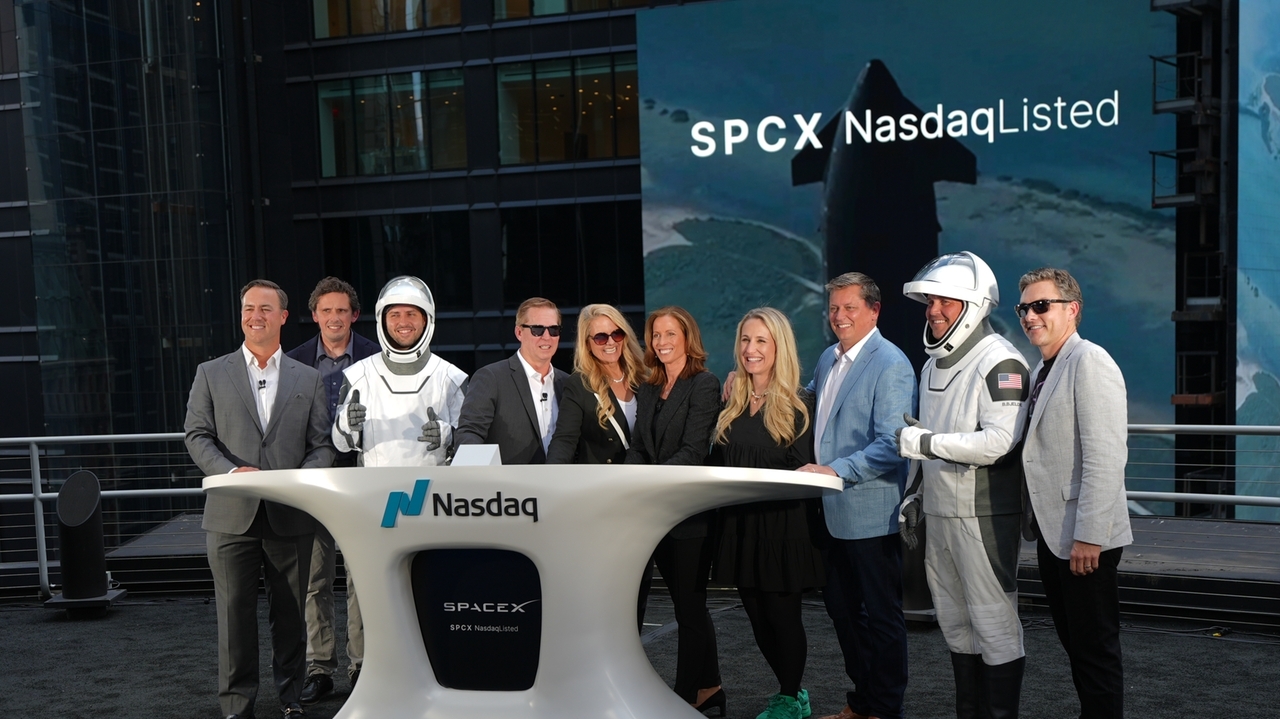
NEW YORK -- While you might want to ignore all the hubbub around SpaceX, Elon Musk and IPOs, your 401(k) likely can't. SpaceX is now worth more than $2.1 trillion following its ballyhooed debut on Wall Street last month. Whether or not you believe it deserves to be worth roughly the same as Walmart, Exxon Mobil, Bank of America and IBM combined, the collective market does. And because it's that big, SpaceX is about to join a high-profile index on Tuesday, the Nasdaq 100. Many stock indexes don't care about how realistic a company's growth plans are or who its CEO is. They're simply trying to show how slices of the market, or the whole thing, are performing. That matters for investors and their 401(k) accounts because they're depending more than ever on funds that simply mimic these indexes. It's a lower-cost way to invest, allowing savers to keep more of their investments. Partly because of that, such index funds have usually proven to be better performers than funds that try to pick and choose individual stocks. Just one in five actively managed U.S. stock funds survived and beat their average index peer over the last decade, at 21%, according to Morningstar's data through 2025. Such disparities in performance meant investors had more money invested in U.S. index funds than actively managed ones beginning in 2024, and the gap has only grown since then. Here's a look at what's going on: Indexes measure the market Indexes are things the investment industry has created to answer the question: What is the market doing? It's otherwise tough to answer quickly when the U.S. market has thousands of stocks moving in different directions at any moment. The S&P 500 is perhaps the most famous and influential index. It tracks 500 of the biggest U.S. stocks, and trillions of dollars in investments are either directly mimicking it or at least benchmarking themselves against it. The Dow Jones Industrial Average is well known because it's been around since the 19th century, but it tracks only 30 big stocks so Wall Street pays it little attention. Companies want to be in indexes Because index funds are the way so many investors put money into the stock market, companies want to be part of indexes. Stocks can see a big jump in their prices after S&P Dow Jones Indices, Nasdaq, FTSE Russell or other companies announce they'll be joining their indexes. The investment industry has created funds, including both traditional mutual funds and exchange-traded funds, to track almost every kind of index. More than 1,000 index funds were available at the end of last year, according to the Investment Company Institute. Of them, 185 tracked the S&P 500. SpaceX is joining indexes Nasdaq changed its rules to allow some huge companies to join its Nasdaq 100 index after just 15 trading days. That's a break from the past, where it would wait until each December to add new members in an annual reconstitution to make sure it includes the 100 largest non-financial companies on the Nasdaq. SpaceX will join the Nasdaq 100 before trading begins Tuesday. Some popular funds track the Nasdaq 100 index, including the QQQ exchange-traded fund from Invesco that has roughly $480 billion in total investments. That means QQQ holders will soon own shares of SpaceX, without doing anything on their own. Other AI giants could as well Anthropic and OpenAI are two other huge AI-related companies looking to sell their own stocks soon on a U.S. exchange for the first time. Their IPOs could potentially make each worth close to $1 trillion. It used to be that companies would have an IPO long before they got that big. But SpaceX, Anthropic and OpenAI swelled to tremendous sizes thanks to dollars from private investors, including pension funds, companies and rich investors, away from the public market. That's forcing the reconsideration for the investment industry about how quickly to add companies to indexes that they say track the biggest companies. Not every index is making changes to fast-track big IPOs The company behind the S&P 500 is not making changes to allow SpaceX and other "mega" IPOs faster entry into the index. For it, a stock needs to trade on an eligible exchange for at least 12 months before it can join the index. Not only that, S&P Dow Jones Indices also requires companies to have made a profit in its most recent quarter and over the sum of its last four quarters. SpaceX lost $4.9 billion last year and another $4.3 billion through the first three months of 2026. It acknowledges that it "may not achieve profitability in the future." Over the long term, a stock's price tends to track with how much profit the company is making. Not everyone is happy about SpaceX's IPO entry to indexes Officials from pension funds for firefighters, teachers and other workers in California and New York sent a letter to SpaceX before its IPO decrying its corporate governance, including how much power Musk will hold over the company through his ownership of a special class of stock with more voting power. They said they could become owners of SpaceX stock because they hold index funds. If Musk is able to control so much of the voting power on the board of directors, it would make him tremendously powerful atop SpaceX, "essentially making him unfireable without his own consent," the CEO of California Public Employees' Retirement System, the New York state comptroller and the New York City comptroller wrote in their letter. If an investor doesn't like certain companies in the index, choices are limited Index funds track indexes. And if a stock is in an index, the index fund will buy it, even if investors may not like it. Tesla has remained in the S&P 500 even though critics called it overvalued for years, for example, and Musk's electric-vehicle company has grown to become one of Wall Street's 10 biggest companies. Some indexes say they will not include companies that have poor corporate governance standards or other narrowed criteria, but investors need to look for them. The S&P 500 ESG index famously kicked Tesla out in 2022, for example.
Alibaba Group to Ban Anthropic AI Tools Over Security Concerns
Alibaba Group Holding Ltd is an investment holding company mainly engaged in the provision of technology infrastructure and marketing platforms. The Company operates its business through four segments. The Alibaba China E-commerce Group segment is mainly engaged in E-commerce business, including operating Tmall Supermarket and Tmall Global, providing customer management services, product sales, as well as logistics services. It also operates quick commerce business such as Taobao Instant Commerce and Ele.me, as well as the China commerce wholesale business through 1688.com. The Alibaba International Digital Commerce Group segment is mainly engaged in international commerce retail and wholesale business, operating platforms such as AliExpress, Trendyol, Lazada and Alibaba.com. The Cloud Intelligence Group segment mainly provides public and non-public cloud services. The Other segments primarily include the operations of Freshippo, Cainiao, Alibaba Health and other business.
TeraWulf stock jumps on $19 billion Anthropic AI deal
TeraWulf shares jumped on July 6 after the company landed a major artificial intelligence infrastructure customer. TeraWulf (WULF) announced a 20-year lease with Anthropic at its Justified Data campus in Hawesville, Kentucky. The agreement is expected to generate about $19 billion in contracted revenue over the initial lease term. TeraWulf stock was recently trading at $22.74 around midday July 6, up about 7.3%. The stock opened at $24.21 and traded as high as $25.04 earlier in the session. The stock move gives investors a new reason to view TeraWulf as a data-center infrastructure company, not just a business once closely tied to bitcoin mining. TeraWulf stock rallies after Anthropic lease The Anthropic agreement covers TeraWulf's Justified Data campus, a purpose-built AI infrastructure site in Kentucky. The campus is expected to support about 401 megawatts of critical IT load. Initial capacity is expected to come online in the second half of 2027, with the full 401 megawatts expected by early 2028. The deal comes as TeraWulf continues to reposition itself around AI and data services, moving the company further into the market for power-heavy computing infrastructure. Key numbers behind the TeraWulf deal TeraWulf's announcement laid out the main numbers behind the Anthropic lease and the Abernathy Joint Venture sale: * $19 billion: Expected contracted revenue over the initial lease term * 20 years: Length of the Anthropic lease * 401 megawatts: Expected critical IT load at the Justified Data campus * Second half of 2027: Expected initial capacity timing * Early 2028: Expected full ramp to 401 megawatts * $450 million: Capital TeraWulf expects to monetize through the Abernathy Joint Venture sale * More than 10%: TeraWulf's early stock move after the announcement Yuichiro Chino / Getty Images Anthropic gives TeraWulf new revenue story The Anthropic lease gives TeraWulf a high-profile AI customer and a long-term contract tied to data-center demand. TeraWulf framed the agreement as part of a broader move toward infrastructure platforms where it has direct ownership, customer relationships, and operational control. The lease gives the company a more visible source of long-term revenue tied to AI infrastructure and power-secured data-center assets. The Anthropic lease validates our strategy and establishes a long-duration revenue stream with one of the world's leading AI companies. TeraWulf also announced a separate deal to sell its 50.1% ownership interest in the Abernathy Joint Venture to a Fluidstack-led investor group. The company said the transaction monetizes about $450 million of invested capital and unlocks capital for redeployment into wholly owned AI infrastructure opportunities. The Abernathy sale gives TeraWulf more capital to support the same pivot. The company is shifting capital toward AI infrastructure sites where it can control the assets, secure long-term customers, and build recurring data-center revenue. The market still has an execution question The Anthropic deal gives TeraWulf a stronger AI infrastructure story, but the full financial impact will take time. Initial capacity at the Kentucky campus is not expected until the second half of 2027. The full 401 megawatts are expected by early 2028. The timeline leaves investors watching construction progress, power delivery, project costs, and the company's ability to turn the lease into reliable revenue. Anthropic gives TeraWulf a major customer, but the company still has to show that it can deliver the campus on schedule and support the type of infrastructure AI companies need. TeraWulf's rally shows that investors are willing to reward the company's AI data-center pivot. The Anthropic lease gives the stock a clearer path to long-term revenue, but the next test is whether TeraWulf can deliver the project on time and turn the deal into dependable cash flow. The Arena Media Brands, LLC THESTREET is a registered trademark of TheStreet, Inc. This story was originally published July 6, 2026 at 4:47 PM.
TeraWulf stock jumps on $19 billion Anthropic AI deal
TeraWulf shares jumped on July 6 after the company landed a major artificial intelligence infrastructure customer. TeraWulf (WULF) announced a 20-year lease with Anthropic at its Justified Data campus in Hawesville, Kentucky. The agreement is expected to generate about $19 billion in contracted revenue over the initial lease term. TeraWulf stock was recently trading at $22.74 around midday July 6, up about 7.3%. The stock opened at $24.21 and traded as high as $25.04 earlier in the session. The stock move gives investors a new reason to view TeraWulf as a data-center infrastructure company, not just a business once closely tied to bitcoin mining. TeraWulf stock rallies after Anthropic lease The Anthropic agreement covers TeraWulf's Justified Data campus, a purpose-built AI infrastructure site in Kentucky. The campus is expected to support about 401 megawatts of critical IT load. Initial capacity is expected to come online in the second half of 2027, with the full 401 megawatts expected by early 2028. The deal comes as TeraWulf continues to reposition itself around AI and data services, moving the company further into the market for power-heavy computing infrastructure. Key numbers behind the TeraWulf deal TeraWulf's announcement laid out the main numbers behind the Anthropic lease and the Abernathy Joint Venture sale: * $19 billion: Expected contracted revenue over the initial lease term * 20 years: Length of the Anthropic lease * 401 megawatts: Expected critical IT load at the Justified Data campus * Second half of 2027: Expected initial capacity timing * Early 2028: Expected full ramp to 401 megawatts * $450 million: Capital TeraWulf expects to monetize through the Abernathy Joint Venture sale * More than 10%: TeraWulf's early stock move after the announcement Yuichiro Chino / Getty Images Anthropic gives TeraWulf new revenue story The Anthropic lease gives TeraWulf a high-profile AI customer and a long-term contract tied to data-center demand. TeraWulf framed the agreement as part of a broader move toward infrastructure platforms where it has direct ownership, customer relationships, and operational control. The lease gives the company a more visible source of long-term revenue tied to AI infrastructure and power-secured data-center assets. The Anthropic lease validates our strategy and establishes a long-duration revenue stream with one of the world's leading AI companies. TeraWulf also announced a separate deal to sell its 50.1% ownership interest in the Abernathy Joint Venture to a Fluidstack-led investor group. The company said the transaction monetizes about $450 million of invested capital and unlocks capital for redeployment into wholly owned AI infrastructure opportunities. The Abernathy sale gives TeraWulf more capital to support the same pivot. The company is shifting capital toward AI infrastructure sites where it can control the assets, secure long-term customers, and build recurring data-center revenue. The market still has an execution question The Anthropic deal gives TeraWulf a stronger AI infrastructure story, but the full financial impact will take time. Initial capacity at the Kentucky campus is not expected until the second half of 2027. The full 401 megawatts are expected by early 2028. The timeline leaves investors watching construction progress, power delivery, project costs, and the company's ability to turn the lease into reliable revenue. Anthropic gives TeraWulf a major customer, but the company still has to show that it can deliver the campus on schedule and support the type of infrastructure AI companies need. TeraWulf's rally shows that investors are willing to reward the company's AI data-center pivot. The Anthropic lease gives the stock a clearer path to long-term revenue, but the next test is whether TeraWulf can deliver the project on time and turn the deal into dependable cash flow. The Arena Media Brands, LLC THESTREET is a registered trademark of TheStreet, Inc. This story was originally published July 6, 2026 at 7:47 PM.
TeraWulf stock jumps on $19 billion Anthropic AI deal
TeraWulf shares jumped on July 6 after the company landed a major artificial intelligence infrastructure customer. TeraWulf (WULF) announced a 20-year lease with Anthropic at its Justified Data campus in Hawesville, Kentucky. The agreement is expected to generate about $19 billion in contracted revenue over the initial lease term. TeraWulf stock was recently trading at $22.74 around midday July 6, up about 7.3%. The stock opened at $24.21 and traded as high as $25.04 earlier in the session. The stock move gives investors a new reason to view TeraWulf as a data-center infrastructure company, not just a business once closely tied to bitcoin mining. TeraWulf stock rallies after Anthropic lease The Anthropic agreement covers TeraWulf's Justified Data campus, a purpose-built AI infrastructure site in Kentucky. The campus is expected to support about 401 megawatts of critical IT load. Initial capacity is expected to come online in the second half of 2027, with the full 401 megawatts expected by early 2028. The deal comes as TeraWulf continues to reposition itself around AI and data services, moving the company further into the market for power-heavy computing infrastructure. Key numbers behind the TeraWulf deal TeraWulf's announcement laid out the main numbers behind the Anthropic lease and the Abernathy Joint Venture sale: * $19 billion: Expected contracted revenue over the initial lease term * 20 years: Length of the Anthropic lease * 401 megawatts: Expected critical IT load at the Justified Data campus * Second half of 2027: Expected initial capacity timing * Early 2028: Expected full ramp to 401 megawatts * $450 million: Capital TeraWulf expects to monetize through the Abernathy Joint Venture sale * More than 10%: TeraWulf's early stock move after the announcement Yuichiro Chino / Getty Images Anthropic gives TeraWulf new revenue story The Anthropic lease gives TeraWulf a high-profile AI customer and a long-term contract tied to data-center demand. TeraWulf framed the agreement as part of a broader move toward infrastructure platforms where it has direct ownership, customer relationships, and operational control. The lease gives the company a more visible source of long-term revenue tied to AI infrastructure and power-secured data-center assets. The Anthropic lease validates our strategy and establishes a long-duration revenue stream with one of the world's leading AI companies. TeraWulf also announced a separate deal to sell its 50.1% ownership interest in the Abernathy Joint Venture to a Fluidstack-led investor group. The company said the transaction monetizes about $450 million of invested capital and unlocks capital for redeployment into wholly owned AI infrastructure opportunities. The Abernathy sale gives TeraWulf more capital to support the same pivot. The company is shifting capital toward AI infrastructure sites where it can control the assets, secure long-term customers, and build recurring data-center revenue. The market still has an execution question The Anthropic deal gives TeraWulf a stronger AI infrastructure story, but the full financial impact will take time. Initial capacity at the Kentucky campus is not expected until the second half of 2027. The full 401 megawatts are expected by early 2028. The timeline leaves investors watching construction progress, power delivery, project costs, and the company's ability to turn the lease into reliable revenue. Anthropic gives TeraWulf a major customer, but the company still has to show that it can deliver the campus on schedule and support the type of infrastructure AI companies need. TeraWulf's rally shows that investors are willing to reward the company's AI data-center pivot. The Anthropic lease gives the stock a clearer path to long-term revenue, but the next test is whether TeraWulf can deliver the project on time and turn the deal into dependable cash flow. The Arena Media Brands, LLC THESTREET is a registered trademark of TheStreet, Inc. This story was originally published July 6, 2026 at 7:47 PM.
TeraWulf stock jumps on $19 billion Anthropic AI deal
TeraWulf shares jumped on July 6 after the company landed a major artificial intelligence infrastructure customer. TeraWulf (WULF) announced a 20-year lease with Anthropic at its Justified Data campus in Hawesville, Kentucky. The agreement is expected to generate about $19 billion in contracted revenue over the initial lease term. TeraWulf stock was recently trading at $22.74 around midday July 6, up about 7.3%. The stock opened at $24.21 and traded as high as $25.04 earlier in the session. The stock move gives investors a new reason to view TeraWulf as a data-center infrastructure company, not just a business once closely tied to bitcoin mining. TeraWulf stock rallies after Anthropic lease The Anthropic agreement covers TeraWulf's Justified Data campus, a purpose-built AI infrastructure site in Kentucky. The campus is expected to support about 401 megawatts of critical IT load. Initial capacity is expected to come online in the second half of 2027, with the full 401 megawatts expected by early 2028. The deal comes as TeraWulf continues to reposition itself around AI and data services, moving the company further into the market for power-heavy computing infrastructure. Key numbers behind the TeraWulf deal TeraWulf's announcement laid out the main numbers behind the Anthropic lease and the Abernathy Joint Venture sale: * $19 billion: Expected contracted revenue over the initial lease term * 20 years: Length of the Anthropic lease * 401 megawatts: Expected critical IT load at the Justified Data campus * Second half of 2027: Expected initial capacity timing * Early 2028: Expected full ramp to 401 megawatts * $450 million: Capital TeraWulf expects to monetize through the Abernathy Joint Venture sale * More than 10%: TeraWulf's early stock move after the announcement Yuichiro Chino / Getty Images Anthropic gives TeraWulf new revenue story The Anthropic lease gives TeraWulf a high-profile AI customer and a long-term contract tied to data-center demand. TeraWulf framed the agreement as part of a broader move toward infrastructure platforms where it has direct ownership, customer relationships, and operational control. The lease gives the company a more visible source of long-term revenue tied to AI infrastructure and power-secured data-center assets. The Anthropic lease validates our strategy and establishes a long-duration revenue stream with one of the world's leading AI companies. TeraWulf also announced a separate deal to sell its 50.1% ownership interest in the Abernathy Joint Venture to a Fluidstack-led investor group. The company said the transaction monetizes about $450 million of invested capital and unlocks capital for redeployment into wholly owned AI infrastructure opportunities. The Abernathy sale gives TeraWulf more capital to support the same pivot. The company is shifting capital toward AI infrastructure sites where it can control the assets, secure long-term customers, and build recurring data-center revenue. The market still has an execution question The Anthropic deal gives TeraWulf a stronger AI infrastructure story, but the full financial impact will take time. Initial capacity at the Kentucky campus is not expected until the second half of 2027. The full 401 megawatts are expected by early 2028. The timeline leaves investors watching construction progress, power delivery, project costs, and the company's ability to turn the lease into reliable revenue. Anthropic gives TeraWulf a major customer, but the company still has to show that it can deliver the campus on schedule and support the type of infrastructure AI companies need. TeraWulf's rally shows that investors are willing to reward the company's AI data-center pivot. The Anthropic lease gives the stock a clearer path to long-term revenue, but the next test is whether TeraWulf can deliver the project on time and turn the deal into dependable cash flow. The Arena Media Brands, LLC THESTREET is a registered trademark of TheStreet, Inc. This story was originally published July 6, 2026 at 7:47 PM.
TeraWulf stock jumps on $19 billion Anthropic AI deal
TeraWulf shares jumped on July 6 after the company landed a major artificial intelligence infrastructure customer. TeraWulf (WULF) announced a 20-year lease with Anthropic at its Justified Data campus in Hawesville, Kentucky. The agreement is expected to generate about $19 billion in contracted revenue over the initial lease term. TeraWulf stock was recently trading at $22.74 around midday July 6, up about 7.3%. The stock opened at $24.21 and traded as high as $25.04 earlier in the session. The stock move gives investors a new reason to view TeraWulf as a data-center infrastructure company, not just a business once closely tied to bitcoin mining. TeraWulf stock rallies after Anthropic lease The Anthropic agreement covers TeraWulf's Justified Data campus, a purpose-built AI infrastructure site in Kentucky. The campus is expected to support about 401 megawatts of critical IT load. Initial capacity is expected to come online in the second half of 2027, with the full 401 megawatts expected by early 2028. The deal comes as TeraWulf continues to reposition itself around AI and data services, moving the company further into the market for power-heavy computing infrastructure. Key numbers behind the TeraWulf deal TeraWulf's announcement laid out the main numbers behind the Anthropic lease and the Abernathy Joint Venture sale: * $19 billion: Expected contracted revenue over the initial lease term * 20 years: Length of the Anthropic lease * 401 megawatts: Expected critical IT load at the Justified Data campus * Second half of 2027: Expected initial capacity timing * Early 2028: Expected full ramp to 401 megawatts * $450 million: Capital TeraWulf expects to monetize through the Abernathy Joint Venture sale * More than 10%: TeraWulf's early stock move after the announcement Yuichiro Chino / Getty Images Anthropic gives TeraWulf new revenue story The Anthropic lease gives TeraWulf a high-profile AI customer and a long-term contract tied to data-center demand. TeraWulf framed the agreement as part of a broader move toward infrastructure platforms where it has direct ownership, customer relationships, and operational control. The lease gives the company a more visible source of long-term revenue tied to AI infrastructure and power-secured data-center assets. The Anthropic lease validates our strategy and establishes a long-duration revenue stream with one of the world's leading AI companies. TeraWulf also announced a separate deal to sell its 50.1% ownership interest in the Abernathy Joint Venture to a Fluidstack-led investor group. The company said the transaction monetizes about $450 million of invested capital and unlocks capital for redeployment into wholly owned AI infrastructure opportunities. The Abernathy sale gives TeraWulf more capital to support the same pivot. The company is shifting capital toward AI infrastructure sites where it can control the assets, secure long-term customers, and build recurring data-center revenue. The market still has an execution question The Anthropic deal gives TeraWulf a stronger AI infrastructure story, but the full financial impact will take time. Initial capacity at the Kentucky campus is not expected until the second half of 2027. The full 401 megawatts are expected by early 2028. The timeline leaves investors watching construction progress, power delivery, project costs, and the company's ability to turn the lease into reliable revenue. Anthropic gives TeraWulf a major customer, but the company still has to show that it can deliver the campus on schedule and support the type of infrastructure AI companies need. TeraWulf's rally shows that investors are willing to reward the company's AI data-center pivot. The Anthropic lease gives the stock a clearer path to long-term revenue, but the next test is whether TeraWulf can deliver the project on time and turn the deal into dependable cash flow. The Arena Media Brands, LLC THESTREET is a registered trademark of TheStreet, Inc. This story was originally published July 6, 2026 at 6:47 PM.
Alibaba Group Employees Banned from Using Anthropic's Claude Code, to Use Proprietary Coding Platform Qoder
Alibaba Group Holding Ltd is an investment holding company mainly engaged in the provision of technology infrastructure and marketing platforms. The Company operates its business through four segments. The Alibaba China E-commerce Group segment is mainly engaged in E-commerce business, including operating Tmall Supermarket and Tmall Global, providing customer management services, product sales, as well as logistics services. It also operates quick commerce business such as Taobao Instant Commerce and Ele.me, as well as the China commerce wholesale business through 1688.com. The Alibaba International Digital Commerce Group segment is mainly engaged in international commerce retail and wholesale business, operating platforms such as AliExpress, Trendyol, Lazada and Alibaba.com. The Cloud Intelligence Group segment mainly provides public and non-public cloud services. The Other segments primarily include the operations of Freshippo, Cainiao, Alibaba Health and other business.

Anthropic and OpenAI 'enter' NATO's annual summit as Europe is tired of America asking it to wait
America's control of two of the world's most-popular frontier AI labs -- Anthropic and OpenAI -- hangs over NATO's upcoming Ankara summit. The constant tussle over artificial intelligence (AI) technology between the United States and countries across Europe remains as President Donald Trump enters the annual NATO leaders' summit in Ankara this week, scheduled for 7-8 July. Trump will attend the NATO summit with what is seen as a powerful leverage over Europe's military alliance. The US currently has the world's most advanced artificial intelligence technology and can decide which of its allies gets access.American AI companies such as Anthropic and OpenAI have recently announced several sophisticated AI models capable of finding and exploiting security flaws better than most human minds. These AI tools can be used to fortify cyber defense systems as well as to help adversaries launch cyberattacks at an unprecedented scale. Anthropic's Claude Mythos reportedly surfaced vulnerabilities in classified US systems within hours during a government test. The AI models even prompted a rare warning from members of the Five Eyes intelligence-sharing alliance to global leaders to "swiftly" step up security against AI-powered cyber threats.However, these American AI companies, under instructions from the Trump administration, have heavily restricted access to their models due to concerns that the technology could be misappropriated to cause widespread destruction. In early June, the administration slapped export controls on Anthropic's most cyber-capable models, Mythos and Fable, banning both foreign nationals as well as countries from using the technology. Meanwhile, the White House also stepped in to limit the rollout of OpenAI's latest cutting-edge model to a small group of US companies it approved.This decision by the Trump administration to control who has access to American AI tools has reportedly not gone too well with its European allies. European nations, including Germany, have been clamoring for access to Anthropic Mythos since its announcement in April, but only a few countries, including the United Kingdom, were initially allowed to test the technology. Earlier this month, Anthropic expanded this partnership to 150 new organizations across 15 countries, including the European Union. However, European governments fear the push-and-pull tactic by the Trump government for these AI models. As with America's software models, the danger of the US pulling a 'Kill Switch' any time persists. As these simmering concerns about AI technology cloud the NATO summit in Ankara, Europe is hedging by building its own capability, including the defence AI alliance between Helsing and Mistral. European tech leaders Helsing and Mistral formed a pact to build new military AI systems last year. The partnership brings together two of Europe's top technology startups. Helsing, a defence tech firm based in Germany, was founded in 2021. Helsing develops software for weapons, vehicles, and military strategy. Its systems have been deployed in battlefield simulations, fighter jets, and drones in Ukraine. Mistral, meanwhile, is widely considered Europe's closest competitor to OpenAI. The French startup has in the past few months become a favourite of investors across Europe.Helsing and Mistral aim to bring AI models into defence platforms. The startups said the integration will boost decision-making, understanding of environments, and communication with operators. The deal between Helsing and Mistral comes as anxieties around Russia's imperial ambitions and Donald Trump's threats to NATO have led military budgets to soar across the continent.
Anthropic plans to buy 1.4-GW Australian data centre capacity, AFR reports By Investing.com
Investing.com-- Artificial intelligence startup Anthropic is seeking to secure at least 1.4 gigawatts of Australian data centre capacity in a project that could cost as much as $15 billion, the Australian Financial Review reported on Sunday, citing confidential tender documents. The AFR said Anthropic is aiming to begin using at least 1 GW of capacity by the end of 2027 after opening its Australian office earlier this year. Get real-time updates on market-moving news with InvestingPro According to the report, Anthropic's preferred approach is to partner with a developer capable of building a large-scale 1.4 GW-plus data centre campus, while remaining open to jointly developing a suitable site if one is not yet available. The tender was sent to major Australian data centre operators including CDC Data Centres, AirTrunk, Nextdc (ASX:NXT), Iren and Stack, with initial proposals submitted in March and shortlisted bidders meeting company executives in Canberra in April, the AFR said. Anthropic is expected to make a final decision in at least six weeks and could split the project among four or five providers instead of awarding it to a single developer, the AFR reported.
Anthropic, White House Have Not Discussed Government Stake in Firm | PYMNTS.com
So far, rival artificial intelligence startup Anthropic does not seem to have followed suit, according to a corresponding report from Reuters. A source familiar with the matter told the news outlet that the White House and Anthropic have not talked about the government taking a stake in the company. That comment followed a Financial Times report that OpenAI CEO Sam Altman had discussed giving the federal government a 5% share of the company, which Reuters says raises the question of whether other AI firms are holding similar talks. Both companies, the report added, are facing government scrutiny over possible misuse of advanced AI models, and whether the public would benefit from the sector's soaring valuations. Last month, the Commerce Department imposed and then later lifted export controls on two of Anthropic's most advanced models following concerns that the tools did not come with proper safeguards. The government has also increased oversight on new models, the report added, though submitting these models for review is voluntary. President Donald Trump has said he was considering plans to offer the public a stake in leading AI companies. The FT report also noted that Altman had in recent weeks talked with Sen. Bernie Sanders of Vermont, an independent who caucuses with the Democrats. Sanders has lobbied for the creation of a sovereign wealth fund allowing for public ownership of nearly half of each American AI company. In other AI news, new research from PYMNTS Intelligence suggests that employers are becoming an increasingly influential force in guiding which AI platforms consumers use in their personal lives. As covered here last week, 78% of employees whose companies provide access to an AI platform say they use the same tool outside of work. "For years, much of the industry's public discussion has centered on model performance. Companies compete over benchmark scores, reasoning capabilities, multimodal functionality and increasingly sophisticated AI agents," that report said. "Those advances remain important, but the PYMNTS findings suggest another competitive variable may prove equally influential: consistent daily exposure to AI tools." Unlike regular consumer software adoption, which hinges on convincing people to try a new application, enterprise AI introduces users via daily work requirements. Employees learn prompting techniques, develop workflows and build confidence using tools at work before deciding if those tools will be useful at home. "That familiarity appears to carry significant weight," PYMNTS added. "Rather than beginning their consumer AI journey by comparing competing models, many users simply continue using the platform they already know." For all PYMNTS AI coverage, subscribe to the daily AI Newsletter.

Anthropic Could Be a $1 Trillion IPO This Fall. These 2 Stocks Already Own a Piece.
The next giant public offering is already in motion. Anthropic, the artificial intelligence (AI) company behind the Claude models, confidentially filed to go public on June 1, on the heels of a funding round that raised $65 billion at a $965 billion valuation. Its reported annualized revenue is approaching $50 billion, and a listing reportedly could come as early as this fall. The trajectory behind those numbers has few precedents. Anthropic's reported revenue run rate was about $4 billion as recently as last July, and expectations reportedly call for $10.9 billion of revenue in the second quarter alone. Only a handful of companies listed on U.S. exchanges carry a market value above Anthropic's last private mark. Missed Nvidia in 2009? This Rare Signal Is Flashing Again. In 2009, a "Double Down" signal flashed for a little-known chipmaker called Nvidia. For the first time in years, that same "Total Conviction" signal is flashing for a company 1/100th the size of Nvidia. Continue " Individual investors, of course, can't buy shares yet. But two of the market's most familiar names bought in years ago, and their stakes have quietly become staggeringly large paper windfalls: Amazon (NASDAQ: AMZN) and Alphabet (NASDAQ: GOOG)(NASDAQ: GOOGL). Which stock gives investors the better claim on the debut? Run the stakes. 1. Amazon: the bigger, quieter stake Amazon invested $8 billion in Anthropic convertible notes from Q3 2023 to Q4 2025, with portions later converted to nonvoting preferred stock. The company has never disclosed an ownership percentage. But estimates built from its filings put the stake in the mid-to-high teens, worth perhaps $135 billion to $160 billion at Anthropic's current valuation -- and Amazon has committed to invest up to $20 billion more. By April, the position -- $42.2 billion of convertible notes plus $32 billion of nonvoting preferred -- was already carried at more than $74 billion on paper, before the latest round could mark it higher. The mark-ups are already flowing through Amazon's results. In the first quarter, it recognized $16.8 billion of pre-tax gains included in non-operating income from its Anthropic investments -- more than 40% of its pre-tax income for the period. Set the stake against Amazon's own size, and the leverage shows. At a market value of about $2.6 trillion, a $150 billion position amounts to nearly 6% of the company. A $1 trillion IPO price would push it higher still. 2. Alphabet: the capped stake with a complication Alphabet's position is more precisely known. Court documents put it at roughly 14% of Anthropic in straight equity, contractually capped at 15% -- worth about $135 billion at the last private valuation. And in April, the company reportedly committed up to $40 billion more, with $10 billion arriving immediately and the rest tied to milestones.
Anthropic Could Be a $1 Trillion IPO This Fall. These 2 Stocks Already Own a Piece.
The next giant public offering is already in motion. Anthropic, the artificial intelligence (AI) company behind the Claude models, confidentially filed to go public on June 1, on the heels of a funding round that raised $65 billion at a $965 billion valuation. Its reported annualized revenue is approaching $50 billion, and a listing reportedly could come as early as this fall. The trajectory behind those numbers has few precedents. Anthropic's reported revenue run rate was about $4 billion as recently as last July, and expectations reportedly call for $10.9 billion of revenue in the second quarter alone. Only a handful of companies listed on U.S. exchanges carry a market value above Anthropic's last private mark. Missed Nvidia in 2009? This Rare Signal Is Flashing Again. In 2009, a "Double Down" signal flashed for a little-known chipmaker called Nvidia. For the first time in years, that same "Total Conviction" signal is flashing for a company 1/100th the size of Nvidia. Continue " Individual investors, of course, can't buy shares yet. But two of the market's most familiar names bought in years ago, and their stakes have quietly become staggeringly large paper windfalls: Amazon (NASDAQ: AMZN) and Alphabet (NASDAQ: GOOG)(NASDAQ: GOOGL). Which stock gives investors the better claim on the debut? Run the stakes. Image source: Getty Images. 1. Amazon: the bigger, quieter stake Amazon invested $8 billion in Anthropic convertible notes from Q3 2023 to Q4 2025, with portions later converted to nonvoting preferred stock. The company has never disclosed an ownership percentage. But estimates built from its filings put the stake in the mid-to-high teens, worth perhaps $135 billion to $160 billion at Anthropic's current valuation -- and Amazon has committed to invest up to $20 billion more. By April, the position -- $42.2 billion of convertible notes plus $32 billion of nonvoting preferred -- was already carried at more than $74 billion on paper, before the latest round could mark it higher. The mark-ups are already flowing through Amazon's results. In the first quarter, it recognized $16.8 billion of pre-tax gains included in non-operating income from its Anthropic investments -- more than 40% of its pre-tax income for the period. Set the stake against Amazon's own size, and the leverage shows. At a market value of about $2.6 trillion, a $150 billion position amounts to nearly 6% of the company. A $1 trillion IPO price would push it higher still. 2. Alphabet: the capped stake with a complication Alphabet's position is more precisely known. Court documents put it at roughly 14% of Anthropic in straight equity, contractually capped at 15% -- worth about $135 billion at the last private valuation. And in April, the company reportedly committed up to $40 billion more, with $10 billion arriving immediately and the rest tied to milestones. Alphabet's books already show a similar private-investment effect, too. Its first quarter included about $28.7 billion in net income from equity securities gains -- nearly half of a record $62.6 billion quarterly profit. But the stake lands differently at Alphabet's scale. Against a market value of about $4.4 trillion, $135 billion works out to about 3% of the company. And there's a strategic issue Amazon doesn't carry to the same degree: Alphabet competes directly with the company it part-owns, selling its Gemini models against Anthropic's Claude. Which stock gives you the better claim? A public listing changes two things for these holders. It prints a market price on stakes both companies currently value by accounting estimate, and it opens a path -- eventually -- to converting paper gains into cash. For Anthropic exposure per dollar invested, Amazon wins the math. Its estimated stake is as large as Alphabet's or larger, inside a company about 40% smaller -- so every move in Anthropic's value means roughly twice as much to Amazon shareholders as it does to Alphabet's. But there are some caveats. These are paper values, and an IPO would finally test them in a public market that can be far less generous than a private funding round. Much of both positions also sits in instruments -- convertible notes, capped equity -- whose economics differ from common stock, which is exactly why the eventual filing details matter. Still, the conclusion holds. If the reason to own one of these two stocks is Anthropic, I'd buy Amazon: the exposure is meaningfully larger relative to the company's size, and it comes without the awkwardness of funding a direct competitor. Alphabet shareholders get a fine consolation prize -- a capped-but-enormous stake, already padding reported profits. But if Anthropic prices at $1 trillion or more this fall, Amazon is the stock whose windfall is large enough to move the whole investment case. Should you buy stock in Alphabet right now? Before you buy stock in Alphabet, consider this: The Motley Fool Stock Advisor analyst team just identified what they believe are the 10 best stocks for investors to buy now... and Alphabet wasn't one of them. The 10 stocks that made the cut could produce monster returns in the coming years. Consider when Netflix made this list on December 17, 2004... if you invested $1,000 at the time of our recommendation, you'd have $418,761!* Or when Nvidia made this list on April 15, 2005... if you invested $1,000 at the time of our recommendation, you'd have $1,195,804!* Now, it's worth noting Stock Advisor's total average return is 918% -- a market-crushing outperformance compared to 208% for the S&P 500. Don't miss the latest top 10 list, available with Stock Advisor, and join an investing community built by individual investors for individual investors. See the 10 stocks " *Stock Advisor returns as of July 5, 2026. Daniel Sparks and his clients have no position in any of the stocks mentioned. The Motley Fool has positions in and recommends Alphabet and Amazon. The Motley Fool has a disclosure policy. The views and opinions expressed herein are the views and opinions of the author and do not necessarily reflect those of Nasdaq, Inc.

Anthropic Could Be a $1 Trillion IPO This Fall. These 2 Stocks Already Own a Piece.
The next giant public offering is already in motion. Anthropic, the artificial intelligence (AI) company behind the Claude models, confidentially filed to go public on June 1, on the heels of a funding round that raised $65 billion at a $965 billion valuation. Its reported annualized revenue is approaching $50 billion, and a listing reportedly could come as early as this fall. The trajectory behind those numbers has few precedents. Anthropic's reported revenue run rate was about $4 billion as recently as last July, and expectations reportedly call for $10.9 billion of revenue in the second quarter alone. Only a handful of companies listed on U.S. exchanges carry a market value above Anthropic's last private mark. Individual investors, of course, can't buy shares yet. But two of the market's most familiar names bought in years ago, and their stakes have quietly become staggeringly large paper windfalls: Amazon (AMZN +0.55%) and Alphabet (GOOG 0.48%)(GOOGL 0.23%). Which stock gives investors the better claim on the debut? Run the stakes. 1. Amazon: the bigger, quieter stake Amazon invested $8 billion in Anthropic convertible notes from Q3 2023 to Q4 2025, with portions later converted to nonvoting preferred stock. The company has never disclosed an ownership percentage. But estimates built from its filings put the stake in the mid-to-high teens, worth perhaps $135 billion to $160 billion at Anthropic's current valuation -- and Amazon has committed to invest up to $20 billion more. By April, the position -- $42.2 billion of convertible notes plus $32 billion of nonvoting preferred -- was already carried at more than $74 billion on paper, before the latest round could mark it higher. The mark-ups are already flowing through Amazon's results. In the first quarter, it recognized $16.8 billion of pre-tax gains included in non-operating income from its Anthropic investments -- more than 40% of its pre-tax income for the period. Set the stake against Amazon's own size, and the leverage shows. At a market value of about $2.6 trillion, a $150 billion position amounts to nearly 6% of the company. A $1 trillion IPO price would push it higher still. 2. Alphabet: the capped stake with a complication Alphabet's position is more precisely known. Court documents put it at roughly 14% of Anthropic in straight equity, contractually capped at 15% -- worth about $135 billion at the last private valuation. And in April, the company reportedly committed up to $40 billion more, with $10 billion arriving immediately and the rest tied to milestones. Alphabet's books already show a similar private-investment effect, too. Its first quarter included about $28.7 billion in net income from equity securities gains -- nearly half of a record $62.6 billion quarterly profit. But the stake lands differently at Alphabet's scale. Against a market value of about $4.4 trillion, $135 billion works out to about 3% of the company. And there's a strategic issue Amazon doesn't carry to the same degree: Alphabet competes directly with the company it part-owns, selling its Gemini models against Anthropic's Claude. Which stock gives you the better claim? A public listing changes two things for these holders. It prints a market price on stakes both companies currently value by accounting estimate, and it opens a path -- eventually -- to converting paper gains into cash. For Anthropic exposure per dollar invested, Amazon wins the math. Its estimated stake is as large as Alphabet's or larger, inside a company about 40% smaller -- so every move in Anthropic's value means roughly twice as much to Amazon shareholders as it does to Alphabet's. But there are some caveats. These are paper values, and an IPO would finally test them in a public market that can be far less generous than a private funding round. Much of both positions also sits in instruments -- convertible notes, capped equity -- whose economics differ from common stock, which is exactly why the eventual filing details matter. Still, the conclusion holds. If the reason to own one of these two stocks is Anthropic, I'd buy Amazon: the exposure is meaningfully larger relative to the company's size, and it comes without the awkwardness of funding a direct competitor. Alphabet shareholders get a fine consolation prize -- a capped-but-enormous stake, already padding reported profits. But if Anthropic prices at $1 trillion or more this fall, Amazon is the stock whose windfall is large enough to move the whole investment case.
Meta Platforms restricts engineers from using Anthropic's Claude and OpenAI's Codex
The tech giant is locking down rival AI tools to prevent 'model distillation' risks, joining Microsoft in a broader industry pullback from third-party coding assistants Meta has drawn a hard line in the AI arms race. The company's Applied AI division now explicitly prohibits engineers from using Anthropic's Claude Code and OpenAI's Codex, two of the most popular AI-powered coding tools in the industry. The restrictions, documented internally around June 29, 2026, are designed to prevent a specific and somewhat ironic problem: rival AI models accidentally teaching Meta's own models their tricks. The distillation problem The concern is straightforward. When Meta engineers use Claude Code or Codex to write code, generate data, or run evaluations, those outputs carry the DNA of Anthropic's and OpenAI's proprietary models. If that output then feeds into Meta's training pipelines, evaluation benchmarks, or post-training datasets, Meta's models could absorb competitive capabilities they didn't develop themselves. That's not just an intellectual property headache. It's a potential breach of service agreements with both Anthropic and OpenAI, which typically prohibit using their outputs to train competing models. Teams within Meta's Applied AI division have been told to halt tasks involving these external tools, enforce human oversight on any remaining workflows, and scrub any prior outputs from data generation processes and benchmarks. The scale of the problem was enormous Before Meta pulled the plug, usage had reached staggering levels. An internal tracking system, which Meta employees reportedly nicknamed the "Claudeonomics" dashboard, recorded 60 trillion tokens consumed within a single 30-day period. Microsoft reportedly canceled a majority of its Claude Code licenses by June 30, 2026, citing excessive token consumption as a primary driver.

Anthropic pledges $200 billion to Google Cloud, reshaping the AI infrastructure race
The five-year commitment accounts for over 40% of Alphabet's Google Cloud revenue backlog and signals a new era of hyperscale AI spending Anthropic just wrote what might be the largest check in enterprise cloud history. The Claude AI maker has committed roughly $200 billion to Google Cloud services over the next five years, a deal so large it represents more than 40% of Alphabet's entire disclosed revenue backlog for its cloud division. What the deal actually includes The commitment isn't just about renting server space. Back in October 2025, Anthropic expanded an existing agreement to acquire up to one million of Google's custom AI chips, known as Tensor Processing Units. That deal alone was valued in the tens of billions of dollars. Then in April 2026, Anthropic struck a separate alliance with Google and Broadcom targeting multiple gigawatts of next-generation TPU capacity starting in 2027. The practical result is that Anthropic's Claude models are deeply embedded in Google Cloud's Vertex AI platform, running alongside Google's own Gemini models. The two companies have been presenting jointly at Google Cloud Next conferences throughout 2025 and 2026. Anthropic isn't exclusive to Google. Claude models are also hosted on AWS and Microsoft Azure. Why this matters for the broader tech ecosystem For Alphabet investors, the math is straightforward. A $200 billion commitment over five years translates to roughly $40 billion in annual revenue from a single customer. The crypto infrastructure overlap AI training and crypto mining share a critical resource: data center capacity. Both require massive amounts of power, cooling, and physical space. As AI companies like Anthropic consume multiple gigawatts of capacity, they're competing directly with Bitcoin miners and blockchain validators for the same real estate and energy resources. Several publicly traded Bitcoin miners have pivoted toward offering AI compute services because the margins are higher and the demand is more predictable than mining rewards that fluctuate with Bitcoin's price.

Anthropic's Claude Available in Microsoft Corporation (MSFT) Foundry Powered by Nvidia GPUs
Microsoft Corporation (NASDAQ:MSFT) is one of the top AI stocks to buy according to billionaire Philippe Laffont. On June 30, Microsoft Corp (NASDAQ: MSFT) confirmed the general availability of Anthropic's Claude models in Foundry. Organizations can now run Claude within their Azure environments while leveraging Microsoft authentication, billing, and governance controls. Ken Wolter / Shutterstock.com Claude Models in Microsoft Foundry are hosted in Azure infrastructure powered by Nvidia's GB300 Blackwell Ultra GPUs. The deployments follow a partnership among Microsoft, Nvidia, and Anthropic, covering Claude's availability on Nvidia-accelerated computing. Enterprises will be able to build through the existing Microsoft Azure account. Teams will also build agentic applications that run their work with Claude in an environment they already operate in. It is an important step for customers looking to build agentic applications and plan to move from AI experimentation to production. Microsoft acknowledges that Anthropic remains the seller and operator of Claude models in Microsoft Foundry. It also acts as an independent data processor for prompts and outputs. Foundry Agent Service will also use Claude as a reasoning core for multi-step planning, tool use, and task execution across various enterprise systems. Microsoft Corporation (NASDAQ:MSFT) integrates artificial intelligence across its entire business ecosystem. Their AI operations span three primary pillars: AI Infrastructure & Cloud Services, Enterprise & Personal Productivity, and Fundamental AI Research. While we acknowledge the potential of MSFT as an investment, we believe certain AI stocks offer greater upside potential and carry less downside risk. If you're looking for an extremely undervalued AI stock that also stands to benefit significantly from Trump-era tariffs and the onshoring trend, see our free report on the best short-term AI stock. Disclosure: None. Follow Insider Monkey on Google News.
Anthropic Strengthens Alphabet Inc. (GOOGL)'s Google Cloud Positioning in Enterprise AI Development
Alphabet Inc. (NASDAQ:GOOGL) is one of the top AI stocks to buy according to billionaire Philippe Laffont. On June 30, Alphabet Inc. (NASDAQ:GOOGL)'s Google Cloud's positioning in enterprise AI development received significant support from Anthropic. Anthropic launched Claude Apps Gateway for Google Cloud and Amazon Bedrock, a development that centralizes policies, enables role-based access, and provides per-user cost contribution. Additionally, the new gateway securely manages upstream credentials, authenticates developers, and reports usage to a customer. The new features align with Google Cloud's enterprise-first strategy and assert Alphabet's growing credentials as a preferred platform for modular AI development. Meanwhile, on June 30, Morgan Stanley reiterated an Overweight rating on Alphabet and raised the price target to $415 from $375.The new price target represents significant upside potential, as the stock has dropped about 10% over the past month to about $353 a share. According to the investment bank, Alphabet's fundamentals are improving into 2027 and 2028, presenting a tactical buying opportunity as an AI stock. Alphabet Inc. (NASDAQ:GOOGL) is a leader in artificial intelligence, providing solutions across every layer of the technology stack. Through Google and deep-tech research labs, Alphabet builds generative AI models like Gemini, self-driving vehicles (Waymo), AI hardware and cloud infrastructure, and AI-driven medical breakthroughs (Isomorphic Labs). While we acknowledge the potential of GOOGL as an investment, we believe certain AI stocks offer greater upside potential and carry less downside risk. If you're looking for an extremely undervalued AI stock that also stands to benefit significantly from Trump-era tariffs and the onshoring trend, see our free report on the best short-term AI stock. Disclosure: None. Follow Insider Monkey on Google News.
Anthropic Strengthens Alphabet Inc. (GOOGL)'s Google Cloud Positioning in Enterprise AI Development
Alphabet Inc. (NASDAQ:GOOGL) is one of the top AI stocks to buy according to billionaire Philippe Laffont. On June 30, Alphabet Inc. (NASDAQ:GOOGL)'s Google Cloud's positioning in enterprise AI development received significant support from Anthropic. Anthropic launched Claude Apps Gateway for Google Cloud and Amazon Bedrock, a development that centralizes policies, enables role-based access, and provides per-user cost contribution. Additionally, the new gateway securely manages upstream credentials, authenticates developers, and reports usage to a customer. The new features align with Google Cloud's enterprise-first strategy and assert Alphabet's growing credentials as a preferred platform for modular AI development. Meanwhile, on June 30, Morgan Stanley reiterated an Overweight rating on Alphabet and raised the price target to $415 from $375.The new price target represents significant upside potential, as the stock has dropped about 10% over the past month to about $353 a share. According to the investment bank, Alphabet's fundamentals are improving into 2027 and 2028, presenting a tactical buying opportunity as an AI stock. Alphabet Inc. (NASDAQ:GOOGL) is a leader in artificial intelligence, providing solutions across every layer of the technology stack. Through Google and deep-tech research labs, Alphabet builds generative AI models like Gemini, self-driving vehicles (Waymo), AI hardware and cloud infrastructure, and AI-driven medical breakthroughs (Isomorphic Labs). While we acknowledge the potential of GOOGL as an investment, we believe certain AI stocks offer greater upside potential and carry less downside risk. If you're looking for an extremely undervalued AI stock that also stands to benefit significantly from Trump-era tariffs and the onshoring trend, see our free report on the best short-term AI stock. Disclosure: None. Follow Insider Monkey on Google News.