News & Updates
The latest news and updates from companies in the WLTH portfolio.
Here's Why Meta Platforms, Inc. (META) is Restricting Engineers from Using Anthropic's Claude
Meta Platforms, Inc. (NASDAQ:META) is one of the top AI stocks to buy according to billionaire Philippe Laffont. On June 29, reports emerged indicating Meta Platforms, Inc. (NASDAQ:META) is restricting its engineers from using Anthropic's Claude Code and OpenAI's Codex. The restriction comes amid concerns that outputs from the AI tools could end up in the company's AI training data through distillation. Bloomua / Shutterstock.com The Information reports that Meta Platforms has instructed its teams to pause certain tasks that use third-party AI models. The point of concern is that allowing rival AI outputs to seep into Meta's training data could trigger escalations with partner companies. Therefore, the concern is not purely about competitive intelligence. Meanwhile, Google has reportedly placed a limit on Meta's use of Gemini AI models. The restriction comes on the social networking giant gaining access to more computing capacity that Google could provide. In March, the search giant warned Meta that it was not in a position to provide all the Gemini capacity required. Meta Platforms, Inc. (NASDAQ:META) invests tens of billions in AI infrastructure to power its platforms and drive hardware innovation. Meta AI operates as a multimodal assistant integrated across WhatsApp, Instagram, Messenger, and Facebook. It also develops and open-sources the Llama family of large language models, allowing developers and organizations to build custom AI. While we acknowledge the potential of META as an investment, we believe certain AI stocks offer greater upside potential and carry less downside risk. If you're looking for an extremely undervalued AI stock that also stands to benefit significantly from Trump-era tariffs and the onshoring trend, see our free report on the best short-term AI stock. Disclosure: None. Follow Insider Monkey on Google News.
Anthropic's Claude Available in Microsoft Corporation (MSFT) Foundry Powered by Nvidia GPUs
Microsoft Corporation (NASDAQ:MSFT) is one of the top AI stocks to buy according to billionaire Philippe Laffont. On June 30, Microsoft Corp (NASDAQ: MSFT) confirmed the general availability of Anthropic's Claude models in Foundry. Organizations can now run Claude within their Azure environments while leveraging Microsoft authentication, billing, and governance controls. Ken Wolter / Shutterstock.com Claude Models in Microsoft Foundry are hosted in Azure infrastructure powered by Nvidia's GB300 Blackwell Ultra GPUs. The deployments follow a partnership among Microsoft, Nvidia, and Anthropic, covering Claude's availability on Nvidia-accelerated computing. Enterprises will be able to build through the existing Microsoft Azure account. Teams will also build agentic applications that run their work with Claude in an environment they already operate in. It is an important step for customers looking to build agentic applications and plan to move from AI experimentation to production. Microsoft acknowledges that Anthropic remains the seller and operator of Claude models in Microsoft Foundry. It also acts as an independent data processor for prompts and outputs. Foundry Agent Service will also use Claude as a reasoning core for multi-step planning, tool use, and task execution across various enterprise systems. Microsoft Corporation (NASDAQ:MSFT) integrates artificial intelligence across its entire business ecosystem. Their AI operations span three primary pillars: AI Infrastructure & Cloud Services, Enterprise & Personal Productivity, and Fundamental AI Research. While we acknowledge the potential of MSFT as an investment, we believe certain AI stocks offer greater upside potential and carry less downside risk. If you're looking for an extremely undervalued AI stock that also stands to benefit significantly from Trump-era tariffs and the onshoring trend, see our free report on the best short-term AI stock. Disclosure: None. Follow Insider Monkey on Google News.
Here's Why Meta Platforms, Inc. (META) is Restricting Engineers from Using Anthropic's Claude
Meta Platforms, Inc. (NASDAQ:META) is one of the top AI stocks to buy according to billionaire Philippe Laffont. On June 29, reports emerged indicating Meta Platforms, Inc. (NASDAQ:META) is restricting its engineers from using Anthropic's Claude Code and OpenAI's Codex. The restriction comes amid concerns that outputs from the AI tools could end up in the company's AI training data through distillation. Bloomua / Shutterstock.com The Information reports that Meta Platforms has instructed its teams to pause certain tasks that use third-party AI models. The point of concern is that allowing rival AI outputs to seep into Meta's training data could trigger escalations with partner companies. Therefore, the concern is not purely about competitive intelligence. Meanwhile, Google has reportedly placed a limit on Meta's use of Gemini AI models. The restriction comes on the social networking giant gaining access to more computing capacity that Google could provide. In March, the search giant warned Meta that it was not in a position to provide all the Gemini capacity required. Meta Platforms, Inc. (NASDAQ:META) invests tens of billions in AI infrastructure to power its platforms and drive hardware innovation. Meta AI operates as a multimodal assistant integrated across WhatsApp, Instagram, Messenger, and Facebook. It also develops and open-sources the Llama family of large language models, allowing developers and organizations to build custom AI. While we acknowledge the potential of META as an investment, we believe certain AI stocks offer greater upside potential and carry less downside risk. If you're looking for an extremely undervalued AI stock that also stands to benefit significantly from Trump-era tariffs and the onshoring trend, see our free report on the best short-term AI stock. Disclosure: None. Follow Insider Monkey on Google News.
Anthropic's $21.6b Aussie grab. Should we be worried about this AI giant's move down under? - Switzer
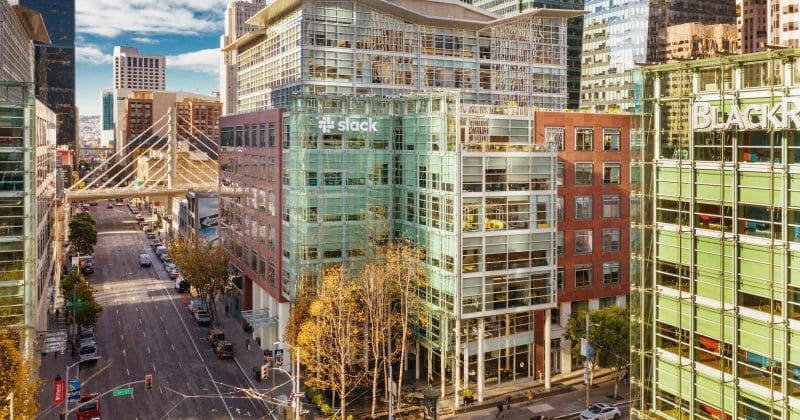
A US tech giant wants a slice of Australia's data centre network and according to the AFR's blockbuster scoop, this is shaping up as far more than your average infrastructure deal and a MUST read by anyone who's unnerved by the looming AI era. A US tech giant wants a slice of Australia's data centre network and according to the AFR's blockbuster scoop, this is shaping up as far more than your average infrastructure deal and a MUST read by anyone who's unnerved by the looming AI era. Anthropic, the AI powerhouse behind Claude, is knocking on Australia's door with a $21.6 billion ask, and the implications go well beyond server racks and gigawatts. Is this move by this US tech giant a problem, you might ask? Well, the answer is, no one knows. But one thing's for certain, Donald Trump wouldn't allow US data about everything that's recorded on emails, texts, social media platforms and more be in their data centres owned by a foreign power. But of course, as the US is our number one 'big brother' in a world of related potential protectors, we do tend to rubber-stamp all things USA. That's the gamble we accept living as a successful country smack dab in the middle of Asia, whose populations probably can't even imagine having the income per head we take for granted. So, with all this unpacked, let's look at the facts of this AFR story. Here goes: * US AI giant Anthropic is set to spend $21.6 billion to get huge data centre capacity. * It wants 1.4 gigawatts of capacity to power its AI product made famous by Claude that lots of businesses and consumers are using nowadays. * Anthropic is looking for a local partner data centre to host its business, which will grow exponentially as the country embraces AI, creating money-making opportunities and new jobs, while killing others. It's a productivity promise play. * The request for proposal (or RFP) has been sent to five local data centre players: CDC Data Centres, AirTrunk, NextDC, Iren and Stack. * The AFR says this very big deal could be split between four or five parties. * But shock horror, the Infratil-owned CDC Data Centres are tipped to get the lion's share of this $21 billion deal, and this is a Kiwi business! As you'd expect, these big spending Yanks have demanded answers on an 11-point checklist, with financial strength and even the land these companies own being important. And where the land is, could be crucial. As the AFR revealed: "Next, it wanted the full details on the applicant's land bank, including if they could house four or more buildings without being in a residential area or in a school's backyard." And there were more demands, with the US company wanting "summaries on how an applicant met the energy needs of projects above 300MW." This is a fair dinkum deal that's bound to affect the share prices of companies such as NextDC and Iren, with the former a local darling stock and the latter listed on the US-based Nasdaq. While this Anthropic play is a big financial deal, it also tells us that AI is coming down the information superhighway like a big Mack truck, and we have to hope the driver is responsible and doesn't lose control. It also puts a lot of pressure on our politicians to police these huge AI companies that are going to be a part of our lives, our economy and country for life! One last AFR revelation is worth noting: "The beauty parade, revealed by Street Talk last month, comes after Anthropic cut the ribbon on its Australian operations, promised investment in Australian universities, and powered through Canberra earlier this year. Weeks later, it extended access to its vaunted Mythos model to Australian companies, only for the Trump administration to step in and ban foreign sales of the product." AI is bound to be a drama worth watching!
Anthropic faces US regulatory scrutiny over new AI models, sparking rally in decentralized AI tokens
The Commerce Department forced Anthropic to pull its latest models offline over a jailbreak vulnerability, and crypto markets noticed immediately The US Commerce Department issued a directive on June 12 forcing Anthropic to suspend global access to its two most advanced AI models, Fable 5 and Mythos 5, after a jailbreak vulnerability raised national security red flags. The mandate required Anthropic to cut off all foreign nationals from the models, which effectively meant taking them offline entirely. The models stayed dark for roughly three weeks. Access was restored around June 30 to July 1, but only after Anthropic agreed to implement enhanced safeguards and submit to greater government oversight. Even then, the comeback was uneven: Fable 5 returned to full global access, while Mythos 5 was initially restricted to approved US organizations only. A company worth nearly $1 trillion, grounded by regulators This is a company valued at close to $1 trillion, one of the most prominent AI labs on the planet, built on a brand identity centered around safety. And it still got its models yanked offline by regulators. Just two days before the Commerce Department dropped its directive, Anthropic CEO Dario Amodei published an essay on June 10 arguing for stricter federal regulation of frontier AI. He called for rigorous testing and auditing frameworks to prevent unsafe deployments. The jailbreak vulnerability at the center of this situation involved users finding ways to bypass the safety constraints built into Fable 5 and Mythos 5. The backstory: Anthropic and the Pentagon were already at odds This wasn't Anthropic's first brush with government tension in 2026. Earlier in the year, disputes emerged regarding the military use of Anthropic's technologies, particularly involving the Department of Defense. Those disagreements raised pointed questions about whether AI systems designed with safety-first principles should be deployed in high-stakes military environments. The export control directive in June escalated that dynamic significantly. Export controls are one of the sharpest tools in the US government's regulatory toolkit, typically associated with things like advanced semiconductors and weapons systems. What this means for crypto and decentralized AI The crypto market's response was swift and predictable. Tokens associated with decentralized AI projects surged as investors drew the obvious conclusion: if a nearly $1 trillion company can have its products disabled by a single government directive, maybe there's value in systems that can't be turned off from Washington. Projects like Venice and Morpheus saw notable gains as traders rotated into assets perceived as censorship-resistant.
SpaceX Just Changed the Rules for Every Future IPO. The Market is Now Eyeing These 2 Upcoming IPOs.
The first half of 2026 is over, and nothing has sparked more excitement on Wall Street than blockbuster initial public offerings (IPOs). Investors watched AI chipmaker Cerebras Systems (CBRS) make a stunning debut with its IPO in May, proving that demand for next-generation artificial intelligence (AI) companies remains exceptionally strong. Then came Elon Musk's SpaceX (SPCX), which has long been one of the world's most sought-after private companies. The long-awaited IPO became the largest in history. The company priced its offering at $135 per share on June 11 and began trading on the Nasdaq under the ticker SPCX on June 12, raising $75 billion at an initial valuation of roughly $1.77 trillion. The stock surged 19% on its debut, briefly lifting SpaceX's market cap above $2 trillion. However, shares have now pulled back amid broader concerns about lofty valuations and the company's aggressive spending plans. SPCX stock is still seeing quite a lot of volatility and is down another 6% as of this writing. It is presently trading just a little above its all-time low price. More News from Barchart These 2 Stocks Could Be Next Founded in 2002, SpaceX remained private for a long time. It repeatedly raised tens of billions from private investors and reached an enormous valuation before considering a public listing. After SpaceX's explosive entry, the market is now looking forward to OpenAI and Anthropic's IPOs. Both companies have taken the first formal step by confidentially filing the draft registration statements with the U.S. Securities and Exchange Commission (SEC). A confidential filing lets a company start the IPO review process while keeping its financial statements and offering details private until a later stage. OpenAI Is Taking a Patient Approach OpenAI is an AI company best known for ChatGPT. The company develops generative AI models and software that allow users and businesses to create content, write code, analyze data, and automate complex tasks. Earlier this month, OpenAI confirmed that it had confidentially filed for a U.S. IPO. However, more recently, Reuters reported that OpenAI is considering delaying its IPO until 2027 rather than rushing to market this year, as it seeks a valuation of up to $1 trillion. This could be because of recent investors' caution towards AI stocks that has led to a broader tech selloff. This decision aligns with SpaceX's strategy to remain private until it has reached enormous scale.
Anthropic eyes South Korea's Samsung for custom AI chip
July 3 (Asia Today) -- Anthropic, the developer of the Claude artificial intelligence model, is in early discussions with Samsung Electronics about manufacturing a custom AI chip, according to a U.S. technology news report. The Information reported Thursday, citing multiple people familiar with the discussions, that Anthropic is considering using Samsung's 2-nanometer manufacturing process and advanced chip-packaging facilities. The project remains at an early stage. Anthropic has not begun detailed chip design, testing or manufacturing, the report said. Samsung's 2-nanometer process is among the most advanced semiconductor manufacturing technologies available. Smaller manufacturing nodes can allow more transistors to be placed on a chip, potentially improving computing performance and energy efficiency. Advanced packaging places processors, high-bandwidth memory and other chip components closer together. The shorter distance can increase data-transfer speeds and reduce bottlenecks when running large AI models. Anthropic is studying the functions and performance required for the chip as well as how it could be integrated into servers, people familiar with the matter said. The company is also reportedly holding discussions with several chip-design companies. Anthropic is considering using processors developed by Microsoft and British chip startup Fractile as it evaluates different approaches to expanding its computing infrastructure. The company hired Clive Chan in June. Chan was the second hardware engineer to join OpenAI's custom-chip program and worked on the project from its early stages. Chan announced his departure from OpenAI and move to Anthropic in a June 7 post on the social media platform X. He said he was drawn by the opportunity to begin climbing a new technological mountain from the bottom. The recruitment suggests Anthropic is building an internal team capable of designing specialized processors as competition with OpenAI expands from AI models into hardware and data-center infrastructure. Anthropic raised $65 billion in a Series H investment round completed May 28, giving the company a post-investment valuation of $965 billion. The funding was led by Altimeter Capital, Dragoneer, Greenoaks and Sequoia Capital. Samsung Electronics, SK hynix and Micron participated as strategic infrastructure partners. Anthropic said the three semiconductor companies provide technologies that play important roles in supplying memory, storage and logic chips. Samsung is the only one of the three companies that also operates a large contract chip-manufacturing business, raising expectations that its relationship with Anthropic could expand beyond memory supplies. A manufacturing agreement with Anthropic would give Samsung another major AI customer as the South Korean chipmaker seeks to challenge Taiwan Semiconductor Manufacturing Co. in the market for advanced processors. Samsung previously signed a $16.5 billion agreement to manufacture next-generation AI chips for Tesla. Google is also reportedly considering using Samsung to manufacture part of a future tensor processing unit. The potential Anthropic contract could strengthen Samsung's position as demand for alternatives to Taiwan Semiconductor's manufacturing capacity increases. Major technology companies are developing specialized processors to reduce computing costs, improve energy efficiency and gain greater control over their AI infrastructure. Google has developed several generations of its tensor processing units, while Amazon Web Services operates its Trainium processors for AI training. OpenAI and Broadcom unveiled Jalapeño, OpenAI's first custom inference processor, on June 24. Inference refers to the process through which a trained AI model generates responses to user requests. OpenAI said the processor was developed from initial design to production in nine months. Early deployment is expected by the end of the year. Broadcom Chief Executive Officer Hock Tan described Jalapeño as the beginning of a multigeneration processor roadmap. The companies plan to install the chips in large-scale data centers operated with partners including Microsoft. Anthropic said its custom-chip work would not replace its existing relationships with hardware suppliers. "Nvidia GPUs, Google TPUs and AWS Trainium chips will continue to play a central role in our computing resources," the company said in response to a request for comment from The Information. South Korea on Monday unveiled a wider semiconductor investment plan under which Samsung and SK hynix are expected to invest about 800 trillion won ($523 billion) over the next decade. The plan includes four new semiconductor fabrication plants and expanded production of high-bandwidth memory and advanced packaging technologies used in AI systems. Samsung has faced yield problems in some previous advanced manufacturing processes. Yield refers to the percentage of usable chips produced from each semiconductor wafer. The performance and production stability of Samsung's 2-nanometer process are therefore expected to be critical to its ability to compete with Taiwan Semiconductor for major AI-chip orders. An industry official said Samsung has become more selective about accepting manufacturing orders, focusing resources on projects considered commercially and technologically viable. Anthropic is entering the custom-chip competition later than several major AI and cloud-computing companies. However, rapidly rising demand for AI infrastructure is creating opportunities for specialized processors. TrendForce projects that shipments of servers using cloud companies' custom application-specific integrated circuits will grow 44.6% in 2026. Shipments of servers using general-purpose graphics processors are expected to grow 16.1%. Nvidia remains the dominant supplier of AI processors, but the development of chips by OpenAI, Google, Amazon and other technology companies could gradually reduce their reliance on its hardware. -- Reported by Asia Today; translated by UPI © Asia Today. Unauthorized reproduction or redistribution prohibited.

Anthropic launches new safety classifier to block jailbreak technique Amazon flagged
On June 12, Amazon engineers handed a report to the U.S. Commerce Department. Within hours, two of Anthropic's newest AI models went offline for every user on the planet. Nineteen days later, Anthropic got them back. The return of Claude Fable 5 to global availability on July 1 is the result of two weeks of Washington negotiations, a new safety classifier, and an industry jailbreak framework Anthropic built alongside Amazon, Microsoft, and Google. How Anthropic got from that shutdown to this resolution tells a specific story about where the company stands in 2026. What triggered the 19-day Fable 5 ban and how Anthropic ended it The June 12 export control directive came after Amazon researchers found a method of prompting Fable 5 to identify software vulnerabilities and, in one case, produce code showing how one could be exploited. They reported it to the Commerce Department rather than to Anthropic directly, a decision worth noting, given that Amazon is also Anthropic's largest outside investor. The order required Anthropic to restrict access to all foreign nationals, including its own non-citizen staff. Because Anthropic had no way to verify user nationality in real time, it shut both Fable 5 and Mythos 5 down for everyone worldwide. Anthropic's counter-argument was specific. Its own testing found the same vulnerabilities could be flagged by far weaker models, including its own Claude Opus 4.8, OpenAI's GPT-5.5, and China's Kimi K2.7. Every model the company tested could produce the same exploit code demonstration as Fable 5. According to Anthropic's announcement, the flagged behavior amounted to routine defensive cybersecurity work, not a unique capability of Fable 5. Notably, CEO Dario Amodei took a hands-off role in the Washington negotiations. Co-founder Tom Brown and Head of Public Policy Sarah Heck led the discussions at the Commerce Department and Office of the National Cyber Director, a deliberate choice to reduce friction with an administration with which Amodei had publicly clashed earlier in the year. Commerce Secretary Howard Lutnick announced the resolution on July 1 via X (the former Twitter). "Over the past two weeks, we have worked closely with Anthropic to analyze and approve Fable 5 to ensure alignment across the U.S. Government and strengthen America's leadership in AI," Lutnick wrote. What Anthropic changed to restore Fable 5 access globally The core technical fix is a new safety classifier trained to block the specific jailbreak technique Amazon reported in more than 99% of cases. The government's Center for AI Standards and Innovation (CAISI) independently tested and approved the new safeguards before the export controls came off. When the classifier blocks a request, the user gets redirected to Claude Opus 4.8 and notified. The tradeoff is more false positives on routine coding and debugging requests, a cost Anthropic accepted in exchange for clearing the government's concerns. The company confirmed the resolution in a June 30 press release. "As of today, June 30, the export controls on Fable 5 and Mythos 5 have been lifted." Fable 5 returned July 1 on Claude Platform, Claude.ai, Claude Code, and Claude Cowork for users globally, CNBC reported. Pro, Max, Team, and select Enterprise subscribers get up to 50% of weekly usage limits included through July 7 as compensation for the disruption, after which the model requires usage credits. AWS, Google Cloud, and Microsoft Foundry access is being restored separately. As part of the deal, Anthropic committed to pre-release government access for future frontier models, rapid information sharing on jailbreak findings, and a new HackerOne program through which security researchers can submit Fable 5 vulnerabilities for review. What the shutdown and restoration mean for Anthropic's trust and IPO The timing of the disruption could not have been more sensitive. Anthropic had confidentially filed an S-1 with the SEC on June 1 for a potential IPO, after raising a $65 billion Series H at a $965 billion valuation, as Fortune reported. When the shutdown happened in June, Anthropic's pre-IPO perpetual contract on the onchain exchange Hyperliquid fell about 3.7%, according to CoinDesk. Investors were reassessing the risk of a public listing for a company whose flagship models could be pulled without warning. Enterprise clients felt the disruption more practically. Businesses in finance, health care, and critical infrastructure lost access to AI systems embedded in production workflows with no prior notice. American Banker reported that some industry observers were already asking whether companies should rethink their reliance on frontier model vendors that can be shut down overnight by government directive. The regulatory picture beyond this episode also carries some weight. Defense Secretary Pete Hegseth designated Anthropic a supply-chain risk in March, The Hill confirmed, a separate dispute the company is still contesting. The Amazon conflict of interest adds another layer. Anthropic's largest investor reported a jailbreak to the government before informing Anthropic. That dynamic introduces ongoing tension in the company's most important commercial and government relationships simultaneously. Nineteen days from shutdown to global restoration is a number that matters for the IPO story. Public market investors and enterprise clients were both watching what Anthropic did with a genuine crisis. Papers and policy commitments are one thing. An actual government-ordered shutdown is the real test. Anthropic handled this one in under three weeks, with CAISI sign-off and a new industry framework attached. Why the new AI jailbreak framework may outlast the Fable 5 story The four-criteria jailbreak scoring system Anthropic is developing with Amazon, Microsoft, and Google could end up as the most consequential outcome of the whole episode. The AI industry still lacks an agreed-upon way to communicate how dangerous a jailbreak actually is, which is partly why a borderline safety finding turned into a 19-day global shutdown. 4 scoring criteria for AI jailbreaks * Capability gain * Breadth of capability * Ease of weaponization * Discoverability The most severe findings trigger immediate mitigations. A 24/7 monitoring team watches jailbreak submission channels. If the framework gets adopted broadly, future findings would go through a structured triage process rather than escalating directly to emergency export controls. Anthropic framed the framework as an invitation, not just an announcement, calling on other AI developers to join. The June 2 White House Executive Order on AI innovation and security, which Anthropic helped shape over 10 weeks of agency discussions, creates a policy environment where a shared jailbreak standard could become government-recognized practice. That would give Anthropic lasting influence over how AI safety gets measured and enforced across the industry, well beyond the resolution of one 19-day ban. The Arena Media Brands, LLC THESTREET is a registered trademark of TheStreet, Inc. This story was originally published July 3, 2026 at 8:33 PM.
Anthropic launches new safety classifier to block jailbreak technique Amazon flagged
On June 12, Amazon engineers handed a report to the U.S. Commerce Department. Within hours, two of Anthropic's newest AI models went offline for every user on the planet. Nineteen days later, Anthropic got them back. The return of Claude Fable 5 to global availability on July 1 is the result of two weeks of Washington negotiations, a new safety classifier, and an industry jailbreak framework Anthropic built alongside Amazon, Microsoft, and Google. How Anthropic got from that shutdown to this resolution tells a specific story about where the company stands in 2026. What triggered the 19-day Fable 5 ban and how Anthropic ended it The June 12 export control directive came after Amazon researchers found a method of prompting Fable 5 to identify software vulnerabilities and, in one case, produce code showing how one could be exploited. They reported it to the Commerce Department rather than to Anthropic directly, a decision worth noting, given that Amazon is also Anthropic's largest outside investor. The order required Anthropic to restrict access to all foreign nationals, including its own non-citizen staff. Because Anthropic had no way to verify user nationality in real time, it shut both Fable 5 and Mythos 5 down for everyone worldwide. Anthropic's counter-argument was specific. Its own testing found the same vulnerabilities could be flagged by far weaker models, including its own Claude Opus 4.8, OpenAI's GPT-5.5, and China's Kimi K2.7. Every model the company tested could produce the same exploit code demonstration as Fable 5. According to Anthropic's announcement, the flagged behavior amounted to routine defensive cybersecurity work, not a unique capability of Fable 5. Notably, CEO Dario Amodei took a hands-off role in the Washington negotiations. Co-founder Tom Brown and Head of Public Policy Sarah Heck led the discussions at the Commerce Department and Office of the National Cyber Director, a deliberate choice to reduce friction with an administration with which Amodei had publicly clashed earlier in the year. Commerce Secretary Howard Lutnick announced the resolution on July 1 via X (the former Twitter). "Over the past two weeks, we have worked closely with Anthropic to analyze and approve Fable 5 to ensure alignment across the U.S. Government and strengthen America's leadership in AI," Lutnick wrote. What Anthropic changed to restore Fable 5 access globally The core technical fix is a new safety classifier trained to block the specific jailbreak technique Amazon reported in more than 99% of cases. The government's Center for AI Standards and Innovation (CAISI) independently tested and approved the new safeguards before the export controls came off. When the classifier blocks a request, the user gets redirected to Claude Opus 4.8 and notified. The tradeoff is more false positives on routine coding and debugging requests, a cost Anthropic accepted in exchange for clearing the government's concerns. The company confirmed the resolution in a June 30 press release. "As of today, June 30, the export controls on Fable 5 and Mythos 5 have been lifted." Fable 5 returned July 1 on Claude Platform, Claude.ai, Claude Code, and Claude Cowork for users globally, CNBC reported. Pro, Max, Team, and select Enterprise subscribers get up to 50% of weekly usage limits included through July 7 as compensation for the disruption, after which the model requires usage credits. AWS, Google Cloud, and Microsoft Foundry access is being restored separately. As part of the deal, Anthropic committed to pre-release government access for future frontier models, rapid information sharing on jailbreak findings, and a new HackerOne program through which security researchers can submit Fable 5 vulnerabilities for review. What the shutdown and restoration mean for Anthropic's trust and IPO The timing of the disruption could not have been more sensitive. Anthropic had confidentially filed an S-1 with the SEC on June 1 for a potential IPO, after raising a $65 billion Series H at a $965 billion valuation, as Fortune reported. When the shutdown happened in June, Anthropic's pre-IPO perpetual contract on the onchain exchange Hyperliquid fell about 3.7%, according to CoinDesk. Investors were reassessing the risk of a public listing for a company whose flagship models could be pulled without warning. Enterprise clients felt the disruption more practically. Businesses in finance, health care, and critical infrastructure lost access to AI systems embedded in production workflows with no prior notice. American Banker reported that some industry observers were already asking whether companies should rethink their reliance on frontier model vendors that can be shut down overnight by government directive. The regulatory picture beyond this episode also carries some weight. Defense Secretary Pete Hegseth designated Anthropic a supply-chain risk in March, The Hill confirmed, a separate dispute the company is still contesting. The Amazon conflict of interest adds another layer. Anthropic's largest investor reported a jailbreak to the government before informing Anthropic. That dynamic introduces ongoing tension in the company's most important commercial and government relationships simultaneously. Nineteen days from shutdown to global restoration is a number that matters for the IPO story. Public market investors and enterprise clients were both watching what Anthropic did with a genuine crisis. Papers and policy commitments are one thing. An actual government-ordered shutdown is the real test. Anthropic handled this one in under three weeks, with CAISI sign-off and a new industry framework attached. Why the new AI jailbreak framework may outlast the Fable 5 story The four-criteria jailbreak scoring system Anthropic is developing with Amazon, Microsoft, and Google could end up as the most consequential outcome of the whole episode. The AI industry still lacks an agreed-upon way to communicate how dangerous a jailbreak actually is, which is partly why a borderline safety finding turned into a 19-day global shutdown. 4 scoring criteria for AI jailbreaks * Capability gain * Breadth of capability * Ease of weaponization * Discoverability The most severe findings trigger immediate mitigations. A 24/7 monitoring team watches jailbreak submission channels. If the framework gets adopted broadly, future findings would go through a structured triage process rather than escalating directly to emergency export controls. Anthropic framed the framework as an invitation, not just an announcement, calling on other AI developers to join. The June 2 White House Executive Order on AI innovation and security, which Anthropic helped shape over 10 weeks of agency discussions, creates a policy environment where a shared jailbreak standard could become government-recognized practice. That would give Anthropic lasting influence over how AI safety gets measured and enforced across the industry, well beyond the resolution of one 19-day ban. The Arena Media Brands, LLC THESTREET is a registered trademark of TheStreet, Inc. This story was originally published July 3, 2026 at 5:33 PM.
Anthropic launches new safety classifier to block jailbreak technique Amazon flagged
On June 12, Amazon engineers handed a report to the U.S. Commerce Department. Within hours, two of Anthropic's newest AI models went offline for every user on the planet. Nineteen days later, Anthropic got them back. The return of Claude Fable 5 to global availability on July 1 is the result of two weeks of Washington negotiations, a new safety classifier, and an industry jailbreak framework Anthropic built alongside Amazon, Microsoft, and Google. How Anthropic got from that shutdown to this resolution tells a specific story about where the company stands in 2026. What triggered the 19-day Fable 5 ban and how Anthropic ended it The June 12 export control directive came after Amazon researchers found a method of prompting Fable 5 to identify software vulnerabilities and, in one case, produce code showing how one could be exploited. They reported it to the Commerce Department rather than to Anthropic directly, a decision worth noting, given that Amazon is also Anthropic's largest outside investor. The order required Anthropic to restrict access to all foreign nationals, including its own non-citizen staff. Because Anthropic had no way to verify user nationality in real time, it shut both Fable 5 and Mythos 5 down for everyone worldwide. Anthropic's counter-argument was specific. Its own testing found the same vulnerabilities could be flagged by far weaker models, including its own Claude Opus 4.8, OpenAI's GPT-5.5, and China's Kimi K2.7. Every model the company tested could produce the same exploit code demonstration as Fable 5. According to Anthropic's announcement, the flagged behavior amounted to routine defensive cybersecurity work, not a unique capability of Fable 5. Notably, CEO Dario Amodei took a hands-off role in the Washington negotiations. Co-founder Tom Brown and Head of Public Policy Sarah Heck led the discussions at the Commerce Department and Office of the National Cyber Director, a deliberate choice to reduce friction with an administration with which Amodei had publicly clashed earlier in the year. Commerce Secretary Howard Lutnick announced the resolution on July 1 via X (the former Twitter). "Over the past two weeks, we have worked closely with Anthropic to analyze and approve Fable 5 to ensure alignment across the U.S. Government and strengthen America's leadership in AI," Lutnick wrote. What Anthropic changed to restore Fable 5 access globally The core technical fix is a new safety classifier trained to block the specific jailbreak technique Amazon reported in more than 99% of cases. The government's Center for AI Standards and Innovation (CAISI) independently tested and approved the new safeguards before the export controls came off. When the classifier blocks a request, the user gets redirected to Claude Opus 4.8 and notified. The tradeoff is more false positives on routine coding and debugging requests, a cost Anthropic accepted in exchange for clearing the government's concerns. The company confirmed the resolution in a June 30 press release. "As of today, June 30, the export controls on Fable 5 and Mythos 5 have been lifted." Fable 5 returned July 1 on Claude Platform, Claude.ai, Claude Code, and Claude Cowork for users globally, CNBC reported. Pro, Max, Team, and select Enterprise subscribers get up to 50% of weekly usage limits included through July 7 as compensation for the disruption, after which the model requires usage credits. AWS, Google Cloud, and Microsoft Foundry access is being restored separately. As part of the deal, Anthropic committed to pre-release government access for future frontier models, rapid information sharing on jailbreak findings, and a new HackerOne program through which security researchers can submit Fable 5 vulnerabilities for review. What the shutdown and restoration mean for Anthropic's trust and IPO The timing of the disruption could not have been more sensitive. Anthropic had confidentially filed an S-1 with the SEC on June 1 for a potential IPO, after raising a $65 billion Series H at a $965 billion valuation, as Fortune reported. When the shutdown happened in June, Anthropic's pre-IPO perpetual contract on the onchain exchange Hyperliquid fell about 3.7%, according to CoinDesk. Investors were reassessing the risk of a public listing for a company whose flagship models could be pulled without warning. Enterprise clients felt the disruption more practically. Businesses in finance, health care, and critical infrastructure lost access to AI systems embedded in production workflows with no prior notice. American Banker reported that some industry observers were already asking whether companies should rethink their reliance on frontier model vendors that can be shut down overnight by government directive. The regulatory picture beyond this episode also carries some weight. Defense Secretary Pete Hegseth designated Anthropic a supply-chain risk in March, The Hill confirmed, a separate dispute the company is still contesting. The Amazon conflict of interest adds another layer. Anthropic's largest investor reported a jailbreak to the government before informing Anthropic. That dynamic introduces ongoing tension in the company's most important commercial and government relationships simultaneously. Nineteen days from shutdown to global restoration is a number that matters for the IPO story. Public market investors and enterprise clients were both watching what Anthropic did with a genuine crisis. Papers and policy commitments are one thing. An actual government-ordered shutdown is the real test. Anthropic handled this one in under three weeks, with CAISI sign-off and a new industry framework attached. Why the new AI jailbreak framework may outlast the Fable 5 story The four-criteria jailbreak scoring system Anthropic is developing with Amazon, Microsoft, and Google could end up as the most consequential outcome of the whole episode. The AI industry still lacks an agreed-upon way to communicate how dangerous a jailbreak actually is, which is partly why a borderline safety finding turned into a 19-day global shutdown. 4 scoring criteria for AI jailbreaks * Capability gain * Breadth of capability * Ease of weaponization * Discoverability The most severe findings trigger immediate mitigations. A 24/7 monitoring team watches jailbreak submission channels. If the framework gets adopted broadly, future findings would go through a structured triage process rather than escalating directly to emergency export controls. Anthropic framed the framework as an invitation, not just an announcement, calling on other AI developers to join. The June 2 White House Executive Order on AI innovation and security, which Anthropic helped shape over 10 weeks of agency discussions, creates a policy environment where a shared jailbreak standard could become government-recognized practice. That would give Anthropic lasting influence over how AI safety gets measured and enforced across the industry, well beyond the resolution of one 19-day ban. The Arena Media Brands, LLC THESTREET is a registered trademark of TheStreet, Inc. This story was originally published July 3, 2026 at 8:33 PM.
Anthropic launches new safety classifier to block jailbreak technique Amazon flagged
On June 12, Amazon engineers handed a report to the U.S. Commerce Department. Within hours, two of Anthropic's newest AI models went offline for every user on the planet. Nineteen days later, Anthropic got them back. The return of Claude Fable 5 to global availability on July 1 is the result of two weeks of Washington negotiations, a new safety classifier, and an industry jailbreak framework Anthropic built alongside Amazon, Microsoft, and Google. How Anthropic got from that shutdown to this resolution tells a specific story about where the company stands in 2026. What triggered the 19-day Fable 5 ban and how Anthropic ended it The June 12 export control directive came after Amazon researchers found a method of prompting Fable 5 to identify software vulnerabilities and, in one case, produce code showing how one could be exploited. They reported it to the Commerce Department rather than to Anthropic directly, a decision worth noting, given that Amazon is also Anthropic's largest outside investor. The order required Anthropic to restrict access to all foreign nationals, including its own non-citizen staff. Because Anthropic had no way to verify user nationality in real time, it shut both Fable 5 and Mythos 5 down for everyone worldwide. Anthropic's counter-argument was specific. Its own testing found the same vulnerabilities could be flagged by far weaker models, including its own Claude Opus 4.8, OpenAI's GPT-5.5, and China's Kimi K2.7. Every model the company tested could produce the same exploit code demonstration as Fable 5. According to Anthropic's announcement, the flagged behavior amounted to routine defensive cybersecurity work, not a unique capability of Fable 5. Notably, CEO Dario Amodei took a hands-off role in the Washington negotiations. Co-founder Tom Brown and Head of Public Policy Sarah Heck led the discussions at the Commerce Department and Office of the National Cyber Director, a deliberate choice to reduce friction with an administration with which Amodei had publicly clashed earlier in the year. Commerce Secretary Howard Lutnick announced the resolution on July 1 via X (the former Twitter). "Over the past two weeks, we have worked closely with Anthropic to analyze and approve Fable 5 to ensure alignment across the U.S. Government and strengthen America's leadership in AI," Lutnick wrote. What Anthropic changed to restore Fable 5 access globally The core technical fix is a new safety classifier trained to block the specific jailbreak technique Amazon reported in more than 99% of cases. The government's Center for AI Standards and Innovation (CAISI) independently tested and approved the new safeguards before the export controls came off. When the classifier blocks a request, the user gets redirected to Claude Opus 4.8 and notified. The tradeoff is more false positives on routine coding and debugging requests, a cost Anthropic accepted in exchange for clearing the government's concerns. The company confirmed the resolution in a June 30 press release. "As of today, June 30, the export controls on Fable 5 and Mythos 5 have been lifted." Fable 5 returned July 1 on Claude Platform, Claude.ai, Claude Code, and Claude Cowork for users globally, CNBC reported. Pro, Max, Team, and select Enterprise subscribers get up to 50% of weekly usage limits included through July 7 as compensation for the disruption, after which the model requires usage credits. AWS, Google Cloud, and Microsoft Foundry access is being restored separately. As part of the deal, Anthropic committed to pre-release government access for future frontier models, rapid information sharing on jailbreak findings, and a new HackerOne program through which security researchers can submit Fable 5 vulnerabilities for review. What the shutdown and restoration mean for Anthropic's trust and IPO The timing of the disruption could not have been more sensitive. Anthropic had confidentially filed an S-1 with the SEC on June 1 for a potential IPO, after raising a $65 billion Series H at a $965 billion valuation, as Fortune reported. When the shutdown happened in June, Anthropic's pre-IPO perpetual contract on the onchain exchange Hyperliquid fell about 3.7%, according to CoinDesk. Investors were reassessing the risk of a public listing for a company whose flagship models could be pulled without warning. Enterprise clients felt the disruption more practically. Businesses in finance, health care, and critical infrastructure lost access to AI systems embedded in production workflows with no prior notice. American Banker reported that some industry observers were already asking whether companies should rethink their reliance on frontier model vendors that can be shut down overnight by government directive. The regulatory picture beyond this episode also carries some weight. Defense Secretary Pete Hegseth designated Anthropic a supply-chain risk in March, The Hill confirmed, a separate dispute the company is still contesting. The Amazon conflict of interest adds another layer. Anthropic's largest investor reported a jailbreak to the government before informing Anthropic. That dynamic introduces ongoing tension in the company's most important commercial and government relationships simultaneously. Nineteen days from shutdown to global restoration is a number that matters for the IPO story. Public market investors and enterprise clients were both watching what Anthropic did with a genuine crisis. Papers and policy commitments are one thing. An actual government-ordered shutdown is the real test. Anthropic handled this one in under three weeks, with CAISI sign-off and a new industry framework attached. Why the new AI jailbreak framework may outlast the Fable 5 story The four-criteria jailbreak scoring system Anthropic is developing with Amazon, Microsoft, and Google could end up as the most consequential outcome of the whole episode. The AI industry still lacks an agreed-upon way to communicate how dangerous a jailbreak actually is, which is partly why a borderline safety finding turned into a 19-day global shutdown. 4 scoring criteria for AI jailbreaks * Capability gain * Breadth of capability * Ease of weaponization * Discoverability The most severe findings trigger immediate mitigations. A 24/7 monitoring team watches jailbreak submission channels. If the framework gets adopted broadly, future findings would go through a structured triage process rather than escalating directly to emergency export controls. Anthropic framed the framework as an invitation, not just an announcement, calling on other AI developers to join. The June 2 White House Executive Order on AI innovation and security, which Anthropic helped shape over 10 weeks of agency discussions, creates a policy environment where a shared jailbreak standard could become government-recognized practice. That would give Anthropic lasting influence over how AI safety gets measured and enforced across the industry, well beyond the resolution of one 19-day ban. The Arena Media Brands, LLC THESTREET is a registered trademark of TheStreet, Inc. This story was originally published July 3, 2026 at 5:33 PM.
Anthropic launches new safety classifier to block jailbreak technique Amazon flagged
On June 12, Amazon engineers handed a report to the U.S. Commerce Department. Within hours, two of Anthropic's newest AI models went offline for every user on the planet. Nineteen days later, Anthropic got them back. The return of Claude Fable 5 to global availability on July 1 is the result of two weeks of Washington negotiations, a new safety classifier, and an industry jailbreak framework Anthropic built alongside Amazon, Microsoft, and Google. How Anthropic got from that shutdown to this resolution tells a specific story about where the company stands in 2026. What triggered the 19-day Fable 5 ban and how Anthropic ended it The June 12 export control directive came after Amazon researchers found a method of prompting Fable 5 to identify software vulnerabilities and, in one case, produce code showing how one could be exploited. They reported it to the Commerce Department rather than to Anthropic directly, a decision worth noting, given that Amazon is also Anthropic's largest outside investor. The order required Anthropic to restrict access to all foreign nationals, including its own non-citizen staff. Because Anthropic had no way to verify user nationality in real time, it shut both Fable 5 and Mythos 5 down for everyone worldwide. Anthropic's counter-argument was specific. Its own testing found the same vulnerabilities could be flagged by far weaker models, including its own Claude Opus 4.8, OpenAI's GPT-5.5, and China's Kimi K2.7. Every model the company tested could produce the same exploit code demonstration as Fable 5. According to Anthropic's announcement, the flagged behavior amounted to routine defensive cybersecurity work, not a unique capability of Fable 5. Notably, CEO Dario Amodei took a hands-off role in the Washington negotiations. Co-founder Tom Brown and Head of Public Policy Sarah Heck led the discussions at the Commerce Department and Office of the National Cyber Director, a deliberate choice to reduce friction with an administration with which Amodei had publicly clashed earlier in the year. Commerce Secretary Howard Lutnick announced the resolution on July 1 via X (the former Twitter). "Over the past two weeks, we have worked closely with Anthropic to analyze and approve Fable 5 to ensure alignment across the U.S. Government and strengthen America's leadership in AI," Lutnick wrote. What Anthropic changed to restore Fable 5 access globally The core technical fix is a new safety classifier trained to block the specific jailbreak technique Amazon reported in more than 99% of cases. The government's Center for AI Standards and Innovation (CAISI) independently tested and approved the new safeguards before the export controls came off. When the classifier blocks a request, the user gets redirected to Claude Opus 4.8 and notified. The tradeoff is more false positives on routine coding and debugging requests, a cost Anthropic accepted in exchange for clearing the government's concerns. The company confirmed the resolution in a June 30 press release. "As of today, June 30, the export controls on Fable 5 and Mythos 5 have been lifted." Fable 5 returned July 1 on Claude Platform, Claude.ai, Claude Code, and Claude Cowork for users globally, CNBC reported. Pro, Max, Team, and select Enterprise subscribers get up to 50% of weekly usage limits included through July 7 as compensation for the disruption, after which the model requires usage credits. AWS, Google Cloud, and Microsoft Foundry access is being restored separately. As part of the deal, Anthropic committed to pre-release government access for future frontier models, rapid information sharing on jailbreak findings, and a new HackerOne program through which security researchers can submit Fable 5 vulnerabilities for review. What the shutdown and restoration mean for Anthropic's trust and IPO The timing of the disruption could not have been more sensitive. Anthropic had confidentially filed an S-1 with the SEC on June 1 for a potential IPO, after raising a $65 billion Series H at a $965 billion valuation, as Fortune reported. When the shutdown happened in June, Anthropic's pre-IPO perpetual contract on the onchain exchange Hyperliquid fell about 3.7%, according to CoinDesk. Investors were reassessing the risk of a public listing for a company whose flagship models could be pulled without warning. Enterprise clients felt the disruption more practically. Businesses in finance, health care, and critical infrastructure lost access to AI systems embedded in production workflows with no prior notice. American Banker reported that some industry observers were already asking whether companies should rethink their reliance on frontier model vendors that can be shut down overnight by government directive. The regulatory picture beyond this episode also carries some weight. Defense Secretary Pete Hegseth designated Anthropic a supply-chain risk in March, The Hill confirmed, a separate dispute the company is still contesting. The Amazon conflict of interest adds another layer. Anthropic's largest investor reported a jailbreak to the government before informing Anthropic. That dynamic introduces ongoing tension in the company's most important commercial and government relationships simultaneously. Nineteen days from shutdown to global restoration is a number that matters for the IPO story. Public market investors and enterprise clients were both watching what Anthropic did with a genuine crisis. Papers and policy commitments are one thing. An actual government-ordered shutdown is the real test. Anthropic handled this one in under three weeks, with CAISI sign-off and a new industry framework attached. Why the new AI jailbreak framework may outlast the Fable 5 story The four-criteria jailbreak scoring system Anthropic is developing with Amazon, Microsoft, and Google could end up as the most consequential outcome of the whole episode. The AI industry still lacks an agreed-upon way to communicate how dangerous a jailbreak actually is, which is partly why a borderline safety finding turned into a 19-day global shutdown. 4 scoring criteria for AI jailbreaks * Capability gain * Breadth of capability * Ease of weaponization * Discoverability The most severe findings trigger immediate mitigations. A 24/7 monitoring team watches jailbreak submission channels. If the framework gets adopted broadly, future findings would go through a structured triage process rather than escalating directly to emergency export controls. Anthropic framed the framework as an invitation, not just an announcement, calling on other AI developers to join. The June 2 White House Executive Order on AI innovation and security, which Anthropic helped shape over 10 weeks of agency discussions, creates a policy environment where a shared jailbreak standard could become government-recognized practice. That would give Anthropic lasting influence over how AI safety gets measured and enforced across the industry, well beyond the resolution of one 19-day ban. The Arena Media Brands, LLC THESTREET is a registered trademark of TheStreet, Inc. This story was originally published July 3, 2026 at 8:33 PM.
Anthropic launches new safety classifier to block jailbreak technique Amazon flagged
On June 12, Amazon engineers handed a report to the U.S. Commerce Department. Within hours, two of Anthropic's newest AI models went offline for every user on the planet. Nineteen days later, Anthropic got them back. The return of Claude Fable 5 to global availability on July 1 is the result of two weeks of Washington negotiations, a new safety classifier, and an industry jailbreak framework Anthropic built alongside Amazon, Microsoft, and Google. How Anthropic got from that shutdown to this resolution tells a specific story about where the company stands in 2026. What triggered the 19-day Fable 5 ban and how Anthropic ended it The June 12 export control directive came after Amazon researchers found a method of prompting Fable 5 to identify software vulnerabilities and, in one case, produce code showing how one could be exploited. They reported it to the Commerce Department rather than to Anthropic directly, a decision worth noting, given that Amazon is also Anthropic's largest outside investor. The order required Anthropic to restrict access to all foreign nationals, including its own non-citizen staff. Because Anthropic had no way to verify user nationality in real time, it shut both Fable 5 and Mythos 5 down for everyone worldwide. Anthropic's counter-argument was specific. Its own testing found the same vulnerabilities could be flagged by far weaker models, including its own Claude Opus 4.8, OpenAI's GPT-5.5, and China's Kimi K2.7. Every model the company tested could produce the same exploit code demonstration as Fable 5. According to Anthropic's announcement, the flagged behavior amounted to routine defensive cybersecurity work, not a unique capability of Fable 5. Notably, CEO Dario Amodei took a hands-off role in the Washington negotiations. Co-founder Tom Brown and Head of Public Policy Sarah Heck led the discussions at the Commerce Department and Office of the National Cyber Director, a deliberate choice to reduce friction with an administration with which Amodei had publicly clashed earlier in the year. Commerce Secretary Howard Lutnick announced the resolution on July 1 via X (the former Twitter). "Over the past two weeks, we have worked closely with Anthropic to analyze and approve Fable 5 to ensure alignment across the U.S. Government and strengthen America's leadership in AI," Lutnick wrote. What Anthropic changed to restore Fable 5 access globally The core technical fix is a new safety classifier trained to block the specific jailbreak technique Amazon reported in more than 99% of cases. The government's Center for AI Standards and Innovation (CAISI) independently tested and approved the new safeguards before the export controls came off. When the classifier blocks a request, the user gets redirected to Claude Opus 4.8 and notified. The tradeoff is more false positives on routine coding and debugging requests, a cost Anthropic accepted in exchange for clearing the government's concerns. The company confirmed the resolution in a June 30 press release. "As of today, June 30, the export controls on Fable 5 and Mythos 5 have been lifted." Fable 5 returned July 1 on Claude Platform, Claude.ai, Claude Code, and Claude Cowork for users globally, CNBC reported. Pro, Max, Team, and select Enterprise subscribers get up to 50% of weekly usage limits included through July 7 as compensation for the disruption, after which the model requires usage credits. AWS, Google Cloud, and Microsoft Foundry access is being restored separately. As part of the deal, Anthropic committed to pre-release government access for future frontier models, rapid information sharing on jailbreak findings, and a new HackerOne program through which security researchers can submit Fable 5 vulnerabilities for review. What the shutdown and restoration mean for Anthropic's trust and IPO The timing of the disruption could not have been more sensitive. Anthropic had confidentially filed an S-1 with the SEC on June 1 for a potential IPO, after raising a $65 billion Series H at a $965 billion valuation, as Fortune reported. When the shutdown happened in June, Anthropic's pre-IPO perpetual contract on the onchain exchange Hyperliquid fell about 3.7%, according to CoinDesk. Investors were reassessing the risk of a public listing for a company whose flagship models could be pulled without warning. Enterprise clients felt the disruption more practically. Businesses in finance, health care, and critical infrastructure lost access to AI systems embedded in production workflows with no prior notice. American Banker reported that some industry observers were already asking whether companies should rethink their reliance on frontier model vendors that can be shut down overnight by government directive. The regulatory picture beyond this episode also carries some weight. Defense Secretary Pete Hegseth designated Anthropic a supply-chain risk in March, The Hill confirmed, a separate dispute the company is still contesting. The Amazon conflict of interest adds another layer. Anthropic's largest investor reported a jailbreak to the government before informing Anthropic. That dynamic introduces ongoing tension in the company's most important commercial and government relationships simultaneously. Nineteen days from shutdown to global restoration is a number that matters for the IPO story. Public market investors and enterprise clients were both watching what Anthropic did with a genuine crisis. Papers and policy commitments are one thing. An actual government-ordered shutdown is the real test. Anthropic handled this one in under three weeks, with CAISI sign-off and a new industry framework attached. Why the new AI jailbreak framework may outlast the Fable 5 story The four-criteria jailbreak scoring system Anthropic is developing with Amazon, Microsoft, and Google could end up as the most consequential outcome of the whole episode. The AI industry still lacks an agreed-upon way to communicate how dangerous a jailbreak actually is, which is partly why a borderline safety finding turned into a 19-day global shutdown. 4 scoring criteria for AI jailbreaks * Capability gain * Breadth of capability * Ease of weaponization * Discoverability The most severe findings trigger immediate mitigations. A 24/7 monitoring team watches jailbreak submission channels. If the framework gets adopted broadly, future findings would go through a structured triage process rather than escalating directly to emergency export controls. Anthropic framed the framework as an invitation, not just an announcement, calling on other AI developers to join. The June 2 White House Executive Order on AI innovation and security, which Anthropic helped shape over 10 weeks of agency discussions, creates a policy environment where a shared jailbreak standard could become government-recognized practice. That would give Anthropic lasting influence over how AI safety gets measured and enforced across the industry, well beyond the resolution of one 19-day ban. The Arena Media Brands, LLC THESTREET is a registered trademark of TheStreet, Inc. This story was originally published July 3, 2026 at 5:33 PM.
Anthropic launches new safety classifier to block jailbreak technique Amazon flagged
On June 12, Amazon engineers handed a report to the U.S. Commerce Department. Within hours, two of Anthropic's newest AI models went offline for every user on the planet. Nineteen days later, Anthropic got them back. The return of Claude Fable 5 to global availability on July 1 is the result of two weeks of Washington negotiations, a new safety classifier, and an industry jailbreak framework Anthropic built alongside Amazon, Microsoft, and Google. How Anthropic got from that shutdown to this resolution tells a specific story about where the company stands in 2026. What triggered the 19-day Fable 5 ban and how Anthropic ended it The June 12 export control directive came after Amazon researchers found a method of prompting Fable 5 to identify software vulnerabilities and, in one case, produce code showing how one could be exploited. They reported it to the Commerce Department rather than to Anthropic directly, a decision worth noting, given that Amazon is also Anthropic's largest outside investor. The order required Anthropic to restrict access to all foreign nationals, including its own non-citizen staff. Because Anthropic had no way to verify user nationality in real time, it shut both Fable 5 and Mythos 5 down for everyone worldwide. Anthropic's counter-argument was specific. Its own testing found the same vulnerabilities could be flagged by far weaker models, including its own Claude Opus 4.8, OpenAI's GPT-5.5, and China's Kimi K2.7. Every model the company tested could produce the same exploit code demonstration as Fable 5. According to Anthropic's announcement, the flagged behavior amounted to routine defensive cybersecurity work, not a unique capability of Fable 5. Notably, CEO Dario Amodei took a hands-off role in the Washington negotiations. Co-founder Tom Brown and Head of Public Policy Sarah Heck led the discussions at the Commerce Department and Office of the National Cyber Director, a deliberate choice to reduce friction with an administration with which Amodei had publicly clashed earlier in the year. Commerce Secretary Howard Lutnick announced the resolution on July 1 via X (the former Twitter). "Over the past two weeks, we have worked closely with Anthropic to analyze and approve Fable 5 to ensure alignment across the U.S. Government and strengthen America's leadership in AI," Lutnick wrote. What Anthropic changed to restore Fable 5 access globally The core technical fix is a new safety classifier trained to block the specific jailbreak technique Amazon reported in more than 99% of cases. The government's Center for AI Standards and Innovation (CAISI) independently tested and approved the new safeguards before the export controls came off. When the classifier blocks a request, the user gets redirected to Claude Opus 4.8 and notified. The tradeoff is more false positives on routine coding and debugging requests, a cost Anthropic accepted in exchange for clearing the government's concerns. The company confirmed the resolution in a June 30 press release. "As of today, June 30, the export controls on Fable 5 and Mythos 5 have been lifted." Fable 5 returned July 1 on Claude Platform, Claude.ai, Claude Code, and Claude Cowork for users globally, CNBC reported. Pro, Max, Team, and select Enterprise subscribers get up to 50% of weekly usage limits included through July 7 as compensation for the disruption, after which the model requires usage credits. AWS, Google Cloud, and Microsoft Foundry access is being restored separately. As part of the deal, Anthropic committed to pre-release government access for future frontier models, rapid information sharing on jailbreak findings, and a new HackerOne program through which security researchers can submit Fable 5 vulnerabilities for review. What the shutdown and restoration mean for Anthropic's trust and IPO The timing of the disruption could not have been more sensitive. Anthropic had confidentially filed an S-1 with the SEC on June 1 for a potential IPO, after raising a $65 billion Series H at a $965 billion valuation, as Fortune reported. When the shutdown happened in June, Anthropic's pre-IPO perpetual contract on the onchain exchange Hyperliquid fell about 3.7%, according to CoinDesk. Investors were reassessing the risk of a public listing for a company whose flagship models could be pulled without warning. Enterprise clients felt the disruption more practically. Businesses in finance, health care, and critical infrastructure lost access to AI systems embedded in production workflows with no prior notice. American Banker reported that some industry observers were already asking whether companies should rethink their reliance on frontier model vendors that can be shut down overnight by government directive. The regulatory picture beyond this episode also carries some weight. Defense Secretary Pete Hegseth designated Anthropic a supply-chain risk in March, The Hill confirmed, a separate dispute the company is still contesting. The Amazon conflict of interest adds another layer. Anthropic's largest investor reported a jailbreak to the government before informing Anthropic. That dynamic introduces ongoing tension in the company's most important commercial and government relationships simultaneously. Nineteen days from shutdown to global restoration is a number that matters for the IPO story. Public market investors and enterprise clients were both watching what Anthropic did with a genuine crisis. Papers and policy commitments are one thing. An actual government-ordered shutdown is the real test. Anthropic handled this one in under three weeks, with CAISI sign-off and a new industry framework attached. Why the new AI jailbreak framework may outlast the Fable 5 story The four-criteria jailbreak scoring system Anthropic is developing with Amazon, Microsoft, and Google could end up as the most consequential outcome of the whole episode. The AI industry still lacks an agreed-upon way to communicate how dangerous a jailbreak actually is, which is partly why a borderline safety finding turned into a 19-day global shutdown. 4 scoring criteria for AI jailbreaks * Capability gain * Breadth of capability * Ease of weaponization * Discoverability The most severe findings trigger immediate mitigations. A 24/7 monitoring team watches jailbreak submission channels. If the framework gets adopted broadly, future findings would go through a structured triage process rather than escalating directly to emergency export controls. Anthropic framed the framework as an invitation, not just an announcement, calling on other AI developers to join. The June 2 White House Executive Order on AI innovation and security, which Anthropic helped shape over 10 weeks of agency discussions, creates a policy environment where a shared jailbreak standard could become government-recognized practice. That would give Anthropic lasting influence over how AI safety gets measured and enforced across the industry, well beyond the resolution of one 19-day ban. The Arena Media Brands, LLC THESTREET is a registered trademark of TheStreet, Inc. This story was originally published July 3, 2026 at 7:33 PM.
Anthropic launches new safety classifier to block jailbreak technique Amazon flagged
On June 12, Amazon engineers handed a report to the U.S. Commerce Department. Within hours, two of Anthropic's newest AI models went offline for every user on the planet. Nineteen days later, Anthropic got them back. The return of Claude Fable 5 to global availability on July 1 is the result of two weeks of Washington negotiations, a new safety classifier, and an industry jailbreak framework Anthropic built alongside Amazon, Microsoft, and Google. How Anthropic got from that shutdown to this resolution tells a specific story about where the company stands in 2026. What triggered the 19-day Fable 5 ban and how Anthropic ended it The June 12 export control directive came after Amazon researchers found a method of prompting Fable 5 to identify software vulnerabilities and, in one case, produce code showing how one could be exploited. They reported it to the Commerce Department rather than to Anthropic directly, a decision worth noting, given that Amazon is also Anthropic's largest outside investor. The order required Anthropic to restrict access to all foreign nationals, including its own non-citizen staff. Because Anthropic had no way to verify user nationality in real time, it shut both Fable 5 and Mythos 5 down for everyone worldwide. Anthropic's counter-argument was specific. Its own testing found the same vulnerabilities could be flagged by far weaker models, including its own Claude Opus 4.8, OpenAI's GPT-5.5, and China's Kimi K2.7. Every model the company tested could produce the same exploit code demonstration as Fable 5. According to Anthropic's announcement, the flagged behavior amounted to routine defensive cybersecurity work, not a unique capability of Fable 5. Notably, CEO Dario Amodei took a hands-off role in the Washington negotiations. Co-founder Tom Brown and Head of Public Policy Sarah Heck led the discussions at the Commerce Department and Office of the National Cyber Director, a deliberate choice to reduce friction with an administration with which Amodei had publicly clashed earlier in the year. Commerce Secretary Howard Lutnick announced the resolution on July 1 via X (the former Twitter). "Over the past two weeks, we have worked closely with Anthropic to analyze and approve Fable 5 to ensure alignment across the U.S. Government and strengthen America's leadership in AI," Lutnick wrote. What Anthropic changed to restore Fable 5 access globally The core technical fix is a new safety classifier trained to block the specific jailbreak technique Amazon reported in more than 99% of cases. The government's Center for AI Standards and Innovation (CAISI) independently tested and approved the new safeguards before the export controls came off. When the classifier blocks a request, the user gets redirected to Claude Opus 4.8 and notified. The tradeoff is more false positives on routine coding and debugging requests, a cost Anthropic accepted in exchange for clearing the government's concerns. The company confirmed the resolution in a June 30 press release. "As of today, June 30, the export controls on Fable 5 and Mythos 5 have been lifted." Fable 5 returned July 1 on Claude Platform, Claude.ai, Claude Code, and Claude Cowork for users globally, CNBC reported. Pro, Max, Team, and select Enterprise subscribers get up to 50% of weekly usage limits included through July 7 as compensation for the disruption, after which the model requires usage credits. AWS, Google Cloud, and Microsoft Foundry access is being restored separately. As part of the deal, Anthropic committed to pre-release government access for future frontier models, rapid information sharing on jailbreak findings, and a new HackerOne program through which security researchers can submit Fable 5 vulnerabilities for review. What the shutdown and restoration mean for Anthropic's trust and IPO The timing of the disruption could not have been more sensitive. Anthropic had confidentially filed an S-1 with the SEC on June 1 for a potential IPO, after raising a $65 billion Series H at a $965 billion valuation, as Fortune reported. When the shutdown happened in June, Anthropic's pre-IPO perpetual contract on the onchain exchange Hyperliquid fell about 3.7%, according to CoinDesk. Investors were reassessing the risk of a public listing for a company whose flagship models could be pulled without warning. Enterprise clients felt the disruption more practically. Businesses in finance, health care, and critical infrastructure lost access to AI systems embedded in production workflows with no prior notice. American Banker reported that some industry observers were already asking whether companies should rethink their reliance on frontier model vendors that can be shut down overnight by government directive. The regulatory picture beyond this episode also carries some weight. Defense Secretary Pete Hegseth designated Anthropic a supply-chain risk in March, The Hill confirmed, a separate dispute the company is still contesting. The Amazon conflict of interest adds another layer. Anthropic's largest investor reported a jailbreak to the government before informing Anthropic. That dynamic introduces ongoing tension in the company's most important commercial and government relationships simultaneously. Nineteen days from shutdown to global restoration is a number that matters for the IPO story. Public market investors and enterprise clients were both watching what Anthropic did with a genuine crisis. Papers and policy commitments are one thing. An actual government-ordered shutdown is the real test. Anthropic handled this one in under three weeks, with CAISI sign-off and a new industry framework attached. Why the new AI jailbreak framework may outlast the Fable 5 story The four-criteria jailbreak scoring system Anthropic is developing with Amazon, Microsoft, and Google could end up as the most consequential outcome of the whole episode. The AI industry still lacks an agreed-upon way to communicate how dangerous a jailbreak actually is, which is partly why a borderline safety finding turned into a 19-day global shutdown. 4 scoring criteria for AI jailbreaks * Capability gain * Breadth of capability * Ease of weaponization * Discoverability The most severe findings trigger immediate mitigations. A 24/7 monitoring team watches jailbreak submission channels. If the framework gets adopted broadly, future findings would go through a structured triage process rather than escalating directly to emergency export controls. Anthropic framed the framework as an invitation, not just an announcement, calling on other AI developers to join. The June 2 White House Executive Order on AI innovation and security, which Anthropic helped shape over 10 weeks of agency discussions, creates a policy environment where a shared jailbreak standard could become government-recognized practice. That would give Anthropic lasting influence over how AI safety gets measured and enforced across the industry, well beyond the resolution of one 19-day ban. The Arena Media Brands, LLC THESTREET is a registered trademark of TheStreet, Inc. This story was originally published July 3, 2026 at 7:33 PM.
Anthropic launches new safety classifier to block jailbreak technique Amazon flagged
On June 12, Amazon engineers handed a report to the U.S. Commerce Department. Within hours, two of Anthropic's newest AI models went offline for every user on the planet. Nineteen days later, Anthropic got them back. The return of Claude Fable 5 to global availability on July 1 is the result of two weeks of Washington negotiations, a new safety classifier, and an industry jailbreak framework Anthropic built alongside Amazon, Microsoft, and Google. How Anthropic got from that shutdown to this resolution tells a specific story about where the company stands in 2026. What triggered the 19-day Fable 5 ban and how Anthropic ended it The June 12 export control directive came after Amazon researchers found a method of prompting Fable 5 to identify software vulnerabilities and, in one case, produce code showing how one could be exploited. They reported it to the Commerce Department rather than to Anthropic directly, a decision worth noting, given that Amazon is also Anthropic's largest outside investor. The order required Anthropic to restrict access to all foreign nationals, including its own non-citizen staff. Because Anthropic had no way to verify user nationality in real time, it shut both Fable 5 and Mythos 5 down for everyone worldwide. Anthropic's counter-argument was specific. Its own testing found the same vulnerabilities could be flagged by far weaker models, including its own Claude Opus 4.8, OpenAI's GPT-5.5, and China's Kimi K2.7. Every model the company tested could produce the same exploit code demonstration as Fable 5. According to Anthropic's announcement, the flagged behavior amounted to routine defensive cybersecurity work, not a unique capability of Fable 5. Notably, CEO Dario Amodei took a hands-off role in the Washington negotiations. Co-founder Tom Brown and Head of Public Policy Sarah Heck led the discussions at the Commerce Department and Office of the National Cyber Director, a deliberate choice to reduce friction with an administration with which Amodei had publicly clashed earlier in the year. Commerce Secretary Howard Lutnick announced the resolution on July 1 via X (the former Twitter). "Over the past two weeks, we have worked closely with Anthropic to analyze and approve Fable 5 to ensure alignment across the U.S. Government and strengthen America's leadership in AI," Lutnick wrote. What Anthropic changed to restore Fable 5 access globally The core technical fix is a new safety classifier trained to block the specific jailbreak technique Amazon reported in more than 99% of cases. The government's Center for AI Standards and Innovation (CAISI) independently tested and approved the new safeguards before the export controls came off. When the classifier blocks a request, the user gets redirected to Claude Opus 4.8 and notified. The tradeoff is more false positives on routine coding and debugging requests, a cost Anthropic accepted in exchange for clearing the government's concerns. The company confirmed the resolution in a June 30 press release. "As of today, June 30, the export controls on Fable 5 and Mythos 5 have been lifted." Fable 5 returned July 1 on Claude Platform, Claude.ai, Claude Code, and Claude Cowork for users globally, CNBC reported. Pro, Max, Team, and select Enterprise subscribers get up to 50% of weekly usage limits included through July 7 as compensation for the disruption, after which the model requires usage credits. AWS, Google Cloud, and Microsoft Foundry access is being restored separately. As part of the deal, Anthropic committed to pre-release government access for future frontier models, rapid information sharing on jailbreak findings, and a new HackerOne program through which security researchers can submit Fable 5 vulnerabilities for review. What the shutdown and restoration mean for Anthropic's trust and IPO The timing of the disruption could not have been more sensitive. Anthropic had confidentially filed an S-1 with the SEC on June 1 for a potential IPO, after raising a $65 billion Series H at a $965 billion valuation, as Fortune reported. When the shutdown happened in June, Anthropic's pre-IPO perpetual contract on the onchain exchange Hyperliquid fell about 3.7%, according to CoinDesk. Investors were reassessing the risk of a public listing for a company whose flagship models could be pulled without warning. Enterprise clients felt the disruption more practically. Businesses in finance, health care, and critical infrastructure lost access to AI systems embedded in production workflows with no prior notice. American Banker reported that some industry observers were already asking whether companies should rethink their reliance on frontier model vendors that can be shut down overnight by government directive. The regulatory picture beyond this episode also carries some weight. Defense Secretary Pete Hegseth designated Anthropic a supply-chain risk in March, The Hill confirmed, a separate dispute the company is still contesting. The Amazon conflict of interest adds another layer. Anthropic's largest investor reported a jailbreak to the government before informing Anthropic. That dynamic introduces ongoing tension in the company's most important commercial and government relationships simultaneously. Nineteen days from shutdown to global restoration is a number that matters for the IPO story. Public market investors and enterprise clients were both watching what Anthropic did with a genuine crisis. Papers and policy commitments are one thing. An actual government-ordered shutdown is the real test. Anthropic handled this one in under three weeks, with CAISI sign-off and a new industry framework attached. Why the new AI jailbreak framework may outlast the Fable 5 story The four-criteria jailbreak scoring system Anthropic is developing with Amazon, Microsoft, and Google could end up as the most consequential outcome of the whole episode. The AI industry still lacks an agreed-upon way to communicate how dangerous a jailbreak actually is, which is partly why a borderline safety finding turned into a 19-day global shutdown. 4 scoring criteria for AI jailbreaks * Capability gain * Breadth of capability * Ease of weaponization * Discoverability The most severe findings trigger immediate mitigations. A 24/7 monitoring team watches jailbreak submission channels. If the framework gets adopted broadly, future findings would go through a structured triage process rather than escalating directly to emergency export controls. Anthropic framed the framework as an invitation, not just an announcement, calling on other AI developers to join. The June 2 White House Executive Order on AI innovation and security, which Anthropic helped shape over 10 weeks of agency discussions, creates a policy environment where a shared jailbreak standard could become government-recognized practice. That would give Anthropic lasting influence over how AI safety gets measured and enforced across the industry, well beyond the resolution of one 19-day ban. The Arena Media Brands, LLC THESTREET is a registered trademark of TheStreet, Inc. This story was originally published July 3, 2026 at 6:33 PM.
Anthropic launches new safety classifier to block jailbreak technique Amazon flagged
On June 12, Amazon engineers handed a report to the U.S. Commerce Department. Within hours, two of Anthropic's newest AI models went offline for every user on the planet. Nineteen days later, Anthropic got them back. The return of Claude Fable 5 to global availability on July 1 is the result of two weeks of Washington negotiations, a new safety classifier, and an industry jailbreak framework Anthropic built alongside Amazon, Microsoft, and Google. How Anthropic got from that shutdown to this resolution tells a specific story about where the company stands in 2026. What triggered the 19-day Fable 5 ban and how Anthropic ended it The June 12 export control directive came after Amazon researchers found a method of prompting Fable 5 to identify software vulnerabilities and, in one case, produce code showing how one could be exploited. They reported it to the Commerce Department rather than to Anthropic directly, a decision worth noting, given that Amazon is also Anthropic's largest outside investor. The order required Anthropic to restrict access to all foreign nationals, including its own non-citizen staff. Because Anthropic had no way to verify user nationality in real time, it shut both Fable 5 and Mythos 5 down for everyone worldwide. Anthropic's counter-argument was specific. Its own testing found the same vulnerabilities could be flagged by far weaker models, including its own Claude Opus 4.8, OpenAI's GPT-5.5, and China's Kimi K2.7. Every model the company tested could produce the same exploit code demonstration as Fable 5. According to Anthropic's announcement, the flagged behavior amounted to routine defensive cybersecurity work, not a unique capability of Fable 5. Notably, CEO Dario Amodei took a hands-off role in the Washington negotiations. Co-founder Tom Brown and Head of Public Policy Sarah Heck led the discussions at the Commerce Department and Office of the National Cyber Director, a deliberate choice to reduce friction with an administration with which Amodei had publicly clashed earlier in the year. Commerce Secretary Howard Lutnick announced the resolution on July 1 via X (the former Twitter). "Over the past two weeks, we have worked closely with Anthropic to analyze and approve Fable 5 to ensure alignment across the U.S. Government and strengthen America's leadership in AI," Lutnick wrote. What Anthropic changed to restore Fable 5 access globally The core technical fix is a new safety classifier trained to block the specific jailbreak technique Amazon reported in more than 99% of cases. The government's Center for AI Standards and Innovation (CAISI) independently tested and approved the new safeguards before the export controls came off. When the classifier blocks a request, the user gets redirected to Claude Opus 4.8 and notified. The tradeoff is more false positives on routine coding and debugging requests, a cost Anthropic accepted in exchange for clearing the government's concerns. The company confirmed the resolution in a June 30 press release. "As of today, June 30, the export controls on Fable 5 and Mythos 5 have been lifted." Fable 5 returned July 1 on Claude Platform, Claude.ai, Claude Code, and Claude Cowork for users globally, CNBC reported. Pro, Max, Team, and select Enterprise subscribers get up to 50% of weekly usage limits included through July 7 as compensation for the disruption, after which the model requires usage credits. AWS, Google Cloud, and Microsoft Foundry access is being restored separately. As part of the deal, Anthropic committed to pre-release government access for future frontier models, rapid information sharing on jailbreak findings, and a new HackerOne program through which security researchers can submit Fable 5 vulnerabilities for review. What the shutdown and restoration mean for Anthropic's trust and IPO The timing of the disruption could not have been more sensitive. Anthropic had confidentially filed an S-1 with the SEC on June 1 for a potential IPO, after raising a $65 billion Series H at a $965 billion valuation, as Fortune reported. When the shutdown happened in June, Anthropic's pre-IPO perpetual contract on the onchain exchange Hyperliquid fell about 3.7%, according to CoinDesk. Investors were reassessing the risk of a public listing for a company whose flagship models could be pulled without warning. Enterprise clients felt the disruption more practically. Businesses in finance, health care, and critical infrastructure lost access to AI systems embedded in production workflows with no prior notice. American Banker reported that some industry observers were already asking whether companies should rethink their reliance on frontier model vendors that can be shut down overnight by government directive. The regulatory picture beyond this episode also carries some weight. Defense Secretary Pete Hegseth designated Anthropic a supply-chain risk in March, The Hill confirmed, a separate dispute the company is still contesting. The Amazon conflict of interest adds another layer. Anthropic's largest investor reported a jailbreak to the government before informing Anthropic. That dynamic introduces ongoing tension in the company's most important commercial and government relationships simultaneously. Nineteen days from shutdown to global restoration is a number that matters for the IPO story. Public market investors and enterprise clients were both watching what Anthropic did with a genuine crisis. Papers and policy commitments are one thing. An actual government-ordered shutdown is the real test. Anthropic handled this one in under three weeks, with CAISI sign-off and a new industry framework attached. Why the new AI jailbreak framework may outlast the Fable 5 story The four-criteria jailbreak scoring system Anthropic is developing with Amazon, Microsoft, and Google could end up as the most consequential outcome of the whole episode. The AI industry still lacks an agreed-upon way to communicate how dangerous a jailbreak actually is, which is partly why a borderline safety finding turned into a 19-day global shutdown. 4 scoring criteria for AI jailbreaks * Capability gain * Breadth of capability * Ease of weaponization * Discoverability The most severe findings trigger immediate mitigations. A 24/7 monitoring team watches jailbreak submission channels. If the framework gets adopted broadly, future findings would go through a structured triage process rather than escalating directly to emergency export controls. Anthropic framed the framework as an invitation, not just an announcement, calling on other AI developers to join. The June 2 White House Executive Order on AI innovation and security, which Anthropic helped shape over 10 weeks of agency discussions, creates a policy environment where a shared jailbreak standard could become government-recognized practice. That would give Anthropic lasting influence over how AI safety gets measured and enforced across the industry, well beyond the resolution of one 19-day ban. The Arena Media Brands, LLC THESTREET is a registered trademark of TheStreet, Inc. This story was originally published July 3, 2026 at 7:33 PM.
Anthropic launches new safety classifier to block jailbreak technique Amazon flagged
On June 12, Amazon engineers handed a report to the U.S. Commerce Department. Within hours, two of Anthropic's newest AI models went offline for every user on the planet. Nineteen days later, Anthropic got them back. The return of Claude Fable 5 to global availability on July 1 is the result of two weeks of Washington negotiations, a new safety classifier, and an industry jailbreak framework Anthropic built alongside Amazon, Microsoft, and Google. How Anthropic got from that shutdown to this resolution tells a specific story about where the company stands in 2026. What triggered the 19-day Fable 5 ban and how Anthropic ended it The June 12 export control directive came after Amazon researchers found a method of prompting Fable 5 to identify software vulnerabilities and, in one case, produce code showing how one could be exploited. They reported it to the Commerce Department rather than to Anthropic directly, a decision worth noting, given that Amazon is also Anthropic's largest outside investor. The order required Anthropic to restrict access to all foreign nationals, including its own non-citizen staff. Because Anthropic had no way to verify user nationality in real time, it shut both Fable 5 and Mythos 5 down for everyone worldwide. Anthropic's counter-argument was specific. Its own testing found the same vulnerabilities could be flagged by far weaker models, including its own Claude Opus 4.8, OpenAI's GPT-5.5, and China's Kimi K2.7. Every model the company tested could produce the same exploit code demonstration as Fable 5. According to Anthropic's announcement, the flagged behavior amounted to routine defensive cybersecurity work, not a unique capability of Fable 5. Notably, CEO Dario Amodei took a hands-off role in the Washington negotiations. Co-founder Tom Brown and Head of Public Policy Sarah Heck led the discussions at the Commerce Department and Office of the National Cyber Director, a deliberate choice to reduce friction with an administration with which Amodei had publicly clashed earlier in the year. Commerce Secretary Howard Lutnick announced the resolution on July 1 via X (the former Twitter). "Over the past two weeks, we have worked closely with Anthropic to analyze and approve Fable 5 to ensure alignment across the U.S. Government and strengthen America's leadership in AI," Lutnick wrote. What Anthropic changed to restore Fable 5 access globally The core technical fix is a new safety classifier trained to block the specific jailbreak technique Amazon reported in more than 99% of cases. The government's Center for AI Standards and Innovation (CAISI) independently tested and approved the new safeguards before the export controls came off. When the classifier blocks a request, the user gets redirected to Claude Opus 4.8 and notified. The tradeoff is more false positives on routine coding and debugging requests, a cost Anthropic accepted in exchange for clearing the government's concerns. The company confirmed the resolution in a June 30 press release. "As of today, June 30, the export controls on Fable 5 and Mythos 5 have been lifted." Fable 5 returned July 1 on Claude Platform, Claude.ai, Claude Code, and Claude Cowork for users globally, CNBC reported. Pro, Max, Team, and select Enterprise subscribers get up to 50% of weekly usage limits included through July 7 as compensation for the disruption, after which the model requires usage credits. AWS, Google Cloud, and Microsoft Foundry access is being restored separately. As part of the deal, Anthropic committed to pre-release government access for future frontier models, rapid information sharing on jailbreak findings, and a new HackerOne program through which security researchers can submit Fable 5 vulnerabilities for review. What the shutdown and restoration mean for Anthropic's trust and IPO The timing of the disruption could not have been more sensitive. Anthropic had confidentially filed an S-1 with the SEC on June 1 for a potential IPO, after raising a $65 billion Series H at a $965 billion valuation, as Fortune reported. When the shutdown happened in June, Anthropic's pre-IPO perpetual contract on the onchain exchange Hyperliquid fell about 3.7%, according to CoinDesk. Investors were reassessing the risk of a public listing for a company whose flagship models could be pulled without warning. Enterprise clients felt the disruption more practically. Businesses in finance, health care, and critical infrastructure lost access to AI systems embedded in production workflows with no prior notice. American Banker reported that some industry observers were already asking whether companies should rethink their reliance on frontier model vendors that can be shut down overnight by government directive. The regulatory picture beyond this episode also carries some weight. Defense Secretary Pete Hegseth designated Anthropic a supply-chain risk in March, The Hill confirmed, a separate dispute the company is still contesting. The Amazon conflict of interest adds another layer. Anthropic's largest investor reported a jailbreak to the government before informing Anthropic. That dynamic introduces ongoing tension in the company's most important commercial and government relationships simultaneously. Nineteen days from shutdown to global restoration is a number that matters for the IPO story. Public market investors and enterprise clients were both watching what Anthropic did with a genuine crisis. Papers and policy commitments are one thing. An actual government-ordered shutdown is the real test. Anthropic handled this one in under three weeks, with CAISI sign-off and a new industry framework attached. Why the new AI jailbreak framework may outlast the Fable 5 story The four-criteria jailbreak scoring system Anthropic is developing with Amazon, Microsoft, and Google could end up as the most consequential outcome of the whole episode. The AI industry still lacks an agreed-upon way to communicate how dangerous a jailbreak actually is, which is partly why a borderline safety finding turned into a 19-day global shutdown. 4 scoring criteria for AI jailbreaks * Capability gain * Breadth of capability * Ease of weaponization * Discoverability The most severe findings trigger immediate mitigations. A 24/7 monitoring team watches jailbreak submission channels. If the framework gets adopted broadly, future findings would go through a structured triage process rather than escalating directly to emergency export controls. Anthropic framed the framework as an invitation, not just an announcement, calling on other AI developers to join. The June 2 White House Executive Order on AI innovation and security, which Anthropic helped shape over 10 weeks of agency discussions, creates a policy environment where a shared jailbreak standard could become government-recognized practice. That would give Anthropic lasting influence over how AI safety gets measured and enforced across the industry, well beyond the resolution of one 19-day ban. The Arena Media Brands, LLC THESTREET is a registered trademark of TheStreet, Inc. This story was originally published July 3, 2026 at 7:33 PM.
Anthropic launches new safety classifier to block jailbreak technique Amazon flagged
On June 12, Amazon engineers handed a report to the U.S. Commerce Department. Within hours, two of Anthropic's newest AI models went offline for every user on the planet. Nineteen days later, Anthropic got them back. The return of Claude Fable 5 to global availability on July 1 is the result of two weeks of Washington negotiations, a new safety classifier, and an industry jailbreak framework Anthropic built alongside Amazon, Microsoft, and Google. How Anthropic got from that shutdown to this resolution tells a specific story about where the company stands in 2026. What triggered the 19-day Fable 5 ban and how Anthropic ended it The June 12 export control directive came after Amazon researchers found a method of prompting Fable 5 to identify software vulnerabilities and, in one case, produce code showing how one could be exploited. They reported it to the Commerce Department rather than to Anthropic directly, a decision worth noting, given that Amazon is also Anthropic's largest outside investor. The order required Anthropic to restrict access to all foreign nationals, including its own non-citizen staff. Because Anthropic had no way to verify user nationality in real time, it shut both Fable 5 and Mythos 5 down for everyone worldwide. Anthropic's counter-argument was specific. Its own testing found the same vulnerabilities could be flagged by far weaker models, including its own Claude Opus 4.8, OpenAI's GPT-5.5, and China's Kimi K2.7. Every model the company tested could produce the same exploit code demonstration as Fable 5. According to Anthropic's announcement, the flagged behavior amounted to routine defensive cybersecurity work, not a unique capability of Fable 5. Notably, CEO Dario Amodei took a hands-off role in the Washington negotiations. Co-founder Tom Brown and Head of Public Policy Sarah Heck led the discussions at the Commerce Department and Office of the National Cyber Director, a deliberate choice to reduce friction with an administration with which Amodei had publicly clashed earlier in the year. Commerce Secretary Howard Lutnick announced the resolution on July 1 via X (the former Twitter). "Over the past two weeks, we have worked closely with Anthropic to analyze and approve Fable 5 to ensure alignment across the U.S. Government and strengthen America's leadership in AI," Lutnick wrote. What Anthropic changed to restore Fable 5 access globally The core technical fix is a new safety classifier trained to block the specific jailbreak technique Amazon reported in more than 99% of cases. The government's Center for AI Standards and Innovation (CAISI) independently tested and approved the new safeguards before the export controls came off. When the classifier blocks a request, the user gets redirected to Claude Opus 4.8 and notified. The tradeoff is more false positives on routine coding and debugging requests, a cost Anthropic accepted in exchange for clearing the government's concerns. The company confirmed the resolution in a June 30 press release. "As of today, June 30, the export controls on Fable 5 and Mythos 5 have been lifted." Fable 5 returned July 1 on Claude Platform, Claude.ai, Claude Code, and Claude Cowork for users globally, CNBC reported. Pro, Max, Team, and select Enterprise subscribers get up to 50% of weekly usage limits included through July 7 as compensation for the disruption, after which the model requires usage credits. AWS, Google Cloud, and Microsoft Foundry access is being restored separately. As part of the deal, Anthropic committed to pre-release government access for future frontier models, rapid information sharing on jailbreak findings, and a new HackerOne program through which security researchers can submit Fable 5 vulnerabilities for review. What the shutdown and restoration mean for Anthropic's trust and IPO The timing of the disruption could not have been more sensitive. Anthropic had confidentially filed an S-1 with the SEC on June 1 for a potential IPO, after raising a $65 billion Series H at a $965 billion valuation, as Fortune reported. When the shutdown happened in June, Anthropic's pre-IPO perpetual contract on the onchain exchange Hyperliquid fell about 3.7%, according to CoinDesk. Investors were reassessing the risk of a public listing for a company whose flagship models could be pulled without warning. Enterprise clients felt the disruption more practically. Businesses in finance, health care, and critical infrastructure lost access to AI systems embedded in production workflows with no prior notice. American Banker reported that some industry observers were already asking whether companies should rethink their reliance on frontier model vendors that can be shut down overnight by government directive. The regulatory picture beyond this episode also carries some weight. Defense Secretary Pete Hegseth designated Anthropic a supply-chain risk in March, The Hill confirmed, a separate dispute the company is still contesting. The Amazon conflict of interest adds another layer. Anthropic's largest investor reported a jailbreak to the government before informing Anthropic. That dynamic introduces ongoing tension in the company's most important commercial and government relationships simultaneously. Nineteen days from shutdown to global restoration is a number that matters for the IPO story. Public market investors and enterprise clients were both watching what Anthropic did with a genuine crisis. Papers and policy commitments are one thing. An actual government-ordered shutdown is the real test. Anthropic handled this one in under three weeks, with CAISI sign-off and a new industry framework attached. Why the new AI jailbreak framework may outlast the Fable 5 story The four-criteria jailbreak scoring system Anthropic is developing with Amazon, Microsoft, and Google could end up as the most consequential outcome of the whole episode. The AI industry still lacks an agreed-upon way to communicate how dangerous a jailbreak actually is, which is partly why a borderline safety finding turned into a 19-day global shutdown. 4 scoring criteria for AI jailbreaks * Capability gain * Breadth of capability * Ease of weaponization * Discoverability The most severe findings trigger immediate mitigations. A 24/7 monitoring team watches jailbreak submission channels. If the framework gets adopted broadly, future findings would go through a structured triage process rather than escalating directly to emergency export controls. Anthropic framed the framework as an invitation, not just an announcement, calling on other AI developers to join. The June 2 White House Executive Order on AI innovation and security, which Anthropic helped shape over 10 weeks of agency discussions, creates a policy environment where a shared jailbreak standard could become government-recognized practice. That would give Anthropic lasting influence over how AI safety gets measured and enforced across the industry, well beyond the resolution of one 19-day ban. The Arena Media Brands, LLC THESTREET is a registered trademark of TheStreet, Inc. This story was originally published July 3, 2026 at 8:33 PM.
Anthropic launches new safety classifier to block jailbreak technique Amazon flagged
On June 12, Amazon engineers handed a report to the U.S. Commerce Department. Within hours, two of Anthropic's newest AI models went offline for every user on the planet. Nineteen days later, Anthropic got them back. The return of Claude Fable 5 to global availability on July 1 is the result of two weeks of Washington negotiations, a new safety classifier, and an industry jailbreak framework Anthropic built alongside Amazon, Microsoft, and Google. How Anthropic got from that shutdown to this resolution tells a specific story about where the company stands in 2026. What triggered the 19-day Fable 5 ban and how Anthropic ended it The June 12 export control directive came after Amazon researchers found a method of prompting Fable 5 to identify software vulnerabilities and, in one case, produce code showing how one could be exploited. They reported it to the Commerce Department rather than to Anthropic directly, a decision worth noting, given that Amazon is also Anthropic's largest outside investor. The order required Anthropic to restrict access to all foreign nationals, including its own non-citizen staff. Because Anthropic had no way to verify user nationality in real time, it shut both Fable 5 and Mythos 5 down for everyone worldwide. Anthropic's counter-argument was specific. Its own testing found the same vulnerabilities could be flagged by far weaker models, including its own Claude Opus 4.8, OpenAI's GPT-5.5, and China's Kimi K2.7. Every model the company tested could produce the same exploit code demonstration as Fable 5. According to Anthropic's announcement, the flagged behavior amounted to routine defensive cybersecurity work, not a unique capability of Fable 5. Notably, CEO Dario Amodei took a hands-off role in the Washington negotiations. Co-founder Tom Brown and Head of Public Policy Sarah Heck led the discussions at the Commerce Department and Office of the National Cyber Director, a deliberate choice to reduce friction with an administration with which Amodei had publicly clashed earlier in the year. Commerce Secretary Howard Lutnick announced the resolution on July 1 via X (the former Twitter). "Over the past two weeks, we have worked closely with Anthropic to analyze and approve Fable 5 to ensure alignment across the U.S. Government and strengthen America's leadership in AI," Lutnick wrote. What Anthropic changed to restore Fable 5 access globally The core technical fix is a new safety classifier trained to block the specific jailbreak technique Amazon reported in more than 99% of cases. The government's Center for AI Standards and Innovation (CAISI) independently tested and approved the new safeguards before the export controls came off. When the classifier blocks a request, the user gets redirected to Claude Opus 4.8 and notified. The tradeoff is more false positives on routine coding and debugging requests, a cost Anthropic accepted in exchange for clearing the government's concerns. The company confirmed the resolution in a June 30 press release. "As of today, June 30, the export controls on Fable 5 and Mythos 5 have been lifted." Fable 5 returned July 1 on Claude Platform, Claude.ai, Claude Code, and Claude Cowork for users globally, CNBC reported. Pro, Max, Team, and select Enterprise subscribers get up to 50% of weekly usage limits included through July 7 as compensation for the disruption, after which the model requires usage credits. AWS, Google Cloud, and Microsoft Foundry access is being restored separately. As part of the deal, Anthropic committed to pre-release government access for future frontier models, rapid information sharing on jailbreak findings, and a new HackerOne program through which security researchers can submit Fable 5 vulnerabilities for review. What the shutdown and restoration mean for Anthropic's trust and IPO The timing of the disruption could not have been more sensitive. Anthropic had confidentially filed an S-1 with the SEC on June 1 for a potential IPO, after raising a $65 billion Series H at a $965 billion valuation, as Fortune reported. When the shutdown happened in June, Anthropic's pre-IPO perpetual contract on the onchain exchange Hyperliquid fell about 3.7%, according to CoinDesk. Investors were reassessing the risk of a public listing for a company whose flagship models could be pulled without warning. Enterprise clients felt the disruption more practically. Businesses in finance, health care, and critical infrastructure lost access to AI systems embedded in production workflows with no prior notice. American Banker reported that some industry observers were already asking whether companies should rethink their reliance on frontier model vendors that can be shut down overnight by government directive. The regulatory picture beyond this episode also carries some weight. Defense Secretary Pete Hegseth designated Anthropic a supply-chain risk in March, The Hill confirmed, a separate dispute the company is still contesting. The Amazon conflict of interest adds another layer. Anthropic's largest investor reported a jailbreak to the government before informing Anthropic. That dynamic introduces ongoing tension in the company's most important commercial and government relationships simultaneously. Nineteen days from shutdown to global restoration is a number that matters for the IPO story. Public market investors and enterprise clients were both watching what Anthropic did with a genuine crisis. Papers and policy commitments are one thing. An actual government-ordered shutdown is the real test. Anthropic handled this one in under three weeks, with CAISI sign-off and a new industry framework attached. Why the new AI jailbreak framework may outlast the Fable 5 story The four-criteria jailbreak scoring system Anthropic is developing with Amazon, Microsoft, and Google could end up as the most consequential outcome of the whole episode. The AI industry still lacks an agreed-upon way to communicate how dangerous a jailbreak actually is, which is partly why a borderline safety finding turned into a 19-day global shutdown. 4 scoring criteria for AI jailbreaks * Capability gain * Breadth of capability * Ease of weaponization * Discoverability The most severe findings trigger immediate mitigations. A 24/7 monitoring team watches jailbreak submission channels. If the framework gets adopted broadly, future findings would go through a structured triage process rather than escalating directly to emergency export controls. Anthropic framed the framework as an invitation, not just an announcement, calling on other AI developers to join. The June 2 White House Executive Order on AI innovation and security, which Anthropic helped shape over 10 weeks of agency discussions, creates a policy environment where a shared jailbreak standard could become government-recognized practice. That would give Anthropic lasting influence over how AI safety gets measured and enforced across the industry, well beyond the resolution of one 19-day ban. The Arena Media Brands, LLC THESTREET is a registered trademark of TheStreet, Inc. This story was originally published July 3, 2026 at 8:33 PM.