News & Updates
The latest news and updates from companies in the WLTH portfolio.
OpenAI Launches ChatGPT Work as Anthropic's Claude Cowork Gains Enterprise Ground
OpenAI launched ChatGPT Work in July 2026 as a direct response to Anthropic's Claude Cowork, which launched earlier this year. Both products target the same market: enterprise customers who want AI to handle multi-step tasks autonomously without human intervention at each step. Anthropic's revenue run-rate has exceeded $47 billion annualized, outpacing OpenAI's estimated $25 to $33 billion. ChatGPT's monthly visitors dropped below a majority of the generative AI market for the first time in May 2026. Both facts signal OpenAI is losing enterprise ground to Anthropic. What Are These Products? Claude Cowork and ChatGPT Work do similar things: they take instructions from users and execute multi-step workflows autonomously. Instead of asking an AI each step of a process, you describe the end goal and the system figures out how to get there using the apps already connected to your account. For enterprise, this is meaningful. It reduces the manual prompt engineering that slows down AI adoption. It turns AI from a tool you use into an agent that works for you. Anthropic's Advantage Anthropic got there first with Cowork in January 2026. The company also has stronger enterprise relationships through its AWS partnership and is actively negotiating custom chip deals with Samsung. Fable 5, Anthropic's latest model, was offline briefly due to US export controls but is now fully restored. The fact that Anthropic's revenue is already outpacing OpenAI despite being a younger company suggests enterprise customers are genuinely preferring Claude and willing to abandon ChatGPT. The Larger War Both companies are preparing for public offerings. They're fighting for enterprise revenue because consumer revenue is saturating. The winner in this space will likely be the company that can make AI agents reliable enough for businesses to stake real money on them. OpenAI is also facing pressure from Google, which launched Gemini Enterprise at Cloud Next in June. Google has the advantage of being already embedded in enterprise workflows -- Gmail, Sheets, Drive, Meet -- which means tighter integration for workflow automation.
Anthropic, Meta reportedly discussing $10B data center leasing deal
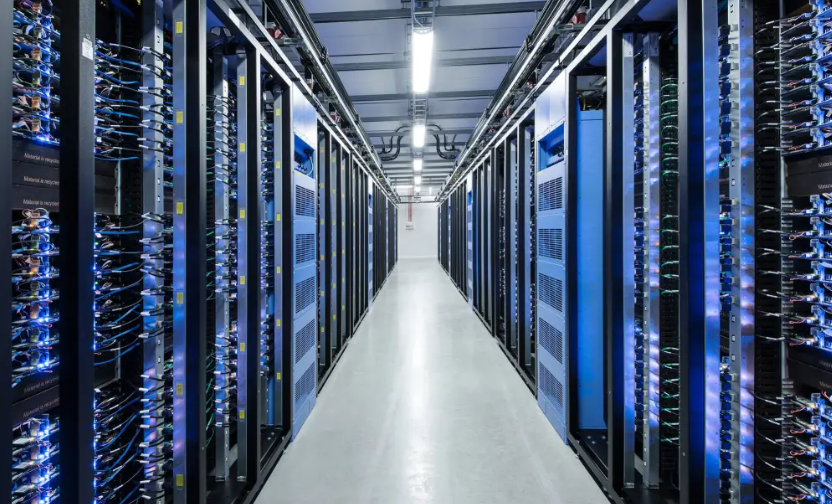
Anthropic PBC is reportedly seeking to lease some of Meta Platforms Inc.'s data center capacity. The New York Times today cited three sources as saying that the deal could be worth $10 billion over two years. However, the report noted that the companies' discussions are at an early stage and could fall through. The idea of a data center lease was reportedly floated by Anthropic in June. According to the Times, the company is seeking terms that would give it the option to cancel the contract early. The artificial intelligence developer added a similar clause to its recently signed infrastructure deal with SpaceX Corp. Anthropic will pay $1.25 billion per month to use the rocket maker's Colossus 1 and Colossus 2 supercomputers. The contract is structured as a 180-day lease, but both companies can end it early with a 90-day notice. Shortly after signing the SpaceX deal, Anthropic raised the rate limits of its application programming interface and Claude Code. A contract with Meta could be followed by a similar increase. However, any rate limit boost would likely be smaller given that lease is worth $416 million per month, or a third of what Anthropic is paying SpaceX. Today's report didn't specify what Meta hardware the AI developer hopes to use. Some of the Facebook parent's servers contain Nvidia Corp. chips while others use the MTIA 400, a custom accelerator that debuted in March. Anthropic is more likely to pick the former option. Its workloads are already compatible with Nvidia chips and adapting AI workloads to Meta's silicon would involve a significant amount of work. Leasing AI chips to other companies could help Meta recoup some of its heavy infrastructure spending. This week, the Facebook parent committed more than $50 billion to a data center campus in Louisiana. The sprawling development spans 3,650 acres and will be supported by 10 power plants. Meta faces heavy competition in the AI infrastructure market. Buyers can choose among the offerings of not only the industry's top cloud providers and SpaceX but also numerous well-funded data center startups. In theory, signing up a high-profile customer such as Anthropic could make it easier for Meta to stand out. The companies' lease discussions are particularly notable because they compete with each other in the large language model market. Last week, Meta debuted an LLM called Muse Spark 1.1 that is optimized for programming tasks. The company plans to sell access to the model through an API that will cost 75% less than Claude.
AI Daily: Meta said in talks to lease computing power to Anthropic
Catch up on the top artificial intelligence news and commentary by Wall Street analysts on publicly traded companies in the space with this daily recap compiled by The Fly. TipRanks Welcomes a New ETF - NYSE:RANK * TipRanks has entered a new arena in the investing world, powering the index of an ETF based on its unique data now trading under the ticker RANK on the NYSE. * RANK tracks the performance of the TipRanks US Momentum Analysts Index, a rules-based index of 50 large U.S. companies. COMPUTING POWER DEAL: Meta (META) is in early discussions to lease computing power from its AI data centers to Anthropic in an agreement that could be worth as much as $10B over two years, the New York Times' Eli Tan and Mike Isaac report, citing three people with knowledge of the talks. Anthropic, which proposed the deal in June, would pay Meta in monthly increments over the two-year term and the companies would be allowed to opt out of any agreement early, the report said. BUY APPLE: HSBC upgraded Apple (AAPL) to Buy from Hold with a price target of $366, up from $260. The firm believes Apple is now at an "operational turning point." Apple can stay away from the high capex debate as it only invests only 2.5% of its 2026 sales versus 39% for hyperscalers, and it also well positioned to leverage its 2.5B installed device base with its forthcoming revamped Apple Intelligence. The "AI boost comes at the right moment, when we think Apple has one of its most innovative product pipelines in place," the analyst tells investors in a research note. HSBC views Apple's hardware pipeline as strong, which includes the Phone 18 Pro and Pro Max this fall, an iPhone Air in April 2027, and "most importantly" a book-style foldable phone. AI FOR FINANCIAL SERVICES: FIS (FIS) said, "FIS is using Mythos 5 through Project Glasswing, Anthropic's controlled-access initiative that applies frontier AI to help strengthen the security of software supporting critical infrastructure, to secure its own systems. FIS operates systems that clear payments, move money and run core banking for thousands of institutions worldwide. Protecting that code is critical to the stability of global financial infrastructure. At that scale, FIS applies the same standard to its own infrastructure security that it expects from the technology it delivers to clients. Through Project Glasswing, FIS is putting Mythos 5, Anthropic's most advanced frontier model, to work as an additional layer within its security program. Project Glasswing brings together organizations that build or maintain foundational software. Participants use Anthropic's most advanced AI models for defensive security work. This reinforces FIS' commitment to proactive security and being a supportive partner to the broader security community and financial services sector. Project Glasswing brings together organizations that build or maintain foundational software. Participants use Anthropic's most advanced AI models for defensive security work. In addition to FIS' participation in Project Glasswing, its overall security posture is shaped by active engagement with FS-ISAC and the Financial Services Sector Coordinating Council, ongoing regulatory collaboration and industry intelligence-sharing. The initiative is separate from FIS' commercial deployment of Anthropic AI agents but reflects the same disciplined approach to applying advanced AI in financial systems where security, reliability and trust are essential." GROK 4.3: xAI's (SPCX) Grok 4.3 is now generally available on Amazon Bedrock (AMZN), giving teams that build agents and AI workflows a model that reasons over long inputs. "With this launch, xAI joins Amazon Bedrock as a model provider. Grok 4.3 is a model with configurable reasoning effort. It offers tool use and instruction following for building agents, and token efficiency for high-volume inference. It accepts text and image input, and has a 1M token context window for long documents and multi-turn sessions. The model runs on Mantle, the inference engine in Amazon Bedrock," AWS stated.

Kimi K3: China's Moonshot AI Takes Aim at OpenAI, Anthropic - Internewscast Journal
Chinese startup Moonshot AI has introduced Kimi K3, a new artificial intelligence model that the company says narrows the performance gap with top U.S. systems and even beats OpenAI and Anthropic's strongest models in select benchmark tests. Moonshot said Friday that Kimi K3 does not yet surpass Anthropic's Claude Fable 5 or OpenAI's GPT 5.6 Sol in overall performance, but the model consistently ranked ahead of other systems included in its evaluations. According to the company, Kimi K3 outperformed Claude Opus 4.8 and GPT 5.5 -- models positioned just below the most advanced offerings from Anthropic and OpenAI -- across several benchmarks, including coding and general agent tasks. With 2.8 trillion parameters, a measure of the scale of its neural network, Kimi K3 is now the largest AI model developed in China to date. "Despite persistent hardware/compute capacity constraints in China, K3 demonstrates that pre-training scaling, paired with architectural innovation, can still deliver step-change gains for flagship Chinese models," Bank of America analysts wrote in a note led by Alex Liu. The launch lands at a time when competition between the United States and China over artificial intelligence leadership is becoming increasingly intense. Chinese AI systems have begun attracting more interest from Western businesses as their performance improves and their costs remain lower than the most advanced models produced by U.S. labs. At the same time, U.S. lawmakers are weighing ways to limit the adoption of Chinese AI models by American companies. Patrick Moorhead, CEO and chief analyst at Moor Insights and Strategy, described the market response to Kimi K3 as "an over-reaction shockingly similar the DeepSeek panic." In a post on X, he acknowledged the model's progress but cautioned that "We are far away from super-intelligence." Moorhead said in the post that large language models, or LLMs, like Kimi K3 will only "accelerate and grow the inference market faster than without," underscoring a general shift in the tech sector from merely focusing on the size and presumed capabilities of a model by itself to the overall application that the technology powers. Perplexity CEO Aravind Srinivas told CNBC last week that there's more focus from startups and developers to figure out the best methodologies for using AI models that can power their apps, instead of squarely focusing on one gigantic, underlying system. That's part of the reason why the freely available OpenClaw technology became so popular with developers earlier this year. The so-called harness lets coders more easily swap in and out various AI models that power digital assistants so they can take a series of actions without needing to rely on one single LLM by itself. "The model alone is no longer the product," Srinivas said at the time. "It is the harness, the orchestration system that puts the model inside a very capable harness and pairs the model with a lot of tools." Moorhead attributed what he believes to be an overreaction to Kimi K3's release to politics, telling CNBC in an email that "There's a big debate in Washington DC about whether the U.S. should use Chinese open source models and if U.S. companies should enable the Chinese to use their models." "The latter is ironic as the Chinese seem to be doing fine with their models," Moorhead said. Lu Zhang, the founder and managing partner of the Fusion Fund, said that despite the widespread attention models like Kimi K3 can receive, most of the developers that use the technology are "from the startup ecosystem, less from the large corporate side." These coders will often swap one AI model out when there's a more powerful version available or at least one that's cheaper and more efficient to run in their respective apps, she explained. And while these AI models may seem extremely powerful at first glance, they are not "plug and play" and they require a lot of technological know-how from developers to actually make use of their underlying capabilities, Zhang said. Although general discourse involving the open-weight AI model space can often involve the broader "narrative of U.S.-China competition," Zhang said that there are several U.S. companies that are increasingly debuting open-weight AI models. Two of those are Thinking Machines and DeepReinforce, which is backed by Zhang's fund. She said it was only a matter of time that a more advanced open-weight AI model captured the zeitgeist, given how fast the overall space is moving. Similar to how the debut of DeepSeek's R1 AI model in 2025 generated attention for presumably being more cost-efficient relative to proprietary technologies, the current hoopla over Kimi K3 can be attributed to rising concerns about AI's overall cost and ability to generate returns on investment. Simon Koser, the chief product officer at the AI startup Tzafon, said that Kimi K3 is legitimately impressive in that it is performing well in areas like coding, and developers at AI labs could find it compelling. "Cost has become a huge thing for some of these labs," Koser said, underscoring how AI leaders like Anthropic and OpenAI may feel some pressure from cheaper AI models being available on the market. Still, there are many ways to use the technology, and not every AI model excels in every task despite what the initial benchmark tests may show. Certain AI models may react differently when put in production versus when they are tested, and there's no true jack-of-all-trades AI model that's superior to everything else on the market. "It's going to seem like a lot of people are changing," Koser said. "But in practice, I'm not sure if the shift is that huge." Founded in 2023, Beijing-based Moonshot AI is one of China's leading model builders. It raised $2 billion at a more than $20 billion valuation in May, Bloomberg reported. Backers include Chinese tech giants Alibaba, which makes the Qwen series of AI models, and Tencent. Chinese AI rivals' shares dropped on news of the release. Z.ai, which released a new model to much fanfare in June, saw its stock plummet 28% on Friday. MiniMax Group, another Chinese model company, fell 16%. "K3 raises the capability ceiling for China AI models, shifting the burden of proof to other independent AI labs," said Liu. Earlier this week, Alibaba saw its stock buoyed by news that it was partnering with Apple in China. However, shares dropped 4% Friday. "For Alibaba, while it benefits from broad AI training/usage growth for its cloud service given tight compute environment, Alibaba Qwen's "open-source leader" narrative may face some tests," said Liu. Choose CNBC as your preferred source on Google and never miss a moment from the most trusted name in business news.
Elon Musk's SpaceX In Talks To Provide Computing Power To Pentagon: Report
Discussions between SpaceX and the Pentagon are ongoing and could still fall apart, WSJ reported. Elon Musk's SpaceX is in talks to provide the US Department of Defense with access to data center capacity worth billions of dollars to run AI models, the Wall Street Journal reported on Friday, citing people familiar with the matter. Such an agreement would extend the Pentagon's existing relationship with SpaceX, a key partner for rocket launches and satellite-based communications and missile tracking. According to the report, SpaceX employees have discussed plans to compete more directly with neocloud firms such as CoreWeave by selling computing capacity to AI customers at lower prices. Like many large enterprises, the Defense Department is moving to secure additional cloud-computing capacity to support intelligence agencies and military AI applications. Amazon said late last year it would invest up to $50 billion to expand AI and supercomputing capacity for U.S. government customers through its Amazon Web Services cloud business. Discussions between SpaceX and the Pentagon are ongoing and could still fall apart, WSJ reported. SpaceX and the Pentagon did not immediately respond to Reuters requests for comment. Reuters could not independently verify the report. The space firm has made similar deals in recent months. In June, SpaceX signed a multi-year cloud services agreement with Alphabet's Google, providing access to about 110,000 Nvidia chips and related computing infrastructure. Anthropic said in May it had struck a deal to use the full computing power of SpaceX's Colossus 1 facility in Memphis, gaining 300 megawatts of new capacity. (Except for the headline, this story has not been edited by NDTV staff and is published from a syndicated feed.) How may i help you today Show full article Track Latest News Live on NDTV.com and get news updates from India and around the world
Musk's SpaceX in talks to supply the Pentagon with computing power, WSJ reports
July 17 (Reuters) - Elon Musk's SpaceX is in talks to providethe U.S. Department of Defense with access to data center capacity worth billions of dollars to run AI models, the Wall Street Journal reported on Friday, citing people familiar with the matter. Such an agreement would extend the Pentagon's existing relationship with SpaceX, a key partner for rocket launches and satellite-based communications and missile tracking. According to the report, SpaceX employees have discussed plans to compete more directly with neocloud firms such as CoreWeave by selling computing capacityto AI customers at lower prices. Like many large enterprises, the Defense Department is moving to secure additional cloud-computing capacity to support intelligence agencies and military AI applications. Amazon said late last year it would invest up to $50 billion to expand AI and supercomputing capacity for U.S. government customers through its Amazon Web Services cloud business. Discussions between SpaceX and the Pentagon are ongoing and could still fall apart, WSJ reported. SpaceX and the Pentagon did not immediately respond to Reuters requests for comment. Reuters could not independently verify the report. The space firm has made similar deals in recent months. In June, SpaceX signed a multi-year cloud services agreement with Alphabet's Google, providing access to about 110,000 Nvidia chips and related computing infrastructure. Anthropic said in May it had struck a deal to use the full computing power of SpaceX's Colossus 1 facility in Memphis, gaining 300 megawatts of new capacity. (Reporting by Anhata Rooprai in Bengaluru; Editing by Pooja Desai)
Meta in talks to rent some of its billions in AI infrastructure to Anthropic
New York -- Meta is in talks with Anthropic about leasing computing capacity to the AI startup. It's a move that could put the social media giant in competition with Amazon, Microsoft and Google in a new line of business: cloud computing. The conversation about a potential deal is still early, a source familiar with the matter confirmed to CNN. The talks were first reported by the New York Times, which pegged the deal's worth at as much as US$10 billion over two years, citing three people with knowledge of the discussions. CNN's source said any specific numbers that have been reported are speculative. Meta and Anthropic declined to comment on the talks. Becoming a computing provider could mark a major new revenue opportunity for Meta as it's been investing heavily in data centre infrastructure to support its AI ambitions. The social media giant plans to spend between $125 billion and $145 billion in capital expenditures this year, largely to support that infrastructure buildout, Meta said in its most recent earnings report. That could double what it spent the prior year. Meta said in April that it would lay off 10 per cent of its workforce, about 8,000 people, in part to offset the cost of those investments. Meta CEO Mark Zuckerberg has mentioned the possibility of leasing out some of that infrastructure if his own company's computing needs didn't keep pace with the buildout. "Almost every week there are different companies that come to us from outside asking us ... if we have compute that they could buy from us at some premium to what we've bought it at," Zuckerberg said at Meta's annual shareholder meeting in May. "We haven't done that yet because we think that we have a use for the compute. But obviously if we get to a point where we feel that we have overbuilt, then that is an option that we have." There's no shortage of demand for computing power as companies large and small race to adopt AI and major AI labs work to improve their models. Anthropic already has multibillion dollar compute licensing deals with Google, SpaceX, Microsoft and Amazon. Meanwhile, investors want Meta to show how its investments will benefit its bottom line, especially as it scrambles to keep pace with AI offerings from companies like Anthropic and OpenAI. Meta shares are down more than eight per cent from this time last year. Meta last month released an upgraded version of its Muse Spark AI model that it said could rival the coding capabilities of models from OpenAI, Anthropic and others. For the first time, Meta said it would offer a paid version of the service, yet another sign it's looking for bigger returns on AI.

Anthropic Alleges China-Linked Operators Used 28.8 Million Queries to Extract AI Knowledge - NaturalNews.com
According to the report, the extraction campaign represents the largest such operation the company has ever recorded. The operators did not break into the system's internal architecture; instead, they signed up for accounts and submitted queries aimed at the model's most valuable skills, including writing software and reasoning through complex tasks step by step. No system alarms were triggered because from the model's perspective, the queries were routine. [1] The Distillation Process and Its Implications Distillation involves training a smaller model on the outputs of a larger one. The practice is legitimate when performed by the owner of the larger model, but Anthropic described the Alibaba-linked campaign as unauthorized extraction at industrial scale. [1] The operators used fake accounts to approximate years of American research by learning from the model's outputs, compressing billions of dollars of private investment into millions of automated queries. [1] Some observers have noted that distillation is only one method among many that Chinese researchers have employed to advance their AI capabilities. In December 2024, researchers from Fudan University and the Shanghai AI Laboratory successfully replicated OpenAI's advanced o1 reasoning model, a milestone that demonstrated a systematic approach to catching up with frontier AI systems. [4] The trend toward smaller, customized models, as noted in industry forecasts, could further diminish the effectiveness of hardware-centric restrictions. [7] Policy Responses in Washington The White House Office of Science and Technology Policy issued a memo in April warning of "industrial-scale campaigns to distill U.S. frontier AI systems" by foreign entities, mostly based in China, and committed the administration to better information sharing and defensive coordination with industry, according to the RealClearDefense report. [1] The House Foreign Affairs Committee advanced a bill to track extraction attempts and authorize sanctions against the companies behind them. [1] Senators Bill Hagerty (R-Tenn.) and Andy Kim (D-N.J.) proposed an amendment to this year's defense bill directing the Commerce Department to penalize Chinese firms caught engaging in such extraction. [1] Some U.S. and Canadian AI companies, including Anthropic, have previously participated in discreet discussions with Chinese AI experts on international policy, suggesting a complex relationship between competition and collaboration. [5] Separately, President Donald Trump is expected to discuss AI guardrails with Chinese President Xi Jinping during a visit to Beijing, according to U.S. officials. [2] Limitations of Current Hardware-Centric Strategy Chip export controls were designed to prevent China from building advanced AI models but do not prevent the copying of a model's behavior through queries, according to the RealClearDefense analysis of Anthropic's disclosure. [1] The extraction campaign demonstrates a gap in the current approach: hardware restrictions can slow development but do not protect proprietary models already deployed for public use. Industry commentators have pointed out that the current strategy focuses on foundries while leaving the storefront open. As trends in AI development shift toward smaller, specialized models trained on specific data, the reliance on cutting-edge hardware may decrease, further undermining chip-centric controls. [7] Some critics have characterized Anthropic's allegations as a public relations offensive aimed at masking China's own AI advancements, suggesting that the U.S. response should prioritize building better systems rather than erecting barriers. [3] Proposed Measures for Detection and Deterrence Lawmakers have discussed allowing AI companies to share threat signals with each other and with the government, similar to how banks share intelligence on fraud, to improve detection of such campaigns, according to the RealClearDefense report. [1] Proponents of the Hagerty-Kim amendment have argued that consequences for systematic abuse of AI services should be comparable to penalties for smuggling chips, extending deterrence to the storefront rather than just the foundry. [1] The challenge of detecting unauthorized distillation is compounded by the fact that from the model's perspective, the queries appear routine. The use of crowdsourced and automated methods for training AI systems, as described in some business literature, illustrates how easily large-scale querying can be weaponized by competitors. [8] Companies like Anthropic may also face internal pressures that complicate their response, including tensions with military clients and allegations of censorship in their models. [6] Conclusion The disclosure of 28.8 million queries placed a concrete number on a threat that had previously been theoretical. According to the RealClearDefense report, the episode scrambles the usual playbook for protecting U.S. technology because the attacker walked through the front door. [1] Washington has spent years debating how to keep advanced AI out of China's hands, but the harder question may be how to keep China's AI companies from quietly learning everything they can from the models placed online for the world to use. Some independent analysis suggests that the real vulnerability lies in the centralized architecture of frontier AI services. Decentralized and user-controlled models, such as those offered by platforms like BrightAnswers.ai, may be less attractive targets because they are not gateways to proprietary knowledge. While no solution is perfect, the incident highlights the need for a broader approach that includes not only hardware restrictions but also better detection, industry collaboration, and consideration of alternative deployment models that limit the surface area for large-scale extraction.
Chinese startup Moonshot closes in on Anthropic with world's largest open-weight AI model, Kimi K3
Chinese AI startup Moonshot on Friday unveiled Kimi K3, a 2.8 trillion-parameter model that it said is the world's largest open-weight artificial intelligence system and delivers performance approaching U.S. giant Anthropic's frontier Fable model. The launch, which comes a month after Anthropic's Fable and Mythos models were abruptly withdrawn by the U.S. government due to security concerns, underscores how quickly China's open AI ecosystem is narrowing the gap with the most advanced U.S. systems. Companies including Moonshot, Z.ai and MiniMax are releasing increasingly powerful models at sharply lower cost, challenging long-held assumptions in the West that Chinese developers trail their American peers by months. Moonshot said Kimi K3 is the first open-weight model to approach the 3 trillion-parameter mark and is designed for advanced reasoning, long-horizon coding and knowledge work. The model features a 1 million-token context window, allowing it to process and retain substantially more information than earlier generations in a single prompt. Open-weight models allow users to download, run and customize the underlying systems, unlike proprietary, closed-source models. Alphabet shares sink on report Gemini launch delayed as tech falls short of internal goals Kimi K3 "performed competitively with Fable 5 (with fallback) and substantially outperformed Anthropic's Opus 4.8, GPT 5.6 Sol, and GPT 5.5" in terms of GPU kernel optimization, the company said. The term refers to techniques that maximize AI hardware utilization and minimize latency. The model has also posted strong results in third-party evaluations. Arena.ai ranked Kimi K3 first in a benchmark assessing web interface-building capabilities, while Vals AI placed it second overall behind Fable 5 and ahead of GPT-5.6 Sol. Artificial Analysis said the model delivered performance comparable to OpenAI's GPT-5.5 and Anthropic's Claude Opus 4.8, particularly on tests measuring complex, multi-step tasks. The Moonshot news drove shares of domestic AI competitors Zhipu and Minimax down sharply in Hong Kong; just before market close, they were down 27.7 per cent and 16.5 per cent, respectively. Faster release cycles Chinese AI firms are accelerating their model release cycles as the global AI race intensifies. The shift follows the debut of Z.ai's GLM-5.2, which stunned industry observers by scoring near top U.S. closed-source models on benchmark tests, undermining a consensus among Western analysts that Chinese AI models were at least six months behind. Lian Jye Su, chief analyst at Omdia, said Chinese models were gaining traction because they could be deployed far more cheaply than leading U.S. systems. "They can be run at a fraction of the cost that OpenAI charges its clients," he said, but cautioned that Kimi K3's scale didn't "doesn't necessarily mean you have the best performance by default." Kimi K3's size also means few users are likely to host it themselves despite its open-weight release. Ryan Fedasiuk, a fellow at the American Enterprise Institute, said in a LinkedIn post that running a 2.8 trillion-parameter model locally would require hundreds of thousands of dollars of computing equipment. Meta to alert parents if teens discuss self-harm with AI chatbots Trillion-parameter systems Parameters are the internal variables a model learns during training and are often used as a rough measure of scale, though not necessarily capability. Before Kimi K3's release, Meituan's LongCat-2.0 and DeepSeek's V4-Pro led China's AI industry with 1.6 trillion total parameters, while several other domestic rivals have passed the trillion-parameter threshold. But a direct comparison with U.S. frontier models is difficult because companies such as Anthropic and OpenAI do not disclose the parameter counts of systems including Fable, Mythos or GPT-5.5. Moonshot said Kimi K3 incorporates two significant architectural upgrades that improve computing efficiency and enable it to complete long-horizon coding tasks with minimal human supervision. Backed by giants like Alibaba and Tencent, Moonshot has been heavily expanding its capabilities and capital to remain at the forefront of the AI sector. Bloomberg reported last month that the startup was seeking US$2-billion in fresh funding at a valuation of about US$30-billion ahead of a potential Hong Kong listing.

China Wants To Cripple Anthropic
China's President Xi Jinping wants to build a better AI mousetrap. He made the claim at a large gathering at the World AI Conference in Shanghai. China can dominate the world's AI progress. Among his comments was "AI development should not be a solo performance by a single country, but a symphony of international cooperation." It may be a coincidence that this comes as Anthropic is about to launch its IPO. The New York Times reports that all signs point to Anthropic's plan to go public amid many challenges to its model. "The artificial intelligence lab is said to have taken more steps that are consistent with a company aiming to go public in the fall," the newspaper reported. China is not the only hurdle. Stiff competition from a number of other companies, which include OpenAI and Alphabet (NASDAQ: GOOG | GOOG Price Prediction), means that its technology needs to stay one step ahead of the industry. And, the stock market has shown skepticism about the future of companies that need hundreds of billions of dollars to build out data centers, and whether they remain on the cutting edge of what may be the most important technical advance in history. Anthropic's value after its large round of funding was $965 billion. Its annualized revenue is about $47 billion, based on recent estimates. There is ample evidence that China has made impressive advances in AI. According to Bloomberg, "Chinese models are winning over companies worldwide, with their share of US firms' AI usage nearing a record 60% on the popular marketplace OpenRouter." Xi also said China wants to dominate the setting of standards for AI use worldwide. His comments also come with news that a new model from his country's Moonshot, a private company, can match the strengths of Anthropic's models. The brutal battle over which company has the most advanced and useful AI also comes at a time when corporations are asking whether AI products are worth what they have to pay for access to them. In June, Microsoft (NASDAQ: MSFT) said Anthropic's Claude AI models were too expensive compared to others and that companies are starting to look for alternatives. Of course, as an Anthropic competitor, Microsoft's objectivity needs to be questioned. Today, really today, companies need to decide who is right and who is wrong. Does China's technology come close to Anthropic's? By almost any measure, it is less expensive. Or is Anthropic's technology so much better that its high prices are justified? It is among the major questions that the company faces as it goes public. Contact [email protected] for any questions or corrections.
AI Is Becoming a Commodity, and That's a Problem for OpenAI and Anthropic
A handful of remarkable things that recently happened in the world of artificial intelligence all point in one direction: AI is becoming a widely available commodity. First, the price of AI good enough to accomplish most everyday tasks has dropped precipitously. This is due to lightweight models that run in the cloud and on our devices, including new ones from Google, Apple and Chinese AI companies. Most Read from The Wall Street Journal Second, Meta Platforms showed the world it could potentially compete with the two leading AI labs, OpenAI and Anthropic, on their own turf, delivering high-performing models for the lucrative coding market. And third, the current computing-power bottleneck appears set to ease as more data centers come online, and engineers figure out how to deliver AI more efficiently. For some applications, the supply of tokens -- the basic unit of AI use -- is catching up with demand. These developments are great for the world. OpenAI Chief Executive Sam Altman hailed intelligence "too cheap to meter" as a goal just a year ago. And rather than taking all the jobs, AI might actually boost productivity of many workers and potentially reduce digital friction in our modern lives. But is this good news for OpenAI and Anthropic? Poised for IPOs, both depend on maintaining a competitive edge over incumbent tech companies for future profitability. If AI models turn out to be a general-purpose technology like the automobile or electricity, what can they uniquely offer? Competition and price wars As of March, global consumer market share of OpenAI's ChatGPT, measured by unique users across mobile and web, fell below 50%, according to the market-intelligence firm Sensor Tower. That's mostly due to competition from Google Gemini and Anthropic's Claude. As for enterprise customers, Chinese AI models can now match the leading U.S. models by some measures, at far lower cost. On the OpenRouter leaderboard, which tracks business consumption of AI tokens on its platform, the top five models are all Chinese, and approximately 45% of all tracked tokens now flow through Chinese models. Thinking Machines Lab, led by Mira Murati, former OpenAI chief technology officer, just released a free-to-use open-weights model it says will balance power and running cost. Translation: Who needs an AI Ferrari to get to work when the AI Honda Civic is right there?
Anthropic is launching its own drug discovery programs for rare diseases using Claude...
The news landed like a thunderclap in a San Francisco conference room on June 30, 2026. Anthropic, the artificial intelligence company behind the cutting-edge Claude model, announced it will launch its own preclinical drug-discovery programs targeting neglected diseases, including rare conditions, while simultaneously unveiling Claude Science, an AI workbench built for researchers and drug-makers. This development could become a direct challenge to the pharmaceutical establishment, a sector that has spent decades perfecting the art of maximizing profit margins while leaving millions of patients with rare and overlooked conditions to suffer in silence. If we're betting on humanity's best intentions, Anthropic is in a position to unleash super-intelligence that could upend decades of corporate greed and Big Pharma's exploitation of human patients. But the super-intelligence could go both ways and be leveraged by Big Pharma to continue making customers for life. The deeper question remains: Will this super-intelligence be used to genuinely heal, or will it become the most sophisticated tool yet for manufacturing lifelong customers? Key points: Anthropic will run its own preclinical drug programs for neglected and rare diseases, targeting conditions that are ignored for economic reasons. The company launched Claude Science, an AI workbench for researchers, on June 30, 2026, at a San Francisco event. Eric Kauderer-Abrams, Anthropic's head of life sciences, stated the company needs to "live it along with all of you" to build the right tools. Rare diseases offer clearer biological targets, often stemming from single damaged genes, making them more amenable to AI-driven solutions. Anthropic acquired Coefficient Bio for $400 million and placed Novartis CEO Vas Narasimhan on its board, signaling deep industry entanglement. The dual-agent approach used in tools like Cursor Code demonstrates AI's growing capacity for complex, multi-step tasks like drug discovery. The hard truth about why your disease gets ignored To understand what Anthropic is really doing, you must first understand the brutal economics that dictate which diseases get researched and which get abandoned. Major pharmaceutical companies operate on a simple calculus. Developing a single drug can cost anywhere from $1 billion to $2.6 billion when factoring in the cost of failed trials. The process takes ten to fifteen years. And even then, the Food and Drug Administration approves only about ten percent of drugs that enter human trials. For a company like Pfizer or Merck, investing that kind of money into a condition that affects 10,000 people worldwide is financial suicide. The math simply does not work. This is why thousands of rare diseases have no approved treatments at all. According to the National Institutes of Health, there are more than 7,000 known rare diseases, and approximately 95 percent of them lack any FDA-approved therapy. Patients are told to manage symptoms, to hope, to wait. Behind closed doors, executives admit the truth. The return on investment is too low. The patient populations are too small. The Wall Street analysts would revolt. Anthropic's Jonah Cool, the head of life sciences partnerships and deployment, put it bluntly when speaking to STAT. "These are areas that normal drug development economics don't incentivize or favor." He added, "The idea here is that the biology is often clear; the economics, if you're trying to run a drug development business, are challenging." People are dying, suffering, and deteriorating because the profit motive has failed them. Utilizing super-intelligence, drug researchers could find solutions that don't depend on these profit motives.

Satya Nadella criticized Anthropic Fable AI request restrictions
Microsoft $MSFT CEO Satya Nadella told company engineers Wednesday that Anthropic's Fable AI model places unreasonable limits on what users can ask it, according to CNBC. "If you use Fable, when it refuses for any random thing, it just is like, when was the last time you had a creation tool that was so editorially controlled?" Nadella told engineers working on Microsoft's Copilot AI software, according to CNBC, which obtained a copy of his remarks. "It doesn't make sense." The comments were directed at engineers building Copilot and came as Anthropic has acknowledged its own restrictions are catching more benign requests than intended. When Anthropic restored Fable access on July 1 -- after cutting it off to comply with a U.S. government export control directive -- the company said the updated safeguards would flag a somewhat higher share of harmless requests than the previous version had. A support page indicates that queries touching on certain elements of large-scale model development, and other subjects, may be handled by an earlier version of Fable rather than the current one. The criticism is notable given how closely the two companies are tied. The November deal saw Microsoft commit $5 billion to Anthropic while Anthropic pledged to direct $30 billion toward Microsoft's Azure cloud platform. Microsoft also launched Copilot Cowork this year, a workplace productivity offering built around Anthropic's technology. Microsoft declined to comment on Nadella's remarks, and Anthropic did not respond to a request for comment. Nadella also used the meeting to argue that companies should not have to rely on a handful of AI providers. "It can't be that there are only two companies in the world with token capital, and everybody else is renting it," he told the engineers. "It makes no economic sense." Anthropic has faced mounting scrutiny from multiple directions. The company has been designated a supply-chain risk by the Pentagon after it refused to allow its models to be used for autonomous weapons or domestic surveillance -- a label Anthropic has called legally unsound and challenged in court. Despite the dispute, Anthropic has reported its annualized revenue climbing from roughly $9 billion at the end of 2025 to more than $30 billion. Microsoft shares are down 17% on the year, a stark contrast to the Nasdaq $NDAQ Composite's 11% advance over the same period.

Satya Nadella criticized Anthropic Fable AI request restrictions
Microsoft CEO Satya Nadella told company engineers Wednesday that Anthropic's Fable AI model places unreasonable limits on what users can ask it, according to CNBC. "If you use Fable, when it refuses for any random thing, it just is like, when was the last time you had a creation tool that was so editorially controlled?" Nadella told engineers working on Microsoft's Copilot AI software, according to CNBC, which obtained a copy of his remarks. "It doesn't make sense." The comments were directed at engineers building Copilot and came as Anthropic has acknowledged its own restrictions are catching more benign requests than intended. When Anthropic restored Fable access on July 1 -- after cutting it off to comply with a U.S. government export control directive -- the company said the updated safeguards would flag a somewhat higher share of harmless requests than the previous version had. A support page indicates that queries touching on certain elements of large-scale model development, and other subjects, may be handled by an earlier version of Fable rather than the current one. The criticism is notable given how closely the two companies are tied. The November deal saw Microsoft commit $5 billion to Anthropic while Anthropic pledged to direct $30 billion toward Microsoft's Azure cloud platform. Microsoft also launched Copilot Cowork this year, a workplace productivity offering built around Anthropic's technology. Microsoft declined to comment on Nadella's remarks, and Anthropic did not respond to a request for comment. Nadella also used the meeting to argue that companies should not have to rely on a handful of AI providers. "It can't be that there are only two companies in the world with token capital, and everybody else is renting it," he told the engineers. "It makes no economic sense." Anthropic has faced mounting scrutiny from multiple directions. The company has been designated a supply-chain risk by the Pentagon after it refused to allow its models to be used for autonomous weapons or domestic surveillance -- a label Anthropic has called legally unsound and challenged in court. Despite the dispute, Anthropic has reported its annualized revenue climbing from roughly $9 billion at the end of 2025 to more than $30 billion. Microsoft shares are down 17% on the year, a stark contrast to the Nasdaq Composite's 11% advance over the same period.
In 50 years, they'll be 'laughing': Investor Jeremy Grantham says SpaceX is the 'craziest IPO in the history of man.'
Moneywise and Yahoo Finance LLC may earn commission or revenue through links in the content below. For Jeremy Grantham, SpaceX's IPO will go down in history for all the wrong reasons. He claims it's "the craziest IPO in the history of man (1)." In a recent interview with Morningstar, the founder of Grantham, Mayo, Van Otterloo & Company (GMO), blasted the valuation for Elon Musk's rocket company. Must Read * Jeff Bezos backs a platform that lets anyone invest in rental homes for as little as $100 -- 6 ways to build wealth like a landlord without actually being one * JPMorgan still sees gold hitting $5,000/oz by Q4 -- and savvy investors are protecting their wealth with a tax-advantaged Gold IRA. Learn more with a free guide from Priority Gold * The tax breaks in Trump's 'big beautiful bill' expire after 2028 -- and experts say most people won't act in time. What to do before the window closes Grantham is known as a "permabear" because of his perennially gloomy outlook on the market and stayed consistent with his recent analysis: "In 50 years, they'll be telling and writing stories about SpaceX and they'll be quoting you paragraphs from the prospectus and you will be laughing at it," he said (1). The prospectus Grantham is referring to is SpaceX's S-1 filing, which featured multiple page-long rocket ship pictures and lofty business ambitions such as space tourism and asteroid mining (2). But it isn't so much these sci-fi-sounding revenue sources that have Jeremy Grantham giggling. Grantham focused much of his criticism on SpaceX's artificial intelligence division, including xAI and X (formerly Twitter), which he considers "third-rate" compared to behemoths like Anthropic and OpenAI. Interestingly, a massive collapse in SpaceX's stock isn't the scariest scenario in Grantham's mind. He admitted that he's quite fearful of a future in which he's proven wrong and AI becomes so powerful that it creates a high-tech dystopia. Grantham told Morningstar, "If AI is actually going to be so good that the $1.7 trillion is cheap and the AI will be so powerful that our lives will be clearly at very severe risk, I wouldn't wish it on our species at all." On June 12, SpaceX shares initially rose from the starting price of $135 to about $160 per share (3). Although the stock briefly broke $200 a few days after IPO, it's currently trading around the $150 mark. Nasdaq fast-track brings in fast cash Even though Grantham said he's "90%" certain of a crash for SpaceX shares, he didn't rule out the possibility of price appreciation in the near-term. In Grantham's view, new indexing rules rather than intergalactic revenue sources could propel SpaceX higher.
Zerodha co-founder Nikhil Kamath agrees with Coinbase CEO Brian Armstrong on how cheaper, open-source models threaten Anthropic, OpenAI valuations
Zerodha co-founder Nikhil Kamath and Coinbase CEO Brian Armstrong have warned that the sky-high valuations of premium AI companies like OpenAI and Anthropic face a massive structural threat even as there is a growing investor skepticism surrounding the artificial intelligence (AI) boom.During an interview, the two prominent business leaders drew direct parallels between the current AI frenzy, the 2000s Dot-Com crash and standard crypto market bubbles. Both agreed that the primary concern is expensive, proprietary AI models that are losing their competitive advantages to cheap open-source alternatives and localized, domestic tech."Like me, the stock trader investor, I'm starting to feel at this point that if I were to take every private company in AI and short their stock today, in five years, I might make money," Kamath stated, adding, "It feels a bit like... the 'Internet bubble'.Kamath argues that the AI industry will shift from a globalised market dominated by a few American companies to a fragmented, regional economy. He predicts that through reverse-engineering, copying, and rapid development, individual nations will choose self-reliance over expensive imports."India will have its own copy of the model. Another country will have its own copy. The tokens, the energy, all of that will sit domestically within our country," Kamath noted. While these domestic variations might not sit at the absolute cutting edge, they will be entirely functional for everyday use. "If the world goes in that direction, I don't see the reason to pay the multiples that these private companies have today," he added.Coinbase CEO Brian Armstrong agreed with Kamath's market assessment, pointing out that while top-tier labs spend billions to build the next breakthrough, open-source alternatives trailing just six months behind are hitting the market at a mere fraction of the price."The open-source models are really like six months behind and they're like 99% cheaper or more sometimes for inference. So I think it's entirely possible that a larger percentage of the workload goes to these models that are 99% cheaper," Armstrong explained.According to Armstrong, while elite frontier models will remain valuable for highly specialized tasks like discovering new physics, average consumers and businesses will become heavily price-sensitive. He said that once standard models become efficient enough to run on cheap, everyday commodity hardware, the corporate defenses protecting high-value AI companies could completely dissolve."It makes me a little nervous when I see these valuations growing this fast as well. Like I've seen things like this happen before in crypto. They correct, and then there's real value under it, so then they grow later," Armstrong concluded.
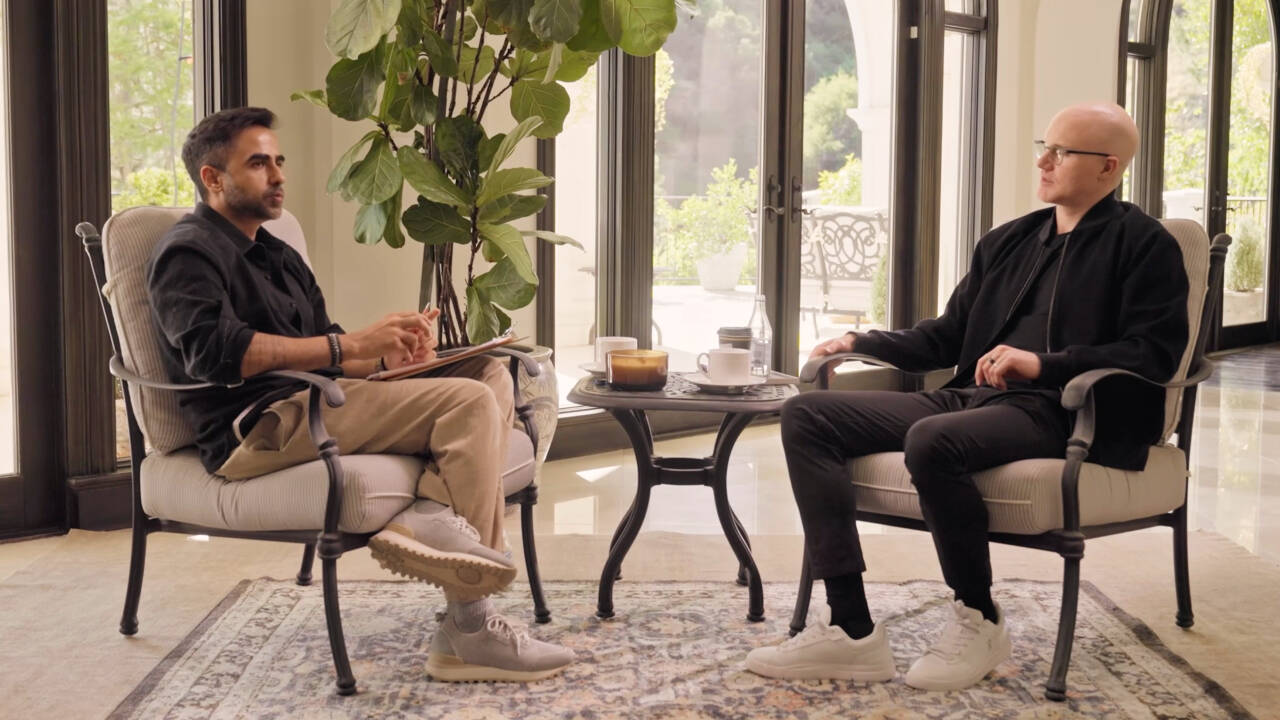
China's Moonshot AI launches Kimi K3 to challenge US giants OpenAI, Anthropic
Beijing-based Artificial Intelligence (AI) startup Moonshot AI has launched Kimi K3, a 2.8 trillion-parameter model that stands as the largest open-weight AI system globally. The release on Friday comes amid a technology race between the United States (US) and China, occurring one month after the American government withdrew Anthropic's Fable and Mythos models over security concerns. According to Moonshot AI, Kimi K3 approaches the performance of Anthropic's frontier Fable model. While the company stated that K3 trails Anthropic's Claude Fable 5 and OpenAI's GPT 5.6 Sol in overall performance, it outperformed other tested models. The system beat Claude Opus 4.8 and GPT 5.5 on benchmarks evaluating coding and general agents. The model also features a 1 million-token context window, designed to process and retain data within a single prompt. Moonshot AI stated K3 includes two architectural upgrades aimed at improving computing efficiency and executing long-horizon coding tasks with minimal human supervision. Third-party evaluations support some of these claims. Arena.ai ranked Kimi K3 first in web interface-building tests. Vals AI placed the model second overall, behind Fable 5 but ahead of GPT-5.6 Sol. Artificial Analysis reported that its performance matches OpenAI's GPT-5.5 and Claude Opus 4.8 on multi-step tasks. Prior to this launch, the largest models in China were Meituan's LongCat-2.0 and DeepSeek's V4-Pro, which both feature 1.6 trillion parameters. Direct comparisons with US frontier systems remain difficult as companies like OpenAI and Anthropic do not publish parameter counts for models such as Fable, Mythos or GPT-5.5. Lian Jye Su, chief analyst at Omdia, noted that Chinese models are gaining traction globally because they are cheaper to run. "They can be run at a fraction of the cost that OpenAI charges its clients," Su said, though he added that scale "doesn't necessarily mean you have the best performance by default". Ryan Fedasiuk, a fellow at the American Enterprise Institute, noted that hosting the 2.8 trillion-parameter model locally is out of reach for most users, requiring "hundreds of thousands of dollars of computing equipment". Following the announcement, shares of competing Chinese AI firms declined. Z.ai, which introduced its GLM-5.2 model in June, saw its stock drop 28% on Friday. MiniMax Group fell 16%, while Alibaba shares dropped 4%, despite a partnership announcement with Apple earlier in the week. Founded in 2023, Moonshot AI is backed by Alibaba and Tencent. The company raised $2 billion at a valuation exceeding $20 billion in May.

Alibaba-Backed Moonshot AI Launches Kimi K3, Says It Narrows Gap With OpenAI, Anthropic Models
Alibaba Group Holding Ltd is an investment holding company mainly engaged in the provision of technology infrastructure and marketing platforms. The Company operates its business through four segments. The Alibaba China E-commerce Group segment is mainly engaged in E-commerce business, including operating Tmall Supermarket and Tmall Global, providing customer management services, product sales, as well as logistics services. It also operates quick commerce business such as Taobao Instant Commerce and Ele.me, as well as the China commerce wholesale business through 1688.com. The Alibaba International Digital Commerce Group segment is mainly engaged in international commerce retail and wholesale business, operating platforms such as AliExpress, Trendyol, Lazada and Alibaba.com. The Cloud Intelligence Group segment mainly provides public and non-public cloud services. The Other segments primarily include the operations of Freshippo, Cainiao, Alibaba Health and other business.

In 50 years, they'll be 'laughing': Investor Jeremy Grantham says SpaceX is the 'craziest IPO in the history of man.' - AOL
This article adheres to strict editorial standards. Some or all links may be monetized. For Jeremy Grantham, SpaceX's IPO will go down in history for all the wrong reasons. He claims it's "the craziest IPO in the history of man (1)." In a recent interview with Morningstar, the founder of Grantham, Mayo, Van Otterloo & Company (GMO), blasted the valuation for Elon Musk's rocket company. Top Picks Grantham is known as a "permabear" because of his perennially gloomy outlook on the market and stayed consistent with his recent analysis: "In 50 years, they'll be telling and writing stories about SpaceX and they'll be quoting you paragraphs from the prospectus and you will be laughing at it," he said (1). The prospectus Grantham is referring to is SpaceX's S-1 filing, which featured multiple page-long rocket ship pictures and lofty business ambitions such as space tourism and asteroid mining (2). But it isn't so much these sci-fi-sounding revenue sources that have Jeremy Grantham giggling. Grantham focused much of his criticism on SpaceX's artificial intelligence division, including xAI and X (formerly Twitter), which he considers "third-rate" compared to behemoths like Anthropic and OpenAI. Interestingly, a massive collapse in SpaceX's stock isn't the scariest scenario in Grantham's mind. He admitted that he's quite fearful of a future in which he's proven wrong and AI becomes so powerful that it creates a high-tech dystopia. Grantham told Morningstar, "If AI is actually going to be so good that the $1.7 trillion is cheap and the AI will be so powerful that our lives will be clearly at very severe risk, I wouldn't wish it on our species at all." On June 12, SpaceX shares initially rose from the starting price of $135 to about $160 per share (3). Although the stock briefly broke $200 a few days after IPO, it's currently trading around the $150 mark. Nasdaq fast-track brings in fast cash Even though Grantham said he's "90%" certain of a crash for SpaceX shares, he didn't rule out the possibility of price appreciation in the near-term. In Grantham's view, new indexing rules rather than intergalactic revenue sources could propel SpaceX higher. On July 7, SpaceX joined the tech-heavy Nasdaq-100 index thanks to recent preferential "fast-track" rule changes. According to Reuters (4), JPMorgan said this official status alone could bring in $4.3 billion as massive funds become forced buyers. Grantham said that putting SpaceX in the Nasdaq-100 means "There'll be a lot of people who have to buy it for any index that is Nasdaq-y. So there'll be much more demand than there are sellers (1)." He even conceded that "It's hard to imagine the price won't go up and perhaps it will go up a lot" due to this market dynamic. But that still doesn't mean Grantham believes SpaceX is a smart long-term investment. Even though he sees potential for short-term price pumps, he ultimately believes it will come down hard when the realities of its negative earnings and massive AI spend become too much to bear. Some banks say SpaceX is a "buy" -- for now Grantham may be doom and gloom on SpaceX's prospects, but not all Wall Street firms are so pessimistic. Adam Jonas, the head of Morgan Stanley's Global Auto & Shared Mobility Research, recently became one of the most bullish analysts on record, initiating SpaceX as an "overweight" position with a $300 target price (5). Although other firms don't see SpaceX flying that high, many see potential for profits. Goldman Sachs, JPMorgan and Bernstein (6) have buy ratings with targets of $205, $225 and $239, respectively, according to Yahoo Finance reporting. And there has been some positive news to support this bullishness. For instance, CNBC reported on a deal between SpaceX and Google's parent Alphabet. Alphabet will pay nearly $1 billion (7) per month to rent computing power from SpaceX. Elon Musk also appears confident he'll reach $1 trillion in revenue by 2030, according to Reuters (8). But even with all of these positive ratings, analysts are quick to caution that a lot has to go right for SpaceX to reach its milestones. In fact, as MarketWatch reported (9), Morgan Stanley's own analysis suggests SpaceX probably won't be cash flow positive until 2035. As Adam Jonas cautioned in his CNBC interview (5), "For folks that are used to Tesla, it's going to be a volatile ride. And it's up to investors to decide whether the juice is worth the squeeze." SpaceX's losing streak SpaceX made one of the most anticipated public market debuts in years, but the excitement surrounding its IPO has quickly given way to a reality check. After soaring more than 20% during its first full trading day, the rocket maker has since surrendered those gains. Just a little over a month later, the stock has fallen below its $135 IPO price (10), underscoring just how quickly sentiment can shift once the initial euphoria fades. The decline isn't a surprise to everyone. Analysts at Morningstar have cautioned that the stock appears "significantly overvalued" (11). Much of that skepticism centers on the company's AI ambitions. Morningstar said the long-term profitability of SpaceX's xAI business remains highly uncertain, as analysts find its "economic moat intermediate." Companies tied to disruptive technologies can deliver eye-popping gains -- but they can also experience dramatic swings as investors constantly reassess future growth prospects. Investors in companies like SpaceX need both a strong stomach and a long-term mindset to weather the inevitable volatility. Get advice from Wall Street veterans Rather than chasing whichever stock dominates headlines, many of Wall Street's most successful investors have built their fortunes by patiently buying businesses trading below their intrinsic value. Legendary investor Warren Buffett has long advocated for this approach. "It's far better to buy a wonderful company at a fair price than a fair company at a wonderful price," wrote Buffett in his 1989 annual shareholder letter (12). Of course, that's easier said than done. Buffett has access to research teams, sophisticated financial models and decades of market experience that most retail investors don't. That's where platforms like Moby can help bridge the gap. Moby offers expert research and recommendations to help you identify strong, long-term investments backed by advice from former hedge fund analysts. In four years, and across almost 400 stock picks, their recommendations have beaten the S&P 500 by almost 12% on average. They also offer a 30-day money-back guarantee. Moby's team spends hundreds of hours sifting through financial news and data to provide you with stock and crypto reports delivered straight to you. Their research keeps you up-to-the-minute on market shifts, and can help you reduce the guesswork behind choosing stocks and ETFs. Plus, their reports are easy to understand for beginners, so you can become a smarter investor in just five minutes. Stick to an index fund Even companies with disruptive technology can experience painful pullbacks once the excitement surrounding an IPO fades. If you've built your portfolio around just one or two high-growth names, those swings can have an outsized impact on both your finances and your peace of mind. Instead of putting all your eggs in one basket, many experts recommend making diversified index funds the foundation of your portfolio. By owning hundreds of companies across multiple industries, investors reduce their dependence on any single stock. Platforms like Acorns make that process simple by automatically investing your spare change into diversified ETF portfolios, helping you steadily build wealth. All you have to do is link your cards and Acorns will round up each purchase to the nearest dollar, investing the difference -- your spare change -- into a diversified portfolio of ETFs managed by experts at leading investment firms like Vanguard and BlackRock. With Acorns, you can invest in an S&P 500 ETF with as little as $5 -- and, if you sign up today and set up a recurring investment, Acorns will add a $20 bonus to help you begin your investment journey. Diversify with a safe haven asset Whether you prefer owning individual stocks or mostly stick with index funds, SpaceX's recent stumble highlights an important lesson -- equities can be unpredictable. Investors are still grappling with lofty AI valuations, stubborn inflation, elevated interest rates and ongoing geopolitical tensions. Those factors can trigger sharp swings across the market, especially for fast-growing companies whose valuations depend heavily on future expectations. That's exactly why diversification matters. Holding assets that don't always move in lockstep with stocks can help smooth out your portfolio when volatility picks up. Gold has long earned its reputation as a safe-haven asset. Unlike equities, which often rise and fall with earnings expectations and investor sentiment, gold tends to attract buyers during periods of economic uncertainty. If you're curious about adding precious metals to your broader inflation-hedging strategy, a gold IRA from Goldco lets you hold physical gold and other metals while still getting the tax advantages of an IRA. They also offer a guaranteed buyback program, meaning they'll repurchase your metals at the highest price according to market value if you ever decide to sell. If you're curious whether this is the right investment to diversify your portfolio, you can download your free gold and silver information guide today. You can also get up to 10% in free gold or silver on qualifying purchases. Create a source of passive income with real estate Real estate can offer another way to diversify your portfolio. Property values are driven by local market conditions rather than the daily swings of Wall Street. There's another benefit as well -- income. While high-growth stocks depend largely on future appreciation, rental real estate can generate ongoing cash flow that helps support your portfolio through different market environments. The downside? Owning property comes with plenty of responsibilities -- from managing tenants to covering repairs and unexpected expenses. But with crowdfunding platforms like Arrived, you can invest in real estate without the burden of mortgages or managing tenants. And you can get started with as little as $100. Backed by world-class investors like Jeff Bezos, Arrived lets you purchase shares of vacation and rental properties across the country. Arrived distributes any rental income generated by properties to investors monthly, allowing you to potentially set up a passive income stream without the extra work that comes with being a landlord of your own rental property. The best part? For a limited time, when you open an account and add $1,000 or more, Arrived will credit your account with a 1% match. - With files from Eric Esposito. You May Also Like Join 250,000+ readers and get Moneywise's best stories and exclusive interviews first -- clear insights curated and delivered weekly. Subscribe now. Article Sources We rely only on vetted sources and credible third-party reporting. For details, see ourethics and guidelines. Morningstar (1); U.S. Securities and Exchange Commission (2); Google (3); Reuters (4), (8); CNBC (5), (7), (10), (11); Yahoo Finance (6); MarketWatch (9); Berkshire Hathaway (12) This article provides information only and should not be construed as advice. It is provided without warranty of any kind.

Anthropic in Early Talks With Samsung to Build Custom AI Chip
Anthropic is discussing a collaboration with Samsung to develop a custom artificial intelligence chip. Samsung would leverage its advanced 2-nanometer manufacturing process and chip-packaging expertise. The discussions remain early-stage, with no final decision yet on chip design, specifications, or timeline. Anthropic has not decided what the chip will be used for or how it will fit into servers. The company is exploring options, similar to how OpenAI tapped Broadcom to design inference chips for running large language models efficiently. Why Custom Chips Matter Training and running large language models demands enormous computational power. Custom silicon can optimize for specific workloads better than general-purpose processors. OpenAI's Jalapeño inference chip, announced recently, focuses on running models efficiently in production. Anthropic raising $65 billion in May gave the company capital to invest in infrastructure. A custom chip is a logical next step for a company building frontier AI models. The investment signals confidence that Anthropic will exist and grow for years. Samsung's Strategic Play Samsung manufactures chips for many AI companies. A formal partnership with Anthropic positions Samsung as a core partner in AI infrastructure. The company already works with OpenAI, Google, and Meta on chip design and manufacturing. Samsung's 2-nanometer process is cutting-edge. Using it for AI chips shows Samsung is competing directly with TSMC in this strategic market. The collaboration supports Samsung's broader ambitions in high-end semiconductor manufacturing.