News & Updates
The latest news and updates from companies in the WLTH portfolio.
Anthropic reveals it will pay $600,000 for someone to shape its tricky IPO story
Anthropic has already become a success story for venture capitalists. Now, the AI lab begins the tricky task of selling itself to a much larger pool of investors. The company behind the Claude AI model is preparing for a blockbuster initial public offering as soon as this fall that will test investor confidence in its gigantic private valuation, which reached $965 billion in May. To handle the shift to Wall Street, Anthropic is staffing up. On Tuesday, the company posted a job opening for a director on its investor relations team with a base salary of $425,000 to $600,000. The person will develop Anthropic's "investment narrative" and serve as a primary point of contact between major investors and company leadership, according to the listing. They'll track AI developments, speak about Anthropic's products in meetings, and project how major decisions will ripple through the stock market. The job listing says the director will work as a "thought partner" to Anthropic's head of investor relations -- himself a new hire. Kenneth Dorell took that job in June, reporting to chief financial officer Krishna Rao. Dorell previously led Meta's investor relations team. Anthropic's former head of strategic finance and investor relations, Vu Bui, left the company earlier this year, according to an Anthropic spokesperson. Anthropic's revenue boomed over the last year on the strength of its tools for business customers, including Claude Code -- it touted in May that its run-rate revenue crossed $47 billion. It has consistently released cutting-edge AI models, positioning it as OpenAI's key competitor. Dorell, the yet-to-be-hired director, and their team still have a tricky task ahead. Both Anthropic and OpenAI are unusual companies; their private valuations are vast, and AI labs are a new type of investment for Wall Street. Each pours titanic sums of money into training new models and hiring talent, is contending with new government involvement, and boasts an atypical financial structure. Anthropic is a public benefit corporation, meaning that it's required to balance shareholder returns with the "responsible development and maintenance of advanced AI for the long-term benefit of humanity." OpenAI is partially owned by a nonprofit. Each company has an influential bloc of researchers whom executives aim to please. Anthropic's new job listing alludes to that challenge. Its "preferred qualifications" section includes, "Interest in AI safety and enthusiasm for explaining a research-driven company to a financial audience." For guidance, Anthropic's investor relations team can look to SpaceX's $1.77 trillion IPO in June, in which the rocket company positioned itself as a major AI player. After the stock jumped post-listing, it tumbled. On Wednesday, SpaceX shares fell for the first time back below their listing price -- a warning sign for the AI labs about the fickleness of the investors they're beginning to court. Have a tip? Contact this reporter via email at [email protected], or over text, Signal, Telegram, or WhatsApp at 415-757-8198. Use a personal email address, a nonwork WiFi network, and a nonwork device; here's our guide to sharing information securely.
Microsoft is working on AI-powered cyber defence tool to take on Anthropic's Mythos: Report
The race to build the next generation of AI-powered cybersecurity tools is gathering pace, and Microsoft appears ready to make its next move. According to a report by The Information, the technology giant is preparing to launch Project Perception, a new security product designed to help organisations identify and fix software vulnerabilities with the assistance of artificial intelligence. The product could debut as early as this month and is expected to combine AI models from Microsoft, OpenAI and Anthropic, allowing it to tackle different security tasks while keeping operating costs under control. If launched as reported, Project Perception would mark Microsoft's latest effort to strengthen its enterprise security portfolio at a time when businesses are increasingly investing in AI-driven cyber defences to counter a rapidly evolving threat landscape. A multi-model approach to finding software flaws Unlike security tools that rely on a single AI model, Project Perception is expected to use what is known as a model router. According to The Information, this system would determine which AI model is best suited to a particular task before assigning the workload accordingly. The approach would allow Microsoft's own AI models, alongside those from OpenAI and Anthropic, to work together rather than independently. Depending on the complexity of a software vulnerability, the platform could switch between models to analyse code, identify security weaknesses and automatically generate fixes. The strategy is also intended to reduce costs. Anthropic's cybersecurity-focused AI model, Mythos, has gained attention for its advanced bug-hunting capabilities but is considered expensive to deploy at scale. By routing requests across multiple models instead of relying solely on one, Microsoft reportedly hopes to offer customers similar capabilities at a lower price point. Pricing for Project Perception has not yet been finalised, according to the report. The timing reflects a broader shift within enterprise cybersecurity, where AI is increasingly being used to automate tasks that previously depended on large teams of human analysts. Modern organisations face an ever-growing number of cyber threats, while attackers themselves are also beginning to use AI to discover software vulnerabilities more quickly. Part of Microsoft's broader AI security push Project Perception is understood to be one of the first major initiatives under Hayete Gallot, Microsoft's new head of security, who assumed leadership of the division earlier this year. Since taking charge in February, Gallot has reportedly reorganised Microsoft's security business to place greater emphasis on AI-powered products while reducing investment in older offerings. The changes are aimed at reinforcing Microsoft's leadership in enterprise security as competition intensifies. Although Microsoft remains the world's largest provider of enterprise security software, newer AI-focused rivals have rapidly attracted attention. Anthropic, in particular, has emerged as a significant player after demonstrating specialised AI systems capable of identifying software bugs and other cybersecurity risks. That shift has fuelled growing demand from businesses looking to strengthen their cyber defences against increasingly sophisticated attacks, especially those that are themselves being enhanced by artificial intelligence. Security executives have told The Information that organisations are investing heavily in AI tools capable of continuously monitoring software, detecting vulnerabilities and reducing dependence on manual security operations. For Microsoft, Project Perception represents more than another AI product. It reflects a strategic attempt to combine multiple leading AI models within a single platform while addressing one of enterprise customers' biggest concerns: balancing cutting-edge capabilities with manageable costs. The company has not officially announced Project Perception, and details of the product remain based on reporting by The Information. However, if the launch proceeds as expected, Microsoft's latest offering could further intensify competition in the emerging market for AI-powered cybersecurity tools, where technology companies are racing to build systems that can outpace both human hackers and AI-assisted cyberattacks.
)
'It Doesn't Make Sense': Satya Nadella Takes Aim at Anthropic's AI Restrictions
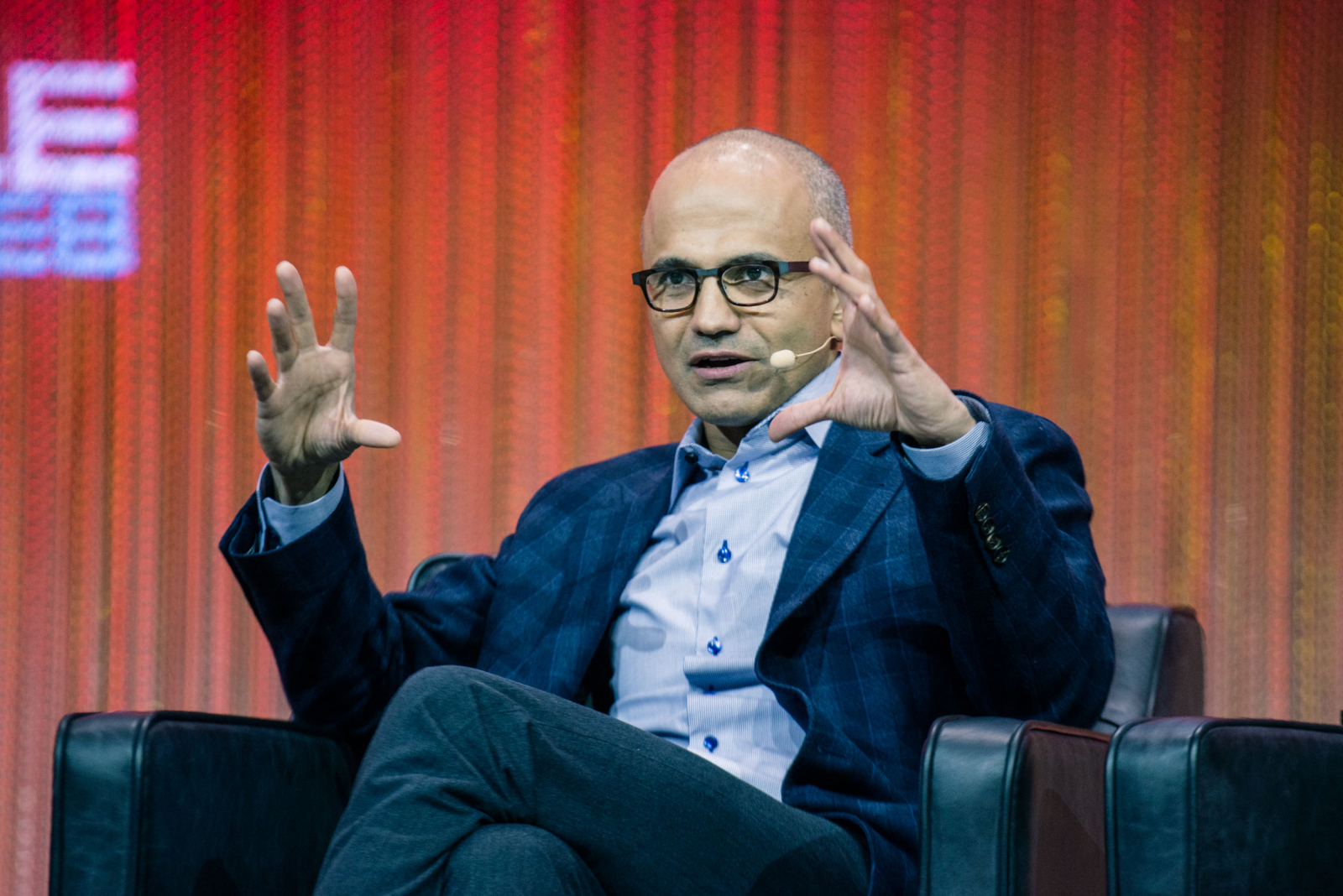
Nadella questioned Anthropic's AI guardrails while advocating greater enterprise control over models, data and AI learning, amid intensifying global competition. Microsoft CEO Satya Nadella has questioned the restrictions imposed by Anthropic's flagship Fable artificial intelligence (AI) model, arguing that excessive controls on AI responses hinder innovation and make little sense for users. His remarks, made during an internal meeting with Microsoft engineers, have reignited discussions about AI safety, enterprise control and the growing battle among leading AI companies. According to CNBC, Nadella criticised Fable's tendency to refuse certain user requests, saying, "If you use Fable, when it refuses for any random thing, it just is like, when was the last time you had a creation tool that was so editorially controlled? It doesn't make sense." His remarks arrive as competition intensifies across the AI sector. Chinese startup Moonshot AI unveiled Kimi K3, claiming it rivals top models from Anthropic and OpenAI, while Microsoft continues expanding its own in-house AI models and Copilot ecosystem. Restrictions on Fable Under the Spotlight Anthropic introduced its Fable 5 model with enhanced safeguards aimed at reducing harmful AI outputs. However, shortly after its launch, the company temporarily withdrew access to comply with US government export control directives before restoring the model with stricter safety mechanisms. According to Anthropic, the updated safeguards intentionally block a slightly higher number of harmless requests to minimise potential misuse. The company also routes some sensitive queries, particularly those involving advanced AI model creation, to older model versions. Despite those precautions, some developers have criticised Fable on social media for rejecting seemingly legitimate requests, a concern echoed by Nadella during the internal discussion. His comments are particularly notable because Anthropic remains both a strategic Microsoft partner and a major Azure cloud customer. Microsoft invested $5 billion in Anthropic last year, while the AI startup committed to spending $30 billion on Microsoft's Azure cloud infrastructure. Nadella Pushes for Enterprise Control Over AI Nadella's criticism aligns with the broader vision he outlined in a recent blog post titled The Reverse Information Paradox, where he argued that businesses risk giving away valuable institutional knowledge every time they rely on external AI models. "In consuming intelligence, you are creating intelligence. And what you create should belong to you," Nadella wrote, warning that organisations often pay for AI twice, first financially and then by exposing proprietary knowledge through prompts, feedback and workflows. He also questioned what he described as the irony of AI companies restricting customers from distilling models while simultaneously retaining the ability to learn from customer interactions. Quoting Palantir CEO Alex Karp, Nadella argued that enterprises increasingly want full control over "their compute, their models, their data stack, and their alpha," insisting organisations should "own the means of production". AI Competition Enters a New Phase Nadella's comments come as the AI industry shifts toward cost-efficient, customisable models rather than relying solely on frontier systems from the largest AI laboratories. Microsoft now offers developers access to more than 11,000 AI models through Azure AI Foundry, including models from Anthropic and OpenAI. During the meeting, Nadella also questioned the economics of AI infrastructure, saying, "It can't be that there are only two companies in the world with token capital, and everybody else is renting it. It makes no economic sense." However, Nadella's criticism signals a broader shift in enterprise AI strategy, one that prioritises openness, customer ownership of data and learning, and greater flexibility over tightly controlled proprietary systems.
xAI reportedly loses all 11 co-founders: turnover surges
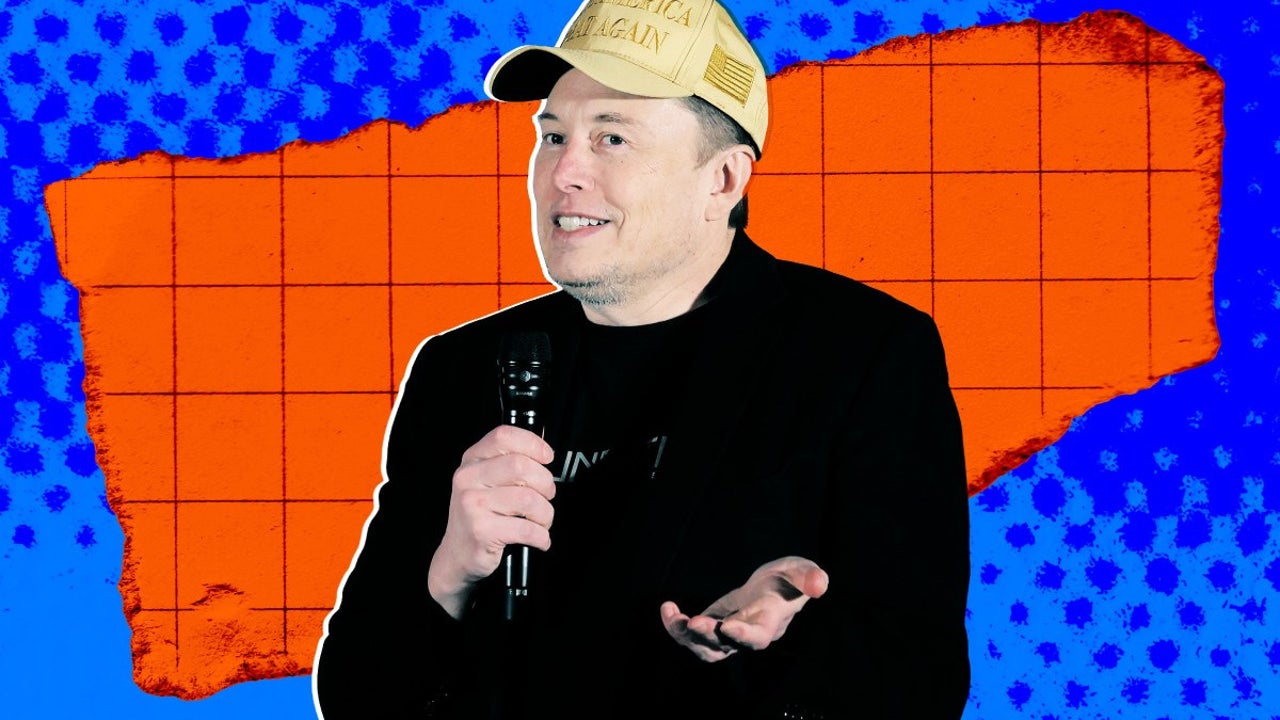
Former staff cite long hours, top-down decisions and looming layoffs xAI, the Elon Musk AI company behind Grok, is reportedly dealing with a talent problem. Reports say all 11 original co-founders are gone, and staff turnover more broadly has been described as unusually high. Former employees describe xAI as a hard place to work: long hours, decisions concentrated at the top, not much tolerance for disagreement, and constant churn. People watching the company say that could start to show up in execution, hiring, and enterprise credibility, even after reports of a $20 billion raise at roughly a $230 billion valuation and a February 2026 merger with SpaceX that reportedly put the combined company near $1.25 trillion. Reports also say xAI has measured Grok against Claude, Anthropic's competing model, especially on coding. Inside the company, there was said to be frustration that Grok lagged behind. There were also allegations that Claude outputs were used to improve xAI's coding systems, including claims that some employees kept relying on personal Anthropic accounts after official access had been cut off. xAI was also reportedly preparing layoffs of as much as 30% in March 2026, though other reports put the cuts at more than 70%. All of that landed while Grok was already taking heat over deepfake sexual images, misinformation, and a July 2026 allegation that one coding tool sent entire code repositories to the cloud without clear consent. If you follow Grok closely, keep an eye on this. The next round of xAI news will likely come down to one question: can the company behind Grok get itself steady?
SpaceX Post-Listing Collapse Threatens IPO Market's AI Euphoria
SpaceX shares slumped2.97%Thursday, on pace for an eighth drop in nine sessions, as it wiped out $903 billion from a closing high last month. SpaceX's fall from its post-listing peak to below its IPO price in just a month poured cold water on the market for newly public companies, dragging a key gauge of this year's debuts down with it. The pullback across stocks linked to themes such as artificial intelligence infrastructure and aerospace and defense -- two of the hottest sectors for newly-public companies -- depressed the weighted average return for this year's US initial public offerings to 6%, lagging the S&P 500 Index's 11% return, data compiled by Bloomberg through July 15 show. Broader market volatility, including share price declines for recent listings, is set to dampen enthusiasm for what a Blackstone Inc. executive dubbed the year of the IPO. The majority of US debuts over the past two months are trading below their offer price, data compiled by Bloomberg show. ALSO READ: SpaceX Craters Below IPO Price For First Time; Shares Down 40% From Post-Listing Peak SpaceX shares slumped 2.97% Thursday, on pace for an eighth drop in nine sessions, as it wiped out $903 billion from a closing high last month. Shares of SK Hynix Inc., which raised $26.5 billion in a record-setting debut of its own last week, dropped 12% bringing it just a few dollars above the $149 level where it sold American depositary receipts to investors. Add image caption here Activity in the near-term will "be less busy than we thought," Michael Ventura, co-head of US equity capital markets at Royal Bank of Canada, said in an interview. "You will have transactions that launch and price but outside of the headline names it'll be quieter." Blockbuster Deals Even without blockbuster deals like SpaceX and SK Hynix, the broader US IPO market hasn't shot out the lights. The weighted-average return for those 2026 US IPOs has pulled back to roughly 10% through July 15's close, modestly lagging the return for the S&P 500. The underlying market volatility over the past month, despite an S&P 500 that is virtually unchanged, has prompted investors to rotate away from once-favored themes. While the benchmark is up roughly 0.3% over that stretch, the Philadelphia Stock Exchange Semiconductor Index has slumped 11% and a momentum basket of stocks down more than 8%. "We had a ton of momentum with the AI theme that led to the deals trading well out of the gates but with markets trading how they are, the steam will come off of that a little bit, and that's to be expected," said Eddie Molloy, co-head of global equity capital markets at Morgan Stanley. Investors will likely get a taste of companies that sit away from AI with Blackstone-backed Jersey Mike's Subs Inc. and gas-station and convenience-store operator Cumberland Farms Ltd. able to launch formal marketing of their IPOs as soon as Monday. They would be the first consumer-oriented firms to go public with sizable deals since Suja Life Inc. debuted in May. The handful of notable consumer companies to IPO this year have lagged, ranging from Suja Life's 48% decline to Yesway Inc.'s 3.3% gain. Still, it's too early to rule out a second-half surge led by Anthropic PBC, which could go public as soon as October, Bloomberg News reported. Wall Street's biggest investment banks announced in the last few days that they hauled in the most revenue from advising on equity offerings in the second quarter since 2021, fueled by SpaceX's record-setting IPO and a fundraising blitz for AI infrastructure. ALSO READ: SpaceX, Apple, PayPal, Micron Dominate Wall Street Action Amid Muted Moves In Dow, S&P 500 Companies have already raised $157 billion through July 16, excluding blank-check companies and other financial vehicles, data compiled by Bloomberg show. Bankers are optimistic that deals will flow after September's Labor Day holiday. "Is there volatility in the broader market and that impacts the IPO market? Yes," said Arnaud Blanchard, co-head of global ECM at Morgan Stanley. "But overall we're not seeing a decrease in appetite for deals which we expect to come to market over the coming quarters." (This story has not been edited by NDTV staff and is auto-generated from a syndicated feed.) Essential Business Intelligence, Sharp Market Insights, Practical Personal Finance Advice, Daily Fuel, Gold and Silver Prices and Latest Stories -- On NDTV Profit.
Here's Why Anthropic Is Pushing States to Regulate AI Faster | Tech Biz Web
In the fast-moving world of artificial intelligence, Anthropic is playing a role that feels strikingly counterintuitive for a tech giant. While much of Silicon Valley has aggressively lobbied against government oversight -- fearing that red tape will strangle innovation -- Anthropic is actively inviting it. Last year, the company played a pivotal role in shaping and passing new transparency laws in California and New York. Now, they are signaling that those hard-won victories are already relics of the past. As Cesar Fernandez, Anthropic's head of U.S. state and local government relations, recently told WIRED, the rapid evolution of AI technology means that mere self-reporting is no longer enough. The company is now championing more stringent oversight, arguing that if technology is moving at breakneck speed, our policy responses must accelerate to match it. The motivation behind this stance is rooted in Anthropic's unique corporate DNA. Valued at nearly $1 trillion, the company is undeniably a titan of industry, yet it remains tethered to a founding mission that prioritizes the "safe transition" to a world with transformative AI over pure market dominance. This philosophy has pushed them to support some of the most rigorous proposed regulations in the country. From Illinois to Massachusetts, Anthropic is backing measures that go far beyond simple transparency, advocating for mandatory third-party audits of safety protocols and empowering state attorneys general to hold AI developers accountable. For a company that stands to lose the most from overly restrictive rules, this proactive embrace of regulation is a deliberate, albeit unconventional, strategy. To navigate this complex political landscape, Anthropic has recruited Cesar Fernandez, a seasoned veteran of high-stakes government relations who previously cut his teeth steering policy at companies like Uber and FanDuel. Fernandez's expertise is arriving at a critical juncture; with Congress largely deadlocked on federal AI policy, individual states have stepped into the vacuum to set their own rules. By deploying someone who understands how to win legislative battles on a state-by-state basis, Anthropic is positioning itself as the primary architect of the new AI rulebook. This gives them a significant advantage: they aren't just reacting to laws, they are effectively shaping the environment in which their own future technology will operate. However, not everyone in Silicon Valley sees this as a virtuous quest for safety. A growing chorus of critics, including high-profile tech figures like David Sacks, views Anthropic's behavior through a cynical lens known as "regulatory capture." The argument suggests that by lobbying for complex and expensive compliance requirements, Anthropic is effectively building a moat around its business. If the cost of playing in the AI field becomes high enough due to mandatory audits and strict safety mandates, smaller, hungrier startups will be forced out of the market. To these critics, Anthropic isn't trying to save the world; they are trying to cement their status as an incumbent by rigging the game against potential future competitors. Fernandez and the leadership at Anthropic vehemently reject this "nefarious" characterization. They point out that the legislation they support is carefully calibrated to apply only to "large AI model developers" -- specifically those with hundreds of millions of dollars in development costs and significant annual revenues. From their perspective, the threshold is high enough that it won't affect the average startup just getting off the ground. They argue that the focus is entirely on the industry giants, of which they are a member, acknowledging that companies with the power to influence society at scale should be subject to the intense scrutiny that their own massive scale demands. The reality, however, remains nuanced and arguably somewhat gray. While Anthropic's thresholds might shield early-stage ventures, the line between an "up-and-coming startup" and a "large developer" is blurring, especially as billions of dollars in venture capital flood the sector. Companies like Mistral and Safe Superintelligence are already operating at a scale that could eventually bring them under the umbrella of these regulations. Whether these policies are truly about protecting humanity from "catastrophic risks" or simply about controlling the supply side of the AI market remains a point of heated debate. Ultimately, Anthropic is betting that by leading the regulatory conversation, they can define the safety standards of the future -- and perhaps ensure that the only players left in the game are those willing to play by their, and the government's, sophisticated rules.

Microsoft Stock Rises 2.9% as AI Sales Push Targets OpenAI and Anthropic
This article first appeared on GuruFocus. Microsoft (NASDAQ:MSFT), the world's largest software company, is preparing its sales team to compete more aggressively with Anthropic, the artificial intelligence company behind Claude, and OpenAI, another major AI developer. During internal meetings held Tuesday and Wednesday, Microsoft executives said the company should emphasize its lower costs, stronger security controls, and broader product offering. Executive Vice President Jay Parikh said Microsoft's fiscal 2027 sales message should focus on the company providing a complete end-to-end system while competitors offer individual parts. This strategy supports Microsoft's effort to position itself as a platform where businesses can fine-tune, deploy, and monitor artificial intelligence across their operations. The competitive push comes as Microsoft faces pressure from large AI startups and rival cloud platforms, including Alphabet (NASDAQ:GOOGL), the technology company that owns Google. Investors have raised concerns that newer AI tools could replace established software products, while Microsoft's rising data-center spending has added further pressure on sentiment. The stock has fallen 20% this year, although shares gained 2.9% to $396.08 by 1:50 p.m. in New York, representing the largest intraday increase in two weeks. Executive Vice President Jacob Andreou also compared Microsoft's Copilot assistant with Anthropic's Claude for use in Microsoft's office products, saying Claude was slower, less accurate, and lacked suitable security integrations. Anthropic declined to comment. Chief Executive Officer Satya Nadella said customers are expected to focus more heavily over the next year on monitoring AI costs and using cheaper models. Nadella pointed to Unilever, a consumer goods company, which built an automated claims-processing system on Microsoft's platform that is projected to generate about $300 million in savings. The system had previously used one of the most advanced AI models available before switching to a less expensive Microsoft model. Microsoft has also replaced advanced models from OpenAI and Anthropic with its own cheaper alternative in some products, according to Bloomberg. Investors may view the strategy as an attempt to improve AI economics while strengthening Microsoft's position against fast-growing competitors.

SpaceX vs. Rocket Lab: Which Is the Better Space Stock to Buy Right Now?
Space stocks are on many investors' minds these days, but going all-in on this sector right now comes with considerable risk, as most rocket stocks are volatile. Still, two stocks that are no doubt near the top of many investors' watch lists are Space Exploration Technologies (NASDAQ: SPCX) and Rocket Lab (NASDAQ: RKLB). Here's which one looks like the better buy right now. Missed Nvidia in 2009? This Rare Signal Is Flashing Again. In 2009, a "Double Down" signal flashed for a little-known chipmaker called Nvidia. For the first time in years, that same "Total Conviction" signal is flashing for a company 1/100th the size of Nvidia. Continue " Image source: Getty Images. The case for SpaceX What was once just a rocket company has morphed into an expanding technology behemoth with its sights set on both the space and artificial intelligence (AI) markets. SpaceX has highly ambitious goals for both, including colonizing Mars, launching orbital data centers, expanding its Starlink satellite internet business, and building what some analysts are calling a "sovereign AI" platform in which the company controls the AI model, chip designs, processor manufacturing, and everything in between. That's part of the appeal of SpaceX for some investors -- the company is trying big things, like developing its Starship rocket, which it says will reduce the costs of putting payloads into orbit by at least 90%, or deploying a constellation of data center satellites. Morningstar research puts the total addressable market for its Starlink connectivity business at $129 billion. And the company is making headway on some of its goals. It has 12 million Starlink internet subscribers and generated $1.9 billion in operating profit from that business in the most recent quarter. SpaceX is also making progress with its neocloud business, which leases data center capacity (Earth-bound, for now) to tech companies including Alphabet and Anthropic. That business has already signed more than $81 billion in contracts. And then there's the potential for SpaceX to merge with Elon Musk's other large company, Tesla. That could expand SpaceX's opportunities into the autonomous vehicle and humanoid robot markets, the latter of which could be worth $3 trillion by 2050, according to a Morgan Stanley forecast. The case for Rocket Lab There's some overlap between Rocket Lab and SpaceX, though Rocket Lab isn't building AI data centers or planning to merge with a humanoid robotics company (as of now). The company is instead mostly focused on launching rockets for its customers and on expanding its satellite communications network through its recently announced purchase of Iridium Communications. Rocket Lab has agreed to pay $8 billion for Iridium, and is expected to close on the deal next year, giving it 2.5 million satellite-based mobile subscribers. The service is mainly geared toward the private and government sectors, in contrast to Starlink, which caters more to customers who want at-home internet service. Iridium is profitable, with $114 million in net earnings last year, and the deal will help Rocket Lab expand its satellite communications network to better compete with SpaceX. But Rocket Lab's primary business is sending payloads into space, and in the first quarter, the company signed 31 new deals, selling more launches than it did in all of 2025. The company also has some major launch contracts already signed, including with the U.S. government to establish the satellite system for the proposed Golden Dome missile defense system. It also has contracts for missile tracking and military communications. Verdict: Rocket Lab is the better stock to buy right now While Rocket Lab isn't profitable, its loss of $0.07 per share in Q1 was an improvement from its loss of $0.12 per share in the prior-year quarter. Revenue is also growing at a healthy clip, rising 64% to $200 million. In contrast, SpaceX's sales rose just 15% in Q1 to $4.7 billion, and the company's loss of $3.29 per share was dramatically worse than its $0.41 per share loss in the year-ago quarter. SpaceX's massive losses have been fueled by sharp increases in its capital expenditures, which reached $10 billion in Q1 2026 alone, compared to $27 billion for all of 2025. That heavy spending should give investors pause, and so should the lofty valuation of its stock. SpaceX trades at a price-to-sales (P/S) ratio of about 94 compared to Rocket Lab's P/S ratio of 66. While neither stock is cheap, SpaceX's shares trade at a much higher premium even as the company ramps up spending and its losses widen. All of which means that Rocket Lab looks like the better space stock to buy right now. Don't miss this second chance at a potentially lucrative opportunity Ever feel like you missed the boat in buying the most successful stocks? Then you'll want to hear this. On rare occasions, our expert team of analysts issues a "Double Down" stock recommendation for companies that they think are about to pop. If you're worried you've already missed your chance to invest, now is the best time to buy before it's too late. And the numbers speak for themselves: * Nvidia: if you invested $1,000 when we doubled down in 2009, you'd have $550,021!* * Apple: if you invested $1,000 when we doubled down in 2008, you'd have $60,010!* * Netflix: if you invested $1,000 when we doubled down in 2004, you'd have $396,542!* Right now, we're issuing "Double Down" alerts for three incredible companies, available when you join Stock Advisor, and there may not be another chance like this anytime soon. See the 3 stocks " *Stock Advisor returns as of July 16, 2026. Chris Neiger has no position in any of the stocks mentioned. The Motley Fool has positions in and recommends Alphabet, Rocket Lab, and Tesla. The Motley Fool has a disclosure policy. The views and opinions expressed herein are the views and opinions of the author and do not necessarily reflect those of Nasdaq, Inc.

Moonshot AI plans Kimi K3 launch to challenge Anthropic's Claude Opus 4.8
Beijing-based startup with 2.5 trillion parameter model is turning the global AI race into a pricing and performance war that crypto-adjacent investors can't ignore A Chinese AI startup most people outside tech circles have never heard of is about to pick a very public fight with one of the biggest names in American artificial intelligence. Moonshot AI, a Beijing-based company founded just over three years ago, is preparing to launch its Kimi K3 model with a stated goal of going head-to-head with Anthropic's Claude Opus 4.8. The launch window has leaked as around July 15, and the specs are genuinely eye-catching: roughly 2.5 trillion parameters, a 1-million-token context window, and a Mixture-of-Experts architecture designed for coding and agentic tasks. For context, a 1-million-token context window means the model can process the equivalent of several full-length novels in a single prompt. What Moonshot is actually building Moonshot AI was founded in March 2023 by Tsinghua University alumni, with CEO Yang Zhilin at the helm. The company reached a unicorn valuation of around $3 billion shortly after its founding. Kimi K2.6, launched in April, reportedly posted leading scores on coding benchmarks against Anthropic's Claude models. Now K3 is stepping up with a new architecture and a parameter count that dwarfs most publicly known models. The Mixture-of-Experts approach routes queries to specialized sub-networks instead of running every input through all 2.5 trillion parameters. The result is a model that can be massive in total capacity but efficient in actual compute per query. Moonshot is also leaning into open weights, meaning developers can inspect and build on the model's internals rather than treating it as a black box. This is a deliberate competitive choice against Anthropic's closed-model approach, and it matters for pricing. Open-weight models tend to drive costs down because they invite competition at the infrastructure layer. A limited-time API recharge promotion briefly appeared online before the official announcement, suggesting Moonshot is planning an aggressive marketing push to lock in early adopters and developers. Why crypto investors should care about an AI model launch There are no reported direct ties between Moonshot AI and digital assets. But the AI compute market is one of the fastest-growing demand drivers for decentralized GPU networks like Render, Akash, and io.net. Every time a new open-weight model drops with competitive performance against closed alternatives, it expands the universe of developers who can deploy AI workloads outside the walled gardens of OpenAI and Anthropic. If Kimi K3 delivers Claude Opus-level performance at a fraction of the cost, which is the explicit goal, it compresses margins for every company selling AI inference. Anthropic, OpenAI, and Google all charge premium rates for their top-tier models. A credible open-weight alternative at 2.5 trillion parameters forces those prices down, which in turn makes decentralized compute networks more cost-competitive relative to centralized cloud providers. The US-China AI competition is intensifying, and export controls on advanced chips have pushed Chinese labs to optimize architectures for efficiency rather than brute-force compute. Mixture-of-Experts is partly an answer to hardware constraints. What to watch from here The benchmark claims from K2.6 were impressive, but vendor-reported benchmarks are the AI equivalent of a company citing its own customer satisfaction survey. Independent testing of K3 after launch will be the real litmus test. For crypto market participants specifically, watch the decentralized compute sector. Every major open-weight model release has historically correlated with increased activity on GPU marketplace protocols. Tokens tied to AI inference, model hosting, and decentralized training could see renewed interest if K3 lives up to the hype.
SpaceX vs. Rocket Lab: Which Is the Better Space Stock to Buy Right Now?
Space stocks are on many investors' minds these days, but going all-in on this sector right now comes with considerable risk, as most rocket stocks are volatile. Still, two stocks that are no doubt near the top of many investors' watch lists are Space Exploration Technologies (NASDAQ: SPCX) and Rocket Lab (NASDAQ: RKLB). Here's which one looks like the better buy right now. Missed Nvidia in 2009? This Rare Signal Is Flashing Again. In 2009, a "Double Down" signal flashed for a little-known chipmaker called Nvidia. For the first time in years, that same "Total Conviction" signal is flashing for a company 1/100th the size of Nvidia. Continue " The case for SpaceX What was once just a rocket company has morphed into an expanding technology behemoth with its sights set on both the space and artificial intelligence (AI) markets. SpaceX has highly ambitious goals for both, including colonizing Mars, launching orbital data centers, expanding its Starlink satellite internet business, and building what some analysts are calling a "sovereign AI" platform in which the company controls the AI model, chip designs, processor manufacturing, and everything in between. That's part of the appeal of SpaceX for some investors -- the company is trying big things, like developing its Starship rocket, which it says will reduce the costs of putting payloads into orbit by at least 90%, or deploying a constellation of data center satellites. Morningstar research puts the total addressable market for its Starlink connectivity business at $129 billion. And the company is making headway on some of its goals. It has 12 million Starlink internet subscribers and generated $1.9 billion in operating profit from that business in the most recent quarter. SpaceX is also making progress with its neocloud business, which leases data center capacity (Earth-bound, for now) to tech companies including Alphabet and Anthropic. That business has already signed more than $81 billion in contracts. And then there's the potential for SpaceX to merge with Elon Musk's other large company, Tesla. That could expand SpaceX's opportunities into the autonomous vehicle and humanoid robot markets, the latter of which could be worth $3 trillion by 2050, according to a Morgan Stanley forecast. The case for Rocket Lab There's some overlap between Rocket Lab and SpaceX, though Rocket Lab isn't building AI data centers or planning to merge with a humanoid robotics company (as of now). The company is instead mostly focused on launching rockets for its customers and on expanding its satellite communications network through its recently announced purchase of Iridium Communications.
Microsoft Wants Sales Team to Push Its Own AI Models Instead of Rivals OpenAI, Google and Anthropic: Repo
Copilot vs. Claude Comparison Raises Eyebrows According to the report, Copilot chief Jacob Andreou compared Copilot with Anthropic's Claude, saying it was slower, less accurate and did not have strong security integrations across Microsoft's Office apps. Microsoft did not immediately respond to Benzinga's request for comment. Microsoft CEO Satya Nadella recently said companies "pay for intelligence twice" when they rely on third-party AI, warning that using outside models can expose valuable business knowledge to external vendors. Trading Metrics Microsoft has a market capitalization of $2.94 trillion, with a 52-week high of $555.45 and a 52-week low of $349.20. Over the past 12 months, the large-cap stock has dropped 21.75%. Price Action: The stock had closed on Wednesday at $395.63, up 2.78%, according to Benzinga Pro data. Benzinga's Edge Stock Rankings indicate that MSFT is experiencing medium-term consolidation along with short and long-term upward movement. Photo courtesy: Shutterstock Market News and Data brought to you by Benzinga APIs To add Benzinga News as your preferred source on Google, click here.

SpaceX stock erases all its gains and slides below IPO price in intraday trading
SpaceX stock dropped below its initial public offering price for the first time on Wednesday, signaling dwindling hype around the Elon Musk company. Shares dipped below their IPO price of $135 on Wednesday morning for the first time since listing, a humbling loss for the stock, which had skyrocketed more than 50% in its first days of trading last month. The shares regained some ground later in the day, closing at $135.27. The initial offering gave the company a market cap of $2.2 trillion, making it one of the world's most valuable public companies. For a short period, the IPO also made owner Elon Musk the world's first trillionaire, though his net worth now is about $800 billion. On July 7, the company was added to the Nasdaq-100 after a rule change allowed companies to join 15 days after their IPOs. SpaceX raised a total of $86 billion after underwriters exercised their right to sell additional shares, on top of the $75 billion initially raised. It was the largest IPO in history. SpaceX, based near Austin, Texas, is the leading launch services company in the world, with its Falcon 9 rocket accounting for the vast majority of satellites launched last year. It is also the leading satellite-based broadband provider with its Starlink service. The extraordinary interest in the IPO was driven by Musk's plans to make the company an AI leader -- including plans to launch orbiting satellite data centers powered by the sun that crunch AI data. The company's headquarters moved from Hawthorne to Texas in 2024, but it retains large operations in the South Bay city and blasts off regularly from Vandenberg Space Force Base in Santa Barbara County. Since the IPO, SpaceX has used its newfound wealth to expand in the AI space. It announced last month that it was acquiring the AI coding startup Cursor for $60 billion, with the deal expected to close in the third quarter. The San Francisco company, founded in 2022, enables engineers to instruct software in English to run coding tasks autonomously. Musk also merged his xAI artificial intelligence company into SpaceX earlier this year. The combined entity recently announced it was leasing computing power to rivals Anthropic and Google at two terrestrial data centers it has constructed. Since the IPO, investors have expressed concerns about the company's spending plans and debt load. Even with the volatility of the last month, there's still more uncertainty to come. The stock could fall further as locked-up shares held by current and former employees are released.
SpaceX vs. Rocket Lab: Which Is the Better Space Stock to Buy Right Now?
Space stocks are on many investors' minds these days, but going all-in on this sector right now comes with considerable risk, as most rocket stocks are volatile. Still, two stocks that are no doubt near the top of many investors' watch lists are Space Exploration Technologies (SPCX 0.59%) and Rocket Lab (RKLB 3.36%). Here's which one looks like the better buy right now. The case for SpaceX What was once just a rocket company has morphed into an expanding technology behemoth with its sights set on both the space and artificial intelligence (AI) markets. SpaceX has highly ambitious goals for both, including colonizing Mars, launching orbital data centers, expanding its Starlink satellite internet business, and building what some analysts are calling a "sovereign AI" platform in which the company controls the AI model, chip designs, processor manufacturing, and everything in between. That's part of the appeal of SpaceX for some investors -- the company is trying big things, like developing its Starship rocket, which it says will reduce the costs of putting payloads into orbit by at least 90%, or deploying a constellation of data center satellites. Morningstar research puts the total addressable market for its Starlink connectivity business at $129 billion. And the company is making headway on some of its goals. It has 12 million Starlink internet subscribers and generated $1.9 billion in operating profit from that business in the most recent quarter. SpaceX is also making progress with its neocloud business, which leases data center capacity (Earth-bound, for now) to tech companies including Alphabet and Anthropic. That business has already signed more than $81 billion in contracts. And then there's the potential for SpaceX to merge with Elon Musk's other large company, Tesla. That could expand SpaceX's opportunities into the autonomous vehicle and humanoid robot markets, the latter of which could be worth $3 trillion by 2050, according to a Morgan Stanley forecast. The case for Rocket Lab There's some overlap between Rocket Lab and SpaceX, though Rocket Lab isn't building AI data centers or planning to merge with a humanoid robotics company (as of now). The company is instead mostly focused on launching rockets for its customers and on expanding its satellite communications network through its recently announced purchase of Iridium Communications. Rocket Lab has agreed to pay $8 billion for Iridium, and is expected to close on the deal next year, giving it 2.5 million satellite-based mobile subscribers. The service is mainly geared toward the private and government sectors, in contrast to Starlink, which caters more to customers who want at-home internet service. Iridium is profitable, with $114 million in net earnings last year, and the deal will help Rocket Lab expand its satellite communications network to better compete with SpaceX. But Rocket Lab's primary business is sending payloads into space, and in the first quarter, the company signed 31 new deals, selling more launches than it did in all of 2025. The company also has some major launch contracts already signed, including with the U.S. government to establish the satellite system for the proposed Golden Dome missile defense system. It also has contracts for missile tracking and military communications. Verdict: Rocket Lab is the better stock to buy right now While Rocket Lab isn't profitable, its loss of $0.07 per share in Q1 was an improvement from its loss of $0.12 per share in the prior-year quarter. Revenue is also growing at a healthy clip, rising 64% to $200 million. In contrast, SpaceX's sales rose just 15% in Q1 to $4.7 billion, and the company's loss of $3.29 per share was dramatically worse than its $0.41 per share loss in the year-ago quarter. SpaceX's massive losses have been fueled by sharp increases in its capital expenditures, which reached $10 billion in Q1 2026 alone, compared to $27 billion for all of 2025. That heavy spending should give investors pause, and so should the lofty valuation of its stock. SpaceX trades at a price-to-sales (P/S) ratio of about 94 compared to Rocket Lab's P/S ratio of 66. While neither stock is cheap, SpaceX's shares trade at a much higher premium even as the company ramps up spending and its losses widen. All of which means that Rocket Lab looks like the better space stock to buy right now.

Anthropic's job listings are downright apocalyptic
Anthropic is seeking to hire nearly three dozen AI safety experts to prevent the misuse of its artificial intelligence (AI) models, such as building human-made explosives and nuclear weapons that could lead to "millions" of deaths. The leading AI platform listed 32 job openings related to AI safety, hiring analysts focused on explosives, nuclear weapons, financial scams, cybercrime and more. This job posting comes as AI companies have increasingly focused on increasing AI safety and have lobbied states for more regulatory AI guardrails. "As an Enforcement Analyst focused on Radiological & Nuclear Harms, you will play a critical role in protecting against the misuse of AI systems for radiological and nuclear harms," one job description stated. These positions pay more than $200,000 per year. Anthropic tasks safety analyst roles with stress-testing the models to ensure that bad actors could not exploit AI models to provide information that could be used for nefarious purposes. "Ensuring our models don't provide potentially harmful information is central to responsible development," an Anthropic spokesperson said. "That's why we regularly hire experts in a wide range of sensitive fields -- people who understand these harms and how AI can advance them -- to stress-test our systems and bolster our defenses before a model ever goes live," the spokesperson continued. Anthropic CEO Dario Amodei has often warned about how users could use AI for harm. In January, he cited the potential use of biological weapons as one of the more pressing safety issues. "I do not think biological attacks will necessarily be carried out the instant it becomes widely possible to do so -- in fact, I would bet against that," Amodei wrote in a January essay. He warned that there is a "serious risk" that could lead to deaths "potentially in the millions or more." David Sacks, who at the time served as President Donald Trump's AI and crypto czar, in October 2025 accused Anthropic of using a "sophisticated regulatory capture strategy based on fear-mongering." OpenAI, the maker of ChatGPT, is hiring an analyst focusing on biological and chemical risks, paying as high as $445,000 per year. Johannes Heidecke, the head of OpenAI's Safety Systems, left the company as the AI platform was reorganizing its safety and research under one leader. Anthropic in June called for the slowdown of AI development, saying that it would "give ourselves more time to deal with its immense implications" and that a "slowdown simply lets the least cautious actors catch up technologically; it could leave everyone less safe." As the AI company ramps up its hiring for safety experts, Politico reported that Anthropic continued to lobby states to impose more stringent AI guardrails. "While there are some in the industry that think of state policy as a way to create a ceiling for federal legislation, Anthropic is not just looking to support the same bill across the country in every single state," Cesar Fernandez, Anthropic's head of state and local government relations, told the outlet. In contrast to Anthropic, ChatGPT's top lobbyist, Chris Lehane, has pushed states to adopt similar AI regulatory frameworks, thus bypassing the partisan logjam in Congress. Both Anthropic and OpenAI didn't immediately respond to the Daily Caller News Foundation's request for comment. We have no tolerance for comments containing violence, racism, profanity, vulgarity, doxing, or discourteous behavior. Thank you for partnering with us to maintain fruitful conversation.

SpaceX stock erases all its gains and slides below IPO price in intraday trading
See more from the L.A. Times in Google Search. Set us as preferred SpaceX stock dropped below its initial public offering price for the first time on Wednesday, signaling dwindling hype around the Elon Musk company. Shares dipped below their IPO price of $135 on Wednesday morning for the first time since listing, a humbling loss for the stock, which had skyrocketed more than 50% in its first days of trading last month. The shares regained some ground later in the day, closing at $135.27. The initial offering gave the company a market cap of $2.2 trillion, making it one of the world's most valuable public companies. For a short period, the IPO also made owner Elon Musk the world's first trillionaire, though his net worth now is about $800 billion. On July 7, the company was added to the Nasdaq-100 after a rule change allowed companies to join 15 days after their IPOs. SpaceX raised a total of $86 billion after underwriters exercised their right to sell additional shares, on top of the $75 billion initially raised. It was the largest IPO in history. SpaceX, based near Austin, Texas, is the leading launch services company in the world, with its Falcon 9 rocket accounting for the vast majority of satellites launched last year. It is also the leading satellite-based broadband provider with its Starlink service. The extraordinary interest in the IPO was driven by Musk's plans to make the company an AI leader -- including plans to launch orbiting satellite data centers powered by the sun that crunch AI data. The company's headquarters moved from Hawthorne to Texas in 2024, but it retains large operations in the South Bay city and blasts off regularly from Vandenberg Space Force Base in Santa Barbara County. Since the IPO, SpaceX has used its newfound wealth to expand in the AI space. It announced last month that it was acquiring the AI coding startup Cursor for $60 billion, with the deal expected to close in the third quarter. The San Francisco company, founded in 2022, enables engineers to instruct software in English to run coding tasks autonomously. Musk also merged his xAI artificial intelligence company into SpaceX earlier this year. The combined entity recently announced it was leasing computing power to rivals Anthropic and Google at two terrestrial data centers it has constructed. Since the IPO, investors have expressed concerns about the company's spending plans and debt load. Even with the volatility of the last month, there's still more uncertainty to come. The stock could fall further as locked-up shares held by current and former employees are released. At least 20% of the shares will be released after second-quarter results are disclosed sometime in the coming months, with all the lockups expiring in December. But Space X isn't the only megacap stock to experience ups and downs early on. Shares of Meta, then named Facebook, fell significantly below the IPO price of $38 before recovering. After its May 2012 launch, shares plummeted by nearly 50% and hit a record low of $19.69 in August 2012. The company took more than 14 months to rebound, finally surpassing its $38 IPO price in July 2013.

SpaceX stock falls below IPO price, testing investor confidence after blockbuster debut
SpaceX's slip below its initial public offering price risks turning a marquee stock-market debut into a confidence test, potentially unsettling retail investors and complicating decisions for other companies weighing high-profile listings. Elon Musk's company, spanning rockets to AI, debuted on June 12 and soared in the ensuing days, at one point valuing the company at well above $2 trillion. Since its debut, trading has been rocky. The stock slipped below its $150 opening price in late June with concerns about lofty tech stock valuations weighing on global indexes. The stock slid below its $135 IPO price for the first time on Wednesday, touching an intraday low of $132.15 before recovering to trade down 0.6% at $135.27 -- just over a month after the record-breaking IPO made Musk the world's first trillionaire. SpaceX shares started trading as part of the Nasdaq 100 index about a week ago. A break below the IPO price is a psychological blow for SpaceX shares, said Matthew Maley, chief market strategist at Miller Tabak. "It raises the narrative that the stock is up on fluff, on speculation, on froth, and not on real fundamentals," Maley said. Investors who bought into the excitement around SpaceX's listing, "hoping to 'make a killing' will be disappointed," said Greg Halter, director of research at Carnegie Investment Counsel. He said weakness in SpaceX would put it more in line with 30 years of heavily hyped IPOs, where average and median returns over the first month are often negative. SpaceX did not respond to a request for comment. PRICE DISCOVERY NOT PANIC? A drop below the IPO price is not unusual for a newly listed company. Shares of Cerebras Systems, which went public in May, have dropped below the IPO price, and Meta, formerly known as Facebook, fell similarly after its debut. Investors often fixate on IPO prices and early trading, said Ryan Lee, senior vice president of product and strategy at financial services firm Direxion. "The reality is, (SpaceX) is still undergoing some of this price discovery process," Lee said. A fall for SpaceX below $135 reflects "normal, albeit painful" market mechanics, especially as investors, venture capitalists and employees sell shares after lockups expire, said Gabriel Shahin, CEO at Falcon Wealth Planning. "A near-term dip below the $135 threshold would not fundamentally alter our current positioning or cause us to panic-sell," he said. CAUTION OR GREEN LIGHT FOR NEXT IPOS Some investors think SpaceX's stock performance could influence the market for future public listings. OpenAI and Anthropic are eyeing the public markets. Neither company responded to a request for comment. Carnegie's Halter said companies and investment banks considering large IPOs this year are watching SpaceX closely. "No one wants an IPO to flop or have the initial price be ratcheted down," Halter said. He suspects some IPOs would be pulled rather than priced at lower valuations. But Direxion's Lee said SpaceX's capital raise could encourage some companies with large funding needs to move faster. "If I'm OpenAI or if I'm Anthropic and I'm in this true arms race to build the frontier AI model and I need capital, I'm going to try to beat the other one out the door," Lee said. RISKING RETAIL TRADERS' SKEPTICISM A drop below the IPO price could hit retail investors, who received about 20% of the allocation, hard. "Many novice investors have approached SpaceX with a 'meme stock' mentality, buying in with capital they cannot afford to lose," Shahin said, warning that losses could fuel perceptions that markets favor insiders. "The market needs to understand that post-IPO volatility is normal." SpaceX's first earnings report will be a major test for the stock. Underwriters typically support stocks in the first 30 days and may do more for SpaceX given the deal's size, the public attention and the fact other high-profile offerings are imminent, said Maria Llerena, director of financial research at Domini Impact Investments. "Loss-making companies without a clear path to profitability are typically volatile and can fall below their IPO price," said Llerena. Published on July 16, 2026

Microsoft Reshapes Cybersecurity Unit to Battle Anthropic and OpenAI | PYMNTS.com
The company is making these changes to better respond to customer demand for solutions to the threat of AI-powered hacks, and to capture some of the spending that is going to AI firms Anthropic and OpenAI, according to the report. Reached by PYMNTS, Microsoft declined to comment on the report. According to The Information's report, the overhaul is being led by Hayete Gallot, who took over the security business in February. Gallot is prioritizing AI-powered tools such as Microsoft Security Copilot, products that scan code for vulnerabilities and products that help companies monitor their own AI agents. "The entire industry is getting reimagined from the ground up," Gallot wrote in an internal Microsoft memo, per the report. "And it will reward the companies that see the shift early, make the hard choices, and execute with discipline. A few months ago, we made those choices. Now we must execute." Microsoft Chairman and CEO Satya Nadella wrote in a Feb. 4 blog post that Gallot rejoined Microsoft as executive vice president, security, and would report to him. Gallot had held senior leadership roles at the company for 15 years before moving to Google, where she served as president, customer experience for Google Cloud. "She brings an ethos that combines product building with value realization for customers, which is critical right now," Nadella said in the post. "As we shared during our quarterly earnings last week, we have great momentum in security, including progress with Security Copilot agents, strong Purview adoption, and continued customer growth, and we will build on this." It was reported Wednesday that Microsoft is intensifying its competitive strategy against OpenAI and Anthropic by positioning its services as a more secure and cost-effective end-to-end alternative for corporate clients. The PYMNTS Intelligence report "Where Payments Decisions Happen: How Issuer Data Is Powering the Next Era of Commerce" found that 42% of issuers said AI has helped them save more than $5 million from fraud attempts in recent years.
Dow Jones Top Company Headlines at 9 PM ET: United Airlines Lifts Outlook as Higher Fares Blunt Turbulent Fuel Prices | SpaceX ...
United Airlines Lifts Outlook as Higher Fares Blunt Turbulent Fuel Prices The carrier said that adjusted earnings should hit $9 to $11 a share in 2026, lifting the low-end of its previous target by $2 a share. ---- SpaceX Shares Fall Below IPO Price for the First Time The rocket maker's stock slipped below $135 as the tech-heavy Nasdaq composite dropped. ---- BHP Annual Copper Production Falls; Iron Ore Output Notches Record High BHP Group said it produced a record amount of iron ore but less copper over the past year, and forecast a further drop in copper output in the year ahead as grades fall at a giant mine in northern Chile. ---- QVC Defeats Shareholder Challenge to $5 Billion Debt-Cutting Plan A Houston bankruptcy judge approved a disputed intercompany settlement that clears the retail network to exit chapter 11. ---- J.B. Hunt Reports Higher Profit As Revenue Grows Across Most Segments The logistics company reported a profit of $181 million, with its largest business segment reporting a 22% increase in revenue and a 10% increase in volume. ---- Conagra's 'Show-Me' CEO Says Every Product Needs to Earn Its Keep John Brase, who took over the company in June, is plotting a turnaround for the food giant. ---- Mira Murati's AI Startup Releases First Model in Bid to Loosen AI Giants' Grip Thinking Machines Lab CEO Mira Murati is betting on more customizable artificial-intelligence models to chip away at the lead of frontier labs such OpenAI and Anthropic. ---- Kalshi to Offer Contracts Predicting Flight Cancellations The contracts will allow users to predict the percentages of flights canceled at an airport within a given timeframe. ---- Patrick Drahi's Altice International Accused of Debt Default Lenders holding about $9 billion in bonds claim Patrick Drahi's telecom empire stripped away collateral through intercompany deals, sources said. ---- Stripe and Private-Equity Firm Advent Offer to Buy PayPal The deal would value the fintech company at around $53 billion. ---- BlackRock Shares Rally After Assets Soar Past $15 Trillion BlackRock reported profits rose 20% from a year earlier, and shares rallied almost 7%. ---- Conagra Swings to Loss, Cuts Dividend Under New CEO The maker of Orville Redenbacher's popcorn and Slim Jim swung to a loss in the fiscal fourth quarter and cut its dividend, as its new chief executive aims to strengthen the company with a more conservative spending strategy. ---- JPMorgan, BlackRock and Goldman to Tokenize Stocks, Treasurys Trade processor DTCC is launching a trial run with Wall Street firms to convert assets into digital tokens. ---- Morgan Stanley Posts Blowout Quarter Thanks to Blockbuster IPOs, Newly Minted Millionaires The bank reported adjusted second-quarter earnings of $3.46 a share, blowing past Wall Street forecasts thanks to a surge in investment banking revenue. (END) Dow Jones Newswires July 15, 2026 21:15 ET (01:15 GMT) Copyright (c) 2026 Dow Jones & Company, Inc.

Jamie Dimon Warns Anthropic's Mythos AI Poses National Security Risks
JPMorgan Chase CEO Jamie Dimon has warned that Anthropic's advanced Mythos artificial intelligence model presents significant national security risks, highlighting growing concerns over the potential misuse of powerful AI systems. Speaking at Senator Dave McCormick's Pennsylvania Defense and Innovation Summit on Wednesday, Dimon said the U.S. government is taking the issue seriously and emphasized that access to cutting-edge AI technologies must remain tightly controlled. He compared unrestricted access to Mythos with handing out "ballistic missiles," arguing that highly capable AI models should not be freely available to individuals because of the security threats they could pose. Anthropic introduced its Mythos AI model in April to a limited group of organizations, including JPMorgan Chase. The model quickly gained attention within the financial industry for its ability to detect cybersecurity vulnerabilities, allowing companies to identify and address software weaknesses more efficiently. Financial institutions have viewed the technology as a valuable tool for strengthening cyber defenses and protecting critical infrastructure. Despite its commercial potential, Mythos has also raised concerns among U.S. policymakers. In June, the U.S. government instructed Anthropic to restrict access to its most advanced AI models, Fable 5 and Mythos 5, for foreign nationals due to national security considerations. The move reflected fears that sophisticated AI capable of discovering software vulnerabilities could be exploited by hostile governments or intelligence agencies. Those restrictions were later lifted after Anthropic implemented additional security safeguards designed to reduce the risk of misuse while maintaining access for authorized users. The debate surrounding advanced artificial intelligence continues to intensify as governments and technology companies seek to balance innovation with security. Washington has increased oversight of next-generation AI systems amid concerns that powerful models could be leveraged for cyberattacks, military intelligence, or other malicious purposes by countries such as China and Russia. Anthropic did not immediately respond to requests for comment on Dimon's remarks outside regular business hours. The company remains at the center of broader discussions over AI governance, cybersecurity, and the responsible deployment of increasingly capable artificial intelligence models.

US tightens AI policies on China amid Anthropic's call to extend lead
The United States has intensified its stance on artificial intelligence in its dealings with China, according to a report by the South China Morning Post. This development coincides with Anthropic, the world's most valuable AI startup, advocating for the U.S. to maintain its technological lead in AI. The Trump administration rolled out new restrictions in June 2026, targeting both chip exports and model weights, as part of a comprehensive framework. Anthropic's recent $65 billion funding round has positioned it ahead of OpenAI, further emphasizing its strategic significance in the AI sector. Market participants appear to be interpreting these developments as favorable for Anthropic's valuation prospects. The U.S.'s approach may indicate a supportive regulatory environment for domestic AI firms like Anthropic, potentially facilitating their growth and competitiveness on the global stage. Chinese authorities, meanwhile, are reportedly considering reciprocal measures, adding complexity to the geopolitical landscape surrounding AI advancements. Key Takeaways * The U.S. government's toughened AI policies appear consistent with supporting Anthropic's market position. * Market pricing suggests Anthropic's valuation could increase, reflecting perceived benefits from U.S. regulatory actions. * Anthropic's strategic calls for a pause in AI development align with its goal to maintain a competitive edge. What to Watch Observers will be monitoring the response from Chinese authorities, which could influence global AI market dynamics. The progression of U.S. policy and its impact on AI firms' growth strategies remains a critical area of focus. Additionally, any further announcements from Anthropic regarding partnerships or funding could shift market sentiment and valuation forecasts. Get live prediction-market analysis, powered by Vera. Sign up for Vera.