News & Updates
The latest news and updates from companies in the WLTH portfolio.
JPMorgan CEO Dimon says Anthropic's Mythos AI risks are a 'real issue'
Mr. James Dimon is a Chairman & Chief Executive Officer at JPMorgan Chase Bank, NA and JPMorgan Chase & Co. and a Member at The Business Council. He became Chairman of the Board on December 31, 2006, and has been Chief Executive Officer and President since December 31, 2005. Mr. Dimon is on the Board of Directors of Harvard Business School and Catalyst; Chairman of the Business Roundtable; and a member of The Business Council. He is also on the Board of Trustees of New York University School of Medicine. He does not serve on the board of any publicly traded company other than JPMorgan Chase. Mr. Dimon was President and Chief Operating Officer following JPMorgan Chase's merger with Bank One Corporation in July 2004. At Bank One, he was Chairman and Chief Executive Officer from March 2000 to July 2004. Before joining Bank One, Mr. Dimon held a wide range of executive roles at Citigroup Inc., the Travelers Group, Commercial Credit Company and American Express Company. He graduated from Tufts University and received an M.B.A. from Harvard Business School.

Anthropic, Blackstone bet the next trillion-dollar AI business is implementation, not models
AI models are becoming ever more capable, but exactly what enterprise adoption will look like remains a big question. In a bid to shape that future, labs like Anthropic and OpenAI have spun up separate businesses dedicated to deploying AI engineers to their customers' offices -- a bet that assisting businesses in figuring out how to use their AI models is the next trillion-dollar category. One of those businesses now has a name: Ode with Anthropic is the $1.5-billion, AI implementation company that the AI lab launched in May as part of a joint venture with Blackstone, Hellman & Friedman, Goldman Sachs and others. The move follows OpenAI's own take on this, The Deployment Company, underscoring a growing acknowledgement among frontier AI labs that winning enterprise customers requires far more than shipping better models. Ode was originally conceived by Blackstone, which noticed a gap when it had roped in large consulting firms and small AI services boutiques to implement AI across its portfolio companies. One of those boutiques, AI engineering services startup Fractional AI, apparently stood out, and the joint venture acquired the startup shortly after it was announced. (Fractional ended an 11-month partnership with OpenAI when it was acquired.) Fractional has become the foundation of what is now Ode -- a kind of "scaled boutique" AI services firm. And its leaders have ambitious goals. "It's pretty easy to imagine this as a trillion-dollar company someday if we execute well," Chris Taylor, CEO of Ode and co-founder of Fractional, told TechCrunch in an exclusive interview. "The key challenge of the business is how do you go through that phase of hyper growth without losing the emphasis on quality?" Ode currently employs 100 engineers, and works closely with Anthropic's applied AI team to identify where the tech can have an impact on different businesses, and create systems tailored to each organization's operations. Anthropic's internal team will continue to focus on strategic, mission-aligned deployments, a spokesperson told TechCrunch. The private equity firms backing Ode will funnel their own portfolio companies to the joint venture as potential customers, though Ode will not limit sales of its services to those companies. For Ode, an ideal customer is one whose CEO buys into the promise, according to Taylor. "A lot of the work that we're doing is the top one or two priority for the CEO of the company," Taylor said. "It's the most important product feature that the company is going to build over the course of the next two years, or it's reworking the most important business process they have."
Anthropic, Blackstone bet the next trillion-dollar AI business is implementation, not models
AI models are becoming ever more capable, but exactly what enterprise adoption will look like remains a big question. In a bid to shape that future, labs like Anthropic and OpenAI have spun up separate businesses dedicated to deploying AI engineers to their customers' offices -- a bet that assisting businesses in figuring out how to use their AI models is the next trillion-dollar category. One of those businesses now has a name: Ode with Anthropic is the $1.5-billion, AI implementation company that the AI lab launched in May as part of a joint venture with Blackstone, Hellman & Friedman, Goldman Sachs and others. The move follows OpenAI's own take on this, The Deployment Company, underscoring a growing acknowledgement among frontier AI labs that winning enterprise customers requires far more than shipping better models. Ode was originally conceived by Blackstone, which noticed a gap when it had roped in large consulting firms and small AI services boutiques to implement AI across its portfolio companies. One of those boutiques, AI engineering services startup Fractional AI, apparently stood out, and the joint venture acquired the startup shortly after it was announced. (Fractional ended an 11-month partnership with OpenAI when it was acquired.) Fractional has become the foundation of what is now Ode -- a kind of "scaled boutique" AI services firm. And its leaders have ambitious goals. "It's pretty easy to imagine this as a trillion-dollar company someday if we execute well," Chris Taylor, CEO of Ode and co-founder of Fractional, told TechCrunch in an exclusive interview. "The key challenge of the business is how do you go t ...

Anthropic, Blackstone, and Hellman & Friedman Introduce Ode with Anthropic, an Enterprise AI Services Firm
Today, Anthropic, Blackstone, and Hellman & Friedman introduced Ode with Anthropic ("Ode"), the AI services firm announced earlier this year, now launching under its official name and brand. Ode is a standalone company that combines Anthropic's frontier AI models, a team of experienced AI engineers and operators, and the backing of a consortium of leading investors. Alongside the founding partners, the investor consortium includes Goldman Sachs, General Atlantic, Leonard Green & Partners, Apollo Global Management, GIC, and Sequoia Capital. Ode is built on the foundation of Fractional AI, the applied AI services firm acquired in May 2026, whose team, alongside engineers from Anthropic, forms its operational core. The company is led by Chris Taylor as CEO and Eddie Siegel as CTO, who co-founded Fractional AI and held those same roles there.
Anthropic, Blackstone, and Hellman & Friedman Introduce Ode with Anthropic, an Enterprise AI Services Firm
All information and data in this article is solely for informational purposes. For more information please view the Barchart Disclosure Policy here Today, Anthropic, Blackstone, and Hellman & Friedman introduced Ode with Anthropic ("Ode"), the AI services firm announced earlier this year, now launching under its official name and brand. Ode is a standalone company that combines Anthropic's frontier AI models, a team of experienced AI engineers and operators, and the backing of a consortium of leading investors. Alongside the founding partners, the investor consortium includes Goldman Sachs, General Atlantic, Leonard Green & Partners, Apollo Global Management, GIC, and Sequoia Capital. Ode is built on the foundation of Fractional AI, the applied AI services firm acquired in May 2026, whose team, alongside engineers from Anthropic, forms its operational core. The company is led by Chris Taylor as CEO and Eddie Siegel as CTO, who co-founded Fractional AI and held those same roles there. "Companies everywhere see the potential for what AI can do for their businesses, the challenge is making it real," said Ode CEO Chris Taylor. "Our teams partner closely with CEOs and across organizations to define and execute the highest priority AI initiatives. By pairing the deep subject matter expertise of our clients with our top applied AI talent, we're able to drive transformation level impact. There's enormous demand for Anthropic's technology, and we're scaling quickly to help clients adopt AI with a focus on outcomes." "As mid-size companies move from experimenting with AI to building it into their operations, they need partners with real implementation depth and a clear understanding of how their businesses actually work," said Garvan Doyle, Anthropic's Head of Forward Deployed Engineering, Americas. "Ode was built to be that partner, adding to Anthropic's growing ecosystem of partners that help enterprises put Claude to work." The team behind Ode brings years of experience helping organizations across financial services, healthcare, retail, manufacturing, software, and other industries put AI to work. Many employees are former technical founders, and the majority hold advanced degrees with a decade or more of hands-on experience in engineering and AI. Until now, this caliber of frontier AI engineering talent has been effectively inaccessible for most organizations, and Ode was built to change that. As Ode scales to meet growing enterprise demand, the company is actively hiring engineers, product leaders, and operators who want to build high-impact AI systems in real-world settings. About Ode with Anthropic Ode with Anthropic is an AI services company launched in 2026 through a partnership between Anthropic, Blackstone, Hellman & Friedman, and a consortium of global investors including Goldman Sachs, General Atlantic, Leonard Green & Partners, Apollo Global Management, GIC, and Sequoia Capital. Ode combines Anthropic's frontier AI models with a team of experienced AI engineers to help organizations identify where AI can have the greatest impact, and then build the systems that deliver it. For more information, visit ode.com About Anthropic Anthropic is a frontier AI company whose mission is to steer the trajectory of AI to advance human progress. We are best known for building Claude, the intelligence platform trusted by millions of people and businesses worldwide. Anthropic is a public benefit corporation -- a for-profit committed to operating in service of social and public good -- and controlled by a Long-Term Benefit Trust, a group of independent experts in AI safety, national security, public policy, and social enterprise. About Blackstone Blackstone is the world's largest alternative asset manager. Blackstone seeks to deliver compelling returns for institutional and individual investors by strengthening the companies in which the firm invests. Blackstone's over $1.3 trillion in assets under management include global investment strategies focused on real estate, private equity, credit, infrastructure, life sciences, growth equity, secondaries and hedge funds. Further information is available at www.blackstone.com . Follow @blackstone on LinkedIn , X (Twitter) , and Instagram . About Hellman & Friedman Hellman & Friedman is a preeminent global private equity firm with a distinctive investment approach focused on a limited number of large-scale equity investments in high-quality growth businesses. H&F seeks to partner with world-class management teams where its deep sector expertise, long-term orientation, and collaborative partnership approach enable companies to flourish. H&F targets outstanding businesses in select sectors, including technology, financial services, healthcare, consumer services & retail, and information, content & business services. H&F was founded in 1984 and has over $115 billion in assets under management as of December 31, 2025. Learn more about H&F's defining investment philosophy and approach to sustainable outcomes at www.hf.com . View source version on businesswire.com: https://www.businesswire.com/news/home/20260715205134/en/

IBM stock plunges 11% as Anthropic's Claude Code threatens its COBOL cash cow
The AI startup's new tool automates legacy code modernization, rattling IBM investors and dragging Bitcoin down 5% in the process IBM just got a brutal reminder that being a pioneer in AI doesn't guarantee you won't get disrupted by it. Anthropic's newly unveiled Claude Code tool, designed to automate COBOL modernization, sent IBM shares tumbling 11.2% on February 23 and triggered a cascade across equities and crypto markets alike. Bitcoin dropped 5% to $64,000 on the same day. The Dow, S&P 500, and Nasdaq all fell more than 1%. What Claude Code actually does, and why it matters Here's the thing about COBOL: it's a programming language from 1959 that somehow still runs the world. It underpins roughly 95% of US ATM transactions. Hundreds of billions of lines of COBOL production code execute daily across finance, government, and insurance systems. Modernizing that code, translating it into newer languages or restructuring it for cloud environments, has been one of the most lucrative consulting gigs in enterprise tech for decades. IBM has been the dominant player in that space, charging premium rates for teams of specialists who understand both the ancient code and the modern systems it needs to talk to. Anthropic's Claude Code aims to automate the exploration and analysis phases of that modernization process. In English: the tool can read through massive COBOL codebases, understand what they do, and map out how to update them, work that previously required expensive human consultants billing by the hour. IBM's AI identity crisis IBM has been synonymous with artificial intelligence since long before the current AI boom. Watson, its flagship AI platform, was beating humans on Jeopardy back in 2011. The company has been pursuing AI-blockchain integration strategies since at least 2016, restructuring its organization and launching dedicated Watson centers to position itself at the intersection of enterprise AI and emerging tech. But there's a meaningful difference between building AI tools and being disrupted by them. IBM's AI strategy has historically been about augmenting its consulting business, using machine learning to make its own teams more efficient while preserving the high-margin, people-intensive model that generates revenue. Claude Code represents a fundamentally different approach: replacing parts of that human workflow entirely. The market's reaction suggests investors see this distinction clearly. An 11.2% single-day decline isn't a gentle repricing. It's a signal that the market believes Anthropic's tool poses a genuine structural threat to one of IBM's most reliable revenue streams. The crypto spillover effect Bitcoin's 5% decline to $64,000 on the same day might seem unrelated at first glance. But the correlation makes more sense when you look at how institutional money moves during periods of tech sector uncertainty. When a major blue-chip stock like IBM gets hammered on AI disruption fears, it raises broader questions about which other established business models might be next, triggering risk-off behavior across portfolios. During previous episodes of tech equity volatility, digital assets have frequently moved in tandem with equities rather than serving as the uncorrelated hedge that crypto maximalists have long promised. This episode reinforced that dynamic.

Elon Musk Reverses Course and Calls Anthropic the AI Leader - Memeburn
For South African businesses, the deal shows how access to AI tools increasingly depends on a small group of foreign infrastructure providers. Elon Musk has made a sharp U-turn on Anthropic. After months of attacking the Claude developer as "woke," hypocritical and unlikely to win the AI race, Musk now says Anthropic has become the industry's clear leader. He also praised its newest models and promised that he wouldn't use his control over computing infrastructure to seriously harm the company. The warmer language matters because Anthropic isn't just one of Musk's competitors anymore. It's also a major customer. Musk admits he got Anthropic wrong Musk acknowledged the reversal in a post on X, writing that he was "clearly wrong about Anthropic." "They are obviously currently the leader in AI," he added, while praising Anthropic's Mythos and Fable models. The comments represent a dramatic change from his earlier public attacks on the company, as detailed in Business Insider's report on Musk's Anthropic reversal. Earlier in 2026, Musk accused Anthropic of stealing training data, promoting political bias and acting hypocritically. He also dismissed the company's chances of beating rivals such as OpenAI, Google and his own AI operation. Now, he's describing the company's technology as the best available. That doesn't mean the rivalry has disappeared. Musk continues to promote Grok as a serious challenger, especially after the release of Grok 4.5. You can read our breakdown of Elon Musk's Grok 4.5 "Opus-class" claims for a closer look at how his model compares with Anthropic's systems. The compute deal changed the relationship The friendlier tone emerged after Anthropic signed a major computing agreement with SpaceX. According to Anthropic's official announcement of the SpaceX compute partnership, the company gained access to more than 300 megawatts of capacity, representing over 220,000 Nvidia GPUs at the Colossus 1 data centre. Anthropic said the added infrastructure would increase usage limits for Claude subscribers and API customers. Reported contract documents indicate that Anthropic agreed to pay around $1.25 billion per month for capacity through May 2029. However, termination clauses may allow either party to leave the agreement with relatively short notice. That creates an unusual relationship. Musk responded to suggestions that he could simply cut Anthropic off. He said he wouldn't end access in a way that seriously damaged the company, even though Claude competes with Grok. Praise doesn't remove the business risk Musk's assurance may calm some concerns, but Anthropic still faces a clear dependency. A frontier AI company needs more than clever researchers and strong software. It needs enormous data centres, reliable electricity, advanced chips and enough cooling equipment to run those chips around the clock. Only a small number of companies can provide that infrastructure at the required scale. We think the real story here isn't Musk's change of heart. It's the growing power held by companies that control computing capacity. Musk can compete against Anthropic through Grok while earning billions from Anthropic's demand for GPUs. In other words, he can benefit whether customers choose his AI model or one built by a rival. That helps explain why public criticism may now matter less than commercial cooperation. What it means for South African AI users For South African companies, the dispute may feel distant. But the infrastructure behind Claude, Grok and other major models directly affects local pricing, reliability and availability. A startup in Cape Town or Johannesburg might build its customer service, coding or research workflow around Claude. Yet the servers powering that service sit overseas and may depend on commercial agreements between a handful of American technology companies. If those agreements change, local customers have limited influence. This matters because African businesses often access AI as imported infrastructure, rather than technology they control themselves. The Anthropic-SpaceX relationship offers another reminder that model access can depend on corporate negotiations taking place thousands of kilometres away. It also strengthens the argument for more African investment in data centres, energy capacity and locally hosted AI systems. South Africa has a growing cloud and data-centre sector, but training a frontier model still requires infrastructure on a completely different scale. Musk's endorsement could shift again Musk's latest position combines praise with competition. He has acknowledged Anthropic's technical lead while continuing to argue that his younger AI business could catch up. The recent release of Grok 4.5 shows that Musk hasn't abandoned the race; he's simply recognising the strongest current opponent. What we're watching now is whether the cooperation survives the next major model launch. Anthropic needs stable computing capacity. Musk wants Grok to win. Those goals can coexist while the infrastructure deal remains profitable, but a closer contest could test that arrangement. So, is Musk genuinely reconsidering Anthropic, or has a billion-dollar customer simply become harder to criticise? FAQs Why did Elon Musk change his opinion about Anthropic? Musk admitted that he had misjudged Anthropic's progress and now considers it a leader in artificial intelligence. The company's newer Claude models have performed strongly in coding, reasoning and business tasks. Anthropic's commercial relationship with Musk-controlled infrastructure may also have softened the rivalry. Does Anthropic compete with Elon Musk's xAI? Yes, Anthropic and xAI are direct competitors in the advanced AI model market. Anthropic develops Claude, while xAI offers Grok across X and other Musk-owned platforms. However, the companies can still cooperate on computing infrastructure while competing for users. Why does Anthropic need so much computing power? Training and operating advanced AI models requires thousands of powerful chips, large data centres and substantial electricity. More computing capacity allows Anthropic to improve Claude and support more users without severe usage limits. It also helps the company compete with OpenAI, Google and xAI.

Cerebras CEO Andrew Feldman Says Elon Musk Found a 'Pretty Good Idea' in Leasing SpaceXAI's Unused Grok Capacity to Anthropic
Benzinga and Yahoo Finance LLC may earn commission or revenue on some items through the links below. Cerebras Systems Inc. CEO Andrew Feldman says SpaceXAI, formerly xAI, moved into rented AI computing because its processors were not busy enough, as Grok drew less usage than expected. Feldman Blames Grok's Weak Early Adoption Speaking with Molly O'Shea on the Sourcery podcast on Monday, Feldman explained that Musk's company pivoted to an operator that rents out AI infrastructure because its Grok model struggled with early enterprise market adoption, leaving billions of dollars in hardware sitting idle. "You have to ask why they had available capacity," Feldman said. "They had available capacity because the Grok model wasn't used very much." Cerebras CEO @andrewdfeldman explains why @elonmusk and SpaceXAI made a deal to lease GPUs to Anthropic: "You have to ask why they had available capacity... They had available capacity because the Grok model wasn't used very much." "They had these GPUs sitting around, and... https://t.co/1IHsE98NR3 pic.twitter.com/ssomhhLJJl -- sourcery (@sourceryy) July 13, 2026 Trending: Avoid the #1 Investing Mistake: How Your 'Safe' Holdings Could Be Costing You Big Time Feldman said SpaceXAI could not afford to leave equipment idle. "They had these GPUs sitting around, and that's a bad idea," he said. He pointed to IPO-bound Anthropic's agreement to use SpaceX's Colossus 1 data center in Memphis, Tennessee. Anthropic said the site provides more than 300 megawatts through over 220,000 Nvidia GPUs, allowing it to double Claude Code limits, remove peak-hour reductions and raise API ceilings. "They leased a whole block of them to Anthropic, and looked up and said, 'Whoa, that's a pretty good idea,'" Feldman said. "We had all these GPUs. Our model wasn't a success, but we can have a great business by stepping into what is a constrained market." Anthropic Deal Monetizes Idle GPU Capacity In May, Anthropic agreed to pay $1.25 billion per month for Colossus and Colossus II capacity through May 2029. Both sides can terminate with 90 days' notice, and Musk described the arrangement as a six-month lease, leaving its long-term value uncertain. See Also: Skip the Regrets: The Essential Retirement Tips Experts Wish Everyone Knew Earlier. Colossus 1 supported Grok's development, but Reuters described its capacity as unused prior to the Anthropic agreement. SpaceXAI said Grok 4.5 trained across tens of thousands of Nvidia GB300 processors.
Anthropic official says stopping AI usage is 'the wrong' response to AI cost concerns
* Anthropic officials are cautioning companies against knee-jerk reactions to rein in AI use. * Angela Jiang, head of product for the Claude Platform, said some customers are making those sorts of moves. * The initial tokenmaxxing hype has morphed into a more ROI-focused moment. Top Anthropic officials are cautioning against companies cutting back on their AI use as costs increase. "Something that's really top of mind for us that we kind of try to spend some time with users on is what you don't want to do is stop AI usage. That's kind of the wrong move," Angela Jiang, head of product for the Claude Platform, recently told Sequoia Capital's "Training Data" podcast. "And we do actually see some of our customers do that." Katelyn Lesse, head of platform engineering at Anthropic, said the focus on costs was part of "a normal natural cycle for companies" as they figure out the best way to deploy AI. "The thing that gets dangerous is when you're kind of just like, here's a cap and you're stuck within your cap," said Lesse, who joined Jiang for the interview. Jiang said that Anthropic often finds that AI spending has "erupted" in companies where employees procure Anthropic's AI models themselves through "some kind of shadow IT." Instead of curtailing usage, she said companies can find ways to use AI more efficiently. "What we try to kind of encourage our customers is like, you don't want to stop the innovation," she said. "If you are getting returns on top of this, you are shipping faster than ever before, you can run more operationally efficient -- then those are gains." Lesse said it's about "encouraging innovation" while understanding the different ways to get the desired result. "One is like you take Opus and you run it all night and you do something crazy," she said. "And another is maybe to get a little bit smarter with the strategies that you put together in order to create that same outcome within a lower cost. And I think that's the next layer of thinking that everyone's going to start to do." AI companies are facing an increasingly skeptical Corporate America that sees rising AI bills without what some executives have said is an adequate ROI to justify the spending. In response, AI companies like Anthropic have emphasized the cost efficiency of their models and services, which can better tailor AI to specific enterprise needs. Cost concerns could weigh on the broader AI market as companies like Anthropic approach highly anticipated IPOs. A new kind of router. Companies like Vercel are seizing this cost-conscious moment by offering customers a way to route their AI usage to the best model suited for the task. Analysts have said that routing requests will remain in high demand so long as AI token costs remain high.
SpaceX's slide risks turning blockbuster IPO into confidence test
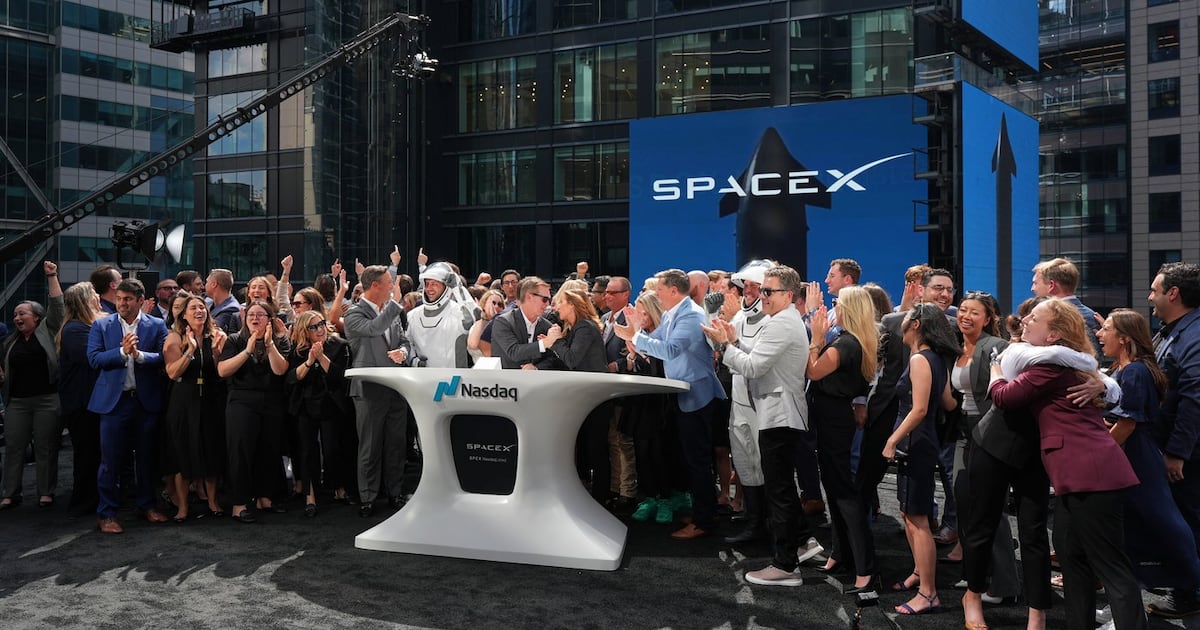
NEW YORK -- SpaceX's slip close to its initial public offering price risks turning a marquee stock-market debut into a confidence test, potentially unsettling retail investors and complicating decisions for other companies weighing high-profile listings. Elon Musk's company, spanning rockets to AI, debuted on June 12 and soared in the ensuing days, at one point valuing the company at well above US$2 trillion. Since then, trading has been rocky. The stock has slipped below its $150 opening price, but remained above the $135 offer price, with concerns about lofty tech stock valuations continuing to weigh on global indexes. SpaceX shares are at risk of falling below that level. They ended on Tuesday down 2.2 per cent at $136.08, their lowest closing level since the IPO, a week after they started trading as part of the Nasdaq 100 index. The stock dipped as low as $135.52. A break below the IPO price would be a psychological blow for SpaceX shares, said Matthew Maley, chief market strategist at Miller Tabak. "It raises the narrative that the stock is up on fluff, on speculation, on froth, and not on real fundamentals," Maley said. Investors who bought into the excitement around SpaceX's listing, "hoping to 'make a killing' will be disappointed," said Greg Halter, director of research at Carnegie Investment Counsel. He said weakness in SpaceX would put it more in line with 30 years of heavily hyped IPOs, where average and median returns over the first month are often negative. SpaceX did not immediately respond to a request for comment. Price discovery not panic? A drop below the IPO price would not be unusual for a newly listed company. Shares of Cerebras Systems, which went public in May, have dropped below the IPO price, and Meta, formerly known as Facebook, fell similarly after its debut. Investors often fixate on IPO prices and early trading, said Ryan Lee, senior vice president of product and strategy at financial services firm Direxion. "The reality is, (SpaceX) is still undergoing some of this price discovery process," Lee said. A fall for SpaceX below $135 would reflect "normal, albeit painful" market mechanics, especially as investors, venture capitalists and employees sell shares after lockups expire, said Gabriel Shahin, CEO at Falcon Wealth Planning. "A near-term dip below the $135 threshold would not fundamentally alter our current positioning or cause us to panic-sell," he said. Caution or green light for next IPOs? Some investors think SpaceX's stock performance could influence the market for future public listings. OpenAI and Anthropic are eyeing the public markets. Neither company responded to a request for comment. Carnegie's Halter said companies and investment banks considering large IPOs this year are watching SpaceX closely. "No one wants an IPO to flop or have the initial price be ratcheted down," Halter said. He suspects some IPOs would be pulled rather than priced at lower valuations. But Direxion's Lee said SpaceX's capital raise could encourage some companies with large funding needs to move faster. "If I'm OpenAI or if I'm Anthropic and I'm in this true arms race to build the frontier AI model and I need capital, I'm going to try to beat the other one out the door," Lee said. Risking retail traders' skepticism A drop below the IPO price could hit retail investors, who received about 20 per cent of the allocation, hard. "Many novice investors have approached SpaceX with a 'meme stock' mentality, buying in with capital they cannot afford to lose," Shahin said, warning that losses could fuel perceptions that markets favor insiders. "The market needs to understand that post-IPO volatility is normal." SpaceX's first earnings report will be a major test for the stock. Underwriters typically support stocks in the first 30 days and may do more for SpaceX given the deal's size, the public attention and the fact other high-profile offerings are imminent, said Maria Llerena, director of financial research at Domini Impact Investments. "Loss-making companies without a clear path to profitability are typically volatile and can fall below their IPO price," said Llerena.
Inside Anthropic's state-by-state plan to ratchet up AI rules
Artificial intelligence giant Anthropic is pursuing a strategy of one-upmanship that encourages states to impose increasingly tougher AI guardrails, rather than align around a single set of regulations. The approach stands in stark contrast to the one favored by the company's archrival, OpenAI, which has pushed state lawmakers toward common ground on regulating the breakthrough technology. "While there are some in the industry that think of state policy as a way to create a ceiling for federal legislation, Anthropic is not just looking to support the same bill across the country in every single state," Cesar Fernandez, the company's head of U.S. state and local government relations, said in an interview with POLITICO -- which, like Business Insider, is part of the Axel Springer Global Reporters Network -- on Tuesday. "We're looking for legislation that meaningfully raises the bar on safety for the most capable AI systems." Fernandez's comments came in response to questions from POLITICO about OpenAI's ongoing campaign to shape states' AI regulations. The ChatGPT maker's top lobbyist, Chris Lehane, has coined the term "reverse federalism" to describe its attempts to bypass a paralyzed Congress and build a national AI framework by mirroring bills state-by-state. The veiled jab at OpenAI is on-brand for Anthropic, whose executives left OpenAI in 2020 over concerns the company wasn't prioritizing safety. Anthropic has consistently pushed for stronger AI safety rules at both the federal and state level -- an effort that some critics, particularly those close to the Trump administration and in venture capital, frame as an attempt to hamstring regulators and lock out competitors. In a statement, OpenAI spokesperson Liz Bourgeois defended its approach, saying "reverse federalism, where effective state safeguards shape national standards, helps regulators enforce the law, gives the public clearer protections, and allows developers to focus resources on safety rather than conflicting requirements." The split between OpenAI and Anthropic's approach to statehouses comes at a critical time for AI regulation. With Congress reluctant to act and the White House flip-flopping between a light touch and a heavy hand, the AI industry is increasingly looking to states for regulatory clarity. Whether state legislators ultimately coalesce around a single AI safety framework or work to outdo each other over time will have a massive impact on the final shape of AI rules in the U.S. Similar to Lehane, Fernandez said he wants a federal framework, but that a government response to the risks posed by advanced AI models "can't wait for action in Washington." The Anthropic lobbyist also set his company apart by touting its early inroads into state policy debates. Anthropic was the only leading AI lab to endorse California's 2025 law to regulate advanced AI models, the first such law in the country. OpenAI didn't take a position on the California proposal ahead of its passage. But it has since turned to the law, which aims to foster greater transparency into companies' safety plans, as an example for other states to replicate. Anthropic, on the other hand, saw the California law as a springboard to ratchet up its efforts on AI safety. Fernandez said the rapid development of increasingly powerful AI models was the main factor behind his company's endorsement of more ambitious bills -- in New York, Illinois and now Massachusetts -- and its move to weigh in earlier in the legislative process. "Each one of those bills was stronger than the previous bill, and the bills all moved real safety obligations forward," Fernandez said. "Transparency and self-reporting, we don't believe are sufficient anymore." He pointed to Anthropic's powerful Claude Mythos model, which the company found to be capable of exploiting security flaws in every major computer operating system during its testing. The cybersecurity concerns raised by Mythos (and its public-facing version, known as Fable) sparked panic inside the Trump administration, which slapped export controls on the technology until Anthropic and the government could address alleged vulnerabilities. Late last year, OpenAI lobbyists successfully pressed New York Gov. Kathy Hochul to amend her state's AI safety bill to more closely resemble California's rules. But to the surprise of some safety advocates, it joined Anthropic in backing an Illinois measure seen as stricter than those in New York and California. That proposal, signed into law this month by Gov. JB Pritzker, requires leading AI companies to submit to annual independent third-party audits of their safety plans -- a first-of-its-kind mandate. Anthropic is pushing the bar further. In late June, it endorsed regulations under development in Massachusetts for an economic development bond bill that Anthropic calls the nation's strongest state AI safety proposal. The language it supported included a requirement for leading AI companies to hire independent evaluators to assess the potential for catastrophic risks such as the technology assisting in the development of bioweapons, as well as a provision empowering the state's attorney general to enforce that mandate. Bourgeois, the OpenAI spokesperson, said the company is still reviewing the Massachusetts proposal, but added OpenAI supports the state legislature's focus on AI safeguards. The AI giants have also clashed on the campaign trail. Each is associated with dueling super PAC networks that so far have sunk tens of millions of dollars into political campaigns across the country. And in June, Anthropic started cutting checks directly to California legislators. "We back candidates for election and re-election when their point of view of AI safety regulation is aligned with our mission to make sure that the transition to a world with powerful AI does well for people in this country and throughout the world," Fernandez said. "We're very much supporting candidates where there's ideological alignment." Fernandez said the company isn't coordinating with employees who also have made contributions to political candidates in California and elsewhere. "We don't direct our employees to make contributions, but they work at Anthropic because they're concerned about the future of AI and where this is headed if there's not proper safety policy that's enacted by governments," said Fernandez. "I would assume that that drives them to engage in the political process." The Axel Springer Global Reporters Network harnesses the resources of the company's newsrooms to publish ambitious scoops, investigations, interviews, opinion pieces and analysis. It allows journalists -- including those from POLITICO, Business Insider, WELT, BILD, Onet and Fakt -- to collaborate on major stories for an international audience of hundreds of millions across platforms: online, print, TV and audio.
Canada regulator warns major banks on Anthropic AI cyber risks - report
Canada's federal banking watchdog alerted the country's financial institutions on risks tied to Anthropic's Claude Mythos and other advanced AI models, reported Reuters. According to the regulator, the technology could increase cyber threats and reduce the time available to detect and patch vulnerabilities. The Office of the Superintendent of Financial Institutions (OSFI) sent the message to chief technology officers, chief information security officers and chief risk officers across the financial sector, including large banks and insurers, according to documents Reuters obtained through an access-to-information request. Authorities in several jurisdictions are examining cybersecurity concerns linked to Anthropic's frontier AI model Mythos. The model has been described as highly capable of identifying and exploiting cybersecurity vulnerabilities, creating challenges for banks and their older technology systems. "Advanced artificial intelligence models, such as Anthropic Claude Mythos, significantly compress the timeframe for effective risk mitigation," OSFI said in an email. "Accordingly, this bulletin is grounded in our existing guidance and outlines sound practices that institutions can adopt to enhance the speed and effectiveness of risk identification, mitigation and response." Recognition of the risks associated with Mythos by OSFI may lead Canadian banks, insurers and other regulated institutions to put more resources into technology aimed at protecting clients from cyber threats, noted the news agency. In a statement to Reuters, the regulator said: "OSFI takes a technology‑neutral, risk‑focused approach to emerging technologies, including advanced artificial intelligence models such as Mythos. Our focus is not the technology itself, but how federally regulated financial institutions govern and manage the risks associated with its use." In early April, Canadian banking executives met regulators to discuss risks linked to Mythos, shortly after US Treasury Secretary Scott Bessent and then-Federal Reserve Chair Jerome Powell held an urgent meeting with bank chief executives to warn about cyber risks connected to Anthropic's latest AI model. OSFI sent the email to company executives in April. The cyber capabilities of some frontier AI systems are considered that access has been restricted, with currently excluded from Mythos. Three of Canada's big six banks, Royal Bank of Canada, TD Bank and BMO, have set out plans to make millions from AI investments as they moved from trial projects to uses such as chatbots, internal tools and reducing dependence on third-party tools.

Anthropic Deepens India Push With Local Claude AI Pricing The Mainstream
By introducing India-specific subscription plans for Claude, the AI startup is reinforcing its commitment to one of the world's fastest-growing markets for generative AI adoption. Anthropic has introduced local pricing for its Claude AI subscriptions in India, allowing users to access premium plans in rupees rather than through international billing. The move covers its Pro, Max and Team offerings and is aimed at making the platform more accessible to Indian users, ranging from individual developers and students to enterprises increasingly experimenting with generative AI tools. The announcement reflects India's growing strategic importance in the global AI landscape. With one of the world's largest developer communities, a rapidly digitising economy and rising enterprise adoption of artificial intelligence, India has become a critical growth market for global AI companies seeking to expand beyond North America and Europe. Anthropic's latest move also highlights how competition in the generative AI market is evolving. The race is no longer solely about building the most advanced models; it is increasingly centred on ecosystem development, developer engagement and market-specific strategies. For India, the development further cements its position as a major centre of AI demand and innovation. Anthropic's India pricing initiative is therefore more than a commercial update. It is another indication that India is emerging as one of the most influential markets shaping the future of the global AI economy. Also read: Viksit Workforce for a Viksit Bharat Do Follow: The Mainstream LinkedIn | The Mainstream Facebook | The Mainstream Youtube | The Mainstream Twitter About us: The Mainstream is a premier platform delivering the latest updates and informed perspectives across the technology business and cyber landscape. Built on research-driven, thought leadership and original intellectual property, The Mainstream also curates summits & conferences that convene decision makers to explore how technology reshapes industries and leadership. With a growing presence in India and globally across the Middle East, Africa, ASEAN, the USA, the UK and Australia, The Mainstream carries a vision to bring the latest happenings and insights to 8.2 billion people and to place technology at the centre of conversation for leaders navigating the future.
Anthropic Said Nothing About the Vendor That Mattered
Evidence-first essays on policy and society across regions. We follow money, rules, and outcomes -- and name the trade-offs. TECHNOLOGY & AI · The three weeks between a breach nobody discussed and a model nobody was supposed to reach Anthropic said nothing when its training-data contractor lost forty thousand people's passports to a hacking group. Three weeks later, it built a model it called too dangerous to release -- and lost control of it on launch day. The silence and the breach are not the same incident. They are the same shape. In March, Mercor -- the staffing firm that recruits, vets, and pays the human experts who train frontier models for OpenAI, Anthropic, and Meta -- was hit by a supply-chain attack that began in an open-source security scanner, jumped to a widely used AI gateway library called LiteLLM, and ended with attackers inside Mercor's systems. The mechanism was almost embarrassingly simple: a tainted update to a Python package that millions of developers trust by default, executing automatically the moment it was installed, harvesting whatever API keys and credentials it found and handing...

Canada regulator warns major banks on Anthropic AI cyber risks - report
Canada's federal banking watchdog alerted the country's financial institutions on risks tied to Anthropic's Claude Mythos and other advanced AI models, reported Reuters. According to the regulator, the technology could increase cyber threats and reduce the time available to detect and patch vulnerabilities. The Office of the Superintendent of Financial Institutions (OSFI) sent the message to chief technology officers, chief information security officers and chief risk officers across the financial sector, including large banks and insurers, according to documents Reuters obtained through an access-to-information request. Authorities in several jurisdictions are examining cybersecurity concerns linked to Anthropic's frontier AI model Mythos. The model has been described as highly capable of identifying and exploiting cybersecurity vulnerabilities, creating challenges for banks and their older technology systems. "Advanced artificial intelligence models, such as Anthropic Claude Mythos, significantly compress the timeframe for effective risk mitigation," OSFI said in an email. "Accordingly, this bulletin is grounded in our existing guidance and outlines sound practices that institutions can adopt to enhance the speed and effectiveness of risk identification, mitigation and response." Recognition of the risks associated with Mythos by OSFI may lead Canadian banks, insurers and other regulated institutions to put more resources into technology aimed at protecting clients from cyber threats, noted the news agency. In a statement to Reuters, the regulator said: "OSFI takes a technology‑neutral, risk‑focused approach to emerging technologies, including advanced artificial intelligence models such as Mythos. Our focus is not the technology itself, but how federally regulated financial institutions govern and manage the risks associated with its use." In early April, Canadian banking executives met regulators to discuss risks linked to Mythos, shortly after US Treasury Secretary Scott Bessent and then-Federal Reserve Chair Jerome Powell held an urgent meeting with bank chief executives to warn about cyber risks connected to Anthropic's latest AI model. OSFI sent the email to company executives in April. The cyber capabilities of some frontier AI systems are considered that access has been restricted, with currently excluded from Mythos. Three of Canada's big six banks, Royal Bank of Canada, TD Bank and BMO, have set out plans to make millions from AI investments as they moved from trial projects to uses such as chatbots, internal tools and reducing dependence on third-party tools. Bank of Nova Scotia, CIBC and National Bank have also disclosed several AI initiatives. The Canadian government has access to Anthropic's Project Glasswing, which allows companies to have access to Mythos. It is unclear which, if any, banks in Canada are using it.

SpaceX's slide risks turning blockbuster IPO into confidence test
NEW YORK, July 15 (Reuters) - SpaceX's slip close to its initial public offering price risks turning a marquee stock-market debut into a confidence test, potentially unsettling retail investors and complicating decisions for other companies weighing high-profile listings. Elon Musk's company, spanning rockets to AI, debuted on June 12 and soared in the ensuing days, at one point valuing the company at well above $2 trillion. Since then, trading has been rocky. The stock has slipped below its $150 opening price, but remained above the $135 offer price, with concerns about lofty tech stock valuations continuing to weigh on global indexes. SpaceX shares are at risk of falling below that level. They ended on Tuesday down 2.2% at $136.08, their lowest closing level since the IPO, a week after they started trading as part of the Nasdaq 100 index <.NDX>. The stock dipped as low as $135.52. A break below the IPO price would be a psychological blow for SpaceX shares, said Matthew Maley, chief market strategist at Miller Tabak. "It raises the narrative that the stock is up on fluff, on speculation, on froth, and not on real fundamentals," Maley said. Investors who bought into the excitement around SpaceX's listing, "hoping to 'make a killing' will be disappointed," said Greg Halter, director of research at Carnegie Investment Counsel. He said weakness in SpaceX would put it more in line with 30 years of heavily hyped IPOs, where average and median returns over the first month are often negative. SpaceX did not immediately respond to a request for comment. PRICE DISCOVERY NOT PANIC? A drop below the IPO price would not be unusual for a newly listed company. Shares of Cerebras Systems, which went public in May, have dropped below the IPO price, and Meta, formerly known as Facebook, fell similarly after its debut. Investors often fixate on IPO prices and early trading, said Ryan Lee, senior vice president of product and strategy at financial services firm Direxion. "The reality is, (SpaceX) is still undergoing some of this price discovery process," Lee said. A fall for SpaceX below $135 would reflect "normal, albeit painful" market mechanics, especially as investors, venture capitalists and employees sell shares after lockups expire, said Gabriel Shahin, CEO at Falcon Wealth Planning. "A near-term dip below the $135 threshold would not fundamentally alter our current positioning or cause us to panic-sell," he said. CAUTION OR GREEN LIGHT FOR NEXT IPOS Some investors think SpaceX's stock performance could influence the market for future public listings. OpenAI and Anthropic are eyeing the public markets. Neither company responded to a request for comment. Carnegie's Halter said companies and investment banks considering large IPOs this year are watching SpaceX closely. "No one wants an IPO to flop or have the initial price be ratcheted down," Halter said. He suspects some IPOs would be pulled rather than priced at lower valuations. But Direxion's Lee said SpaceX's capital raise could encourage some companies with large funding needs to move faster. "If I'm OpenAI or if I'm Anthropic and I'm in this true arms race to build the frontier AI model and I need capital, I'm going to try to beat the other one out the door," Lee said. RISKING RETAIL TRADERS' SKEPTICISM A drop below the IPO price could hit retail investors, who received about 20% of the allocation, hard. "Many novice investors have approached SpaceX with a 'meme stock' mentality, buying in with capital they cannot afford to lose," Shahin said, warning that losses could fuel perceptions that markets favor insiders. "The market needs to understand that post-IPO volatility is normal." SpaceX's first earnings report will be a major test for the stock. Underwriters typically support stocks in the first 30 days and may do more for SpaceX given the deal's size, the public attention and the fact other high-profile offerings are imminent, said Maria Llerena, director of financial research at Domini Impact Investments. "Loss-making companies without a clear path to profitability are typically volatile and can fall below their IPO price," said Llerena. (Reporting by Laura Matthews in New York; Additional reporting by Lewis Krauskopf in New York; editing by Megan Davies and Rod Nickel)

Anthropic Makes Claude Free for All US K-12 Teachers With Standards-Aligned Agentic AI
Free access comes with state-standards alignment, agentic scheduling, and nine edtech connectors. Verified U.S. K-12 teachers can now claim a full year of free premium Claude AI -- not a trimmed-down chatbot, but the same agentic platform that runs Claude Code and Cowork -- as Anthropic on Tuesday launched Claude for Teachers, a product that pairs free premium access with a curriculum database covering every academic standard in all 50 states, nine edtech platform integrations, and FERPA-aligned data terms co-developed with the American Federation of Teachers. Any educator who signs up before June 30, 2027 gets a full year of access at no cost. The launch arrives in a market where Anthropic's biggest competitors have been giving away comparable tools for months. ChatGPT for Teachers launched in November 2025 and is also free for verified U.S. K-12 educators through June 2027. What distinguishes Claude for Teachers is not the free tier, but the architecture underneath it: a standards-aligned data layer called Learning Commons, an open-source library of pedagogy-grounded teaching skills, and nine integrations implemented as Model Context Protocol (MCP) connectors -- the same standardized protocol Anthropic has been building as industry infrastructure since late 2024. This is the same protocol now adopted by OpenAI and Google DeepMind as the de facto standard for connecting AI agents to external systems. This Is Not a Lesson-Plan Generator Claude for Teachers works differently from a general-purpose AI assistant because it knows the specific thing a teacher is working toward before it generates anything. When an educator asks for a lesson on, say, constructing linear functions, Claude queries Learning Commons -- a structured database that maps each of the roughly 150,000 academic standards across all 50 states to the smaller learning competencies each standard contains and the developmental order students typically learn them in -- and scaffolds the lesson accordingly, rather than generating plausible-sounding content that a teacher must then verify against their actual curriculum. Trusted open curricula -- specifically OpenSciEd for science and IM v.360 from Illustrative Mathematics -- are also accessible as sources Claude can draw from when building lessons, adding a layer of subject-matter rigor that distinguishes this from general-purpose AI output. Research supports the design choice. A March 2026 review of more than 800 academic papers on AI and K-12 education from Stanford's SCALE Initiative found that AI tools built with pedagogical guardrails -- systems that guide student reasoning rather than providing direct answers -- showed more promising outcomes than general-purpose chatbots. The 2026 OECD Digital Education Outlook similarly found that co-designing AI tools with teachers can amplify instructional capacity in ways that neither teachers nor AI achieve independently. How the Nine Edtech Integrations Actually Work The nine edtech partners -- ASSISTments, Brisk Teaching, Canva Education, Coteach, Diffit, Eedi, MagicSchool, Snorkl, and TeachFX -- connect to Claude through Anthropic's Model Context Protocol, an open standard the company introduced in November 2024 and donated to the Linux Foundation in December 2025. MCP works by having each partner run an MCP server that advertises specific tools and data resources; Claude's MCP client queries those servers as needed and injects the results into its context window, as described in Anthropic's technical introduction to the protocol. This is the same protocol now adopted by OpenAI and Google DeepMind as the de facto standard for connecting AI agents to external systems. In practical classroom terms: ASSISTments generates auto-scored, standards-aligned math problems for practice and assessment. Eedi surfaces diagnostic questions in both English and Spanish that reveal why a student got a problem wrong, not just that they did. TeachFX gives personalized instructional feedback grounded in real classroom audio. The breadth signals Anthropic's strategic intent. By building these connections on an open protocol and simultaneously releasing an open-source teaching skills repository, Anthropic is positioning Claude as an integration layer for K-12 AI tools -- not just another product competing alongside them. Other education-technology builders can implement the same MCP standard to make their tools Claude-compatible, compounding the network effect. Agentic Scheduling: AI That Works After School Hours Claude for Teachers includes full access to Claude Code and Cowork, the agentic components of Anthropic's platform that let Claude carry multi-step work forward without continuous human prompting. In the context of teaching, this means a teacher can hand Claude a folder of exit tickets, attendance data, and class notes before leaving school, set a recurring task to run at 4 p.m. each school day, and receive a synthesized picture of what each student mastered and a proposed adaptation for the next day's lesson plan -- without prompting Claude again, as SQ Magazine's review of the launch documents. This is a substantive shift from how AI assistance has worked in education. Most classroom AI tools are reactive: a teacher types a request, the AI responds, the teacher decides what to do with it. Agentic workflows are proactive: the teacher sets parameters once, and the AI executes repeatedly and autonomously. That distinction matters because it changes what kind of cognitive labor teachers are doing -- from prompting and reviewing to designing the task upfront and reviewing the output. Whether that shift improves or displaces teacher judgment is a live research question. Stanford's SCALE review found limited causal evidence specifically on agentic teacher tools, given how recently such tools have become available. Privacy Architecture and What FERPA-Aligned Actually Means Education technology has an established and concerning track record on student data. In December 2024, hackers exfiltrated more than 62 million student records and nearly 10 million teacher records from PowerSchool -- a student information system serving approximately 16,000 schools -- in the largest breach of children's data in U.S. history. The perpetrator was sentenced in October 2025; as TechPolicy Press documented, the systemic vulnerabilities that made the breach possible remain largely unaddressed in the industry. Anthropic has built Claude for Teachers with that history in mind. Teacher account data is not used for model training. Student information is covered by a K-12 Data Processing Addendum -- a contractual document published at anthropic.com/legal/k12-dpa -- written to comply with FERPA's requirements. The product is restricted to educators only, consistent with Claude's existing policy requiring users to be at least 18 years old, meaning students cannot interact with the system directly. Anthropic also specifies a service level agreement for deleting stored conversations containing student data. A critical word choice matters here. Anthropic describes these protections as "FERPA-aligned" -- not "FERPA-compliant." The distinction is legal, not semantic. Alignment means the contractual terms are written with FERPA's requirements in mind. Compliance is a determination that applies to each specific district's implementation. Whether a given school's use of Claude for Teachers actually satisfies FERPA depends on that district's specific data governance setup, which teachers should confirm with district administrators and legal counsel rather than assuming the addendum settles the question under federal FERPA law. Anthropic is also working with the American Federation of Teachers to develop a "Gold Standard" for industry best practices on AI safety and privacy in K-12 education. AFT President Randi Weingarten offered measured support for the launch, saying the union has been working with Anthropic toward those standards and welcomed its commitment to them, according to Benzinga's coverage of the announcement. Notably, while the AFT is collaborating with Anthropic, OpenAI, and Microsoft on privacy and educator training, it is not doing so with Google -- which recently struck a separate deal with Utah's state education board to bring Gemini AI into every K-12 school in the state, as Chalkbeat reported. Claude for Teachers vs. ChatGPT for Teachers Anthropic is entering a market where OpenAI arrived first. ChatGPT for Teachers launched in November 2025 and is also free for verified U.S. K-12 educators through at least June 2027, with similar FERPA-aligned commitments, admin controls for district leaders, and integrations with Google Workspace and Microsoft 365. The programs are structurally similar: both trade free access to educators for product feedback, privacy reputation, and future district-tier business. Claude for Teachers differentiates in three specific ways. First, the Learning Commons layer provides standards-aligned lesson scaffolding at a finer granularity than general-purpose AI -- not just state standards but the learning progressions beneath each standard. Second, the agentic scheduling capabilities (Claude Code + Cowork) are not present in the current ChatGPT for Teachers offering. Third, Anthropic is releasing its teaching skills library as open-source, inviting other builders to construct compatible tools rather than closing the ecosystem around its own product. The competitive pressure is accelerating. Use of AI among teachers has roughly doubled: Chalkbeat reported that an Education Week survey found around 61 percent of teachers reported using AI in some capacity in 2025, compared with approximately 32 percent in 2024. Detroit Pilot Will Test What the Evidence Actually Shows Anthropic will pilot Claude for Teachers in the Detroit Public Schools Community District, beginning with the next school year. Detroit was selected in part because the district was already using Claude products and had adopted them in what Anthropic described as a human-centric way. Teachers at a small number of schools will receive training, after which Anthropic will formally evaluate how the product shapes instructional practice and educator wellbeing. The pilot is notable because the evidence base for AI tools specifically designed for teachers -- as opposed to student-facing tutoring systems -- is still thin in terms of rigorous causal studies. The Stanford SCALE 2026 review found the existing evidence on educator-facing tools is suggestive but limited; most studies are observational rather than experimental. The Detroit pilot, if run with the rigor implied by the Gates Foundation partnership framing, could add meaningfully to that base. Skeptics remain. Education researchers have raised concerns that AI-assisted lesson planning, if not carefully implemented, risks reducing the kind of deep content engagement that produces expertise over time, and that the automation of instructional decisions introduces accountability gaps when an AI-adapted plan produces poor results. Those concerns apply most sharply to student-facing AI; the evidence on teacher-facing tools is more favorable. Norway's government, which banned generative AI for students in grades one through seven starting August 2026 after citing declining test scores, drew an explicit line between student-facing and teacher-facing use -- a distinction aligned with where current research points, as TechTimes reported in June 2026. These efforts are part of Anthropic's partnership with the Gates Foundation to co-develop tools that improve educational outcomes for K-12 students. How to Sign Up Claude for Teachers is available now to verified individual K-12 educators in the United States at the Claude for Teachers signup page. Teachers who sign up before June 30, 2027 receive a full year of access at no cost. A separate offering for schools and districts is in development and not yet available. In the meantime, districts can continue accessing Claude through the Claude for Nonprofits program. Alongside the product, Anthropic released a free AI Fluency for K-12 Teachers course co-developed with Teach for America, and a train-the-trainer module co-developed with the AFT -- both Creative Commons-licensed and designed to work with any AI model, not only Claude. Frequently Asked Questions How is Claude for Teachers different from ChatGPT for Teachers? Both products are free for verified U.S. K-12 educators through mid-2027 and both carry FERPA-aligned data commitments. Claude for Teachers differentiates through three technical features absent in the current ChatGPT for Teachers offering: a structured academic standards database (Learning Commons) that grounds lesson generation in state-specific learning progressions rather than general knowledge; agentic scheduling via Claude Code and Cowork, which allows recurring instructional tasks -- such as daily exit-ticket review -- to run automatically without a new prompt from the teacher; and an open-source teaching skills library on GitHub that allows other edtech builders to create Claude-compatible tools. ChatGPT for Teachers launched eight months earlier, in November 2025, and includes district-level admin controls and Microsoft 365/Google Workspace integrations that the Claude product does not yet match at the district tier. Why is Anthropic offering this for free, and what is the catch? Anthropic's business incentive is explicit in its design. Free individual teacher access generates two things money cannot easily buy: real classroom product feedback through the Detroit pilot and individual signups, and a privacy reputation co-signed by the American Federation of Teachers. Both compound if the product performs well in classrooms. Both become liabilities if a data incident occurs before Anthropic builds out a separately negotiated district-tier product with its own contracts. Districts evaluating whether to adopt Claude should treat the current FERPA-aligned addendum as a contractual starting point and confirm compliance with their own legal counsel -- particularly because the district-level offering and its associated terms are not yet available, as SQ Magazine's analysis notes. What student data does Claude for Teachers actually collect and how is it protected? According to Anthropic's documentation, Claude for Teachers data is not used for model training purposes, and student information is covered by a K-12 Data Processing Addendum written to comply with FERPA. Anthropic specifies a service level agreement for deleting stored conversations containing student data. The product is restricted to teachers only -- students cannot interact with it directly. What the addendum does not address is the data flows that occur when Claude queries MCP-connected third-party tools such as ASSISTments or TeachFX; teachers should confirm with each integration partner what data leaves their platform and under what terms. The edtech industry's most significant recent breach -- the December 2024 PowerSchool incident affecting 62 million individuals -- originated with a third-party student information system, not the primary AI platform, as TechPolicy Press analyzed. What does the nine-platform edtech integration actually enable? The integrations are built on Anthropic's Model Context Protocol, an open standard adopted by major AI companies as a way to connect AI agents to external tools without custom per-pairing integration code. Each partner runs an MCP server that Claude queries on demand; Claude's context window is populated with data from the partner system as needed. In practice: ASSISTments can generate auto-scored, standards-aligned math practice problems; Eedi surfaces bilingual diagnostic questions that reveal specific student misconceptions; TeachFX analyzes real classroom audio to give teachers feedback on their own instructional practice; Snorkl provides assignment and class-level progress data. All of this is detailed in Anthropic's Claude for Teachers announcement. The MCP architecture means other edtech developers can build Claude-compatible connections using the same open standard, potentially expanding the integration ecosystem beyond the nine partners at launch.
Needham raises SpaceX stock price target to $250 on AI, Starship By Investing.com
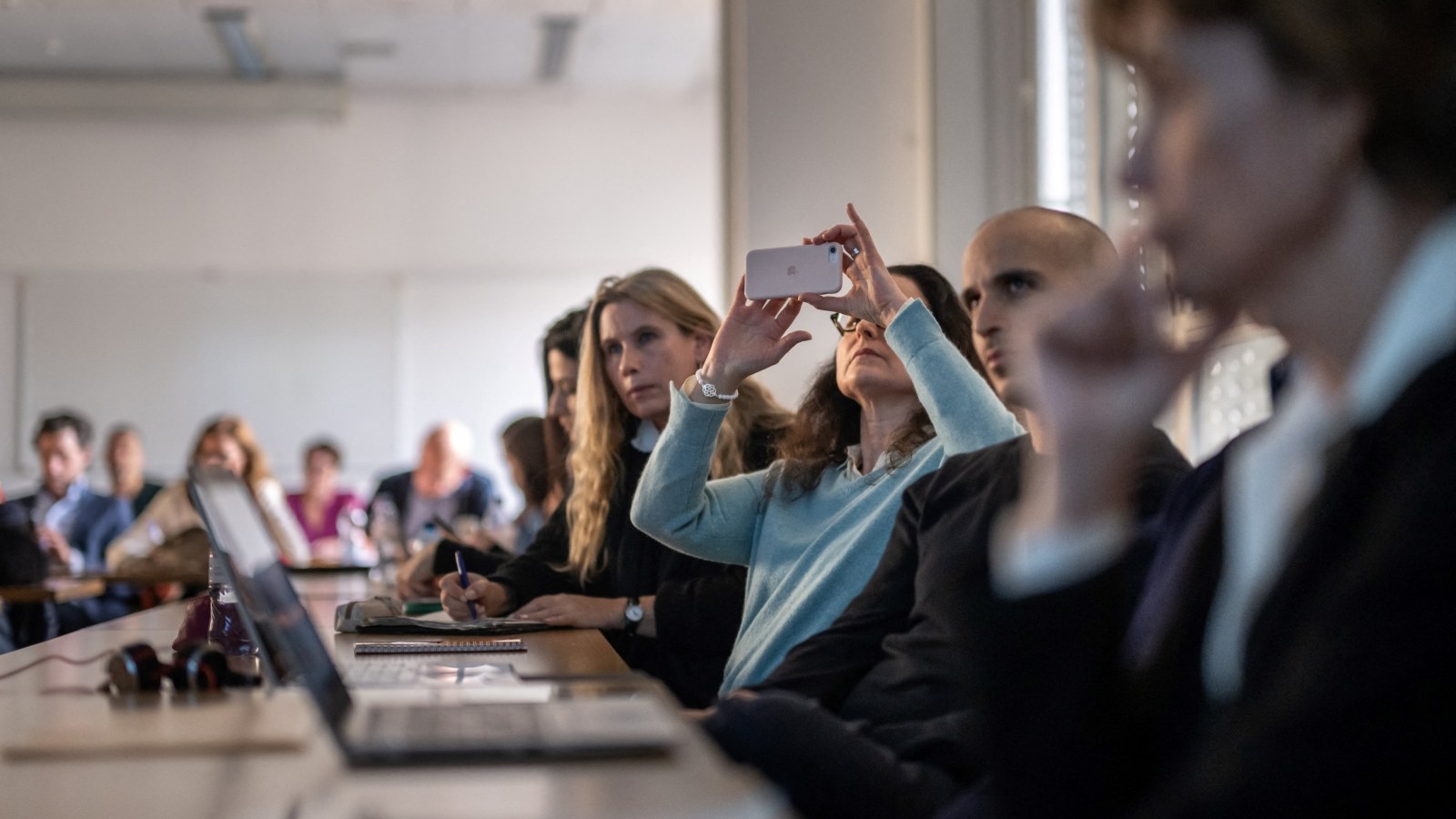
Investing.com - Needham raised its price target on SpaceX (NASDAQ:SPCX) to $250 from $200 while maintaining a Buy rating on Tuesday. The upgrade comes as shares trade at $136, near their 52-week low of $135.52, following an 8.2% decline over the past week. According to InvestingPro analysis, the stock appears undervalued at current levels, potentially offering investors an attractive entry point. The firm cited the company's release of Grok 4.5 on July 8, SpaceX's first AI model built for coding and agentic work. The model was trained on Cursor developer data and has received strong reviews on third-party AI benchmarks. Needham noted the model does not quite match leading models from Anthropic or OpenAI but puts SpaceXAI back on track after Elon Musk said in March the company had to completely rebuild its AI program. SpaceX announced its Starship flight 13 is scheduled to launch as early as July 16. The flight will deliver 20 full-size Starlink V3 test units to orbit and advance Ship and Booster re-usability. Needham said AI model performance and Starship success to orbit are key unlocks for the company's total addressable market. The firm raised its price target on increased confidence in execution. InvestingPro data reveals analysts predict the company will turn profitable this year, with 13 additional ProTips available to subscribers. In other recent news, flyExclusive, Inc. has completed its acquisition of aviation assets from Jet.AI. This transaction includes Jet.AI's Jet Card members, two HondaJets, one Citation CJ4, and three future Citation CJ3 delivery positions valued at approximately $4.1 million. Additionally, flyExclusive gained approximately $6.1 million in securities through indirect ownership of Space Exploration Technologies Corp. shares and about $5.3 million in cash. Meanwhile, SpaceX has received significant attention from analysts. Evercore ISI initiated coverage on SpaceX with an "outperform" rating and set a price target of $230. Stifel reiterated a "Buy" rating with a $190 price target, highlighting the upcoming Starship Flight 13 launch. Raymond James also reiterated a "Strong Buy" rating with an $800 price target, noting a significant reduction in the time between recent Starship flights. Deutsche Bank released an analysis suggesting that SpaceX could achieve cost parity between orbital and terrestrial data centers by the early 2030s. This article was generated with the support of AI and reviewed by an editor. For more information see our T&C.

Anthropic safety hiring targets nuclear and bio harm
Anthropic keeps warning its own AI could help end civilisation. Its latest safety hiring spells out the fear in job titles: enforcement analysts for nuclear, chemical, biological, and cyber harm, brought in to stop Claude ever teaching anyone how to build a weapon. Critics call the lab a doomsayer. It is now spending mid-six-figure salaries to prove it means it. A look at Anthropic safety hiring shows exactly what it fears: analysts brought in to stop its models teaching anyone how to build nuclear, chemical, and biological weapons. Most job ads sell a mission. Anthropic's read like a threat assessment. The company has posted a run of openings for enforcement analysts whose job is to keep its AI from helping people build weapons, run scams, or commit cybercrime, Axios first reported. One listing seeks an "Enforcement Analyst focused on Radiological & Nuclear Harms." Others cover chemicals and explosives, financial fraud, and more. The pay lands in the mid- to upper-$200,000s. The work is not coding. Anthropic wants real-world expertise in fields like biology and explosives. It also wants people who can think like an attacker trying to slip past its defences. Naming the harm on purpose The blunt job titles are deliberate. "Ensuring our models don't provide potentially harmful information is central to responsible development," a spokesperson said. The company said it regularly hires experts in sensitive fields to stress-test its models before a release. Spelling out the exact harm, it added, is how you recruit the right people. Anthropic says hundreds of staff now work on safety, probing for weak spots and patching them. This is the company that critics call the industry's biggest doomsayer. The pattern in Anthropic safety hiring is its answer to that label. It is spending real money on the risks it keeps describing. The catastrophe Amodei keeps describing Chief executive Dario Amodei has spent months sketching the downside. In a January essay he called biological attacks the scenario that worries him most. "I do not think biological attacks will necessarily be carried out the instant it becomes widely possible," he wrote. "But added up across millions of people and a few years of time, I think there is a serious risk of a major attack, with casualties potentially in the millions or more." He has also warned about AI helping cybercriminals and empowering authoritarian states. Earlier this year Anthropic broke with the US Defense Department over the use of its technology for mass surveillance and autonomous weapons. The labs are writing their own rules OpenAI is doing the same. It is hiring a researcher on biological and chemical risks, at a base salary of up to $445,000. As models grow more capable, every serious lab is racing to staff a red team. That race is happening in a vacuum. The US still has no comprehensive AI safety law. Congress has tried for years and passed nothing. Some want a referee: Google's Demis Hassabis has floated a Wall Street-style watchdog for frontier models. Fewer than one in a hundred AI PhDs go into government, so the expertise sits inside the companies. The result is a strange kind of self-regulation. The firms building the most dangerous capability are also the ones deciding how to fence it in. Amodei has named that tension himself, calling AI companies the next tier of risk after hostile states. His careers page is the argument and the warning in one place. The people best placed to stop the catastrophe work for the company that could help cause it.
SpaceX's slide risks turning blockbuster IPO into confidence test - AOL
NEW YORK, July 15 (Reuters) - SpaceX's slip close to its initial public offering price risks turning a marquee stock-market debut into a confidence test, potentially unsettling retail investors and complicating decisions for other companies weighing high-profile listings. Elon Musk's company, spanning rockets to AI, debuted on June 12 and soared in the ensuing days, at one point valuing the company at well above $2 trillion. Since then, trading has been rocky. The stock has slipped below its $150 opening price, but remained above the $135 offer price, with concerns about lofty tech stock valuations continuing to weigh on global indexes. SpaceX shares are at risk of falling below that level. They ended on Tuesday down 2.2% at $136.08, their lowest closing level since the IPO, a week after they started trading as part of the Nasdaq 100 index <.NDX>. The stock dipped as low as $135.52. A break below the IPO price would be a psychological blow for SpaceX shares, said Matthew Maley, chief market strategist at Miller Tabak. "It raises the narrative that the stock is up on fluff, on speculation, on froth, and not on real fundamentals," Maley said. Investors who bought into the excitement around SpaceX's listing, "hoping to 'make a killing' will be disappointed," said Greg Halter, director of research at Carnegie Investment Counsel. He said weakness in SpaceX would put it more in line with 30 years of heavily hyped IPOs, where average and median returns over the first month are often negative. SpaceX did not immediately respond to a request for comment. PRICE DISCOVERY NOT PANIC? A drop below the IPO price would not be unusual for a newly listed company. Shares of Cerebras Systems, which went public in May, have dropped below the IPO price, and Meta, formerly known as Facebook, fell similarly after its debut. Investors often fixate on IPO prices and early trading, said Ryan Lee, senior vice president of product and strategy at financial services firm Direxion. "The reality is, (SpaceX) is still undergoing some of this price discovery process," Lee said. A fall for SpaceX below $135 would reflect "normal, albeit painful" market mechanics, especially as investors, venture capitalists and employees sell shares after lockups expire, said Gabriel Shahin, CEO at Falcon Wealth Planning. "A near-term dip below the $135 threshold would not fundamentally alter our current positioning or cause us to panic-sell," he said. CAUTION OR GREEN LIGHT FOR NEXT IPOS Some investors think SpaceX's stock performance could influence the market for future public listings. OpenAI and Anthropic are eyeing the public markets. Neither company responded to a request for comment. Carnegie's Halter said companies and investment banks considering large IPOs this year are watching SpaceX closely. "No one wants an IPO to flop or have the initial price be ratcheted down," Halter said. He suspects some IPOs would be pulled rather than priced at lower valuations. But Direxion's Lee said SpaceX's capital raise could encourage some companies with large funding needs to move faster. "If I'm OpenAI or if I'm Anthropic and I'm in this true arms race to build the frontier AI model and I need capital, I'm going to try to beat the other one out the door," Lee said. RISKING RETAIL TRADERS' SKEPTICISM A drop below the IPO price could hit retail investors, who received about 20% of the allocation, hard. "Many novice investors have approached SpaceX with a 'meme stock' mentality, buying in with capital they cannot afford to lose," Shahin said, warning that losses could fuel perceptions that markets favor insiders. "The market needs to understand that post-IPO volatility is normal." SpaceX's first earnings report will be a major test for the stock. Underwriters typically support stocks in the first 30 days and may do more for SpaceX given the deal's size, the public attention and the fact other high-profile offerings are imminent, said Maria Llerena, director of financial research at Domini Impact Investments. "Loss-making companies without a clear path to profitability are typically volatile and can fall below their IPO price," said Llerena. (Reporting by Laura Matthews in New York; Additional reporting by Lewis Krauskopf in New York; editing by Megan Davies and Rod Nickel)
