News & Updates
The latest news and updates from companies in the WLTH portfolio.
Anthropic admits Claude has multiple personalities, it is extra warm and friendly with Hindi users
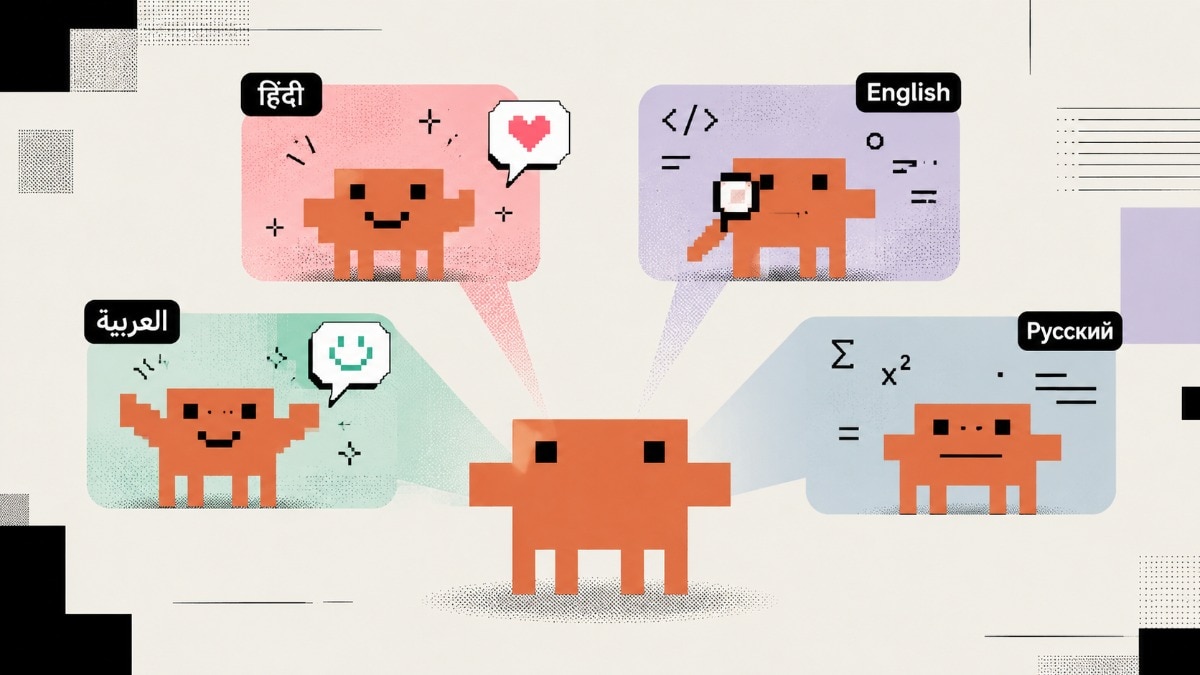
Anthropic says Claude doesn't respond the same in every language, with Hindi users getting warmer and friendlier replies than English speakers. (Image created using AI by Divya Bhati) You might think asking Claude the same question in Hindi or English would only change the language of the reply. But a new study by Anthropic suggests it changes the chatbot's behaviour too. According to the company, Claude expresses different behavioural traits depending on the language users choose. In Hindi, for example, the AI is more likely to respond with humour, politeness and encouragement than it typically does in English. In its latest research, Anthropic analysed more than 309,000 anonymised Claude AI conversations across three Claude models- Sonnet 4.6, Opus 4.6 and Opus 4.7 -- and the 20 most commonly used languages on Claude AI. The conversations mostly involved advice, feedback and opinion-based questions, where there is no single correct answer. Instead of measuring accuracy, the company said it wanted to understand how Claude communicates with users. The results? Anthropic found that Claude came across as warmest when responding in Hindi and Arabic. In contrast, its responses in English and Russian were more analytical and focused on rigour. To make the results easier to compare, Anthropic grouped Claude's behaviour into four broad categories: Deference vs Caution, Warmth vs Rigor, Depth vs Brevity, and Candor vs Execution. According to the company, this helped researchers focus on Claude's behaviour rather than differences in the questions people asked. For Indian users, the biggest takeaway from the study is what Anthropic calls the Warmth vs Rigor axis. The company found that Claude expressed the highest levels of warmth in Hindi and Arabic. In Hindi, the AI was more likely to use polite language, humour and playfulness while affirming users' ideas and work. It also tended to offer reassurance without being asked, adapt its tone to a user's emotional state and encourage users to aim higher. "The largest variation is in the Warmth vs. Rigor axis, with Claude leaning toward expressing warmth-related values most in Arabic and Hindi and rigor-related values most in English and Russian," Anthropic said in its blog post. English, however, painted a different picture. Anthropic found that Claude was more likely to respond with rigour and caution, challenge assumptions, correct details without being prompted and back up its responses with evidence. Overall, the company said the biggest differences between languages lay in how warm or rigorous Claude appeared, while its other behavioural traits remained relatively consistent. The study also found that Claude's behaviour changed depending on the model being used. Sonnet 4.6 came across as the warmest, often using humour, matching a user's tone and offering reassurance without judgement. Opus 4.7, on the other hand, was more analytical. It was more likely to challenge assumptions, explain its reasoning, highlight potential risks and openly acknowledge its own limitations. Opus 4.6 sat somewhere in between, generally sticking closely to a user's request and getting straight to the point. Anthropic notes that the findings do not mean Claude has different beliefs. Instead, the company suggests the results reflected differences in how the AI responds across languages and models. Anthropic added that it is still investigating why these variations exist, but believes the research could help make future AI systems more consistent.
Anthropic rolls out India specific pricing for Claude AI: Plans, prices, and other details
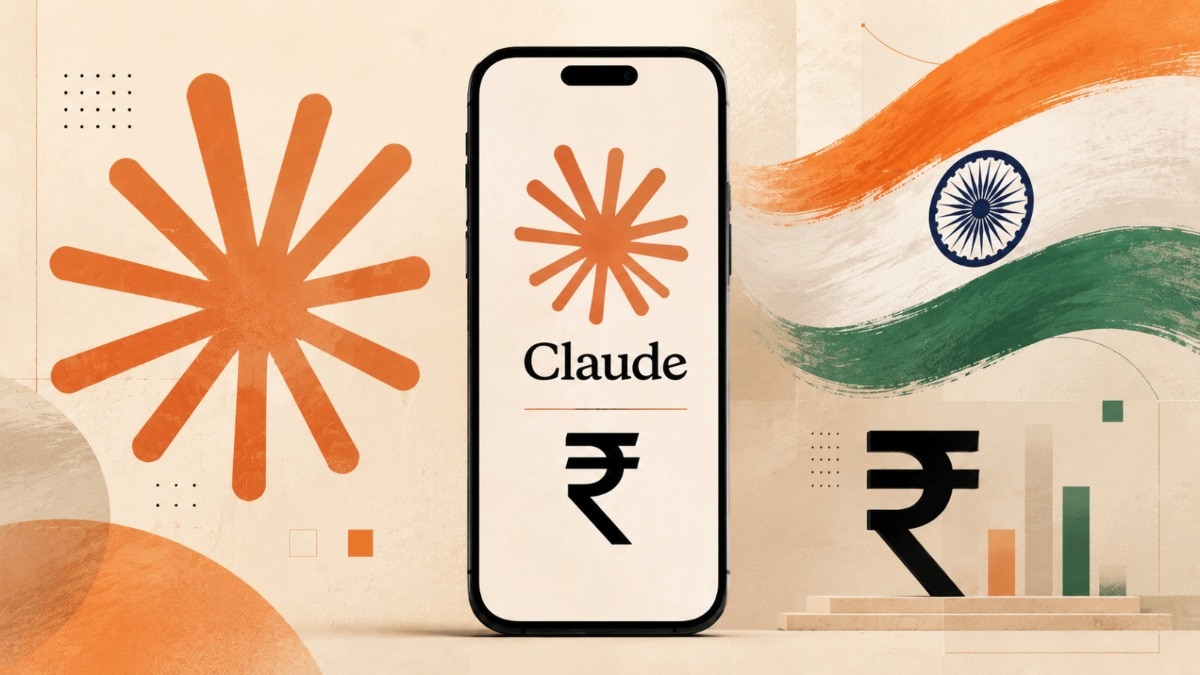
You can now pay for Claude in Indian rupees, here are all the details. (Representational image made with AI) For a long time, if you wanted to purchase a Claude subscription, you would need to pay in US dollars. This made it more cumbersome for users who needed to shell out forex charges, and pay GST in addition to the plan prices. But now, Anthropic has quietly rolled out India-specific pricing, allowing you to pay in Indian rupees. You can now check out Indian prices for Claude via the official website. The Claude Pro plan starts at Rs 2,000 per month. Previously, it would've cost you $20 (roughly Rs 1,630) per month - excluding additional fees and GST. The 20x tier of the Claude Max can go up to Rs 23,999 per month. The same plan in US dollars would have cost $200 (roughly Rs 19,170) per month. Also, one thing to note is that all paid Claude plans in India are inclusive of GST. This move comes as India continues to grow as a major AI market. As per reports, India is the second-largest market for Claude, after the US. This change will make it easier for users to now purchase Claude plans without having to pay extra fees. But what do you get from different Claude plans? Here are all the details. Claude Pro plan in India In India, the Claude Pro is priced at Rs 2,000 a month on an annual subscription (Rs 24,000 per year) and Rs 2,399 a month on monthly billing. Under the older USD pricing, Pro cost $20 (roughly Rs 1,920) a month on monthly billing and $17 (roughly Rs 1,630) a month on the annual plan billed as $200 (roughly Rs 19,170) upfront. Claude Pro runs Anthropic's Sonnet 5 by default and includes access to more Claude models, including Opus and the more advanced Fable 5 model. Apart from a 5x higher usage limit than the free tier, you also get Research mode, unlimited Projects, Memory, file uploads, web search, and voice mode. Claude Pro users can also use the coding platform Claude Code, as well as Claude Design, Claude in Excel and PowerPoint, and Microsoft 365 integration. Keep in mind that the Claude Free plan remains available in India, which gives access to Claude Sonnet 5 and 4.6, and Haiku 4.5. Free users also get web search, file uploads of up to 20 files per chat, limited Projects. Claude Max plan in India If you want more out of your Claude subscription, you can purchase Claude Max. Claude Max in India is available at Rs 11,999 a month for the 5x version and Rs 23,999 a month for the 20x version. In the older US dollar structure, Max 5x cost $100 (Rs 9,584) a month and Max 20x cost $200 (roughly Rs 19,170) a month. The Max tier carries the same core feature-set as Pro, but with a larger usage bucket rather than a different model tier. Users get the same models and features available in Pro, including Cowork, Claude Code, Projects, Memory and web search, but with either 5x or 20x Pro's usage limits depending on the tier. Claude Max also includes priority access during high-traffic periods, higher Claude Code session limits for longer coding runs, and first access to new features and models before they reach Pro. Claude Team plan in India For businesses, Anthropic has also brought India specific pricing for Claude Team subscriptions. The Team Standard seat is priced at Rs 2,399 a month for an annual subscription, with monthly billing at Rs 2,999 a month. A Premium seat costs Rs 11,999 a month, with monthly billing at Rs 14,999 a month. As was the case with Claude Pro and Claude Max, these prices are inclusive of GST. Previously, Team Standard was listed at $25 (roughly Rs 2,400) per seat a month, or $20 (roughly Rs 1,920) per seat a month when billed annually, while Team Premium was listed at around $150 (roughly Rs 14,380) a month for premium seats. The Team plan includes a 200K context window, usage credits available at API rates, Claude Code, and Claude Cowork. Businesses also get central billing and administration, single sign-on and domain capture, and admin controls. As default, Anthropic does not use content from Claude Team users for model training.
I was wrong: Elon Musk accepts Anthropic is AI leader, calls Mythos best model ever
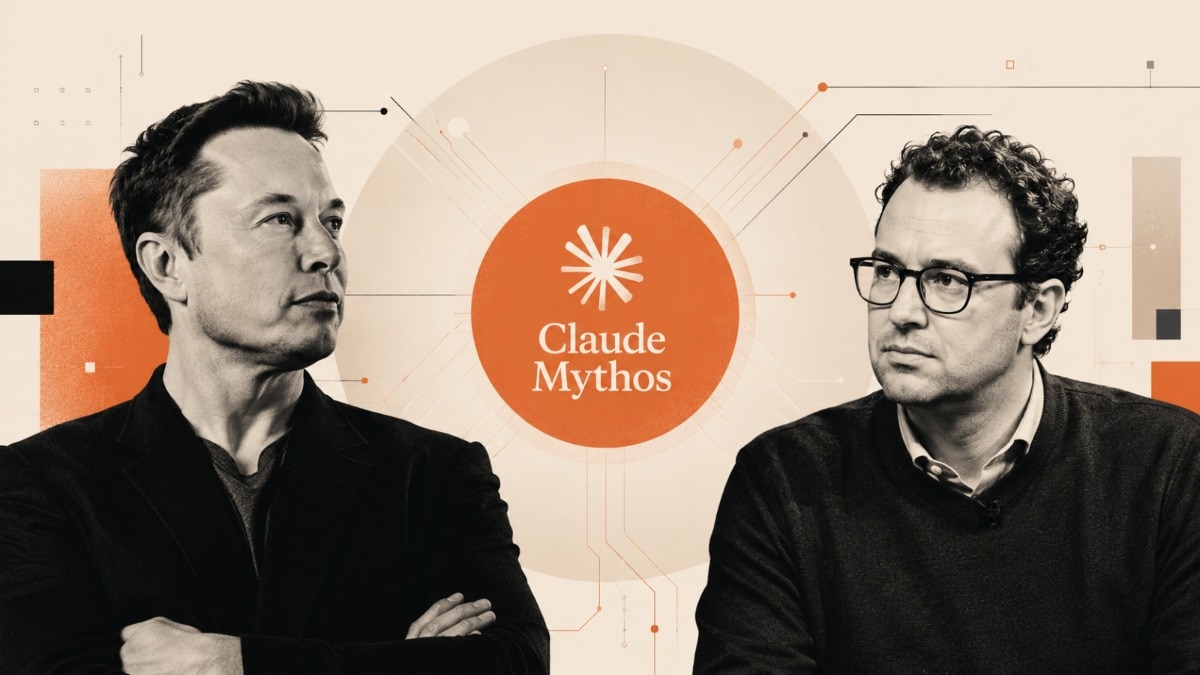
Elon Musk says he was wrong about Anthropic. (Representational image made with AI) Elon Musk is not afraid to speak his mind, particularly when it comes to his rivals - just look at his feud with OpenAI's Sam Altman. But when it comes to Anthropic, the tech trillionaire seems to have made a U-turn, and accepted that he was completely wrong. On X, a user reposted Elon Musk's comments from September last year, where the SpaceX chief declared that "Winning was never in the set of possible outcomes for Anthropic." Musk, however, gave a candid response as he accepted that Anthropic was really leading the AI race. The SpaceX chief replied, "I was clearly wrong about Anthropic. They are obviously currently the leader in AI." In particular, Elon Musk praised Anthropic's Claude Mythos and Fable models. The two models were previously restricted by the US following concerns over cybersecurity. While Musk's SpaceXAI recently released Grok 4.5, and OpenAI, too, has launched GPT-5.6, the tech trillionaire believes that Anthropic remains a league ahead. Musk added, "No company has released a model as good as Mythos/Fable and they will undoubtedly have Mythos 2 ready soon." Keep in mind that in February this year, Elon Musk had fired shots at Anthropic, accusing the company of being "misanthropic and evil." To give you some context, the words anthropic and misanthropic come from the Greek word "anthropos" meaning human being. While anthropic relates to humanity, misanthropic refers to distrust towards humanity. Can Elon Musk cutoff Anthropic from SpaceX compute? Since Elon Musk made such comments about Anthropic, a lot has changed. Anthropic is now one of the largest customers of SpaceX. In May, the AI startup Anthropic signed a deal to lease the Colossus 1 supercomputer. The Colossus 1 includes more than 2,20,000 Nvidia GPUs with a capacity of 300 megawatts of compute. Under the arrangement, Anthropic agreed to pay about $1.25 billion a month through May 2029, in a deal described as worth roughly $40 billion in revenue for SpaceX's xAI unit. But either side can end the agreement on a 90-day notice. This has raised questions that Elon Musk may now hold leverage, as he can decide to turn off the compute access at any time. Keep in mind that SpaceXAI (previously xAI) is a direct rival to Anthropic, and the Grok 4.5 model is designed for coding, a field dominated by Anthropic's Claude Code. The user wrote, "If Elon wanted to kill Anthropic, he could. Iirc the compute lease was short term, 6 months from May without renewal promise." But Musk insists that he has no plans to use such a kill-switch. He said, "And I would never cut them off in a way that hurt them badly, even as a competitor. That's not my style." Elon Musk then cited examples from his other businesses. He pointed out that Tesla had open-sourced its patents and made the Supercharger network available to competitors, "even though we could have made it a walled garden." The tech trillionaire also discussed the platform X where he is often criticised. Musk wrote,"Even my worst enemies can attack me on this platform." The relationship also raises questions about what a host company can learn from supporting a rival's systems. During Musk's lawsuit against OpenAI, he acknowledged that AI "distilling" was real, a process described in the inputs as one company using multiple fake accounts to prompt a competitor's model and learn how it works. When asked whether xAI had ever distilled technology from OpenAI, Musk replied, "Generally AI companies distill other AI companies." Anthropic has previously accused Chinese model makers of doing this to Claude.