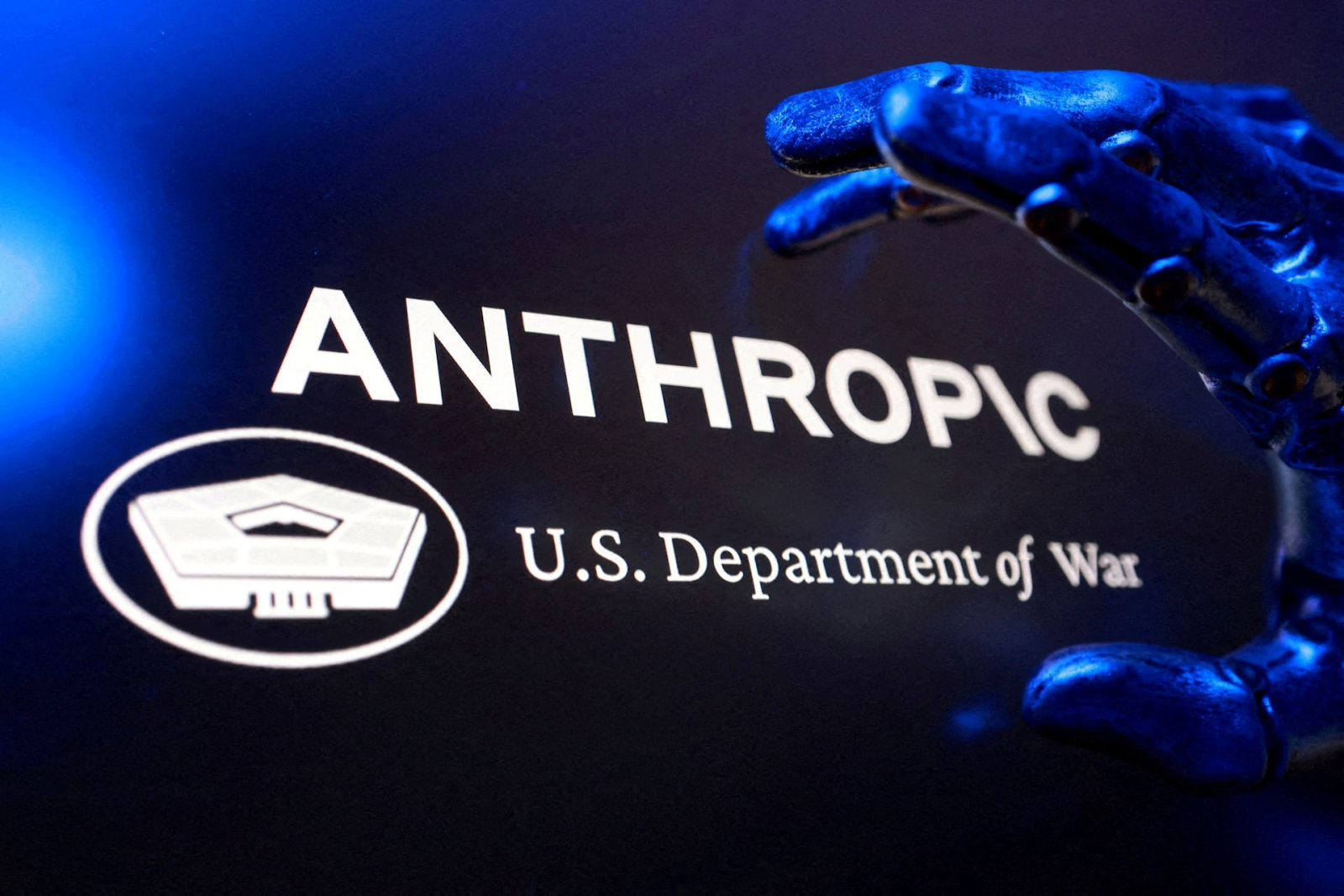
Big AI Push: Anthropic Nears $1.5 Billion Deal With Blackstone, Others Targeting Private Equity
Big AI push into private markets enhances Anthropic's dual role as both tech provider and major financial backer
Anthropic, a San Francisco based AI company, is reportedly nearing completion of a $1.5 billion joint venture with three major Wall Street players. The partnership would bring together the AI firm with Blackstone, Goldman Sachs, and Hellman & Friedman.
A formal announcement could come as early as May 4, 2026. The venture is expected to have a tightly defined commercial aim, providing AI tools to businesses owned or supported by private equity firms. The focus gives the partnership direct access to a broad network of portfolio companies across multiple industries- many under pressure from their investors to reduce costs and boost efficiency through technology.
How the $1.5 Billion is Structured Among Partners
The capital structure differs from a typical tech-sector deal. Anthropic, Blackstone, and Hellman & Friedman are each expected to invest around $300 million, while Goldman Sachs would contribute roughly $150 million. Growth equity firm General Atlantic is also adding capital beyond those core commitments, bringing the total to fabout $1.5 billion.
Anthropic's dual role as both tech provider and major financial backer is what makes this deal structurally distinct from a standard AI licensing agreement.
In similar arrangements, tech companies typically provide the product and earn fees. Here, Anthropic is going a step further by committing $300 million, taking on meaningful commercial risk alongside its Wall Street partners. That approach gives the company a role in governance and direct financial exposure to the venture's performance.
Blackstone and Hellman & Friedman are expected to serve as anchor investors, according to reports. Their combined private equity portfolios span thousands of companies globally, effectively creating a built-in distribution channel for the AI tools the venture plans to offer. Goldman Sachs, which also oversees substantial alternative investment assets, completes the core financial lineup.
National Security Dimension and Anthropic's Broader Ambitions
The joint venture may also have a national security angle. Its structure appears to align with U.S. government priorities that view AI as both a defense and innovation asset, and it could broaden Anthropic's ability to provide AI technologies to government clients.
The aspect ties the deal to a wider policy push in Washington to identify and support domestic AI firms capable of contributing to defense-related applications.
Anthropic is expanding rapidly. Its estimated annual revenue run rate is around $40 billion, with roughly 80% coming from enterprise customers rather than individual users, according to CryptoRank. That figure has not been independently verified and should be treated as a single source estimate.
The company is also reportedly exploring a separate fundraising round that could value it above $900 billion, with secondary market activity potentially pushing that figure closer to $1 trillion.
Taken together, the capital commitments from Blackstone, Goldman Sachs, Hellman & Friedman, and General Atlantic reflect a calculated bet that private equity backed companies will become a sizable and lasting market for enterprise AI tools.
Private equity firms typically hold assets for three to seven years, with a strong emphasis on boosting margins and driving revenue growth during that period. AI-powered automation and data solutions align closely with that strategy.
For Anthropic, the venture provides access to institutional distribution partners with direct reach into hundreds of portfolio companies. That setup helps avoid the slower process of selling enterprise software through individual contracts.
The $300 million commitment also signals commercial conviction, linking Anthropic's returns more directly to the venture's performance rather than relying on a standard fee-based model.
Blackstone, Goldman Sachs, and Hellman & Friedman have not publicly confirmed details of the deal. Reuters also noted it could not independently verify the original Wall Street Journal reporting on the transaction.