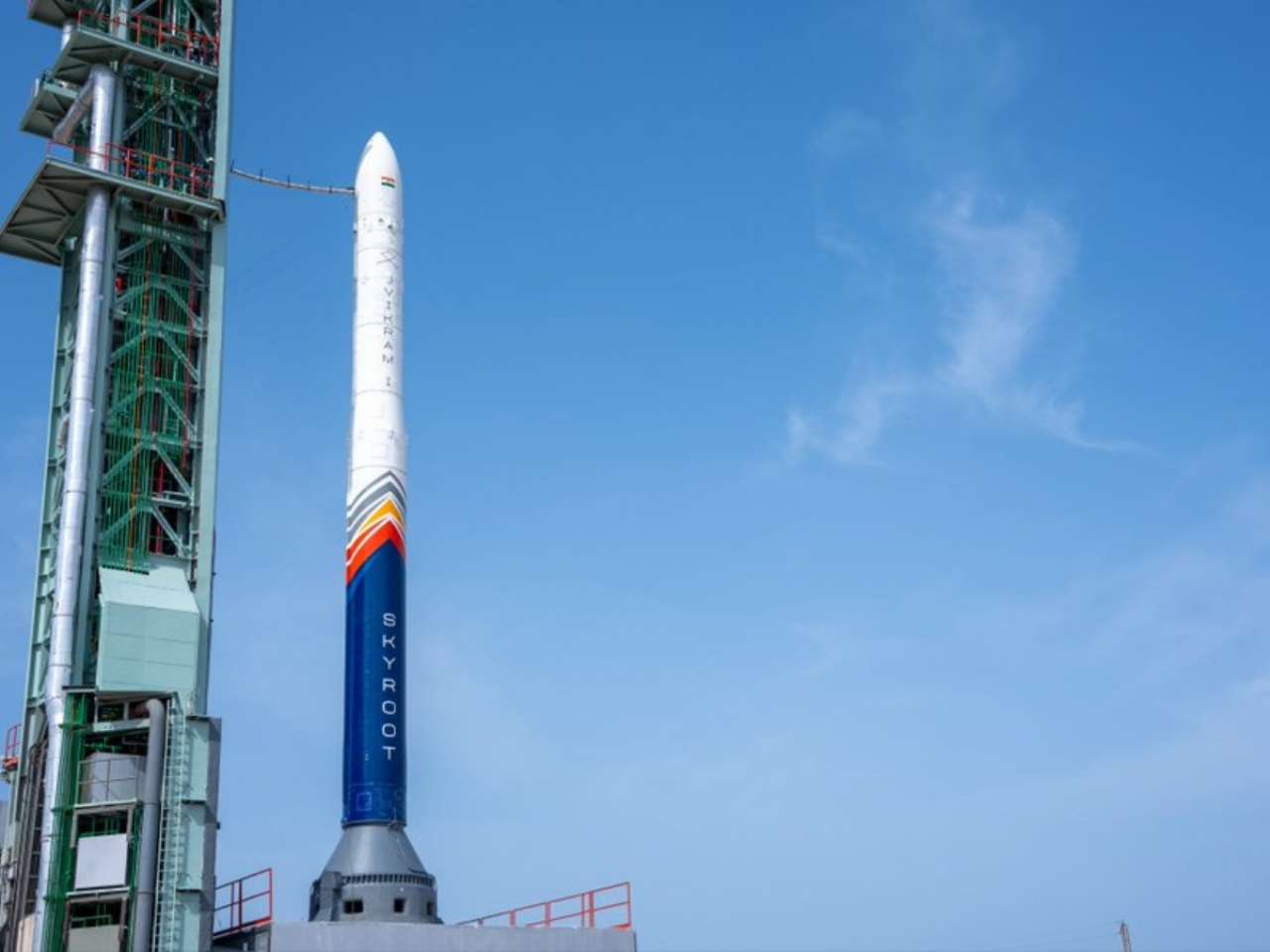
Can India finally get its own Elon Musk, SpaceX? Skyroot's Vikram-1 launch could change space ecosystem
Is India getting ready for its own SpaceX or Elon Musk? The question may appear to be preposterous, but the recent development has paved the path for daring private sector entrepreneurship in the space sector. After the Union government launched the Indian Space Policy 2023, the doors for Non-Government Entities (NGEs) were opened, and they were allowed to undertake end-to-end space activities, creating a level playing field for private companies. The next watershed moment came a few days back when Skyroot Aerospace announced to launch India's first privately developed orbital-class rocket, Vikram 1.
India's first private rocket: Vikram- 1
It will be launched from the Satish Dhawan Space Centre in Sriharikota at 11.30 AM ON July 18, 2026. It will be a test flight, named Mission Aagaman, to check the rocket's performance before commercial operations begin. It will also carry a handwritten note from Prime Minister Narendra Modi. The company said in a note, posted on the social media platform X, "Among the payloads on Vikram-1 Test Flight-1 is something truly special -- a handwritten postcard from Hon'ble Prime Minister Shri @narendramodi with the words, "Vande Mataram."
Mission Aagman can carry a payload of up to 350 kilograms and place the satellite in Low Earth Orbit (LEO). The propulsion of the rocket is made up of three solid-fuel stages and one liquid-fuel Orbital Adjustment Module (OAM) for precision payload insertion.
Skyroot Aerospace, Mission Aagaman
If the mission succeeds, Skyroot Aerospace will become the first Indian private company to put a rocket into orbit from Indian soil. It will reflect the development of India's private sector space industry ecosystem. The success of the mission will show the private launch capability alongside ISRO. This will enhance India's capacity to serve the growing global small satellite market. It will throw open a big and expanding space launch business in India, where private companies can offer reliable, cost-effective launch services for international customers, particularly those from Europe.
The Mission Aagman aligns well with the government's mission of encouraging Non-Government Entities (NGEs) to undertake end-to-end space activities and drive commercial growth.
-
The private companies can use ISRO's infrastructure, testing facilities, technical expertise, and launch support.
-
In an attempt to encourage the private sector and support it, the government has come out with a liberalised FDI policy, IN-SPACe authorisation guidelines, and a Venture Capital Fund of Rs 1,000 crore. I
-
t has also allowed startups discounted pricing for ISRO facilities.
However, all is not hunky-dory. There are challenges, risks and the uncharted future that may go wrong and take an unexpected turn.