How to Spot a Stock Market Bubble 101: Raymond James Just Placed an $800 Price Target on SpaceX, Valuing Elon Musk's Company at $10.5 Trillion
One month ago, on June 12, Elon Musk's artificial intelligence (AI) and space economy conglomerate, Space Exploration Technologies (SpaceX) (SPCX 4.75%), rewrote history with its initial public offering (IPO). The $85.7 billion raised, including the underwriters' overallotment, nearly tripled the previous IPO record holder, Saudi Aramco.
But in kicking off IPO mania -- large language model developers Anthropic and OpenAI are expected to follow in SpaceX's footsteps -- SpaceX may also be fueling the final stages of an AI bubble that history suggests is waiting to pop.
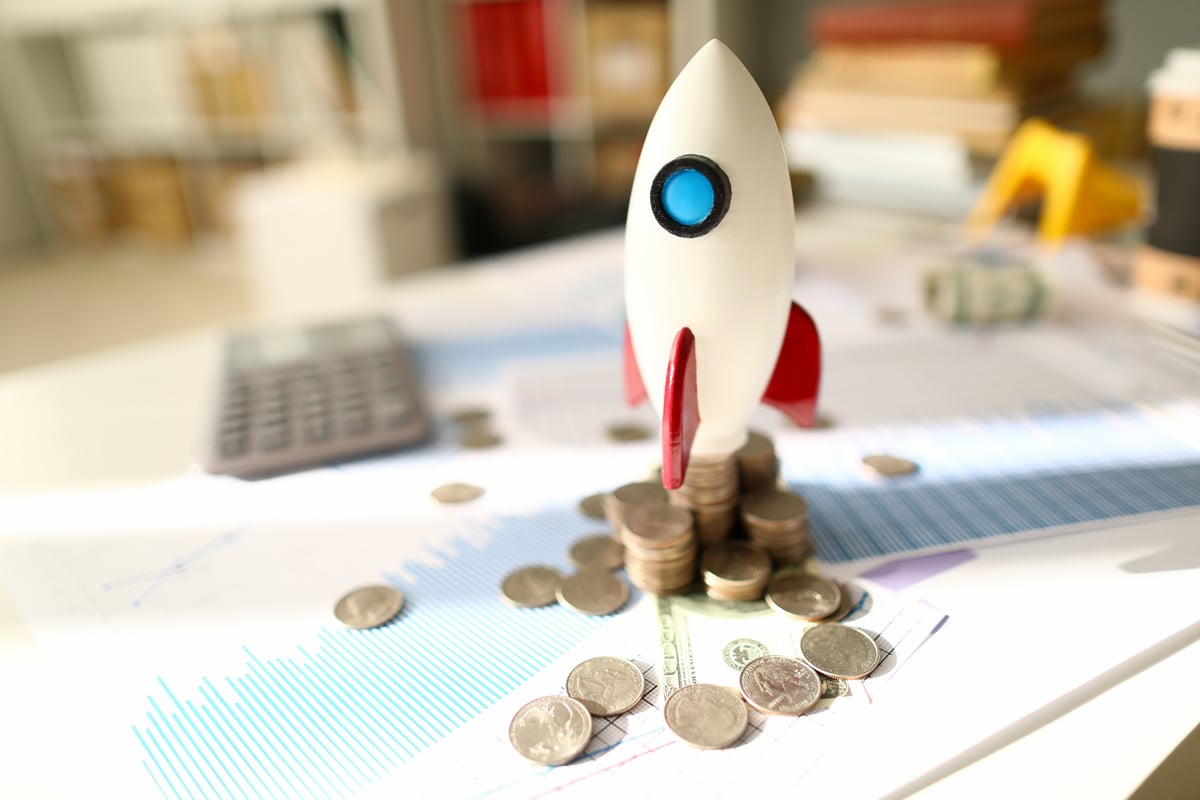
Rarely are stock market bubble warning signs as glaring as Raymond James Financial's price target assigned to SpaceX.
Wall Street's high-water price target foresees SpaceX reaching $800 in 2031
Given that 21 underwriters helped bring SpaceX public and received shares for doing so, it should come as no surprise that Wall Street analysts have, as a whole, presented an overwhelmingly positive outlook for the company.
But Raymond James Financial analyst Brian Gesuale is a true outlier. His $800 price target by 2031 implies 451% upside, based on where SpaceX's shares ended on July 10, and assumes a valuation of roughly $10.5 trillion. For context, this would be more than double Nvidia's current market cap.
Gesuale foresees SpaceX's full-year sales scaling from an estimated $38.5 billion in 2026 to approximately $837 billion by 2031. More importantly, earnings before interest, taxes, depreciation, and amortization (EBITDA) are projected to catapult from $17.7 billion in 2026 to $696 billion by 2031.
While there's no question that AI and the space economy are two of the hottest addressable opportunities on Wall Street, several headwinds suggest Gesuale's pie-in-the-sky price target is pure fiction and the sign of an end-stage bubble that's about to burst.
SpaceX spotlights everything wrong with Wall Street
Although the stock market is a long-term wealth-creating machine, it's prone to occasional bubble-bursting events. SpaceX's current $1.91 trillion valuation and Raymond James' $800 price target for the company spotlight everything that's wrong with Wall Street over the short term.
For starters, SpaceX hasn't demonstrated that its operating model is sustainable. While satellite-based broadband services provider Starlink is profitable, AI start-up xAI -- the segment responsible for the lion's share of SpaceX's $28.5 trillion addressable market -- is burning cash as Musk's company chases AI compute capacity.
Elon Musk also has a terrible track record of fulfilling lofty promises and innovative expectations. As CEO of Tesla, Musk proclaimed that 1 million robotaxis would be on public roads by the end of 2020, which never happened. He's also assured investors that Level 5 full self-driving is "one year away" annually for more than a decade. Musk continually overpromises and underdelivers.
SpaceX is likely to be haunted by historical precedent, as well. No company at the forefront of a game-changing technology has sustained a price-to-sales (P/S) ratio above 30 for any extended period. SpaceX is trading at roughly 50 times Gesuale's forecast sales for this year.
Lastly, every game-changing technology for more than three decades has navigated an early stage bubble-bursting event. These bubbles have formed because investors constantly overestimate the optimization timeline of innovations. It'll likely be years before SpaceX's solutions are optimized, making Raymond James' high-water price target highly unlikely.