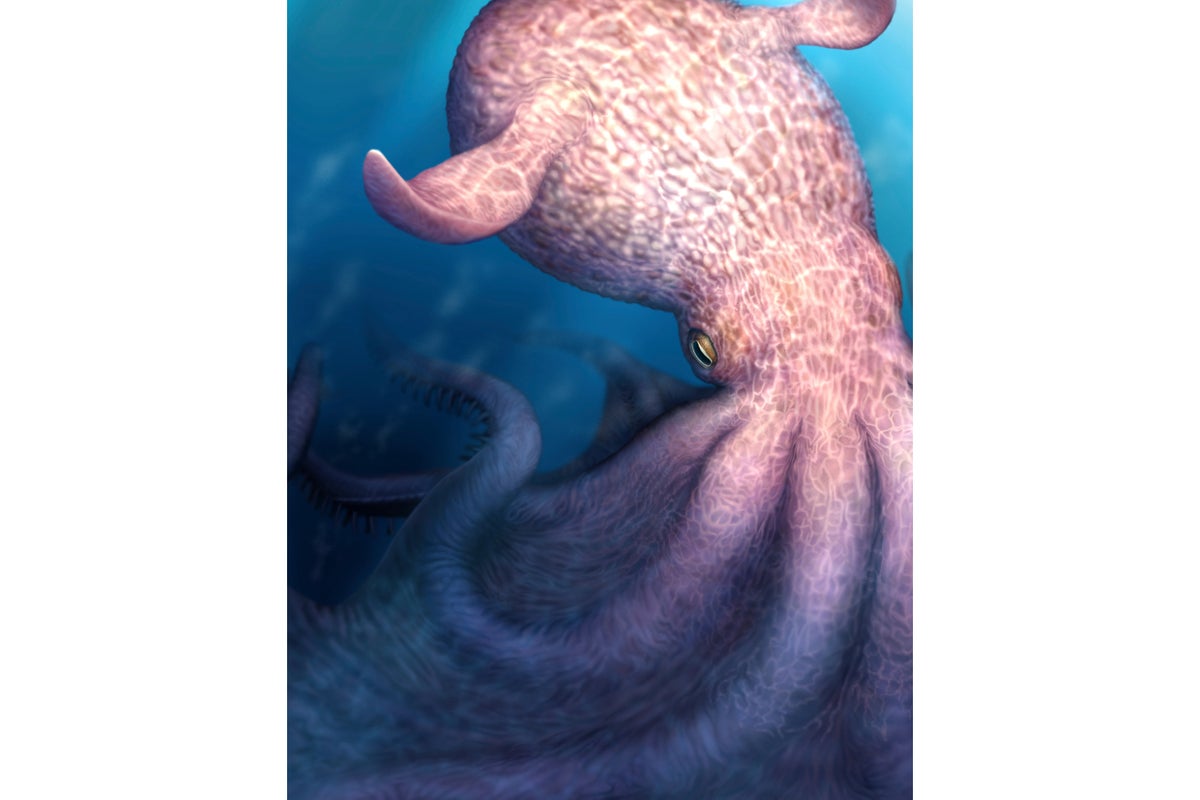
New fossil finds show that giant kraken-like octopuses ruled prehistoric oceans
The deep oceans of 100 million years ago, during the age of the dinosaurs, may have harboured a fearsome apex predator: the octopus. New analyses of fossilised jaws suggest that colossal, kraken-like octopuses once hunted alongside other marine giants, boasting eight arms and bodies that stretched over 18 metres (60 feet), rivalling the carnivorous marine reptiles of the era.
"These krakens must have been a fearsome sight to behold," commented University of Alabama paleontologist Adiel Klompmaker, who was not involved in the new research. While dinosaur enthusiasts are familiar with the sharp-toothed sharks, mosasaurs, and plesiosaurs that dominated late Cretaceous waters, octopuses have typically been excluded from the ranks of top predators.
This is largely due to their soft bodies, which do not preserve well, making it difficult to ascertain their true size and impact on ancient ecosystems. There is also a prevailing perception that squishy invertebrates - creatures without backbones - lacked the formidable nature to compete with their vertebrate counterparts. However, octopuses possess beaks made of stiffened chitin, tough enough to crush shelled and bony prey.
In a groundbreaking new study, researchers meticulously examined the jaws of 15 ancient octopus fossils previously unearthed in Japan and Canada's Vancouver Island. They further identified an additional 12 jaws from Japan using an innovative technique dubbed "digital fossil mining," which involves closely scanning rocks in cross-sections to reveal hidden fossils.
By comparing these ancient jaws to those of modern octopuses, the scientists were able to estimate the creatures' immense size, determining they ranged from 7 to 19 metres (23 to 62 feet) in length. Co-author and paleontologist Yasuhiro Iba from Hokkaido University noted in an email that the largest jaw was "substantially bigger than that of any modern octopus."
The study, published on Thursday in the journal Science, also revealed significant wear and tear on the largest creatures' jaws, including scratches, chips, and rounded edges. This suggests that "the animals repeatedly crushed hard prey such as shells and bones," Iba explained.
Despite these revelations, the precise diet of these ancient octopuses remains somewhat speculative without access to their stomach contents. They could have feasted on fish or snails, using their flexible arms to snatch prey before breaking it apart with their powerful beaks.
Paleontologist Neil Landman of the American Museum of Natural History in New York, also not involved in the research, highlighted the ongoing quest for knowledge. "It's a big old planet," he said, adding, "So we have lots to look at to piece together the marine ecosystem through time." Further exploration for octopus fossils in other locations could provide a clearer picture of their role within ancient food webs.