Polymarket and Kalshi are up against a united Congress as D.C. steps up scrutiny of prediction markets
Well-timed trades catch Washington's attention
The Associated Press reported this month that a group of new accounts on Polymarket made highly specific, well-timed bets on whether the U.S. and Iran would reach a ceasefire on April 7, resulting in hundreds of thousands of dollars in profits for these new customers.
On the same day the report was published, the White House warned staff against using private information to trade on prediction markets.
Earlier this year, an anonymous Polymarket user collected more than $400,000 on a January bet predicting the ouster of Venezuelan President Nicolás Maduro, prompting concerns that someone with access to private U.S. government information may have engaged in insider trading.
Sen. Todd Young, an Indiana Republican and former Marine, said he had been concerned about trading in the sports market, "but I became especially concerned about market distortions, improper decision making, and undermining of public trust through self-enrichment after the news broke about Venezuela."
Young and Sen. Elissa Slotkin, D-Mich., have introduced a bill that would bar federal employees from using nonpublic information to make bets on prediction markets. Their bill is among several bipartisan efforts in Congress to regulate prediction markets.
As he eyes a potential presidential campaign, Democrat Rahm Emanuel proposed a ban on prediction market bets by all federal employees and their families. On Wednesday, he suggested a 10% fee on those markets and online gambling to fund science and health research.
California Gov. Gavin Newsom, another potential Democratic presidential candidate, issued an executive order barring his appointees from using nonpublic information to trade on prediction markets.
For now, there's no immediate path to passage for any of the bills. But the scrutiny has drawn focus to the differing approaches of the main prediction markets.
Polymarket officials say little publicly and didn't comment for this story. The market, founded in 2020, operates largely offshore with limited functions in the U.S. that were allowed only after President Donald Trump returned to office.
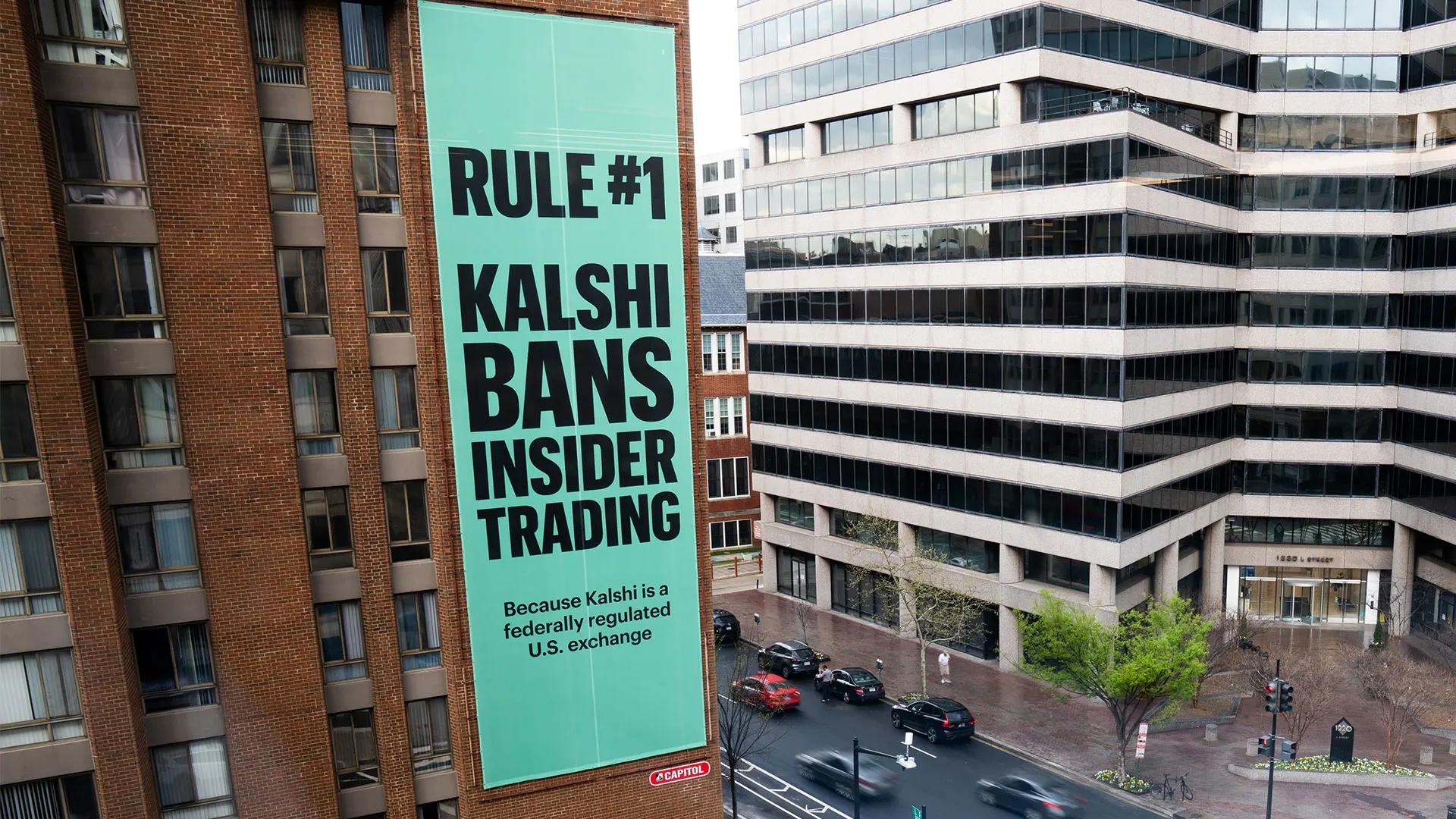
Kalshi, meanwhile, says it already bans many of the most extreme betting markets and welcomes regulation.
"We support Congress and regulators taking action to police insider trading, keep prediction markets onshore and under federal regulation," said Kalshi spokesperson Elisabeth Diana. "Not all prediction markets are the same."
White House spokesman Davis Ingle said Trump has been clear that "members of Congress and other government officials should be prohibited from using nonpublic information for financial benefit."
Prediction markets bring CFTC into the spotlight
The bet-the-event activity is drawing attention to the Commodity Futures Trading Commission, which oversees the vast trading contracts industry, including prediction markets.
Dennis Kelleher, the president and chief executive of Better Markets, a Washington nonprofit that has pressed for stronger oversight of prediction markets, said the agency "certainly has no experience, expertise, budget, technology to actually in any way supervise, regulate or police gambling on everything from whether it's Iran, Venezuela, whether it's reality TV, whether Christ is going to come back before the end of the year."
The agency, which by law is supposed to have a five-member board including representatives of both political parties, is served now by only one member, Michael Selig, a former CFTC law clerk who went on to represent cryptocurrency clients before Trump appointed him to lead the agency.
That's sparked concern among congressional Democrats. Sen. Richard Durbin, D-Ill., sent Selig a letter in February noting that the number of enforcement attorneys at the agency's Chicago office had declined from 20 to zero.
During a Thursday hearing of the House Agriculture Committee, which oversees the CFTC, Selig said the agency was hiring new staff and operating more efficiently. He refused to hold off on completing new regulations until new members were added to the board but insisted he was taking the potential of insider trading seriously.
"Nothing is more important than protecting market integrity," he said.
Still, the agency's enforcement authority extends only to prediction markets regulated in the U.S.
For now, that distinction largely applies to Kalshi, which was established in 2018 and promotes its status as a regulated prediction market. Eager to reach American customers, Polymarket has introduced a U.S.-only prediction market platform to conform with U.S. regulations, but that platform currently has a waitlist to participate and is a small fraction of the size of its offshore counterpart.
CFTC's leadership criticizes Biden and takes on states
Asked at a recent Vanderbilt University forum about the CFTC's approach to insider trading in unregulated offshore prediction markets, Selig blamed the Biden administration for creating a regulatory environment that he said discouraged companies from operating in the U.S.
As the debate plays out in Washington, multiple states have tried to curtail prediction markets, arguing they are essentially operating as unlicensed gambling platforms. But the CFTC has responded forcefully to assert itself as the sole regulator, suing Connecticut, Arizona and Illinois this month.
That leaves Washington at a strange juncture, with widespread agreement among lawmakers that something should be done to address the issue of prediction markets. But there are differing thoughts on the scope of a solution.
Young acknowledged his proposal is just a first step, and said lawmakers have a lot to learn about prediction markets.
"But I think we can all agree at this early stage, as usage of these platforms grows and real money is put at stake, that this is a measure that should be taken immediately," he said.