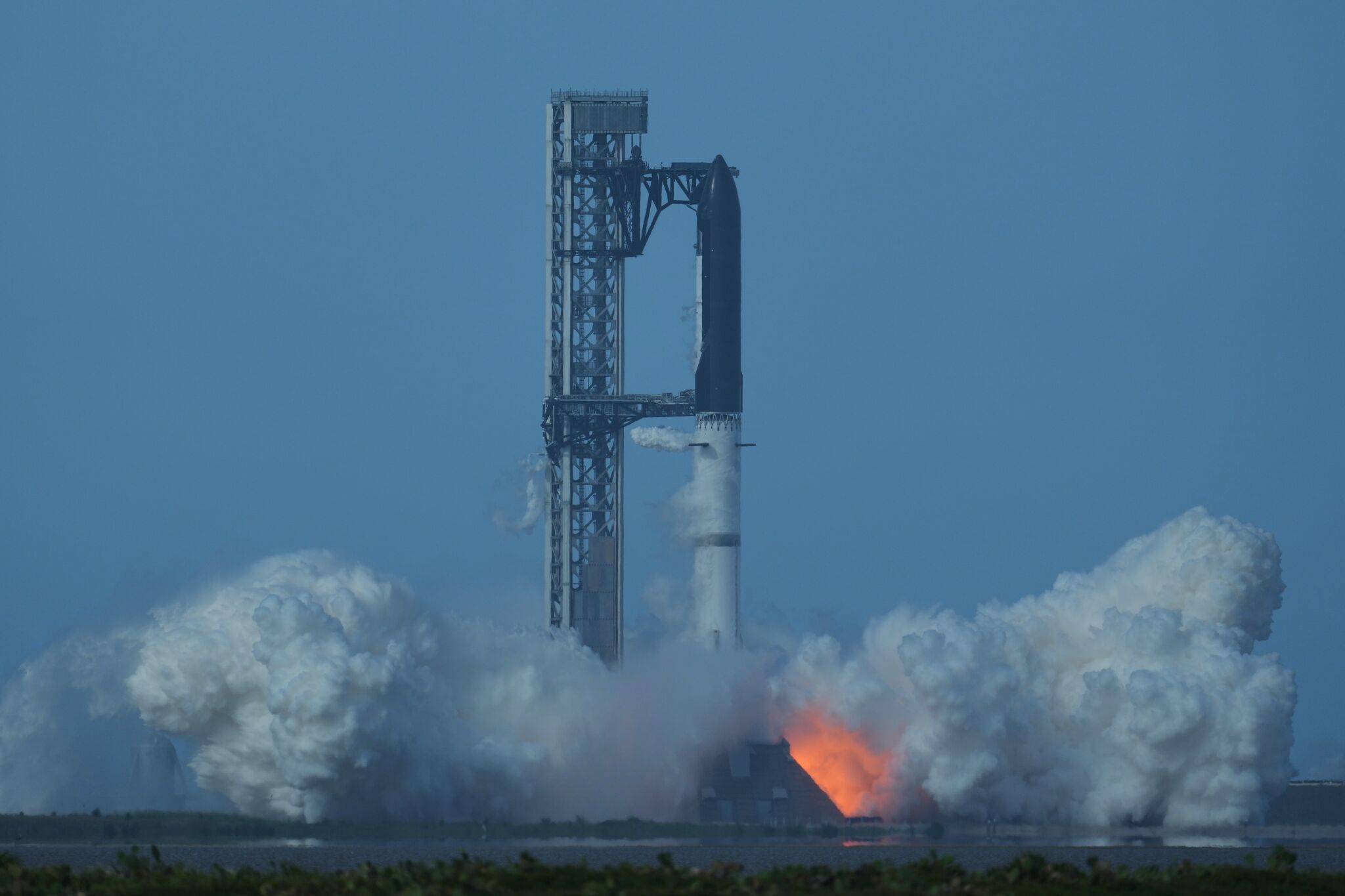
SpaceX aborts planned 13th launch of Starship from South Texas
CEO Elon Musk said some engines failed to start, triggering an automatic abort of the launch.
SpaceX came within a few seconds Thursday of Starship's 13th test flight and the first to deploy actual Starlink satellites, but the launch was aborted when some of the mega-rocket's engines failed to start.
The Texas company's stock, which has been generally declining since its record initial public offering last month, fell sharply in after-hours trading.
SpaceX said it will have to figure out what went wrong before making another attempt.
"Some of the engines didn't start, triggering an automatic launch abort," CEO Elon Musk said later on X. "Next launch attempt hopefully in a few days."
A dashboard showing the rocket's status during the SpaceX livestream of the planned launch indicated that only 29 of the Super Heavy Booster's 33 Raptor engines ignited.
Though countdown holds to deal with such issues are not uncommon, SpaceX was unable to restart its countdown Thursday in part because there wasn't enough water.
When the Super Heavy booster's Raptor engines briefly fired, they triggered the water deluge system under the rocket, which diffuses heat and vibration. Though the engines were immediately shut down, the system released thousands of gallons of water from tanks that need to be refilled before the next launch attempt.
The launch team immediately began draining the fuel from the rocket.
Twenty of SpaceX's newest and most advanced Starlinks were on board for release during the planned hourlong flight. The internet satellites were going to try communicating with Starlinks already in orbit while taking photos of Starship's heat shield. Neither the first-stage booster nor the upper-stage Starship spacecraft were meant to be recovered, with both ending up in the sea.
NASA is counting on Starship to land its astronauts on the moon in the next few years. Delays in its development have already caused years of delays in the NASA program.