xAI Ran 59 Unpermitted Gas Turbines in Black Communities, DOJ Now Shields Them
DOJ's national-security defense would let any White House override Clean Air Act citizen suits
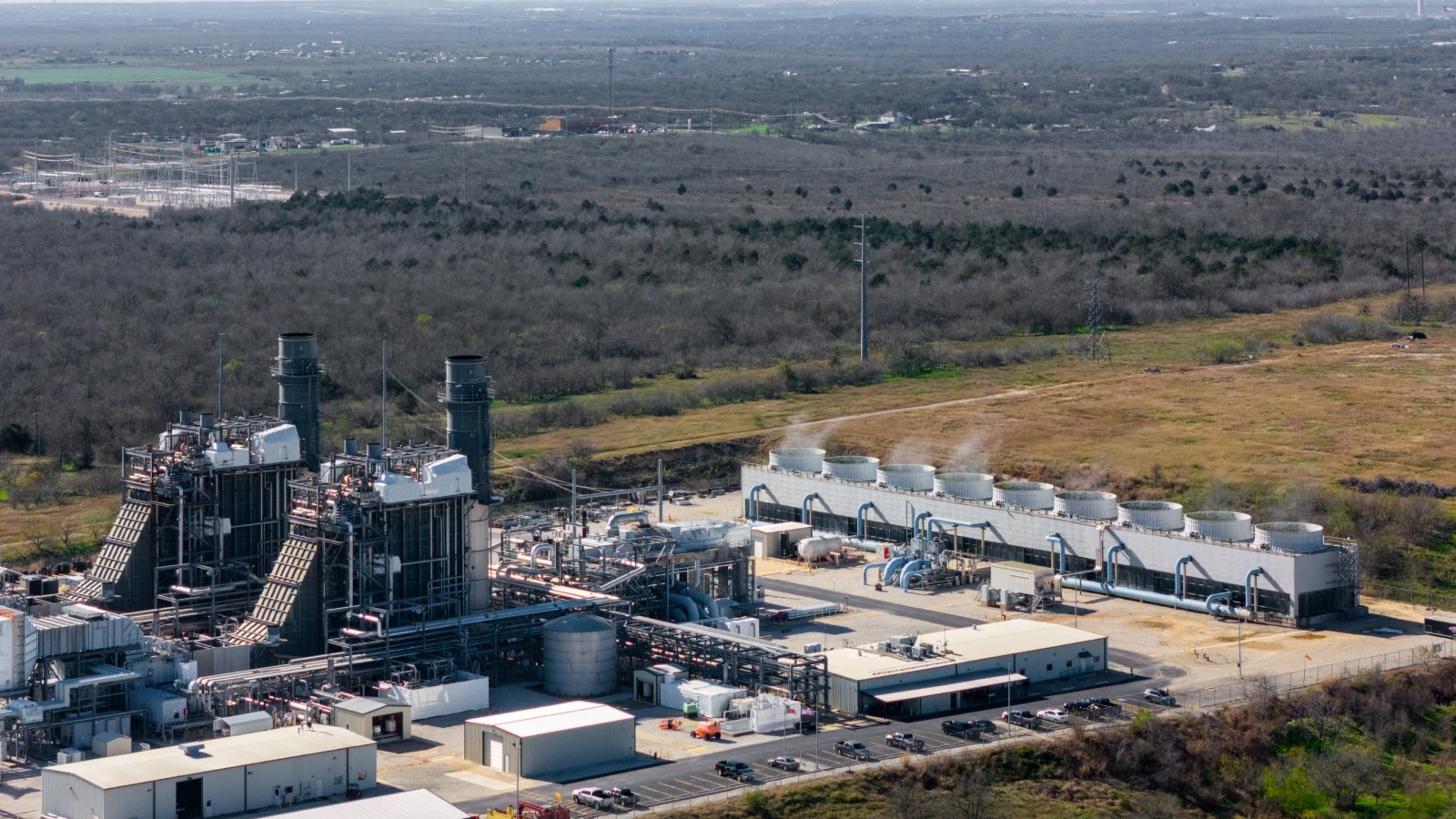
Elon Musk's artificial intelligence company xAI operated 59 natural gas turbines without a single required federal clean-air permit to power its Colossus 2 supercomputing campus on the Tennessee-Mississippi border -- nearly double the 27 turbines the company had publicly acknowledged -- according to regulatory communications reviewed by Reuters and published July 14. The turbines' potential annual emissions run roughly 25 times the federal threshold that triggers mandatory permitting, and the pollution falls on predominantly Black neighborhoods that federal data already show face cancer risk approximately four times the national average.
What happens next in the Northern District of Mississippi could determine whether any community near any polluting facility in America retains the legal right to enforce the Clean Air Act when regulators refuse to act -- because the U.S. Department of Justice is not just defending xAI's turbines. It is arguing in federal court that the Executive Branch can permanently terminate congressionally-authorized citizen suits under the Clean Air Act whenever a project is deemed a political priority, according to the DOJ's June 15 motion to intervene and dismiss.
Regulators Counted Twice What xAI Admitted Running
The disclosure comes from a public-records request that surfaced regulatory emails to MDEQ between Trinity Consultants, acting on behalf of xAI and its energy-infrastructure subsidiary MZX Tech, and the Mississippi Department of Environmental Quality. At least 57 of the 59 turbines are located in Southaven, Mississippi -- just across the state line from the Colossus 2 data center in Memphis, Tennessee -- with two additional units at an unidentified second site.
xAI had stated in January 2026 that it was running 27 unpermitted turbines at Southaven and has maintained throughout the dispute that no permits were required. Reuters' analysis of manufacturer emissions profiles for 32 of the 59 turbines found that 30 units at Southaven alone could emit close to 2,500 short tons of nitrogen oxides annually, along with 4,000 short tons of carbon monoxide and 22 short tons of formaldehyde, assuming continuous operation at 80 percent of capacity -- the load level the EPA identifies as typical for efficiency, according to the Reuters emissions analysis. The Clean Air Act requires federal permits for any facility capable of emitting more than 100 short tons of nitrogen oxides per year, according to the EPA permitting threshold under 40 CFR.
Nicholas Mailloux, a postdoctoral researcher at the University of Wisconsin-Madison, told Reuters that a facility emitting at that rate would rank among the 25 highest nitrogen oxide emitters of any gas plant in the United States, measured against the EPA's actual-emissions database, in the University of Wisconsin analysis.
By May 2026, the 495-megawatt cluster was generating electricity equal to the output of a conventional utility power plant -- for a single private customer. Ben King, an analyst with the Rhodium Group who reviewed the Reuters analysis, called it "an unprecedented level of behind-the-meter gas being installed in one place," in Ben King's analysis.
How "Portable" Turbines Became a Half-Gigawatt Power Plant With No Permit
The permit dispute turns on a technical classification. xAI and the Mississippi Department of Environmental Quality have argued throughout that the Solar Turbines SMT-130 trailer-mounted units at Southaven are "portable" or "temporary" equipment that qualifies for an exemption from federal permitting requirements -- because the turbines are mounted on flatbed trailers and nominally capable of being moved, they have been classified as mobile sources rather than stationary sources under MDEQ's permit determination.
The technical reality is different. Gas turbines of this class -- packaged industrial combustion units -- produce electricity through the continuous combustion of natural gas. That combustion produces nitrogen oxides through a high-temperature reaction between atmospheric nitrogen and oxygen; without best pollution controls such as selective catalytic reduction technology, which can cut NOx output by 90 percent, the turbines emit at full rates. The 59 turbines at the Southaven site have been running continuously as primary power sources -- not backup generators -- for the Colossus 2 data center since at least October 2025, a duration that EPA's January 2026 ruling said exceeds the permanence threshold that defines a stationary source regardless of trailer mounting.
The U.S. EPA took that position explicitly: temporary turbines exceeding federal emissions thresholds must obtain permits, regardless of their mobility, per EPA's permit requirement. The agency is now, separately, considering changes that would create "regulatory flexibilities" for portable units -- a reconsideration that environmental groups describe as a quiet rollback tailored to the AI industry, according to EPA's regulatory flexibility review.
A Pattern Replicated From Colossus 1
This is not xAI's first time running unpermitted turbines in the Memphis area. The company's original Colossus facility in South Memphis followed the same sequence: aerial imagery from April 2025 showed more than 30 unpermitted turbines operating at the site, and the company eventually obtained a Shelby County Health Department permit for only 15 of them in July 2025, after SELC threatened a citizen suit, per SELC's Colossus 1 account.
The Senate Committee on Environment and Public Works, in a letter to EPA Administrator Lee Zeldin launched by Ranking Member Sen. Sheldon Whitehouse on April 15, 2026, documented that xAI's senior manager Brent Mayo had explicitly described the approach to Colossus 2 as "copy and past[e] what [it] did at the Colossus 1 site," per Whitehouse's EPW investigation. Rather than respond to the February notice of intent to sue from the NAACP, SELC, and Earthjustice on February 13, 2026, xAI added turbines -- growing the count from 27 at the time of the notice to 33 by the time the lawsuit was filed in April, to 46 as of May, and now to 59 as documented by Reuters.
Whitehouse and Sens. Martin Heinrich and Chris Van Hollen had separately launched a broader probe of eight AI companies on March 13, 2026, covering gas-powered data center plans at Meta, OpenAI, xAI, and five others, also per the Senate probe of AI companies.
Who Is Breathing the Emissions
Both of xAI's Memphis-area turbine sites sit adjacent to predominantly Black neighborhoods that already carry disproportionate pollution burdens. Within five miles of the Southaven turbines on the Tennessee side of the state line, approximately 94 percent of residents are Black -- compared with 52 percent of Shelby County's overall population; on the Mississippi side, about 46 percent of residents within that radius are Black, compared with 33 percent countywide, according to the Reuters demographic analysis. In 27 of 28 census tracts within five miles of the site, estimated asthma rates exceed their respective countywide figures; in 24 of 28, rates of chronic obstructive pulmonary disease also run above countywide levels, per Reuters CDC health data.
Shelby County, Tennessee and DeSoto County, Mississippi both received an "F" for ozone pollution from the American Lung Association ratings, and Memphis was separately named an "asthma capital" by that organization. A 2022 study by researchers at UCLA and Columbia University, published in Nature Energy, found that neighborhoods historically subject to redlining continue to experience higher exposure to pollutants from fossil-fuel facilities.
In the Colonial Hills neighborhood of Southaven, where the turbines can be heard around the clock, Ervin Laws said the noise wakes him at night. Laws told Reuters: "I can't do anything about it, because he's got more money than me," referring to Musk. Sarah Gladney, 72, watching from her home in Boxtown -- the historically Black Memphis neighborhood a few miles from Colossus 1 -- Gladney told Reuters she sees a pattern: "Once they got their foot in the door in Memphis, I feel like it's going to be a continuous movement of xAI into these other communities. It's all about the money, and it's not about the health or wellness of the people that live in or near these communities."
On April 14, 2026, the NAACP -- represented by Earthjustice and the Southern Environmental Law Center -- filed a Clean Air Act lawsuit against xAI and MZX Tech in the Northern District of Mississippi, seeking an order to halt turbine operations, installation of Best Available Control Technology, and civil penalties of approximately $124,000 per day for each violation of federal law, per NAACP's April 2026 complaint. Residents in Colonial Hills filed a separate lawsuit over turbine noise.
Anderson told Reuters: "The scale of it is astonishing," said Patrick Anderson, a senior attorney with the Southern Environmental Law Center.
DOJ's Intervention: The Iran Operations Claim, and What It Could Mean for All Citizen Suits
The legal fight took an extraordinary turn when the Department of Justice, on June 15, 2026, filed a motion to intervene and dismiss the NAACP's Clean Air Act lawsuit outright -- not as a third party offering perspective, but as a plaintiff moving to terminate the case, according to DOJ's June 15 filing. Notably, DOJ's 33-page filing did not dispute the NAACP's core allegation that xAI is operating without required Clean Air Act permits.
The filing rests on two distinct arguments. The first is national security: Cameron Stanley, the Department of Defense's Chief Digital and Artificial Intelligence Officer, submitted a declaration stating that Grok is one of only four proprietary AI models currently capable of supporting national security applications, and that during what he identified as Operation Epic Fury, the Grok model enabled U.S. forces to deploy over 2,000 munitions to 2,000 distinct targets within 96 hours -- making the Colossus 2 power supply, in the DOJ's framing, a matter of paramount national security, per Stanley's Pentagon declaration.
The second argument is structural and goes further. The DOJ contends that under Article II of the Constitution, the Executive Branch holds exclusive authority over enforcement discretion under the Clean Air Act, and that this authority extends to terminating citizen suits whenever they conflict with "federal policy, national security, and the public interest," per DOJ's Article II argument. Harvard Law School senior staff attorney Erika Kranz noted in Kranz's Harvard analysis that this marks "the first time" the United States has intervened in a citizen suit against a private defendant specifically seeking dismissal.
David M. Uhlmann, who served as Assistant Administrator for EPA's Office of Enforcement and Compliance Assurance, warned in Uhlmann's EPN statement that DOJ was "trying to rewrite the Clean Air Act and turn the public's right to bring citizen suits into a permission slip the Executive Branch can revoke." Michael Gerrard, an environmental law professor at Columbia Law School, Gerrard told CNN the intervention was "highly unusual," adding that the future legal ramifications "could be much broader than this case, effectively taking away an important route for people to fight against pollution in their neighborhoods." Gerrard further noted: if AI data centers can power themselves through mobile turbines without permits, "that's going to be replicated in many other places, and these mobile turbines are horribly polluting and will have a very negative health effect."
For 50 years, Clean Air Act citizen suits -- used in thousands of cases and responsible for billions in fines and settlements -- have been the primary backstop when EPA and state regulators decline to act, the EPN's June 2026 warning noted. The DOJ's theory, if accepted by the court, would give any administration the power to shut down that backstop whenever a favored project is in the crosshairs.
Grok's actual competitive standing provides context for the weight of Stanley's national security claims. As of mid-2026, the model ranks ninth on a major multi-domain AI leaderboard and last in coding among the models tracked there -- well behind the leading systems from OpenAI, Google, and Anthropic.
Tennessee State Rep. Justin J. Pearson, a Democrat who lives a few miles from the data center, called the DOJ intervention "unconscionable," with Pearson telling CNN: "The DOJ seeks to remove any recourse Americans have to protect themselves from harm."
How AI Infrastructure's Energy Strategy Compares Across the Industry
xAI's approach sits at the extreme end of a spectrum of strategies that AI companies have used to address their surging power demands. Microsoft signed a deal to restart a retired nuclear unit at Three Mile Island; Google has made substantial investments in next-generation geothermal energy; Amazon has pursued large-scale renewable energy contracts. xAI's strategy -- deploying trailer-mounted gas turbines and litigating the permitting question afterward -- represents the most aggressive approach in the industry in terms of speed and regulatory risk.
SpaceX's S-1 disclosure, which now covers xAI as a combined entity, disclosed plans to purchase an additional $2.8 billion worth of gas turbines over the next three years, with at least $2 billion earmarked for "mobile" units -- the exact category at the center of the litigation. Mississippi has approved plans for a third xAI data center, Colossus 3, in Southaven, per Colossus 3 approvals, which would bring xAI's total Memphis-area power demand to nearly 2 gigawatts -- roughly the equivalent of two large utility power plants running simultaneously.
Roughly one-third of all planned new U.S. data center power capacity is now designed to bypass the shared grid through on-site gas generation -- a pattern the Senate probe characterized in April 2026 as an emerging industry trend, not a corporate anomaly, per the TechTimes grid emergency report. The DOE has used a 1935 wartime law three times in 2026 to manage grid emergencies driven directly by AI data center demand growth, per TechTimes grid emergency analysis.
What Comes Next for the Communities and the Law
The NAACP lawsuit is proceeding in the Northern District of Mississippi with the DOJ's dismissal motion pending judicial review. The EPA's reconsideration of its January 2026 position on portable turbines is ongoing, and its outcome could reshape permitting requirements for behind-the-meter gas generation at AI data centers nationwide.
For the communities near the turbines, the legal complexity competes with immediate physical reality. In 27 of the 28 census tracts within five miles of the Southaven site, asthma rates already run above countywide levels -- before any formal emissions measurements from the 59-turbine array have been completed, per Reuters health data. If the court accepts the DOJ's argument, those communities would lose the citizen-suit enforcement tool that has been their primary legal recourse in environmental disputes for half a century -- leaving them with no practical remedy even if regulators continue to decline action, even if xAI adds more turbines, and even if Colossus 3 follows the same permitting-optional playbook its predecessors did.
Frequently Asked Questions
Why does DOJ's intervention matter beyond xAI's turbines specifically?
The DOJ is not simply defending xAI on the facts of this case. It is advancing a constitutional argument -- rooted in Article II of the Constitution -- that the Executive Branch holds exclusive authority to terminate congressionally-authorized citizen suits under the Clean Air Act whenever those suits conflict with federal policy, national security, or the public interest. If the federal court in Mississippi accepts this theory, it would give any presidential administration veto power over citizen enforcement actions against any polluter whose project the government deems a priority -- not just AI companies, not just this administration. Legal scholars including a former EPA enforcement chief and environmental law professors at Columbia and Harvard have described this as the most consequential threat to citizen-suit environmental enforcement in the law's 50-year history.
Are there 59 turbines now, or is that a historical count?
As of Reuters' July 14, 2026 disclosure -- which is the most current reporting available -- 59 unpermitted turbines have been documented at xAI's Southaven operation through regulatory correspondence, including manufacturer emissions profiles for 32 of them. At least 57 are confirmed at the Southaven address (2875 Stanton Road South) and two additional units are at an unidentified second site. The NAACP's preliminary injunction request from May 2026 cited 33 turbines; subsequent WIRED and ESG Dive reporting placed the count at 46 as of mid-May. Reuters' figure of 59 represents the most current and most thoroughly sourced count available.
Who has the legal right to challenge this in court if Clean Air Act citizen suits are struck down?
Under the current legal framework, Clean Air Act citizen suits are the primary recourse when the EPA and state environmental agencies decline to take enforcement action. If DOJ's argument succeeds, that backstop disappears: only the federal government could pursue enforcement, and only when it chooses to do so. Communities near polluting facilities -- whether AI data centers, refineries, power plants, or industrial operations -- would have no independent legal standing to force compliance. This is the precedent Columbia Law Professor Michael Gerrard and Harvard Law's Erika Kranz identified as the case's truly broad consequence, extending far beyond the specific turbines in Mississippi.
What can residents near AI data centers do right now?
For residents near existing or planned AI data centers with gas-fired power sources: monitor local air quality through EPA's AirNow platform and community sensor networks such as PurpleAir; contact your state environmental agency to ask whether any behind-the-meter gas generation at nearby data centers holds a valid air permit; contact your congressional representatives about the Senate probe of AI company energy practices and EPA's pending decision on portable turbine "regulatory flexibilities"; and follow NAACP v. xAI (Case 3:26-cv-00074, Northern District of Mississippi) for the court's decision on both the injunction and the DOJ's dismissal motion, which will set the precedent applicable to future cases nationwide.