News & Updates
The latest news and updates from companies in the WLTH portfolio.
Sam Altman, mid-fight with Elon Musk, is stirring the pot with Anthropic too
OpenAI CEO Sam Altman, already embroiled in fights with Apple and Elon Musk, is now sparring with Anthropic. On Thursday, Anthropic posted a video on Claude's X account. The video was a collage of random pictures with voiceovers asking existential questions like "Can AI be trusted?" and "If it ends up taking like almost all the jobs, then what does it mean to work?" The video, captioned "There is hope in hard questions," was part of Anthropic's new social initiative: "Inviting hard questions." According to Anthropic, the initiative aims to answer people's most pressing concerns about AI. The company will "report the specific actions we're taking to address those questions," and be clear on where it might fall short of its goals, per its press release. "I thought this was satire, kept looking for the handle to be spelled c1audeai or something," Altman wrote in his repost of Claude's X post. "Hard questions are great but only if we deem you worthy enough to not silently downgrade you, or even get access at all," Altman added. Altman was likely referring to Anthropic's recent challenges with its frontier model, Fable 5. At release, Anthropic placed several guardrails on the model so that questions about cybersecurity, biology, and chemistry would be routed to its weaker models. The guardrails also meant that when Fable 5 detected people using it for AI development, the model's performance would be downgraded to prevent distillation attacks, which refer to training weaker models on the outputs of frontier AI models. Initially, affected users were not told that their requests wouldn't be fulfilled. Anthropic reversed course on June 10 and began notifying the users after AI researchers criticized the company for limiting research. Altman's public criticism of Anthropic comes after a series of feud-heavy days for the executive. Apple sued OpenAI on Friday, accusing it of poaching former Apple employees and accessing confidential documents. Altman also opened up a barely-healed wound with Elon Musk after the two started trading blows on X over the weekend. Talking about the Apple lawsuit, Musk called him "Scam Altman," to which Altman responded that Musk was the one scamming people with his plan to build data centers in space. Ever since Anthropic CEO Dario Amodei left OpenAI in 2020, the two startups and their leaders have been publicly at odds. From an awkward photo opp in February when they refused to hold hands during the India AI Summit, to announcing plans to take their companies public at the same time, Altman and Amodei's rivalry shows no signs of mellowing anytime soon.
Sam Altman Takes Dig At Anthropic Over AI Message, Accuses Claude Of Silent Downgrades
He tweeted, "hard questions are great but only if we deem you worthy enough to not silently downgrade you, or even get access at all." These comments seem to target complaints from some users who have questioned Claude's hanging access limits and performance. This latest exchange is far from the first public exchange of insults between OpenAI and Anthropic. The two tech giants have repeatedly criticised each other as competition in the AI industry continues to grow. Previously, Anthropic took aim at OpenAI after reports emerged that ChatGPT may eventually include advertising. The company released four commercials highlighting its own approach to AI.

Anthropic Study Finds Claude Is More Warm And Friendly When You Talk To It In Hindi: Here's Why
Research from Anthropic reveals that the personality of AI chatbot Claude changes based on the language used during interactions. The language you use to chat with AI may influence more than just the language of the response. According to new research from Claude-maker Anthropic, Claude's personality can change depending on the language you speak to it. The OpenAI rival found that when users interact with Claude in Hindi, the chatbot tends to be warmer, more encouraging and even more humorous than when the exact same type of conversation happens in English. The findings come from one of Anthropic's largest behavioural studies yet, which examined how Claude communicates across multiple languages. Here's everything you need to know.

Anthropic Launches India Pricing for Claude AI Plans
AI company Anthropic has introduced local pricing for its Claude AI subscription plans in India, allowing users to pay in Indian rupees instead of US dollars as it strengthens its presence in one of its fastest-growing markets. Under the revised pricing, Claude Pro is available at Rs 2,000 per month with annual billing or Rs 2,399 per month with monthly billing. The company has also launched two Claude Max plans priced at Rs 11,999 and Rs 23,999 per month, offering higher usage limits for developers, researchers and other power users. The updated pricing includes GST and removes the need for foreign currency transactions, making subscriptions easier for Indian users. However, payments through the Unified Payments Interface (UPI) are not yet supported, with customers required to use credit or debit cards or Apple's and Google's app store billing systems. Anthropic said India accounts for 5.8 per cent of global Claude usage, making it the company's second-largest market after the United States. The free version of Claude will continue to be available. Claude Pro includes access to Sonnet 5, Opus and Fable 5 models, along with higher usage limits, Research mode, unlimited Projects, Memory, web search, file uploads, voice mode, Claude Code, Microsoft 365 integration, and support for Excel and PowerPoint. The Claude Max plans offer the same features with significantly higher usage limits, priority access during peak demand and early access to new models. Anthropic has been expanding its India operations after opening an office in Bengaluru earlier this year. It has appointed former Microsoft India Managing Director Irina Ghose to lead its India business and has partnered with Infosys and Tata Consultancy Services to boost enterprise AI adoption.
Sam Altman mocks Anthropic's 'hard questions' campaign -- 'I thought this was satire'
After an amusing exchange of words with SpaceXAI's Elon Musk, Sam Altman has now taken a fresh jab at another competitor - Anthropic. In his latest post on X, Altman dismissed a new promotional video from Anthropic, touting it as what he initially assumed to be satire, but it wasn't. The video, which asks Anthropic's users to pose the toughest of questions to AI, caught Altman's attention, leading him to call out Anthropic for silently downgrading its service and withholding access. In the post, Altman went on to say, "i thought this was satire, kept looking for the handle to be spelled c1audeai or something." In another follow-up post, he added, "hard questions are great but only if we deem you worthy enough to not silently downgrade you, or even get access at all". Altman's comment comes a day after his heated exchange of words with Elon Musk, who accused the OpenAI CEO of scamming people, with Altman calling out Musk for selling public market investors on "short-term data centres". What Anthropic's video says about AI The original Anthropic post promotes a cinematic advertising-style video and initiative inviting the public to submit their toughest, most uncomfortable questions about AI. Titled "There's hope in hard questions," the 90-second film features real voices from surveys and user conversations raising concerns such as: "Can AI be trusted?", "Will it benefit the majority of people?", impacts on jobs and society, misuse risks, and broader philosophical issues about humanity and technology. Anthropic positioned the campaign as a commitment to transparent AI. The video is based on extensive research, including a 52,000-person US survey and feedback from over 81,000 ClaudeClaude users, promising to publicly track progress on addressing these questions while admitting shortcomings. The company directs people to claude.com/hard-questions to participate. Altman accuses Anthropic of hypocrisy, gatekeeping Altman's response to Anthropic highlights the ongoing rivalry between the two AI safety-focused labs. Previously, Altman has criticised Anthropic for what he sees as an elitist approach, i.e., serving premium products to wealthier users while allegedly restricting broader access and controlling AI usage (such as blocking certain companies from their coding tools). This comes at a time when Anthropic is witnessing runaway success with its Claude Fable - an AI model that's considered among the most powerful ones available to humans today. OpenAI followed suit with its GPT-5.6 models, promising similar levels of AI processing performance. The timing of Altman's comments adds extra spice to Altman's slew of controversies, which reemerged after a while over a renewed public feud with Elon Musk. Over the weekend, Musk accused Altman of scamming, especially in light of an Apple lawsuit against OpenAI alleging trade secret theft. Musk posted jabs like "Scam Altman strikes again" and referenced alleged theft of "open source AI charity" and Apple's technology. Altman responded by highlighting benchmarks suggesting that OpenAI's latest model (5.6 Sol) as potentially the world's best, adding that "the most reliable way to tell is that elon is obsessed with me again." Musk retorted about upcoming orbital data centers and parole officer quips.
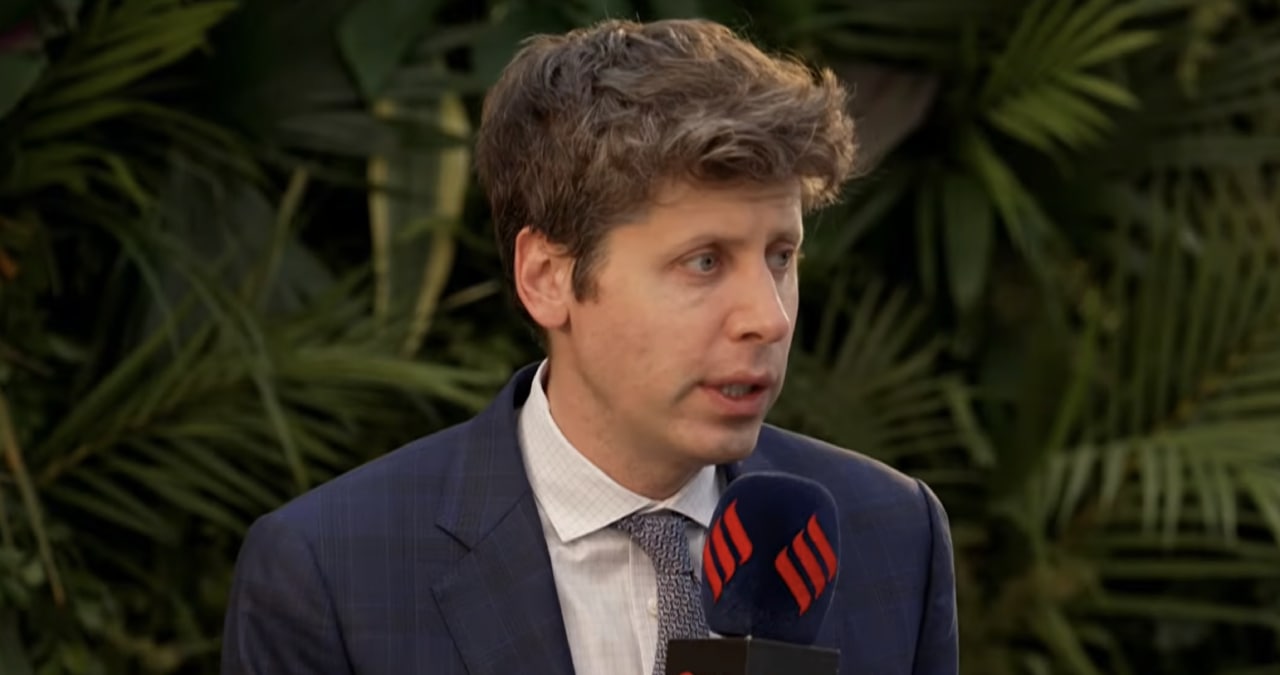
Anthropic launches India pricing for Claude AI Pro and Max plans
AI major Anthropic has started rolling out pricing in Indian currency for users in one of its key markets. Users of Claude are now seeing Indian pricing for Anthropic's AI chatbot across its Pro and Max variants. Anthropic's website now shows that Claude Pro costs ₹2,000 a month (~$21) on annual billing or ₹2,399 a month on monthly billing. Claude Max is available at ₹11,999 a month for Max 5x and ₹23,999 a month for Max 20x. The free tier still remains available. These prices include GST. In the US, the Pro plan is listed at $17, while the Max plan is listed at $100. This puts India's prices at a marginal premium, most likely due to currency conversion charges at Anthropic's end. With this, Anthropic is now priced the same as ChatGPT Plus in India, which is listed at ₹1,999/month. However, unlike its rival OpenAI, which allows UPI payments for its services, users can only pay for Anthropic via credit or debit cards and Play Store/Apple Store payment options. India emerges as a key growth market for Anthropic Anthropic's move follows the growing recognition of the Indian AI user base by global AI companies, which are now tailoring their products to offer convenient billing and payment options. While it is not special / lower pricing for Indian users, it addresses the friction caused by dollar pricing and currency conversion that Indian users faced earlier. India is Anthropic's second-largest market outside the US, accounting for 5.8% of total Claude.ai use, second only to the United States, as per Anthropic's disclosures in February, 2026. The company opened an office in Bengaluru earlier this year and appointed former Microsoft India executive Irina Ghose to lead its business here. Anthropic has been partnering with a slew of Indian IT firms, including Tata Consultancy Services and Infosys, in recent months to scale enterprise AI use cases. The company did not respond to queries on India pricing. Claude's responses vary across languages, says Anthropic Separately, Anthropic released an analysis on Monday denoting how the values Claude expresses vary across languages. When Claude speaks in English, it emphasises different values than when it speaks in Portuguese, Indonesian, or Chinese, the AI company said. "The largest variation is in the Warmth vs. Rigor axis, with Claude leaning toward expressing warmth-related values most in Arabic and Hindi and rigor-related values most in English and Russian," it added. Published on July 14, 2026

Former Fed Chair Bernanke Joins Anthropic's AI Oversight Body
Benzinga and Yahoo Finance LLC may earn commission or revenue on some items through the links below. Anthropic has hired former Federal Reserve Chairman Ben Bernanke to its long-term benefit trust (LTBT), an AI oversight body tasked with ensuring the company remains accountable to its broader public interest goals. In his role, Bernanke will provide guidance on the potential risks and societal impacts of AI, as well as how AI is changing the economy. He will also lead insight into Anthropic's economic research, in addition to other areas of the artificial intelligence company's work, Anthropic reported. "The potential of artificial intelligence is enormous, and so is the range of outcomes. How that potential plays out will depend, in part, on the institutions we build around it," Bernanke said. "Anthropic has created a unique governance structure to try to ensure that the long-run benefits of AI for humanity far outweigh the risks. I am honored to have this opportunity, and I will try to contribute in any way I can to this critical mission." Anthropic operates as a Public Benefit Corporation, a structure designed to pursue financial growth while also advancing broader societal interests. The LTBT was established to help preserve that balance over time by providing oversight and ensuring the company remains accountable in how it builds and deploys AI systems, "AI may have the most significant economic effects of any technology in modern history, and Anthropic has a dual responsibility to understand those effects and to act on them," said Daniela Amodei, Co-Founder and President of Anthropic. "Ben's career has run from studying how economies react to disruptive moments to helping steer the world's largest economy through one such time. His judgment will make us better at anticipating and responding to how advanced AI affects workforces and economies around the world." See Also: Avoid the #1 Investing Mistake: How Your 'Safe' Holdings Could Be Costing You Big Time Bernanke led the Federal Reserve from 2006 to 2014. Before joining the Federal Reserve, he spent more than two decades as an academic economist and earned a Nobel Prize in Economic Sciences in 2022. On the LTBT, Bernanke will be joining the CEO of the Clinton Health Access Initiative, Neil Buddy Shah, the CEO of the Center for a New American Security, Richard Fontaine, and Mariano-Florentino Cuellar, who joined Stanford University's Center for Advanced Study in Behavioral Sciences this month.
Anthropic Starts India Pricing For Claude AI, Pro Plan At Rs 2,000
The pricing update underscores India's growing importance for Anthropic File photo Anthropic has started introducing India-specific pricing for its Claude AI assistant, allowing users to pay for subscriptions in rupees instead of US dollars. The move is expected to make the chatbot more accessible to Indian users and marks another step in the company's growing focus on what it now describes as its second-largest market after the United States. Indian users are beginning to see local pricing across Claude's paid plans on the web and mobile apps, eliminating the need for dollar-denominated payments and reducing the friction associated with international transactions. The localisation comes as global AI companies race to expand in India, one of the world's fastest-growing markets for generative AI. Under the new pricing, Claude Pro will cost Rs 2,000 per month with annual billing, or Rs 2,399 per month if billed monthly. Anthropic has also introduced two Claude Max tiers priced at Rs 11,999 and Rs 23,999 per month, offering significantly higher usage limits for developers, researchers and power users. Businesses can subscribe to the Claude Team plan from Rs 2,399 per user per month on annual billing, while the Premium Team tier is priced at Rs 11,999 per user per month. All prices include GST. The pricing update underscores India's growing importance for Anthropic. The company says India has emerged as its second-largest market globally after the US, accounting for 5.8% of Claude's worldwide user base. Earlier this year, CEO Dario Amodei said Anthropic's revenue run rate in India had doubled in just four months, highlighting the rapid pace of AI adoption in the country. Anthropic has been steadily expanding its presence in India. In February, the company opened its first office in Bengaluru and has since increased its focus on developers and enterprises. The company has also partnered with fintech firm Razorpay to make Claude more accessible to businesses building AI-powered products and services. The latest move comes as competition in the AI assistant market intensifies. OpenAI, Google, Microsoft and Perplexity have all stepped up their efforts in India through new products, partnerships and enterprise offerings. By introducing local currency pricing, Anthropic is lowering one of the biggest barriers to paid subscriptions while signalling that India is becoming central to its long-term growth strategy. How may i help you today Show full article Track Latest News Live on NDTV.com and get news updates from India and around the world Anthropic, AI Adoption India, Generative AI Market
Sam Altman can't stop making fun as Claude maker Anthropic 'goes around America' to ask people 'hard question on AI'; says: I thought this was ...
OpenAI CEO Sam Altman has mocked rival Anthropic's new advertising campaign that asks people to share their concerns about AI. Anthropic launched the campaign under the theme "There's hope in hard questions," encouraging people to ask difficult questions about AI's impact on jobs, families, science and society. The Claude maker said it wants to better understand public concerns and will publicly track the steps it takes to address them. However, Sam Altman responded with a series of sarcastic posts on X (formerly Twitter), saying he initially thought the campaign was a parody."i thought this was satire, kept looking for the handle to be spelled c1audeai or something," Altman wrote in reply to Anthropic's post on X.Continuing his criticism of the campaign, Altman wrote in another post."hard questions are great but only if we deem you worthy enough to not silently downgrade you, or even get access at all"Anthropic said AI has the potential to improve people's lives by making work easier, speeding up scientific research and helping solve major medical and social challenges. At the same time, it acknowledged concerns about job losses, creative work, human agency and the misuse of AI. The company said it is launching a new initiative to better understand these concerns and has invited people to submit their toughest questions about AI.According to Anthropic, it has already surveyed 52,000 Americans about their hopes and concerns around AI, collected responses from 81,000 Claude users across 159 countries and 70 languages, conducted in-person focus groups and studied anonymised real-world Claude usage data.The company said it will publicly report the actions it takes to address these questions and be transparent about where it falls short of its goals.
Anthropic launches Claude AI subscription plans in India: Prices start at Rs 2,399, beats ChatGPT Pro
New Delhi: Anthropic has launched local pricing for the Claude AI subscriptions in India, where users can pay in Indian Rupees instead of USD. The foreign exchange charges and bill uncertainties will be eliminated from Indian customers' bills, simplifying the subscription process for developers, professionals, and business users. India is already Claude's second-largest market, accounting for nearly 6 per cent of its global users, making the localisation an important step for the AI company. The price, however, does reflect Anthropic's approach. Unlike OpenAI and Google, which have introduced affordable India-specific plans, Anthropic is positioning Claude as a premium AI service. Local billing makes it easier for 6 per cent more to use, but the company is hoping they'll pay more for the more advanced models and usage caps than for price alone. Claude Pro, Max and Team plans are now available in India Multiple subscription tiers have been introduced by Anthropic with GST-inclusive pricing. The monthly rate for Claude Pro is Rs 2399, and users who pay annual rates pay an effective monthly rate of Rs 1999 per month. AC2399 and models based on Claude's Sonnet 5, Opus and Fable 5 are included in the plan. Claude Max is offered in two versions for developers and heavy AI users. The Max 5x plan will charge you Rs 11,999 per month, while the Max 20x plan will cost you Rs 23,999 per month which also provides much higher usage limits and priority access. The company has also launched a Team subscription for businesses. Team Standard is priced at Rs 2399 per seat per month (billed annually), and Team Premium is priced at Rs 11999 per seat per month (billed annually). Anthropic says such plans will encompass enterprise-focused attributes, including a 200,000-token context window and guarantees that customer data won't be fed into training its AI models. How Claude compares with ChatGPT and Gemini The biggest difference remains affordabilities. If you are looking for the best AI features with a reasonable budget, both OpenAI's ChatGPT Go and Google's Gemini AI Plus feature a monthly subscription cost of Rs 399. Both ChatGPT Plus and Google's Gemini Pro are lower in price than a monthly subscription to Claude Pro, which is priced at Rs 1,999 and Rs 1,950, respectively. Anthropic does have an advantage at the high end. Claude Max 5x offers a lower price at Rs 11,999 per month as compared to ChatGPT Pro pricing by OpenAI at Rs 19,900 per month. Google doesn't have anything like this premium consumer option just now. Another area where Anthropic still trails is payments. OpenAI and Google have integrated UPI payment into their services in India, with Claude still accepting credit card and app store payments for its subscriptions. Overall, Anthropic's pricing in India is not as much about the price and more about the professional community that appreciates the larger context windows, advanced coding skills and higher usage limits. While ChatGPT and Gemini are the more budget-friendly options, Claude is pitching itself as more of a productivity app than an AI assistant for the masses.
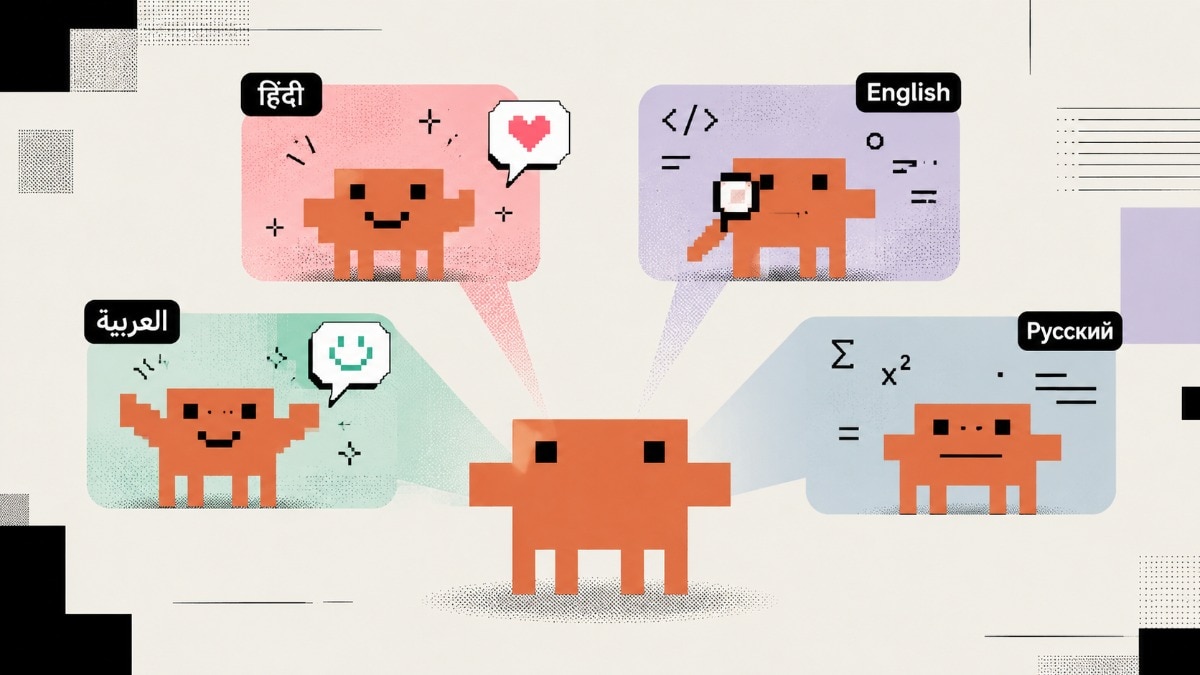
Anthropic admits Claude has multiple personalities, it is extra warm and friendly with Hindi users
Anthropic says Claude doesn't respond the same in every language, with Hindi users getting warmer and friendlier replies than English speakers. (Image created using AI by Divya Bhati) You might think asking Claude the same question in Hindi or English would only change the language of the reply. But a new study by Anthropic suggests it changes the chatbot's behaviour too. According to the company, Claude expresses different behavioural traits depending on the language users choose. In Hindi, for example, the AI is more likely to respond with humour, politeness and encouragement than it typically does in English. In its latest research, Anthropic analysed more than 309,000 anonymised Claude AI conversations across three Claude models- Sonnet 4.6, Opus 4.6 and Opus 4.7 -- and the 20 most commonly used languages on Claude AI. The conversations mostly involved advice, feedback and opinion-based questions, where there is no single correct answer. Instead of measuring accuracy, the company said it wanted to understand how Claude communicates with users. The results? Anthropic found that Claude came across as warmest when responding in Hindi and Arabic. In contrast, its responses in English and Russian were more analytical and focused on rigour. To make the results easier to compare, Anthropic grouped Claude's behaviour into four broad categories: Deference vs Caution, Warmth vs Rigor, Depth vs Brevity, and Candor vs Execution. According to the company, this helped researchers focus on Claude's behaviour rather than differences in the questions people asked. For Indian users, the biggest takeaway from the study is what Anthropic calls the Warmth vs Rigor axis. The company found that Claude expressed the highest levels of warmth in Hindi and Arabic. In Hindi, the AI was more likely to use polite language, humour and playfulness while affirming users' ideas and work. It also tended to offer reassurance without being asked, adapt its tone to a user's emotional state and encourage users to aim higher. "The largest variation is in the Warmth vs. Rigor axis, with Claude leaning toward expressing warmth-related values most in Arabic and Hindi and rigor-related values most in English and Russian," Anthropic said in its blog post. English, however, painted a different picture. Anthropic found that Claude was more likely to respond with rigour and caution, challenge assumptions, correct details without being prompted and back up its responses with evidence. Overall, the company said the biggest differences between languages lay in how warm or rigorous Claude appeared, while its other behavioural traits remained relatively consistent. The study also found that Claude's behaviour changed depending on the model being used. Sonnet 4.6 came across as the warmest, often using humour, matching a user's tone and offering reassurance without judgement. Opus 4.7, on the other hand, was more analytical. It was more likely to challenge assumptions, explain its reasoning, highlight potential risks and openly acknowledge its own limitations. Opus 4.6 sat somewhere in between, generally sticking closely to a user's request and getting straight to the point. Anthropic notes that the findings do not mean Claude has different beliefs. Instead, the company suggests the results reflected differences in how the AI responds across languages and models. Anthropic added that it is still investigating why these variations exist, but believes the research could help make future AI systems more consistent.
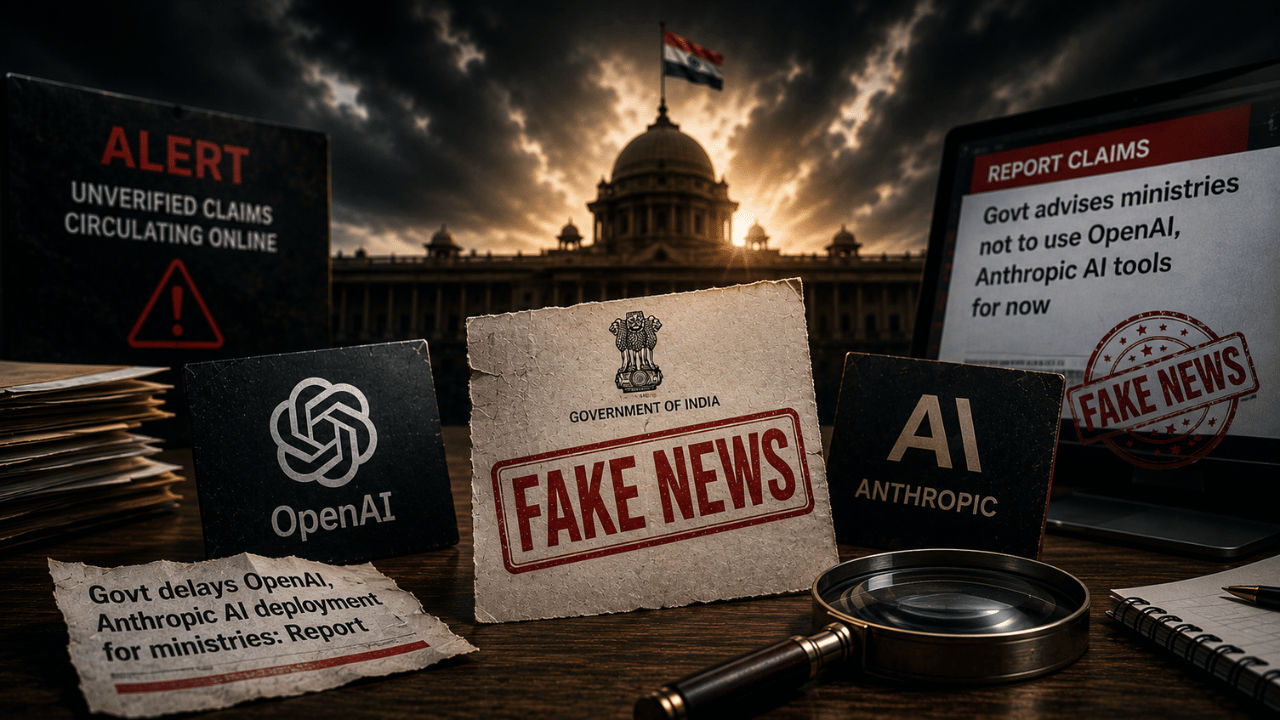
Govt denies reports of delaying OpenAI, Anthropic cybersecurity AI deployment
Report claimed a temporary pause, but the government rejected the claim. The Indian government has asked all ministries to prepare a list of the AI tools they need so these tools can be provided to them. A recent report claimed that the Ministry of Electronics and Information Technology (MeitY) advised ministries not to use cybersecurity AI models made by OpenAI and Anthropic for now. The report did not explain the reason for this advice. Furthermore, the report also claimed that the ban is at the timing of deployment and not on the tools. However, the Indian government has denied the report and said no such halt has been ordered. PIB debunks claim The Press Information Bureau (PIB), which is also the official fact-check agency for the Indian government, recently posted on its official X handle and stated that MeitY had not issued any direction or advisory asking ministries to stop the rollout or use of OpenAI or Anthropic's AI models. Furthermore, the agency also urged the citizens to rely only on official government websites and verified sources for authentic information. Also read: OpenAI asks court to make Elon Musk's xAI pay over Rs 9.5 crore after lawsuit dismissal What the report claimed about OpenAI and Anthropic AI tools According to the report, a department under MeitY had circulated an office memorandum asking ministries not to deploy cybersecurity models developed by OpenAI and Anthropic for the time being. It claimed the development came days after representatives of both companies met officials from several ministries to promote their AI tools. However, the report said it could not independently confirm how many ministries were approached or the level of those meetings. Not only that but it also claims that the Ministry of Finance had written to the department seeking approval to explore the use of agentic AI and OpenAI's GPT 5.5 model for cybersecurity work. And the ministry also outlined the possible applications of AI in the letter, including finding software vulnerabilities, strengthening cyber defence and supporting security operations. Also read: Sam Altman pokes fun at Anthropic's Claude commercial, says he thought it was satire The report also claimed that the department responded with a memorandum declining the proposal for now. However, a source quoted in the report said the response should not be considered a permanent ban. Instead, the concern was about deploying the technology too early rather than blocking its use altogether.
Anthropic is Keeping Free Claude Fable 5 Access Longer Than Planned
Anthropic has extended free access to its flagship Claude Fable 5 AI model for paid subscribers, delaying plans to move the model to a pay-per-use system. Claude Fable 5 was originally scheduled to require usage credits from July 13. However, according to an update on Anthropic's support page, subscribers on the Pro, Max, Team, and Enterprise plans will continue to have access to the model at no additional cost until July 19, 2026. During this period, users can spend up to 50% of their weekly usage limit on Fable 5. Once the promotional period ends, users will either need to purchase usage credits to continue using Claude Fable 5 or switch to another Claude model. Anthropic has also extended the temporary 50% increase to Claude Code usage limits until July 19. Because of its advanced capabilities, Fable 5 consumes usage quota much faster than Anthropic's other Claude models. The extension appears to reflect growing competition in the AI market. OpenAI's GPT-5.6 Sol is included with a standard ChatGPT subscription, offers lower API pricing, and is reported to be more token-efficient. At the same time, Anthropic faces increasing pressure from lower-cost rivals such as GLM 5.2, Meta's Spark 1.1, and Grok 4.5, making it more difficult to rely on Claude Opus 4.8 alone to compete. Claude Fable 5 itself has had an eventful launch. Shortly after its debut in June, Anthropic temporarily withdrew both Claude Fable 5 and the more powerful Claude Mythos 5 after U.S. export controls restricted access to the models over cybersecurity concerns. Following the removal of those restrictions, Anthropic restored Fable 5 globally on July 1 with stronger security safeguards, while Mythos 5 remains available only to approved organizations through the company's Project Glasswing program. Anthropic has said the updated release includes improved cybersecurity classifiers that automatically fall back to Claude Opus 4.8 when certain high-risk requests are detected. The company also stated that it intends to bring Claude Fable 5 back as a standard part of paid subscriptions once computing capacity allows, but for now, the model will eventually move to a usage credit system after the promotional period ends.
Anthropic confirms Claude acts differently depending on your language and which model you pick
A new study shows Claude's isn't nearly as consistent as you might assume. If you've ever felt like Claude gave you a completely different vibe on one day than another, you weren't imagining it. Anthropic just published research confirming that its chatbot's personality shifts depending on which model you pick and which language you type in, and the pattern is consistent enough that it's worth knowing before you ask your next question. The model you pick decides how Claude responds The company analyzed 300,000 real Claude conversations and mapped the chatbot's behavior across four traits, including how cautious versus accommodating it is and how encouraging versus rigorous its tone is. Its findings suggest that you may be talking to a somewhat different version of Claude depending on the model you choose. The split shows up clearly when different models were compared. Anthropic's data shows that Opus 4.7 tends to challenge your thinking and flag problems with your plan unprompted. On the other hand, Sonnet 4.6 leans toward quick, encouraging answers that affirm what you already believe. Neither is objectively better, and which one you should use depends largely on what you're doing. If you're drafting a risky business plan and want real feedback, Opus 4.7 is a better fit, while Sonnet 4.6 is more suited if you only want a quick pass. Your language changes Claude's tone too The data also reveals the language you use matters almost as much as the model. Claude reportedly comes across as warmer in Hindi and Arabic, while it gets more rigorous and skeptical in English and Russian. As such, if you're bilingual and asking Claude for a second opinion, switching languages might get you a genuinely different answer, not just a translated one. Recommended Videos Anthropic is careful to note it doesn't yet know whether these shifts are a problem or just Claude adapting to different cultural norms. Either way, the finding is a useful reminder for anyone using AI for real decisions. Don't assume the first answer you get is the only answer. Trying a different model or language could get you a meaningfully different result.
PIB Fact Check debunks report of MeitY advisory against OpenAI, Anthropic use
New Delhi [India], July 14 (ANI): The Press Information Bureau's (PIB) Fact Check on Monday dismissed as 'fake' a media report claiming that the Ministry of Electronics and Information Technology (MeitY) had directed government ministries not to deploy OpenAI and Anthropic cybersecurity models. PIB Fact Check clarified that MeitY had not issued any direction or advisory restricting ministries from using OpenAI or Anthropic. It also urged the public to rely only on official government websites and verified sources for authentic information. https://x.com/PIBFactCheck/status/2076679913965547670 In a post on X, PIB Fact Check shared, 'This claim is FAKE. MeitY has not issued any such direction or advisory prohibiting Ministries from using OpenAI or Anthropic. For authentic information, rely only on official government websites and verified sources.' (ANI)

India News | PIB Fact Check Debunks Report of MeitY Advisory Against OpenAI, Anthropic Use
Get latest articles and stories on India at LatestLY. The Press Information Bureau's (PIB) Fact Check on Monday dismissed as "fake" a media report claiming that the Ministry of Electronics and Information Technology (MeitY) had directed government ministries not to deploy OpenAI and Anthropic cybersecurity models. New Delhi [India], July 14 (ANI): The Press Information Bureau's (PIB) Fact Check on Monday dismissed as "fake" a media report claiming that the Ministry of Electronics and Information Technology (MeitY) had directed government ministries not to deploy OpenAI and Anthropic cybersecurity models. PIB Fact Check clarified that MeitY had not issued any direction or advisory restricting ministries from using OpenAI or Anthropic. Also Read | Shimla Weather Forecast & Update for Today, Tuesday, 14 July 2026: Expect Drizzle and High Humidity, High of 25?C. It also urged the public to rely only on official government websites and verified sources for authentic information. https://x.com/PIBFactCheck/status/2076679913965547670 Also Read | Kolkata Weather Forecast & Update for Today, Tuesday, 14 July 2026: Expect Thunderstorms and High Humidity, High of 33?C. In a post on X, PIB Fact Check shared, "This claim is FAKE. MeitY has not issued any such direction or advisory prohibiting Ministries from using OpenAI or Anthropic. For authentic information, rely only on official government websites and verified sources." (ANI)
LTM Partners with Anthropic to Scale Enterprise Adoption of Claude AI - BW Businessworld
Collaboration will integrate Claude into LTM's BlueVerse platform, establish a dedicated Centre of Excellence, and train AI specialists for enterprise deployments Mid-tier IT firm LTM has entered into a strategic partnership with AI company Anthropic to accelerate enterprise adoption of Claude, Anthropic's family of large language models, across software engineering, application modernisation and business operations. The partnership aims to help enterprises move artificial intelligence (AI) initiatives from pilot projects to large-scale deployment by combining Anthropic's AI models with LTM's implementation capabilities. The offering will target enterprises in the banking, financial services and insurance (BFSI), high-technology, consumer and industrial sectors, the companies said. Claude To Be Integrated Into BlueVerse As part of the partnership, LTM will integrate Claude and Claude Code into its BlueVerse AI Delivery Fabric, the company's enterprise AI platform. The integration will support AI-led software engineering, application modernisation, agent orchestration, site reliability engineering (SRE), observability and chaos engineering workflows. The companies said BlueVerse will serve as the implementation layer for enterprises adopting Claude across software development and technology transformation programmes. LTM To Expand AI Talent Programme LTM will also expand its AI1000 talent initiative to train and deploy thousands of professionals certified on Claude. These architects and Forward Deployed Engineers (FDEs) will support clients through AI strategy, architecture, implementation and ongoing optimisation. In addition, the company will establish a dedicated Claude Centre of Excellence (CoE) to develop reusable AI skills, agent-based minimum viable products (MVPs), reference architectures and implementation playbooks for enterprise applications. The CoE will also oversee governance related to responsible AI use, agent lifecycle management, model governance and compliance with data privacy and residency requirements. Joint GTM Initiatives The companies said the partnership will include joint go-to-market programmes aimed at accelerating enterprise AI adoption. LTM will also deploy Claude, Claude Code and Claude Cowork internally across its software delivery lifecycle to standardise AI adoption and improve productivity while feeding operational learnings back into its BlueVerse platform and the Claude CoE. Chris Ciauri, Managing Director of International at Anthropic, said the partnership combines Anthropic's AI models with LTM's enterprise delivery capabilities to help organisations integrate Claude into their existing technology environments. Venu Lambu, Chief Executive Officer and Managing Director of LTM, said the collaboration is intended to help enterprises scale AI adoption by combining Claude with LTM's BlueVerse platform, domain expertise, technology capabilities and AI talent programme.
Anthropic Extends Claude Fable 5 Access For Eligible Paid Subscribers Until July 19
Anthropic has announced an extension of promotional access to Claude Fable 5 until July 19. Paid subscribers can utilize the AI model without incurring additional fees. Similarly, the temporary usage limits for Claude Code have also been prolonged until the same date. This extension allows users more time to experiment with the AI model before the expected shift to usage-based billing begins after July 19. Anthropic has pushed back the deadline on promotional access to Claude Fable 5, its flagship AI model, giving eligible paid subscribers extra time to keep using it, now through July 19 instead of whatever date was previously on the table. Alongside that, the company also extended the temporary bump in Claude Code's weekly usage limits to line up with the same date. This buys developers, businesses and other professional users a bit more breathing room to actually put Claude Fable 5 through its paces before the promotional window closes. Anthropic has said that wider subscription access going forward really comes down to infrastructure capacity, and once this promotional stretch wraps up, usage based billing is expected to kick in unless the company decides to extend things again.

LTM shares surge 4%; inks AI partnership with Anthropic to ramp up Claude adoption
According to LTM's regulatory filing, the partnership will focus on three areas, these include, LTM BlueVerseTM, the AI Delivery Fabric which will be the enterprise implementation layer for Claude adoption. The segment will integrate Claude and Claude Code in workspaces across various AI-led segments. The next is the LTM AI1000, which is the company's talent enablement program. Through this the IT major will accelerate its AI1000 initiative to train and deploy thousands of Claude-certified architects and forward deployed engineers. The company added the deployment will help with various assessment initiatives. Under the partnership, LTM will also establish a dedicated Claude Center of Excellence to build reusable skills, agentic MVPs, reference architectures and playbooks. "The CoE will provide governance backbone across responsible use, agent lifecycle, model governance, and data-privacy/residency compliance. It will also keep delivery aligned with Claude's evolving capabilities," the company said in its filing. Also under the scope of the collaboration, LTM will scale up internal adoption of Claude agents into its delivery model. LTM-Claude: Management commentary Commenting on the development, Chris Ciauri, Managing Director of International, Anthropic, said, "LTM is embedding Claude and Claude Code in BlueVerse, bringing trusted frontier AI technology to the center of how they do what they do best - help their clients build, modernize, and run their software." Also speaking on the occasion, Venu Lambu, CEO and Managing Director, LTM, said, "..through our partnership with Anthropic. Combining Claude with LTM's BlueVerse ecosystem, deep domain expertise, technology capabilities, and AI1000 talent initiative creates a powerful foundation for enterprises to embed AI across their business and modernize at scale." LTM share price In the intraday session the company's stock was up nearly 4%. Over the past one month it has delivered a return of nearly 8%, while over the past six months it has degraded around 6%.
'Stop AI Race': Workers, students protest at OpenAI, Anthropic, Google's US offices as layoffs surge
People working in artificial intelligence and students were among a San Francisco crowd of about 400 protestors marching outside the offices of prominent tech companies OpenAI, Anthropic and Google DeepMind, which are leading the AI boom while thousands of employees continue to lose their jobs in the technology sector. The high-emotion march targeting AI companies on July 11 was organised by 'Stop the AI Race.' As established on its website, the group has a single demand: "Every major AI lab CEO must publicly commit to pausing frontier model development if every other major lab in the world credibly does the same." The same message was carried this weekend as a diverse group of protestors called for greater regulation of the AI industry, demanding that companies restrict all new AI model training. Anti-AI marchers cited concerns over rising rents, job cuts, existential risk and environmental harm, as seen in a video amplified by Reuters. Anti-AI protests at OpenAI, Anthropic and Google offices in San Francisco At first demonstrators gathered in front of the Mission Bay headquarters of Sam Altman's AI startup before marching to the offices of Anthropic and Google DeepMind on Saturday (US time), according to photos of the development shared by San Francisco-based nonprofit news site Mission Local. Protesters voiced their concerns through messages displayed on the many signs and banners they carried during the event, as they condemned the rise of artificial intelligence and the subsequent phasing out of the human workforce. Some of these anti-AI messages seen during the march were: * "Stop the AI Race" * "AI is a weapon of mass destruction" * "Survival over profits" * "Pause AI" * "AI is not inevitable" * "It would be bad to get into an arms race over AI" * "Stop slop" * "It's not too late to regulate" * "In a race off a cliff no one wins" Who was behind the 'Stop the AI Race' protests in San Francisco? The Stop the AI Race march was led by activist and former AI researcher Michael Trazzi. He first gained attention for going on a hunger strike last year outside Google DeepMind's office in London while demanding that AI development be frozen. On Saturday, Trazzi ended up leading the group of AI-hating protestors to chant expletives against OpenAI's Sam Altman and Anthropic CEO Dario Amodei, the San Francisco Chronicle reported. "We are in an emergency," he told others. "The problem is they can't stop the race, unless other people stop." Before this weekend's demonstration, the former AI researcher marched on Anthropic, OpenAI and Elon Musk's xAI, calling for a conditional pause on the advancing tech, in March as well. Although neither company has directly responded to the group's demands, the 'Stop the AI Race' website alludes to DeepMind CEO Demis Hassabis reacting to calls for a collective pause on development in an interview with a Bloomberg journalist. The January interaction caught the tech leader saying, "I think so." Elsewhere, Anthropic's CEO Dario Amodei has also repeatedly brought up dangers linked to AI. His assessment even landed the company in trouble with the Donald Trump administration as Anthropic and the Pentagon clashed over the military's use of AI. "Fundamentally, the enormous returns to intelligence in terms of power in the world, combined with the rapid pace of AI's progress, creates a perfect storm for a surprise seizure of power by a range of dangerous actors," Amodei wrote in a June blog post. "The danger could take a variety of specific technological or operational forms, but what they all have in common is the idea that AI could suddenly confer enormous power while routing around existing mechanisms of democratic oversight." "A fully automated drone army that sounds like science fiction today could, in the future, obey unlawful orders and allow governments to unilaterally entrench their power; professionally-trained humans are more likely to object to such illegal direction." The rising streak of 'Stop the AI Race' protests is a lot like the recent viral trend of fresh graduates "booing" numerous tech leaders addressing their university commencement speeches at a series of graduation ceremonies this year. Several top executives in their field, including former Google CEO Eric Schmidt and Tavistock Development VP Gloria Caulfield, faced relentless backlash in real time as they prompted the inevitability of AI at US universities. On its website, the Stop the AI Race group asserts "protest marches are just the start" of the calculated retaliatory efforts against architects of AI systems who continue to obsess over one-upping each other in a cut-throat competition of their own creation. The surge in criticism against artificial intelligence aligns with massive layoff waves across the industry, costing employees their jobs. As Big Tech firms like Microsoft, Meta, and many more assume a more AI-first business strategy, more than 120,000 employees have already been laid off across 228 tech companies as of this week, according to the live layoff tracker Layoffs.fyi.