News & Updates
The latest news and updates from companies in the WLTH portfolio.
Is Polymarket down? Is polymarket down right now
If you're trying to beat the odds, bad luck. Polymarket is having some problems Saturday. According to DownDetector, Polymarket, a decentralized prediction market that allows users to bet on the outcome of real-world events using cryptocurrency, has been giving users some issues Saturday. The problems started around 8:30 p.m. EST and there were about 500 reports as of 8:45 p.m.. According to Downdetector, about 70 percent of the complaints were about the app, though betting and the website were also giving users some problems. It was also a topic on social media and "Is Polymarket down" was trending on Google. There is no timetable for when the issues will be resolved, though it hasn't been down long, so it could be a quick fix. This article originally appeared on Asbury Park Press: Is Polymarket down? Is polymarket down right now
Polymarket odds for Putin exit by June 2027 jump to 19% on $17.8M
predict.info -- Premium Domain For Sale Domain only: USD 200,000. Prediction platform technology priced separately. predict.info Drone-Attack Fire Reports Trigger Polymarket Repricing in "Putin Out by June 30, 2027" Ladder Polymarket's ladder market on whether Vladimir Putin is out as President of Russia by June 30, 2027 is priced at 19% Yes (81% No) on $17.83M volume, up 10.5 percentage points from 8.5%. The move follows reports of a drone attack and fires at fuel and logistics sites in Moscow region, offering a clear read on how traders are mapping near-term security shocks onto longer-dated leadership risk. Key Takeaways * Polymarket implies a 19% chance Putin is out as President of Russia by June 30, 2027 (81% No). * After drone-attack fire reports in Moscow region, traders pushed the June 30, 2027 strike higher, signaling more weight on leadership-disruption tail risk than before. * Settlement is pegged to the June 30, 2027 deadline; the market has been volatile lately with the latest odds (8.5%) below the recent average (16.6%). A report described a nighttime drone attack in Russia's Moscow region that sparked fires at an oil depot in Noginsk and at a Wildberries logistics center in Elektrostal, with videos showing explosions and large fires. The regional governor was cited as confirming drones struck the Noginsk depot and saying nearly 50 drones targeted the region overnight. Odds Curve & Liquidity Snapshot: June 30, 2027 Jumps to 19% Yes on $17.83M Volume (+10.5 pp) vs Dec 31, 2026 at 9% This is a price-ladder contract: each dated strike is a separate Yes/No market on whether Putin is out by that deadline, not a single "final date" settlement price. The curve shows traders assigning low near-term probability but a materially higher longer-horizon tail: December 31, 2026 sits at 9% Yes / 91% No, while June 30, 2027 is 19% Yes / 81% No; the earlier rungs are thinner odds at September 30, 2026 (4.1% Yes / 95.9% No) and July 31, 2026 (0.4% Yes / 99.6% No). The headline move is the June 30, 2027 strike jumping to 19% from 8.5% (+10.5 pp) with $17.83M traded, indicating meaningful disagreement being repriced into the farthest deadline rather than concentrated on the immediate rungs. At the same time, the provided summary flags a bearish, strong-momentum tape with latest odds at 8.5% versus a 16.6 average over the last five observations and -5 pp over both 24h and 7d, which is consistent with fast mean-reversion and sensitivity to short-lived catalysts rather than a steady drift upward. Watch whether buying pressure lifts the mid-curve (December 31, 2026 at 9% Yes) alongside the far strike (June 30, 2027 at 19% Yes); a curve that steepens only at the far end usually means traders see risk as long-dated and hard to time. Also monitor whether the market's recent bearish momentum (latest below recent average) persists or snaps back, which would signal the repricing was more than a one-off reaction. Cross-Contract Watchlist: How This Leadership-Risk Reprice Can Spill Into Polymarket Macro and Crypto Volatility Markets If you're tracking how a leadership-risk reprice can cascade across the tape, it's worth scanning what else traders are leaning into on Polymarket right now. In politics-adjacent flow, "Will the U.S. invade Iran before 2027?" sits at 68.5% No on $44.64M volume, while "Next leader out of power before 2027? (No Orban)" has "Starmer - UK PM" at 99.4% on a hefty $66.87M traded -- both useful for gauging broader risk appetite and time-horizon positioning. And away from macro entirely, even evergreen event markets like "World Cup: Golden Ball Winner" show how concentrated conviction can get, with "Lionel Messi" leading at 90.6% on $12.52M volume. Odds Trend By the Numbers * Platform: Polymarket * Market: Putin out as President of Russia by...? * Contract type: Price strike ladder: each rung has separate Yes/No; Yes means the spot price is above that USD strike at settlement. * Resolution window: Jun 30, 2027 (UTC) * Status: Active (open for trading) * Volume: ~$17,827,866 Top strike rungs +1 more strikes not shown

Polymarket prices Starmer exit-before-2027 at 99.4% on $66.9M volume
predict.info -- Premium Domain For Sale Domain only: USD 200,000. Prediction platform technology priced separately. predict.info Polymarket Pins "Starmer - UK PM" Near 99% as Election-Headline Risk Reprices the "Next Leader Out Before 2027" Contract Polymarket's "Next leader out of power before 2027? (No Orban)" market is priced as a near-lock for "Starmer - UK PM," with the leading outcome at 99.4% on $66.9M in volume. The move comes as election-news coverage continues to feed headline risk into how traders rank the next leader to fall, and the contract's recent odds ramp shows how quickly the market consolidated around one pick. Key Takeaways * Prediction: "Starmer - UK PM" leads at 99.4% implied probability in Polymarket's multi-outcome market. * Basis: Traders have concentrated almost entirely into the Starmer outcome, nudging it up +0.3pp (99.1% to 99.4%) alongside heavy total volume ($66.9M). * Timing: The market resolves by 2026-12-31, with a sharp +29.6pp move over both the last 24h and 7d in the available summary. A rolling elections news roundup circulated fresh political headlines across multiple jurisdictions, keeping attention on leadership stability and turnover narratives. That general stream of updates is the near-term catalyst traders often map onto "who exits first" markets, even when the information is diffuse rather than a single decisive event. Market Reaction: $66.9M Volume, 99.4% Implied Odds, and a +29.6pp Weekly Consolidation Into the Leading Outcome This is a multi-outcome Polymarket contract: you are not buying a generic "Yes/No" on one leader, you are picking which named leader is the next to be out of power before 2027, with settlement determined by which outcome is correct by the resolution date. Pricing is extremely one-sided: "Starmer - UK PM" sits at 99.4% Yes / 0.6% No, while long-shot alternatives such as "Trump - USA President" are 0.15% Yes / 99.85% No and "Putin - Russia President" is 0.25% Yes / 99.75% No -- showing the market is treating almost every other path as de minimis. The latest tick was a small +0.3pp lift (99.1% to 99.4%), but the historical summary signals a much bigger consolidation recently: +29.6pp over both 24 hours and 7 days, with a bullish trend, moderate momentum, moderate volatility, and "strengthening" consensus. With $66.9M in volume, the key informational takeaway is not a day-to-day micro move but that traders have largely converged on one resolution narrative rather than expressing sustained disagreement across outcomes. Watch whether the leading outcome stays pinned near 99% or drifts lower as attention rotates across leaders; any meaningful shift would likely show up first as small but persistent re-pricing into the sub-1% outcomes rather than a single abrupt flip, given how concentrated the market already is ahead of the 2026-12-31 resolution. Cross-Contract Watchlist: How This "Leader Out Before 2027" Trade Compares to Other Polymarket Leadership-Turnover and M Zooming out from this one leadership-turnover slate, Polymarket traders are also rotating into bigger-cycle political pricing where liquidity and narrative risk can look very different. "Presidential Election Winner 2028" has JD Vance leading at 19.75% on $663,674,366 in volume (+3.35pp), while "Republican Presidential Nominee 2028" prices Robert F. Kennedy Jr. at 49.0% on $676,486,070. For a nearer-term, binary-style read on executive stability, "Trump out as President by July 31?" sits at 99.55% for No on $1,476,092 (+0.4pp), offering a contrast between long-horizon field markets and tight-deadline yes/no contracts. Odds Trend By the Numbers * Platform: Polymarket * Market: Next leader out of power before 2027? (No Orban) * Contract type: Price strike ladder: each rung has separate Yes/No; Yes means the spot price is above that USD strike at settlement. * Resolution window: Dec 31, 2026 (UTC) * Status: Active (open for trading) * Volume: ~$66,870,814 Top strike rungs +20 more strikes not shown
Anthropic merges Chat and Cowork modes into unified Claude interface
The AI company is rolling out a streamlined experience that lets users toggle between conversation and autonomous task execution from a single message box. Anthropic is blending two previously separate ways of interacting with Claude into one unified home screen. The company's Chat mode and Cowork mode now live under the same roof, letting users switch between casual conversation and hands-on task execution without leaving the message box. What's actually changing The core update is architectural. Chat and Cowork, which previously existed as distinct environments, now share a single interface accessible on both web and desktop. Users can select their preferred mode directly from the message box rather than navigating to separate sections of the platform. The distinction between the two modes still matters, though. Chat handles what you'd expect: ideation, drafting, back-and-forth conversation. Cowork, on the other hand, is Claude acting more like an autonomous agent, capable of reading and writing local files on your machine. Cowork workspaces support local folders, persistent context, and memory features. In English: Claude can remember what you were working on, access your project files, and pick up where you left off. The Cowork functionality remains in beta and is rolling out progressively, starting with Max plan subscribers. Anthropic publicized the update through social media channels in early July, including a detailed Threads post on July 7 that walked through the new functionality. The bigger picture for AI platforms This evolution traces back to project capabilities Anthropic first introduced in 2024. Those earlier features let users organize conversations around specific goals. Project workspaces in Cowork are now distinct from earlier projects in Chat, with dedicated support for managing artifacts and executions across both environments. What this means for investors and the crypto-adjacent crowd Anthropic's latest update has zero direct connection to crypto, DeFi, or digital assets. There are no blockchain integrations, no wallet connectivity, no on-chain execution features tucked into the release notes. The AI sector and the crypto market have become increasingly intertwined through the AI token narrative. Projects like Fetch.ai, SingularityNET, and Ocean Protocol have built entire ecosystems around the premise that AI and decentralized infrastructure will converge. The key metric to watch is adoption velocity once Cowork exits beta and rolls out beyond Max plan users.
Polymarket: Le Pen 32% in 2027 French race, volume tops $114.8M
predict.info -- Premium Domain For Sale Domain only: USD 200,000. Prediction platform technology priced separately. predict.info Sunday-Show Macro Headlines as a Catalyst: How Polymarket Prices the 2027 French Presidential Front-Runner On Polymarket's "Next French Presidential Election" market, Marine Le Pen is the leading outcome at 32.25% implied odds on $114.77M matched volume. The contract's pricing action is being read alongside a U.S.-focused Sunday-shows news hook, with traders' probabilities and recent momentum doing more work than pundit narratives. Key Takeaways * Prediction: Marine Le Pen leads the Polymarket market at 32.25% (Yes 32.25 / No 67.75), ahead of Edouard Philippe at 26.5%. * Basis: Despite a headline news trigger elsewhere, the market shows weakening consensus and moderate volatility rather than a decisive repricing. * Timing: The market resolves on 2027-04-30; the historical summary shows -4.0pp over 24h and -4.0pp over 7d. A Sunday-shows preview highlighted renewed attention on U.S. election-claim disputes and said the Iran war shows no sign of ending, framing the week's political talking points. The piece is a media agenda-setter rather than a France-specific update, but it can still act as a generalized macro-political catalyst that traders may try to map into election-risk pricing. Odds, Volume, and the Probability Cliff: Le Pen 32.25% vs Philippe 26.5% on $114.77M Matched With a -4.0pp Weekly Slide This is a multi-outcome Polymarket contract, so each named candidate is its own tradable outcome and the displayed percent is that outcome's implied probability of winning at resolution, not a head-to-head "Yes/No" on a single proposition. At the top of the book, Marine Le Pen trades at 32.25% (Yes 32.25 / No 67.75) versus Edouard Philippe at 26.5% (Yes 26.5 / No 73.5), while the next tier drops to Jean-Luc Melenchon at 12.5% (Yes 12.5 / No 87.5) and Jordan Bardella at 3.9% (Yes 3.9 / No 96.1), showing a clear front-runner cluster followed by a steep probability cliff. The market has large matched volume ($114.77M), but the historical summary flags consensus "weakening" with "moderate" volatility and a reversal detected -- consistent with traders disagreeing on whether recent information should shift the leader meaningfully. Even with Le Pen still leading, the summary's -4.0pp move over both 24 hours and 7 days (latest odds 25.5; avg last 5 at 26.5) signals a softening in the near-term pricing baseline rather than a strong trend continuation into one dominant outcome. Watch whether the top two outcomes (Le Pen at 32.25% and Philippe at 26.5%) widen or converge on incremental newsflow, because that spread is the market's cleanest signal of changing conviction. Also track whether the reversal flag clears as trading continues, since a sustained move would likely show up first as steadier momentum and a shift away from "neutral" trend ahead of the 2027-04-30 resolution date. Cross-Market Watchlist on Polymarket: Pairing the France 2027 Contract With U.S. Election and Geopolitical Risk Markets Zooming out from the France 2027 board, Polymarket traders often triangulate conviction by checking how other high-liquidity political contracts are moving at the same time. On "Democratic Presidential Nominee 2028," Gavin Newsom leads at 20.15% on $1,241,477,456 matched, while "Brazil Presidential Election" prices Luiz Inácio Lula da Silva at 60.5% on $113,744,406 and "California Governor Election Winner" has Xavier Becerra at 93.8% on $40,359,097. Watching these side-by-side can help contextualize whether shifts look like a local repricing in one country's race or a broader rotation in election-risk positioning across the platform. Odds Trend By the Numbers * Platform: Polymarket * Market: Next French Presidential Election * Contract type: Price strike ladder: each rung has separate Yes/No; Yes means the spot price is above that USD strike at settlement. * Resolution window: Apr 30, 2027 (UTC) * Status: Active (open for trading) * Volume: ~$114,774,722 Top strike rungs +37 more strikes not shown
.jpg)
France orders country's internet service providers to block Polymarket
France joins over 30 countries that have restricted Polymarket, following complaints regarding weather-related bets and a prominent French trader's market influence. France's gambling regulator, the Autorité Nationale des Jeux (ANJ), ordered internet service providers to block Polymarket on July 16, treating the prediction market as an illegal gambling site rather than a financial trading venue. The ANJ said earlier restrictions had failed to keep French users off the platform. Polymarket drew 578,751 visits from 205,057 unique visitors in France in June, according to Similarweb data cited by the regulator, despite a ban on financial transactions in place since November 2024. A VPN was enough to bypass it. The homepage remained accessible, allowing users to view live markets and odds. The ANJ said the real-time odds display promoted an unauthorized gambling service. "The site's homepage, which dynamically displays real-time odds for various events open to betting, thus serves as a major channel for disseminating and promoting Polymarket's offerings, even though the site's operations are not authorized in France," the regulator wrote. Fines can reach 100,000 euros ($114,380). Polymarket didn't immediately respond to a comment from CoinDesk. The ANJ also cited a complaint from France's weather service, Météo-France, over a tampered temperature sensor tied to weather-based bets, prompting the Paris prosecutor's cybercrime unit to open an investigation on May 4.
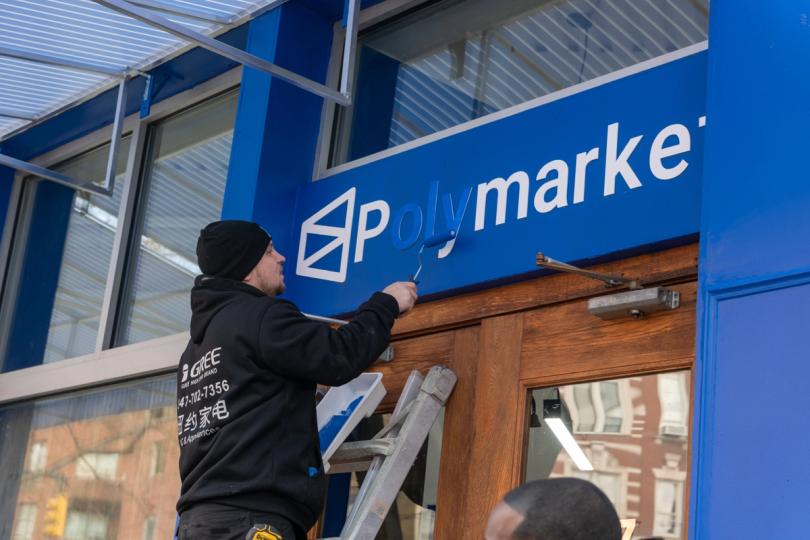
Polymarket Promo Code COVERS: Get $50 Bonus for Liberty vs. Fever, WNBA Prediction Markets
Polymarket promo code COVERS unlocks a $50 bonus. Trade on Liberty vs. Fever tonight! Use the Polymarket promo code COVERS to claim a $50 bonus on one of the best prediction market apps available today. As of July 18, new users can deposit $20 to unlock the welcome offer and start trading on the New York Liberty vs. Indiana Fever matchup at Gainbridge Fieldhouse. Polymarket Promo Code: Claim $50 to Trade Liberty vs. Fever The Polymarket promo code COVERS is your key to unlocking a $50 welcome bonus on the platform. To activate the offer, you must register a new account, enter the code during sign-up, and make a minimum deposit of $20. The bonus is available in all U.S. states except Nevada, so make sure you are physically located in an eligible state before registering. Here are the key terms to keep in mind before claiming: * Available in all U.S. states except NV * Minimum deposit of $20 required to activate the bonus * Valid photo ID required, including a selfie holding the ID * Code must be entered at the time of registration Once your account is funded, you can place your first trade on the Liberty vs. Fever game. If you back Indiana and the Fever win at home behind a healthy Caitlin Clark and a strong performance from Aliyah Boston, your position pays out accordingly. If New York pulls off the road win with Breanna Stewart and Sabrina Ionescu controlling the half court, a losing trade simply closes at a lower value. Either way, the $50 bonus gives you added capital to work with as you get started. Polymarket also covers markets well beyond sports, including politics, economics, and entertainment. Check out the best prediction market promos to compare what else is available before you sign up. Use the correct Polymarket promo code for your state How to Claim Your Polymarket Welcome Offer for the Liberty vs. Fever Game Follow these steps to register and start trading on tonight's WNBA matchup between New York and Indiana. Pages related to this topic

Polymarket keeps Iran regime-fall odds at 10.5% as escalation headlines swirl
Polymarket Holds 10.5% "Regime Falls Before 2027" Odds Despite Escalation Headlines On Polymarket, traders currently price a 10.5% chance that the Iranian regime falls before 2027, with $22,397,381 in volume and no net move at the latest snapshot. The contract's odds are being watched against new escalation headlines, but the market readthrough is still muted versus the longer lookback trend. Key Takeaways * Polymarket implies "No" at 89.5% (Yes 10.5%) that the Iranian regime falls before 2027. * Despite escalation-focused headlines, the market is flat on the latest update, suggesting traders have not translated the catalyst into a higher near-term collapse probability. * The market resolves on 2026-12-31, while the last 24h/7d net change shown is +4.0 percentage points on Yes. A written statement attributed to Iran's supreme leader was read on state television warning the US would face "unforgettable lessons" if attacks continue, while both sides accused the other of breaching a recent MoU. The report describes intensified US strikes on civilian infrastructure and Iranian strikes on civilian infrastructure in Kuwait, alongside claims the MoU is now considered "over." Market Reaction: $22.4M Volume, 10.5% Yes / 89.5% No, and a +4.0pp 24h/7d Net Move With Mean-Reversion This is a binary Polymarket contract: "Yes" pays out if the Iranian regime falls before 2027, otherwise "No" pays, and the market currently favors No at 89.5% versus Yes at 10.5%. Even with the news catalyst in circulation, the latest pricing is flat at 10.5% Yes on $22,397,381 matched volume, implying traders are not assigning incremental collapse risk from this headline alone. The historical summary still shows a +4.0pp move over both 24 hours and 7 days with low volatility and a "neutral" trend, which reads less like a breakout and more like a modest repricing that hasn't held a strong directional follow-through. The earlier jump-and-retrace in the recorded changes (from 8.5% to 13.0% and back to 10.5%) is consistent with disagreement getting tested and then partially mean-reverting rather than a new consensus forming. Any sustained move in Yes would matter more than single-print spikes: watch whether the market can hold above the recent average (avg_last_5 at 9.8%) and whether volume accelerates alongside a directional change, with final resolution anchored to 2026-12-31. Cross-Market Watchlist: How Iran-Related Risk Pricing Spills Into Polymarket Macro and Crypto Contracts Traders Track Zooming out from the headline contract, traders often triangulate Iran risk across adjacent Polymarket books where timing and second-order outcomes get priced more directly. Right now, 76.85% ($32,339,473) sits on "Iran leader end of 2026?" leaning Mojtaba Khamenei, while "Will the U.S. invade Iran before 2027?" is 69.5% ($44,543,460) on No after a notable +19.0pp shift. On the nearer-term calendar side, "Iran announces withdrawal from MOU negotiations by...?" has August 15 at 28.0% ($7,150,002), and "US x Iran Effective Ceasefire by...? (2 week pause)" shows August 31 at 49.5% ($904,009), offering a quick read on whether traders see de-escalation or escalation paths firming up. Odds Trend By the Numbers * Platform: Polymarket * Market: Will the Iranian regime fall before 2027? * Resolution window: Dec 31, 2026 (UTC) * Status: Active (open for trading) * Leading implied prob.: 10.5% * Volume: ~$22,397,381 * Top outcomes: Yes: Yes 10.5% / No 89.5%; No: Yes 10.5% / No 89.5%

Polymarket sees BTC above $52K on July 20 at 99.95% despite risk headlines
Weekend Oil-Shipping Risk Narrative Fails to Reprice Polymarket's "Bitcoin Above $X on July 20?" Ladder Polymarket's BTC price-ladder for "Bitcoin above ___ on July 20?" is still pinned near certainty at the low strikes, with the leading $52,000 line at 99.95% on $496,347 matched volume. The latest weekend risk narrative around energy-market disruption has not translated into a visible repricing across the ladder in the past 24h or 7d. Key Takeaways * Polymarket implies a 99.95% chance Bitcoin is above $52,000 on July 20 (Yes 99.95% / No 0.05%). * Despite the weekend macro-risk catalyst in the news, the ladder remains largely unchanged, signaling traders are not pricing a sharp downside into the July 20 snapshot. * Resolution is set for 2026-07-20 16:00:00 UTC; the market's 24h and 7d change are both 0.0 pp. A report frames Bitcoin trading through a weekend when oil futures, Treasuries, and U.S. equities are closed, arguing it may absorb the first reaction to Strait of Hormuz-related developments. It cites disrupted shipping and higher Brent prices, while warning thin weekend liquidity could amplify moves if there is escalation or de-escalation. Odds & Liquidity Snapshot: $52K at 99.95% on $496K Volume, with a Cliff from $64K (67.5%) to $66K (11.5%) This is a price-ladder contract, meaning each strike is its own "above $X at resolution" question, not a single bet on one final price; the odds represent the implied chance BTC ends above that specific level on July 20. The ladder shows a steep cliff rather than broad uncertainty: $60,000 is priced Yes 98.95% / No 1.05%, $62,000 is Yes 96.55% / No 3.45%, but $64,000 drops to Yes 67.5% / No 32.5% and $66,000 collapses to Yes 11.5% / No 88.5%. Farther out, traders treat a breakout as highly unlikely by the deadline, with $68,000 at Yes 0.45% / No 99.55% and $70,000 at Yes 0.15% / No 99.85%. On pricing efficiency signals, the market looks settled rather than reactive: historical_summary is neutral trend, weak momentum, low volatility, stable consensus, and both 24h and 7d changes are 0.0 pp, consistent with the top-line $52,000 strike holding 99.95% on $496,347 volume. Watch whether the mid-strikes (especially $64,000 and $66,000) move first; in ladder markets, these "knife-edge" lines usually carry the most informational content about near-term direction into the 2026-07-20 16:00 UTC resolution window. Traders' Watchlist Beyond the BTC Ladder: Macro-Volatility, Fed/CPI, and Crypto-ETF Polymarket Contracts That Can Spill If you're using the BTC ladder as a volatility barometer, it's worth cross-checking where traders are concentrating conviction elsewhere on Polymarket, since crowded "hit price" contracts can sometimes move first when sentiment shifts. Right now the biggest magnets are 100% on ↑ 65,000 in "What price will Bitcoin hit in July?" with $12,193,903 matched volume, alongside 100% on ↑ 64,000 in "What price will Bitcoin hit July 13-19?" on $1,162,995. On the broader crypto tape, "What price will Ethereum hit in July?" is also sitting at 100% on ↑ 1,900 with $2,852,287 volume -- useful context for whether any repricing is isolated to BTC or leaking across majors. Odds Trend By the Numbers * Platform: Polymarket * Market: Bitcoin above ___ on July 20? * Contract type: Price strike ladder: each rung has separate Yes/No; Yes means the spot price is above that USD strike at settlement. * Resolution window: Jul 20, 2026 (UTC) * Status: Active (open for trading) * Volume: ~$496,347 Top strike rungs +7 more strikes not shown

France orders ISPs to block Polymarket after payments ban fails
The president of France's National Gambling Authority instructed the country's internet service providers to block access to Polymarket on July 16, according to a statement issued by the authority on Friday. The order escalates France's November 2024 action, when regulators barred financial transactions from French accounts to the site. Even that did not stop traffic. . . .
Kraken Borrow Update Gives Pro Traders More Room To Manage Collateral
Trusted Editorial content, reviewed by leading industry experts and seasoned editors. Ad Disclosure Kraken is updating its borrowing mechanics for Pro users, giving eligible traders more flexibility around collateral and liquidity management. The change sits in a practical part of crypto that often gets less attention than price action. Traders do not only need assets to buy or sell. They need ways to manage capital, use collateral efficiently, and access liquidity without immediately closing positions. That is the appeal of borrow products. A trader may want to keep crypto exposure but still use some of that value elsewhere. Borrowing against collateral can solve that problem, but it also introduces interest costs, liquidation risk, and tighter margin management. Kraken's update is useful because it shows how exchanges are building deeper financial tools around the trading experience. TL;DR * Kraken has updated borrow mechanics for eligible Pro users. * The focus is on collateral management, margin spend, and liquidity access. * The product can improve capital efficiency, but users still need to understand interest rates and liquidation risk. Borrowing Against Crypto Is Useful, But Not Simple The basic idea is easy to understand. A user holds crypto. Instead of selling it, they borrow against it. That lets them access liquidity while keeping exposure to the asset. In a rising market, that can feel efficient. In a falling market, it can become dangerous. The risk comes from collateral value. If the collateral falls sharply, the borrower may need to add funds, reduce the loan, or face liquidation. Crypto's volatility makes that risk more serious than in many traditional lending markets. A position that looks safe one day can become stressed quickly if the underlying asset drops. That is why borrow products need transparency. Users need to understand loan-to-value ratios, liquidation thresholds, interest rates, collateral eligibility, and repayment mechanics. Kraken's update appears aimed at making the borrow experience more integrated for active users. That can be useful for traders who already manage risk carefully. It can also be risky for users who see borrowing as free capital. Capital Efficiency Is The Main Use Case For professional or advanced traders, capital efficiency matters. Keeping too much idle collateral can limit flexibility. Selling long-term holdings to access liquidity may create tax, timing, or opportunity-cost issues. Moving funds between platforms can introduce delays and operational risk. A better borrow tool gives traders more ways to respond to the market. They may borrow to hedge, fund another position, avoid selling into weakness, or manage short-term cash needs. They may also use borrowing as part of a broader portfolio strategy where collateral remains productive rather than dormant. That is why exchanges are paying attention to these products. A platform that offers trading, custody, borrowing, options, and risk tools can become more useful to active users than an exchange that only provides spot access. The more functions traders can handle in one place, the stickier the platform becomes. Kraken's borrow update fits that model. The Risk Controls Matter Most The important question is whether the product helps users manage risk or encourages them to take too much of it. Borrowing can make a portfolio more flexible, but it can also add leverage indirectly. A user who borrows against crypto and then uses the funds for more trading has increased exposure. If markets fall, the damage can compound. That is why interest rates and liquidation thresholds are not minor details. They are the centre of the product. A good borrow system should make costs visible. It should warn users before collateral becomes stressed. It should explain how liquidations work. It should avoid making complex risk feel too easy. Crypto has already seen what happens when leverage is poorly understood. Borrow products do not need to repeat that mistake. For Kraken, the update strengthens the exchange's advanced-trader offering. It gives eligible clients more tools to manage liquidity without leaving the platform. For users, the benefit depends on discipline. Borrowing against crypto can be sensible when used carefully, but it is still a risk product. The bigger market takeaway is that exchanges are becoming more like full-service trading platforms. Spot trading is only one part of the relationship. Collateral, lending, derivatives, and portfolio tools are becoming just as important. Kraken's update is another step in that direction. This article is based on information from Kraken. This article was written by the News Desk and edited by Samuel Rae.
This Week in Plasma: Shadows for Steam and Discord
Welcome to a new issue of This Week in Plasma! This week the bug-fixing spree of the past few weeks wound down as feature work and user interface polishing moved into the foreground. So let's start out with something pretty darn user-visible: Notable new features Plasma 6.8 KWin now automatically applies a shadow, outline, and corner rounding effect to client-side-decorated windows that lack these -- such as Steam and Discord windows. Read more about this on Vlad's blog! (Vlad Zahorodnii, kwin MR #9147, kwin MR #9566, breeze MR #612, and kdecoration MR #93) You can now assign processes to specific CPUs or groups of CPUs in System Monitor, known as setting CPU affinity. (Taras Oleksyn, KDE Bugzilla #429151) The Task Manager widget now has global shortcuts for re-arranging tasks and switching between them. (Salman Farooq, plasma-desktop MR #3819) Notable UI improvements Plasma 6.7.4 Apps using the global shortcuts portal are now allowed to rename their shortcuts by requesting to re-register them. (David Redondo, KDE Bugzilla #523063) Plasma 6.8 System Settings' Window Behavior page has been ported to QML and modernized a bit in the process, bringing it up to par with most other pages in System Settings. (Tobias Ozór, kwin MR #9370) Notable bug fixes Plasma 6.6.7 System Settings' Effects page now behaves properly for KWin effects whose default values have been overridden at the distribution level. (Nicolas Fella, kwin MR #8112) Plasma 6.7.3 Fixed a recent regression that made the process sometimes crash when the system woke from sleep. (Iyán Méndez Veiga, KDE Bugzilla #521353) Fixed a recent regression that caused lag and stuttering on certain websites using hardware-accelerated rendering for systems using certain GPUs. (Xaver Hugl, KDE Bugzilla #521742) Fixed a weird issue that made the system stop sleeping according to the normal schedule if you interrupted certain monitors while they were right in the middle of shutting down. (Ameen Al-Asady, KDE Bugzilla #523001) Plasma 6.7.4 Fixed a somewhat common way that Discover could crash while installing updates. (Aleix Pol Gonzalez, KDE Bugzilla #522255) The bandwidth usage reported by Plasma's remote desktop server is now accurate. (Liu Jie, krdp MR #216) Fixed a layout glitch on System Settings' Pointers page that prevented some pointer size options from being fully visible when using screen scaling. (Akseli Lahtinen, KDE Bugzilla #521187) Fixed two layout glitches in Discover when using the app with multiple backends and looking at large items on the Installed page. (Nate Graham, discover MR #1357 and discover MR #1358) The "Typing on the desktop activates KRunner" setting is now fully respected for Folder View widgets placed on the desktop, in addition to the embedded Folder View that is the desktop. (Christoph Wolk, KDE Bugzilla #523053) Plasma 6.8 Fixed some positioning and theme compatibility issues with drop-down menus in Plasma and its widgets. (Filip Fila, libplasma MR #1546) Notable in performance & technical Frameworks 6.29 Reduced Plasma's memory usage a little bit. (Nicolas Fella, ksvg MR #113 and kguiaddons MR #224) KDE Gear 26.12 System Settings' Connection Preferences page has been removed. Its settings were extremely esoteric and they applied to almost nothing these days, so the page was mostly just cluttering the place up. (Tobias Fella, kio-extras MR #533) How you can help KDE has become important in the world, and your time and contributions have helped us get there. As we grow, we need your support to keep KDE sustainable. Would you like to help put together this weekly report? Introduce yourself in the Matrix room and join the team! Beyond that, you can help KDE by directly getting involved in any other projects. Donating time is actually more impactful than donating money. Each contributor makes a huge difference in KDE -- you are not a number or a cog in a machine! You don't have to be a programmer, either; many other opportunities exist. You can also help out by making a donation! This helps cover operational costs, salaries, travel expenses for contributors, and in general just keeps KDE bringing Free Software to the world. To get a new Plasma feature or a bug fix mentioned here Push a commit to the relevant merge request on invent.kde.org. Newsletter Enter your email address to follow this blog and receive notifications of new posts by email.

Polymarket keeps Aug. 31 US-Iran ceasefire odds at 51.5% after 7 nights
predict.info -- Premium Domain For Sale Domain only: USD 200,000. Prediction platform technology priced separately. predict.info Seventh Night of US-Iran Exchanges Keeps Polymarket Ceasefire Ladder Low Near-Term, Near-Coinflip by Aug. 31 Polymarket traders are pricing a 51.5% chance that a US-Iran "effective ceasefire" is in place by the August 31 rung, on $615,750 in matched volume. The latest catalyst is fresh reporting that the two sides have exchanged attacks for a seventh consecutive night, and the ladder pricing shows where traders draw the line between "soon" and "by late August." Key Takeaways * Polymarket's leading rung is "by August 31" at 51.5% Yes (48.5% No). * After news of a seventh straight night of exchanges, the curve still prices low near-term ceasefire odds while keeping a near-coinflip by Aug. 31. * The market is active and resolves by 2026-08-31 23:59 UTC; the past 24h shows -2.0pp with a reversal flagged. A live update report says the US and Iran have exchanged attacks for a seventh consecutive night, extending the current run of hostilities. The item frames the situation as ongoing and unresolved in the near term. Odds Ladder & Liquidity Check: $615,750 Matched as July 18 at 2% Yes vs Aug. 31 at 51.5% Yes (-2.0pp, reversal_detected) This is a price-ladder market: each date is its own Yes/No contract on whether an "effective ceasefire" is achieved by that deadline, not a single bet on which date will happen. The curve is steep at the front end -- July 18 is 2.0% Yes / 98.0% No and July 24 is 14.5% Yes / 85.5% No -- while later rungs move toward a coin flip, with August 14 at 32.5% Yes / 67.5% No and August 31 leading at 51.5% Yes / 48.5% No. Despite $615,750 in volume, the headline rung is flat on the snapshot (51.5% vs 51.5%), and the 24h/7d read is slightly lower at -2.0pp with "reversal_detected: true," suggesting recent two-way repricing rather than a one-direction drift. The historical summary also shows the latest odds (51.5%) sitting below the average of the last five points (55.9), consistent with a modest pullback even as consensus is tagged "stable," which fits a market that agrees on "not imminently" but is split on "by late August." Watch whether pricing compresses between the August 14 (32.5% Yes) and August 31 (51.5% Yes) rungs -- tightening would imply traders are shifting probability mass toward a narrower timeline. Also watch for changes in the 24h change metric and whether the "reversal_detected" flag persists as new information arrives before the 2026-08-31 23:59 UTC resolution deadline. What Traders Watch Next on Polymarket: Related Macro and Crypto Contracts to Hedge Geopolitical Risk Shocks Beyond the ceasefire ladder, traders often scan adjacent Polymarket contracts that reprice the same risk from different angles and timelines. Big-volume sentiment is concentrated in 71.5% on "Will the U.S. invade Iran before 2027?" ($44,192,504) and 89.5% on "Will the Iranian regime fall before 2027?" ($22,319,841), while the near-term shipping channel is heavily skewed with 98.75% on "Strait of Hormuz traffic returns to normal by July 31?" ($17,595,438). Longer-horizon political continuity also has a clear favorite at 77.35% for "Iran leader end of 2026?" ($30,410,638), giving traders multiple ways to hedge or express views as headlines hit. Odds Trend By the Numbers * Platform: Polymarket * Market: US x Iran Effective Ceasefire by...? (2 week pause) * Contract type: Price strike ladder: each rung has separate Yes/No; Yes means the spot price is above that USD strike at settlement. * Resolution window: Aug 31, 2026 (UTC) * Status: Active (open for trading) * Volume: ~$615,750 Top strike rungs +1 more strikes not shown

Microsoft CEO Satya Nadella sharply criticises Claude Fable, claiming Anthropic exerts editorial control over the model
Satya Nadella has criticised Anthropic's Claude Fable, noting that the AI rejects too many requests and is overly restrictive. These criticisms come as Microsoft is heavily investing in more cost-effective AI models and questioning the industry's reliance on a handful of companies leading the field of cutting-edge AI. Microsoft CEO Satya Nadella is unimpressed with Anthropic's latest AI model, Claude Fable. He views the model as too restrictive and prone to rejecting too many user requests, raising questions about whether such strict safety measures make sense for an AI designed to help people create and work. According to a famous publication, Nadella made these remarks on Wednesday during an internal meeting with engineers working on Microsoft's Copilot AI software. Discussing Anthropic's new model, Nadella suggested that Claude Fable's frequent refusals limited its utility. "If you use Fable and it just rejects things out of hand, you ask yourself: when was the last time you had a creation tool that was so editorially controlled? It makes no sense," Nadella stated, according to a meeting transcript cited by the outlet. Anthropic introduced Claude Fable as one of its most capable AI models but also incorporated stricter safety measures than in previous versions. According to the company's support documentation, Fable can automatically redirect users to an older Claude model if it detects requests related to sensitive topics -- such as offensive cybersecurity, biology, chemistry, AI model distillation, or certain cutting-edge AI development tasks. Anthropic maintains that these safeguards aim to reduce misuse while ensuring compliance with government regulations. However, these restrictions have drawn criticism from some users. Several posts on X have noted that Claude Fable would redirect even seemingly harmless prompts -- including in-depth questions about cancer research and other technical topics -- to an older model. Anthropic has also acknowledged that it is working to reduce false positives, aiming to avoid unnecessary rejections without compromising robust safety measures. "Implementing these safeguards presents a complex technical challenge: users may experience more false positives as we refine classifiers to address new threats. We are working to reduce them as quickly as possible," the company previously stated. Nadella's remarks come as Microsoft seeks to cut AI costs by investing more in its own models and offering customers a wider range of AI systems. Rather than relying on a handful of expensive, cutting-edge models, the company has been expanding Azure AI Foundry, which provides access to thousands of AI models from providers such as OpenAI, Anthropic, and Microsoft's own internal portfolio. Additionally, Microsoft has been developing smaller, more efficient models that companies can customise using their own data. The company has also taken a cautious approach regarding Anthropic's latest model. Earlier this year, Microsoft reportedly restricted internal employee use of Claude Fable due to concerns over the model's data retention policy, which allows Anthropic to store user prompts for a limited period for safety monitoring purposes. During the meeting, Nadella reaffirmed this strategy, arguing that companies should not rely on a small number of AI providers. "It cannot be the case that there are only two companies in the world with 'token capital' and everyone else has to rent it. It makes no economic sense," he stated, referring to the computing resources required to run advanced AI models.

Tesla, SpaceX and Meta Forecasts - Geopolitical Risks Trigger Pre-Market Tech Selling
The Tesla daily chart shows price sliding toward the $383 support region after a year of sideways action. Source: TradingView. Tesla looks like it's going to gap to the downside at the open on Friday as we continue to see risk appetite a little bit threatened by the conflict in the Middle East. And of course, we are approaching earnings season, so it'll be interesting to see how that plays out. Tesla has earnings next Wednesday and now finds itself threatening the $383 region, an area that's been important multiple times in the past. It'll be interesting to see if there's any type of pushback here from the buyers. All things being equal, the market has been somewhat sideways for the better part of a year as we are just trying to figure out where to go next.

SpaceX Starship launch aborted after engines fail to start
* A SpaceX Starship launch was automatically aborted on Thursday after some engines failed to ignite. * The launch attempt was the 13th test flight for the Starship rocket from Starbase, Texas. * CEO Elon Musk stated that two of the Raptor engines would be replaced out of caution. * The next launch attempt will not occur until next week at the earliest. The countdown clock hit T-0. Some engines ignited. Steam surrounded the rocket. But SpaceX's massive Starship rocket stayed on the pad. The much anticipated Thursday, July 16 liftoff from Texas was aborted. While a new launch date has not yet been set, it won't be until next week at the earliest. "Some of the engines didn't start, triggering an automatic launch abort. Now offloading propellant," SpaceX CEO Elon Musk wrote on X shortly after the abort. The engine visual on the SpaceX webcast showed four out of the 33 Raptor engines on the Super-Heavy booster did not start up. Musk later updated that two of the Raptor engines would be replaced out of caution. This 13th Starship test flight from Starbase, Texas marks the second test overall of the new Starship V3 (Version 3), which is the same model of the ship expected to someday launch from NASA's Kennedy Space Center Pad 39A. Starship will later also launch from Cape Canaveral Space Force Base's Launch Complex 37, where SpaceX is building two launch pads -- 37A and 37B. SpaceX claims that a debut Florida launch for Starship could come as early as later this year, however that depends on how well the upcoming test flight goes. When this second test flight of Starship V3 does happen, the goals are: successful launch, controlled booster landing, ship coasting in space, a relight of a single ship engine, deployment of 20 Starlink satellites, and a splashdown of the ship in the Indian Ocean. Six of the Starlink satellites are outfitted with cameras to assess the ship's heatshield while it coasts in space. The Super-Heavy booster will not be caught back at the launch site for this mission, as SpaceX is still testing the performance of the engines. It is targeting a controlled splashdown in the Gulf of America, also known as the Gulf of Mexico, after stage separation. The FLORIDA TODAY Space Team will provide live coverage of Flight 13 at FloridaToday.com/Space on launch day. Brooke Edwards is a Space Reporter for Florida Today. Contact her at [email protected] or on X: @brookeofstars.

SpaceX Starship launch aborted after engines fail to start
The countdown clock hit T-0. Some engines ignited. Steam surrounded the rocket. But SpaceX's massive Starship rocket stayed on the pad. The much anticipated Thursday, July 16 liftoff from Texas was aborted. While a new launch date has not yet been set, it won't be until next week at the earliest. "Some of the engines didn't start, triggering an automatic launch abort. Now offloading propellant," SpaceX CEO Elon Musk wrote on X shortly after the abort. The engine visual on the SpaceX webcast showed four out of the 33 Raptor engines on the Super-Heavy booster did not start up. Musk later updated that two of the Raptor engines would be replaced out of caution. This 13th Starship test flight from Starbase, Texas marks the second test overall of the new Starship V3 (Version 3), which is the same model of the ship expected to someday launch from NASA's Kennedy Space Center Pad 39A. Starship will later also launch from Cape Canaveral Space Force Base's Launch Complex 37, where SpaceX is building two launch pads -- 37A and 37B. SpaceX claims that a debut Florida launch for Starship could come as early as later this year, however that depends on how well the upcoming test flight goes. When this second test flight of Starship V3 does happen, the goals are: successful launch, controlled booster landing, ship coasting in space, a relight of a single ship engine, deployment of 20 Starlink satellites, and a splashdown of the ship in the Indian Ocean. Six of the Starlink satellites are outfitted with cameras to assess the ship's heatshield while it coasts in space. The Super-Heavy booster will not be caught back at the launch site for this mission, as SpaceX is still testing the performance of the engines. It is targeting a controlled splashdown in the Gulf of America, also known as the Gulf of Mexico, after stage separation. The FLORIDA TODAY Space Team will provide live coverage of Flight 13 at FloridaToday.com/Space on launch day. Brooke Edwards is a Space Reporter for Florida Today. Contact her at [email protected] or on X: @brookeofstars.

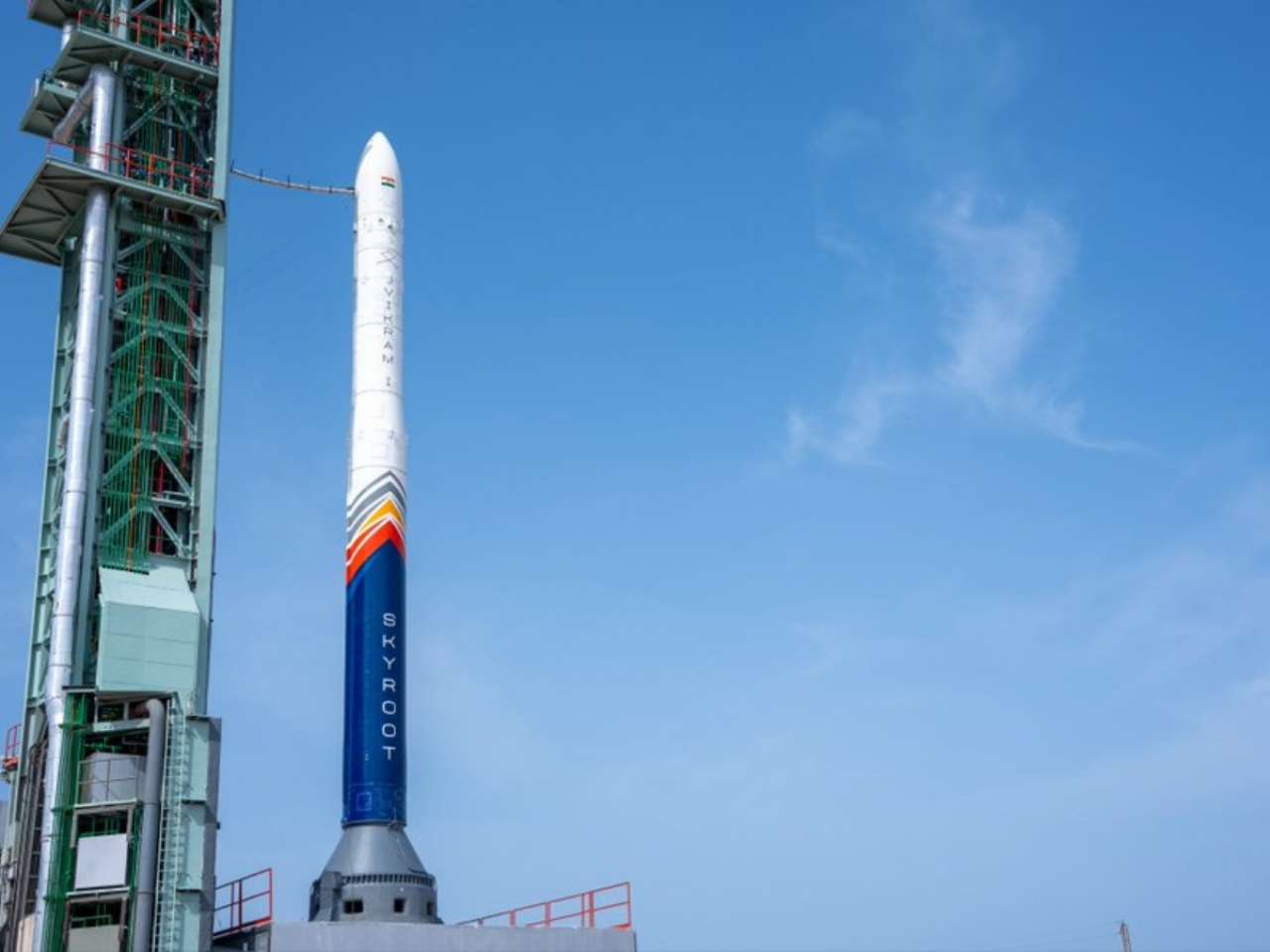
Can India finally get its own Elon Musk, SpaceX? Skyroot's Vikram-1 launch could change space ecosystem
Is India getting ready for its own SpaceX or Elon Musk? The question may appear to be preposterous, but the recent development has paved the path for daring private sector entrepreneurship in the space sector. After the Union government launched the Indian Space Policy 2023, the doors for Non-Government Entities (NGEs) were opened, and they were allowed to undertake end-to-end space activities, creating a level playing field for private companies. The next watershed moment came a few days back when Skyroot Aerospace announced to launch India's first privately developed orbital-class rocket, Vikram 1. India's first private rocket: Vikram- 1 It will be launched from the Satish Dhawan Space Centre in Sriharikota at 11.30 AM ON July 18, 2026. It will be a test flight, named Mission Aagaman, to check the rocket's performance before commercial operations begin. It will also carry a handwritten note from Prime Minister Narendra Modi. The company said in a note, posted on the social media platform X, "Among the payloads on Vikram-1 Test Flight-1 is something truly special -- a handwritten postcard from Hon'ble Prime Minister Shri @narendramodi with the words, "Vande Mataram." Mission Aagman can carry a payload of up to 350 kilograms and place the satellite in Low Earth Orbit (LEO). The propulsion of the rocket is made up of three solid-fuel stages and one liquid-fuel Orbital Adjustment Module (OAM) for precision payload insertion. Skyroot Aerospace, Mission Aagaman If the mission succeeds, Skyroot Aerospace will become the first Indian private company to put a rocket into orbit from Indian soil. It will reflect the development of India's private sector space industry ecosystem. The success of the mission will show the private launch capability alongside ISRO. This will enhance India's capacity to serve the growing global small satellite market. It will throw open a big and expanding space launch business in India, where private companies can offer reliable, cost-effective launch services for international customers, particularly those from Europe. The Mission Aagman aligns well with the government's mission of encouraging Non-Government Entities (NGEs) to undertake end-to-end space activities and drive commercial growth. * The private companies can use ISRO's infrastructure, testing facilities, technical expertise, and launch support. * In an attempt to encourage the private sector and support it, the government has come out with a liberalised FDI policy, IN-SPACe authorisation guidelines, and a Venture Capital Fund of Rs 1,000 crore. I * t has also allowed startups discounted pricing for ISRO facilities. However, all is not hunky-dory. There are challenges, risks and the uncharted future that may go wrong and take an unexpected turn.
SpaceX Starship launch aborted after engines fail to start
Add Yahoo as a preferred source to see more of our stories on Google. The countdown clock hit T-0. Some engines ignited. Steam surrounded the rocket. But SpaceX's massive Starship rocket stayed on the pad. The much anticipated Thursday, July 16 liftoff from Texas was aborted. While a new launch date has not yet been set, it won't be until next week at the earliest. "Some of the engines didn't start, triggering an automatic launch abort. Now offloading propellant," SpaceX CEO Elon Musk wrote on X shortly after the abort. The engine visual on the SpaceX webcast showed four out of the 33 Raptor engines on the Super-Heavy booster did not start up. When is the next Florida rocket launch? Is there a launch today? SpaceX, ULA rocket launch schedule in Florida Musk later updated that two of the Raptor engines would be replaced out of caution. This 13th Starship test flight from Starbase, Texas marks the second test overall of the new Starship V3 (Version 3), which is the same model of the ship expected to someday launch from NASA's Kennedy Space Center Pad 39A. Starship will later also launch from Cape Canaveral Space Force Base's Launch Complex 37, where SpaceX is building two launch pads -- 37A and 37B. SpaceX claims that a debut Florida launch for Starship could come as early as later this year, however that depends on how well the upcoming test flight goes. When this second test flight of Starship V3 does happen, the goals are: successful launch, controlled booster landing, ship coasting in space, a relight of a single ship engine, deployment of 20 Starlink satellites, and a splashdown of the ship in the Indian Ocean. Six of the Starlink satellites are outfitted with cameras to assess the ship's heatshield while it coasts in space. The Super-Heavy booster will not be caught back at the launch site for this mission, as SpaceX is still testing the performance of the engines. It is targeting a controlled splashdown in the Gulf of America, also known as the Gulf of Mexico, after stage separation. The FLORIDA TODAY Space Team will provide live coverage of Flight 13 at FloridaToday.com/Space on launch day. Brooke Edwards is a Space Reporter for Florida Today. Contact her at [email protected] or on X: @brookeofstars. This article originally appeared on Florida Today: SpaceX Starship launch aborted after engines fail to start
Polymarket puts Putin-out-by-2027 at 18.5% as ladder prices tilt later
predict.info -- Premium Domain For Sale Domain only: USD 200,000. Prediction platform technology priced separately. predict.info Polymarket Reprices the "Putin Out by 2027" Ladder as Election-Integrity Narratives Test Risk Pricing Polymarket traders are pricing the "Putin out as President of Russia by...?" ladder with 18.5% Yes / 81.5% No for the June 30, 2027 strike, on $17,731,261 in volume. The contract's pricing comes as a separate news cycle centers on renewed election-fraud claims in the US, offering a case study in how prediction markets continuously reprice risk versus slower narrative updates. Key Takeaways * Polymarket's leading strike implies an 18.5% chance Putin is out by June 30, 2027 (Yes 18.5% / No 81.5%). * Despite the broader political-news noise, the ladder is steep: near-term "out by 2026" probabilities stay in low single digits while longer-dated risk concentrates in 2027. * The market resolves on June 30, 2027, and recent trading shows a 24h and 7d move of -4.0 pp with bearish, strong momentum in the summary stats. A fact-check report reviewed a primetime speech in which President Donald Trump repeated unverified claims about the US electoral process, including alleged Chinese interference and voter-fraud allegations. The report says official assessments found no indications that foreign actors altered technical aspects of voting in 2020, while noting intelligence-community views that Russia and Iran ran influence efforts and that China did not deploy interference aimed at changing the outcome. It also described how declassified documents cited in the speech do not support the broad claims made. Odds Ladder and Flow: $17.73M Volume with 3.95% (Sep 30, 2026), 9.0% (Dec 31, 2026), 18.5% (Jun 30, 2027) and -4.0pp Mov This is a price-ladder market: each date is its own binary, where "Yes" means Putin is out by that strike date (not a single shared settlement price). The curve is highly time-sensitive: September 30, 2026 sits at Yes 3.95% / No 96.05%, December 31, 2026 is Yes 9.0% / No 91.0%, and the longest listed strike, June 30, 2027, rises to Yes 18.5% / No 81.5%, signaling traders see the risk as more back-loaded than imminent. Volume is substantial at $17,731,261, but the historical summary points to a bearish tape in the near term (change_24h -4.0 pp; change_7d -4.0 pp) even while consensus is labeled "strengthening," which fits a market converging toward "No" on earlier exits. The latest odds in the summary (8.5%) versus an average of 16.3 over the last five observations highlights how quickly this contract can gap, underscoring the difference between continuously traded probabilities and slower-moving political commentary cycles. Settlement is anchored to the June 30, 2027 resolution date, so traders are effectively expressing a time-bucketed view of leadership-change risk rather than reacting to any single headline. Watch whether pricing compresses toward the longer-dated June 30, 2027 strike or re-steepens toward the near-term dates (July/August/September 2026). A sustained move in the latest odds back toward (or away from) the recent avg_last_5 of 16.3 would confirm whether the current bearish momentum is persisting or fading ahead of the 2027 resolution window. Cross-Contract Watchlist: How Traders Hedge Leadership-Change Risk with Macro and Crypto Polymarket Markets Zooming out from this ladder, Polymarket traders often cross-check leadership-change risk against adjacent geopolitics contracts that can move on the same headlines and liquidity flows. One closely watched neighbor is 8.5% on "Will Ukraine recapture Crimean territory by...?" (December 31) with $3,273,172 in volume, a kind of parallel timeline bet that some participants use to sanity-check broader escalation and negotiation probabilities. Scanning these side markets alongside the main contract can help contextualize whether a price move is idiosyncratic to one resolution criterion or part of a wider repricing across the platform. Odds Trend By the Numbers * Platform: Polymarket * Market: Putin out as President of Russia by...? * Contract type: Price strike ladder: each rung has separate Yes/No; Yes means the spot price is above that USD strike at settlement. * Resolution window: Jun 30, 2027 (UTC) * Status: Active (open for trading) * Volume: ~$17,731,261 Top strike rungs +1 more strikes not shown
