News & Updates
The latest news and updates from companies in the WLTH portfolio.
What SpaceX's Starship flight 13 test means for Florida's Space Coast
SpaceX has big plans for Starship during its 13th test flight from South Texas as the pressure is on for the rocket to be ready for missions to the moon and Mars. For just the second time in 2026, SpaceX is preparing to launch the world's largest rocket. Starship, the commercial spaceflight company's super heavy-lift launch vehicle, is due to get off the ground in South Texas on the heels of a largely successful May flight test. And as usual, the stakes are high for SpaceX and its chief executive, tech mogul Elon Musk. The upcoming flight will be the 13th for Starship overall, including its April 2023 debut, and the second for SpaceX's new prototype that serves as the largest iteration of the rocket to date. The pressure is on for SpaceX, which is working under a strict deadline to have Starship ready for NASA's fast-approaching moon landing missions. Musk, of course, also still dreams of sending the rocket on interplanetary voyages to Mars. The latest flight test also comes as SpaceX continues preparations to bring Starship to Florida's Space Coast. Here's everything to know about the next Starship launch, which SpaceX refers to as flight 13, as well as the latest on plans for its maiden flight in Florida. When is the next Starship launch date? SpaceX is working toward a Thursday, July 16, launch of its Starship rocket, the company announced. The launch window is due to open from 6:45 to 8:15 p.m. ET. Where does Starship launch? As it has since its maiden launch in April 2023, Starship will once again get off the ground from SpaceX's Starbase company town and headquarters in South Texas. Starbase is located close to the U.S.-Mexico border near the well-known Boca Chica Beach. In May 2025, Texas voters in Cameron County - most of whom are SpaceX employees - approved a measure to officially recognize the company's headquarters as its own town, complete with a mayor and city commissioners. What is Starship? Starship is the massive rocket that SpaceX, the commercial company founded by tech entrepreneur Elon Musk, has been testing since April 2023. SpaceX is developing the rocket to be a fully reusable transportation system that can carry huge satellites and other payloads to space, meaning both the rocket and vehicle can return to the ground for additional missions. How tall is Starship? Is it the world's largest rocket? Starship's most recent flight test in May marked the debut of SpaceX's third-generation prototype of the rocket. Standing at 407 feet tall when fully stacked, the new iteration of Starship - known as Version 3, or V3 - became the largest and most powerful rocket SpaceX has ever launched. Similar to previous designs, the fully integrated Starship spacecraft is composed of both a 236-feet-tall lower-stage booster known as Super Heavy, as well as a 171-feet-tall upper stage simply called Starship. What is SpaceX planning for flight 13? For the next Starship test flight, SpaceX said it is aiming to complete similar objectives as the last launch in May in which it debuted its Version 3 prototype. SpaceX plans to push the performance of the Super Heavy booster - responsible for the initial burst of thrust at liftoff - before it lands in the Gulf of Mexico, renamed in the U.S. under executive order as the Gulf of America. The upper stage, which is designed to eventually fly in orbit, will also be put to the test as it flies halfway around the world ahead of a landing in the Indian Ocean. Starship to carry Starlink satellites to space In a major first, Starship will be carrying 20 larger versions of SpaceX's Starlink internet satellites that it will attempt to deliver into suborbital space. The satellites will deploy solar arrays and antennas while attempeting to connect with SpaceX's larger Starlink constellation higher up in orbit before they fall toward the ground and burn up in the atmosphere about 20 minutes later. If this sounds familiar, that's because SpaceX has deployed mock Starlink satellites during previous Starship flight tests. Why is SpaceX testing Starship? Elon Musk envisions colony on Mars Musk's vision has long been for Starship to be an interplanetary vehicle that takes humans to Mars, where they can establish a self-sustaining colony. While the world's richest man has indicated that SpaceX will focus on building a lunar city first, the company has already announced a human-led expedition to Mars' orbit - though it has not set a target date. In order for that to be possible, Starship will need to be capable of refueling midflight in a complex process that requires two Starships equipped with docking adapters to meet in orbit to transfer propellant. The maneuver is one SpaceX has yet to test. When could Starship launch in Florida? Florida's first landmark Starship launch from NASA's Kennedy Space Center could also take flight in 2026 in late summer or early fall, according to the U.S. Space Force. Plans to get the rocket off the ground from the Sunshine State come as SpaceX continues to ready longterm launch and landing operations at not only Kennedy Space Center's Launch Complex 39A, but Launch Complex 37 at the neighboring Cape Canaveral Space Force Station. Super Heavy boosters could begin arriving on SpaceX's drone barge You'll Thank Me Later in the coming months. And at NASA's Kennedy Space Center, Gigabay - an enormous Starship maintenance facility - is rising beam-by-beam off Roberts Road. NASA relies on Starship for Artemis moon missions SpaceX is also under contract with NASA to develop a lunar lander configuration of its Starship to ferry astronauts to the moon, known as the Human Landing System. NASA is relying on Starship to be ready for a mission due in 2027 known as Artemis III. SpaceX and Jeff Bezos' Blue Origin are competing to develop lunar landers for future crewed and uncrewed Artemis missions, both of which will be tested first in Earth orbit during the crewed Artemis III mission. See photos of Starship rocket launches What happened on the last Starship flight test in May? During Starship's last flight test on May 22, the booster helped propel the upper stage on its journey before it made a water landing in the Gulf Coast. The upper stage, sometimes referred to simply as 'Ship, then used its own six Raptor engines to fly halfway around the world before landing and exploding as expected in the Indian Ocean. Along the way, Starship succeeded in deploying 20 mock versions of SpaceX's Starlink satellites and two modified satellites that, in a major first, imaged Starship while it climbed into space. Contributing: Rick Neale, Brooke Edwards, Florida Today Eric Lagatta is the Space Connect reporter for the USA TODAY Network. Reach him at [email protected]. Subscribe to the free Florida TODAY newsletter.

Czech Republic Orders Polymarket Block Over Gambling Rules - Crypto News Flash
* Czech authorities have classified Polymarket as an unauthorized gambling platform under national law. * Internet service providers have been ordered to block access to the platform within 15 days. * The decision follows similar enforcement actions across several European jurisdictions. * The case highlights the growing regulatory divide over how blockchain-based prediction markets should be supervised. Czech Republic Orders ISP Block on Polymarket The Czech Ministry of Finance has officially published an updated List of Unauthorized Internet Games, effective July 13, 2026, adding Polymarket to the register of operators deemed to be offering gambling services without the licenses required under Czech law. The updated register was published by the Ministry of Finance's Department for Procedural Agendas and Gambling Regulation under Section 84d(5) of the Czech Gambling Act. Under the law, Czech internet service providers (ISPs) must block access to listed websites within 15 days of publication. Under the decision, internet service providers (ISPs) must restrict access to the platform for users in the Czech Republic within 15 days. The ruling places Polymarket alongside other online operators that Czech authorities consider to be offering gambling services without regulatory authorization. Authorities Reject Polymarket's Business Model The decision reflects the Czech government's view that prediction markets should be regulated according to their economic function rather than their underlying technology. Officials, including representatives of the Institute for Gambling Regulation, argue that users are effectively wagering money on uncertain future events regardless of whether transactions are structured as blockchain-based contracts. Authorities also cited broader regulatory concerns, including the absence of locally approved consumer protection measures, anti-money laundering safeguards and regulatory oversight required under Czech gambling law. For regulators, changing the terminology from bets to contracts does not alter the legal nature of the activity when participants risk money on uncertain outcomes. Part of a Broader European Crackdown The Czech Republic is the latest European jurisdiction to take action against Polymarket. Similar restrictions or enforcement measures have already been introduced in: * France * Belgium * Germany * Spain * Italy * Romania * The Netherlands Outside Europe, regulators in India and Argentina have also moved against the platform during 2026, citing concerns over licensing requirements and consumer protection. The growing number of enforcement actions suggests regulators are increasingly applying existing gambling laws to prediction markets rather than creating new crypto-specific rules. Not Every Jurisdiction Is Taking the Same Approach While enforcement has intensified across much of Europe, regulatory approaches are not uniform. Earlier this year, Gibraltar announced plans for a dedicated framework governing prediction markets instead of regulating them solely as gambling or financial derivatives. That approach reflects a broader policy debate facing regulators worldwide: whether blockchain-based prediction markets should be incorporated into existing legal categories or governed under rules tailored specifically to their hybrid structure. The Czech decision demonstrates that, for now, many European regulators continue to favor applying established gambling legislation over creating new regulatory frameworks for decentralized prediction markets.

What time is SpaceX's Starship Flight 13 launch on July 16? (Full mission timeline)
Viewers can watch the launch online through SpaceX's livestream or Space.com's simulcast, with in-person viewing options available near the launch site in South Padre Island or Port Isabel, Texas. When you buy through links on our articles, Future and its syndication partners may earn a commission. SpaceX is just a day away from its first Starship test flight of the summer, and if you're hoping to watch the world's largest rocket lift off, you'll need to know where and when to tune in. But don't worry -- we've got you covered. The next Starship test flight, called Flight 13 (SpaceX doesn't appear to be superstitious), is scheduled to launch from the company's test site in Starbase, Texas near Boca Chica Beach on Thursday, July 16. Liftoff is set for 6:45 p.m. EDT (2245 GMT). As its name suggests, the upcoming flight will be the 13th test launch overall of SpaceX's Starship megarocket. It will be the second such flight this year, after the May 22 launch of Starship Flight 12. SpaceX is designing Starship, which stands more than 400 feet (121 meters) tall, to be a fully reusable rocket capable of launching missions to the moon, Mars or beyond. NASA picked Starship to land its Artemis IV astronauts on the moon by 2028, and SpaceX has sold at least one Starship passenger flight to Mars as well. But before SpaceX can carry astronauts to other worlds with Starship, it has to complete a series of suborbital flights and, eventually, reach Earth orbit for in-flight fueling tests, docking demonstrations and more. SpaceX's Starship Flight 13 is a suborbital test that will be the second flight of SpaceX's new V3 Starship. Below you'll find details on what time Flight 13 will launch, what the mission will do and a full timeline for the mission. What time is SpaceX's Starship Flight 13 launch? SpaceX is currently targeting the launch of Starship Flight 13 for no earlier than 6:45 p.m. EDT (2245 GMT) on Thursday, July 16. However, the exact timing of the launch could change. That's because SpaceX has a 90-minute window in which to launch Flight 13 from Starbase Pad 2. Liftoff could occur anytime between 6:45 p.m. and 8:15 p.m. EDT (2245 to 0015 GMT). SpaceX's launch webcast will begin 30 minutes before liftoff. And remember, SpaceX has at least one backup day, so the launch could slip to July 17 if needed. In that case, it would likely lift off at the same time -- 6:45 p.m. EDT -- and have a 90-minute window, as on the first attempt. Related: Read our SpaceX Starship and Super Heavy guide for a detailed look Can I watch SpaceX's Starship Flight 13 launch? Yes, you'll be able to watch SpaceX's Starship Flight 13 launch online, but you'll have your pick on where to watch. SpaceX will provide its own livestream of the launch via its X account and the official Flight 13 mission page. If everything is on time, that livestream will begin at 6:15 p.m. EDT (2215 GMT) -- 30 minutes before the planned Flight 13 liftoff. Space.com will simulcast the SpaceX Flight 13 launch webcast on this page, as well as an our homepage and YouTube channel. A prelaunch show Now, if you need to get your Starship Flight 13 fix earlier than SpaceX's stream, a good place to look is the NASASpaceflight preshow. They'll have a livestream the day before launch, then constant live views of the pad on launch day many hours ahead of SpaceX's livestream. The NASASpaceflight preflight show will begin on July 15 at 3 p.m. EDT (1900 GMT). NASASpaceflight has a wealth of cameras installed around SpaceX's Starbase test facility, and the company will share up-close views and live commentary for all preflight activities. In-person launch options While SpaceX does not have an official Starship launch viewing site, there are several places where you can see the launch in person around the Starbase area. For first-time spectators, I recommend watching Starship launch from near the Cameron County Amphitheater at Isla Blanca Park on South Padre Island, which is just across the bay from Starbase. The rocky beaches around the amphitheater offer a clear line of sight of the Starship launch pad, and there are often spectators on boats out of nearby Port Isabel offering a picturesque view. It's about 5 miles (8 kilometers) from the launch site, and the park has bathrooms. The traffic getting to South Padre Island (if you're not staying at a hotel on the island) can be heavy on launch days, so another option is watching from the shore in Port Isabel, which is home to Hopper Haus, a SpaceX-themed bar and grill that I can confirm makes awesome burgers. There is also a shoreline stretch of Highway 48 between Brownsville and Port Isabel, from 6 to 8 miles (10 to 13 km) from the launch site, where you can pull up for the day to watch the launch. It's just the side of the highway, so you won't find amenities like bathrooms there. You can learn more about that at the site SpaceLaunchSchedule.com. If you're looking for a more rustic experience (and have cash for a $200 ticket, though kids under 17 are $40), you can camp at the Rocket Ranch, which is 3.8 miles (6.1 km) from the Starbase launch site, and camp there for one day and night. It has two viewing locations available, one at an "Outpost" and the other on the campground itself. The Outpost location is the closest and has "unmatched media service," so you can stay connected. Larger four-day camping packages are also available. The ticket includes bus transportation from the ranch campground to a viewing site and back for one launch attempt. I've actually never visited this ranch, but I wanted to include it so you know it's an option. Be sure to read the full Rocket Ranch FAQ so you know what to expect. How long is SpaceX's Starship Flight 13? SpaceX's Starship Flight 13 test flight will last just over 1 hour and 5 minutes and should follow the same mission profile as the company's last test, Flight 12, in May. This will be the second flight of SpaceX's new Starship Version 3, or V3. During Flight 12, the giant Super Heavy booster stage failed to return to Earth properly for a controlled landing and splashdown in the Gulf of Mexico (which the Trump Administration has renamed the Gulf of America). Instead, the booster crashed into the ocean. "The booster's primary test objective will be executing a successful launch, ascent, stage separation, boostback burn, and landing burn at an offshore landing point in the Gulf of America," SpaceX wrote in a mission overview. "There have been several modifications to hardware and software to address issues seen on the previous flight." Starship Flight 13 will launch from SpaceX's new Pad 2 at Starbase, which the company upgraded with shorter, faster "chopsticks" -- capture arms that can catch returning Starship Super Heavy boosters and Ship upper stages during landing, as well as lift vehicles into place on the pad for launch. Check out our full overview on how SpaceX changed Starship for V3 here. SpaceX will not try to reach orbit with Starship Flight 13 or return its Ship back to Earth for a capture at the launch pad. Instead, both vehicles aim to make controlled descent and water landings, before falling over and sliding into the sea. While the Super Heavy booster will splash down in the Gulf of Mexico off the coast of Boca Chica, the Ship upper stage will follow a suborbital trajectory for a target splashdown in the Indian Ocean off the coast of Western Australia. During the flight, the Ship vehicle will attempt to deploy 20 Starlink V3 satellites, the company's newer and larger satellite-internet units, but they won't reach orbit. They will follow Starship's suborbital trajectory back down to Earth and burn up in the atmosphere. Six of the Starlink V3 satellites are equipped with cameras to record live views of Starship and its heat shield and beam them back to Earth for analysis. "For the first time, Starship will carry V3 Starlink satellites to space, which aim to greatly expand the network's capacity and user speeds. As part of this initial test, Starship is planned to deploy 20 satellites which will extend solar arrays and antennas and will attempt to connect with the larger Starlink constellation via high-capacity lasers," SpaceX wrote in the mission overview. "The Starlink satellites will be on the same suborbital trajectory as Starship and are expected to demise upon reentry approximately 20 minutes after deployment." What if Starship Flight 13 can't launch? If SpaceX can't launch Starship Flight 13 on July 16, the company does have at least one backup day available. According to a Starship town beach closure notice, SpaceX is targeting both July 16 and July 17 as launch days for Flight 13. So, it bad weather or a minor technical issue delays launch, SpaceX could try again on Friday, July 17, at the same time as the original target. It is possible that SpaceX may have additional backup days beyond July 17. That was the case in May for Flight 12, when a series of delays postponed launch from May 19 to May 22. Whichever date SpaceX launches Starship Flight 13, you will be able to follow the mission on Space.com. Be sure to return to Space.com on launch day for complete Starship Flight 13 coverage.
Anthropic Launches Claude Sonnet 5 with Stronger Coding and Debugging
Anthropic released Claude Sonnet 5, a mid-tier AI model designed for agentic coding tasks, tool use, and debugging workflows. The model brings stronger reasoning for long-running code execution while cutting costs compared to previous iterations. Claude Sonnet 5 sits between Anthropic's faster, cheaper Haiku and its most capable Opus model. The positioning targets developers who need serious capability without the highest latency or cost of the full-power tier. Agentic AI Moving Into Production Agentic AI -- systems that can reason through multi-step problems, use tools, and debug themselves -- has moved from research projects into paid production work. Pricing and access now matter almost as much as raw model quality. Claude Sonnet 5's improvements in tool use and debugging make it particularly suited for this shift. Developers deploying autonomous coding agents can now use a more capable model without the expense of Opus. Broader AI Market Trends The July 2026 AI landscape features more capable multimodal models, rapid growth in autonomous agents, faster and cheaper AI chips, and record enterprise adoption. OpenAI has pivoted toward specialized models -- Sol for demanding tasks, Terra for balanced performance and cost, Luna for speed. This fragmentation suggests the era of one-size-fits-all AI is ending. Companies now choose models based on their specific use case, budget, and latency requirements. Claude Sonnet 5 reflects the market's shift toward practical, deployable AI rather than raw capability theater. References Medium. (2026). AI NEWS: Week of July 6 to July 12, 2026. Published July 2026.

Hindi Claude's Personality Is Different From Others: Anthropic Research
Anthropic says Claude's personality shifts depending on the language it speaks File photo ShowQuick Read Summary is AI-generated, newsroom-reviewed * Claude AI shows varied behavior across languages, being warmest in Hindi and Arabic * It emphasizes warmth in Arabic and Hindi, and rigor in English and Russian responses * Differences may stem from uneven training data quantity and composition across languages Can I choose the personality style I want Claude to use? Anthropic's AI model Claude behaves quite differently depending on the language, the AI major revealed in a research report. It found Claude was warmest in Hindi and Arabic, using more polite, playful, and encouraging language. When Claude speaks in English, it emphasizes different values than when it speaks in Hindi, Arabic, Portuguese, or Chinese. "The largest variation is in the Warmth vs. Rigor axis, with Claude leaning toward expressing warmth-related values most in Arabic and Hindi and rigor-related values most in English and Russian," the company said. The company grouped Claude's responses along several value dimensions; one of them was the "Warmth vs. Rigor" axis, which measures whether the AI tends to be more empathetic, encouraging and conversational, or more analytical, precise and matter-of-fact in its responses. Anthropic explained using the example of two people asking for feedback on the same business plan, one in Hindi and one in Russian, may come away with different impressions of its quality because Claude expressed different values in how it framed its assessment. The company itself is not sure what drives these differences. "We don't yet know which properties of our training data drive these differences. One possibility is that our training data is not evenly distributed across languages. Some languages have far more data than others, and training for Claude to express consistent values may be more effective in languages where data is abundant." "The composition of that data also varies. Some languages might be overrepresented in professional writing, for example, and this kind of text may reflect different values. Together, these imbalances in quantity and composition could lead Claude to express different values in different languages." Anthropic admitted it wasn't yet sure how much of this variation was desirable. "Different languages carry different conversational norms, and Claude may be responding with different values based on those norms." Claude may also be more closely matching humans' intended behaviour for some languages than others, resulting in a gap in how well Claude serves certain language communities. Anthropic researchers analysed more than 309,000 Claude conversations to study how it expressed values. They found that while Claude's core behaviour remained broadly consistent, the way it communicated could shift significantly depending on the language being used. Got a follow‑up question on this article? Go on How may i help you today Show full article Track Latest News Live on NDTV.com and get news updates from India and around the world

Anthropic Wants You To Know They Can Destroy Us All
Anthropic and its leader of catastrophe Dario Amodei just put out an ad that starts out telling people AI will take over your life, job, and even be a better caregiver than you. The second half tries to give hope with propaganda. It's idiotic. It doesn't appear to achieve what it is supposed to achieve. The ad is a bit insulting if they think it will convince us of anything other than AI will destroy us. The ad purports to ask the tough questions and then give us hope. The questions aren't tough, and it gives me no hope. It's basically the bird covered in oil after a spill, followed by a showing of the movie Airplane. Watch: Anthropic has 32 very scary job openings for roles designed to prevent people from using AI to build everything from homemade explosives to nuclear weapons, Axios' Madison Mills and Maria Curi write. We are all going to die thanks to AI. Lunatics like this will be able to build nuclear weapons:

Studio Studios Is The Hair Salon Where Textured Cuts Meet Unconventional Colours
The quickest way to spot someone who's been to Studio Studios? Their hair. The appointment-only Shoreditch salon has quietly become responsible for some of London's most enviable cuts and colours, counting Gabbriette, Lola Young, Romy Madley Croft, Ellie Rowsell and Arlo Parks among its clientele. Tucked just a hop, skip and a jump from Shoreditch High Street station, it's the sort of place that's become a word-of-mouth fixture among fashion people, musicians, artists and anyone who's ever screenshotted a dip dyed fringe from Pinterest. Founded in 2023 by Canadian hairstylist Jadah Dale, Studio Studios expanded into a second space next door last month. While the original studio feels like an impossibly chic living room where white brick walls meet black leather chairs, glossy basins, tiled floors and brown marble side tables, the new space takes things in a lighter direction. "Our original space has the warmth of a welcoming living room, and that same atmosphere carries through the expansion with our plush chocolate-brown chairs, our scented candles, fresh flowers and beautifully considered lighting," says the founder. Malin + Goetz candles burn away while a framed Death Becomes Her poster hangs on the wall with just the right amount of self-awareness. It's cool without trying too hard - much like the people sitting in the chairs. "For us, growth isn't about opening salons as quickly as possible. It's about growing the right way - building a community of incredible stylists and loyal clients, and continuing to be a creative home for people working in music, culture and the arts. If we keep doing that well, everything else follows," says Dale. She adds, "While the new studio feels lighter, airier and more spacious, we've been careful to preserve everything that makes Studio Studios feel like home... We wanted the new space to feel like a natural extension of the original: elevated, comfortable and unmistakably Studio Studios."

Pollution from Musk's unpermitted xAI power project hits hardest in Black communities
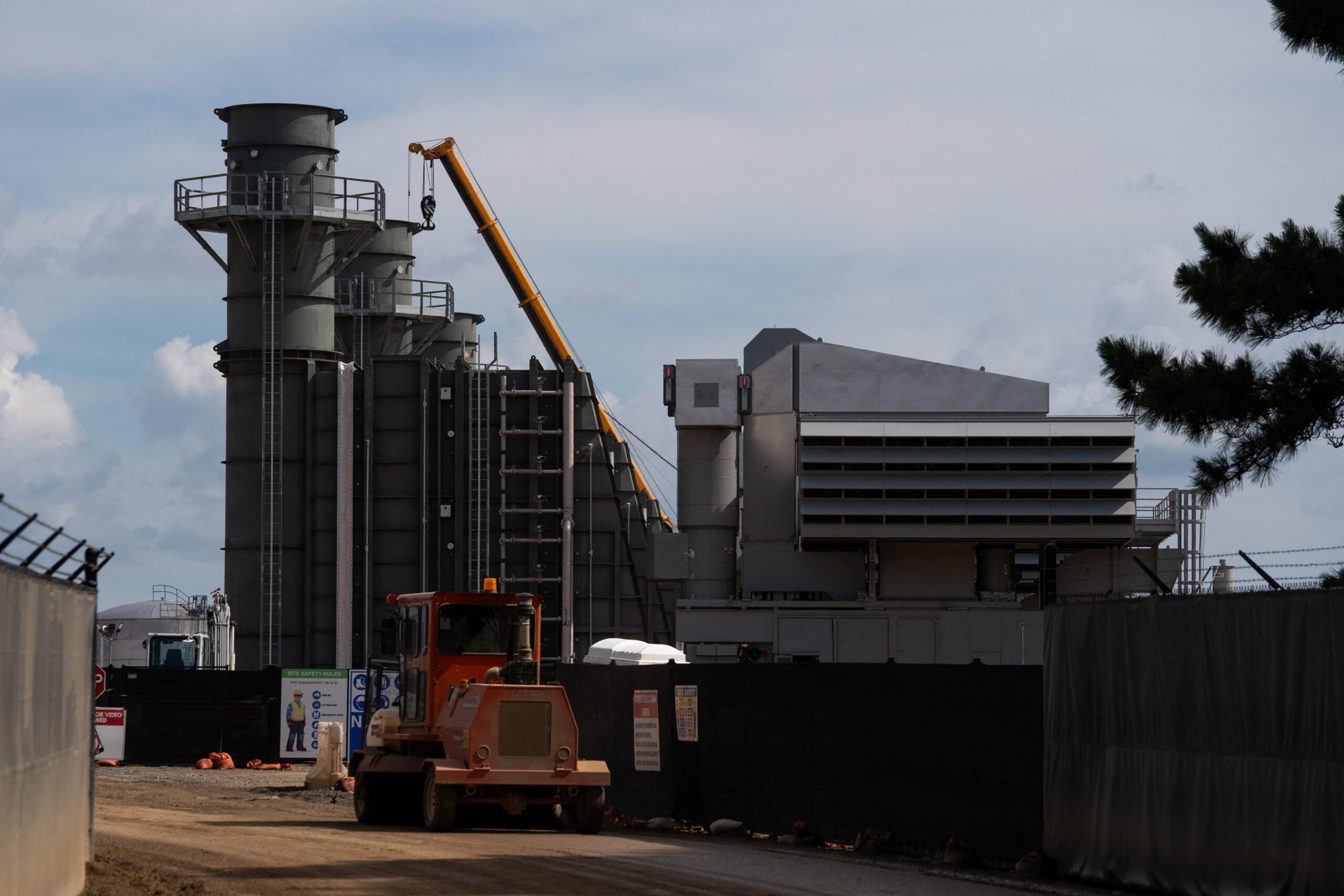
The findings illustrate how electricity demand from AI data centers is driving companies to build power plants without enough environmental oversight in the US Elon Musk's artificial intelligence company xAI has installed 59 natural gas turbines for its Colossus 2 data center project in Tennessee without securing federal clean air permits, according to communications between regulators and xAI representatives. Potential emissions from the turbines are far beyond the threshold that would require a federal permit, and would be released near predominantly Black communities already estimated to be suffering disproportionately high rates of lung disease, according to a Reuters analysis based on government data and information in the correspondence with regulators. The findings, which have not been previously reported, reflect how exploding electricity demand from AI data centers is driving companies to build off-grid power plants at a pace outstripping environmental oversight, with potentially big risks to public health. The number of unpermitted turbines identified by Reuters is about double what xAI has publicly acknowledged. The company previously said it was running 27 unpermitted turbines for Colossus 2 as of January and has argued the permits are not required. At least 57 of the 59 turbines are located in Mississippi, just over the state line from Tennessee where the data center is located. The xAI turbines are among scores of off-grid power plants for data centers proposed or under construction around the country. Local authorities often fast-track approvals in just weeks or months, without the years of environmental studies and public hearings typically required for such power generation projects that connect to the grid, Reuters has reported. Mississippi regulators in March issued a permit for permanent turbines for Colossus 2, allowing construction of 41 gas-fired turbines. The approval came three weeks after the state's only public hearing on the project. The xAI cluster of temporary turbines in Mississippi is already among the biggest off-grid data center power projects, according to Ben King, an analyst with think tank Rhodium Group, who reviewed the Reuters analysis. "This looks to be an unprecedented level of behind-the-meter gas being installed in one place," he said, referring to off-grid natural gas plants serving just one customer. The communications reviewed by Reuters show xAI, now owned by trillionaire Musk's SpaceX SPCX.O, has installed 57 off-grid turbines in Southaven, Mississippi, just across the state line from its Colossus 2 data center in Memphis, a facility supporting the Grok chatbot and other AI systems. The records show the company has also installed two other unpermitted turbines for the project on a different site. Reuters could not determine the location. The communications, obtained through a Reuters public records request, included emails between Trinity Consultants, representing xAI and subsidiary MZX Tech, and the Mississippi Department of Environmental Quality (MDEQ). xAI did not respond to Reuters' request for comment. xAI's turbines are part of a widening environmental justice battle over whether the AI boom is adding disproportionate pollution burdens to communities of color. Civil rights groups including the NAACP and the Southern Environmental Law Center sued xAI in April to halt their operations, arguing the turbines produce emissions subject to the federal Clean Air Act and shouldn't be operated without permits. They contend the turbines are polluting homes, schools and churches in historically Black communities. "The scale of it is astonishing," said Patrick Anderson, an attorney with the Southern Environmental Law Center. "This is an absolutely huge Clean Air Act violation that threatens public health." Securing a Clean Air Act permit would have exposed xAI's project to extensive review and public comment, potentially taking years. Mississippi environmental regulators and xAI have argued in court filings that the turbines are exempt because they are "mobile" and intended to operate onsite for less than a year. "MDEQ has determined that portable/temporary turbines do not require an air permit," the agency said in a statement to Reuters. The US Environmental Protection Agency said in January 2026 that even temporary turbines exceeding emissions thresholds must obtain permits. The agency, however, told Reuters it's considering changes allowing "regulatory flexibilities" for portable units while continuing to protect public health. xAI, the MDEQ and the EPA did not answer questions from Reuters about pollution impacts on communities of color from power generation to serve data centers. The US Justice Department weighed in on the lawsuit in a June 15 filing, saying that restricting the turbines could threaten national security interests because xAI's systems support US military operations, including operations involving Iran. The outcome of the lawsuit filed by civil rights groups could help define how environmental laws apply to the fast-growing AI sector, where companies are scrambling to bring power supplies online to support energy-intensive computing. "This sets up scenarios where the government can create sacrifice zones and tell communities they have to breathe illegal air pollution," said Mary Rock, a senior attorney for Earthjustice which is representing the NAACP and SELC. The dispute echoes the findings of a 2022 study by researchers from UCLA and Columbia University and published in the Nature Energy journal that found that previously redlined communities -- where banks historically discriminated against Black mortgage applicants -- now face disproportionately high exposure to pollutants from fossil fuel facilities. "Air pollution from these and other sources contributes to systemic racial disparities in chronic disease and ultimately shorter lives," Lara Cushing, a UCLA public health professor who co-authored the study, told Reuters. Big emissions The emails reviewed by Reuters included the manufacturer emissions profiles for 32 of the 59 turbines, including 30 at the Southaven site. A Reuters analysis based on that information found that those 30 turbines alone could emit nearly 2,500 short tons of nitrogen oxide, 4,000 short tons of carbon monoxide and 22 short tons of formaldehyde annually, assuming they operate continuously at 80% of capacity. According to the EPA, gas turbines are typically operated at loads of 80% or more to achieve efficiency. Nitrogen oxides contribute to smog and respiratory inflammation, according to the American Lung Association. Carbon monoxide deprives the body of oxygen, and formaldehyde is a carcinogen. The xAI site's potential emissions far exceed a Clean Air Act threshold that requires permitting for facilities capable of more than 100 short tons annually of pollutants such as nitrogen oxide. "This is a massive amount of turbines and an unfathomable amount of air pollution," Southaven resident Shannon Samsa said in an interview. "It's not a hypothetical," she said, "that air pollution is bad for you." The nitrogen oxide emissions calculated by Reuters for about half the plant's turbines would put the facility "up there with some of the heaviest polluting natural gas power plants across the entire country," said Nicholas Mailloux, a postdoctoral researcher at the University of Wisconsin-Madison who studies air quality and health benefits of the clean-energy transition. He said the facility would be on par with the top 25 US gas plants for nitrogen oxide emissions, citing EPA data for actual emissions. The people affected In the Colonial Hills neighborhood of Southaven, the turbines serving Colossus 2 can be heard around the clock, often firing off noisy bursts that residents compare to jet engines. Ervin Laws, a Colonial Hills resident in his 20s, said the noise wakes him up at night. "I can't do anything about it, because he's got more money than me," he said, referring to Musk. The turbines were installed in communities already estimated to be facing relatively high respiratory disease burdens, according to a Reuters analysis of CDC data. In 27 of 28 census tracts within five miles of the site -- spanning both Mississippi and Tennessee -- the estimated asthma rates were higher than their respective countywide figures. In 24 tracts, chronic obstructive pulmonary disease rates were also higher. Five miles is a distance commonly used in environmental health research to capture populations likely to be exposed to air pollution from a stationary source. A separate Reuters analysis of Census Bureau data found that the residents living near the facility are disproportionately Black. Because the five-mile radius crosses state lines, Reuters compared each side against its own county baseline. Within five miles of the facility in DeSoto county, Mississippi -- where the turbines are located -- about 46% of residents are Black, compared with 33% countywide, according to census data. Across the state line in Tennessee, where residents have no say in Mississippi's permitting process, about 94% of residents within five miles of the facility are Black, compared to 52% in surrounding Shelby County. Jayajit Chakraborty, a professor at the University of California, Santa Barbara, said the Reuters analysis was consistent with research that shows communities of color face higher exposure to fossil fuel pollution. Shelby County and portions of DeSoto County have also previously failed to meet federal ozone standards and remain subject to EPA-approved plans to ensure they do not slip back into violation, according to regulatory documents. Nitrogen oxide is a key precursor to ozone formation, which the EPA says can harm respiratory health. "Given this community struggles with high asthma rates, additional NOx exposure at such high rates could exacerbate public health issues in a community that is already seeing more than its fair share of exposure to toxic air pollution," said Victoria Nelson, an independent environmental engineer, formerly at EPA. Sarah Gladney, 72, has watched the rapid expansion of xAI's Memphis-area presence from her home in the historically Black neighborhood of Boxtown, a few miles from where the company built its Colossus 1 data center in 2024. "Once they got their foot in the door in Memphis, I feel like it's going to be a continuous movement of xAI into these other communities," she said. "It's all about the money, and it's not about the health or wellness of the people that live in or near these communities." - Rappler.com
Anthropic hires ex-BHSI exec Shokrai to lead business risk and insurance | The Insurer
Anthropic has appointed former Berkshire Hathaway executive Monica Shokrai as head of business risk and insurance, she said on LinkedIn on Tuesday. Shokrai said she would strengthen Anthropic's risk management in support of "safe, responsible and cutting-edge AI research", partnering with the broader insurance industry to shape the future of AI-centred coverage. Shokrai has worked with insurers and brokers including Berkshire Hathaway and WTW. She also oversaw Google's insurance segment for almost eight years. In June, Anthropic said would expand its Project Glasswing initiative to a further 150 organizations, quadrupling access to its Claude Mythos Preview AI model, which had previously been available only to an initial cohort of roughly 50 partners.

SpaceX Starship Flight 13 launch updates: Starship undergoing preparations to launch tomorrow
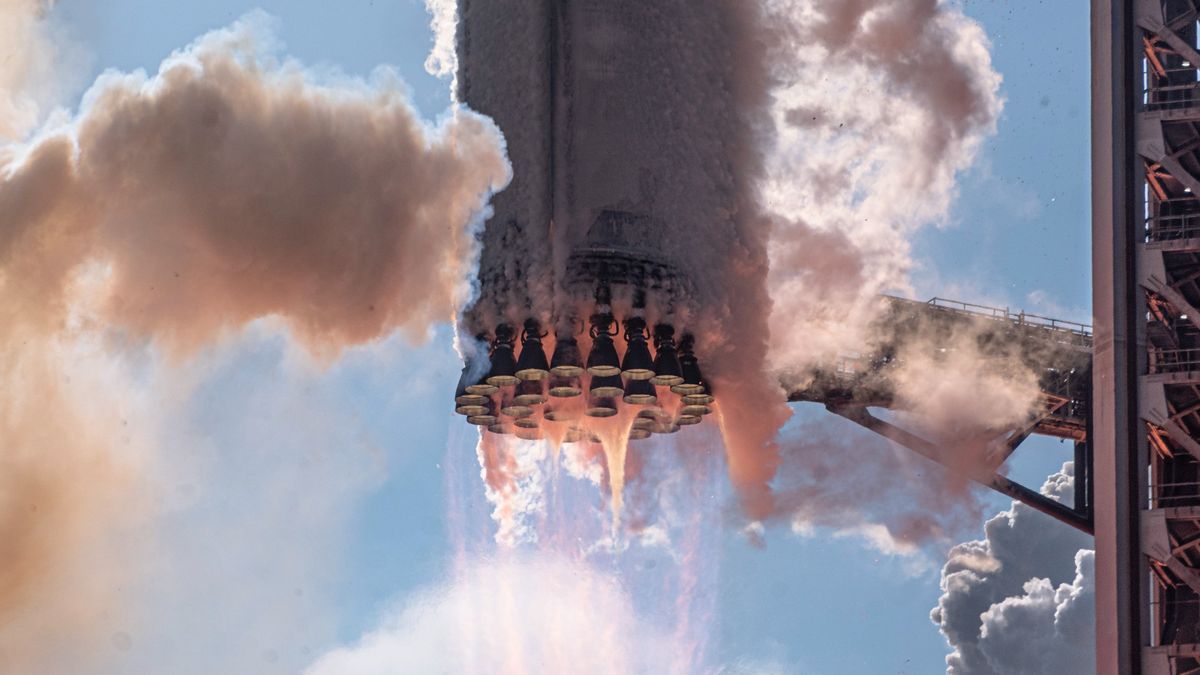
Even if you can't see SpaceX's Starship in person, you can score a model of your own. Standing at 13.77 inches (35 cm), this is a 1:375 ratio of SpaceX's Starship as a desktop model. The materials here are alloy steel and it weighs just 225g. Starship's next big test launch is just a day away. SpaceX has transported Booster 20, the Super Heavy first stage for the massive launch vehicle, back to pad 2 at the company's Starbase facility in Texas. If all goes according to plan, that will be its last relocation before launch, currently scheduled for tomorrow (July 15) during a 90-minute launch window beginning at 6:45 p.m. EDT (2245 GMT). Ship 40, Starship's upper stage for Flight 13, will be trasnported to the pad today, and stacked on Super Heavy for a full wet dress rehearsal to confirm the vehicle's readiness ahead of tomorrow's launch attempt. What time is SpaceX's Starship Flight 13 launch on July 16? (Full mission timeline) Following a static fire engine test last Friday (July 10), SpaceX has lowered the Flight 13 Super Heavy, Booster 20, from the launch stand and transported the stage back to its hangar at the company's Starbase, Texas, facility. The booster will roll back to the pad in the next day or so, along with Ship 40, the Flight 13 Starship upper stage. The pair will be stacked a Starbase's pad 2, where it's expected the rocket will undergo at least one additional engine test prior to launch. SpaceX is still targeting July 16 for liftoff of Starship's 13th test flight, scheduled to get off the ground during a 90-minute window that opens at 6:45 p.m. EDT (2245 GMT). Read how this launch will deploy SpaceX's first batch up upgraded Starlink Version 3 satellites into space. How to watch SpaceX launch Starship Flight 13 on July 16 The next Starship launch has arrived! SpaceX is targeting no earlier than July 16 for the next launch of its massive Starship rocket, the company announced on in a post on X. Flight 13 will be the second launch of the vehicle's Version 3 configuration and will be similar in profile to Flight 12. It will be the second launch for Starship "Version 3" (V3), a bigger, more powerful upgrade from previous Starship designs, and will come a little less than two months after V3's debut. A 90-minute launch window will begin on Thursday at 6:45 p.m. EDT (2245 GMT). A livestream of the mission will begin about 30 minutes prior to liftoff and stream on the company's mission page, profile on X and here on Space.com. Full story: SpaceX targets July 16 for Starship Flight 13, reveals what went wrong on previous launch
Strange New Ad By Anthropic Implies That AI Might End Us All, But... [Watch]
American AI company, Anthropic, is one of the leaders in the artificial intelligence movement (and one of the most valuable). And they have just released ad advert that is, to say the least, ominous. This is despite putting on its most concerned face so it can convince you they're the good guys in the industry. The commercial was released last week, and it took an unorthodox approach to promoting its technology. Instead of going the expected optimism route, it starts with a series of bleak images as we hear voiceovers from different speakers ask some really hard-hitting questions about AI. In fact, you might at first think that you are actually watching a PSA. It starts with a house on fire, then someone asks, "Can AI be trusted?" as footage that looks like surveillance with an AI algorithm scanning the faces of everyone in a crowd appears. Right after this is the most striking sequence. Another voice says, "Who's going to hit the brakes if we need to?" as it cuts to footage of a cemetery lined with hundreds of headstones. Way to sell your product Anthropic. In the eyes of Anthropic, this is a feel-good story. The tagline for the ad is, "There's hope in hard questions," which is meant to reassure viewers that that their concerns over AI - like its potential to destroy jobs or erode or ability to think - are all perfectly valid and that they are questions that the minds behind the company are grappling with as well. It didn't take long for the commercial, which aired during the World Cup quarterfinal clash between Argentina and Switzerland over the weekend, to draw criticism online. One person commented, "When we raise the question of stopping a dangerously powerful superintelligence we show 300 American gravestones for half a second". Even Sam Altman chimed in, saying, "I thought this was satire". A key part of the ethos of Anthropic is that they want to focus on safe AI development. Recently, the company even called for a global "pause" on AI development because it feared the technology could spiral out of human control. One person responding to the ad said it best: "Can Anthropic be trusted?" And that's the real hard question.
![Strange New Ad By Anthropic Implies That AI Might End Us All, But... [Watch]](https://media.2oceansvibe.com/wp-content/uploads/2026/07/annie-spratt-YRe-jV7fRFs-unsplash-scaled.jpg)
Polymarket odds: Newsom leads 2028 Dem nominee at 20% as DDHQ outlook hits
Polymarket Reprices 2028 Democratic Nominee Odds After DDHQ House-Blue / Senate 50-50 Forecast Polymarket's "Democratic Presidential Nominee 2028" market keeps Gavin Newsom as the top-priced outcome at 20.05% implied odds on $1,235,991,473 in volume. The latest catalyst in the broader political backdrop is a DDHQ forecast for a Democratic House and a 50-50 Senate, while traders' pricing shows a moderate-volatility, reversal-flagged tape across the last 24 hours. Key Takeaways * Prediction market leader: Gavin Newsom at 20.05% (Yes 20.05 / No 79.95) in Polymarket's 2028 Democratic nominee market. * Basis for repricing: against a fresh midterm-leaning forecast headline, the market's summary flags a reversal with moderate volatility and a 24h move of +4.35 pp. * Key timing: the contract resolves on 2028-11-07, meaning positions are about the eventual nominee, not near-term election-cycle headlines. A new DDHQ forecast headline projects Democrats winning the House while the Senate sits at a 50-50 split in November. The story frames the outlook as a mixed congressional picture rather than a single-party sweep, offering a near-term political signal that traders may reference when thinking about the next presidential cycle. Market Reaction: $1.235B Volume as Newsom Holds 20.05% vs AOC 14.55% and Ossoff 12.05% (+4.35pp, Reversal Flag) This is a multi-outcome Polymarket contract where each named candidate is a separate "Yes" share that pays out if that person wins the 2028 Democratic presidential nomination, and the displayed percentage is the market-implied probability for that outcome. At the top, Gavin Newsom is priced at 20.05% (Yes 20.05 / No 79.95), with Alexandria Ocasio-Cortez at 14.55% (Yes 14.55 / No 85.45) and Jon Ossoff at 12.05% (Yes 12.05 / No 87.95), indicating a fragmented favorite rather than a dominant consensus pick. Despite Newsom leading, the market is not treating the field as settled: the historical summary shows moderate volatility with weak momentum, yet "consensus strengthening," which is consistent with traders clustering more firmly around a short list even as prices swing. The 24-hour and 7-day change are both +4.35 percentage points in the summary while reversal_detected is true, a combination that reads like a recent directional push that has also shown signs of snapping back rather than a smooth trend. Finally, the $1,235,991,473 volume underscores that this is a continuously updated pricing venue; headlines can act as prompts, but the contract ultimately settles on the nomination outcome at the 2028-11-07 resolution date, so short-horizon political forecasts mainly matter insofar as they shift perceptions of who the party will nominate years later. Watch whether the leading outcome remains near ~20% or whether the market broadens again: the reversal flag and moderate volatility make the next meaningful signal a sustained move in the top three (Newsom/AOC/Ossoff) rather than a single headline-driven spike. Cross-Market Readthrough: Which Polymarket Macro and Election Contracts Traders Track Alongside the 2028 Democratic Nomi Zooming out from the 2028 Democratic nomination tape, traders often cross-check similar high-liquidity politics boards to see whether sentiment is firming or wobbling elsewhere on Polymarket. Right now, that includes 31.15% on "Next French Presidential Election" (Marine Le Pen) on $112,743,658 in volume, 60.5% on "Brazil Presidential Election" (Luiz Inácio Lula da Silva) on $112,978,361, and a near-locked 96.0% on "Clacton by-election Winner" (Nigel Farage) on $2,132,671. Watching how these contracts move day-to-day can provide a broader readthrough on risk appetite and how quickly traders are willing to reprice political outcomes across jurisdictions. Odds Trend By the Numbers * Platform: Polymarket * Market: Democratic Presidential Nominee 2028 * Contract type: Price strike ladder: each rung has separate Yes/No; Yes means the spot price is above that USD strike at settlement. * Resolution window: Nov 07, 2028 (UTC) * Status: Active (open for trading) * Volume: ~$1,235,991,473 Top strike rungs +41 more strikes not shown

2,000 TMC ft of Godavari water going to sea a colossal waste, says Chandrababu Naidu
Andhra Pradesh Chief Minister N. Chandrababu Naidu has said at least 2,000 TMCFT of Godavari river water flows into the sea every year on an average, and that it was a colossal waste. By linking the Godavari river with the Krishna, irrigation facilities could be provided for lakhs of acres, he said, recalling that the eminent engineer K.L. Rao proposed the interlinking of the Godavari and Kaveri rivers decades ago, and that the Vajpayee government had set up a task force for linking the Ganga and Kaveri rivers. Paying tributes to K.L. Rao on his 124th birth anniversary at the Pavitra Sangamam, the confluence of the Godavari and Krishna rivers at Ibrahimpatnam here on Wednesday (July 15, 2026), Mr. Chandrababu Naidu said the TDP government had, in 2014-19, brought Godavari water into the Krishna by constructing the Pattiseema project. The government planned to make the Rayalaseema region fertile by taking Godavari water there, and steps were being taken for it, he said. Godavari-Cauvery river linking must be taken up as national project, says Andhra Pradesh CM N. Chandrababu Naidu By diverting Godavari water to the Krishna delta via Pattiseema, the government had saved water in Srisailam, he said, expressing his resolve to provide water to every acre in the State. Mr. Naidu said that in 2014-19, the TDP government had spent ₹68,000 crore on the irrigation sector and nearly ₹24,000 crore in the last two years. Govt. focusing on intra-linking of rivers as immediate priority, says Chandrababu Naidu He said that, as on date, 89% of the Polavaram project construction had been completed and it was poised to be dedicated to the nation by March 2027. The coalition government would complete 36 priority projects in the next three years, he added. The event was attended by K.L. Rao's son K.L. Vijay Rao and Ministers Nimmala Rama Naidu, Y. Satya Kumar and Anagani Satya Prasad.

SpaceX could launch Starship this week. Here's what's different
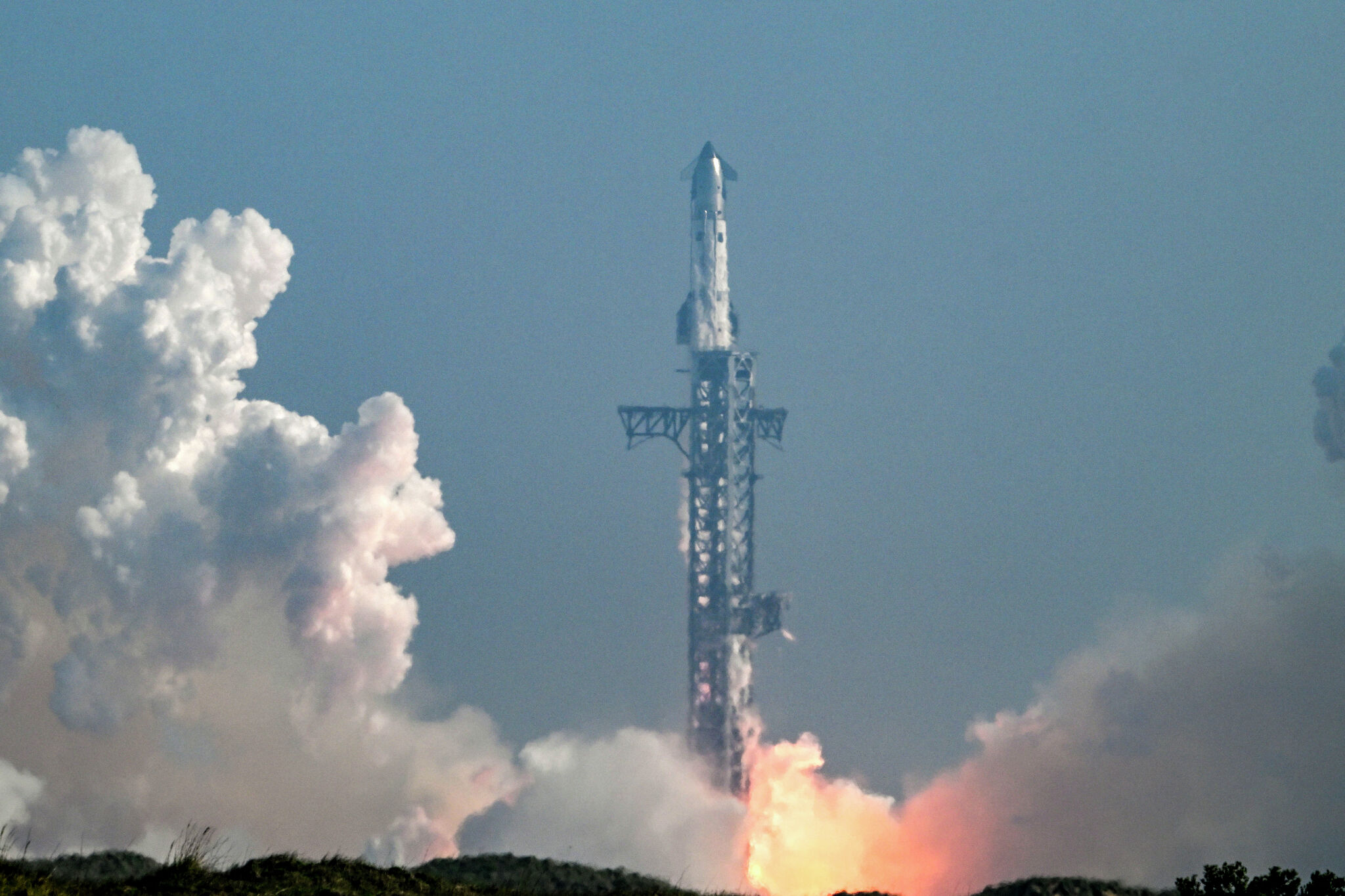
SpaceX could launch its next Starship into space as soon as Thursday, according to the company's website and social media posts by CEO Elon Musk. If the launch of the 13th test flight of Starship/Super Heavy proceeds as planned, it would be the quickest turnaround time between launches for the spacefaring company that recently went public and made Musk the world's first trillionaire. It's also expected to mark another first for SpaceX -- the first time that Starship will carry functional Starlink satellites into space. "The upcoming flight will aim to complete similar objectives targeted on the previous flight test... while also carrying next-generation Starlink V3 satellites for the first time," SpaceX said on its website on a page dedicated to upcoming launches. SpaceX last launched a Starship from its Starbase headquarters on May 22. Flight 12 was the first flight of 2026, and the first time that the company deployed its third-generation Starship configuration. Before that, SpaceX hadn't launched a ship since October 13, 2025. But not everything went according to plan during May's test flight. It's something SpaceX acknowledged on the Flight 13 launch page. An error "in engine startup" on Starship during what is known as "hot staging" caused the booster to rotate off kilter by 90 degrees when the two vehicles separated. Further, five of Super Heavy's 33 Raptor engines failed to relight when it attempted its boostback burn, which was meant to point the rocket back toward Earth for a splashdown in the Gulf of Mexico. One of Starship's Raptors also died after separation. SpaceX said it has since corrected both errors. And those corrections were crucial in meeting a federal regulatory prerequisite before Starship could take to the skies again. After the May 22 launch, the Federal Aviation Administration grounded Starship and ordered SpaceX to investigate the so-called "mishap." On Monday, July 13, the FAA officially closed the mishap investigation, paving the way for SpaceX to proceed with Flight 13. "The final mishap report cites two most probable root causes for the loss of the Super Heavy booster as heat effects on propulsion system components during the ascent and erroneous engine alarm system settings," the FAA said in a statement Monday. For the first time, Starship will carry live Starlink satellites into space and attempt to connect them with the existing Starlink network. Until now, SpaceX has relied on its unmanned Falcon 9 reusable rockets to launch the communications satellites into low Earth orbit. "Starship is planned to deploy 20 satellites which will extend solar arrays and antennas and will attempt to connect with the larger Starlink constellation via high-capacity lasers," SpaceX said. But the satellites will not remain in orbit. Instead, they're expected to burn up in the Earth's atmosphere. SpaceX is targeting a 90-minute launch window that's expected to begin at about 5:45 p.m. local time on Thursday, July 16. However, the company has selected July 17 and July 18 as potential backup dates, according to several notices to airmen, or NOTAMs, the FAA published announcing airspace restrictions on those dates.
SpaceX Is Failing to Live Up to Wall Street's Hype
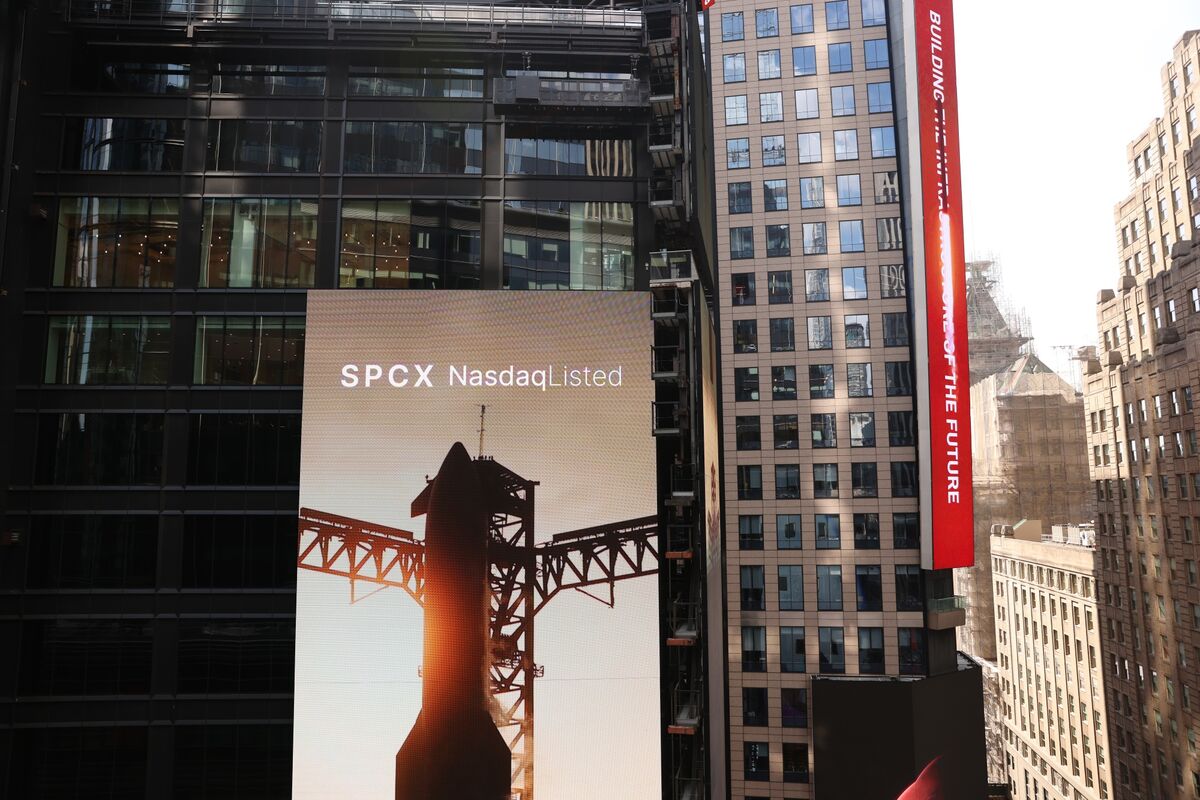
S&P 500 futures7,604.50+0.2%Nasdaq 100 futures29,928.50+0.5%US 10-year Treasury yield4.60%+0.01WTI crude oil futures$80.27+1.2%Bloomberg Dollar Spot Index1,218.38+0.0%South Korea Kospi Index7,284.41+6.2% Market data as of 06:21 AM ET. Data is subject to provider delays. Five things you need to ...
Thief with colossal debts skips day in court for South Tyneside crime
A thief who owes around £10k in debt skipped his day in court for a South Tyneside crime. A thief who owes the courts a whopping £10,000 in past fines and costs continued to offend by pinching £95 of Minecraft toys from a South Tyneside store. David Appleby, 35, of Strathmore Crescent, Benwell, Newcastle, has his debt held in two payment accounts - one of £8,579 and the other around £1,500. No details were provided to South Tyneside Magistrates' Court about the past criminal matters that led to them being put in place. Appleby also did not turn up to have his day in court and the allegation that he stole the Minecraft items went ahead without him Prosecutor Mariam Odetoro said the offender went into Home Bargains' outlet in Station Street, Jarrow, on Tuesday, March 10, and stole 12 toys. Ms Odetoro revealed a police officer attended the shop and checked CCTV footage. Reading from his statement, she said he recognised Appleby because he had "spoken to him on a number of occasions". After hearing the evidence, District Judge Zoe Passfield found the case against Appleby proven. She ordered him to pay full compensation of £95.88 to Home Bargains but did not impose court costs or a victim surcharge after being made aware of his colossal debt.

Polymarket: Iran regime-fall odds dip to 9.5% despite escalation report
Polymarket Discounts Iran Escalation Headlines as "Regime Falls Before 2027" Odds Slip to 9.5% Polymarket traders are pricing a 9.5% chance that the Iranian regime falls before 2027, down 1.0 point from 10.5%, even as a new regional escalation headline hit. With $21,988,241 matched, the contract shows how a fast news shock is being discounted into a long-dated regime-change settlement. Key Takeaways * Prediction: Polymarket implies 9.5% Yes / 90.5% No that the Iranian regime falls before 2027 (No leads). * Basis: Despite the escalation catalyst, odds ticked down 1.0 point, signaling traders still see regime fall as unlikely on this timeframe. * Timing: The market resolves on 2026-12-31, so pricing reflects a long horizon rather than immediate battlefield headlines. A report says Iran launched attacks on Kuwait, Bahrain, and Jordan on Tuesday night and claimed it destroyed the US Fifth Fleet's command centre. The same account says the strikes followed continued US attacks on Iran's coastal cities and that talks had collapsed. Market Reaction: $21,988,241 Matched as Yes Drops 1.0 Point (10.5% → 9.5%) and No Holds 90.5% This is a binary Polymarket contract: a Yes share pays out if the regime falls before 2027, while No pays out if it does not by the resolution date. After the catalyst, pricing moved the opposite way -- Yes slipped to 9.5% from 10.5% (down 1.0 point), keeping No firmly in control at 90.5% even with $21,988,241 in matched volume, which reads as broad skepticism that near-term escalation translates into a defined "regime fall" outcome by the deadline. The historical summary flags low volatility and a neutral trend, with consensus described as weakening; paired with +4.0 points over 24h and 7d, that suggests traders have been willing to push the probability around recently, but not into a stable pro-Yes narrative. A prediction market updates continuously, so this small downtick amid a dramatic headline is itself information: the crowd is treating the news as noisy for a long-horizon settlement, rather than a clear step toward the specific condition required for Yes. Watch whether Yes can reclaim the 10% handle on follow-through headlines, and whether the market's "weakening" consensus tightens into a clearer direction as the 2026-12-31 resolution window approaches. Cross-Market Watchlist: How Traders Hedge Iran Risk Across Polymarket Macro, Oil, and Crypto Volatility Contracts Beyond the flagship regime-change line, traders often hedge the same headline risk across faster-resolving Polymarket contracts that map to shipping, policy, and escalation paths. Right now that includes 81.5% No on "Will the U.S. invade Iran before 2027?" (with $41,677,165 matched), 98.85% No on "Strait of Hormuz traffic returns to normal by July 31?" (with $16,788,321 matched), and 42.0% on "Iran announces withdrawal from MOU negotiations by...?" led by "August 15" (with $5,751,743 matched). Watching how those odds move together can show whether traders are pricing a short-term disruption, a policy shift, or a broader conflict trajectory -- even when the long-dated contract stays relatively anchored. Odds Trend By the Numbers * Platform: Polymarket * Market: Will the Iranian regime fall before 2027? * Resolution window: Dec 31, 2026 (UTC) * Status: Active (open for trading) * Leading implied prob.: 9.5% * Volume: ~$21,988,241 * Top outcomes: Yes: Yes 9.5% / No 90.5%; No: Yes 9.5% / No 90.5%

Anthropic launches 'Claude for Teachers' to help US educators with lesson planning and classroom tasks - CNBC TV18
Anthropic has introduced Claude for Teachers, a new AI-powered platform designed specifically for K-12 educators in the United States. The service provides verified teachers with free access to Claude's premium features, along with teaching resources and curriculum support, aligned with academic standards in all 50 states. The artificial intelligence giant said the initiative was intended to help teachers save time on planning and routine tasks, allowing them to focus more on students. "Claude for Teachers is designed to close the gap between educational best practices and what a teacher's week allows. AI tools for teachers can strengthen instructional practice and improve student outcomes. This is the aim of Claude for Teachers: support the craft behind great teaching and protect what teachers value most -- time with their students," the company said in a blogpost. Built around teaching standards Claude for Teachers is integrated with Learning Commons, enabling the AI assistant to access academic standards across all 50 US states. The platform can generate lesson plans aligned with teaching standards while incorporating trusted educational resources, including OpenSciEd and IM v.360 from Illustrative Mathematics. Integration with K-12 tools Teachers can now connect Claude to a whole ecosystem of K-12 tools. These include ASSISTments, Brisk Teaching, Canva Education, Coteach, Diffit, Eedi, MagicSchool, Snorkl and TeachFX, allowing educators to create assignments, classroom activities, assessments and instructional materials more efficiently. How Claude for Teachers Works After completing the verification process, K-12 educators in the US receive access to Claude for Teachers, which integrates with Learning Commons and includes a collection of teaching skills developed using learning science. Anthropic said these features were created in collaboration with Learning Commons based on feedback from educators. The platform can generate lesson plans using curriculum resources that are mapped to state academic standards. It also creates classroom materials that teachers can customise before using them with students. Claude for Teachers can also personalise content by adapting lessons for students with different learning abilities and proficiency levels, helping educators provide differentiated instruction within the same classroom. In addition, the platform includes Claude Code and Cowork, enabling teachers to automate routine tasks. For example, educators can upload attendance records, diagnostics, your own notes, allowing the AI to analyse student performance and better tailor instruction. Teachers can also schedule recurring activities, such as reviewing students' daily assessments and preparing lesson adjustments for the next school day. Privacy and data protection Anthropic said Claude for Teachers has been built specifically for educators and includes privacy safeguards for student information. It said data shared through Claude for Teachers will not be used to train its AI models. The company added that student information is protected under its K-12 Data Processing Addendum, which is designed to comply with the FERPA. The company added that it is working with the American Federation of Teachers (AFT) to align its privacy practices with gold standards in K-12 education. Free access available until 2027 K-12 teachers in the US can sign up for Claude for Teachers free of charge. Anthropic said educators who register by June 30, 2027, will receive one year of free access, while a dedicated version for schools and school districts is expected to be introduced at a later date.

Czech Republic Blacklists Polymarket as Unauthorized Gambling Site
The Czech Finance Ministry added Polymarket to its blacklist of unauthorized online gambling websites, requiring internet providers to block access within 15 days. The Czech Finance Ministry added Polymarket to its list of unauthorized online gambling websites on Monday, requiring internet service providers (ISP) to block access. The ministry listed the prediction market's website under the country's Gambling Act, which prohibits operators from offering unlicensed online gambling services to Czech users. Under the Gambling Act, ISPs must block access to websites included on the ministry's blacklist within 15 days of publication of the name. Polymarket is a prediction market where users trade contracts tied to the outcomes of future events. The platform gained global attention during the 2024 US presidential election, with its markets widely cited as a gauge of election sentiment. Polymarket and rival Kalshi have been restricted by regulators across the European Union, including in France, Germany, Poland, Romania and Spain. Polymarket did not immediately respond to Cointelegraph's request for comment. Prediction markets face watchdog scrutiny beyond Europe Regulators in several jurisdictions argue that some prediction market contracts amount to unlicensed gambling or fall under existing financial market rules. On July 3, the European Securities and Markets Authority (ESMA) warned that many prediction market contracts could already fall under existing restrictions on binary options if they meet the definition of financial instruments. The regulator said companies cannot avoid EU financial rules simply by marketing binary-style products as "event contracts" rather than derivatives. ESMA said the assessment depends on a contract's characteristics rather than how they are marketed, adding that firms offering qualifying contracts to retail investors may already be subject to national restrictions implementing the bloc's 2018 binary options ban. ESMA also said companies offering such products to professional clients may need authorization under the Markets in Financial Instruments Directive, or MiFID II. Outside the EU, prediction markets have faced similar regulatory action in Australia, Indonesia and Singapore. In the US, Kalshi and Polymarket have been targeted by regulators in several states over allegations that their event contracts constitute illegal gambling, while the Commodity Futures Trading Commission maintains such products fall under its exclusive jurisdiction as federally regulated derivatives. The dispute has resulted in conflicting court rulings and prompted calls for Congress to clarify whether sports and political event contracts should be regulated as gambling or federally regulated derivatives.

Polymarket odds peg Starmer at 98% as next leader out before 2027
predict.info -- Premium Domain For Sale Domain only: USD 200,000. Prediction platform technology priced separately. predict.info Polymarket Holds "Next Leader Out Before 2027" Near a Starmer Lock Despite the Trump CDC Confirmation Headline Polymarket traders are heavily pricing the "Next leader out of power before 2027?" market toward one outcome, with Starmer - UK PM at 98.2% implied odds on $65.34M matched. The latest catalyst in the news cycle centers on reporting that Trump's CDC pick could face an easier confirmation path, but the market's pricing remains overwhelmingly concentrated elsewhere. Key Takeaways * Prediction: Polymarket's leading outcome is Starmer - UK PM at 98.2% (No 1.8%) to be the next listed leader out before 2027. * Basis: Despite the Trump-related headline, the contract stays extremely top-heavy, with Trump - USA President at just 0.15% (No 99.85%) and only a small uptick in the leader's price (+1.15 pp). * Timing: The market resolves by 2026-12-31, after a strong run-up over the past week/24h (both +27.55 pp) that signals tightening consensus into year-end. A report says Donald Trump's pick to lead the CDC could have an easier path than other nominees. The piece frames the nomination as comparatively less contentious than other confirmation fights, potentially reducing near-term political friction around that appointment. Market Reaction: $65.34M Matched as Starmer Hits 98.2% Yes vs Trump 0.15% and "None Before 2027" 0.15% This Polymarket contract is a multi-outcome "who is next" market: each row is its own Yes/No proposition, and only one outcome can win at resolution (or the "None before 2027" option if no listed leader is out). Pricing is extremely skewed -- Starmer - UK PM trades at 98.2% Yes / 1.8% No -- while long-tail outcomes like Trump - USA President sit at 0.15% Yes / 99.85% No, and even other named leaders like Petro - Colombia President are 0.4% Yes / 99.6% No. The latest move is incremental (+1.15 percentage points from 97.05% to 98.2%) on very large cumulative volume ($65.34M), which reads less like a fresh information shock and more like continued compression toward the dominant outcome. The historical summary reinforces that interpretation: odds are up +27.55 pp over both 24h and 7d with "strengthening" consensus and "moderate" volatility, suggesting traders have been steadily marking up the same winner rather than rotating into alternative leaders. Watch whether any rotation shows up in the non-leading outcomes (e.g., Trump at 0.15% Yes or "None before 2027" at 0.15% Yes) versus continued marginal bid into Starmer near the ceiling; with resolution set for 2026-12-31, late-year headline risk typically matters most if it changes the identity of who exits first, not just the intensity of day-to-day political coverage. What Traders Watch Next on Polymarket: Rotation Signals and Cross-Contract Hedges Across Macro and Crypto Markets Once traders have a read on this contract's balance of risk, the next step on Polymarket is checking where volume and momentum are concentrating elsewhere -- and whether those prices offer cleaner hedges or better asymmetry. Big liquidity is still parked in 49.0% on "Republican Presidential Nominee 2028" and 19.95% on "Presidential Election Winner 2028," while shorter-dated timing bets like 99.55% "No" in "Trump out as President by July 31?" can act as a sanity check on near-term political-risk pricing. Outside U.S. politics, contracts like "Venezuela leader end of 2026?" (80.8%) and the more event-driven "US announces end of Iranian blockade by...?" (49.5% on August 31) are where traders often look for cross-contract signals when headlines shift faster than the long-horizon tape. Odds Trend By the Numbers * Platform: Polymarket * Market: Next leader out of power before 2027? (No Orban) * Contract type: Price strike ladder: each rung has separate Yes/No; Yes means the spot price is above that USD strike at settlement. * Resolution window: Dec 31, 2026 (UTC) * Status: Active (open for trading) * Volume: ~$65,336,702 Top strike rungs +20 more strikes not shown
