News & Updates
The latest news and updates from companies in the WLTH portfolio.
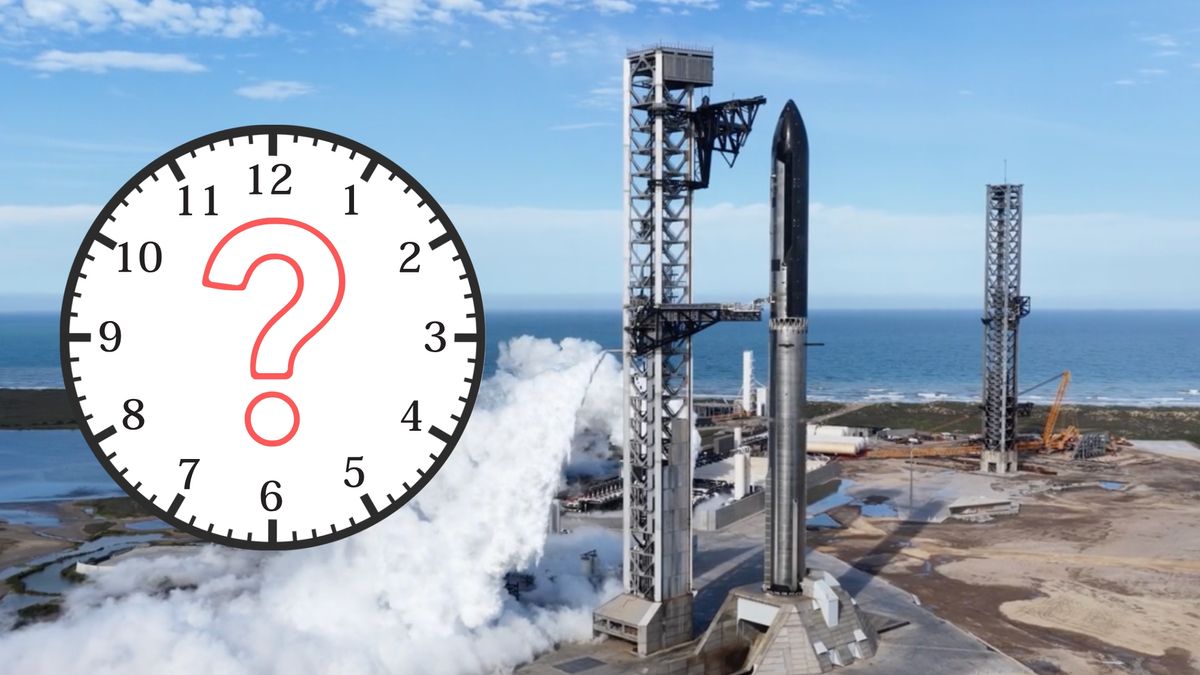
What time is SpaceX's Starship Flight 13 launch on July 16? (Full mission timeline)
SpaceX will launch its next Starship, carrying the first V3 Starlink satellites, on the Flight 13 test mission on July 16. SpaceX is just a day away from its first Starship test flight of the summer, and if you're hoping to watch the world's largest rocket lift off, you'll need to know where and when to tune in. But don't worry -- we've got you covered. The next Starship test flight, called Flight 13 (SpaceX doesn't appear to be superstitious), is scheduled to launch from the company's test site in Starbase, Texas near Boca Chica Beach on Thursday, July 16. Liftoff is set for 6:45 p.m. EDT (2245 GMT). As its name suggests, the upcoming flight will be the 13th test launch overall of SpaceX's Starship megarocket. It will be the second such flight this year, after the May 22 launch of Starship Flight 12. SpaceX is designing Starship, which stands more than 400 feet (121 meters) tall, to be a fully reusable rocket capable of launching missions to the moon, Mars or beyond. NASA picked Starship to land its Artemis IV astronauts on the moon by 2028, and SpaceX has sold at least one Starship passenger flight to Mars as well. But before SpaceX can carry astronauts to other worlds with Starship, it has to complete a series of suborbital flights and, eventually, reach Earth orbit for in-flight fueling tests, docking demonstrations and more. SpaceX's Starship Flight 13 is a suborbital test that will be the second flight of SpaceX's new V3 Starship. Below you'll find details on what time Flight 13 will launch, what the mission will do and a full timeline for the mission. What time is SpaceX's Starship Flight 13 launch? SpaceX is currently targeting the launch of Starship Flight 13 for no earlier than 6:45 p.m. EDT (2245 GMT) on Thursday, July 16. However, the exact timing of the launch could change. That's because SpaceX has a 90-minute window in which to launch Flight 13 from Starbase Pad 2. Liftoff could occur anytime between 6:45 p.m. and 8:15 p.m. EDT (2245 to 0015 GMT). SpaceX's launch webcast will begin 30 minutes before liftoff. And remember, SpaceX has at least one backup day, so the launch could slip to July 17 if needed. In that case, it would likely lift off at the same time -- 6:45 p.m. EDT -- and have a 90-minute window, as on the first attempt. Related: Read our SpaceX Starship and Super Heavy guide for a detailed look Can I watch SpaceX's Starship Flight 13 launch? Yes, you'll be able to watch SpaceX's Starship Flight 13 launch online, but you'll have your pick on where to watch. SpaceX will provide its own livestream of the launch via its X account and the official Flight 13 mission page. If everything is on time, that livestream will begin at 6:15 p.m. EDT (2215 GMT) -- 30 minutes before the planned Flight 13 liftoff. Space.com will simulcast the SpaceX Flight 13 launch webcast on this page, as well as an our homepage and YouTube channel. A prelaunch show Now, if you need to get your Starship Flight 13 fix earlier than SpaceX's stream, a good place to look is the NASASpaceflight preshow. They'll have a livestream the day before launch, then constant live views of the pad on launch day many hours ahead of SpaceX's livestream. The NASASpaceflight preflight show will begin on July 15 at 3 p.m. EDT (1900 GMT). NASASpaceflight has a wealth of cameras installed around SpaceX's Starbase test facility, and the company will share up-close views and live commentary for all preflight activities. In-person launch options While SpaceX does not have an official Starship launch viewing site, there are several places where you can see the launch in person around the Starbase area. For first-time spectators, I recommend watching Starship launch from near the Cameron County Amphitheater at Isla Blanca Park on South Padre Island, which is just across the bay from Starbase. The rocky beaches around the amphitheater offer a clear line of sight of the Starship launch pad, and there are often spectators on boats out of nearby Port Isabel offering a picturesque view. It's about 5 miles (8 kilometers) from the launch site, and the park has bathrooms. The traffic getting to South Padre Island (if you're not staying at a hotel on the island) can be heavy on launch days, so another option is watching from the shore in Port Isabel, which is home to Hopper Haus, a SpaceX-themed bar and grill that I can confirm makes awesome burgers. There is also a shoreline stretch of Highway 48 between Brownsville and Port Isabel, from 6 to 8 miles (10 to 13 km) from the launch site, where you can pull up for the day to watch the launch. It's just the side of the highway, so you won't find amenities like bathrooms there. You can learn more about that at the site SpaceLaunchSchedule.com. If you're looking for a more rustic experience (and have cash for a $200 ticket, though kids under 17 are $40), you can camp at the Rocket Ranch, which is 3.8 miles (6.1 km) from the Starbase launch site, and camp there for one day and night. It has two viewing locations available, one at an "Outpost" and the other on the campground itself. The Outpost location is the closest and has "unmatched media service," so you can stay connected. Larger four-day camping packages are also available. The ticket includes bus transportation from the ranch campground to a viewing site and back for one launch attempt. I've actually never visited this ranch, but I wanted to include it so you know it's an option. Be sure to read the full Rocket Ranch FAQ so you know what to expect. How long is SpaceX's Starship Flight 13? SpaceX's Starship Flight 13 test flight will last just over 1 hour and 5 minutes and should follow the same mission profile as the company's last test, Flight 12, in May. This will be the second flight of SpaceX's new Starship Version 3, or V3. During Flight 12, the giant Super Heavy booster stage failed to return to Earth properly for a controlled landing and splashdown in the Gulf of Mexico (which the Trump Administration has renamed the Gulf of America). Instead, the booster crashed into the ocean. "The booster's primary test objective will be executing a successful launch, ascent, stage separation, boostback burn, and landing burn at an offshore landing point in the Gulf of America," SpaceX wrote in a mission overview. "There have been several modifications to hardware and software to address issues seen on the previous flight." Starship Flight 13 will launch from SpaceX's new Pad 2 at Starbase, which the company upgraded with shorter, faster "chopsticks" -- capture arms that can catch returning Starship Super Heavy boosters and Ship upper stages during landing, as well as lift vehicles into place on the pad for launch. Check out our full overview on how SpaceX changed Starship for V3 here. SpaceX will not try to reach orbit with Starship Flight 13 or return its Ship back to Earth for a capture at the launch pad. Instead, both vehicles aim to make controlled descent and water landings, before falling over and sliding into the sea. While the Super Heavy booster will splash down in the Gulf of Mexico off the coast of Boca Chica, the Ship upper stage will follow a suborbital trajectory for a target splashdown in the Indian Ocean off the coast of Western Australia. During the flight, the Ship vehicle will attempt to deploy 20 Starlink V3 satellites, the company's newer and larger satellite-internet units, but they won't reach orbit. They will follow Starship's suborbital trajectory back down to Earth and burn up in the atmosphere. Six of the Starlink V3 satellites are equipped with cameras to record live views of Starship and its heat shield and beam them back to Earth for analysis. "For the first time, Starship will carry V3 Starlink satellites to space, which aim to greatly expand the network's capacity and user speeds. As part of this initial test, Starship is planned to deploy 20 satellites which will extend solar arrays and antennas and will attempt to connect with the larger Starlink constellation via high-capacity lasers," SpaceX wrote in the mission overview. "The Starlink satellites will be on the same suborbital trajectory as Starship and are expected to demise upon reentry approximately 20 minutes after deployment." What if Starship Flight 13 can't launch? If SpaceX can't launch Starship Flight 13 on July 16, the company does have at least one backup day available. According to a Starship town beach closure notice, SpaceX is targeting both July 16 and July 17 as launch days for Flight 13. So, it bad weather or a minor technical issue delays launch, SpaceX could try again on Friday, July 17, at the same time as the original target. It is possible that SpaceX may have additional backup days beyond July 17. That was the case in May for Flight 12, when a series of delays postponed launch from May 19 to May 22. Whichever date SpaceX launches Starship Flight 13, you will be able to follow the mission on Space.com. Be sure to return to Space.com on launch day for complete Starship Flight 13 coverage.
Czech Republic orders ISPs to block Polymarket over gambling violations
The country joins a growing list of European nations cracking down on decentralized prediction markets, classifying them as unlicensed gambling operations. The Czech Republic's Ministry of Finance has officially added Polymarket to its List of Unauthorized Internet Games, giving internet service providers just 15 days to block the platform for local users. The classification: unlicensed gambling. What happened and why it matters On July 13, 2026, Czech regulators pulled the trigger. The Finance Ministry determined that Polymarket, a decentralized platform where users bet on the outcomes of real-world events, operates without the licenses required under Czech gambling law. The country's blocklist already contains several thousand sites, so Polymarket is joining a crowded neighborhood. ISPs now face a hard 15-day deadline to cut off access. France, Belgium, Spain, Germany, Romania, and the Netherlands have all taken similar action against Polymarket. Jan Řehola, a commentator on Czech regulatory affairs, has highlighted the risks that come with unregulated prediction markets. Think insider trading, market manipulation, and the complete absence of know-your-customer protocols. The Polymarket paradox Despite being banned, restricted, or blocked across much of Europe, Polymarket's trading volumes have been surging. Record highs, even. Polymarket settles all its contracts in USDC, the dollar-pegged stablecoin issued by Circle. Polymarket doesn't process bets through licensed gambling operators. It processes them through smart contracts on a blockchain. Traditional gambling operators must comply with anti-money laundering rules, maintain customer databases, report suspicious activity, and often pay significant licensing fees. Polymarket, by design, does none of that. Europe's split personality on prediction markets While most of Western and Central Europe is slamming doors shut, Gibraltar has gone in the opposite direction, launching what it describes as the first dedicated regulatory regime for prediction markets. What this means for investors If you're based in the Czech Republic, France, Belgium, Spain, Germany, Romania, or the Netherlands, your ability to use Polymarket through normal channels is now either gone or actively being removed. Polymarket's trading activity has hit record levels even as bans proliferate. Users aren't disappearing. They're adapting.

Claude For Teachers: Anthropic Rolls Out Free AI Lesson-Planning Assistant; Check Eligibility And Direct Link To Apply Here
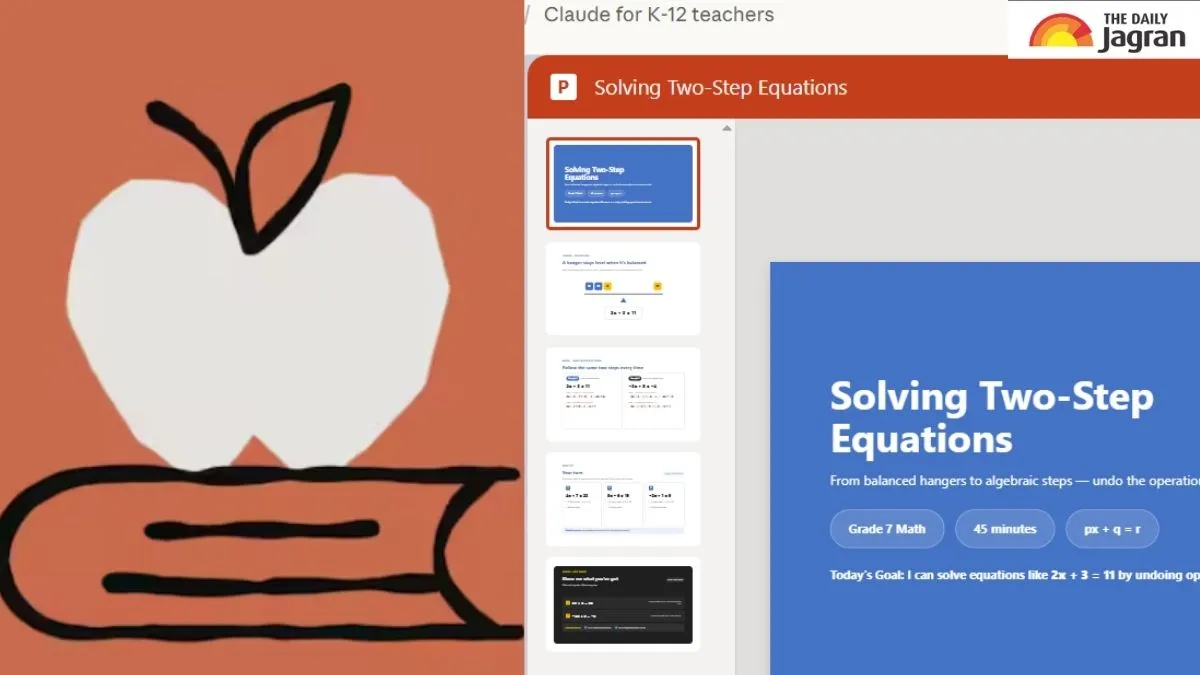
Complies with FERPA, ensuring student data privacy and security. Anthropic Free Premium Claude Access: Artificial intelligence company Anthropic has launched "Claude for Teachers," offering free premium access to its AI assistant through 2027. The programme is strictly available to verified K-12 educators in the United States. Designed to combat administrative burnout, the initiative lets teachers generate quizzes, plan lessons, and design activities aligned with US state standards. The tool complies with FERPA privacy laws and will not use classroom conversations to train AI models. ALSO READ: Karnataka Unveils Big AI Push: CM Announces India's First Government-Led AI University The program is explicitly restricted to verified K-12 school teachers operating within the United States. Educators located in international regions, including India, are excluded from this specific initiative but can continue utilizing the standard free or paid tiers of the platform. Anthropic has integrated Claude with major academic platforms to maximise classroom utility. The tool features direct data links with Canva Education for visual asset creation, alongside structured content partnerships with specialized educational bodies like Learning Commons and Illustrative Mathematics. To ensure safety within school districts, the platform operates under strict legal compliance. It fully adheres to the Family Educational Rights and Privacy Act (FERPA), meaning student records remain protected, and inputs are never recycled to train Anthropic's future language models. ALSO READ: Today's GK Special: List Of Free Trade Agreements Signed By India Till July 2026
German Regulator Rules Google AI Overviews, Perplexity Subject To National Media Law
Germany's media regulator ruled Google AI Overviews and Perplexity are subject to national media law, increasing oversight of AI-generated content. Germany's media regulator has ruled that Google's AI Overviews and Perplexity AI are subject to the country's media laws, significantly expanding oversight of artificial intelligence-generated content following a recent court ruling against Google. The Commission for Licensing and Supervision (ZAK), which represents Germany's 14 state media authorities, said AI-generated search summaries and chatbot responses should be treated as content produced by the providers themselves rather than as a simple display of information from third-party websites. The decision follows a ruling by a Munich court that found Google could be held liable for allegedly false information generated by its AI Overview feature, concluding that the AI-generated summaries constitute the company's own content. ZAK Chairman Thorsten Schmiege said AI-powered search engines and chatbots are content providers and will henceforth be regulated under Germany's media laws. The regulator also said liability protections under the European Union's Digital Services Act, which generally shield online platforms from responsibility for unlawful user-generated content, do not apply to AI-generated responses because the content is created by the providers themselves. ZAK argued that Google's AI Overviews are displayed prominently in search results, reducing the visibility of traditional website links and potentially placing independent media organisations at a competitive disadvantage. It further said AI chatbots such as Perplexity influence how users access news by selecting and presenting sources, links and recommendations alongside AI-generated responses, potentially qualifying them as media intermediaries subject to regulations aimed at safeguarding media plurality. Google said it would appeal the ruling, arguing that the decision fails to recognise how people's search habits and the digital information ecosystem are evolving. The company maintained that its AI-powered summaries enhance users' search experience by helping them discover relevant content more efficiently and ask follow-up questions. Perplexity declined to comment on the decision, saying only that it complies with the European Union's General Data Protection Regulation (GDPR) and maintains SOC 2 Type II certification covering its security and privacy practices.

Video of colossal hornet nest shocks viewers, then commenters reveal it's from a hornet farm in Vietnam
Add Yahoo as a preferred source to see more of our stories on Google. A jaw-dropping video on Reddit showing workers handling an enormous hornet nest left viewers stunned -- at least at first. As the clip spread, commenters suggested the scene was likely something very different from a random pest-control emergency: a hornet farm in Vietnam built and maintained by people. What happened? The post on Reddit with the caption, "Pest controllers encounter a gigantic Asian hornets' nest," showed a massive hornets nest being interacted with by people. (Click here if the embedded video does not appear.) However, many of the comments explained that the people in the video are not pest controllers, but rather, they are hornet farmers. "This is a hornet larvae farm. These are not pest control specialists rather hornet specialists," one person wrote, explaining that "hornet larvae are considered a delicacy" in some regions. Another added, "This is not pest control, this is intentional farming. Specifically, the end process of harvesting. The developing brood and the hornets themselves are a very expensive local delicacy used both for food and traditional medicine." From there, the conversation widened into species background. Commenters said the Asian giant hornet, Vespa mandarinia, can reach over 2 inches long and is a concern as an invasive species in the United States and Canada. Why does it matter? If these commenters are correct, which it appears they are, this was not simply nature spilling into human space -- it was people intentionally cultivating hornets in a built environment. There is also a public-safety and ecological dimension to the conversation. Large hornets can deliver painful stings, and invasive species concerns are taken seriously because nonnative predators can disrupt local ecosystems, agriculture, and pollinator populations. Posts that blur the line between a wild infestation and farming can create confusion about what people are actually seeing. What's being done? Large wasp or hornet nests should not be approached or disturbed, whether they appear wild or managed. Unusually large hornets or suspected invasive species are better reported to local agriculture departments, extension offices, or wildlife agencies than left to social media speculation. So the viral footage, which earned 61,000 upvotes, may not have shown an accidental encounter with a giant wild nest at all, but rather a massive hornet farm, marked by "the structure of the hives that they 'seed' themselves" and the "tarps and wood planks they use to protect them." Get TCD's free newsletters for easy tips, smart advice, and a chance to earn $5,000 toward home upgrades. To see more stories like this one, change your Google preferences here.
SpaceX's Blow-It-Up Testing Won't Fly on Starship
SpaceX's willingness to blow stuff up and learn from the failures has propelled it from a cash-strapped startup to one of the world's most valuable companies (and kick-started a commercial space revolution along the way). The development of the Falcon 9 rocket was achieved over a relatively short ...
U.S. Government Intervenes in xAI's Gas Turbine Clean Air Lawsuit
Court Checkpoint: A judge must decide whether plaintiffs can keep seeking a halt while federal rules for portable units remain unsettled. The U.S. Justice Department has filed a motion to intervene in and dismiss a Clean Air Act lawsuit over xAI's Southaven power operation. Federal lawyers argued that closing the AI facility would conflict with economic, military, national-security, and energy-policy interests. The private suit tests whether portable generating equipment used for on-site AI power remains subject to federal air-permit duties. Behind-the-meter generation lets a facility produce and consume electricity on site instead of relying on the public grid. Earlier plans put Colossus 2's power goal at gigawatt scale, an unusual target for a single computing site. The federal intervention neither grants xAI a Clean Air Act exemption nor resolves the plaintiffs' allegations. A judge must still consider the disputed mobile fleet, its potential emissions, and the consequences for nearby communities. xAI has provided no current response. What the Turbines Could Mean for Nearby Communities xAI has reportedly installed 59 mobile gas turbines for its Southaven AI data center, Colossus 2. Of those units, 57 have been at the unpermitted Southaven xAI power project, with two elsewhere. In January, xAI operated 27 turbines at the Colossus 2 natural-gas turbine installation while maintaining that temporary units were exempt from permits. Potential pollution rises with the number of active turbines and their operating intensity. That makes the gap between 27 units and the 59-unit allegation operationally material. The concentration of behind-the-meter gas generation at one location are unusually large. More active units can produce more electricity but also more emissions. Output from the 30 Southaven turbines could reach about 2,500 tons of nitrogen oxides, 4,000 tons of carbon monoxide, and 22 tons of formaldehyde annually. Nitrogen oxides help form smog. Figures for 30 turbines are not measurements from the full 59-unit allegation; operating schedules and the number of active units would change actual totals. Estimated asthma rates in the affected area exceeded countywide levels in 27 of 28 nearby census tracts, while chronic obstructive pulmonary disease rates were higher in 24 tracts. Victoria Nelson, an independent environmental engineer and former U.S. Environmental Protection Agency official, warned about the risk of added exposure: "Given this community struggles with high asthma rates, additional NOx exposure at such high rates could exacerbate public health issues in a community that is already seeing more than its fair share of exposure to toxic air pollution." Added nitrogen-oxide exposure can aggravate respiratory risks. However, existing disease estimates cannot establish a causal connection between the turbines and the area's health conditions. Independent reporting indicates that Shelby County and parts of DeSoto County previously failed federal ozone standards and remain under EPA-approved maintenance plans. The Permit Fight Now Runs Through Federal Court Mississippi regulators have approved 41 permanent turbines in March, while that earlier permit baseline excluded the mobile units. Permanent equipment is tied to a fixed site. xAI has classified 27 of the installed gas turbines as portable equipment intended to move within 364 days. At about 1.2 gigawatts, the permanent units could supply substantial power, but their capacity does not extend the permit to mobile equipment. By May, 46 turbines were operating in Southaven, up from 27 in January. U.S. Environmental Protection Agency rules may still require permits above emissions thresholds. Mississippi's environmental agency directs to a page where a public notice, draft permit, or Statement of Basis can be found. A federal judge's next ruling will decide whether the plaintiffs can continue seeking an order that halts xAI's Southaven turbines.

Claude AI Is Now Free for Teachers: Anthropic Rolls Out Powerful Classroom Assistant
The new platform connects Claude to state academic standards, trusted curricula and classroom apps, while offering educators free premium AI features with student data privacy protections. Anthropic has launched Claude for Teachers, a new artificial intelligence (AI) platform designed specifically for K-12 educators in the US, offering verified teachers free access to premium Claude features, curriculum-aligned lesson planning tools and classroom workflow automation. Anthropic said the programme connects educators directly to academic standards across all 50 US states and integrates with widely used educational platforms, marking one of the company's biggest pushes into the education sector. Verified teachers who sign up by June 30, 2027, will receive a full year of free access. Designed to Give Teachers More Time with Students Anthropic said Claude for Teachers was built to address longstanding challenges facing educators, particularly limited planning time, growing workloads and large class sizes. In its announcement, the company said, "Claude for Teachers is designed to close the gap between educational best practices and what a teacher's week allows." It added that while research on AI use by students has produced mixed findings, "AI tools for teachers can strengthen instructional practice and improve student outcomes". The company said the platform is intended to "support the craft behind great teaching and protect what teachers value most -- time with their students." AI-Powered Lesson Planning Linked to State Standards Claude for Teachers connects to Learning Commons, enabling the AI assistant to access academic standards and learning progressions for every US state. Anthropic said lesson plans generated through Claude are automatically scaffolded and aligned with state teaching requirements. Teachers can also integrate Claude with popular education platforms including Canva Education, Brisk Teaching, Diffit, ASSISTments, MagicSchool, TeachFX, Snorkl, Eedi and Coteach. These integrations allow educators to create classroom-ready activities, personalised learning materials, diagnostic assessments and interactive designs within seconds. Among its key capabilities, Claude can generate differentiated lesson plans for students with varying learning needs, analyse classroom data such as attendance and assessment results to recommend instructional strategies, and automate recurring administrative tasks. Anthropic said teachers can assign daily jobs, such as reviewing student exit tickets and adapting the following day's lesson plan, allowing Claude to complete the work automatically. Privacy and Safety Remain Central Anthropic emphasised that Claude for Teachers has been developed exclusively for educators and includes dedicated privacy protections for schools. The company said teacher and student data will not be used to train Claude's AI models, and the platform complies with the US Family Educational Rights and Privacy Act (FERPA) through a dedicated K-12 Data Processing Addendum. The company has also partnered with the American Federation of Teachers (AFT) to align the platform with emerging privacy and safety standards for education. "We've been working with Anthropic on a Gold Standard that sets out industry best practices for safety and privacy in K-12 education," AFT President Randi Weingarten said in Anthropic's announcement. She added that the tool is "designed by and for educators to assist them instructionally and hopefully give them more time for the human relationships at the heart of learning." Broader Education Strategy Beyond the product launch, Anthropic also introduced AI Fluency for K-12 Teachers, a free training programme developed with Teach For America and the American Federation of Teachers to help educators use AI responsibly in classrooms. The company said it will also release open-source teaching resources, expand educational connectors for developers and begin piloting Claude for Teachers in Detroit Public Schools Community District to study its impact on teacher wellbeing and instructional practice. Anthropic said these initiatives form part of its broader partnership with the Gates Foundation to develop AI tools that improve educational outcomes, while a dedicated version of Claude for schools and districts is expected to launch in the future.

Anthropic outlines state-by-state plan for AI regulations, and crypto should pay attention
The Claude maker wants tailored AI rules in every US state, a regulatory approach that could eventually reshape how digital assets intersect with artificial intelligence. Anthropic, the AI safety company behind the Claude model series, is developing a framework to push for AI regulations on a state-by-state basis rather than waiting for a single federal solution. What Anthropic is actually doing The company, co-founded by Dario Amodei and staffed by veterans of the AI research world, has signaled its intent to engage with policymakers across individual US states to craft AI oversight frameworks. The approach prioritizes localized regulation over a one-size-fits-all federal mandate. No specific states have been publicly identified as initial targets. No proposed rules, timelines, or quantitative benchmarks have been documented as of mid-2025. The initiative appears to still be in its formative stages, which means we're watching a company lay groundwork rather than break ground. Anthropic has positioned itself as the responsible adult in the AI room since its founding, regularly publishing research on AI alignment and engaging with Washington in ways that competitors sometimes treat as optional. This state-level push is an extension of that identity. The patchwork problem If California imposes strict disclosure requirements on AI model outputs while Texas takes a lighter touch, companies building AI-powered financial products will face a compliance maze. That maze gets even more interesting when you layer in crypto, an industry that already navigates a famously fragmented US regulatory landscape across the SEC, CFTC, FinCEN, and dozens of state-level money transmission laws. Anthropic's push doesn't currently touch crypto or digital assets directly. There are no indications the company is positioning itself to influence cryptocurrency regulatory frameworks. Why this matters for crypto investors The immediate market impact is minimal. Anthropic is a private company. There's no token, no public equity to trade, and no direct mechanism for crypto markets to price in this regulatory strategy. Anthropic's initiative is still early. The absence of concrete proposals or target states means we're evaluating a direction rather than a destination. Dario Amodei and his team have consistently emphasized safety and regulatory engagement, but translating that emphasis into 50 different legislative conversations is a multi-year undertaking at minimum.
Anthropic Unveils Free Premium Claude Access For US Teachers
Anthropic is rolling out a brand new initiative aimed directly at K-12 educators across the United States. It is now offering an entire year of premium access to its popular AI tools completely free of charge. This program gives individual teachers the ability to utilize advanced features without paying the usual subscription fees. It marks a significant push to bring better technology directly into classrooms. What the new education program brings to teachers and classrooms The new Claude for Teachers campaign provides educators with specific skills built just for them. The company worked directly with Learning Commons to develop tools based on actual classroom needs. These skills help with daily teaching tasks and are rooted in proven learning science. Educators who get verified will unlock access to Claude Cowork and Claude Code. This means teachers can use the most powerful tools it has to offer. The company also released a fluency guide for anyone wanting to learn how to integrate artificial intelligence into their daily lesson plans. Right now, this offer only applies to individual educators in the K-12 system. However, it plans to release larger packages designed for entire schools and districts in the future. Eligible teachers have until June 30, 2027, to sign up and claim their free year of premium access. This step gives educators a chance to experiment with premium tools without stretching their own budgets. Providing teachers with direct access to these resources might completely change how they prepare for the school week.

Anthropic launches Claude for teachers, offers premium AI access free for a year - Connected to India News I Singapore l UAE l UK l USA l NRI
Technology major Anthropic on Tuesday announced the launch of a new programme offering verified K-12 educators in the United States free access to premium Claude capabilities. Named Claude for Teachers, the programme will provide educators with a library of teaching skills and direct access to evidence-based curricula mapped to academic standards across all 50 US states. Why did Anthropic build the programme for teachers? Explaining the rationale behind the initiative, Anthropic said decades of research have shown that practices such as differentiation, mastery-based learning and small-group instruction can improve student achievement. However, teachers often lack the time and resources needed to implement them effectively. "Budgets are stretched, classes may be too large to meet every student's individual needs, and planning often spills into evenings," Anthropic said in a post on its website. The company said Claude for Teachers is designed to bridge the gap between educational best practices and what teachers can realistically accomplish during a busy working week. According to Anthropic, early evidence suggests that while the impact of AI tools on students is mixed and depends on how they are implemented, AI tools designed for teachers can strengthen instructional practices and improve student outcomes. "This is the aim of Claude for Teachers: support the craft behind great teaching and protect what teachers value most -- time with their students," the company said. Claude for Teachers connects to Learning Commons, giving Claude access to academic standards across all 50 states. The system can also access the smaller learning competencies underlying each standard and the sequence in which students typically acquire them. As a result, when Claude drafts a lesson plan, it can create materials that are scaffolded and aligned with relevant teaching standards. The programme also incorporates curricular resources such as OpenSciEd and IM v.360 from Illustrative Mathematics. Educators can also connect Claude with an ecosystem of K-12 education tools, including ASSISTments, Brisk Teaching, Canva Education, Coteach, Diffit, Eedi, MagicSchool, Snorkl and TeachFX. These integrations can help teachers generate standards-aligned practice and assessment materials, create interactive classroom activities, adapt instructional resources for different learners, develop mathematical diagrams, generate diagnostic questions and analyse student progress. How does Claude for Teachers work? Once verified, K-12 educators in the US will receive access to Claude for Teachers, including the Learning Commons connector and a set of specialised teaching skills grounded in learning science. Anthropic said the skills were co-developed with Learning Commons around tasks that teachers identified as most important. They were evaluated for pedagogical rigour, alignment and classroom usability before being refined using feedback from classroom teachers, including educators at schools such as Prospect Schools in Brooklyn. Teachers can use Claude to create lesson plans based on widely used curricula mapped to their state's academic standards. The AI assistant can also draft student-facing materials that educators can revise before using them in the classroom. Claude can also adapt instructional materials for students at different readiness levels, creating differentiation plans and personalised resources for varying proficiency levels. Claude for Teachers includes Claude Code and Cowork, allowing the AI assistant to carry out more complex and recurring tasks. For example, teachers can provide Claude with classroom data -- including rosters, diagnostic results, attendance records and their own notes -- to help build a clearer picture of student progress and tailor instruction accordingly. Anthropic said teachers will remain in control of the data they share and that information provided through the programme will not be used for model training. Educators can also schedule recurring tasks, such as reviewing daily exit tickets to assess what students have mastered and adapting the following day's lesson plan based on the results.Anthropic said eligible teachers who sign up for the programme by June 30, 2027, will receive a full year of access.

SpaceX seeks to send data centers into orbit
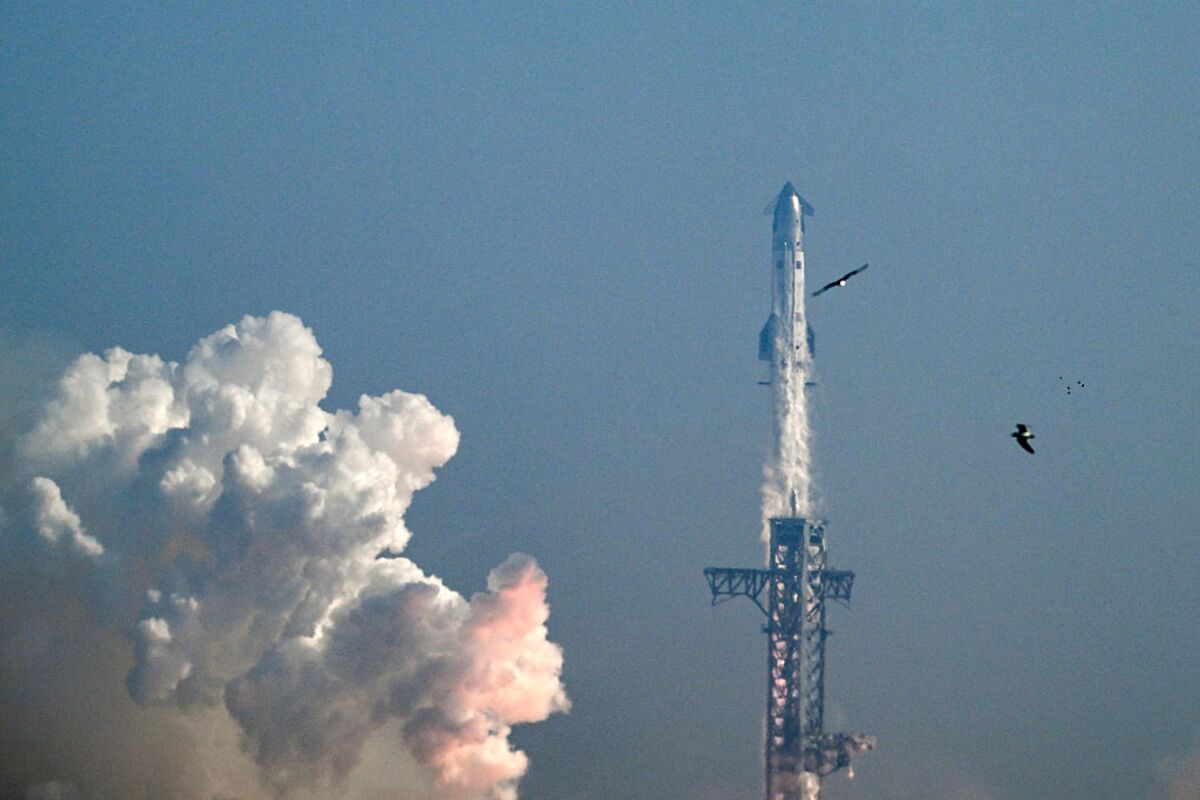
SpaceX has announced that the 13th test flight of its Starship super heavy-lift launch system is scheduled for July 16. The launch window from the company's Starbase facility in Texas will open at 17:45 local time, which corresponds to 00:45 on July 17 in Baku time, AzerNEWS reports. The upcoming Flight 13 mission will feature the Ship 40 spacecraft and the Booster 20 Super Heavy rocket. This will mark the second test flight of the upgraded Starship V3 configuration, which includes improvements to both hardware and flight systems. One of the most important milestones of the mission will be the first attempt to deploy a real payload into orbit. Starship is expected to carry 20 next-generation Starlink V3 satellites, with six of them equipped with cameras designed to monitor the condition of the spacecraft's thermal protection system during flight. However, because the mission will follow a suborbital trajectory, the satellites will not remain in orbit and will eventually re-enter Earth's atmosphere and burn up. During the test, SpaceX plans to evaluate several critical technologies, including the in-space restart of a Raptor engine, the performance of the upgraded heat shield during atmospheric re-entry, and the controlled splashdown of the spacecraft in the Indian Ocean. The company has also introduced software and hardware improvements based on data collected during the previous test flight in May. During that mission, the Super Heavy booster failed to complete its planned soft landing after experiencing an engine-related issue during the landing sequence. Meanwhile, SpaceX CEO Elon Musk has shared new details about the company's long-term plans to build data centers in low Earth orbit. According to Musk, SpaceX could begin launching the first components of these orbital computing systems as early as next year, with major progress expected by 2028. Earlier, SpaceX revealed additional information about the Starmind project, a planned orbital network of data centers designed to provide large-scale computing capacity for artificial intelligence applications. If successful, the project could become one of the most ambitious attempts to move AI infrastructure beyond Earth, using space-based solar power and advanced satellite networks. The Starship program remains central to SpaceX's future plans, including NASA's Artemis lunar missions, potential Mars exploration, and the expansion of global satellite services.

Why Anthropic's latest AI advertisement is facing online backlash
Anthropic's latest advertising campaign has sparked criticism online, with many viewers saying the AI company's attempt to highlight concerns around artificial intelligence came across as unsettling rather than thought provoking. The campaign, titled "There's hope in hard questions," begins with visuals of a house on fire before moving through a series of stark images, including facial recognition surveillance, a homeless person sleeping on the street, rows of gravestones and workers in what appears to be a mine. Throughout the film, different voices ask questions such as, "Can AI be trusted?" and "Who's gonna hit the brakes if we need to?" Also Read: Anthropic rolls out India pricing for Claude AI as country becomes its second-largest market The campaign continues Anthropic's long-standing effort to present itself as an AI company that takes the technology's risks seriously. By openly acknowledging public concerns around AI, the company seeks to position itself as being better equipped to address those challenges responsibly. However, the campaign drew sharp reactions on social media, including from OpenAI CEO Sam Altman. Responding on X, Altman wrote, "i thought this was satire, kept looking for the handle to be spelled c1audeai or something." Several others in the technology industry also criticised the advertisement. One commenter described Anthropic as "an amazing company" with "the worst corporate communications ever," while another said those behind the campaign appeared to be "living in a bubble of ai psychosis." One image, which appeared to show Arlington National Cemetery, attracted particular criticism. Some users questioned the decision to pair the visual with the question, "Who's gonna hit the brakes if we need to?", while others described that portion of the advertisement as especially disturbing. This is not the first time Anthropic's marketing has generated attention. During the Super Bowl in February, the company released advertisements mocking OpenAI's reported decision to introduce ads in ChatGPT. Those campaigns received a largely positive response and also drew criticism from OpenAI. The latest campaign appears to follow the same strategy of standing out by addressing difficult questions around AI. However, early reactions suggest many viewers found the campaign's tone more unsettling than reflective.

Kraken Adds USDT0 On Tempo As Stablecoin Rails Keep Spreading Across Networks
Trusted Editorial content, reviewed by leading industry experts and seasoned editors. Ad Disclosure Kraken Adds USDT0 On Tempo As Stablecoin Rails Keep Spreading Across Networks is a useful reminder that crypto coverage is not only about token prices. Sometimes the more important story is the infrastructure, regulation, security, or product layer sitting underneath the market noise. The immediate point is straightforward: kraken added support for USDT0 deposits and withdrawals on Tempo. That gives readers something concrete to work with, rather than another vague sentiment update. TL;DR * Kraken added support for USDT0 deposits and withdrawals on Tempo. * The integration is aimed at lowering transfer costs and expanding stablecoin access. * It shows exchanges treating network support as part of the stablecoin product experience. Why This Matters Now The timing matters because Kraken is already part of a wider conversation across the market. Traders want to know whether the development changes liquidity or risk. Builders want to know whether it changes what can be deployed. Compliance teams want to know whether it changes how platforms operate. In that sense, the story is bigger than one headline. It sits inside the ongoing shift from speculative crypto cycles toward more practical questions: who can use these systems, how safe are they, and whether the underlying incentives actually work. The best way to read it is with discipline. It is not a guarantee of immediate upside, and it should not be treated as one. But it does add a fresh data point to the way the market is thinking about Kraken. The Kraken Angle For Kraken, the important part is the specific mechanism. If this is a security issue, the risk sits in dependencies and user protection. If it is a listing or product launch, the question is access and liquidity. If it is a governance or research proposal, the question is whether the idea can survive implementation. That is where this update becomes useful. It is not just a label attached to a trend. It gives readers a way to understand what might actually change if the development gains traction. Crypto has a habit of turning every announcement into a broad market claim. This one deserves a narrower read. The value is in seeing how it affects the users, developers, institutions, or traders closest to the issue. The Risk Side There is also a caution attached. Source material can confirm that a development exists, but it cannot prove that adoption will follow. A proposal still needs support. A product still needs users. A chart still needs confirmation. A compliance tool still needs integration. That is why the responsible reading is not to oversell the story. The stronger takeaway is that this adds to a pattern. The crypto market is steadily becoming more professional, more technical, and more sensitive to real operational details. Readers should also watch for follow-up signals. That could mean developer feedback, exchange support, regulatory response, wallet adoption, liquidity data, or simply whether market participants continue reacting after the first headline fades. What Comes Next The next stage will decide whether this remains a narrow update or becomes part of a larger market theme. In crypto, that difference matters. Plenty of stories look important for a few hours and then disappear. The ones that last usually show up again through usage, liquidity, enforcement, governance, or developer adoption. For now, this gives the market another piece of information to weigh. It is specific enough to be useful, but still early enough that readers should keep the caveats in view. That makes it worth covering without pretending it settles anything. The story is a signal, not a final verdict. The key is not to confuse coverage with certainty. Kraken stories can move quickly, especially when they touch security, regulation, listings, infrastructure, or price levels. The useful approach is to track the next confirming detail rather than assume the first update carries the whole market story. That is how traders avoid chasing noise and how readers separate a genuine development from another passing headline. This report is based on information from blog.kraken.com. This article was written by the News Desk and edited by Samuel Rae.
German regulator says Google and Perplexity must follow media laws - Cryptopolitan
Germany's regulator is focusing on how AI products distribute news and who is responsible for the output when it is incorrect. Germany's media watchdog said Google's AI Overviews and Perplexity AI are content providers under the country's media law on Tuesday. This means that the two most popular AI search engines now have to follow the same rules as regular publishers and are directly liable for the content generated by their AI systems. The decision was made by ZAK, the Commission for Licensing and Supervision, which is made up of 14 German state media. ZAK found that the companies running AI created news summaries and chatbot responses are the authors. That's a critical distinction because it implies AI products can no longer hide behind the legal shield they have relied on in the past. "AI search engines and chatbots are content providers," ZAK Chairman Thorsten Schmiege said in a statement. "From now on, we will always apply German media law to them." In those cases, the Digital Services Act's responsibility exemption is not applicable, the regulator said. That immunity typically shields platforms from liability for user created illicit content. German court holds Google responsible for AI Overview content The decision by ZAK came after a court in Munich said that Google was directly responsible for the allegedly false statements that its AI Overview feature made. The court saw the summaries as Google's own work, not as repackaging information from other sources. That reasoning is the same as what ZAK applied to the broader issue of media law. Once an AI system is the author of what appears on screen, the company behind it bears the obligations and risks associated with publication. ZAK says that Google's AI Overviews show up at the top of search results, pushing down traditional lists of links. The regulator thinks this is unfairly hurting third-party media outlets that depend on that traffic. ZAK says that tools like Perplexity change the news that people read by letting users pick and show sources, links, or suggestions along with their own answers. On that basis, the regulator stated that such services could qualify as media intermediaries, a category with rules designed to protect media plurality. The German move comes as global pressure grows for formal oversight of frontier AI systems. According to Cryptopolitan, Google DeepMind CEO Demis Hassabis recently called for a US watchdog, similar to Wall Street regulator FINRA, to screen the most powerful AI models before they are released. Anthropic CEO Dario Amodei has advocated for a more powerful agency, similar to the FAA, with the authority to prohibit unsafe models. These proposals address safety concerns with the underlying models. Germany's regulator is looking into how AI products distribute news and who is responsible if the output is incorrect.

Law firm investigates Cerebras investors over p... | Pluang
Pomerantz LLP is investigating claims on behalf of investors of Cerebras Systems Inc. following the company's Q1 2026 financial report, which showed a loss of $0.22 per share, missing analyst estimates. Cerebras also forecasted a narrower gross margin in its core business, leading to a nearly 20% drop in its stock price. The investigation concerns whether Cerebras and some of its officers engaged in securities fraud or other unlawful practices. Investors affected are advised to contact Pomerantz LLP for potential class action participation.

SpaceX launches flight-proven rocket for 600th time, sending Starlink satellites to orbit
Both flights successfully recovered their Falcon 9 first stage boosters, with B1093 completing its 15th flight from Florida and B1080 achieving its 28th mission from California, contributing to SpaceX's total of 83 Falcon 9 missions this year. When you buy through links on our articles, Future and its syndication partners may earn a commission. SpaceX reached a milestone with its latest Starlink launch, sending the satellites into orbit on its 600th flight of a flight-proven booster. The sexacentennial launch came on the second of two Falcon 9 missions that lifted off less than eight hours apart overnight from Monday to Tuesday (July 13 to July 14). The first flight, with Starlink batch 15-14, launched at 9:28 p.m. EDT (0128 GMT or 6:28 p.m. PDT local time) from Space Launch Complex 4 East at Vandenberg Space Force Base in California. The second flight, with Starlink group 10-45, followed at 5:10 a.m. EDT (0910 GMT) from Space Launch Complex 40 at Cape Canaveral Space Force Station in Florida. Both launches successfully deployed their payloads -- 27 and 29 Starlink satellites, respectively -- into their intended orbits, as confirmed by SpaceX. Previous Booster B0193 missions SDA-T1TL-B | SDA-T1TL-C | Transporter-16 | 11 Starlink missions Previous Booster B1080 missions Ax-2 | Euclid | Ax-3 | CRS-30 | SES ASTRA 1P | NG-21 | 21 Starlink missions Both flights also successfully recovered their Falcon 9 first stage boosters. B1093, launched from Florida, completed its 15th flight. B1080, launched from California, achieved its 28th mission. The record for a single Falcon 9 first stage's re-flight stands at 36 launches. The addition of 56 more Starlink satellites to SpaceX's megaconstellation brought the total active number of broadband internet relay units to 10,839, according to tracker Jonathan McDowell. In addition to Tuesday's launch being the 600th launch of a flight-proven Falcon 9 stage, SpaceX now stands at 83 Falcon 9 missions this year to date.
Polymarket: Iran Hormuz fee odds dip to 72% for Dec 31 after ship attacks
Polymarket Reprices "Iran Charges Hormuz Fees" Odds After Shipping-Security Headlines Polymarket traders are pricing a 72% chance that Iran charges Hormuz fees by the December 31 strike, with $1.11M matched, after the latest shipping-security headlines. The move shows how the market is distributing probability across multiple deadline strikes rather than a single yes/no bet. Key Takeaways * Prediction: Polymarket prices 72% Yes / 28% No for "Iran charges Hormuz fees by December 31?" (leading strike). * Basis: After fresh reporting tied to Iran and commercial-ship attacks, the leading strike slipped from 74.5% to 72% even as volume reached $1.11M. * Timing: The market's resolution date is 2026-08-31 23:59 UTC, with the 24h and 7d change both at +17.5 percentage points in the summary. A top US commander in the Middle East said Iran attacked seven commercial ships in the past week, framing a sharp jump in maritime-security risk around regional shipping lanes. The comments put renewed attention on the kinds of actions that could affect passage conditions and costs for commercial traffic. Strike-Ladder Breakdown: $1.11M Matched as Dec 31 Holds 72% Yes vs Aug 31 at 49.5% This is a price-ladder market: each row is a separate contract about whether fees are in place by a specific deadline, so "December 31" is a strike, not a settlement price. The ladder shows a steep time distribution: July 15 is priced at 1.45% Yes / 98.55% No, July 31 at 10% / 90%, August 31 at 49.5% / 50.5%, October 31 at 61.5% / 38.5%, and December 31 at 72% / 28%. Even with $1,106,307 in matched volume, the front end of the curve stays low while the later strikes carry most of the probability, signaling traders see timing -- not direction -- as the main uncertainty. On pricing dynamics, the latest tick is a 2.5-point pullback (74.5% to 72%) against a +17.5-point gain over both 24 hours and 7 days in the summary, with a neutral trend, moderate momentum, and moderate volatility -- more consistent with consolidation after an upswing than a full reversal. Watch whether probability migrates from the December 31 strike toward August 31 or October 31 (the near-resolution strikes), since that would indicate traders think implementation is accelerating ahead of the 2026-08-31 23:59 UTC resolution date. What Traders Watch Next on Polymarket: Probability Migration Across Deadlines and Cross-Market Macro/Crypto Hedges Zooming out from the headline contract, traders often rotate into adjacent Polymarket lines to express timing risk, second-order impacts, or broader hedges as new deadlines approach. Right now that includes 100% on "Iran military action against a gulf state on...?" (July 12) with $3,812,683 matched, 43% on "Iran announces withdrawal from MOU negotiations by...?" (August 15) with $5,590,378 matched, 98.25% No on "Strait of Hormuz traffic returns to normal by July 31?" with $16,586,181 matched, and 80.5% No on "Will the U.S. invade Iran before 2027?" with $41,618,170 matched -- contracts that can pull attention and liquidity as traders reprice cross-market narratives. Odds Trend By the Numbers * Platform: Polymarket * Market: Iran charges Hormuz fees by...? * Contract type: Price strike ladder: each rung has separate Yes/No; Yes means the spot price is above that USD strike at settlement. * Resolution window: Aug 31, 2026 (UTC) * Status: Active (open for trading) * Volume: ~$1,106,307 Top strike rungs +1 more strikes not shown

Polymarket prices 18% odds Putin is out by June 2027 on $17M volume
predict.info -- Premium Domain For Sale Domain only: USD 200,000. Prediction platform technology priced separately. predict.info Polymarket Reprices "Putin Out by June 30, 2027" After Fresh US-Russia Sanctions-Bill Catalyst On Polymarket, traders are pricing an 18% chance that Vladimir Putin is out as President of Russia by June 30, 2027, on about $17.44M in volume. The repricing comes alongside fresh headlines about a possible new US Russia sanctions bill, and the market's ladder strikes show where conviction drops off across nearer deadlines. Key Takeaways * Prediction: Polymarket implies 18% that Putin is out by June 30, 2027 (Yes 18% / No 82%). * Basis: Sanctions-bill chatter is a macro catalyst, but the ladder remains heavily skewed to "No" on earlier 2026 cutoffs. * Timing: This is a date-ladder market resolving at June 30, 2027; recent pricing has been weaker, with a -2.0 pp move over both 24h and 7d. A report says US President Donald Trump suggested Congress could soon approve a new sanctions bill targeting Russia and was asked if he might sign it within the next week or two. He framed it as tied to the late Sen. Lindsey Graham, said lawmakers could expand it to include Iran and Hezbollah, and described a revised version that narrows tariffs to top buyers of Russian oil or gas while lowering the maximum tariff and adding waiver authority. Ladder Odds and Liquidity Snapshot: $17.44M Volume With 18% (Jun 2027) vs 9.5% (Dec 2026) and 2-4.35% on Aug/Sep 2026 This Polymarket listing is a price-ladder by date: each strike is its own binary contract, where "Yes" means Putin is out by that cutoff and "No" means he is not by that cutoff. The curve is steep: June 30, 2027 is priced Yes 18% / No 82%, while December 31, 2026 is Yes 9.5% / No 90.5%, and the nearer September 30, 2026 and August 31, 2026 strikes fall to Yes 4.35% / No 95.65% and Yes 2% / No 98%. With $17.44M matched, the ladder shape signals relatively low conviction in a near-term exit scenario even if traders assign a non-trivial tail probability over a longer horizon. The historical summary points to weaker recent pricing (latest odds 8.5 vs an average of 16.6 across the last five observations) alongside a -2.0 pp change over both 24 hours and seven days, consistent with a market leaning "No" rather than building a rapid-out narrative. Watch whether the ladder's nearer 2026 strikes (July/August/September/December 2026) lift together or stay pinned near single digits; a broad, parallel move would indicate traders are updating the timeline, not just adding long-horizon tail risk. Also watch whether the latest odds continues to sit well below the recent average, which would reinforce the current bearish/strong-momentum read into the June 30, 2027 resolution window. What Traders Watch Next on Polymarket: Timeline-Shift Signals Across 2026 Strikes and Cross-Market Positioning in Macro/ Beyond this timeline-driven contract, Polymarket traders are also triangulating risk across energy chokepoints and macro path-dependence, where moves can rhyme across otherwise separate books. In geopolitics-adjacent flow, "Iran charges Hormuz fees by...?" sits at 72.0% on the December 31 outcome ($1.11M), while "US charges Hormuz fees by...?" is much lower at 9.5% for December 31 ($661K). On the macro side, "How many Fed rate cuts in 2026?" is anchored at 80.7% for 0 (0 bps) on hefty $42.41M volume, and "Fed Decision in September?" has "No change" at 56.5% ($2.83M) -- useful cross-checks for how traders are positioning around timing risk across the platform. Odds Trend By the Numbers * Platform: Polymarket * Market: Putin out as President of Russia by...? * Contract type: Price strike ladder: each rung has separate Yes/No; Yes means the spot price is above that USD strike at settlement. * Resolution window: Jun 30, 2027 (UTC) * Status: Active (open for trading) * Volume: ~$17,438,699 Top strike rungs +1 more strikes not shown

Export limits on Anthropic LLMs a step toward industry standards, US official says | MLex | Specialist news and analysis on legal risk and regulation
By Mike Swift ( July 14, 2026, 23:58 GMT | Insight) -- US Commerce Department official Jeffrey Kessler told Congress the Trump administration's temporary export restrictions on Anthropic's Fable 5 and Mythos 5 AI models were based on national security concerns and were a step toward establishing objective, government-wide standards for reviewing frontier AI models. Asked if the administration will establish public industry-wide rules and guidelines to evaluate frontier models, Kessler said, "I think that's going to happen."A senior Trump Administration official told Congress Tuesday that the US government's recent temporary export block on Anthropic's most powerful AI models was part of an effort to create standards to evaluate the most powerful new models for national security and safety threats.... Prepare for tomorrow's regulatory change, today MLex identifies risk to business wherever it emerges, with specialist reporters across the globe providing exclusive news and deep-dive analysis on the proposals, probes, enforcement actions and rulings that matter to your organization and clients, now and in the longer term. Know what others in the room don't, with features including: * Daily newsletters for Antitrust, M&A, Trade, Data Privacy & Security, Technology, AI and more * Custom alerts on specific filters including geographies, industries, topics and companies to suit your practice needs * Predictive analysis from expert journalists across North America, the UK and Europe, Latin America and Asia-Pacific * Curated case files bringing together news, analysis and source documents in a single timeline Experience MLex today with a 14-day free trial.
