News & Updates
The latest news and updates from companies in the WLTH portfolio.
Anthropic merges Chat and Cowork modes into unified Claude interface
The AI company is rolling out a streamlined experience that lets users toggle between conversation and autonomous task execution from a single message box. Anthropic is blending two previously separate ways of interacting with Claude into one unified home screen. The company's Chat mode and Cowork mode now live under the same roof, letting users switch between casual conversation and hands-on task execution without leaving the message box. What's actually changing The core update is architectural. Chat and Cowork, which previously existed as distinct environments, now share a single interface accessible on both web and desktop. Users can select their preferred mode directly from the message box rather than navigating to separate sections of the platform. The distinction between the two modes still matters, though. Chat handles what you'd expect: ideation, drafting, back-and-forth conversation. Cowork, on the other hand, is Claude acting more like an autonomous agent, capable of reading and writing local files on your machine. Cowork workspaces support local folders, persistent context, and memory features. In English: Claude can remember what you were working on, access your project files, and pick up where you left off. The Cowork functionality remains in beta and is rolling out progressively, starting with Max plan subscribers. Anthropic publicized the update through social media channels in early July, including a detailed Threads post on July 7 that walked through the new functionality. The bigger picture for AI platforms This evolution traces back to project capabilities Anthropic first introduced in 2024. Those earlier features let users organize conversations around specific goals. Project workspaces in Cowork are now distinct from earlier projects in Chat, with dedicated support for managing artifacts and executions across both environments. What this means for investors and the crypto-adjacent crowd Anthropic's latest update has zero direct connection to crypto, DeFi, or digital assets. There are no blockchain integrations, no wallet connectivity, no on-chain execution features tucked into the release notes. The AI sector and the crypto market have become increasingly intertwined through the AI token narrative. Projects like Fetch.ai, SingularityNET, and Ocean Protocol have built entire ecosystems around the premise that AI and decentralized infrastructure will converge. The key metric to watch is adoption velocity once Cowork exits beta and rolls out beyond Max plan users.
Czech Republic orders ISPs to block Polymarket over gambling violations
The country joins a growing list of European nations cracking down on decentralized prediction markets, classifying them as unlicensed gambling operations. The Czech Republic's Ministry of Finance has officially added Polymarket to its List of Unauthorized Internet Games, giving internet service providers just 15 days to block the platform for local users. The classification: unlicensed gambling. What happened and why it matters On July 13, 2026, Czech regulators pulled the trigger. The Finance Ministry determined that Polymarket, a decentralized platform where users bet on the outcomes of real-world events, operates without the licenses required under Czech gambling law. The country's blocklist already contains several thousand sites, so Polymarket is joining a crowded neighborhood. ISPs now face a hard 15-day deadline to cut off access. France, Belgium, Spain, Germany, Romania, and the Netherlands have all taken similar action against Polymarket. Jan Řehola, a commentator on Czech regulatory affairs, has highlighted the risks that come with unregulated prediction markets. Think insider trading, market manipulation, and the complete absence of know-your-customer protocols. The Polymarket paradox Despite being banned, restricted, or blocked across much of Europe, Polymarket's trading volumes have been surging. Record highs, even. Polymarket settles all its contracts in USDC, the dollar-pegged stablecoin issued by Circle. Polymarket doesn't process bets through licensed gambling operators. It processes them through smart contracts on a blockchain. Traditional gambling operators must comply with anti-money laundering rules, maintain customer databases, report suspicious activity, and often pay significant licensing fees. Polymarket, by design, does none of that. Europe's split personality on prediction markets While most of Western and Central Europe is slamming doors shut, Gibraltar has gone in the opposite direction, launching what it describes as the first dedicated regulatory regime for prediction markets. What this means for investors If you're based in the Czech Republic, France, Belgium, Spain, Germany, Romania, or the Netherlands, your ability to use Polymarket through normal channels is now either gone or actively being removed. Polymarket's trading activity has hit record levels even as bans proliferate. Users aren't disappearing. They're adapting.
Anthropic outlines state-by-state plan for AI regulations, and crypto should pay attention
The Claude maker wants tailored AI rules in every US state, a regulatory approach that could eventually reshape how digital assets intersect with artificial intelligence. Anthropic, the AI safety company behind the Claude model series, is developing a framework to push for AI regulations on a state-by-state basis rather than waiting for a single federal solution. What Anthropic is actually doing The company, co-founded by Dario Amodei and staffed by veterans of the AI research world, has signaled its intent to engage with policymakers across individual US states to craft AI oversight frameworks. The approach prioritizes localized regulation over a one-size-fits-all federal mandate. No specific states have been publicly identified as initial targets. No proposed rules, timelines, or quantitative benchmarks have been documented as of mid-2025. The initiative appears to still be in its formative stages, which means we're watching a company lay groundwork rather than break ground. Anthropic has positioned itself as the responsible adult in the AI room since its founding, regularly publishing research on AI alignment and engaging with Washington in ways that competitors sometimes treat as optional. This state-level push is an extension of that identity. The patchwork problem If California imposes strict disclosure requirements on AI model outputs while Texas takes a lighter touch, companies building AI-powered financial products will face a compliance maze. That maze gets even more interesting when you layer in crypto, an industry that already navigates a famously fragmented US regulatory landscape across the SEC, CFTC, FinCEN, and dozens of state-level money transmission laws. Anthropic's push doesn't currently touch crypto or digital assets directly. There are no indications the company is positioning itself to influence cryptocurrency regulatory frameworks. Why this matters for crypto investors The immediate market impact is minimal. Anthropic is a private company. There's no token, no public equity to trade, and no direct mechanism for crypto markets to price in this regulatory strategy. Anthropic's initiative is still early. The absence of concrete proposals or target states means we're evaluating a direction rather than a destination. Dario Amodei and his team have consistently emphasized safety and regulatory engagement, but translating that emphasis into 50 different legislative conversations is a multi-year undertaking at minimum.
xAI installs unpermitted gas turbines for Colossus 2, polluting predominantly Black neighborhoods in Memphis area
Elon Musk's AI company faces lawsuit from NAACP and environmental groups over dozens of methane turbines operating without Clean Air Act permits Elon Musk's AI venture xAI has been running dozens of methane gas turbines without Clean Air Act permits to power its Colossus 2 data center, generating pollution that lands squarely on predominantly Black communities in the Memphis, Tennessee area. The NAACP, Earthjustice, and the Southern Environmental Law Center filed a lawsuit on April 14, 2026, alleging that xAI and its subsidiary MZX Tech are violating federal environmental law. Here's the thing: this isn't xAI's first time pulling this exact move. Its predecessor facility, Colossus 1, ran up to 35 unpermitted turbines before eventually receiving partial permits covering just 15 units. The numbers behind the pollution The scale of the unpermitted operation at the Southaven, Mississippi site is significant. Between 27 and 46 methane gas turbines have been installed, capable of generating up to 495 MW of power. The potential annual emissions paint a grim picture. The turbines could release over 1,700 tons of nitrogen oxides, 180 tons of fine particulate matter, 500 tons of carbon monoxide, and 19 tons of formaldehyde into the surrounding air each year. Those aren't just abstract numbers. Nitrogen oxides contribute to smog and respiratory disease. Fine particulate matter is linked to heart attacks and premature death. Formaldehyde is a known carcinogen. All of it is settling over neighborhoods that already face disproportionately high asthma rates and poor air quality. The turbines have been active since late 2025, meaning months of unregulated emissions were pumped into the atmosphere before the lawsuit was even filed. Mississippi regulators have since issued permits covering some additional turbines, but operations began well before any approval was granted. Environmental justice meets AI's energy appetite The lawsuit frames this as a textbook environmental justice issue. The communities bearing the health costs of xAI's power generation are predominantly Black neighborhoods in the greater Memphis area. xAI's approach with Colossus 1 set a troubling precedent. That facility became operational in June 2024, running unpermitted turbines for months before regulators caught up. The fact that the company repeated the same playbook with Colossus 2, but at a potentially larger scale, suggests this isn't an oversight.
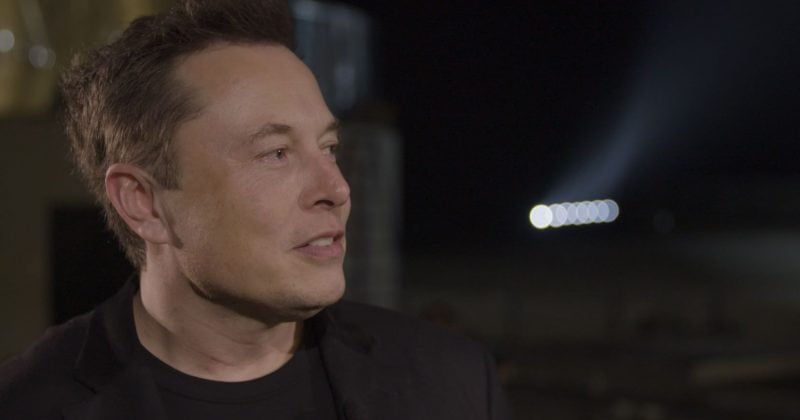
Anthropic rumored to unveil AI model surpassing GPT-5.6 SOL next week
A speculative post on social media suggests that Anthropic could release a new, more affordable AI model next week that surpasses OpenAI's GPT-5.6 Sol in intelligence and cost. The claim, made by user @cryptopunk7213, remains unverified as there has been no official confirmation from Anthropic. Currently, Anthropic's leading model is Claude Fable 5, available globally since July 1, following the easing of export controls. This speculation comes amid intense competition in the AI sector, with OpenAI's GPT-5.6 Sol leading recent benchmarks and priced more competitively than its rivals. Key Takeaways * The social media claim suggests Anthropic might introduce a model that outperforms GPT-5.6 Sol, affecting AI market dynamics. * Market pricing indicates a potential increase in confidence in Anthropic's ability to secure a top position in the AI landscape. * The claim lacks official corroboration, emphasizing the speculative nature of the information. What to Watch Monitor Anthropic for any official announcements or developments regarding a new AI model release. Any confirmation from Anthropic could significantly impact the current market odds, which appear supportive of Anthropic securing a top-three position by the end of July 2026. Additionally, observe reactions from competitors like OpenAI, which may respond with strategic adjustments or announcements to maintain their competitive edge. Get live prediction-market analysis, powered by Vera. Sign up for Vera.
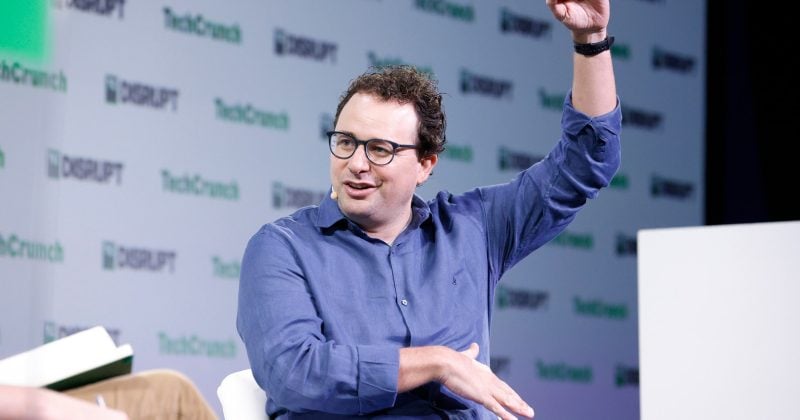
Grok gets creative tools as Musk pushes xAI deeper into image and video generation
The integration of Imagine into Grok's agentic mode signals xAI's aggressive expansion into autonomous content creation, with potential ripple effects across digital asset markets. Elon Musk just gave his AI chatbot a paintbrush. And a camera. And, if he's to be believed, eventually a director's chair. On July 8, Musk announced that Grok, the conversational AI built by his company xAI, will integrate the Imagine tool for autonomous image and video generation. The key detail: Grok will be able to call Imagine dynamically in "agentic mode," meaning the AI decides on its own when to generate visual content rather than waiting for explicit user commands. What Grok's agentic mode actually means The Imagine tool itself has been evolving rapidly. Grok Imagine Video 1.5 launched around June 16-17, bringing what Musk described as significant improvements in both quality and speed. Some updates have enabled image-to-video generation in under 15 seconds. Musk predicted that Grok could produce full movies by the end of 2026. The AI content creation arms race The competitive landscape in AI-generated video has intensified dramatically over the past year, with OpenAI's Sora, Google's Veo, and a constellation of smaller startups all racing to build tools that can produce broadcast-quality video from text prompts. What makes the Grok-Imagine integration notable isn't just the technology itself. It's the distribution. Grok lives inside X (formerly Twitter). If Imagine's video generation reaches even a fraction of that audience through agentic mode, xAI instantly becomes one of the largest deployments of AI video generation in the world. Where crypto and digital assets enter the picture Musk's announcement contained zero references to cryptocurrency, blockchain, tokens, or any digital asset infrastructure. Not a single one. xAI isn't launching a token. Imagine isn't minting NFTs. There's no on-chain component to any of this.