News & Updates
The latest news and updates from companies in the WLTH portfolio.
SpaceX is turning away Falcon customers in major bet on Starship
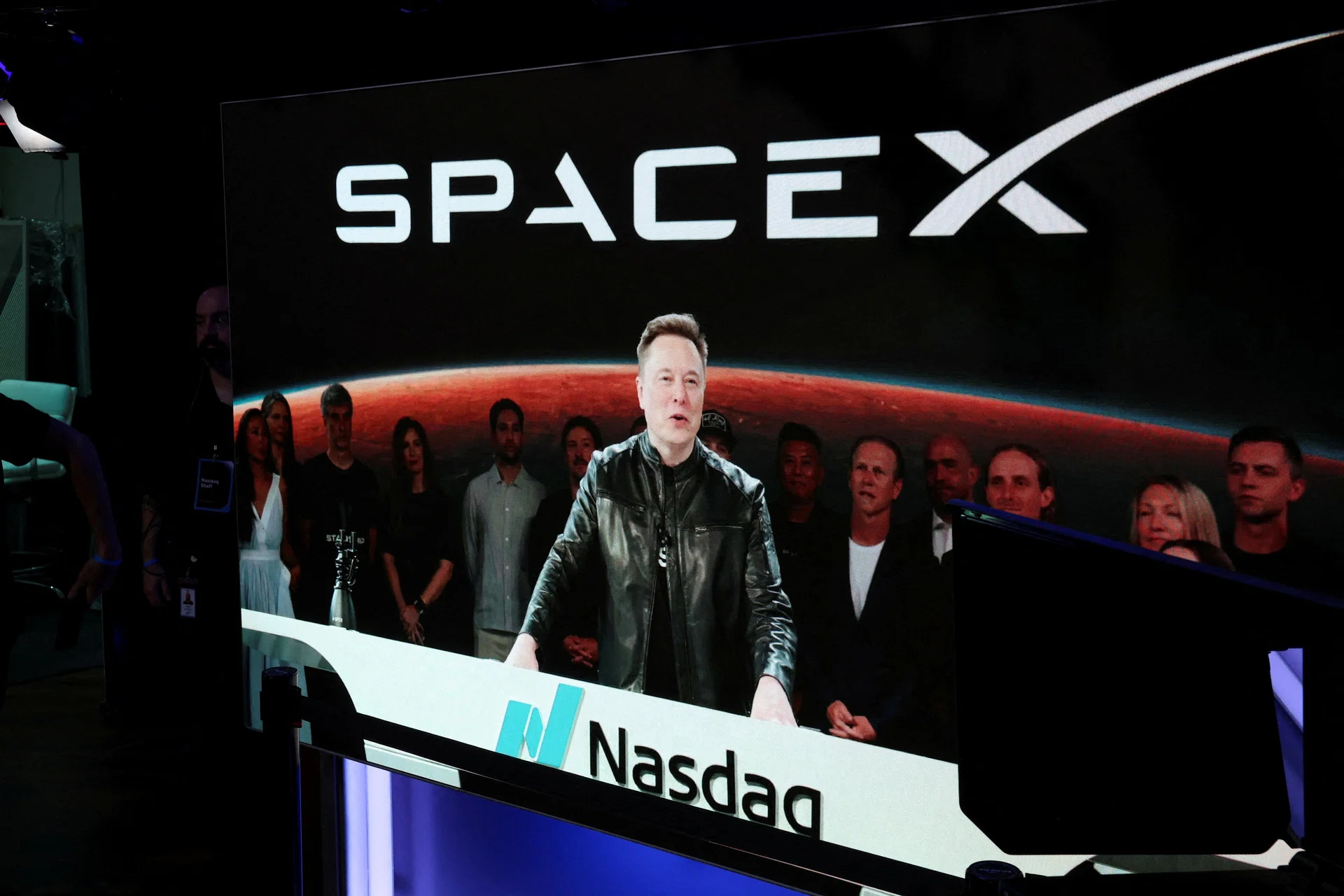
[WASHINGTON] SpaceX has started to turn away satellite operators seeking dedicated rides to orbit aboard its staple Falcon 9 rocket beyond 2028, people familiar with the matter said, underscoring the massive bet Elon Musk is making on its unproven Starship. Musk's rocket, satellite and artificial intelligence juggernaut has also stopped building some non-reusable components for the Falcon family, such as the rocket's massive upper stage, said one of the people. SpaceX is currently not taking future reservations for its Falcon 9 rideshare program, in which multiple satellite operators hitch a ride to orbit on a single rocket, said the people, who spoke on condition of anonymity because the information is confidential. SpaceX's plans could change for a number of reasons, including development setbacks with the futuristic Starship vehicle, the people said. The company is likely to still use the Falcon 9 for launches for the Department of Defense and NASA, some of the people said. Representatives for SpaceX, the Pentagon and NASA did not immediately respond to requests for comment. SpaceX has publicly stated that it intends to off-ramp its Falcon 9 rocket for Starship, but has not disclosed a timeline. When the company does take the step, it will mark one of the most significant strategic shifts in its launch business in decades. It is also a major undertaking, requiring SpaceX to push through development setbacks and cement the technology leaps needed to bring the long-delayed vehicle to market in the span of about a year and a half. Delays with Starship have contributed to a stock sell-off that has seen the shares fall below the US$135 price at its history-making initial public offering in June. SpaceX rose 2.6 per cent and closed at US$118.24 in regular trading on Thursday (Jul 23), but remains down about 24 per cent over the last month. For years, SpaceX has commanded a near-monopoly on sending people and cargo to orbit using Falcon 9, the most prolific launch vehicle in the world. The Falcon 9 slashed the cost of getting to space and enabled the growth of large-scale satellite networks, including SpaceX's Starlink. Starship is central to Musk's ambitions to put data centres in space, expand the Starlink communications network and send humans to the moon and Mars. But it is not yet operational and has so far faced a testing cycle marred by explosive setbacks, malfunctions and delays. SpaceX delayed its scheduled test flight on Thursday for the second time in about a week. If Starship is not ready to launch commercial missions by the end of 2028 and the company does not revert to the Falcon family, it would slash access to orbit for the many space companies that rely on SpaceX to get to space amid a global heavy-lift rocket shortage. BLOOMBERG
OpenAI unveils long-awaited "super app" as rivalry with Anthropic intensifies
OPENAI showcased a new AI agent on Thursday (Jul 9) meant to help white-collar workers access the power of coding tools without the sticker shock. The agent, called ChatGPT Work, combines OpenAI's popular chatbot with its AI coding tool, Codex, to create documents, presentations and websites, the company said. The service is powered by OpenAI's most advanced AI model, GPT-5.6, which also debuted on Thursday. That model's launch was delayed last month at the US government's request over national security fears. ChatGPT Work is a direct answer to Anthropic's Claude Cowork, an agent it launched in January that is capable of planning and executing multi-step tasks autonomously. The launch reflects intensifying competition to build and sell AI tools for professional use, as technology companies seek to capitalise on rising demand for autonomous agents that can complete complex tasks with minimal human input. Anthropic and OpenAI -- both of which are preparing for possible public offerings soon - are fighting for enterprise business, which is more lucrative than selling products to consumers. Both ChatGPT Work and Claude Cowork are designed for non-coders who want to tap into the abilities of AI coding tools, which are often more capable than standard chatbots but require specialised knowledge. OpenAI officials emphasised that its new offerings would be both cheaper and more broadly available than its rivals' products. The company launched three different sizes of its 5.6 model. "You can apply the model's ability to code to solve problems across every industry," said Ty Geri, product manager for ChatGPT Work, in an interview. Geri described OpenAI's 5.6 model as "competitive with models that are far, far more expensive at twice the speed and much, much cheaper." Thursday's announcement also underscores a growing concern among companies about the high cost of using such AI tools. Max Weinbach, analyst at consulting firm Creative Strategies, said the smallest version of OpenAI's new model can complete a task about as well as the largest version - but at one-fifth of the cost. "This is the first time where I've seen the small models complete these kinds of tasks," he said. Before this launch, OpenAI's agentic offerings included Operator and deep research, later consolidated into ChatGPT Agent for individual users, as well as Workspace Agents for enterprise workflow automation. ChatGPT Work will roll out on Thursday on web and mobile, beginning with Pro, Enterprise, and Edu users, and will expand to Plus and Business users over the next few days. OpenAI also announced a new ChatGPT desktop application and a hosted websites feature to let users build and share websites directly through ChatGPT Work. REUTERS