News & Updates
The latest news and updates from companies in the WLTH portfolio.
Trump floats intriguing Elon Musk, SpaceX plan
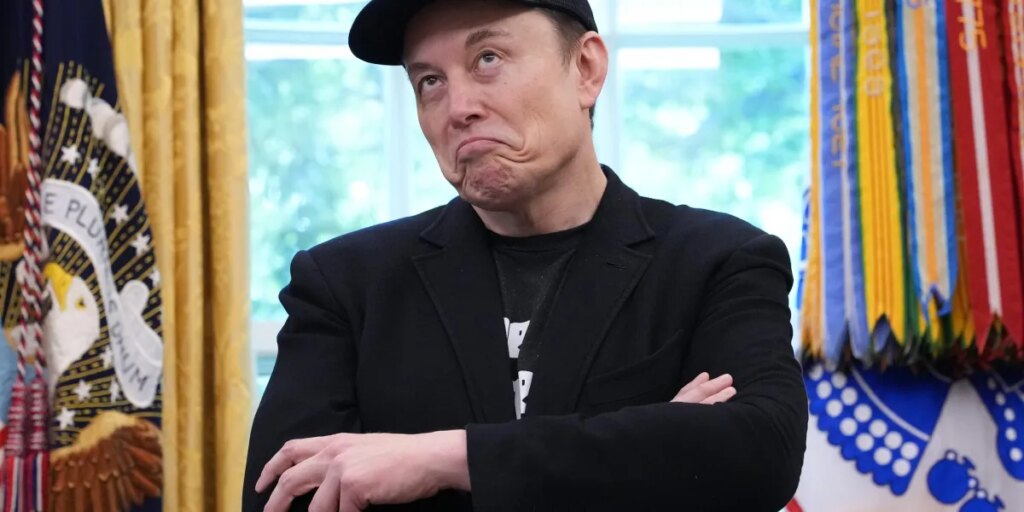
On July 2, Trump sat down with CNBC for an interview in the Oval Office. He talked about tariffs, the Federal Reserve, and his business dealings. Then he was asked about Elon Musk. His answer says more about the current state of their relationship than almost anything that has come out of Washington recently. Trump told CNBC he expects Musk to donate SpaceX stock to Trump Accounts, the federal savings program for American children that officially launched on July 4. Musk has not publicly confirmed or commented on the claim. But the government had already been in talks with SpaceX about the idea before Trump said a word about it publicly. What Trump said about Musk in the CNBC interview When asked whether Musk might donate SpaceX shares to the program, Trump replied in the original interview: "Well, I think that he will do that." He was careful with that phrasing. He thinks. He did not announce a deal or confirm a commitment. Trump also told the interviewer he had not spoken with Musk directly since SpaceX completed its IPO last month. "I wrote him a note," Trump said. "I said, 'Congratulations, very good.' I have a very good relationship with Elon." A note, not a call. Good, not great. The language was measured. SpaceX's IPO was the largest in history at approximately $86 billion, briefly making Musk the world's first trillionaire before share prices pulled back. Separately, Semafor reported on June 29, before Trump's interview, that the administration had actually spoken directly with SpaceX about donating stock to Trump Accounts. Whether Musk has agreed, or how a contribution might be structured, remains unresolved. Why the Trump-Musk relationship makes this complicated Musk spent roughly $300 million to help elect Trump in 2024 and then served as a special government employee running DOGE, the administration's aggressive government-cutting effort, CNBC reported. Their public falling out came over Trump's sweeping tax-and-spending legislation last year. Musk called the bill "utterly insane" in a post on X. Trump responded publicly that Musk had "just went CRAZY." The dispute was loud and fast. The reconciliation followed a similar trajectory. By the fall, they were seen shaking hands at a public event. By November, Musk was attending a White House dinner. Trump has repeatedly described their relationship as intact. On July 2, he cited other executives who had contributed to Trump Accounts as he discussed Musk's potential involvement. "Micron, which is a great company, just did it. Michael Dell is a fantastic guy," Trump said, referencing other donors to the program. On Dell's contribution specifically, Trump made clear he understood the scale. "That's a tremendous amount, I don't care how rich you are," Trump said, referring to Dell's $6.25 billion pledge to seed 25 million accounts. What Trump Accounts are and why SpaceX stock would be different Trump Accounts were created under last year's Republican tax-and-spending law. The federal government seeds each account with $1,000 for eligible children born in the U.S. between January 1, 2025 and December 31, 2028. The money goes into low-fee U.S. equity index funds and converts to a retirement-style account when the child turns 18. Treasury partnered with Bank of New York Mellon and Robinhood to run the program's infrastructure, NBC News reported. Goldman Sachs, Morgan Stanley, BlackRock, Intel, JPMorgan Chase, Uber, Comcast, and Wells Fargo are among the companies that have committed to matching or contributing for employees' children. Michael Dell pledged $6.25 billion. Micron committed contributions in several states. All of those are cash contributions or stock from publicly traded companies with established markets. SpaceX stock is different. The company's IPO was completed last month, but shares remain volatile and access is still far more limited than conventional large-cap equities. Any formal donation of SpaceX stock to Trump Accounts would require clarity on valuation, lock-up periods, and how shares get distributed across millions of potential beneficiaries. None of that structure currently exists. How much traction Trump Accounts have actually gotten so far Adoption has been gradual. More than 6 million accounts had been opened ahead of the program's launch, but only 1.4 million of those are eligible for the $1,000 government seed, out of roughly 75 million children under 18 in the United States, NBC News reported. The administration has been relying on high-profile commitments to maintain momentum. A SpaceX stock donation would generate significant attention for the program, regardless of what it means practically for most families. SpaceX is one of the most closely watched companies in the world, and Musk remains one of the most recognizable figures in American business. Trump's statement puts Musk in a position where silence starts to carry its own meaning. Whether Musk follows through, and in what form, is the question Trump's July 2 comment left open. The administration has spoken with SpaceX. Trump expects a donation. Musk has said nothing. That is where things stood heading into the program's launch.
Elon Musk can't sell a single SpaceX share for a year -- and then all the locks crack open at once
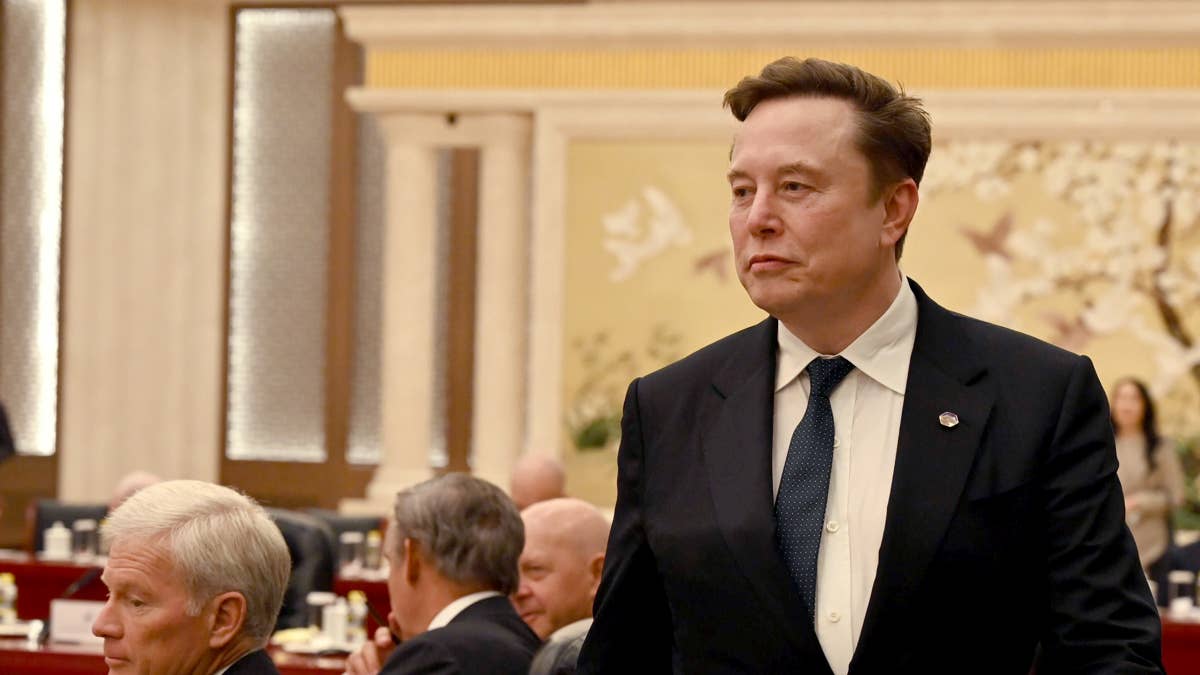
Unless you've been on the moon, you know that Elon Musk's SpaceX just pulled off the biggest IPO of all time and raised about $86 billion in its public stock offering last month. The reusable rocket maker did it while selling only a tiny sliver -- between 4% and 5% -- of its stock. The other 95% -- which consists of about 12.5 billion shares -- is being kept behind bars in one of the most byzantine, complicated lock-up schedules in history. To level set, lock-up periods are standard fare following an IPO; founders, top executives, and early venture investors usually agree not to sell their shares for 180 days. The point, as IPO advisor Lise Buyer of Class V Group explains, is twofold. First, it forces the people who know the company best to hold through at least one earnings report, so they can't dump stock on the public right before a bad quarter. Second, it sends a soothing signal during what could otherwise be a volatile and tenuous time in the life of a newly public company. "It's a message to the new buyers that the people who know the company best still believe in it and are going to hang on," said Buyer. But when the lock-up expires, usually right after 180 days, a glut of stock typically hits the market and puts downward pressure on the stock price. During the past decade, underwriters have pushed buzzy tech companies into adopting more staggered or shortened release dates for insiders to sell their shares, some even contingent on earnings or stock-price increases to dampen the flow. Airbnb, DoorDash, Reddit, and Snowflake all either shortened the 180 days or staggered them. SpaceX, however, took the flexible lockup approach, wrapped it in a puzzle, strapped it to an enigma, and sent it to live in a colony on Mars. There are 15 dates for sales in the public markets, according to the company's filings. For anyone who isn't Musk or a large investor, they can sell their stock during the 180-day window as it unlocks in slices of 7% on various dates in August, September, and October and then two trading days after SpaceX's Q2 2026 earnings, which will be its first as a public company. There's another big tranche after its next earnings report, and then whatever is left can be sold at 180 days. There are also dates tied to other earnings releases, plus stock-price increases. Avery Marquez, who tracks IPOs and lock-up structures as director of investment strategies at Renaissance Capital, described just how much of an outlier this is: "This is one of the most complicated, if not the most complicated lock-up we've ever seen." Buyer said she's never seen such a large percentage of a company's stock unlock before 180 days are up. "This is outside the bounds of anything we've seen before," she said. "I would expect their transfer agent will be doing shots of tequila, because it's going to be a little hard to manage," she joked. Why build a lock-up schedule this complicated? Buyer and Marquez said it's designed to keep the billions of shares behind bars from flooding the market all at once. To do so "could be catastrophic to the share price if everybody wanted to sell," said Marquez. Hans Tung, managing partner at Notable Capital and an early SpaceX investor through a company that was acquired by the rocket maker, said the schedule reads as an attempt to let shareholders ease out rather than see everything sold at once. Some will keep holding the stock "because that's how they compound over a long period of time," while others who got in during the past five to 10 years will probably sell to show some liquidity, he said. "I think this series of steps is designed for most shareholders to sell a bit each time," said Tung, whose fund has a small stake in SpaceX and a much larger position in Anthropic, which is also provides compute to SpaceX. Tung said he doesn't have inside information, but he noted that Anthropic and OpenAI, given their size, could end up adopting lockups similar to SpaceX if they go public. "The amount of money involved is just very big. So some people need to have exits along the way," he said. This is designed so that it's done over tranches instead of a free-for-all with a six month lockup and thereafter, everybody just do whatever they want." There's is another reason that could keep investors holding the stock, rather than selling right away, added Tung. The public market listing is the start of a new phase for SpaceX. And Musk's xAI, which is part of SpaceX, is likely to acquire some companies. He pointed to Cursor, the AI coding startup that SpaceX inked a compute deal with prior to the IPO. Days after the listing, SpaceX exercised an option to buy Cursor for $60 billion in SpaceX stock. Now that SpaceX is public, Musk has a liquid currency to fund more deals like this, Tung said -- and "as he acquires more companies, it will be adding more value to the stock, so [investors] will hold on for even longer." SpaceX has had a stunning trajectory in its brief time in the public market. The stock, which priced at $135 in the IPO, opened up at $150 on its first day trading and surged all the way to $226 per share in the following days. While it has since given up some of those gains, the stock now trades at roughly $162, giving SpaceX a $2.61 trillion market cap. And then there's Musk There's a wildcard in the mix. Musk holds roughly 6.4 billion shares making up about 82% of the voting power at SpaceX between his Class A and Class B supervoting 10-shares-in-one stock. Musk can't sell for 366 days, and there are no early-release provisions at all. But then in one shot, everything unlocks at once. Musk's unusual lock-up structure presents investors with a case of extremes, giving the stock a ballast of stability for the first year, followed by the potential for a supernova event. While it's almost inconceivable that Musk would choose to sell all his shares at that point given the negative signal it would send and the resulting impact on the company, the risk factor can't be discounted. Musk's track record with his Tesla stock may provide some indication of what to expect. Musk has held onto his stake in the electric carmaker and borrowed against it, avoiding the capital gains tax hit he would face. He has sold Tesla stock only as a last resort. Jay Ritter, an IPO expert and University of Florida professor, said he wouldn't be surprised if Musk doesn't sell any SpaceX stock at all. "He doesn't have to worry where his next meal is coming from, and if he does, it's probably going to be a tiny fraction of the, what, 6 billion shares that he owns," said Ritter. Musk might even buy more of SpaceX's, Marquez speculated. "It's possible we could see him buy shares when these are released. People start selling them, and he buys them up," she said. "With Elon Musk, anything is possible." Tung doesn't expect Musk to jump in right away, but wouldn't rule out buybacks down the line. "I don't think he will buy immediately, but I think over the course of the next five to 10 years, he will buy some [stock] back when he feels it's the right thing to do," he said. "He is who he is, and he's been doing this for a long time. I don't see any reason why he would behave differently." Buyer, who also declined to guess at Musk's plans, said the same. "He has no use for the cash, and I'm sure he believes that the stock is undervalued," she said. "He might not sell a single share." Whether Musk's investors can do the same remains to be seen. The post Elon Musk can't sell a single SpaceX share for a year -- and then all the locks crack open at once appeared first on Fortune.