News & Updates
The latest news and updates from companies in the WLTH portfolio.
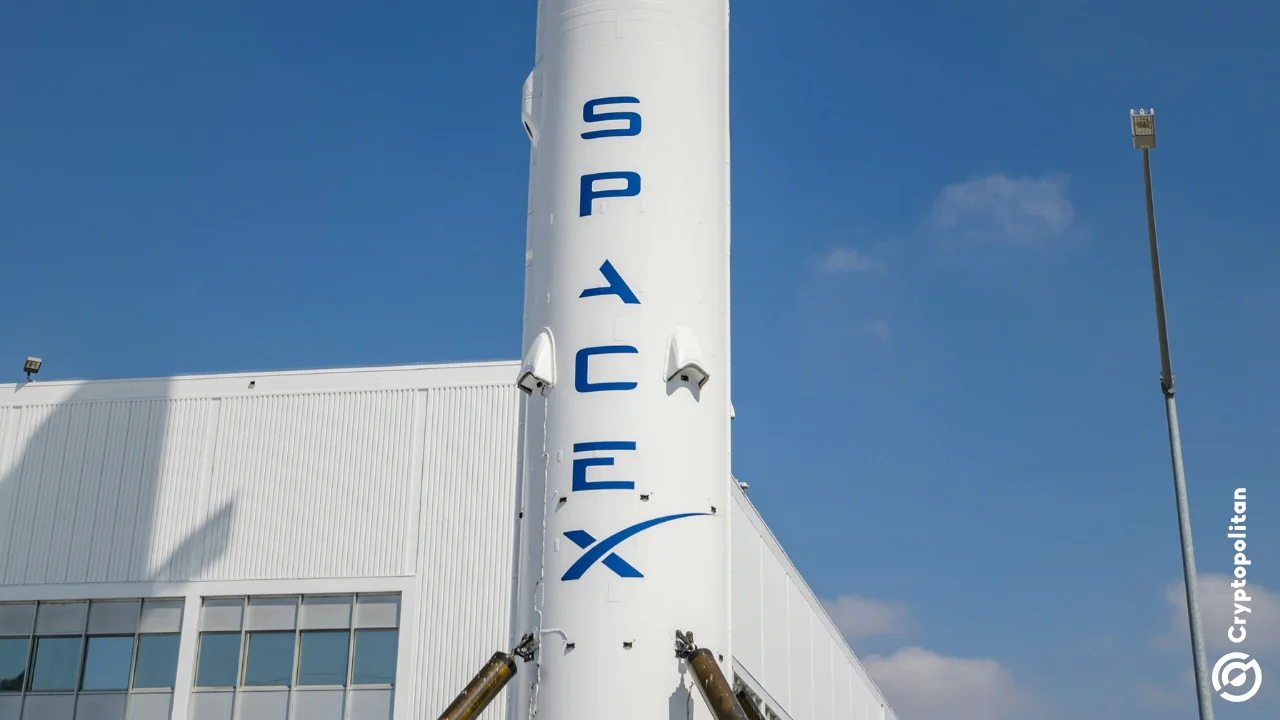
MEXC Reports 7.1 Billion USDT in SpaceX Futures Volume as Q2 Closes the Gap to Wall Street - Cryptopolitan
Victoria, Seychelles, July 14, 2026 - MEXC, a pioneer in 0-fee digital asset trading, today released its Ecosystem & Growth Report for the second quarter of 2026. In Q1, users mostly bought gold and other hedges against macro risk. In Q2, their attention turned to AI projects and US stocks, and MEXC spent the quarter building products for exactly that demand. Users can now back a company before its IPO, trade stock futures on it, hold tokenized shares, and buy real US stocks and ETFs, all inside one MEXC account. Every piece of that path launched or grew during the quarter. SpaceX was still a private company when MEXC ran two SPACEX(PRE) subscription rounds. More than 74,000 entries put over 173 million USDT into them, and demand for the second round reached more than 30 times the amount on offer. That demand mirrors a wider market trend: CoinGecko reports that tokenized pre-IPO trading volume surged 1,060%, with SpaceX accounting for the largest share of activity. The company then completed the largest IPO on record on June 12. Users kept trading it on MEXC after the listing, and SpaceX perpetual futures collected more than 7.1 billion USDT in volume in the weeks that followed. One name went from private to public within a quarter, and users traded at every stage. RealStocks launched on June 1 and added the last piece, real shares. Eligible users buy actual US stocks and ETFs through a licensed securities broker partner, and the shelf covers more than 7,000 names. More than 120,000 users signed up in the first month, and over half of the new accounts moved on to a first deposit. By June 18, the product had settled dividends on 34 stocks and ETFs, the kind of payout only real share ownership carries. Micron's June earnings lifted trading volume in its MEXC futures by approximately 142% in a single day. The activity spilled into related AI memory names, SanDisk, SK hynix, and a DRAM ETF. One earnings report moved a whole supply chain on the platform, because users now trade US market news the moment it breaks. "My first quarter as CEO had one goal, and that was to move MEXC from a crypto exchange toward a gateway for every market users care about," said Vugar Usi, CEO of MEXC. "Q2 put real numbers behind the word gateway, from Pre-IPO demand to actual dividend payouts." The quarter's ten biggest new-token gainers averaged +4,956%, and six of the ten were AI agent projects. Only one meme coin made the list, a clear reversal of the first quarter, when memes ran the gain rankings. The AI winners build practical systems. They settle transactions between agents, place trades for retail users, and verify identities, so the money went to projects that already do that work. The most-traded list leaned the same way, with four AI and infrastructure names to three meme names. During the quarter, MEXC appointed Vugar Usi as Chief Executive Officer and marked its 8th anniversary with a brand upgrade built on two promises: 0 Fees and Infinite Opportunities. The upgrade marks the company's move from a traditional exchange toward a universal gateway for global markets. A partnership brought the USD1 stablecoin into MEXC's trading and product suite, and the first USD1 event drew more than 161,000 participants, with new users alone pushing $2.4 billion through futures. A TradingView integration now sends perpetual futures orders straight from the chart, so users move from analysis to execution without a tab change. The Prediction Market added a Combo feature on June 9, which folds several event predictions into a single position. Average daily volume in the Prediction Market grew more than 6,700% from early to late June, and daily users rose more than 3,200%. The June Proof of Reserves put the average reserve ratio at 156.5%, which means the platform holds more assets than users have deposited, with Bitcoin backed at 269%. Between May and June, the risk team identified 4,394 illicit networks; a separate intervention effort blocked roughly 303,000 USDT in suspected fraudulent transfers. The full Q2 report, with the complete token tables, product data, and community programs, is available here. About MEXC MEXC is the world's fastest-growing cryptocurrency exchange, trusted by more than 40 million users across 170+ markets. Built on a user-first philosophy, MEXC offers industry-leading 0-fee trading and access to over 3,000 digital assets. As the Gateway to Infinite Opportunities, MEXC provides a single platform where users can easily trade cryptocurrencies alongside tokenized assets, including stocks, ETFs, commodities, and precious metals. MEXC Official Website| X | Telegram |How to Sign Up on MEXC For media inquiries, please contact MEXC PR team: [email protected]
Cursor poaches designer behind Anthropic's Claude
The hire highlights the growing competition for AI product talent, as companies increasingly compete on user experience -- not just model performance. Jenny Wen, the designer involved in creating Anthropic's Claude and the general-purpose AI agent Cowork, has joined Cursor as its new head of design. She will be leveraging her experience at one of the most established AI labs at a rapidly growing company that aims to develop more than coding tools. Wen disclosed the news on X on July 13, after leaving Anthropic to take the position at Cursor, where she would be able to lead "a team that cares so deeply about craft, quality, and building great tools." She chose to make this decision at a time when Cursor is developing its own AI agent aimed at helping in the workplace, which puts it in competition with the product that Wen was involved in at Anthropic. From Claude to Cursor During her time at Anthropic, Wen had the task of designing both Claude and Cowork, the latter being the name of the AI agent that was designed to handle complex workplace tasks. According to Wen's portfolio, in 2025 Wen was heavily involved in directing the roadmap of Cowork as well as contributing to the development of the product post-launch. Before Anthropic, Wen worked at Figma as its Director of Design, where she launched FigJam, and previously served as the design leader at Dropbox, Square, and Shopify. The uniqueness of Wen's experience lies in the integration of product strategy and product creation. With more AI companies competing to develop better models, it is worth remembering that the skill to create desirable products remains just as crucial as the technical part. Initially recognized as an AI coding assistant, Cursor now aspires to pursue more ambitious goals. According to The Information, the company is now working on the creation of an AI assistant called Sand, which can manage e-mails and spreadsheets and help with engineering tasks. If released successfully, it will compete with Cowork by Anthropic and the recently introduced ChatGPT Work by OpenAI. Cursor has not made any announcements regarding the project. Additionally, the company is gearing up for its next growth stage. SpaceX declared in June that it has intentions to take over Anysphere, the parent company of Cursor, in an all-stock transaction worth $60 billion expected to close later this year. The agreement will give Cursor more resources, thus enabling it to widen its scope beyond just developing software. Why this matters for Anthropic? It is interesting to note that the timing takes place at a time when Anthropic has expanded the capabilities and accessibility of Cowork. The company has updated the service for use on both mobile and the web, as well as added the cloud execution functionality, which enables tasks to continue even if the user has disconnected. Anthropic even states that, out of its analysis of about 1.2 million Cowork sessions, knowledge-work tasks make up almost half of all usage, suggesting the product is increasingly being used for more than software development. While Wen's leaving may not indicate difficult times ahead for Anthropic, it points to the intense competition among AI firms for talented people like product leaders. Now that emerging AI technologies are growing in sophistication, the challenge is not just about developing better technologies, but also about creating software that easily fits into the routines of end-users. This is where experienced design leaders can make a big difference. Creating an effective workplace AI agent involves more than just technical performance. In addition to this, it requires proper design of workflows, simple interfaces, and a lot of trust for users to delegate important tasks. Those are qualities which, if developed, can give a strong competitive advantage. A broader shift in the AI talent market This step by Wen is indicative of a bigger trend emerging within the competitive environment surrounding AI enterprises. Whereas back in the days of early generative AI, the battle for talent was mainly carried out between researchers and infrastructure engineers, now there is competition among businesses to secure experts who already have experience working on creating and deploying AI products. These experts will be able to share valuable information about consumer behavior and preferences, as well as features that actually work. In the case of Cursor, the recruitment of the designer of one of the first AI workplace assistants will allow the company to go beyond programming in terms of further steps in its development. In the case of Anthropic, the hiring shows how the market has developed, with competition, among other things, both for skilled workers and for the designers behind those who turn advanced AI into products.

SpaceX's AI empire is built on data centers, not satellites - Cryptopolitan
Analysts caution that the contracts carry termination clauses and that space computing is still 10 years or more away. SpaceX's AI returns over the next few years will not come from space. According to Wall Street analysts, the money is coming from Earth data centers rather than the orbital compute that Elon Musk has promised. This reframes SpaceX (NASDAQ: SPCX) as primarily an infrastructure company. Space computing is a bet for the future, not now, for anyone considering SpaceX as an AI play. SpaceX already charges for computing. Reuters reported that the company signed enterprise deals for its Colossus supercomputer clusters with Anthropic, Alphabet's Google, and Reflection AI. Those contracts alone are expected to generate more than $28 billion annually. SpaceX's AI revenue in 2025 is ~$3.2 billion, which is significantly higher than the new deals. The compute contracts also outperformed SpaceX's earnings from rocket launches and Starlink, when counted separately. The contracts, however, include termination clauses, so analysts caution against reading them as recurring revenue. What SpaceX spent to get here SpaceX invested ~$18 billion in AI infrastructure and research in 2025. According to company filings, ~$12.7 billion was spent on capital expenditures and $5.1 billion on research and development. That expenditure outpaced spending on space and connectivity lines. Colossus and a second cluster, Colossus II, together provide ~1 gigawatt of AI compute. That makes SpaceX one of the world's largest compute operators. J.P. Morgan predicts that terrestrial capacity will reach ~9 gigawatts by 2029, which is equivalent to four times the output of the Hoover Dam. Brokerages cited by Reuters pointed to its $60 billion purchase of AI coding startup Cursor as a sign the company wants to sell AI applications, not just the machines that run them. The deal ties into Musk's model plans on the software side. A separate Cryptopolitan report said Musk's lab, now renamed SpaceXAI, built its Grok 4.5 model jointly with Cursor, and Musk has said SpaceX is buying the startup for that same $60 billion figure. Why orbit is still a distant bet Musk has proposed a future in which computers run in space. Analysts Reuters spoke with view this as a later chapter. "The narrative that (orbital) will fundamentally disrupt terrestrial data centers is a little bit overblown," said Anthony Milovantsev, a partner at consultancy Altman Solon, who estimated that any real displacement of ground-based data centers would take "ten years plus." The case is based on hardware that does not currently exist at scale. Orbital computing relies on SpaceX's Starship flying frequently and cheaply, lower launch costs, and better satellites, according to analysts. Ground clusters continue to run regardless of direction. BofA analysts were more blunt, calling the long term viability of orbital data centers "unproven and heavily reliant on key technological milestones that have yet to be realized." If the engineering is delivered, the appeal will be valid. Starships could eventually launch solar computing satellites into orbit, avoiding ground based costs such as energy, cooling, and land use. Analysts aren't asking if SpaceX can build and sell AI infrastructure. J.P. Morgan's estimate of ~9 gigawatts in 2029 remains the benchmark for establishing a business beyond Earth.