News & Updates
The latest news and updates from companies in the WLTH portfolio.
Musk leaves door open to Tesla-SpaceX merger
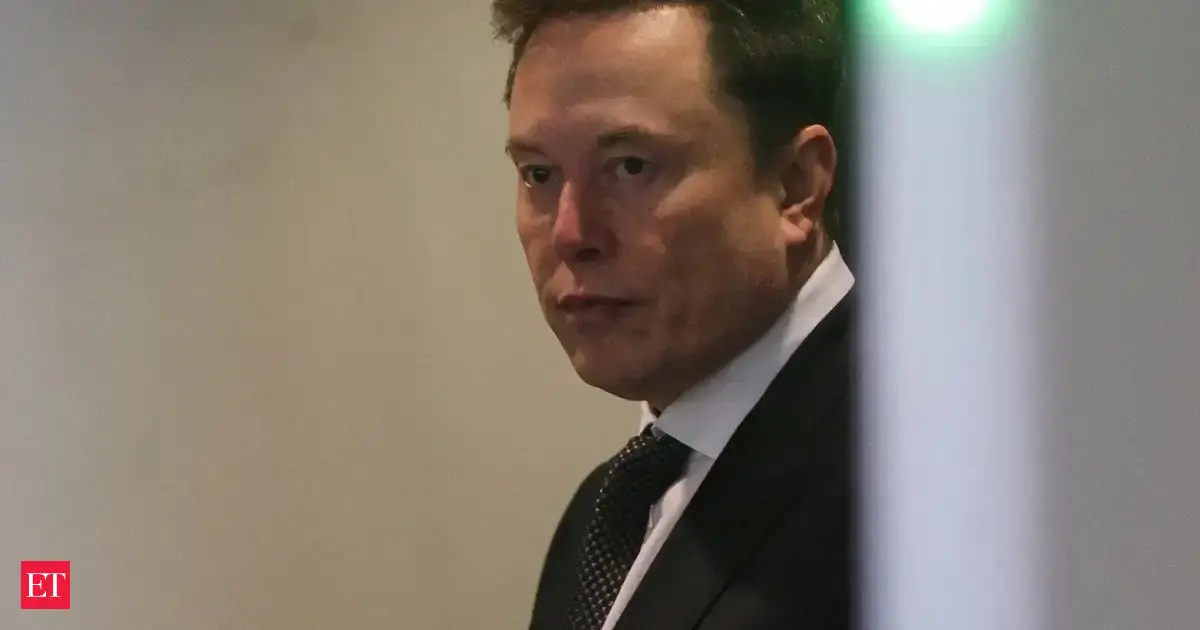
Elon Musk has suggested a possible merger between Tesla and SpaceX, citing increasing overlap. Investors now believe a combination of these companies is highly probable within years. Tesla already supplies batteries and manufacturing technologies for SpaceX projects. The companies are also jointly developing a semiconductor manufacturing facility for AI chips. However, regulatory approvals and governance complexities present significant hurdles to any such transaction. Tesla CEO Elon Musk on Wednesday left the door open to the EV maker merging with his other trillion-dollar-plus-valued firm SpaceX, declining to dismiss the possibility and citing growing overlap between the companies. "As you can tell from the many collaborations on so many fronts with SpaceX, there's more and more overlap," Musk said on Tesla's earnings call. "We can't talk about, you know, combining companies and that kind of thing on an earnings call," he added. Also Read: Elon Musk breaks the $800 billion barrier after SpaceX-xAI mega merger "It's got to be done with the appropriate process." Investors and analysts have long speculated about the possibility of combining Musk's electric vehicle and space firms, with the discussion intensifying during SpaceX's record $75 billion initial public offering process. After Musk's comments, he called on Tesla General Counsel Brandon Ehrhart, who stuck to boilerplate language calling SpaceX a "great partner" that provides "numerous beneficial transactions." Gene Munster, managing partner at Tesla investor Deepwater Asset Management, said the call left him more convinced the companies were destined to be joined over the next few years. "I would put the odds that these two will combine at 90% today," he said in a video posted on social media. "If you were going to ask me yesterday I would have said it's 80%." Tesla already supplies batteries and manufacturing technologies for some SpaceX projects, while the companies are jointly developing Terafab, a semiconductor manufacturing facility designed to produce AI chips. Also Read: Elon Musk's SpaceX in merger talks with xAI ahead of planned IPO, source says Proponents argue that combining the companies could simplify Musk's corporate empire and create a more integrated company spanning artificial intelligence, robotics, manufacturing, energy and space infrastructure. JPMorgan analysts said this month that "operational integration between the two entities is already deep," citing shared engineering talent, AI infrastructure, Terafab and Musk's leadership as factors that "would facilitate an eventual combination." Stifel analysts struck an even more bullish note, writing that "many investors consider it inevitable that Musk will move to combine SpaceX with Tesla - for them the question is not if but when." SpaceX President and Chief Operating Officer Gwynne Shotwell has also acknowledged potential benefits, telling CNBC in June that folding the companies together "might make Elon's life a little easier" by streamlining management across his businesses. Others, however, caution that any transaction could face formidable hurdles. In the same research note, JPMorgan pointed to the "practical bottleneck" of getting regulatory approvals for both companies, particularly in China, where national security concerns over SpaceX's U.S. government ties could pose problems. Analysts also note that Musk controls a much larger voting stake in SpaceX than in Tesla, complicating governance considerations for Tesla's public shareholders.
SpaceX targets July 23 for next Starship launch after last-minute abort
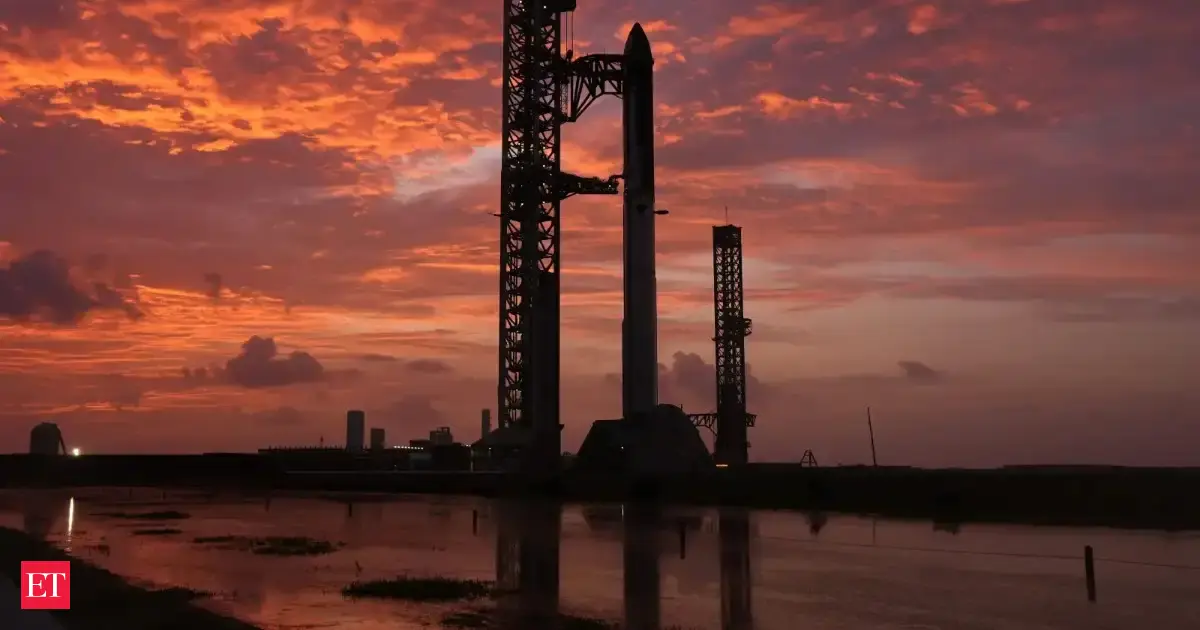
Elon Musk's SpaceX is targeting July 23 for the 13th Starship test flight after a last-second launch abort last week. The mission will carry 20 Starlink satellites on a suborbital test as the company pushes toward routine orbital deployments by year-end. SpaceX is targeting Thursday, July 23, for another attempt to launch its Starship rocket, the company said in a statement on Sunday. SpaceX CEO Elon Musk posted on X later on Sunday that the next Starship launch would occur on Friday, contradicting the earlier statement from his company. He did not say whether the original Thursday date was wrong. On July 16, SpaceX's Starship rocket triggered a last-second abort before liftoff for its 13th flight test from Texas, which erased about $100 billion from the company's market value. SpaceX said it has modified Starship's propulsion system to address the engine issue experienced on the previous flight. A launch delay for the $15 billion rocket development program better known for dramatic engineering feats and explosive testing failures is not uncommon. On Friday, SpaceX said it would attempt the launch on July 20. The company has launched 12 Starship test flights since 2023. On its 13th flight test, Starship will carry 20 Starlink satellites to demonstrate its satellite-dispensing system and the Starlink network's laser communication links, but those satellites will follow the ship's suborbital trajectory and burn up in Earth's atmosphere soon after deployment. In its prospectus, SpaceX said that it aims to launch the first Starlink satellites to orbit on Starship by year's end, followed by routine launches.
SpaceX aborts Starship launch seconds before liftoff
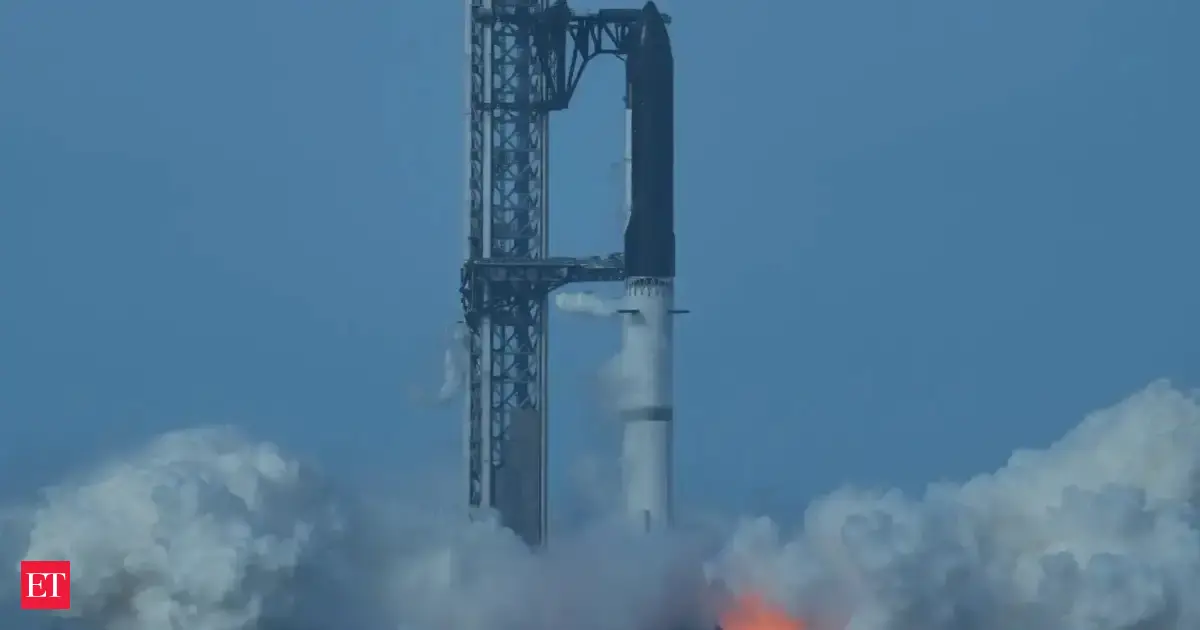
SpaceX's Starship rocket experienced a last-second launch abort on Thursday. Some of the rocket's 33 engines failed to ignite properly before liftoff. This engine issue triggered an automatic abort sequence just before the scheduled launch. SpaceX CEO Elon Musk indicated a probable launch attempt early next week. The company's stock saw a slight decline following the scrubbed launch event. Washington: SpaceX's Starship rocket triggered a last-second abort before liftoff for its 13th flight test from Texas on Thursday as some of its 33 engines failed to start, with CEO Elon Musk saying it will likely try to launch again early next week. Shares of SpaceX, which went public last month, fell about 3% in aftermarket trading following the scrubbed launch. The stock ended at $131.11 on Thursday, closing below its IPO price of $135 for the first time since listing. "Some of the engines didn't start, triggering an automatic launch abort," Musk said in a post on X, without disclosing the number of engines on the Super Heavy rocket that did not start. "To be confident of a good flight, 2 Raptors will be removed & replaced. Most probable launch timing is early next week." The launch abort came less than a second before Starship's planned liftoff from Starbase, SpaceX's company town in south Texas, at 5:45 p.m. CT (2245 GMT). The rocket's engines ignited but cut off shortly after. "We did trigger a hold on the booster that aborted our liftoff as we were starting to light those Raptor engines," said SpaceX spokesperson Dan Huot, speaking on the company's live stream after the launch was scrubbed.
Elon Musk says Anthropic is the current AI leader, praises Mythos and Fable models
Elon Musk now calls Anthropic the industry's current leader in artificial intelligence. He admitted being clearly wrong about the AI startup's potential outcomes. Anthropic is a major customer of Musk's SpaceXAI infrastructure company. The AI startup uses SpaceXAI's supercomputer for its advanced models. Musk stated he would never harm a competitor, citing Tesla and SpaceX examples. Elon Musk has praised artificial intelligence (AI) startup Anthropic, saying it is the industry's current frontrunner, in a significant shift from his earlier criticism of the company.Responding to a user on X, the billionaire entrepreneur said he had been 'clearly wrong' about Anthropic and described it as 'currently the leader in AI'. He also said no company had released a model comparable to Anthropic's latest ones, Mythos and Fable.
SpaceX's biggest bull sees valuation soaring above $10 trillion
Raymond James analyst Brian Gesuale initiated coverage on SpaceX with a strong buy. He set an $800 price target, projecting significant future stock appreciation. Gesuale sees SpaceX revenue soaring to $5.2 trillion by 2035. This growth is primarily based on its nascent artificial intelligence business. The analyst believes AI will become SpaceX's largest revenue source by 2027. New York: SpaceX has no shortage of fans on Wall Street, but one analyst stands out among the rest as by far the most bullish: Raymond James' Brian Gesuale. Gesuale initiated coverage on the rocket, satellite, and artificial intelligence company Tuesday with a strong buy rating and an $800 price target, the highest among Wall Street analysts and roughly 430% above where the stock is trading in Tuesday's selloff. Should the shares hit that level, the company's market valuation would balloon to roughly $10.5 trillion. US MarketsPowered By As on 08 Jul 2026, 01:30 AM IST S&P 500 Top Gainers Cognizant Tech Solns43.94(6.21%) Occidental Petroleum51.68(5.88%) Cboe Global Markets258.64(5.53%) Gilead Sciences136.36(5.21%) Gainers" S&P 500 Top Losers Intel110.39(-9.66%) Teradyne343.11(-9.59%) Solstice Advanced Mat62.10(-8.74%) Coterra Energy32.56(-8.62%) Losers" At the moment, SpaceX's market valuation is less than $2 trillion. "We see the company as one of the defining industrial infrastructure companies of the 21st century," Gesuale wrote in a note to clients on Tuesday. "Just as railroads, electric grids, and the Internet reshaped prior economic eras, we believe SpaceX is building the foundational platform for the next generation of industrial capacity." The projection is based on some eye-popping assumptions. For example, SpaceX posted revenues of $19 billion last year. Gesuale sees that soaring to $5.2 trillion by 2035. What's more, that growth isn't tied to the company's high profile rocket or connectivity segments. Rather it's based on its nascent artificial intelligence business. Right now, AI accounts for $16 billion of SpaceX's revenue, up from $3 billion in 2024 when "substantially all AI revenue came from X, primarily through advertising, subscriptions, and data licensing," Gesuale wrote. Raymond James estimates that the figure will rise to about $650 billion by 2031, "making AI the company's largest business by revenue beginning in 2027, and by 2035 it will represent nearly 94% of SpaceX's revenue, or $4.9 trillion, Gesuale wrote. Shifting toward a business model that focuses on monetising compute rather than space travel is how Gesuale believes SpaceX will achieve his revenue targets. "That growth is underpinned by a rapid expansion in installed compute capacity, initially through terrestrial AI infrastructure before progressively extending into orbital compute later in the decade," he wrote. Gesuale notes that the bullish forecasts aren't without their risks. In a scenario where SpaceX experiences unexpected launch failures, the stock could fall to $125, below its $135 initial public offering price. Launch failures would "raise concerns about the pace of orbital AI, Starlink Mobile, and Starship-enabled infrastructure optionality," Gesuale said.