News & Updates
The latest news and updates from companies in the WLTH portfolio.
Should You Buy SpaceX Stock Below $135 Per Share? Here's What History Says.
After a hot start following its IPO, Space Exploration Technologies (NASDAQ: SPCX), better known as SpaceX, has seen its stock price come back down to Earth. The price is now approaching its IPO price of $135 per share. Investors who couldn't get in on the IPO may be wondering whether to buy the stock if it dips below that number. Here's what history has to say. Missed Nvidia in 2009? This Rare Signal Is Flashing Again. In 2009, a "Double Down" signal flashed for a little-known chipmaker called Nvidia. For the first time in years, that same "Total Conviction" signal is flashing for a company 1/100th the size of Nvidia. Continue " How well do IPOs hold up over the long run? Most IPO stocks see a pop on their first day of trading. Underwriters intentionally underprice offerings to ensure enough demand to fully allocate the stock offering and guarantee success for the company. Indeed, SpaceX closed its first day of trading about 19% above its IPO price, which is about average based on data dating back to 1960. But most investors aren't interested in SpaceX's short-term outcomes. The company's value is based on its potential to disrupt multiple industries over the long run. The stock should appeal to investors who believe in CEO Elon Musk's ability to build more efficient reusable rockets, expand its satellite constellation, and reshape broadband internet access and artificial intelligence (AI). So, looking at how IPOs usually hold up after at least three years of trading can provide valuable insight. For investors who buy just any new IPO as it comes to market, the long-term results aren't great. Even with a big first-day pop, the average IPO since 1980 (excluding the 1999-2000 dot-com bubble) produced worse returns than the overall market, according to data compiled by professor Jay Ritter. He found that all IPOs produce an average return of 44.2% from their IPO price over three years, but that trails the weighted-average market return by 1.6%. But tech stocks specifically do significantly better. Tech IPOs produced average three-year returns of 73.3%, massively outperforming the market by 25.8%. And if you dig a little bit deeper, big tech stocks with sales exceeding $100 million (adjusted for inflation) perform even better. These companies have delivered an average three-year return of 82.5% and outperformed the market by 43.1%. Even if they're unprofitable, they still produce excess returns of 41.7% on average, according to Ritter's data. In other words, history is on SpaceX's side as a large tech company making its public debut. Still, there are a few reasons to remain cautious about buying SpaceX, even at its IPO price.
Should You Buy SpaceX Stock Below $135 Per Share? Here's What History Says.
After a hot start following its IPO, Space Exploration Technologies (SPCX 3.08%), better known as SpaceX, has seen its stock price come back down to Earth. The price is now approaching its IPO price of $135 per share. Investors who couldn't get in on the IPO may be wondering whether to buy the stock if it dips below that number. Here's what history has to say. How well do IPOs hold up over the long run? Most IPO stocks see a pop on their first day of trading. Underwriters intentionally underprice offerings to ensure enough demand to fully allocate the stock offering and guarantee success for the company. Indeed, SpaceX closed its first day of trading about 19% above its IPO price, which is about average based on data dating back to 1960. But most investors aren't interested in SpaceX's short-term outcomes. The company's value is based on its potential to disrupt multiple industries over the long run. The stock should appeal to investors who believe in CEO Elon Musk's ability to build more efficient reusable rockets, expand its satellite constellation, and reshape broadband internet access and artificial intelligence (AI). So, looking at how IPOs usually hold up after at least three years of trading can provide valuable insight. For investors who buy just any new IPO as it comes to market, the long-term results aren't great. Even with a big first-day pop, the average IPO since 1980 (excluding the 1999-2000 dot-com bubble) produced worse returns than the overall market, according to data compiled by professor Jay Ritter. He found that all IPOs produce an average return of 44.2% from their IPO price over three years, but that trails the weighted-average market return by 1.6%. But tech stocks specifically do significantly better. Tech IPOs produced average three-year returns of 73.3%, massively outperforming the market by 25.8%. And if you dig a little bit deeper, big tech stocks with sales exceeding $100 million (adjusted for inflation) perform even better. These companies have delivered an average three-year return of 82.5% and outperformed the market by 43.1%. Even if they're unprofitable, they still produce excess returns of 41.7% on average, according to Ritter's data. In other words, history is on SpaceX's side as a large tech company making its public debut. Still, there are a few reasons to remain cautious about buying SpaceX, even at its IPO price. The SpaceX IPO is a special case SpaceX was the largest IPO in history, raising over $85 billion after underwriters exercised their option to buy additional shares. With a valuation of about $1.75 trillion, it's already a massive business. But that valuation puts its price-to-sales ratio above 90. And valuation still matters. According to a University of Florida 2026 study of IPOs, since 1980, only 14 other IPOs have had over $100 million in sales and a price-to-sales ratio above 40. The average three-year return from their IPO price was just 3.1%, trailing the market average by 15.4%. While it's a small sample size, there's a clear correlation between IPO price-to-sales valuation and returns. The lower the valuation, the better the returns. SpaceX has one of the highest price-to-sales ratios in the market. There's additional concern that SpaceX's stock price could be weighed down as lockup periods expire and early investors and employees can sell their shares. Interestingly, the same University of Florida study found that companies that float a smaller percentage of shares (SpaceX offered about 5% of the company's shares) end up outperforming companies that sell a larger portion of the equity at their IPO. That said, there's never been a company the size of SpaceX with so many shares locked up. That's a lot of capital for the market to absorb over the next six months or so. The truth of the matter is that SpaceX is unlike any IPO we've ever seen. Using historical averages to project SpaceX's future stock price can only go so far. The actual results will depend on the same thing that applies to every stock in the market, whether old or new. Will the company perform better than the market expects? If it does, the stock price could outperform the market average. At its current valuation, the market is setting a very high bar for SpaceX to exceed.
SpaceX's Starship rocket aborts before liftoff, Musk says launch probable next week
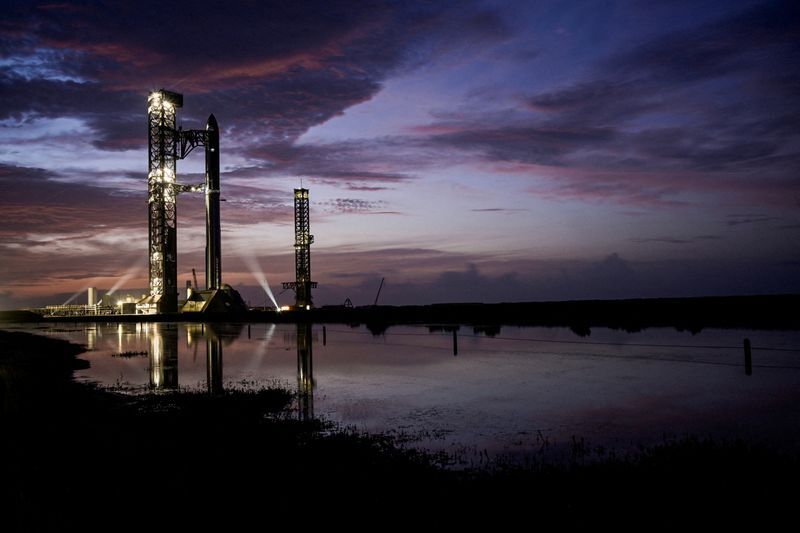
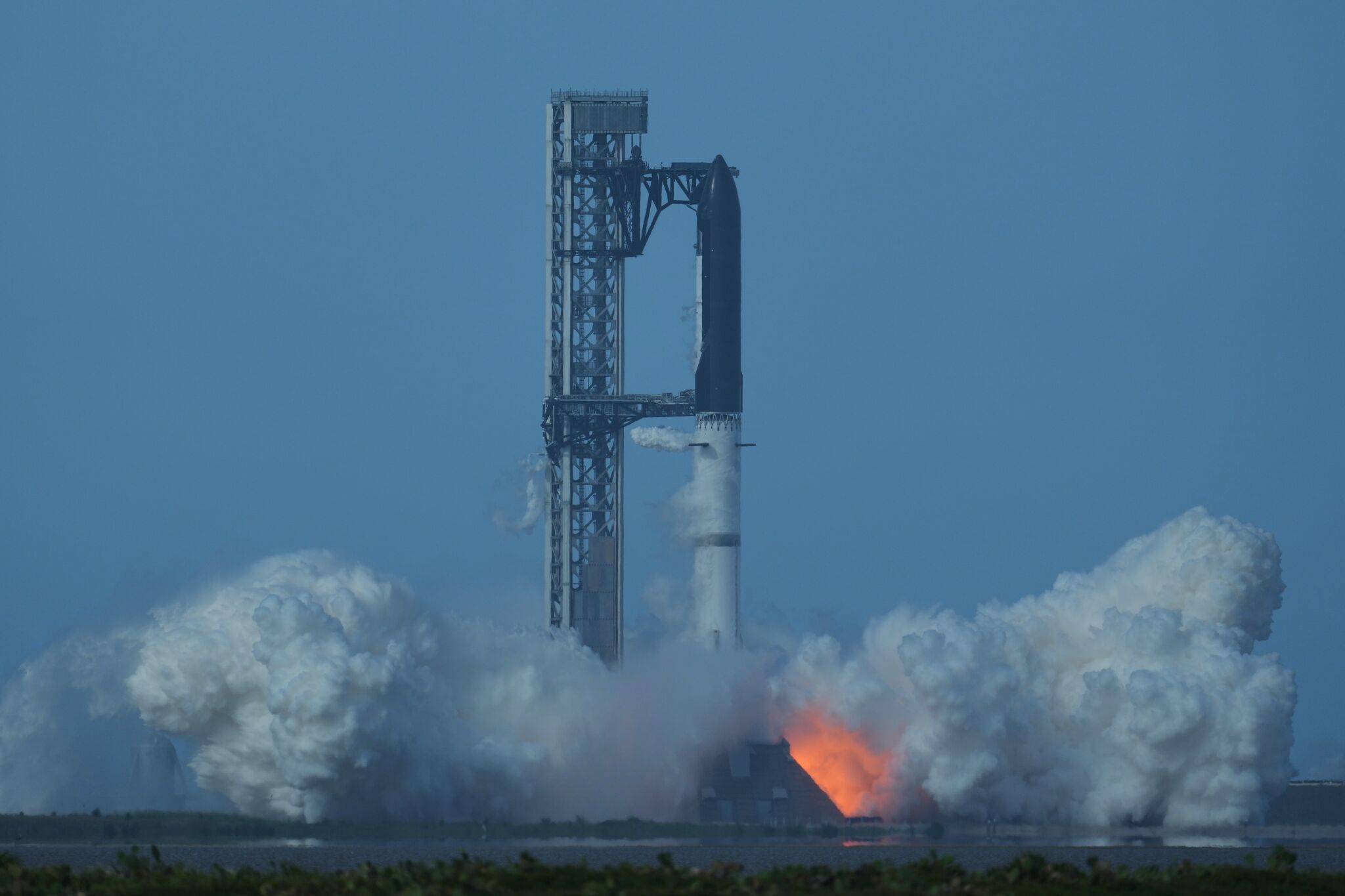
WASHINGTON, July 16 (Reuters) - SpaceX's Starship rocket triggered a last-second abort before liftoff for its 13th flight test from Texas on Thursday as some of its 33 engines failed to start, with CEO Elon Musk saying it will likely try to launch again early next week. Shares of SpaceX, which went public last month, fell about 3% in aftermarket trading following the scrubbed launch. The stock ended at $131.11 on Thursday, closing below its IPO price of $135 for the first time since listing. "Some of the engines didn't start, triggering an automatic launch abort," Musk said in a post on X, without disclosing the number of engines on the Super Heavy rocket that did not start. "To be confident of a good flight, 2 Raptors will be removed & replaced. Most probable launch timing is early next week." The launch abort came less than a second before Starship's planned liftoff from Starbase, SpaceX's company town in south Texas, at 5:45 p.m. CT (2245 GMT). The rocket's engines ignited but cut off shortly after. "We did trigger a hold on the booster that aborted our liftoff as we were starting to light those Raptor engines," said SpaceX spokesperson Dan Huot, speaking on the company's live stream after the launch was scrubbed. (Reporting by Joey Roulette and Chris Thomas; Editing by Chris Reese and Jamie Freed)
SpaceX's Starship rocket aborts before liftoff, Musk says launch probable next week
WASHINGTON, July 16 (Reuters) - SpaceX's Starship rocket triggered a last-second abort before liftoff for its 13th flight test from Texas on Thursday as some of its 33 engines failed to start, with CEO Elon Musk saying it will likely try to launch again early next week. Shares of SpaceX, which went public last month, fell about 3% in aftermarket trading following the scrubbed launch. The stock ended at $131.11 on Thursday, closing below its IPO price of $135 for the first time since listing. "Some of the engines didn't start, triggering an automatic launch abort," Musk said in a post on X, without disclosing the number of engines on the Super Heavy rocket that did not start. "To be confident of a good flight, 2 Raptors will be removed & replaced. Most probable launch timing is early next week." The launch abort came less than a second before Starship's planned liftoff from Starbase, SpaceX's company town in south Texas, at 5:45 p.m. CT (2245 GMT). The rocket's engines ignited but cut off shortly after. "We did trigger a hold on the booster that aborted our liftoff as we were starting to light those Raptor engines," said SpaceX spokesperson Dan Huot, speaking on the company's live stream after the launch was scrubbed. (Reporting by Joey Roulette and Chris Thomas; Editing by Chris Reese and Jamie Freed)
SpaceX's Starship rocket aborts before liftoff, Musk says launch probable next week
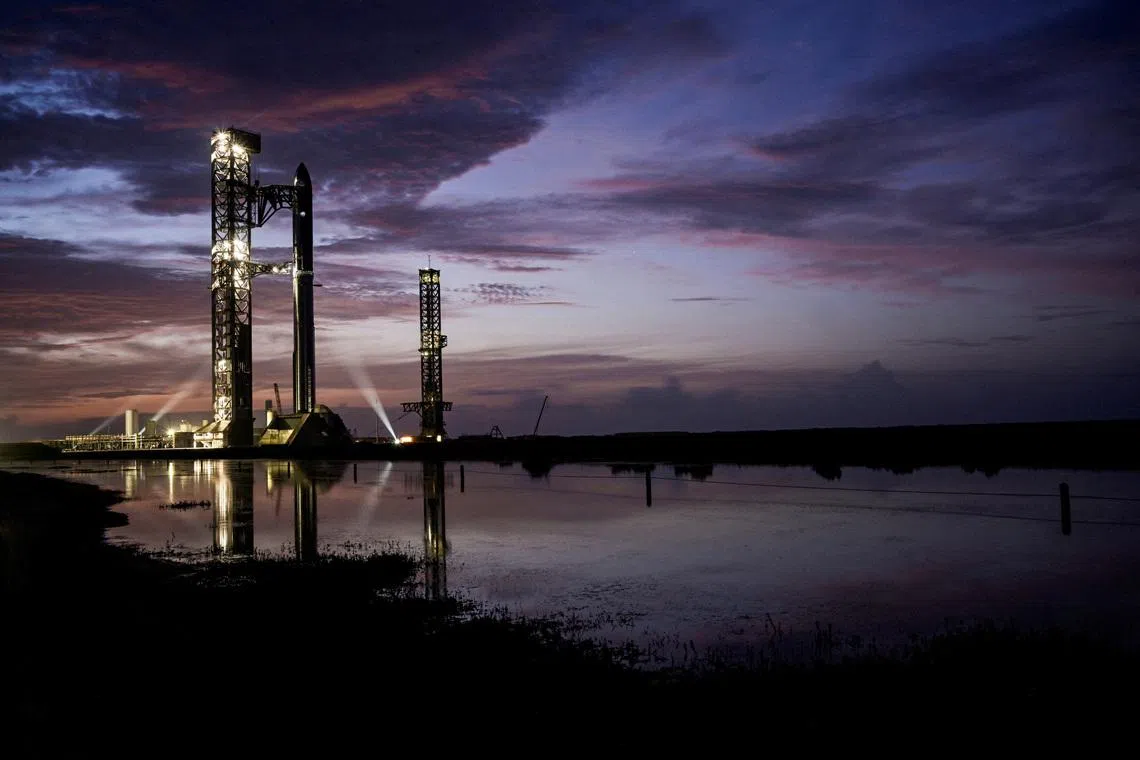
WASHINGTON, July 16 - SpaceX's Starship rocket triggered a last-second abort before liftoff for its 13th flight test from Texas on Thursday as some of its 33 engines failed to start, with CEO Elon Musk saying it will likely try to launch again early next week. Shares of SpaceX, which went public last month, fell about 3% in aftermarket trading following the scrubbed launch. The stock ended at $131.11 on Thursday, closing below its IPO price of $135 for the first time since listing. "Some of the engines didn't start, triggering an automatic launch abort," Musk said in a post on X, without disclosing the number of engines on the Super Heavy rocket that did not start. "To be confident of a good flight, 2 Raptors will be removed & replaced. Most probable launch timing is early next week." The launch abort came less than a second before Starship's planned liftoff from Starbase, SpaceX's company town in south Texas, at 5:45 p.m. CT (2245 GMT). The rocket's engines ignited but cut off shortly after. "We did trigger a hold on the booster that aborted our liftoff as we were starting to light those Raptor engines," said SpaceX spokesperson Dan Huot, speaking on the company's live stream after the launch was scrubbed. REUTERS
SpaceX Launches Are Changing How Families Vacation on South Padre Island
Local rental firm South Padre Trips says Starship launch windows now trigger booking surges, as a new Brownsville study credits rocket tourism with $99 million in annual visitor spending South Padre Island, Texas - July 16, 2026 - For decades, families planned their South Padre Island vacations around spring break, summer weather and fishing tournaments. A growing number now plan them around a rocket. South Padre Trips, a vacation rental management company based on South Padre, reports that SpaceX Starship launch windows at nearby Starbase have become one of the strongest booking drivers of the year. The launch pad sits about five miles from the island's southern tip, close enough that guests can watch a launch from some condo balcony. "We used to get one question from families; how close is the unit to the beach," or "what is the view of the Gulf," said Chad Hart, founder and principal of South Padre Trips. "Now the follow-up is whether they can see the launch from the balcony. When SpaceX announces a launch date, the inquiries off our websites go bonkers." The numbers back him up. An economic impact white paper published this year by the City of Brownsville found Starbase has generated an estimated $10 billion in gross revenue for the region since 2023, with launch-related tourism accounting for roughly $99 million in visitor spending last year alone. Hart says the pattern on the island is consistent. Once a launch date firms up, south-end properties with a fairly direct line of sight to the pad, including Gulfview, La Isla, Gulfpoint, Sea VIsta and Sapphire Condo, are the first to sell out as the most Southern. Guests arrive from across the Texas, and, increasingly, from Northern States. On launch mornings, Isla Blanca Park at the island's southern most tip fills with lawn chairs, telescopes and camera tripods hours before liftoff. Even scrubbed launches work in the island's favor. Because launch dates often slip, visitors pad their trips with extra nights or extend, and many stay on after a delay rather than go home. "A scrub used to feel like bad news," Hart said. "Now guests just add a couple of nights and go fishing or enjoy the best beach in Texas while they wait. Parents tell us the launch is the reason the kids agreed to a beach trip in the first place. It's a vacation and a science lesson in one." The island's tourism bureau has embraced the shift, promoting the area as the Texas Space Coast in its official visitors guide. Starbase itself incorporated as a Texas city in May 2025 and continues an active Starship test flight schedule. For travelers hoping to catch a launch, Hart recommends booking as soon as a launch window is announced, choosing a south-end unit with the best views, and building a day or two of cushion into the trip in case the date moves. About South Padre Trips South Padre Trips.com is the #1 rated full-service vacation rental management company on South Padre Island, offering condo and beach home rentals across South Padre Island, Texas. Founded by Chad Hart, who has more than 25 years of vacation rental management experience, the company operates a local office at 2600 Padre Blvd. and is the top-rated rental agency on the island on Google, with more than 650 five-star reviews and a 4.9-star average. Learn more at https://southpadretrips.com. Media Contact Company Name:South Padre Trips Contact Person: Chad Hart, Founder & Principal Email:Send Email Phone: (512)-825-2157 Country: United States Website:https://southpadretrips.com Press Release Distributed by ABNewswire.com To view the original version on ABNewswire visit: SpaceX Launches Are Changing How Families Vacation on South Padre Island

TSLA Stock Slips Overnight: Gary Black Says SpaceX Can't Afford Tesla - 'The Math Won't Pass Muster'
* Black warned a Tesla deal could dilute SPCX shareholders by about 25%. * Chamath, Jefferies and JPMorgan still see strategic logic in a Tesla-SpaceX combination. * Tesla reports Q2 earnings on July 22, with EPS of $0.32 expected. Shares of Tesla, Inc. (TSLA) slid 2% overnight heading into Friday as Future Fund Managing Director Gary Black pushed back against growing speculation that SpaceX could acquire the EV giant. TSLA stock slipped 1% on Thursday to $391.06, logging its second consecutive session in the red. See what 10M+ investors are talking about. Get the Stocktwits Daily Rip for what retail is watching right now, free to your inbox Tesla Bull Gary Black Says SpaceX Deal Does Not Add Up Black said that CEO Elon Musk's control of SpaceX prevents its board from ignoring the financial impact of a heavily dilutive deal. "Those who think $SPCX will buy $TSLA don't understand the concept of board fiduciary duty," Black said on X. Musk controls 82% of SpaceX's voting power and owns 42% of its overall equity. However, he said that the control does not remove the board's obligation to act in the interests of SpaceX shareholders. The key problem, he said, is dilution. With SPCX trading at about $132 and continuing to fall, an equity-funded Tesla acquisition would require SpaceX to issue a large amount of new stock: "At $132 and sinking, SPCX can't just buy TSLA in a 25% dilutive equity deal," Black said. "The math won't pass muster." Why The Tesla-SpaceX Merger Debate Is Heating Up Black's warning comes days after early SpaceX investor Chamath Palihapitiya revived the merger debate, saying there is "a very obvious industrial logic" to combining Tesla and SpaceX under one capital structure and balance sheet. Palihapitiya previously said that SpaceX was more likely to reverse-merge into Tesla than pursue a traditional IPO, allowing Musk to place his "two seminal assets into one cap table." He also called SpaceX "the outlier of outliers" and said its direct-to-cell business could become "an enormous business" before several other revenue streams mature. Meanwhile, Jefferies said a merger could make strategic sense, estimating that a nil-premium deal could leave Musk with 55.3% voting control while still allowing a premium for Tesla shareholders. JPMorgan similarly called the idea "strategically coherent on paper," citing links across AI, robotics, energy, transportation and space. TSLA Earnings Ahead: Q2 Preview The merger debate comes ahead of Tesla's second-quarter earnings on July 22, with Wall Street expecting EPS of $0.32 on revenue of $26.02 billion.
SpaceX Launches Are Changing How Families Vacation on South Padre Island
Local rental firm South Padre Trips says Starship launch windows now trigger booking surges, as a new Brownsville study credits rocket tourism with $99 million in annual visitor spending South Padre Island, Texas - July 16, 2026 - For decades, families planned their South Padre Island vacations around spring break, summer weather and fishing tournaments. A growing number now plan them around a rocket. South Padre Trips, a vacation rental management company based on South Padre, reports that SpaceX Starship launch windows at nearby Starbase have become one of the strongest booking drivers of the year. The launch pad sits about five miles from the island's southern tip, close enough that guests can watch a launch from some condo balcony. "We used to get one question from families; how close is the unit to the beach," or "what is the view of the Gulf," said Chad Hart, founder and principal of South Padre Trips. "Now the follow-up is whether they can see the launch from the balcony. When SpaceX announces a launch date, the inquiries off our websites go bonkers." The numbers back him up. An economic impact white paper published this year by the City of Brownsville found Starbase has generated an estimated $10 billion in gross revenue for the region since 2023, with launch-related tourism accounting for roughly $99 million in visitor spending last year alone. Hart says the pattern on the island is consistent. Once a launch date firms up, south-end properties with a fairly direct line of sight to the pad, including Gulfview, La Isla, Gulfpoint, Sea VIsta and Sapphire Condo, are the first to sell out as the most Southern. Guests arrive from across the Texas, and, increasingly, from Northern States. On launch mornings, Isla Blanca Park at the island's southern most tip fills with lawn chairs, telescopes and camera tripods hours before liftoff. Even scrubbed launches work in the island's favor. Because launch dates often slip, visitors pad their trips with extra nights or extend, and many stay on after a delay rather than go home. "A scrub used to feel like bad news," Hart said. "Now guests just add a couple of nights and go fishing or enjoy the best beach in Texas while they wait. Parents tell us the launch is the reason the kids agreed to a beach trip in the first place. It's a vacation and a science lesson in one." The island's tourism bureau has embraced the shift, promoting the area as the Texas Space Coast in its official visitors guide. Starbase itself incorporated as a Texas city in May 2025 and continues an active Starship test flight schedule. For travelers hoping to catch a launch, Hart recommends booking as soon as a launch window is announced, choosing a south-end unit with the best views, and building a day or two of cushion into the trip in case the date moves. About South Padre Trips South Padre Trips.com is the #1 rated full-service vacation rental management company on South Padre Island, offering condo and beach home rentals across South Padre Island, Texas. Founded by Chad Hart, who has more than 25 years of vacation rental management experience, the company operates a local office at 2600 Padre Blvd. and is the top-rated rental agency on the island on Google, with more than 650 five-star reviews and a 4.9-star average. Learn more at https://southpadretrips.com. Media Contact Company Name:South Padre Trips Contact Person: Chad Hart, Founder & Principal Email:Send Email Phone: (512)-825-2157 Country: United States Website:https://southpadretrips.com Press Release Distributed by ABNewswire.com To view the original version on ABNewswire visit: SpaceX Launches Are Changing How Families Vacation on South Padre Island

xAI reportedly loses all 11 co-founders: turnover surges
Former staff cite long hours, top-down decisions and looming layoffs xAI, the Elon Musk AI company behind Grok, is reportedly dealing with a talent problem. Reports say all 11 original co-founders are gone, and staff turnover more broadly has been described as unusually high. Former employees describe xAI as a hard place to work: long hours, decisions concentrated at the top, not much tolerance for disagreement, and constant churn. People watching the company say that could start to show up in execution, hiring, and enterprise credibility, even after reports of a $20 billion raise at roughly a $230 billion valuation and a February 2026 merger with SpaceX that reportedly put the combined company near $1.25 trillion. Reports also say xAI has measured Grok against Claude, Anthropic's competing model, especially on coding. Inside the company, there was said to be frustration that Grok lagged behind. There were also allegations that Claude outputs were used to improve xAI's coding systems, including claims that some employees kept relying on personal Anthropic accounts after official access had been cut off. xAI was also reportedly preparing layoffs of as much as 30% in March 2026, though other reports put the cuts at more than 70%. All of that landed while Grok was already taking heat over deepfake sexual images, misinformation, and a July 2026 allegation that one coding tool sent entire code repositories to the cloud without clear consent. If you follow Grok closely, keep an eye on this. The next round of xAI news will likely come down to one question: can the company behind Grok get itself steady?
TSLA Stock Slips Overnight: Gary Black Says SpaceX Can't Afford Tesla - 'The Math Won't Pass Muster'
* Black warned a Tesla deal could dilute SPCX shareholders by about 25%. * Chamath, Jefferies and JPMorgan still see strategic logic in a Tesla-SpaceX combination. * Tesla reports Q2 earnings on July 22, with EPS of $0.32 expected. Shares of Tesla, Inc. (TSLA) slid 2% overnight heading into Friday as Future Fund Managing Director Gary Black pushed back against growing speculation that SpaceX could acquire the EV giant. TSLA stock slipped 1% on Thursday to $391.06, logging its second consecutive session in the red. Tesla Bull Gary Black Says SpaceX Deal Does Not Add Up Black said that CEO Elon Musk's control of SpaceX prevents its board from ignoring the financial impact of a heavily dilutive deal. "Those who think $SPCX will buy $TSLA don't understand the concept of board fiduciary duty," Black said on X. Musk controls 82% of SpaceX's voting power and owns 42% of its overall equity. However, he said that the control does not remove the board's obligation to act in the interests of SpaceX shareholders. The key problem, he said, is dilution. With SPCX trading at about $132 and continuing to fall, an equity-funded Tesla acquisition would require SpaceX to issue a large amount of new stock: "At $132 and sinking, SPCX can't just buy TSLA in a 25% dilutive equity deal," Black said. "The math won't pass muster." Why The Tesla-SpaceX Merger Debate Is Heating Up Black's warning comes days after early SpaceX investor Chamath Palihapitiya revived the merger debate, saying there is "a very obvious industrial logic" to combining Tesla and SpaceX under one capital structure and balance sheet. Palihapitiya previously said that SpaceX was more likely to reverse-merge into Tesla than pursue a traditional IPO, allowing Musk to place his "two seminal assets into one cap table." He also called SpaceX "the outlier of outliers" and said its direct-to-cell business could become "an enormous business" before several other revenue streams mature. Meanwhile, Jefferies said a merger could make strategic sense, estimating that a nil-premium deal could leave Musk with 55.3% voting control while still allowing a premium for Tesla shareholders. JPMorgan similarly called the idea "strategically coherent on paper," citing links across AI, robotics, energy, transportation and space. TSLA Earnings Ahead: Q2 Preview The merger debate comes ahead of Tesla's second-quarter earnings on July 22, with Wall Street expecting EPS of $0.32 on revenue of $26.02 billion. Jefferies raised its TSLA price target to $400 from $375 and kept a 'Hold' rating after Tesla delivered 480,100 vehicles, beating estimates. The firm also lifted its earnings before interest and taxes (EBIT) forecast to $1.45 billion, citing stronger demand in China and Europe, while remaining cautious about possible Cybercab delays. How Do Retail Traders Feel About TSLA? On Stocktwits, retail sentiment for TSLA was 'neutral' amid a 13% decline in 24-hour message volumes. One bullish user said, "$TSLA start of the earnings run ,Merger news July 22 or August 550+ coming." Another user said, "$SPCX A $TSLA merger warrants $50 SP with Starlink" So far this year, Tesla's stock has lagged its "Magnificent Seven" peers, making it the group's second-worst performer, down about 13%. For updates and corrections, email newsroom[at]stocktwits[dot]com.
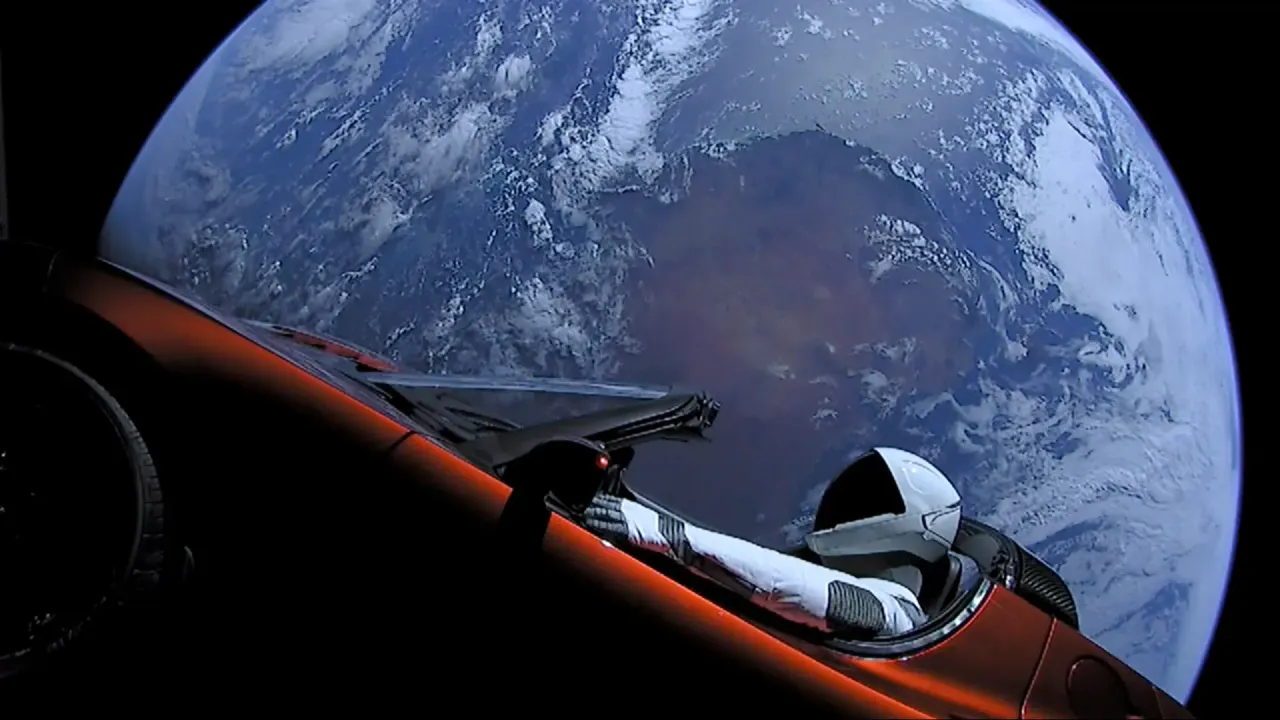
AST SpaceMobile vs. Rocket Lab: Which Stock Is The Superior SpaceX Competitor?
Space Exploration Technologies (NASDAQ: SPCX) made headlines when it raised $75 billion from investors in an initial public offering (nearly $86 billion if you include the investment bankers' overallotment). The stock rocketed higher after the IPO, but it has now fallen back down to the $135 IPO price. There are alternatives to consider, such as AST SpaceMobile (NASDAQ: ASTS) and Rocket Lab (NASDAQ: RKLB). Here's why you might want to buy one of these stocks over SpaceX. What does SpaceX do? The simple answer is SpaceX does a lot. For example, it builds and launches rockets. In fact, it appears well ahead of the competition in terms of technology, with rockets that return and land after use. Reusing launch rockets materially reduces launch costs. SpaceX also operates Starlink, a satellite-based telecommunication network. And it is building an artificial intelligence business. Where to invest $1,000 right now? Our analyst team just revealed what they believe are the 10 best stocks to buy right now, when you join Stock Advisor. See the stocks " Image source: Getty Images. This is where things get interesting. SpaceX is a money-losing start-up, but its Starlink business is profitable. As the company clearly spelled out in its IPO prospectus, space launches and AI are burning through cash. You can avoid the money-losing businesses and just focus on the one segment of SpaceX that is profitable, the satellite-based broadband network, if you buy AST SpaceMobile. AST SpaceMobile: Not up to speed, but getting close AST SpaceMobile isn't profitable yet, either. However, it operates a satellite-based broadband network. And it is working to expand that network to cover the entire planet. It is getting close to a commercial launch of its network, but there's a vital difference between Starlink and AST SpaceMobile: Starlink's service is bespoke, while AST SpaceMobile is partnered with large cellphone service providers. That means it has a built-in customer base and is likely to hit the ground running when its service starts operating. It still has material spending needs as it works to broaden its geographic coverage, but it also has major telecom partners as supporters. If you are worried that Elon Musk is pulling SpaceX in too many directions, AST SpaceMobile would be a way to focus on the one part of that company that actually makes money today. That said, AST SpaceMobile likely won't be profitable for a while longer, given the huge cost of building and launching satellites. Rocket Lab: Everything but the AI One sizable drawback with AST SpaceMobile is that it doesn't launch its own satellites. It has to contract that out to other companies, which means, in some ways, it is at the mercy of its space-focused competitors. Rocket Lab currently builds and launches rockets and makes other space technology. However, it has agreed to buy Iridium Communications (NASDAQ: IRDM), which operates a space-based broadband network, in an $8 billion deal. That will, effectively, make Rocket Lab a fully integrated space company, just like SpaceX. But it will leave out the AI part of the business, which is currently eating up huge amounts of SpaceX cash. It isn't that Rocket Lab doesn't use AI; it does. But it uses AI internally to support its own business. Rocket Lab isn't profitable either, so it, too, is still a money-losing start-up. As with SpaceX and AST SpaceMobile, only the most aggressive investors should consider it. However, it lets you focus on space and avoid getting caught up in the AI hype running through the stock market today. What are you looking to own? When you step back and look at SpaceX, AST SpaceMobile, and Rocket Lab, there are a few big takeaways. First, the only way to get direct access to Elon Musk is to buy SpaceX. If that's what has you interested in space, then stick with the "original." Second, you can focus on the one part of SpaceX that's profitable if you buy AST SpaceMobile. AST SpaceMobile isn't profitable, as it is still building out its satellite business, but it has major partners to help it along. Third, if you want everything but SpaceX's AI business, your best option is Rocket Lab. The caveat here is that it still hasn't completed the purchase of Iridium. If you choose to go this route, you might want to hold off until the deal is consummated. One final consideration here: All three companies are still money-losing start-ups. Only the most aggressive growth investors should probably consider buying any of them. The space sector is still very early in its development, and it is far from clear which companies will be the long-term winners. Should you buy stock in Space Exploration Technologies right now? Before you buy stock in Space Exploration Technologies, consider this: The Motley Fool Stock Advisor analyst team just identified what they believe are the 10 best stocks for investors to buy now... and Space Exploration Technologies wasn't one of them. The 10 stocks that made the cut could produce monster returns in the coming years. Consider when Netflix made this list on December 17, 2004... if you invested $1,000 at the time of our recommendation, you'd have $397,351!* Or when Nvidia made this list on April 15, 2005... if you invested $1,000 at the time of our recommendation, you'd have $1,304,257!* Now, it's worth noting Stock Advisor's total average return is 934% -- a market-crushing outperformance compared to 210% for the S&P 500. Don't miss the latest top 10 list, available with Stock Advisor, and join an investing community built by individual investors for individual investors. See the 10 stocks " *Stock Advisor returns as of July 16, 2026. Reuben Gregg Brewer has no position in any of the stocks mentioned. The Motley Fool has positions in and recommends AST SpaceMobile and Rocket Lab. The Motley Fool has a disclosure policy. The views and opinions expressed herein are the views and opinions of the author and do not necessarily reflect those of Nasdaq, Inc.

SpaceX aborts Starship launch seconds before liftoff
SpaceX's Starship rocket experienced a last-second launch abort on Thursday. Some of the rocket's 33 engines failed to ignite properly before liftoff. This engine issue triggered an automatic abort sequence just before the scheduled launch. SpaceX CEO Elon Musk indicated a probable launch attempt early next week. The company's stock saw a slight decline following the scrubbed launch event. Washington: SpaceX's Starship rocket triggered a last-second abort before liftoff for its 13th flight test from Texas on Thursday as some of its 33 engines failed to start, with CEO Elon Musk saying it will likely try to launch again early next week. Shares of SpaceX, which went public last month, fell about 3% in aftermarket trading following the scrubbed launch. The stock ended at $131.11 on Thursday, closing below its IPO price of $135 for the first time since listing. "Some of the engines didn't start, triggering an automatic launch abort," Musk said in a post on X, without disclosing the number of engines on the Super Heavy rocket that did not start. "To be confident of a good flight, 2 Raptors will be removed & replaced. Most probable launch timing is early next week." The launch abort came less than a second before Starship's planned liftoff from Starbase, SpaceX's company town in south Texas, at 5:45 p.m. CT (2245 GMT). The rocket's engines ignited but cut off shortly after. "We did trigger a hold on the booster that aborted our liftoff as we were starting to light those Raptor engines," said SpaceX spokesperson Dan Huot, speaking on the company's live stream after the launch was scrubbed.
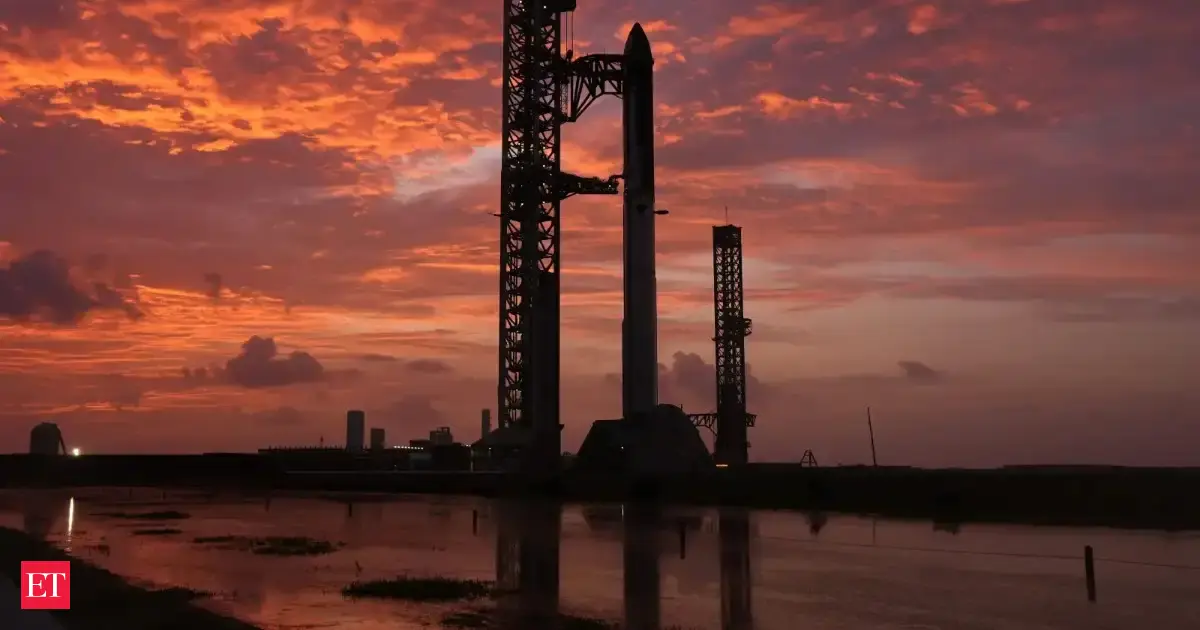
SpaceX Post-Listing Collapse Threatens IPO Market's AI Euphoria
SpaceX shares slumped2.97%Thursday, on pace for an eighth drop in nine sessions, as it wiped out $903 billion from a closing high last month. SpaceX's fall from its post-listing peak to below its IPO price in just a month poured cold water on the market for newly public companies, dragging a key gauge of this year's debuts down with it. The pullback across stocks linked to themes such as artificial intelligence infrastructure and aerospace and defense -- two of the hottest sectors for newly-public companies -- depressed the weighted average return for this year's US initial public offerings to 6%, lagging the S&P 500 Index's 11% return, data compiled by Bloomberg through July 15 show. Broader market volatility, including share price declines for recent listings, is set to dampen enthusiasm for what a Blackstone Inc. executive dubbed the year of the IPO. The majority of US debuts over the past two months are trading below their offer price, data compiled by Bloomberg show. ALSO READ: SpaceX Craters Below IPO Price For First Time; Shares Down 40% From Post-Listing Peak SpaceX shares slumped 2.97% Thursday, on pace for an eighth drop in nine sessions, as it wiped out $903 billion from a closing high last month. Shares of SK Hynix Inc., which raised $26.5 billion in a record-setting debut of its own last week, dropped 12% bringing it just a few dollars above the $149 level where it sold American depositary receipts to investors. Add image caption here Activity in the near-term will "be less busy than we thought," Michael Ventura, co-head of US equity capital markets at Royal Bank of Canada, said in an interview. "You will have transactions that launch and price but outside of the headline names it'll be quieter." Blockbuster Deals Even without blockbuster deals like SpaceX and SK Hynix, the broader US IPO market hasn't shot out the lights. The weighted-average return for those 2026 US IPOs has pulled back to roughly 10% through July 15's close, modestly lagging the return for the S&P 500. The underlying market volatility over the past month, despite an S&P 500 that is virtually unchanged, has prompted investors to rotate away from once-favored themes. While the benchmark is up roughly 0.3% over that stretch, the Philadelphia Stock Exchange Semiconductor Index has slumped 11% and a momentum basket of stocks down more than 8%. "We had a ton of momentum with the AI theme that led to the deals trading well out of the gates but with markets trading how they are, the steam will come off of that a little bit, and that's to be expected," said Eddie Molloy, co-head of global equity capital markets at Morgan Stanley. Investors will likely get a taste of companies that sit away from AI with Blackstone-backed Jersey Mike's Subs Inc. and gas-station and convenience-store operator Cumberland Farms Ltd. able to launch formal marketing of their IPOs as soon as Monday. They would be the first consumer-oriented firms to go public with sizable deals since Suja Life Inc. debuted in May. The handful of notable consumer companies to IPO this year have lagged, ranging from Suja Life's 48% decline to Yesway Inc.'s 3.3% gain. Still, it's too early to rule out a second-half surge led by Anthropic PBC, which could go public as soon as October, Bloomberg News reported. Wall Street's biggest investment banks announced in the last few days that they hauled in the most revenue from advising on equity offerings in the second quarter since 2021, fueled by SpaceX's record-setting IPO and a fundraising blitz for AI infrastructure. ALSO READ: SpaceX, Apple, PayPal, Micron Dominate Wall Street Action Amid Muted Moves In Dow, S&P 500 Companies have already raised $157 billion through July 16, excluding blank-check companies and other financial vehicles, data compiled by Bloomberg show. Bankers are optimistic that deals will flow after September's Labor Day holiday. "Is there volatility in the broader market and that impacts the IPO market? Yes," said Arnaud Blanchard, co-head of global ECM at Morgan Stanley. "But overall we're not seeing a decrease in appetite for deals which we expect to come to market over the coming quarters." (This story has not been edited by NDTV staff and is auto-generated from a syndicated feed.) Essential Business Intelligence, Sharp Market Insights, Practical Personal Finance Advice, Daily Fuel, Gold and Silver Prices and Latest Stories -- On NDTV Profit.
AST SpaceMobile vs. Rocket Lab: Which Stock Is The Superior SpaceX Competitor?
Space Exploration Technologies (SPCX 3.07%) made headlines when it raised $75 billion from investors in an initial public offering (nearly $86 billion if you include the investment bankers' overallotment). The stock rocketed higher after the IPO, but it has now fallen back down to the $135 IPO price. There are alternatives to consider, such as AST SpaceMobile (ASTS 17.03%) and Rocket Lab (RKLB 11.62%). Here's why you might want to buy one of these stocks over SpaceX. What does SpaceX do? The simple answer is SpaceX does a lot. For example, it builds and launches rockets. In fact, it appears well ahead of the competition in terms of technology, with rockets that return and land after use. Reusing launch rockets materially reduces launch costs. SpaceX also operates Starlink, a satellite-based telecommunication network. And it is building an artificial intelligence business. This is where things get interesting. SpaceX is a money-losing start-up, but its Starlink business is profitable. As the company clearly spelled out in its IPO prospectus, space launches and AI are burning through cash. You can avoid the money-losing businesses and just focus on the one segment of SpaceX that is profitable, the satellite-based broadband network, if you buy AST SpaceMobile. AST SpaceMobile: Not up to speed, but getting close AST SpaceMobile isn't profitable yet, either. However, it operates a satellite-based broadband network. And it is working to expand that network to cover the entire planet. It is getting close to a commercial launch of its network, but there's a vital difference between Starlink and AST SpaceMobile: Starlink's service is bespoke, while AST SpaceMobile is partnered with large cellphone service providers. That means it has a built-in customer base and is likely to hit the ground running when its service starts operating. It still has material spending needs as it works to broaden its geographic coverage, but it also has major telecom partners as supporters. If you are worried that Elon Musk is pulling SpaceX in too many directions, AST SpaceMobile would be a way to focus on the one part of that company that actually makes money today. That said, AST SpaceMobile likely won't be profitable for a while longer, given the huge cost of building and launching satellites. Rocket Lab: Everything but the AI One sizable drawback with AST SpaceMobile is that it doesn't launch its own satellites. It has to contract that out to other companies, which means, in some ways, it is at the mercy of its space-focused competitors. Rocket Lab currently builds and launches rockets and makes other space technology. However, it has agreed to buy Iridium Communications (IRDM 4.23%), which operates a space-based broadband network, in an $8 billion deal. That will, effectively, make Rocket Lab a fully integrated space company, just like SpaceX. But it will leave out the AI part of the business, which is currently eating up huge amounts of SpaceX cash. It isn't that Rocket Lab doesn't use AI; it does. But it uses AI internally to support its own business. Rocket Lab isn't profitable either, so it, too, is still a money-losing start-up. As with SpaceX and AST SpaceMobile, only the most aggressive investors should consider it. However, it lets you focus on space and avoid getting caught up in the AI hype running through the stock market today. What are you looking to own? When you step back and look at SpaceX, AST SpaceMobile, and Rocket Lab, there are a few big takeaways. First, the only way to get direct access to Elon Musk is to buy SpaceX. If that's what has you interested in space, then stick with the "original." Second, you can focus on the one part of SpaceX that's profitable if you buy AST SpaceMobile. AST SpaceMobile isn't profitable, as it is still building out its satellite business, but it has major partners to help it along. Third, if you want everything but SpaceX's AI business, your best option is Rocket Lab. The caveat here is that it still hasn't completed the purchase of Iridium. If you choose to go this route, you might want to hold off until the deal is consummated. One final consideration here: All three companies are still money-losing start-ups. Only the most aggressive growth investors should probably consider buying any of them. The space sector is still very early in its development, and it is far from clear which companies will be the long-term winners.

Here's Why Anthropic Is Pushing States to Regulate AI Faster | Tech Biz Web
In the fast-moving world of artificial intelligence, Anthropic is playing a role that feels strikingly counterintuitive for a tech giant. While much of Silicon Valley has aggressively lobbied against government oversight -- fearing that red tape will strangle innovation -- Anthropic is actively inviting it. Last year, the company played a pivotal role in shaping and passing new transparency laws in California and New York. Now, they are signaling that those hard-won victories are already relics of the past. As Cesar Fernandez, Anthropic's head of U.S. state and local government relations, recently told WIRED, the rapid evolution of AI technology means that mere self-reporting is no longer enough. The company is now championing more stringent oversight, arguing that if technology is moving at breakneck speed, our policy responses must accelerate to match it. The motivation behind this stance is rooted in Anthropic's unique corporate DNA. Valued at nearly $1 trillion, the company is undeniably a titan of industry, yet it remains tethered to a founding mission that prioritizes the "safe transition" to a world with transformative AI over pure market dominance. This philosophy has pushed them to support some of the most rigorous proposed regulations in the country. From Illinois to Massachusetts, Anthropic is backing measures that go far beyond simple transparency, advocating for mandatory third-party audits of safety protocols and empowering state attorneys general to hold AI developers accountable. For a company that stands to lose the most from overly restrictive rules, this proactive embrace of regulation is a deliberate, albeit unconventional, strategy. To navigate this complex political landscape, Anthropic has recruited Cesar Fernandez, a seasoned veteran of high-stakes government relations who previously cut his teeth steering policy at companies like Uber and FanDuel. Fernandez's expertise is arriving at a critical juncture; with Congress largely deadlocked on federal AI policy, individual states have stepped into the vacuum to set their own rules. By deploying someone who understands how to win legislative battles on a state-by-state basis, Anthropic is positioning itself as the primary architect of the new AI rulebook. This gives them a significant advantage: they aren't just reacting to laws, they are effectively shaping the environment in which their own future technology will operate. However, not everyone in Silicon Valley sees this as a virtuous quest for safety. A growing chorus of critics, including high-profile tech figures like David Sacks, views Anthropic's behavior through a cynical lens known as "regulatory capture." The argument suggests that by lobbying for complex and expensive compliance requirements, Anthropic is effectively building a moat around its business. If the cost of playing in the AI field becomes high enough due to mandatory audits and strict safety mandates, smaller, hungrier startups will be forced out of the market. To these critics, Anthropic isn't trying to save the world; they are trying to cement their status as an incumbent by rigging the game against potential future competitors. Fernandez and the leadership at Anthropic vehemently reject this "nefarious" characterization. They point out that the legislation they support is carefully calibrated to apply only to "large AI model developers" -- specifically those with hundreds of millions of dollars in development costs and significant annual revenues. From their perspective, the threshold is high enough that it won't affect the average startup just getting off the ground. They argue that the focus is entirely on the industry giants, of which they are a member, acknowledging that companies with the power to influence society at scale should be subject to the intense scrutiny that their own massive scale demands. The reality, however, remains nuanced and arguably somewhat gray. While Anthropic's thresholds might shield early-stage ventures, the line between an "up-and-coming startup" and a "large developer" is blurring, especially as billions of dollars in venture capital flood the sector. Companies like Mistral and Safe Superintelligence are already operating at a scale that could eventually bring them under the umbrella of these regulations. Whether these policies are truly about protecting humanity from "catastrophic risks" or simply about controlling the supply side of the AI market remains a point of heated debate. Ultimately, Anthropic is betting that by leading the regulatory conversation, they can define the safety standards of the future -- and perhaps ensure that the only players left in the game are those willing to play by their, and the government's, sophisticated rules.

AST SpaceMobile vs. Rocket Lab: Which Stock Is The Superior SpaceX Competitor?
Space Exploration Technologies (NASDAQ: SPCX) made headlines when it raised $75 billion from investors in an initial public offering (nearly $86 billion if you include the investment bankers' overallotment). The stock rocketed higher after the IPO, but it has now fallen back down to the $135 IPO price. There are alternatives to consider, such as AST SpaceMobile (NASDAQ: ASTS) and Rocket Lab (NASDAQ: RKLB). Here's why you might want to buy one of these stocks over SpaceX. What does SpaceX do? The simple answer is SpaceX does a lot. For example, it builds and launches rockets. In fact, it appears well ahead of the competition in terms of technology, with rockets that return and land after use. Reusing launch rockets materially reduces launch costs. SpaceX also operates Starlink, a satellite-based telecommunication network. And it is building an artificial intelligence business. Missed Nvidia in 2009? This Rare Signal Is Flashing Again. In 2009, a "Double Down" signal flashed for a little-known chipmaker called Nvidia. For the first time in years, that same "Total Conviction" signal is flashing for a company 1/100th the size of Nvidia. Continue " This is where things get interesting. SpaceX is a money-losing start-up, but its Starlink business is profitable. As the company clearly spelled out in its IPO prospectus, space launches and AI are burning through cash. You can avoid the money-losing businesses and just focus on the one segment of SpaceX that is profitable, the satellite-based broadband network, if you buy AST SpaceMobile. AST SpaceMobile: Not up to speed, but getting close AST SpaceMobile isn't profitable yet, either. However, it operates a satellite-based broadband network. And it is working to expand that network to cover the entire planet. It is getting close to a commercial launch of its network, but there's a vital difference between Starlink and AST SpaceMobile: Starlink's service is bespoke, while AST SpaceMobile is partnered with large cellphone service providers. That means it has a built-in customer base and is likely to hit the ground running when its service starts operating. It still has material spending needs as it works to broaden its geographic coverage, but it also has major telecom partners as supporters. If you are worried that Elon Musk is pulling SpaceX in too many directions, AST SpaceMobile would be a way to focus on the one part of that company that actually makes money today. That said, AST SpaceMobile likely won't be profitable for a while longer, given the huge cost of building and launching satellites.
Netflix, SpaceX, Alphabet, Alcoa and Intuitive Surgical: Why These 5 Stocks Are on Investors' Radars Toda
Major U.S. indices ended Thursday in the red, with the Dow Jones Industrial Average slipping 0.2% to 52,552.97. The S&P 500 declined 0.51% to 7,533.77, while the Nasdaq dropped 1.47% to 25,881.95. Across U.S. equity markets, trading was mixed beneath the surface at midday, with gains in defensive and value stocks offsetting weakness in chipmakers and speculative technology shares, prompting a rotation into smaller-cap stocks. These are the top stocks that gained the attention of retail traders and investors through the day: Netflix Inc. (NASDAQ:NFLX) Netflix's stock closed up 0.91% at $74.35, reaching an intraday high of $74.68 and a low of $72.94. The streaming giant's shares are nearing critical lows, with a 52-week range of $127.75 to $70.86. In the after-hours session, the stock plumetted 9.05% to $67.62. Looking ahead, Netflix guided third-quarter revenue of $12.86 billion and EPS of 82 cents, both below Wall Street expectations, while narrowing its full-year revenue outlook to $51.0 billion-$51.4 billion, around the low end of its previous range. The softer guidance appeared to weigh on investor sentiment. Space Exploration Technologies Corp (NASDAQ:SPCX) SpaceX shares fell 3.08% to close at $131.11, with a high of $137.76 and a low of $130.74. The stock's 52-week range is $225.64 to $130.74. The shares declined 3.08% to $127.07 in extended trading. Meanwhile, SpaceX's launch of its Starship mega rocket was aborted Thursday night after "some of the engines didn't start," CEO Elon Musk said on X, triggering an automatic launch abort. Alphabet Inc. (NASDAQ:GOOG) Alphabet's Class C stock dropped 4.43% to $353.81, with an intraday high of $374.35 and a low of $351.67. The 52-week range is $404.44 to $181.50. Reports of delays in Google's Gemini project have raised concerns about the company's competitive position in AI. Alcoa Corp. (NYSE:AA) Alcoa's shares decreased by 3.56%, closing at $46.85, with a high of $47.90 and a low of $46.39. The stock's 52-week range is $84.38 to $28.11. The stock fell 2.8% to $45.54 in after-hours trading. Alcoa shares fell in the after-hours session after the aluminum producer reported second-quarter earnings of $2.12 per share, missing Wall Street estimates of $2.25, although revenue of $3.97 billion edged past the $3.94 billion consensus. The earnings miss appeared to outweigh solid top-line performance. During the quarter, aluminum production rose 5% sequentially and shipments increased 18%, while total third-party revenue climbed 24%. CEO William Oplinger also highlighted favorable aluminum prices and the company's recently announced agreement with South32 as key strategic achievements. Intuitive Surgical Inc. (NASDAQ:ISRG) Intuitive Surgical's stock rose 3.43% to $402.33, with a high of $405.50 and a low of $393.68. The 52-week range is $603.88 to $378.50. In extended trading, the stock fell sharply by 10.79% to $358.93. The medical device maker reported second-quarter results that topped Wall Street expectations, with EPS of $2.80 beating the $2.50 consensus and revenue of $2.89 billion exceeding estimates of $2.82 billion. The company also reported strong operating metrics, with combined da Vinci and Ion procedures up 16% year over year, 468 da Vinci systems placed during the quarter and continued growth in its installed base. CEO Dave Rosa said the results reflected the strength of the company's portfolio across robotic surgery, lung diagnostics and digital solutions. Benzinga Edge Stock Rankings indicate Netflix stock has a Momentum score in the 5th percentile and a Value score in the 19th percentile. Disclaimer: This content was partially produced with the help of AI tools and was reviewed and published by Benzinga editors. Market News and Data brought to you by Benzinga APIs To add Benzinga News as your preferred source on Google, click here.

SpaceX aborts planned 13th launch of Starship from South Texas
CEO Elon Musk said some engines failed to start, triggering an automatic abort of the launch. SpaceX came within a few seconds Thursday of Starship's 13th test flight and the first to deploy actual Starlink satellites, but the launch was aborted when some of the mega-rocket's engines failed to start. The Texas company's stock, which has been generally declining since its record initial public offering last month, fell sharply in after-hours trading. SpaceX said it will have to figure out what went wrong before making another attempt. "Some of the engines didn't start, triggering an automatic launch abort," CEO Elon Musk said later on X. "Next launch attempt hopefully in a few days." A dashboard showing the rocket's status during the SpaceX livestream of the planned launch indicated that only 29 of the Super Heavy Booster's 33 Raptor engines ignited. Though countdown holds to deal with such issues are not uncommon, SpaceX was unable to restart its countdown Thursday in part because there wasn't enough water. When the Super Heavy booster's Raptor engines briefly fired, they triggered the water deluge system under the rocket, which diffuses heat and vibration. Though the engines were immediately shut down, the system released thousands of gallons of water from tanks that need to be refilled before the next launch attempt. The launch team immediately began draining the fuel from the rocket. Twenty of SpaceX's newest and most advanced Starlinks were on board for release during the planned hourlong flight. The internet satellites were going to try communicating with Starlinks already in orbit while taking photos of Starship's heat shield. Neither the first-stage booster nor the upper-stage Starship spacecraft were meant to be recovered, with both ending up in the sea. NASA is counting on Starship to land its astronauts on the moon in the next few years. Delays in its development have already caused years of delays in the NASA program.
SpaceX Short Sellers Rack Up $3.88 Billion as Stock Falls Below IPO Price
This article first appeared on GuruFocus. SpaceX (NASDAQ:SPCX), Elon Musk's rocket, satellite, and artificial intelligence company, is facing mounting pressure as its stock trades near the $135 per-share price set in its initial public offering. Short sellers have generated approximately $3.88 billion in paper profits, according to data compiled by S3 Partners, after the shares fell as low as $132.15 and moved toward a fourth consecutive session of losses. The stock has also slipped below its IPO price for the first time, while bearish investors have continued increasing their positions as enthusiasm surrounding the newly public company appears to weaken. S3 Partners data show that roughly 181 million SpaceX shares, representing about 28% of the stock available for trading, have been sold short. Ihor Dusaniwsky of S3 Partners said this represents one of the highest short-interest levels recorded by a newly listed company during its first month of trading. Investors added nearly 37 million shares, valued at approximately $5 billion, to short positions over the past week as the stock continued to decline. SpaceX has now lost about one-third of its value since its June 16 closing high, erasing approximately $860 billion in market capitalization during that period. Investors are now focusing on the company's 13th Starship test flight, which could take place as soon as Thursday, along with SpaceX's first quarterly earnings report, which may be released in the coming weeks. The earnings report is expected to allow certain shareholders to sell their stock for the first time, beginning a period during which millions of additional shares could become available for trading. Dusaniwsky noted that the recent share-price weakness and expectations surrounding upcoming lockup expirations have contributed to increased short selling. These developments could keep SpaceX shares volatile as investors assess the rocket launch, the company's financial results, and the potential increase in tradable stock.

SpaceX Bears Gain as Stock Drops
This article first appeared on GuruFocus. SpaceX (NASDAQ:SPCX) short sellers have made an estimated $3.8 bilion in paper gains after the stock slid below its IPO price during a four-day losing streak. According to S3 Partners, short interest has climbed to 181 million shares, or about 28% of the company's 646 million-share tradable float. Shares have fallen 11% over the past 4 sessions, touching an intraday low of $132.15 before closing just above their $135 IPO price. Led by Elon Musk, who is also CEO of Tesla (NASDAQ:TSLA), SpaceX designs and launches rockets, operates the Starlink satellite internet network and develops spacecraft for commercial and government customers. The company is also building Starship, its next-generation launch system aimed at missions to the Moon and Mars. The recent pullback comes as investors wait for 2 major catalysts: SpaceX's 13th Starship test flight and its earnings report, expected in the first week of August.