News & Updates
The latest news and updates from companies in the WLTH portfolio.
Cerebras CEO Andrew Feldman Says Elon Musk Found a 'Pretty Good Idea' in Leasing SpaceXAI's Unused Grok Capacity to Anthropic
Benzinga and Yahoo Finance LLC may earn commission or revenue on some items through the links below. Cerebras Systems Inc. CEO Andrew Feldman says SpaceXAI, formerly xAI, moved into rented AI computing because its processors were not busy enough, as Grok drew less usage than expected. Feldman Blames Grok's Weak Early Adoption Speaking with Molly O'Shea on the Sourcery podcast on Monday, Feldman explained that Musk's company pivoted to an operator that rents out AI infrastructure because its Grok model struggled with early enterprise market adoption, leaving billions of dollars in hardware sitting idle. "You have to ask why they had available capacity," Feldman said. "They had available capacity because the Grok model wasn't used very much." Cerebras CEO @andrewdfeldman explains why @elonmusk and SpaceXAI made a deal to lease GPUs to Anthropic: "You have to ask why they had available capacity... They had available capacity because the Grok model wasn't used very much." "They had these GPUs sitting around, and... https://t.co/1IHsE98NR3 pic.twitter.com/ssomhhLJJl -- sourcery (@sourceryy) July 13, 2026 Trending: Avoid the #1 Investing Mistake: How Your 'Safe' Holdings Could Be Costing You Big Time Feldman said SpaceXAI could not afford to leave equipment idle. "They had these GPUs sitting around, and that's a bad idea," he said. He pointed to IPO-bound Anthropic's agreement to use SpaceX's Colossus 1 data center in Memphis, Tennessee. Anthropic said the site provides more than 300 megawatts through over 220,000 Nvidia GPUs, allowing it to double Claude Code limits, remove peak-hour reductions and raise API ceilings. "They leased a whole block of them to Anthropic, and looked up and said, 'Whoa, that's a pretty good idea,'" Feldman said. "We had all these GPUs. Our model wasn't a success, but we can have a great business by stepping into what is a constrained market." Anthropic Deal Monetizes Idle GPU Capacity In May, Anthropic agreed to pay $1.25 billion per month for Colossus and Colossus II capacity through May 2029. Both sides can terminate with 90 days' notice, and Musk described the arrangement as a six-month lease, leaving its long-term value uncertain. See Also: Skip the Regrets: The Essential Retirement Tips Experts Wish Everyone Knew Earlier. Colossus 1 supported Grok's development, but Reuters described its capacity as unused prior to the Anthropic agreement. SpaceXAI said Grok 4.5 trained across tens of thousands of Nvidia GB300 processors.
SpaceX is the Dutch East India Company of the space age
In August 1602, more than 1 100 investors - from wealthy merchants to ordinary craftsmen - subscribed to the world's first initial public offering. The Dutch East India Company, the VOC, raised Gld6.4-million to build a maritime trade network stretching from Amsterdam to the East Indies. On 12 June 2026, SpaceX raised US$75-billion in the largest IPO in Wall Street history, pricing at $135/share and closing its first session more than 19% higher. Demand was roughly double the shares on offer - and South Africans were not left out, pouring R179-million into the stock through EasyEquities in just two days. Separated by 424 years, the parallel is worth taking seriously. Neither company was first into its frontier - Portuguese fleets reached the East Indies long before the Dutch, and governments have been launching rockets since the 1950s. What both did first was ask the public capital markets to fund a frontier, at a scale and time horizon no private syndicate would stomach. The VOC's real innovations were financial. As economic historian Gerard Koot notes in his history of the company, it introduced limited liability for shareholders and, unlike earlier ventures wound up after a single voyage, locked in its capital for a decade - a permanent fund for voyages that took years to pay off. Tradeable shares made the risk bearable, and gave the world the Amsterdam Stock Exchange as a by-product. SpaceX's logic is strikingly similar. The capital-hungry Starship programme - the company wants to be flying a rocket every 53 minutes within five years - and the Starlink constellation that is rewriting the economics of global connectivity consume cash on a scale that outgrew even Silicon Valley's deepest private pockets. As in 1602, the public market was the only pool of capital big enough. State-like influence The VOC's monopoly came stamped with sovereign powers: the right to make treaties with Asian governments, enlist soldiers, wage war, and build and administer forts - a company that behaved like a state. SpaceX holds no royal charter, yet its position is not far off a monopoly in practice. In 2025 it accounted for roughly half of all orbital launches worldwide and, by mass delivered to orbit, more than 80% of global upmass. It is also the de facto ferryman for Nasa astronauts: when a bungled test flight of Boeing's Starliner left two astronauts stuck on the International Space Station for 286 days, it was a SpaceX capsule that brought them home last year. Read: China nets a falling rocket in reusability race with SpaceX More telling still is Starlink's geopolitical weight. The constellation became crucial to Ukraine's communications infrastructure within days of Russia's invasion, and decisions about its coverage have shaped battlefield outcomes - leading Foreign Policy to argue that Starlink has effectively privatised a slice of geopolitics. Buyers of SPCX are not simply buying a technology company; they are buying into an entity with sovereign-level leverage over who connects, where and on what terms. The VOC was never just a shipping line: it ran an inter-Asian trading system from Persia to Japan, dealt in spices, textiles, porcelain and silver, and administered territory - a diversified enterprise built on control of a frontier's logistics. SpaceX, likewise, is no longer just a rocket company. In February 2026, it executed the largest M&A deal on record: an all-stock acquisition of Elon Musk's xAI valued at $250-billion, folding the X social platform and Grok AI models into the listed entity in service of Musk's ambition to build orbital data centres. The result is a company betting the rocket farm on AI: a space, connectivity and AI conglomerate whose parts reinforce one another the way the VOC's ships, ports and monopolies once did. The VOC is one of the few frontier enterprises with a share price record spanning two centuries - and its first lesson is patience. Shareholders waited more than seven years for a dividend, and the first, in 1610, was paid in mace - the spice, not money. Frontier infrastructure pays out slowly. There is no SpaceX moonbase yet, let alone Mars colonies. The second is that the frontier premium was real, but earned over decades. Economist and historian Lodewijk Petram, who reconstructed the price record from 17th-century merchants' papers, calculates an average annual return of 8.69% between 1603 and 1697 - comfortably above the 4-6% paid on Dutch government bonds. The third is that the premium decays as the frontier matures. After 1650, returns settled at a bond-like 3.5-4% a year. As economic historians Jan de Vries and Ad van der Woude concluded: "The profits earned by the Company's actual equity were modest after the 1650s, and vanishingly small after 1730." The fourth is that price and reality can part ways entirely. The VOC's share price hit its all-time high in 1720 - not because of anything happening in Batavia, but because a speculative frenzy had spread from London across the continent. By then the company's underlying returns were already bond-like. (And the viral claim that the VOC was once worth $8-trillion in today's money is, as Petram has shown, off by a factor of roughly 8 000. SpaceX, at over $2-trillion, is already far larger in real terms than the VOC ever was - the comparison is about the category of enterprise, not its size.) Where the analogy strains The last lesson is the bleakest: dominance is not a perpetuity. From 1730, the VOC paid dividends it had not earned, funding them by drawing down its capital. War with Britain finished the job, the state nationalised the wreck in 1795 and the charter lapsed on 31 December 1799. There are caveats. The VOC's monopoly was granted by the state and enforced by cannon - its most profitable decades followed ruthless violence in the Banda Islands - while SpaceX's dominance is commercial and contestable. Rivals are massing: Europe's Iris2 constellation and Amazon Leo, which is heading for South Africa before Starlink is even licensed here. And as TechCentral has noted, the biggest IPO ever is also one of the riskiest, given its dependence on one man and on programmes whose economics remain unproven. None of this is a prediction about the share price. What the comparison establishes is the category of thing investors have just been offered: not a stake in a product company but a stake in the infrastructure of a frontier, with all the reach, entanglement and political gravity that implies. The VOC's record suggests such an investment can beat the market for decades - and that the premium fades once the frontier is tamed, and that the price, at the moment of greatest euphoria, can be the least reliable guide to what lies beneath. Space is the "final frontier", after all: no one knows how it will play out. Going boldly where no company has gone before carries immense potential reward - and equally immense risk. - © 2026 NewsCentral Media

Anthropic official says stopping AI usage is 'the wrong' response to AI cost concerns
* Anthropic officials are cautioning companies against knee-jerk reactions to rein in AI use. * Angela Jiang, head of product for the Claude Platform, said some customers are making those sorts of moves. * The initial tokenmaxxing hype has morphed into a more ROI-focused moment. Top Anthropic officials are cautioning against companies cutting back on their AI use as costs increase. "Something that's really top of mind for us that we kind of try to spend some time with users on is what you don't want to do is stop AI usage. That's kind of the wrong move," Angela Jiang, head of product for the Claude Platform, recently told Sequoia Capital's "Training Data" podcast. "And we do actually see some of our customers do that." Katelyn Lesse, head of platform engineering at Anthropic, said the focus on costs was part of "a normal natural cycle for companies" as they figure out the best way to deploy AI. "The thing that gets dangerous is when you're kind of just like, here's a cap and you're stuck within your cap," said Lesse, who joined Jiang for the interview. Jiang said that Anthropic often finds that AI spending has "erupted" in companies where employees procure Anthropic's AI models themselves through "some kind of shadow IT." Instead of curtailing usage, she said companies can find ways to use AI more efficiently. "What we try to kind of encourage our customers is like, you don't want to stop the innovation," she said. "If you are getting returns on top of this, you are shipping faster than ever before, you can run more operationally efficient -- then those are gains." Lesse said it's about "encouraging innovation" while understanding the different ways to get the desired result. "One is like you take Opus and you run it all night and you do something crazy," she said. "And another is maybe to get a little bit smarter with the strategies that you put together in order to create that same outcome within a lower cost. And I think that's the next layer of thinking that everyone's going to start to do." AI companies are facing an increasingly skeptical Corporate America that sees rising AI bills without what some executives have said is an adequate ROI to justify the spending. In response, AI companies like Anthropic have emphasized the cost efficiency of their models and services, which can better tailor AI to specific enterprise needs. Cost concerns could weigh on the broader AI market as companies like Anthropic approach highly anticipated IPOs. A new kind of router. Companies like Vercel are seizing this cost-conscious moment by offering customers a way to route their AI usage to the best model suited for the task. Analysts have said that routing requests will remain in high demand so long as AI token costs remain high.
SpaceX's slide risks turning blockbuster IPO into confidence test
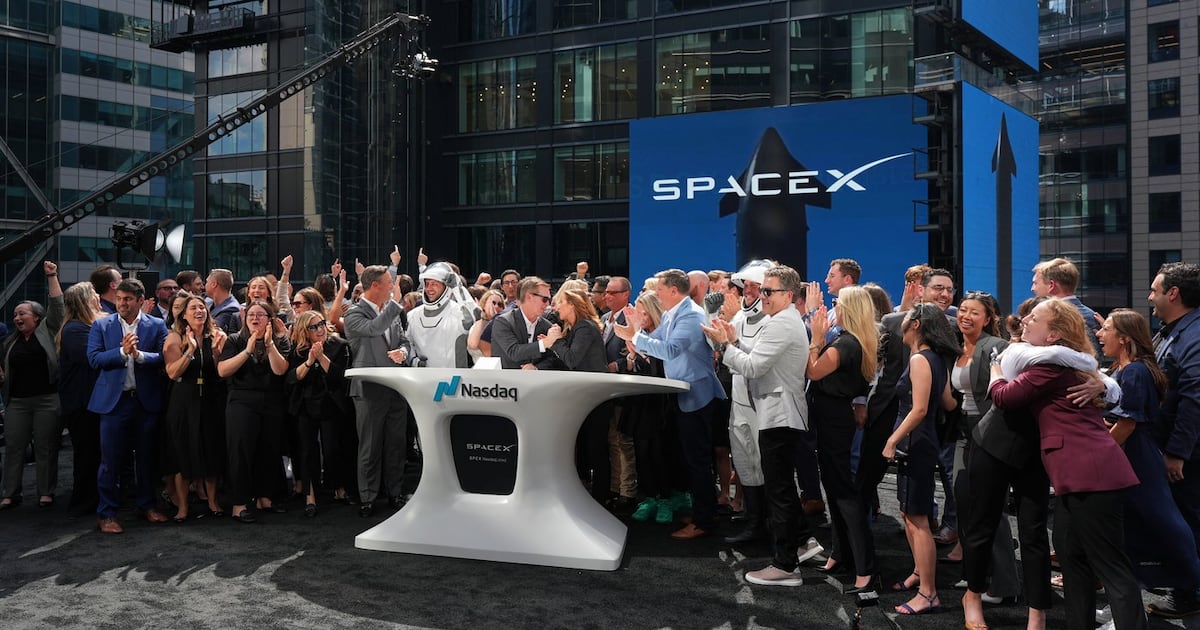
NEW YORK -- SpaceX's slip close to its initial public offering price risks turning a marquee stock-market debut into a confidence test, potentially unsettling retail investors and complicating decisions for other companies weighing high-profile listings. Elon Musk's company, spanning rockets to AI, debuted on June 12 and soared in the ensuing days, at one point valuing the company at well above US$2 trillion. Since then, trading has been rocky. The stock has slipped below its $150 opening price, but remained above the $135 offer price, with concerns about lofty tech stock valuations continuing to weigh on global indexes. SpaceX shares are at risk of falling below that level. They ended on Tuesday down 2.2 per cent at $136.08, their lowest closing level since the IPO, a week after they started trading as part of the Nasdaq 100 index. The stock dipped as low as $135.52. A break below the IPO price would be a psychological blow for SpaceX shares, said Matthew Maley, chief market strategist at Miller Tabak. "It raises the narrative that the stock is up on fluff, on speculation, on froth, and not on real fundamentals," Maley said. Investors who bought into the excitement around SpaceX's listing, "hoping to 'make a killing' will be disappointed," said Greg Halter, director of research at Carnegie Investment Counsel. He said weakness in SpaceX would put it more in line with 30 years of heavily hyped IPOs, where average and median returns over the first month are often negative. SpaceX did not immediately respond to a request for comment. Price discovery not panic? A drop below the IPO price would not be unusual for a newly listed company. Shares of Cerebras Systems, which went public in May, have dropped below the IPO price, and Meta, formerly known as Facebook, fell similarly after its debut. Investors often fixate on IPO prices and early trading, said Ryan Lee, senior vice president of product and strategy at financial services firm Direxion. "The reality is, (SpaceX) is still undergoing some of this price discovery process," Lee said. A fall for SpaceX below $135 would reflect "normal, albeit painful" market mechanics, especially as investors, venture capitalists and employees sell shares after lockups expire, said Gabriel Shahin, CEO at Falcon Wealth Planning. "A near-term dip below the $135 threshold would not fundamentally alter our current positioning or cause us to panic-sell," he said. Caution or green light for next IPOs? Some investors think SpaceX's stock performance could influence the market for future public listings. OpenAI and Anthropic are eyeing the public markets. Neither company responded to a request for comment. Carnegie's Halter said companies and investment banks considering large IPOs this year are watching SpaceX closely. "No one wants an IPO to flop or have the initial price be ratcheted down," Halter said. He suspects some IPOs would be pulled rather than priced at lower valuations. But Direxion's Lee said SpaceX's capital raise could encourage some companies with large funding needs to move faster. "If I'm OpenAI or if I'm Anthropic and I'm in this true arms race to build the frontier AI model and I need capital, I'm going to try to beat the other one out the door," Lee said. Risking retail traders' skepticism A drop below the IPO price could hit retail investors, who received about 20 per cent of the allocation, hard. "Many novice investors have approached SpaceX with a 'meme stock' mentality, buying in with capital they cannot afford to lose," Shahin said, warning that losses could fuel perceptions that markets favor insiders. "The market needs to understand that post-IPO volatility is normal." SpaceX's first earnings report will be a major test for the stock. Underwriters typically support stocks in the first 30 days and may do more for SpaceX given the deal's size, the public attention and the fact other high-profile offerings are imminent, said Maria Llerena, director of financial research at Domini Impact Investments. "Loss-making companies without a clear path to profitability are typically volatile and can fall below their IPO price," said Llerena.
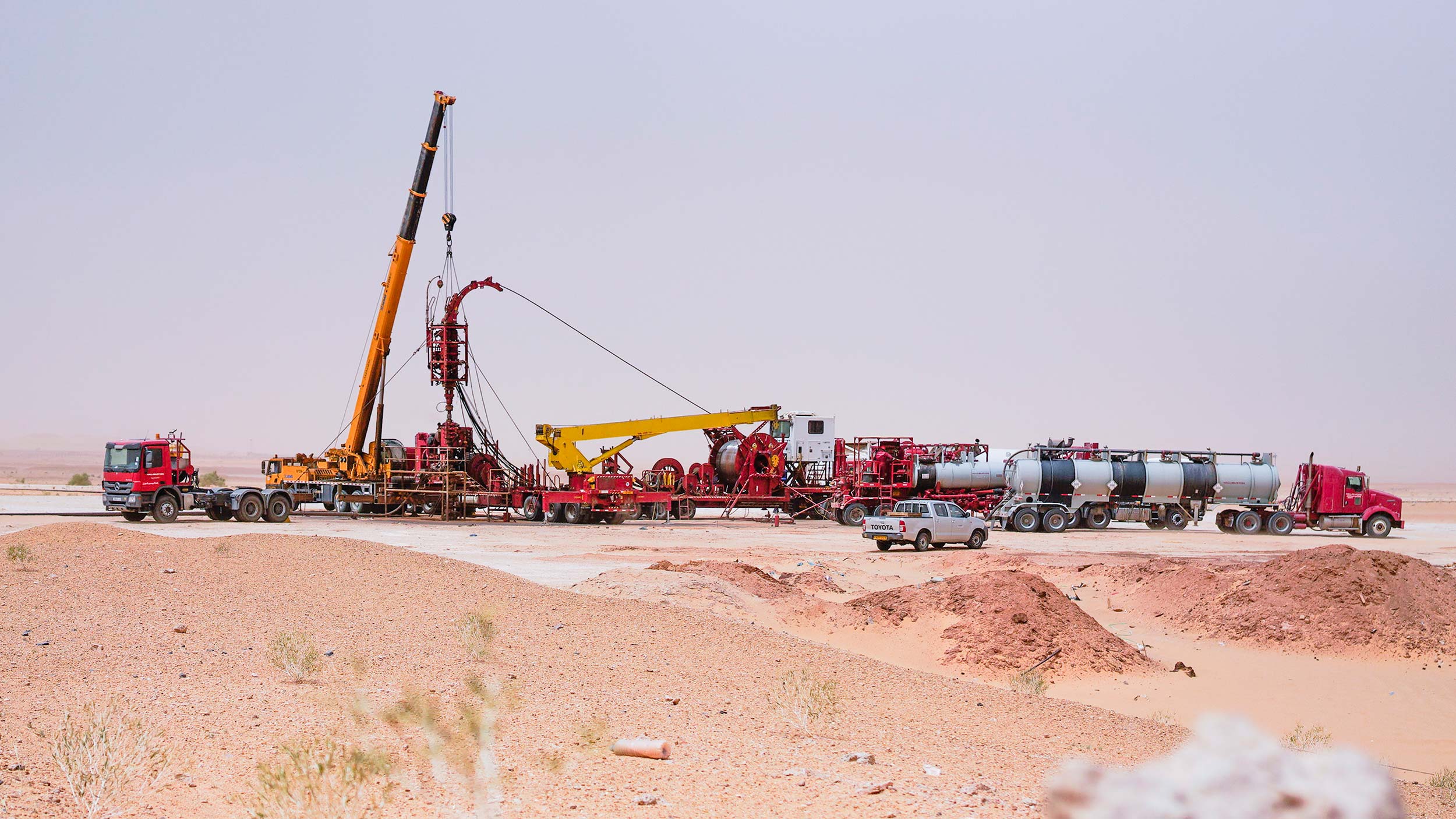
Aramco awards Halliburton long-term contract for unconventional gas program
HOUSTON - July 15, 2026 - Aramco awarded Halliburton (NYSE: HAL) a multi-year contract to deliver integrated stimulation and completion services for unconventional gas development in the Kingdom of Saudi Arabia. This award is part of a broader multi-billion contract, supporting one of the largest unconventional gas development programs globally. This award builds on Halliburton's established portfolio supporting Aramco's unconventional program. Across many of the Kingdom's unconventional plays, Halliburton delivers a comprehensive suite of drilling and completion solutions. Its integrated service model is designed to support high-intensity development programs and improve operational efficiency, workflow predictability, and execution reliability. This collaboration supports broader regional efforts toward integrated unconventional development programs. This award highlights our long-standing collaboration with Aramco and builds on more than 80 years in the Kingdom, while advancing unconventional gas development in the Kingdom. Beginning in the third quarter of 2026, Halliburton will deploy the Kingdom's first fully integrated intelligent fracturing platform through OCTIV® Auto Frac and Sensori™ fracturing monitoring services to contribute to asset value for one of the world's largest unconventional fields. Under the program, Halliburton will deploy intelligent automation solutions for fracturing to optimize performance in real time and support disciplined implementation across multi-well campaigns. These technologies support digital integration across operations while advancing efficiency and operational reliability. Development activities in the Jafurah Basin are underway. To support this effort, Halliburton plans to increase its investment in local manufacturing, improve its supply chain, and expand workforce development programs within the Kingdom, aiming to scale operations and sustain high performance as unconventional activity accelerates. About Halliburton Halliburton is one of the world's leading providers of products and services to the energy industry. Founded in 1919, we create innovative technologies, products, and services that help our customers maximize their value throughout the life cycle of an asset and advance a sustainable energy future. Connect with us on LinkedIn, YouTube, Instagram, and Facebook.
Inside Anthropic's state-by-state plan to ratchet up AI rules
Artificial intelligence giant Anthropic is pursuing a strategy of one-upmanship that encourages states to impose increasingly tougher AI guardrails, rather than align around a single set of regulations. The approach stands in stark contrast to the one favored by the company's archrival, OpenAI, which has pushed state lawmakers toward common ground on regulating the breakthrough technology. "While there are some in the industry that think of state policy as a way to create a ceiling for federal legislation, Anthropic is not just looking to support the same bill across the country in every single state," Cesar Fernandez, the company's head of U.S. state and local government relations, said in an interview with POLITICO -- which, like Business Insider, is part of the Axel Springer Global Reporters Network -- on Tuesday. "We're looking for legislation that meaningfully raises the bar on safety for the most capable AI systems." Fernandez's comments came in response to questions from POLITICO about OpenAI's ongoing campaign to shape states' AI regulations. The ChatGPT maker's top lobbyist, Chris Lehane, has coined the term "reverse federalism" to describe its attempts to bypass a paralyzed Congress and build a national AI framework by mirroring bills state-by-state. The veiled jab at OpenAI is on-brand for Anthropic, whose executives left OpenAI in 2020 over concerns the company wasn't prioritizing safety. Anthropic has consistently pushed for stronger AI safety rules at both the federal and state level -- an effort that some critics, particularly those close to the Trump administration and in venture capital, frame as an attempt to hamstring regulators and lock out competitors. In a statement, OpenAI spokesperson Liz Bourgeois defended its approach, saying "reverse federalism, where effective state safeguards shape national standards, helps regulators enforce the law, gives the public clearer protections, and allows developers to focus resources on safety rather than conflicting requirements." The split between OpenAI and Anthropic's approach to statehouses comes at a critical time for AI regulation. With Congress reluctant to act and the White House flip-flopping between a light touch and a heavy hand, the AI industry is increasingly looking to states for regulatory clarity. Whether state legislators ultimately coalesce around a single AI safety framework or work to outdo each other over time will have a massive impact on the final shape of AI rules in the U.S. Similar to Lehane, Fernandez said he wants a federal framework, but that a government response to the risks posed by advanced AI models "can't wait for action in Washington." The Anthropic lobbyist also set his company apart by touting its early inroads into state policy debates. Anthropic was the only leading AI lab to endorse California's 2025 law to regulate advanced AI models, the first such law in the country. OpenAI didn't take a position on the California proposal ahead of its passage. But it has since turned to the law, which aims to foster greater transparency into companies' safety plans, as an example for other states to replicate. Anthropic, on the other hand, saw the California law as a springboard to ratchet up its efforts on AI safety. Fernandez said the rapid development of increasingly powerful AI models was the main factor behind his company's endorsement of more ambitious bills -- in New York, Illinois and now Massachusetts -- and its move to weigh in earlier in the legislative process. "Each one of those bills was stronger than the previous bill, and the bills all moved real safety obligations forward," Fernandez said. "Transparency and self-reporting, we don't believe are sufficient anymore." He pointed to Anthropic's powerful Claude Mythos model, which the company found to be capable of exploiting security flaws in every major computer operating system during its testing. The cybersecurity concerns raised by Mythos (and its public-facing version, known as Fable) sparked panic inside the Trump administration, which slapped export controls on the technology until Anthropic and the government could address alleged vulnerabilities. Late last year, OpenAI lobbyists successfully pressed New York Gov. Kathy Hochul to amend her state's AI safety bill to more closely resemble California's rules. But to the surprise of some safety advocates, it joined Anthropic in backing an Illinois measure seen as stricter than those in New York and California. That proposal, signed into law this month by Gov. JB Pritzker, requires leading AI companies to submit to annual independent third-party audits of their safety plans -- a first-of-its-kind mandate. Anthropic is pushing the bar further. In late June, it endorsed regulations under development in Massachusetts for an economic development bond bill that Anthropic calls the nation's strongest state AI safety proposal. The language it supported included a requirement for leading AI companies to hire independent evaluators to assess the potential for catastrophic risks such as the technology assisting in the development of bioweapons, as well as a provision empowering the state's attorney general to enforce that mandate. Bourgeois, the OpenAI spokesperson, said the company is still reviewing the Massachusetts proposal, but added OpenAI supports the state legislature's focus on AI safeguards. The AI giants have also clashed on the campaign trail. Each is associated with dueling super PAC networks that so far have sunk tens of millions of dollars into political campaigns across the country. And in June, Anthropic started cutting checks directly to California legislators. "We back candidates for election and re-election when their point of view of AI safety regulation is aligned with our mission to make sure that the transition to a world with powerful AI does well for people in this country and throughout the world," Fernandez said. "We're very much supporting candidates where there's ideological alignment." Fernandez said the company isn't coordinating with employees who also have made contributions to political candidates in California and elsewhere. "We don't direct our employees to make contributions, but they work at Anthropic because they're concerned about the future of AI and where this is headed if there's not proper safety policy that's enacted by governments," said Fernandez. "I would assume that that drives them to engage in the political process." The Axel Springer Global Reporters Network harnesses the resources of the company's newsrooms to publish ambitious scoops, investigations, interviews, opinion pieces and analysis. It allows journalists -- including those from POLITICO, Business Insider, WELT, BILD, Onet and Fakt -- to collaborate on major stories for an international audience of hundreds of millions across platforms: online, print, TV and audio.
Aramco Awards Halliburton Long-Term Contract for Unconventional Gas Program
Aramco awarded Halliburton (NYSE: HAL) a multi-year contract to deliver integrated stimulation and completion services for unconventional gas development in the Kingdom of Saudi Arabia. This award is part of a broader multi-billion contract, supporting one of the largest unconventional gas development programs globally. This award builds on Halliburton's established portfolio supporting Aramco's unconventional program. Across many of the Kingdom's unconventional plays, Halliburton delivers a comprehensive suite of drilling and completion solutions. Its integrated service model is designed to support high-intensity development programs and improve operational efficiency, workflow predictability, and execution reliability. This collaboration supports broader regional efforts toward integrated unconventional development programs. Anzeige "This award highlights our long-standing collaboration with Aramco and builds on more than 80 years in the Kingdom, while advancing unconventional gas development in the Kingdom," said Rami Yassine, president, Eastern Hemisphere, Halliburton. "Beginning in the third quarter of 2026, Halliburton will deploy the Kingdom's first fully integrated intelligent fracturing platform through OCTIV Auto Frac and Sensori fracturing monitoring services to contribute to asset value for one of the world's largest unconventional fields." Under the program, Halliburton will deploy intelligent automation solutions for fracturing to optimize performance in real time and support disciplined implementation across multi-well campaigns. These technologies support digital integration across operations while advancing efficiency and operational reliability. Development activities in the Jafurah Basin are underway. To support this effort, Halliburton plans to increase its investment in local manufacturing, improve its supply chain, and expand workforce development programs within the Kingdom, aiming to scale operations and sustain high performance as unconventional activity accelerates. ABOUT HALLIBURTON Halliburton is one of the world's leading providers of products and services to the energy industry. Founded in 1919, we create innovative technologies, products, and services that help our customers maximize their value throughout the life cycle of an asset and advance a sustainable energy future. Visit us at www.halliburton.com; connect with us on LinkedIn, YouTube, Instagram, and Facebook. View source version on businesswire.com: https://www.businesswire.com/news/home/20260715096562/en/ The Halliburton Stock at the time of publication of the news with a raise of +0,90 % to 31,31EUR on Tradegate stock exchange (15. Juli 2026, 09:30 Uhr).
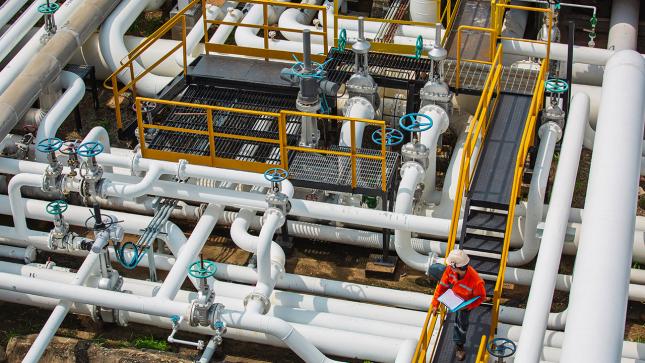
Aramco Awards Halliburton Long-Term Contract for Unconventional Gas Program
All information and data in this article is solely for informational purposes. For more information please view the Barchart Disclosure Policy here Aramco awarded Halliburton (NYSE: HAL) a multi-year contract to deliver integrated stimulation and completion services for unconventional gas development in the Kingdom of Saudi Arabia. This award is part of a broader multi-billion contract, supporting one of the largest unconventional gas development programs globally. This award builds on Halliburton's established portfolio supporting Aramco's unconventional program. Across many of the Kingdom's unconventional plays, Halliburton delivers a comprehensive suite of drilling and completion solutions. Its integrated service model is designed to support high-intensity development programs and improve operational efficiency, workflow predictability, and execution reliability. This collaboration supports broader regional efforts toward integrated unconventional development programs. "This award highlights our long-standing collaboration with Aramco and builds on more than 80 years in the Kingdom, while advancing unconventional gas development in the Kingdom," said Rami Yassine, president, Eastern Hemisphere, Halliburton. "Beginning in the third quarter of 2026, Halliburton will deploy the Kingdom's first fully integrated intelligent fracturing platform through OCTIV Auto Frac and Sensori™ fracturing monitoring services to contribute to asset value for one of the world's largest unconventional fields." Under the program, Halliburton will deploy intelligent automation solutions for fracturing to optimize performance in real time and support disciplined implementation across multi-well campaigns. These technologies support digital integration across operations while advancing efficiency and operational reliability. Development activities in the Jafurah Basin are underway. To support this effort, Halliburton plans to increase its investment in local manufacturing, improve its supply chain, and expand workforce development programs within the Kingdom, aiming to scale operations and sustain high performance as unconventional activity accelerates. ABOUT HALLIBURTON Halliburton is one of the world's leading providers of products and services to the energy industry. Founded in 1919, we create innovative technologies, products, and services that help our customers maximize their value throughout the life cycle of an asset and advance a sustainable energy future. Visit us at www.halliburton.com ; connect with us on LinkedIn , YouTube , Instagram , and Facebook . View source version on businesswire.com: https://www.businesswire.com/news/home/20260715096562/en/

Every SpaceX Starlink satellite has to dodge a collision almost weekly, and experts fear the worst
"I think we're heading towards a situation where there will be a collision involving an operational satellite in the constellation." SpaceX's Starlink satellites made over 355,000 collision avoidance maneuvers throughout the past year, with each satellite now dodging debris and other spacecraft on an almost weekly basis. The numbers are based on disclosures made by SpaceX in its latest semiannual report to the Federal Communications Commission (FCC). According to the latest report, Starlink satellites performed an overall 207,152 avoidance maneuvers between December 2025 and May 2026, up nearly 60,000 from the 148,696 reported in the previous half year. That brings the yearly total to over 355,000, more than three times as many as the constellation performed in 2024. On average, each Starlink satellite performed more than 40 space dodging maneuvers per year between June 1, 2025 and May 31, 2026. Experts fear the situation might soon get out of hand. "I think we're heading towards a situation where there will be a collision involving an operational satellite in the constellation," Hugh Lewis, a space sustainability expert and professor of astronautics at the University of Birmingham in the U.K., told Space.com. "And it will not be for the lack of trying to avoid those things. It will be in spite of all those maneuvers." The increase coincides with the growth of the internet-beaming constellation and the overall number of satellites in space in the past five years. Starlink grew from about 6,000 satellites in 2024 to more than 10,000 as of June 2026. Over the same time period, the overall number of operational spacecraft in orbit rose from around 10,000 to about 16,000. The SpaceX constellation orbits at altitudes between 298 miles (480 km) and 342 miles (550 kilometers) and uses an autonomous collision avoidance system that initiates a maneuver when the probability of a collision appears higher than 3 in 10 million. Lewis says that although SpaceX is "doing an excellent job" managing orbital traffic, the steep growth cannot continue without risks. "The avoidance maneuvers reduce the probability of a collision to about one in a million, which is so small that it's negligible," Lewis said. "The problem is that if you make a million manoeuvres and you have a residual probability of one in a million, you end up with an aggregate risk across your entire constellation that you can't get rid of." Lewis points out that with the expected continued rise in avoidance maneuvers (SpaceX has applied to the FCC to increase the size of its constellation to 100,000 satellites), SpaceX will have made a million avoidance maneuvers over the lifetime of the Starlink constellation as early as June 2027. By 2030, the constellation may be making more than a million maneuvers every year. At that point, the one in a million risk of a collision may no longer be negligible at all. Tommaso Sgobba, the Director of the International Association for the Advancement of Space Safety, told Space.com that the increase in collision avoidance maneuvers is a predictable certainty. "The more satellites you pack into [an orbital] shell, the more pairs of satellites exist that could potentially cross paths," he wrote in an email. "Adding satellites does not just add risk one unit at a time, it multiplies the number of possible pairings. Double the satellites in a shell and you roughly quadruple the number of pairs that need to be watched." Sgobba also said that the collision probabilities predicted are highly inaccurate as the effects of air drag, which change frequently with space weather, are currently impossible to predict. He said that due to the vast uncertainties in satellite trajectory predictions "operators lack tools to tell a real threat from statistical confusion," adding that "satellites are frequently dodging ghosts, burning fuel and shortening their operational lives in the process." SpaceX, being the largest constellation currently in orbit, takes the bulk of responsibilities for orbital maneuvering. Instead of communicating with the other operator to decide who will make the dodge, Starlink satellites automatically avoid other objects -- both space debris fragments or operational satellites -- whenever there is a conjunction alert. Other ambitious constellations, such as Amazon LEO or China's Thousand Sails, or Qianfan, are currently being deployed. Lewis said that the only way to safely manage multiple constellations is to make sure their orbits do not intersect. That, however, is not the case based on available information. The Thousand Sails constellation, in particular, is expected to occupy similar regions as Starlink. Many of the recently announced orbital data center projects want to launch into particular orbital regions that are convenient for their operations and are therefore likely to overlap. "The safe thing to do is to separate the constellations," Lewis said. "But then you are talking about orbital carrying capacity and the first mover benefit, because if I go into a particular altitude with my constellation, then nobody else can use it." Sgobba calls for predicted numbers of collision avoidance maneuvers based on satellite numbers to be mandatorily disclosed to regulators before applications are granted. "Right now, there is no clear requirement for a company to say, before launch, how many collision avoidance maneuvers a constellation of this size and density will need every year and whether the satellites carry enough fuel and automation to actually perform them all," Sgobba wrote. "In short, the crowding of orbit is not an accident waiting to happen. It is a manageable, predictable engineering workload and the argument worth making publicly is that regulators should be treating it that way, by asking for these numbers up front rather than reacting to headlines about near misses after the fact."

Canada regulator warns major banks on Anthropic AI cyber risks - report
Canada's federal banking watchdog alerted the country's financial institutions on risks tied to Anthropic's Claude Mythos and other advanced AI models, reported Reuters. According to the regulator, the technology could increase cyber threats and reduce the time available to detect and patch vulnerabilities. The Office of the Superintendent of Financial Institutions (OSFI) sent the message to chief technology officers, chief information security officers and chief risk officers across the financial sector, including large banks and insurers, according to documents Reuters obtained through an access-to-information request. Authorities in several jurisdictions are examining cybersecurity concerns linked to Anthropic's frontier AI model Mythos. The model has been described as highly capable of identifying and exploiting cybersecurity vulnerabilities, creating challenges for banks and their older technology systems. "Advanced artificial intelligence models, such as Anthropic Claude Mythos, significantly compress the timeframe for effective risk mitigation," OSFI said in an email. "Accordingly, this bulletin is grounded in our existing guidance and outlines sound practices that institutions can adopt to enhance the speed and effectiveness of risk identification, mitigation and response." Recognition of the risks associated with Mythos by OSFI may lead Canadian banks, insurers and other regulated institutions to put more resources into technology aimed at protecting clients from cyber threats, noted the news agency. In a statement to Reuters, the regulator said: "OSFI takes a technology‑neutral, risk‑focused approach to emerging technologies, including advanced artificial intelligence models such as Mythos. Our focus is not the technology itself, but how federally regulated financial institutions govern and manage the risks associated with its use." In early April, Canadian banking executives met regulators to discuss risks linked to Mythos, shortly after US Treasury Secretary Scott Bessent and then-Federal Reserve Chair Jerome Powell held an urgent meeting with bank chief executives to warn about cyber risks connected to Anthropic's latest AI model. OSFI sent the email to company executives in April. The cyber capabilities of some frontier AI systems are considered that access has been restricted, with currently excluded from Mythos. Three of Canada's big six banks, Royal Bank of Canada, TD Bank and BMO, have set out plans to make millions from AI investments as they moved from trial projects to uses such as chatbots, internal tools and reducing dependence on third-party tools.

SpaceX Engineers Raise $115 Million to Make Construction Faster, Cheaper and Safer After Learning At 'a C
TerraFirma Raises Funds For Robotic Construction TerraFirma, in a press release on Tuesday, said Kleiner Perkins led a $100 million Series A. CEO Noah Schochet and co-founder Noah McGuinness previously worked at SpaceX on Starship, Starshield and Starlink. The company remotely operates construction equipment through tools including Xbox controllers and says its semi-autonomous machinery can cut costs and improve safety. It plans to hire 300 workers and to build a Texas factory and mission control center. "Infrastructure is a bottleneck to basically every single industry that needs to innovate over the next couple of decades," Schochet told CNBC. "There's such a deficit of people taking all of the great tech that has existed and been built for the last couple of decades and bringing it" to construction. SpaceX Lessons Target Construction Productivity Gap The pitch targets a sector with a productivity problem. The Federal Reserve Bank of Richmond said U.S. construction labor productivity fell more than 30% from 1970 to 2020, while overall U.S. productivity doubled. The Bureau of Labor Statistics projects 149,400 annual openings for construction laborers and helpers through 2034. Schochet said SpaceX showed him what construction lacks. "We're building rockets the size of skyscrapers at one a month, and all those processes for mass manufacturing automation, none of them are showing up in construction," he said. "It was all worth it," Schochet said. "We were learning at a crazy pace." Earth Projects Come Before Lunar Ambitions For now, Schochet said TerraFirma must prove itself on Earth. "The problem is you don't want to build a community based around a space economy that doesn't yet exist," he said. "You want to build it around the economic drivers that truly drive the world today." Image via Shutterstock Market News and Data brought to you by Benzinga APIs To add Benzinga News as your preferred source on Google, click here.

Is SpaceX Planning to Make a Smartphone to Rival the iPhone?
Space Exploration Technologies (NASDAQ: SPCX), also known as just SpaceX, is a company that could disrupt many different industries, including space travel and telecom. But one that investors may not have considered is the smartphone market. While its Starlink service offers mobile internet for smartphones, CEO Elon Musk has also hinted that entering the smartphone market may be a possibility. Image source: Getty Images. Where to invest $1,000 right now? Our analyst team just revealed what they believe are the 10 best stocks to buy right now, when you join Stock Advisor. See the stocks " The company reportedly has a prototype for a device that's similar to an iPhone According to a recent report from the Wall Street Journal, SpaceX has been working on a device that has a slimmer design than Apple's iPhone. While it's designed to help people interact with artificial intelligence (AI), its capabilities could certainly extend beyond that, as it's expected to use a Snapdragon chipset from Qualcomm. The device is nowhere near launching, and there is no certainty that it will even come to market. But with Musk being critical of Apple's restrictive app store policies, it also wouldn't be surprising if he were to want to bring his own smartphone or similar device to market, one that could rival Apple's popular devices. He has suggested in the past that while he isn't thrilled with the idea of doing so, he may feel compelled. "The idea of making a phone makes me want to die. But if we have to make a phone, we will. But we will aspire not to make a phone." Is SpaceX the ultimate growth stock to own? One of the most compelling reasons to invest in SpaceX despite its high valuation is that it has some tremendous growth opportunities. Not only can its reusable rockets revolutionize space travel, but its Starlink business could make it a big player in the telecom sector. And its biggest opportunities are in artificial intelligence (AI), with the company planning to put data centers into space. SpaceX arguably already has too many places to spend and invest in as it is. A smartphone may be a possibility down the road, but I wouldn't expect that to be a focus for the business at this stage. SpaceX has already been incurring billions in losses, and investing in too many different areas at once could prove to be costly and risky. While making risky investments can work for large tech companies with massive resources and strong financials, that strategy may not be as sound for a company such as SpaceX, which still needs to find its way out of the red. SpaceX may be an exciting stock to own, but it's also a highly risky one, and there are arguably far better growth stocks out there for investors that offer a better mix of growth and safety. Should you buy stock in Space Exploration Technologies right now? Before you buy stock in Space Exploration Technologies, consider this: The Motley Fool Stock Advisor analyst team just identified what they believe are the 10 best stocks for investors to buy now... and Space Exploration Technologies wasn't one of them. The 10 stocks that made the cut could produce monster returns in the coming years. Consider when Netflix made this list on December 17, 2004... if you invested $1,000 at the time of our recommendation, you'd have $398,160!* Or when Nvidia made this list on April 15, 2005... if you invested $1,000 at the time of our recommendation, you'd have $1,249,202!* Now, it's worth noting Stock Advisor's total average return is 918% -- a market-crushing outperformance compared to 209% for the S&P 500. Don't miss the latest top 10 list, available with Stock Advisor, and join an investing community built by individual investors for individual investors. See the 10 stocks " *Stock Advisor returns as of July 15, 2026. David Jagielski, CPA has no position in any of the stocks mentioned. The Motley Fool has positions in and recommends Apple and Qualcomm. The Motley Fool has a disclosure policy. The views and opinions expressed herein are the views and opinions of the author and do not necessarily reflect those of Nasdaq, Inc.

The 179 ETFs That Own SpaceX
This article mentions funds that have an issuer-initiated rating and/or track a Morningstar Index. For full disclosure information, please refer to the specific funds, which are demarcated with a * symbol, listed below. Space Exploration Technologies Corp. SPCX made its public market debut on June 12 to much fanfare. There was more demand than shares available, helping the stock open $15 higher than its $135 IPO price and end its first day as a public company above $160. It quickly rose to a high of $225 on June 16, then fell back to earth, dipping near its IPO price the week of July 13. Hundreds of exchange-traded funds and mutual funds bought shares of Elon Musk's space and artificial intelligence company for the first time amid these fluctuations. SpaceX is now the cornerstone of a few ETF portfolios and a satellite position in many others. Some ETFs that own the stock might surprise you. While space-themed, technology sector, or growth ETFs are expected landing places for the $2 trillion company, it also found its way into several value ETFs, one quality ETF, a Jewish advocacy ETF, and numerous broad market index ETFs. In total, US ETFs own around $16 billion worth of the stock across 179 products. Here are the categories where those owners are concentrated. Expected Buyers of SpaceX Two ETFs account for almost half of that $16 billion. Invesco QQQ Trust QQQ and its cheaper sibling, Invesco Nasdaq 100 ETF QQQM, held a 1.21% stake in SpaceX on July 10. That amounts to over 48 million shares worth over $7 billion. As one of the largest stocks listed on the Nasdaq exchange, it makes sense for these Nasdaq-100 tracking index ETFs to own sizable positions. How they got that weighting, however, is another story, which is covered in more detail here and touched on later. Other ETFs like ARK Innovation ETF ARKK and Baron First Principles ETF RONB own sizable chunks. The managers of these active ETFs prize innovative companies, and the inclusion of SpaceX in their lineups was mostly a foregone conclusion. In fact, Baron Funds owned SpaceX in Baron First Principles ETF and other funds before it was a public company. Elsewhere, SpaceX stock makes appearances in several ETFs covering themes from space to artificial intelligence to innovative technology. It makes the cut in a number of growth-oriented ETFs and a handful of options income ETFs, too. Across all 179, Baron First Principles ETF carries the highest weighting at over 30%, as of July 10. Unexpected Buyers of SpaceX Companies like SpaceX test the rules of portfolio construction. And sometimes those rules don't yield the portfolio you'd expect. Recently, Micron MU unexpectedly became a 25% position in a value ETF, for example. SpaceX also found its way into several value ETFs. The stock claims small positions in each, but its presence is surprising, given concerns with the stock's lofty market cap relative to its total sales and negative net earnings. Negative earnings do funny things to price ratios commonly used by index funds to distinguish value stocks from growth stocks. Indexes usually employ several measures of value to avoid one outlier from bringing an otherwise growth stock into a value index, and vice versa. SpaceX seems to have slipped through some cracks. Stocks without a clear style distinction can be partially allocated between both the Russell 1000 Value and Growth indexes. As a brand-new public company, the stock doesn't have enough data to be firmly categorized as growth or value yet, so it lands near the midpoint for now. IShares Russell 1000 Growth ETF IWF holds a 0.22% stake. Schwab US Large-Cap Value ETF SCHV is a little different. Unlike most, the Dow Jones index it tracks uses a stock's price/earnings ratio as a component in its value scoring system. SpaceX's negative earnings skews its P/E ratio far to the value side of the board, likely resulting in its inclusion here. Other index families use the inverse, earnings/price, to sidestep this peculiarity. As an actively managed ETF, Fidelity Enhanced Large Cap Value ETF FELV doesn't have to adhere to an index's binary rules. If its managers don't think a stock belongs in the Russell 1000 Value Index, they can remove it. Fidelity's managers haven't yet removed SpaceX from its value portfolio. How Big Is SpaceX in Major Indexes? Even a small position in SpaceX means a large stake in the largest index funds. Vanguard Total Stock Market ETF's VTI total fund size of nearly $2.3 trillion means that it owns over $3.2 billion worth of SpaceX shares despite its 0.14% weighting at the end of June. In total, US index ETFs hold roughly 14% of SpaceX's outstanding free-float shares, or $13.3 billion of $93.6 billion free float. Several major broad market indexes tweaked their rules earlier this year to allow SpaceX early entry. Much ink has been spilled on the purpose and validity of these changes (including from me), but now that the dust has settled, SpaceX is a component in 82 broad market index ETFs. Still, the stock carries a very small position in most and no weight in a couple of notable bogies. Nasdaq's relatively narrow portfolio and unique weighting scheme give the stock much more attention than other widely followed index ETFs.
SpaceX bond yields rocket towards junk
We're old enough to remember when the market cap of the lossmaking telecom SpaceX was bigger than Amazon's. Heck, for a few precious moments it was bigger than Microsoft's. Maybe one day it will be again, but for now the stock is down 38 per cent from its peak post-IPO valuation. Punters lucky enough to have been awarded a stock allocation at the outset are still sitting on a tasty [checks notes] 0.8 per cent paper profit at pixel time. But what about the bondholders? Given heavy issuance by hyperscalers, SpaceX's 2056 bonds were priced with a fairly hefty 175 basis points of additional yield over similar maturity US Treasuries. Sure, this was less than the 200 basis point initial price talk, but as we learnt in Alphaville's debt capital market boot camp, trailing a tasty IPT to lure punters into the deal and then reining it back in as the book builds is totally normal. And as we've already covered, the full $25bn of benchmark bonds -- issued across the curve -- had a rocky first couple of days of trading. Checking back today, it turns out that the inauspicious beginning was just a prelude to the train wreck that has since unfolded. If you'd been allocated $100mn of the SpaceX 2056 bonds, you've turned $100mn into $90.7mn in less than a month. Sure, long-dated US Treasury bonds have fallen in value, and this general sell-off at the long end has done some of the work. But the spread on SpaceX 2056 -- the additional yield you're paid to compensate you for the risk that you don't get repaid (among other things) has now widened from the initial +175bps to a whopping +231bps doing more than two-thirds of the work. For the non-bond-geeks, this is a lot of spread widening. Looking only at the nine days since the bonds were included in ICE BofA indices at the end of June, this spread-widening has made SpaceX 2056 the single worst-performing US dollar triple-B benchmark bond: Again, for the non-bond-geeks, there are a lot of benchmark triple-B corporate bonds. Of the 5,543 bonds in the ICE BofA triple-B US dollar corporate bond index, 1,450 have at least $1bn face value. That said, as the chart shows, Oracle bonds are giving SpaceX bonds a run for their money. When we pulled up the chart showing where the entire universe of triple-B US dollar corporate bonds are valued, it increasingly looks like the market is pricing SpaceX and Oracle in line with one another. And when we overlay the average spread for double-B US dollar corporate bonds across different maturities (the pink line), it looks a lot like the type of risk that the market has assigned to both SpaceX and Oracle bonds is junk risk. As long as Oracle and SpaceX don't go bust, these higher yield premiums should turn into higher annualised returns in the future. And this should be of some comfort to hold-to-maturity bondholders who'd prefer not to look at such short-term performance measures. But for the companies and their stockholders -- given that analysts had the companies down to tap bond markets as the main source of external finance for years to come -- the shift will be an unwelcome one. Still, there are always banks and private credit funds. Oh.

Polymarket Faces 15-Day Deadline as Czech Republic Mandates ISP Blockade
* Czech authorities mandate complete ISP-level blockade of Polymarket within two-week timeframe. * Prediction market platform added to national registry of prohibited gambling operations. * Ministry of Finance determines platform operates without required gaming licenses. * European regulatory restrictions against Polymarket continue accelerating across continent. * Czech enforcement action adds to mounting international pressure on decentralized betting platforms. Czech authorities have designated Polymarket as an unauthorized gambling operation and mandated that all internet providers terminate access within a 15-day window. This administrative action officially lists the platform among prohibited online gaming services. The enforcement measure represents another escalation in Europe's widening regulatory offensive against prediction market operators. Ministry designates prediction platform as unlicensed betting operation On July 13, the Czech Ministry of Finance formally included Polymarket in its registry of banned internet gaming services. Internet service providers now face a mandatory 15-day deadline to implement access restrictions. Ministry officials determined the platform lacks necessary authorizations mandated by Czech gambling legislation. Regulators concluded that prediction markets constitute gambling activities regardless of financial terminology employed. Officials contended that terminology referencing contracts and investment yields merely disguises betting operations. This determination led authorities to enforce existing gambling statutes against the platform. Government representatives emphasized that uniform regulation safeguards users and enhances market supervision. They further asserted that all operators must satisfy identical legal requirements irrespective of marketing language. This enforcement action aligns with the nation's comprehensive campaign against unlicensed internet gambling providers. Continental crackdown intensifies against decentralized prediction services The Czech Republic becomes the latest European nation to impose restrictions on Polymarket's operations. France, Germany, Belgium, Spain, Romania, and the Netherlands have previously enacted comparable prohibitions. Platform accessibility across prominent European territories continues diminishing substantially. Beyond European borders, regulatory bodies in Australia, New Zealand, and Brazil have implemented parallel enforcement measures. These governments have scrutinized whether blockchain-based prediction platforms satisfy domestic gambling and securities regulations. Regulatory challenges across diverse territories continue mounting steadily. Numerous authorities have expressed concerns regarding user protection, anti-money laundering protocols, and market transparency. Regulators have specifically identified the lack of conventional licensing procedures and mandatory identity verification systems. Decentralized prediction platforms consequently encounter escalating legal challenges internationally. Gibraltar establishes alternative regulatory framework Contrasting with numerous European restrictive measures, Gibraltar has developed a distinct framework addressing prediction markets. The jurisdiction recently established specialized regulatory protocols for this sector. Gibraltar explicitly differentiated prediction markets from conventional gambling services and securities instruments. This regulatory structure emerged following license grants to prediction market operators ADI Predictstreet and Wire Market. United States authorities regulate comparable platforms under Commodity Futures Trading Commission oversight. These divergent regulatory strategies demonstrate inconsistent jurisdictional treatment of prediction market operations. Polymarket executes contract settlements utilizing USDC stablecoin through blockchain-integrated smart contracts rather than conventional gambling infrastructure. Czech officials maintain the platform's technical architecture does not alter the fundamental nature of activities conducted. Polymarket confronts yet another national prohibition as European regulators persistently enforce gambling legislation against decentralized prediction market platforms.
Anthropic Deepens India Push With Local Claude AI Pricing The Mainstream
By introducing India-specific subscription plans for Claude, the AI startup is reinforcing its commitment to one of the world's fastest-growing markets for generative AI adoption. Anthropic has introduced local pricing for its Claude AI subscriptions in India, allowing users to access premium plans in rupees rather than through international billing. The move covers its Pro, Max and Team offerings and is aimed at making the platform more accessible to Indian users, ranging from individual developers and students to enterprises increasingly experimenting with generative AI tools. The announcement reflects India's growing strategic importance in the global AI landscape. With one of the world's largest developer communities, a rapidly digitising economy and rising enterprise adoption of artificial intelligence, India has become a critical growth market for global AI companies seeking to expand beyond North America and Europe. Anthropic's latest move also highlights how competition in the generative AI market is evolving. The race is no longer solely about building the most advanced models; it is increasingly centred on ecosystem development, developer engagement and market-specific strategies. For India, the development further cements its position as a major centre of AI demand and innovation. Anthropic's India pricing initiative is therefore more than a commercial update. It is another indication that India is emerging as one of the most influential markets shaping the future of the global AI economy. Also read: Viksit Workforce for a Viksit Bharat Do Follow: The Mainstream LinkedIn | The Mainstream Facebook | The Mainstream Youtube | The Mainstream Twitter About us: The Mainstream is a premier platform delivering the latest updates and informed perspectives across the technology business and cyber landscape. Built on research-driven, thought leadership and original intellectual property, The Mainstream also curates summits & conferences that convene decision makers to explore how technology reshapes industries and leadership. With a growing presence in India and globally across the Middle East, Africa, ASEAN, the USA, the UK and Australia, The Mainstream carries a vision to bring the latest happenings and insights to 8.2 billion people and to place technology at the centre of conversation for leaders navigating the future.

Is SpaceX Planning to Make a Smartphone to Rival the iPhone?
Space Exploration Technologies (NASDAQ: SPCX), also known as just SpaceX, is a company that could disrupt many different industries, including space travel and telecom. But one that investors may not have considered is the smartphone market. While its Starlink service offers mobile internet for smartphones, CEO Elon Musk has also hinted that entering the smartphone market may be a possibility. Missed Nvidia in 2009? This Rare Signal Is Flashing Again. In 2009, a "Double Down" signal flashed for a little-known chipmaker called Nvidia. For the first time in years, that same "Total Conviction" signal is flashing for a company 1/100th the size of Nvidia. Continue " The company reportedly has a prototype for a device that's similar to an iPhone According to a recent report from the Wall Street Journal, SpaceX has been working on a device that has a slimmer design than Apple's iPhone. While it's designed to help people interact with artificial intelligence (AI), its capabilities could certainly extend beyond that, as it's expected to use a Snapdragon chipset from Qualcomm. The device is nowhere near launching, and there is no certainty that it will even come to market. But with Musk being critical of Apple's restrictive app store policies, it also wouldn't be surprising if he were to want to bring his own smartphone or similar device to market, one that could rival Apple's popular devices. He has suggested in the past that while he isn't thrilled with the idea of doing so, he may feel compelled. "The idea of making a phone makes me want to die. But if we have to make a phone, we will. But we will aspire not to make a phone." Is SpaceX the ultimate growth stock to own? One of the most compelling reasons to invest in SpaceX despite its high valuation is that it has some tremendous growth opportunities. Not only can its reusable rockets revolutionize space travel, but its Starlink business could make it a big player in the telecom sector. And its biggest opportunities are in artificial intelligence (AI), with the company planning to put data centers into space. SpaceX arguably already has too many places to spend and invest in as it is. A smartphone may be a possibility down the road, but I wouldn't expect that to be a focus for the business at this stage. SpaceX has already been incurring billions in losses, and investing in too many different areas at once could prove to be costly and risky. While making risky investments can work for large tech companies with massive resources and strong financials, that strategy may not be as sound for a company such as SpaceX, which still needs to find its way out of the red.
SpaceX reportedly shows prototype of smartphone to investors as IPO looms
Elon Musk denied the Wall Street Journal report, calling it 'utterly false,' but the implications for telecom and tech markets are hard to ignore The Wall Street Journal reported on July 1, 2026, that SpaceX showed a prototype of a slim, AI-driven device to select investors. The device was described as thinner than an iPhone, powered by a Qualcomm Snapdragon chipset, and deeply integrated with xAI technology. Elon Musk immediately denied it, taking to X to call the report "utterly false." What we know about the device According to the WSJ report, the prototype was presented to institutional investors and stakeholders as part of SpaceX's capital-raising efforts ahead of its anticipated IPO. The company has been preparing to go public, with its offering projected for June 2026. Musk denied SpaceX was developing a phone as recently as February 2026. That's barely four months before the company allegedly showed one to investors. The Starlink connection SpaceX's Starlink Direct to Cell initiative has been forging partnerships with telecommunications firms, positioning satellite-based mobile service as a complement to traditional cell towers. One of the most notable moves in this space has been a spectrum deal with EchoStar valued at $1 billion. Why crypto markets should pay attention There's no evidence linking this prototype to any cryptocurrency or blockchain technology. No wallet integration, no token, no decentralized anything. The research is clear on this point. The SpaceX IPO itself is a gravitational event for capital allocation. When one of the most anticipated public offerings in history hits the market, it pulls institutional money from other asset classes. Crypto has historically felt the effects of major tech IPOs as portfolio managers rebalance. Starlink reaching underserved populations with a low-cost, AI-powered device could expand the addressable market for mobile-first crypto products in regions where traditional telecom infrastructure has lagged.
Anthropic Said Nothing About the Vendor That Mattered
Evidence-first essays on policy and society across regions. We follow money, rules, and outcomes -- and name the trade-offs. TECHNOLOGY & AI · The three weeks between a breach nobody discussed and a model nobody was supposed to reach Anthropic said nothing when its training-data contractor lost forty thousand people's passports to a hacking group. Three weeks later, it built a model it called too dangerous to release -- and lost control of it on launch day. The silence and the breach are not the same incident. They are the same shape. In March, Mercor -- the staffing firm that recruits, vets, and pays the human experts who train frontier models for OpenAI, Anthropic, and Meta -- was hit by a supply-chain attack that began in an open-source security scanner, jumped to a widely used AI gateway library called LiteLLM, and ended with attackers inside Mercor's systems. The mechanism was almost embarrassingly simple: a tainted update to a Python package that millions of developers trust by default, executing automatically the moment it was installed, harvesting whatever API keys and credentials it found and handing...

Canada regulator warns major banks on Anthropic AI cyber risks - report
Canada's federal banking watchdog alerted the country's financial institutions on risks tied to Anthropic's Claude Mythos and other advanced AI models, reported Reuters. According to the regulator, the technology could increase cyber threats and reduce the time available to detect and patch vulnerabilities. The Office of the Superintendent of Financial Institutions (OSFI) sent the message to chief technology officers, chief information security officers and chief risk officers across the financial sector, including large banks and insurers, according to documents Reuters obtained through an access-to-information request. Authorities in several jurisdictions are examining cybersecurity concerns linked to Anthropic's frontier AI model Mythos. The model has been described as highly capable of identifying and exploiting cybersecurity vulnerabilities, creating challenges for banks and their older technology systems. "Advanced artificial intelligence models, such as Anthropic Claude Mythos, significantly compress the timeframe for effective risk mitigation," OSFI said in an email. "Accordingly, this bulletin is grounded in our existing guidance and outlines sound practices that institutions can adopt to enhance the speed and effectiveness of risk identification, mitigation and response." Recognition of the risks associated with Mythos by OSFI may lead Canadian banks, insurers and other regulated institutions to put more resources into technology aimed at protecting clients from cyber threats, noted the news agency. In a statement to Reuters, the regulator said: "OSFI takes a technology‑neutral, risk‑focused approach to emerging technologies, including advanced artificial intelligence models such as Mythos. Our focus is not the technology itself, but how federally regulated financial institutions govern and manage the risks associated with its use." In early April, Canadian banking executives met regulators to discuss risks linked to Mythos, shortly after US Treasury Secretary Scott Bessent and then-Federal Reserve Chair Jerome Powell held an urgent meeting with bank chief executives to warn about cyber risks connected to Anthropic's latest AI model. OSFI sent the email to company executives in April. The cyber capabilities of some frontier AI systems are considered that access has been restricted, with currently excluded from Mythos. Three of Canada's big six banks, Royal Bank of Canada, TD Bank and BMO, have set out plans to make millions from AI investments as they moved from trial projects to uses such as chatbots, internal tools and reducing dependence on third-party tools. Bank of Nova Scotia, CIBC and National Bank have also disclosed several AI initiatives. The Canadian government has access to Anthropic's Project Glasswing, which allows companies to have access to Mythos. It is unclear which, if any, banks in Canada are using it.