News & Updates
The latest news and updates from companies in the WLTH portfolio.
Anthropic rolls out India pricing for Claude subscription plans The Mainstream
Anthropic has reportedly started displaying India-specific pricing for its Claude AI subscription plans, marking another step in the company's growing focus on the Indian market. According to a report by a technology publication, the updated pricing is visible to some users in India, although payments through the Unified Payments Interface (UPI) are not yet available. Users can currently subscribe using bank cards or the billing systems of the Apple App Store and Google Play Store. India has reportedly become Anthropic's largest market outside the US. The company opened its Bengaluru office in February and has partnered with Indian IT companies, including Infosys and Tata Consultancy Services, to expand enterprise AI deployments. For individual users, Anthropic offers 2 subscription plans. The Pro plan is priced at ₹2,000 per month when billed annually, while the Max plan costs ₹11,999 per month with annual billing. The Team plan starts at ₹2,399. According to the report, all Indian prices include local taxes. For comparison, the Pro plan is priced at $17 per month in the US, the Max plan costs $100, and the Team plan starts at $20. The Free plan provides access to Claude on the web, iOS, Android, and desktop. It includes web search, desktop extensions, voice mode, incognito chats, user preferences, artifacts, file creation and editing with code execution, memory, connectors, and skills for reusable instructions. Free users can access only the Sonnet and Haiku models. The Pro plan includes everything in the Free plan, along with higher usage limits and access to advanced features such as Claude Code, Claude Cowork, Claude Design, projects for organising chats and documents, additional Claude models, and Claude for Microsoft 365. The Max plan offers all Pro features with significantly higher usage limits. Subscribers can choose between 5x or 20x the Pro usage per 5-hour session. It also provides higher output limits and priority access during peak usage periods. Also read: Viksit Workforce for a Viksit Bharat Do Follow: The Mainstream LinkedIn | The Mainstream Facebook | The Mainstream Youtube | The Mainstream Twitter About us: The Mainstream is a premier platform delivering the latest updates and informed perspectives across the technology business and cyber landscape. Built on research-driven, thought leadership and original intellectual property, The Mainstream also curates summits & conferences that convene decision makers to explore how technology reshapes industries and leadership. With a growing presence in India and globally across the Middle East, Africa, ASEAN, the USA, the UK and Australia, The Mainstream carries a vision to bring the latest happenings and insights to 8.2 billion people and to place technology at the centre of conversation for leaders navigating the future.
"Stop the AI Race": Hundreds March Against OpenAI, Anthropic and Google DeepMind in San Francisco
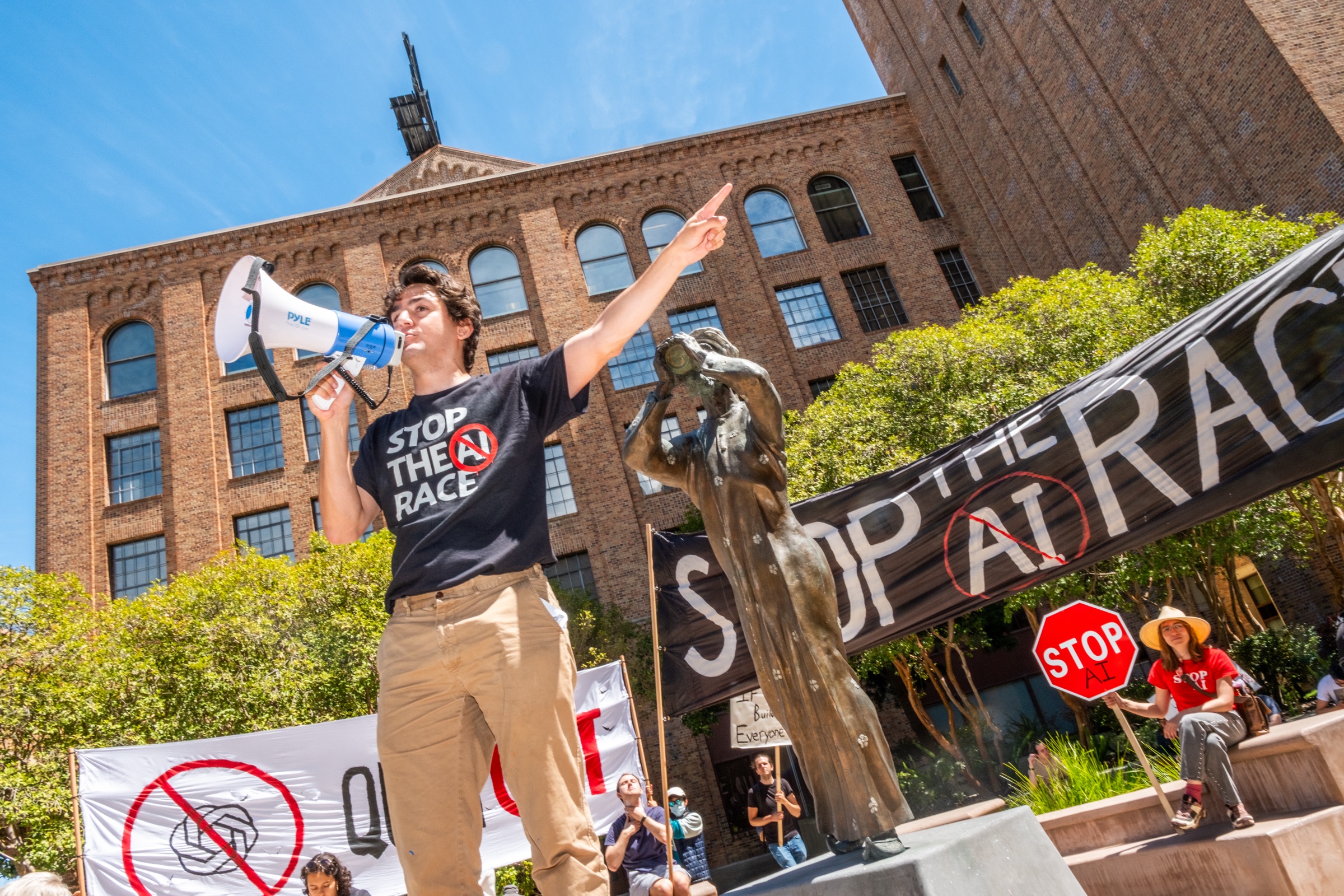
On Saturday, July 11, around 400 people took to the streets of San Francisco to protest against the leading AI companies. The march, held under the banner "Stop the AI Race", led from OpenAI's headquarters on 3rd Street past Anthropic's offices on Howard Street to Google DeepMind's location at Rincon Park, with rallies and speeches at each stop. The organizers emphasize that this was a peaceful assembly of "concerned citizens, families, and researchers" - and that employees of the companies in question were explicitly invited to join. The Central Demand: A Conditional Pause on Development The movement has a single, clearly defined demand: every CEO of a major AI lab should publicly commit to pausing the development of frontier models - on the condition that every other major lab in the world credibly does the same. This is not a call for a unilateral stop, but for a conditional pledge along the lines of: "If the others pause, I will too." In practice, according to the organizers, such a pause would mean: no new training runs for larger or more general frontier models. Teams currently working on advancing the capabilities of these models would instead shift to narrow AI applications or alignment research. Existing models would remain available, and narrow AI applications would still be permitted. As a technical blueprint, the movement points to a paper by the MIRI Technical Governance Team that outlines an international agreement led by the US and China - including verification mechanisms such as AI chip tracking and compute thresholds (FLOP caps). The Warnings: "The Architects Know the Race Is Reckless" The protesters argue that the leaders of the AI companies themselves have repeatedly warned about the existential risks of their technology - for instance in public statements on AI risk signed by numerous industry figures. At the same time, they say, each lab justifies its pace by claiming it must beat the competition and geopolitical rivals. It is precisely this race that the activists want to break. Asked about China, they respond that any agreement would of course have to include all major AI labs worldwide - but public commitments from Western CEOs are the first step toward the kind of international coordination that would make this possible. The movement has a history: in September 2025, an 18-day hunger strike outside Google DeepMind's London offices made international headlines. DeepMind CEO Demis Hassabis responded at the time and signaled openness to a conditional pause, but named international coordination as the key bottleneck. In February 2026, from the activists' perspective, Anthropic removed the commitment to pause development if its own AI became too dangerous from the third version of its Responsible Scaling Policy - prompting a first march on Anthropic, OpenAI and xAI on March 21. Since then, Anthropic has written that it expects it "would slow down or temporarily pause" development if other labs verifiably did the same, and OpenAI stated in a strategy paper that coordination, including slowing frontier development, is expected to become more important. For the organizers, this is not enough: "expects" is not a commitment - what is needed, they say, are binding pledges along with a concrete verification regime. Background: Attacks on Sam Altman's Home The protests are taking place in an increasingly heated climate. In April 2026, the San Francisco home of OpenAI CEO Sam Altman was targeted twice within a matter of days: first, a 20-year-old from Texas threw a Molotov cocktail at the property and subsequently threatened to burn down OpenAI's headquarters. According to prosecutors, the man was driven by hatred of AI technology, traveled to San Francisco with the intent to kill, and was carrying a manifesto containing the names and addresses of other AI executives and investors. He was charged with, among other things, attempted murder. Just two days later, shots were fired at Altman's house from a car; two people were arrested, though it remains unclear whether the attack was deliberately aimed at the property. No one was injured in either incident. Altman himself responded with a blog post in which he shared a photo of his family and called for de-escalation: fear about AI is justified, he wrote, and criticism of the industry welcome - but rhetoric and tactics need to be dialed down. The "Stop the AI Race" organizers, for their part, clearly distance themselves from violence and are committed to peaceful protest. Background: Resistance to AI Data Centers Across the US In parallel, resistance to the massive buildout of AI data centers is growing across the United States. According to a report by Data Center Watch, projects worth around 130 billion US dollars were blocked or delayed in the first quarter of 2026 alone - at least 75 projects, the highest figure since tracking began in 2023. In the first six weeks of the year, lawmakers from both parties introduced more than 300 data center bills, and 14 states proposed construction moratoriums. So far, opponents have had the greatest success at the local level: more than 100 municipalities across the US have imposed construction pauses - including Denver with a one-year moratorium, Oklahoma City and Tulsa, several communities in Illinois and Georgia, and around 20 municipalities in Michigan. At the state level, Maine narrowly missed becoming the first state in US history to enact a statewide moratorium in April, when Governor Janet Mills vetoed the bill. In New York, the legislature passed a one-year moratorium on AI data centers in June, which is currently awaiting Governor Kathy Hochul's signature. At the federal level, Senator Bernie Sanders and Representative Alexandria Ocasio-Cortez introduced the Artificial Intelligence Data Center Moratorium Act in March, which would halt the construction of new data centers of 20 megawatts or more until national safeguards are in place. According to a Gallup poll, roughly seven in ten Americans oppose the construction of AI data centers near their homes. The "Stop the AI Race" movement, meanwhile, is announcing further actions. As its website puts it: protest marches are "just the start".
Tuesday newspaper round-up: North Sea oil, Anthropic, EV owners
The US government has already paid back tens of billions of dollars in tariffs it collected before the supreme court ruled them illegal, according to budget figures released on Monday. Tariffs - taxes on imported goods - have been a key part of president Donald Trump's game economic plan since he took office again last year. But in February, the supreme court shut down a big chunk of the extra tariffs Trump ordered, forcing the government to return money to the companies that had paid them. - Guardian The UK's North Sea oil industry has made a last-ditch attempt to curry favour with the Labour government by appealing to Andy Burnham's reindustrialisation agenda just days before he is expected to become Britain's next prime minister. Industry lobbyists have written to more than 400 Labour MPs to call on the government's new leaders to allow more oil and gas drilling in UK waters to support homegrown energy and show "a commitment to UK manufacturing, industrial capability and the skilled workforce that has powered the nation for generations". - Guardian The founder of online bank Monzo has become the latest high-profile figure to join Anthropic, the AI company behind the Claude chatbot. Tom Blomfield, who is one of Britain's most successful tech entrepreneurs, will take a leave of absence from his current role at start-up investor Y Combinator to join Anthropic, which recently overtook OpenAI as the world's most valuable AI company. - Telegraph Electric vehicle (EV) owners will be taxed for driving abroad under Labour's pay-per-mile plan. In a consultation response published on Monday, the Government said charging drivers for overseas mileage was proportionate because not doing so would require the use of location data to show where they were - raising privacy concerns. - Telegraph The United Arab Emirates is building another port in an attempt to bypass the Strait of Hormuz, having already expedited the construction of a new oil pipeline. The new port would join an existing facility in Fujairah along the country's eastern coastline and past the tip of the strait that Iran closed to shipping during the war with the United States. - The Times

Bernstein Slashes Targets On VZ, CHTR, T, CMCSA, TMUS Stocks: What's The SpaceX Connection?
* While Starlink is not expected to materially affect telecom operators in the near term, Bernstein said it still adds another competitor to an already saturated and highly competitive market. * The firm added that uncertainty around Starlink's long-term strategy is likely to persist, prompting it to lower price targets across the telecom sector. * Meanwhile, reports have also suggested that SpaceX has held executive-level discussions with Charter Communications about a consumer mobile offering to leverage existing terrestrial infrastructure to accelerate its entry into the broader telecom market. Wall Street is beginning to price in SpaceX's telecom ambitions. Equity research firm Bernstein slashed the price targets on five major telecom operators on Monday, citing valuation risks tied to SpaceX's (SPCX) Starlink. The company lowered price targets on Verizon Communications (VZN), Charter Communications (CHTR), AT&T (T), Comcast (CMCSA) and T-Mobile US (TMUS). See what 10M+ investors are talking about. Get the Stocktwits Daily Rip for what retail is watching right now, free to your inbox Last month, several media reports said SpaceX is planning to launch a direct-to-consumer Starlink mobile service and is considering building its own terrestrial wireless network in the U.S. Why Bernstein Cut Telecom Price Targets While SpaceX's Starlink is unlikely to have a substantial near-term impact for telecom companies, it "represents another competitor in an already mature and highly penetrated broadband market," Bernstein reportedly said in a note, as per TheFly. The analyst said the prospect of a Starlink mobile offering could intensify competition in the U.S. telecom sector, making subscriber gains increasingly dependent on taking market share from rivals. The firm added that uncertainty around Starlink's long-term strategy is likely to persist, prompting it to lower price targets across the telecom sector. VZ, CHTR, T, CMCSA, TMUS Target Cuts How Much Bernstein Cut Each Stock Target Bernstein lowered the price target on Verizon to $44 from $49 and maintained a 'Market Perform' rating on the shares, as per TheFly. The revised target still implies an upside of about 3% from current levels. The firm cut Charter's price target to $170 from $210 and kept a 'Market Perform' rating on the shares, implying an upside of about 29% from current levels.
OpenAI CEO Sam Altman Throws Shade At Anthropic's New Ad Amid Tussle With Elon Musk, Apple: 'Thought This Was Satire'
* Altman took a swipe at a new advertisement for Anthropic's Claude. * In the past few days, he has again rebutted Elon Musk and said he is "not afraid of Apple" following the iPhone maker's lawsuit. * Investors are closely watching developments at OpenAI as it moves toward a public listing. OpenAI CEO Sam Altman took a more combative tone toward tech rivals on Monday, days after his AI startup was hit with a major trade-secret theft lawsuit by Apple. "Come for the best model, stay because we don't treat you with contempt," Altman posted on X on Monday, without context. Given the timing, X users interpreted it as criticism aimed at companies like Apple, Anthropic or SpaceXAI. In a separate post, Altman took a swipe at a new advertisement for Anthropic's Claude. The ad, titled "There's Hope in Hard Questions," features a narrator reflecting on whether AI can be built to benefit humanity. Responding to it, Altman wrote, "i thought this was satire, kept looking for the handle to be spelled c1audeai or something." Anthropic was started by former OpenAI employees, and the company now appears to be leading in the AI market. Altman Sharpens The Rhetoric The OpenAI CEO is no stranger to quirky responses to online critics, but lately he appears to be taking a more head-on approach. In the past few days, he's rebutted criticism from SpaceX and Tesla founder Elon Musk, saying that he was wooing public market investors with unproven claims about space data centers and that he is "not afraid of Apple" following the iPhone maker's lawsuit. Altman and Musk have frequently traded jabs online amid Musk's long-running legal campaign against OpenAI, including challenges to its restructuring and its relationship with Apple. Apple Lawsuit On Friday, Apple said it sued OpenAI in California, alleging that OpenAI encouraged Apple employees to share information, components, drawings, and other materials related to upcoming products -- as part of OpenAI's efforts to develop its own suite of devices. The suit also named Tang Tan, a 25-year Apple veteran who joined OpenAI as its chief hardware officer last year, as a defendant. The suit marks a dramatic turn for two companies that were close partners. OpenAI has powered Apple Intelligence and Siri, but ties between the two have frayed over the past year. OpenAI IPO Watch Investors are closely watching developments at OpenAI as it moves toward a public listing, setting up a potential IPO showdown with chief rival Anthropic. Both companies confidentially filed IPO paperwork with regulators last month, before reports emerged that OpenAI may delay its listing until next year rather than the previously expected fourth-quarter timeline. OpenAI now broadly trails Anthropic, based on the most recently disclosed numbers. In April, Anthropic said it tripled its annual revenue run rate to $30 billion, surpassing OpenAI's ARR of about $24 billion. Anthropic is valued at $1.08 trillion, compared to OpenAI's private market valuation of $868.4 billion, according to data from Nasdaq Private Market. For updates and corrections, email newsroom[at]stocktwits[dot]com.
OpenAI CEO Sam Altman Throws Shade At Anthropic's New Ad Amid Tussle With Elon Musk, Apple: 'Thought This Was Satire'
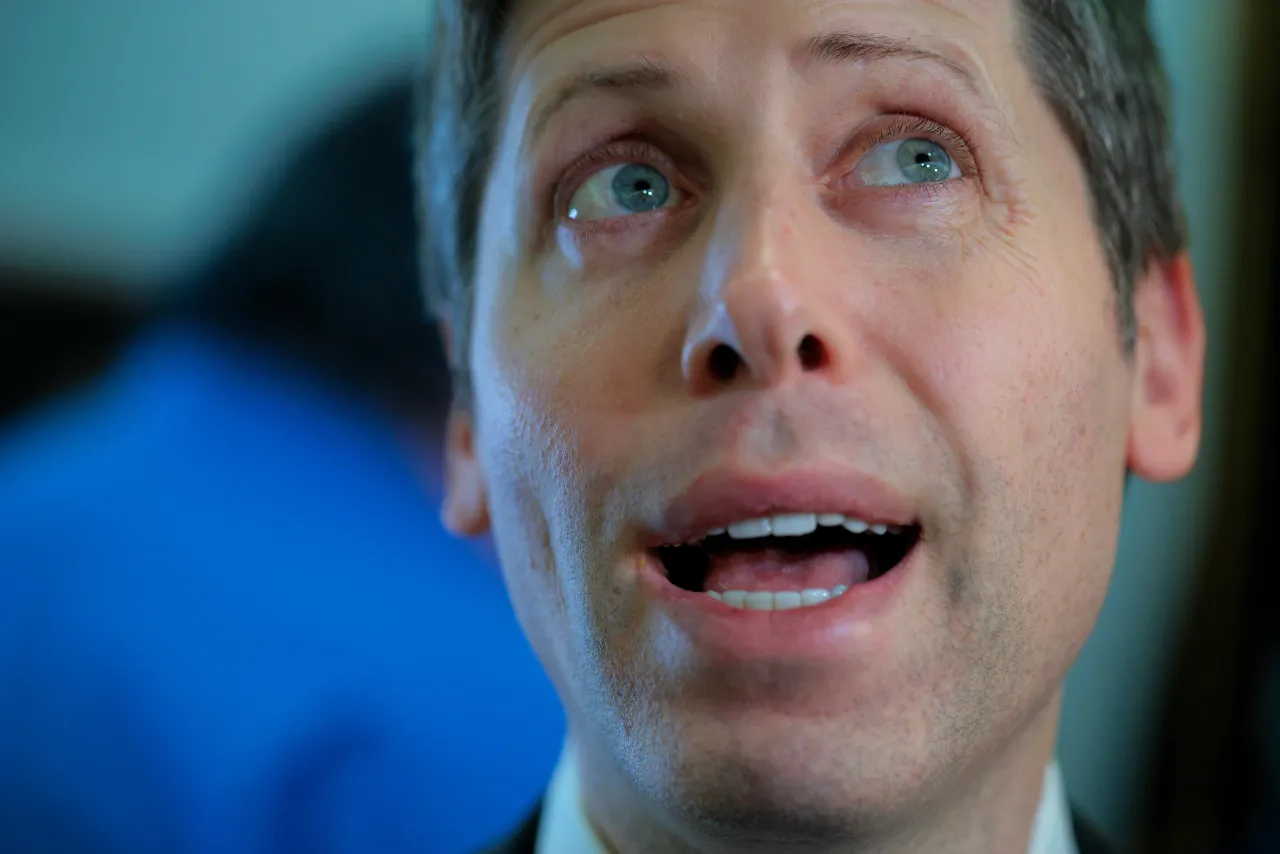
* Altman took a swipe at a new advertisement for Anthropic's Claude. * In the past few days, he has again rebutted Elon Musk and said he is "not afraid of Apple" following the iPhone maker's lawsuit. * Investors are closely watching developments at OpenAI as it moves toward a public listing. OpenAI CEO Sam Altman took a more combative tone toward tech rivals on Monday, days after his AI startup was hit with a major trade-secret theft lawsuit by Apple. "Come for the best model, stay because we don't treat you with contempt," Altman posted on X on Monday, without context. Given the timing, X users interpreted it as criticism aimed at companies like Apple, Anthropic or SpaceXAI. See what 10M+ investors are talking about. Get the Stocktwits Daily Rip for what retail is watching right now, free to your inbox In a separate post, Altman took a swipe at a new advertisement for Anthropic's Claude. The ad, titled "There's Hope in Hard Questions," features a narrator reflecting on whether AI can be built to benefit humanity. Responding to it, Altman wrote, "i thought this was satire, kept looking for the handle to be spelled c1audeai or something." Anthropic was started by former OpenAI employees, and the company now appears to be leading in the AI market. Altman Sharpens The Rhetoric The OpenAI CEO is no stranger to quirky responses to online critics, but lately he appears to be taking a more head-on approach. In the past few days, he's rebutted criticism from SpaceX and Tesla founder Elon Musk, saying that he was wooing public market investors with unproven claims about space data centers and that he is "not afraid of Apple" following the iPhone maker's lawsuit. Altman and Musk have frequently traded jabs online amid Musk's long-running legal campaign against OpenAI, including challenges to its restructuring and its relationship with Apple. Apple Lawsuit On Friday, Apple said it sued OpenAI in California, alleging that OpenAI encouraged Apple employees to share information, components, drawings, and other materials related to upcoming products -- as part of OpenAI's efforts to develop its own suite of devices. The suit also named Tang Tan, a 25-year Apple veteran who joined OpenAI as its chief hardware officer last year, as a defendant. The suit marks a dramatic turn for two companies that were close partners. OpenAI has powered Apple Intelligence and Siri, but ties between the two have frayed over the past year. OpenAI IPO Watch Investors are closely watching developments at OpenAI as it moves toward a public listing, setting up a potential IPO showdown with chief rival Anthropic.
Anthropic's extravagant tokenizer complicates AI pricing
Claude looks substantially more token-hungry than OpenAI's GPT-5.x, thanks to the new tokenizer that Anthropic shipped with recent releases. Large language models (LLMs) use tokenizers to handle the mapping of text into tokens. There's no set definition of a token, but they're typically a set of three or four characters that are mapped to the integers LLMs actually process. Tokens have become the basic economic unit for billing use of AI models. Because the slicing of words into tokens and the tokens required per task vary across models, it has become rather difficult to predict the final bill for playing the AI slot machine. Recent changes to Anthropic's tokenizer appear to have further complicated matters by making the same content more costly to process on certain models. Playcode, an AI app building platform, recently analyzed the impact of Anthropic's latest tokenizer and found that the same TypeScript file processed by Claude can consume up to 73 percent more tokens than OpenAI's GPT-5.x model family. Anthropic acknowledges its new tokenizer - announced at the end of June when Sonnet 5 shipped - may generate more tokens for the same input than prior versions. "Sonnet 5 is an upgrade to Sonnet 4.6, but it uses an updated tokenizer that changes how the model processes text to improve performance (this is similar to the tokenizer change we introduced with Claude Opus 4.7)," the company explained. "The tradeoff is that the same input can map to more tokens: roughly 1.0-1.35× depending on the content type." Anthropic offered Sonnet at a reduced introductory rate - $2/million input tokens and $10/million output tokens through August 31, 2026 - to make the inflated token generation more or less cost-neutral. But the price is set to rise to $3/million and $15/millionafter that. Anthropic did not immediately respond to a request for comment. The company says that users of its new tokenizer may see their bills rise by as much as a third compared to the tokenizer it used with its older models. Costs for Anthropic users could go even higher when compared against the latest iteration of OpenAI's o200k tokenizer. Playcode's cross-vendor token comparison finds that for a 2,888 character TypeScript file, Claude's new tokenizer emits 1.73x more tokens than GPT-5.x's tokenizer and 1.32x more than Claude's old tokenizer. These figures differ for different types of code: Rust taps in at 1.58x, JavaScript 1.52x, and Python 1.50x. So if Anthropic's list prices were adjusted to be comparable with OpenAI's GPT-5.x baseline, Playcode suggests Opus 4.8's cost would be $7.50/M input and $37.50/M output instead of the published figure of $5/M and $25/M. The AI app platform notes that a team from marketing platform Ploy this week published an account of a production migration using OpenAI's GPT-5.6 Sol and Anthropic's Opus 4.8. "GPT-5.6 finished pages 2.2× faster, cost 27 percent less, and used about half the output tokens," Ploy claimed. There are other factors that go into calculating AI bills. As we noted recently, costs should be judged in terms of task completion and the impact of model harnesses (e.g. Claude Code, Codex, Pi, OpenCode, etc.) should also be evaluated when attempting to calculate the cost of running AI workloads. ®

Blue Cloud Softech Soars on 5-Year SpaceX AI Services Deal
The agreement covers diverse AI infrastructure and solutions. The shares of small-cap tech company 'Blue Cloud Softech Solution' soared to hit 5 per cent upper circuit for the second consecutive session after the company announced that its United States subsidiary executed a definitive five-year Master Services Agreement (MSA) with SpaceX International for Artificial Intelligence (AI) services. The BSE-listed company started the session with a decent gap-up at Rs 22 as compared to the last day's closing of Rs 21.66. However, despite bearish sentiment in the domestic stock market, the stock escalated 5 per cent to hit the upper circuit limit at Rs 22.74. Last seen, the IT stock was trading at Rs 22.71, up 4.85 per cent or Rs 1.05. Earlier in the last session, the stock opened flat. However, the scrip witnessed strong buying following the announcement and jumped 5 per cent to hit the upper circuit of Rs 21.68. Later, the stock ended the session at Rs 21.66. Stock Market Today: Amid a sharp rise in crude prices--Brent crude climbed to $84 per barrel--due to escalating tension in the Middle East, the key domestic equity benchmark indices--Sensex, Nifty--traded significantly lower in early trade on Tuesday. Last seen, Sensex was trading at 77,272.04, up 0.44 per cent or 344.36 points. Nifty50 was quoted at 24,111.85, down 0.41 per cent or 99.15 points. "The Agreement enables BCSSL-USA to provide Artificial Intelligence (AI) infrastructure, cloud-native AI platforms, enterprise AI solutions, AI consulting, AI integration, AI operations and related AI-enabled digital transformation services, subject to mutually agreed Statements of Work and applicable contractual terms," the exchange filing added. Disclaimer: This story is for informational purposes only. It should not be considered as investment advice.
Polymarket odds of US invading Iran before 2027 jump to 19% on report
predict.info -- Premium Domain For Sale Domain only: USD 200,000. Prediction platform technology priced separately. predict.info Polymarket Reprices "U.S. Invade Iran Before 2027?" After Strike-and-Threat Catalyst Polymarket traders lifted the implied odds on "Will the U.S. invade Iran before 2027?" to 19% (from 11.5%), even as the market still prices "No" at 81%. The repricing follows a report describing fresh threats tied to strikes and a specific Iranian nuclear site, with $41.39M in matched volume framing how fast sentiment moved. Key Takeaways * Polymarket implies a 19% chance of a U.S. invasion of Iran before 2027 (Yes 19% / No 81%), with "No" the leading outcome. * The contract repriced upward after a report about Trump threatening to attack an underground Iranian nuclear facility following multiple nights of U.S. strikes. * This market resolves on 2026-12-31, so the trade is about a before-2027 event trigger, not a near-term headline. A report says U.S. President Donald Trump threatened to attack a heavily fortified underground nuclear facility in Iran referred to as "Pickaxe Mountain." It says the threat followed a third night of U.S. strikes and included a demand that the U.S. be paid 20% of the value of all cargo passing through the Strait of Hormuz. Odds & Liquidity Check: Yes Jumps to 19% (No 81%) on $41.39M Matched Volume The Polymarket contract is a binary Yes/No event: "Yes" pays out only if the U.S. invades Iran before the 2026-12-31 resolution date; at the latest snapshot, Yes is 19% and No is 81%, so traders still lean heavily toward "no invasion" despite the jump. The move is large in level terms -- up 7.5 percentage points from 11.5% -- which signals a risk repricing rather than a flip in consensus, since the leading outcome remains No. Market history in the provided summary shows a bearish but moderate-momentum backdrop with reversal_detected=true, and change_24h and change_7d both at -2.0pp, highlighting that recent trading had been pushing odds down before this latest step-up. With $41.39M in volume on an active market, Polymarket is functioning as a continuously updating probability gauge: it can react quickly to new threat-and-strike headlines, while still keeping the base case anchored to No. Watch whether the Yes price holds above the recent average (avg_last_5 at 17.9%) or fades back toward the prior 11.5% level, and whether volatility stays "moderate" as the market digests new information ahead of the 2026-12-31 resolution. What Traders Watch Next on Polymarket: Spillover to Macro, Energy, and Crypto Volatility Contracts Beyond the headline contract, traders often triangulate risk by watching adjacent Polymarket questions that price the knock-on timeline and disruption channels. Right now that includes 100% on "Iran military action against a gulf state on...?" ($3.92M volume), 30.5% on "US-Iran Final Nuclear Deal by...?" ($9.85M volume), and 97.55% on "Strait of Hormuz traffic returns to normal by July 31?" ($16.25M volume). Taken together, these markets show how participants translate the same newsflow into separate probabilities for escalation, negotiations, and energy-shipping normalization. Odds Trend By the Numbers * Platform: Polymarket * Market: Will the U.S. invade Iran before 2027? * Resolution window: Dec 31, 2026 (UTC) * Status: Active (open for trading) * Leading implied prob.: 19.0% * Volume: ~$41,391,859 * Top outcomes: Yes: Yes 19.0% / No 81.0%; No: Yes 19.0% / No 81.0%

Tuesday newspaper round-up: North Sea oil, Anthropic, EV owners
(Sharecast News) - The US government has already paid back tens of billions of dollars in tariffs it collected before the supreme court ruled them illegal, according to budget figures released on Monday. Tariffs - taxes on imported goods - have been a key part of president Donald Trump's game economic plan since he took office again last year. But in February, the supreme court shut down a big chunk of the extra tariffs Trump ordered, forcing the government to return money to the companies that had paid them. - Guardian The UK's North Sea oil industry has made a last-ditch attempt to curry favour with the Labour government by appealing to Andy Burnham's reindustrialisation agenda just days before he is expected to become Britain's next prime minister. Industry lobbyists have written to more than 400 Labour MPs to call on the government's new leaders to allow more oil and gas drilling in UK waters to support homegrown energy and show "a commitment to UK manufacturing, industrial capability and the skilled workforce that has powered the nation for generations". - Guardian The founder of online bank Monzo has become the latest high-profile figure to join Anthropic, the AI company behind the Claude chatbot. Tom Blomfield, who is one of Britain's most successful tech entrepreneurs, will take a leave of absence from his current role at start-up investor Y Combinator to join Anthropic, which recently overtook OpenAI as the world's most valuable AI company. - Telegraph Electric vehicle (EV) owners will be taxed for driving abroad under Labour's pay-per-mile plan. In a consultation response published on Monday, the Government said charging drivers for overseas mileage was proportionate because not doing so would require the use of location data to show where they were - raising privacy concerns. - Telegraph The United Arab Emirates is building another port in an attempt to bypass the Strait of Hormuz, having already expedited the construction of a new oil pipeline. The new port would join an existing facility in Fujairah along the country's eastern coastline and past the tip of the strait that Iran closed to shipping during the war with the United States. - The Times

Hyperion snags $290m SpaceX bet as stock crashes back to earth
Hyperion Asset Management's outsized bet on Elon Musk's SpaceX is threatening to undo a recent winning streak for the fund manager as shares of the rocket and artificial intelligence business spiral back towards its initial public offering price. The $12.5 billion money manager, which is already one of Australia's biggest shareholders of Musk's electric carmaker Tesla, disclosed in late June that it had snagged a stake in SpaceX in its Global Growth Fund.
Cerebras Stock: Strong Potential, But The Risk/Reward Doesn't Add Up (NASDAQ:CBRS) | Seeking Alpha
Despite ambitious international expansion and manufacturing scale-up, the forward P/S of 53.73 makes the risk/reward unattractive for new entry. A few years ago, OpenAI's (OPENAI) release of ChatGPT put the spotlight on parallel computing, particularly NVIDIA's (NVDA) GPUs. Since then, competing GPUs have been released, and some companies have been looking for other I'm a full-time investor with a strong focus on the tech sector. I graduated with a Bachelor of Commerce Degree with Distinction, major in Finance. I'm also a proud lifetime member of the Beta Gamma Sigma International Business Honor Society. My core values are: Excellence, Integrity, Transparency, & Respect. I always, to the best of my ability, hold true to these values which I believe are key for long-term success. I would like to invite all of my readers to leave their constructive criticism and feedback in the comments section so that I can further enhance the quality of my work moving forward. Thank you and God Bless America! Analyst's Disclosure: I/we have no stock, option or similar derivative position in any of the companies mentioned, and no plans to initiate any such positions within the next 72 hours. I wrote this article myself, and it expresses my own opinions. I am not receiving compensation for it (other than from Seeking Alpha). I have no business relationship with any company whose stock is mentioned in this article. Seeking Alpha's Disclosure: Past performance is no guarantee of future results. No recommendation or advice is being given as to whether any investment is suitable for a particular investor. Any views or opinions expressed above may not reflect those of Seeking Alpha as a whole. Seeking Alpha is not a licensed securities dealer, broker or US investment adviser or investment bank. Our analysts are third party authors that include both professional investors and individual investors who may not be licensed or certified by any institute or regulatory body.

OpenAI's Feud With xAI Carries On as Apple Secrets Fight Revs Up
OpenAI asked a judge to find that a lawsuit filed by xAI Corp. accusing the ChatGPT maker of trade secret theft "should never have been filed" and seeks to recoup more than $1 million in legal expenses from Elon Musk's company. Sam Altman's artificial intelligence startup filed its request Monday, ...
TSLA Stock Back To $400? Jefferies Lays Out Bull Case, Says SpaceX Merger Could Hand Shareholders A Premium
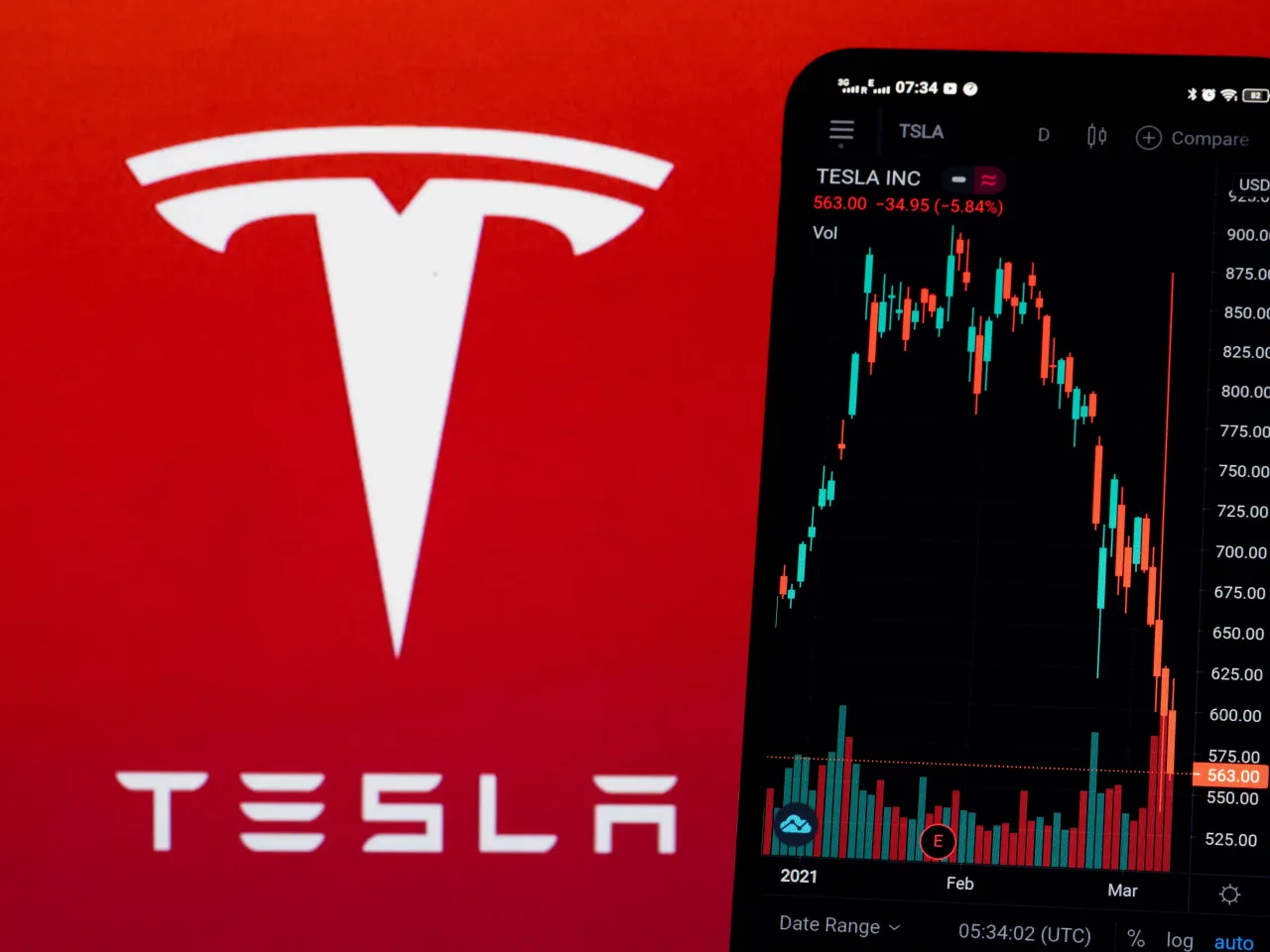
* The brokerage raised Q2 EBIT to $1.45 billion but still expects a $7.5 billion free cash flow outflow. * Jefferies said that a Tesla-SpaceX merger could leave room for a shareholder premium, with Musk retaining 55.3% voting control. * Tesla's Semi will enter a pilot in Chicago with Paper Transport to test its 500-mile range in colder conditions. Shares of Tesla, Inc. (TSLA) rose 0.2% in overnight trading late Monday as Jefferies raised its price target and said that a potential SpaceX merger could leave room for a shareholder premium. TSLA stock fell 3% on Monday, snapping two straight sessions of gains. Jefferies Lifts TSLA Outlook Ahead Of Q2 Earnings Jefferies raised its Tesla price target to $400 from $375 while maintaining a 'Hold' rating, implying a modest 1% upside from current levels. The firm cited Tesla's "significant auto volume beat" after the company delivered 480,100 vehicles in the second quarter, well above the consensus estimate of 406,000. Model 3 and Model Y vehicles accounted for 467,800 deliveries. The brokerage said that the strength in China and Europe validated the "unique value proposition of Tesla vehicles," even as the broader auto industry faces a growing risk of commoditization. The brokerage also said that Tesla's multi-year deterioration in growth and earnings had started to reverse. Jefferies raised its second-quarter (Q2) earnings before interest and taxes (EBIT) forecast to $1.45 billion, representing a 5.1% margin, and increased its longer-term EBIT estimates by about 6%. Tesla is set to report its Q2 earnings on July 22. The firm now expects automotive revenue of $21 billion, including $250 million from zero-emission vehicle credits and $500 million from leasing. Group revenue and EBIT are projected at $28.7 billion and $1.45 billion, respectively. For fiscal 2026, Jefferies raised its EBIT estimate by 4% to $6.2 billion, partly reflecting stronger volumes and the higher-priced long-wheelbase Model Y. Jefferies also expects Q2 capital spending of $6.9 billion, leaving Tesla with $41.7 billion in liquidity. Deliveries running ahead of production should also provide a near-term cash-flow benefit by reducing inventory. However, Jefferies maintained its forecast of about $7.5 billion in free cash flow outflows, including $23 billion in capital expenditures. It also struck a cautious note on autonomy, saying low implied Cybercab production pointed to further delays in Tesla's robotaxi ramp. Tesla-SpaceX Merger Thesis Gains Steam The debate over a potential Tesla-SpaceX merger has evolved beyond retail speculation. What began as prominent retail investors modeling ownership structures and exchange ratios has now drawn institutional attention, with firms such as Jefferies and JPMorgan publishing analytical frameworks that examine voting control, governance implications, and potential merger-premium structures. Jefferies said it continues to see logic in merging Tesla with Elon Musk's privately held space company. Under a nil-premium deal, Musk would retain an estimated 55.3% voting stake in the combined entity. The structure, Jefferies said, could leave room for Tesla shareholders to receive a premium. The argument adds to growing Wall Street interest in whether Musk could eventually bring his automotive, AI, energy and space businesses closer together. JPMorgan recently called a Tesla-SpaceX merger "strategically coherent on paper," pointing to potential integration across AI, robotics, energy, transportation and space. It maintained a 'Neutral' rating. Tesla Semi Enters Chicago Pilot Separately, Tesla's Semi is entering a new pilot program with Wisconsin-based Paper Transport. Paper Transport will test the long-range truck in dedicated Chicago operations, giving Tesla another opportunity to assess its performance in colder temperatures and snow-heavy conditions. The configuration offers about 500 miles of range and is priced at $290,000. Tesla has previously conducted Semi fleet trials with PepsiCo and Frito-Lay. How Do Retail Traders Feel About TSLA? On Stocktwits, retail sentiment for TSLA was 'bullish' amid a 396% jump in 24-hour message volumes. One user said, "$TSLA 390 has been holding for last couple days. earnings coming up. give me 450." Another user said, "I actually feel better that Tesla isn't going parabolic heading into next week's earnings. Trading below $400 keeps the stock in a healthier range, and a strong earnings call or Elon Musk's commentary could spark a short squeeze." So far this year, Tesla's stock has lagged its "Magnificent Seven" peers, making it the group's second-worst performer, down 12%. For updates and corrections, email newsroom[at]stocktwits[dot]com.
TSLA Stock Back To $400? Jefferies Lays Out Bull Case, Says SpaceX Merger Could Hand Shareholders A Premium
* The brokerage raised Q2 EBIT to $1.45 billion but still expects a $7.5 billion free cash flow outflow. * Jefferies said that a Tesla-SpaceX merger could leave room for a shareholder premium, with Musk retaining 55.3% voting control. * Tesla's Semi will enter a pilot in Chicago with Paper Transport to test its 500-mile range in colder conditions. Shares of Tesla, Inc. (TSLA) rose 0.2% in overnight trading late Monday as Jefferies raised its price target and said that a potential SpaceX merger could leave room for a shareholder premium. TSLA stock fell 3% on Monday, snapping two straight sessions of gains. See what 10M+ investors are talking about. Get the Stocktwits Daily Rip for what retail is watching right now, free to your inbox Jefferies Lifts TSLA Outlook Ahead Of Q2 Earnings Jefferies raised its Tesla price target to $400 from $375 while maintaining a 'Hold' rating, implying a modest 1% upside from current levels. The firm cited Tesla's "significant auto volume beat" after the company delivered 480,100 vehicles in the second quarter, well above the consensus estimate of 406,000. Model 3 and Model Y vehicles accounted for 467,800 deliveries. The brokerage said that the strength in China and Europe validated the "unique value proposition of Tesla vehicles," even as the broader auto industry faces a growing risk of commoditization. The brokerage also said that Tesla's multi-year deterioration in growth and earnings had started to reverse. Jefferies raised its second-quarter (Q2) earnings before interest and taxes (EBIT) forecast to $1.45 billion, representing a 5.1% margin, and increased its longer-term EBIT estimates by about 6%. Tesla is set to report its Q2 earnings on July 22. The firm now expects automotive revenue of $21 billion, including $250 million from zero-emission vehicle credits and $500 million from leasing. Group revenue and EBIT are projected at $28.7 billion and $1.45 billion, respectively. For fiscal 2026, Jefferies raised its EBIT estimate by 4% to $6.2 billion, partly reflecting stronger volumes and the higher-priced long-wheelbase Model Y. Jefferies also expects Q2 capital spending of $6.9 billion, leaving Tesla with $41.7 billion in liquidity. Deliveries running ahead of production should also provide a near-term cash-flow benefit by reducing inventory. However, Jefferies maintained its forecast of about $7.5 billion in free cash flow outflows, including $23 billion in capital expenditures. It also struck a cautious note on autonomy, saying low implied Cybercab production pointed to further delays in Tesla's robotaxi ramp.
Citi sends powerful sign to SpaceX investors
SpaceX stock is trading at $145.30, about 8% above its $135 IPO price, according to Yahoo Finance at the time of writing. Interestingly, SpaceX stock climbed as high as $225.64 after its $135 IPO, according to Yahoo Finance reporting, indicating a peak post-IPO gain of about 67%, before sharply retreating from those highs. So SpaceX investors were naturally looking for proof that Wall Street's post-IPO optimism wasn't misplaced and that the company was truly onto something special. Citi's analysts obliged, offering far more than a simple stock call. Following a 10-hour teach-in on space and AI, the firm argued that SpaceX sits at the center of a 10-plus-year investment cycle, with launch leadership, Starlink, orbital AI, and extreme vertical integration creating a compounding infrastructure story. Citi just hailed SpaceX as a platform for the future, while the market still has to decide how much of that future is investable today. Why Citi sees SpaceX as more than a rocket company Citi kicked things off with a buy rating and a $200 base-case price target for SpaceX stock, implying an expected return of about 34.9% from current levels. In the note shared with me, Citi valued SpaceX as a vertically integrated platform spanning space access, global connectivity, and AI infrastructure, rather than just a launch provider. Moreover, Citi derived its target from the average of three methods: 2027 growth-adjusted multiples for trillion-dollar peers, a sum-of-the-parts analysis valuing Space, Connectivity, and AI separately, and 2030 comparable-company multiples for large-cap platform peers. Put bluntly, as my fellow tech reporter Vuk Zdinjak noted in perhaps the most honest take on SpaceX, that kind of valuation framework shows how tough it is to value such a business. In the Bank of America note he covered, he panned the bank's use of a nearly 20-year cash-flow model that stretched far beyond the usual 5- to 10-year DCF window and well past the typical 12-month life of a price target. Analysts looked to assign a present value to businesses that may not be fully proven for years. Nevertheless, Citi is sold on SpaceX's abilities, especially its reusable launch capability, Starlink's global satellite network, the xAI/Grok integration, and future terrestrial and orbital compute infrastructure. It also argues that extreme vertical integration will likely push costs down and throughput up at a scale competitors might struggle to match. Wall Street price targets for SpaceX stock
Anthropic Claude Sonnet 5 vs Sonnet 4.6 vs Opus 4.8: Agentic Coding Benchmarks, API Pricing, and Cost-Performance Tradeoffs Compared
Anthropic just shipped Claude Sonnet 5. They call it its most agentic Sonnet model yet. It plans, drives browsers and terminals, and runs autonomously across long tasks. Sonnet 5 is the default model for Free and Pro plans today. Max, Team, and Enterprise users can select it. It is also live in Claude Code and on the Claude Platform. TL;DR * Sonnet 5 is Anthropic's most agentic mid-tier model, closing much of the gap to Opus 4.8. * Beats Sonnet 4.6 on every published benchmark: 63.2% SWE-bench Pro, 81.2% OSWorld-Verified, 57.4% HLE. * Cheaper to run: $2/$10 per MTok intro pricing through Aug 31, then $3/$15; Opus 4.8 is $5/$25. * Best value at low/medium effort; at xhigh it can cost more than Opus 4.8 for similar quality. * Safer than 4.6, with deliberately low cyber capability -- Opus stays the pick for accuracy-critical work. Claude Sonnet 5 Sonnet sits in the middle of Anthropic's lineup. It is above the cheaper Haiku 4.5 and below the flagship Opus 4.8. Sonnet 5 is an upgrade to Sonnet 4.6, which launched in February 2026. Anthropic frames this release around agentic reliability, not one headline benchmark. In practice, that means longer task chains without losing context. It means better self-correction when a tool call fails. It means steadier behavior across extended sessions inside Claude Code or Cowork. The model exposes effort levels: low, medium, high, and xhigh (extra high). Higher effort spends more tokens on reasoning. That raises both quality and cost. It is important to note that Sonnet 5 uses an updated tokenizer, the same one introduced with Opus 4.7. The same text can map to roughly 1.0 to 1.35 times more tokens. Interactive Explainer Benchmark Anthropic team published a benchmark table comparing Sonnet 5, Sonnet 4.6, and Opus 4.8. Sonnet 5 beats its predecessor in every tested category. It closes much of the gap to Opus 4.8. On agentic coding (SWE-bench Pro), Sonnet 5 scores 63.2%. Sonnet 4.6 scored 58.1%. Opus 4.8 still leads at 69.2%. On computer use (OSWorld-Verified), Sonnet 5 posts 81.2% against Sonnet 4.6's 78.5%. On Terminal-Bench 2.1, it reaches 80.4% versus 67.0%. On Humanity's Last Exam with tools, Sonnet 5 hits 57.4%. That nearly matches Opus 4.8 at 57.9%. There is one place where Sonnet 5 edges ahead. On the GDPval-AA v2 knowledge-work benchmark, it scores 1,618 against Opus 4.8's 1,615. Effort Levels: Where the Real Tradeoff Lives The cost-performance story is the most important part for developers. Sonnet 5 is a strict improvement over Sonnet 4.6 across every effort level. The clearest value appears at low and medium effort. At those levels, Sonnet 5 delivers quality that earlier Sonnet pricing could not buy. Opus 4.8 remains the accuracy leader at the top of the range. A practical routing policy follows from this. Send most agentic coding, tool use, and knowledge work to Sonnet 5. Reserve Opus 4.8 for accuracy-critical tasks. Keep Haiku 4.5 for high-volume, latency-sensitive calls. Use Cases: Where Sonnet 5 Fits Early access partners described concrete workflows. Their reports map to common engineering jobs. * Multi-step software engineering: One tester asked Sonnet 5 to investigate a bug. It wrote a reproducing test, implemented the fix, then confirmed the bug returned without the change. It did this in a single pass. * Brownfield debugging: Another partner ran it on hard pull requests. The model traced failures to their root causes. It shipped durable fixes rather than symptom patches. * Business automation: Zapier handed it a two-part job. It updated Salesforce account tiers, then sent a launch email to enterprise contacts. It finished the task end to end. * Computer-use agents: Pace runs insurance workflows like submission intake and loss runs. Its agents act on the operational systems teams already use. * Data exploration: ClickHouse agents query live data and produce insights on the fly. Faster reasoning means faster time-to-insight for analysts. Comparison Table Sonnet 5's introductory pricing runs through August 31, 2026. Standard pricing of $3/$15 begins after that date. Standard prompt caching (cache reads at 0.1x input) and the 50% Batch API discount also apply. Per token, Sonnet 5 undercuts GPT-5.5 and Gemini 3.1 Pro, but costs more than Gemini 3.5 Flash. Anthropic lists a 1M-token context window for Sonnet 5 in its launch post. It does not publish context figures for the other models here. Coding Example: Calling Sonnet 5 The API call mirrors any other Anthropic model. You change the model string to . Strengths and Weaknesses Strengths: * Improves on Sonnet 4.6 in every benchmark category Anthropic tested * Near-Opus 4.8 quality on several evaluations, at lower per-token prices * Edges Opus 4.8 on the GDPval-AA v2 knowledge-work benchmark * Lower hallucination, sycophancy, and undesirable-behavior rates than Sonnet 4.6 * Drop-in API change: you only swap the model string Weaknesses: * Opus 4.8 still wins on the hardest accuracy-critical tasks * At xhigh effort, cost can exceed Opus 4.8 at similar quality * The new tokenizer can raise token counts by up to 1.35 times * Cyber capability is intentionally low; use Opus for sanctioned cyber work * Standard pricing of $3/$15 arrives after August 31, 2026 Community Reaction Check out the Technical details. Also, feel free to follow us on and don't forget to join our 150k+ML SubReddit and Subscribe to our Newsletter. Wait! are you on telegram? now you can join us on telegram as well. Need to partner with us for promoting your GitHub Repo OR Hugging Face Page OR Product Release OR Webinar etc.?
Polymarket slashes Hormuz normal-traffic odds to 56.5% after conflict headlines
Polymarket Reprices Strait of Hormuz "Traffic Normal by Dec. 31" Contract After U.S. Control Headlines Polymarket traders now price a 56.5% chance that Strait of Hormuz traffic returns to normal by Dec. 31, down sharply from 85.5% previously, on $5.07M in matched volume. The repricing follows fresh headlines about the conflict pace and stated U.S. intent to seek control of the strait, as reflected in the contract's intraday swing and reversal signals. Key Takeaways * Polymarket's leading outcome is Yes at 56.5% (No 43.5%) for traffic returning to normal by Dec. 31. * The market de-risked after conflict-related headlines tied directly to the Strait of Hormuz, with implied odds dropping from 85.5% to 56.5%. * Settlement hinges on conditions by the 2026-12-31 resolution date; recent signals show reversal_detected true and a -2.0pp change over 24h and 7d. A report says Donald Trump described the Iran war as moving "very fast" and said the U.S. will seek control of the Strait of Hormuz. The broader update also notes oil prices rising alongside the latest fighting in the Middle East. Odds Slide to 56.5% (from 85.5%) on $5.07M Matched Volume as Two-Sided Liquidity Signals a Reversal This is a binary Polymarket contract: a Yes price of 56.5% is the market's implied probability that traffic is back to "normal" by the 2026-12-31 resolution date, while No at 43.5% captures the remainder. The notable signal is the magnitude of the repricing -- down from 85.5% previously to 56.5% now -- suggesting traders have shifted from near-consensus to a more contested base case rather than a small incremental update. Despite the broader historical_summary labeling consensus as "stable," the combination of moderate volatility, moderate momentum, and reversal_detected true points to choppy, two-sided trading rather than a clean trend. With $5.07M in matched volume, the current mid-50s pricing reads like an equilibrium between scenarios where conditions normalize before year-end and scenarios where disruption persists long enough to flip settlement. Watch whether implied odds stabilize around the mid-50s or continue to mean-revert toward the recent average (avg_last_5: 86.9) versus extending the bearish trend; either path would clarify whether the "reversal_detected" flag turns into a sustained direction ahead of the Dec. 31 resolution. Traders Also Track Related Polymarket Contracts: Oil Price Spikes, Iran War Escalation Odds, and Macro Risk Sentiment Ma Beyond the core Hormuz setup, Polymarket traders are also triangulating risk across adjacent contracts that can move in tandem with headlines and crude pricing. 80.5% "No" on "Will the U.S. invade Iran before 2027?" leads with $41.35M matched, while the nearer-dated "Strait of Hormuz traffic returns to normal by July 31?" sits at 97.15% "No" on $16.21M. On the diplomatic track, "US-Iran Final Nuclear Deal by...?" has 30.5% on "December 31" with $9.83M, and "Iran full airspace closure by...?" is split at 50.0% on "August 31" with $3.55M -- together offering a quick read on how traders are pricing escalation versus normalization across timelines. Odds Trend By the Numbers * Platform: Polymarket * Market: Strait of Hormuz traffic returns to normal by December 31? * Resolution window: Dec 31, 2026 (UTC) * Status: Active (open for trading) * Leading implied prob.: 56.5% * Volume: ~$5,070,567 * Top outcomes: Yes: Yes 56.5% / No 43.5%; No: Yes 56.5% / No 43.5%

Prediction: $25,000 Invested in SpaceX Today Will Be Worth This Much by 2050
Let's get right to it: A $25,000 investment in Space Exploration Technologies (NASDAQ: SPCX) stock today could be worth over $100,000 by 2050 if revenue grows 19% annually. By the same token, the same investment in SpaceX is more likely to be worth about $28,000 by 2050 if revenue grows more moderately -- albeit still bullish -- at a rate of 13% annually. Let's unpack these predictions. Missed Nvidia in 2009? This Rare Signal Is Flashing Again. In 2009, a "Double Down" signal flashed for a little-known chipmaker called Nvidia. For the first time in years, that same "Total Conviction" signal is flashing for a company 1/100th the size of Nvidia. Continue " First, keep in mind that SpaceX carried a roughly $1.8 trillion valuation at its initial public offering (IPO), despite reporting about $19 billion in 2025 revenue. At the time of its IPO, the stock was already trading close to 100 times annual sales -- a figure that hasn't changed much, even after the stock has plummeted over 30% from its all-time high. Under the bullish scenario, SpaceX would need to quadruple by 2050 for a $25,000 investment to hit $100,000 or more, which would imply a $7 trillion market cap. If we value that version of SpaceX at a price-to-sales ratio of about 5, then the space company would need to generate about $1.5 trillion in annual sales by that year, or almost 19% revenue growth annually. That's not technically impossible, but it would also mean SpaceX has become the most dominant launch, satellite, and artificial intelligence (AI) company in the world. In short, very little has to go wrong, and if it does, it can't go wrong for long. Under a less bullish scenario, SpaceX's valuation would rise only modestly, from about $1.8 trillion to about $2 trillion by 2050. If, again, we assume a price-to-sales ratio of 5, SpaceX would generate about $400 billion in 2050 sales, which implies compound annual revenue growth of about 13% for the next 25 years. That's still impressive growth, even if the concomitant growth in the stock is only modest. These are, of course, my own figures, but they drive home the point that, however you slice it, SpaceX stock is still very pricy right now. Even as the stock nears its IPO price of $135, I think long-term investors should continue to wait. SpaceX may become one of the most important companies in the world, but at today's valuation, much of that success appears already priced in. Should you buy stock in Space Exploration Technologies right now? Before you buy stock in Space Exploration Technologies, consider this:
Prediction: $25,000 Invested in SpaceX Today Will Be Worth This Much by 2050
Let's get right to it: A $25,000 investment in Space Exploration Technologies (NASDAQ: SPCX) stock today could be worth over $100,000 by 2050 if revenue grows 19% annually. By the same token, the same investment in SpaceX is more likely to be worth about $28,000 by 2050 if revenue grows more moderately -- albeit still bullish -- at a rate of 13% annually. Let's unpack these predictions. Missed Nvidia in 2009? This Rare Signal Is Flashing Again. In 2009, a "Double Down" signal flashed for a little-known chipmaker called Nvidia. For the first time in years, that same "Total Conviction" signal is flashing for a company 1/100th the size of Nvidia. Continue " First, keep in mind that SpaceX carried a roughly $1.8 trillion valuation at its initial public offering (IPO), despite reporting about $19 billion in 2025 revenue. At the time of its IPO, the stock was already trading close to 100 times annual sales -- a figure that hasn't changed much, even after the stock has plummeted over 30% from its all-time high. Under the bullish scenario, SpaceX would need to quadruple by 2050 for a $25,000 investment to hit $100,000 or more, which would imply a $7 trillion market cap. If we value that version of SpaceX at a price-to-sales ratio of about 5, then the space company would need to generate about $1.5 trillion in annual sales by that year, or almost 19% revenue growth annually. That's not technically impossible, but it would also mean SpaceX has become the most dominant launch, satellite, and artificial intelligence (AI) company in the world. In short, very little has to go wrong, and if it does, it can't go wrong for long. Image source: Getty Images. Under a less bullish scenario, SpaceX's valuation would rise only modestly, from about $1.8 trillion to about $2 trillion by 2050. If, again, we assume a price-to-sales ratio of 5, SpaceX would generate about $400 billion in 2050 sales, which implies compound annual revenue growth of about 13% for the next 25 years. That's still impressive growth, even if the concomitant growth in the stock is only modest. These are, of course, my own figures, but they drive home the point that, however you slice it, SpaceX stock is still very pricy right now. Even as the stock nears its IPO price of $135, I think long-term investors should continue to wait. SpaceX may become one of the most important companies in the world, but at today's valuation, much of that success appears already priced in. Should you buy stock in Space Exploration Technologies right now? Before you buy stock in Space Exploration Technologies, consider this: The Motley Fool Stock Advisor analyst team just identified what they believe are the 10 best stocks for investors to buy now... and Space Exploration Technologies wasn't one of them. The 10 stocks that made the cut could produce monster returns in the coming years. Consider when Netflix made this list on December 17, 2004... if you invested $1,000 at the time of our recommendation, you'd have $395,679!* Or when Nvidia made this list on April 15, 2005... if you invested $1,000 at the time of our recommendation, you'd have $1,294,805!* Now, it's worth noting Stock Advisor's total average return is 929% -- a market-crushing outperformance compared to 211% for the S&P 500. Don't miss the latest top 10 list, available with Stock Advisor, and join an investing community built by individual investors for individual investors. See the 10 stocks " *Stock Advisor returns as of July 13, 2026. Steven Porrello has no position in any of the stocks mentioned. The Motley Fool has no position in any of the stocks mentioned. The Motley Fool has a disclosure policy. The views and opinions expressed herein are the views and opinions of the author and do not necessarily reflect those of Nasdaq, Inc.
