News & Updates
The latest news and updates from companies in the WLTH portfolio.
Prediction: $25,000 Invested in SpaceX Today Will Be Worth This Much by 2050
Let's get right to it: A $25,000 investment in Space Exploration Technologies (SPCX 4.75%) stock today could be worth over $100,000 by 2050 if revenue grows 19% annually. By the same token, the same investment in SpaceX is more likely to be worth about $28,000 by 2050 if revenue grows more moderately -- albeit still bullish -- at a rate of 13% annually. Let's unpack these predictions. First, keep in mind that SpaceX carried a roughly $1.8 trillion valuation at its initial public offering (IPO), despite reporting about $19 billion in 2025 revenue. At the time of its IPO, the stock was already trading close to 100 times annual sales -- a figure that hasn't changed much, even after the stock has plummeted over 30% from its all-time high. Under the bullish scenario, SpaceX would need to quadruple by 2050 for a $25,000 investment to hit $100,000 or more, which would imply a $7 trillion market cap. If we value that version of SpaceX at a price-to-sales ratio of about 5, then the space company would need to generate about $1.5 trillion in annual sales by that year, or almost 19% revenue growth annually. That's not technically impossible, but it would also mean SpaceX has become the most dominant launch, satellite, and artificial intelligence (AI) company in the world. In short, very little has to go wrong, and if it does, it can't go wrong for long. Under a less bullish scenario, SpaceX's valuation would rise only modestly, from about $1.8 trillion to about $2 trillion by 2050. If, again, we assume a price-to-sales ratio of 5, SpaceX would generate about $400 billion in 2050 sales, which implies compound annual revenue growth of about 13% for the next 25 years. That's still impressive growth, even if the concomitant growth in the stock is only modest. These are, of course, my own figures, but they drive home the point that, however you slice it, SpaceX stock is still very pricy right now. Even as the stock nears its IPO price of $135, I think long-term investors should continue to wait. SpaceX may become one of the most important companies in the world, but at today's valuation, much of that success appears already priced in.

SpaceX stock: Which ASX ETF buys you the most?
You're reading a free article with opinions that may differ from The Motley Fool's Premium Investing Services. Become a Motley Fool member today to get instant access to our top analyst recommendations, in-depth research, investing resources, and more. Learn More Now that the initial public offering (IPO) of Elon Musk's Space Exploration Technologies Corp (NASDAQ: SPCX) is complete and bedded down, investors all over the world have a myriad of options at their disposal if they wish to invest in this ambitious company. Yes, SpaceX stock has, at least as of the time of writing, come off the boil a little. Even so, this company remains a behemoth on the world stage, commanding a market capitalisation of US$1.91 trillion. For an investor wishing to get themselves a slice of this company, the most direct way remains buying SpaceX stock themselves. Yes, SpaceX is listed on the American NASDAQ exchange and is thus not available for purchase on the ASX. However, it has arguably never been easier to open a US brokerage account from Australia and put some shares against a name. Even if an investor isn't comfortable with owning a US stock directly, there are locally-based options. These essentially boil down to owning an exchange-traded fund (ETF) that, in turn, owns SpaceX shares. That allows ASX investors to indirectly invest in SpaceX without having to buy US dollars or open an international brokerage account. But which ASX ETF to pick? Well, SpaceX shares haven't qualified for many international index funds just yet. For instance, the company hasn't yet made the cut for either the iShares S&P 500 ETF (ASX: IVV) or the BetaShares Nasdaq 100 ETF (ASX: NDQ). It probably will with time, albeit as one relatively small holding among many. Two ASX ETFs to buy for SpaceX stock However, some ASX ETFs of the thematic persuasion haven't wasted any time in buying SpaceX stock. These ETFs are giving the company a lot of real estate. If that sounds appealing to investors, the first port of call may be the BetaShares Space Industry ETF (ASX: RCKT). This ETF was launched back in May. Although it didn't invest in SpaceX until the IPO, today, the company commands a whopping 26.8% of RCKT's entire portfolio. That means more than one in every four dollars invested in this fund finds its way to SpaceX stock. The other option for ASX investors seeking a substantial but local SpaceX investment is the Global X Space Tech ETF (ASX: MOON). This ETF has just over a month of ASX life to its name. Saying that, MOON's portfolio is dominated by SpaceX stock as well. Space Exploration Technologies Corp makes up 26.7% of the ETF's entire weighted portfolio. Thus, there are a few options for ASX investors who may like to own some SpaceX stock today.

Canada regulator cited Anthropic's Claude Mythos in warning to banks on cyber risks, email shows
TORONTO, July 13 (Reuters) - Canada's federal banking regulator warned the country's largest financial institutions about the risks of Anthropic's Claude Mythos and other advanced AI models, saying the new technology could increase cyber threats and reduce the time institutions have to identify and fix vulnerabilities, according to an email sent in April. The regulator, the Office of the Superintendent of Financial Institutions, sent the email to chief technology officers, chief information security officers, and chief risk officers across the financial industry, including the big banks and insurers, according to documents Reuters obtained through an access-to-information request. Regulators globally are trying to assess cybersecurity risks such as Anthropic's frontier AI model Mythos. Cybersecurity experts say Mythos, an AI model described as extremely capable at finding and exploiting cybersecurity vulnerabilities, poses significant challenges to the banking industry and its legacy technology systems. "Advanced artificial intelligence models, such as Anthropic Claude Mythos, significantly compress the timeframe for effective risk mitigation," OSFI said in the email. "Accordingly, this bulletin is grounded in our existing guidance and outlines sound practices that institutions can adopt to enhance the speed and effectiveness of risk identification, mitigation and response." Additional contents of the email were redacted due to some sections of the Access to Information Act. An acknowledgment of the risks of Mythos from OSFI could ensure Canadian banks, insurers and other regulated institutions invest in technology to protect clients from cyber risks. After Reuters sent questions to OSFI last week, the regulator on Monday posted a public bulletin on generative and agentic artificial intelligence online. "OSFI takes a technology‑neutral, risk‑focused approach to emerging technologies, including advanced artificial intelligence models such as Mythos. Our focus is not the technology itself, but how federally regulated financial institutions govern and manage the risks associated with its use," the regulator said in an emailed response to Reuters questions. In early April, Canadian bank executives met with regulators to discuss the risks posed by Mythos shortly after U.S. Treasury Secretary Scott Bessent and then-Federal Reserve Chair Jerome Powell convened an urgent meeting with bank CEOs to warn of cyber risks posed by Anthropic's latest artificial intelligence model. OSFI sent the email to company executives on April 29. RAPIDLY CHANGING LANDSCAPE OSFI is responsible for regulating and maintaining the stability of Canada's financial sector, from banks to pension funds, and identifying risks emerging from foreign interference, geopolitics and new technology. The cyber capabilities of some frontier AI systems are considered so powerful that access has been restricted, with euro zone banks currently excluded from Mythos. Anthropic has also had a tumultuous relationship with the U.S. government.A judge blocked its initial blacklisting by the Pentagon in March, and the conflict has eased following the private release of Anthropic's Mythos. Three of Canada's big six banks - Royal Bank of Canada, TD Bank and BMO - have outlined a plan to earn millions from their investments in AI as the banks moved from experimental AI projects to applying them in chatbots, building internal tools and lowering their reliance on third-party tools. Bank of Nova Scotia, CIBC and National Bank have also disclosed several AI initiatives. The Canadian government has said it has access to Anthropic's Project Glasswing, which allows companies to have access to Mythos. It is not clear which, if any, banks in Canada are using it.Some banks deferred comments to the Canadian Bankers Association, which said banks have invested heavily to protect the financial system and are complying with robust requirements from OSFI on cyber risk management and incident reporting.In an interview in June, RBC's chief technology officer Bruce Ross said Mythos underscored a shift in the cyberattack landscape, making it imperative for organizations to respond rapidly since attack methods can emerge as soon as new vulnerabilities are identified. "The way we're (the industry) dealing with it is, building our own AI defenses... we'll continue to do that," Ross said. (Reporting by Nivedita Balu in Toronto; Editing by Caroline Stauffer and Deepa Babington)
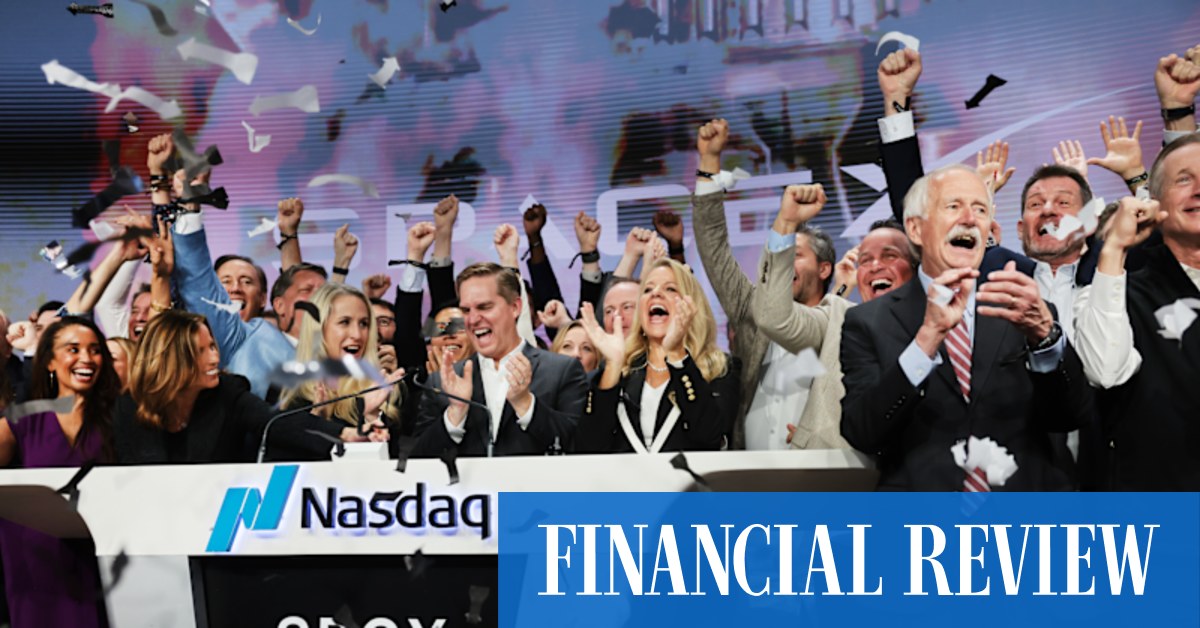
Analysts are still bullish on SpaceX shares after Nasdaq inclusion. Here is what that means for ASX investors
You're reading a free article with opinions that may differ from The Motley Fool's Premium Investing Services. Become a Motley Fool member today to get instant access to our top analyst recommendations, in-depth research, investing resources, and more. Learn More SpaceX shares have had an extraordinary first month. Shares were issued at US$135 before listing on 12 June, and the stock climbed well above US$200, pushing the valuation above US$2 trillion. Since then, SpaceX shares have come back down to earth. Although, the company was then fast-tracked into the Nasdaq-100 index in early July, approximately 15 trading days after listing. Analysts remain bullish. For ASX investors, that matters more than most realise, because a large number of Australians now own a piece of SpaceX without having made any decision to buy it. Reasons to remain bullish on SpaceX shares The core of the bull case is Starlink. According to SpaceX's S-1 filing with the SEC, the Starlink connectivity segment generated US$11.4 billion in revenue in 2025. The segment delivered US$4.4 billion in operating income, representing year-on-year growth of 49.8% and 120.4% respectively. Starlink served 10.3 million subscribers across 164 countries as at 31 March 2026, up from just 2.3 million in 2023. This is a business growing at extraordinary speed with a defensible moat. Launching a satellite constellation of that scale requires launch capability almost no competitor possesses. The Nasdaq-100 inclusion added a further mechanical tailwind. This will force index-tracking funds worldwide to buy SPCX regardless of any individual portfolio manager's view on valuation. Betashares Space Industry ETF The Betashares Space Industry ETF (ASX: RCKT) is the most direct ASX exposure. SpaceX has already been included in RCKT following the fund's fast-track inclusion feature. This allowed it to enter the Solactive Space Industry Index far more quickly than standard timelines would permit. SpaceX now represents approximately 27% of the RCKT portfolio, making it the fund's single largest holding by a wide margin. That concentration deserves a closer look. RCKT is no longer a diversified space economy fund in any meaningful sense. It is now, in effect, a SpaceX fund with 28 other holdings attached, and its performance will be dominated by what SPCX does from here. Betashares Nasdaq 100 ETF The Betashares Nasdaq 100 ETF (ASX: NDQ) is where most Australians now own SpaceX without having chosen to. NDQ is one of the most widely held ETFs in Australia, and SpaceX's Nasdaq-100 inclusion means every NDQ holder automatically gained SpaceX exposure when the index inclusion took effect. The same applies to holders of the Vanguard MSCI International Shares ETF (ASX: VGS) and the iShares S&P 500 ETF (ASX: IVV). What's more, the millions of Australians whose superannuation funds hold international shares benchmarked against major US indices have also gained exposure. For most investors, that exposure will be small relative to the overall portfolio. But it exists, automatically, without any further action required. The risk worth understanding for SpaceX shares SpaceX is not a conventionally profitable company. The company posted a GAAP net loss of US$4.94 billion in 2025, driven by losses in the xAI and Space divisions that offset Starlink's profitability. A company trading above US$2 trillion with significant GAAP losses is a demanding proposition, even for investors genuinely excited by the long-term opportunity. The mechanical index buying that has supported the share price since listing was a one-time event, not a permanent support mechanism. Furthermore, SpaceX bonds issued shortly after the IPO have reportedly sold off to levels comparable with junk-rated borrowers. This is despite investment-grade ratings, a warning sign that the debt market is less enthusiastic than the equity market. Foolish takeaway for SpaceX shares Analysts remain bullish on SpaceX shares, and Starlink's growth justifies significant optimism. But for ASX investors, the more important point is that ownership of SpaceX is now largely automatic rather than chosen. RCKT holders own it heavily, at around 26% of the fund. NDQ, VGS, and IVV holders own it passively. Understanding how much SpaceX exposure you actually have is perhaps a more useful exercise than debating whether to buy it.

Microsoft Bets on In-House AI to Cut OpenAI and Anthropic Costs
Microsoft Corp. (NASDAQ: MSFT) has taken steps to lessen its reliance on frontier AI models, though it's not an outright declaration of protest. In June, the tech giant launched its own proprietary AI models (Microsoft AI or MAI) across select applications in its Office suite. What this means for the user experience is an open question, but this is a clear margin play for Microsoft. The company competes in multiple areas of the AI infrastructure buildout. In a way that makes this move about controlling the controllables. → MarketBeat Week in Review - 07/06 - 07/10 Instead of experiencing death by a thousand cuts from OpenAI and Anthropic (i.e., the frontier models), Microsoft is trying to widen its existing moat and deliver strong returns on investment (ROI) from its AI spend. But will this be sufficient to alter the sentiment towards MSFT, which has declined approximately 20% year-to-date? Microsoft Expands MAI to Reduce Reliance on OpenAI Here's the news behind the news. Bloomberg reported that Microsoft is quietly routing some Excel and Outlook prompts to MAI, its in-house model family, rather than to OpenAI or Anthropic. Tens of thousands of prompts a week are already running on Microsoft's own tech. → Pushing the Edge: Super Micro Computer Reboots the AI Landscape That's still a small slice of total Copilot traffic. OpenAI and Anthropic handle most of it today. But the direction of that travel matters more than the current split, and Microsoft has made its intentions clear. At Build 2026 in June, Microsoft unveiled seven MAI models, including its first reasoning model, MAI-Thinking-1. The company says it matches Anthropic's Claude Opus 4.6 on coding tasks. AI chief Mustafa Suleyman put it bluntly: "We pay a lot of money to Anthropic, so our goal is to reduce and ultimately eliminate that cost." → Why WD-40 Is Proving Great Businesses Never Go Out of Style How Microsoft's In-House AI Could Boost Profit Margins For investors, an easy way to think about this is as follows. Copilot is a $30-per-seat subscription that, prior to the MAI launch, was running on top of someone else's expensive AI model by default. Every prompt costs Microsoft money to process, and multiplied across hundreds of millions of Office users, that bill adds up fast.
SpaceX Shares Sink Lowest Level Since Nasdaq Debut
This article first appeared on GuruFocus. Space Exploration Technologies (NASDAQ:SPCX) shares fell about 4% in Monday morning trading, extending their recent decline and trading near the company's initial public offering price. The stock changed hands around $139, its lowest level since listing on Nasdaq about one month ago. Shares have retreated more than 38% from their intraday peak of $225.64 reached on June 16, reducing much of the gains recorded after the company's market debut. Space Exploration Technologies went public at $135 per share, raising about $75 billion in one of the largest U.S. initial public offerings. The stock opened at $150, roughly 11% above its offering price, giving the aerospace company a market capitalization of about $2.1 trillion at the close of its first trading session. Monday's pullback leaves Space Exploration Technologies trading only modestly above its IPO price after a volatile first month on the public market. The latest decline comes as investors continue to reassess valuations across growth and technology stocks following a strong initial rally after the company's listing.

Amazon Managed Service for Prometheus is now available in Asia Pacific (New Zealand) Region - AWS
Amazon Managed Service for Prometheus is now available in Asia Pacific (New Zealand) Region. Amazon Managed Service for Prometheus is a fully managed, Prometheus-compatible monitoring service that makes it easy to monitor and alert on operational metrics at scale. Amazon Managed Service for Prometheus is available in multiple AWS Regions. Customers can send up to 1 billion active metric series to a single workspace and can create many workspaces per account, where a workspace is a logical space dedicated to the storage and querying of Prometheus metrics. To learn about Amazon Managed Service for Prometheus pricing, visit the pricing page.

Monzo co-founder Blomfield joins Anthropic
This content has been selected, created and edited by the Finextra editorial team based upon its relevance and interest to our community. Blomfield revealed on X that he is taking a leave of absence from venture capital firm Y Combinator to join Anthropic co-founder and chief compute officer Tom Brown's compute team. Says Blomfield: "Powerful AI has the potential to improve the life of every human on earth and, as we enter the early stages of recursive self-improvement, availability of compute becomes one of the most important issues to solve." Having built Monzo up into a major player in the UK banking market, Blomfield transitioned from CEO to president in 2020. He left the following year, admitting that the pressure of growing the firm in the midst of a global pandemic had taken a toll on his mental health. Last year he kicked up a stir by tolling the death knell of the humble software engineer, claiming that AI will soon be "provably and obviously better at basically every facet" of coding. In a blog on AI's impact on the future of society, he wrote: "I'm extremely hopeful for the future. I think we may be able to cure basically every known disease. We may dramatically extend the human lifespan. This future could be very positive for humanity. "I'm also extremely worried. I think the short-term impact on hundreds of millions of people is going to be very profound, and I don't think many people are prepared."

What is Starship? SpaceX building in Texas and Florida for future space exploration, innovation
Down the two-lane Highway 4 near the U.S.-Mexico border, the Texas desert stretches for miles, but as you approach the coast, a growing number of Teslas hint at something more than just cacti and creatures. Located at the southern tip of Texas, Starbase is the newest city in the Rio Grande Valley, officially incorporated in May 2022. The area, which resembles an active construction zone, is home to SpaceX's Starship rocket, a project some call the most ambitious engineering endeavor of the 21st century. "We are slowly getting used to the changes, i.e., hearing a rocket launch and the booms," said Eddie Treviño Jr., Cameron County judge for the Rio Grande area. Treviño, who works directly with SpaceX, has witnessed the transformation of the city and the rocket's development. He explained how the project evolved. "The initial idea was this was gonna be a launch facility for the Falcon 9, and it would launch, you know, twice a month, and that was the intent, game plan was," Treviño said. "Several years back, SpaceX decided to change course and move Starship development from California to South Texas to Cameron County, Boca Chica Beach." The location seemed ideal, with the densely populated Brownsville about 20 miles away and Boca Chica Beach just steps from the site. SpaceX crews are working around the clock to expand Starbase, which is not just a rocket facility but the foundation of an entire city built around a spaceport. "A lot of people are not happy that it's here, but it's building a community, I think. It's bringing a lot of people here; more businesses are opening. There's always pluses and minuses with everything," said Ashley Andujo, whose husband is an engineer for SpaceX. Andujo and her family moved to the area in May 2022 from Los Angeles. "It's crazy. My husband actually builds them. So we love it. You know, it's cool to look up in the sky and see something that my husband built and something that my kid's dad built," she said. Starbase is not only a rocket factory but also a growing community. SpaceX offered buyouts to the small number of families who previously lived nearby and is now building condos close to the base. The area features a gated community with amenities such as restaurants, live music, a pool, a gym, a bar, and a grocery store. "They have a bunch of amenities there. They have a pool. They have a gym. They have a restaurant. A bar. A grocery store," Andujo said. The purpose of this mini-city is to have crews nearby to help realize Elon Musk's vision. Starship, a fully reusable giant rocket, is designed to carry humans and cargo to the moon and eventually Mars. Its reusability is expected to lower the cost of space travel and play a key role in NASA's Artemis missions. Starship began its first test flights in 2023, many of which ended in explosions. While such mishaps are common during initial testing, the remote desert location has proven suitable for these trials. However, not everyone agrees. "When these explosions happen, it's terrifying. It sounds like a bomb going off. My apartment shakes even though I live 20 miles away from the launch pad. The sonic boom is horrifying," said Bekah Hinojosa, co-founder of the South Texas Environmental Justice Network, who opposes the project. Starship is unlikely to launch from Florida's Space Coast until it achieves a completely successful launch, but it could be a critical component of future moon missions. For now, Starship remains a work in progress, but one thing is certain: it is already reshaping the future of space exploration and the community of Starbase, Texas. Down the two-lane Highway 4 near the U.S.-Mexico border, the Texas desert stretches for miles, but as you approach the coast, a growing number of Teslas hint at something more than just cacti and creatures. Located at the southern tip of Texas, Starbase is the newest city in the Rio Grande Valley, officially incorporated in May 2022. The area, which resembles an active construction zone, is home to SpaceX's Starship rocket, a project some call the most ambitious engineering endeavor of the 21st century. "We are slowly getting used to the changes, i.e., hearing a rocket launch and the booms," said Eddie Treviño Jr., Cameron County judge for the Rio Grande area. Treviño, who works directly with SpaceX, has witnessed the transformation of the city and the rocket's development. He explained how the project evolved. "The initial idea was this was gonna be a launch facility for the Falcon 9, and it would launch, you know, twice a month, and that was the intent, game plan was," Treviño said. "Several years back, SpaceX decided to change course and move Starship development from California to South Texas to Cameron County, Boca Chica Beach." The location seemed ideal, with the densely populated Brownsville about 20 miles away and Boca Chica Beach just steps from the site. SpaceX crews are working around the clock to expand Starbase, which is not just a rocket facility but the foundation of an entire city built around a spaceport. "A lot of people are not happy that it's here, but it's building a community, I think. It's bringing a lot of people here; more businesses are opening. There's always pluses and minuses with everything," said Ashley Andujo, whose husband is an engineer for SpaceX. Andujo and her family moved to the area in May 2022 from Los Angeles. "It's crazy. My husband actually builds them. So we love it. You know, it's cool to look up in the sky and see something that my husband built and something that my kid's dad built," she said. Starbase is not only a rocket factory but also a growing community. SpaceX offered buyouts to the small number of families who previously lived nearby and is now building condos close to the base. The area features a gated community with amenities such as restaurants, live music, a pool, a gym, a bar, and a grocery store. "They have a bunch of amenities there. They have a pool. They have a gym. They have a restaurant. A bar. A grocery store," Andujo said. The purpose of this mini-city is to have crews nearby to help realize Elon Musk's vision. Starship, a fully reusable giant rocket, is designed to carry humans and cargo to the moon and eventually Mars. Its reusability is expected to lower the cost of space travel and play a key role in NASA's Artemis missions. Starship began its first test flights in 2023, many of which ended in explosions. While such mishaps are common during initial testing, the remote desert location has proven suitable for these trials. However, not everyone agrees. "When these explosions happen, it's terrifying. It sounds like a bomb going off. My apartment shakes even though I live 20 miles away from the launch pad. The sonic boom is horrifying," said Bekah Hinojosa, co-founder of the South Texas Environmental Justice Network, who opposes the project. Starship is unlikely to launch from Florida's Space Coast until it achieves a completely successful launch, but it could be a critical component of future moon missions. For now, Starship remains a work in progress, but one thing is certain: it is already reshaping the future of space exploration and the community of Starbase, Texas.

Mulling AI investment, Anthropic lobbied Australia on copyright law
Australia's Labor government is under pressure to reject proposals that would allow AI models to use copyrighted works without payment. SYDNEY: Anthropic's chief executive Dario Amodei has lobbied Australian officials for "copyright reform" as the artificial intelligence giant seeks to make a major investment in the country, official briefing notes released Monday show. Amodei met Australia's treasurer Jim Chalmers in April to discuss plans to enter the Australian market, including building data centres. According to briefing notes released under freedom of information law, Amodei had requested the meeting to discuss barriers to AI training in Australia, "particularly copyright reform". Australia's centre-left Labor government is under pressure from musicians, screenwriters and artists to reject proposals they say seek to let AI models use copyrighted works for free. Prime Minister Anthony Albanese is set to deliver a speech on AI and "social licence" on Wednesday. A briefing note government officials had sent to Chalmers ahead of his meeting with Amodei said, "Anthropic will raise that investment in AI model development capability and associated infrastructure, like data centres, is contingent on clarity of copyright settings." In the US, Anthropic has argued AI training is covered as "fair use" of material, which does not require rightsholders' consent. The Australian officials disputed this in the briefing note, saying the matter was "not settled". In Australia, AI companies require permission from copyright holders through a voluntary licence. Anthropic was told Australia would not introduce a text and data mining exception in its copyright law and was in talks with a range of stakeholders over the issue. Anthropic "purports there is a 'long tail' of smaller rights holders which impedes efforts to identify and purchase licensing rights," the officials wrote. Anthropic did not immediately respond to a request for comment on the Australian meeting.

Elon Musk Says SpaceX Will Fly Orbital Data Centers Next Year - SpaceX (NASDAQ:SPCX)
Elon Musk's Orbital Data Center Goal Amidst the fiery accusations, Altman retorted, saying that Musk was selling public investors the idea of orbital AI compute, questioning the practicality of the goal. Musk responded by saying that SpaceX will "start flying them next year." Chanos expressed skepticism about Musk's claims. "[Narrator: This week's 13th test flight of Starship is still not planned to reach full Earth orbit.]," the short seller said in his post on X on Sunday. SpaceX Touts Starlink V3 SpaceX said that the upcoming 13th Starship flight test would also see over 20 Starlink V3 satellites be deployed with the test. "Starship is planned to deploy 20 satellites which will extend solar arrays and antennas and will attempt to connect with ground stations in South Africa and the larger Starlink constellation via high-capacity lasers," SpaceX said. Analyst Aaron Burnett, the founder of Mach 33, an investment firm aimed at Space technology, hailed the launch as a "significant inflection in Starlink V3 ramp," which would also translate to a "global bandwidth capacity ramp," Burnett said via a post on X. SpaceX also said that the satellites would provide information on the rocket's heat shields. "Six of the satellites have been modified with a suite of cameras to scan Starship's heat shield and transmit imagery down to operators," the company said. The launch is expected to take place on Thursday, July 16. Benzinga Edge Rankings show SpaceX fails to provide a favorable price trend in the Short, Medium and Long term. Price Action: SpaceX shares were up 0.43% to $145.92 during the after-hours session on Friday. Check out more of Benzinga's Future Of Mobility coverage by following this link. Photo courtesy: Shutterstock Market News and Data brought to you by Benzinga APIs To add Benzinga News as your preferred source on Google, click here.

How Low Can SpaceX Stock Go?
Space Exploration Technologies (NASDAQ: SPCX) went public on June 12. Its stock promptly soared to a peak of $225, giving the company a whopping $2.9 trillion market capitalization, but it has since plummeted by 35% to close at $145 on Friday, July 10. SpaceX has a unique business that spans space transportation, satellite internet connectivity, and artificial intelligence (AI) infrastructure, and its revenue is forecast to grow rapidly over the next couple of years. However, its stock remains extremely expensive even after its recent decline, which could open the door to more losses for investors. Missed Nvidia in 2009? This Rare Signal Is Flashing Again. In 2009, a "Double Down" signal flashed for a little-known chipmaker called Nvidia. For the first time in years, that same "Total Conviction" signal is flashing for a company 1/100th the size of Nvidia. Continue " How low can SpaceX stock go? SpaceX has a significant opportunity ahead Before we dive into SpaceX's hefty valuation and the math behind a potential decline in its stock, let's examine the company's business, which does have significant growth potential. It's divided into three core segments: SpaceX already accounts for over 80% of the world's mass to orbit, so it's launching more commercial payloads than any other company or organization on the planet. Its market share will only grow once its Starship rocket enters regular service, because its 100-ton payload capacity is four times that of the Falcon 9 rocket, which completes most trips today. The connectivity business is also set to receive a massive boost, as SpaceX will start launching its V3 satellites later this year, which offer a whopping 10 times the bandwidth of the current V2 satellites. Moreover, Starship will launch 60 V3 satellites into orbit per trip, whereas Falcon 9 is only capable of sending 27 at a time. Moving on to the AI segment, most of its revenue comes from Grok subscriptions and renting data center capacity to other companies. When SpaceX bought xAI, it took ownership of data centers like Colossus and Colossus II, which are fitted with hundreds of thousands of specialized AI chips from suppliers like Nvidia and Advanced Micro Devices.
LTM partners with Anthropic to accelerate Claude adoption and expand enterprise delivery
LTM announced a partnership with Anthropic to accelerate enterprise-scale adoption of Claude, Claude Code and Claude Cowork across engineering, modernisation, and business workflows. LTM will combine Claude, Claude Code and Claude Cowork with its enterprise implementation expertise to help clients move from pilots to production with market-leading productivity, throughput, quality underscored by assurance and transparency. LTM will specifically bring this expertise and capability to BFSI, Hi-Tech, Consumer and Production Industry domains. The three strategic focus areas of partnership include: - LTM BlueVerse: AI delivery fabric: LTM BlueVerse AI Delivery Fabric will serve as the enterprise implementation layer for Claude adoption, integrating Claude and Claude Code into delivery workflows across AI-led software engineering, application modernisation, agent orchestration, Site Reliability Engineering (SRE), Observability, and Chaos Engineering - LTM AI1000: Talent enablement program: LTM will also scale its AI1000 initiative to train and deploy thousands of Claude-certified architects and Forward Deployed Engineers (FDEs) who can work with clients from assessment and architecture through assessment, implementation, and continuous improvement. - Claude CoE: LTM will establish a dedicated CoE for Claude as the partnership's scale engine - to build reusable Skills, agentic MVPs, reference architectures, and playbooks spanning cloud-native and platform-based applications. The CoE will provide governance backbone across responsible use, agent lifecycle, model governance, and data-privacy/residency compliance. It will also keep delivery aligned with Claude's evolving capabilities. "LTM brings delivery expertise, trained people, and long-standing client relationships across industries, and their customers want to embed Claude into the systems they rely on. LTM is embedding Claude and Claude Code in BlueVerse, bringing trusted frontier AI technology to the centre of how they do what they do best - help their clients build, modernise, and run their software," said Chris Ciauri, Managing Director of International, Anthropic. "LTM helps clients accelerate AI adoption and translate AI investments into measurable business outcomes through our partnership with Anthropic. Combining Claude with LTM's BlueVerse ecosystem, deep domain expertise, technology capabilities, and AI1000 talent initiative creates a powerful foundation for enterprises to embed AI across their business and modernise at scale," said Venu Lambu, CEO and Managing Director, LTM. The partnership will include joint go-to-market initiatives focussed on measurable business outcomes. LTM will also scale internal adoption by embedding Claude, Claude Code, and Claude Cowork into its delivery model to establish consistent adoption patterns and market-leading productivity benchmarks across the SDLC, with autonomous learning feedback into the Claude CoE and BlueVerse ecosystem.

Palantir CEO criticizes OpenAI, Anthropic over AI token value concerns
https://scoop.upworthy.com/billionaire-reveals-hes-supporting-landlord-to-sheltered-him-and-mom Palantir CEO Alex Karp has publicly criticized OpenAI's Sam Altman and Anthropic's Dario Amodei, accusing them of charging Fortune 500 companies for AI tokens that allegedly offer no real value. In a recent interview, Karp suggested that these tech leaders are exploiting enterprises by charging for services that fail to deliver tangible business outcomes while potentially misusing proprietary data. This criticism comes amid growing dissatisfaction among enterprises with the high costs and low returns from token-based AI models. Karp's comments highlight ongoing tensions in the AI sector, where companies are increasingly skeptical of the current pricing models offered by leading AI labs. Key Takeaways * Palantir CEO Alex Karp's remarks appear to suggest skepticism over the value and honesty of token-based AI services provided by OpenAI and Anthropic. * Market pricing indicates a potential impact on Anthropic's valuation, with the likelihood of hitting high targets by December 31 showing varied confidence. * The broader AI market is experiencing a shift in sentiment as enterprises reconsider the return on investment from token-based AI models. What to Watch Markets may closely monitor how Anthropic and OpenAI respond to Karp's allegations, which could influence future enterprise contracts and partnerships. Any official statements or strategic shifts from these companies could further affect Anthropic's market valuation trajectory. Additionally, watch for any changes in investment activity or partnership announcements, particularly from major investors like Amazon and Google, which could provide further insight into market confidence. Get live prediction-market analysis, powered by Vera. Sign up for Vera.
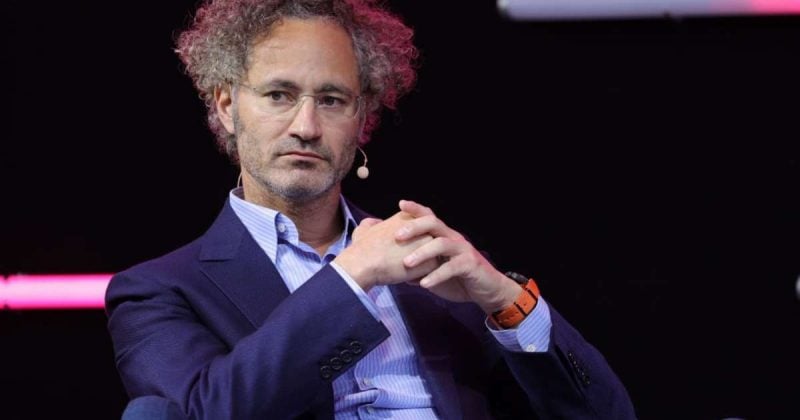
Mulling AI Investment, Anthropic Lobbied Australia on Copyright Law
Anthropic's chief executive Dario Amodei has lobbied Australian officials for "copyright reform" as the artificial intelligence giant seeks to make a major investment in the country, official briefing notes released Monday show. Amodei met Australia's Treasurer Jim Chalmers in April to discuss plans to enter the Australian market, including building data centers, AFP reported. According to briefing notes released under freedom of information law, Amodei had requested the meeting to discuss barriers to AI training in Australia, "particularly copyright reform". Australia's center-left Labor government is under pressure from musicians, screenwriters and artists to reject proposals they say seek to let AI models use copyrighted works for free. Prime Minister Anthony Albanese is set to deliver a speech on AI and "social license" on Wednesday. A briefing note government officials had sent to Chalmers ahead of his meeting with Amodei said: "Anthropic will raise that investment in AI model development capability and associated infrastructure, like data centers, is contingent on clarity of copyright settings." In the United States, Anthropic has argued AI training is covered as "fair use" of material, which does not require rightsholders' consent. The Australian officials disputed this in the briefing note, saying the matter was "not settled". In Australia, AI companies require permission from copyright holders through a voluntary license. Anthropic was told Australia would not introduce a text and data mining exception in its copyright law, and was in talks with a range of stakeholders over the issue. Anthropic "purport there is a 'long tail' of smaller rights holders which impedes efforts to identify and purchase licensing rights", the officials wrote. Anthropic did not immediately respond to a request for comment on the Australian meeting.

Mulling AI investment, Anthropic lobbied Australia on copyright law
Anthropic's chief executive Dario Amodei has lobbied Australian officials for "copyright reform" as the artificial intelligence giant seeks to make a major investment in the country, official briefing notes released Monday show. According to briefing notes released under freedom of information law, Amodei had requested the meeting to discuss barriers to AI training in Australia, "particularly copyright reform". Anthropic's chief executive Dario Amodei has lobbied Australian officials for "copyright reform" as the artificial intelligence giant seeks to make a major investment in the country, official briefing notes released Monday show. Amodei met Australia's Treasurer Jim Chalmers in April to discuss plans to enter the Australian market, including building data centres. According to briefing notes released under freedom of information law, Amodei had requested the meeting to discuss barriers to AI training in Australia, "particularly copyright reform". Australia's centre-left Labor government is under pressure from musicians, screenwriters and artists to reject proposals they say seek to let AI models use copyrighted works for free. Prime Minister Anthony Albanese is set to deliver a speech on AI and "social licence" on Wednesday. A briefing note government officials had sent to Chalmers ahead of his meeting with Amodei said: "Anthropic will raise that investment in AI model development capability and associated infrastructure, like data centres, is contingent on clarity of copyright settings." In the United States, Anthropic has argued AI training is covered as "fair use" of material, which does not require rightsholders' consent. The Australian officials disputed this in the briefing note, saying the matter was "not settled". In Australia, AI companies require permission from copyright holders through a voluntary licence. Anthropic was told Australia would not introduce a text and data mining exception in its copyright law, and was in talks with a range of stakeholders over the issue. Anthropic "purport there is a 'long tail' of smaller rights holders which impedes efforts to identify and purchase licensing rights", the officials wrote. Anthropic did not immediately respond to a request for comment on the Australian meeting.
SpaceX and Amazon are tech dopplegangers worth $4.5 trillion -- and they're headed for a collision
A charismatic founder with near-obsessive conviction, a business that bleeds money, and a stock price based on a wildly optimistic valuation. In 1997, Jeff Bezos took Amazon public at a price of $18 per share at a $438 million valuation. The online bookseller's stock would then crater 90% after the dot-com bubble burst, before flourishing into a $2.6 trillion conglomerate that raked in $77.7 billion last year. Enter SpaceX in 2026. Founded by Elon Musk, the company lost $4.9 billion last year, and went public at $135 a share in June, with a valuation that quickly rose to a sky-high $2 trillion. The two mega-cap companies are primarily known for businesses that have little in common, with Amazon dominating the online retail business while SpaceX has become the world's leading rocket maker. But look a little closer, and the two companies have strikingly similar silhouettes which seem likely to bump up against each other ever more frequently as they compete on the public market stage. Perhaps more than any other tech companies out there today, Amazon and SpaceX are both conglomerates with broad collections of assets and businesses that each believe work together to create a more powerful whole. Both companies offer satellite-beamed high-speed internet access. They're both in the cloud computing and AI infrastructure business with expensive data centers. Chips? Amazon's Trainium and Graviton processors hit an annual revenue run rate above $20 billion in Q1, nearly doubling the $10 billion run rate from the previous quarter. SpaceX has a chip-manufacturing initiative called Terafab with a goal of producing one terawatt of compute hardware each year. Amazon and SpaceX each also have advertising platforms, with Amazon ginning up $68.6 billion in ad revenue last year while SpaceX's X platform -- the social media service formerly known as Twitter -- lived inside the AI segment that posted a $6.4 billion operating loss. If you squint, you can see them as doppelgängers with one big difference -- or to be more accurate, nearly 700 billion differences. Amazon hit $716.9 billion in revenue in 2025 and $80 billion in operating income compared to SpaceX's $18.7 billion of revenue and a $2.6 billion operating loss. Investors are focused on the opportunity ahead, of course. Amazon trades at roughly 3.6 times last year's sales and about 28 times forward earnings. SpaceX trades at about 97 times sales, and had a $4.9 billion net loss. "You're basically buying [SpaceX] at an Amazon valuation when it has one-twentieth the revenue of Amazon," said Jim Lebenthal, a veteran investor and chief markets strategist at Cerity Partners. "SpaceX is an incredibly cool company -- it's amazing, everything they're doing. I also think it's wildly overvalued right now." Looking at the rival companies piece by piece, you can see that in nearly every competitive line of business, Amazon is more profitable and growing. But it was also the company that took a nosedive that nobody wanted to own on the way down. Whether SpaceX can fill its shoes requires an extraordinary amount to go right, said Lebenthal. Here's a look at how the two multi-trillion tech conglomerates stack up. Satellites Starlink, SpaceX's high-speed satellite-based internet service, is the company's current golden child, with $11.4 billion in revenue last year. It counts United Airlines, Carnival, Maersk, and John Deere as customers, and grew 50% year over year, with $4.4 billion in operating income at a 39% margin. Starlink is SpaceX's only profitable segment and a sum-of-the parts analysis from investment bank Stifel last week valued it at $1.25 trillion, just more than half of SpaceX's $2.45 trillion enterprise value. But there's a caveat. FactSet projects SpaceX will need to raise roughly $250 billion in debt over the next four years to fund its growth, according to Lebenthal, so a lot is riding on Starlink's shoulders. Amazon is the runt in this match-up. While Starlink has 9,600 satellites deployed and still in orbit, Amazon's Leo has just started to really get into a groove with about 330 satellites, according to Stifel. But Amazon sees big potential in space. In April, Amazon agreed to acquire Globalstar for $11.6 billion with the goal of expanding Leo's satellite network. And the company recently unveiled enterprise-grade Leo Ultra, which it says is the fastest satellite-internet antenna ever built. Amazon also inkeddeals with Delta Airlines and Jet Blue to expand wi-fi access on hundreds of aircraft in 2028. Cloud and Compute Amazon essentially invented the cloud business, and the company has the clear advantage right now. Amazon Web Services (AWS) posted $128.7 billion in revenue in 2025, with $45.6 billion in operating income at a 35% margin. AWS picked up the pace in the first quarter, growing 28% to $37.6 billion in revenue. Anthropic uses Amazon Trainium 2 chips to train Claude, and Amazon CEO Andy Jassy told investors that AWS's AI revenue run rate topped $15 billion in Q1 2026 and is "ascending rapidly." SpaceX is moving fast though. The company already has Colossus I and II data centers, and has signed lease deals with Anthropic and Google. And the company says its ultimate goal is to send the AI buildout into orbit. In 2025, SpaceX's AI segment generated $3.2 billion in total revenue against a $6.4 billion operating loss and in the first quarter of 2026 it lost $2.5 billion on $818 million in revenue. Dan Niles, founder of Niles Investment Management said SpaceX's compute operation today is more at a level with $5 billion CoreWeave or Amsterdam-based Nebius rather than at the level of AWS. "I don't view them as similar companies at all," said Niles. Justin Menne, a portfolio manager at Harbor Capital, sees it in terms of visibility. Amazon has a contracted backlog of $364 billion and competitive inference chips, he said, while SpaceX has plans to build. "I think in order to believe that the total enterprise value makes sense here, you're inherently giving a lot of credibility to the management team, the engineering team, in order to actually execute," said Menne. The Musk factor Menne said he hadn't done any modeling on how much the Musk premium adds to SpaceX's valuation but the non-technical answer is, "a lot," he said. Lebenthal admires Musk's accomplishments but called him "a source of discomfort" for some value investors. "It's because he says outlandishly optimistic things," Lebenthal said, Musk projected $1 trillion in revenue at SpaceX by 2030, while Lebenthal noted estimated revenues are about $40 billion for 2026. "You can't just say that and $960 billion of incremental revenue is going to come to the table," he said. SpaceX is an innovation stock that really appeals to investors who are dreamers, he added, like Ark Invest's Cathie Wood. On SpaceX's first day of trading, Wood's Ark invested about half a billion in SpaceX, and has purchased more as the price has ebbed since its opening day. Amazon founder Jeff Bezos has a similar larger-than-life profile and reputation for entrepreneurial genius as Musk does. But Bezos transitioned from CEO to executive chairman in 2021 (he still reportedly has some involvement in important priorities like AI, but his day-to-day attention seems focused on Blue Origin, his space exploration company, and Prometheus, a new AI startup he cofounded). Harbor Capital's Menne said there is no equivalent key-man premium at Amazon because "the current value of the company is less reliant on the next five years of executing on something that doesn't already exist." That said, Niles said there's a clear alternative for investors drawn to Musk. The other public company where he serves as CEO, Tesla, has near-term initiatives that include robotics, autonomous fleets, and energy storage which "are likely to come to fruition before a colony on Mars," said Niles. Still, the Musk premium can't be discounted. "Elon has this talent for making money for investors, even if crazy projections don't play out," said Menne. The $28.5 trillion TAM SpaceX's prospectus claims a total addressable market of $28.5 trillion -- roughly the size of the U.S. GDP. Of that, $22.7 trillion is a third-party estimate of the entire global "digital economy." Value-minded Lebenthal noted that "it's earnings you want, not TAM." Menne said the enterprise AI portion "is really hard to underwrite because companies have only just started actually charging for a lot of these services in a way that's not gross-margin negative." Niles added that there's inherent competition in that stratospheric figure. "There are some really pretty good companies in that space," he said. "Maybe you can take all that share from Microsoft and others, but I think Microsoft is a pretty good company." SpaceX is targeting a $1.6 trillion market for connectivity and $26.5 trillion for AI. But Amazon Leo is also gunning for the former. Amazon's AWS generated $128.7 billion in cloud revenue last year, and hosts Anthropic and OpenAI while presiding over a $364 billion contracted backlog. Both can throw down gauntlets over the TAM, but Amazon can point to revenue of $716 billion last year to SpaceX's $18.7 billion. The post SpaceX and Amazon are tech dopplegangers worth $4.5 trillion -- and they're headed for a collision appeared first on Fortune.

Wall Street feasts on fees from SpaceX IPO and mega-mergers
New York | Wall Street banks this week are set to report their biggest haul from investment banking fees in four and a half years, fuelled by SpaceX's blockbuster stock market listing and a resurgence in mega-mergers. The five largest US investment banks - JPMorgan Chase, Goldman Sachs, Morgan Stanley, Bank of America and Citigroup - are forecast to report a year-on-year fees increase of 27 per cent in the second quarter, according to estimates compiled by Bloomberg.
How Low Can SpaceX Stock Go?
Space Exploration Technologies (SPCX 4.51%) went public on June 12. Its stock promptly soared to a peak of $225, giving the company a whopping $2.9 trillion market capitalization, but it has since plummeted by 35% to close at $145 on Friday, July 10. SpaceX has a unique business that spans space transportation, satellite internet connectivity, and artificial intelligence (AI) infrastructure, and its revenue is forecast to grow rapidly over the next couple of years. However, its stock remains extremely expensive even after its recent decline, which could open the door to more losses for investors. How low can SpaceX stock go? SpaceX has a significant opportunity ahead Before we dive into SpaceX's hefty valuation and the math behind a potential decline in its stock, let's examine the company's business, which does have significant growth potential. It's divided into three core segments: SpaceX already accounts for over 80% of the world's mass to orbit, so it's launching more commercial payloads than any other company or organization on the planet. Its market share will only grow once its Starship rocket enters regular service, because its 100-ton payload capacity is four times that of the Falcon 9 rocket, which completes most trips today. The connectivity business is also set to receive a massive boost, as SpaceX will start launching its V3 satellites later this year, which offer a whopping 10 times the bandwidth of the current V2 satellites. Moreover, Starship will launch 60 V3 satellites into orbit per trip, whereas Falcon 9 is only capable of sending 27 at a time. Moving on to the AI segment, most of its revenue comes from Grok subscriptions and renting data center capacity to other companies. When SpaceX bought xAI, it took ownership of data centers like Colossus and Colossus II, which are fitted with hundreds of thousands of specialized AI chips from suppliers like Nvidia and Advanced Micro Devices. SpaceX eventually wants to send AI computing clusters into space, where they will run on solar power and won't need complex cooling systems. This infrastructure would send data back to Earth via Starlink satellites, giving SpaceX a huge advantage over any potential competitors entering this industry. Although Elon Musk founded SpaceX to focus on space exploration and transportation, the company values its opportunity in this segment at just $370 billion. That pales in comparison to the potential $1.6 trillion addressable market in the connectivity business, and the staggering $26.5 trillion opportunity in the AI infrastructure business. SpaceX stock is trading at a sky-high premium to the broader market SpaceX generated $18.7 billion in total revenue during 2025, which was up 33% from the prior year. This was the composition: Data source: SpaceX. While connectivity was the largest and fastest-growing segment last year, that looks set to change. SpaceX recently agreed to rent up to $1.25 billion in AI computing capacity per month to Anthropic, in addition to another $920 million per month to Alphabet, and $150 million per month to Reflection AI. These deals could amount to tens of billions of dollars in annual revenue over the next few years. In fact, Wall Street's average forecast (provided by Yahoo! Finance) suggests SpaceX could more than double its revenue to $38.8 billion in 2026 and then generate $72.4 billion in revenue in 2027. That brings me to its valuation. Based on SpaceX's trailing 12-month revenue and its $1.91 trillion market capitalization, its stock is trading at a price-to-sales (P/S) ratio of 98.9, making it 15 times as expensive as the Nasdaq-100 index, which has a P/S ratio of just 6.4. In other words, SpaceX is wildly overvalued relative to its big-tech peers. Even if we value SpaceX stock using Wall Street's 2027 revenue forecast, its forward P/S ratio is still a hefty 26.3. I'm not predicting this will happen, but the stock would have to plummet by 76% over the next 18 months just to trade in line with the current P/S ratio of the Nasdaq-100 index. In my opinion, the math suggests SpaceX stock will have a tough time generating upside for the foreseeable future, and I won't be surprised to see a decline of 50% (or more), particularly if the company fails to meet Wall Street's revenue expectations.
Musk Collects R40 Billion A Month In AI Rent From Google And Anthropic
Anthropic pays SpaceX $1.25 billion a month for compute. Google pays $920 million. Combined, the two AI leases are worth more than SpaceX entire 2025 revenue. Musk is the landlord of the AI race. Anthropic agreed to pay SpaceX $1.25 billion (R22.9 billion) every month for three years to rent GPU capacity at the Colossus 1 datacentre in Memphis, Tennessee. The deal, signed in May, gives Anthropic access to more than 220,000 Nvidia GPUs and over 300 megawatts of compute, which is roughly the power draw of a small city. Google signed its own lease weeks later. The search giant will pay SpaceX $920 million (R16.8 billion) a month starting October, for roughly 110,000 GPUs, running through June 2029. Combined, the two contracts are worth $2.17 billion (R39.7 billion) a month, or about $26 billion (R476 billion) a year, which is more than SpaceX's entire 2025 revenue of $18.67 billion (R341.7 billion), according to the company's S-1 filing. One tenant, paying monthly rent, nearly matching the whole company's annual turnover. (Landlord of the year, frankly.) Both companies are paying for infrastructure that was built for xAI, Musk's AI venture, which SpaceX acquired in February in an all-stock deal valued at roughly $1.25 trillion (R22.9 trillion). The merged entity went public in June at $1.77 trillion (R32.4 trillion), closing its first day of trading above $2.1 trillion (R38.4 trillion) on Nasdaq under the ticker SPCX. It was the largest IPO in history. SpaceX builds the datacentres, AI companies pay rent on them, and the rent now exceeds every other revenue line the company has. Starlink, the satellite internet business that was SpaceX's main income source, generated $11.4 billion (R208.6 billion) in 2025. The two AI leases will generate more than double that, annually, from two customers alone. The deals exist because the AI industry has run into a wall that money alone cannot fix: there are not enough chips, power, or datacentres on Earth to meet demand. Anthropic needs the capacity for its Claude models. Google needs what it calls "bridge capacity" for Gemini Enterprise, its agentic AI platform, which has grown faster than even Google's own infrastructure can handle. In January, SpaceX filed an application with the US Federal Communications Commission for permission to launch and operate up to one million satellites as part of its Orbital Data Center system, internally called Starmind. The AI1 satellite design features a 70-metre wingspan and a 150-kilowatt peak compute payload, with interchangeable hardware for different processors. Musk has said he wants to begin launching them by 2028, using Starship, and has described space as "the only way to scale AI." The rationale is uninterruptible solar power and lower cooling costs, the two biggest operating expenses for Earth-based datacentres. Nvidia has already built a chip for this. The Space-1 Vera Rubin Module, announced at GTC 2026, is designed to deliver datacentre-class AI compute in space, with up to 25 times the AI compute power per GPU compared with the H100. It is expected to be available in 2027. Whether the orbital datacentres arrive on schedule is a separate question (they will not). The Earth-based revenue is already real. Anthropic's contract alone could generate more than $40 billion (R732 billion) over its three-year term. Google's deal adds another $30 billion (R549 billion) if it runs to completion. The termination clauses are loose: Google can exit with 90 days' notice after December, and Anthropic's ramp-up period has already passed. Musk, in other words, has found a way to charge rent to the companies building the future. Whoever's model wins, Claude or Gemini or his own Grok, the landlord gets paid. [Sources: Tom's Hardware, Anthropic, Teslarati & FCC]
