News & Updates
The latest news and updates from companies in the WLTH portfolio.
SpaceX's AI empire is built on data centers, not satellites - Cryptopolitan
Analysts caution that the contracts carry termination clauses and that space computing is still 10 years or more away. SpaceX's AI returns over the next few years will not come from space. According to Wall Street analysts, the money is coming from Earth data centers rather than the orbital compute that Elon Musk has promised. This reframes SpaceX (NASDAQ: SPCX) as primarily an infrastructure company. Space computing is a bet for the future, not now, for anyone considering SpaceX as an AI play. SpaceX already charges for computing. Reuters reported that the company signed enterprise deals for its Colossus supercomputer clusters with Anthropic, Alphabet's Google, and Reflection AI. Those contracts alone are expected to generate more than $28 billion annually. SpaceX's AI revenue in 2025 is ~$3.2 billion, which is significantly higher than the new deals. The compute contracts also outperformed SpaceX's earnings from rocket launches and Starlink, when counted separately. The contracts, however, include termination clauses, so analysts caution against reading them as recurring revenue. What SpaceX spent to get here SpaceX invested ~$18 billion in AI infrastructure and research in 2025. According to company filings, ~$12.7 billion was spent on capital expenditures and $5.1 billion on research and development. That expenditure outpaced spending on space and connectivity lines. Colossus and a second cluster, Colossus II, together provide ~1 gigawatt of AI compute. That makes SpaceX one of the world's largest compute operators. J.P. Morgan predicts that terrestrial capacity will reach ~9 gigawatts by 2029, which is equivalent to four times the output of the Hoover Dam. Brokerages cited by Reuters pointed to its $60 billion purchase of AI coding startup Cursor as a sign the company wants to sell AI applications, not just the machines that run them. The deal ties into Musk's model plans on the software side. A separate Cryptopolitan report said Musk's lab, now renamed SpaceXAI, built its Grok 4.5 model jointly with Cursor, and Musk has said SpaceX is buying the startup for that same $60 billion figure. Why orbit is still a distant bet Musk has proposed a future in which computers run in space. Analysts Reuters spoke with view this as a later chapter. "The narrative that (orbital) will fundamentally disrupt terrestrial data centers is a little bit overblown," said Anthony Milovantsev, a partner at consultancy Altman Solon, who estimated that any real displacement of ground-based data centers would take "ten years plus." The case is based on hardware that does not currently exist at scale. Orbital computing relies on SpaceX's Starship flying frequently and cheaply, lower launch costs, and better satellites, according to analysts. Ground clusters continue to run regardless of direction. BofA analysts were more blunt, calling the long term viability of orbital data centers "unproven and heavily reliant on key technological milestones that have yet to be realized." If the engineering is delivered, the appeal will be valid. Starships could eventually launch solar computing satellites into orbit, avoiding ground based costs such as energy, cooling, and land use. Analysts aren't asking if SpaceX can build and sell AI infrastructure. J.P. Morgan's estimate of ~9 gigawatts in 2029 remains the benchmark for establishing a business beyond Earth.
Looking for Exposure to SpaceX Stock (SPCX)? Consider These Two ETFs
After SpaceX's (SPCX) high-profile IPO last month, investors are looking for ways to get exposure to the company's fast growth in launch services, Starlink, and new AI‑compute deals. Following the company's recent inclusion into the Nasdaq-100 Index (NDX) on July 7, several ETFs added the stock to their portfolios. Currently, investors could consider investing in these two ETFs: Roundhill Space & Technology ETF (MARS) and VanEck Space ETF (WARP). TipRanks Welcomes a New ETF - NYSE:RANK * TipRanks has entered a new arena in the investing world, powering the index of an ETF based on its unique data now trading under the ticker RANK on the NYSE. * RANK tracks the performance of the TipRanks US Momentum Analysts Index, a rules-based index of 50 large U.S. companies. Roundhill Space & Technology ETF (MARS) MARS is an actively managed fund that invests in companies tied to the growing space economy. Its portfolio includes firms involved in launch services, satellite networks, space hardware, communications, and emerging orbital technologies. SPCX stock constitutes 22.86% of the ETF's holdings. Some other top holdings in the MARS ETF include Rocket Lab USA (RKLB), AST SpaceMobile (ASTS), and ViaSat (VSAT). Overall, the ETF has $66.72 million in assets under management (AUM) and an expense ratio of 0.75%. On TipRanks, the MARS ETF has a Moderate Buy consensus rating based on 18 Buys and 12 Holds assigned in the last three months. The average MARS ETF price target of $40.18 implies 43.91% upside potential. VanEck Space ETF (WARP) WARP is a passively managed ETF, designed to track the performance of the MarketVector Space Index. The ETF targets four core sectors of the space economy, which include satellite communications, rockets and propulsion systems, Earth observation and data analytics, and space exploration. SpaceX stock accounts for 21.58% of WARP's total holdings. Apart from SPCX, some of the top stocks in the WARP ETF are Iridium (IRDM), Planet Labs (PL), and Rocket Lab. Overall, the ETF has $41.25 million in AUM. Also, it has an expense ratio of 0.5%. Turning to Wall Street, the ETF has a Moderate Buy consensus rating. Of the 21 stocks held, 15 have Buy ratings and six have Hold ratings. The average WARP ETF price target of $32.96 implies a 48.51% upside potential. Bottom Line Investors who want exposure to the space boom around SpaceX can look at MARS and WARP, two ETFs that hold SPCX and offer diversified access to the sector. Both give exposure to companies tied to the same demand drivers, such as satellite growth, launch activity, and new space tech adoption.

Prediction: SpaceX Shares Can Reach $220 by End of 2026
Space Exploration Technologies (NASDAQ: SPCX) has become one of the market's most closely watched stocks after its rapid entry into the Nasdaq-100 index on July 7. Shares are trading close to $149 (as of July 10), still above its $135 IPO price, but nearly 34% below its post-IPO high of $225.60. This share price pullback has not ended investor interest in SpaceX, but it has changed the debate. Investors are now weighing the company's artificial intelligence (AI) compute opportunity, Starlink satellite internet network's room to expand in satellite communications, and progress on the next-generation reusable rocket system, Starship, as they assess where the stock could trade by the end of 2026. Missed Nvidia in 2009? This Rare Signal Is Flashing Again. In 2009, a "Double Down" signal flashed for a little-known chipmaker called Nvidia. For the first time in years, that same "Total Conviction" signal is flashing for a company 1/100th the size of Nvidia. Continue " Image source: Getty Images. SpaceX has growth drivers for its revenue SpaceX is already demonstrating impressive financial momentum. Revenue rose 33% year over year to $18.7 billion in 2025. But the company still reported a net loss of $4.9 billion after merging with money-losing xAI. Starlink remains the key growth engine, supported by roughly 10.3 million users and 9,600 satellites. But AI infrastructure is also becoming the next major catalyst. Alphabet has agreed to pay SpaceX $920 million per month from October 2026 through June 2029 for access to about 110,000 Nvidia GPUs and related computing resources. Anthropic has also signed a major compute-access deal with SpaceX, securing use of SpaceX's Colossus 1 data center. Reuters reported that SpaceX's two deals are worth about $26 billion annually if fully realized. Although not all the AI revenue from these deals is expected to materialize in 2026, it still gives investors a reason to value SpaceX based on future revenue potential rather than solely on 2025 sales. SpaceX's valuation will fall, but remain expensive At the end of 2026, investors will likely be looking toward SpaceX's expected 2027 revenue, since the stock's valuation depends on how quickly Starlink, AI compute, and Starship can expand the company's sales base. SpaceX's market capitalization is close to $2 trillion. Analysts' 2026 revenue estimates range from $34.3 billion on the low end to $43.2 billion on the high end, with a base case estimate of about $38.9 billion. Hence, SpaceX is already trading at roughly 51.4 times base case 2026 sales. By the end of 2026, that multiple will most likely compress, as post-IPO excitement usually cools and investors demand evidence of execution. But it also does not need to collapse if SpaceX continues to show progress in Starlink, AI infrastructure, and Starship. A reasonable base-case assumption is that SpaceX's sales multiple compresses by about 20% to 25% from today's 51.4x 2026 sales multiple. That gives a forward price-to-sales (P/S) multiple range of roughly 38.5 to 41 times expected 2027 sales. Analysts expect SpaceX's 2027 revenue to range from $54.8 billion to $85 billion, with an average estimate of $72.4 billion. Applying a forward sales multiple of 38.5 to 41 times to the 2027 base case revenue estimate yields an implied market capitalization of about $2.79 trillion to $2.97 trillion. Using roughly 13.1 billion shares outstanding, that points to a share price in the range of $213 to $227 at the end of 2026. Hence, $220 is a reasonable base case estimate. It assumes that while SpaceX's valuation multiple compresses, revenue growth offsets the pressure enough to lift the share price. Should you buy stock in Space Exploration Technologies right now? Before you buy stock in Space Exploration Technologies, consider this: The Motley Fool Stock Advisor analyst team just identified what they believe are the 10 best stocks for investors to buy now... and Space Exploration Technologies wasn't one of them. The 10 stocks that made the cut could produce monster returns in the coming years. Consider when Netflix made this list on December 17, 2004... if you invested $1,000 at the time of our recommendation, you'd have $395,679!* Or when Nvidia made this list on April 15, 2005... if you invested $1,000 at the time of our recommendation, you'd have $1,294,805!* Now, it's worth noting Stock Advisor's total average return is 929% -- a market-crushing outperformance compared to 211% for the S&P 500. Don't miss the latest top 10 list, available with Stock Advisor, and join an investing community built by individual investors for individual investors. See the 10 stocks " *Stock Advisor returns as of July 12, 2026. Manali Pradhan, CFA has no position in any of the stocks mentioned. The Motley Fool has positions in and recommends Alphabet and Nvidia. The Motley Fool has a disclosure policy. The views and opinions expressed herein are the views and opinions of the author and do not necessarily reflect those of Nasdaq, Inc.

J.P. Morgan Called a Potential Elon Musk SpaceX-Tesla Merger "Strategically Coherent"
Now that Elon Musk's rocket and satellite company Space Exploration Technologies (NASDAQ: SPCX) trades publicly, Wall Street has started hunting for the next best thing: stocks that can ride its coattails. The most eye-catching call came from J.P. Morgan, whose analysts described a possible combination of SpaceX and Tesla (NASDAQ: TSLA) as "strategically coherent on paper." That single phrase has revived a long-running fantasy among investors, and it's worth understanding what the analyst company actually means before treating any of these names as a back door into SpaceX. Why J.P. Morgan sees logic in a Tesla-SpaceX tie-up J.P. Morgan's argument is that Musk's companies already share engineering talent, an artificial intelligence ambition, and a common leader, so uniting them could let him run one integrated vision across cars, robots, energy, and space. The analysts also noted that SpaceX's blockbuster public debut gives Musk valuable stock to make a deal, and that his growing voting control at Tesla makes him better positioned to push one through. Where to invest $1,000 right now? Our analyst team just revealed what they believe are the 10 best stocks to buy right now, when you join Stock Advisor. See the stocks " Image source: Getty Images. J.P. Morgan was careful, though, and so am I. It flagged real obstacles: securing regulatory approvals across many countries, especially China, where Tesla builds cars; the awkward gap between Musk's near-total control of SpaceX and his smaller stake in Tesla; and the likelihood that any deal would look like SpaceX swallowing Tesla rather than a merger of equals. "Coherent on paper" is a long way from "likely to happen." The other SpaceX-by-association plays Tesla isn't the only name catching the halo. Deutsche Bank started coverage of EchoStar (NASDAQ: ECHO) with a buy rating, framing it as a cheaper way to own SpaceX. EchoStar holds roughly $11 billion of SpaceX shares it received for handing over wireless spectrum, so the bank argues you're effectively buying SpaceX at a discount and getting EchoStar's other assets thrown in. The catch is serious: EchoStar's pay-TV subsidiary recently filed for bankruptcy, and the stock has tumbled. Then there's Charter Communications (NASDAQ: CHTR), which, according to Bloomberg, has held talks with SpaceX about a consumer mobile phone service that would route some traffic through Charter's network. It's a genuine strategic fit, but it's only talk for now. Here's my honest read. Buying a stock because it's linked to a hot company is a strategy built on hope, not fundamentals, and all three of these names are down this year for reasons of their own. A merger that's merely "coherent on paper," a spectrum stake wrapped around a bankruptcy, and a rumored partnership are not the same as durable businesses. If you like Tesla, EchoStar, or Charter, buy them for what they do today, and treat any SpaceX connection as a bonus rather than the thesis. Should you buy stock in Space Exploration Technologies right now? Before you buy stock in Space Exploration Technologies, consider this: The Motley Fool Stock Advisor analyst team just identified what they believe are the 10 best stocks for investors to buy now... and Space Exploration Technologies wasn't one of them. The 10 stocks that made the cut could produce monster returns in the coming years. Consider when Netflix made this list on December 17, 2004... if you invested $1,000 at the time of our recommendation, you'd have $395,679!* Or when Nvidia made this list on April 15, 2005... if you invested $1,000 at the time of our recommendation, you'd have $1,294,805!* Now, it's worth noting Stock Advisor's total average return is 929% -- a market-crushing outperformance compared to 211% for the S&P 500. Don't miss the latest top 10 list, available with Stock Advisor, and join an investing community built by individual investors for individual investors. See the 10 stocks " *Stock Advisor returns as of July 12, 2026. JPMorgan Chase is an advertising partner of Motley Fool Money. Micah Zimmerman has no position in any of the stocks mentioned. The Motley Fool has positions in and recommends JPMorgan Chase and Tesla. The Motley Fool has a disclosure policy. The views and opinions expressed herein are the views and opinions of the author and do not necessarily reflect those of Nasdaq, Inc.
J.P. Morgan Called a Potential Elon Musk SpaceX-Tesla Merger "Strategically Coherent"
Now that Elon Musk's rocket and satellite company Space Exploration Technologies (SPCX 4.51%) trades publicly, Wall Street has started hunting for the next best thing: stocks that can ride its coattails. The most eye-catching call came from J.P. Morgan, whose analysts described a possible combination of SpaceX and Tesla (TSLA +0.22%) as "strategically coherent on paper." That single phrase has revived a long-running fantasy among investors, and it's worth understanding what the analyst company actually means before treating any of these names as a back door into SpaceX. Why J.P. Morgan sees logic in a Tesla-SpaceX tie-up J.P. Morgan's argument is that Musk's companies already share engineering talent, an artificial intelligence ambition, and a common leader, so uniting them could let him run one integrated vision across cars, robots, energy, and space. The analysts also noted that SpaceX's blockbuster public debut gives Musk valuable stock to make a deal, and that his growing voting control at Tesla makes him better positioned to push one through. J.P. Morgan was careful, though, and so am I. It flagged real obstacles: securing regulatory approvals across many countries, especially China, where Tesla builds cars; the awkward gap between Musk's near-total control of SpaceX and his smaller stake in Tesla; and the likelihood that any deal would look like SpaceX swallowing Tesla rather than a merger of equals. "Coherent on paper" is a long way from "likely to happen." The other SpaceX-by-association plays Tesla isn't the only name catching the halo. Deutsche Bank started coverage of EchoStar (ECHO 2.00%) with a buy rating, framing it as a cheaper way to own SpaceX. EchoStar holds roughly $11 billion of SpaceX shares it received for handing over wireless spectrum, so the bank argues you're effectively buying SpaceX at a discount and getting EchoStar's other assets thrown in. The catch is serious: EchoStar's pay-TV subsidiary recently filed for bankruptcy, and the stock has tumbled. Then there's Charter Communications (CHTR 2.69%), which, according to Bloomberg, has held talks with SpaceX about a consumer mobile phone service that would route some traffic through Charter's network. It's a genuine strategic fit, but it's only talk for now. Here's my honest read. Buying a stock because it's linked to a hot company is a strategy built on hope, not fundamentals, and all three of these names are down this year for reasons of their own. A merger that's merely "coherent on paper," a spectrum stake wrapped around a bankruptcy, and a rumored partnership are not the same as durable businesses. If you like Tesla, EchoStar, or Charter, buy them for what they do today, and treat any SpaceX connection as a bonus rather than the thesis.

J.P. Morgan Called a Potential Elon Musk SpaceX-Tesla Merger "Strategically Coherent"
Now that Elon Musk's rocket and satellite company Space Exploration Technologies (NASDAQ: SPCX) trades publicly, Wall Street has started hunting for the next best thing: stocks that can ride its coattails. The most eye-catching call came from J.P. Morgan, whose analysts described a possible combination of SpaceX and Tesla (NASDAQ: TSLA) as "strategically coherent on paper." That single phrase has revived a long-running fantasy among investors, and it's worth understanding what the analyst company actually means before treating any of these names as a back door into SpaceX. Why J.P. Morgan sees logic in a Tesla-SpaceX tie-up J.P. Morgan's argument is that Musk's companies already share engineering talent, an artificial intelligence ambition, and a common leader, so uniting them could let him run one integrated vision across cars, robots, energy, and space. The analysts also noted that SpaceX's blockbuster public debut gives Musk valuable stock to make a deal, and that his growing voting control at Tesla makes him better positioned to push one through. Missed Nvidia in 2009? This Rare Signal Is Flashing Again. In 2009, a "Double Down" signal flashed for a little-known chipmaker called Nvidia. For the first time in years, that same "Total Conviction" signal is flashing for a company 1/100th the size of Nvidia. Continue " J.P. Morgan was careful, though, and so am I. It flagged real obstacles: securing regulatory approvals across many countries, especially China, where Tesla builds cars; the awkward gap between Musk's near-total control of SpaceX and his smaller stake in Tesla; and the likelihood that any deal would look like SpaceX swallowing Tesla rather than a merger of equals. "Coherent on paper" is a long way from "likely to happen." The other SpaceX-by-association plays Tesla isn't the only name catching the halo. Deutsche Bank started coverage of EchoStar (NASDAQ: ECHO) with a buy rating, framing it as a cheaper way to own SpaceX. EchoStar holds roughly $11 billion of SpaceX shares it received for handing over wireless spectrum, so the bank argues you're effectively buying SpaceX at a discount and getting EchoStar's other assets thrown in. The catch is serious: EchoStar's pay-TV subsidiary recently filed for bankruptcy, and the stock has tumbled. Then there's Charter Communications (NASDAQ: CHTR), which, according to Bloomberg, has held talks with SpaceX about a consumer mobile phone service that would route some traffic through Charter's network. It's a genuine strategic fit, but it's only talk for now.
Prediction: SpaceX Shares Can Reach $220 by End of 2026
Space Exploration Technologies (SPCX 4.51%) has become one of the market's most closely watched stocks after its rapid entry into the Nasdaq-100 index on July 7. Shares are trading close to $149 (as of July 10), still above its $135 IPO price, but nearly 34% below its post-IPO high of $225.60. This share price pullback has not ended investor interest in SpaceX, but it has changed the debate. Investors are now weighing the company's artificial intelligence (AI) compute opportunity, Starlink satellite internet network's room to expand in satellite communications, and progress on the next-generation reusable rocket system, Starship, as they assess where the stock could trade by the end of 2026. SpaceX has growth drivers for its revenue SpaceX is already demonstrating impressive financial momentum. Revenue rose 33% year over year to $18.7 billion in 2025. But the company still reported a net loss of $4.9 billion after merging with money-losing xAI. Starlink remains the key growth engine, supported by roughly 10.3 million users and 9,600 satellites. But AI infrastructure is also becoming the next major catalyst. Alphabet has agreed to pay SpaceX $920 million per month from October 2026 through June 2029 for access to about 110,000 Nvidia GPUs and related computing resources. Anthropic has also signed a major compute-access deal with SpaceX, securing use of SpaceX's Colossus 1 data center. Reuters reported that SpaceX's two deals are worth about $26 billion annually if fully realized. Although not all the AI revenue from these deals is expected to materialize in 2026, it still gives investors a reason to value SpaceX based on future revenue potential rather than solely on 2025 sales. SpaceX's valuation will fall, but remain expensive At the end of 2026, investors will likely be looking toward SpaceX's expected 2027 revenue, since the stock's valuation depends on how quickly Starlink, AI compute, and Starship can expand the company's sales base. SpaceX's market capitalization is close to $2 trillion. Analysts' 2026 revenue estimates range from $34.3 billion on the low end to $43.2 billion on the high end, with a base case estimate of about $38.9 billion. Hence, SpaceX is already trading at roughly 51.4 times base case 2026 sales. By the end of 2026, that multiple will most likely compress, as post-IPO excitement usually cools and investors demand evidence of execution. But it also does not need to collapse if SpaceX continues to show progress in Starlink, AI infrastructure, and Starship. A reasonable base-case assumption is that SpaceX's sales multiple compresses by about 20% to 25% from today's 51.4x 2026 sales multiple. That gives a forward price-to-sales (P/S) multiple range of roughly 38.5 to 41 times expected 2027 sales. Analysts expect SpaceX's 2027 revenue to range from $54.8 billion to $85 billion, with an average estimate of $72.4 billion. Applying a forward sales multiple of 38.5 to 41 times to the 2027 base case revenue estimate yields an implied market capitalization of about $2.79 trillion to $2.97 trillion. Using roughly 13.1 billion shares outstanding, that points to a share price in the range of $213 to $227 at the end of 2026. Hence, $220 is a reasonable base case estimate. It assumes that while SpaceX's valuation multiple compresses, revenue growth offsets the pressure enough to lift the share price.

Palantir CEO has a blunt verdict on OpenAI and Anthropic
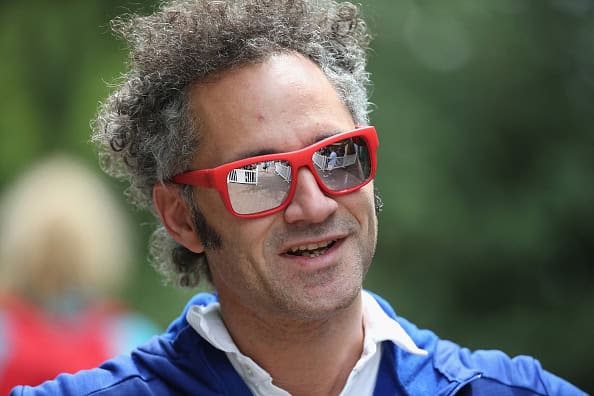
Palantir posted the highest revenue growth rate in its history in the first quarter of fiscal year 2026. U.S. commercial revenue jumped 133%. The company raised its full-year guidance by 10 points. By any operational measure, things are going well. And yet Alex Karp walked onto CNBC's Squawk Box and started criticizing the entire foundation of the AI business model. He wasn't talking about Palantir's competitors in the traditional sense. He was talking about the companies whose technology his own platform runs on top of. "I'm not throwing shade at them," he told viewers, "but something has gone completely wrong." What Karp said about OpenAI and Anthropic on live television The problem, in Karp's telling, is tokens. The way OpenAI and Anthropic sell AI access, metered by token consumption, has created a dynamic he says enterprises are increasingly fed up with. "The basic view among enterprises in this country is I'm going to chillax and waste my time with tokens, I'm gonna get no value, and they're gonna get my IP," Karp told CNBC. When co-anchor Andrew Ross Sorkin said "that sounds like shade," Karp pushed back: "No, no. This is reporting." He said customers are shifting away from what he called "tokenmaxxing" toward open-weight models that deliver similar output at a fraction of the cost. The ROI conversation is changing. Enterprises are asking harder questions about what they are actually getting for what they are spending, and a lot of them are not liking the answer. Palantir's stock rose 8% that day. Before the interview, the company had published a 9-point "AI sovereignty" manifesto on X, setting the philosophical stage for what Karp was about to say publicly. Why Karp says data ownership is the real AI fight The deeper argument Karp made was about control. Enterprises and governments, he said, want to own their compute, their models, their data stack, and their alpha. The word he kept coming back to was ownership. "They want to know they own the means of production. It's not being transferred to someone else." That framing extended into territory that goes well beyond enterprise software. Karp said it would be "insane" to hand battlefield or government applications entirely over to AI labs, effectively outsourcing sensitive decisions to a small group of Silicon Valley companies operating by consensus. To illustrate where he thinks the market is going, Karp pointed to Palantir's expanded partnership with Nvidia, announced the same week, to build custom AI models for U.S. government agencies. "What aligns me with Nvidia... is what the technical customers want, which is control over their compute, their models, their data stack and their alpha," he said on CNBC. Palantir's Q1 2026 numbers and what they say about Karp's thesis Karp is making this argument from a position of real business momentum. Palantir's Q1 FY2026 revenue came in at $1.63 billion, up 85% year over year, the highest growth rate in company history. U.S. commercial revenue hit $595 million, up 133%. Adjusted operating margin expanded to 60% from 44% a year earlier. On the earnings call, Karp said Palantir's Rule of 40 score had hit 145%, which he called a feat matched only by Nvidia, Micron, and SK Hynix. Management raised annual revenue guidance to 71% growth, ten points above the prior quarter's forecast. U.S. commercial remaining deal value, meaning the potential value of contracted business yet to be recognized as revenue, reached $4.92 billion, up 112% year over year. Token-cost fatigue is showing up at real companies. Uber capped employee spending on agentic coding tools, including Claude Code and Cursor, at $1,500 per month after burning through its AI budget in four months, according to 24/7 Wall St. That is exactly the dynamic Karp is describing. The token model works until it doesn't, and for a growing number of enterprises, it has already stopped working. The Palantir valuation problem Karp's swagger can't quite solve The business is accelerating. The stock is down 28.67% year to date. Those two facts sitting next to each other tell you what the market's actual concern is, and it isn't whether enterprises want control of their data. Palantir closed at $126.79 on July 10 and trades at a forward P/E near 91. That multiple requires an enormous amount of future growth to be baked in and delivered. Even with 84.7% revenue growth, investors have spent most of 2026 asking whether that rate is sustainable or whether the stock got too far ahead of the business during last year's AI enthusiasm. Michael Burry disagrees. Scion Asset Management disclosed a put position tied to 5 million Palantir shares in its Q3 2025 13F, filed November 3, 2025. At the time, that represented an underlying notional of roughly $912 million, as TheStreet reported. 13Fs don't show strike prices, expiration dates, or whether the position is still open. But betting against $912 million worth of Palantir shares is not a casual trade. What Karp's OpenAI and Anthropic critique means for AI investors Karp's argument, if it holds up, has implications beyond Palantir's own stock. The token model underpins how OpenAI and Anthropic generate most of their enterprise revenue. If large customers are genuinely moving toward open-weight models and demanding more control over their infrastructure, that changes the growth assumptions for the closed-model AI companies more than the market has so far priced in. The counterargument is that Karp has an obvious commercial incentive to talk down token-based AI, since Palantir positions itself as the alternative. His numbers are real, but so is his motive. The enterprises he claims are frustrated may still be signing large contracts with OpenAI and Anthropic behind closed doors while also exploring Palantir's approach on the side. What July 1 made clear is that the business model debate inside the AI industry is getting louder, and the people doing the criticizing are no longer just academics or short sellers. They are CEOs running companies posting 84.7% revenue growth, with enough market credibility to move their own stock 8% with a single television appearance. The Arena Media Brands, LLC THESTREET is a registered trademark of TheStreet, Inc. This story was originally published July 12, 2026 at 4:37 PM.
Palantir CEO has a blunt verdict on OpenAI and Anthropic
Palantir posted the highest revenue growth rate in its history in the first quarter of fiscal year 2026. U.S. commercial revenue jumped 133%. The company raised its full-year guidance by 10 points. By any operational measure, things are going well. And yet Alex Karp walked onto CNBC's Squawk Box and started criticizing the entire foundation of the AI business model. He wasn't talking about Palantir's competitors in the traditional sense. He was talking about the companies whose technology his own platform runs on top of. "I'm not throwing shade at them," he told viewers, "but something has gone completely wrong." What Karp said about OpenAI and Anthropic on live television The problem, in Karp's telling, is tokens. The way OpenAI and Anthropic sell AI access, metered by token consumption, has created a dynamic he says enterprises are increasingly fed up with. "The basic view among enterprises in this country is I'm going to chillax and waste my time with tokens, I'm gonna get no value, and they're gonna get my IP," Karp told CNBC. When co-anchor Andrew Ross Sorkin said "that sounds like shade," Karp pushed back: "No, no. This is reporting." He said customers are shifting away from what he called "tokenmaxxing" toward open-weight models that deliver similar output at a fraction of the cost. The ROI conversation is changing. Enterprises are asking harder questions about what they are actually getting for what they are spending, and a lot of them are not liking the answer. Palantir's stock rose 8% that day. Before the interview, the company had published a 9-point "AI sovereignty" manifesto on X, setting the philosophical stage for what Karp was about to say publicly. Why Karp says data ownership is the real AI fight The deeper argument Karp made was about control. Enterprises and governments, he said, want to own their compute, their models, their data stack, and their alpha. The word he kept coming back to was ownership. "They want to know they own the means of production. It's not being transferred to someone else." That framing extended into territory that goes well beyond enterprise software. Karp said it would be "insane" to hand battlefield or government applications entirely over to AI labs, effectively outsourcing sensitive decisions to a small group of Silicon Valley companies operating by consensus. To illustrate where he thinks the market is going, Karp pointed to Palantir's expanded partnership with Nvidia, announced the same week, to build custom AI models for U.S. government agencies. "What aligns me with Nvidia... is what the technical customers want, which is control over their compute, their models, their data stack and their alpha," he said on CNBC. Palantir's Q1 2026 numbers and what they say about Karp's thesis Karp is making this argument from a position of real business momentum. Palantir's Q1 FY2026 revenue came in at $1.63 billion, up 85% year over year, the highest growth rate in company history. U.S. commercial revenue hit $595 million, up 133%. Adjusted operating margin expanded to 60% from 44% a year earlier. On the earnings call, Karp said Palantir's Rule of 40 score had hit 145%, which he called a feat matched only by Nvidia, Micron, and SK Hynix. Management raised annual revenue guidance to 71% growth, ten points above the prior quarter's forecast. U.S. commercial remaining deal value, meaning the potential value of contracted business yet to be recognized as revenue, reached $4.92 billion, up 112% year over year. Token-cost fatigue is showing up at real companies. Uber capped employee spending on agentic coding tools, including Claude Code and Cursor, at $1,500 per month after burning through its AI budget in four months, according to 24/7 Wall St. That is exactly the dynamic Karp is describing. The token model works until it doesn't, and for a growing number of enterprises, it has already stopped working. The Palantir valuation problem Karp's swagger can't quite solve The business is accelerating. The stock is down 28.67% year to date. Those two facts sitting next to each other tell you what the market's actual concern is, and it isn't whether enterprises want control of their data. Palantir closed at $126.79 on July 10 and trades at a forward P/E near 91. That multiple requires an enormous amount of future growth to be baked in and delivered. Even with 84.7% revenue growth, investors have spent most of 2026 asking whether that rate is sustainable or whether the stock got too far ahead of the business during last year's AI enthusiasm. Michael Burry disagrees. Scion Asset Management disclosed a put position tied to 5 million Palantir shares in its Q3 2025 13F, filed November 3, 2025. At the time, that represented an underlying notional of roughly $912 million, as TheStreet reported. 13Fs don't show strike prices, expiration dates, or whether the position is still open. But betting against $912 million worth of Palantir shares is not a casual trade. What Karp's OpenAI and Anthropic critique means for AI investors Karp's argument, if it holds up, has implications beyond Palantir's own stock. The token model underpins how OpenAI and Anthropic generate most of their enterprise revenue. If large customers are genuinely moving toward open-weight models and demanding more control over their infrastructure, that changes the growth assumptions for the closed-model AI companies more than the market has so far priced in. The counterargument is that Karp has an obvious commercial incentive to talk down token-based AI, since Palantir positions itself as the alternative. His numbers are real, but so is his motive. The enterprises he claims are frustrated may still be signing large contracts with OpenAI and Anthropic behind closed doors while also exploring Palantir's approach on the side. What July 1 made clear is that the business model debate inside the AI industry is getting louder, and the people doing the criticizing are no longer just academics or short sellers. They are CEOs running companies posting 84.7% revenue growth, with enough market credibility to move their own stock 8% with a single television appearance. The Arena Media Brands, LLC THESTREET is a registered trademark of TheStreet, Inc. This story was originally published July 12, 2026 at 4:37 PM.
Palantir CEO has a blunt verdict on OpenAI and Anthropic
Palantir posted the highest revenue growth rate in its history in the first quarter of fiscal year 2026. U.S. commercial revenue jumped 133%. The company raised its full-year guidance by 10 points. By any operational measure, things are going well. And yet Alex Karp walked onto CNBC's Squawk Box and started criticizing the entire foundation of the AI business model. He wasn't talking about Palantir's competitors in the traditional sense. He was talking about the companies whose technology his own platform runs on top of. "I'm not throwing shade at them," he told viewers, "but something has gone completely wrong." What Karp said about OpenAI and Anthropic on live television The problem, in Karp's telling, is tokens. The way OpenAI and Anthropic sell AI access, metered by token consumption, has created a dynamic he says enterprises are increasingly fed up with. "The basic view among enterprises in this country is I'm going to chillax and waste my time with tokens, I'm gonna get no value, and they're gonna get my IP," Karp told CNBC. When co-anchor Andrew Ross Sorkin said "that sounds like shade," Karp pushed back: "No, no. This is reporting." He said customers are shifting away from what he called "tokenmaxxing" toward open-weight models that deliver similar output at a fraction of the cost. The ROI conversation is changing. Enterprises are asking harder questions about what they are actually getting for what they are spending, and a lot of them are not liking the answer. Palantir's stock rose 8% that day. Before the interview, the company had published a 9-point "AI sovereignty" manifesto on X, setting the philosophical stage for what Karp was about to say publicly. Why Karp says data ownership is the real AI fight The deeper argument Karp made was about control. Enterprises and governments, he said, want to own their compute, their models, their data stack, and their alpha. The word he kept coming back to was ownership. "They want to know they own the means of production. It's not being transferred to someone else." That framing extended into territory that goes well beyond enterprise software. Karp said it would be "insane" to hand battlefield or government applications entirely over to AI labs, effectively outsourcing sensitive decisions to a small group of Silicon Valley companies operating by consensus. To illustrate where he thinks the market is going, Karp pointed to Palantir's expanded partnership with Nvidia, announced the same week, to build custom AI models for U.S. government agencies. "What aligns me with Nvidia... is what the technical customers want, which is control over their compute, their models, their data stack and their alpha," he said on CNBC. Palantir's Q1 2026 numbers and what they say about Karp's thesis Karp is making this argument from a position of real business momentum. Palantir's Q1 FY2026 revenue came in at $1.63 billion, up 85% year over year, the highest growth rate in company history. U.S. commercial revenue hit $595 million, up 133%. Adjusted operating margin expanded to 60% from 44% a year earlier. On the earnings call, Karp said Palantir's Rule of 40 score had hit 145%, which he called a feat matched only by Nvidia, Micron, and SK Hynix. Management raised annual revenue guidance to 71% growth, ten points above the prior quarter's forecast. U.S. commercial remaining deal value, meaning the potential value of contracted business yet to be recognized as revenue, reached $4.92 billion, up 112% year over year. Token-cost fatigue is showing up at real companies. Uber capped employee spending on agentic coding tools, including Claude Code and Cursor, at $1,500 per month after burning through its AI budget in four months, according to 24/7 Wall St. That is exactly the dynamic Karp is describing. The token model works until it doesn't, and for a growing number of enterprises, it has already stopped working. The Palantir valuation problem Karp's swagger can't quite solve The business is accelerating. The stock is down 28.67% year to date. Those two facts sitting next to each other tell you what the market's actual concern is, and it isn't whether enterprises want control of their data. Palantir closed at $126.79 on July 10 and trades at a forward P/E near 91. That multiple requires an enormous amount of future growth to be baked in and delivered. Even with 84.7% revenue growth, investors have spent most of 2026 asking whether that rate is sustainable or whether the stock got too far ahead of the business during last year's AI enthusiasm. Michael Burry disagrees. Scion Asset Management disclosed a put position tied to 5 million Palantir shares in its Q3 2025 13F, filed November 3, 2025. At the time, that represented an underlying notional of roughly $912 million, as TheStreet reported. 13Fs don't show strike prices, expiration dates, or whether the position is still open. But betting against $912 million worth of Palantir shares is not a casual trade. What Karp's OpenAI and Anthropic critique means for AI investors Karp's argument, if it holds up, has implications beyond Palantir's own stock. The token model underpins how OpenAI and Anthropic generate most of their enterprise revenue. If large customers are genuinely moving toward open-weight models and demanding more control over their infrastructure, that changes the growth assumptions for the closed-model AI companies more than the market has so far priced in. The counterargument is that Karp has an obvious commercial incentive to talk down token-based AI, since Palantir positions itself as the alternative. His numbers are real, but so is his motive. The enterprises he claims are frustrated may still be signing large contracts with OpenAI and Anthropic behind closed doors while also exploring Palantir's approach on the side. What July 1 made clear is that the business model debate inside the AI industry is getting louder, and the people doing the criticizing are no longer just academics or short sellers. They are CEOs running companies posting 84.7% revenue growth, with enough market credibility to move their own stock 8% with a single television appearance. The Arena Media Brands, LLC THESTREET is a registered trademark of TheStreet, Inc. This story was originally published July 12, 2026 at 4:37 PM.
SpaceX Went Nowhere for a Month, but It Easily Beat Other Space Stocks
* SpaceX (SPCX) trades near its $150 opening price, but a flat price performance is a relative win when the broader space sector is down sharply. * Virgin Galactic (SPCE) crashed 45% and Rocket Lab (RKLB) fell 22% over the past month as sector rotation hammered speculative space names hard. * SpaceX's $1.96 trillion market cap and Starlink's global reach anchor the bull case, but its surrendered IPO pop and rich valuation are real risks. * Act now: the analyst who called NVIDIA in 2010 just named his top 10 AI stocks -- and Rocket Lab didn't make the cut. Grab the names FREE today. Shares of SpaceX (NASDAQ:SPCX) are trading at $148 and change on Friday afternoon, essentially back where they opened one month ago. That flat tape looks dull on the surface, but against the rest of the space sector, it's the best performance in the group. SpaceX priced its debut at $135 but commenced trading at $150 on June 12, and has since round-tripped to basically the same price. That's disappointing, no doubt, but SpaceX's peers fared worse over the past month. The market cap of Elon Musk's space company sits at $1.96 trillion, making SpaceX one of the largest listings ever and by far the biggest name in the sector. That scarcity value may have helped to shield SPCX stock from the broader sector rotation. Peers Sold Off, SpaceX Held the Line It's been a challenging month for the space sector overall. Speculative, high-beta space names have been hit with profit-taking and cooling risk appetite over the past four weeks, though SpaceX evidently refused to participate on the downside. Over the trailing month, Virgin Galactic (NYSE:SPCE) is down 45%, Intuitive Machines (NASDAQ:LUNR) is down 40%, and Rocket Lab (NASDAQ:RKLB) is down 22%. AST SpaceMobile (NASDAQ:ASTS) is down 16%, and Planet Labs (NYSE:PL) is down 15%. Act now: the analyst who called NVIDIA in 2010 just named his top 10 AI stocks -- and Rocket Lab didn't make the cut. Grab the names FREE today. The takeaway isn't that SpaceX rallied, since it actually popped and dropped. Being flat versus the opening price still counts as a win in this hard-hit sector. The Space Sector Proxy Confirms the Rotation The Procure Space ETF (NYSEARCA:UFO) is down 10% over the same month, though it did cushion the space sector group's drawdowns with satellite operators and aerospace specialists. The UFO ETF is a narrow, volatile thematic fund with concentration risk, though it's not leveraged. The fund's top holdings include Planet Labs at 6% and Rocket Lab at 5%, both of which weighed on the UFO ETF.
Elon Musk Accuses Sam Altman Of Stealing A Charity And Apple's Technology, While Vowing That SpaceX's AI1 Satellites Will Fly Next Year But That Altman Will Be In Jail By Then
Elon Musk was never the gracious sort to let an opportunity to take a jab against his fiercest opponent pass him by. And now that Apple has lobbed a figurative thermonuclear warhead on OpenAI in the form of a damning lawsuit, Musk is using the ensuing social media buzz to land a few choice punches on his nemesis number one, OpenAI's Sam Altman. Elon Musk now believes SpaceX will start deploying AI1 satellites by next year, but wonders if Sam Altman would be able to see the launch, strongly implying that OpenAI's CEO would be in jail by then While the tale of the legendary animosity between Elon Musk and Sam Altman is long and sordid, the latest bout of verbal jousting between the two began in the wake of a damning lawsuit filed by Apple against OpenAI, accusing it of stealing its proprietary technology, circuit designs, and component architecture for a slew of upcoming consumer-geared AI devices. Apple has tallied that over 400 of its former employees have ended up at OpenAI, with the iPhone maker's former VP of Design, Tang Tan, reportedly playing a pivotal role by encouraging Apple employees vying for a stint at OpenAI to bring actual Apple hardware components and samples for "show and tell" sessions. Of course, this development has come as a manna from heaven for Elon Musk, who then jabbed that Altman had taken scamming to a "whole new level." Altman then responded with a riposte, suggesting that Musk was "sellling public market investors on short-term space datacenters." Never one to leave a jab unanswered, Musk then tore a strip out of Altman by declaring: "We start flying them next year. Maybe you can come see them if your parole officer approves. After stealing an open source AI charity, you then stole all of Apple's phone technology! Wow. What do you plan for an encore? That's tough to beat." Basically, Musk has just declared that SpaceX's ambitious satellite-based data center project will enter its deployment phase next year, while strongly suggesting that Sam Altman would be in jail by then. For the benefit of those who might not be aware, SpaceX recently unveiled its first dedicated satellite design for AI compute. Dubbed the AI1 satellite, it can support up to 150kW of peak compute payload, replete with liquid radiators, meteoride shielding, a centralized compute module, and deployable solar arrays. These satellites will be manufactured at SpaceX's Gigasat facility in Texas. Coming back, as mentioned earlier, the bad blood between Musk and Altman is one for the history books. Their feud can be traced to the inception of OpenAI, when Musk was the primary financier of the-then non-profit. Unsatisfied with the pace of development at the non-profit, Musk tried to take over the control of OpenAI in 2018 but was rebuffed by Altman and the board. Musk then departed the non-profit in a fit of rage. Then, once Sam Altman began advocating for converting OpenAI into a for-profit enterprise, Musk took Altman and OpenAI to court, where the defendants were able to claim a victory on technical grounds, with the court ruling that Musk had waited too long to file his claims. Follow Wccftech on Google to get more of our news coverage in your feeds.

SpaceX vs. the Last 5 Biggest IPOs in History. How Did Those Stocks Perform a Year Later?
Two notable trends continue to bolster the capital markets landscape. Of course, investor appetite for businesses in artificial intelligence (AI) remains robust. The view is that this is a groundbreaking technology that will have a meaningful impact on the economy. Missed Nvidia in 2009? This Rare Signal Is Flashing Again. In 2009, a "Double Down" signal flashed for a little-known chipmaker called Nvidia. For the first time in years, that same "Total Conviction" signal is flashing for a company 1/100th the size of Nvidia. Continue " Additionally, the market is captivated by anything Elon Musk is working on. His grand visions drive excitement. These factors created the perfect backdrop for the most anticipated initial public offering (IPO) ever. On June 12, Space Exploration Technologies (NASDAQ: SPCX) went public. It raised $86 billion, after underwriters exercised their greenshoe option. The company currently sports a massive $2 trillion market capitalization. And the stock has traded 13% up from its opening price (as of July 9). The hype is hard to overstate. But how will SpaceX's shares perform over the 12-month period following its IPO? Investors can try to glean insights by looking at the five largest previous deals. A wide range of industries The five largest IPOs prior to SpaceX are ranked by the amount of capital raised. The list includes Saudi Arabian Oil ($26 billion raised in 2019), Alibaba Group ($22 billion in 2014), SoftBank Corp. (not the investment holding company) ($21 billion in 2018), NTT DoCoMo ($18 billion in 1998), and Visa ($18 billion in 2008). Investors will notice that these deals come from different industries. Whether it's energy, technology, communication services, or financial services, no single sector dominates. Their subsequent 12-month performances are a mixed bag. Saudi Aramco shares were down by a single-digit percentage. Alibaba's stock price tanked 30%. SoftBank's shares were up about 10%. NTT Mobile soared 68%. And Visa's stock was essentially flat one year later. These figures are all over the place. It's telling that these companies were able to raise such massive amounts of capital. However, the timing of their IPOs, as well as their competitive positions, management teams, and financial performance, all weighed on their respective stocks' performances. Based on these volatile numbers, investors can't come to a definitive conclusion about where SpaceX shares will be trading 12 months after its IPO. It's really a toss-up at this point.
Total Prediction Market Volume Reaches New Highs as Polymarket Expands and Wall Street Responds
Prediction markets are experiencing a historic surge in activity, cementing their place as one of the fastest-growing sectors in finance and digital assets. Total trading volume across major platforms has climbed to new all-time highs, driven by growing interest in politics, macroeconomic events, sports, artificial intelligence, and cryptocurrency-related forecasts. Institutional finance is beginning to grapple with the implications of these markets, as evidenced by Goldman Sachs reportedly restricting employee participation in prediction market activities. The rise of prediction markets reflects a broader shift toward information-based financial products. Unlike traditional betting platforms, prediction markets aggregate collective intelligence by allowing participants to trade contracts tied to future events. Prices fluctuate based on perceived probabilities, effectively turning public sentiment into a real-time forecasting mechanism. Platforms such as Polymarket have become central players in this movement. Over the past year, user participation has expanded dramatically as traders increasingly rely on prediction markets to gauge election outcomes, central bank decisions, technological breakthroughs, and geopolitical developments. Many analysts now view prediction markets as complementary tools to traditional research, often providing faster and more dynamic insights than polling data or analyst reports. The growing popularity of these markets has also attracted scrutiny from major financial institutions. Goldman Sachs, one of the world's largest investment banks, has reportedly introduced restrictions on employee participation in prediction markets. The move highlights increasing concerns around compliance, conflicts of interest, insider information risks, and regulatory uncertainty. For large financial firms, employee involvement in markets tied to political outcomes or economic events can create complex legal and ethical questions. If prediction contracts are linked to events that employees may have privileged insights into, institutions must carefully manage potential reputational and regulatory risks. Goldman Sachs' cautious stance suggests that Wall Street recognizes prediction markets as increasingly significant financial instruments rather than niche speculative products. Meanwhile, Polymarket is taking major steps toward mainstream financial integration. The company has reportedly filed for a margin trading license in the United States, a move that could dramatically expand its product offerings and attract a broader class of sophisticated traders. A margin trading license would allow users to trade with borrowed capital, increasing leverage and potentially boosting market liquidity. Such functionality is commonplace in traditional financial markets and cryptocurrency exchanges but remains relatively new within prediction markets. If approved, the license could position Polymarket as a hybrid platform combining elements of derivatives trading, forecasting markets, and digital asset infrastructure. The filing also signals Polymarket's intention to operate within clearer regulatory frameworks in the United States. Regulatory compliance has become increasingly important as prediction markets move from the fringes of the internet into mainstream finance. Establishing a licensed and regulated structure could attract institutional capital that has thus far remained cautious due to legal uncertainties. The broader implications are substantial. Prediction markets are increasingly being viewed as powerful information engines capable of efficiently aggregating dispersed knowledge. Governments, corporations, investors, and researchers are paying closer attention to their forecasting accuracy. The sector faces challenges. Greater institutional participation will likely bring stricter compliance requirements, enhanced surveillance mechanisms, and more regulatory oversight. Questions regarding market manipulation, insider trading, and the classification of prediction contracts remain unresolved. The sector's momentum appears undeniable. Record trading volumes, institutional reactions from firms like Goldman Sachs, and Polymarket's push for advanced licensing collectively indicate that prediction markets are entering a new phase of maturity. What began as an experimental intersection of finance and collective intelligence is rapidly evolving into a significant component of modern market infrastructure. As adoption accelerates, prediction markets may increasingly influence how societies forecast and price future events.
Elon Musk's SpaceX Just Joined the Nasdaq-100. Now What?
Space Exploration Technologies (NASDAQ: SPCX) entered the Nasdaq-100 index on July 7, and investors will hope it provides additional support for an already successful initial public offering (IPO). But what does the index inclusion really mean, and what can SpaceX investors expect in the future? Where next for SpaceX? The Nasdaq-100 index inclusion does matter. It triggers forced passive buying of the stock by funds (including exchange-traded funds, or ETFs) that track the Nasdaq-100 index. In addition, many actively managed funds may invest only in stocks listed in the Nasdaq-100 index, and others may require holdings in SpaceX stock to meet their fund's weighting requirements. All of this is likely to provide some support for the share price. Missed Nvidia in 2009? This Rare Signal Is Flashing Again. In 2009, a "Double Down" signal flashed for a little-known chipmaker called Nvidia. For the first time in years, that same "Total Conviction" signal is flashing for a company 1/100th the size of Nvidia. Continue " Image source: Getty Images. While this will occur, investors also need to be mindful of periodic bouts of selling as SpaceX's lock-up expiry dates approach. Digging into the company's Securities and Exchange Commission (SEC) filings makes it clear that the potential for periodic supply hitting the market is real. For reference, around 639 million shares were sold at IPO, and SpaceX has 13.17 billion shares outstanding. Data source: Space Exploration Technologies SEC filings. As you can see, significantly more shares could come to market than were sold at IPO, and that could prove more impactful than the Nasdaq-100 listing. Should you buy stock in Space Exploration Technologies right now? Before you buy stock in Space Exploration Technologies, consider this: The Motley Fool Stock Advisor analyst team just identified what they believe are the 10 best stocks for investors to buy now... and Space Exploration Technologies wasn't one of them. The 10 stocks that made the cut could produce monster returns in the coming years. Consider when Netflix made this list on December 17, 2004... if you invested $1,000 at the time of our recommendation, you'd have $395,679!* Or when Nvidia made this list on April 15, 2005... if you invested $1,000 at the time of our recommendation, you'd have $1,294,805!* Now, it's worth noting Stock Advisor's total average return is 929% -- a market-crushing outperformance compared to 211% for the S&P 500. Don't miss the latest top 10 list, available with Stock Advisor, and join an investing community built by individual investors for individual investors. See the 10 stocks " *Stock Advisor returns as of July 11, 2026. Lee Samaha has no position in any of the stocks mentioned. The Motley Fool has no position in any of the stocks mentioned. The Motley Fool has a disclosure policy. The views and opinions expressed herein are the views and opinions of the author and do not necessarily reflect those of Nasdaq, Inc.
Elon Musk's SpaceX Just Joined the Nasdaq-100. Now What?
Space Exploration Technologies (NASDAQ: SPCX) entered the Nasdaq-100 index on July 7, and investors will hope it provides additional support for an already successful initial public offering (IPO). But what does the index inclusion really mean, and what can SpaceX investors expect in the future? Where next for SpaceX? The Nasdaq-100 index inclusion does matter. It triggers forced passive buying of the stock by funds (including exchange-traded funds, or ETFs) that track the Nasdaq-100 index. In addition, many actively managed funds may invest only in stocks listed in the Nasdaq-100 index, and others may require holdings in SpaceX stock to meet their fund's weighting requirements. All of this is likely to provide some support for the share price. Missed Nvidia in 2009? This Rare Signal Is Flashing Again. In 2009, a "Double Down" signal flashed for a little-known chipmaker called Nvidia. For the first time in years, that same "Total Conviction" signal is flashing for a company 1/100th the size of Nvidia. Continue " While this will occur, investors also need to be mindful of periodic bouts of selling as SpaceX's lock-up expiry dates approach. Digging into the company's Securities and Exchange Commission (SEC) filings makes it clear that the potential for periodic supply hitting the market is real. For reference, around 639 million shares were sold at IPO, and SpaceX has 13.17 billion shares outstanding. Data source: Space Exploration Technologies SEC filings. As you can see, significantly more shares could come to market than were sold at IPO, and that could prove more impactful than the Nasdaq-100 listing. Should you buy stock in Space Exploration Technologies right now? Before you buy stock in Space Exploration Technologies, consider this:
Elon Musk's SpaceX Just Joined the Nasdaq-100. Now What?
Space Exploration Technologies (SPCX 4.51%) entered the Nasdaq-100 index on July 7, and investors will hope it provides additional support for an already successful initial public offering (IPO). But what does the index inclusion really mean, and what can SpaceX investors expect in the future? Where next for SpaceX? The Nasdaq-100 index inclusion does matter. It triggers forced passive buying of the stock by funds (including exchange-traded funds, or ETFs) that track the Nasdaq-100 index. In addition, many actively managed funds may invest only in stocks listed in the Nasdaq-100 index, and others may require holdings in SpaceX stock to meet their fund's weighting requirements. All of this is likely to provide some support for the share price. While this will occur, investors also need to be mindful of periodic bouts of selling as SpaceX's lock-up expiry dates approach. Digging into the company's Securities and Exchange Commission (SEC) filings makes it clear that the potential for periodic supply hitting the market is real. For reference, around 639 million shares were sold at IPO, and SpaceX has 13.17 billion shares outstanding. Data source: Space Exploration Technologies SEC filings. As you can see, significantly more shares could come to market than were sold at IPO, and that could prove more impactful than the Nasdaq-100 listing.

Watch China land a reusable rocket for the first time, a new challenge for Elon Musk's SpaceX
China is racing to catch up with Musk's SpaceX by launching powerful reusable rockets and its own Starlink rival. SpaceX is flying high off the back of a record-breaking IPO, but China looks determined to bring Elon Musk back down to Earth. China successfully landed the booster stage of its Long March-10B reusable rocket on Friday, the first time it has launched and partially returned a reusable orbital rocket safely to Earth. It means that China's Aerospace Science and Technology Corp, which built the rocket, joins Musk's SpaceX and Jeff Bezos' Blue Origin as the only organizations to have successfully landed a rocket booster. Mao Ning, the spokesperson for China's Ministry of Foreign Affairs, said in an X post that it is a "major leap toward reusable launch capabilities." Local media reported that the Long March rocket's first stage touched down on a barge around six minutes after launch and was captured by a large net -- reportedly the world's first ever "net-based recovery" of a rocket. Landing a first-stage booster, rather than letting it burn up on reentry, is a key milestone in building reusable rockets, which significantly lowers launch costs. SpaceX landed its first booster in 2015 and has since launched and successfully recovered its Falcon 9 rocket hundreds of times. In 2024, SpaceX wowed the world by catching the nearly 400-foot-tall superheavy booster -- which is used to propel its next-generation Starship rocket into orbit -- with the chopstick-like arms of its "Mechazilla" launch tower. Blue Origin scored its first booster landing last November, with the first stage of its towering New Glenn rocket successfully landing on a platform in the Atlantic Ocean. Bezos' rocket company has suffered setbacks since then, with New Glenn exploding on the launchpad in May. Landing a booster is a significant step toward China's ambition of catching up with SpaceX, which launches far more material into orbit than any other country or company. The Asian superpower is also attempting to build a rival to SpaceX's Starlink satellite internet service, with state-backed company SpaceSail launching around 200 satellites into orbit since 2024. That's well behind Starlink, which has an estimated 10,000 satellites in low-earth orbit. China's Long March rocket also lags behind SpaceX's Falcon 9, with a max payload capacity of 16 tons compared to the Falcon's 25 tons and Starship's planned 100+ tons. In a post on X in October, however, Musk said that China's reusable rockets were catching up with SpaceX's workhorse rocket -- even if they were still some way behind the cutting edge. "They have added aspects of Starship, such as use of stainless steel and methalox, to a Falcon 9 architecture, which would enable it to beat Falcon 9," he wrote. "But Starship [is] in another league," Musk added. If you enjoyed this story, be sure to follow Business Insider on Yahoo.
Palantir CEO: "Something Has Gone Completely Wrong" With OpenAI and Anthropic
* Karp slammed OpenAI and Anthropic's token model as broken while PLTR posted 85% revenue growth and raised full-year guidance to 71%. * Palantir expanded its NVDA partnership for custom government AI models as enterprises like UBER push back on runaway token costs. * Despite explosive growth, PLTR trades at 91x forward earnings and is down 29% YTD, with Michael Burry holding puts on 5 million shares. * This lithium producer surpassed a $1B private valuation, joining some of America's most powerful startups. Now you can invest in EnergyX alongside global giants like General Motors, but only through July 16. (sponsor) Palantir CEO Alex Karp used a July 1 appearance on CNBC's Squawk Box to criticize the closed-model AI economy. He told viewers that when it comes to OpenAI and Anthropic, all is not well inside the AI boom. "I'm not throwing shade at them, but something has gone completely wrong." Shares of Palantir (NASDAQ:PLTR) rose 8% that day as Karp reframed the AI debate around token economics and data ownership. The Quote That Moved the Stock Karp's argument was that businesses are exhausted by paying for tokens. As he put it: "The basic view among enterprises in this country is I'm going to chillax and waste my time with tokens." According to CNBC's Samantha Subin, Karp took aim at the token model used by OpenAI and Anthropic as AI costs skyrocket. He further argued customers are shifting away from "tokenmaxxing" toward ROI and open-weight models that deliver similar work at a fraction of the cost. July 16 is the Final Day to Tap Into the Lithium Boom (sponsor) General Motors, POSCO, and 50,000+ everyday investors have already backed lithium producer EnergyX. Here's why you should do the same before their July 16 investment deadline: lithium prices are up 75% this year, with demand projected to grow a staggering 5X by 2040. With tech that can recover up to 3X more lithium than traditional methods, EnergyX is preparing to unlock up to 15M+ tons. Become a private-stage EnergyX investor before the July 16 deadline. Ahead of the interview, Palantir posted a 9-point "AI sovereignty" manifesto on X. Earlier that week, the company expanded its partnership with Nvidia (Nasdaq: NVDA) to build custom models for U.S. government agencies. Karp's framing of that alliance was revealing: "What aligns me with Nvidia, and I think is what the technical customers want, which is control over their compute, their models, their data stack and their alpha. They want to know they own the means of production. It's not being transferred to someone else."
Palantir CEO: "Something Has Gone Completely Wrong" With OpenAI and Anthropic
Act now: the analyst who called NVIDIA in 2010 just named his top 10 AI stocks -- and Palantir didn't make the cut. Grab the names FREE today. Palantir CEO Alex Karp used a July 1 appearance on CNBC's Squawk Box to criticize the closed-model AI economy. He told viewers that when it comes to OpenAI and Anthropic, all is not well inside the AI boom. "I'm not throwing shade at them, but something has gone completely wrong." Shares of Palantir (NASDAQ:PLTR | PLTR Price Prediction) rose 8% that day as Karp reframed the AI debate around token economics and data ownership. The Quote That Moved the Stock Karp's argument was that businesses are exhausted by paying for tokens. As he put it: "The basic view among enterprises in this country is I'm going to chillax and waste my time with tokens." According to CNBC's Samantha Subin, Karp took aim at the token model used by OpenAI and Anthropic as AI costs skyrocket. He further argued customers are shifting away from "tokenmaxxing" toward ROI and open-weight models that deliver similar work at a fraction of the cost. Ahead of the interview, Palantir posted a 9-point "AI sovereignty" manifesto on X. Earlier that week, the company expanded its partnership with Nvidia (Nasdaq: NVDA) to build custom models for U.S. government agencies. Karp's framing of that alliance was revealing: "What aligns me with Nvidia, and I think is what the technical customers want, which is control over their compute, their models, their data stack and their alpha. They want to know they own the means of production. It's not being transferred to someone else." The Numbers Backing the Swagger Karp speaks from strength. Palantir's Q1 FY2026 report showed record revenue of $1.63 billion, up 84.7% year over year, the highest growth rate in company history. U.S. commercial revenue jumped 133% to $595 million, and adjusted operating margin expanded to 60% from 44%. Karp put it this way on the call: "Palantir's Rule of 40 score has soared to 145%. We have shattered the metric, a feat matched only by other fellow AI infrastructure companies: NVIDIA, Micron and SK hynix." Management raised annual revenue guidance to 71% growth, 10 points ahead of the prior quarter's forecast. Shares of NVIDIA (NASDAQ:NVDA), Karp's partner in the sovereignty pitch, are up 13.1% year to date. Token-cost fatigue is showing across businesses: Uber (NYSE:UBER) has reportedly capped employee spending at $1,500 per month for each agentic coding tool, including Claude Code and Cursor, after blowing through its AI budget in four months. For readers tracking the picks-and-shovels layer of this shift, our team's AI infrastructure research maps the suppliers benefiting most. The Disconnect and the Bear Case Palantir shares closed at $126.79 on July 10. The stock is down 28.67% year to date, even as operations accelerate. The stock trades at a forward P/E near 91, and Michael Burry's Scion Asset Management disclosed a new put position tied to 5,000,000 Palantir shares in its Q3 2025 13F filed November 3, 2025, an underlying notional of about $912 million. 13Fs don't disclose strikes, expirations, or whether the position is still open. What to watch: whether the "own the means of production" pitch keeps pulling U.S. commercial customers. Palantir's U.S. commercial remaining deal value (RDV), a measure of contracted business still left to recognize, reached $4.92 billion in the latest quarter, up 112% from a year earlier. Contact [email protected] for any questions or corrections.