News & Updates
The latest news and updates from companies in the WLTH portfolio.
SpaceX Is Down 20%: Here's Why I'm Still Not Buying
Space Exploration Technologies (NASDAQ: SPCX) has drawn a great amount of excitement in recent times. The company, better known as SpaceX, completed the world's biggest initial public offering last month -- and saw its stock soar 27% in the first days of trading. In recent times, SpaceX stock has pulled back, even falling below its IPO price of $135. But even at this level, I think the stock is too expensive considering the risk involved -- that's why I'm still not buying. Let's check out the details. Where to invest $1,000 right now? Our analyst team just revealed what they believe are the 10 best stocks to buy right now, when you join Stock Advisor. See the stocks " Image source: Getty Images. A smart mix of businesses It's true that SpaceX offers a smart mix of growth businesses -- rocket launches, connectivity, and artificial intelligence (AI) -- and these businesses can work together to deliver efficiency. For example, SpaceX can use its rockets to deliver materials to space for the satellite-based internet service and the AI business. This offers SpaceX great autonomy and keeps costs down. The company has also made progress on goals such as bringing down the costs of rocket launches, and last year it completed more orbital launches than any other player. The connectivity business has seen its subscribers quadruple over three years, and this growth is key since this unit drives revenue growth. All of that is positive, and SpaceX, at $119 at the July 20 market close, is considerably lower than it was a few weeks ago. But I'm still not buying because the stock is expensive given the amount of risk involved. Prior to the IPO, Morningstar said its fair value for SpaceX was $63, which seems reasonable; today, the SpaceX price remains far from that level. Upcoming earnings reports I also think that before diving in, it's important to take a look at an earnings report or two to monitor the company's spending trends and the level of revenue that's being generated. So far, we may look at the financial picture over the past three years, as provided in the prospectus. But since SpaceX's capital expenditures are increasing, I'd like to see fresh earnings data. This is particularly key for a company like SpaceX, which has many goals linked to technologies that are still in development. For example, as SpaceX increases capital spending, is its revenue climbing at a fast pace? Last year, capex of $20 billion exceeded revenue, which was $18 billion. I'd like to see revenue step ahead in the coming quarters. At this point, SpaceX remains an interesting business that's made progress in key areas. The company could have a very bright future several years down the road, so I understand that some investors aim to get in early. But in my opinion, risk remains high, and visibility remains limited -- so even though SpaceX stock has declined, I'm still not buying. Should you buy stock in Space Exploration Technologies right now? Before you buy stock in Space Exploration Technologies, consider this: The Motley Fool Stock Advisor analyst team just identified what they believe are the 10 best stocks for investors to buy now... and Space Exploration Technologies wasn't one of them. The 10 stocks that made the cut could produce monster returns in the coming years. Consider when Netflix made this list on December 17, 2004... if you invested $1,000 at the time of our recommendation, you'd have $364,562!* Or when Nvidia made this list on April 15, 2005... if you invested $1,000 at the time of our recommendation, you'd have $1,247,668!* Now, it's worth noting Stock Advisor's total average return is 894% -- a market-crushing outperformance compared to 207% for the S&P 500. Don't miss the latest top 10 list, available with Stock Advisor, and join an investing community built by individual investors for individual investors. See the 10 stocks " *Stock Advisor returns as of July 21, 2026. Adria Cimino has no position in any of the stocks mentioned. The Motley Fool has no position in any of the stocks mentioned. The Motley Fool has a disclosure policy. The views and opinions expressed herein are the views and opinions of the author and do not necessarily reflect those of Nasdaq, Inc.

SpaceX Is Down 20%: Here's Why I'm Still Not Buying
Space Exploration Technologies (SPCX +3.19%) has drawn a great amount of excitement in recent times. The company, better known as SpaceX, completed the world's biggest initial public offering last month -- and saw its stock soar 27% in the first days of trading. In recent times, SpaceX stock has pulled back, even falling below its IPO price of $135. But even at this level, I think the stock is too expensive considering the risk involved -- that's why I'm still not buying. Let's check out the details. A smart mix of businesses It's true that SpaceX offers a smart mix of growth businesses -- rocket launches, connectivity, and artificial intelligence (AI) -- and these businesses can work together to deliver efficiency. For example, SpaceX can use its rockets to deliver materials to space for the satellite-based internet service and the AI business. This offers SpaceX great autonomy and keeps costs down. The company has also made progress on goals such as bringing down the costs of rocket launches, and last year it completed more orbital launches than any other player. The connectivity business has seen its subscribers quadruple over three years, and this growth is key since this unit drives revenue growth. All of that is positive, and SpaceX, at $119 at the July 20 market close, is considerably lower than it was a few weeks ago. But I'm still not buying because the stock is expensive given the amount of risk involved. Prior to the IPO, Morningstar said its fair value for SpaceX was $63, which seems reasonable; today, the SpaceX price remains far from that level. Upcoming earnings reports I also think that before diving in, it's important to take a look at an earnings report or two to monitor the company's spending trends and the level of revenue that's being generated. So far, we may look at the financial picture over the past three years, as provided in the prospectus. But since SpaceX's capital expenditures are increasing, I'd like to see fresh earnings data. This is particularly key for a company like SpaceX, which has many goals linked to technologies that are still in development. For example, as SpaceX increases capital spending, is its revenue climbing at a fast pace? Last year, capex of $20 billion exceeded revenue, which was $18 billion. I'd like to see revenue step ahead in the coming quarters. At this point, SpaceX remains an interesting business that's made progress in key areas. The company could have a very bright future several years down the road, so I understand that some investors aim to get in early. But in my opinion, risk remains high, and visibility remains limited -- so even though SpaceX stock has declined, I'm still not buying.
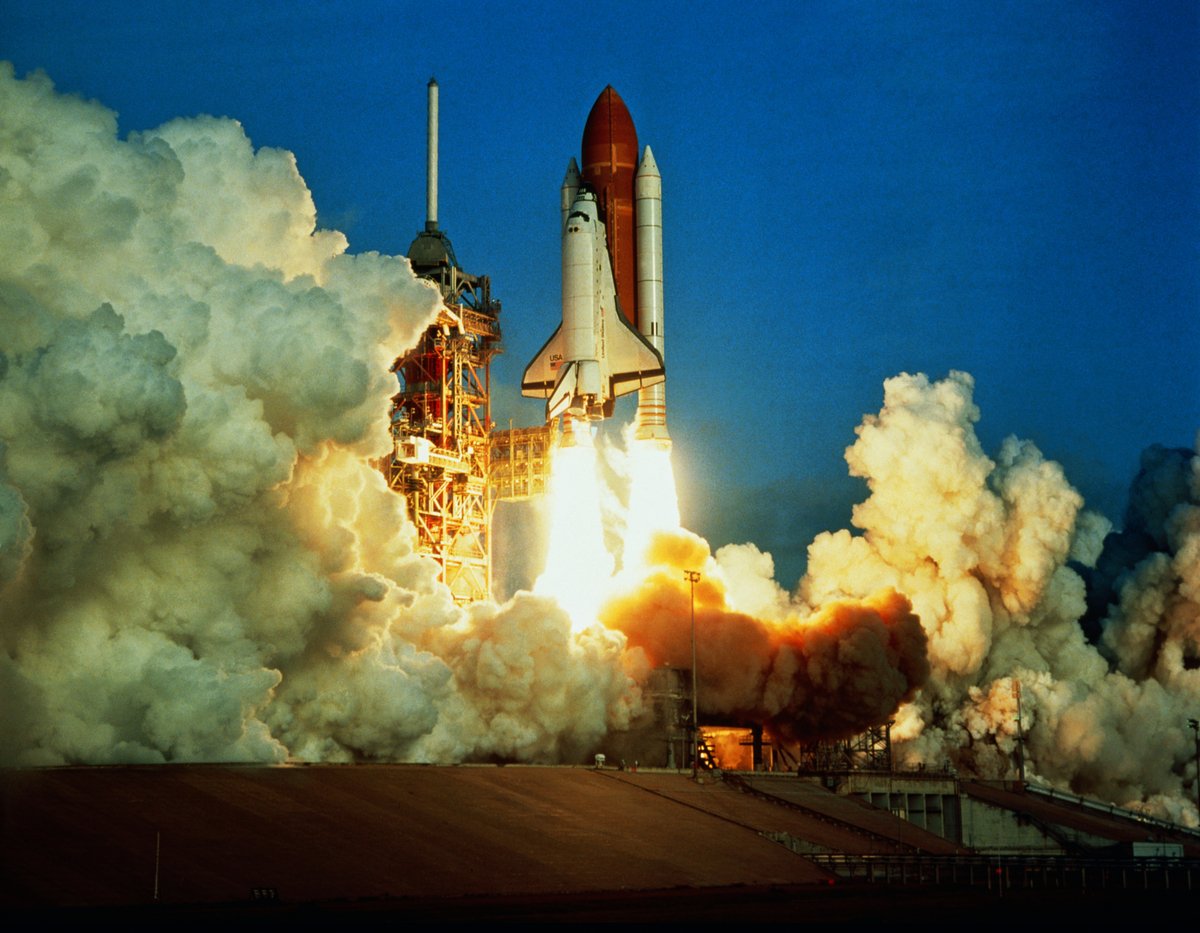
SpaceX eyes multibillion-dollar Pentagon AI computing deal
According to the report, SpaceX has discussed plans to compete more directly with cloud computing providers such as CoreWeave by offering computing capacity to AI customers at lower prices NEW YORK CITY, New York: Elon Musk's SpaceX is in talks to provide the U.S. Department of Defense with access to billions of dollars' worth of data center capacity to run artificial intelligence models, the Wall Street Journal reported on Friday, citing people familiar with the matter. If reached, the agreement would expand the Pentagon's existing relationship with SpaceX, which is already a key partner for rocket launches, satellite communications and missile-tracking services. According to the report, SpaceX has discussed plans to compete more directly with cloud computing providers such as CoreWeave by offering computing capacity to AI customers at lower prices. Like many large organizations, the Defense Department is seeking additional cloud computing capacity to support intelligence agencies and military AI applications. Amazon said late last year it would invest up to $50 billion to expand AI and supercomputing capacity for U.S. government customers through its Amazon Web Services cloud business. The discussions between SpaceX and the Pentagon are ongoing and could still fall through, the Journal reported. SpaceX and the Pentagon did not immediately respond to requests for comment. The company has signed similar computing agreements in recent months. In June, SpaceX reached a multi-year cloud services deal with Alphabet's Google, providing access to about 110,000 Nvidia chips and related computing infrastructure. In May, Anthropic said it had agreed to use the full computing capacity of SpaceX's Colossus 1 facility in Memphis, gaining access to 300 megawatts of new capacity.
SpaceX eyes multibillion-dollar Pentagon AI computing deal
According to the report, SpaceX has discussed plans to compete more directly with cloud computing providers such as CoreWeave by offering computing capacity to AI customers at lower prices NEW YORK CITY, New York: Elon Musk's SpaceX is in talks to provide the U.S. Department of Defense with access to billions of dollars' worth of data center capacity to run artificial intelligence models, the Wall Street Journal reported on Friday, citing people familiar with the matter. If reached, the agreement would expand the Pentagon's existing relationship with SpaceX, which is already a key partner for rocket launches, satellite communications and missile-tracking services. According to the report, SpaceX has discussed plans to compete more directly with cloud computing providers such as CoreWeave by offering computing capacity to AI customers at lower prices. Like many large organizations, the Defense Department is seeking additional cloud computing capacity to support intelligence agencies and military AI applications. Amazon said late last year it would invest up to $50 billion to expand AI and supercomputing capacity for U.S. government customers through its Amazon Web Services cloud business. The discussions between SpaceX and the Pentagon are ongoing and could still fall through, the Journal reported. SpaceX and the Pentagon did not immediately respond to requests for comment. The company has signed similar computing agreements in recent months. In June, SpaceX reached a multi-year cloud services deal with Alphabet's Google, providing access to about 110,000 Nvidia chips and related computing infrastructure. In May, Anthropic said it had agreed to use the full computing capacity of SpaceX's Colossus 1 facility in Memphis, gaining access to 300 megawatts of new capacity.
SpaceX eyes multibillion-dollar Pentagon AI computing deal
According to the report, SpaceX has discussed plans to compete more directly with cloud computing providers such as CoreWeave by offering computing capacity to AI customers at lower prices NEW YORK CITY, New York: Elon Musk's SpaceX is in talks to provide the U.S. Department of Defense with access to billions of dollars' worth of data center capacity to run artificial intelligence models, the Wall Street Journal reported on Friday, citing people familiar with the matter. If reached, the agreement would expand the Pentagon's existing relationship with SpaceX, which is already a key partner for rocket launches, satellite communications and missile-tracking services. According to the report, SpaceX has discussed plans to compete more directly with cloud computing providers such as CoreWeave by offering computing capacity to AI customers at lower prices. Like many large organizations, the Defense Department is seeking additional cloud computing capacity to support intelligence agencies and military AI applications. Amazon said late last year it would invest up to $50 billion to expand AI and supercomputing capacity for U.S. government customers through its Amazon Web Services cloud business. The discussions between SpaceX and the Pentagon are ongoing and could still fall through, the Journal reported. SpaceX and the Pentagon did not immediately respond to requests for comment. The company has signed similar computing agreements in recent months. In June, SpaceX reached a multi-year cloud services deal with Alphabet's Google, providing access to about 110,000 Nvidia chips and related computing infrastructure. In May, Anthropic said it had agreed to use the full computing capacity of SpaceX's Colossus 1 facility in Memphis, gaining access to 300 megawatts of new capacity.
SpaceX eyes multibillion-dollar Pentagon AI computing deal
According to the report, SpaceX has discussed plans to compete more directly with cloud computing providers such as CoreWeave by offering computing capacity to AI customers at lower prices NEW YORK CITY, New York: Elon Musk's SpaceX is in talks to provide the U.S. Department of Defense with access to billions of dollars' worth of data center capacity to run artificial intelligence models, the Wall Street Journal reported on Friday, citing people familiar with the matter. If reached, the agreement would expand the Pentagon's existing relationship with SpaceX, which is already a key partner for rocket launches, satellite communications and missile-tracking services. According to the report, SpaceX has discussed plans to compete more directly with cloud computing providers such as CoreWeave by offering computing capacity to AI customers at lower prices. Like many large organizations, the Defense Department is seeking additional cloud computing capacity to support intelligence agencies and military AI applications. Amazon said late last year it would invest up to $50 billion to expand AI and supercomputing capacity for U.S. government customers through its Amazon Web Services cloud business. The discussions between SpaceX and the Pentagon are ongoing and could still fall through, the Journal reported. SpaceX and the Pentagon did not immediately respond to requests for comment. The company has signed similar computing agreements in recent months. In June, SpaceX reached a multi-year cloud services deal with Alphabet's Google, providing access to about 110,000 Nvidia chips and related computing infrastructure. In May, Anthropic said it had agreed to use the full computing capacity of SpaceX's Colossus 1 facility in Memphis, gaining access to 300 megawatts of new capacity.
AMD: Anthropic Might Unlock $1,000 (NASDAQ:AMD) | Seeking Alpha
This idea was discussed in more depth with members of my private investing community, Out Fox The Street. Learn More " After signing up Microsoft (MSFT) as a scale AI chip customer, Advanced Micro Devices, Inc. (AMD) might have another big customer announcement prior to the big AI event this week. The Stone Fox Capital is an RIA from Oklahoma. Mark Holder is a CPA with degrees in Accounting and Finance. He is also Series 65 licensed and has 30 years of investing experience, including 15 years as a portfolio manager. Mark leads the investing group Out Fox The Street where he shares stock picks and deep research to help readers uncover potential multibaggers while managing portfolio risk via diversification. Features include various model portfolios, stock picks with identifiable catalysts, daily updates, real-time alerts, and access to community chat and direct chat with Mark for questions. Learn more. Analyst's Disclosure: I/we have no stock, option or similar derivative position in any of the companies mentioned, and no plans to initiate any such positions within the next 72 hours. I wrote this article myself, and it expresses my own opinions. I am not receiving compensation for it (other than from Seeking Alpha). I have no business relationship with any company whose stock is mentioned in this article. The information contained herein is for informational purposes only. Nothing in this article should be taken as a solicitation to purchase or sell securities. Before buying or selling any stock, you should do your own research and reach your own conclusion or consult a financial advisor. Investing includes risks, including loss of principal. Seeking Alpha's Disclosure: Past performance is no guarantee of future results. No recommendation or advice is being given as to whether any investment is suitable for a particular investor. Any views or opinions expressed above may not reflect those of Seeking Alpha as a whole. Seeking Alpha is not a licensed securities dealer, broker or US investment adviser or investment bank. Our analysts are third party authors that include both professional investors and individual investors who may not be licensed or certified by any institute or regulatory body.

UFO: The SpaceX IPO Reality Check Makes This The Final Frontier For A While (NASDAQ:UFO) | Seeking Alpha
My proprietary ROAR Score flags UFO deep in the red zone; I see value only if it drops another 30% to around $30. Space...the final frontier. We all remember that from Star Trek. Elon Musk's recent trek into public ownership of his prized SpaceX, Space Exploration Technologies Corp. (SPCX), might have helped his company complete a I'm Rob Isbitts, founder of Sungarden Investment Publishing. I run the new investing group Sungarden Investors Club, a community dedicated to navigating the modern investment climate with humility, discipline, and a non-traditional approach to income investing. I've been charting investments since the 1980s, and I spent decades an an investment advisor and fund manager before semi-retiring in 2020. Now, this investing group is my focus. The markets tells us a story...we just have to listen! I teach subscribers how to do that. Analyst's Disclosure: I/we have no stock, option or similar derivative position in any of the companies mentioned, and no plans to initiate any such positions within the next 72 hours. I wrote this article myself, and it expresses my own opinions. I am not receiving compensation for it (other than from Seeking Alpha). I have no business relationship with any company whose stock is mentioned in this article. Seeking Alpha's Disclosure: Past performance is no guarantee of future results. No recommendation or advice is being given as to whether any investment is suitable for a particular investor. Any views or opinions expressed above may not reflect those of Seeking Alpha as a whole. Seeking Alpha is not a licensed securities dealer, broker or US investment adviser or investment bank. Our analysts are third party authors that include both professional investors and individual investors who may not be licensed or certified by any institute or regulatory body.

Anthropic settles with authors and publishers for $1.5 billion in landmark copyright case
A federal judge today approved a $1.5 billion settlement awarded to authors and publishers whose works were used by Anthropic PBC to train the AI chatbot, Claude, in what is the largest copyright class action settlement in history. Judge William Alsup issued a preliminary approval of the settlement last year, though he has since retired, with U.S. District Judge Araceli Martínez-Olguín today calling the settlement fair and adequate. "The $1.5 billion settlement provides substantial benefits to the class in light of the novel claims asserted," she wrote. "Success at trial was not assured, and a loss would have left the class with no recourse." The payout means authors and publishers will receive $3,000 for each of the roughly 500,000 works that Anthropic copied from pirate libraries while developing its AI chatbot, Claude. The plaintiffs alleged that Anthropic trained its models on hundreds of thousands of copyrighted books obtained from illegal piracy websites such as Library Genesis and Pirate Library Mirror. "Anthropic has attempted to steal the fire of Prometheus," wrote the plaintiffs. "It is no exaggeration to say that Anthropic's model seeks to profit from strip-mining the human expression and ingenuity behind each one of those works." The company is now required to destroy all the pirated material. The central issue that has spawned a plethora of lawsuits -- whether it is legal to train AI models on copyrighted material -- has not yet been definitively resolved. Judge William Alsup sided with Anthropic, ruling that training its AI on copyrighted books constituted fair use. However, he also held that obtaining those books from pirate websites fell outside the protection of fair use and therefore infringed copyright. Countless lawsuits are still awaiting resolution, with companies including Google LLC, Meta Platforms Inc., Midjourney Inc., Perplexity AI Inc., and OpenAI Group PBC, all hoping for a favorable outcome. "We reached this settlement in 2025, after the court's landmark ruling that training AI on books is fair use under copyright law -- which remains the law today," Anthropic deputy general counsel Aparna Sridhar said in a statement after today's judgment. "We are pleased that more than 91% of authors and publishers covered by the settlement have claimed their share of the payment, and we're looking forward to bringing this matter to a close."

Stakpak Joins Vercel To Build Agentic Infrastructure And Self-Driving DevOps Systems
Stakpak is joining Vercel to help develop infrastructure designed for deploying, operating and managing AI agents. Financial terms and the structure of the transaction were not disclosed. Founded by George Fahmy in 2023, Stakpak was created around the idea that software infrastructure should be able to operate and maintain itself. The company described this vision as "self-driving infrastructure." Stakpak initially operated from Egypt with a small team and remained bootstrapped for approximately two years. The company later raised venture capital and expanded its presence to San Francisco. The startup raised its first funding round in 2024 to advance its self-driving infrastructure technology. Its backers included P1 Ventures, 500 Global and Digital Currency Group, along with several individual supporters. Stakpak developed an open-source agent harness, a production-ready DevOps agent and agentic security systems. These tools were designed to help AI agents perform infrastructure and software delivery tasks that traditionally require continuous manual work from engineering teams. A DevOps agent can assist with activities such as deploying code, configuring infrastructure, monitoring systems and responding to operational problems. Agentic infrastructure extends that concept by allowing AI systems to execute multistep workflows and manage portions of the development environment more autonomously. Stakpak spent approximately two years building and operating agents in production environments. Fahmy said the company introduced features months before similar capabilities became more widely available across the industry. By joining Vercel, the Stakpak team will apply that experience to a broader platform serving developers and companies building AI applications. The companies share a vision of infrastructure that can increasingly be deployed, optimized and maintained by software agents. Vercel is expanding beyond its historical focus on frontend application infrastructure. Stakpak views the company as developing a wider agentic infrastructure platform where customers can build and operate their own agents. That strategy also includes providing the infrastructure on which agents can deploy applications and perform operational work. Stakpak's technology and production experience are expected to support Vercel's efforts to make these capabilities available at greater scale. The move also brings Stakpak's open-source development work and DevOps expertise into Vercel. Fahmy credited the open-source community with helping Stakpak become a widely used DevOps agent. Fahmy did not disclose whether Stakpak's products will remain available independently or be incorporated into Vercel's existing platform. Additional details about the team's responsibilities and the integration roadmap were also not announced. KEY QUOTES: "I started Stakpak in 2023 believing software should drive itself. We raised our first round in 2024 to make 'Self-Driving Infrastructure' possible, and with a small team out of Egypt, we built one of the first open-source agent harnesses, a production-ready DevOps agent, and first-of-a-kind agentic security systems from scratch." "Vercel is no longer just the frontend cloud. They're building the Agentic Infrastructure company, the platform where agents deploy, where you build and run your own agents, and where infrastructure itself is managed by agents." "Vercel is making self-driving infrastructure possible at scale. We're excited to join and help build the best agentic infrastructure in the world." "This journey started in Egypt, bootstrapped for two years, before raising venture capital and moving to San Francisco. Grateful to P1 Ventures, 500 Global, Digital Currency Group, Ahmed Saafan, Moataz Soliman, Omar Gabr and Hazem EL Agaty for believing early, and to the open-source community that made Stakpak one of the most popular DevOps agents out there." George Fahmy, Founder of Stakpak

SpaceX Starlink Communications Will Be in Every Tesla Cybercab
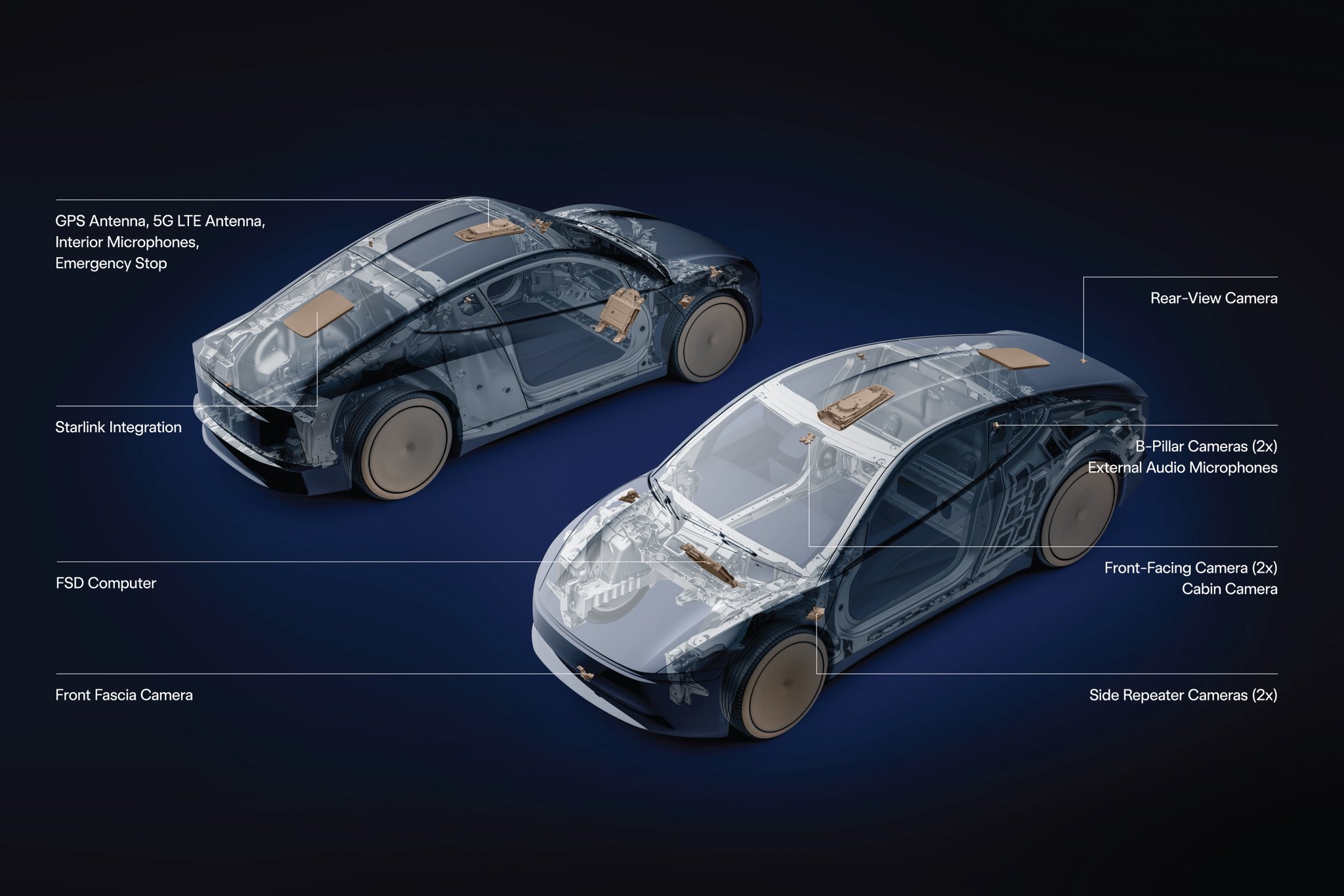
SpaceX Starlink V5 satellite terminal directly integrated into the Cybercab's roof structure (alongside the GPS antenna, 5G LTE antenna, FSD computer, and various cameras). This is a clean, factory-integrated design rather than the external Starlink Mini dishes spotted on earlier prototypes/testing vehicles (often mounted on the trunk lid). Higher-Resolution/Dual GPS The Cybercab includes a dedicated dual GPS (or dual-frequency GPS) system for significantly higher positioning accuracy and redundancy compared to standard consumer Tesla vehicles. This supports SAE Level 4 autonomy requirements (full self-driving in defined conditions without constant human oversight). Dual GPS helps with instantaneous heading determination (two separated antennas give direction without needing vehicle movement). Better performance in challenging environments (urban canyons, parking structures). Overall telemetry reliability is improved for a driverless vehicle. The Starlink V5 terminal sits alongside the GPS antennas in the roof (per the Tesla diagram), so they are co-located and complementary. Starlink terminals themselves include GNSS receivers for satellite acquisition/pointing, and broader research explores using Starlink signals as a GPS backup or augmentation for positioning, navigation, and timing (PNT). However, the primary "higher-resolution GPS" upgrade in the Cybercab is the vehicle's dedicated dual GPS hardware. Research (primarily from Ohio State University's ASPIN lab, led by Zak Kassas, with results featured in GPS World and ION papers) demonstrates strong opportunistic use of Starlink's Ku-band downlink signals (OFDM beacons). With an average of ~3 simultaneously visible Starlink satellites, ~2-meter 3D positioning accuracy is achievable in ~20 seconds (from a poor initial guess, using Doppler observables from the full OFDM beacon after advanced signal processing). Earlier work (2021-2025) was 8-10 meters with 6 satellites over longer periods and improved to meter-level with IMU (inertial measurement unit) aiding and ephemeris/timing corrections. Expected PNT accuracy improvements by 2028. Standalone Starlink PNT will likely have routine sub-meter to low single-digit meter accuracy, with faster convergence (seconds instead of tens of seconds), higher availability, and better performance in challenging environments. Denser constellation + V3 signals (stronger, better processed) will improve Doppler/pseudorange quality and geometry. With DTC and hybrid systems, Starlink GPS could potentially exceed standard GNSS robustness, with meter-level or better accuracy in many scenarios. Multi-frequency or differential techniques could push toward sub-meter. Long-term vision with ~1,000× more satellites eventually, Starlink PNT could be far more robust than GPS (over 10×-100X visible satellites and much stronger signals). Centimeter-level (or better) positional accuracy with Starlink PNT by 2029-2030 is plausible under SpaceX's long-term vision of massive constellation growth, especially if they evolve from today's opportunistic use of communication signals toward a dedicated or hybrid PNT service. Broadcast of precise ephemeris/clock corrections, support for carrier-phase tracking, or a network-assisted/PPP service. Research shows that providing real-time corrections turns performance from limited to near-GPS or better Data Transfer for Fleet Learning This is one of the biggest practical benefits. Starlink provides high-bandwidth, low-latency bidirectional connectivity (far superior to cellular in coverage and uplink speed in many scenarios). For Tesla's end-to-end neural net training approach (vision-only, fleet-scale learning). Vehicles can upload massive amounts of camera/sensor data, video clips, telemetry, and edge cases much faster. This accelerates the "fleet learning" loop. More data → faster model improvements → quicker iteration toward reliable unsupervised operation. It also enables reliable over-the-air (OTA) software/FSD updates and real-time fleet monitoring/telemetry, even in remote or cellular-dead-zone areas. Earlier prototype testing with Starlink explicitly highlighted faster data uploads as a way to speed up development. Benefits for Unsupervised Robotaxi For a purpose-built, no-steering-wheel/no-pedals robotaxi fleet aiming for unsupervised (Level 4+) operation at scale. Redundancy and reliability -- Cellular coverage has gaps (rural roads, tunnels, dense urban areas, disasters). Starlink provides an independent satellite link, ensuring the vehicle stays connected for safety, remote support (if ever needed), and operations. Waymos have stopped operation in San Francisco when they lost cellular communication. Faster AI improvement -- High-speed uplink directly speeds up the data pipeline that trains Tesla's FSD models. Tesla's core advantage has always been fleet-scale data. Starlink removes a major bottleneck. Operational scalability -- Supports wider geographic deployment, 24/7 uptime, and global expansion without depending solely on terrestrial networks. Passenger experience -- Bonus high-speed Wi-Fi (potentially a differentiator for robotaxi service). Future-proofing -- Aligns with Tesla's vision of always-connected physical AI systems. Write-Ups, Technical Papers, and Related Research Tesla's own patent (US 2025/0368267, filed ~2024, published Dec 2025). Details an RF-transparent roof assembly using polymer materials (polycarbonate, ASA) to embed satellite antennas (and other electronics) directly into the roof without signal blockage. This is the foundational technology enabling the clean Starlink V5 integration shown today. It explicitly mentions facilitating communication with satellites. IEEE paper (2023) Improving the safety of autonomous driving by using Direct-to-Satellite connectivity. The case of Iridium and Starlink satellite constellations. It presents real-world measurements of vehicular data transfer via Starlink (and Iridium), latency analysis, and concludes that satellite links can improve road safety through better situational awareness sharing. Broader Trend: Physical AI + Starlink + IoT Integration ==> Global Internet of Things This fits a clear, accelerating trend. All Tesla's physical AI (Cybercab robotaxis, Optimus humanoid robots, FSD) gains a global, high-performance connectivity backbone via Starlink. Enables edge devices (vehicles, robots, sensors) to reliably upload training data to centralized AI systems, receive updates, and operate in remote/IoT-scarce environments. There will be a seamless global internet of physical things where autonomous systems, robotics, and infrastructure stay continuously linked for collective intelligence and scalability.
William R. Timmons IV invests in SpaceX through SCH Invest By Investing.com
South Carolina's 4th district representative, William R. Timmons IV, has made a significant investment in SpaceX (SPCX), according to a recent congressional trade report. The transaction, which took place on June 15, 2026, was reported two days later. The report reveals that Timmons purchased SpaceX shares valued between $50,001 and $100,000. The transaction was made through SCH Invest, an investment vehicle that Timmons uses for his financial dealings. SpaceX, a private American aerospace manufacturer and space transportation company, is not publicly traded and thus does not have a stock ticker available in the system. The company is known for its ambitious projects in space exploration and satellite internet service. This recent investment by Timmons is noteworthy as it indicates a continued interest in the space industry from lawmakers. It also highlights the growing trend of investing in private companies that are leading the way in technological advancements and innovation. The transaction was made as an initial public offering through SCH Invest. As per the STOCK Act, which mandates transparency in the financial dealings of lawmakers, Timmons has certified that the statements made in the periodic transaction report are true and complete. Investors and market watchers often look to the investment activities of lawmakers for indications of confidence in certain industries or companies. In this case, Timmons' investment in SpaceX may signal a bullish outlook on the future of the space industry and the role of private companies in it. However, it's important to note that such investments do not guarantee success and should always be considered as part of a diversified investment strategy. This article was generated with the support of AI and reviewed by an editor. For more information see our T&C.

Elon Musk sends first warning to SpaceX short sellers
In a pointed message on X, Elon Musk warned that firms maintaining significant short positions in SpaceX over time face "very low" survival probability. The statement comes amid post-IPO volatility for the rocket company, now trading under the ticker $SPCX. Five weeks after what was described as the largest IPO in history, the stock had fallen roughly 30% from its peak above $2.6 trillion, briefly surpassing Microsoft and Amazon in market value. Short sellers celebrated gains of about $8.7 billion, but Musk's reply underscores his long-term conviction. The warning directly echoes a detailed bullish analysis arguing that Starship's cost reductions could unlock a multi-trillion-dollar space economy. Projects ranging from solar power beamed from orbit and asteroid mining to orbital data centers and Mars terraforming were projected to create over $100 trillion in new market capitalization. In this vision, SpaceX acts as the essential infrastructure provider, akin to AWS for cloud computing, capturing monopoly-like revenues from launches, crew transport, and data traffic across a rapidly expanding frontier. This is far from the first time Musk has targeted short sellers. With Tesla, he has repeatedly framed persistent bears as destined for major losses. In July 2024, Musk declared that once Tesla achieves full autonomy and volume production of Optimus robots, "anyone still holding a short position will be obliterated. Even Gates," referencing Microsoft co-founder Bill Gates' reported short bets. Elon Musk reveals what Tesla stock surge could do to Bill Gates Earlier, in 2018, he taunted shorts that they had "about three weeks before their short position explodes," a remark followed by sharp stock gains. Musk has also called short selling "value destroying" and once suggested it "should be illegal," viewing it as betting against innovation and progress. Critics often dismiss Musk's optimism as hype, especially when near-term metrics like quarterly deliveries or stock fluctuations disappoint. Yet his pattern remains consistent: framing short positions against his companies as fundamentally misjudging exponential technological leaps. For SpaceX shorts, the message is clear: betting against multi-planetary ambitions and the infrastructure monopoly they enable carries existential risk for the firms involved. As Musk and supporters see it, the space economy's upside dwarfs Earth-bound valuation models, making today's dips temporary in a decades-long ascent.

Anthropic's $1.5b copyright lawsuit settlement approved
A US judge has signed off on artificial intelligence company Anthropic's landmark $US1.5 billion settlement of a class action lawsuit brought by a group of authors who accused it of misusing their books to train its AI chatbot Claude. US District Judge Araceli Martinez-Olguin granted final approval of the settlement, the largest known settlement of a US copyright case, rejecting arguments that it was too small. The case is one of dozens brought by copyright owners including authors and news outlets against tech companies over the training of their large language models, and the first major US case to settle. "We reached this settlement in 2025, after the court's landmark ruling that training AI on books is fair use under copyright law - which remains the law today," Anthropic deputy general counsel Aparna Sridhar said in a statement. "We are pleased that more than 91 per cent of authors and publishers covered by the settlement have claimed their share of the payment, and we're looking forward to bringing this matter to a close." The authors' lead lawyer, Justin Nelson, welcomed what he called a "historic settlement." "It is the largest known copyright recovery in history. We look forward to making distributions to the Class as promptly as possible," Nelson said in a statement, referring to payments to authors covered by the settlement. The writers sued Anthropic in 2024, arguing the company, which is backed by Amazon and Alphabet, used pirated versions of their books without permission to teach Claude to respond to human prompts. Alsup ruled last June that Anthropic made fair use of the authors' work to train Claude, but found the company violated their rights by saving more than seven million pirated books to a "central library" that would not necessarily be used for AI training. A trial was scheduled to begin last December to determine how much Anthropic owed for the alleged piracy, with potential damages running into the hundreds of billions of dollars. The settlement spurred objections from some authors who argued it was not large enough, overcompensated the plaintiffs' attorneys or wrongly excluded some copyright owners. Judge Martinez-Olguin overruled those objections in her ruling on Monday. The judge said complaints about the settlement's size were "not grounded in a realistic assessment of the overall risks and rewards of a trial," and awarded the lawyers more than $US101 million of the $US187.5 million they requested in fees. Some authors and publishers opted out of the settlement and have filed separate lawsuits against Anthropic that are still ongoing.

Anthropic's $1.5b copyright lawsuit settlement approved
A US judge has signed off on artificial intelligence company Anthropic's landmark $US1.5 billion settlement of a class action lawsuit brought by a group of authors who accused it of misusing their books to train its AI chatbot Claude. US District Judge Araceli Martinez-Olguin granted final approval of the settlement, the largest known settlement of a US copyright case, rejecting arguments that it was too small. The case is one of dozens brought by copyright owners including authors and news outlets against tech companies over the training of their large language models, and the first major US case to settle. "We reached this settlement in 2025, after the court's landmark ruling that training AI on books is fair use under copyright law - which remains the law today," Anthropic deputy general counsel Aparna Sridhar said in a statement. "We are pleased that more than 91 per cent of authors and publishers covered by the settlement have claimed their share of the payment, and we're looking forward to bringing this matter to a close." The authors' lead lawyer, Justin Nelson, welcomed what he called a "historic settlement." "It is the largest known copyright recovery in history. We look forward to making distributions to the Class as promptly as possible," Nelson said in a statement, referring to payments to authors covered by the settlement. The writers sued Anthropic in 2024, arguing the company, which is backed by Amazon and Alphabet, used pirated versions of their books without permission to teach Claude to respond to human prompts. Alsup ruled last June that Anthropic made fair use of the authors' work to train Claude, but found the company violated their rights by saving more than seven million pirated books to a "central library" that would not necessarily be used for AI training. A trial was scheduled to begin last December to determine how much Anthropic owed for the alleged piracy, with potential damages running into the hundreds of billions of dollars. The settlement spurred objections from some authors who argued it was not large enough, overcompensated the plaintiffs' attorneys or wrongly excluded some copyright owners. Judge Martinez-Olguin overruled those objections in her ruling on Monday. The judge said complaints about the settlement's size were "not grounded in a realistic assessment of the overall risks and rewards of a trial," and awarded the lawyers more than $US101 million of the $US187.5 million they requested in fees. Some authors and publishers opted out of the settlement and have filed separate lawsuits against Anthropic that are still ongoing.

Anthropic's $1.5b copyright lawsuit settlement approved
A US judge has signed off on artificial intelligence company Anthropic's landmark $US1.5 billion settlement of a class action lawsuit brought by a group of authors who accused it of misusing their books to train its AI chatbot Claude. US District Judge Araceli Martinez-Olguin granted final approval of the settlement, the largest known settlement of a US copyright case, rejecting arguments that it was too small. The case is one of dozens brought by copyright owners including authors and news outlets against tech companies over the training of their large language models, and the first major US case to settle. "We reached this settlement in 2025, after the court's landmark ruling that training AI on books is fair use under copyright law - which remains the law today," Anthropic deputy general counsel Aparna Sridhar said in a statement. "We are pleased that more than 91 per cent of authors and publishers covered by the settlement have claimed their share of the payment, and we're looking forward to bringing this matter to a close." The authors' lead lawyer, Justin Nelson, welcomed what he called a "historic settlement." "It is the largest known copyright recovery in history. We look forward to making distributions to the Class as promptly as possible," Nelson said in a statement, referring to payments to authors covered by the settlement. The writers sued Anthropic in 2024, arguing the company, which is backed by Amazon and Alphabet, used pirated versions of their books without permission to teach Claude to respond to human prompts. Alsup ruled last June that Anthropic made fair use of the authors' work to train Claude, but found the company violated their rights by saving more than seven million pirated books to a "central library" that would not necessarily be used for AI training. A trial was scheduled to begin last December to determine how much Anthropic owed for the alleged piracy, with potential damages running into the hundreds of billions of dollars. The settlement spurred objections from some authors who argued it was not large enough, overcompensated the plaintiffs' attorneys or wrongly excluded some copyright owners. Judge Martinez-Olguin overruled those objections in her ruling on Monday. The judge said complaints about the settlement's size were "not grounded in a realistic assessment of the overall risks and rewards of a trial," and awarded the lawyers more than $US101 million of the $US187.5 million they requested in fees. Some authors and publishers opted out of the settlement and have filed separate lawsuits against Anthropic that are still ongoing.

Anthropic's $1.5b copyright lawsuit settlement approved
A US judge has signed off on artificial intelligence company Anthropic's landmark $US1.5 billion settlement of a class action lawsuit brought by a group of authors who accused it of misusing their books to train its AI chatbot Claude. US District Judge Araceli Martinez-Olguin granted final approval of the settlement, the largest known settlement of a US copyright case, rejecting arguments that it was too small. The case is one of dozens brought by copyright owners including authors and news outlets against tech companies over the training of their large language models, and the first major US case to settle. "We reached this settlement in 2025, after the court's landmark ruling that training AI on books is fair use under copyright law - which remains the law today," Anthropic deputy general counsel Aparna Sridhar said in a statement. "We are pleased that more than 91 per cent of authors and publishers covered by the settlement have claimed their share of the payment, and we're looking forward to bringing this matter to a close." The authors' lead lawyer, Justin Nelson, welcomed what he called a "historic settlement." "It is the largest known copyright recovery in history. We look forward to making distributions to the Class as promptly as possible," Nelson said in a statement, referring to payments to authors covered by the settlement. The writers sued Anthropic in 2024, arguing the company, which is backed by Amazon and Alphabet, used pirated versions of their books without permission to teach Claude to respond to human prompts. Alsup ruled last June that Anthropic made fair use of the authors' work to train Claude, but found the company violated their rights by saving more than seven million pirated books to a "central library" that would not necessarily be used for AI training. A trial was scheduled to begin last December to determine how much Anthropic owed for the alleged piracy, with potential damages running into the hundreds of billions of dollars. The settlement spurred objections from some authors who argued it was not large enough, overcompensated the plaintiffs' attorneys or wrongly excluded some copyright owners. Judge Martinez-Olguin overruled those objections in her ruling on Monday. The judge said complaints about the settlement's size were "not grounded in a realistic assessment of the overall risks and rewards of a trial," and awarded the lawyers more than $US101 million of the $US187.5 million they requested in fees. Some authors and publishers opted out of the settlement and have filed separate lawsuits against Anthropic that are still ongoing.

Anthropic's $1.5b copyright lawsuit settlement approved
A US judge has signed off on artificial intelligence company Anthropic's landmark $US1.5 billion settlement of a class action lawsuit brought by a group of authors who accused it of misusing their books to train its AI chatbot Claude. US District Judge Araceli Martinez-Olguin granted final approval of the settlement, the largest known settlement of a US copyright case, rejecting arguments that it was too small. The case is one of dozens brought by copyright owners including authors and news outlets against tech companies over the training of their large language models, and the first major US case to settle. "We reached this settlement in 2025, after the court's landmark ruling that training AI on books is fair use under copyright law - which remains the law today," Anthropic deputy general counsel Aparna Sridhar said in a statement. "We are pleased that more than 91 per cent of authors and publishers covered by the settlement have claimed their share of the payment, and we're looking forward to bringing this matter to a close." The authors' lead lawyer, Justin Nelson, welcomed what he called a "historic settlement." "It is the largest known copyright recovery in history. We look forward to making distributions to the Class as promptly as possible," Nelson said in a statement, referring to payments to authors covered by the settlement. The writers sued Anthropic in 2024, arguing the company, which is backed by Amazon and Alphabet, used pirated versions of their books without permission to teach Claude to respond to human prompts. Alsup ruled last June that Anthropic made fair use of the authors' work to train Claude, but found the company violated their rights by saving more than seven million pirated books to a "central library" that would not necessarily be used for AI training. A trial was scheduled to begin last December to determine how much Anthropic owed for the alleged piracy, with potential damages running into the hundreds of billions of dollars. The settlement spurred objections from some authors who argued it was not large enough, overcompensated the plaintiffs' attorneys or wrongly excluded some copyright owners. Judge Martinez-Olguin overruled those objections in her ruling on Monday. The judge said complaints about the settlement's size were "not grounded in a realistic assessment of the overall risks and rewards of a trial," and awarded the lawyers more than $US101 million of the $US187.5 million they requested in fees. Some authors and publishers opted out of the settlement and have filed separate lawsuits against Anthropic that are still ongoing.

Anthropic's $1.5b copyright lawsuit settlement approved
A US judge has signed off on artificial intelligence company Anthropic's landmark $US1.5 billion settlement of a class action lawsuit brought by a group of authors who accused it of misusing their books to train its AI chatbot Claude. US District Judge Araceli Martinez-Olguin granted final approval of the settlement, the largest known settlement of a US copyright case, rejecting arguments that it was too small. The case is one of dozens brought by copyright owners including authors and news outlets against tech companies over the training of their large language models, and the first major US case to settle. "We reached this settlement in 2025, after the court's landmark ruling that training AI on books is fair use under copyright law - which remains the law today," Anthropic deputy general counsel Aparna Sridhar said in a statement. "We are pleased that more than 91 per cent of authors and publishers covered by the settlement have claimed their share of the payment, and we're looking forward to bringing this matter to a close." The authors' lead lawyer, Justin Nelson, welcomed what he called a "historic settlement." "It is the largest known copyright recovery in history. We look forward to making distributions to the Class as promptly as possible," Nelson said in a statement, referring to payments to authors covered by the settlement. The writers sued Anthropic in 2024, arguing the company, which is backed by Amazon and Alphabet, used pirated versions of their books without permission to teach Claude to respond to human prompts. Alsup ruled last June that Anthropic made fair use of the authors' work to train Claude, but found the company violated their rights by saving more than seven million pirated books to a "central library" that would not necessarily be used for AI training. A trial was scheduled to begin last December to determine how much Anthropic owed for the alleged piracy, with potential damages running into the hundreds of billions of dollars. The settlement spurred objections from some authors who argued it was not large enough, overcompensated the plaintiffs' attorneys or wrongly excluded some copyright owners. Judge Martinez-Olguin overruled those objections in her ruling on Monday. The judge said complaints about the settlement's size were "not grounded in a realistic assessment of the overall risks and rewards of a trial," and awarded the lawyers more than $US101 million of the $US187.5 million they requested in fees. Some authors and publishers opted out of the settlement and have filed separate lawsuits against Anthropic that are still ongoing.

Anthropic's $1.5b copyright lawsuit settlement approved
A US judge has signed off on artificial intelligence company Anthropic's landmark $US1.5 billion settlement of a class action lawsuit brought by a group of authors who accused it of misusing their books to train its AI chatbot Claude. US District Judge Araceli Martinez-Olguin granted final approval of the settlement, the largest known settlement of a US copyright case, rejecting arguments that it was too small. The case is one of dozens brought by copyright owners including authors and news outlets against tech companies over the training of their large language models, and the first major US case to settle. "We reached this settlement in 2025, after the court's landmark ruling that training AI on books is fair use under copyright law - which remains the law today," Anthropic deputy general counsel Aparna Sridhar said in a statement. "We are pleased that more than 91 per cent of authors and publishers covered by the settlement have claimed their share of the payment, and we're looking forward to bringing this matter to a close." The authors' lead lawyer, Justin Nelson, welcomed what he called a "historic settlement." "It is the largest known copyright recovery in history. We look forward to making distributions to the Class as promptly as possible," Nelson said in a statement, referring to payments to authors covered by the settlement. The writers sued Anthropic in 2024, arguing the company, which is backed by Amazon and Alphabet, used pirated versions of their books without permission to teach Claude to respond to human prompts. Alsup ruled last June that Anthropic made fair use of the authors' work to train Claude, but found the company violated their rights by saving more than seven million pirated books to a "central library" that would not necessarily be used for AI training. A trial was scheduled to begin last December to determine how much Anthropic owed for the alleged piracy, with potential damages running into the hundreds of billions of dollars. The settlement spurred objections from some authors who argued it was not large enough, overcompensated the plaintiffs' attorneys or wrongly excluded some copyright owners. Judge Martinez-Olguin overruled those objections in her ruling on Monday. The judge said complaints about the settlement's size were "not grounded in a realistic assessment of the overall risks and rewards of a trial," and awarded the lawyers more than $US101 million of the $US187.5 million they requested in fees. Some authors and publishers opted out of the settlement and have filed separate lawsuits against Anthropic that are still ongoing.
