News & Updates
The latest news and updates from companies in the WLTH portfolio.
UST Partners with Anthropic to Bring Claude into UST's Platforms, Engineering, and Operations and Train 20,000 UST Employees Globally
Under the strategic alliance, UST will combine Anthropic's Claude models with UST's proprietary industry and horizontal platforms, engineering services, domain solutions, and internal operations, helping clients modernize and transform core systems and operationalize trusted AI at scale. SINGAPORE, July 9, 2026 /PRNewswire/ -- UST, a leading AI and technology transformation solutions company, today announced a strategic alliance with Anthropic, the AI safety and research company behind the Claude family of models. The partnership is focused on helping Global 1000 enterprises become AI-native. UST will embed Claude into the engineering environments and operational workflows it designs, builds, and runs for clients - helping organizations move from isolated AI pilots to trusted, enterprise-scale AI embedded in the systems that drive their business. The alliance combines Claude models with UST's implementation, engineering, and domain expertise, enabling customers to adopt Claude more quickly and responsibly within existing enterprise environments. Rooted in a shared commitment to responsible AI, the alliance strengthens UST's position as a Global Premier Partner in the Claude Partner Network Services Tier and expands UST's ability to help organizations move from experimentation to trusted, large-scale deployment. By combining Claude models with UST's engineering expertise, deep industry knowledge, and global delivery model, customers can adopt Claude with greater confidence across complex enterprise environments. Claude for Physical AI: Enhancing UST's Engineering Platforms Get the latest news delivered to your inbox Sign up for The Manila Times newsletters By signing up with an email address, I acknowledge that I have read and agree to the Terms of Service and Privacy Policy. UST is integrating Claude into the engineering platforms that semiconductor, automotive, manufacturing, telecom, embedded, and IoT companies use for design verification, semiconductor validation, factory operations, and field service. This will enable teams to catch design flaws earlier, speed up chip validation, and integrate hardware and software into a single system from the factory floor to the field. These processes are foundational to physical AI, moving intelligence off the screen and into the equipment and robotics that run production. UST-iDEC is one of the clearest examples. The platform already changes the economics of hardware and silicon validation, cutting cycle times by 50-70% and compressing standard four-day turnarounds into 48 hours through a closed-loop, agentic validation pipeline. UST is now integrating Claude as the reasoning layer into that pipeline to further extend it. Claude Code reads chip pinouts and hardware schematics natively and writes and runs regression test scripts that engineers previously scripted by hand, while Claude's reasoning models compare live edge data against digital twins to flag firmware regressions and signal-integrity faults. Advertisement UST is targeting an already-fast validation pipeline that gets even faster, with less manual scripting, earlier fault detection, without adding new tools for engineers. UST Platform solutions accelerated by Claude for Industry and Enterprise Workflows UST will integrate Claude into selected industry platforms and horizontal enterprise platforms. Together, these integrations will give clients a consistent way to apply AI across industry-specific and shared enterprise workflows where accuracy, data protection, compliance, and reliability are critical. Healthcare Payer: UST CarePath uses Claude to streamline member services, care management, and claims workflows, giving care teams a single, real-time view. Claude Code and MCP connectors link the platform directly to claims and care management systems, while an agentic layer routes each recommended action for approval before it reaches a member. The platform will help teams turn healthcare data into clear next steps, improve patient and member engagement, and resolve issues faster while staying within healthcare data governance controls. Advertisement Telecom: UST IntelliOps will bring Claude into network operations, service assurance, and OSS/BSS modernization. The platform has Claude's reasoning layer wired in to help operators identify service issues, predict RAN failures, and reduce outage duration through approved response workflows and secure system integrations. This gives telecom operators fewer SLA penalties, shorter customer-facing outages, and less time NOC teams spend sorting signal from noise. Banking: Most mid-tier banks still run on core systems built for overnight batch processing, not real-time banking. Every new integration or product change requires months of vendor-dependent work. UST FinX connects legacy banking systems to a single modern, real-time platform built for open banking and API-first integration. Claude drives the platform's AI capabilities, accelerating onboarding, automating document processing, and providing staff with faster access to account and compliance data, all within FinX's built-in governance and audit controls. That's what lets a bank modernize without hiring a bigger compliance team just to keep up. Scaling Claude Across UST's Horizontal Platforms and Industries UST puts Claude to work everywhere clients feel the friction of change. In consulting, teams use Claude to redesign workflows and transformation roadmaps, helping enterprises adopt AI across functions and make change management repeatable rather than a one-off project. In business applications, Claude Code and approved MCP connectors handle configuration by hand, writing integration logic and letting teams describe what they need in plain language. In data and automation, Claude builds pipelines, accelerates analysis, and coordinates end-to-end handoffs between systems that once required manual stitching. In cloud, infrastructure, and security, Claude supports migration planning, writes infrastructure as code, checks it against policy before it ships, and helps teams get to the bottom of an incident faster, all under the same governance running across the alliance. Looking ahead, UST will also bring Claude into its retail, consumer goods, and manufacturing platforms to sharpen merchandising and inventory planning, strengthen digital commerce, and improve supply chain execution. Advertisement UST's Own Operations, Accelerated by Claude UST already applies AI across its own operations and continues to expand its use of Claude and Claude Cowork. Within UST, deploying these capabilities across contracts, legal, talent, marketing, infrastructure, and finance demonstrates a commitment to innovation and operational excellence. Teams are transforming manual processes into reusable, Claude-native workflows and developing role-specific Claude skills to support key functions. These workflows operate with clear guardrails and human oversight at critical points, ensuring that automation supports accountability and informed judgment alongside speed. The result is more consistent operations and more time for employees to focus on judgment, negotiation, client work, and creative problem-solving. The impact is twofold. Operations run faster and cleaner, and people gain time for decisions, negotiations, and imagination that drive growth. By gaining firsthand experience with the operational, technical, and change management challenges of AI adoption, UST is building the foundation for how it helps customers reimagine their enterprise transformation. That experience is evolving into an operating playbook of tested workflows, governance models, and value frameworks, proven within a complex organization and designed to accelerate time-to-value while managing financial and operational risk. UST commits to training 20,000 developers and industry experts equipped to build with Claude at enterprise scale Advertisement A core pillar of this alliance is powering UST's transformation into an AI-native company, starting with how UST works internally, not just what it delivers to clients. As part of the alliance, UST plans to certify 20,000 associates worldwide on Claude, across roles from architects and engineers to consultants, industry specialists, and forward-deployed engineers who can sit alongside client teams to think, build, and solve problems every day. This reflects UST's continued emphasis on talent enablement, grounded in its core values of Humility, Humanity, and Integrity, while developing a growing community of AI-native developers, FDE-style practitioners, architects, and industry experts equipped to build with Claude at enterprise scale. UST will build specialized teams to deploy Claude, with support from Anthropic enablement, technical guidance, and certification. "Our alliance with Anthropic reflects UST's unwavering commitment to helping clients navigate the AI landscape with confidence and achieve meaningful business outcomes. By combining the capabilities of Claude with UST's engineering, industry knowledge, and delivery expertise, we are bringing to market industry-specific platforms and digital and engineering solutions that improve productivity, accelerate business outcomes, and help clients operationalize AI-led decisions in a safe and secure environment," said Krishna Sudheendra, Chief Executive Officer, UST. "UST helps the world's banks, telecoms, and manufacturers put new technology to work. They're proving Claude inside their own engineering first, training 20,000 of their own people on it, before bringing it into the systems they build and run for clients," said Paul Smith, Chief Commercial Officer, Anthropic. Advertisement "We are wiring Claude into how UST designs, builds, and runs solutions across our consulting, platforms, engineering services, and industry offerings. This alliance with Anthropic helps us deliver higher-value outcomes for clients while advancing UST's transformation into an AI-native organization built on trust, human oversight, and long-term impact," said Manu Gopinath, President, UST. About Anthropic Anthropic is an AI safety company that builds reliable, interpretable, and steerable AI systems. Founded as a public benefit corporation, Anthropic develops the Claude family of AI models and products, including Claude Code, Claude Cowork, and Claude Enterprise, used by organizations around the world. For more information, visit anthropic.com About UST Advertisement Since 1999, UST has worked side by side with the world's best companies to make a powerful impact through transformation. Powered by technology, driven by AI, inspired by people, and led by our purpose, we partner with our clients from design to operation. Our AI-driven digital solutions, proprietary platforms, engineering, R&D, products, and innovation ecosystem turn core challenges into impactful, disruptive business outcomes. With deep industry knowledge and a future-ready mindset, we infuse expertise, innovation, and agility into our clients' organizations-delivering measurable value and positive lasting change for them, their customers, and communities around the world. Together, with 30,000+ employees in 30+ countries, we build for boundless impact-touching billions of lives in the process. Visit us at www.UST.com. Media Contacts, UST: Tinu Cherian Abraham +1 (949) 415-9857 (US) +91-7899045194 (India) Merrick Laravea +1 (949) 416-6212 Neha Misri +44-7341787926 Roshni Das K +91 7736795557 SomSekhar CV +91-9037888244 [email protected] Media Contacts, U.S.: S&C PR +1-646.941.9139 [email protected] Makovsky [email protected] Media Contacts, India: [email protected] Media Contacts, U.K.: FTI Consulting [email protected] Media Contacts, Spain: Noizze Media Carmen Tapia / Ricardo Schell

SpaceX applies to launch 100,000 Gen3 Starlink satellites
SpaceX has filed an application with the US Federal Communications Commission (FCC) for authority to launch and operate up to 100,000 third-generation Starlink satellites, the biggest such broadband constellation proposed so far. The application proposes a new Gen3 system that would sit alongside the existing Gen1 and Gen2 Starlink constellations. The Gen3 system is said to start launches in the second half of this year. Independent tracking by astronomer Jonathan McDowell put the current Starlink constellation at 10,413 satellites in orbit and 10,397 working as of June 1 2026. SpaceX proposes two closely stacked orbital shells in very-low Earth orbit, or VLEO, at nominal altitudes of 323 to 327.5 kilometres and 473 to 477.5 kilometres, for Gen3. These are lower orbits than the original 550 km for the Gen1 Starlinks, and the 525, 530 and 535 km shells for Gen2. Source: SpaceX Starship needed to fire heavy Gen3 Starlinks into orbit The Gen3 satellites have a mass range of 2000-2500 kg each, matching the full-size Gen2 V2 satellite that has sat on the books for Starship launch since 2022 but has not yet flown in numbers. It is well above the roughly 800 kg of the Gen2 Mini currently flying on Falcon 9. That extra bulk means Gen3 satellites can only be launched aboard the 124 metre SpaceX Starship, the company's reusable heavy-lift rocket that it is still developing, rather than its workhorse Falcon 9. Starship is designed to carry about 60 Gen3-class satellites per flight, compared with 27 Starlinks on a typical Falcon 9 mission. At that payload rate, over 1600 Starship launches would be required if the full constellation of Gen3 satellites is approved. Gen3 will use Ku, Ka, V and E-band spectrum already granted for Gen2, and adds a push into largely untapped W- and D-band frequencies between 92 and 275 gigahertz (GHz) for backhaul capacity. SpaceX argues that AI workloads need far more uplink capacity than today's networks provide, to move high-definition spatial and auditory data in real time. Curiously, the FCC application for Gen3 makes no mention of the Direct To Cell service that Starlink has launched commercially, or its future mobile phone service. Mega satellite Starmind constellation While a 100,000 Gen3 satellites may seem like a massive constellation, it pales in comparison to SpaceX's Starmind, designed to be data centres in Earth orbit. SpaceX filed an application in January for a Starmind constellation with up to a million satellites, in Earth orbit altitudes of 500 to 2000 km. In the narrative for the FCC application, SpaceX said the million satellites operating as orbital data centres "is a first step towards becoming a Kardashev II-level civilisation". This refers to a three-level scale proposed by Soviet astronomer Nikolai Kardashev, with level II being a civilisation that can harness the entire energy output of its home star. As of writing, it is not clear how far advanced SpaceX's plans for Starmind are.
UST Partners with Anthropic to Bring Claude into UST's Platforms, Engineering, and Operations and Train 20,000 UST Employees Globally
Under the strategic alliance, UST will combine Anthropic's Claude models with UST's proprietary industry and horizontal platforms, engineering services, domain solutions, and internal operations, helping clients modernize and transform core systems and operationalize trusted AI at scale. MELBOURNE, Australia, July 9, 2026 /PRNewswire/ -- UST, a leading AI and technology transformation solutions company, today announced a strategic alliance with Anthropic, the AI safety and research company behind the Claude family of models. The partnership is focused on helping Global 1000 enterprises become AI-native. UST will embed Claude into the engineering environments and operational workflows it designs, builds, and runs for clients - helping organizations move from isolated AI pilots to trusted, enterprise-scale AI embedded in the systems that drive their business. The alliance combines Claude models with UST's implementation, engineering, and domain expertise, enabling customers to adopt Claude more quickly and responsibly within existing enterprise environments. Rooted in a shared commitment to responsible AI, the alliance strengthens UST's position as a Global Premier Partner in the Claude Partner Network Services Tier and expands UST's ability to help organizations move from experimentation to trusted, large-scale deployment. By combining Claude models with UST's engineering expertise, deep industry knowledge, and global delivery model, customers can adopt Claude with greater confidence across complex enterprise environments. Claude for Physical AI: Enhancing UST's Engineering Platforms UST is integrating Claude into the engineering platforms that semiconductor, automotive, manufacturing, telecom, embedded, and IoT companies use for design verification, semiconductor validation, factory operations, and field service. This will enable teams to catch design flaws earlier, speed up chip validation, and integrate hardware and software into a single system from the factory floor to the field. These processes are foundational to physical AI, moving intelligence off the screen and into the equipment and robotics that run production. UST-iDEC is one of the clearest examples. The platform already changes the economics of hardware and silicon validation, cutting cycle times by 50-70% and compressing standard four-day turnarounds into 48 hours through a closed-loop, agentic validation pipeline. UST is now integrating Claude as the reasoning layer into that pipeline to further extend it. Claude Code reads chip pinouts and hardware schematics natively and writes and runs regression test scripts that engineers previously scripted by hand, while Claude's reasoning models compare live edge data against digital twins to flag firmware regressions and signal-integrity faults. UST is targeting an already-fast validation pipeline that gets even faster, with less manual scripting, earlier fault detection, without adding new tools for engineers. UST Platform solutions accelerated by Claude for Industry and Enterprise Workflows UST will integrate Claude into selected industry platforms and horizontal enterprise platforms. Together, these integrations will give clients a consistent way to apply AI across industry-specific and shared enterprise workflows where accuracy, data protection, compliance, and reliability are critical. Healthcare Payer: UST CarePath uses Claude to streamline member services, care management, and claims workflows, giving care teams a single, real-time view. Claude Code and MCP connectors link the platform directly to claims and care management systems, while an agentic layer routes each recommended action for approval before it reaches a member. The platform will help teams turn healthcare data into clear next steps, improve patient and member engagement, and resolve issues faster while staying within healthcare data governance controls. Telecom: UST IntelliOps will bring Claude into network operations, service assurance, and OSS/BSS modernization. The platform has Claude's reasoning layer wired in to help operators identify service issues, predict RAN failures, and reduce outage duration through approved response workflows and secure system integrations. This gives telecom operators fewer SLA penalties, shorter customer-facing outages, and less time NOC teams spend sorting signal from noise. Banking: Most mid-tier banks still run on core systems built for overnight batch processing, not real-time banking. Every new integration or product change requires months of vendor-dependent work. UST FinX connects legacy banking systems to a single modern, real-time platform built for open banking and API-first integration. Claude drives the platform's AI capabilities, accelerating onboarding, automating document processing, and providing staff with faster access to account and compliance data, all within FinX's built-in governance and audit controls. That's what lets a bank modernize without hiring a bigger compliance team just to keep up. Scaling Claude Across UST's Horizontal Platforms and Industries UST puts Claude to work everywhere clients feel the friction of change. In consulting, teams use Claude to redesign workflows and transformation roadmaps, helping enterprises adopt AI across functions and make change management repeatable rather than a one-off project. In business applications, Claude Code and approved MCP connectors handle configuration by hand, writing integration logic and letting teams describe what they need in plain language. In data and automation, Claude builds pipelines, accelerates analysis, and coordinates end-to-end handoffs between systems that once required manual stitching. In cloud, infrastructure, and security, Claude supports migration planning, writes infrastructure as code, checks it against policy before it ships, and helps teams get to the bottom of an incident faster, all under the same governance running across the alliance. Looking ahead, UST will also bring Claude into its retail, consumer goods, and manufacturing platforms to sharpen merchandising and inventory planning, strengthen digital commerce, and improve supply chain execution. UST's Own Operations, Accelerated by Claude UST already applies AI across its own operations and continues to expand its use of Claude and Claude Cowork. Within UST, deploying these capabilities across contracts, legal, talent, marketing, infrastructure, and finance demonstrates a commitment to innovation and operational excellence. Teams are transforming manual processes into reusable, Claude-native workflows and developing role-specific Claude skills to support key functions. These workflows operate with clear guardrails and human oversight at critical points, ensuring that automation supports accountability and informed judgment alongside speed. The result is more consistent operations and more time for employees to focus on judgment, negotiation, client work, and creative problem-solving. The impact is twofold. Operations run faster and cleaner, and people gain time for decisions, negotiations, and imagination that drive growth. By gaining firsthand experience with the operational, technical, and change management challenges of AI adoption, UST is building the foundation for how it helps customers reimagine their enterprise transformation. That experience is evolving into an operating playbook of tested workflows, governance models, and value frameworks, proven within a complex organization and designed to accelerate time-to-value while managing financial and operational risk. UST commits to training 20,000 developers and industry experts equipped to build with Claude at enterprise scale A core pillar of this alliance is powering UST's transformation into an AI-native company, starting with how UST works internally, not just what it delivers to clients. As part of the alliance, UST plans to certify 20,000 associates worldwide on Claude, across roles from architects and engineers to consultants, industry specialists, and forward-deployed engineers who can sit alongside client teams to think, build, and solve problems every day. This reflects UST's continued emphasis on talent enablement, grounded in its core values of Humility, Humanity, and Integrity, while developing a growing community of AI-native developers, FDE-style practitioners, architects, and industry experts equipped to build with Claude at enterprise scale. UST will build specialized teams to deploy Claude, with support from Anthropic enablement, technical guidance, and certification. "Our alliance with Anthropic reflects UST's unwavering commitment to helping clients navigate the AI landscape with confidence and achieve meaningful business outcomes. By combining the capabilities of Claude with UST's engineering, industry knowledge, and delivery expertise, we are bringing to market industry-specific platforms and digital and engineering solutions that improve productivity, accelerate business outcomes, and help clients operationalize AI-led decisions in a safe and secure environment," said Krishna Sudheendra, Chief Executive Officer, UST. "UST helps the world's banks, telecoms, and manufacturers put new technology to work. They're proving Claude inside their own engineering first, training 20,000 of their own people on it, before bringing it into the systems they build and run for clients," said Paul Smith, Chief Commercial Officer, Anthropic. "We are wiring Claude into how UST designs, builds, and runs solutions across our consulting, platforms, engineering services, and industry offerings. This alliance with Anthropic helps us deliver higher-value outcomes for clients while advancing UST's transformation into an AI-native organization built on trust, human oversight, and long-term impact," said Manu Gopinath, President, UST. About Anthropic Anthropic is an AI safety company that builds reliable, interpretable, and steerable AI systems. Founded as a public benefit corporation, Anthropic develops the Claude family of AI models and products, including Claude Code, Claude Cowork, and Claude Enterprise, used by organizations around the world. For more information, visit anthropic.com About UST Since 1999, UST has worked side by side with the world's best companies to make a powerful impact through transformation. Powered by technology, driven by AI, inspired by people, and led by our purpose, we partner with our clients from design to operation. Our AI-driven digital solutions, proprietary platforms, engineering, R&D, products, and innovation ecosystem turn core challenges into impactful, disruptive business outcomes. With deep industry knowledge and a future-ready mindset, we infuse expertise, innovation, and agility into our clients' organizations-delivering measurable value and positive lasting change for them, their customers, and communities around the world. Together, with 30,000+ employees in 30+ countries, we build for boundless impact-touching billions of lives in the process. Visit us at www.UST.com. Media Contacts, UST: Tinu Cherian Abraham +1 (949) 415-9857 (US) +91-7899045194 (India) Merrick Laravea +1 (949) 416-6212 Neha Misri +44-7341787926 Roshni Das K +91 7736795557 SomSekhar CV +91-9037888244 [email protected] Media Contacts, U.S.: S&C PR +1-646.941.9139 [email protected] Makovsky [email protected] Media Contacts, India: [email protected] Media Contacts, U.K.: FTI Consulting [email protected] Media Contacts, Spain: Noizze Media Carmen Tapia / Ricardo Schell [email protected] / [email protected] Media Contacts, APAC: Lee Kye Vern +65 8508 8387 [email protected]

UST Partners with Anthropic to Bring Claude into UST's Platforms, Engineering, and Operations and Train 20,000 UST Employees Globally
Under the strategic alliance, UST will combine Anthropic's Claude models with UST's proprietary industry and horizontal platforms, engineering services, domain solutions, and internal operations, helping clients modernize and transform core systems and operationalize trusted AI at scale. PENANG, Malaysia, July 9, 2026 /PRNewswire/ -- UST, a leading AI and technology transformation solutions company, today announced a strategic alliance with Anthropic, the AI safety and research company behind the Claude family of models. The partnership is focused on helping Global 1000 enterprises become AI-native. UST will embed Claude into the engineering environments and operational workflows it designs, builds, and runs for clients - helping organizations move from isolated AI pilots to trusted, enterprise-scale AI embedded in the systems that drive their business. The alliance combines Claude models with UST's implementation, engineering, and domain expertise, enabling customers to adopt Claude more quickly and responsibly within existing enterprise environments. Rooted in a shared commitment to responsible AI, the alliance strengthens UST's position as a Global Premier Partner in the Claude Partner Network Services Tier and expands UST's ability to help organizations move from experimentation to trusted, large-scale deployment. By combining Claude models with UST's engineering expertise, deep industry knowledge, and global delivery model, customers can adopt Claude with greater confidence across complex enterprise environments. Claude for Physical AI: Enhancing UST's Engineering Platforms UST is integrating Claude into the engineering platforms that semiconductor, automotive, manufacturing, telecom, embedded, and IoT companies use for design verification, semiconductor validation, factory operations, and field service. This will enable teams to catch design flaws earlier, speed up chip validation, and integrate hardware and software into a single system from the factory floor to the field. These processes are foundational to physical AI, moving intelligence off the screen and into the equipment and robotics that run production. UST-iDEC is one of the clearest examples. The platform already changes the economics of hardware and silicon validation, cutting cycle times by 50-70% and compressing standard four-day turnarounds into 48 hours through a closed-loop, agentic validation pipeline. UST is now integrating Claude as the reasoning layer into that pipeline to further extend it. Claude Code reads chip pinouts and hardware schematics natively and writes and runs regression test scripts that engineers previously scripted by hand, while Claude's reasoning models compare live edge data against digital twins to flag firmware regressions and signal-integrity faults. UST is targeting an already-fast validation pipeline that gets even faster, with less manual scripting, earlier fault detection, without adding new tools for engineers. UST Platform solutions accelerated by Claude for Industry and Enterprise Workflows UST will integrate Claude into selected industry platforms and horizontal enterprise platforms. Together, these integrations will give clients a consistent way to apply AI across industry-specific and shared enterprise workflows where accuracy, data protection, compliance, and reliability are critical. Healthcare Payer: UST CarePath uses Claude to streamline member services, care management, and claims workflows, giving care teams a single, real-time view. Claude Code and MCP connectors link the platform directly to claims and care management systems, while an agentic layer routes each recommended action for approval before it reaches a member. The platform will help teams turn healthcare data into clear next steps, improve patient and member engagement, and resolve issues faster while staying within healthcare data governance controls. Telecom: UST IntelliOps will bring Claude into network operations, service assurance, and OSS/BSS modernization. The platform has Claude's reasoning layer wired in to help operators identify service issues, predict RAN failures, and reduce outage duration through approved response workflows and secure system integrations. This gives telecom operators fewer SLA penalties, shorter customer-facing outages, and less time NOC teams spend sorting signal from noise. Banking: Most mid-tier banks still run on core systems built for overnight batch processing, not real-time banking. Every new integration or product change requires months of vendor-dependent work. UST FinX connects legacy banking systems to a single modern, real-time platform built for open banking and API-first integration. Claude drives the platform's AI capabilities, accelerating onboarding, automating document processing, and providing staff with faster access to account and compliance data, all within FinX's built-in governance and audit controls. That's what lets a bank modernize without hiring a bigger compliance team just to keep up. Scaling Claude Across UST's Horizontal Platforms and Industries UST puts Claude to work everywhere clients feel the friction of change. In consulting, teams use Claude to redesign workflows and transformation roadmaps, helping enterprises adopt AI across functions and make change management repeatable rather than a one-off project. In business applications, Claude Code and approved MCP connectors handle configuration by hand, writing integration logic and letting teams describe what they need in plain language. In data and automation, Claude builds pipelines, accelerates analysis, and coordinates end-to-end handoffs between systems that once required manual stitching. In cloud, infrastructure, and security, Claude supports migration planning, writes infrastructure as code, checks it against policy before it ships, and helps teams get to the bottom of an incident faster, all under the same governance running across the alliance. Looking ahead, UST will also bring Claude into its retail, consumer goods, and manufacturing platforms to sharpen merchandising and inventory planning, strengthen digital commerce, and improve supply chain execution. UST's Own Operations, Accelerated by Claude UST already applies AI across its own operations and continues to expand its use of Claude and Claude Cowork. Within UST, deploying these capabilities across contracts, legal, talent, marketing, infrastructure, and finance demonstrates a commitment to innovation and operational excellence. Teams are transforming manual processes into reusable, Claude-native workflows and developing role-specific Claude skills to support key functions. These workflows operate with clear guardrails and human oversight at critical points, ensuring that automation supports accountability and informed judgment alongside speed. The result is more consistent operations and more time for employees to focus on judgment, negotiation, client work, and creative problem-solving. The impact is twofold. Operations run faster and cleaner, and people gain time for decisions, negotiations, and imagination that drive growth. By gaining firsthand experience with the operational, technical, and change management challenges of AI adoption, UST is building the foundation for how it helps customers reimagine their enterprise transformation. That experience is evolving into an operating playbook of tested workflows, governance models, and value frameworks, proven within a complex organization and designed to accelerate time-to-value while managing financial and operational risk. UST commits to training 20,000 developers and industry experts equipped to build with Claude at enterprise scale A core pillar of this alliance is powering UST's transformation into an AI-native company, starting with how UST works internally, not just what it delivers to clients. As part of the alliance, UST plans to certify 20,000 associates worldwide on Claude, across roles from architects and engineers to consultants, industry specialists, and forward-deployed engineers who can sit alongside client teams to think, build, and solve problems every day. This reflects UST's continued emphasis on talent enablement, grounded in its core values of Humility, Humanity, and Integrity, while developing a growing community of AI-native developers, FDE-style practitioners, architects, and industry experts equipped to build with Claude at enterprise scale. UST will build specialized teams to deploy Claude, with support from Anthropic enablement, technical guidance, and certification. "Our alliance with Anthropic reflects UST's unwavering commitment to helping clients navigate the AI landscape with confidence and achieve meaningful business outcomes. By combining the capabilities of Claude with UST's engineering, industry knowledge, and delivery expertise, we are bringing to market industry-specific platforms and digital and engineering solutions that improve productivity, accelerate business outcomes, and help clients operationalize AI-led decisions in a safe and secure environment," said Krishna Sudheendra, Chief Executive Officer, UST. "UST helps the world's banks, telecoms, and manufacturers put new technology to work. They're proving Claude inside their own engineering first, training 20,000 of their own people on it, before bringing it into the systems they build and run for clients," said Paul Smith, Chief Commercial Officer, Anthropic. "We are wiring Claude into how UST designs, builds, and runs solutions across our consulting, platforms, engineering services, and industry offerings. This alliance with Anthropic helps us deliver higher-value outcomes for clients while advancing UST's transformation into an AI-native organization built on trust, human oversight, and long-term impact," said Manu Gopinath, President, UST. About Anthropic Anthropic is an AI safety company that builds reliable, interpretable, and steerable AI systems. Founded as a public benefit corporation, Anthropic develops the Claude family of AI models and products, including Claude Code, Claude Cowork, and Claude Enterprise, used by organizations around the world. For more information, visit anthropic.com About UST Since 1999, UST has worked side by side with the world's best companies to make a powerful impact through transformation. Powered by technology, driven by AI, inspired by people, and led by our purpose, we partner with our clients from design to operation. Our AI-driven digital solutions, proprietary platforms, engineering, R&D, products, and innovation ecosystem turn core challenges into impactful, disruptive business outcomes. With deep industry knowledge and a future-ready mindset, we infuse expertise, innovation, and agility into our clients' organizations-delivering measurable value and positive lasting change for them, their customers, and communities around the world. Together, with 30,000+ employees in 30+ countries, we build for boundless impact-touching billions of lives in the process. Visit us at www.UST.com. Media Contacts, UST: Tinu Cherian Abraham +1 (949) 415-9857 (US) +91-7899045194 (India) Merrick Laravea +1 (949) 416-6212 Neha Misri +44-7341787926 Roshni Das K +91 7736795557 SomSekhar CV +91-9037888244 [email protected] Media Contacts, U.S.: S&C PR +1-646.941.9139 [email protected] Makovsky [email protected] Media Contacts, India: [email protected] Media Contacts, U.K.: FTI Consulting [email protected] Media Contacts, Spain: Noizze Media Carmen Tapia / Ricardo Schell
UST Partners with Anthropic to Bring Claude into UST's Platforms, Engineering, and Operations and Train 20,000 UST Employees Globally
Under the strategic alliance, UST will combine Anthropic's Claude models with UST's proprietary industry and horizontal platforms, engineering services, domain solutions, and internal operations, helping clients modernize and transform core systems and operationalize trusted AI at scale. SINGAPORE, July 9, 2026 /PRNewswire/ -- UST, a leading AI and technology transformation solutions company, today announced a strategic alliance with Anthropic, the AI safety and research company behind the Claude family of models. The partnership is focused on helping Global 1000 enterprises become AI-native. UST will embed Claude into the engineering environments and operational workflows it designs, builds, and runs for clients - helping organizations move from isolated AI pilots to trusted, enterprise-scale AI embedded in the systems that drive their business. The alliance combines Claude models with UST's implementation, engineering, and domain expertise, enabling customers to adopt Claude more quickly and responsibly within existing enterprise environments. Rooted in a shared commitment to responsible AI, the alliance strengthens UST's position as a Global Premier Partner in the Claude Partner Network Services Tier and expands UST's ability to help organizations move from experimentation to trusted, large-scale deployment. By combining Claude models with UST's engineering expertise, deep industry knowledge, and global delivery model, customers can adopt Claude with greater confidence across complex enterprise environments. Claude for Physical AI: Enhancing UST's Engineering Platforms UST is integrating Claude into the engineering platforms that semiconductor, automotive, manufacturing, telecom, embedded, and IoT companies use for design verification, semiconductor validation, factory operations, and field service. This will enable teams to catch design flaws earlier, speed up chip validation, and integrate hardware and software into a single system from the factory floor to the field. These processes are foundational to physical AI, moving intelligence off the screen and into the equipment and robotics that run production. UST-iDEC is one of the clearest examples. The platform already changes the economics of hardware and silicon validation, cutting cycle times by 50-70% and compressing standard four-day turnarounds into 48 hours through a closed-loop, agentic validation pipeline. UST is now integrating Claude as the reasoning layer into that pipeline to further extend it. Claude Code reads chip pinouts and hardware schematics natively and writes and runs regression test scripts that engineers previously scripted by hand, while Claude's reasoning models compare live edge data against digital twins to flag firmware regressions and signal-integrity faults. UST is targeting an already-fast validation pipeline that gets even faster, with less manual scripting, earlier fault detection, without adding new tools for engineers. UST Platform solutions accelerated by Claude for Industry and Enterprise Workflows UST will integrate Claude into selected industry platforms and horizontal enterprise platforms. Together, these integrations will give clients a consistent way to apply AI across industry-specific and shared enterprise workflows where accuracy, data protection, compliance, and reliability are critical. Healthcare Payer: UST CarePath uses Claude to streamline member services, care management, and claims workflows, giving care teams a single, real-time view. Claude Code and MCP connectors link the platform directly to claims and care management systems, while an agentic layer routes each recommended action for approval before it reaches a member. The platform will help teams turn healthcare data into clear next steps, improve patient and member engagement, and resolve issues faster while staying within healthcare data governance controls. Telecom: UST IntelliOps will bring Claude into network operations, service assurance, and OSS/BSS modernization. The platform has Claude's reasoning layer wired in to help operators identify service issues, predict RAN failures, and reduce outage duration through approved response workflows and secure system integrations. This gives telecom operators fewer SLA penalties, shorter customer-facing outages, and less time NOC teams spend sorting signal from noise. Banking: Most mid-tier banks still run on core systems built for overnight batch processing, not real-time banking. Every new integration or product change requires months of vendor-dependent work. UST FinX connects legacy banking systems to a single modern, real-time platform built for open banking and API-first integration. Claude drives the platform's AI capabilities, accelerating onboarding, automating document processing, and providing staff with faster access to account and compliance data, all within FinX's built-in governance and audit controls. That's what lets a bank modernize without hiring a bigger compliance team just to keep up. Scaling Claude Across UST's Horizontal Platforms and Industries UST puts Claude to work everywhere clients feel the friction of change. In consulting, teams use Claude to redesign workflows and transformation roadmaps, helping enterprises adopt AI across functions and make change management repeatable rather than a one-off project. In business applications, Claude Code and approved MCP connectors handle configuration by hand, writing integration logic and letting teams describe what they need in plain language. In data and automation, Claude builds pipelines, accelerates analysis, and coordinates end-to-end handoffs between systems that once required manual stitching. In cloud, infrastructure, and security, Claude supports migration planning, writes infrastructure as code, checks it against policy before it ships, and helps teams get to the bottom of an incident faster, all under the same governance running across the alliance. Looking ahead, UST will also bring Claude into its retail, consumer goods, and manufacturing platforms to sharpen merchandising and inventory planning, strengthen digital commerce, and improve supply chain execution. UST's Own Operations, Accelerated by Claude UST already applies AI across its own operations and continues to expand its use of Claude and Claude Cowork. Within UST, deploying these capabilities across contracts, legal, talent, marketing, infrastructure, and finance demonstrates a commitment to innovation and operational excellence. Teams are transforming manual processes into reusable, Claude-native workflows and developing role-specific Claude skills to support key functions. These workflows operate with clear guardrails and human oversight at critical points, ensuring that automation supports accountability and informed judgment alongside speed. The result is more consistent operations and more time for employees to focus on judgment, negotiation, client work, and creative problem-solving. The impact is twofold. Operations run faster and cleaner, and people gain time for decisions, negotiations, and imagination that drive growth. By gaining firsthand experience with the operational, technical, and change management challenges of AI adoption, UST is building the foundation for how it helps customers reimagine their enterprise transformation. That experience is evolving into an operating playbook of tested workflows, governance models, and value frameworks, proven within a complex organization and designed to accelerate time-to-value while managing financial and operational risk. UST commits to training 20,000 developers and industry experts equipped to build with Claude at enterprise scale A core pillar of this alliance is powering UST's transformation into an AI-native company, starting with how UST works internally, not just what it delivers to clients. As part of the alliance, UST plans to certify 20,000 associates worldwide on Claude, across roles from architects and engineers to consultants, industry specialists, and forward-deployed engineers who can sit alongside client teams to think, build, and solve problems every day. This reflects UST's continued emphasis on talent enablement, grounded in its core values of Humility, Humanity, and Integrity, while developing a growing community of AI-native developers, FDE-style practitioners, architects, and industry experts equipped to build with Claude at enterprise scale. UST will build specialized teams to deploy Claude, with support from Anthropic enablement, technical guidance, and certification. "Our alliance with Anthropic reflects UST's unwavering commitment to helping clients navigate the AI landscape with confidence and achieve meaningful business outcomes. By combining the capabilities of Claude with UST's engineering, industry knowledge, and delivery expertise, we are bringing to market industry-specific platforms and digital and engineering solutions that improve productivity, accelerate business outcomes, and help clients operationalize AI-led decisions in a safe and secure environment," said Krishna Sudheendra, Chief Executive Officer, UST. "UST helps the world's banks, telecoms, and manufacturers put new technology to work. They're proving Claude inside their own engineering first, training 20,000 of their own people on it, before bringing it into the systems they build and run for clients," said Paul Smith, Chief Commercial Officer, Anthropic. "We are wiring Claude into how UST designs, builds, and runs solutions across our consulting, platforms, engineering services, and industry offerings. This alliance with Anthropic helps us deliver higher-value outcomes for clients while advancing UST's transformation into an AI-native organization built on trust, human oversight, and long-term impact," said Manu Gopinath, President, UST. About Anthropic Anthropic is an AI safety company that builds reliable, interpretable, and steerable AI systems. Founded as a public benefit corporation, Anthropic develops the Claude family of AI models and products, including Claude Code, Claude Cowork, and Claude Enterprise, used by organizations around the world. For more information, visit anthropic.com About UST Since 1999, UST has worked side by side with the world's best companies to make a powerful impact through transformation. Powered by technology, driven by AI, inspired by people, and led by our purpose, we partner with our clients from design to operation. Our AI-driven digital solutions, proprietary platforms, engineering, R&D, products, and innovation ecosystem turn core challenges into impactful, disruptive business outcomes. With deep industry knowledge and a future-ready mindset, we infuse expertise, innovation, and agility into our clients' organizations-delivering measurable value and positive lasting change for them, their customers, and communities around the world. Together, with 30,000+ employees in 30+ countries, we build for boundless impact-touching billions of lives in the process. Visit us at www.UST.com. Media Contacts, UST: Tinu Cherian Abraham +1 (949) 415-9857 (US) +91-7899045194 (India) Merrick Laravea +1 (949) 416-6212 Neha Misri +44-7341787926 Roshni Das K +91 7736795557 SomSekhar CV +91-9037888244 [email protected] Media Contacts, U.S.: S&C PR +1-646.941.9139 [email protected] Makovsky [email protected] Media Contacts, India: [email protected] Media Contacts, U.K.: FTI Consulting [email protected] Media Contacts, Spain: Noizze Media Carmen Tapia / Ricardo Schell

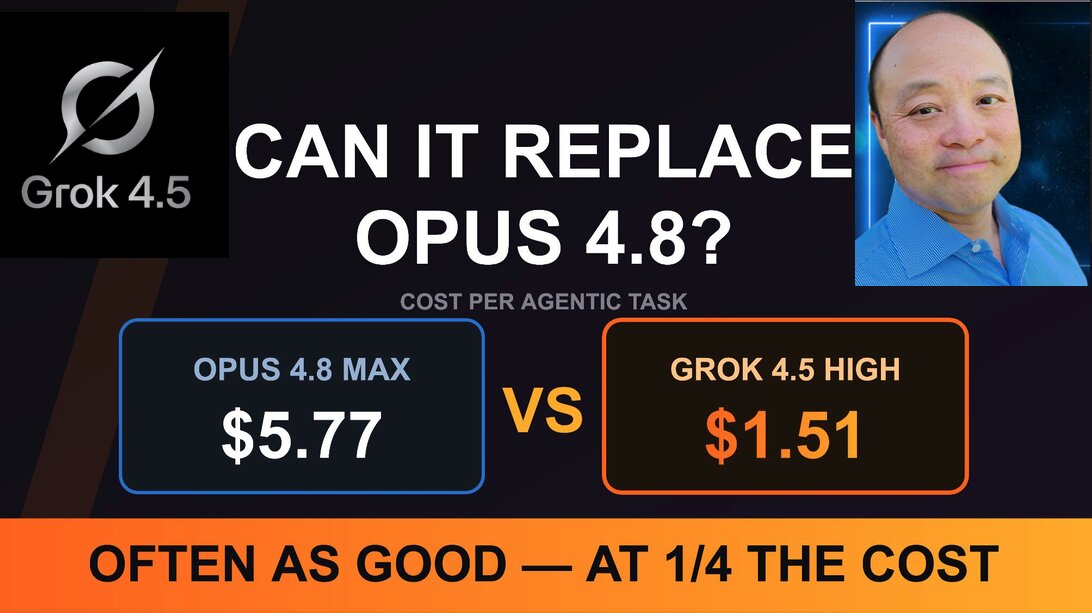
SPACEXAI Grok 4.5 is as Good as Anthropic Opus BUT One-quarter of the COST
Actual usage of SpaceXAI Grok 4.5. First person reports that there are programmers successfully replacing Opus and Sonnet in all of his systems today with Grok 4.5. Grok 4.5 worked great. Spending can drop 50-80%. $200-500 instead of $1000. Grok 4.5 is faster than Opus 4.8. Maybe 2 to 3 times faster. OpenAI GPT 5.6 is coming tomorrow and will be faster but more expensive than Grok 4.5. Grok 4.5 can own the low end of developer usage (pretty, efficient value and good enough). This could send Cursor-SpaceXAI enterprise revenue up from $4 Billion ARR to $8-15 billion ARR in 1-2 months
Google Chrome to Ban Prediction Market Extensions, Impacting Polymarket and Kalshi - TokenPost
Google is set to block Chrome extensions linked to prediction markets, creating a new distribution challenge for platforms such as Polymarket and Kalshi even as the industry records unprecedented trading activity. The company announced the policy update on July 1 through the Chrome for Developers blog, expanding its Regulated Goods and Services policy to explicitly prohibit extensions that facilitate predictive markets. Developers who fail to comply with the new requirements risk having their Chrome extensions removed once the policy takes effect. Beyond prediction markets, Google also introduced stricter privacy standards for all Chrome extensions. Developers may now collect only the data necessary for a clearly disclosed, single-purpose function. They must also provide transparent explanations of their data collection practices and notify users of any future changes. In addition, Google is banning extensions designed to bypass safety protections in AI-powered services, describing the broader policy overhaul as part of its effort to strengthen user trust and privacy. Google stated that users should have complete visibility into how their data is handled while maintaining confidence that the Chrome extension ecosystem operates responsibly. The decision is notable because Google Finance has displayed prediction market data from Polymarket and Kalshi since November 2025. While the company continues to feature market odds on its financial platform, it is now restricting browser extensions that enable direct participation in those markets. The move comes as prediction markets continue to expand rapidly. According to Dune Analytics, combined monthly notional trading volume reached approximately $291.38 billion as of June 22, highlighting growing investor interest despite mounting regulatory pressure. Several jurisdictions have already imposed restrictions. Argentina ordered a nationwide block of Polymarket in March, joining more than 30 countries that have limited access to the platform. The ruling also led Google and Apple to remove Polymarket's mobile apps for users in Argentina. In the United States, the Commodity Futures Trading Commission (CFTC) continues to defend prediction markets in court against legal challenges from several states, including Kentucky, New York, and Wisconsin. Despite increasing scrutiny, investor interest remains strong. Kalshi is reportedly pursuing a $40 billion valuation following its $1 billion Series F funding round. Meanwhile, a Wall Street Journal analysis found that more than 70% of Polymarket accounts lost money, while just 0.1% of users captured roughly 67% of total profits. Although Chrome extensions may disappear, prediction markets remain accessible through their websites and mobile applications.
UST Partners with Anthropic to Bring Claude into UST's Platforms, Engineering, and Operations and Train 20,000 UST Employees Globally
Under the strategic alliance, UST will combine Anthropic's Claude models with UST's proprietary industry and horizontal platforms, engineering services, domain solutions, and internal operations, helping clients modernize and transform core systems and operationalize trusted AI at scale. MELBOURNE, Australia, July 9, 2026 /PRNewswire/ -- UST, a leading AI and technology transformation solutions company, today announced a strategic alliance with Anthropic, the AI safety and research company behind the Claude family of models. The partnership is focused on helping Global 1000 enterprises become AI-native. UST will embed Claude into the engineering environments and operational workflows it designs, builds, and runs for clients - helping organizations move from isolated AI pilots to trusted, enterprise-scale AI embedded in the systems that drive their business. The alliance combines Claude models with UST's implementation, engineering, and domain expertise, enabling customers to adopt Claude more quickly and responsibly within existing enterprise environments. Rooted in a shared commitment to responsible AI, the alliance strengthens UST's position as a Global Premier Partner in the Claude Partner Network Services Tier and expands UST's ability to help organizations move from experimentation to trusted, large-scale deployment. By combining Claude models with UST's engineering expertise, deep industry knowledge, and global delivery model, customers can adopt Claude with greater confidence across complex enterprise environments. Claude for Physical AI: Enhancing UST's Engineering Platforms UST is integrating Claude into the engineering platforms that semiconductor, automotive, manufacturing, telecom, embedded, and IoT companies use for design verification, semiconductor validation, factory operations, and field service. This will enable teams to catch design flaws earlier, speed up chip validation, and integrate hardware and software into a single system from the factory floor to the field. These processes are foundational to physical AI, moving intelligence off the screen and into the equipment and robotics that run production. UST-iDEC is one of the clearest examples. The platform already changes the economics of hardware and silicon validation, cutting cycle times by 50-70% and compressing standard four-day turnarounds into 48 hours through a closed-loop, agentic validation pipeline. UST is now integrating Claude as the reasoning layer into that pipeline to further extend it. Claude Code reads chip pinouts and hardware schematics natively and writes and runs regression test scripts that engineers previously scripted by hand, while Claude's reasoning models compare live edge data against digital twins to flag firmware regressions and signal-integrity faults. UST is targeting an already-fast validation pipeline that gets even faster, with less manual scripting, earlier fault detection, without adding new tools for engineers. UST Platform solutions accelerated by Claude for Industry and Enterprise Workflows UST will integrate Claude into selected industry platforms and horizontal enterprise platforms. Together, these integrations will give clients a consistent way to apply AI across industry-specific and shared enterprise workflows where accuracy, data protection, compliance, and reliability are critical. Healthcare Payer: UST CarePath uses Claude to streamline member services, care management, and claims workflows, giving care teams a single, real-time view. Claude Code and MCP connectors link the platform directly to claims and care management systems, while an agentic layer routes each recommended action for approval before it reaches a member. The platform will help teams turn healthcare data into clear next steps, improve patient and member engagement, and resolve issues faster while staying within healthcare data governance controls. Telecom: UST IntelliOps will bring Claude into network operations, service assurance, and OSS/BSS modernization. The platform has Claude's reasoning layer wired in to help operators identify service issues, predict RAN failures, and reduce outage duration through approved response workflows and secure system integrations. This gives telecom operators fewer SLA penalties, shorter customer-facing outages, and less time NOC teams spend sorting signal from noise. Banking: Most mid-tier banks still run on core systems built for overnight batch processing, not real-time banking. Every new integration or product change requires months of vendor-dependent work. UST FinX connects legacy banking systems to a single modern, real-time platform built for open banking and API-first integration. Claude drives the platform's AI capabilities, accelerating onboarding, automating document processing, and providing staff with faster access to account and compliance data, all within FinX's built-in governance and audit controls. That's what lets a bank modernize without hiring a bigger compliance team just to keep up. Scaling Claude Across UST's Horizontal Platforms and Industries UST puts Claude to work everywhere clients feel the friction of change. In consulting, teams use Claude to redesign workflows and transformation roadmaps, helping enterprises adopt AI across functions and make change management repeatable rather than a one-off project. In business applications, Claude Code and approved MCP connectors handle configuration by hand, writing integration logic and letting teams describe what they need in plain language. In data and automation, Claude builds pipelines, accelerates analysis, and coordinates end-to-end handoffs between systems that once required manual stitching. In cloud, infrastructure, and security, Claude supports migration planning, writes infrastructure as code, checks it against policy before it ships, and helps teams get to the bottom of an incident faster, all under the same governance running across the alliance. Looking ahead, UST will also bring Claude into its retail, consumer goods, and manufacturing platforms to sharpen merchandising and inventory planning, strengthen digital commerce, and improve supply chain execution. UST's Own Operations, Accelerated by Claude UST already applies AI across its own operations and continues to expand its use of Claude and Claude Cowork. Within UST, deploying these capabilities across contracts, legal, talent, marketing, infrastructure, and finance demonstrates a commitment to innovation and operational excellence. Teams are transforming manual processes into reusable, Claude-native workflows and developing role-specific Claude skills to support key functions. These workflows operate with clear guardrails and human oversight at critical points, ensuring that automation supports accountability and informed judgment alongside speed. The result is more consistent operations and more time for employees to focus on judgment, negotiation, client work, and creative problem-solving. The impact is twofold. Operations run faster and cleaner, and people gain time for decisions, negotiations, and imagination that drive growth. By gaining firsthand experience with the operational, technical, and change management challenges of AI adoption, UST is building the foundation for how it helps customers reimagine their enterprise transformation. That experience is evolving into an operating playbook of tested workflows, governance models, and value frameworks, proven within a complex organization and designed to accelerate time-to-value while managing financial and operational risk. UST commits to training 20,000 developers and industry experts equipped to build with Claude at enterprise scale A core pillar of this alliance is powering UST's transformation into an AI-native company, starting with how UST works internally, not just what it delivers to clients. As part of the alliance, UST plans to certify 20,000 associates worldwide on Claude, across roles from architects and engineers to consultants, industry specialists, and forward-deployed engineers who can sit alongside client teams to think, build, and solve problems every day. This reflects UST's continued emphasis on talent enablement, grounded in its core values of Humility, Humanity, and Integrity, while developing a growing community of AI-native developers, FDE-style practitioners, architects, and industry experts equipped to build with Claude at enterprise scale. UST will build specialized teams to deploy Claude, with support from Anthropic enablement, technical guidance, and certification. "Our alliance with Anthropic reflects UST's unwavering commitment to helping clients navigate the AI landscape with confidence and achieve meaningful business outcomes. By combining the capabilities of Claude with UST's engineering, industry knowledge, and delivery expertise, we are bringing to market industry-specific platforms and digital and engineering solutions that improve productivity, accelerate business outcomes, and help clients operationalize AI-led decisions in a safe and secure environment," said Krishna Sudheendra, Chief Executive Officer, UST. "UST helps the world's banks, telecoms, and manufacturers put new technology to work. They're proving Claude inside their own engineering first, training 20,000 of their own people on it, before bringing it into the systems they build and run for clients," said Paul Smith, Chief Commercial Officer, Anthropic. "We are wiring Claude into how UST designs, builds, and runs solutions across our consulting, platforms, engineering services, and industry offerings. This alliance with Anthropic helps us deliver higher-value outcomes for clients while advancing UST's transformation into an AI-native organization built on trust, human oversight, and long-term impact," said Manu Gopinath, President, UST. About Anthropic Anthropic is an AI safety company that builds reliable, interpretable, and steerable AI systems. Founded as a public benefit corporation, Anthropic develops the Claude family of AI models and products, including Claude Code, Claude Cowork, and Claude Enterprise, used by organizations around the world. For more information, visit anthropic.com About UST Since 1999, UST has worked side by side with the world's best companies to make a powerful impact through transformation. Powered by technology, driven by AI, inspired by people, and led by our purpose, we partner with our clients from design to operation. Our AI-driven digital solutions, proprietary platforms, engineering, R&D, products, and innovation ecosystem turn core challenges into impactful, disruptive business outcomes. With deep industry knowledge and a future-ready mindset, we infuse expertise, innovation, and agility into our clients' organizations-delivering measurable value and positive lasting change for them, their customers, and communities around the world. Together, with 30,000+ employees in 30+ countries, we build for boundless impact-touching billions of lives in the process. Visit us at www.UST.com. Media Contacts, UST: Tinu Cherian Abraham +1 (949) 415-9857 (US) +91-7899045194 (India) Merrick Laravea +1 (949) 416-6212 Neha Misri +44-7341787926 Roshni Das K +91 7736795557 SomSekhar CV +91-9037888244 [email protected] Media Contacts, U.S.: S&C PR +1-646.941.9139 [email protected] Makovsky [email protected] Media Contacts, India: [email protected] Media Contacts, U.K.: FTI Consulting [email protected] Media Contacts, Spain: Noizze Media Carmen Tapia / Ricardo Schell [email protected] / [email protected] Media Contacts, APAC: Lee Kye Vern +65 8508 8387 [email protected]
How Kraken's Market Coverage Dominates MiCA-Approved Platforms -- What It Means for Investors
DefiLlama data highlights Kraken's dominance in market coverage. DefiLlama has reported that Kraken leads MiCA-regulated exchanges in liquidity, showing $399.71 million in spot liquidity and $206.90 million in perpetual liquidity. This data highlights Kraken's competitive edge in the European market, particularly under the MiCA regulations. The Latest The broader crypto market is currently experiencing mixed signals, but Kraken's performance stands out. The exchange has positioned itself as a leader in liquidity among platforms operating under the MiCA regulatory framework. The reported spot liquidity of $399.71 million and a substantial $206.90 million in perpetual liquidity underscore Kraken's ability to attract trading volume and investor interest. This strong liquidity could reinforce Kraken's reputation and operational stability within the rapidly evolving cryptocurrency landscape. At a Glance * Kraken, liquidity leader, effective_date: 2026-07-08 Token Metrics Despite the overall market's fluctuations, Kraken's liquidity figures suggest a strong demand for its services. The reported spot and perpetual liquidity levels indicate that traders are increasingly turning to Kraken for their trading needs. This trend may reflect broader confidence in the exchange's regulatory compliance and operational capabilities as the market continues to mature. Kraken has been actively adapting to regulatory changes, especially with the recent MiCA framework in Europe. The exchange's commitment to liquidity and market coverage positions it favorably among competitors, particularly in a market where regulatory compliance is becoming increasingly critical. The Road Ahead Traders should closely monitor Kraken's liquidity metrics as they could signal broader trends in market demand for regulated exchanges. Additionally, the performance of Kraken in relation to Bitcoin dominance and overall market cycles will likely influence trader sentiment moving forward. Understanding these dynamics will be essential for navigating the evolving landscape of cryptocurrency trading. This article is for informational purposes only and does not constitute financial advice. Always conduct your own research before making investment decisions.

Japanese company books 1,100 pounds of cargo space on SpaceX Starship mission to the moon
When you buy through links on our articles, Future and its syndication partners may earn a commission. ispace is expanding its already extensive moon plans to include SpaceX's Starship megarocket. The Tokyo-based company announced today (July 8) that it has booked 1,100 pounds (500 kilograms) of cargo capacity on Starship, the biggest and most powerful rocket ever built, for a moon mission that could launch as soon as 2030. The deal is worth $50 million, according to Tokyo Brief. "We are very pleased to be able to offer the new Lunar Access Integration service utilizing Starship's payload space through our collaboration with SpaceX," ispace founder and CEO Takeshi Hakamada said in a statement today. "High-capacity, relatively low-cost lunar transport, such as that provided by Starship, is essential to realizing the sustainable lunar economy that ispace aims to create." As that quote suggests, ispace may become a regular Starship customer over the years, using the giant vehicle to carry its new "Mobile Cargo System" to the lunar surface. The MCS is a pallet-like flat rover capable of transporting up to 1,100 pounds (500 kg) across the lunar terrain. The newly announced Mobile Cargo System moon mission aboard Starship will launch no earlier than 2030, according to ispace. The timeline will depend largely on SpaceX's ability to progress Starship into an operational vehicle. (Starship has flown 12 test flights to date, all of them suborbital.) ispace has flown with SpaceX before; Falcon 9 rockets launched the Japanese company's robotic HAKUTO-R moon rover in both 2022 and 2025. Both times, HAKUTO-R reached lunar orbit successfully but crashed during its landing attempt. Starship is SpaceX's super-heavy-lift launch vehicle, which is designed for full reusability and capable of launching up to 150 tons (136 metric tons) to low Earth orbit. The rocket has been in development for a while; SpaceX founder and CEO Elon Musk first announced the vehicle during the International Astronomical Congress in Mexico in 2016. Expectations for its operational readiness have been an ever-moving goal post. In 2021, for example, SpaceX was targeting sometime "before 2024" for the spacecraft's first mission to the moon, but development delays have continually pushed that date back. 2024 was also the year NASA originally targeted for the first crewed lunar landing mission of the agency's Artemis program, though that's no longer the plan. NASA contracted Starship as the lunar lander for that touchdown, which is now slated to take place during Artemis IV in late 2028. Agency officials have cited Starship as part of the reason that Artemis' schedules have slipped.
Cathie Wood's ARK sells BioNTech and buys SpaceX stock By Investing.com
Cathie Wood's ARK ETF published their daily trades for Wednesday, July 8th, 2026, revealing significant activity in several key stocks. The most notable transaction involved the sale of 78,211 shares of BioNTech SE (NASDAQ:BNTX) through its ARKG ETF, amounting to a substantial $7,374,515. This sale is part of a broader trend, as ARK had also sold 44,330 shares of BioNTech the previous day. On the buying side, ARK made a significant purchase of 181,847 shares of Space Exploration Technologies Corp (SPCX) across multiple ETFs, including ARKK, ARKQ, ARKW, and ARKX, totaling $27,180,671. This marks a continued interest in SpaceX, following a purchase of 44,196 shares just a day earlier. Another noteworthy transaction was the sale of 29,974 shares of Roku Inc (NASDAQ:ROKU) through the ARKW ETF, valued at $4,232,628. This follows a pattern of consistent selling of Roku shares over recent days. Additionally, ARK sold 8,010 shares of Advanced Micro Devices Inc (NASDAQ:AMD) across its ARKK and ARKX ETFs, for a total of $4,134,041. This continues a trend from the previous day when 8,667 shares were sold. Among the smaller trades, ARK sold 11,990 shares of Twist Bioscience Corp (NASDAQ:TWST) through its ARKK ETF, worth $1,091,449, and bought 14,637 shares of Eli Lilly and Co (NYSE:LLY) through its ARKG ETF for $18,084,891. In the biotech sector, ARK continued to adjust its holdings with the sale of 35,859 shares of CareDx Inc (NASDAQ:CDNA) for $1,015,168 and the purchase of 61,750 shares of Generate Biomedicines Inc (GENB) for $1,001,584. Overall, Cathie Wood's ARK ETFs showed a strategic mix of buying and selling, with a continued focus on high-growth sectors such as biotechnology and space exploration. Investors will be closely watching these moves for insights into ARK's investment strategy. This article was generated with the support of AI and reviewed by an editor. For more information see our T&C.

Netanyahu warns on Turkey F-35s as Polymarket puts Eizenkot at 40%
predict.info -- Premium Domain For Sale Domain only: USD 200,000. Prediction platform technology priced separately. predict.info Netanyahu Warns Against U.S. F-35 Sale to Turkey as Polymarket Lifts Gadi Eizenkot's Next Israel PM Odds Benjamin Netanyahu sharpened his public criticism of a potential U.S. sale of F-35 fighter jets to Turkey in comments to CNN, framing Ankara as an unreliable partner and warning of a regional power shift. Polymarket traders nudged higher the odds in the contract "Who will be the next Prime Minister of Israel after the next election?", with Gadi Eizenkot leading at 39.95%. Key Takeaways * Polymarket prices Gadi Eizenkot as the top pick at 39.95% to be Israel's next prime minister after the next election. * Traders slightly lifted Eizenkot's implied odds by 0.85 percentage points as Netanyahu stayed in the headlines on foreign policy and security issues. * The market is set to resolve by 2026-12-31, and the contract's implied odds are up 2.05 percentage points over the past 24 hours. Prime Minister Benjamin Netanyahu told CNN he had raised concerns with U.S. President Donald Trump about the possibility of Washington selling F-35 fighter jets to Turkey, saying such a move could disrupt the balance of power in the Middle East. He argued that Turkey should not be viewed as a "friendly state" to the United States, citing Ankara's ties to the Muslim Brotherhood, President Recep Tayyip Erdogan's support for Hamas, and Turkey's record on imprisoning political opponents and journalists. Netanyahu said Erdogan has threatened NATO allies and has repeatedly threatened Israel, and he described Turkey as having aggressive ambitions, including claims about restoring the Ottoman Empire. He also said the U.S. and Israel remain close allies even when they disagree, and said both leaders aligned on giving Iran a chance to address its nuclear program through negotiations while insisting Israel would not allow Iran to obtain nuclear weapons. In the same interview, Netanyahu condemned Jewish settler violence in the West Bank as a violation of basic norms and said incidents would be investigated, rejecting vigilantism regardless of who carries it out. Polymarket Data: $26.25M Volume as Eizenkot Leads at 39.95% vs Netanyahu at 36.5% (Resolution 2026-12-31) On Polymarket, the multi-outcome market has about $26.25 million in volume, with Gadi Eizenkot leading at 39.95% Yes (60.05% No) versus Benjamin Netanyahu at 36.5% Yes (63.5% No). The next tier is priced much lower, with Naftali Bennett at 12.5% Yes (87.5% No) and Avigdor Lieberman at 3.35% Yes (96.65% No), signaling a two-way race in current positioning. The latest move shows Eizenkot up to 39.95% from 39.1%, while the broader tape indicates a 24-hour change of +2.05 percentage points for the tracked odds series. With resolution set for 2026-12-31, the pricing suggests traders are concentrated in the top two outcomes while assigning long-shot probabilities to the rest of the field. Watch whether Polymarket's spread between Gadi Eizenkot (39.95%) and Benjamin Netanyahu (36.5%) widens or tightens, and whether volume above $26.25 million accelerates into a clearer two-candidate market. Beyond Israel Politics: Other High-Volume Geopolitical and Macro Contracts Polymarket Traders Are Watching Beyond Israel's leadership odds, Polymarket traders are also keeping a close eye on faster-moving regional risk gauges, including 92.25% "No" on "Israel closes its airspace by July 15?" with $1,062,143 in volume. The contract sits alongside a broader slate of high-turnover geopolitical and macro markets that participants use to hedge headline-driven volatility across the region and beyond. Odds Trend By the Numbers * Platform: Polymarket * Market: Who will be the next Prime Minister of Israel after the next election? * Contract type: Price strike ladder: each rung has separate Yes/No; Yes means the spot price is above that USD strike at settlement. * Resolution window: Dec 31, 2026 (UTC) * Status: Active (open for trading) * Volume: ~$26,251,121 Top strike rungs +14 more strikes not shown

SpaceX Stock Is Down 35% From Its High Just 1 Day After Joining the Nasdaq-100. Is the Dip a Buy?
Getting added to the Nasdaq-100 is usually a good day for a stock. Funds that track the benchmark have to own it. And for SpaceX (NASDAQ: SPCX), that meant billions of dollars of forced buying into a company whose public float is only a few percent of its shares. On paper, that is a lot of demand chasing very little stock. Where to invest $1,000 right now? Our analyst team just revealed what they believe are the 10 best stocks to buy right now, when you join Stock Advisor. See the stocks " Yet a day after joining the index on July 7, SpaceX trades about 35% below its high of $225.64, changing hands for less than $147 as of this writing. That is below where the stock started when the company went public in June, in the largest U.S. initial public offering on record. It slipped about 6% in the session right after inclusion, giving back nearly all of its post-IPO gains. So is the drawdown a chance to buy one of the most talked-about companies in the world at a discount? Or is the slide telling investors something? Image source: Getty Images. A classic sell-the-news move In short, this looks like a classic sell-the-news event. Sure, some buying was required because of the index inclusion. But that doesn't prevent investors from selling. And, ultimately, Wall Street seems convinced that shares aren't quite worth the premium they were commanding leading up to the event -- and especially not worth the all-time high they hit shortly after the IPO. This sell-the-news dynamic following an index inclusion has happened before. Palantir peaked right around its own Nasdaq-100 addition in late 2024, then fell about 25% over the following weeks. In addition, joining an index can broaden a stock's ownership over time, but it does nothing to change what the underlying business is worth. And that, of course, is the harder question here. At the time of this writing, SpaceX carries a market capitalization of about $1.9 trillion, making a shortlist of companies that have ever commanded a value this high. And SpaceX has reached this valuation while still losing money. In 2025, the company generated about $18.7 billion in revenue, up about 33%, so investors are paying around 100 times sales. What the $1.9 trillion price demands Sure, there's a real business beneath the company's $1.9 trillion market value. Starlink, SpaceX's satellite internet service, crossed 10 million active customers earlier this year and brought in more than $11 billion in revenue in 2025, about 61% of the company's total. This is the part of the story I find most impressive: a large, fast-growing subscription business, and the main reason SpaceX can command a price in the trillions at all. But growth alone isn't the whole story. SpaceX is deeply unprofitable, reporting a net loss of $4.9 billion in 2025 and $4.3 billion in the first quarter of 2026. A big piece of that traces to xAI, the artificial intelligence (AI) start-up SpaceX absorbed earlier this year. Its AI segment generated $3.2 billion in 2025 revenue but burns far more, and management has floated even bolder plans, including putting AI data centers in orbit. Add the cost of scaling Starship, and free cash flow is deeply negative. So the price is asking a lot. It assumes Starlink keeps compounding, that Starship's launch cadence ramps on schedule, and that the money flooding into xAI eventually earns a return rather than quietly consuming Starlink's profits. Any one of those slipping could leave the stock exposed. At about 100 times sales, there is little room for the ordinary stumbles that come with building rockets and AI models at once. To be fair, this is a singular company. Its assets are hard to copy: a reusable rocket fleet, a satellite network already circling the planet, and a founder who has repeatedly pulled off what looked impossible. For investors who believe SpaceX will own space-based connectivity and compute for decades, a 33% pullback may look like an opening. I'm not there yet. The drawdown makes the stock cheaper than it was a week ago, but cheaper and cheap are not the same thing. With the company still losing billions, I think its near-$2 trillion market capitalization leaves no cushion at all. I would rather watch SpaceX show that Starlink's profits can outrun its spending before paying up -- even after a sharp one-day drop. Should you buy stock in Space Exploration Technologies right now? Before you buy stock in Space Exploration Technologies, consider this: The Motley Fool Stock Advisor analyst team just identified what they believe are the 10 best stocks for investors to buy now... and Space Exploration Technologies wasn't one of them. The 10 stocks that made the cut could produce monster returns in the coming years. Consider when Netflix made this list on December 17, 2004... if you invested $1,000 at the time of our recommendation, you'd have $410,833!* Or when Nvidia made this list on April 15, 2005... if you invested $1,000 at the time of our recommendation, you'd have $1,208,693!* Now, it's worth noting Stock Advisor's total average return is 917% -- a market-crushing outperformance compared to 209% for the S&P 500. Don't miss the latest top 10 list, available with Stock Advisor, and join an investing community built by individual investors for individual investors. See the 10 stocks " *Stock Advisor returns as of July 8, 2026. Daniel Sparks and his clients have no position in any of the stocks mentioned. The Motley Fool has no position in any of the stocks mentioned. The Motley Fool has a disclosure policy. The views and opinions expressed herein are the views and opinions of the author and do not necessarily reflect those of Nasdaq, Inc.

SpaceXAI's newest AI model Grok 4.5 dramatically undercuts Anthropic and OpenAI on price
SpaceXAI's newest AI model Grok 4.5 dramatically undercuts Anthropic and OpenAI on price Elon Musk's SpaceXAI Corp. has released a new model called Grok 4.5, in what is its first major launch since it went public a few weeks earlier. In a blog post earlier today, the company said Grok 4.5 is designed to be a workhorse that's able to tackle all of the usual tasks that the artificial intelligence industry has been automating for some time already. That includes things like coding, writing emails and presentations, performing office and clerical work, doing research and other kinds of knowledge-based work. None of this sets Grok 4.5 apart, but SpaceXAI said that the difference is that it can do these tasks just as well as its peers at around half the cost, because it has "twice greater token efficiency" than its peers from other frontier model labs. If true, that could be a compelling advantage in a world where the cost of tokens has suddenly become a major issue for heavy AI users. SpaceXAI announced Grok 4.5's release alongside a host of benchmark results that highlight how competitive it is with the leading models of some of its major competitors, and it falls just short of their performance. In a post on the social media platform X, which is owned by SpaceXAI, founder Musk compared Grok 4.5 to Anthropic PBC's Opus, which is a large language model designed to handle intensive reasoning tasks. In a follow up, Musk added that the company's internal assessments show that Grok 4.5 is "roughly comparable" with Opus 4.7 in terms of its performance, but much faster at generating its results. "The combination of capability, faster speed and lower cost is what makes it competitive," he added. Grok 4.5's real calling card, however, appears to be its overall efficiency. The company said it costs around $2 per one million input tokens and $6 per one million output tokens, which makes it far cheaper than its rival's most capable models. In contrast, Opus 4.7 and 4.8 run at $5 per one million input tokens and $25 for one million outputs. Meanwhile, Fable 5, which is Anthropic's best model, costs $10 for inputs and $50 for outputs, based on one million tokens. OpenAI Group PBC, meanwhile, has a tiered pricing structure for different models. Its newest model, GPT-5.6 Sol, is priced at $5 for one million inputs and $30 for one million outputs, while Luna, its low cost version, costs $1 for one million inputs and $6 for one million outputs. This week is proving to be a big one in terms of new AI model launches. Earlier today, OpenAI announced the launch of GPT-5.6 Sol, its most powerful model so far, after being held up by the White House administration due to security concerns. According to OpenAI, GPT-5.6 Sol is its "strongest model yet," but those security concerns mean that it's currently only available to a limited number of customers. OpenAI also announced the launch of GPT-Live today, which is a family of AI models optimized to process spoken instructions.
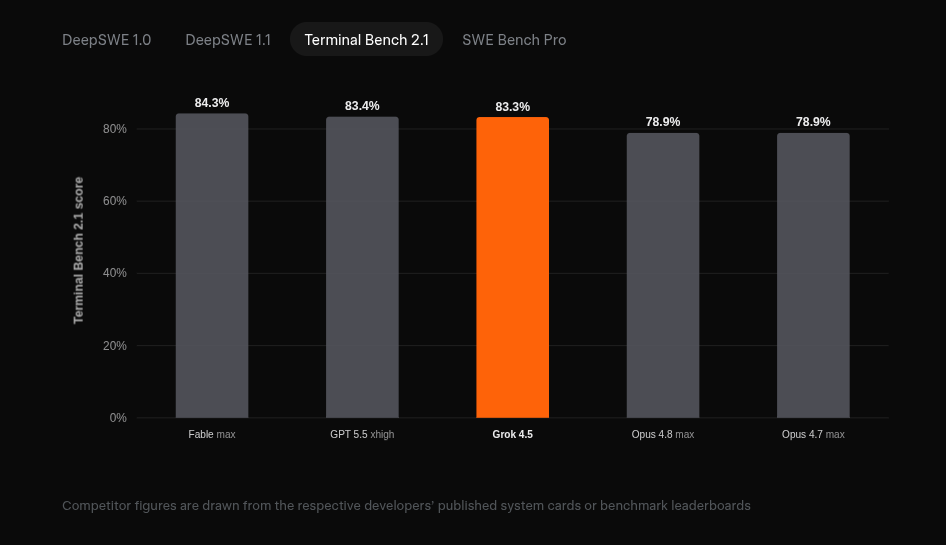
UST Partners with Anthropic to Bring Claude into UST's Platforms, Engineering, and Operations and Train 20,000 UST Employees Globally
Under the strategic alliance, UST will combine Anthropic's Claude models with UST's proprietary industry and horizontal platforms, engineering services, domain solutions, and internal operations, helping clients modernize and transform core systems and operationalize trusted AI at scale. MELBOURNE, Australia, July 9, 2026 /PRNewswire/ -- UST, a leading AI and technology transformation solutions company, today announced a strategic alliance with Anthropic, the AI safety and research company behind the Claude family of models. The partnership is focused on helping Global 1000 enterprises become AI-native. UST will embed Claude into the engineering environments and operational workflows it designs, builds, and runs for clients - helping organizations move from isolated AI pilots to trusted, enterprise-scale AI embedded in the systems that drive their business. The alliance combines Claude models with UST's implementation, engineering, and domain expertise, enabling customers to adopt Claude more quickly and responsibly within existing enterprise environments. Rooted in a shared commitment to responsible AI, the alliance strengthens UST's position as a Global Premier Partner in the Claude Partner Network Services Tier and expands UST's ability to help organizations move from experimentation to trusted, large-scale deployment. By combining Claude models with UST's engineering expertise, deep industry knowledge, and global delivery model, customers can adopt Claude with greater confidence across complex enterprise environments. Claude for Physical AI: Enhancing UST's Engineering Platforms Get the latest news delivered to your inbox Sign up for The Manila Times newsletters By signing up with an email address, I acknowledge that I have read and agree to the Terms of Service and Privacy Policy. UST is integrating Claude into the engineering platforms that semiconductor, automotive, manufacturing, telecom, embedded, and IoT companies use for design verification, semiconductor validation, factory operations, and field service. This will enable teams to catch design flaws earlier, speed up chip validation, and integrate hardware and software into a single system from the factory floor to the field. These processes are foundational to physical AI, moving intelligence off the screen and into the equipment and robotics that run production. UST-iDEC is one of the clearest examples. The platform already changes the economics of hardware and silicon validation, cutting cycle times by 50-70% and compressing standard four-day turnarounds into 48 hours through a closed-loop, agentic validation pipeline. UST is now integrating Claude as the reasoning layer into that pipeline to further extend it. Claude Code reads chip pinouts and hardware schematics natively and writes and runs regression test scripts that engineers previously scripted by hand, while Claude's reasoning models compare live edge data against digital twins to flag firmware regressions and signal-integrity faults. Advertisement UST is targeting an already-fast validation pipeline that gets even faster, with less manual scripting, earlier fault detection, without adding new tools for engineers. UST Platform solutions accelerated by Claude for Industry and Enterprise Workflows UST will integrate Claude into selected industry platforms and horizontal enterprise platforms. Together, these integrations will give clients a consistent way to apply AI across industry-specific and shared enterprise workflows where accuracy, data protection, compliance, and reliability are critical. Healthcare Payer: UST CarePath uses Claude to streamline member services, care management, and claims workflows, giving care teams a single, real-time view. Claude Code and MCP connectors link the platform directly to claims and care management systems, while an agentic layer routes each recommended action for approval before it reaches a member. The platform will help teams turn healthcare data into clear next steps, improve patient and member engagement, and resolve issues faster while staying within healthcare data governance controls. Advertisement Telecom: UST IntelliOps will bring Claude into network operations, service assurance, and OSS/BSS modernization. The platform has Claude's reasoning layer wired in to help operators identify service issues, predict RAN failures, and reduce outage duration through approved response workflows and secure system integrations. This gives telecom operators fewer SLA penalties, shorter customer-facing outages, and less time NOC teams spend sorting signal from noise. Banking: Most mid-tier banks still run on core systems built for overnight batch processing, not real-time banking. Every new integration or product change requires months of vendor-dependent work. UST FinX connects legacy banking systems to a single modern, real-time platform built for open banking and API-first integration. Claude drives the platform's AI capabilities, accelerating onboarding, automating document processing, and providing staff with faster access to account and compliance data, all within FinX's built-in governance and audit controls. That's what lets a bank modernize without hiring a bigger compliance team just to keep up. Scaling Claude Across UST's Horizontal Platforms and Industries UST puts Claude to work everywhere clients feel the friction of change. In consulting, teams use Claude to redesign workflows and transformation roadmaps, helping enterprises adopt AI across functions and make change management repeatable rather than a one-off project. In business applications, Claude Code and approved MCP connectors handle configuration by hand, writing integration logic and letting teams describe what they need in plain language. In data and automation, Claude builds pipelines, accelerates analysis, and coordinates end-to-end handoffs between systems that once required manual stitching. In cloud, infrastructure, and security, Claude supports migration planning, writes infrastructure as code, checks it against policy before it ships, and helps teams get to the bottom of an incident faster, all under the same governance running across the alliance. Looking ahead, UST will also bring Claude into its retail, consumer goods, and manufacturing platforms to sharpen merchandising and inventory planning, strengthen digital commerce, and improve supply chain execution. Advertisement UST's Own Operations, Accelerated by Claude UST already applies AI across its own operations and continues to expand its use of Claude and Claude Cowork. Within UST, deploying these capabilities across contracts, legal, talent, marketing, infrastructure, and finance demonstrates a commitment to innovation and operational excellence. Teams are transforming manual processes into reusable, Claude-native workflows and developing role-specific Claude skills to support key functions. These workflows operate with clear guardrails and human oversight at critical points, ensuring that automation supports accountability and informed judgment alongside speed. The result is more consistent operations and more time for employees to focus on judgment, negotiation, client work, and creative problem-solving. The impact is twofold. Operations run faster and cleaner, and people gain time for decisions, negotiations, and imagination that drive growth. By gaining firsthand experience with the operational, technical, and change management challenges of AI adoption, UST is building the foundation for how it helps customers reimagine their enterprise transformation. That experience is evolving into an operating playbook of tested workflows, governance models, and value frameworks, proven within a complex organization and designed to accelerate time-to-value while managing financial and operational risk. UST commits to training 20,000 developers and industry experts equipped to build with Claude at enterprise scale Advertisement A core pillar of this alliance is powering UST's transformation into an AI-native company, starting with how UST works internally, not just what it delivers to clients. As part of the alliance, UST plans to certify 20,000 associates worldwide on Claude, across roles from architects and engineers to consultants, industry specialists, and forward-deployed engineers who can sit alongside client teams to think, build, and solve problems every day. This reflects UST's continued emphasis on talent enablement, grounded in its core values of Humility, Humanity, and Integrity, while developing a growing community of AI-native developers, FDE-style practitioners, architects, and industry experts equipped to build with Claude at enterprise scale. UST will build specialized teams to deploy Claude, with support from Anthropic enablement, technical guidance, and certification. "Our alliance with Anthropic reflects UST's unwavering commitment to helping clients navigate the AI landscape with confidence and achieve meaningful business outcomes. By combining the capabilities of Claude with UST's engineering, industry knowledge, and delivery expertise, we are bringing to market industry-specific platforms and digital and engineering solutions that improve productivity, accelerate business outcomes, and help clients operationalize AI-led decisions in a safe and secure environment," said Krishna Sudheendra, Chief Executive Officer, UST. "UST helps the world's banks, telecoms, and manufacturers put new technology to work. They're proving Claude inside their own engineering first, training 20,000 of their own people on it, before bringing it into the systems they build and run for clients," said Paul Smith, Chief Commercial Officer, Anthropic. Advertisement "We are wiring Claude into how UST designs, builds, and runs solutions across our consulting, platforms, engineering services, and industry offerings. This alliance with Anthropic helps us deliver higher-value outcomes for clients while advancing UST's transformation into an AI-native organization built on trust, human oversight, and long-term impact," said Manu Gopinath, President, UST. About Anthropic Anthropic is an AI safety company that builds reliable, interpretable, and steerable AI systems. Founded as a public benefit corporation, Anthropic develops the Claude family of AI models and products, including Claude Code, Claude Cowork, and Claude Enterprise, used by organizations around the world. For more information, visit anthropic.com About UST Advertisement Since 1999, UST has worked side by side with the world's best companies to make a powerful impact through transformation. Powered by technology, driven by AI, inspired by people, and led by our purpose, we partner with our clients from design to operation. Our AI-driven digital solutions, proprietary platforms, engineering, R&D, products, and innovation ecosystem turn core challenges into impactful, disruptive business outcomes. With deep industry knowledge and a future-ready mindset, we infuse expertise, innovation, and agility into our clients' organizations-delivering measurable value and positive lasting change for them, their customers, and communities around the world. Together, with 30,000+ employees in 30+ countries, we build for boundless impact-touching billions of lives in the process. Visit us at www.UST.com. Media Contacts, UST: Tinu Cherian Abraham +1 (949) 415-9857 (US) +91-7899045194 (India) Merrick Laravea +1 (949) 416-6212 Neha Misri +44-7341787926 Roshni Das K +91 7736795557 SomSekhar CV +91-9037888244 [email protected] Media Contacts, U.S.: S&C PR +1-646.941.9139 [email protected] Makovsky [email protected] Media Contacts, India: [email protected] Media Contacts, U.K.: FTI Consulting [email protected] Media Contacts, Spain: Noizze Media Carmen Tapia / Ricardo Schell

Anthropic Brings Claude Cowork to Phones for Max Subscribers
Anthropic launched Claude Cowork on phones, giving users a way to direct its knowledge-work agent from Android and iOS. Cowork debuted as a desktop app earlier this year, and after an expansion in the spring, the company now lets people manage it from a new Cowork tab in the Claude app's sidebar. The update does not automate tasks on the phone itself. Instead, it lets you keep tabs on what Claude is doing on your computer, and it can now run tasks in the background even when the machine is not online. Key Takeaways * Claude Cowork is now available on mobile and web, rolling out first to Max subscribers before reaching other plans in the coming weeks. * Sessions sync across devices, so a task started at a desk can be checked from a phone and picked up later, and Cowork can run scheduled work in the background with no device online. * When a task needs a decision only a person can make, Claude surfaces the question to the phone, and nothing is finalized without review. The design points to how Anthropic wants Cowork seen: less as a coding tool and more as an administrative teammate that runs in the background, moves across devices, and asks for input when a call is yours to make. One example from the company sets Monday client prep for 6 a.m., with Claude working through email threads, transcripts, and recent news, building a briefing document, and leaving a follow-up email drafted but unsent for review over coffee. Human in the Loop Control stays with the user. When Claude reaches a step that needs human judgment, it sends the question to the phone, and the person approves before anything moves forward. "Nothing ships until you've reviewed and approved it," Anthropic said. The company plans to unify Cowork with its chatbot so people can chat with Claude and hand it computer tasks from a single interface, a change that will land first on the web client and desktop app. Projects and artifacts, which group chats and files and let Claude build small apps and games, will come together as well. Where the Value Shows Up Alongside the launch, Anthropic released usage data that reframes what the tool is for. In a sample of 1.2 million Cowork sessions across more than 600,000 organizations, software development accounted for just 8.7% of use. The largest category, at 33.4%, was business process work such as pulling scattered updates into a report or reconciling spreadsheets, followed by content creation and copywriting at 16.4%. Anthropic describes these as the work around the work, the connective tasks that keep a business running but rarely define a single role. The move fits a broader race to push AI agents beyond chat into the surfaces where work happens. Anthropic's Cowork already shaped Microsoft's own Copilot Cowork, which runs Claude in Microsoft's cloud, and the company has been packaging pre-built agents for finance, HR, and legal teams. Cowork itself grew out of a pattern Anthropic noticed, with people repurposing its coding tool for general office tasks. The push extends into workplace apps too, from connections to Slack, Figma, and Box, as the line between chatbot and agent keeps thinning. For finance, HR, and communications teams, the usage data suggests the agent conversation is no longer only about developers.

In San Francisco, Some Home Sellers Now Ask for OpenAI or Anthropic Stock
When Nima Gabbay decided to sell his three-bedroom, two-bath San Francisco home for $2.995 million last month, his listing described the residence's soaring 10-foot ceilings, kitchen wrapped in Calacatta marble, remote-control skylights and oversize two-car garage. The 51-year-old real estate investor and developer also added an unusual clause: He would accept shares of OpenAI or Anthropic as payment for the home. Two OpenAI employees soon came forward offering some of their shares for the property, Mr. Gabbay said. One bid more than $1 million above the asking price, but appeared to inflate the value of his OpenAI stock. The other backed off when OpenAI filed to go public last month, deciding to hang on to the stock. Mr. Gabbay ultimately went with a third buyer who works in tech, and the sale is set to close this week. He was not at liberty to disclose the sale terms or the buyer's identity because he had signed a nondisclosure agreement, he said. "There's a bit of a gold rush situation right now in San Francisco," Mr. Gabbay said. Selling the home was "an avenue for me to potentially pick up some of this stock and be a part of the excitement of the companies going public." Even before OpenAI and Anthropic hold initial public offerings, the artificial intelligence companies -- which are based in San Francisco and leading the A.I. boom -- are distorting the city's housing market. Sellers are asking for pre-I.P.O. stock as payment for homes, property prices are surging as buyers bet that whatever they overpay today will look cheap tomorrow, and landlords are pushing out tenants to sell into the hotter market. The maneuvering is aimed at getting ahead of the wave of wealth when OpenAI and Anthropic, each valued at nearly $1 trillion, go public. Their I.P.O.s, plus the recent public offering of Elon Musk's SpaceX, could create more than 16,000 millionaires and more than 20 billionaires, according to Sacra, a private market research company. Already, San Francisco's sales of homes above $10 million have doubled over the past six months compared with a year earlier, said Joel Goodrich, an agent with Coldwell Banker Global Luxury. Forty-four homes closed at prices at least $1 million more than their asking price last month, said Mike Simonsen, the chief economist for Compass Real Estate. And there have been 144 such sales so far this year, up from eight in the first half of 2025. Fewer than 600 homes -- including single-family houses and condos -- are on the market today, about 40 percent below San Francisco's average of the past decade, according to Compass. The market is so frenzied that a six-bedroom, seven-bathroom 5,725-square-foot home in the Cow Hollow neighborhood with views of the Golden Gate Bridge and Alcatraz sold for $15 million in May, nearly double the list price of $7.9 million, according to John Caruso of Sotheby's International Realty. Even in a city that lived through the late-1990s dot-com boom and major public offerings by companies like Google (in 2004), Facebook (2012) and Uber (2019), property agents and wealth managers said they had never seen anything quite like this. "There's a hysteria that's out there right now," said Pete Rodway, a Compass agent who works mostly in the luxury market. One of his clients, an OpenAI employee, was scrambling to buy a $5 million home now to beat "a thousand other people that are going to have a budget of $30 million," he said. Garret Spiecker, who works at Citizens Private Bank and describes himself as a "financial therapist" for sudden wealth, said he had advised dozens of OpenAI and Anthropic employees on how to navigate the housing market. He has suggested they buy properties through trusts to protect their privacy, especially on homes above $5 million. "In this cycle, which differs from some of the others, a lot of these individuals are very young and quite wealthy very fast," he said. Anthropic and OpenAI, which have not set dates for their I.P.O.s, declined to comment. (The New York Times has sued OpenAI and Microsoft, claiming copyright infringement of news content related to A.I. systems. The companies have denied the claims.) Techies who do not work at OpenAI or Anthropic have accelerated their plans to buy homes. Sam Rosenstein, 31, a software engineer at the software company Databricks, and his partner, Michelle Huang, 31, who works in tech sales, jumped into the market this spring partly because they wanted to close on a deal before the flood of A.I. wealth, Ms. Huang said. "There was just a general acceptance that that time will eventually come," she said. Their urgency spiked when Mr. Rosenstein's landlord decided to sell his rental property to cash in on the rising market. But the competition for a home was so fierce that one house the couple bid $600,000 over asking for in April ended up selling for roughly $900,000 more than its asking price. In May, Mr. Rosenstein and Ms. Huang landed a four-bedroom, two-bathroom in the Hayes Valley neighborhood for $2.185 million, bidding $385,000 above asking. "When we put in the offer for the house, the seller came back and said we could pay the offer that we put in, or we could pay less money but provide 60 hours of A.I. consulting" on a personal project, Mr. Rosenstein said. "That's totally the weirdest thing that has happened." They declined the $10,000 discount. Like Mr. Gabbay, other home sellers are unabashedly angling for shares of OpenAI and Anthropic. In April, Storm Duncan, 56, the founder of the tech-focused investment bank Ignatious, quietly marketed his 4,372-square-foot four-bedroom, five-bath compound in nearby Mill Valley, Calif. -- featuring an infinity pool and views of the San Francisco skyline -- on a LinkedIn page he created just for his house, which he valued at approximately $8 million. He direct-messaged Anthropic employees and investors, hoping to trade the home for stock. The listing went viral after someone from Khosla Ventures, a venture capital firm that has invested in Anthropic and OpenAI, leaked the LinkedIn post, Mr. Duncan said. The California Post published an article about the property soon after. Mr. Duncan took the listing down, though he said he would still do the deal if the right opportunity arose. Anthropic is "narrowly focused on building a great product," he said. In May, Vijay Chattha, 49, a tech entrepreneur, listed his three-bedroom vacation home in Sonoma County wine country, an hour's drive from San Francisco, with a $500,000 discount off the $2.5 million price if the buyer paid in Anthropic stock. "I think Anthropic is going to grow faster than the real estate market, so why not just do a trade?" Mr. Chattha said. He added that he already had OpenAI stock and wanted to use the deal to build a stake in Anthropic. The vacation home, now listed at $2.35 million, has not sold. But Mr. Chattha said he was undeterred. He next plans to list a condo in San Francisco -- also for A.I. stock.

How SpaceX Spending Spree Could Threaten AT&T, Verizon, T-Mobile
Look for Elon Musk's SpaceX (SPCX) to invest some $200 billion over the next five years globally to expand its Starlink communications business, a Morgan Stanley analyst predicted on Wednesday, who also called broadband services the biggest near-term threat to AT&T (T), T-Mobile (TMUS), Verizon Communications (VZ). SpaceX stock has retreated about 7% since the company's initial public offering. "We...

Discord Bug Wrongly Banned Around 8,200 Accounts Since May
A bug in Discord's safety systems incorrectly banned accounts starting in May, the company said. Around 200 accounts were caught over one recent weekend, but the problem may have affected roughly 8,200 accounts since May 2026. Grid-style images seemed to be the trigger, wrongly matched against known harmful material. That meant a spreadsheet, a chessboard, or a Minecraft inventory menu could end in an erroneous ban. Key Takeaways * About 8,200 accounts were affected between May 2026 and early July, plus roughly 200 more over one weekend, and Discord says everyone caught by the bug has been reinstated. * Discord's system matches uploads against a database of known harmful content; a faulty match on square-grid patterns skipped human review and issued permanent bans instead of pausing uploads. * A second flaw kept the bans in place even after staff reviewed and cleared the accounts, which is why the problem lingered for about two months. Discord uses automated content-moderation tools to compare what members post against known harmful material. The support team said the system is known to produce false positives, so a person from its Trust and Safety team usually reviews flagged content before any action. "The intended behavior is to temporarily pause uploads during that review, not ban the account," the company wrote. "We had a bug that caused the latter. When our staff reviewed and cleared those accounts, the same bug prevented the ban from being lifted automatically, so it just stayed in place." How Two Bugs Stacked Up The pipeline was meant to pause uploads and queue an account for human review when a match fired. Instead, one bug bypassed the pause and issued a permanent ban, and a second kept the ban locked even after a reviewer cleared the account. The result hit ordinary users hard, since a permanent ban based only on automated detection can cut people off from work, gaming communities, or long-distance friendships. Because Minecraft's inventory is grid-based, players who shared item screenshots were among those flagged. Not everyone accepted the framing that AI ran wild. A Discord developer pushed back on that reading, writing that the issue traced to a single faulty hash incorrectly matching innocent grid patterns rather than an autonomous model banning users. Discord said it found the problematic hash and overrode it, so nothing else should get flagged, and that all affected accounts have been unbanned. As the company put it in its apology, it is an embarrassing mistake to have been active for roughly two months. The Cost of Automated Moderation The episode fits a pattern across platforms that lean on automated enforcement at scale. Discord is not alone: last year users of other large services reported waves of unexplained suspensions many blamed on automated systems, and oversight bodies have pushed for more transparency about how these calls get made. Discord itself acknowledged the trade-off, writing that it is working on better safeguards so this cannot quietly happen again and on making sure its systems do not penalize people who did nothing wrong. The tension underneath is hard to escape. Platforms scanning for illegal material at the scale of hundreds of millions of accounts trade speed for accuracy, and false positives carry a real human cost when the penalty is a permanent ban. The reliability of these systems is a live debate, sharpened by a UN science panel's warning that AI is outpacing the people meant to check it. It also runs alongside a broader push on youth safety, from Australia's under-16 rules stumbling at age checks to reports of children slipping past verification tools with simple tricks. For the gamers caught in this one, the lesson was narrower: a screenshot of a Minecraft inventory should never have been mistaken for anything else.

Market Open: SpaceX Slides in Debut, Markets Pull Back as Oil Jumps | July 8th
Markets are under pressure as renewed geopolitical tensions and weakness in technology stocks weigh on sentiment. Canadian equities are lower, with the TSX declining as energy and industrial gains fail to offset broader weakness. The TSX Venture Index is also down, reflecting continued caution in growth‑oriented names. In the U.S., the Dow has pulled back after recent highs while the Nasdaq remains flat to slightly negative, signaling ongoing hesitation among tech investors. The macro backdrop is shifting again. Oil prices are surging following the end of a ceasefire, adding upward pressure to inflation expectations. Meanwhile, gold is falling sharply, reflecting reduced demand for safe‑haven assets in the short term. Copper is also lower, pointing to softer industrial sentiment, while natural gas remains relatively stable. Bitcoin is under significant pressure, continuing its recent decline amid broader volatility across risk assets. Market numbers TSX: Down (‑0.75%) 35,007.90 TSXV: Down (‑0.88%) 885.27 DOW: Down (‑0.82%) 52,463.0 NASDAQ: Down (‑0.04%) 29,142.4 FTSE 100: Down (‑1.11%) 10,533.69 In the headlines * SpaceX drops in Nasdaq 100 debut: SpaceX (NDAQ:SPCX) -- the high‑profile aerospace and satellite company -- fell about 7% during its Nasdaq 100 debut, erasing much of its earlier gains and falling back near its IPO price. The move highlights rising volatility in newly listed, high‑growth names. * Canada backs Teck with strategic investment: The Canadian government has agreed to a potential C$400‑million investment in Teck Resources (TSX:TECK.A) to support strategic metals production. The deal underscores growing emphasis on securing critical minerals supply chains. Currencies USD: Up (+0.20%) $0.7052 GBP: Up (+0.09%) $0.5273 EUR: Up (+0.21%) $0.61841 JPY: Up (+0.45%) ¥114.688 AUD: Up (+0.18%) $1.0185 Bitcoin (BTC/CAD): Down (‑2.43%) 87,796.0 (Conversion to C$1) Commodities Copper: Down (‑1.31%) 6.11432 Gold: Down (‑0.77%) 4,074.28 WTI: Up (+2.43%) 73.75 Natural Gas: Down (‑0.21%) 3.271 To stay up-to-date on all of your market news head to Stockhouse.com. Join the discussion: Find out what everybody’s saying about Space X and Teck on July 8th, 2026, on Stockhouse’s stock forums and message boards.