News & Updates
The latest news and updates from companies in the WLTH portfolio.
SpaceX Starlink in Talks with Iraq over Satellite Internet Services
Iraq's Ministry of Trade has held discussions with representatives of SpaceX, including its Starlink satellite internet team, during meetings in Washington. Minister of Trade Mustafa Nizar Jumaa said the talks focused on potential cooperation in satellite internet services, digital infrastructure, and e-government platforms. He indicated that Starlink's technology could support Iraq's digital transformation agenda and improve connectivity in remote areas. The minister also raised the possibility of strategic partnerships between SpaceX and Iraq's public and private sectors, covering technology transfer and training programmes for Iraqi professionals. (Source: Iraqi Ministry of Trade)

AI Daily: Meta said in talks to lease computing power to Anthropic
Catch up on the top artificial intelligence news and commentary by Wall Street analysts on publicly traded companies in the space with this daily recap compiled by The Fly. TipRanks Welcomes a New ETF - NYSE:RANK * TipRanks has entered a new arena in the investing world, powering the index of an ETF based on its unique data now trading under the ticker RANK on the NYSE. * RANK tracks the performance of the TipRanks US Momentum Analysts Index, a rules-based index of 50 large U.S. companies. COMPUTING POWER DEAL: Meta (META) is in early discussions to lease computing power from its AI data centers to Anthropic in an agreement that could be worth as much as $10B over two years, the New York Times' Eli Tan and Mike Isaac report, citing three people with knowledge of the talks. Anthropic, which proposed the deal in June, would pay Meta in monthly increments over the two-year term and the companies would be allowed to opt out of any agreement early, the report said. BUY APPLE: HSBC upgraded Apple (AAPL) to Buy from Hold with a price target of $366, up from $260. The firm believes Apple is now at an "operational turning point." Apple can stay away from the high capex debate as it only invests only 2.5% of its 2026 sales versus 39% for hyperscalers, and it also well positioned to leverage its 2.5B installed device base with its forthcoming revamped Apple Intelligence. The "AI boost comes at the right moment, when we think Apple has one of its most innovative product pipelines in place," the analyst tells investors in a research note. HSBC views Apple's hardware pipeline as strong, which includes the Phone 18 Pro and Pro Max this fall, an iPhone Air in April 2027, and "most importantly" a book-style foldable phone. AI FOR FINANCIAL SERVICES: FIS (FIS) said, "FIS is using Mythos 5 through Project Glasswing, Anthropic's controlled-access initiative that applies frontier AI to help strengthen the security of software supporting critical infrastructure, to secure its own systems. FIS operates systems that clear payments, move money and run core banking for thousands of institutions worldwide. Protecting that code is critical to the stability of global financial infrastructure. At that scale, FIS applies the same standard to its own infrastructure security that it expects from the technology it delivers to clients. Through Project Glasswing, FIS is putting Mythos 5, Anthropic's most advanced frontier model, to work as an additional layer within its security program. Project Glasswing brings together organizations that build or maintain foundational software. Participants use Anthropic's most advanced AI models for defensive security work. This reinforces FIS' commitment to proactive security and being a supportive partner to the broader security community and financial services sector. Project Glasswing brings together organizations that build or maintain foundational software. Participants use Anthropic's most advanced AI models for defensive security work. In addition to FIS' participation in Project Glasswing, its overall security posture is shaped by active engagement with FS-ISAC and the Financial Services Sector Coordinating Council, ongoing regulatory collaboration and industry intelligence-sharing. The initiative is separate from FIS' commercial deployment of Anthropic AI agents but reflects the same disciplined approach to applying advanced AI in financial systems where security, reliability and trust are essential." GROK 4.3: xAI's (SPCX) Grok 4.3 is now generally available on Amazon Bedrock (AMZN), giving teams that build agents and AI workflows a model that reasons over long inputs. "With this launch, xAI joins Amazon Bedrock as a model provider. Grok 4.3 is a model with configurable reasoning effort. It offers tool use and instruction following for building agents, and token efficiency for high-volume inference. It accepts text and image input, and has a 1M token context window for long documents and multi-turn sessions. The model runs on Mantle, the inference engine in Amazon Bedrock," AWS stated.

SpaceX Starship launch scrubbed moments before blastoff
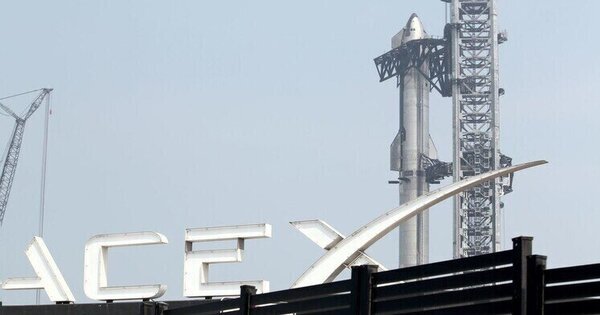
The test flight was aborted after some of the rockets engines failed to start, Elon Musk has said The 13th test flight of SpaceX's Starship ended abruptly after an engine malfunction forced an automatic launch abort seconds before liftoff on Thursday. Alive streamfrom the Starbase launch site in Texas showed clouds of smoke and vapor billowing from the rocket as its engines ignited. However, Starship failed to leave the pad. "We did trigger a hold on the booster that aborted our liftoff as we were starting to light those Raptor engines," SpaceX spokesperson Dan Huot said during the webcast. SpaceX CEO Elon Musk laterconfirmedon X that "some of the engines didn't start, triggering an automatic launch abort." "Next launch attempt hopefully in a few days," he added. width="560" height="315" src="https://mf.b37mrtl.ru/files/2026.07/6a5a582b85f54001fc46cf2e.mp4" frameborder="0" > The mission was set to deploy 20 of the latest Version 3 Starlink satellites into orbit. The aborted launch follows several upgrades made after Starship's previous test flight in May, when a simulated landing of the Super Heavy V3 booster in the Gulf of Mexico ended in an explosion. The upper-stage Starship also broke apart after splashing down in the Indian Ocean, although SpaceX still declared the mission a success. The latest setback sent SpaceX shares down to $131.11 early on Friday, leaving them below the company's IPO price of $135. The stock had already slipped to $132.28 on Wednesday amid growing investor concerns over whether the company can generate enough profit to justify its trillion-dollar valuation. SpaceX went public last month in a record $75 billion offering that briefly made Musk the world's first trillionaire. The company is competing with Jeff Bezos' Blue Origin to build lunar landers for NASA's Artemis program, which aims to return astronauts to the Moon by landing near its south pole. Earlier this week, Russia successfully launched a Soyuz-2.1a rocket from the Baikonur Cosmodrome in Kazakhstan, carrying Russian cosmonauts Pyotr Dubrov and Anna Kikina, along with NASA astronaut Anil Menon, to the International Space Station.
DocuSign (DOCU) Brings Contract Automation to Perplexity's AI Platform for Legal Teams
DocuSign, Inc. (NASDAQ:DOCU) is one of the best low priced technology stocks to invest in. On June 24, DocuSign, Inc. (NASDAQ:DOCU) announced that its Intelligent Agreement Management platform is now available inside Perplexity Computer and the newly launched Computer for Counsel. The integration allows legal teams to automate contract work using AI. DocuSign said the integration runs on its Model Context Protocol server. The server is merely a connector that lets Perplexity securely tap into DocuSign's agreement data. This way, legal teams only need to describe what they need in plain language and have Docusign carry out the contract task from start to finish. The goal, according to Docusign, is to cut down on manual contract work. The specific tasks on target are drafting, reviewing, negotiating, and tracking agreements. Some of the use cases the company highlighted include reviewing vendor contracts against a company's playbook, negotiating sales contract renewals, and managing HR onboarding paperwork. The integration allows all these to happen without legal staff needing to jump between separate systems, the company stated. DocuSign explained that the feature is built into Computer for Counsel, which is a version of Perplexity's AI agent tailored specifically for in-house legal departments. Nathan Barksdale, General Counsel at Perplexity, said connecting Docusign to Computer allows legal teams to automate agreement workflows end-to-end. This integration, said Barksdale, reinforces the pitch that legal departments can now manage contracts without losing control of their underlying data. DocuSign, Inc. (NASDAQ:DOCU) is a software company. It provides electronic signature and intelligent agreement management solutions in the United States and internationally, including e-signature capabilities for sending and signing agreements across devices, Contract Lifecycle Management that automates workflows across the agreement process, and Document Generation for streamlining custom agreement creation. While we acknowledge the potential of DOCU as an investment, we believe certain AI stocks offer greater upside potential and carry less downside risk. If you're looking for an extremely undervalued AI stock that also stands to benefit significantly from Trump-era tariffs and the onshoring trend, see our free report on the best short-term AI stock. Disclosure: None. Follow Insider Monkey on Google News.
SpaceX's Magic Number Is $135. Here's How to Profit Now as SPCX Stock Breaks Below It.
For SpaceX (SPCX), which came public in a storm of enthusiasm just five weeks ago, the $135 mark means everything. With the stock dripping below that mark this week, America's heroic IPO is falling like a rocket returning to earth. More News from Barchart The initial public offering market was supposed to find its ultimate savior in SpaecX. When Elon Musk aggressively tore up the traditional Wall Street playbook and fixed the company's landmark IPO price at exactly $135 per share, it was designed to be a historic victory lap. Raising a record-shattering $75 billion at an astronomical $1.75 trillion valuation, the offering was pitched to investors of all types as an elite, dual-threat bet on satellite dominance and space-based AI infrastructure. I cannot ever recall an IPO that had social media ads promoting it before an official filing. Now, just weeks into public trading, that $135 price tag is looking less like a launchpad and more like a psychological ceiling. After staging a brief initial pop and peaking at $225 shortly after its debut, the stock has relentlessly drifted right back down, closing Wednesday a clean $90 under that all-time high. The problem with $135 isn't a failure of rocket telemetry or a slowdown in Starlink subscriptions. The problem is the staggering valuation multiple built into that specific dollar figure. At $135 a share, SpaceX trades at a whopping 94x times its trailing price-revenue ratio. To be clear, this is a late-cycle tech tape, where corporate spending shifts are suddenly inducing massive air pockets -- as we just witnessed firsthand with International Business Machine's (IBM) historic collapse -- Wall Street portfolio managers are showing more signs daily that they're too shy to hold assets priced for perfection. The appetite for risk is shrinking. Furthermore, because early index inclusion rules forced automated Nasdaq index funds to programmatically buy billions of dollars of the float right after the debut, that initial demand is completely exhausted. This decline in SPCX stock is despite that artificial temporary demand. With no new passive buying waves on the horizon, and lockup periods ending later this summer, $135 has become a big time challenge for SPCX bulls. If the stock breaks cleanly below this original IPO floor, it could prompt an avalanche of retail stop-loss liquidations.
Kimi K3: China's Moonshot AI Takes Aim at OpenAI, Anthropic - Internewscast Journal
Chinese startup Moonshot AI has introduced Kimi K3, a new artificial intelligence model that the company says narrows the performance gap with top U.S. systems and even beats OpenAI and Anthropic's strongest models in select benchmark tests. Moonshot said Friday that Kimi K3 does not yet surpass Anthropic's Claude Fable 5 or OpenAI's GPT 5.6 Sol in overall performance, but the model consistently ranked ahead of other systems included in its evaluations. According to the company, Kimi K3 outperformed Claude Opus 4.8 and GPT 5.5 -- models positioned just below the most advanced offerings from Anthropic and OpenAI -- across several benchmarks, including coding and general agent tasks. With 2.8 trillion parameters, a measure of the scale of its neural network, Kimi K3 is now the largest AI model developed in China to date. "Despite persistent hardware/compute capacity constraints in China, K3 demonstrates that pre-training scaling, paired with architectural innovation, can still deliver step-change gains for flagship Chinese models," Bank of America analysts wrote in a note led by Alex Liu. The launch lands at a time when competition between the United States and China over artificial intelligence leadership is becoming increasingly intense. Chinese AI systems have begun attracting more interest from Western businesses as their performance improves and their costs remain lower than the most advanced models produced by U.S. labs. At the same time, U.S. lawmakers are weighing ways to limit the adoption of Chinese AI models by American companies. Patrick Moorhead, CEO and chief analyst at Moor Insights and Strategy, described the market response to Kimi K3 as "an over-reaction shockingly similar the DeepSeek panic." In a post on X, he acknowledged the model's progress but cautioned that "We are far away from super-intelligence." Moorhead said in the post that large language models, or LLMs, like Kimi K3 will only "accelerate and grow the inference market faster than without," underscoring a general shift in the tech sector from merely focusing on the size and presumed capabilities of a model by itself to the overall application that the technology powers. Perplexity CEO Aravind Srinivas told CNBC last week that there's more focus from startups and developers to figure out the best methodologies for using AI models that can power their apps, instead of squarely focusing on one gigantic, underlying system. That's part of the reason why the freely available OpenClaw technology became so popular with developers earlier this year. The so-called harness lets coders more easily swap in and out various AI models that power digital assistants so they can take a series of actions without needing to rely on one single LLM by itself. "The model alone is no longer the product," Srinivas said at the time. "It is the harness, the orchestration system that puts the model inside a very capable harness and pairs the model with a lot of tools." Moorhead attributed what he believes to be an overreaction to Kimi K3's release to politics, telling CNBC in an email that "There's a big debate in Washington DC about whether the U.S. should use Chinese open source models and if U.S. companies should enable the Chinese to use their models." "The latter is ironic as the Chinese seem to be doing fine with their models," Moorhead said. Lu Zhang, the founder and managing partner of the Fusion Fund, said that despite the widespread attention models like Kimi K3 can receive, most of the developers that use the technology are "from the startup ecosystem, less from the large corporate side." These coders will often swap one AI model out when there's a more powerful version available or at least one that's cheaper and more efficient to run in their respective apps, she explained. And while these AI models may seem extremely powerful at first glance, they are not "plug and play" and they require a lot of technological know-how from developers to actually make use of their underlying capabilities, Zhang said. Although general discourse involving the open-weight AI model space can often involve the broader "narrative of U.S.-China competition," Zhang said that there are several U.S. companies that are increasingly debuting open-weight AI models. Two of those are Thinking Machines and DeepReinforce, which is backed by Zhang's fund. She said it was only a matter of time that a more advanced open-weight AI model captured the zeitgeist, given how fast the overall space is moving. Similar to how the debut of DeepSeek's R1 AI model in 2025 generated attention for presumably being more cost-efficient relative to proprietary technologies, the current hoopla over Kimi K3 can be attributed to rising concerns about AI's overall cost and ability to generate returns on investment. Simon Koser, the chief product officer at the AI startup Tzafon, said that Kimi K3 is legitimately impressive in that it is performing well in areas like coding, and developers at AI labs could find it compelling. "Cost has become a huge thing for some of these labs," Koser said, underscoring how AI leaders like Anthropic and OpenAI may feel some pressure from cheaper AI models being available on the market. Still, there are many ways to use the technology, and not every AI model excels in every task despite what the initial benchmark tests may show. Certain AI models may react differently when put in production versus when they are tested, and there's no true jack-of-all-trades AI model that's superior to everything else on the market. "It's going to seem like a lot of people are changing," Koser said. "But in practice, I'm not sure if the shift is that huge." Founded in 2023, Beijing-based Moonshot AI is one of China's leading model builders. It raised $2 billion at a more than $20 billion valuation in May, Bloomberg reported. Backers include Chinese tech giants Alibaba, which makes the Qwen series of AI models, and Tencent. Chinese AI rivals' shares dropped on news of the release. Z.ai, which released a new model to much fanfare in June, saw its stock plummet 28% on Friday. MiniMax Group, another Chinese model company, fell 16%. "K3 raises the capability ceiling for China AI models, shifting the burden of proof to other independent AI labs," said Liu. Earlier this week, Alibaba saw its stock buoyed by news that it was partnering with Apple in China. However, shares dropped 4% Friday. "For Alibaba, while it benefits from broad AI training/usage growth for its cloud service given tight compute environment, Alibaba Qwen's "open-source leader" narrative may face some tests," said Liu. Choose CNBC as your preferred source on Google and never miss a moment from the most trusted name in business news.
Kraken Pro Options Upgrade Brings More Structure To Retail Crypto Hedging
Trusted Editorial content, reviewed by leading industry experts and seasoned editors. Ad Disclosure Kraken is expanding its options trading infrastructure, giving crypto traders another way to manage exposure beyond spot buying and perpetual futures. That matters because crypto risk is still often handled with blunt tools. Traders buy tokens, sell tokens, or use leveraged futures that can become dangerous quickly when volatility spikes. Options offer a different approach. They allow traders to define risk, hedge positions, and express views on volatility without relying only on directional leverage. The product still requires care. Options are not simple, and retail traders can misunderstand them easily. But a more structured options market can help move crypto derivatives away from the most chaotic parts of the leverage cycle. Kraken's update is part of that shift. TL;DR * Kraken Pro is expanding options trading infrastructure for crypto users. * Options can help traders hedge, manage volatility, and structure risk more carefully. * The update is part of a broader move toward more mature crypto derivatives access. Crypto Traders Need More Than Perpetual Futures Perpetual futures have dominated much of crypto derivatives trading because they are simple, liquid, and easy to access. They are also risky. A trader can take a leveraged long or short quickly, but the same structure can lead to forced liquidations when the market moves against crowded positioning. That is one reason crypto often sees violent moves in both directions. Leverage builds up, funding becomes stretched, and then the market flushes. Options do not remove risk, but they offer more ways to shape it. A trader can buy a put to hedge downside. A trader can use calls to gain upside exposure with defined premium risk. More advanced users can build spreads, volatility trades, or strategies around expected ranges. The point is not that every retail user should trade options. The point is that options give the market more tools than simple leveraged direction. That is why Kraken's infrastructure upgrade matters. If options become easier to access inside a regulated or more carefully controlled environment, some traders may move away from the most aggressive offshore products. The Details Will Decide Adoption Options products live or die on design. Contract sizes matter. Expiration formats matter. Strike selection matters. Collateral rules matter. Liquidity matters more than almost anything. If spreads are too wide or markets are too thin, the product may look useful in theory but feel difficult in practice. Kraken's challenge is to make options accessible without making them feel falsely simple. Retail users need clear explanations of premium, expiry, time decay, volatility, and the fact that an option can expire worthless. They also need risk controls that prevent the product from becoming just another way to blow up an account. If Kraken can get that balance right, the exchange can offer traders a more serious hedging tool. If the product is poorly understood, the risks may outweigh the benefits for less experienced users. That is why education and interface design matter almost as much as the product itself. A More Mature Derivatives Market The broader crypto market has been moving toward more sophisticated derivatives for years. Institutional desks already use options to manage exposure, hedge spot positions, and trade volatility. Retail access has been more uneven. Some platforms offer deep derivatives markets, but jurisdiction, regulation, and user protection vary widely. Kraken's move suggests more exchanges want to compete on structured access rather than simply offering the highest leverage. That is healthy if it leads to better risk management. Crypto will always be volatile. A more mature derivatives market will not change that. What it can change is how traders handle volatility. Instead of every move becoming a leveraged long or short, traders can use products that define risk more clearly. The timing also makes sense. As ETFs, institutional products, and regulated crypto infrastructure expand, traders will expect more familiar tools around the assets they hold. Options are part of that financial toolkit. The risk is that retail users treat them as a shortcut. They are not. Options require understanding, and the wrong strategy can lose money quickly. Still, Kraken's expansion points in the right direction for market structure. It gives traders more flexibility, and it pushes crypto derivatives closer to the way mature markets already operate. That does not guarantee immediate adoption, but it does show where the market is heading: less reliance on raw leverage, more focus on structured risk. This article is based on information from Kraken. This article was written by the News Desk and edited by Samuel Rae.
Kraken Institutional Turns To Upshot To Price The Illiquid Side Of Crypto
Trusted Editorial content, reviewed by leading industry experts and seasoned editors. Ad Disclosure Kraken Institutional is adding valuation tools through a partnership with Upshot, taking aim at one of the hardest problems in digital assets: pricing things that do not trade cleanly. That includes NFTs and other illiquid crypto holdings, where market value is not always obvious. A Bitcoin price is easy to find. Ethereum trades continuously across deep markets. But an NFT portfolio, a thinly traded token, or a niche on-chain asset can be much harder to value with confidence. For institutional clients, that is not a small problem. It affects reporting, collateral, risk management, custody, lending, and portfolio construction. Kraken's move suggests the exchange sees demand for tools that make crypto portfolios easier to manage beyond the major liquid assets. TL;DR * Kraken Institutional has partnered with Upshot to support valuation tools for NFTs and illiquid digital holdings. * The update is aimed at a part of crypto where pricing is often inconsistent or difficult to verify. * Better valuation tools can support reporting, lending, collateral management, and institutional portfolio oversight. The Illiquid Part Of Crypto Needs Better Tools Crypto markets are often described as if everything trades like Bitcoin. That is not true. Large tokens can have deep liquidity, narrow spreads, and continuous pricing. Smaller assets, NFT collections, tokenized claims, and niche on-chain positions can behave very differently. Some trade rarely. Some have wide spreads. Some rely on floor prices that may not reflect real executable value. That creates problems for institutions. A fund cannot simply guess what an illiquid holding is worth. A lender cannot accept collateral without understanding how that collateral may behave under stress. A custodian servicing professional clients needs credible data when clients ask for portfolio reporting. Upshot's valuation approach is designed for that harder-to-price side of the market. Kraken bringing that into its institutional offering gives clients another layer of data around assets that do not fit neatly into normal exchange order books. That does not make valuations perfect. Models can be wrong. Illiquid markets can gap lower. NFTs can lose demand quickly. But a structured model is still more useful than relying only on last sale, floor price, or sentiment. Why This Matters For Collateral The collateral use case is where this becomes more interesting. Crypto borrowing works best when the collateral is easy to price and easy to liquidate. Bitcoin and Ethereum are relatively straightforward. Illiquid assets are not. If a borrower wants to use an NFT portfolio or a less liquid digital asset as collateral, the lender needs to understand what the asset might actually be worth if it has to be sold. That requires more than a headline price. A proper valuation framework can consider comparable sales, rarity, liquidity, market depth, historical volatility, and other data points. It can also help set more conservative loan-to-value ratios or risk limits. For Kraken Institutional, this can make the platform more useful to clients managing complex portfolios. It allows the exchange to offer more than custody and execution. It starts to look like part of a wider institutional workflow. That is the direction many major crypto platforms are moving in. Trading remains central, but serious clients also want risk tools, reporting, credit, and data. A Sign Of Crypto Market Maturity The most important part of this update is not that it will immediately change NFT markets or cause a sudden wave of institutional borrowing. It probably will not. The more important point is that exchanges are building infrastructure for a market that is becoming more complicated. In earlier cycles, crypto platforms could grow by offering more listings, more leverage, and faster access. That is still part of the business, but institutional clients need different things. They need confidence that assets can be priced, monitored, reported, and managed inside a risk framework. Valuation tools are part of that shift. They also show that the NFT market is not being treated only as a speculative retail category. Even after the hype cooled, the underlying issue of unique digital assets remains relevant. Institutions may still hold them, lend against them, custody them, or evaluate tokenized assets with similar valuation problems. Kraken's Upshot partnership sits in that practical layer of crypto infrastructure. It is not a flashy market-moving announcement. It is a piece of the machinery that could make harder-to-price digital assets more usable for professional clients. That is the real signal. Crypto is slowly building the same kind of support systems that exist around other asset classes. Pricing, valuation, collateral, risk, and reporting may not generate the loudest headlines, but they are what institutions need before they can treat a market seriously. This article is based on information from Kraken. This article was written by the News Desk and edited by Samuel Rae.
Cathie Wood's ARK sells AMD stock, buys SpaceX shares By Investing.com
Cathie Wood's ARK ETF published their daily trades for Friday, July 17th, 2026, revealing a significant shift in their investment portfolio. The most notable transaction was the purchase of 147,805 shares of Space Exploration Technologies Corp (SPCX) across several of its ETFs, with a total dollar value of $19,378,713. This marks a continued interest in SpaceX, following substantial investments in the company over the past week. On the selling side, ARK offloaded 23,573 shares of Advanced Micro Devices Inc (NASDAQ:AMD), totaling $11,808,658. This sale was distributed across four of ARK's ETFs, indicating a strategic decision to reduce exposure to AMD. Another major transaction included the purchase of 115,827 shares of CoreWeave Inc (CRWV) for $8,444,946, suggesting ARK's growing confidence in this company. In contrast, ARK sold 79,220 shares of Robinhood Markets Inc (NASDAQ:HOOD) for $8,398,904, continuing a trend of decreasing its position in the stock over recent days. ARK also made a significant investment in Kratos Defense and Security Solutions Inc (NASDAQ:KTOS), purchasing 115,812 shares valued at $5,438,531. The ETF's interest in defense and technology stocks is evident with these acquisitions. Additionally, ARK purchased 37,077 shares of AeroVironment Inc (NASDAQ:AVAV) for $5,535,225, while selling 144,634 shares of Iridium Communications Inc (NASDAQ:IRDM) for $6,741,390, indicating a shift within the communications and aerospace sectors. Other notable transactions included the sale of 5,781 shares of Deere & Co (NYSE:DE) for $3,462,645 and the purchase of 7,975 shares of Intuitive Surgical Inc (NASDAQ:ISRG) for $3,208,581, reflecting ARK's ongoing adjustments in its industrial and healthcare portfolios. Smaller trades involved the purchase of 32,861 shares of WeRide Inc (WRD) for $202,095 and the sale of 11,1013 shares of 10X Genomics Inc (NASDAQ:TXG) for $4,937,858, showcasing ARK's diverse investment strategy. Overall, today's trades highlight Cathie Wood's ARK ETF's strategic repositioning across various sectors, with a notable emphasis on technology and aerospace investments. This article was generated with the support of AI and reviewed by an editor. For more information see our T&C.

Cathie Wood Buys the Dip in Beaten-Down SpaceX Stock. Analysts See 86% Upside Ahead
SpaceX (SPCX) has quickly gone from Wall Street's hottest IPO to one of its biggest debates. After soaring more than 67% above its $135 IPO price shortly after listing in June, the stock has pulled back sharply and recently slipped below that offering price for the first time. There, Cathie Wood saw an opportunity and rushed in to buy the dip. ARK Invest founder bought another $16.7 million worth of SPCX shares as the stock traded below its IPO price, adding to more than $50 million of purchases earlier this month. More News from Barchart Cathie Wood Buys the SpaceX Dip ARK Invest, led by the famously bullish tech investor, purchased approximately $16.6 million to $16.7 million worth of SPCX stock on Wednesday, July 15. Four ARK funds participated in the purchase, including the flagship ARK Innovation ETF (ARKK), ARK Next Generation Internet ETF (ARKW), and ARK Space & Defense Innovation ETF (ARKX), buying about 123,000 shares total. The purchase made SpaceX the sixth-largest holding in ARKK. It wasn't an isolated move. Wood has been aggressively accumulating SpaceX shares throughout July. The week ending July 10 alone saw ARK Invest purchase roughly $52.1 million worth of SPCX. On July 13, the firm added another $21.3 million. By July 15, total weekly purchases had surpassed $36 million across multiple funds. It is pretty clear from these massive transactions that Wood has been an aggressive buyer of SpaceX. Why SPCX Stock Has Fallen Below Its IPO Price SPCX stock is down roughly 44% below its post-IPO peak and beneath its IPO price right now. Several factors have weighed on the shares. Investors have become increasingly concerned about the company's aggressive AI spending following its acquisition of xAI, while expectations for continued heavy capital expenditures have pressured sentiment. The market is also looking ahead to an August lockup expiration that could release roughly 20% of outstanding shares for trading, creating potential selling pressure. Despite the recent weakness, Cathie Wood has continued buying throughout the decline rather than trimming her position. Even after the recent selloff, SpaceX remains one of the market's most expensive large-cap growth stocks.
Elon Musk's SpaceX In Talks To Provide Computing Power To Pentagon: Report
Discussions between SpaceX and the Pentagon are ongoing and could still fall apart, WSJ reported. Elon Musk's SpaceX is in talks to provide the US Department of Defense with access to data center capacity worth billions of dollars to run AI models, the Wall Street Journal reported on Friday, citing people familiar with the matter. Such an agreement would extend the Pentagon's existing relationship with SpaceX, a key partner for rocket launches and satellite-based communications and missile tracking. According to the report, SpaceX employees have discussed plans to compete more directly with neocloud firms such as CoreWeave by selling computing capacity to AI customers at lower prices. Like many large enterprises, the Defense Department is moving to secure additional cloud-computing capacity to support intelligence agencies and military AI applications. Amazon said late last year it would invest up to $50 billion to expand AI and supercomputing capacity for U.S. government customers through its Amazon Web Services cloud business. Discussions between SpaceX and the Pentagon are ongoing and could still fall apart, WSJ reported. SpaceX and the Pentagon did not immediately respond to Reuters requests for comment. Reuters could not independently verify the report. The space firm has made similar deals in recent months. In June, SpaceX signed a multi-year cloud services agreement with Alphabet's Google, providing access to about 110,000 Nvidia chips and related computing infrastructure. Anthropic said in May it had struck a deal to use the full computing power of SpaceX's Colossus 1 facility in Memphis, gaining 300 megawatts of new capacity. (Except for the headline, this story has not been edited by NDTV staff and is published from a syndicated feed.) How may i help you today Show full article Track Latest News Live on NDTV.com and get news updates from India and around the world
SPCX Stock Keeps Falling: Gary Black Says SpaceX Still Looks Ridiculously Overvalued -- 'Don't Say I Didn't Warn You'
* Gary Black adds that investors ignored clear warning signs despite extensive scrutiny of SpaceX's business plans and financials. * He claims the IPO was structured to create a supply-demand imbalance that inflated SpaceX's market value and benefited bankers. * Black questions Wall Street's bullish stance, noting that only Morningstar has a 'sell' rating on the stock despite its steep decline. Future Fund Managing Director Gary Black weighed in on SpaceX's recent decline after shares of the newly public company cooled off in a big way from their post-IPO highs. SpaceX stock (SPCX) ended Friday's session 5.43% down at $123.60. This was about 9% below its $135 initial public offering (IPO) price and down around 45% from its all-time intraday high of $225.64. See what 10M+ investors are talking about. Get the Stocktwits Daily Rip for what retail is watching right now, free to your inbox Gary Black On SpaceX's Post-IPO Drop In a post on X, Future Fund Managing Director Gary Black said, "Don't say I didn't warn you," stating that SPCX stock's decline validated his long-standing concerns over its valuation and IPO structure. He added that the stock still trades at "FY'2026 EV/Revs of 45x." Black invoked legendary investor Peter Lynch's long-held skepticism toward IPOs, saying Lynch believed IPO stood for "it's probably overpriced." He stated that SpaceX's "totally unproven plans to build data centres in space" were thoroughly examined before the listing, while its prospectus outlined what he described as a "ridiculous total addressable market" of $28.5 trillion. Black also noted that the company's losses "were disclosed and discussed," adding that there "may not have been an IPO in world history as closely scrutinised as this one." According to Black, investors who still chose to buy despite the risks "deserved what they got." Gary Black Criticizes IPO Structure And Wall Street Support Black said that the decline cannot be viewed in isolation because it "ignores the cynical way" SpaceX, its investment bankers, and advisers structured the IPO "to engineer short-term gain" and create "a $US500 billion fee pool." Black said the $85 billion IPO -- "3x the size of the next largest IPO in history" -- created a "highly imbalanced supply/demand situation," with a free float of less than $100 billion supporting more than $2 trillion in paper market value. Despite the stock's decline, he maintained that SpaceX "still looks ridiculously overvalued at 45x 2026 EV/Revs," while noting that most Wall Street analysts covering the stock have 'Buy' ratings and "only one -- Morningstar... has a sell rating." Black ended his post, saying, "That says it all."
Musk's SpaceX in talks to supply the Pentagon with computing power, WSJ reports
July 17 (Reuters) - Elon Musk's SpaceX is in talks to providethe U.S. Department of Defense with access to data center capacity worth billions of dollars to run AI models, the Wall Street Journal reported on Friday, citing people familiar with the matter. Such an agreement would extend the Pentagon's existing relationship with SpaceX, a key partner for rocket launches and satellite-based communications and missile tracking. According to the report, SpaceX employees have discussed plans to compete more directly with neocloud firms such as CoreWeave by selling computing capacityto AI customers at lower prices. Like many large enterprises, the Defense Department is moving to secure additional cloud-computing capacity to support intelligence agencies and military AI applications. Amazon said late last year it would invest up to $50 billion to expand AI and supercomputing capacity for U.S. government customers through its Amazon Web Services cloud business. Discussions between SpaceX and the Pentagon are ongoing and could still fall apart, WSJ reported. SpaceX and the Pentagon did not immediately respond to Reuters requests for comment. Reuters could not independently verify the report. The space firm has made similar deals in recent months. In June, SpaceX signed a multi-year cloud services agreement with Alphabet's Google, providing access to about 110,000 Nvidia chips and related computing infrastructure. Anthropic said in May it had struck a deal to use the full computing power of SpaceX's Colossus 1 facility in Memphis, gaining 300 megawatts of new capacity. (Reporting by Anhata Rooprai in Bengaluru; Editing by Pooja Desai)
Meta in talks to rent some of its billions in AI infrastructure to Anthropic
New York -- Meta is in talks with Anthropic about leasing computing capacity to the AI startup. It's a move that could put the social media giant in competition with Amazon, Microsoft and Google in a new line of business: cloud computing. The conversation about a potential deal is still early, a source familiar with the matter confirmed to CNN. The talks were first reported by the New York Times, which pegged the deal's worth at as much as US$10 billion over two years, citing three people with knowledge of the discussions. CNN's source said any specific numbers that have been reported are speculative. Meta and Anthropic declined to comment on the talks. Becoming a computing provider could mark a major new revenue opportunity for Meta as it's been investing heavily in data centre infrastructure to support its AI ambitions. The social media giant plans to spend between $125 billion and $145 billion in capital expenditures this year, largely to support that infrastructure buildout, Meta said in its most recent earnings report. That could double what it spent the prior year. Meta said in April that it would lay off 10 per cent of its workforce, about 8,000 people, in part to offset the cost of those investments. Meta CEO Mark Zuckerberg has mentioned the possibility of leasing out some of that infrastructure if his own company's computing needs didn't keep pace with the buildout. "Almost every week there are different companies that come to us from outside asking us ... if we have compute that they could buy from us at some premium to what we've bought it at," Zuckerberg said at Meta's annual shareholder meeting in May. "We haven't done that yet because we think that we have a use for the compute. But obviously if we get to a point where we feel that we have overbuilt, then that is an option that we have." There's no shortage of demand for computing power as companies large and small race to adopt AI and major AI labs work to improve their models. Anthropic already has multibillion dollar compute licensing deals with Google, SpaceX, Microsoft and Amazon. Meanwhile, investors want Meta to show how its investments will benefit its bottom line, especially as it scrambles to keep pace with AI offerings from companies like Anthropic and OpenAI. Meta shares are down more than eight per cent from this time last year. Meta last month released an upgraded version of its Muse Spark AI model that it said could rival the coding capabilities of models from OpenAI, Anthropic and others. For the first time, Meta said it would offer a paid version of the service, yet another sign it's looking for bigger returns on AI.

Dow Jones Top Company Headlines at 7 PM ET: Walmart Further Shuffles Top Executives | SpaceX ...
Walmart Further Shuffles Top Executives Kieran Shanahan, chief operating officer for Walmart U.S., will leave this week. ---- SpaceX in Talks to Provide Computing Power for Pentagon's AI Push Elon Musk's company would provide billions of dollars' worth of data-center capacity under the arrangement, people familiar with the matter said. ---- Nvidia, Challenged by Apple, Narrowly Retains Wall Street's Crown The iPhone maker briefly became the U.S.'s most valuable publicly traded company on Friday. ---- China's Moonshot AI Releases Model to Challenge Top U.S. Systems The company says its model outperforms some cutting-edge U.S. systems, the latest sign that Chinese labs can rival American counterparts. ---- Taylor Farms Is Recalling Its Mexican-Grown Iceberg Lettuce From U.S. U.S. authorities have linked the lettuce to a parasitic outbreak across more than 30 states. ---- Travelers Scored an Earnings Beat. Were the Downgrades All Wrong? The insurer defied Wall Street's expectations, posting adjusted per-share earnings that were nearly double of what analysts projected. ---- Fifth Third Profit Boosted by Comerica Acquisition The Fifth Third Bank parent posted a profit of $763 million, or 83 cents a share, in the second quarter. ---- Truist Financial Earnings Beat Estimates but Eyes Are on Bank's Next Chapter Truist Financial delivered strong second-quarter earnings Friday, but investors may be more focused on what the leadership transition to incoming CEO Michael Lyons could mean for the bank's strategy. ---- GSK Shares Slide After Drugmaker Drops Chronic Cough Treatment GSK shares fell after the U.K. drugmaker said it would stop working on an experimental treatment for chronic cough after mixed results showed limited efficacy in late-stage clinical studies. ---- Volvo Car Expects Sales to Strengthen on European Growth, U.S. Recovery Volvo Car expects growth in Europe and a recovery in the U.S. to spur significantly stronger sales in the second half of the year, despite continued challenges in China. ---- Meta Plans to Hire Top Amazon Computing Executive as It Weighs Cloud Push Dave Brown, one of the most senior executives at Amazon Web Services, will bring his nearly two decades of experience to the social-media giant. ---- Burberry Reports Sales Growth as It Moves Forward With Turnaround Plan Burberry posted flat sales growth for its first quarter, but noted that it saw growth across divisions for the first time in three years. ---- Verizon to Cut About 3,000 Jobs, Divest Itself of Some Retail Stores The company plans to divest itself of 274 of its retail stores to franchise owners. Most of Verizon's layoffs would come from the retail-store divestiture. ---- Databricks Set to Hit $188 Billion Valuation With New Investment From Coatue The startup's valuation jumps 40% as the AI boom has driven demand for its data-analytics software. ---- Sweden's EQT Expects Strong Fundraising Momentum as It Posts Higher Net Profit The buyout group reported rises in net profit and revenue for the first half aided by higher fee-generating assets. (END) Dow Jones Newswires July 17, 2026 19:15 ET (23:15 GMT) Copyright (c) 2026 Dow Jones & Company, Inc.

SpaceX postponed a crucial launch - and its stock went on to close below IPO price for a second day
SpaceX's planned 13th Starship V3 rocket launch was scrubbed during its 90-minute window. Shares in SpaceX fell further below their initial-public-offering price Friday after the spacecraft manufacturer aborted an attempt to launch its Starship rocket. The Texas-headquartered company's stock (SPCX) fell more than 5% on Friday, on the heels of a 3% slide on Thursday, bringing its price more than $10 below where it launched on the Nasdaq on June 12. The stock is has lost steam for five days in a row. SpaceX shares ended at $131.11 a share on Thursday, closing below the $135-per-share IPO price for the first time. SpaceX had been set to execute its first launch since the IPO on Thursday, with a Starship take-off scrapped after its launch window opened at 6:45 p.m. Eastern time. CEO Elon Musk then confirmed the mission had been postponed, following an announcement during a livestream of the event that it had been cut short. "Some of the engines didn't start, triggering an automatic launch abort. Now offloading propellant. Next launch attempt hopefully in a few days," Musk wrote in a post on X. Musk later added: "To be confident of a good flight, 2 Raptors will be removed & replaced. Most probable launch timing is early next week." The plan for Starship's 13th flight was to address problems seen during its previous flight and to carry and deploy 20 Starlink "Version 3" (V3) satellites. The Federal Aviation Administration gave SpaceX the go-ahead for its launch on Monday after closing an investigation into the company's 12th flight, which following a safe lift-off saw its Super Heavy booster crash into the Gulf of Mexico. The regulatory body ordered SpaceX to carry out an investigation that concluded with four actions, including software and hardware updates, to be completed. Analysts at Bernstein led by Douglas Harned wrote in a note on Friday that they viewed Starlink as "the key enabler" of SpaceX's growth in the future, but that it also represents a point of risk. They expect 3,543 launches of the 400-foot rocket in 2031, with about nine in 10 for the purpose of Musk's proposed orbital data centers. -Nora Redmond This content was created by MarketWatch, which is operated by Dow Jones & Co. MarketWatch is published independently from Dow Jones Newswires and The Wall Street Journal. (END) Dow Jones Newswires 07-17-26 1855ET Copyright (c) 2026 Dow Jones & Company, Inc.
SpaceX's post-IPO swoon is typical
After the June 11 market close, Elon Musk took his Space Exploration Technologies Corp. (otherwise known as SpaceX) public. Price: $135 a share. Result: The company raised some $75 billion before expenses. The next day, when the shares could be traded, the shares reached $176.52, then dropped to $160.95. Still, it was good day: The shares were up 19.2%. The following Monday, on June 15, SpaceX (SPCX) jumped 19.6% to $192.50. The following day, the shares rose another 4.8% to $201.80, achieving a market capitalization of $2.64 trillion. But few realized SpaceX's big opening run had ended. The June 16 high was $225.64, and that's been the peak for the stock. So far. SpaceX shares swoon SpaceX has mostly been sliding ever since because many investors (or traders) saw the peak and sold, happy to let others take over the risk with a company long on a huge idea but still developing the guts of the venture. On July 16, the stock finished at $131.11, down 3.1% on the day. And that's just the start. * SpaceX has fallen for five straight days. * It's down nearly 41% from its June 16 high. * And it's down 2% below that June 11 IPO price - and down 41% from the June 16 high. * There are some 180 million shares sold short, according to charting site TradingView.com. Meaning many traders believe the decline has more to run. So they're selling shares, hoping to buy them back at a lower price generating nice profits. SpaceX has big dreams and Elon Musk As a business, SpaceX isn't through. Elon Musk is bright, resourceful, driven, fantastically ambitious and well-connected. He has a vast number of fans, admirers and supporters who believe he's a genius visionary who will achieve his dream of populating the moon and beyond. The mission statement in the company's prospectus clearly articulates the audacious dream that powers Musk and his company: "Our mission is to build the systems and technologies necessary to make life multiplanetary, to understand the true nature of the universe, and to extend the light of consciousness to the stars." So that means hardware (chips, computers and space ship), software (lots of artificial intelligence) and intense development testing. The first goal - to colonize the moon - may take some years (and billions of dollars of SpaceX equipment. And years (and more money) after that to get to, say, Mars. And it didn't seem to help matters that SpaceX followed up with a controversial $20 billion bond offering to finance artificial intelligence development in its XAI group. AI, as we all know, sucks up billions of dollars of investment capital, with uncertain profitability. All IPOs suffer growing pains In the meantime, stocks are stocks, and initial public offerings are IPOs. Rarely after a company goes public does the share price rise consistently. And SpaceX right now is behaving like a lot of companies that have gone public. As a comparison, Meta Platforms went public (as Facebook) at $38 a share in May 2012. It promptly slumped, reaching a low of $17.55 in September 2012, according to Yahoo Finance data. The stock didn't close above $38 until Aug. 2, 2013. Fast forward to July 16, 2026. Meta, which has never split its stock, closed at $664.54. Which means if you bought 100 Meta shares at the 2012 IPO price and held on, your stake has jumped in value from $3,800 to $66,454. You would have more if you bought Meta in September 2012 when the shares dropped below $18. And still more if you reinvested dividends since they were initiated in 2024. Musk himself knows about market volatility thanks to Tesla, the electric vehicle company he joined in 2004 and soon took over. The company has evolved into a global brand that faces intense competition, especially from China. In late 2024, Tesla jumped nearly 190%, peaking at $479.86. It then fell 55% over the next five months. The shares recovered those losses by December 2025. IPOs, in fact, have a tough history. Small IPOs generally are no longer public within five years, according to a 2016 study published in the Harvard Business Law Review. A large IPO (which SpaceX unquestionably is) can weather a lot, but the first few years may be a struggle. An April 2026 study by ASB Growth Ventures showed that nearly 70% of newly listed companies underperform their benchmark indices within three years of listing. More SpaceX Big dreams require big patience So the performance of SpaceX's shares may be more volatile, but, given Musk's global celebrity, understandable. If Musk and his team can get their prime product, the Starship reusable rocket, to work safely and efficiently, the very patient investor may get rewarded. These include the biggest investment and money managers, many of whom put up seed capital for SpaceX 10-to-15 years ago. Already, many have reaped huge gains from the IPO, according to a June 12 Inc. magazine report. Peter Thiel's Founders Fund invested $600 million in SpaceX. The stake may be worth $20 billion. Baron Capital's $2-billion stake may be worth up to $12 billion. (If the firm has elected not to sell any of its holdings.) So far, one is not hearing sounds of panic. The Arena Media Brands, LLC THESTREET is a registered trademark of TheStreet, Inc. This story was originally published July 17, 2026 at 9:03 AM.
SpaceX's post-IPO swoon is typical
After the June 11 market close, Elon Musk took his Space Exploration Technologies Corp. (otherwise known as SpaceX) public. Price: $135 a share. Result: The company raised some $75 billion before expenses. The next day, when the shares could be traded, the shares reached $176.52, then dropped to $160.95. Still, it was good day: The shares were up 19.2%. The following Monday, on June 15, SpaceX (SPCX) jumped 19.6% to $192.50. The following day, the shares rose another 4.8% to $201.80, achieving a market capitalization of $2.64 trillion. But few realized SpaceX's big opening run had ended. The June 16 high was $225.64, and that's been the peak for the stock. So far. SpaceX shares swoon SpaceX has mostly been sliding ever since because many investors (or traders) saw the peak and sold, happy to let others take over the risk with a company long on a huge idea but still developing the guts of the venture. On July 16, the stock finished at $131.11, down 3.1% on the day. And that's just the start. * SpaceX has fallen for five straight days. * It's down nearly 41% from its June 16 high. * And it's down 2% below that June 11 IPO price - and down 41% from the June 16 high. * There are some 180 million shares sold short, according to charting site TradingView.com. Meaning many traders believe the decline has more to run. So they're selling shares, hoping to buy them back at a lower price generating nice profits. SpaceX has big dreams and Elon Musk As a business, SpaceX isn't through. Elon Musk is bright, resourceful, driven, fantastically ambitious and well-connected. He has a vast number of fans, admirers and supporters who believe he's a genius visionary who will achieve his dream of populating the moon and beyond. The mission statement in the company's prospectus clearly articulates the audacious dream that powers Musk and his company: "Our mission is to build the systems and technologies necessary to make life multiplanetary, to understand the true nature of the universe, and to extend the light of consciousness to the stars." So that means hardware (chips, computers and space ship), software (lots of artificial intelligence) and intense development testing. The first goal - to colonize the moon - may take some years (and billions of dollars of SpaceX equipment. And years (and more money) after that to get to, say, Mars. And it didn't seem to help matters that SpaceX followed up with a controversial $20 billion bond offering to finance artificial intelligence development in its XAI group. AI, as we all know, sucks up billions of dollars of investment capital, with uncertain profitability. All IPOs suffer growing pains In the meantime, stocks are stocks, and initial public offerings are IPOs. Rarely after a company goes public does the share price rise consistently. And SpaceX right now is behaving like a lot of companies that have gone public. As a comparison, Meta Platforms went public (as Facebook) at $38 a share in May 2012. It promptly slumped, reaching a low of $17.55 in September 2012, according to Yahoo Finance data. The stock didn't close above $38 until Aug. 2, 2013. Fast forward to July 16, 2026. Meta, which has never split its stock, closed at $664.54. Which means if you bought 100 Meta shares at the 2012 IPO price and held on, your stake has jumped in value from $3,800 to $66,454. You would have more if you bought Meta in September 2012 when the shares dropped below $18. And still more if you reinvested dividends since they were initiated in 2024. Musk himself knows about market volatility thanks to Tesla, the electric vehicle company he joined in 2004 and soon took over. The company has evolved into a global brand that faces intense competition, especially from China. In late 2024, Tesla jumped nearly 190%, peaking at $479.86. It then fell 55% over the next five months. The shares recovered those losses by December 2025. IPOs, in fact, have a tough history. Small IPOs generally are no longer public within five years, according to a 2016 study published in the Harvard Business Law Review. A large IPO (which SpaceX unquestionably is) can weather a lot, but the first few years may be a struggle. An April 2026 study by ASB Growth Ventures showed that nearly 70% of newly listed companies underperform their benchmark indices within three years of listing. More SpaceX Big dreams require big patience So the performance of SpaceX's shares may be more volatile, but, given Musk's global celebrity, understandable. If Musk and his team can get their prime product, the Starship reusable rocket, to work safely and efficiently, the very patient investor may get rewarded. These include the biggest investment and money managers, many of whom put up seed capital for SpaceX 10-to-15 years ago. Already, many have reaped huge gains from the IPO, according to a June 12 Inc. magazine report. Peter Thiel's Founders Fund invested $600 million in SpaceX. The stake may be worth $20 billion. Baron Capital's $2-billion stake may be worth up to $12 billion. (If the firm has elected not to sell any of its holdings.) So far, one is not hearing sounds of panic. The Arena Media Brands, LLC THESTREET is a registered trademark of TheStreet, Inc. This story was originally published July 17, 2026 at 9:03 AM.
SpaceX's post-IPO swoon is typical
After the June 11 market close, Elon Musk took his Space Exploration Technologies Corp. (otherwise known as SpaceX) public. Price: $135 a share. Result: The company raised some $75 billion before expenses. The next day, when the shares could be traded, the shares reached $176.52, then dropped to $160.95. Still, it was good day: The shares were up 19.2%. The following Monday, on June 15, SpaceX (SPCX) jumped 19.6% to $192.50. The following day, the shares rose another 4.8% to $201.80, achieving a market capitalization of $2.64 trillion. But few realized SpaceX's big opening run had ended. The June 16 high was $225.64, and that's been the peak for the stock. So far. SpaceX shares swoon SpaceX has mostly been sliding ever since because many investors (or traders) saw the peak and sold, happy to let others take over the risk with a company long on a huge idea but still developing the guts of the venture. On July 16, the stock finished at $131.11, down 3.1% on the day. And that's just the start. * SpaceX has fallen for five straight days. * It's down nearly 41% from its June 16 high. * And it's down 2% below that June 11 IPO price - and down 41% from the June 16 high. * There are some 180 million shares sold short, according to charting site TradingView.com. Meaning many traders believe the decline has more to run. So they're selling shares, hoping to buy them back at a lower price generating nice profits. SpaceX has big dreams and Elon Musk As a business, SpaceX isn't through. Elon Musk is bright, resourceful, driven, fantastically ambitious and well-connected. He has a vast number of fans, admirers and supporters who believe he's a genius visionary who will achieve his dream of populating the moon and beyond. The mission statement in the company's prospectus clearly articulates the audacious dream that powers Musk and his company: "Our mission is to build the systems and technologies necessary to make life multiplanetary, to understand the true nature of the universe, and to extend the light of consciousness to the stars." So that means hardware (chips, computers and space ship), software (lots of artificial intelligence) and intense development testing. The first goal - to colonize the moon - may take some years (and billions of dollars of SpaceX equipment. And years (and more money) after that to get to, say, Mars. And it didn't seem to help matters that SpaceX followed up with a controversial $20 billion bond offering to finance artificial intelligence development in its XAI group. AI, as we all know, sucks up billions of dollars of investment capital, with uncertain profitability. All IPOs suffer growing pains In the meantime, stocks are stocks, and initial public offerings are IPOs. Rarely after a company goes public does the share price rise consistently. And SpaceX right now is behaving like a lot of companies that have gone public. As a comparison, Meta Platforms went public (as Facebook) at $38 a share in May 2012. It promptly slumped, reaching a low of $17.55 in September 2012, according to Yahoo Finance data. The stock didn't close above $38 until Aug. 2, 2013. Fast forward to July 16, 2026. Meta, which has never split its stock, closed at $664.54. Which means if you bought 100 Meta shares at the 2012 IPO price and held on, your stake has jumped in value from $3,800 to $66,454. You would have more if you bought Meta in September 2012 when the shares dropped below $18. And still more if you reinvested dividends since they were initiated in 2024. Musk himself knows about market volatility thanks to Tesla, the electric vehicle company he joined in 2004 and soon took over. The company has evolved into a global brand that faces intense competition, especially from China. In late 2024, Tesla jumped nearly 190%, peaking at $479.86. It then fell 55% over the next five months. The shares recovered those losses by December 2025. IPOs, in fact, have a tough history. Small IPOs generally are no longer public within five years, according to a 2016 study published in the Harvard Business Law Review. A large IPO (which SpaceX unquestionably is) can weather a lot, but the first few years may be a struggle. An April 2026 study by ASB Growth Ventures showed that nearly 70% of newly listed companies underperform their benchmark indices within three years of listing. More SpaceX Big dreams require big patience So the performance of SpaceX's shares may be more volatile, but, given Musk's global celebrity, understandable. If Musk and his team can get their prime product, the Starship reusable rocket, to work safely and efficiently, the very patient investor may get rewarded. These include the biggest investment and money managers, many of whom put up seed capital for SpaceX 10-to-15 years ago. Already, many have reaped huge gains from the IPO, according to a June 12 Inc. magazine report. Peter Thiel's Founders Fund invested $600 million in SpaceX. The stake may be worth $20 billion. Baron Capital's $2-billion stake may be worth up to $12 billion. (If the firm has elected not to sell any of its holdings.) So far, one is not hearing sounds of panic. The Arena Media Brands, LLC THESTREET is a registered trademark of TheStreet, Inc. This story was originally published July 17, 2026 at 8:03 AM.
SpaceX's post-IPO swoon is typical
After the June 11 market close, Elon Musk took his Space Exploration Technologies Corp. (otherwise known as SpaceX) public. Price: $135 a share. Result: The company raised some $75 billion before expenses. The next day, when the shares could be traded, the shares reached $176.52, then dropped to $160.95. Still, it was good day: The shares were up 19.2%. The following Monday, on June 15, SpaceX (SPCX) jumped 19.6% to $192.50. The following day, the shares rose another 4.8% to $201.80, achieving a market capitalization of $2.64 trillion. But few realized SpaceX's big opening run had ended. The June 16 high was $225.64, and that's been the peak for the stock. So far. SpaceX shares swoon SpaceX has mostly been sliding ever since because many investors (or traders) saw the peak and sold, happy to let others take over the risk with a company long on a huge idea but still developing the guts of the venture. On July 16, the stock finished at $131.11, down 3.1% on the day. And that's just the start. * SpaceX has fallen for five straight days. * It's down nearly 41% from its June 16 high. * And it's down 2% below that June 11 IPO price - and down 41% from the June 16 high. * There are some 180 million shares sold short, according to charting site TradingView.com. Meaning many traders believe the decline has more to run. So they're selling shares, hoping to buy them back at a lower price generating nice profits. SpaceX has big dreams and Elon Musk As a business, SpaceX isn't through. Elon Musk is bright, resourceful, driven, fantastically ambitious and well-connected. He has a vast number of fans, admirers and supporters who believe he's a genius visionary who will achieve his dream of populating the moon and beyond. The mission statement in the company's prospectus clearly articulates the audacious dream that powers Musk and his company: "Our mission is to build the systems and technologies necessary to make life multiplanetary, to understand the true nature of the universe, and to extend the light of consciousness to the stars." So that means hardware (chips, computers and space ship), software (lots of artificial intelligence) and intense development testing. The first goal - to colonize the moon - may take some years (and billions of dollars of SpaceX equipment. And years (and more money) after that to get to, say, Mars. And it didn't seem to help matters that SpaceX followed up with a controversial $20 billion bond offering to finance artificial intelligence development in its XAI group. AI, as we all know, sucks up billions of dollars of investment capital, with uncertain profitability. All IPOs suffer growing pains In the meantime, stocks are stocks, and initial public offerings are IPOs. Rarely after a company goes public does the share price rise consistently. And SpaceX right now is behaving like a lot of companies that have gone public. As a comparison, Meta Platforms went public (as Facebook) at $38 a share in May 2012. It promptly slumped, reaching a low of $17.55 in September 2012, according to Yahoo Finance data. The stock didn't close above $38 until Aug. 2, 2013. Fast forward to July 16, 2026. Meta, which has never split its stock, closed at $664.54. Which means if you bought 100 Meta shares at the 2012 IPO price and held on, your stake has jumped in value from $3,800 to $66,454. You would have more if you bought Meta in September 2012 when the shares dropped below $18. And still more if you reinvested dividends since they were initiated in 2024. Musk himself knows about market volatility thanks to Tesla, the electric vehicle company he joined in 2004 and soon took over. The company has evolved into a global brand that faces intense competition, especially from China. In late 2024, Tesla jumped nearly 190%, peaking at $479.86. It then fell 55% over the next five months. The shares recovered those losses by December 2025. IPOs, in fact, have a tough history. Small IPOs generally are no longer public within five years, according to a 2016 study published in the Harvard Business Law Review. A large IPO (which SpaceX unquestionably is) can weather a lot, but the first few years may be a struggle. An April 2026 study by ASB Growth Ventures showed that nearly 70% of newly listed companies underperform their benchmark indices within three years of listing. More SpaceX Big dreams require big patience So the performance of SpaceX's shares may be more volatile, but, given Musk's global celebrity, understandable. If Musk and his team can get their prime product, the Starship reusable rocket, to work safely and efficiently, the very patient investor may get rewarded. These include the biggest investment and money managers, many of whom put up seed capital for SpaceX 10-to-15 years ago. Already, many have reaped huge gains from the IPO, according to a June 12 Inc. magazine report. Peter Thiel's Founders Fund invested $600 million in SpaceX. The stake may be worth $20 billion. Baron Capital's $2-billion stake may be worth up to $12 billion. (If the firm has elected not to sell any of its holdings.) So far, one is not hearing sounds of panic. The Arena Media Brands, LLC THESTREET is a registered trademark of TheStreet, Inc. This story was originally published July 17, 2026 at 8:03 AM.