News & Updates
The latest news and updates from companies in the WLTH portfolio.
SpaceX $52B Nvidia server order claim lacks verification
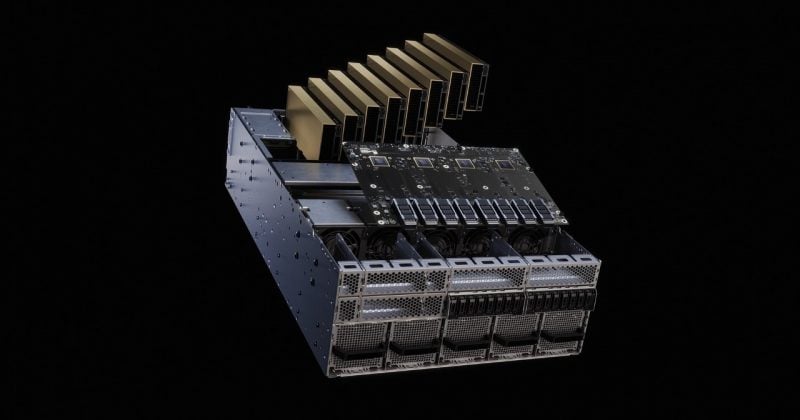
A social media claim by @AndrewCurran_ suggests that SpaceX has ordered $52 billion worth of NVIDIA GB300-based AI servers from Foxconn. This unverified report appears to have sparked discussions around the potential impact on NVIDIA's market valuation. The claim, however, lacks confirmation from any official or verified sources and seems to conflate previous deals involving SpaceX, such as its known $6.3 billion computing agreement with Reflection AI and a $920 million per month GPU arrangement with Google. NVIDIA's GB300 systems are already recognized for their advanced AI capabilities, and Foxconn is confirmed as a major supplier of these systems, with shipments having begun in late 2025. Key Takeaways * The reported $52 billion order by SpaceX from Foxconn appears to have caught the attention of market participants, despite lacking verification. * NVIDIA's market prospects could be positively influenced by such demand, as indicated by current speculation. * The claim suggests heightened interest in NVIDIA's GB300 system capabilities, even though no official confirmation of the transaction exists. What to Watch Market participants are likely to monitor further announcements from NVIDIA or SpaceX that could confirm or refute this claim. Any official statements or financial disclosures will be crucial in assessing the credibility of the reported order. The ongoing activity could also be influenced by NVIDIA's upcoming quarterly earnings report, which may provide insights into their data center revenue and demand for AI systems. Get live prediction-market analysis, powered by Vera. Sign up for Vera.
SpaceX loses its IPO premium as larger supply test approaches
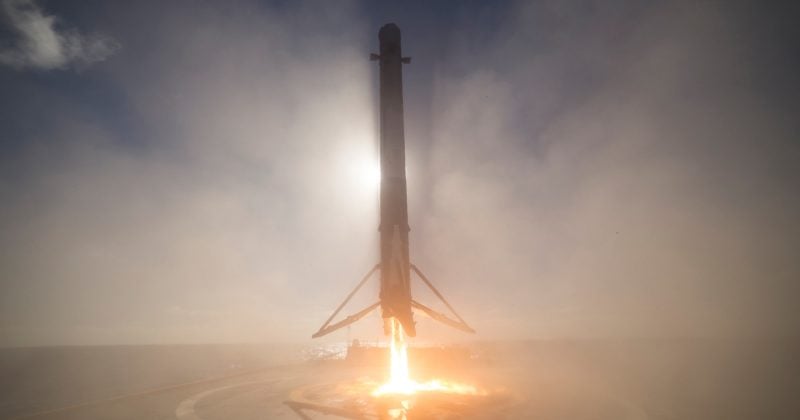
SPCX shares have slid roughly 8% below their $135 IPO price as lockup expirations threaten to flood the market with new supply, offering a case study in how mega-IPOs reshape capital flows across asset classes. The largest IPO in history is already underwater. SpaceX shares, which debuted at $135 on June 12, have slipped to around $124 as of mid-July, putting the stock roughly 8% below its offering price and a long way from the $161 high it touched on day one. For a company that raised $75 billion in its initial offering, later expanded to $85.7 billion through a greenshoe option, that kind of reversal is not just a SpaceX story. It is a gravitational force acting on every risk asset in the market, crypto included. What happened to the rocket fuel SpaceX's Nasdaq debut was, by every measure, historic. The $135-per-share pricing implied a market capitalization of approximately $1.75 trillion, placing it among the most valuable public companies on the planet from day one. Early trading saw a 19% pop to around $161. The stock's 52-week range already stretches from $122.12 to $225.64. A scrubbed Starship test flight added to the negative sentiment, reminding investors that SpaceX's valuation is built partly on promises that still require successful execution. The current market cap sits at roughly $1.63 trillion, a meaningful haircut from the IPO-day peak. The pre-IPO secondary market was already flashing warning signs. In May 2026, ask orders totaled $12.8 billion against just $1.3 billion in bids. Sellers outnumbered buyers by nearly ten to one. That imbalance has now migrated into the public market. The lockup wall The bigger concern is what comes next. Lockup expirations are approaching, which means early investors, employees, and insiders who have been sitting on shares since long before the IPO will soon be able to sell. When a company raises $85.7 billion and then unlocks even more supply, the math gets uncomfortable. Given that the stock is already trading below its IPO price, the demand picture is not exactly inspiring confidence. Investors who bought at $135 are underwater. Those who chased the $161 first-day high are down roughly 23%. Why crypto investors should care SpaceX has no cryptocurrency token. There is no blockchain protocol involved. The IPO was conducted through traditional brokerages on a conventional stock exchange. Because capital allocation is a zero-sum game at the margins. When the largest IPO in history vacuums up $85.7 billion in capital, that money comes from somewhere. Some of it comes from bond allocations, some from other equities, and some, inevitably, from alternative assets like crypto. The pre-IPO secondary market data is particularly telling for anyone who tracks crypto market structure. A $12.8 billion ask wall against $1.3 billion in bids looks a lot like an altcoin order book during a distribution phase: when supply overwhelms demand, price discovery moves in one direction. If SPCX stabilizes above $120 and absorbs the lockup supply without a major leg down, it suggests the market has enough depth to handle large new issuances. If it breaks below $122, its current 52-week low, the ripple effects will extend well beyond aerospace stocks.
Moonshot AI plans Kimi K3 launch to challenge Anthropic's Claude Opus 4.8
Beijing-based startup with 2.5 trillion parameter model is turning the global AI race into a pricing and performance war that crypto-adjacent investors can't ignore A Chinese AI startup most people outside tech circles have never heard of is about to pick a very public fight with one of the biggest names in American artificial intelligence. Moonshot AI, a Beijing-based company founded just over three years ago, is preparing to launch its Kimi K3 model with a stated goal of going head-to-head with Anthropic's Claude Opus 4.8. The launch window has leaked as around July 15, and the specs are genuinely eye-catching: roughly 2.5 trillion parameters, a 1-million-token context window, and a Mixture-of-Experts architecture designed for coding and agentic tasks. For context, a 1-million-token context window means the model can process the equivalent of several full-length novels in a single prompt. What Moonshot is actually building Moonshot AI was founded in March 2023 by Tsinghua University alumni, with CEO Yang Zhilin at the helm. The company reached a unicorn valuation of around $3 billion shortly after its founding. Kimi K2.6, launched in April, reportedly posted leading scores on coding benchmarks against Anthropic's Claude models. Now K3 is stepping up with a new architecture and a parameter count that dwarfs most publicly known models. The Mixture-of-Experts approach routes queries to specialized sub-networks instead of running every input through all 2.5 trillion parameters. The result is a model that can be massive in total capacity but efficient in actual compute per query. Moonshot is also leaning into open weights, meaning developers can inspect and build on the model's internals rather than treating it as a black box. This is a deliberate competitive choice against Anthropic's closed-model approach, and it matters for pricing. Open-weight models tend to drive costs down because they invite competition at the infrastructure layer. A limited-time API recharge promotion briefly appeared online before the official announcement, suggesting Moonshot is planning an aggressive marketing push to lock in early adopters and developers. Why crypto investors should care about an AI model launch There are no reported direct ties between Moonshot AI and digital assets. But the AI compute market is one of the fastest-growing demand drivers for decentralized GPU networks like Render, Akash, and io.net. Every time a new open-weight model drops with competitive performance against closed alternatives, it expands the universe of developers who can deploy AI workloads outside the walled gardens of OpenAI and Anthropic. If Kimi K3 delivers Claude Opus-level performance at a fraction of the cost, which is the explicit goal, it compresses margins for every company selling AI inference. Anthropic, OpenAI, and Google all charge premium rates for their top-tier models. A credible open-weight alternative at 2.5 trillion parameters forces those prices down, which in turn makes decentralized compute networks more cost-competitive relative to centralized cloud providers. The US-China AI competition is intensifying, and export controls on advanced chips have pushed Chinese labs to optimize architectures for efficiency rather than brute-force compute. Mixture-of-Experts is partly an answer to hardware constraints. What to watch from here The benchmark claims from K2.6 were impressive, but vendor-reported benchmarks are the AI equivalent of a company citing its own customer satisfaction survey. Independent testing of K3 after launch will be the real litmus test. For crypto market participants specifically, watch the decentralized compute sector. Every major open-weight model release has historically correlated with increased activity on GPU marketplace protocols. Tokens tied to AI inference, model hosting, and decentralized training could see renewed interest if K3 lives up to the hype.
US tightens AI policies on China amid Anthropic's call to extend lead
The United States has intensified its stance on artificial intelligence in its dealings with China, according to a report by the South China Morning Post. This development coincides with Anthropic, the world's most valuable AI startup, advocating for the U.S. to maintain its technological lead in AI. The Trump administration rolled out new restrictions in June 2026, targeting both chip exports and model weights, as part of a comprehensive framework. Anthropic's recent $65 billion funding round has positioned it ahead of OpenAI, further emphasizing its strategic significance in the AI sector. Market participants appear to be interpreting these developments as favorable for Anthropic's valuation prospects. The U.S.'s approach may indicate a supportive regulatory environment for domestic AI firms like Anthropic, potentially facilitating their growth and competitiveness on the global stage. Chinese authorities, meanwhile, are reportedly considering reciprocal measures, adding complexity to the geopolitical landscape surrounding AI advancements. Key Takeaways * The U.S. government's toughened AI policies appear consistent with supporting Anthropic's market position. * Market pricing suggests Anthropic's valuation could increase, reflecting perceived benefits from U.S. regulatory actions. * Anthropic's strategic calls for a pause in AI development align with its goal to maintain a competitive edge. What to Watch Observers will be monitoring the response from Chinese authorities, which could influence global AI market dynamics. The progression of U.S. policy and its impact on AI firms' growth strategies remains a critical area of focus. Additionally, any further announcements from Anthropic regarding partnerships or funding could shift market sentiment and valuation forecasts. Get live prediction-market analysis, powered by Vera. Sign up for Vera.
SpaceX reveals AI1 orbital data center design for satellite network
The AI1 satellite's 70-meter wingspan and 150 kW compute payload could reshape how the world thinks about AI infrastructure. SpaceX unveiled its AI1 orbital data center satellite in a video around June 9, 2026, laying out a vision for AI computation that skips terrestrial infrastructure entirely. The satellite is designed for sun-synchronous orbit, powered by solar arrays, cooled by passive radiation, and connected to the rest of the world through laser links to the existing Starlink constellation. The headline specs are striking. The AI1 has a 70-meter wingspan, a deployed height of 20 meters, and a peak compute payload capacity of 150 kW. Elon Musk noted that one AI1 satellite's power output is roughly equivalent to one Nvidia GB300 rack. Simpler than Starlink, bigger ambitions Musk pointed out that AI1 manufacturing drops the phased-array antennas that make Starlink satellites complex to produce. What's left is solar cells, radiators, and laser links. In January 2026, SpaceX filed with the FCC proposing a constellation of up to one million AI1 satellites. To support that manufacturing ambition, the company is building a Gigasat factory in Bastrop, Texas. Initial AI1 satellite launches are targeted for late 2027, though SpaceX plans to deploy compute payloads on select existing Starlink satellites before the dedicated AI1 fleet is ready. The AI1 operates at roughly 70 kW per ton at approximately 600 km altitude. Passive radiative cooling in the vacuum of space sidesteps one of the thorniest problems facing ground-based data centers: heat. On Earth, cooling a hyperscale data center can consume a significant portion of its total energy budget. In orbit, you radiate heat directly into space. The terrestrial data center problem this is solving SpaceX is explicitly pitching AI1 as a way to sidestep land use, power grid, water cooling, and permitting constraints that face terrestrial data centers. The laser link architecture routes data through the Starlink constellation rather than requiring dedicated ground stations at every customer site. Hardware refresh cycles are a known challenge: you can't easily send a technician to swap out a GPU at 600 km altitude. Whatever compute is on that satellite has to last, or the economics of the whole system deteriorate quickly. What investors should watch The AI1 announcement lands at an interesting moment for SpaceX's corporate trajectory. The company has been preparing for an IPO, and orbital data centers represent a differentiated, high-margin business category. Starlink's connectivity business is already profitable; AI compute-as-a-service from orbit would be an entirely new revenue category. Microsoft, Google, and Amazon have all committed to multi-hundred-billion-dollar terrestrial data center buildouts over the next several years. The late 2027 launch timeline gives the market roughly 18 months to decide how seriously to price this possibility.
IBM stock plunges 11% as Anthropic's Claude Code threatens its COBOL cash cow
The AI startup's new tool automates legacy code modernization, rattling IBM investors and dragging Bitcoin down 5% in the process IBM just got a brutal reminder that being a pioneer in AI doesn't guarantee you won't get disrupted by it. Anthropic's newly unveiled Claude Code tool, designed to automate COBOL modernization, sent IBM shares tumbling 11.2% on February 23 and triggered a cascade across equities and crypto markets alike. Bitcoin dropped 5% to $64,000 on the same day. The Dow, S&P 500, and Nasdaq all fell more than 1%. What Claude Code actually does, and why it matters Here's the thing about COBOL: it's a programming language from 1959 that somehow still runs the world. It underpins roughly 95% of US ATM transactions. Hundreds of billions of lines of COBOL production code execute daily across finance, government, and insurance systems. Modernizing that code, translating it into newer languages or restructuring it for cloud environments, has been one of the most lucrative consulting gigs in enterprise tech for decades. IBM has been the dominant player in that space, charging premium rates for teams of specialists who understand both the ancient code and the modern systems it needs to talk to. Anthropic's Claude Code aims to automate the exploration and analysis phases of that modernization process. In English: the tool can read through massive COBOL codebases, understand what they do, and map out how to update them, work that previously required expensive human consultants billing by the hour. IBM's AI identity crisis IBM has been synonymous with artificial intelligence since long before the current AI boom. Watson, its flagship AI platform, was beating humans on Jeopardy back in 2011. The company has been pursuing AI-blockchain integration strategies since at least 2016, restructuring its organization and launching dedicated Watson centers to position itself at the intersection of enterprise AI and emerging tech. But there's a meaningful difference between building AI tools and being disrupted by them. IBM's AI strategy has historically been about augmenting its consulting business, using machine learning to make its own teams more efficient while preserving the high-margin, people-intensive model that generates revenue. Claude Code represents a fundamentally different approach: replacing parts of that human workflow entirely. The market's reaction suggests investors see this distinction clearly. An 11.2% single-day decline isn't a gentle repricing. It's a signal that the market believes Anthropic's tool poses a genuine structural threat to one of IBM's most reliable revenue streams. The crypto spillover effect Bitcoin's 5% decline to $64,000 on the same day might seem unrelated at first glance. But the correlation makes more sense when you look at how institutional money moves during periods of tech sector uncertainty. When a major blue-chip stock like IBM gets hammered on AI disruption fears, it raises broader questions about which other established business models might be next, triggering risk-off behavior across portfolios. During previous episodes of tech equity volatility, digital assets have frequently moved in tandem with equities rather than serving as the uncorrelated hedge that crypto maximalists have long promised. This episode reinforced that dynamic.

SpaceX reportedly shows prototype of smartphone to investors as IPO looms
Elon Musk denied the Wall Street Journal report, calling it 'utterly false,' but the implications for telecom and tech markets are hard to ignore The Wall Street Journal reported on July 1, 2026, that SpaceX showed a prototype of a slim, AI-driven device to select investors. The device was described as thinner than an iPhone, powered by a Qualcomm Snapdragon chipset, and deeply integrated with xAI technology. Elon Musk immediately denied it, taking to X to call the report "utterly false." What we know about the device According to the WSJ report, the prototype was presented to institutional investors and stakeholders as part of SpaceX's capital-raising efforts ahead of its anticipated IPO. The company has been preparing to go public, with its offering projected for June 2026. Musk denied SpaceX was developing a phone as recently as February 2026. That's barely four months before the company allegedly showed one to investors. The Starlink connection SpaceX's Starlink Direct to Cell initiative has been forging partnerships with telecommunications firms, positioning satellite-based mobile service as a complement to traditional cell towers. One of the most notable moves in this space has been a spectrum deal with EchoStar valued at $1 billion. Why crypto markets should pay attention There's no evidence linking this prototype to any cryptocurrency or blockchain technology. No wallet integration, no token, no decentralized anything. The research is clear on this point. The SpaceX IPO itself is a gravitational event for capital allocation. When one of the most anticipated public offerings in history hits the market, it pulls institutional money from other asset classes. Crypto has historically felt the effects of major tech IPOs as portfolio managers rebalance. Starlink reaching underserved populations with a low-cost, AI-powered device could expand the addressable market for mobile-first crypto products in regions where traditional telecom infrastructure has lagged.
Anthropic expands hiring push to address AI safety risks
The Claude maker is adding hundreds of roles and fellowship programs as CEO Dario Amodei sounds the alarm on human oversight of AI systems Anthropic has a simple pitch to potential hires: come help prevent things from going badly wrong. The AI safety company behind the Claude models is running one of the more quietly aggressive recruitment campaigns in the tech industry right now, with hundreds of open roles and a structured fellowship program designed to pull serious researchers into the orbit of responsible AI development. What Anthropic is actually building The company opened applications for its AI Safety and AI Security Fellows cohorts for 2026, with program starts scheduled for May, July, September, and November. Each cohort runs for four months. The focus areas are not abstract: scalable oversight and mechanistic interpretability are the two pillars, both of which sit at the technical frontier of figuring out what AI systems are actually doing inside the black box. Applications for some cohorts were reviewed on a rolling basis through July 2026, meaning the pipeline stays open rather than closing after a single deadline. Beyond fellowships, the company lists hundreds of open positions as of mid-July 2026, including multiple dedicated roles in Safeguards and AI Safety. Dario Amodei's June warning CEO Dario Amodei used a series of interviews and essays in June 2026 to sharpen his public position on where the risk actually lives. His concern centers on the loss of human oversight as AI systems grow more capable, and he has been explicit about advocating for a coordinated slowdown in AI development across the industry. The argument is not that AI is inherently dangerous but that the pace of deployment is outrunning the tools humans have to verify AI behavior. If you cannot reliably tell whether a system is doing what you think it is doing, deploying it at scale is a bet you are making without full information. What this means for the broader AI investment landscape Fellowship programs are not just recruitment pipelines. They are ways to shape the next generation of researchers who will set norms, publish influential work, and eventually lead teams at companies across the industry. Anthropic is not building tokenized infrastructure, issuing digital assets, or integrating with blockchain networks, and no mentions of crypto tokens or digital assets appear in related reports or announcements. The company's activities sit firmly in the AI sector. Anthropic's fellowship cohorts, its hundreds of open safety roles, and its CEO's public advocacy for coordinated caution add up to a consistent signal. The company is not just saying safety is the mission. It is staffing accordingly.
Nvidia vs Cerebras: which discounted AI chip stock offers better value right now
Both AI hardware giants are trading below their peak valuations, but the investment cases could not be more different. Nvidia, the undisputed king of GPU-powered AI training, trades at roughly 28x forward earnings. Cerebras, the scrappy newcomer with wafer-scale chips the size of dinner plates, is still finding its footing after a blockbuster IPO. The question isn't whether AI chips matter. It's which bet makes more sense at today's prices. The tale of the tape Cerebras Systems hit public markets on May 14, 2026, pricing its IPO at $185 per share and raising $5.55 billion in the process. The stock surged 68% on its first day of trading, briefly pushing the company's market cap near $100 billion. Shares have been bouncing between $226 and $230 in late June, a significant pullback from debut highs. Cerebras reported $510 million in revenue for 2025, a 76% year-over-year increase. The company guided 2026 revenue between $855 million and $865 million, slightly above what analysts had penciled in. It also disclosed a backlog worth $24.6 billion. Nvidia's forward earnings multiple of around 28x actually looks reasonable by AI-era standards, and some analyst models peg its intrinsic value near $323 per share, suggesting the stock could be roughly 30% undervalued at current levels. Different chips, different bets Cerebras' WSE-3 wafer-scale chips are reportedly 57 times larger than Nvidia's biggest GPUs. The company claims performance up to 21 times faster than comparable Nvidia hardware, at approximately one-third lower cost versus Nvidia's Blackwell B200 chips. OpenAI accounts for about 24% of Cerebras' revenue and backlog. Having nearly a quarter of your business tied to a single customer is the definition of concentration risk. Nvidia controls approximately 80% of the AI data-center GPU market. Its CUDA software platform has created a moat that extends far beyond raw chip performance. Why crypto investors should care Companies like Core Scientific and Hut 8 have already pivoted toward AI hosting, essentially renting out their data center capacity to AI workloads that can pay more than Bitcoin mining. For investors weighing these two stocks as portfolio positions, the risk profiles are starkly different. Nvidia offers what looks like a discounted entry into a proven cash-flow machine with dominant market share. At 28x forward earnings with analysts suggesting 30% upside to intrinsic value, it's the kind of setup that appeals to investors who want AI exposure without stomach-churning volatility. Cerebras is the higher-variance play. A $24.6 billion backlog and 76% revenue growth are impressive, but the stock has already demonstrated it can move violently in both directions. Revenue guidance that came in only slightly above expectations suggests the market may have already priced in much of the near-term growth story. The OpenAI concentration issue deserves serious weight in any investment thesis. If that relationship deepens, Cerebras becomes a leveraged bet on OpenAI's continued dominance. If OpenAI diversifies its chip suppliers, that 24% revenue exposure becomes a vulnerability rather than a selling point.

Raymond James sets $800 price target on SpaceX, valuing company at $10.5 trillion
The Street-high target implies a 450% upside and would make SpaceX worth more than any company in history, and its 18,712 BTC treasury adds a crypto wrinkle worth watching. A Wall Street analyst just looked at SpaceX and essentially said: "This company should be worth more than the entire GDP of Japan." Raymond James analyst Brian Gesuale initiated coverage of SpaceX with a Strong Buy rating and an $800 price target, implying a market capitalization of roughly $10.5 trillion. The current Street-high target represents a potential 425-450% upside from SpaceX's recent trading levels around $145 per share. The numbers behind the moonshot thesis Gesuale's model projects SpaceX generating over $837 billion in revenue by 2031, with $696 billion in EBITDA. The analyst used a 27x exit multiple on discounted cash flows from 2031 to arrive at the $800 figure, anchoring the thesis to what he estimates is a total addressable market approaching $30 trillion in the long term. SpaceX debuted on public markets via the SPCX ticker in mid-June 2026. Shares initially surged more than 40%, pushing the company's market cap to approximately $2.5 trillion before the inevitable profit-taking set in. The stock has since pulled back to a 52-week low range of $138-$145. The bull case rests on SpaceX's positioning as what Gesuale calls a crucial industrial infrastructure player of the 21st century. Between Starlink's satellite internet constellation, the company's dominant launch services business, and the upcoming Starship launch planned for July 16, 2026, there's no shortage of catalysts on the calendar. The Bitcoin treasury angle crypto investors should watch Buried in the analyst note is a detail that bridges the gap between traditional aerospace investing and digital asset markets: SpaceX holds a confirmed 18,712 BTC on its balance sheet. That figure exceeds earlier estimates from prior blockchain tracking services, suggesting SpaceX has been quietly accumulating Bitcoin beyond what public trackers had identified. SpaceX's recent acquisition of xAI, the artificial intelligence company Musk founded in 2023, adds another dimension. The deal, completed in early 2026, combined with ongoing compute collaborations with Tesla, positions SpaceX at the intersection of space infrastructure, AI, and potentially decentralized compute networks. What this means for investors on both sides of the aisle For crypto investors, SpaceX's 18,712 BTC treasury means that every institutional dollar flowing into SPCX shares is, in a fractional sense, also a bet on Bitcoin. If Gesuale's thesis attracts even a portion of the capital it implies, the downstream effects on BTC demand through corporate treasury expansion could be material. If SpaceX's valuation compresses, management might face pressure to liquidate Bitcoin holdings to shore up the balance sheet. That scenario would create selling pressure in crypto markets at precisely the wrong moment. The Starship launch on July 16 will be the first real test of whether SpaceX can deliver on the kind of operational milestones that justify even a fraction of Gesuale's projections.
Kraken rolls out Mastercard crypto debit card in UK and Europe
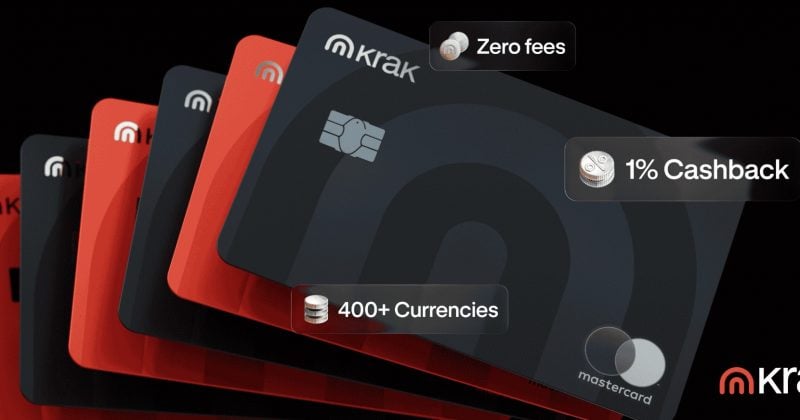
The exchange's new card lets users spend from over 600 crypto and cash balances at 150 million merchants, with up to 2% cash back in Bitcoin. Kraken just made it possible to buy your morning coffee with Dogecoin. Whether that's progress or a sign of the end times depends on your perspective, but the exchange officially launched the Kraken Card on July 13, a Mastercard-enabled debit card available to verified users across the UK and European Economic Area. The card supports spending from more than 600 crypto and cash balances held on Kraken's platform, with near real-time conversion at the point of sale. It works at over 150 million merchants worldwide. No monthly fees, no forex fees, and cash-back rewards of up to 2% paid in Bitcoin, euros, or pounds sterling. From exchange to neobank This launch has been a slow build. Kraken first announced its partnership with Mastercard back in April 2025, laying the groundwork for crypto-linked payment products. The initial rollout came in November 2025 with a more modest 1% cash-back structure tied to Kraken's peer-to-peer payment features. The July 2026 version is the full package. Both physical and virtual card options are available, issued through Monavate, an FCA-authorized provider. In English: instead of selling your Bitcoin on an exchange, withdrawing to a bank account, waiting two days, and then spending those funds, you just tap the card and Kraken handles the conversion instantly. The bigger picture: crypto meets traditional finance Competitors have been circling this space too. Coinbase has had its own Visa-linked card for years. Crypto.com built an entire brand identity around its metal cards. But Kraken's version stands out in a couple of ways: the sheer breadth of supported assets (600-plus is significantly more than most competitors offer) and the 2% cash-back tier, which is competitive with many traditional rewards cards, not just crypto ones. The geographic focus is also notable. By targeting the UK and EEA specifically, Kraken is leaning into markets where crypto regulation has become increasingly clear under frameworks like MiCA in the EU. What this means for investors The cash-back structure is worth watching closely. Offering up to 2% back in Bitcoin creates a passive accumulation mechanism for users who might not otherwise buy Bitcoin directly. The risk side is straightforward. Tax reporting on crypto-to-fiat conversions at point of sale remains a headache in many jurisdictions, and users will need to understand that every coffee purchase could technically be a taxable event depending on local rules. Kraken's partnership with FCA-authorized Monavate helps on the compliance front, but tax treatment ultimately sits with the user.
MEXC reports 7.1 billion USDT in SpaceX futures volume as Q2 closes the gap to Wall Street
Victoria, Seychelles, July 14th, 2026, Chainwire MEXC, a pioneer in 0-fee digital asset trading, today released its Ecosystem & Growth Report for the second quarter of 2026. In Q1, users mostly bought gold and other hedges against macro risk. In Q2, their attention turned to AI projects and US stocks, and MEXC spent the quarter building products for exactly that demand. Users can now back a company before its IPO, trade stock futures on it, hold tokenized shares, and buy real US stocks and ETFs, all inside one MEXC account. Every piece of that path launched or grew during the quarter. SpaceX was still a private company when MEXC ran two SPACEX(PRE) subscription rounds. More than 74,000 entries put over 173 million USDT into them, and demand for the second round reached more than 30 times the amount on offer. That demand mirrors a wider market trend: CoinGecko reports that tokenized pre-IPO trading volume surged 1,060%, with SpaceX accounting for the largest share of activity. The company then completed the largest IPO on record on June 12. Users kept trading it on MEXC after the listing, and SpaceX perpetual futures collected more than 7.1 billion USDT in volume in the weeks that followed. One name went from private to public within a quarter, and users traded at every stage. RealStocks launched on June 1 and added the last piece, real shares. Eligible users buy actual US stocks and ETFs through a licensed securities broker partner, and the shelf covers more than 7,000 names. More than 120,000 users signed up in the first month, and over half of the new accounts moved on to a first deposit. By June 18, the product had settled dividends on 34 stocks and ETFs, the kind of payout only real share ownership carries. Micron's June earnings lifted trading volume in its MEXC futures by approximately 142% in a single day. The activity spilled into related AI memory names, SanDisk, SK hynix, and a DRAM ETF. One earnings report moved a whole supply chain on the platform, because users now trade US market news the moment it breaks. "My first quarter as CEO had one goal, and that was to move MEXC from a crypto exchange toward a gateway for every market users care about," said Vugar Usi, CEO of MEXC. "Q2 put real numbers behind the word gateway, from Pre-IPO demand to actual dividend payouts." The quarter's ten biggest new-token gainers averaged +4,956%, and six of the ten were AI agent projects. Only one meme coin made the list, a clear reversal of the first quarter, when memes ran the gain rankings. The AI winners build practical systems. They settle transactions between agents, place trades for retail users, and verify identities, so the money went to projects that already do that work. The most-traded list leaned the same way, with four AI and infrastructure names to three meme names. During the quarter, MEXC appointed Vugar Usi as Chief Executive Officer and marked its 8th anniversary with a brand upgrade built on two promises: 0 Fees and Infinite Opportunities. The upgrade marks the company's move from a traditional exchange toward a universal gateway for global markets. A partnership brought the USD1 stablecoin into MEXC's trading and product suite, and the first USD1 event drew more than 161,000 participants, with new users alone pushing $2.4 billion through futures. A TradingView integration now sends perpetual futures orders straight from the chart, so users move from analysis to execution without a tab change. The Prediction Market added a Combo feature on June 9, which folds several event predictions into a single position. Average daily volume in the Prediction Market grew more than 6,700% from early to late June, and daily users rose more than 3,200%. The June Proof of Reserves put the average reserve ratio at 156.5%, which means the platform holds more assets than users have deposited, with Bitcoin backed at 269%. Between May and June, the risk team identified 4,394 illicit networks; a separate intervention effort blocked roughly 303,000 USDT in suspected fraudulent transfers. The full Q2 report, with the complete token tables, product data, and community programs, is available here. About MEXC MEXC is the world's fastest-growing cryptocurrency exchange, trusted by more than 40 million users across 170+ markets. Built on a user-first philosophy, MEXC offers industry-leading 0-fee trading and access to over 3,000 digital assets. As the Gateway to Infinite Opportunities, MEXC provides a single platform where users can easily trade cryptocurrencies alongside tokenized assets, including stocks, ETFs, commodities, and precious metals. MEXC Official Website| X | Telegram |How to Sign Up on MEXC For media inquiries, please contact MEXC PR team: [email protected]
Samsung to produce custom AI chips for Anthropic: report
https://www.manufacturingtodayindia.com/anthropic-explores-samsung-partnership-for-custom-ai-chip Samsung Electronics' foundry division has reportedly agreed to manufacture custom AI chips for Anthropic, according to local media sources. This development, reported by social media account @WhaleInsider, suggests a significant partnership between the South Korean tech giant and the AI startup known for its advanced models such as Sonnet 5 and Opus 4.8. While this news seems to confirm earlier reports of negotiations, authoritative sources had previously described the talks as preliminary, with no finalized commitments. The deal, if confirmed, would position Samsung as a fifth silicon supplier for Anthropic, complementing existing partners like Nvidia and Google. Key Takeaways * Reports suggest that Samsung Electronics' foundry division has agreed to produce AI chips for Anthropic, indicating potential collaboration. * The news appears consistent with Anthropic's strategy to diversify its silicon suppliers, alongside Nvidia, Google, and Amazon. * Market pricing implies this development could positively influence Anthropic's valuation prospects, with potential increases in the company's market perception. What to Watch Observers should monitor for official confirmations from Samsung or Anthropic, as such announcements would clarify the status of the agreement. Additionally, any updates on Anthropic's chip specifications, integration plans, or performance targets could further influence market perceptions. As the situation develops, shifts in the odds of Anthropic's valuation reaching $1.25 trillion by December 31 may provide additional insights into market sentiment. Get live prediction-market analysis, powered by Vera. Sign up for Vera.

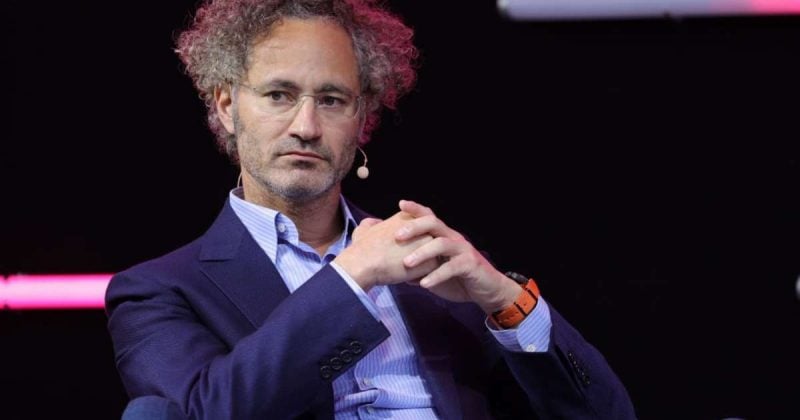
Palantir CEO criticizes OpenAI, Anthropic over AI token value concerns
https://scoop.upworthy.com/billionaire-reveals-hes-supporting-landlord-to-sheltered-him-and-mom Palantir CEO Alex Karp has publicly criticized OpenAI's Sam Altman and Anthropic's Dario Amodei, accusing them of charging Fortune 500 companies for AI tokens that allegedly offer no real value. In a recent interview, Karp suggested that these tech leaders are exploiting enterprises by charging for services that fail to deliver tangible business outcomes while potentially misusing proprietary data. This criticism comes amid growing dissatisfaction among enterprises with the high costs and low returns from token-based AI models. Karp's comments highlight ongoing tensions in the AI sector, where companies are increasingly skeptical of the current pricing models offered by leading AI labs. Key Takeaways * Palantir CEO Alex Karp's remarks appear to suggest skepticism over the value and honesty of token-based AI services provided by OpenAI and Anthropic. * Market pricing indicates a potential impact on Anthropic's valuation, with the likelihood of hitting high targets by December 31 showing varied confidence. * The broader AI market is experiencing a shift in sentiment as enterprises reconsider the return on investment from token-based AI models. What to Watch Markets may closely monitor how Anthropic and OpenAI respond to Karp's allegations, which could influence future enterprise contracts and partnerships. Any official statements or strategic shifts from these companies could further affect Anthropic's market valuation trajectory. Additionally, watch for any changes in investment activity or partnership announcements, particularly from major investors like Amazon and Google, which could provide further insight into market confidence. Get live prediction-market analysis, powered by Vera. Sign up for Vera.
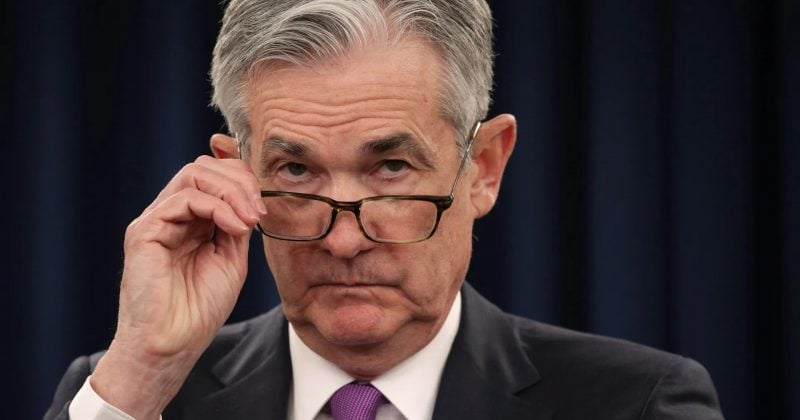
Polymarket predicts 57% chance of no rate change in September
Prediction market traders are betting the Fed holds steady despite 4.2% inflation, but a 37% chance of a hike keeps things interesting The crowd has spoken, and the crowd thinks the Federal Reserve is going to sit on its hands. Polymarket, the blockchain-based prediction market, currently prices a 56% probability that the Fed will leave interest rates unchanged at the September FOMC meeting. Shares representing a "no change" outcome are trading at 57 cents each, with the market generating over $2 million in trading volume since it launched on May 13. That's not trivial engagement for a single policy question months in advance. The rate hike that might not happen While the majority bet is on the Fed doing nothing, a 25 basis point increase sits at 37% probability -- roughly one in three traders thinks the Fed will actually raise rates further. The May Consumer Price Index came in at 4.2% year-over-year, well above the Fed's 2% target. The labor market, meanwhile, continues to show resilience. Broader 2026 Fed policy markets on Polymarket tell a similar story. The probability of any rate hike occurring this year sits in the 51-53% range, making it essentially a coin flip on whether the Fed moves at all. Polymarket's track record Polymarket priced a 25 basis point cut in September 2025 at 91% confidence, and the Fed followed through. The market resolves based on official FOMC statements and Federal Reserve data releases, rounding to the nearest 25 basis points. The platform operates on the Polygon blockchain and accepts USDC or pUSD as collateral. Trading volume of over $2 million for a single FOMC meeting outcome signals that this isn't just retail speculation, with the platform serving as a complement to the CME FedWatch tool that has long dominated rate probability forecasting. What this means for crypto investors Rate decisions are one of the single biggest drivers of risk asset prices, and crypto remains firmly in the risk asset category. A rate hold in September would likely be interpreted as neutral-to-positive for crypto, as no tightening means no additional pressure on liquidity. The 37% chance of a rate hike is the scenario crypto investors should game plan for. Bitcoin and Ethereum have historically shown sensitivity to unexpected hawkish pivots. If subsequent CPI prints come in hotter than 4.2%, that 37% hike probability could climb, and crypto markets would likely start pricing in the pain before the Fed even acts.
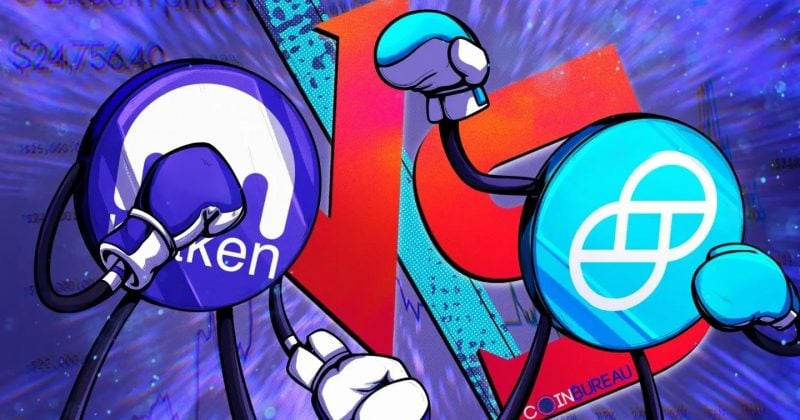
Kraken leads with $400M in spot liquidity across MiCA exchanges
DefiLlama's new compliance dashboard shows Kraken pulling ahead of Coinbase and rivals as Europe's crypto regulation fully kicks in Kraken is sitting on roughly $400 million in spot liquidity across MiCA-licensed exchanges, making it the clear frontrunner in Europe's newly regulated crypto marketplace. The exchange also holds about $207 million in perpetual liquidity, putting meaningful distance between itself and every other compliant competitor on the continent. The numbers come from DefiLlama's freshly launched MiCA compliance dashboard, which went live on July 1, 2026. That date coincides with the full enforcement of the Markets in Crypto-Assets Regulation for crypto asset service providers across the European Union. The liquidity leaderboard takes shape The exchange's $399.71 million in spot liquidity dwarfs its nearest competitor. Coinbase, the second-place finisher, reports approximately $305 million in spot liquidity and $167 million in perpetuals. That's a roughly $95 million gap in spot alone. From there, the drop-off gets steep. Crypto.com trails with around $131 million in spot liquidity. Bitstamp, one of Europe's legacy exchanges, comes in at roughly $55 million. And OKX sits near the bottom with about $12 million in spot liquidity and lower or no perpetual liquidity to speak of. Kraken's platform currently supports trading across 1,704 markets, covering both spot and perpetual products. Why MiCA changes the game The Markets in Crypto-Assets Regulation represents the EU's attempt to build a single, unified licensing framework for crypto service providers. One license, one set of rules, access to all 27 member states. Kraken moved early. The exchange secured its MiCA authorization from the Central Bank of Ireland back in June 2025, a full year before the regulation's enforcement deadline for crypto asset service providers. That head start gave Kraken time to build out its European operations, including spot, futures, and derivatives offerings, while competitors were still working through the licensing process. DefiLlama's MiCA compliance dashboard lets users compare exchanges on liquidity, compliance status, and transaction fees, all in one place. What this means for investors Coinbase, sitting in second place with $305 million in spot liquidity, remains a formidable competitor. But the $95 million gap to Kraken is significant enough to influence where large orders get routed. Smaller MiCA-licensed platforms like OKX, with just $12 million in spot liquidity, face a difficult question: can they grow fast enough to remain viable, or will they become acquisition targets for larger players looking to expand their European footprint?
Polymarket races to regain trust with US market re-entry after $112M acquisition
The prediction market giant is betting that rock-bottom fees and a CFTC-approved derivatives exchange can make Americans forget it once kicked them off the platform Polymarket, the crypto-native prediction market that became a cultural phenomenon during the 2024 US election cycle, is making its way back to American users. The platform acquired regulated derivatives exchange QCX for $112 million, giving it the legal scaffolding to offer event contracts stateside. Polymarket didn't leave the US market on its own terms. Back in 2022, the platform was forced to block American users after running into regulatory headwinds. Now it's attempting a comeback, armed with federal approval and a fee structure aggressive enough to make both offshore venues and traditional sportsbooks uncomfortable. The regulatory path back The company secured an amended CFTC order in November that allows it to beta test its US exchange with live trades. The QCX acquisition is the centerpiece of this strategy. By purchasing a regulated derivatives venue for $112 million, Polymarket essentially bought itself a compliance moat rather than trying to convince regulators that prediction markets deserve a novel framework. The US-specific app will initially focus on sports contracts. Politics and crypto markets are planned for later. A fee structure designed to hurt competitors Polymarket's US product features 10 basis point taker fees with zero maker fees. Standard sportsbook vigorish typically runs anywhere from 4% to 10% on most bets. A trader placing a $1,000 position on Polymarket pays $1 in fees. The same economic exposure through a sportsbook would cost somewhere between $40 and $100 in embedded margin. The zero maker fee component means liquidity providers can operate for free, bootstrapping deep order books. Why the trust problem is real American users who were active on the platform before 2022 remember being shown the door. Some found workarounds, using VPNs and non-US accounts, which created its own set of problems when questions about market integrity surfaced during the 2024 election. The fact that US participation was technically prohibited while the platform was being used to forecast US elections created an awkward dynamic that regulators noticed. Now Polymarket has to convince American retail users the platform won't pull the rug again if regulatory winds shift, and institutional participants need to see a compliance infrastructure robust enough to satisfy their own legal teams. A $112 million price tag for a regulated venue signals commitment that's hard to fake. What this means for the broader prediction market landscape Kalshi, the other major US prediction market, has been operating with CFTC approval since 2020 and has fought its own regulatory battles to expand into election contracts. Polymarket's entry as a direct competitor with dramatically lower fees could force Kalshi to reconsider its own pricing. Analysts watching this space see Polymarket's return as a potential inflection point for on-chain prediction markets more broadly. If a CFTC-approved platform with institutional-grade compliance can operate at 10 basis point fees, it validates the entire category as a legitimate financial product rather than an unregulated gray area.

Anthropic expands in New York City with massive 466,000 sq ft office lease
The Claude AI maker is taking over an entire 16-story building in Lower Manhattan, signaling aggressive growth that intersects with crypto-adjacent infrastructure deals Anthropic, the AI company behind the Claude model, is leasing an entire 16-story building at 330 Hudson Street in Lower Manhattan. The deal covers roughly 466,000 square feet of office space, a staggering 30x increase from the company's current New York footprint. For context, Anthropic currently occupies about 15,500 square feet at 155 Avenue of the Americas, a space it leased in 2024. The current lease at 155 Avenue of the Americas has a potential expiration approaching in 2026, making the timing of this deal practical as much as aspirational. From startup footprint to tech giant ambitions Anthropic had been shopping for between 250,000 and 450,000 square feet of Manhattan office space since as early as January 2026. Landing at the top end of that range tells you something about how quickly the company's ambitions scaled during the search process. The company plans to double its New York workforce as part of the move, as confirmed in a July 7, 2026 report by the New York Times. The TeraWulf connection and why crypto investors should pay attention Anthropic recently signed a separate $19 billion, 20-year lease agreement with TeraWulf for AI data center infrastructure in Kentucky. TeraWulf started life as a Bitcoin mining company. It built out substantial power infrastructure and data center capacity to mine cryptocurrency, then increasingly pivoted toward hosting AI workloads as the economics shifted. The company essentially realized that the same cheap power and cooling infrastructure that makes Bitcoin mining profitable also makes it ideal for running the massive GPU clusters that AI companies need. The risk is concentration. A $19 billion, 20-year commitment to a single tenant means TeraWulf's fortunes are now deeply tied to Anthropic's success. Investors should watch whether TeraWulf maintains a balanced portfolio of AI and crypto mining clients or becomes overly dependent on one relationship.

SpaceX's lead underwriters face $1T valuation gap as quiet period ends
Goldman Sachs and Morgan Stanley released wildly divergent revenue forecasts for the newly public space giant, and the difference comes down to one word: AI When two of Wall Street's most powerful banks can't agree on what a company is worth, and the gap between their estimates stretches to roughly $1 trillion, investors should probably pay attention. SpaceX's post-IPO quiet period ended in early July, unleashing a flood of analyst reports from the underwriters who shepherded the largest public offering in history. Goldman Sachs and Morgan Stanley, the two lead underwriters, published their inaugural coverage notes within days of each other. The numbers that don't add up Goldman Sachs projects SpaceX will generate $474 billion in total revenue by 2030. Morgan Stanley pegs that figure at $330 billion. That's a $144 billion disagreement on a four-year outlook. The core of the disagreement sits squarely on AI. Goldman attributes $322 billion of its 2030 revenue estimate to AI operations, while Morgan Stanley sees that segment contributing $190 billion. A $132 billion gap in a single revenue line item. Zoom out to 2040 and the divergence gets genuinely absurd. Morgan Stanley forecasts $3.4 trillion in revenue and over $2.7 trillion in adjusted EBITDA by that year. If Goldman's more aggressive growth assumptions hold through the decade, the implied valuation gap between the two banks' models balloons to around $1 trillion. The IPO that broke records SpaceX priced its IPO at $135 per share on June 11, 2026, raising $75 billion in one of the most anticipated public offerings ever. The greenshoe option pushed the total raise to $85.7 billion. Only about 4% of the company was sold to the public. When trading began on June 12, shares surged enough to push SpaceX's market capitalization to approximately $2.1 trillion. The implied equity valuation at offering was about $1.77 trillion, meaning the market added roughly $330 billion in perceived value on day one alone. The underwriting fees tell their own story. At under 0.75% of the total raise, SpaceX negotiated a fee structure well below the typical 3-7% charged on large IPOs. Even so, the sheer size of the deal meant the total fee pool landed somewhere between $500 million and $650 million. Goldman Sachs and Morgan Stanley each captured approximately 20% of that pool, meaning each bank walked away with north of $100 million for their efforts. Why the AI bet matters for everyone The two banks are effectively placing opposite-end bets on how quickly AI capabilities can be monetized at scale through satellite infrastructure and space-based computing. Goldman's model assumes AI operations become the dominant revenue driver within four years, essentially dwarfing the launch and satellite connectivity businesses that made SpaceX famous. Morgan Stanley's model treats AI as a significant but not overwhelming contributor, keeping more weight on legacy revenue streams. Investors watching SpaceX should focus on the quarterly AI revenue disclosures that will begin arriving later this year. The first few earnings reports will start revealing which bank's crystal ball is less foggy. If AI revenue tracks closer to Goldman's projections, the stock likely has room to run. If Morgan Stanley's estimates prove more accurate, the current $2.1 trillion market cap could face pressure.
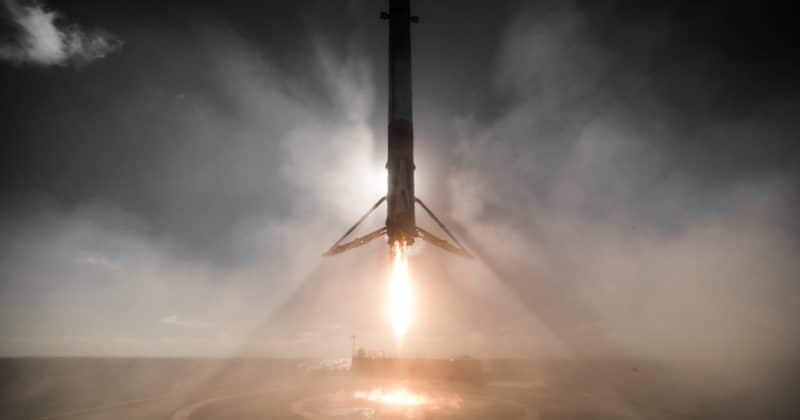
Anthropic to invest $15B in Australian data centers by mid-2027
https://itbrief.com.au/story/anthropic-plans-australian-office-in-global-ai-push Anthropic has announced plans to invest up to $15 billion in developing data centers across Australia by mid-2027. The move is part of a strategic expansion to secure 1.4 gigawatts of data center capacity, primarily through leasing from local developers or joint ventures. This development follows an earlier memorandum of understanding with the Australian government and aligns with Anthropic's broader strategy to establish Western-aligned infrastructure outside the United States. The company, known for its AI model Claude, aims to activate at least 1 gigawatt of capacity by the end of 2027, supporting its future AI model training and deployment efforts. Key Takeaways * The announcement appears consistent with increasing valuation expectations for Anthropic, as it reflects significant growth potential. * Markets suggest that the $15 billion investment could be a key indicator of Anthropic's commitment to expanding its infrastructure footprint outside the U.S. * Current pricing in related prediction markets is supportive of scenarios where Anthropic's valuation increases significantly by the end of the year. What to Watch Observers will be closely monitoring Anthropic's progress in securing the planned data center capacity in Australia, particularly through partnerships with local developers. Developments that indicate successful leasing or joint ventures could be consistent with a YES outcome in valuation increase scenarios. Additionally, any further announcements regarding Anthropic's strategic initiatives or partnerships with major tech firms like Amazon and Google could influence market expectations. Get prediction market intelligence as a structured API feed. Early access waitlist.