News & Updates
The latest news and updates from companies in the WLTH portfolio.
Tesla-SpaceX Merger Probability Jumps to 90% Following Musk's Earnings Call Remarks
* Gene Munster of Deepwater Asset Management increased his merger probability forecast from 80% to 90% following Tesla's second-quarter earnings discussion * Elon Musk confirmed expanding integration between the companies while stating merger discussions require "appropriate process" * Kalshi prediction market participants assign 41% probability to merger completion by March 2027 * More than $402,000 in wagers placed on Kalshi's Tesla-SpaceX merger contract * Tesla stock declined approximately 4% after missing Q2 earnings expectations with negative free cash flow During Tesla's second-quarter earnings discussion on Wednesday, Elon Musk faced a direct inquiry regarding a possible merger with SpaceX. While confirming increased integration between both entities, Musk indicated that an earnings call wasn't the suitable forum for such discussions. "It's got to be done with the appropriate process," Musk said. Deepwater Analyst Increases Probability Forecast Gene Munster from Deepwater Asset Management expressed surprise that the merger inquiry received any consideration during the call, interpreting it as an encouraging development. "Going into the call, I thought there was an 80% chance the two companies come together in the next few years. I'm raising that to 90%," Munster posted on X. Munster emphasized that Musk personally pointed out the expanding convergence between both organizations, especially regarding Terafab, a semiconductor manufacturing initiative supported by both companies. Commercial partnerships already exist between the organizations. SpaceX utilizes Tesla's energy storage technology for its artificial intelligence computing facilities. Tesla has incorporated SpaceX's Grok AI technology into its vehicle lineup and completed direct vehicle sales to SpaceX. Space Exploration Technologies Corp., SPCX Musk has previously discussed his companies moving toward "convergence" in a social media post on X. Betting Markets Show 41% Merger Probability Kalshi, a federally regulated prediction platform, displays over $402,000 in total wagers on its "When will Tesla and SpaceX merge?" market. Market participants currently assign a 41% likelihood to a merger completing before March 1, 2027. The probability increases marginally to 45% for completion before May 1, 2027. Musk has demonstrated a history of consolidating his business ventures. He integrated xAI into SpaceX prior to its June public offering. Back in 2016, Tesla completed a Solar City acquisition, incorporating it into Tesla's energy segment. That transaction triggered a significant shareholder legal challenge, which concluded favorably for Musk in 2022. SpaceX completed its public market debut in June, temporarily achieving a $2.6 trillion market capitalization. Subsequently, the company experienced market value reductions approaching $1 trillion, accompanied by concerns regarding valuation metrics and anticipated insider selling activity. Tesla stock experienced a nearly 4% decline in extended trading Wednesday. The electric vehicle manufacturer fell short of second-quarter earnings projections and posted negative free cash flow figures. SpaceX shares similarly declined more than 6% during the trading session. Neither organization has issued a formal merger announcement or proposal.
SpaceX (SPCX) Stock Plunges 28% YTD: Congressman Buys as Analysts See 87% Upside
* SPCX shares currently sit at $115.26, hovering just above the 52-week bottom of $115.19, reflecting a 28% year-to-date decline * Shares have plummeted 25.5% from their debut price on June 12, 2026, after reaching an early peak of $225.64 * Multiple headwinds affecting the stock include fading IPO momentum, impending lockup period expiration, and a recent Starship launch postponement on July 16 * U.S. Representative William R. Timmons IV acquired between $50,001 and $100,000 worth of SPCX shares on June 15, 2026 * Wall Street remains bullish with 36 CNN-tracked analysts setting a median price objective of $225 for the next 12 months, suggesting potential gains exceeding 87% The turbulent debut of SpaceX in public markets is capturing widespread interest -- from everyday traders to professional analysts and even a member of the U.S. House of Representatives. Shares of SpaceX (SPCX) are currently changing hands at $115.26, barely above the yearly bottom of $115.19. The stock has shed 25.5% of its value since going public on June 12, 2026, when it briefly touched $225.64 during initial trading. Year-to-date losses now stand at 28%. Space Exploration Technologies Corp., SPCX Representative William R. Timmons IV from South Carolina made a notable stock purchase shortly after the company's market debut. On June 15, 2026, just three days post-IPO, Timmons acquired SPCX shares valued between $50,001 and $100,000. The investment was executed via SCH Invest, his designated investment entity, with official disclosure filed under STOCK Act requirements on July 17. Final certification followed on July 19, 2026. Congressional members must report their market transactions under the STOCK Act to ensure accountability and guard against potential conflicts of interest. The stock's downward trajectory isn't tied to one specific catalyst. Market observers identify multiple contributing elements behind the price weakness. Initial public offering enthusiasm dissipated rapidly. Early shareholders who capitalized on the surge to $225.64 likely realized gains as bullish sentiment weakened. Additionally, an upcoming lockup period conclusion looms large. SpaceX plans to announce Q2 2026 financial results in August, coinciding with the scheduled end of its phased lockup restrictions. Market participants may be positioning themselves defensively ahead of anticipated insider share releases. Launch Postponement Compounds Weakness The July 16 postponement of a Starship mission further pressured shares. After-hours trading saw SPCX move lower following the announcement. Though such operational adjustments aren't inherently problematic, the timing amplified existing negative sentiment. The wider technology sector downturn has contributed to the decline as well. Artificial intelligence-focused enterprises have faced headwinds recently, affecting SpaceX given its ambitions in developing orbital AI systems. The aerospace company remains unprofitable while investing heavily in infrastructure expansion. InvestingPro data indicates projected revenue expansion of 8% for 2026. Market watchers anticipate SpaceX will achieve profitability within the current fiscal year. Wall Street's Outlook The recent selloff hasn't dimmed professional enthusiasm. Among 36 equity analysts surveyed by CNN, the consensus 12-month price forecast sits at $225 per share. Based on the July 20 settlement price of $119.85, achieving this target would deliver returns exceeding 87%. Such projections carry no certainty. However, they provide a useful framework for evaluating whether prospective rewards outweigh present concerns -- including additional lockup-driven volatility and the company's ongoing journey toward sustained earnings. SpaceX's current market capitalization totals $1.5 trillion, computed exclusively from publicly available shares. On July 20, the stock fluctuated between $115.19 and $124.77, recording turnover of 470,900 shares compared to a typical daily volume of 128.7 million.
SpaceX (SPCX) Shares Tumble After Starship V3 Launch Abort at Ignition
* Thursday's Starship V3 launch was aborted when four Raptor engines failed during the ignition sequence at liftoff * Elon Musk announced plans to swap out two faulty engines, targeting early next week for another launch attempt * SPCX shares declined more than 3% during after-hours trading, settling at $131.11 -- beneath the company's $135 IPO entry point * Federal regulators had just approved SpaceX's return to flight following their probe into May's booster mishap * The cancelled flight planned to deploy 20 advanced Starlink satellites, critical for the company's space-based data infrastructure plans Shares of SpaceX (SPCX) declined over 3% during after-hours trading Thursday evening, falling to approximately $125 following the company's scrubbed second Starship V3 launch attempt. The stock concluded regular market hours at $131.11, trading beneath its $135 initial public offering price established in June. Space Exploration Technologies Corp., SPCX The abort occurred precisely at the ignition moment. The launch pad's water suppression system had activated and the booster's engines began their startup sequence when an abrupt shutdown occurred. Telemetry data from SpaceX's live stream indicated four Raptor engines failed their ignition sequence, activating the automated safety abort protocol. "Several engines failed to ignite, which triggered an automated launch abort sequence," CEO Elon Musk posted on X. He subsequently confirmed that two problematic Raptor engines will undergo removal and replacement, scheduling the next launch window for sometime early the following week. This scrubbed launch continues SPCX's five-session downward trend. The stock has experienced consistent pressure since its historic IPO on June 12, when SpaceX secured $85.7 billion in capital -- establishing the largest public offering ever recorded -- and momentarily achieved market capitalizations rivaling Amazon and Microsoft. Mission Objectives and Payload Details Thursday's planned flight aimed to deliver 20 advanced Starlink satellites to low Earth orbit. Following deployment, these satellites were scheduled to extend their solar panels and communication antennas, establish brief connectivity with the existing Starlink network, then perform controlled atmospheric reentry and burn up approximately 20 minutes post-deployment. SpaceX has yet to successfully demonstrate Starship's capability to achieve sustained orbital flight, explaining why these satellites featured intentionally short operational lifespans. Despite this limitation, the mission represented an important milestone toward validating "orbital data centers" -- a cornerstone of SpaceX's future revenue model. Currently, Starlink stands as SpaceX's sole profitable division and primary income source. Recent Federal Approval Preceded Launch Attempt The Federal Aviation Administration granted SpaceX authorization to resume flights just this past Monday, completing their mandatory investigation following May's inaugural V3 launch. During that previous mission, the Super Heavy booster experienced an engine malfunction during its descent phase, resulting in an ocean impact in the Gulf of Mexico instead of completing its planned simulated landing procedure. The FAA's conclusive mishap investigation identified two primary root causes: thermal stress on propulsion system hardware during the ascent phase and incorrect engine monitoring system configurations. SpaceX implemented four remedial measures, encompassing both hardware modifications and software revisions. The upper stage during May's attempt demonstrated superior performance, successfully deploying Starlink test units and executing its own simulated ocean landing without complications. Thursday's abort requires SpaceX to drain all cryogenic propellants from both the Super Heavy booster and upper stage before technical teams can investigate the Raptor ignition malfunction. SPCX traded near $125 during Friday's pre-market session, representing approximately a 4.65% decline from Thursday's closing price.
SpaceX (SPCX) Stock Receives Bullish Coverage from Morgan Stanley and Evercore After IPO Quiet Period
* Following the post-IPO quiet period, Morgan Stanley launched coverage on SpaceX with an Overweight rating and $300 price target * The company's shares currently trade 9.7% beneath their initial public offering closing price * The Starlink network encompasses more than 10,000 satellites, delivering broadband service to approximately 12 million customers worldwide across over 160 nations * Morgan Stanley projects revenue expansion from $45 billion in 2026 to a staggering $3.3 trillion by the year 2040 * Evercore ISI joined with an Outperform designation and established a $230 price objective Space Exploration Technologies Corp. (SPCX) captured significant attention from Wall Street analysts this week as the mandatory post-IPO quiet period concluded, allowing major financial institutions to publish their initial research reports. The company's shares currently sit 9.7% lower than where they closed on their first trading day. Space Exploration Technologies Corp., SPCX Morgan Stanley launched its coverage with an Overweight recommendation and established a $300 price objective, characterizing SpaceX as a vertically integrated enterprise that bridges space access, global connectivity, and artificial intelligence infrastructure. During a CNBC appearance, analyst Adam Jonas emphasized that SpaceX's launch capabilities deliver cost efficiencies that are twenty times superior to competitors when measured by cost-per-kilogram to orbit. The investment bank incorporated SpaceX into its Space 60 compilation -- a curated collection of publicly listed entities representing various segments of the space industry value chain. Joining SpaceX on the list this quarter were HawkEye 360, Applied Aerospace & Defense, and Satellogic. Meanwhile, Qorvo, Iridium, Globalstar, and Teck Resources were dropped from the index due to ongoing merger and acquisition transactions. With approximately 650 orbital missions completed through March 2026, SpaceX maintains an impressive 99% mission success rate. This exceptional operational record forms a fundamental pillar of the investment thesis. Jim Cramer offered his perspective on Morgan Stanley's analysis, observing that Jonas "likes SpaceX the company more than he likes SpaceX the stock." This represents an important nuance -- strong belief in the underlying business model doesn't necessarily equate to immediate stock price appreciation. Starlink Network Powers Revenue Projections The Starlink satellite constellation stands as SpaceX's primary revenue generator. With over 10,000 satellites in operation, Starlink accounts for approximately 75% of all operational maneuverable satellites currently orbiting Earth. The service delivers high-speed internet to roughly 12 million subscribers spanning more than 160 countries, while Starlink Mobile connects approximately 7.4 million unique devices each month. Morgan Stanley's revenue projections paint an ambitious picture: starting at $45 billion in 2026, climbing to $319 billion by 2030, and ultimately reaching $3.3 trillion by 2040. These growth expectations come with substantial infrastructure requirements, as the firm anticipates capital expenditure needs approaching $300 billion annually by 2031. ClearBridge Large Cap Growth Strategy, an IPO participant, identified SpaceX's reusable rocket technology as its fundamental competitive advantage. Their second-quarter investor communication highlighted how integrating launch services with Starlink creates opportunities to expand into AI infrastructure and space-based data center computing capabilities. Evercore Issues Outperform Rating Evercore ISI published its inaugural coverage report this week, assigning an Outperform rating alongside a $230 price target -- representing a more moderate valuation than Morgan Stanley's $300 assessment. While Evercore conceded that "the feasibility of certain ambitions and timelines can be debated," the firm stated emphatically that SpaceX qualifies as "an extraordinary company on a real path to reshaping the future of humanity." Their financial models project revenue and EBITDA growing at compound annual rates of 106% and 157% respectively through 2028, with acceleration expected as the decade advances. SpaceX shares currently trade 9.7% below their first-day IPO closing price, now supported by two significant analyst initiations -- one establishing a $300 target and another at $230.
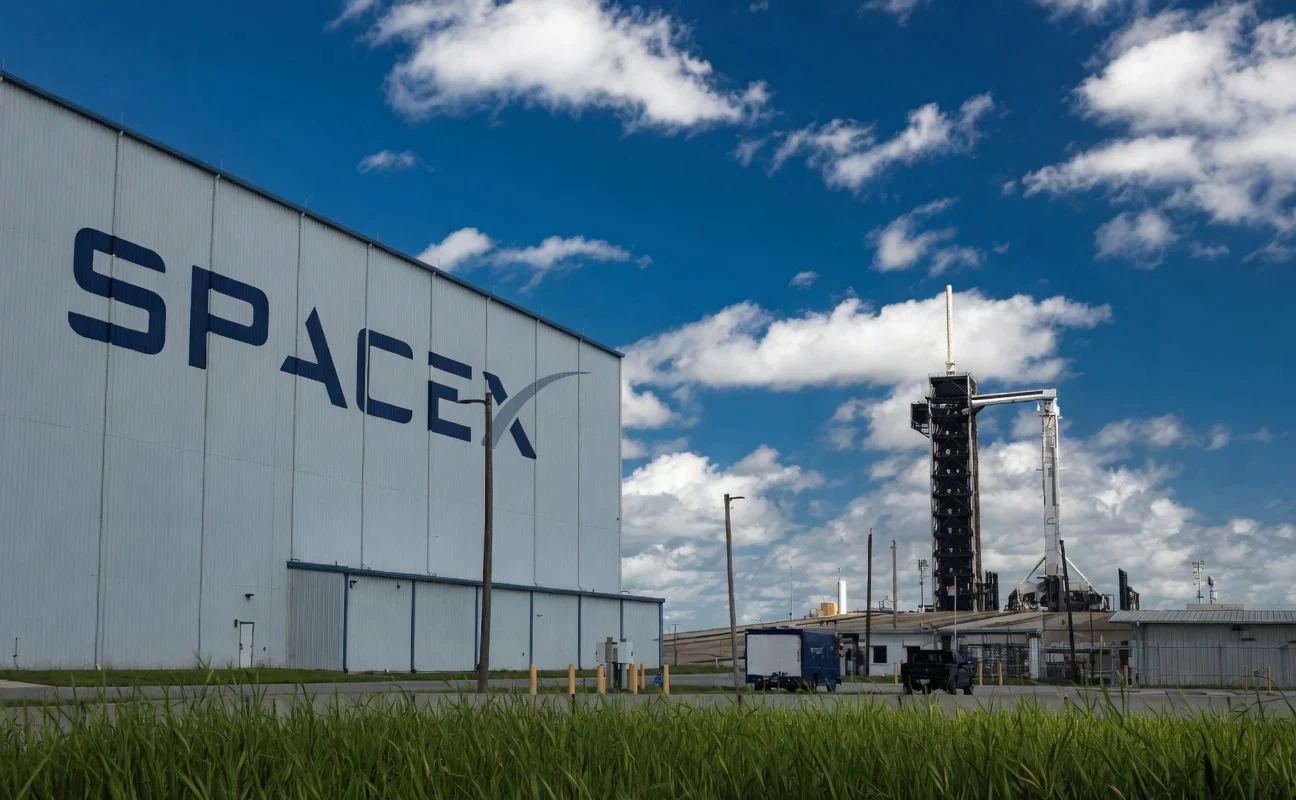
SpaceX (SPCX) Stock Plummets 40% as Cathie Wood Continues Buying Amid Market Concerns
* SPCX shares declined to $136.78 on Monday, barely holding above the $135 IPO level after reaching $225.64 in mid-June * China successfully recovered a Long March rocket booster on July 10, sparking competitive fears in reusable space launch tech * Cathie Wood's ARK Invest acquired $21.3 million of SPCX shares Monday through three ETFs, after buying $52M the prior week * An upcoming lockup expiration -- unlocking 20% of shares post-August earnings -- is creating downward pressure * The company carries a valuation approaching 50x projected 2026 revenue with no expected profitability this year Space Exploration Technologies Corp. (SPCX) has witnessed a dramatic 40% decline from its June 16 peak of $225.64, settling at $139.14 on Monday -- a downturn that's captured significant market attention despite overwhelmingly positive analyst sentiment. Space Exploration Technologies Corp., SPCX The aerospace company debuted at $135 per share on June 11, jumped to $150 within 24 hours, and climbed as high as $225.64 before entering a steep correction. Monday's intraday low of $136.78 brought the stock perilously close to breaching its initial offering price. Tuesday's premarket session showed SPCX down an additional 0.4% to $138.61. Yet analyst conviction remains strong: 80% maintain Buy ratings on the stock -- significantly above the typical S&P 500 consensus of 55%-60%. The mean price target hovers around $240, suggesting a potential market capitalization near $3.2 trillion. Evercore ISI initiated coverage Tuesday with a Buy recommendation and $230 target. The market response was muted. Chinese Reusable Rocket Breakthrough On July 10, China demonstrated successful recovery of a Long March booster using a ship-based cable system -- a notable achievement in reusable launch vehicle technology that caught investors' attention. SpaceX has maintained unquestioned leadership in this critical competitive advantage, forming a cornerstone of the investment thesis. This Chinese demonstration suggests the technological moat may be narrowing, despite SpaceX maintaining superior scale and operational capabilities. Share Lockup and Premium Valuation A technical headwind is compounding selling pressure. Following the company's inaugural quarterly earnings release -- anticipated mid-August -- approximately 20% of total outstanding shares will exit lockup restrictions. This substantial supply increase is prompting some shareholders to exit positions preemptively. Valuation concerns persist as well. With a current market capitalization around $1.8 trillion yet no anticipated profitability through 2026, SpaceX commands roughly 50 times forecasted 2026 sales -- an elevated multiple even accounting for robust growth projections. ARK Invest Accumulates Shares Contrarian activity emerged Monday as ARK Invest acquired 130,241 SPCX shares -- approximately $21.3 million -- distributed among ARKK, ARKQ, and ARKW funds. This follows the previous week's $52 million accumulation. The aggressive buying hasn't reversed the downtrend. Technical analysis shows deteriorating momentum with the MACD indicator turning bearish. Market observers identify $145 as a new resistance zone after previously serving as support. A definitive close beneath $135 would represent a significant technical breakdown below the IPO threshold -- a psychologically important marker for market participants. As of Tuesday morning, SpaceX was changing hands at $138.61.
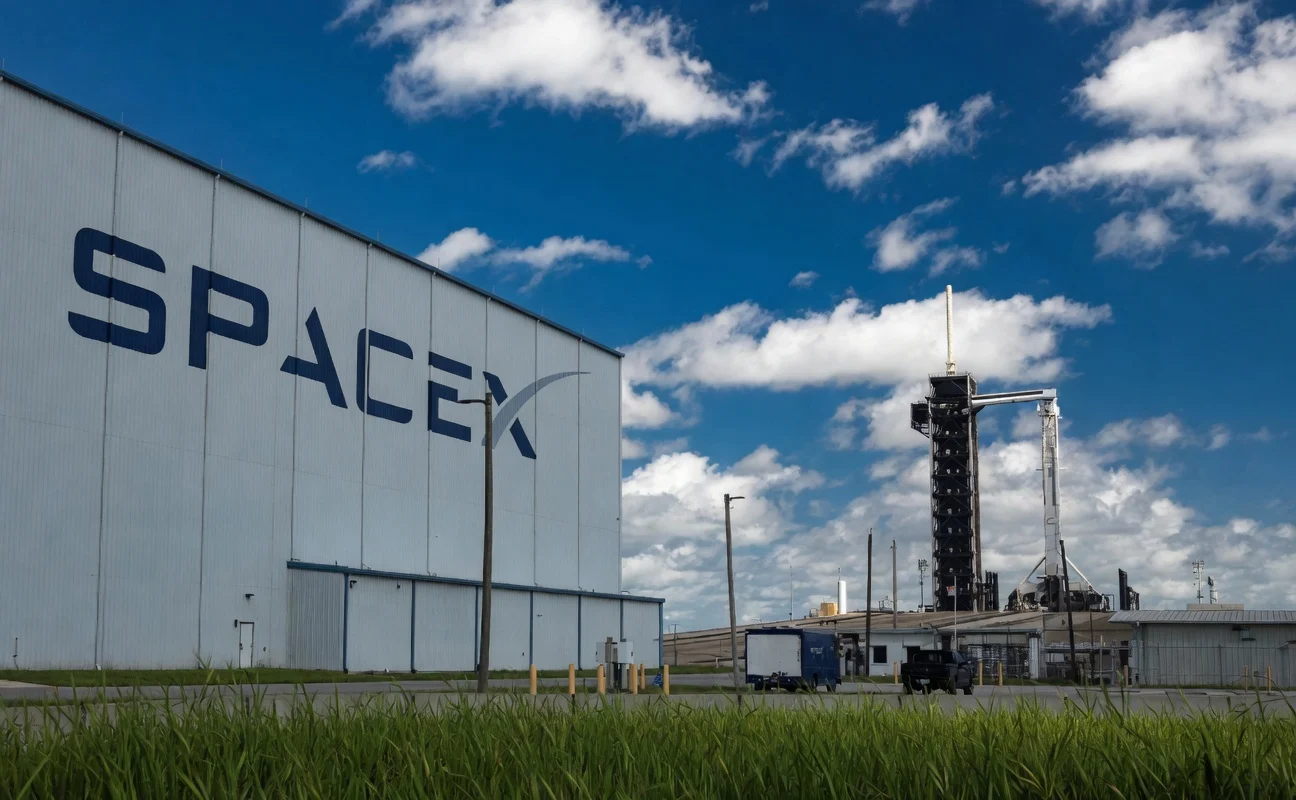
Elon Musk's Grok 4.5 AI Model Goes Public Today as SpaceX (SPCX) Stock Struggles
* Elon Musk confirmed Grok 4.5 becomes publicly available Wednesday, July 9 * The AI model is positioned as "Opus-class," with Musk touting superior speed, token efficiency, and cost advantages over Anthropic's Claude * The release leverages xAI's groundbreaking V9 foundation model featuring 1.5 trillion parameters * SpaceX shares dropped almost 7% during their inaugural trading day as a Nasdaq 100 component, showing marginal pre-market gains Wednesday * OpenAI plans to unveil GPT-5.6 Thursday after postponing the launch due to national security considerations Elon Musk revealed Tuesday night that the public rollout of Grok 4.5 would occur Wednesday, July 9. This represents the newest iteration of SpaceXAI's primary artificial intelligence offering, the company previously operating under the xAI brand. Musk took to social platforms to characterize the model as "Opus-class," drawing a direct comparison with Anthropic's Claude by asserting that Grok 4.5 delivers "faster, more token-efficient, and lower cost" performance. The development of Grok 4.5 utilized xAI's cutting-edge V9 foundation architecture, boasting 1.5 trillion parameters. Musk disclosed earlier this July that the system had begun closed beta evaluation at SpaceX and Tesla facilities. Grok 4.3, the prior release, debuted in April. Musk had been signaling an enhanced version was in development since that time. SpaceX's Artificial Intelligence Strategy xAI merged with SpaceX in February 2026, subsequently rebranding as SpaceXAI. The Grok product family now represents a central element of SpaceX's artificial intelligence market expansion, complementing its aerospace and satellite operations. The Grok 4.5 debut arrives amid intensifying competition within the generative AI landscape. OpenAI, Anthropic, and Google have each introduced progressively sophisticated models throughout the previous twelve months. OpenAI has scheduled GPT-5.6's public introduction for Thursday. The company postponed that launch last month following government concerns regarding potential exploitation by malicious entities. Market observers are tracking how rapidly Grok 4.5 can capture consumer and enterprise adoption. Robust market acceptance would bolster SpaceX's artificial intelligence revenue objectives. SPCX Shares Face Selling Pressure Tuesday represented SpaceX stock's debut trading session following its addition to the Nasdaq 100 index. Shares declined nearly 7% during the session, caught in a wider technology sector downturn. Space Exploration Technologies Corp., SPCX Multiple Wall Street research firms launched coverage with Buy recommendations, yet this failed to provide support for the stock. Market participants maintained a cautious outlook. SpaceX equity showed strength immediately following its initial public offering, though those early advances dissipated rapidly. As of Tuesday's trading close, shares have declined approximately 7% from their June 12 market debut. Wednesday's pre-market activity showed the stock advancing 0.12%, representing a slight rebound before the Grok 4.5 availability. SpaceX maintains a Strong Buy consensus among analysts tracked by TipRanks. The consensus price target sits at $212.08, suggesting potential upside of roughly 46% from present valuation levels.