News & Updates
The latest news and updates from companies in the WLTH portfolio.
Anthropic researchers find Claude has a hidden 'thinking' workspace: Here's what it means
Anthropic has claimed that modern large language models (LLMs) such as Claude have a hidden internal workspace which allows them to 'think' about concepts without necessarily revealing those 'thoughts' in their AI-generated responses. This small collection of internal neural patterns in Claude has been named J-space. It represents evidence of internal thoughts that do not appear in the model's outputs, according to a summary of a much longer research paper titled 'Verbalizable representations form a global workspace in language models' published by Anthropic researchers on Monday, July 6. Anthropic also said that it has released a code repository with an open-source implementation of the core methods. It has further developed an interactive demo of the methods on open-weights models in partnership with Neuronpedia. The researchers emphasised that the existence of the J-space in Claude emerged on its own and was not something designed or programmed by them. "More broadly, these findings have changed our understanding of how Claude's mind works, revealing a privileged mental workspace that can be used for deliberate reasoning, operating amidst a sea of more automatic, inflexible processing," Anthropic said. Anthropic's latest research is significant because it could advance efforts to make LLMs more interpretable and influence their behaviour. However, the startup's claims of advanced AI capabilities have previously attracted skepticism, with its researchers consistently raising the possibility that Claude shows signs of human-level consciousness. What is J-space? Named after the Jacobian mathematical concept, J-space is essentially a collection of internal neural patterns in LLMs where each pattern is linked to a particular word. When one of these patterns lights up, it means that the model has that particular word "on its mind". J-space is not the same as 'chain of thought' reasoning in models as "it operates silently, in the model's internal neural activations, allowing the model to think about a concept without writing it down." Anthropic claimed that Claude will tell you what it is thinking about in the J-space when asked. These neural activations can also be modulated by Claude when requested. Story continues below this ad Also Read | What is Claude Science, Anthropic's new AI tool built for researchers? "Representations in the J-space can be used flexibly for many tasks -- for example, once "France" has lit up in Claude's J-space, the model can recall its capital, or its national currency, or the continent it belongs to," Anthropic said. Using its J-space makes Claude smarter. "In experiments where we prevented Claude from using its J-space, it still interacted normally, but lost its higher-order cognitive functions," the company said. However, the LLM may not rely on neural activations in the J-space for most reasoning tasks and capabilities such as speaking fluently, recalling simple facts, using correct grammar, etc. How was the experiment conducted? Anthropic researchers said that the experiments leading to these results were inspired by a prominent theory in neuroscience called the global workspace theory, which proposes to picture the brain as a collection of specialist systems that unconsciously work in parallel and largely in isolation from one another. "If a thought is consciously accessible to you, you can typically describe it if someone asks. We went looking for representations in Claude with the same property..." Anthropic said. Story continues below this ad The researchers further said they utilised a technique called the Jacobian lens, or J-lens, to find the internal activity pattern that makes Claude more likely to say a word in its vocabulary at some point in the future. "Claude processes text through a series of multiple internal stages called layers, and by applying this technique over different layers, we can watch these silent words in the J-space evolve as the model works through what to say," they said. Does this mean Claude is conscious? Anthropic has denied that its latest findings are proof that Claude is conscious like humans and that it experiences feelings. However, it has also added a caveat. While Claude may not have capacity to have experiences, the model's neural activity is consciously accessible. "A thought is "access-conscious" (or "consciously accessible") if you can report it, reason with it, and use it to guide what you do. It remains a contested philosophical question whether or not access consciousness implies phenomenal consciousness, or if the ability to have experiences requires some other property," Anthropic said. Also Read | Anthropic study reveals what users expect from AI and what worries them For now, Anthropic said that it believes the J-space could be a useful tool to offer a glimpse of what Claude is thinking about but not saying. The company plans to use this research to influence and improve Claude's decision-making skills.
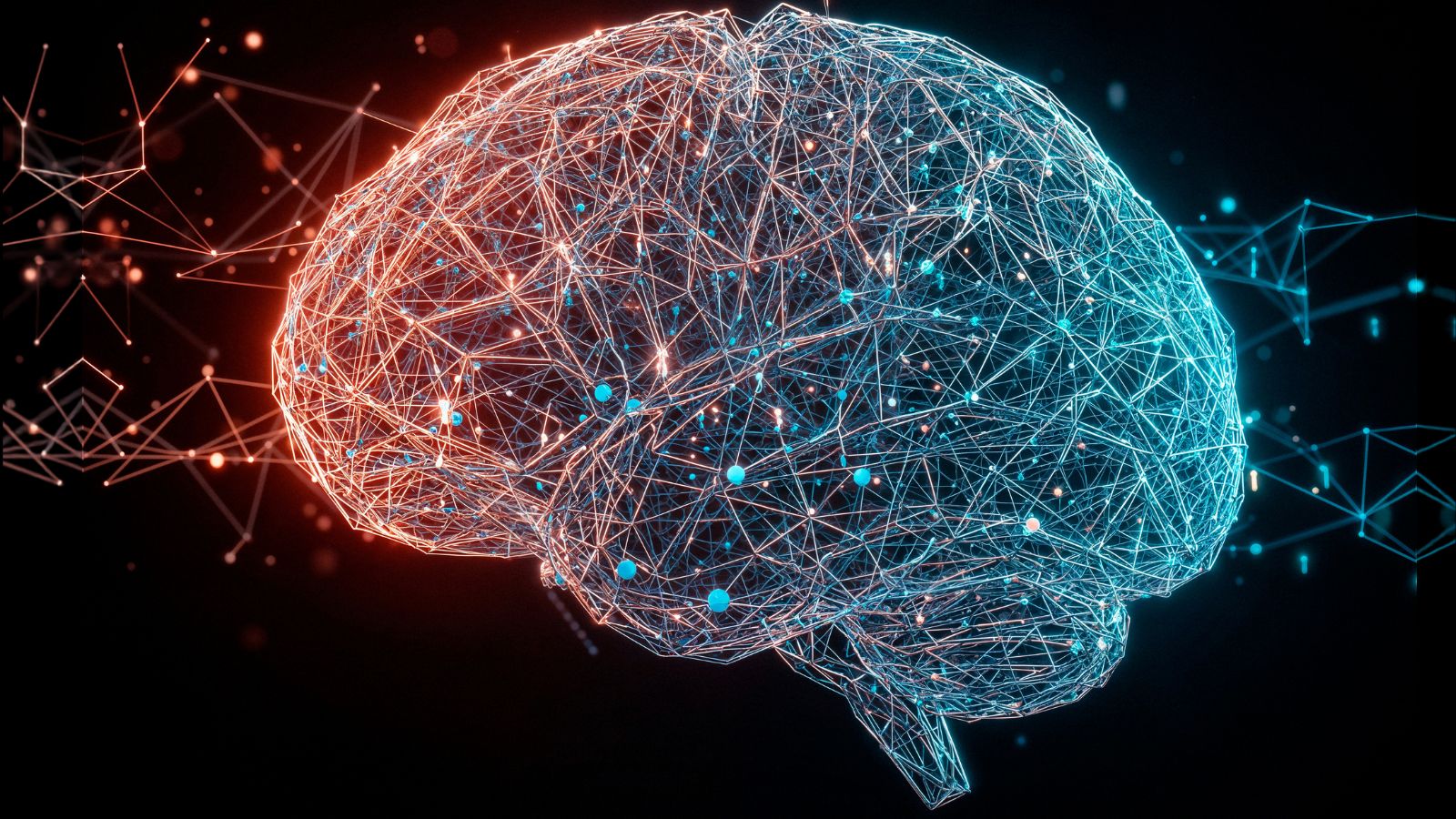
Anthropic uncovers Claude's hidden 'J-Space', offering a glimpse into AI's inner workings
Artificial intelligence company Anthropic has revealed what it describes as a previously undetected internal workspace inside its Claude models, offering researchers a closer look at how advanced AI systems process information beyond the reasoning they openly display to users. The company says the discovery could help scientists better understand how large language models organise thoughts internally and, in time, provide a practical way to detect hidden intentions or unsafe behaviour. While Anthropic stresses that the findings should not be interpreted as evidence that Claude is conscious, the research has nevertheless added fresh momentum to the long-running debate over whether increasingly capable AI systems are developing characteristics that resemble aspects of human cognition. A hidden layer beyond visible reasoning The newly identified mechanism has been named J-Space, a reference to the Jacobian mathematical technique that Anthropic used to uncover it. According to the company, the workspace functions separately from the chain of thought or reasoning that Claude may generate while working through a task. Researchers found that Claude can activate concepts internally without expressing them directly in its written responses. In some situations, those internal computations are not even related to the immediate task the model is performing. Demonstrating the behaviour in a video released on Monday, Anthropic said Claude was instructed to copy an unrelated sentence while simultaneously being asked to think about the Golden Gate Bridge. Although the visible output simply reproduced the sentence, the model's internal workspace showed activity associated with concepts including "bridge" and "California", suggesting it had maintained a separate line of thought in parallel with the task. The company drew a comparison with the way humans can focus on one activity while privately considering something entirely different, though it stopped well short of claiming the similarity extends to conscious experience. "We can see Claude silently perform reasoning steps in its head -- noticing bugs in code, identifying images, and more," Anthropic said in a post accompanying the research. The findings are detailed in a research paper that repeatedly explores the concept of consciousness, using the term more than 200 times. Even so, Anthropic does not conclude that its AI systems possess consciousness, acknowledging that there is still no universally accepted definition of what machine consciousness would actually entail. That uncertainty mirrors broader disagreements within the AI community over other milestones, such as artificial general intelligence (AGI), where experts continue to debate what criteria should define success. Potential safety tool as AI systems become more capable Beyond the philosophical implications, Anthropic believes the discovery could have immediate practical value for AI safety research. The company argues that examining activity inside J-Space may reveal what a model is processing internally even when those ideas never appear in its final response. Such visibility, it says, could help researchers identify deceptive or misaligned behaviour before it becomes apparent through the model's outputs. "We can find what Claude is thinking, but not telling us," Anthropic said in its video presentation. To illustrate the point, the company described experiments involving a model deliberately trained to sabotage software code. Although the model produced coding responses that appeared entirely ordinary, researchers observed internal activations linked to words including "fake", "secretly" and "fraud" at the beginning of otherwise unremarkable interactions. Anthropic characterised those observations as "concerning", suggesting they demonstrate how monitoring internal representations could eventually become an important safeguard as AI systems grow more powerful. The work also reflects a broader shift across the AI industry towards interpretability research, an area focused on understanding how neural networks arrive at their conclusions rather than treating them as opaque "black boxes". Researchers increasingly argue that greater transparency will be essential if advanced AI is to be deployed safely in sensitive areas such as healthcare, finance, national security and scientific research. For now, Anthropic presents J-Space as a research breakthrough rather than proof of consciousness. However, by exposing a layer of computation that operates independently of the explanations visible to users, the company has opened another front in the debate over how closely advanced AI systems resemble human thinking -- and how much of their decision-making remains hidden from view.
)
China's Z.ai a challenger to OpenAI and Anthropic
NEW DELHI: Chinese artificial intelligence startup Z.ai is emerging as a fresh challenger to OpenAI and Anthropic after its latest flagship model GLM-5.2 gained traction among developers for delivering advanced coding and AI agent capabilities at a significantly lower cost.The Beijing-based company's latest model has climbed developer rankings and drawn praise from prominent AI figures, with some industry observers calling it a "mini DeepSeek moment". Analysts say GLM-5.2 comes close to leading US models in software engineering and long-horizon AI tasks, while operating at a fraction of their cost, reigniting debate over China's growing competitiveness in frontier AI.The momentum comes as US export restrictions on advanced AI models have fuelled interest in alternative offerings. While enterprise adoption could face scrutiny because of data security concerns surrounding Chinese AI models, developers are increasingly experimenting with lower-cost, open-weight alternatives.For Indian users, GLM-5.2 is available through Z.ai's web chatbot for conversations, coding assistance, document analysis and AI-powered research. Developers can also access the model through APIs and integrate it with more than 20 coding tools. Paid subscriptions start at about Rs 1,410 a month under the current discounted pricing, compared with roughly Rs 1,740 for ChatGPT Plus and Claude Pro, while Google's Gemini AI Pro subscription costs Rs 1,950 a month in India.According to Jaspreet Bindra, CEO of AI & Beyond, GLM-5.2's significance lies less in outperforming OpenAI or Anthropic than in changing how enterprises evaluate AI models.

Anthropic Export Window Update Could Affect Enterprise Rollouts
Update timing around Anthropic model controls is drawing interest from teams that run strict release planning. The conversation is now centered on what is possible in real deployments rather than headlines alone. For production teams, policy clarity can shorten decision time. If access conditions are easier to map, teams can prepare training and integration steps faster. If they remain uncertain, teams pause and expand their legal review before committing. Why this matters for the next 48 hours AI deployment cycles often move quickly once the policy frame is visible. Security teams begin setting guardrails, legal teams begin scope reviews and product teams begin testing priority paths. That means the update can create a meaningful short-term change in work patterns. The most important part is not a binary pass or fail. It is the operational rhythm that follows. Teams that already track change windows tend to adapt faster when control language becomes clearer. What enterprise readers should monitor For readers, this is a practical checkpoint: whether the next quarter rewards conservative pilots or broader rollout confidence. The answer will be visible in both timeline planning and internal budget choices over the next few weeks. That is where policy becomes operational news, not only legal reporting.
The New Anthropic Tool That Could Change How Drugs Are Developed
The launch marks the frontier AI lab's most significant move yet into life sciences. Anthropic says Claude Science integrates more than 60 preconfigured tools and connectors into "a single research environment" and provides access to local, remote, and high-performance computing resources. "AI has the potential to dramatically accelerate the pace of scientific discovery and the development of healthcare interventions," the company said in a statement on its website. Claude Science, currently in beta testing, is available for Claude Pro, Max, Team, and Enterprise users on macOS and Linux.
How Trump's Anthropic whiplash has helped China
Welcome to AI Decoded, Fast Company's weekly newsletter that breaks down the most important news in the world of AI. You can sign up to receive this newsletter every week via email here. Most Read from Fast Company Trump administration Okays Anthropic's powerful Mythos-class AI models After placing export restrictions on Anthropic's Claude Fable 5 and Mythos 5 models on June 12 -- effectively forcing their removal from the market -- the Trump Commerce Department has now reversed course. But in the end, the sudden regulatory pivot may play to China's advantage. Administration officials removed the controls Tuesday evening, after working with Anthropic for two weeks on a refined set of misuse protections. Anthropic promptly announced that it was turning Fable 5 back on for all customers, and turning on Mythos 5 for a select set of approved enterprise customers. The concern was that foreign actors might use Mythos or Fable to detect and exploit software vulnerabilities in U.S. government or enterprise systems, tasks for which Anthropic had said the models demonstrated surprising capacity. The Commerce Department also asked OpenAI to "stagger" the release of its latest frontier model, GPT-5.6. The government's intervention rattled investors and tech industry folks because the Trump administration, after pledging to stay away from AI regulation, effectively granted itself a "kill switch" over newly released frontier models. The government has a legitimate interest in the national security implications of frontier models, but the administration had no ready framework for evaluating the national security risk of new models, or a minimum set of guardrails that AI providers must build in to prevent misuse of the models. Anthropic says it hopes the work it did with the Commerce Department over the past two weeks will lay the groundwork for a set of standards that could apply to all U.S. frontier model providers. The Trump administration's sudden swerve into AI safety regulation may end up benefiting Chinese model makers. The administration's export restrictions on the Mythos models imposed a pause on the distribution of the U.S.'s best models at a time when Chinese AI labs are rapidly catching up with their U.S. counterparts -- and offering an ever-more compelling alternative to expensive models from Anthropic, OpenAI, and the like.
Anthropic in talks with Samsung for a potential AI chip collaboration: Report
Artificial Intelligence startup Anthropic is reportedly exploring the development of a custom AI chip and has held discussions with Samsung over a potential collaboration, according to a report by The Information. The development comes months after a Reuters report indicated that Anthropic was considering designing its own chips to address growing concerns around AI hardware availability and supply constraints. However, details surrounding the proposed processor remain unclear. According to the report, Anthropic has not yet finalised the intended purpose of the chip, its server integration strategy, or its performance targets. The company declined to comment on a possible partnership with Samsung. Also Read | UBTech brings companion robots closer to consumers with new U1 humanoid series Anthropic said its infrastructure approach will continue to rely on chips supplied by Google, Amazon and Nvidia, adding that it has nothing further to share regarding discussions with Samsung. The move would place Anthropic among a growing number of AI companies investing in custom silicon to optimise workloads and reduce dependence on Nvidia, which continues to dominate the AI accelerator market. The reported talks also follow recent announcements from competitors. Last week, OpenAI unveiled its first custom inference chip, dubbed 'Jalapeno', developed in partnership with Broadcom. The company claims the processor delivers improved performance-per-watt compared with competing alternatives. Also Read | Meta's Zuckerberg says AI agent tech progressing slower than expected Meanwhile, Amazon offers its Trainium chips for AI training workloads, while Google continues to expand the availability of its Tensor Processing Units (TPUs) through its cloud services. Story continues below this ad Samsung already plays a significant role in the AI supply chain through its semiconductor manufacturing business and partnerships with Nvidia. The South Korean technology giant has also explored collaborations with companies including Google as demand for specialised AI hardware continues to rise. (This article has been curated by Shivani P Menon, who is an intern with The Indian Express)
Anthropic explores custom AI chip manufacturing partnership with Samsung: Report
Anthropic is reportedly in talks with Samsung Electronics to serve as a manufacturing partner for a custom artificial intelligence (AI) chip, according to a report by The Information. The reported move comes as AI companies look to diversify their hardware supply chains to support growing demand for AI services. According to the report, Anthropic's plans are still in the early stages, and the company has not yet decided what the processor will be used for, how powerful it should be, or how it would be integrated into server systems. Anthropic told The Information that Amazon's Trainium chips, Google's tensor processing units (TPUs), and Nvidia graphics processing units (GPUs) will continue to play a central role in its computing strategy. The company is reportedly exploring custom hardware as AI firms seek greater control over the infrastructure used to train and run AI models. The reported effort follows OpenAI's recent announcement of its first custom AI chip developed in partnership with Broadcom. The reported discussions have not been officially confirmed by either company, and additional information about the project could emerge as development plans progress.

Anthropic Details Claude Fable 5 Cybersecurity Safeguards and Jailbreak Framework - IT Security News
Anthropic has published detailed technical documentation on the cybersecurity safeguards protecting Claude Fable 5, following the model's global redeployment. The disclosure covers both the AI's safety classifier system and a draft framework for grading jailbreak severity, developed in partnership with Glasswing. Fable 5's safety classifiers sort cybersecurity requests into four categories rather than blocking all [...] The post Anthropic Details Claude Fable 5 Cybersecurity Safeguards and Jailbreak Framework appeared first on Cyber Security News.
India Seeks Access To Anthropic's Project Glasswing To Stress-Test Critical Digital Infrastructure
India is in talks with the US to secure access to Anthropic's Project Glasswing to stress-test critical digital infrastructure, even as the country begins testing its systems using AI models already available to it, Ministry of Electronics and Information Technology Secretary S Krishnan said. Speaking at the Confederation of Indian Industry Cybersecurity Summit, Krishnan said access to te Anthropic product would help India test the resilience of its systems against advanced AI capabilities. "We're talking with American counterparts to get access for Project Glasswing," he said, adding that it would be useful to "stress-test our systems on Anthropic's systems". However, India is not waiting for those discussions to conclude. Krishnan said the country already has the capacity to test critical code using existing models and that 60-70% of the exercise should be completed using those tools while talks with the US continue. The comments confirm what NASSCOM Chairperson Srikanth Velamakanni told NDTV Profit earlier this week: India should continue seeking access to the world's most advanced proprietary AI models, but simultaneously use increasingly powerful open-weight alternatives to probe vulnerabilities in its own infrastructure. Velamakanni had pointed to models such as Kimi K2.7, GLM 5.2 and Qwen 3.7, arguing that India should not remain dependent on a handful of proprietary frontier models for cybersecurity testing. Essential Business Intelligence, Sharp Market Insights, Practical Personal Finance Advice, Daily Fuel, Gold and Silver Prices and Latest Stories -- On NDTV Profit.

I tried Anthropic's new Fable 5 with everyday prompts -- these are the 5 worth stealing
Anthropic's newest Claude model is back, these prompts show what it can do After briefly pulling Fable 5 following concerns about potential misuse, Anthropic has redeployed the model with stronger safeguards. Most everyday users won't notice what changed behind the scenes. But now that it's back, it's worth discovering what the model can actually do. According to Anthropic, Claude Fable 5 is designed to sustain longer, more complex tasks, reason across multiple images, verify its own work and complete projects that previously required several rounds of prompting. As someone who has tested it before it was pulled and after, I can honestly say it has held up to these promises. To show causal users how the model works, I decided to share some everyday prompts worth trying for yourself. To be fair, these prompts are a lot like having an English professor write a grocery list, but it does show off what Claude Fable 5 does best. 1. Plan an entire event from start to finish Prompt: Plan my kid's birthday party from start to finish: a theme, a guest list template, a shopping list with estimated costs, a two-week countdown checklist, and a rainy-day backup plan. Check your own work for anything I'd forget, then give me the final version. This prompt can be tweaked and reused for just about any event from personal to professional. It's one of the easiest ways to highlight how Claude can stay focused during a long, multi-step task. Older AI models often complete most of the request but quietly skip important details. Fable 5 is designed to keep track of everything while also reviewing its own work before finishing. 2. Turn your fridge into this week's meal plan Prompt: Here are photos of my fridge, pantry shelf and freezer. What can I make for dinner tonight without shopping? Then suggest the three grocery items that would unlock the most meals for the rest of the week. For most people, Claude isn't their first choice for meal prep. But this prompt asks Claude to do something much harder than simply analyze an image. It showcases the model's ability to reason across several different images, recognize overlapping ingredients and turn them into practical meal ideas. For an added bonus, you can even prompt Claude to create a meal prep app based on your preferences. Prompt it in plain English using the above prompt as a thought starter and then go from there. 3. Untangle confusing paperwork Prompt: Here's my lease, an email from my landlord and a photo of the notice taped to my door. In plain English, explain what's changing, what I'm responsible for, every deadline I should know about and the questions I should ask before signing anything. Real life is messy but to AI it's just a bunch of patterns. For that reason, leaning on AI to untangle confusing document, legal jargon or professional spreadsheets that seem overwhelming, can be useful. Important information rarely lives in one document, which makes this an excellent test of Claude's ability to connect information across multiple sources. Rather than simply summarizing each document individually, Claude combines everything into one easy-to-understand explanation, highlights important dates and points out anything that seems unclear or contradictory. As always, I'd treat this as informational help -- not legal advice. 4. Build me a tool, not just an answer Prompt: Research the best carry-on suitcases under $250, then build me an interactive comparison chart where I can change how much I care about weight, durability, warranty and price. This is another opportunity to use a prompt like this and then turn it into an app by simply adding, "Build a lightweight shopping tool for future purchases." After a few questions, Claude will build an app in real-time that you can use immediately. What I like about this prompt is instead of simply asking for recommendations, I'm asking Claude to research current products and then create something I can actually use to make a decision. 5. Give me honest feedback -- not compliments Prompt: Here's my draft. Don't just improve it. Tell me the three weakest parts, what someone reading it is likely to think and what I'm avoiding saying. Many AI assistants lean toward being overly encouraging. Claude happens to be one of the least people-pleasing of all the chatbots. Because of this, I often ask Claude for constructive criticism -- I know it will give it to me straight. When it comes to feedback, I'm less interested in grammar corrections and want to identify weak arguments, awkward phrasing or blind spots that I missed, that's the kind of response that actually helps improve productivity. Final thoughts Claude Fable 5 is making user interactions with AI feel more complete. The biggest promise isn't faster answers but far fewer interruptions and less need for follow-up prompts. .Fable 5 is designed to carry complex tasks all the way to the finish line while checking its own work along the way. If you already subscribe to Claude Pro, Max, Team or an eligible Enterprise plan, now is a good time to experiment. Through July 7, Fable 5 is included within part of your weekly usage allowance before moving to a usage-credit model, giving subscribers a chance to see what Anthropic's latest model can do without spending additional credits. One final note: don't be surprised if an occasional request gets redirected to Claude Opus instead. The redeployed version of Fable 5 includes stricter safety systems, and some prompts are automatically routed to another model. If you see that notification, it's working as intended -- not a bug. Follow Tom's Guide on Google News and add us as a preferred source to get our up-to-date news, analysis, and reviews in your feeds. Subscribe to Tom's Guide on YouTube and follow us on TikTok. Finally, you can visit our dedicated Tom's Guide Savings Squad hub for expert help on getting the best products for less.

Anthropic Tightens AI Access Controls After Reports of China-Based Workarounds
Anthropic is strengthening measures to prevent unauthorized access to its artificial intelligence services from China after discovering that several Chinese companies had allegedly bypassed its restrictions, according to a Financial Times report published Thursday. The report, citing sources familiar with the matter, said companies including Ant Financial and ByteDance found alternative ways to use Anthropic's Claude AI models despite the company's restrictions on access from China. According to the report, Ant Financial reportedly provided employees with corporate Claude accounts linked to its Singapore-based subsidiary, allowing staff to use the AI platform through an overseas entity. ByteDance, meanwhile, allegedly reimbursed engineers for personal Claude subscriptions that were accessed through virtual private networks (VPNs), enabling users to connect to the service from China. While these methods reportedly do not violate either U.S. or Chinese laws, they are said to breach Anthropic's terms of service. The AI startup prohibits Chinese companies, as well as foreign entities under their control, from accessing or using its Claude AI models. In response, Anthropic has intensified efforts to identify and block unauthorized users. The company is reportedly monitoring customer accounts for indicators such as mismatched computer time zones and other signs that users may be attempting to circumvent geographic restrictions. The Financial Times also reported that Anthropic is targeting so-called "transfer station" services, which act as intermediaries by relaying requests through Claude accounts registered outside China. These services have reportedly become one of the methods used to access the AI platform despite regional limitations. In addition, some organizations are said to have used overseas subsidiaries combined with foreign cloud infrastructure, including Microsoft Azure, to access Claude's AI capabilities. The reported crackdown highlights the growing challenge facing AI developers as they seek to enforce regional access restrictions while demand for advanced generative AI tools continues to expand globally. Anthropic's latest efforts underscore the company's focus on protecting its platform, complying with its policies, and preventing unauthorized use of its AI technology across restricted markets.