News & Updates
The latest news and updates from companies in the WLTH portfolio.
SpaceX Starship launch aborted at the last moment
SpaceX's mega Starship rocket has come within a second or so from blasting off on a test flight but some of the engines failed to start, triggering a launch abort. Elon Musk's company said it will have to figure out what went wrong on Thursday before making another attempt to send Starship on a space-skimming journey halfway around the world. It was supposed to be the 13th flight for Starship, which at 124m tall with 33 main engines is the world's biggest and most powerful rocket. SpaceX's launch webcast showed the start of engine ignition three seconds before the planned liftoff, viewed from a drone high above the pad. Although the company did not elaborate, on-screen data showed four engines not firing, with the remaining 29 engines immediately shutting down and keeping the rocket anchored to the pad. It was the first time a full-scale Starship experienced a last-second abort like this. The launch team immediately began draining the fuel from the rocket. "Next launch attempt hopefully in a few days," Musk announced via X. Everything was going SpaceX's way, even the weather, until the partial engine ignition. In the end, the rocket's automatic launch system worked as planned by halting everything. Too few operating engines could have doomed the launch. Some earlier Starship flights ended in explosive fireballs. Elon Musk's company had newest, most advanced Starlinks aboard Twenty of SpaceX's newest and most advanced Starlinks were on board Starship for release during the planned hour-long flight. The internet satellites were going to try communicating with Starlinks already in orbit while taking photos of Starship's heat shield. Neither the first-stage booster nor spacecraft were meant to be recovered, with both ending up in the sea. The rocket's automatic launch system worked as planned by halting everything. Too few operating engines could have resulted in a failed launch. Some earlier Starship flights, for example, ended in explosive fireballs.

SpaceX Starship launch aborted at the last moment
SpaceX's mega Starship rocket has come within a second or so from blasting off on a test flight but some of the engines failed to start, triggering a launch abort. Elon Musk's company said it will have to figure out what went wrong on Thursday before making another attempt to send Starship on a space-skimming journey halfway around the world. It was supposed to be the 13th flight for Starship, which at 124m tall with 33 main engines is the world's biggest and most powerful rocket. SpaceX's launch webcast showed the start of engine ignition three seconds before the planned liftoff, viewed from a drone high above the pad. Although the company did not elaborate, on-screen data showed four engines not firing, with the remaining 29 engines immediately shutting down and keeping the rocket anchored to the pad. It was the first time a full-scale Starship experienced a last-second abort like this. The launch team immediately began draining the fuel from the rocket. "Next launch attempt hopefully in a few days," Musk announced via X. Everything was going SpaceX's way, even the weather, until the partial engine ignition. In the end, the rocket's automatic launch system worked as planned by halting everything. Too few operating engines could have doomed the launch. Some earlier Starship flights ended in explosive fireballs. Elon Musk's company had newest, most advanced Starlinks aboard Twenty of SpaceX's newest and most advanced Starlinks were on board Starship for release during the planned hour-long flight. The internet satellites were going to try communicating with Starlinks already in orbit while taking photos of Starship's heat shield. Neither the first-stage booster nor spacecraft were meant to be recovered, with both ending up in the sea. The rocket's automatic launch system worked as planned by halting everything. Too few operating engines could have resulted in a failed launch. Some earlier Starship flights, for example, ended in explosive fireballs.

SpaceX aborts Starship launch after engine failure seconds before liftoff
SpaceX's mega Starship rocket came within a second or so from blasting off on a test flight but some of the engines failed to start, triggering a launch abort. Elon Musk's company said it will have to figure out what went wrong before making another attempt to send Starship on a space-skimming flight halfway around the world. It was supposed to be the 13th flight for Starship, which at 407 feet (124 meters) tall with 33 main engines is the world's biggest and most powerful rocket. SpaceX's launch webcast on Thursday showed the start of engine ignition three seconds before the planned liftoff, viewed from a drone high above the pad. Whichever engines fired abruptly shut down, with the rocket remaining anchored to the pad. The launch team immediately began draining the fuel from the rocket. "Next launch attempt hopefully in a few days," Musk announced via X. Everything had been going SpaceX's way, including the weather, until the partial engine ignition. Twenty of SpaceX's newest and most advanced Starlinks were on board Starship for release during the planned hourlong flight. The internet satellites were going to try communicating with Starlinks already in orbit while taking photos of Starship's heat shield. Neither the first-stage booster nor spacecraft were meant to be recovered, with both ending up in the sea. NASA is counting on Starship to land its astronauts on the moon in the next few years. The space agency has hired SpaceX and Jeff Bezos' Blue Origin to build and fly the lunar landers that will return humanity to the surface of the moon after an absence of more than half a century. Both companies need to have their landers -- Starship and Blue Moon -- ready to fly by next year so that the newly named Artemis III crew can practice docking their capsule with them in orbit around Earth. The mission after that -- Artemis IV planned for no earlier than 2028 -- would use one of those landers to take two astronauts to the moon's south polar region. Published on July 17, 2026

SpaceX's Starship Flight 13 test launch aborts at last second (video)
Starship Flight 13 will carry 20 Starlink V3 internet satellites, marking their first trip to space before crashing back to Earth after about 20 minutes. When you buy through links on our articles, Future and its syndication partners may earn a commission. Starship wasn't quite ready to fly today (July 16). SpaceX tried to launch the Starship megarocket on its 13th test flight today but couldn't quite pull it off. Something went wrong just as the giant vehicle's first-stage engines started to fire up, and an abort was triggered. It's too early to say what exactly happened or when SpaceX will try again with Starship Flight 13. "We'll take some time, dig into what triggered that abort once the booster was igniting to launch, and then we'll figure out what our path forward is going to be," SpaceX's Dan Huot said during the company's launch webcast today. "Hopefully, we'll be back real soon for Flight 13 and another attempt to get Starship off the pad," he added. Flight 13 will fly from SpaceX's Starbase site in South Texas. Today's attempt occurred at 6:45 p.m. EDT (2245 GMT; 5:45 p.m. local time), right at the beginning of a 90-minute launch window. Flight 13 will be the second test launch of Starship Version 3 (V3), an upgraded variant of the megarocket designed to get it up to operational status. V3's first jaunt, Flight 12 on May 22, was mostly successful, but there were a few issues. For example, Starship's Super Heavy first stage didn't steer itself back for a controlled splashdown in the Gulf of Mexico as planned, and the Ship upper stage wasn't able to relight one of its Raptor engines in space. Starship V3 will get a second chance on Flight 13, whose goals are similar to those of Flight 12: Get Super Heavy down on target in the Gulf and send Ship most of the way around the world, for a controlled splashdown of its own off the coast of Western Australia. (Ship pulled that off on Flight 12.) There are a few new objectives, however. The most notable is the payload suite flying on Flight 13 -- 20 of SpaceX's next-gen Starlink V3 internet satellites. The company wants to build a constellation of 100,000 Starlink V3 spacecraft in low Earth orbit using Starship, and Flight 13 will mark the satellites' first-ever trip to space. They won't stay up there, however; the spacecraft will be deployed on Ship's suborbital trajectory and will crash back to Earth after about 20 minutes, according to SpaceX. Six of the 20 Starlinks going up on Flight 13 will be equipped with cameras, to image Ship's heat shield. SpaceX did this with a couple of V2 Starlinks on Flight 12 as well.
SpaceX Starship Launch Aborted on the Pad at the last moment
(AP) -- SpaceX's mega Starship rocket came within a few seconds of blasting off on a test flight Thursday, but some of the engines failed to start triggering a launch abort. Elon Musk's company said it will have to figure out what went wrong before making another attempt to send Starship on a space-skimming flight halfway around the world. It was supposed to be the 13th flight for Starship, which at 407 feet (124 meters) tall with 33 main engines is the world's biggest and most powerful rocket. Twenty of SpaceX's newest and most advanced Starlinks were on board Starship for release during the planned hourlong flight. The internet satellites were going to try communicating with Starlinks already in orbit while taking photos of Starship's heat shield. Neither the first-stage booster nor spacecraft were meant to be recovered, with both ending up in the sea. NASA is counting on Starship to land its astronauts on the moon in the next few years.
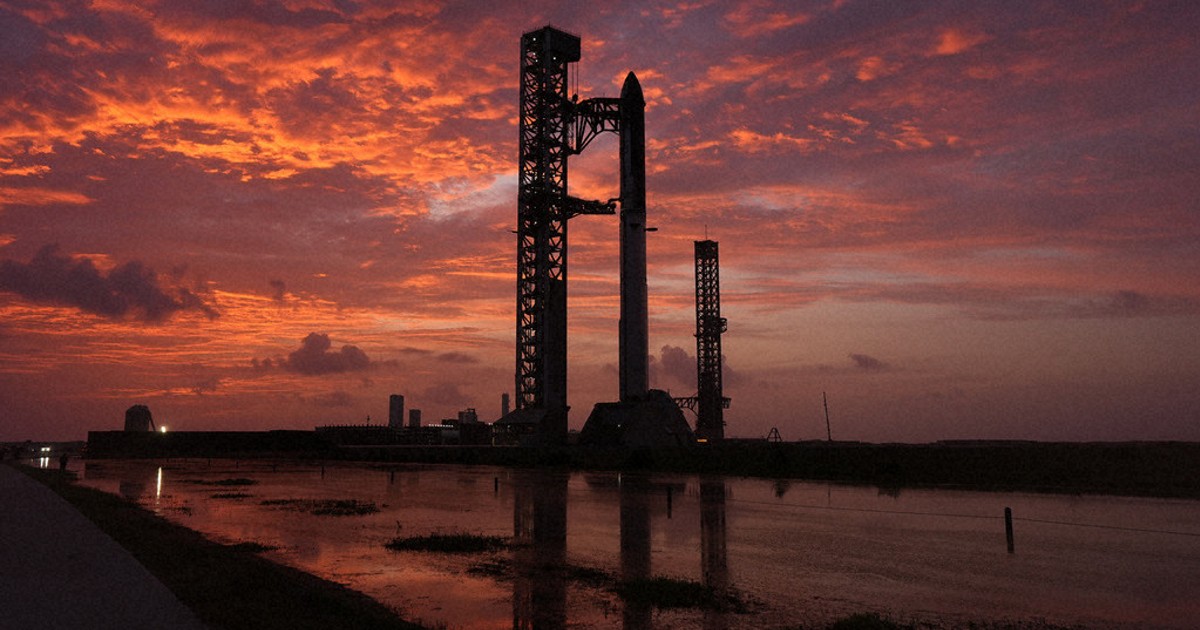
SpaceX Starship launch aborted on pad at last moment
SpaceX's mega Starship rocket came within a second or so of blasting off on a test flight but some of the engines failed to start, triggering a launch abort. Elon Musk's company said it will have to figure out what went wrong before making another attempt to send Starship on a space-skimming flight halfway around the world. It was supposed to be the 13th flight for Starship, which, at 407 feet (124 metres) tall with 33 main engines, is the world's biggest and most powerful rocket. SpaceX's launch webcast on Thursday (July 16, 2026) showed the start of engine ignition three seconds before the planned liftoff, viewed from a drone high above the pad. Whichever engines fired abruptly shut down, with the rocket remaining anchored to the pad. The launch team immediately began draining the fuel from the rocket. "Next launch attempt hopefully in a few days," Musk announced via X. Everything had been going SpaceX's way, including the weather, until the partial engine ignition. Twenty of SpaceX's newest and most advanced Starlinks were on board Starship for release during the planned hourlong flight. The internet satellites were going to try communicating with Starlinks already in orbit while taking photos of Starship's heat shield. Neither the first-stage booster nor the spacecraft was meant to be recovered, with both ending up in the sea. NASA is counting on Starship to land its astronauts on the moon in the next few years. The space agency has hired SpaceX and Jeff Bezos' Blue Origin to build and fly the lunar landers that will return humanity to the surface of the moon after an absence of more than half a century. Both companies need to have their landers -- Starship and Blue Moon -- ready to fly by next year so that the newly named Artemis III crew can practise docking their capsule with them in orbit around Earth. The mission after that -- Artemis IV planned for no earlier than 2028 -- would use one of those landers to take two astronauts to the moon's south polar region.

SpaceX scrubs Starship Flight 13 launch moments before liftoff
SpaceX scrubs Starship Flight 13 launch moments before liftoffNext launch attempt hopefully in a few days,' says SpaceX CEO Elon Musk SpaceX on Thursday canceled the 13th test flight of its Starship megarocket after some of its engines failed to ignite during the launch attempt. The test flight from the company's Starbase, Texas test site was aborted as the giant vehicle's first-stage engines started to fire up just before the launch, which was scheduled at 6.45 p.m. EDT (2245 GMT), Space.com reported. "Some of the engines didn't start, triggering an automatic launch abort. Now offloading propellant. Next launch attempt hopefully in a few days," Space X CEO Elon Musk said on the US social media platform X. "To be confident of a good flight, 2 Raptors will be removed & replaced. Most probable launch timing is early next week," he added.
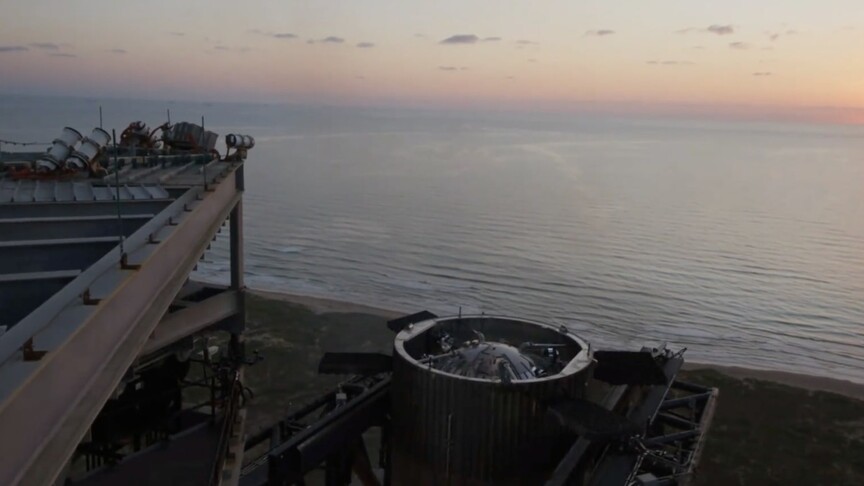
SpaceX Starship launch aborted on the pad at the last moment
SpaceX's mega Starship rocket came within a second or so from blasting off on a test flight Thursday but some of the engines failed to ignite, triggering a launch abort amid billowing clouds of smoke and vapor. Elon Musk, the company's founder and CEO, said two engines will be replaced "to be confident of a good flight" before sending Starship on a space-skimming journey halfway around the world. It will be the 13th flight for Starship, which at 407 feet (124 meters) tall with 33 main engines is the world's biggest and most powerful rocket. SpaceX's launch webcast showed the start of engine ignition three seconds before the planned liftoff, viewed from a drone high above the pad. Although the company did not elaborate, on-screen data showed four engines not firing, with the remaining 29 engines immediately shutting down and keeping the rocket anchored to the pad. It was the first time a full-scale Starship experienced a last-second abort like this. The launch team immediately began draining the fuel from the rocket. "Most probable launch timing is early next week," Musk said via X. Everything was going SpaceX's way, even the weather, until the partial engine ignition. In the end, the rocket's automatic launch system worked as planned by halting everything. Too few operating engines could have doomed the launch. Some earlier Starship flights ended in explosive fireballs. Twenty of SpaceX's newest and most advanced Starlinks were on board Starship for release during the planned hourlong flight. The internet satellites were going to try communicating with Starlinks already in orbit while taking photos of Starship's heat shield. Neither the first-stage booster nor spacecraft were meant to be recovered, with both ending up in the sea. The rocket's automatic launch system worked as planned by halting everything. Too few operating engines could have resulted in a failed launch. Some earlier Starship flights, for example, ended in explosive fireballs. NASA is counting on Starship to land its astronauts on the moon in the next few years. The space agency has hired SpaceX and Jeff Bezos' Blue Origin to build and fly the lunar landers that will return humanity to the surface of the moon after an absence of more than half a century. Both companies need to have their landers -- Starship and Blue Moon -- ready to fly by next year so that the newly named Artemis III crew can practice docking their capsule with them in orbit around Earth. The mission after that -- Artemis IV planned for no earlier than 2028 -- would use one of those landers to take two astronauts to the moon's south polar region. ___ The Associated Press Health and Science Department receives support from the Howard Hughes Medical Institute's Department of Science Education and the Robert Wood Johnson Foundation. The AP is solely responsible for all content.
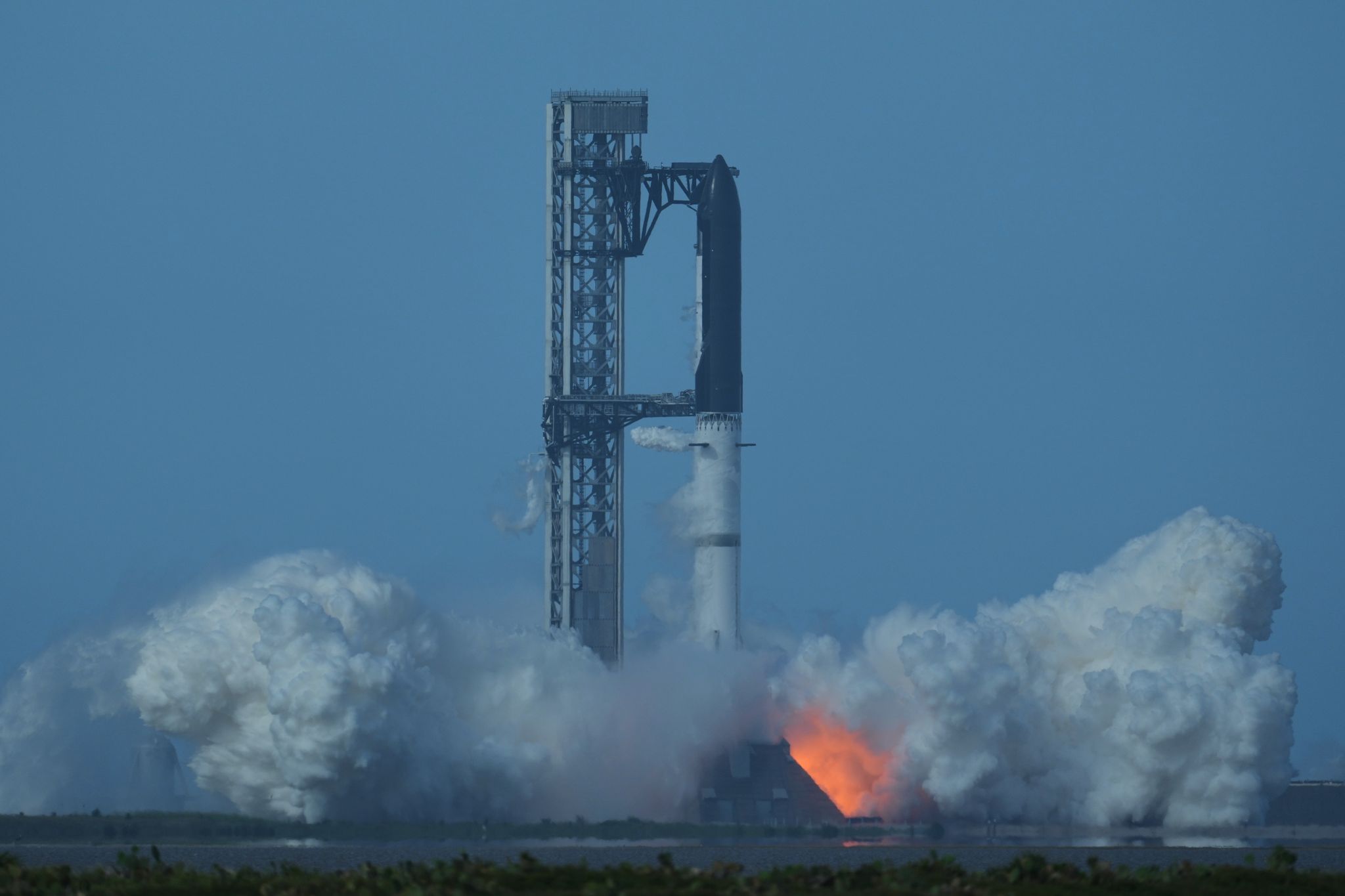
SpaceX abruptly scrubs Starship test flight
SOUTH PADRE ISLAND, Texas -- SpaceX on Thursday scrubbed what was to be its first Starship flight since the company went public, abruptly calling it off just as the booster began to ignite. "Some of the engines didn't start, triggering an automatic launch abort. Now offloading propellant. Next launch attempt hopefully in a few days," wrote company head Elon Musk on X. It was to be the mammoth rocket's 13th flight overall. When it eventually takes off, the flight's aims will be similar to those of a mostly successful voyage carried out in May, which debuted the latest edition of the powerful Starship, its third-generation model. The goals of that test were essentially to demonstrate the new designs in flight. Get the latest news delivered to your inbox Sign up for The Manila Times newsletters By signing up with an email address, I acknowledge that I have read and agree to the Terms of Service and Privacy Policy. It was not without a few glitches, however, including engine issues with the Super Heavy booster that necessitated a crash into the Gulf of Mexico rather than a precision return. The company said "there have been several modifications to hardware and software to address issues seen on the previous flight." Advertisement SpaceX will aspire the next time around to execute a launch, ascent, stage separation, boostback burn and landing burn of the booster offshore without hiccups. The upper stage will deploy 20 Starlink V3 satellites, and SpaceX said it will test out a relight of a Raptor engine in space. It will also test upgrades to Starship's heat shield. The latest flight will be the first after Musk's SpaceX went public on Wall Street in June, with a record initial public offering. Advertisement The rocket company has rapidly expanded its satellite internet service and voiced lofty ambitions for AI data centers in space. There's a lot riding on SpaceX's progress: the company is under contract with NASA to produce a modified version of Starship to serve as a lunar landing system.

SpaceX Starship launch aborted at the last moment
SpaceX's mega Starship rocket has come within a second or so from blasting off on a test flight but some of the engines failed to start, triggering a launch abort. Elon Musk's company said it will have to figure out what went wrong on Thursday before making another attempt to send Starship on a space-skimming journey halfway around the world. It was supposed to be the 13th flight for Starship, which at 124m tall with 33 main engines is the world's biggest and most powerful rocket. SpaceX's launch webcast showed the start of engine ignition three seconds before the planned liftoff, viewed from a drone high above the pad. Although the company did not elaborate, on-screen data showed four engines not firing, with the remaining 29 engines immediately shutting down and keeping the rocket anchored to the pad. It was the first time a full-scale Starship experienced a last-second abort like this. The launch team immediately began draining the fuel from the rocket. "Next launch attempt hopefully in a few days," Musk announced via X. Everything was going SpaceX's way, even the weather, until the partial engine ignition. In the end, the rocket's automatic launch system worked as planned by halting everything. Too few operating engines could have doomed the launch. Some earlier Starship flights ended in explosive fireballs. Elon Musk's company had newest, most advanced Starlinks aboard Twenty of SpaceX's newest and most advanced Starlinks were on board Starship for release during the planned hour-long flight. The internet satellites were going to try communicating with Starlinks already in orbit while taking photos of Starship's heat shield. Neither the first-stage booster nor spacecraft were meant to be recovered, with both ending up in the sea. The rocket's automatic launch system worked as planned by halting everything. Too few operating engines could have resulted in a failed launch. Some earlier Starship flights, for example, ended in explosive fireballs.

SpaceX Starship launch aborted on the pad at the last moment
SpaceX's mega Starship rocket came within a second or so from blasting off on a test flight Thursday but some of the engines failed to start, triggering a launch abort. Elon Musk's company said it will have to figure out what went wrong before making another attempt to send Starship on a space-skimming journey halfway around the world. It was supposed to be the 13th flight for Starship, which at 407 feet (124 meters) tall with 33 main engines is the world's biggest and most powerful rocket. SpaceX's launch webcast showed the start of engine ignition three seconds before the planned liftoff, viewed from a drone high above the pad. Although the company did not elaborate, on-screen data showed four engines not firing, with the remaining 29 engines immediately shutting down and keeping the rocket anchored to the pad. It was the first time a full-scale Starship experienced a last-second abort like this. The launch team immediately began draining the fuel from the rocket. "Next launch attempt hopefully in a few days," Musk announced via X. Everything was going SpaceX's way, even the weather, until the partial engine ignition. In the end, the rocket's automatic launch system worked as planned by halting everything. Too few operating engines could have doomed the launch. Some earlier Starship flights ended in explosive fireballs. Elon Musk's company had newest, most advanced Starlinks aboard Twenty of SpaceX's newest and most advanced Starlinks were on board Starship for release during the planned hourlong flight. The internet satellites were going to try communicating with Starlinks already in orbit while taking photos of Starship's heat shield. Neither the first-stage booster nor spacecraft were meant to be recovered, with both ending up in the sea. The rocket's automatic launch system worked as planned by halting everything. Too few operating engines could have resulted in a failed launch. Some earlier Starship flights, for example, ended in explosive fireballs. World's biggest rocket is key to putting astronauts back on the moon NASA is counting on Starship to land its astronauts on the moon in the next few years. The space agency has hired SpaceX and Jeff Bezos' Blue Origin to build and fly the lunar landers that will return humanity to the surface of the moon after an absence of more than half a century. Both companies need to have their landers -- Starship and Blue Moon -- ready to fly by next year so that the newly named Artemis III crew can practice docking their capsule with them in orbit around Earth. The mission after that -- Artemis IV planned for no earlier than 2028 -- would use one of those landers to take two astronauts to the moon's south polar region.

SpaceX Starship launch aborted on the pad at the last moment
SpaceX's mega Starship rocket came within a second or so from blasting off on a test flight Thursday but some of the engines failed to start, triggering a launch abort. Elon Musk's company said it will have to figure out what went wrong before making another attempt to send Starship on a space-skimming flight halfway around the world. It was supposed to be the 13th flight for Starship, which at 407 feet (124 meters) tall with 33 main engines is the world's biggest and most powerful rocket. SpaceX's launch webcast showed the start of engine ignition three seconds before the planned liftoff, viewed from a drone high above the pad. Whichever engines fired abruptly shut down, with the rocket remaining anchored to the pad. The launch team immediately began draining the fuel from the rocket. "Next launch attempt hopefully in a few days," Musk announced via X. Everything had been going SpaceX's way, including the weather, until the partial engine ignition. Twenty of SpaceX's newest and most advanced Starlinks were on board Starship for release during the planned hourlong flight. The internet satellites were going to try communicating with Starlinks already in orbit while taking photos of Starship's heat shield. Neither the first-stage booster nor spacecraft were meant to be recovered, with both ending up in the sea. NASA is counting on Starship to land its astronauts on the moon in the next few years. The space agency has hired SpaceX and Jeff Bezos' Blue Origin to build and fly the lunar landers that will return humanity to the surface of the moon after an absence of more than half a century. Both companies need to have their landers -- Starship and Blue Moon -- ready to fly by next year so that the newly named Artemis III crew can practice docking their capsule with them in orbit around Earth. The mission after that -- Artemis IV planned for no earlier than 2028 -- would use one of those landers to take two astronauts to the moon's south polar region. ___ The Associated Press Health and Science Department receives support from the Howard Hughes Medical Institute's Department of Science Education and the Robert Wood Johnson Foundation. The AP is solely responsible for all content.

SpaceX Starship launch aborted at the last moment
SpaceX's mega Starship rocket has come within a second or so from blasting off on a test flight but some of the engines failed to start, triggering a launch abort. Elon Musk's company said it will have to figure out what went wrong on Thursday before making another attempt to send Starship on a space-skimming journey halfway around the world. It was supposed to be the 13th flight for Starship, which at 124m tall with 33 main engines is the world's biggest and most powerful rocket. SpaceX's launch webcast showed the start of engine ignition three seconds before the planned liftoff, viewed from a drone high above the pad. Although the company did not elaborate, on-screen data showed four engines not firing, with the remaining 29 engines immediately shutting down and keeping the rocket anchored to the pad. It was the first time a full-scale Starship experienced a last-second abort like this. The launch team immediately began draining the fuel from the rocket. "Next launch attempt hopefully in a few days," Musk announced via X. Everything was going SpaceX's way, even the weather, until the partial engine ignition. In the end, the rocket's automatic launch system worked as planned by halting everything. Too few operating engines could have doomed the launch. Some earlier Starship flights ended in explosive fireballs. Elon Musk's company had newest, most advanced Starlinks aboard Twenty of SpaceX's newest and most advanced Starlinks were on board Starship for release during the planned hour-long flight. The internet satellites were going to try communicating with Starlinks already in orbit while taking photos of Starship's heat shield. Neither the first-stage booster nor spacecraft were meant to be recovered, with both ending up in the sea. The rocket's automatic launch system worked as planned by halting everything. Too few operating engines could have resulted in a failed launch. Some earlier Starship flights, for example, ended in explosive fireballs.

The AI burn book: Decoding the cat fights between Sam Altman, Elon Musk, and Anthropic - AOL
Business Insider decoded the shade and subtweets, from the punctuation to the emojis. As the summer temperatures rise, tech tempers flare. Sam Altman is back to his old ways: openly feuding with Elon Musk and taking jabs at Anthropic once again, to the shock of no one. With Altman and Musk's courtroom dispute wrapped up (Musk lost but vowed to appeal), the dueling AI leaders are now dragging each other online over data privacy and an Apple legal battle. The OpenAI CEO has also poked at Anthropic, his primary competitor, run by Dario Amodei. Altman and Amodei were once colleagues; now, they avoid holding hands. Altman hasn't called a rival CEO a "pusher" or a "grotsky little byotch" yet. Still, a Burn Book is forming under his fingertips -- and we decoded it for you. Round One: Sam Altman vs Elon Musk Elon Musk threw the first punch last Friday. Apple sued OpenAI that day, alleging that the AI lab stole trade secrets to build its upcoming hardware device. Musk replied to posts about the suit with exclamation points, the word "wow," and a quick reaction: "Sounds pretty bad." He ramped up on Saturday, calling the OpenAI CEO "Scam Altman," a favorite phrase of his. The digs kept coming throughout the day. Altman took scamming "to a whole new level," Musk wrote, and might love scamming "more than any human alive!" Altman responded in his typical, lower-case fashion: "homeboy you're the one sellling public market investors on short-term space datacenters." Note the term of endearment (or lack thereof): "homeboy." Note the typo: "sellling." Note the lack of punctuation. Three minutes later, Altman fired off another. This time, he used the feud as an opportunity to promote his product, writing that the most reliable benchmark for GPT-5.6 Sol's success "is that elon is obsessed with me again." (Again, no capitalization.) Musk responded to Altman's space data center skepticism a few hours later with a zinger. "We start flying them next year. Maybe you can come see them if your parole officer approves," Musk wrote. In the same post, Musk took another shot at Altman by referencing their messy breakup from almost a decade ago. "After stealing an open source AI charity, you then stole all of Apple's phone technology!" he wrote. "Wow." For the record, Altman doesn't have a parole officer. OpenAI disputes Apple's allegations stating it is "not aware of any evidence that this complaint has merit." OpenAI and SpaceX did not respond to Business Insider's requests for comment. After Saturday's brawl, Altman wasn't done. He took one last stab at Musk on Tuesday, reposting some data privacy concerns about SpaceXAI. "Concerning," he wrote. And yet, the enemies could find some common ground. Both Musk and Altman posted approving messages about an AI safety essay published Tuesday by Google DeepMind's CEO Demis Hassabis. Round Two: Sam Altman vs Anthropic Throughout the Musk mess, Altman continued to kick at his No. 1 opponent: Anthropic. Last Thursday, Anthropic released an eyebrow-raising ad saying there was "hope in hard questions." Those questions include: what will humans do when AI takes over all the jobs? And why do we even have to have AI? The leading image is of a house on fire; it's an AI doomer's dream. Altman clowned the ad on Monday, saying that he "thought this was satire" posted from a fake account. He also put words in Anthropic's mouth: "Hard questions are great but only if we deem you worthy enough to not silently downgrade you, or even get access at all." He appeared to reference how Anthropic quietly rejected or altered some Fable 5 prompts in its initial launch. The company has since made these safeguards more visible. Earlier that day, he laughed at an X user who called the use of Anthropic's Fable 5 an unhealthy situationship. Since its release, Anthropic has rolled back and re-deployed the model and lifted and lowered guardrails, to the frustration of some users. (In typical Altman fashion, he "lol'd.") Altman also got philosophical. He reposted a reply to a criticism of Amodei that quoted C.S. Lewis. "Of all tyrannies, a tyranny sincerely exercised for the good of its victims may be the most oppressive," the post read. It's similar to criticisms other AI leaders have shared: that Anthropic warns of AI's safety concerns while claiming only its AI can fix it. And then, the vague-post of all vague-posts. "Come for the best model, stay because we don't treat you with contempt," Altman wrote on Monday, without specifying which AI rival he was taking a shot at. Amodei seems to be steering clear of the drama. As of Wednesday evening, he hadn't responded, nor has he updated his X account in over a month. Anthropic did not respond to a request for comment. If you enjoyed this story, be sure to follow Business Insider on Yahoo.

Elon Musk Reacts to Jamie Dimon's 'Einstein' Praise With Two-Word Reply as Viral Post Hails His SpaceX an
Musk Revisits Dimon's Famous Einstein Comparison Le Pogam argued that Musk, like Einstein, may need years to receive recognition. The post credited Musk with reshaping management and education while advancing space travel, energy and artificial intelligence. Those claims were Le Pogam's opinion. When the CNBC clip first circulated from the World Economic Forum in Davos, Musk responded, "Nice of him to say." JPMorgan Feud Becomes Wall Street Alliance Dimon used that interview to close a yearslong dispute between JPMorgan and Tesla. "Elon and I have hugged it out," he said. "You've got to look at Elon. SpaceX, Tesla, Neuralink. I mean, the guy is our Einstein." That reconciliation has since become a Wall Street partnership. At a JPMorgan event launching SpaceX's investor roadshow last month, Dimon again called Musk "the Edison of our time." "It's been an extraordinary 24 years watching Elon grow over time, and now making a massive leap into the future," Dimon said. Maye Musk appeared and recalled her son's early fascination with the future, while Musk joined remotely. Banks Rally Around SpaceX's Public Debut The enthusiasm extended to research. Morgan Stanley projected SpaceX revenue could reach $3.4 trillion by 2040. Such estimates remain speculative and depend on Starlink and space-based AI developing as expected. Image via Shutterstock Market News and Data brought to you by Benzinga APIs To add Benzinga News as your preferred source on Google, click here.

SpaceX will launch Starship, the world's largest rocket, on critical Flight 13 test today. Here's what to expect.
SpaceX's Starship megarocket will take to the skies again today (July 16), and you can watch the thundering action live. Starship, the biggest and most powerful rocket ever built, is scheduled to lift off from SpaceX's Starbase site in South Texas today -- the 57th anniversary of the launch of NASA's Apollo 11 moon mission, by the way -- during a 90-minute widow that opens at 6:45 p.m. EDT (2245 GMT; 5:45 p.m. local Texas time). It will be Starship's 13th flight overall and its second mission of 2026. You can watch Starship Flight 13 live here at Space.com, courtesy of SpaceX; coverage will begin about 30 minutes before liftoff. Follow our Starship live blog for updates and other news about the test flight. A potentially revolutionary rocket Starship consists of a first-stage booster called Super Heavy and an upper-stage vehicle known (somewhat confusingly) as Starship, or simply Ship. Both elements are made of stainless steel and are designed to be fully and rapidly reusable. The stacked vehicle stands more than 400 feet (122 meters) tall and can carry more than 110 tons (100 metric tons) to Earth orbit. SpaceX thinks Starship's combination of power and reusability will revolutionize spaceflight, allowing humanity to settle the moon and Mars, among other bold exploration feats. Starship debuted in April 2023 and has flown 11 more suborbital flights since, most recently on May 22. That Flight 12 test was the first mission for Starship Version 3 (V3), an advanced iteration of the megarocket that was many months in the making. (Flight 11, the last launch of Starship V2, lifted off in October 2025.) Starship V3 will be the first operational variant of the vehicle. It will fly on NASA's Artemis III mission to Earth orbit in 2027, for example, and land the agency's Artemis IV astronauts on the moon a year later, if all goes to plan. Starship V3 performed quite well during its launch debut in May. During Flight 12, Ship successfully deployed 22 payloads via its "PEZ dispenser" slit -- 20 dummy versions of SpaceX's Starlink broadband satellites and two actual Starlinks equipped with imaging sensors -- and came back to Earth in one piece, splashing down as planned off the coast of Western Australia. There were a few hiccups, however. Super Heavy suffered engine issues during its return to Earth, for instance, and ended up crashing in the Gulf of Mexico rather than making a controlled splashdown there. SpaceX will run it back on Flight 13, shooting mostly for the same objectives that Flight 12 targeted -- with a few notable exceptions. The plan for Starship Flight 13 Eventually, SpaceX plans to return both Super Heavy and Ship directly to the launch pad after liftoff, catching each with the "chopstick" arms attached to Starbase's two launch towers. (Starship will also fly from Florida and perhaps other places as well in the coming years; these future pads will have chopstick arms, too.) This strategy will allow each vehicle to fly multiple times per day, according to the company. SpaceX has caught Super Heavy three times to date, but it's been a while; the last such snag came on Flight 8 in March 2025. And the company has never tried a chopsticks catch with Ship. Those trends will continue on Flight 13. If all goes to plan, Super Heavy will steer its way to a controlled splashdown in the Gulf of Mexico (which the Trump administration has renamed the Gulf of America) about seven minutes after launch. "The booster's primary test objective will be executing a successful launch, ascent, stage separation, boostback burn and landing burn at an offshore landing point in the Gulf of America," SpaceX wrote in a Flight 13 mission description. "There have been several modifications to hardware and software to address issues seen on the previous flight." Ship will again target a splashdown in the Indian Ocean off the coast of Western Australia, which will occur about 65 minutes after launch. And the vehicle will again deploy some objects into suborbital space -- but here's where Flight 13 will break new ground. Those objects will be 20 V3 Starlink satellites -- next-gen versions of the broadband spacecraft, which will "greatly expand the network's capacity and user speeds," SpaceX wrote in the mission description. Eventually, SpaceX wants to operate up to 100,000 V3 Starlinks in low Earth orbit -- a bold plan, considering that the current megaconstellation, the largest such network ever assembled, contains "only" about 10,800 spacecraft. The Starlink V3 plan will require thousands of launches -- a load that's beyond even the capabilities of SpaceX's workhorse Falcon 9 rocket, which flew 165 times in 2025. (Adding to the difficulty: Starship V3 satellites are considerably heavier than their predecessors. Each one will apparently weigh around 4,400 pounds, or 2,000 kilograms.) The 20 Starlink V3 satellites "will extend solar arrays and antennas and will attempt to connect with the larger Starlink constellation via high-capacity lasers," SpaceX wrote in the Flight 13 description. "The Starlink satellites will be on the same suborbital trajectory as Starship and are expected to demise upon reentry approximately 20 minutes after deployment." Six of the 20 spacecraft are equipped with cameras, which they will use to scan and study Ship's heat-shield tiles. SpaceX wants to gather more data about the heat-shield system before it attempts to bring Ship back to the launch pad for a chopsticks catch. And SpaceX won't just passively observe the heat shield during Flight 13; it will conduct some experiments as well. For example, the shield "will have load-sensing tiles to take measurements as the vehicle experiences higher dynamic pressure on ascent than previous flights, putting added stress on the tile attachments in exchange for increased payload-to-orbit capability," the mission description reads. So there will indeed be some new things to look out for during Flight 13. And watching the world's biggest and brawniest rocket lift off is a treat no matter what sort of mission it's flying, so be sure to tune in today!
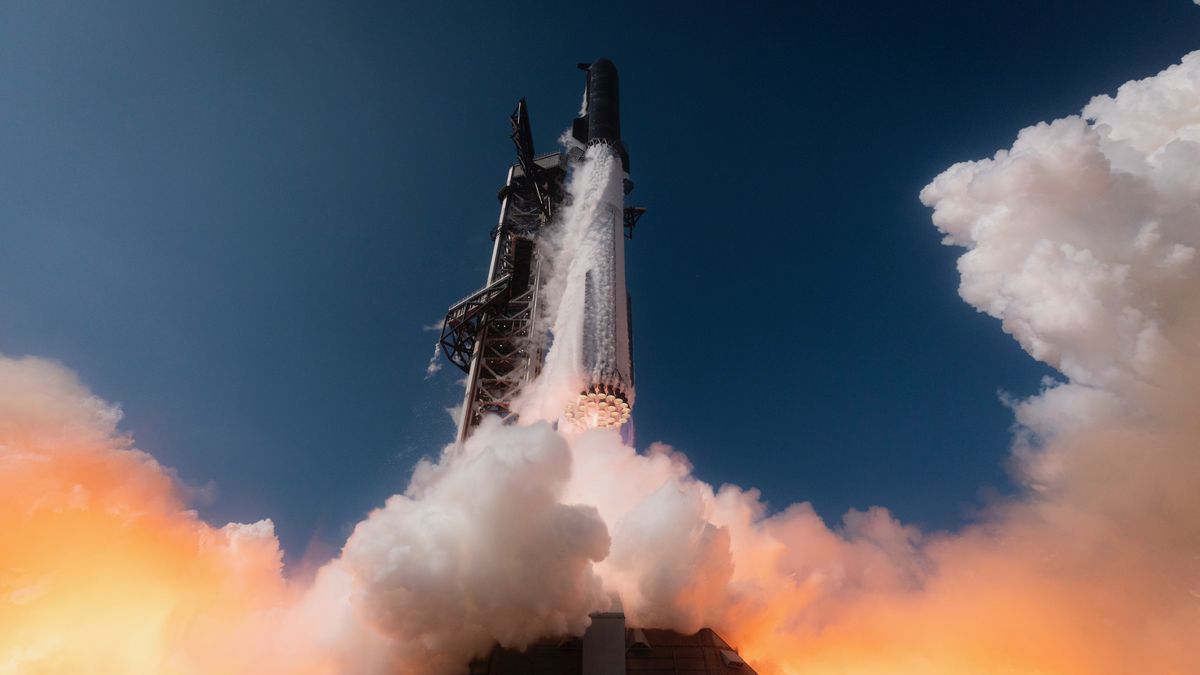
The AI burn book: Decoding the cat fights between Sam Altman, Elon Musk, and Anthropic
* The AI industry's burn book is an increasingly public spectacle. * Sam Altman and Elon Musk threw jabs on X. Altman also dragged Anthropic, though CEO Dario Amodei stayed quiet. * Business Insider decoded the shade and subtweets, from the punctuation to the emojis. As the summer temperatures rise, tech tempers flare. Sam Altman is back to his old ways: openly feuding with Elon Musk and taking jabs at Anthropic once again, to the shock of no one. With Altman and Musk's courtroom dispute wrapped up (Musk lost but vowed to appeal), the dueling AI leaders are now dragging each other online over data privacy and an Apple legal battle. The OpenAI CEO has also poked at Anthropic, his primary competitor, run by Dario Amodei. Altman and Amodei were once colleagues; now, they avoid holding hands. Altman hasn't called a rival CEO a "pusher" or a "grotsky little byotch" yet. Still, a Burn Book is forming under his fingertips -- and we decoded it for you. Round One: Sam Altman vs Elon Musk Elon Musk threw the first punch last Friday. Apple sued OpenAI that day, alleging that the AI lab stole trade secrets to build its upcoming hardware device. Musk replied to posts about the suit with exclamation points, the word "wow," and a quick reaction: "Sounds pretty bad." He ramped up on Saturday, calling the OpenAI CEO "Scam Altman," a favorite phrase of his. The digs kept coming throughout the day. Altman took scamming "to a whole new level," Musk wrote, and might love scamming "more than any human alive!" Altman responded in his typical, lower-case fashion: "homeboy you're the one sellling public market investors on short-term space datacenters." Note the term of endearment (or lack thereof): "homeboy." Note the typo: "sellling." Note the lack of punctuation. Three minutes later, Altman fired off another. This time, he used the feud as an opportunity to promote his product, writing that the most reliable benchmark for GPT-5.6 Sol's success "is that elon is obsessed with me again." (Again, no capitalization.) Musk responded to Altman's space data center skepticism a few hours later with a zinger. "We start flying them next year. Maybe you can come see them if your parole officer approves," Musk wrote. In the same post, Musk took another shot at Altman by referencing their messy breakup from almost a decade ago. "After stealing an open source AI charity, you then stole all of Apple's phone technology!" he wrote. "Wow." For the record, Altman doesn't have a parole officer. OpenAI disputes Apple's allegations stating it is "not aware of any evidence that this complaint has merit." OpenAI and SpaceX did not respond to Business Insider's requests for comment. After Saturday's brawl, Altman wasn't done. He took one last stab at Musk on Tuesday, reposting some data privacy concerns about SpaceXAI. "Concerning," he wrote. And yet, the enemies could find some common ground. Both Musk and Altman posted approving messages about an AI safety essay published Tuesday by Google DeepMind's CEO Demis Hassabis. Round Two: Sam Altman vs Anthropic Throughout the Musk mess, Altman continued to kick at his No. 1 opponent: Anthropic. Last Thursday, Anthropic released an eyebrow-raising ad saying there was "hope in hard questions." Those questions include: what will humans do when AI takes over all the jobs? And why do we even have to have AI? The leading image is of a house on fire; it's an AI doomer's dream. Altman clowned the ad on Monday, saying that he "thought this was satire" posted from a fake account. He also put words in Anthropic's mouth: "Hard questions are great but only if we deem you worthy enough to not silently downgrade you, or even get access at all." He appeared to reference how Anthropic quietly rejected or altered some Fable 5 prompts in its initial launch. The company has since made these safeguards more visible. Earlier that day, he laughed at an X user who called the use of Anthropic's Fable 5 an unhealthy situationship. Since its release, Anthropic has rolled back and re-deployed the model and lifted and lowered guardrails, to the frustration of some users. (In typical Altman fashion, he "lol'd.") Altman also got philosophical. He reposted a reply to a criticism of Amodei that quoted C.S. Lewis. "Of all tyrannies, a tyranny sincerely exercised for the good of its victims may be the most oppressive," the post read. It's similar to criticisms other AI leaders have shared: that Anthropic warns of AI's safety concerns while claiming only its AI can fix it. And then, the vague-post of all vague-posts. "Come for the best model, stay because we don't treat you with contempt," Altman wrote on Monday, without specifying which AI rival he was taking a shot at. Amodei seems to be steering clear of the drama. As of Wednesday evening, he hadn't responded, nor has he updated his X account in over a month. Anthropic did not respond to a request for comment. Read the original article on Business Insider The post The AI burn book: Decoding the cat fights between Sam Altman, Elon Musk, and Anthropic appeared first on Business Insider.

SpaceX to deploy first Starlink V3 satellites on suborbital Starship-Super Heavy flight
SpaceX will debut its long-promised Starlink Version 3 satellites during a suborbital test flight of its Starship rocket on Thursday evening. The Starship Flight 13 mission is the second launch of a third-generation Starship-Super Heavy launch vehicle and the second mission for the program this year. Liftoff from Pad 2 at SpaceX's Starbase facilities in southern Texas is scheduled during a 90-minute window that opens at 5:45 p.m. CDT (6:45 p.m. EDT / 2245 UTC). Spaceflight Now will have live coverage beginning about two hours prior to liftoff. SpaceX is launching this mission using Booster 20 and the Ship 40 upper stage. Both stages are flying for the first time and SpaceX will not attempt to recover either for reuse. One of the biggest differences between Flight 13 and Flight 12, which launched in May, is that this time around, SpaceX will be deploying 20 production Starlink V3 satellites. While they're not going into orbit, SpaceX does intend to briefly link them to the broader network in low Earth orbit. "As part of this initial test, Starship is planned to deploy 20 satellites which will extend solar arrays and antennas and will attempt to connect with the larger Starlink constellation via high-capacity lasers," SpaceX wrote prior to launch. "The Starlink satellites will be on the same suborbital trajectory as Starship and are expected to demise upon reentry approximately 20 minutes after deployment." Other mission objectives are fairly similar to what was demonstrated in Flight 12. Those include a relight of a Raptor engine on the upper stage during the coast phase and performing a controlled landing of the booster in the Gulf of Mexico. Neither of those objectives were able to be accomplished back in May. SpaceX said the startup sequence of the engines on Ship 39 "caused the directional flip of the booster to be off by approximately 90 degrees." That coupled with issues with five out of 33 sea-level engines on the booster prevented a nominal boostback burn and Booster 19 was lost prematurely. "The Super Heavy on this upcoming flight has hardware modifications to improve re-light reliability along with updates to engine alarms and aborts to match the conditions seen in the multi-engine flight environment," the company wrote. In between these two flights of Starship Version 3, SpaceX said it also made "several hardware an operational modifications" to address issues that caused one of the three Raptor Vacuum engines to go offline less than a minute after stage separation. SpaceX is also continuing its heat shield iterative work in order to produce a protective system that will eventually allow for rapid reuse of the upper stage. "Multiple tiles will be attached to the metallic side of Starship's aft flaps along with modified tiles and attachment mechanisms in the heat shield covering the aft skirt to gather flight data on different attachment options," SpaceX said. "Finally, Starship's heat shield will have load sensing tiles to take measurements as the vehicle experiences higher dynamic pressure on ascent than previous flights, putting added stress on the tile attachments in exchange for increased payload to orbit capability." Gwynne Shotwell, SpaceX's president and chief operating officer, told CNBC in an interview in June that the company may attempt to perform an orbital launch as soon as Flight 14, depending on how this next mission goes. She said a monthly launch cadence is the company's target. Rapid learning will be critical as NASA is relying on SpaceX to get Starship to orbit sooner rather than later. A modified version of a Starship Version 3 rocket with a docking adaptor is scheduled to fly next years part of the Artemis 3 mission. Unlike Blue Origin's Blue Moon Mark 2 Alpha spacecraft, the Artemis 3 crew will not enter into Starship on that flight, but rather NASA and SpaceX will focus on testing the interaction of these two vehicles when they dock. "Software testing between spacecrafts will help demonstrate that the commercial human landing system prototypes and Orion can meet at a precise time and location in space," NASA said in a press release on Wednesday. "When Orion docks with the Blue Moon test lander, the Orion spacecraft's software will control the docked spacecraft. Meanwhile, the SpaceX test article will control the docked spacecraft for the second portion of the mission." Flight 13 is also SpaceX's first mission for the Starship program since it became a publicly traded company on the Nasdaq. The company's new investors will be keenly watching the performance of the launcher and launch infrastructure as SpaceX hopes to begin deploying orbital payloads later this year.

Live coverage: SpaceX to launch 21 communications satellites for the Space Development Agency
The Space Development Agency is set to launch its third batch of operational satellites designed to improve secure communications between members of the U.S. military and its allies across the globe aboard a Falcon 9 rocket from California. The SDA's constellation, the Proliferated Warfighter Space Architecture (PWSA), consists of a series of series of interconnected satellites with varying focuses, from missile tracking to navigation. The satellites launching on Thursday afternoon are part of the communications layer, referred to as the Tranche 1 Transport Layer (T1TL). Liftoff of SpaceX's Falcon 9 rocket from Space Launch Complex 4 East (SLC-4E) at Vandenberg Space Force Base is scheduled for 1:32 p.m. PDT (4:32 p.m. EDT / 2032 UTC). Spaceflight Now will have live coverage beginning about an hour prior to liftoff. SpaceX will launch the T1TL-E mission using the Falcon 9 first stage booster B1103, making its fourth flight after previously launching Starlink 17-35, Starlink 17-42, and NROL-179. A little more than 8.5 minutes after liftoff, B1103 will target a landing on the SpaceX droneship, 'Of Course I Still Love You', positioned in the Pacific Ocean. If successful, this will be the 211th landing on this vessel and the 639th booster landing to date for SpaceX. Building out the Transport Layer There will be 154 operational satellites spread across the various layers of the Tranche 1 portion of SDA's PWSA constellation. That breaks down to the following, according the SDA: * 126 Transport Layer satellites * 28 Tracking Layer satellites * 4 missile defense demonstration satellites These satellites will be managed from Space Operations Centers located at the Grand Forks Air Force Base in North Dakota and Redstone Arsenal in Alabama. The SDA awarded satellite construction contracts to Lockheed Martin Space, Northrop Grumman Strategic Space Systems and York Space Systems in February 2022 to build the satellites for the T1TL portion of the constellation. The first 21 T1TL satellites from York Space Systems launched on the T1TL-B mission on Sept. 10, 2025. That was followed by the T1TL-C mission a month later with satellites from Lockheed Martin. In a September 2025 statement to Spaceflight Now, Col. Ryan Hiserote, the U.S. Space Force's Space Systems Command's (SSC) division chief in System Delta 80 Assured Access to Space, said that the order of the first three missions for the SDA's T1TL were "interchangeable" and didn't need to fly in alphabetical order. "York was the first of the Tranche 1 performers to ship and launch its satellites. All spacecraft from York's first production lot were confirmed healthy within hours of launch separation, and the constellation has since passed numerous milestones as it continues through early operations," the company said in a June 5 press release. "With this second production lot, York is again first among Tranche 1 primes to complete T1 spacecraft production, continuing to demonstrate the high-rate production capabilities required to support proliferated space architectures. Upon full delivery, York's first and second production lots represent more than 40 spacecraft developed in support of the proliferated mission." Launch of the T1TL-E mission was awarded to SpaceX as part of fourth order year of missions within the National Security Space Launch (NSSL) Phase 2 contract, which is managed by Space Systems Command. Announced in June 2023, T1TL-E was one of six missions awarded to SpaceX. When awarded, these missions were scheduled to launch in fiscal year 2025. However, as happens with a number of NSSL missions, the payloads can be years behind schedule. The February 2022 press release from the SDA announcing the awards for the T1TL missions stated that these satellites should be "ready for launch by September 2024." However, the first batch didn't fly until a year later. Spaceflight Now reached out to SSC to learn more about why none of the satellites manufactured by Northrop Grumman have launched to date but we did not receive a response before publishing this article.
Starship to fly again Texas. Why the launch is critical for SpaceX
SpaceX has big plans for Starship during its 13th test flight from South Texas as the pressure is on for the rocket to be ready for missions to the moon and Mars. For just the second time in 2026, SpaceX is preparing to launch the world's largest rocket. Starship, the commercial spaceflight company's super heavy-lift launch vehicle, is due to get off the ground in South Texas on the heels of a largely successful May flight test. And as usual, the stakes are high for SpaceX and its chief executive, tech mogul Elon Musk. The upcoming flight will be the 13th for Starship overall, including its April 2023 debut, and the second for SpaceX's new prototype that serves as the largest iteration of the rocket to date. The pressure is on for SpaceX, which is working under a strict deadline to have Starship ready for NASA's fast-approaching moon landing missions. Musk, of course, also still dreams of sending the rocket on interplanetary voyages to Mars. Here's everything to know about the next Starship launch, which SpaceX refers to as flight 13. When is the next Starship launch date? SpaceX is working toward a Thursday, July 16, launch of its Starship rocket, the company announced. The launch window is due to open from 5:45 to 7:15 p.m. CT. Where does Starship launch? As it has since its maiden launch in April 2023, Starship will once again get off the ground from SpaceX's Starbase company town and headquarters in South Texas, about 180 miles south of Corpus Christi. In May 2025, Texas voters in Cameron County - most of whom are SpaceX employees - approved a measure to officially recognize the company's headquarters as its own town, complete with a mayor and city commissioners. What is Starship? Starship is the massive rocket that SpaceX, the commercial company founded by tech entrepreneur Elon Musk, has been testing since April 2023. SpaceX is developing the rocket to be a fully reusable transportation system that can carry huge satellites and other payloads to space, meaning both the rocket and vehicle can return to the ground for additional missions. How tall is Starship? Is it the world's largest rocket? Starship's most recent flight test in May marked the debut of SpaceX's third-generation prototype of the rocket. Standing at 407 feet tall when fully stacked, the new iteration of Starship - known as Version 3, or V3 - became the largest and most powerful rocket SpaceX has ever launched. Similar to previous designs, the fully integrated Starship spacecraft is composed of both a 236-feet-tall lower-stage booster known as Super Heavy, as well as a 171-feet-tall upper stage simply called Starship. What is SpaceX planning for flight 13? For the next Starship test flight, SpaceX said it is aiming to complete similar objectives as the last launch in May in which it debuted its Version 3 prototype. SpaceX plans to push the performance of the Super Heavy booster - responsible for the initial burst of thrust at liftoff - before it lands in the Gulf of Mexico, renamed in the U.S. under executive order as the Gulf of America. The upper stage, which is designed to eventually fly in orbit, will also be put to the test as it flies halfway around the world ahead of a landing in the Indian Ocean. Starship to carry Starlink satellites to space In a major first, Starship will be carrying 20 larger versions of SpaceX's Starlink internet satellites that it will attempt to deliver into suborbital space. The satellites will deploy solar arrays and antennas while attempeting to connect with SpaceX's larger Starlink constellation higher up in orbit before they fall toward the ground and burn up in the atmosphere about 20 minutes later. If this sounds familiar, that's because SpaceX has deployed mock Starlink satellites during previous Starship flight tests. Why is SpaceX testing Starship? Elon Musk envisions colony on Mars Musk's vision has long been for Starship to be an interplanetary vehicle that takes humans to Mars, where they can establish a self-sustaining colony. While the world's richest man has indicated that SpaceX will focus on building a lunar city first, the company has already announced a human-led expedition to Mars' orbit - though it has not set a target date. In order for that to be possible, Starship will need to be capable of refueling midflight in a complex process that requires two Starships equipped with docking adapters to meet in orbit to transfer propellant. The maneuver is one SpaceX has yet to test. NASA relies on Starship for Artemis moon missions SpaceX is also under contract with NASA to develop a lunar lander configuration of its Starship to ferry astronauts to the moon, known as the Human Landing System. NASA is relying on Starship to be ready for a mission due in 2027 known as Artemis III. SpaceX and Jeff Bezos' Blue Origin are competing to develop lunar landers for future crewed and uncrewed Artemis missions, both of which will be tested first in Earth orbit during the crewed Artemis III mission. See photos of Starship rocket launches What happened on the last Starship flight test in May? During Starship's last flight test on May 22, the booster helped propel the upper stage on its journey before it made a water landing in the Gulf Coast. The upper stage, sometimes referred to simply as 'Ship, then used its own six Raptor engines to fly halfway around the world before landing and exploding as expected in the Indian Ocean. Along the way, Starship succeeded in deploying 20 mock versions of SpaceX's Starlink satellites and two modified satellites that, in a major first, imaged Starship while it climbed into space. Eric Lagatta is the Space Connect reporter for the USA TODAY Network. Reach him at [email protected]
