News & Updates
The latest news and updates from companies in the WLTH portfolio.
SpaceX's slide risks turning blockbuster IPO into confidence test
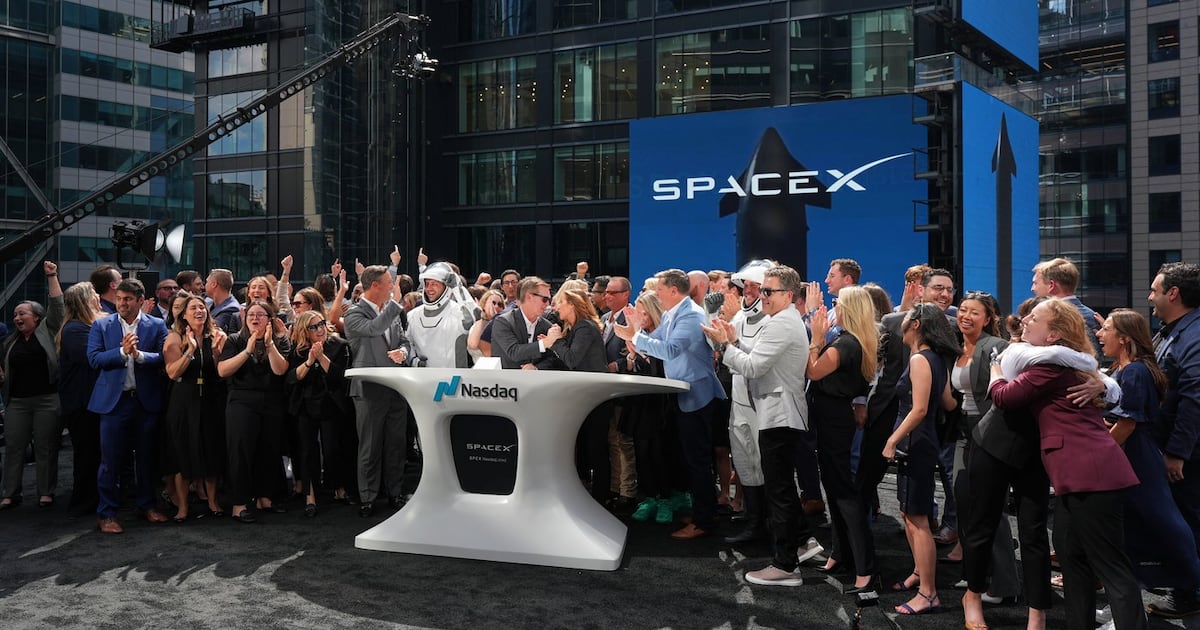
NEW YORK -- SpaceX's slip close to its initial public offering price risks turning a marquee stock-market debut into a confidence test, potentially unsettling retail investors and complicating decisions for other companies weighing high-profile listings. Elon Musk's company, spanning rockets to AI, debuted on June 12 and soared in the ensuing days, at one point valuing the company at well above US$2 trillion. Since then, trading has been rocky. The stock has slipped below its $150 opening price, but remained above the $135 offer price, with concerns about lofty tech stock valuations continuing to weigh on global indexes. SpaceX shares are at risk of falling below that level. They ended on Tuesday down 2.2 per cent at $136.08, their lowest closing level since the IPO, a week after they started trading as part of the Nasdaq 100 index. The stock dipped as low as $135.52. A break below the IPO price would be a psychological blow for SpaceX shares, said Matthew Maley, chief market strategist at Miller Tabak. "It raises the narrative that the stock is up on fluff, on speculation, on froth, and not on real fundamentals," Maley said. Investors who bought into the excitement around SpaceX's listing, "hoping to 'make a killing' will be disappointed," said Greg Halter, director of research at Carnegie Investment Counsel. He said weakness in SpaceX would put it more in line with 30 years of heavily hyped IPOs, where average and median returns over the first month are often negative. SpaceX did not immediately respond to a request for comment. Price discovery not panic? A drop below the IPO price would not be unusual for a newly listed company. Shares of Cerebras Systems, which went public in May, have dropped below the IPO price, and Meta, formerly known as Facebook, fell similarly after its debut. Investors often fixate on IPO prices and early trading, said Ryan Lee, senior vice president of product and strategy at financial services firm Direxion. "The reality is, (SpaceX) is still undergoing some of this price discovery process," Lee said. A fall for SpaceX below $135 would reflect "normal, albeit painful" market mechanics, especially as investors, venture capitalists and employees sell shares after lockups expire, said Gabriel Shahin, CEO at Falcon Wealth Planning. "A near-term dip below the $135 threshold would not fundamentally alter our current positioning or cause us to panic-sell," he said. Caution or green light for next IPOs? Some investors think SpaceX's stock performance could influence the market for future public listings. OpenAI and Anthropic are eyeing the public markets. Neither company responded to a request for comment. Carnegie's Halter said companies and investment banks considering large IPOs this year are watching SpaceX closely. "No one wants an IPO to flop or have the initial price be ratcheted down," Halter said. He suspects some IPOs would be pulled rather than priced at lower valuations. But Direxion's Lee said SpaceX's capital raise could encourage some companies with large funding needs to move faster. "If I'm OpenAI or if I'm Anthropic and I'm in this true arms race to build the frontier AI model and I need capital, I'm going to try to beat the other one out the door," Lee said. Risking retail traders' skepticism A drop below the IPO price could hit retail investors, who received about 20 per cent of the allocation, hard. "Many novice investors have approached SpaceX with a 'meme stock' mentality, buying in with capital they cannot afford to lose," Shahin said, warning that losses could fuel perceptions that markets favor insiders. "The market needs to understand that post-IPO volatility is normal." SpaceX's first earnings report will be a major test for the stock. Underwriters typically support stocks in the first 30 days and may do more for SpaceX given the deal's size, the public attention and the fact other high-profile offerings are imminent, said Maria Llerena, director of financial research at Domini Impact Investments. "Loss-making companies without a clear path to profitability are typically volatile and can fall below their IPO price," said Llerena.
Every SpaceX Starlink satellite has to dodge a collision almost weekly, and experts fear the worst
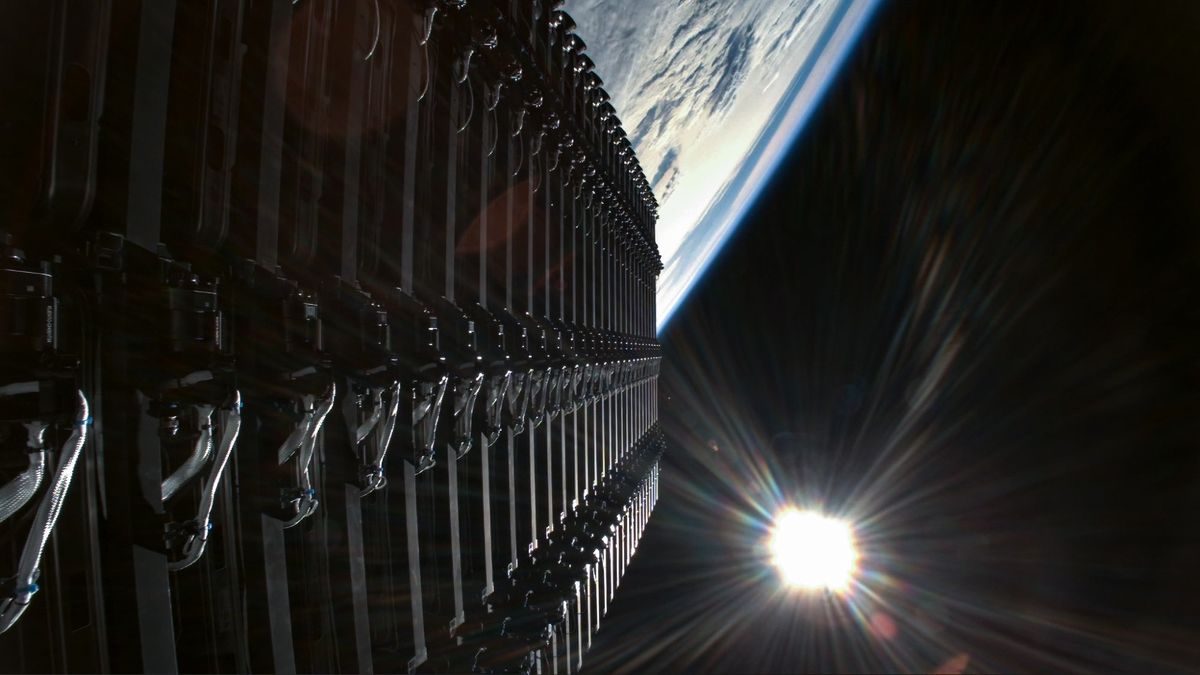
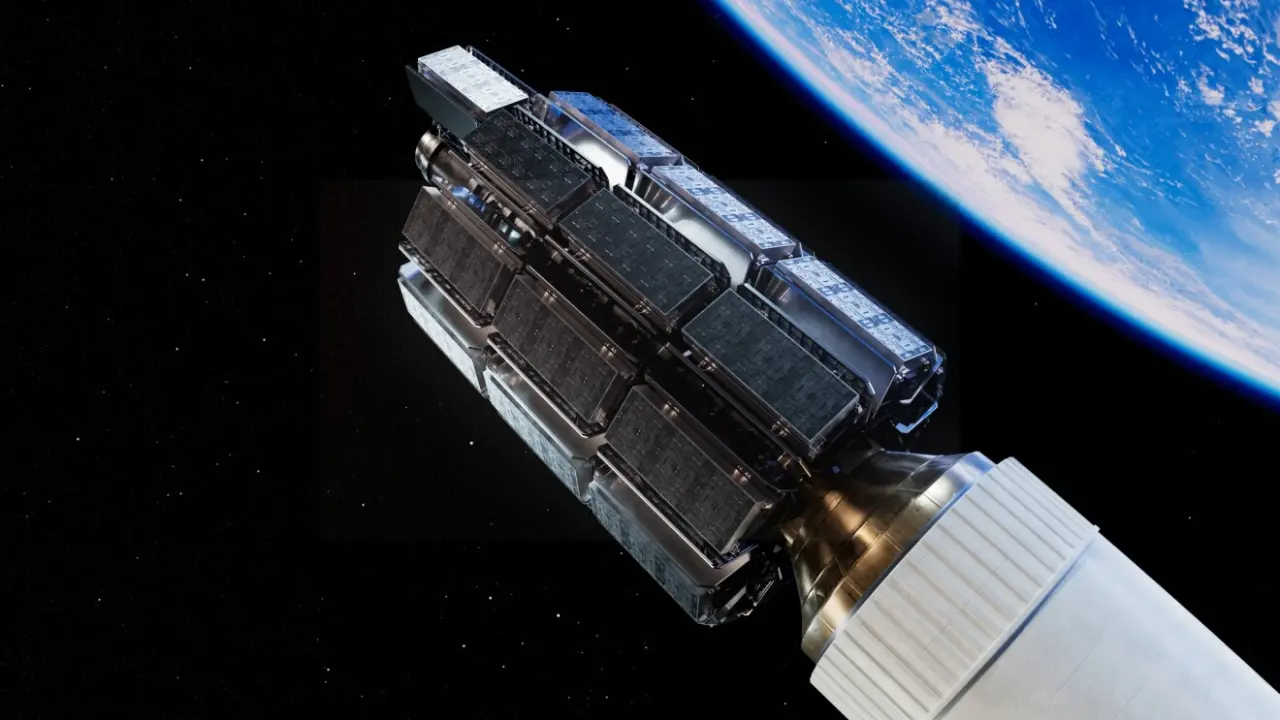
"I think we're heading towards a situation where there will be a collision involving an operational satellite in the constellation." SpaceX's Starlink satellites made over 355,000 collision avoidance maneuvers throughout the past year, with each satellite now dodging debris and other spacecraft on an almost weekly basis. The numbers are based on disclosures made by SpaceX in its latest semiannual report to the Federal Communications Commission (FCC). According to the latest report, Starlink satellites performed an overall 207,152 avoidance maneuvers between December 2025 and May 2026, up nearly 60,000 from the 148,696 reported in the previous half year. That brings the yearly total to over 355,000, more than three times as many as the constellation performed in 2024. On average, each Starlink satellite performed more than 40 space dodging maneuvers per year between June 1, 2025 and May 31, 2026. Experts fear the situation might soon get out of hand. "I think we're heading towards a situation where there will be a collision involving an operational satellite in the constellation," Hugh Lewis, a space sustainability expert and professor of astronautics at the University of Birmingham in the U.K., told Space.com. "And it will not be for the lack of trying to avoid those things. It will be in spite of all those maneuvers." The increase coincides with the growth of the internet-beaming constellation and the overall number of satellites in space in the past five years. Starlink grew from about 6,000 satellites in 2024 to more than 10,000 as of June 2026. Over the same time period, the overall number of operational spacecraft in orbit rose from around 10,000 to about 16,000. The SpaceX constellation orbits at altitudes between 298 miles (480 km) and 342 miles (550 kilometers) and uses an autonomous collision avoidance system that initiates a maneuver when the probability of a collision appears higher than 3 in 10 million. Lewis says that although SpaceX is "doing an excellent job" managing orbital traffic, the steep growth cannot continue without risks. "The avoidance maneuvers reduce the probability of a collision to about one in a million, which is so small that it's negligible," Lewis said. "The problem is that if you make a million manoeuvres and you have a residual probability of one in a million, you end up with an aggregate risk across your entire constellation that you can't get rid of." Lewis points out that with the expected continued rise in avoidance maneuvers (SpaceX has applied to the FCC to increase the size of its constellation to 100,000 satellites), SpaceX will have made a million avoidance maneuvers over the lifetime of the Starlink constellation as early as June 2027. By 2030, the constellation may be making more than a million maneuvers every year. At that point, the one in a million risk of a collision may no longer be negligible at all. Tommaso Sgobba, the Director of the International Association for the Advancement of Space Safety, told Space.com that the increase in collision avoidance maneuvers is a predictable certainty. "The more satellites you pack into [an orbital] shell, the more pairs of satellites exist that could potentially cross paths," he wrote in an email. "Adding satellites does not just add risk one unit at a time, it multiplies the number of possible pairings. Double the satellites in a shell and you roughly quadruple the number of pairs that need to be watched." Sgobba also said that the collision probabilities predicted are highly inaccurate as the effects of air drag, which change frequently with space weather, are currently impossible to predict. He said that due to the vast uncertainties in satellite trajectory predictions "operators lack tools to tell a real threat from statistical confusion," adding that "satellites are frequently dodging ghosts, burning fuel and shortening their operational lives in the process." SpaceX, being the largest constellation currently in orbit, takes the bulk of responsibilities for orbital maneuvering. Instead of communicating with the other operator to decide who will make the dodge, Starlink satellites automatically avoid other objects -- both space debris fragments or operational satellites -- whenever there is a conjunction alert. Other ambitious constellations, such as Amazon LEO or China's Thousand Sails, or Qianfan, are currently being deployed. Lewis said that the only way to safely manage multiple constellations is to make sure their orbits do not intersect. That, however, is not the case based on available information. The Thousand Sails constellation, in particular, is expected to occupy similar regions as Starlink. Many of the recently announced orbital data center projects want to launch into particular orbital regions that are convenient for their operations and are therefore likely to overlap. "The safe thing to do is to separate the constellations," Lewis said. "But then you are talking about orbital carrying capacity and the first mover benefit, because if I go into a particular altitude with my constellation, then nobody else can use it." Sgobba calls for predicted numbers of collision avoidance maneuvers based on satellite numbers to be mandatorily disclosed to regulators before applications are granted. "Right now, there is no clear requirement for a company to say, before launch, how many collision avoidance maneuvers a constellation of this size and density will need every year and whether the satellites carry enough fuel and automation to actually perform them all," Sgobba wrote. "In short, the crowding of orbit is not an accident waiting to happen. It is a manageable, predictable engineering workload and the argument worth making publicly is that regulators should be treating it that way, by asking for these numbers up front rather than reacting to headlines about near misses after the fact."
SpaceX Engineers Raise $115 Million to Make Construction Faster, Cheaper and Safer After Learning At 'a C
TerraFirma Raises Funds For Robotic Construction TerraFirma, in a press release on Tuesday, said Kleiner Perkins led a $100 million Series A. CEO Noah Schochet and co-founder Noah McGuinness previously worked at SpaceX on Starship, Starshield and Starlink. The company remotely operates construction equipment through tools including Xbox controllers and says its semi-autonomous machinery can cut costs and improve safety. It plans to hire 300 workers and to build a Texas factory and mission control center. "Infrastructure is a bottleneck to basically every single industry that needs to innovate over the next couple of decades," Schochet told CNBC. "There's such a deficit of people taking all of the great tech that has existed and been built for the last couple of decades and bringing it" to construction. SpaceX Lessons Target Construction Productivity Gap The pitch targets a sector with a productivity problem. The Federal Reserve Bank of Richmond said U.S. construction labor productivity fell more than 30% from 1970 to 2020, while overall U.S. productivity doubled. The Bureau of Labor Statistics projects 149,400 annual openings for construction laborers and helpers through 2034. Schochet said SpaceX showed him what construction lacks. "We're building rockets the size of skyscrapers at one a month, and all those processes for mass manufacturing automation, none of them are showing up in construction," he said. "It was all worth it," Schochet said. "We were learning at a crazy pace." Earth Projects Come Before Lunar Ambitions For now, Schochet said TerraFirma must prove itself on Earth. "The problem is you don't want to build a community based around a space economy that doesn't yet exist," he said. "You want to build it around the economic drivers that truly drive the world today." Image via Shutterstock Market News and Data brought to you by Benzinga APIs To add Benzinga News as your preferred source on Google, click here.

Is SpaceX Planning to Make a Smartphone to Rival the iPhone?
Space Exploration Technologies (NASDAQ: SPCX), also known as just SpaceX, is a company that could disrupt many different industries, including space travel and telecom. But one that investors may not have considered is the smartphone market. While its Starlink service offers mobile internet for smartphones, CEO Elon Musk has also hinted that entering the smartphone market may be a possibility. Image source: Getty Images. Where to invest $1,000 right now? Our analyst team just revealed what they believe are the 10 best stocks to buy right now, when you join Stock Advisor. See the stocks " The company reportedly has a prototype for a device that's similar to an iPhone According to a recent report from the Wall Street Journal, SpaceX has been working on a device that has a slimmer design than Apple's iPhone. While it's designed to help people interact with artificial intelligence (AI), its capabilities could certainly extend beyond that, as it's expected to use a Snapdragon chipset from Qualcomm. The device is nowhere near launching, and there is no certainty that it will even come to market. But with Musk being critical of Apple's restrictive app store policies, it also wouldn't be surprising if he were to want to bring his own smartphone or similar device to market, one that could rival Apple's popular devices. He has suggested in the past that while he isn't thrilled with the idea of doing so, he may feel compelled. "The idea of making a phone makes me want to die. But if we have to make a phone, we will. But we will aspire not to make a phone." Is SpaceX the ultimate growth stock to own? One of the most compelling reasons to invest in SpaceX despite its high valuation is that it has some tremendous growth opportunities. Not only can its reusable rockets revolutionize space travel, but its Starlink business could make it a big player in the telecom sector. And its biggest opportunities are in artificial intelligence (AI), with the company planning to put data centers into space. SpaceX arguably already has too many places to spend and invest in as it is. A smartphone may be a possibility down the road, but I wouldn't expect that to be a focus for the business at this stage. SpaceX has already been incurring billions in losses, and investing in too many different areas at once could prove to be costly and risky. While making risky investments can work for large tech companies with massive resources and strong financials, that strategy may not be as sound for a company such as SpaceX, which still needs to find its way out of the red. SpaceX may be an exciting stock to own, but it's also a highly risky one, and there are arguably far better growth stocks out there for investors that offer a better mix of growth and safety. Should you buy stock in Space Exploration Technologies right now? Before you buy stock in Space Exploration Technologies, consider this: The Motley Fool Stock Advisor analyst team just identified what they believe are the 10 best stocks for investors to buy now... and Space Exploration Technologies wasn't one of them. The 10 stocks that made the cut could produce monster returns in the coming years. Consider when Netflix made this list on December 17, 2004... if you invested $1,000 at the time of our recommendation, you'd have $398,160!* Or when Nvidia made this list on April 15, 2005... if you invested $1,000 at the time of our recommendation, you'd have $1,249,202!* Now, it's worth noting Stock Advisor's total average return is 918% -- a market-crushing outperformance compared to 209% for the S&P 500. Don't miss the latest top 10 list, available with Stock Advisor, and join an investing community built by individual investors for individual investors. See the 10 stocks " *Stock Advisor returns as of July 15, 2026. David Jagielski, CPA has no position in any of the stocks mentioned. The Motley Fool has positions in and recommends Apple and Qualcomm. The Motley Fool has a disclosure policy. The views and opinions expressed herein are the views and opinions of the author and do not necessarily reflect those of Nasdaq, Inc.

The 179 ETFs That Own SpaceX
This article mentions funds that have an issuer-initiated rating and/or track a Morningstar Index. For full disclosure information, please refer to the specific funds, which are demarcated with a * symbol, listed below. Space Exploration Technologies Corp. SPCX made its public market debut on June 12 to much fanfare. There was more demand than shares available, helping the stock open $15 higher than its $135 IPO price and end its first day as a public company above $160. It quickly rose to a high of $225 on June 16, then fell back to earth, dipping near its IPO price the week of July 13. Hundreds of exchange-traded funds and mutual funds bought shares of Elon Musk's space and artificial intelligence company for the first time amid these fluctuations. SpaceX is now the cornerstone of a few ETF portfolios and a satellite position in many others. Some ETFs that own the stock might surprise you. While space-themed, technology sector, or growth ETFs are expected landing places for the $2 trillion company, it also found its way into several value ETFs, one quality ETF, a Jewish advocacy ETF, and numerous broad market index ETFs. In total, US ETFs own around $16 billion worth of the stock across 179 products. Here are the categories where those owners are concentrated. Expected Buyers of SpaceX Two ETFs account for almost half of that $16 billion. Invesco QQQ Trust QQQ and its cheaper sibling, Invesco Nasdaq 100 ETF QQQM, held a 1.21% stake in SpaceX on July 10. That amounts to over 48 million shares worth over $7 billion. As one of the largest stocks listed on the Nasdaq exchange, it makes sense for these Nasdaq-100 tracking index ETFs to own sizable positions. How they got that weighting, however, is another story, which is covered in more detail here and touched on later. Other ETFs like ARK Innovation ETF ARKK and Baron First Principles ETF RONB own sizable chunks. The managers of these active ETFs prize innovative companies, and the inclusion of SpaceX in their lineups was mostly a foregone conclusion. In fact, Baron Funds owned SpaceX in Baron First Principles ETF and other funds before it was a public company. Elsewhere, SpaceX stock makes appearances in several ETFs covering themes from space to artificial intelligence to innovative technology. It makes the cut in a number of growth-oriented ETFs and a handful of options income ETFs, too. Across all 179, Baron First Principles ETF carries the highest weighting at over 30%, as of July 10. Unexpected Buyers of SpaceX Companies like SpaceX test the rules of portfolio construction. And sometimes those rules don't yield the portfolio you'd expect. Recently, Micron MU unexpectedly became a 25% position in a value ETF, for example. SpaceX also found its way into several value ETFs. The stock claims small positions in each, but its presence is surprising, given concerns with the stock's lofty market cap relative to its total sales and negative net earnings. Negative earnings do funny things to price ratios commonly used by index funds to distinguish value stocks from growth stocks. Indexes usually employ several measures of value to avoid one outlier from bringing an otherwise growth stock into a value index, and vice versa. SpaceX seems to have slipped through some cracks. Stocks without a clear style distinction can be partially allocated between both the Russell 1000 Value and Growth indexes. As a brand-new public company, the stock doesn't have enough data to be firmly categorized as growth or value yet, so it lands near the midpoint for now. IShares Russell 1000 Growth ETF IWF holds a 0.22% stake. Schwab US Large-Cap Value ETF SCHV is a little different. Unlike most, the Dow Jones index it tracks uses a stock's price/earnings ratio as a component in its value scoring system. SpaceX's negative earnings skews its P/E ratio far to the value side of the board, likely resulting in its inclusion here. Other index families use the inverse, earnings/price, to sidestep this peculiarity. As an actively managed ETF, Fidelity Enhanced Large Cap Value ETF FELV doesn't have to adhere to an index's binary rules. If its managers don't think a stock belongs in the Russell 1000 Value Index, they can remove it. Fidelity's managers haven't yet removed SpaceX from its value portfolio. How Big Is SpaceX in Major Indexes? Even a small position in SpaceX means a large stake in the largest index funds. Vanguard Total Stock Market ETF's VTI total fund size of nearly $2.3 trillion means that it owns over $3.2 billion worth of SpaceX shares despite its 0.14% weighting at the end of June. In total, US index ETFs hold roughly 14% of SpaceX's outstanding free-float shares, or $13.3 billion of $93.6 billion free float. Several major broad market indexes tweaked their rules earlier this year to allow SpaceX early entry. Much ink has been spilled on the purpose and validity of these changes (including from me), but now that the dust has settled, SpaceX is a component in 82 broad market index ETFs. Still, the stock carries a very small position in most and no weight in a couple of notable bogies. Nasdaq's relatively narrow portfolio and unique weighting scheme give the stock much more attention than other widely followed index ETFs.
SpaceX bond yields rocket towards junk
We're old enough to remember when the market cap of the lossmaking telecom SpaceX was bigger than Amazon's. Heck, for a few precious moments it was bigger than Microsoft's. Maybe one day it will be again, but for now the stock is down 38 per cent from its peak post-IPO valuation. Punters lucky enough to have been awarded a stock allocation at the outset are still sitting on a tasty [checks notes] 0.8 per cent paper profit at pixel time. But what about the bondholders? Given heavy issuance by hyperscalers, SpaceX's 2056 bonds were priced with a fairly hefty 175 basis points of additional yield over similar maturity US Treasuries. Sure, this was less than the 200 basis point initial price talk, but as we learnt in Alphaville's debt capital market boot camp, trailing a tasty IPT to lure punters into the deal and then reining it back in as the book builds is totally normal. And as we've already covered, the full $25bn of benchmark bonds -- issued across the curve -- had a rocky first couple of days of trading. Checking back today, it turns out that the inauspicious beginning was just a prelude to the train wreck that has since unfolded. If you'd been allocated $100mn of the SpaceX 2056 bonds, you've turned $100mn into $90.7mn in less than a month. Sure, long-dated US Treasury bonds have fallen in value, and this general sell-off at the long end has done some of the work. But the spread on SpaceX 2056 -- the additional yield you're paid to compensate you for the risk that you don't get repaid (among other things) has now widened from the initial +175bps to a whopping +231bps doing more than two-thirds of the work. For the non-bond-geeks, this is a lot of spread widening. Looking only at the nine days since the bonds were included in ICE BofA indices at the end of June, this spread-widening has made SpaceX 2056 the single worst-performing US dollar triple-B benchmark bond: Again, for the non-bond-geeks, there are a lot of benchmark triple-B corporate bonds. Of the 5,543 bonds in the ICE BofA triple-B US dollar corporate bond index, 1,450 have at least $1bn face value. That said, as the chart shows, Oracle bonds are giving SpaceX bonds a run for their money. When we pulled up the chart showing where the entire universe of triple-B US dollar corporate bonds are valued, it increasingly looks like the market is pricing SpaceX and Oracle in line with one another. And when we overlay the average spread for double-B US dollar corporate bonds across different maturities (the pink line), it looks a lot like the type of risk that the market has assigned to both SpaceX and Oracle bonds is junk risk. As long as Oracle and SpaceX don't go bust, these higher yield premiums should turn into higher annualised returns in the future. And this should be of some comfort to hold-to-maturity bondholders who'd prefer not to look at such short-term performance measures. But for the companies and their stockholders -- given that analysts had the companies down to tap bond markets as the main source of external finance for years to come -- the shift will be an unwelcome one. Still, there are always banks and private credit funds. Oh.

Is SpaceX Planning to Make a Smartphone to Rival the iPhone?
Space Exploration Technologies (NASDAQ: SPCX), also known as just SpaceX, is a company that could disrupt many different industries, including space travel and telecom. But one that investors may not have considered is the smartphone market. While its Starlink service offers mobile internet for smartphones, CEO Elon Musk has also hinted that entering the smartphone market may be a possibility. Missed Nvidia in 2009? This Rare Signal Is Flashing Again. In 2009, a "Double Down" signal flashed for a little-known chipmaker called Nvidia. For the first time in years, that same "Total Conviction" signal is flashing for a company 1/100th the size of Nvidia. Continue " The company reportedly has a prototype for a device that's similar to an iPhone According to a recent report from the Wall Street Journal, SpaceX has been working on a device that has a slimmer design than Apple's iPhone. While it's designed to help people interact with artificial intelligence (AI), its capabilities could certainly extend beyond that, as it's expected to use a Snapdragon chipset from Qualcomm. The device is nowhere near launching, and there is no certainty that it will even come to market. But with Musk being critical of Apple's restrictive app store policies, it also wouldn't be surprising if he were to want to bring his own smartphone or similar device to market, one that could rival Apple's popular devices. He has suggested in the past that while he isn't thrilled with the idea of doing so, he may feel compelled. "The idea of making a phone makes me want to die. But if we have to make a phone, we will. But we will aspire not to make a phone." Is SpaceX the ultimate growth stock to own? One of the most compelling reasons to invest in SpaceX despite its high valuation is that it has some tremendous growth opportunities. Not only can its reusable rockets revolutionize space travel, but its Starlink business could make it a big player in the telecom sector. And its biggest opportunities are in artificial intelligence (AI), with the company planning to put data centers into space. SpaceX arguably already has too many places to spend and invest in as it is. A smartphone may be a possibility down the road, but I wouldn't expect that to be a focus for the business at this stage. SpaceX has already been incurring billions in losses, and investing in too many different areas at once could prove to be costly and risky. While making risky investments can work for large tech companies with massive resources and strong financials, that strategy may not be as sound for a company such as SpaceX, which still needs to find its way out of the red.
SpaceX reportedly shows prototype of smartphone to investors as IPO looms
Elon Musk denied the Wall Street Journal report, calling it 'utterly false,' but the implications for telecom and tech markets are hard to ignore The Wall Street Journal reported on July 1, 2026, that SpaceX showed a prototype of a slim, AI-driven device to select investors. The device was described as thinner than an iPhone, powered by a Qualcomm Snapdragon chipset, and deeply integrated with xAI technology. Elon Musk immediately denied it, taking to X to call the report "utterly false." What we know about the device According to the WSJ report, the prototype was presented to institutional investors and stakeholders as part of SpaceX's capital-raising efforts ahead of its anticipated IPO. The company has been preparing to go public, with its offering projected for June 2026. Musk denied SpaceX was developing a phone as recently as February 2026. That's barely four months before the company allegedly showed one to investors. The Starlink connection SpaceX's Starlink Direct to Cell initiative has been forging partnerships with telecommunications firms, positioning satellite-based mobile service as a complement to traditional cell towers. One of the most notable moves in this space has been a spectrum deal with EchoStar valued at $1 billion. Why crypto markets should pay attention There's no evidence linking this prototype to any cryptocurrency or blockchain technology. No wallet integration, no token, no decentralized anything. The research is clear on this point. The SpaceX IPO itself is a gravitational event for capital allocation. When one of the most anticipated public offerings in history hits the market, it pulls institutional money from other asset classes. Crypto has historically felt the effects of major tech IPOs as portfolio managers rebalance. Starlink reaching underserved populations with a low-cost, AI-powered device could expand the addressable market for mobile-first crypto products in regions where traditional telecom infrastructure has lagged.
Is SpaceX Planning to Make a Smartphone to Rival the iPhone?
Space Exploration Technologies (SPCX 2.24%), also known as just SpaceX, is a company that could disrupt many different industries, including space travel and telecom. But one that investors may not have considered is the smartphone market. While its Starlink service offers mobile internet for smartphones, CEO Elon Musk has also hinted that entering the smartphone market may be a possibility. The company reportedly has a prototype for a device that's similar to an iPhone According to a recent report from the Wall Street Journal, SpaceX has been working on a device that has a slimmer design than Apple's iPhone. While it's designed to help people interact with artificial intelligence (AI), its capabilities could certainly extend beyond that, as it's expected to use a Snapdragon chipset from Qualcomm. The device is nowhere near launching, and there is no certainty that it will even come to market. But with Musk being critical of Apple's restrictive app store policies, it also wouldn't be surprising if he were to want to bring his own smartphone or similar device to market, one that could rival Apple's popular devices. He has suggested in the past that while he isn't thrilled with the idea of doing so, he may feel compelled. "The idea of making a phone makes me want to die. But if we have to make a phone, we will. But we will aspire not to make a phone." Is SpaceX the ultimate growth stock to own? One of the most compelling reasons to invest in SpaceX despite its high valuation is that it has some tremendous growth opportunities. Not only can its reusable rockets revolutionize space travel, but its Starlink business could make it a big player in the telecom sector. And its biggest opportunities are in artificial intelligence (AI), with the company planning to put data centers into space. SpaceX arguably already has too many places to spend and invest in as it is. A smartphone may be a possibility down the road, but I wouldn't expect that to be a focus for the business at this stage. SpaceX has already been incurring billions in losses, and investing in too many different areas at once could prove to be costly and risky. While making risky investments can work for large tech companies with massive resources and strong financials, that strategy may not be as sound for a company such as SpaceX, which still needs to find its way out of the red. SpaceX may be an exciting stock to own, but it's also a highly risky one, and there are arguably far better growth stocks out there for investors that offer a better mix of growth and safety.

SpaceX's slide risks turning blockbuster IPO into confidence test
NEW YORK, July 15 (Reuters) - SpaceX's slip close to its initial public offering price risks turning a marquee stock-market debut into a confidence test, potentially unsettling retail investors and complicating decisions for other companies weighing high-profile listings. Elon Musk's company, spanning rockets to AI, debuted on June 12 and soared in the ensuing days, at one point valuing the company at well above $2 trillion. Since then, trading has been rocky. The stock has slipped below its $150 opening price, but remained above the $135 offer price, with concerns about lofty tech stock valuations continuing to weigh on global indexes. SpaceX shares are at risk of falling below that level. They ended on Tuesday down 2.2% at $136.08, their lowest closing level since the IPO, a week after they started trading as part of the Nasdaq 100 index <.NDX>. The stock dipped as low as $135.52. A break below the IPO price would be a psychological blow for SpaceX shares, said Matthew Maley, chief market strategist at Miller Tabak. "It raises the narrative that the stock is up on fluff, on speculation, on froth, and not on real fundamentals," Maley said. Investors who bought into the excitement around SpaceX's listing, "hoping to 'make a killing' will be disappointed," said Greg Halter, director of research at Carnegie Investment Counsel. He said weakness in SpaceX would put it more in line with 30 years of heavily hyped IPOs, where average and median returns over the first month are often negative. SpaceX did not immediately respond to a request for comment. PRICE DISCOVERY NOT PANIC? A drop below the IPO price would not be unusual for a newly listed company. Shares of Cerebras Systems, which went public in May, have dropped below the IPO price, and Meta, formerly known as Facebook, fell similarly after its debut. Investors often fixate on IPO prices and early trading, said Ryan Lee, senior vice president of product and strategy at financial services firm Direxion. "The reality is, (SpaceX) is still undergoing some of this price discovery process," Lee said. A fall for SpaceX below $135 would reflect "normal, albeit painful" market mechanics, especially as investors, venture capitalists and employees sell shares after lockups expire, said Gabriel Shahin, CEO at Falcon Wealth Planning. "A near-term dip below the $135 threshold would not fundamentally alter our current positioning or cause us to panic-sell," he said. CAUTION OR GREEN LIGHT FOR NEXT IPOS Some investors think SpaceX's stock performance could influence the market for future public listings. OpenAI and Anthropic are eyeing the public markets. Neither company responded to a request for comment. Carnegie's Halter said companies and investment banks considering large IPOs this year are watching SpaceX closely. "No one wants an IPO to flop or have the initial price be ratcheted down," Halter said. He suspects some IPOs would be pulled rather than priced at lower valuations. But Direxion's Lee said SpaceX's capital raise could encourage some companies with large funding needs to move faster. "If I'm OpenAI or if I'm Anthropic and I'm in this true arms race to build the frontier AI model and I need capital, I'm going to try to beat the other one out the door," Lee said. RISKING RETAIL TRADERS' SKEPTICISM A drop below the IPO price could hit retail investors, who received about 20% of the allocation, hard. "Many novice investors have approached SpaceX with a 'meme stock' mentality, buying in with capital they cannot afford to lose," Shahin said, warning that losses could fuel perceptions that markets favor insiders. "The market needs to understand that post-IPO volatility is normal." SpaceX's first earnings report will be a major test for the stock. Underwriters typically support stocks in the first 30 days and may do more for SpaceX given the deal's size, the public attention and the fact other high-profile offerings are imminent, said Maria Llerena, director of financial research at Domini Impact Investments. "Loss-making companies without a clear path to profitability are typically volatile and can fall below their IPO price," said Llerena. (Reporting by Laura Matthews in New York; Additional reporting by Lewis Krauskopf in New York; editing by Megan Davies and Rod Nickel)

Amazon Leo beats SpaceX Starlink to South Africa
Amazon Leo has partnered with Herotel, South Africa's largest ISP, to help connect rural population. Starlink is not available in the country. Amazon has announced that its satellite internet constellation, Leo, will provide connectivity for South Africa's largest internet service provider (ISP), Herotel. The company said that Leo will help to connect homes and small businesses that are too uneconomical to get connected with fiber and fixed wireless. Herotel will use Amazon Leo's technology as part of a new service it is offering called Evry. Evry will launch commercially in 2027 to get more residential customers connected to the net. Interestingly, this is the first agreement of this kind for Amazon Leo in Africa. While internet connectivity is a given for most people in places like the United States and Europe, the situation is different in South Africa. According to 2024 data from the International Telecommunication Union (ITU), only 78.4% of individuals are using the internet in South Africa. Amazon notes this "persistent challenge", saying that millions of people who live on farms, in small towns, and in rural communities, still lack reliable internet access due to distance, terrain, and low population density, which make traditional infrastructure impractical and expensive. With Amazon Leo, customers can connect to the net via compact antennas and there is no need for fiber or fixed wireless infrastructure at their premises. Amazon Leo satellites orbit the Earth at 590 kilometers above the planet and deliver internet speeds capable of video calls, streaming, remote work, and online learning. The fact that Amazon Leo is powering this service is good news. Due to the cost of getting satellite constellations into orbit, there are relatively few organizations offering this type of service. The leader of the pack is SpaceX with its Starlink constellation, but others offer similar services, including Eutelsat OneWeb. Notably, Starlink is not available to customers in South Africa yet. By introducing more competition, theoretically we could see prices come down for these services. In some countries, Starlink can be more than twice as expensive as broadband, so lower prices would be nice.
With a Nearly 7% Dividend Yield, Is Verizon Stock a Buy on SpaceX Fears?
Mobile operator Verizon (NYSE: VZ) has seen its shares sell off in the wake of the SpaceX (NASDAQ: SPCX) IPO, lifting Verizon's dividend yield to 6.7%. The sell-off looks overdone in my view, making the stock an attractive buy at current levels. Investors worry that SpaceX will use its leadership in satellite internet to challenge traditional mobile carriers like Verizon. However, there are multiple hurdles to this happening. Two of the biggest are technology constraints and regulatory issues. Missed Nvidia in 2009? This Rare Signal Is Flashing Again. In 2009, a "Double Down" signal flashed for a little-known chipmaker called Nvidia. For the first time in years, that same "Total Conviction" signal is flashing for a company 1/100th the size of Nvidia. Continue " Image source: The Motley Fool. A look at the potential threat Cellular networks, like Verizon's, use dense, localized cell towers and small cell antennas that reuse spectrum thousands of times within a single city. Low-earth-orbit (LEO) satellites like those SpaceX deploys, on the other hand, project massive beams over large areas. If millions of people in a dense city or suburb tried to stream video via direct-to-cell satellite at the same time, capacity would collapse. Meanwhile, modern green building initiatives, such as reinforced concrete, steel, and low-e glass used in office buildings, block satellite signals. Even SpaceX's VP for satellite engineering, Michael Nicolls, stated this at the company's Mobile World Conference: "Satellite is complementary to terrestrial networks; it cannot provide the data density that terrestrial networks have. But it can augment terrestrial networks in areas where they cannot reach. Or when terrestrial networks need additional capacity." Meanwhile, after discussing the potential for SpaceX to offer a mobile network with a former FCC attorney, BNP Paribas analyst Sam McHugh concluded there were few ways for SpaceX to enter the mobile space unless those companies struck a deal with SpaceX. He noted that current FCC rules prevent Elon Musk's company from requiring carriers to enter wholesale network agreements or to provide roaming access. While there is a risk SpaceX gets into space by acquiring a carrier like T-Mobile, the three big carriers did form a joint venture to help address coverage gaps in the U.S. by pooling spectrum, looking to fend off any risk from satellite companies. Bundling opportunity ahead Putting aside SpaceX's concerns, Verizon has a big opportunity ahead as it starts to cross-sell and bundle wireless and broadband services to the customers it gained when it acquired Frontier Communications earlier this year. This should be a nice subscriber and revenue growth driver, as only about 20% of its customers have both wireless and broadband subscriptions. Meanwhile, Verizon's dividend is safe and well covered, with the company having low leverage and a dividend (around $12 billion projected this year) that is easily covered by its free cash flow ($21.5 billion forecast). With a nearly 7% yield and a forward price-to-earnings (P/E) ratio of 8.6 based on 2026 earnings estimates, I think this dividend stock looks like a buy on its recent price dip. Should you buy stock in Verizon Communications right now? Before you buy stock in Verizon Communications, consider this: The Motley Fool Stock Advisor analyst team just identified what they believe are the 10 best stocks for investors to buy now... and Verizon Communications wasn't one of them. The 10 stocks that made the cut could produce monster returns in the coming years. Consider when Netflix made this list on December 17, 2004... if you invested $1,000 at the time of our recommendation, you'd have $398,160!* Or when Nvidia made this list on April 15, 2005... if you invested $1,000 at the time of our recommendation, you'd have $1,249,202!* Now, it's worth noting Stock Advisor's total average return is 918% -- a market-crushing outperformance compared to 209% for the S&P 500. Don't miss the latest top 10 list, available with Stock Advisor, and join an investing community built by individual investors for individual investors. See the 10 stocks " *Stock Advisor returns as of July 15, 2026. Geoffrey Seiler has no position in any of the stocks mentioned. The Motley Fool recommends T-Mobile US and Verizon Communications. The Motley Fool has a disclosure policy. The views and opinions expressed herein are the views and opinions of the author and do not necessarily reflect those of Nasdaq, Inc.
With a Nearly 7% Dividend Yield, Is Verizon Stock a Buy on SpaceX Fears?
Mobile operator Verizon (NYSE: VZ) has seen its shares sell off in the wake of the SpaceX (NASDAQ: SPCX) IPO, lifting Verizon's dividend yield to 6.7%. The sell-off looks overdone in my view, making the stock an attractive buy at current levels. Investors worry that SpaceX will use its leadership in satellite internet to challenge traditional mobile carriers like Verizon. However, there are multiple hurdles to this happening. Two of the biggest are technology constraints and regulatory issues. Missed Nvidia in 2009? This Rare Signal Is Flashing Again. In 2009, a "Double Down" signal flashed for a little-known chipmaker called Nvidia. For the first time in years, that same "Total Conviction" signal is flashing for a company 1/100th the size of Nvidia. Continue " A look at the potential threat Cellular networks, like Verizon's, use dense, localized cell towers and small cell antennas that reuse spectrum thousands of times within a single city. Low-earth-orbit (LEO) satellites like those SpaceX deploys, on the other hand, project massive beams over large areas. If millions of people in a dense city or suburb tried to stream video via direct-to-cell satellite at the same time, capacity would collapse. Meanwhile, modern green building initiatives, such as reinforced concrete, steel, and low-e glass used in office buildings, block satellite signals. Even SpaceX's VP for satellite engineering, Michael Nicolls, stated this at the company's Mobile World Conference: "Satellite is complementary to terrestrial networks; it cannot provide the data density that terrestrial networks have. But it can augment terrestrial networks in areas where they cannot reach. Or when terrestrial networks need additional capacity." Meanwhile, after discussing the potential for SpaceX to offer a mobile network with a former FCC attorney, BNP Paribas analyst Sam McHugh concluded there were few ways for SpaceX to enter the mobile space unless those companies struck a deal with SpaceX. He noted that current FCC rules prevent Elon Musk's company from requiring carriers to enter wholesale network agreements or to provide roaming access. While there is a risk SpaceX gets into space by acquiring a carrier like T-Mobile, the three big carriers did form a joint venture to help address coverage gaps in the U.S. by pooling spectrum, looking to fend off any risk from satellite companies. Bundling opportunity ahead Putting aside SpaceX's concerns, Verizon has a big opportunity ahead as it starts to cross-sell and bundle wireless and broadband services to the customers it gained when it acquired Frontier Communications earlier this year. This should be a nice subscriber and revenue growth driver, as only about 20% of its customers have both wireless and broadband subscriptions.
SpaceX stock falls 33% from peak, slips below $135 IPO price: Here's why
SpaceX shares have fallen below their IPO (Initial Public Offering) price, raising concerns among investors who bought the stock during its market debut. The company's shares closed at $136.08 on Tuesday, just above the IPO price of $135, and later slipped below that level. The IPO price is important because it is the price at which investors first bought the company's shares when it went public. Falling below the IPO price is seen as a negative sign because it means early investors are now losing money on their investment. SpaceX had a very strong stock market debut. The company completed the world's biggest IPO and raised more than $85 billion after the overallotment option was exercised, according to The Motley Fool. According to Bloomberg, the stock has fallen by almost one-third from its highest price after the IPO. This has erased nearly $850 billion in the company's market value. SpaceX was already very popular with investors before its IPO because of its space technology business and the leadership of Elon Musk. The company has three main businesses: rocket launches, satellite internet services, and artificial intelligence. Elon Musk is one of the main reasons many people want to invest in SpaceX. Some investors do not agree with all of his plans, but many others believe in his vision for the future. SpaceX also continued to grow last year. According to The Motley Fool, the company made more than $18 billion in revenue, which was over 30% higher than the year before. Even though SpaceX made more money, the company still lost $4.9 billion. This is because it is spending a lot of money to build new space technology. The company may continue spending heavily because making advanced space technology is very expensive. Later this year, SpaceX plans to launch its fully reusable Starship rocket with payloads. This will be an important step for the company's future plans. Also read: Why are oil and gas prices so high? US is the world's top oil producer and consumer explained Ken Mahoney, CEO of Mahoney Asset Management, said he does not believe the stock has reached its lowest point yet. He said investors should watch whether enough buyers are willing to purchase the additional shares entering the market, according to Bloomberg. Even after the recent decline, Wall Street remains largely optimistic about SpaceX. More than 80% of analysts covering the company have Buy ratings on the stock. The average analyst price target is $236.25, which is over 70% higher than Tuesday's closing price. Several major investment banks, including Morgan Stanley, JPMorgan Chase and Goldman Sachs, started coverage with positive ratings. SpaceX was recently added to the Nasdaq-100 Index through the exchange's fast-entry rules, another major milestone for the company. Seven of those companies posted double-digit losses, while the average decline was around 12%. The report said that if SpaceX follows this historical trend, a $10,000 investment made near the IPO could be worth about $8,800 after one year. The history suggests investors should not rush into IPO stocks, as better buying opportunities may appear after the initial excitement fades. Bloomberg noted that many of the biggest U.S. IPOs this year have also struggled. Six of the ten largest offerings are now trading below the price at which they closed on their first trading day. Talley Leger, chief market strategist at Wealth Consulting Group, said he may consider buying SpaceX shares if the stock falls further, because he likes the company's long-term vision, according to Bloomberg. For now, investors are closely watching whether SpaceX can recover above its IPO price or continue its recent downward trend.
Needham raises SpaceX stock price target to $250 on AI, Starship By Investing.com
Investing.com - Needham raised its price target on SpaceX (NASDAQ:SPCX) to $250 from $200 while maintaining a Buy rating on Tuesday. The upgrade comes as shares trade at $136, near their 52-week low of $135.52, following an 8.2% decline over the past week. According to InvestingPro analysis, the stock appears undervalued at current levels, potentially offering investors an attractive entry point. The firm cited the company's release of Grok 4.5 on July 8, SpaceX's first AI model built for coding and agentic work. The model was trained on Cursor developer data and has received strong reviews on third-party AI benchmarks. Needham noted the model does not quite match leading models from Anthropic or OpenAI but puts SpaceXAI back on track after Elon Musk said in March the company had to completely rebuild its AI program. SpaceX announced its Starship flight 13 is scheduled to launch as early as July 16. The flight will deliver 20 full-size Starlink V3 test units to orbit and advance Ship and Booster re-usability. Needham said AI model performance and Starship success to orbit are key unlocks for the company's total addressable market. The firm raised its price target on increased confidence in execution. InvestingPro data reveals analysts predict the company will turn profitable this year, with 13 additional ProTips available to subscribers. In other recent news, flyExclusive, Inc. has completed its acquisition of aviation assets from Jet.AI. This transaction includes Jet.AI's Jet Card members, two HondaJets, one Citation CJ4, and three future Citation CJ3 delivery positions valued at approximately $4.1 million. Additionally, flyExclusive gained approximately $6.1 million in securities through indirect ownership of Space Exploration Technologies Corp. shares and about $5.3 million in cash. Meanwhile, SpaceX has received significant attention from analysts. Evercore ISI initiated coverage on SpaceX with an "outperform" rating and set a price target of $230. Stifel reiterated a "Buy" rating with a $190 price target, highlighting the upcoming Starship Flight 13 launch. Raymond James also reiterated a "Strong Buy" rating with an $800 price target, noting a significant reduction in the time between recent Starship flights. Deutsche Bank released an analysis suggesting that SpaceX could achieve cost parity between orbital and terrestrial data centers by the early 2030s. This article was generated with the support of AI and reviewed by an editor. For more information see our T&C.

A SpaceX vet raised $65M to pull wire harnesses out of the Cold War era
When Senra CEO Jordan Black was a SpaceX engineer, he took on the job of scaling up the company's wire harnesses to support production of Starship, the company's next-generation rocket. Wire harnesses are what they sound like: the internal electrical cabling that runs through a rocketship, car, plane, or tractor and becomes increasingly important the smarter those vehicles get. They're bespoke, put together by technicians who are, functionally, experienced craftspeople. "I traveled all over the world to go visit wire harness companies," Black told TechCrunch last month. "It really hasn't changed since the Cold War era of wooden tables [and] manual processes." Black and co-founder Benjamin Shanahan started Senra in 2023 to offer a more modern solution to vehicle manufacturers. Today, the startup is announcing a $65 million Series B round, co-led by Lowercarbon and Interlagos with participation from General Catalyst, Sequoia Capital, Andreessen Horowitz, and Founders Fund, among others. Serna isn't looking to take humans out of the handmaking process -- at least not while robots find manipulating wires a challenge and relevant training data remains scarce. Instead, it's turning to software tools and other forms of automation to modernize aspects of the traditional manual work. The company is benefiting from the surge of money into U.S. manufacturing, particularly the defense industrial base. While Black couldn't disclose customers, he said they include builders of "anything from submarines and maritime vehicles, to defense vehicle systems on land, to launch vehicles, to satellites." If it doesn't sound immediately important, consider a recent wire harness disaster. In 2023, Boeing discovered that its Starliner spacecraft's wiring was held together with flammable tape, forcing an expensive delay while the entire wiring system was redone. Black points to that experience as a reason to raise the standards for wire harnessing, using automated systems to track materials and engineering changes. "Having it all in the same software is probably the most important thing, because it's all the little inputs that happen that can make a catastrophic change down the road," he said. Senra uses Amp, a proprietary software platform, to standardize the inputs throughout the wiring process and produce a digital twin to guide its technicians, who are trained by the company in what Black says is the only federally certified wire harness training program. The company is also, as it scales, finding ways to automate more of the process. "It goes back to the Elon principle of, 'automation is last,'" Black told TechCrunch. "We're working on it now, but a lot of it the standardization and the foundation building that made SpaceX be able to scale something like rockets, which you could only build one a year if you were lucky, and now they do hundreds a year." Senra -- which, by the way, is "harness" spelled backwards, minus the "h" and "s," because Black says the company takes the "horsesh*t" out of harnesses -- produces 1,000 each month across two different factories and plans to increae production to 10,000 a month in 2027.

SpaceX's IPO Is Drifting Back Toward Its Offer Price
In an IPO, the offer price is the anchor many buyers judge the deal against, even though a new stock is still "finding" its level. SpaceX has cooled from its early pop: shares closed at $136.08 after dipping near $135, below the $150 opening trade, as investors debate how much future growth is already baked into big-name tech. Reuters notes that IPO banks often try to steady trading in the first few weeks through price-stabilization trades and the "gre.. enshoe" option, which lets underwriters buy shares to limit early selling pressure. That support is temporary, so if the stock is still leaning on $135 as the initial window fades, the market can start to focus more on the next wave of supply, like shares that can be sold later when lockups end. A clean break below the offer price can also change the story around the listing, making it harder for other mega-IPO hopefuls that bankers have been watching to justify aggressive valuations. Why should I care? For markets: SpaceX's $135 level becomes a bigger test once the early IPO "training wheels" come off. The offer price matters because it's where underwriters have the most incentive to keep the stock orderly right after the listing, when they can use stabilization and greenshoe-related buying to absorb some selling. But that backstop is time-bound. If SpaceX is still hovering around $135 as that period ends, the balance can tilt toward regular post-IPO forces, including later selling by early holders once lockups expire. And when a high-profile deal starts trading below its offer price in that phase, future issuers and banks often have to offer a larger discount to attract buyers, or delay a launch altogether, which is why the market is treating SpaceX as a read-through for the next big listings.

Reditus readies first spacecraft for SpaceX launch
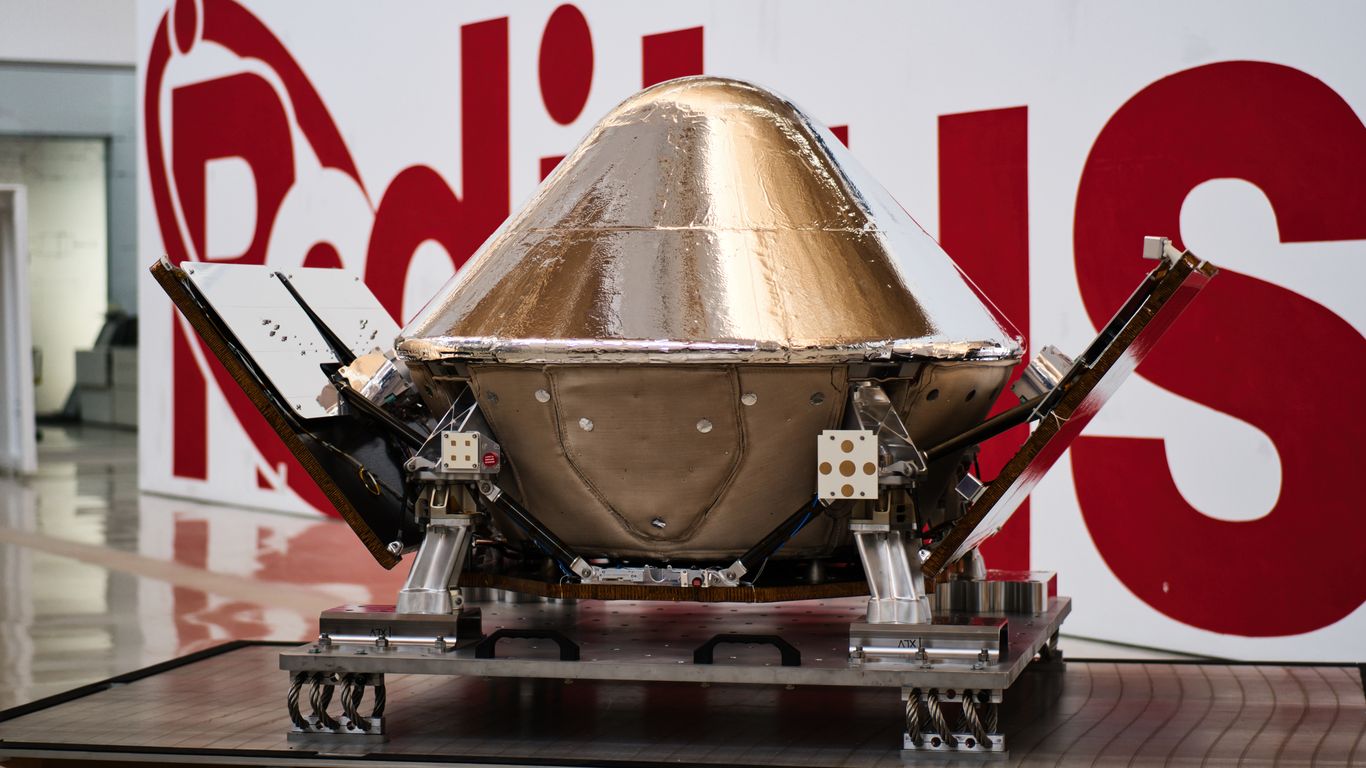
"Hypersonics is one of the areas where there has been a tremendous amount of development in recent years," Crum said in an interview. Driving the news: Reditus recently completed construction of its first spacecraft, ENOS. It has been sent to Vandenberg Space Force Base, California, and is scheduled to launch aboard a SpaceX rideshare this fall. * ENOS, weighing some 440 pounds, is expected to stay in orbit for two months, after which it will de-orbit and splash down off Florida for recovery. * "As we re-enter, we have the relatively unique capability of hitting the atmosphere at north of Mach 25," Crum said. "There are very few things in human existence that go that quickly." Zoom in: Reditus is billing this first mission, focused on commercial microgravity research and manufacturing, as a demonstration, proving to the world it can bring things back from space. * "Things are going to get higher in altitude, faster -- and this is just part of the infrastructure that is needed to keep up," Crum said. State of play: Reditus raised a little more than $7 million last year. * The startup, based in Atlanta, employs around 12 people. What we're watching: The progress of Trump 2.0's Golden Dome, and to what degree the $185 billion promise is influencing defense-industrial business decisions.
Why SpaceX Is Quietly Becoming an Infrastructure Giant
For years, SpaceX (SPCX) has been viewed as the world's leading commercial launch company, celebrated for reusable rockets that dramatically lowered the cost of reaching orbit. That description is still accurate, but it is no longer the whole story. The more interesting case to make is that SpaceX may be evolving into something far larger than an aerospace manufacturer. Through Starlink, Starshield, launch services, and an expanding artificial intelligence strategy, the company is steadily assembling businesses that look less like traditional industrial operations and more like critical infrastructure. That distinction matters because history shows infrastructure companies tend to become some of the most valuable businesses in the world. Railroads powered industrialization. Electric utilities enabled modern cities. Cloud computing became the backbone of the digital economy. The question investors should now be asking is whether SpaceX is beginning a similar transition. Infrastructure Has Changed When most people think about infrastructure, highways, bridges, airports, and power grids come to mind. But that definition has expanded considerably over the past two decades. Digital infrastructure now includes cloud computing platforms, payment networks, fiber-optic cables, and wireless communications, all systems that millions of individuals, businesses, and governments rely on every day without necessarily thinking about who owns them. Space is increasingly becoming another layer of that stack. Reliable launch services, global satellite communications, secure military networks, and eventually orbital computing are turning into strategic assets for both governments and private enterprises. SpaceX now operates across each of those areas, which makes the company increasingly difficult to classify as simply a rocket manufacturer. Rockets Are the Foundation, Not the Business SpaceX's breakthrough was never just about building rockets. It was about changing the economics of getting to space. Elon Musk has long argued that reusability is the key to making space commercially viable, drawing comparisons to every other major mode of transportation. "Every mode of transport is reusable," he has said, making the case that rockets should follow the same economic logic rather than being discarded after a single flight. That philosophy worked. The company's reusable Falcon rockets slashed launch costs and increased launch frequency, fundamentally reshaping the commercial space industry in the process. But lower launch costs created something more valuable than an efficient rocket business. They provided the economic foundation for SpaceX to build entirely new businesses that depend on affordable access to orbit. The rockets, in other words, are increasingly the enabling layer rather than the primary source of long-term value. Starlink Has Changed the Investment Narrative Nothing illustrates this transformation better than Starlink. Originally conceived as a satellite broadband network, it has evolved into a global communications platform serving residential customers, airlines, maritime operators, remote industrial sites, governments, and emergency responders. Unlike launch services, which generate revenue project by project, satellite connectivity produces recurring subscription income, and that changes the financial profile of the business considerably. Recurring revenue is more predictable, more scalable, and typically commands higher valuation multiples than cyclical industrial businesses. The importance of Starlink extends beyond its financial contribution. Every satellite launched strengthens the network, improves coverage, and expands the ecosystem, reinforcing SpaceX's competitive position in ways that are genuinely difficult to replicate. The company is also pursuing a substantial expansion of the constellation, recently seeking regulatory approval for a next-generation network that would dramatically increase the scale of its orbital infrastructure. Governments Are Becoming Long-Term Customers Infrastructure becomes especially valuable when governments depend on it, and SpaceX has been steadily deepening its public-sector relationships. Through NASA missions, defense launches, and national security programs, the company has built a government customer base that tends to be long-term and far less cyclical than commercial markets. Starshield, its government-focused satellite business, reflects a broader trend in which public agencies increasingly purchase commercial infrastructure rather than building every capability internally. As geopolitical tensions rise and nations prioritize resilient communications and space capabilities, commercial providers like SpaceX are becoming harder to replace. That raises a question worth sitting with: at what point does a private aerospace company effectively become part of a nation's critical infrastructure? The Platform Keeps Expanding SpaceX's ambitions are also stretching beyond communications and launch services. The company has outlined plans to leverage technology developed for Starlink to support future orbital AI computing, arguing that many of the building blocks are already in place. "There is not some magic that is necessary," Musk said during a company presentation. "A lot of this is technology we've already made for the Starlink V3 satellites. We don't think this is a super hard problem compared to the things we already do." Whether orbital computing becomes commercially viable in the near term remains an open question. Several Wall Street analysts believe SpaceX's more immediate AI opportunity lies in terrestrial computing infrastructure, and the company has already been investing heavily in that direction alongside its launch and satellite businesses. Either way, the strategic direction is becoming clearer. SpaceX increasingly treats launch, connectivity, and AI as interconnected businesses rather than separate ventures, each one reinforcing the others. Why It Matters for Investors Public market investors still cannot easily buy shares of SpaceX directly, but the company's evolution has implications well beyond its own valuation. Lower launch costs reshape the economics of satellite operators. Expanding communications networks influence telecommunications markets. Defense spending increasingly intersects with commercial space. Future advances in orbital infrastructure could create ripple effects across aerospace, semiconductors, and AI. History suggests investors often only recognize infrastructure businesses after they have already become indispensable. Railroads, electric utilities, cloud platforms, and payment networks all followed similar paths, underestimated early and irreplaceable later. SpaceX may now be entering that same category. If it is, the company's greatest achievement may not turn out to be making rockets reusable. It may be quietly building one of the defining infrastructure platforms of the twenty-first century.

SpaceX's slide risks turning blockbuster IPO into confidence test - AOL
NEW YORK, July 15 (Reuters) - SpaceX's slip close to its initial public offering price risks turning a marquee stock-market debut into a confidence test, potentially unsettling retail investors and complicating decisions for other companies weighing high-profile listings. Elon Musk's company, spanning rockets to AI, debuted on June 12 and soared in the ensuing days, at one point valuing the company at well above $2 trillion. Since then, trading has been rocky. The stock has slipped below its $150 opening price, but remained above the $135 offer price, with concerns about lofty tech stock valuations continuing to weigh on global indexes. SpaceX shares are at risk of falling below that level. They ended on Tuesday down 2.2% at $136.08, their lowest closing level since the IPO, a week after they started trading as part of the Nasdaq 100 index <.NDX>. The stock dipped as low as $135.52. A break below the IPO price would be a psychological blow for SpaceX shares, said Matthew Maley, chief market strategist at Miller Tabak. "It raises the narrative that the stock is up on fluff, on speculation, on froth, and not on real fundamentals," Maley said. Investors who bought into the excitement around SpaceX's listing, "hoping to 'make a killing' will be disappointed," said Greg Halter, director of research at Carnegie Investment Counsel. He said weakness in SpaceX would put it more in line with 30 years of heavily hyped IPOs, where average and median returns over the first month are often negative. SpaceX did not immediately respond to a request for comment. PRICE DISCOVERY NOT PANIC? A drop below the IPO price would not be unusual for a newly listed company. Shares of Cerebras Systems, which went public in May, have dropped below the IPO price, and Meta, formerly known as Facebook, fell similarly after its debut. Investors often fixate on IPO prices and early trading, said Ryan Lee, senior vice president of product and strategy at financial services firm Direxion. "The reality is, (SpaceX) is still undergoing some of this price discovery process," Lee said. A fall for SpaceX below $135 would reflect "normal, albeit painful" market mechanics, especially as investors, venture capitalists and employees sell shares after lockups expire, said Gabriel Shahin, CEO at Falcon Wealth Planning. "A near-term dip below the $135 threshold would not fundamentally alter our current positioning or cause us to panic-sell," he said. CAUTION OR GREEN LIGHT FOR NEXT IPOS Some investors think SpaceX's stock performance could influence the market for future public listings. OpenAI and Anthropic are eyeing the public markets. Neither company responded to a request for comment. Carnegie's Halter said companies and investment banks considering large IPOs this year are watching SpaceX closely. "No one wants an IPO to flop or have the initial price be ratcheted down," Halter said. He suspects some IPOs would be pulled rather than priced at lower valuations. But Direxion's Lee said SpaceX's capital raise could encourage some companies with large funding needs to move faster. "If I'm OpenAI or if I'm Anthropic and I'm in this true arms race to build the frontier AI model and I need capital, I'm going to try to beat the other one out the door," Lee said. RISKING RETAIL TRADERS' SKEPTICISM A drop below the IPO price could hit retail investors, who received about 20% of the allocation, hard. "Many novice investors have approached SpaceX with a 'meme stock' mentality, buying in with capital they cannot afford to lose," Shahin said, warning that losses could fuel perceptions that markets favor insiders. "The market needs to understand that post-IPO volatility is normal." SpaceX's first earnings report will be a major test for the stock. Underwriters typically support stocks in the first 30 days and may do more for SpaceX given the deal's size, the public attention and the fact other high-profile offerings are imminent, said Maria Llerena, director of financial research at Domini Impact Investments. "Loss-making companies without a clear path to profitability are typically volatile and can fall below their IPO price," said Llerena. (Reporting by Laura Matthews in New York; Additional reporting by Lewis Krauskopf in New York; editing by Megan Davies and Rod Nickel)
