News & Updates
The latest news and updates from companies in the WLTH portfolio.
EchoStar Offers 20% Discount to SpaceX Stake, Deutsche Bank Says
This article first appeared on GuruFocus. Analysts have identified EchoStar (NASDAQ:ECHO), the operator of Boost Mobile and satellite television provider Dish, as a potentially cheaper route for investors seeking exposure to SpaceX (NASDAQ:SPCX), the recently listed space technology company. Citi, a global financial-services firm, maintained its buy rating on EchoStar with a $126 price target, suggesting that the company could benefit from a higher SpaceX share price over the next year as well as continued efforts to reshape its own business. Citi analyst Michael Rollins noted that EchoStar may create additional value through spectrum monetization, possible sales of its video and other assets, and the after-tax value of its expected SpaceX investment. EchoStar sold some of its spectrum licenses to SpaceX in 2025 in exchange for shares and is expected to receive additional SpaceX stock when the agreement closes in the second half of 2027. EchoStar shares gained as much as 30% from the start of the year through the end of May, when SpaceX released its S-1 filing, but the stock has since moved in the opposite direction from SpaceX. Following SpaceX's record $86 billion public offering in June, EchoStar shares declined nearly 24%, while SpaceX remained about 13% above its IPO price. Deutsche Bank, a global investment bank, reinstated coverage of EchoStar with a buy rating and a $143 price target, with analyst Bryan Kraft estimating that the per-share value of EchoStar's SpaceX stake is approximately 20% above EchoStar's current stock price. Kraft suggested that investors may effectively be acquiring SpaceX exposure at a 20% discount while receiving EchoStar's remaining assets without additional implied cost. Analysts also see potential value in EchoStar's remaining spectrum holdings and businesses including Boost Mobile, Hughes and Sling TV. Additional upside could come from a narrowing net asset value discount, a resolution of tower litigation and progress through the Dish DBS bankruptcy. New Street Research, an investment research firm, estimated that EchoStar could still be worth $165 per share despite the Dish DBS bankruptcy filing earlier this month. With Wall Street's average SpaceX price target standing near $236 and implying more than 55% upside from its current trading level, investors may view EchoStar as a value-focused way to gain indirect exposure to SpaceX.

Elon Musk Thinks SpaceX Could Become More Valuable Than Earth Itself
Businessman and Tesla CEO Elon Musk has once again captured the world's attention with one of his most audacious statements yet. In an address to skepticism surrounding a major compute partnership between Anthropic and SpaceX/xAI, Musk declared that his rocket company will eventually be worth more than the rest of Earth if it accomplishes its long-term objectives. In a post on X, he wrote, "You don't seem to understand that SpaceX will be worth more than the rest of Earth if we accomplish our goals." Musk's comment came in response to analyst Thomas D. who questioned whether Anthropic's reported $7.5-40 billion deal with SpaceX-related entities represented an "unforced error." The deal reportedly grants Anthropic access to significant AI compute capacity at SpaceX's facilities, including the Colossus 1 data center. The remark, made in response to a skeptic, emphasizes SpaceX's long-term potential in space infrastructure, Mars colonization, and related technologies, framing it as vastly more significant than short-term AI deals or competition. This highlights Musk's broader vision where space ambitions could dwarf terrestrial economies, amid discussions on xAI's rapid progress with models like Grok 4.5. Musk's latest prediction builds on these achievements while pointing toward far greater ambitions, establishing a self-sustaining colony on Mars and making life multiplanetary. The vision is not merely about sending astronauts on occasional trips. Musk has repeatedly emphasized that SpaceX aims to enable ordinary people to travel to the Moon, Mars, and beyond, creating an entirely new branch of the economy rooted in space resources, orbital manufacturing, and interplanetary trade. Critics have been quick to question the feasibility and the sheer scale of such a valuation claim. SpaceX's Soaring Valuation and Recent IPO SpaceX, which recently completed its high-profile initial public offering and carries a market valuation around $1.75 trillion, is already among the most valuable companies on the planet. Its rapid rise has been fueled by reusable rocket technology, the Starlink satellite internet constellation that now serves millions of users worldwide, and the development of the massive Starship vehicle designed for deep-space missions. Musk's statement arrives amid extraordinary momentum for SpaceX. The company went public in June 2026 in what became the largest IPO in history, raising approximately $75-85.7 billion. Shares surged post-listing, pushing the market capitalization above $2 trillion and briefly surpassing major tech giants like Amazon. Musk has long framed SpaceX's mission as making humanity multi-planetary, with Starship as the key vehicle for Mars colonization, lunar bases, and large-scale space infrastructure. Achieving routine, low-cost access to orbit and beyond could unlock new industries, orbital manufacturing, asteroid mining, space-based solar power, and a vastly expanded satellite economy. Analysts and enthusiasts speculate that dominating launch capacity, global broadband via Starlink, and space-based AI/compute could transform SpaceX into the backbone of an off-world economy. Some optimistic forecasts suggest potential valuations in the trillions more if these goals materialize, effectively dwarfing Earth's current economic output in relative terms as new frontiers open. Yet Musk's track record with Tesla and SpaceX has shown that seemingly impossible timelines can accelerate dramatically when innovation compounds. Whether Musk's forecast proves overly optimistic, it highlights a fundamental shift in how we view our future. For him, space is not just a frontier for exploration, it represents the next chapter of human prosperity and survival. As SpaceX pushes the boundaries of what's technically and economically possible, the conversation about humanity's place in the cosmos grows louder.
SpaceX Stock Price Falls Off a Cliff After Musk Bails on CNBC Interview
This content is not subject to review by Daily Kos staff prior to publication. For those who can't get enough schadenfreude when it comes to all things Elon, Raw Story has a great piece out today on how Musk left CBNC in the lurch when he was supposed to show up for a live interview about his newly launched SpaceX venture -- which immediately caused share prices to plummet. CNBC blindsided as Musk abruptly bails on live interview while SpaceX shares freefall - Raw Story CNBC was left holding the bag on Friday when Elon Musk abruptly backed out of a live, heavily promoted interview moments before it was set to air, as SpaceX shares slid below the price of their first public trade. The network had spent the morning teasing the sit-down, billed as Musk's first television interview since SpaceX went public. Anchor Scott Wapner threw to correspondent Julia Boorstin at the Allen & Co. gathering in Sun Valley, Idaho, to explain why it suddenly wasn't happening. "We've been promoting this exclusive interview that Elon Musk was expected to give to our Julia Boorstin, which is now apparently no longer happening. I want to bring in Julia Boorstin, who's been in Sun Valley. Julia, do you want to explain to us exactly what happened here, as this was imminent?" said Wapner. "Yeah, we were expecting to start an interview with Elon Musk right now at noon Eastern. We just got word that he has to postpone," Boorstin replied, adding that the network hopes Musk will offer a new time. Boorstin noted that SpaceX shares were trading below the level of their very first trade and well off the highs the stock reached after its record June debut. As she spoke, shares were off nearly 3% at around $148. SpaceX priced its IPO at $135 and opened at $150 on June 12 before surging in its opening sessions, then slipping back below that opening level as it was pulled into major market indexes. Seeking Alpha SpaceX: The IPO Hype Is Fading - True Value May Be Less Than Half Its Market Cap (SPCX) | Seeking Alpha has a more technical analysis of why SpaceX may be vastly overpriced for those interested (they think a true market value would be more like $64 a share currently), but I'll close with another chart from MarketBeat illustrating how SPCX shares have performed since its IPO last month: Note that while the initial IPO went from $135 to $150, the lowest price the public could actually acquire it was about $160 -- so if you managed to get in at that price, you're only down about 10% so far. But if you didn't get in until it reached its peak on June 16, you're down over 27%.

Elon Musk Says 'We're Gonna Need A Bigger Rocket' As SpaceX Asks FCC to Approve 100,000 Gen3 Starlink Satellites
Benzinga and Yahoo Finance LLC may earn commission or revenue on some items through the links below. Elon Musk-led SpaceX has asked U.S. regulators for permission to launch and operate up to 100,000 satellites for a new third-generation Starlink system, a massive proposed expansion aimed at supporting faster broadband and growing artificial intelligence data needs. SpaceX Seeks Approval For Massive Gen3 Network The application to the Federal Communications Commission, which was filed on Monday, July 6, covers a "Gen3" version of Starlink that would operate in very low Earth orbit, below many current broadband satellites. The proposed satellites would fly in two stacked altitude bands, roughly 323 to 327.5 kilometers and 473 to 477.5 kilometers above Earth. SpaceX says the system would deliver extremely low-latency and multi-gigabit internet service for consumers, businesses, governments and billions of AI-powered devices. The company has argued that AI systems will require far more data capacity, especially for uploading information, making new spectrum and satellite-sharing frameworks necessary. The request is separate from SpaceX's earlier application to deploy up to 1 million satellites for orbital data centers, a proposal now under FCC review. That system would use satellites between 500 kilometers and 2,000 kilometers above Earth to provide computing power for advanced AI models. Musk Says Starship Will Be Essential Musk reacted to the filing on X on Tuesday, quoting a post by prominent Tesla investor Sawyer Merritt and stating, "We're gonna need a bigger rocket! (Starship)." We're gonna need a bigger rocket! (Starship) https://t.co/MLzBpDMxht -- Elon Musk (@elonmusk) July 7, 2026 Trending: Avoid the #1 Investing Mistake: How Your 'Safe' Holdings Could Be Costing You Big Time Starlink's first- and second-generation satellites have relied heavily on Falcon 9. Gen3 satellites are expected to be larger and more capable, making Starship central to deployment. Musk has said Starlink V3 satellites will have ">10X bandwidth" of V2 satellites and fly at about 350 kilometers, which he said would cut minimum latency by about half. SpaceX says Starship is designed to be fully reusable and carry more than 100 metric tons to orbit. The latest version stands about 408 feet, or 124 meters, taller than NASA's 111-meter Saturn V, though Starship remains in development.
SpaceX: Lock-Ups Spell Trouble For Short Term Performance (NASDAQ:SPCX) | Seeking Alpha
I favor put spreads over outright shorting to capitalize on the anticipated price decline while limiting downside risk. Space Exploration Technologies Corporation (SPCX), better known as SpaceX, has had a wild start in trading since its June 12, 2026 IPO. The shares sold at $135 in the IPO and began trading at I have an MBA from the University of Rochester's Simon Business School and six years experience doing private business valuations. I've always had a fascination with investing (I bought my first stock in my late teens) and enjoy actively managing my personal portfolio. Analyst's Disclosure: I/we have no stock, option or similar derivative position in any of the companies mentioned, and no plans to initiate any such positions within the next 72 hours. I wrote this article myself, and it expresses my own opinions. I am not receiving compensation for it (other than from Seeking Alpha). I have no business relationship with any company whose stock is mentioned in this article. Seeking Alpha's Disclosure: Past performance is no guarantee of future results. No recommendation or advice is being given as to whether any investment is suitable for a particular investor. Any views or opinions expressed above may not reflect those of Seeking Alpha as a whole. Seeking Alpha is not a licensed securities dealer, broker or US investment adviser or investment bank. Our analysts are third party authors that include both professional investors and individual investors who may not be licensed or certified by any institute or regulatory body.
How SpaceX entering the Nasdaq-100 affects your 401(k)
You probably didn't buy SpaceX. You didn't research it, you didn't call your broker, and you didn't think much about it the day it went public. But if your 401(k) has any Nasdaq-100 or total market index funds in it, you may already own a slice of Elon Musk's rocket company, whether you meant to or not. That's passive investing doing what it does. Once a company joins a major index, every fund tracking that index has to buy shares automatically. No one made an investment decision on your behalf. The index rulebook made it for them. How SpaceX got into your 401(k) through the Nasdaq-100 SpaceX went public on June 12 at $135 a share, and it entered the Nasdaq-100 just 15 trading days later. That's not the usual timeline. It happened because Nasdaq quietly changed its inclusion rules in May, creating what it calls a "Fast Entry" rule that lets companies ranking among the top 40 by market cap skip the typical waiting period. SpaceX was the first company ever to use it, as TheStreet reported. The moment it joined, every fund tracking the Nasdaq-100 was required to buy shares automatically. That's not a small universe. More than $800 billion in assets directly track the index, CNBC reported, more than half of which sits inside Invesco's QQQ, one of the most commonly held funds inside employer-sponsored 401(k) plans. JPMorgan estimated QQQ alone generated roughly $4.3 billion in forced buying demand, according to Reuters. Across all the index funds and ETFs affected, total forced buying ran into the tens of billions, Benzinga reported. If your 401(k) includes a Nasdaq-100 fund, a broad total market fund, or a target-date fund that holds either of those, SpaceX is probably in there now. You didn't pick it. That's the point. What SpaceX's Nasdaq-100 weighting means for your 401(k) Before you panic: the weighting is modest. SpaceX came in at around 1.3%, according to a JPMorgan estimate cited by CNBC. That's partly because only a thin slice of SpaceX's total shares are actually available for trading. The rest are locked up, held by insiders who agreed not to sell for months after the IPO. With most of the supply off the market, Nasdaq had to use a special multiplier formula just to calculate the weighting at all. If you're in a target-date fund, which holds a mix of stocks, bonds, and other assets, your actual SpaceX exposure is a fraction of that 1.3%. That weighting will grow over time, though. SpaceX's lockup restrictions ease in stages over the coming months, and as more shares become freely tradeable, index funds have to buy more. The bigger the float gets, the more SpaceX counts in the index. For now, the position is small. Give it a year and it probably won't be. Why SpaceX in your 401(k) is a different kind of stock SpaceX is not your average 401(k) holding. It's a founder-controlled, cash-burning aerospace and AI company, and it's been moving in double digits regularly since it went public. JJ Kinahan, senior vice president at Cboe, told CNBC the day before inclusion: "We know volatility is high. There's a sense volatility may increase. Are you comfortable with a $20 expected move over the next 11 days?" More Personal Finance: SpaceX also isn't profitable. It posted a significant net loss in 2025 and the losses widened in early 2026. That's actually the main reason it can't join the S&P 500 yet. While Nasdaq changed its rules to let SpaceX in early, S&P Dow Jones Indices refused to do the same and held firm on its requirement that companies show consistent profits before they can join. SpaceX doesn't clear that bar until at least mid-2027, and only if it turns things around financially before then. Which funds you hold determines whether any of this affects you. If your primary holdings are in S&P 500 funds like Vanguard's VOO or State Street's SPY, you don't have SpaceX yet. But if you own QQQ, QQQM, or a total-market fund like Vanguard's VTI, you do. Total-market funds tracking the CRSP index can add SpaceX as soon as five trading days after the IPO, making them faster than the Nasdaq-100 itself. How to check if SpaceX is in your retirement funds Most people don't need to panic. The weighting is small, and inside a target-date fund it's smaller still. But it's worth knowing what you actually own. Log into your 401(k) and check which funds you hold. If you see a Nasdaq-100 fund, any QQQ equivalent, or a total-market index fund, SpaceX is in there. If your plan's equity holdings are entirely in S&P 500 index funds, you're clear for now. Target-date fund holders have a small indirect slice but probably not enough to lose sleep over. If the exposure does bother you, S&P 500 index funds still offer broad diversification across 500 large US companies without SpaceX, at least until mid-2027. Shifting some allocation there is a reasonable move if you'd rather not have a volatile, unprofitable rocket company sitting in your retirement savings right now. More broadly, though, this is a good moment to pay attention to what's actually inside your funds. Index rules changed. A company that wasn't publicly traded two months ago is now inside most Nasdaq-100 and total-market products. That can happen again. It probably will, actually, given how many large private companies are expected to go public in the next few years. Knowing what your funds own matters more than it used to.

Elon Musk changes tune on Anthropic, calls it 'leader in AI'
In a dramatic turn of events, Elon Musk has praised its long-time rival Anthropic for its significant contributions in artificial intelligence, calling the tech company "leader in AI." In the competitive tech landscape, such a surprising u-turn has raised eyebrows as SpaceX CEO repeatedly took an aim at AI startups, questioning its capabilities to stand out as a winner in the race for frontier AI. To one's amazement, Musk clearly admitted in his post on X that he was wrong about Anthropic. In response to a discussion on X regarding Anthropic's utilization of SpaceX AI infrastructure, Elon Musk asserted that his company has surpassed its competitors in the field of artificial intelligence. "I was clearly wrong about Anthropic. They are obviously currently the leader in AI. No company has released a model as good as Mythos/Fable and they will undoubtedly have Mythos 2 ready soon," Musk replied. Speaking about the dependence of Anthropic on SpaceXAI's infrastructure, Musk clarified that he would never manipulate this relationship just to gain any edge. "And I would never cut them off in a way that hurt them badly, even as a competitor. That's not my style," he added. Moreover, Musk also asserted that Tesla's decision to open-source many of its patents also underpinned this mindset, adding, "we made the Supercharger network available to all competitors, even though we could have made it a walled garden." Such promising remarks represent a departure from a tone that has always criticized Anthropic. Last year, Musk posted, "Winning was never in the set of possible outcomes for Anthropic." Moreover, the CEO of Tesla also slammed Anthropic as "evil and misanthropic." However, in May 2026 the relationship became agreeable when US-based AI company struck a deal with SpaceX, leasing the full capacity of SpaceX's "Colossus 1" data center facility in Memphis, Tennessee. The facility provides over 220,000 NVIDIA GPUs and more than 300 megawatts of power.
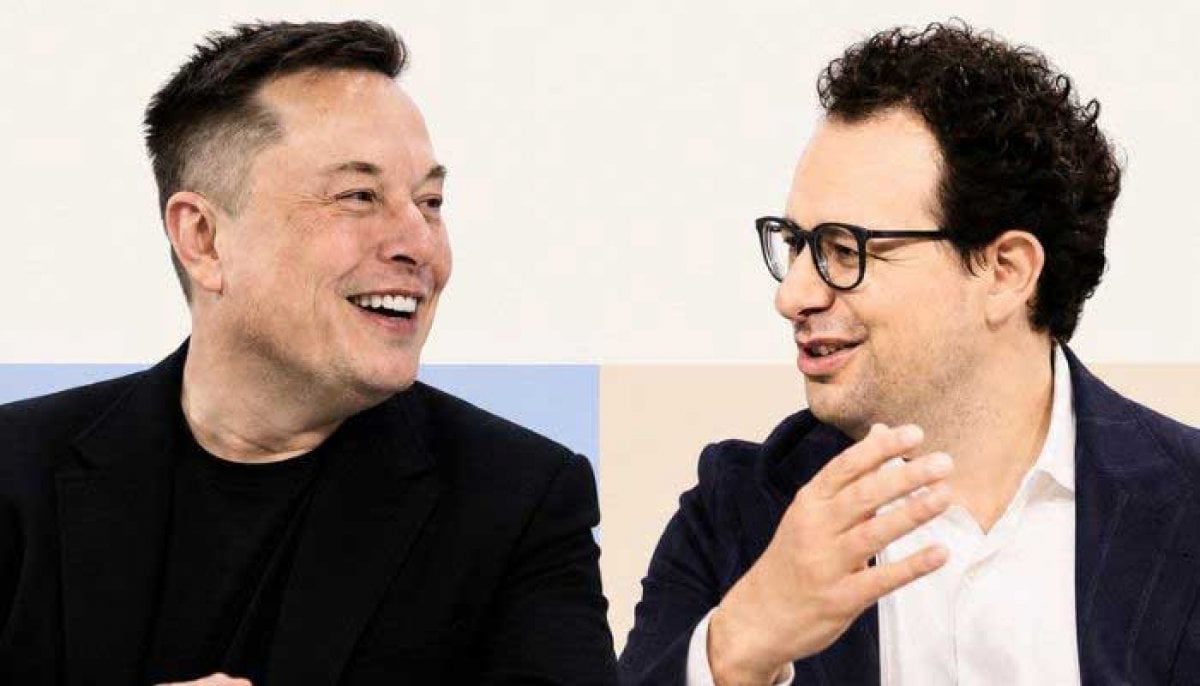
Elon Musk says Anthropic is the current AI leader, praises Mythos and Fable models
Elon Musk now calls Anthropic the industry's current leader in artificial intelligence. He admitted being clearly wrong about the AI startup's potential outcomes. Anthropic is a major customer of Musk's SpaceXAI infrastructure company. The AI startup uses SpaceXAI's supercomputer for its advanced models. Musk stated he would never harm a competitor, citing Tesla and SpaceX examples. Elon Musk has praised artificial intelligence (AI) startup Anthropic, saying it is the industry's current frontrunner, in a significant shift from his earlier criticism of the company.Responding to a user on X, the billionaire entrepreneur said he had been 'clearly wrong' about Anthropic and described it as 'currently the leader in AI'. He also said no company had released a model comparable to Anthropic's latest ones, Mythos and Fable.
I was wrong: Elon Musk accepts Anthropic is AI leader, calls Mythos best model ever
Elon Musk says he was wrong about Anthropic. (Representational image made with AI) Elon Musk is not afraid to speak his mind, particularly when it comes to his rivals - just look at his feud with OpenAI's Sam Altman. But when it comes to Anthropic, the tech trillionaire seems to have made a U-turn, and accepted that he was completely wrong. On X, a user reposted Elon Musk's comments from September last year, where the SpaceX chief declared that "Winning was never in the set of possible outcomes for Anthropic." Musk, however, gave a candid response as he accepted that Anthropic was really leading the AI race. The SpaceX chief replied, "I was clearly wrong about Anthropic. They are obviously currently the leader in AI." In particular, Elon Musk praised Anthropic's Claude Mythos and Fable models. The two models were previously restricted by the US following concerns over cybersecurity. While Musk's SpaceXAI recently released Grok 4.5, and OpenAI, too, has launched GPT-5.6, the tech trillionaire believes that Anthropic remains a league ahead. Musk added, "No company has released a model as good as Mythos/Fable and they will undoubtedly have Mythos 2 ready soon." Keep in mind that in February this year, Elon Musk had fired shots at Anthropic, accusing the company of being "misanthropic and evil." To give you some context, the words anthropic and misanthropic come from the Greek word "anthropos" meaning human being. While anthropic relates to humanity, misanthropic refers to distrust towards humanity. Can Elon Musk cutoff Anthropic from SpaceX compute? Since Elon Musk made such comments about Anthropic, a lot has changed. Anthropic is now one of the largest customers of SpaceX. In May, the AI startup Anthropic signed a deal to lease the Colossus 1 supercomputer. The Colossus 1 includes more than 2,20,000 Nvidia GPUs with a capacity of 300 megawatts of compute. Under the arrangement, Anthropic agreed to pay about $1.25 billion a month through May 2029, in a deal described as worth roughly $40 billion in revenue for SpaceX's xAI unit. But either side can end the agreement on a 90-day notice. This has raised questions that Elon Musk may now hold leverage, as he can decide to turn off the compute access at any time. Keep in mind that SpaceXAI (previously xAI) is a direct rival to Anthropic, and the Grok 4.5 model is designed for coding, a field dominated by Anthropic's Claude Code. The user wrote, "If Elon wanted to kill Anthropic, he could. Iirc the compute lease was short term, 6 months from May without renewal promise." But Musk insists that he has no plans to use such a kill-switch. He said, "And I would never cut them off in a way that hurt them badly, even as a competitor. That's not my style." Elon Musk then cited examples from his other businesses. He pointed out that Tesla had open-sourced its patents and made the Supercharger network available to competitors, "even though we could have made it a walled garden." The tech trillionaire also discussed the platform X where he is often criticised. Musk wrote,"Even my worst enemies can attack me on this platform." The relationship also raises questions about what a host company can learn from supporting a rival's systems. During Musk's lawsuit against OpenAI, he acknowledged that AI "distilling" was real, a process described in the inputs as one company using multiple fake accounts to prompt a competitor's model and learn how it works. When asked whether xAI had ever distilled technology from OpenAI, Musk replied, "Generally AI companies distill other AI companies." Anthropic has previously accused Chinese model makers of doing this to Claude.
NASA taps SpaceX to launch the telescope that could unlock new worlds
NASA's Roman Space Telescope heads to orbit this August aboard SpaceX's Falcon Heavy with massive scientific ambitions. SpaceX is set to play a central role in one of NASA's most anticipated science missions in years. The company's Falcon Heavy rocket, currently the most powerful operational launch vehicle in the world, will carry the Nancy Grace Roman Space Telescope into orbit on August 30 from Kennedy Space Center in Florida. Roman is now in final preparations inside the Payload Hazardous Servicing Facility, where on June 26 technicians used a crane to lift the observatory into a specialized stand for fueling and pre-launch testing. Roman is named after Nancy Grace Roman, NASA's first chief of astronomy, whose career helped shape how the agency approaches space science. NASA chose SpaceX Falcon Heavy because of Roman's needs to reach a specific orbit far from Earth, well beyond where a standard Falcon 9 can deliver it. The Falcon Heavy, which first flew in 2018, has since become NASA's go-to option for missions that need serious muscle without the cost and complexity of older launch systems. Celebrating SpaceX's Falcon Heavy Tesla Roadster launch, seven years later (Op-Ed) Roman will carry a field of view at least 100 times wider than the Hubble Space Telescope, meaning it can photograph enormous swaths of the universe in a single shot rather than the narrow slices Hubble captures. That difference in scale is significant. While Hubble reshaped our understanding of the cosmos over 30 years, Roman is built to work faster and wider, surveying hundreds of millions of galaxies at once. One of Roman's most compelling capabilities is its potential to discover and photograph planets orbiting stars outside our solar system, and with enough precision to directly image planets that would otherwise be lost. That means scientists could study the atmosphere and surface characteristics of distant worlds rather than simply confirming they exist. Combined with Roman's sweeping field of view, the telescope could detect thousands of exoplanets, and some of those planets may be in habitable zones where liquid water could exist. No telescope currently in operation has this level of power and capability. That capability alone could change what we know about other worlds, and perhaps finally answer the question: are we the only intelligent lifeforms in existence? What Roman actually finds once it reaches orbit is an open question, and that is exactly what makes this launch worth watching.

SpaceX aims to send thousands to Moon and Mars within a decade: Musk
SpaceX CEO Elon Musk has said the company plans to send humans back to the Moon within the next few years before transporting thousands of people to the Moon and Mars over the following decade, Forbes reported. Speaking in an interview with Texas Governor Greg Abbott, who was guest hosting Sean Hannity's radio show on Wednesday, Musk outlined a roadmap for the company's future space exploration efforts. Musk said he expects SpaceX to land an astronaut on the Moon within the next two to three years before rapidly expanding its missions. He said the company's long-term goal is to make space travel accessible to the public, allowing anyone who wants to travel to the Moon or Mars to do so. He said SpaceX hopes to transport up to "tens of thousands" of people to a lunar base within the next ten years, while acknowledging the ambitious target given that only a handful of people have ever visited the Moon. Musk added that the ultimate objective is to build a self-sustaining city on the Moon where people could live permanently or visit as tourists. Musk also predicted that SpaceX would send its first humans to Mars within the next five years. While describing Mars missions as more challenging because of the longer journey, he said he hopes the company could send thousands of people to Mars within the following ten to twelve years. Beyond human spaceflight, Musk said SpaceX plans to expand computing infrastructure in orbit. He said the company intends to launch its first AI satellites next year before scaling up deployments over the following two years. The latest announcement follows a series of ambitious timelines Musk has outlined over the past decade. According to Forbes, he has repeatedly predicted that humans would reach Mars within ten years since 2011. The publication also cited a New York Times review that found Musk had made similar claims at least 19 times in interviews and social media posts. In 2017, he also announced plans for SpaceX to fly private citizens around the Moon by 2018, a mission that never took place. The report added that, according to SpaceX's S-1 filing, Musk stands to receive one billion additional company shares if the company reaches a market valuation of $7.5 trillion and establishes a Mars colony with at least one million inhabitants. However, some analysts have questioned whether such a colony would be financially viable because of the high cost of maintaining it.

'I was wrong about Anthropic', Elon Musk hails Claude Fable after Grok 4.5 release
Billionaire entrepreneur Elon Musk has publicly conceded that he was wrong about Dario Amodei's Anthropic, one of the biggest rivals of SpaceXAI, a year ago. Writing on social media as a reply to a post, Musk publicly admitted he was "clearly wrong about Anthropic." Musk's humble admission came hours after SpaceXAI released Grok 4.5 to the public, acing synthetic benchmarks as far as coding is concerned. Replying to a discussion initiated by a user regarding the competitive landscape, Musk walked back years of harsh criticism against Anthropic, which is currently leading the AI market with its Claude Fable and Opus 4.8 models. "I was clearly wrong about Anthropic," Musk wrote. "They are obviously currently the leader in AI. No company has released a model as good as Mythos/Fable and they will undoubtedly have Mythos 2 ready soon. And I would never cut them off in a way that hurt them badly, even as a competitor. That's not my style," he assured in his post. Musk's latest statements represent a complete 180-degree turn from his previous rhetoric. In September 2025, he bluntly asserted that "winning was never in the set of possible outcomes for Anthropic." More recently, in February 2026, after Anthropic raised a staggering $30 billion funding round, Musk slammed the company's Claude models as biased and predicted that the firm was "doomed." Musk's direct challenge to Anthropic followed by high praise Over the past year, Anthropic set the tone for the commercial AI industry by tuning its AI model for the developer community, and focusing on productivity tools. Claude, in its top-tier avatars, has been highly capable at coding, and its Fable 5 and Mythos 5 models have showcased what these models can do for cybersecurity and code development. To make its AI product more competitive, SpaceXAI is pushing Grok into the coding space and with Cursor - the AI startup focused on vibe coding - onboard the SpaceXAI team, Musk's team released Grok 4.5. The latest Grok 4.5 is heavily marketed as an "Opus-class model, but faster, more token-efficient, and lower cost." Priced at $2 per million input tokens and $6 per million output tokens, Grok 4.5 is intentionally positioned to aggressively undercut Anthropic's Claude enterprise pricing structure, all while offering similar levels of performance. Yet, even as Musk praised his model's real-world software engineering capabilities, he acknowledged that Anthropic's Mythos 5 and Fable 5 models as the gold standard in terms of raw capability. Independent evaluations back up Musk's humility. According to data from Artificial Analysis, while Grok 4.5 immediately established itself as the top-performing non-Anthropic model on the market, Anthropic's offerings still hold the definitive edge at the top of global benchmarks. Musk addresses the $40 billion compute question Musk's public reassurance eases all concerns related to cutting off Anthropic from its compute power, despite the rivalry between the two tech moguls. Back in May 2026, Anthropic signed a major infrastructure agreement to lease the entire capacity of SpaceX's Colossus 1 data center facility in Memphis. Powered by over 220,000 Nvidia GPUs and pulling more than 300 MW of power, the deal requires Anthropic to pay SpaceX roughly $1.25 billion monthly through 2029, putting the total value of the contract at over $40 billion. Previously, rumours had it that SpaceX might exercise a 90-day exit clause in the lease to stifle Anthropic's compute resources. Musk, however, shut down that speculation, pointing to a personal philosophy of competition based on principles. "Tesla open sourced its patents and we made the Supercharger network available to all competitors, even though we could have made it a walled garden. SpaceX launches competing satellite systems with no increase in price or use of unfair terms," wrote Musk, addressing how his companies help the competition. "Even my worst enemies can attack me on this platform," wrote Musk, referring to harsh critics and his rivals posting on X, opposing Musk's methods.
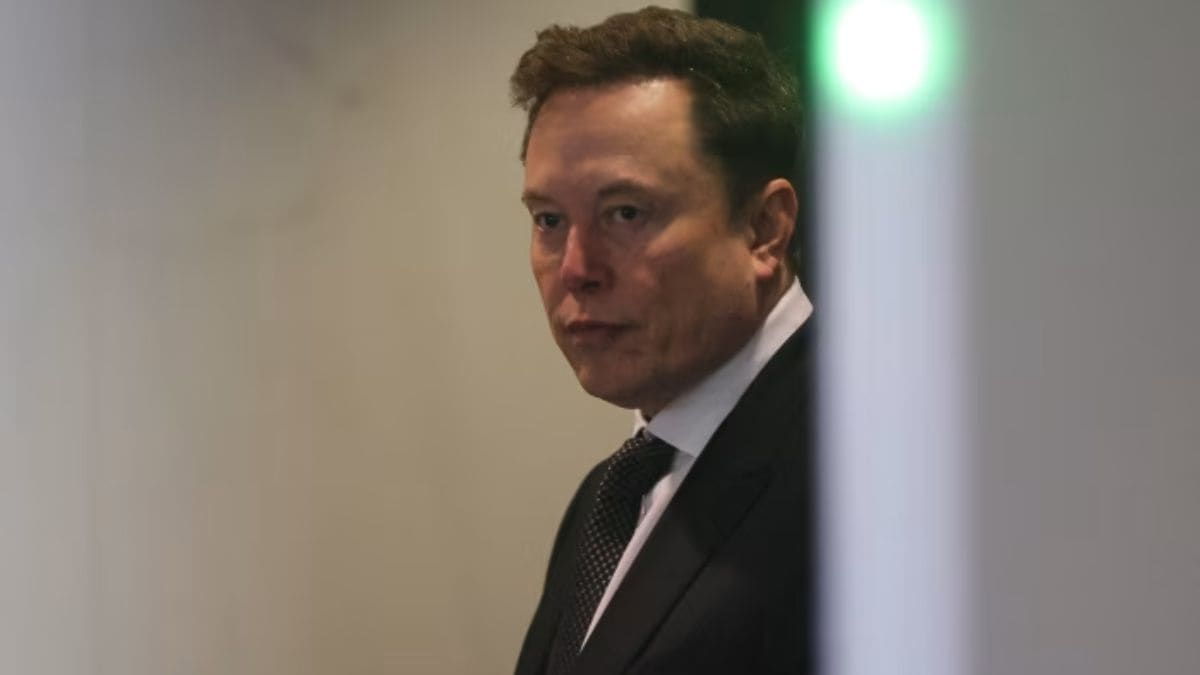
From Critic To Admirer? Elon Musk Praises Anthropic's Mythos, Fable; Calls It 'Leader In AI'
Musk has been a vocal critic of Anthropic in the past. Wikimedia Commons Tech trillionaire Elon Musk has publicly praised Anthropic, calling the AI company "obviously" the current leader in the field and hailing its Mythos and Fable models as unmatched by any competitor's offerings. "I was clearly wrong about Anthropic. They are obviously currently the leader in AI. No company has released a model as good as Mythos/Fable and they will undoubtedly have Mythos 2 ready soon," Musk wrote in a post on X published late Thursday. The remarks mark a notable shift in tone from Musk, who has been a vocal critic of Anthropic in the past. In the same post, he sought to address speculation that he might use his position as a competitor to disadvantage the company, writing that he would "never cut them off in a way that hurt them badly, even as a competitor," adding, "That's not my style." Musk pointed to his own companies' track records on competitive openness to back his claim. He cited Tesla's decision to open-source its patents and make its Supercharger network available to rival automakers despite the option to keep it exclusive, as well as SpaceX's practice of launching competing satellite systems without raising prices or imposing unfair terms on rivals. ALSO READ: Former Fed Chairman Ben Bernanke Joins Anthropic Oversight Trust The trillionaire also referenced the scrutiny he faces on X, the platform he owns, writing that "even my worst enemies can attack me on this platform." Musk's comments come amid intensifying competition in the artificial intelligence sector, where companies including Anthropic, OpenAI, and Musk's own xAI have been racing to release increasingly capable models. Anthropic's Mythos and Fable models, referenced in Musk's post, have positioned the company at the centre of that competition in recent months. Musk did not elaborate further on what prompted his change in stance toward Anthropic, a company he has previously sparred with over AI safety approaches and business practices. ALSO READ: Will AI Replace Your Job? Here's What TCS Actually Said Essential Business Intelligence, Sharp Market Insights, Practical Personal Finance Advice, Daily Fuel, Gold and Silver Prices and Latest Stories -- On NDTV Profit.
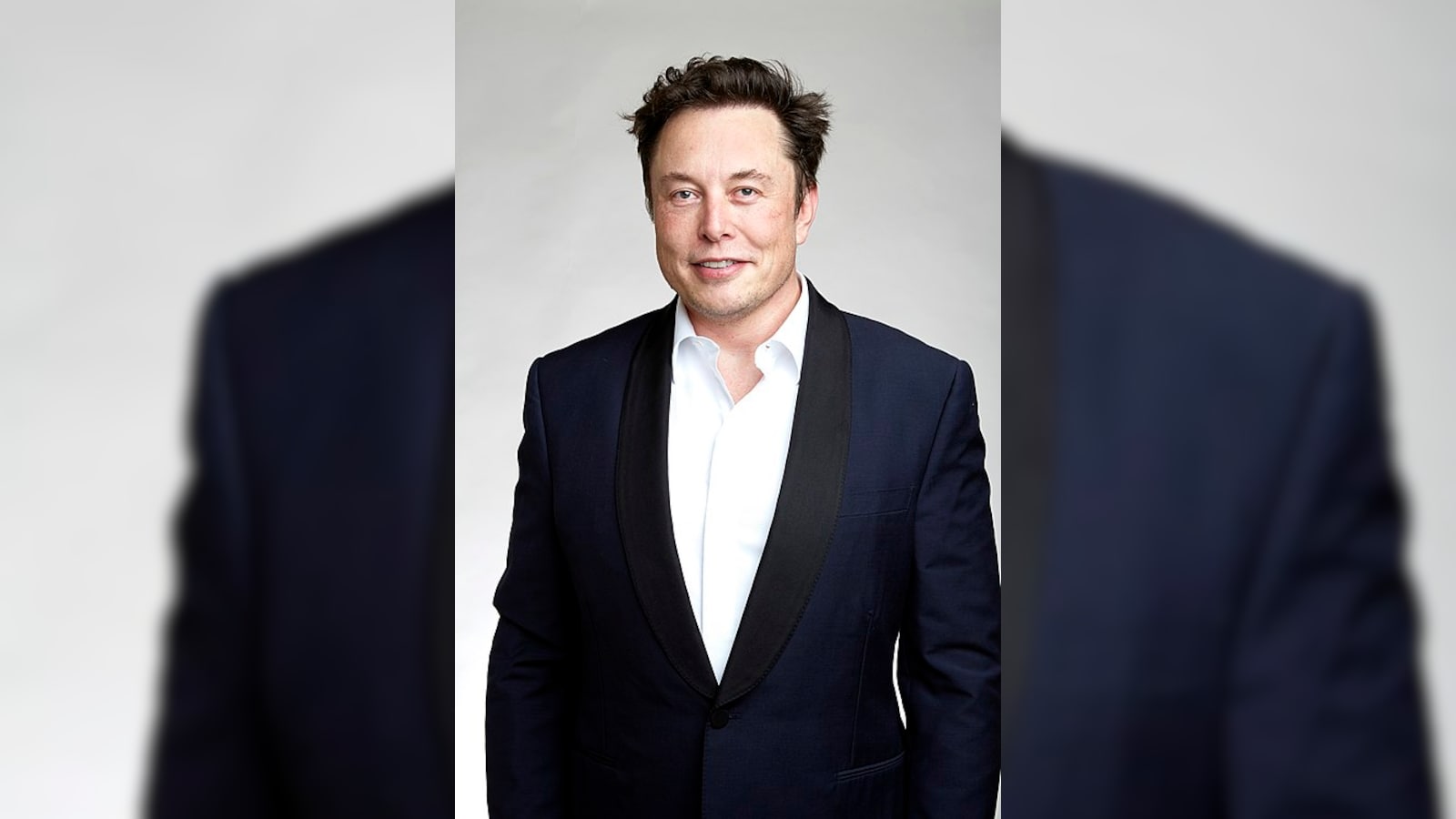
Elon Musk Says SpaceX Would Be Worth More Than Earth if It Achieves Its Goals Amid First AI Satellite Rev
SpaceX to Exceed Earth's Value? "I wonder if History will look back at this $7.5-40B Anthropic/SpaceXai deal as the biggest unforced error of the AI era," the user said, while also outlining that the deal could hinder Anthropic's IPO as users could transfer most token exchange to SpaceX and "Claude is only used for the top tasks." Musk responded to the user, sharing his own take on the matter. "You don't seem to understand that SpaceX will be worth more than the rest of Earth if we accomplish our goals," he said in the post. SpaceX Touts New AI Satellite On Thursday, SpaceX also revealed renderings of the company's AI1 satellite, part of its Starmind constellation, which is a constellation of satellites dedicated to AI compute. The satellites will support chips from all providers and possess a 150 kW peak compute payload, as well as an average payload compute of 120 kW. The satellites will have a wingspan of 70 meters and have a 150 kW solar array. Notably, Musk has been a staunch supporter of orbital AI compute, most recently saying it was the only way to overcome Earth-based bottlenecks to AI compute. "Space is the only way to scale at scale," the trillionaire had said. Benzinga Edge Rankings show SpaceX fails to provide a favorable price trend in the Short, Medium and Long term. Price Action: SpaceX shares were up 0.06% at $152.25 during the after-hours session on Thursday. Photo courtesy: Shutterstock Market News and Data brought to you by Benzinga APIs To add Benzinga News as your preferred source on Google, click here.

VZ, T, TMUS: SpaceX Starlink's Rise Tests Telecom Giants, But This Analyst Sees Opportunity Ahead
Morningstar sees limited impact of SpaceX's Starlink expansion on telecom companies. * Morningstar's Michael Hodel said Starlink has become a profitable satellite internet service, with EchoStar's deal supporting SpaceX's wireless expansion plans. * Hodel expects Starlink to complement rather than replace traditional networks. * He also highlighted Comcast, Disney, and Omnicom as attractive opportunities in the communications sector. Analysts believe SpaceX's (SPCX) Starlink satellite network is unlikely to dramatically reshape the broadband and wireless landscape, despite investor concerns surrounding the space technology firm's public debut and its potential impact on traditional communications providers. Add Asianet Newsable as a Preferred Source Starlink's Expansion Faces Market Limits Michael Hodel, Sector director, Communication Services, Morningstar, said in a note that SpaceX's satellite internet service has quickly attracted customers worldwide and emerged as a profitable part of the company's broader operations. The company is also pursuing direct-to-phone connectivity through spectrum acquisitions, raising concerns among traditional telecom providers. EchoStar (ECHO) has sold its nationwide AWS-3 wireless spectrum licenses to SpaceX for $2.6 billion in stock, strengthening the latter's plans for Starlink's satellite-based mobile services. According to Hodel, Starlink has built a considerable customer base in the U.S., but much of its adoption has come from rural communities that previously relied on slower internet options or older satellite services. The analyst expects improvements in satellite capacity over time, but believes technical limitations will prevent Starlink from replacing high-performing terrestrial networks in most populated areas. Wireless Disruption Concerns May Be Overstated Starlink's ambitions to connect directly with mobile devices have pressured shares of major telecom companies, including AT&T Inc. (T), Verizon Communications (VZ), and T-Mobile US (TMUS). However, Hodel argues satellite coverage works best in remote locations and cannot fully satisfy consumers who expect reliable service everywhere they travel. He added that building a nationwide wireless network would be difficult for SpaceX because it would need large amounts of spectrum and billions of dollars in infrastructure spending. Major carriers like AT&T, Verizon, and T-Mobile also have little interest in sharing their networks with a new competitor. Comcast, Disney And Omnicom Stand Out Amid Sector Pressure Despite industry uncertainty, Morningstar identified several companies as attractive opportunities in the communications sector. Comcast (CMCSA) remains a favored broadband play as the company evaluates options following its media separation plans. Walt Disney (DIS) is viewed positively because of streaming improvements, content strength, and growth opportunities beyond conventional television. Hodel also highlighted Omnicom (OMC), noting that while artificial intelligence creates challenges for advertising agencies, companies with strong data capabilities could benefit from changing marketing demands. SPCX stock has dropped 5% since its June debut, while CMCSA and DIS shares have declined 16% and 15%, respectively. OMC stock has remained flat during the same period. For updates and corrections, email newsroom[at]stocktwits[dot]com.<
VZ, T, TMUS: SpaceX Starlink's Rise Tests Telecom Giants, But This Analyst Sees Opportunity Ahead
* Morningstar's Michael Hodel said Starlink has become a profitable satellite internet service, with EchoStar's deal supporting SpaceX's wireless expansion plans. * Hodel expects Starlink to complement rather than replace traditional networks. * He also highlighted Comcast, Disney, and Omnicom as attractive opportunities in the communications sector. Analysts believe SpaceX's (SPCX) Starlink satellite network is unlikely to dramatically reshape the broadband and wireless landscape, despite investor concerns surrounding the space technology firm's public debut and its potential impact on traditional communications providers. Starlink's Expansion Faces Market Limits Michael Hodel, Sector director, Communication Services, Morningstar, said in a note that SpaceX's satellite internet service has quickly attracted customers worldwide and emerged as a profitable part of the company's broader operations. The company is also pursuing direct-to-phone connectivity through spectrum acquisitions, raising concerns among traditional telecom providers. EchoStar (ECHO) has sold its nationwide AWS-3 wireless spectrum licenses to SpaceX for $2.6 billion in stock, strengthening the latter's plans for Starlink's satellite-based mobile services. According to Hodel, Starlink has built a considerable customer base in the U.S., but much of its adoption has come from rural communities that previously relied on slower internet options or older satellite services. The analyst expects improvements in satellite capacity over time, but believes technical limitations will prevent Starlink from replacing high-performing terrestrial networks in most populated areas. Wireless Disruption Concerns May Be Overstated Starlink's ambitions to connect directly with mobile devices have pressured shares of major telecom companies, including AT&T Inc. (T), Verizon Communications (VZ), and T-Mobile US (TMUS). However, Hodel argues satellite coverage works best in remote locations and cannot fully satisfy consumers who expect reliable service everywhere they travel. He added that building a nationwide wireless network would be difficult for SpaceX because it would need large amounts of spectrum and billions of dollars in infrastructure spending. Major carriers like AT&T, Verizon, and T-Mobile also have little interest in sharing their networks with a new competitor. Comcast, Disney And Omnicom Stand Out Amid Sector Pressure Despite industry uncertainty, Morningstar identified several companies as attractive opportunities in the communications sector. Comcast (CMCSA) remains a favored broadband play as the company evaluates options following its media separation plans. Walt Disney (DIS) is viewed positively because of streaming improvements, content strength, and growth opportunities beyond conventional television. Hodel also highlighted Omnicom (OMC), noting that while artificial intelligence creates challenges for advertising agencies, companies with strong data capabilities could benefit from changing marketing demands. SPCX stock has dropped 5% since its June debut, while CMCSA and DIS shares have declined 16% and 15%, respectively. OMC stock has remained flat during the same period.
Elon Musk calls Anthropic AI leader, says no model as good as Mythos, Fable - CNBC TV18
Elon Musk's comments come after the US Department of Commerce lifted export controls on Claude Fable 5 and Mythos 5 early this month. The restrictions had been imposed on June 12 over alleged national security concerns, forcing the AI company to suspend their availability. Elon Musk has declared Anthropic the current "leader in AI", saying no company has released a model as good as Mythos and Fable, while admitting he was "clearly wrong" about the rival AI startup. Musk was responding to an X post that claimed SpaceX AI now had a frontier model capable of competing with OpenAI's GPT-4.8 and that Anthropic was heavily reliant on computing capacity rented from SpaceX AI. The post also resurfaced a September 2025 remark from Musk, in which he had said, "Winning was never in the set of possible outcomes for Anthropic." "I was clearly wrong about Anthropic. They are obviously currently the leader in AI. No company has released a model as good as Mythos/Fable and they will undoubtedly have Mythos 2 ready soon," Musk said. His comments come after the US Department of Commerce lifted export controls on Claude Fable 5 and Mythos 5 early this month. The restrictions had been imposed on June 12 over alleged national security concerns, forcing the AI company to suspend their availability. The US had partially eased the curbs last month by allowing Anthropic to offer Mythos 5 to more than 100 "trusted" US organisations, including companies involved in critical infrastructure. Broader access, however, remained restricted until the controls were lifted. Musk also rejected the suggestion that he could cut off Anthropic's access to computing resources to hurt the rival company. "I would never cut them off in a way that hurt them badly, even as a competitor. That's not my style," he said. The billionaire cited Tesla's open-source patents and its decision to make the Supercharger network available to competitors, as well as SpaceX's approach to competing satellite systems, as examples of allowing competition.
Bank of America sets alarming SpaceX stock price target
SpaceX (SPCX) stock is trading near $153 on July 9. All the initial gains since its IPO have been wiped out, despite the stock's inclusion in the Nasdaq-100, and a slew of high price targets coming from big Wall Street banks. Goldman Sachs initiated the stock with a price target of $205. Morgan Stanley went even higher, setting a price target of $300. These banks were two leading underwriters for the IPO, so their having high price targets is not surprising. In a research note shared with me, Bank of America analyst Ronald J. Epstein and his team also presented a bullish price target of $235 on SpaceX stock. Bank of America was also one of the underwriters for the IPO, so again, it was not much of a surprise. However, what is alarming is the palpable difficulty a fairly large analyst team has had in coming up with a way to back that price target. Even more important is that, once risks to the price target are examined, the price target makes no sense and leaves a strong impression that it is nothing but peak AI bubble hype. Readers unaware that SpaceX is an artificial intelligence company first and foremost should read its S-1. It clearly states that the company estimates its total addressable market (TAM) at $28.5 trillion, of which $26.5 trillion, or 92.98%, is expected to come from AI. Bank of America believes that "launch leadership enables everything else" The team based the price target on average long-term discounted cash flows for their base, bull, and bear cases, across different revenue and cash-generation scenarios between now and 2045. A discounted cash flow model is usually conducted over a period of 5 to 10 years, according to Harvard Business School. Developing a model with a period of almost 20 years is something you come up with when you have trouble making a valuation. Price targets are generally given to be valid for the next 12 months, and even then, they are often tweaked when quarterly earnings are released or when something else changes the view of the stock. Analysts noted SpaceX's success in converting launch and manufacturing capabilities into a business called Starlink. It seems they believe this can be done again for AI. Epstein wrote: "The result is a powerful flywheel, where launch enables space applications, applications generate cash flow, and those cash flows support further infrastructure investment." Bank of America flags "investment negatives" for SpaceX
SpaceX Was Just Flooded With Buy Reports Across Wall Street. Do Analysts Know Something Retail Investors Don't?
This week, a wave of equity research reports from sell-side analysts was released on Space Exploration Technologies (NASDAQ: SPCX). The big takeaway is that Wall Street is overwhelmingly bullish on SpaceX stock. With so many banks publishing their first formal reports on SpaceX and coming to the same optimistic outlook, it begs the question: Does Wall Street know something retail investors don't? Where to invest $1,000 right now? Our analyst team just revealed what they believe are the 10 best stocks to buy right now, when you join Stock Advisor. See the stocks " Why were so many reports for SpaceX stock published on the same day? When a company completes its initial public offering (IPO) and its shares begin trading, a quiet period begins. This window typically lasts between 25 and 40 days after the newly public company begins trading. During the quiet period, the investment banks that underwrote the IPO are prohibited from issuing forward-looking statements, promotional material, or equity research analysis. The rule exists to prevent the same institutions that helped price and sell the IPO stock in question from immediately hyping the deal or leaking material information that could influence market sentiment. Analysts working for the lead underwriters must remain silent because any positive research they publish too close to the offering could be viewed as an extension of the marketing effort rather than independent analysis. Once the quiet period ends, these banks are free to initiate coverage. In the case of SpaceX, this is exactly what just happened: A cluster of reports appeared on the same day because the calendar restriction had been lifted. Image source: Getty Images. What does Wall Street think of SpaceX stock? The table below summarizes the ratings and stock price targets analysts recently issued for SpaceX. Data Source: Yahoo! Finance Among the firms in the table, all gave Buy or Buy-equivalent ratings on SpaceX stock, except one. Unsurprisingly, longtime Tesla supporter and former Wedbush analyst Dan Ives is bullish on SpaceX. The price targets primarily range between $190 and $300, with notable outliers at Raymond James and MoffettNathanson. SpaceX's bullish thesis converges on three interlocking growth drivers. First, Starlink is shifting from primarily consumer broadband toward enterprise and telecommunications customers. This could unlock higher-margin contracts with government agencies, airlines, maritime operators, and large corporations that require reliable global connectivity. Second, SpaceX is positioned to support the acceleration of AI infrastructure buildouts by delivering additional capacity to hyperscalers. So far, SpaceX has signed $82 billion in infrastructure deals with Anthropic, Google Cloud, and Reflection AI. Third, operational improvements in rocket reusability and launch cadence in the Starship program stand to dramatically lower costs to orbit. These efficiencies can help expand SpaceX's addressable market for both satellite deployment and crewed missions. Taken together, these variables paint a picture of a company transitioning from a high-burn, capital-intensive launch and satellite operator into a diversified technology enabler with multidecade tailwinds. Understanding the limits of analyst price targets Wall Street analysts tend to have meaningful access to the C-Suite at large companies. By contrast, retail investors usually have a tough time getting past the Investor Relations department. With this in mind, many Wall Street analysts have access to information that most investors do not. However, they are strictly prohibited from issuing reports based solely on that information. This is all to say that even if Wall Street does know certain things that most investors do not, the price targets above are still just opinions -- not guarantees. These price targets rest heavily on modeling assumptions about revenue growth, profit margins, and discount rates that can shift quickly. Blindly chasing the most optimistic targets or treating the consensus opinion as a certainty ignores the fact that the stock market tends to price in best-case scenarios before they actually materialize. Investors who rely solely on these reports risk overlooking valuation discipline, balance-sheet risk, and the possibility that even accurate long-term narratives can produce stomach-churning short-term drawdowns. While the end of the quiet period gives investors a clearer picture of professional sentiment around SpaceX stock, these views are just one data point among many. Should you buy stock in Space Exploration Technologies right now? Before you buy stock in Space Exploration Technologies, consider this: The Motley Fool Stock Advisor analyst team just identified what they believe are the 10 best stocks for investors to buy now... and Space Exploration Technologies wasn't one of them. The 10 stocks that made the cut could produce monster returns in the coming years. Consider when Netflix made this list on December 17, 2004... if you invested $1,000 at the time of our recommendation, you'd have $407,651!* Or when Nvidia made this list on April 15, 2005... if you invested $1,000 at the time of our recommendation, you'd have $1,252,823!* Now, it's worth noting Stock Advisor's total average return is 922% -- a market-crushing outperformance compared to 208% for the S&P 500. Don't miss the latest top 10 list, available with Stock Advisor, and join an investing community built by individual investors for individual investors. See the 10 stocks " *Stock Advisor returns as of July 9, 2026. Adam Spatacco has positions in Tesla. The Motley Fool has positions in and recommends Tesla. The Motley Fool has a disclosure policy. The views and opinions expressed herein are the views and opinions of the author and do not necessarily reflect those of Nasdaq, Inc.

SpaceX Was Just Flooded With Buy Reports Across Wall Street. Do Analysts Know Something Retail Investors Don't?
This week, a wave of equity research reports from sell-side analysts was released on Space Exploration Technologies (NASDAQ: SPCX). The big takeaway is that Wall Street is overwhelmingly bullish on SpaceX stock. With so many banks publishing their first formal reports on SpaceX and coming to the same optimistic outlook, it begs the question: Does Wall Street know something retail investors don't? Missed Nvidia in 2009? This Rare Signal Is Flashing Again. In 2009, a "Double Down" signal flashed for a little-known chipmaker called Nvidia. For the first time in years, that same "Total Conviction" signal is flashing for a company 1/100th the size of Nvidia. Continue " Why were so many reports for SpaceX stock published on the same day? When a company completes its initial public offering (IPO) and its shares begin trading, a quiet period begins. This window typically lasts between 25 and 40 days after the newly public company begins trading. During the quiet period, the investment banks that underwrote the IPO are prohibited from issuing forward-looking statements, promotional material, or equity research analysis. The rule exists to prevent the same institutions that helped price and sell the IPO stock in question from immediately hyping the deal or leaking material information that could influence market sentiment. Analysts working for the lead underwriters must remain silent because any positive research they publish too close to the offering could be viewed as an extension of the marketing effort rather than independent analysis. Once the quiet period ends, these banks are free to initiate coverage. In the case of SpaceX, this is exactly what just happened: A cluster of reports appeared on the same day because the calendar restriction had been lifted. What does Wall Street think of SpaceX stock? The table below summarizes the ratings and stock price targets analysts recently issued for SpaceX. Data Source: Yahoo! Finance Among the firms in the table, all gave Buy or Buy-equivalent ratings on SpaceX stock, except one. Unsurprisingly, longtime Tesla supporter and former Wedbush analyst Dan Ives is bullish on SpaceX. The price targets primarily range between $190 and $300, with notable outliers at Raymond James and MoffettNathanson.